Category Archives: Europe

Pacific Annexations, 1840-1906

From Sailors and Traders: A Maritime History of the Pacific Peoples, by Alastair Couper (U. Hawai‘i Press, 2009), pp. 140-141:

The managers of the major merchant companies based at the main entrepôts in the [Pacific] islands were often ex-sailors. Several acted as consuls for their governments and supported the companies in many ways, including evoking gunboat diplomacy. A prime example is John Bates Thurston. He served at sea in the island trades, was wrecked at Rotuma in 1865, became British consul in Fiji in 1867, was highly influential in the negotiations for the ceding of Fiji to Britain in 1874, and became governor of Fiji in 1887. The companies, the new settlers, and their sympathetic consuls pressed for annexations. The French were the first to act [but Waitangi was 1840—J.] and took Tahiti, the Marquesas, and the Tuamotus as French protectorates in 1842 and New Caledonia in 1853. These were declared colonies in 1880, and the Australs and Wallis and Futuna in 1887.

The British annexed Fiji in 1874 and established protectorates over southeast New Guinea in 1884, Gilbert and Ellice in 1892, most of the Solomons soon after, and Ocean Island in 1900. They agreed that New Zealand would exercise authority over the Kermadecs in 1887, the Tokelaus in 1889, and the Cooks and Niue in 1901. The Dutch took western New Guinea in 1848. Germany annexed northeast New Guinea in 1885, along with the Bismarck Archipelago and the northwest Solomons; took possession of most of the Carolines in 1885; and ultimately purchased Yap and other islands in the Carolines and Marianas from Spain in 1899. The Germans also acquired the Marshall Islands in 1884 and took over Nauru in 1888. Chile obtained Easter Island in 1888.

America, after its disastrous Civil War, had not recovered a significant merchant fleet and showed little inclination for acquiring Pacific territory. American guano companies had already secured legislation in 1856–1860 that allowed claims over some small Pacific islands, and the US government went on to secure others, including Baker, Jarvis, Johnson, Midway, Palmyra, and Wake. In 1893 the influential American maritime geostrategist Alfred Mahan wrote that it was “imperative to take possession, when it can be righteously done, of such maritime positions as can contribute to secure command.” In 1898, Hawai‘i was annexed (US citizenships were granted in 1900), as was eastern Samoa with Pago Pago as a main naval coaling station, while Guam was captured from Spain by the US Navy in 1898.

The Pacific was now effectively divided between several colonial powers mainly by agreements. In the final carve-up, it was confirmed that Western Samoa was a German colony separated from American Samoa in the east. In turn Germany agreed to relinquish claims for Tonga. As a result, in the closing days Tonga appeared to survive as the only independent Polynesian kingdom, although not quite. It was declared a British protectorate in 1900, and in 1905 it was decreed mandatory for the king of Tonga to take advice from the British consul on all matters of importance. Finally, in 1906 New Hebrides was divided as a condominium between Britain and France.

I’m not sure why Couper omits the 1840 Treaty of Waitangi, which made British subjects of the Maori. Maybe he considered both New Zealand and Australia to be colonial powers by the 1840s, even though both were earlier annexed by another colonial power. (Like the Americas, of course.)

Leave a comment

Filed under Britain, Fiji, France, Germany, Hawai'i, Micronesia, Netherlands, New Zealand, Pacific, Papua New Guinea, Polynesia, Spain, U.S.

Tahiti, 1802: Hogs for Firearms

From Sailors and Traders: A Maritime History of the Pacific Peoples, by Alastair Couper (U. Hawai‘i Press, 2009), pp. 78-79, 81:

When Captain Wallis arrived at Matavai Bay in 1767, he assumed that the formidable woman Purea was queen. When Cook came in 1769, he also had the European predilection toward identifying a single ruler. He met with the Otou (Tu), who ascended to the chieftainship of the northwest of the island of Tahiti, in which lies Matavai Bay. According to H. E. Maude, “Cook seems to have been the originator of the myth of Tu’s kingship.” Tu was accorded favors, gifts, and guns by all subsequent arrivals and from 1790 was acknowledged as King Pomare I.

Pomare was able to extend his territories. He recruited European sailors as mercenaries, including several Bounty mutineers during 1789–1791, and in 1792 the crew of the whaler Matilda wrecked in the Tuamotus, and the crew of the Norfolk grounded at Matavai Bay in 1802. In addition numerous ship deserters and many convicts who escaped from Botany Bay were available. The relative political stability of Tahiti under Pomare I, the apparent abundance of foodstuffs, and the general friendliness of the people came to the attention of Governor King of New South Wales. He studied Cook’s account of the islands and received reports from missionaries who arrived in Tahiti during 1797, as well as from whalers calling at Sydney. The penal colony required regular provisions, and following a trial shipment, Governor King dispatched HMS Porpoise in 1801 to obtain salt pork under a formal contract with Pomare I. The king imposed taboos on the consumption of pork by the common people and tried to concentrate all trade through royal channels.

In a short time Pomare I emerged as an astute business entrepreneur who recognized the forces of supply and demand in establishing exchange values. His son Otoo (Tu), under the complicated system of inheritance in Tahiti, ascended to power before Pomare died in 1803. Pomare II was less efficient, but more ruthlessly dedicated to the nascent new economic order based on foreign trade. The journal of Captain John Turnbull of the brig Margaret provides accounts of the commercial milieu of the time. The journal gives an understanding of the complexities of the trade and the hazards involved. It thereby shows the difficulties that the chiefly entrepreneurs faced when they entered the established shipping business, despite their strengths from the control of island resources and labor.

The voyage of the Margaret over the year 1802–1803 was, in brief, from Port Jackson to King Island in the Bass Strait to land a gang of sealers. From these the ship went to Norfolk Island for victuals that were unobtainable at Port Jackson. The seafarers arrived at Matavai Bay, Tahiti, on 23 December 1802. At this anchorage Turnbull spoke with Lieutenant William Scott of HMS Porpoise, who was on his second voyage for salt pork. He learned then of the internecine war raging in the group. On his first voyage in 1801, Scott had carried many iron tools and clothing, plus a few “old arms.” In 1802 there were major changes in the types of goods carried for trade; he delivered a formidable array of muskets, pistols, ammunition, bayonets, and even military jackets, reflecting something of the support that Governor King was giving to Pomare. When Turnbull started to trade his general cargo, which included domestic items and axes, he was ridiculed. It was made clear to him that hogs could be obtained only in exchange for armaments….

Wars led by chiefs against the despotism of the Pomares increased in Tahiti. In 1808 Pomare was forced to evacuate Matavai Bay with his forces and take refuge on Moorea Island. The chiefs who now occupied Matavai Bay rashly raided the ship Venus from Port Jackson to obtain cannons. Unlike Pomare, they failed to appreciate that, in order to continue trading with the New South Wales colony, they had to guarantee the safety of vessels. Pomare reiterated such a guarantee from his base in Moorea. This appeared in the Sydney Gazette of 5 May 1810, after the ship Mercury arrived from Moorea. Pomare also made the judicious decision to embrace Christianity in 1812 and obtain the support of the missions. The latter were not only engaged in religious conversions but also traded armaments for food at this time. Captain Thomas Hanson of the mission ship Active even exchanged two cannons for 126 hogs.

This account leaves me thinking how little has changed for strong men ruling weak states between 1800 and 2000. Nowadays they trade oil and other natural resources for weapons of all kinds.

Leave a comment

Filed under Britain, economics, Europe, military, nationalism, Pacific, Polynesia, religion, war

WW2: National Armies vs. Imperial Armies

From The War of the World: Twentieth-Century Conflict and the Descent of the West, by Niall Ferguson (Penguin Press, 2006), pp. 516-518:

The Axis powers were fighting not only against the British, Russians and Americans; they were fighting against the combined forces of the British, Russian and American empires as well. The total numbers of men fielded by the various parts of the British Empire were immense. All told, the United Kingdom itself mobilized just under six million men and women. But an additional 5.1 million came from India, Canada, Australia, New Zealand and South Africa. Victories like El Alamein and even more so Imphal were victories for imperial forces as much as for British forces; the colonial commitment to the Empire proved every bit as strong as in the First World War. Especially remarkable was the fact that more than two and a half million Indians volunteered to serve in the British Indian Army during the war – more than sixty times the number who fought for the Japanese. The rapid expansion of the Indian officer corps provided a crucial source of loyalty, albeit loyalty that was conditional on post-war independence. The Red Army was also much more than just a Russian army. In January 1944 Russians accounted for 58 per cent of the 200 infantry divisions for which records are available, but Ukrainians accounted for 22 per cent, an order of magnitude more than fought on the German side, and a larger proportion than their share of the pre-war Soviet population. Half the soldiers of the Soviet 62nd Army at Stalingrad were not Russians. The American army, too, was ethnically diverse. Although they were generally kept in segregated units, African-Americans accounted for around 11 per cent of total US forces mobilized and fought in all the major campaigns from Operation Torch onwards. Norman Mailer’s reconnaissance platoon in The Naked and the Dead includes two Jews, a Pole, an Irishman, a Mexican and an Italian. Two of the six servicemen who raised the Stars and Stripes on Iwo Jima were of foreign origin; one was a Pima Indian. More than 20,000 Japanese-Americans served in the US army during the war….

The Germans, as we have seen, had made some efforts to mobilize other peoples in occupied Europe, as had the Japanese in the Far East, but these were dwarfed by what the Allies achieved. Indeed, the abject failure of the Axis empires to win the loyalty of their new subjects ensured that Allied forces were reinforced by a plethora of exile forces, partisan bands and resistance organizations. Even excluding these auxiliaries, the combined armed forces of the principal Allies were already just under 30 per cent larger than those of the Axis in 1942. A year later the difference was more than 50 per cent. By the end of the war, including also Free French* and Polish forces, Yugoslav partisans and Romanians fighting on the Russian side, the Allies had more than twice as many men under arms. Fifty-two different nationalities were represented in the Jewish Brigade formed by the British in 1944. They followed an earlier wave of 9,000 or so refugees from Spain, Germany, Austria and Czechoslovakia who had joined the so-called Alien Companies, nicely nicknamed the ‘King’s Own Loyal Enemy Aliens’.

The best measure of the Allied advantage was in terms of military hardware, however, since it was with capital rather than labour – with machinery rather than manpower – that the Germans and the Japanese were ultimately to be defeated. In every major category of weapon, the Axis powers fell steadily further behind with each passing month. Between 1942 and 1944, the Allies out-produced the Axis in terms of machine pistols by a factor of 16 to 1, in naval vessels, tanks and mortars by roughly 5 to 1, and in rifles, machine-guns, artillery and combat aircraft by roughly 3 to 1.

*It is seldom acknowledged that for most of the period from 1940 until D-Day, black Africans constituted the main elements of the rank and file in the Free French Army. Even as late as September 1944, they still accounted for 1 in 5 of de Gaulle’s force in North-West Europe.

I did not quote the immediately preceding section that compares the mismatch in purely economic terms, but I cannot resist quoting the footnote appended to the end of it (on p. 516):

‘We must at all costs advance into the plains of Mesopotamia and take the Mosul oilfields from the British,’ declared Hitler on August 5, 1942. ‘If we succeed here, the whole war will come to an end.’ But three-quarters of total world oil production in 1944 came from the United States, compared with just 7 per cent from the whole of North Africa, the Middle East and the Gulf.

Leave a comment

Filed under Africa, anglosphere, Asia, Britain, economics, Europe, France, Germany, industry, Japan, labor, military, nationalism, U.S., USSR, war

Civil Wars on the Eastern Front, 1940s

From The War of the World: Twentieth-Century Conflict and the Descent of the West, by Niall Ferguson (Penguin Press, 2006), pp. 455-457:

Collaborators could be found not only in countries that allied themselves with Germany – Italy, Romania, Hungary and Bulgaria – but also in Norway, Denmark, Holland, Belgium, France, Yugoslavia, Greece and the Soviet Union, countries the Germans invaded and occupied. Some were undoubtedly motivated by a hatred of the Jews as violent as that felt by the Nazi leadership. Others were actuated by envy or base greed, seizing the opportunity afforded by German rule to steal their neighbours’ property. Self-preservation also played its part. There were even Jewish collaborators, like the uniformed men of the Office to Combat Usury and Profiteering who policed the Warsaw ghetto, or the leaders of the various Jews’ Councils who helped organize the liquidation of the ghettos, or the concentration camp prisoners who accepted a measure of delegated authority in the (usually vain) hope of saving themselves.

The experience of Jedwabne typifies the way German rule also fomented civil war. It was as if even the approach of German troops encouraged conflict to erupt in multi-ethnic communities. Poles were not the only killers, Jews not the only victims. Germans themselves could fall victim to this kind of violence. Between four and five thousand ethnic Germans were murdered in Poland in September 1939 as Poles took revenge for their country’s invasion. They then retaliated by forming ‘self-protection’ groups, which were ultimately subordinated to SS leadership. By the time that had happened, however, these groups had already massacred more than four thousand Poles. As a philologist, Victor Klemperer was struck by the way the Nazis delighted in euphemistic neologisms like Volkstumskampf (ethnic conflict) and Flurbereinigung (fundamental cleansing). This daily subversion of the German language, he believed, was far more effective than the more overt kinds of propaganda. Sanitized language also made the cycle of ethnic violence easier to live with.

The Ukraine was perhaps the most blood-soaked place of all. In Volhynia and Eastern Galicia, members of the Organization of Ukrainian Nationalists (OUN), egged on by the Germans, massacred between 60,000 and 80,000 Poles. Whole villages were wiped out, men beaten to death, women raped and mutilated, babies bayoneted….

Waldemar Lotnik, a Polish teenager who escaped from a German labour camp and joined a Polish ‘Peasant Battalion’, was just about to rape a girl when he realized he knew her family and remembered her as a child. As another Pole recalled, ‘Stories abounded of Polish mothers being held by the Ukrainian Nationalists and forced to watch as their families were dismembered piece by piece; of pregnant women being eviscerated; of vivisected pregnant women having cats sewn into their bleeding abdomens; of Ukrainian husbands murdering their own Polish wives; of Ukrainian wives murdering their own Polish husbands; of Ukrainian fathers murdering their own sons in order to prevent them from murdering their own Polish mothers; of sons of Polish-Ukrainian heritage being sawn in half because, the Nationalists said, they were half Polish; of children being strung up on household fences; of helpless infants being dashed against buildings or hurled into burning houses.’ Here was ethnic conflict not merely between neighbours, but within families. The internecine war in the Ukraine only grew more ferocious as the war progressed, with some Ukrainians fighting for the Axis, some for the Allies and others for an independent Ukraine.

In the Balkans, too, there were multiple civil wars along ethnic, religious and ideological lines. Yugoslavia had fallen apart in the wake of the German invasion of April 1941. Seizing the moment, the Croatian leader Ante Pavelic had pledged to side with Hitler. In the ensuing chaos, his Ustašas waged a brutal campaign of ethnic cleansing against their Serbian neighbours in Croatia and Bosnia-Hercegovina, torturing and killing hundreds of thousands of them. The populations of entire villages were packed into their churches and burned to death, or were transported to be murdered at camps like Jasenovac.

Serbian Četniks and Partisans repaid these crimes in kind. Of the million or so people who died in Yugoslavia during the war, most were killed by other Yugoslavs. This included nearly all of Bosnia’s 14,000 Jews. In Greece the German occupation was the cue for bitter conflict. There, as in Yugoslavia, a three-cornered war raged – between the foreign invaders and nationalists, but also between nationalists and indigenous Communists. When Bulgaria annexed southern Dobruja from Romania, tens of thousands of people were expelled from their homes on either side of the new border.

Most empires purport to bring peace and order. They may divide in order to rule, but they generally rule in pursuit of stability. The Nazi empire divided the peoples of Europe as it ruled them – though, ironically, the divisions that opened up in Central and Eastern Europe generally had as much to do with religion as with race (most obviously in the conflicts between Poles and Ukrainians or between Croats and Serbs). But the ‘skilful utilization of inter-ethnic rivalry’ the Germans consciously practised did not lead (in the words of one German officer) to the ‘total political and economic pacification’ of occupied territory. On the contrary, in many places their rule soon degenerated into little more than the sponsorship of local feuds; the institutionalization of civil war as a mode of governance.

Leave a comment

Filed under Eastern Europe, Germany, nationalism, religion, war

Blitzkrieg: British Theory, German Practice

From The War of the World: Twentieth-Century Conflict and the Descent of the West, by Niall Ferguson (Penguin Press, 2006), pp. 386-387:

Blitzkrieg is, of course, a German word meaning ‘lightning war’. The ironic thing is that it was in many ways a British invention, derived from the lessons of the Western Front in the First World War. Captain Basil Liddell Hart had drawn his own conclusions from the excessively high casualties suffered by both sides. As an infantry subaltern, he himself had been gassed, the long-term effects of which forced him to retire from the army in 1927, after which he turned to journalism, working as defence correspondent for the Daily Telegraph and then The Times and publishing numerous works of military history. In Liddell Hart’s view, the fatal mistake of most offensives on the Western Front had been their ponderous and predictable directness. A more ‘indirect approach’, he argued, would aim at surprising the enemy, throwing his commanders off balance, and then exploiting the ensuing confusion. The essence was to concentrate armour and air power in a lethal lightning strike. Liddell Hart defined the secret as lying

partly in the tactical combination of tanks and aircraft, partly in the unexpectedness of the stroke in direction and time, but above all in the ‘follow-through’ – the way that a break-through is exploited by a deep strategic penetration; carried out by armoured forces racing on ahead of the main army, and operating independently.

The good news for Liddell Hart was that his work was hugely influential. The bad news was that it was hugely influential not in Britain but in Germany, With the notable exception of Major-General J. F. C. Fuller,* senior British commanders like Field Marshal Earl Haig simply refused to accept that ‘the aeroplane, the tank [and] the motor car [would] supersede the horse in future wars’, dismissing motorized weapons as mere ‘accessories to the man and horse’. Haig’s brother concurred: the cavalry would ‘never be scrapped to make room for the tanks’. By contrast, younger German officers immediately grasped the significance of Liddell Hart’s work. Among his most avid fans was Heinz Guderian, commander of the 19th German Army Corps in the invasion of Poland. As Guderian recalled, it was from Liddell Hart and other British pioneers of ‘a new type of warfare on the largest scale’ that he learned the importance of ‘the concentration of armour’. Moreover,

it was Liddell Hart who emphasized the use of armoured forces for long-range strokes, operations against the opposing army’s communications, and [who] also proposed a type of armoured division combining panzer and panzer-infantry units. Deeply impressed by these ideas, I tried to develop them in a sense practicable for our own army … I owe many suggestions of our further development to Captain Liddell Hart.

Guderian – who was happy to describe himself as Liddell Hart’s disciple and pupil and even translated his works into German – had learned his lessons well. In September 1939 his panzers were unstoppable. The Poles did not, as legend has it, attempt cavalry charges against them, though mounted troops were deployed against German infantry, but they lacked adequate motor transport and their tanks were fewer and technically inferior to the Germans’. Moreover, like the Czechs before them, the Poles found Anglo-French guarantees to be militarily worthless. At the Battle of Bzura they mounted a desperate counteroffensive to hold up the German assault on Warsaw, but by September 16 their resistance was crumbling. By the 17th the Germans had reached the fortress at Bresc (Brest) on the River Bug. On September 28 Warsaw itself fell. Eight days later the last Polish troops laid down their arms. The entire campaign had lasted barely five weeks.

The Poles had fought courageously, but they were outnumbered and outgunned. The most striking thing about the war in the West the following year was that the opposite was true. It was perhaps predictable that the Dutch and Belgians would succumb to superior German forces, but the fall of France within a matter of just six weeks was, as the historian Marc Bloch said, a ‘strange defeat’. Even without the support of the British Expeditionary Force, the French forces were superior on paper, an advantage that ought to have been magnified by their fighting a defensive campaign.

* Fuller had been the mastermind behind the British tank offensive at Cambrai in 1917. His frustration with the British Establishment led him to support Oswald Mosley’s British Union of Fascists.

Leave a comment

Filed under Britain, France, Germany, military, Poland, war

Poland’s Double Decapitation, 1939

From The War of the World: Twentieth-Century Conflict and the Descent of the West, by Niall Ferguson (Penguin Press, 2006), pp. 417-419:

Central Europe had a mirror-image quality after September 1939. For it had not only been Hitler who had ordered his troops to invade Poland. Under the terms of the Nazi-Soviet Pact signed in Moscow that August, Josef Stalin had done the same, on September 17. To conservatives like Duff Cooper or Evelyn Waugh, it seemed a moment of revelation, laying bare the essential identity of the two totalitarian systems, National Socialism and ‘socialism in one country’. The signatories themselves appreciated the irony of their partnership. When he flew to Moscow to sign the pact, Ribbentrop had joked that Stalin would ‘yet join the Anti-Comintern Pact’, Hitler and Mussolini’s anti-Communist alliance. Nevertheless, the partition of Poland did not produce exactly identical totalitarian twins. The Soviet zone of occupation was in many respects a mirror image of the German zone but, as with a true mirror image, right and left were transposed.

On September 15, several days after the Germans had taken the town, the 29th Light Tank Brigade of the Red Army rolled into Brest. They had seen little action since crossing the frontier, for the Poles had concentrated their efforts on resisting the invasion from the West. Indeed, most of the fighting was over by the time the Soviets arrived on the scene. The demarcation line between the two occupation zones was, under the terms of the Boundary and Friendship Treaty signed ten days later, to pass just to the west of the fortress. After an amicable joint parade, the Germans therefore withdrew back across the River Bug and the Russians took over. On the Soviet side of the line, thirteen million Poles – including 250,000 prisoners of war – were about to discover for themselves the distinctive charms of life in the workers’ paradise.

The Germans and Soviets had pledged in their latest treaty ‘to assure to the peoples living … in the former Polish state … a peaceful life in keeping with their national character’. Actions on the German side of the new border had already given the lie to those fine words. The Soviet approach was slightly different. At first, attempts were made to woo a sceptical local populace, many of whom remembered all too clearly the last Soviet invasion of 1920, when the Red Army had advanced as far as the Vistula. Soviet soldiers received as much as three months’ salary in advance, with orders to spend it liberally in Polish villages. This honeymoon did not last long, however. Soviet officials lost no time in throwing Poles out of choice apartments in Brest and elsewhere, commandeering them without compensation. Meanwhile, Soviet promises of plentiful jobs in the Donbas region proved to be illusory. Worst of all, Poles soon came to know the Stalinist system of organized terror. ‘There are three categories of people in the Soviet Union,’ people were told: ‘Those who have been in jail, those who are in jail, and those who will be in jail.’ Soon Poles began to joke bleakly that the initials NKVD stood for Nie wiadomo Kiedy Wroce do Domu (‘Impossible to tell when I will return home’). Incredibly, a substantial number of Polish Jews who had fled East at the outbreak of war sought to be repatriated to the German zone of occupation, not realizing that it was only Volksdeutsche who were wanted. This speaks volumes for their experience of nine months of Russian rule.

From Stalin’s point of view, the Nazi vision of a Germanized, western Poland, denuded of its social elites, seemed not menacing but completely familiar. Stalin had, after all, been waging war against the ethnic minorities of the Soviet Union for far longer and on a far larger scale than anything thus far attempted by Hitler. And he regarded few minorities with more suspicion than the Poles. Even before the outbreak of war, 10,000 ethnic Polish families living in the western border region of the Soviet Union had been deported. Now the entire Polish population of the Soviet-occupied zone was at Stalin’s mercy. Beginning on the night of February 10, 1940, the NKVD unleashed a campaign of terror against suspected ‘anti-Soviet’ elements. The targets identified in a set of instructions subsequently issued in November of the same year were ‘those frequently travelling abroad, involved in overseas correspondence or coming into contact with representatives of foreign states; Esperantists; philatelists; those working with the Red Cross; refugees; smugglers; those expelled from the Communist Party; priests and active members of religious congregations; the nobility, landowners, wealthy merchants, bankers, industrialists, hotel [owners] and restaurant owners’. Like Hitler, in other words, Stalin wished to decapitate Polish society.

Esperantists and philatelists are such a menace to society!

Leave a comment

Filed under Germany, nationalism, Poland, USSR, war

Sudetenland, Ireland, and Rand Uitlanders

From The War of the World: Twentieth-Century Conflict and the Descent of the West, by Niall Ferguson (Penguin Press, 2006), pp. 346-347:

The term Sudetenland was not much used before the 1930s. At the end of the First World War an attempt had been made to associate the predominantly Germanophone periphery of Bohemia and Moravia with the new post-imperial Austria by constituting Sudetenland as a new Austrian province, but this had come to nothing. The Germans who found themselves under Czechoslovakian rule after the First World War – they accounted for over a fifth of the population, not counting the mainly German-speaking Jews – had at no time been citizens of the Reich of which Hitler was Chancellor. They were first and foremost Bohemians. The role of Bohemia in the evolution of National Socialism had nevertheless been seminal. It had been there that, before the First World War, German workers for the first time defined themselves as both nationalists and socialists in response to mounting competition from Czech migrants from the countryside. It had been in Bohemia that some of the most bitter political battles in the history of inter-war Czechoslovakia had been fought, over issues like language and education. The industrial regions where German settlement was concentrated were hard hit by the Depression; Germans were over-represented among the unemployed, just as they were under-represented in government employment. On the other hand, Czechoslovakia was unusual in Central and Eastern Europe. It was the only one of the ‘successor states’ that had arisen from the ruins of the Habsburg Empire that was still a democracy in 1938. It also occupied a strategically vital position as a kind of wedge jutting into Germany, dividing Saxony and Silesia from Austria. Its politics and its location made Czechoslovakia the pivot around which inter-war Europe turned.

The first and greatest weakness of Chamberlain’s foreign policy was that by accepting the legitimacy of ‘self-determination’ for the Sudeten Germans, it implicitly accepted the legitimacy of Hitler’s goal of a Greater Germany. Chamberlain’s aim was not to prevent the transfer of the Sudeten Germans and their lands to Germany, but merely to prevent Hitler’s achieving it by force.* ‘I don’t see why we shouldn’t say to Germany,’ so Chamberlain reasoned, ‘give us satisfactory assurances that you won’t use force to deal with the Austrians and Czecho-Slovakians and we will give you similar assurances that we won’t use force to prevent the changes you want if you can get them by peaceful means.’ His comparison with the English settlers in the Transvaal on the eve of the Boer War said it all; Chamberlain did not mean to imply that a war was likely, but that the German demands for the Sudetenlanders were as legitimate as his father’s had been for the Uitlanders. To use a different analogy, it had taken generations for British Conservatives to reconcile themselves to the idea of Home Rule for the Irish; they conceded the Sudeten Germans’ right to it in a trice. Since Versailles, Germany had been aggrieved. The transfer of the Sudetenland was intended to redress her grievances in what Chamberlain hoped would be a full and final settlement.

* The ‘Uitlanders’ (Afrikaans for ‘foreigners’) were the British settlers who had been drawn to the Transvaal by the discovery of gold. They were treated by the Boers as aliens, furnishing the British government with a pretext for intervention in the region. Joseph Chamberlain, the arch-enemy of Home Rule for Ireland, demanded ‘Home Rule for the Rand’, meaning that the Uitlanders should be granted the vote after five years’ residence.

POSTSCRIPT, pp. 367-368:

What was more, Hitler gained immediately from Munich. With Czechoslovakia emasculated, Germany’s eastern frontier was significantly less vulnerable. Moreover, in occupying the Sudetenland, the Germans acquired at a stroke 1.5 million rifles, 750 aircraft, 600 tanks and 2,000 field guns, all of which were to prove useful in the months to come. Indeed, more than one in ten of the tanks used by the Germans in their Western offensive of 1940 were Czech-built. The industrial resources of Western Bohemia further strengthened Germany’s war machine, just as the Anschluss had significantly added to Germany’s supplies of labour, hard currency and steel. As Churchill put it, the belief that ‘security can be obtained by throwing a small state to the wolves’ was ‘a fatal delusion’: ‘The war potential of Germany will increase in a short time more rapidly than it will be possible for France and Great Britain to complete the measures necessary for their defence.’ ‘Buying time’ at Munich in fact meant widening, not narrowing, the gap that Britain and France desperately needed to close. To put it another way: it would prove much harder to fight Germany in 1939 than it would have proved in 1938.

Leave a comment

Filed under Austria, Bohemia, Britain, democracy, economics, Germany, Ireland, nationalism, South Africa, war

Ferguson on the Origins of World War II

From The War of the World: Twentieth-Century Conflict and the Descent of the West, by Niall Ferguson (Penguin Press, 2006), pp. 312-314:

For obvious reasons, we tend to think of the years from 1933 to 1939 in terms of the origins of the Second World War. The question we customarily ask is whether or not the Western powers could have done more to avert the war – whether or not the policy of appeasement towards Germany and Japan was a disastrous blunder. Yet this may be to reverse the order of events. Appeasement did not lead to war. It was war that led to appeasement. For the war did not begin, as we tend to think, in Poland in 1939. It began in Asia in 1937, if not in 1931, when Japan invaded Manchuria. It began in Africa in 1935, when Mussolini invaded Abyssinia. It began in Western Europe in 1936, when Germany and Italy began helping Franco win the Spanish Civil War. It began in Eastern Europe in April 1939, with the Italian invasion of Albania. Contrary to the myth propagated by the International Military Tribunal at Nuremberg that he and his confederates were its only begetter, Hitler was a latecomer to the war. He achieved his foreign policy objectives prior to September 1939 without firing a shot. Nor was it his intention to start a world war at that date. The war that broke out then between Germany, France and Britain was nearly as much the fault of the Western powers, and indeed of Poland, as of Hitler, as A. J. P. Taylor contended forty-five years ago in The Origins of the Second World War.

Yet Taylor’s argument was at best only half-right. He was right about the Western powers: the pusillanimity of the French statesmen, who were defeated in their hearts before a shot had been fired; the hypocrisy of the Americans, with their highfaluting rhetoric and low commercial motives; above all, the muddle-headedness of the British. The British said they wanted to uphold the authority of the League of Nations and the rights of small and weak nations; but when push came to shove in Manchuria, Abyssinia and Czechoslovakia, imperial self-interest trumped collective security. They fretted about arms limitation, as though an equality of military capability would suffice to avoid war; but while a military balance might secure the British Isles, it offered no effective security for either Britain’s continental allies or her Asian possessions. With withering irony, Taylor called the Munich agreement a ‘triumph for British policy [and] … for all that was best and most enlightened in British life’. In reality, war with Germany was averted at the price of an unfulfillable guarantee to the rump Czechoslovakia. If handing the Sudetenland to Hitler in 1938 had been the right decision, why then did the British not hand him Danzig, to which he had in any case a stronger claim, in 1939? The answer was that by then they had given another militarily worthless guarantee, to the Poles. Having done so, they failed to grasp what Churchill saw at once: that without a ‘grand alliance’ with the Soviet Union, Britain and France might find themselves facing Germany alone. As an indictment of British diplomacy, Taylor’s has stood up remarkably well to subsequent scholarship – though it must be said that he offers few clues as to why Britain’s statesmen were so incompetent.

Where Taylor erred profoundly was when he sought to liken Hitler’s foreign policy to ‘that of his predecessors, of the professional diplomats at the foreign ministry, and indeed of virtually all Germans’, and when he argued that the Second World War was ‘a repeat performance of the First’. Nothing could be more remote from the truth. Bismarck had striven mightily to prevent the creation of a Greater Germany encompassing Austria. Yet this was one of Hitler’s stated objectives, albeit one that he had inherited from the Weimar Republic. Bismarck’s principal nightmare had been one of coalitions between the other great powers directed against Germany. Hitler quite deliberately created such an encircling coalition when he invaded the Soviet Union before Britain had been defeated. Not even the Kaiser had been so rash; indeed, he had hoped he could avoid war with Britain. Bismarck had used colonial policy as a tool to maintain the balance of power in Europe; the Kaiser had craved colonies. Hitler was uninterested in overseas acquisitions even as bargaining counters. Throughout the 1920s Germany was consistently hostile to Poland and friendly to the Soviet Union. Hitler reversed these positions within little more than a year of coming to power. It is true, as Taylor contended, that Hitler improvised his way through the diplomatic crises of the mid-1930s with a combination of intuition and luck. He admitted that he was a gambler with a low aversion to risk (‘All my life I have played va banque’). But what was he gambling to win? This is not a difficult question to answer, because he answered it repeatedly. He was not content, like Stresemann or Brüning, merely to dismantle the Versailles Treaty – a task that the Depression had half-done for him even before he became Chancellor. Nor was his ambition to restore Germany to her position in 1914. It is not even correct, as the German historian Fritz Fischer suggested, that Hitler’s aims were similar to those of Germany’s leaders during the First World War, namely to carve out an East European sphere of influence at the expense of Russia.

Hitler’s goal was different. Simply stated, it was to enlarge the German Reich so that it embraced as far as possible the entire German Volk and in the process to annihilate what he saw as the principal threats to its existence, namely the Jews and Soviet Communism (which to Hitler were one and the same). Like Japan’s proponents of territorial expansion, he sought living space in the belief that Germany required more territory because of her over-endowment with people and her under-endowment with strategic raw materials.

Leave a comment

Filed under Austria, Britain, France, Germany, Japan, nationalism, Poland, U.S., USSR, war

Mercenaries and Norms in Chinese History

The Mercenaries and Military Manpower blog got underway with a multipart review (still unfinished) of Mercenaries: The History of a Norm in International Relations by Sarah Percy (Oxford U. Press, 2007), which latter appears to be rather too Eurocentric, leading the reviewer to summarize the vicissitudes of mercenary use in the history of China. The following excerpt omits notes and references.

For over two thousand years, Chinese mandarins trained in the Confucian classics often shared an ideological preference for conscription of farmers rather than the employment of foreigners to fill the ranks of the Middle Kingdom’s armies, but despite this, they very frequently employed nomadic warriors from their borderlands during times of crisis, or whenever they felt it was necessary, regardless of idealistic norms. Even in the mid-nineteenth century, when Chinese court officials dreamed of raising hundreds of thousands of farmer-soldiers to fight the Taiping rebels, hard-headed realists such as Zeng Guofan realized the need to employ well-trained, well-paid troops rather than temporarily mustered militias, and it was with these professional troops whose loyalty was primarily to their paymasters rather than to the Chinese state, who were most effective in defeating the huge Taiping armies. In cities like Shanghai, merchants and other wealthy notables employed foreign mercenaries to establish what came to be called “The Ever Victorious Army,” which also played an important part in defeating the Taiping rebels.

What impact did the anti-mercenary norm of Chinese mandarins have on the composition of the armies in the nineteenth century? It delayed an effective response to the almost fatal threat to the Taiping army, and it failed to prevent a switch from reliance on almost completely ineffective hereditary soldiers and amateur militiamen to well-paid local or foreign mercenary soldiers. At the turn of the twentieth century, the venerable ‘founding father’ of both Communist China and Taiwan, Sun Yatsen, used money collected from numerous overseas Chinese communities to hire mercenaries to launch numerous attacks on Chinese imperial outposts that he hoped would spark a revolution. After the 1911 Revolution finally toppled the Qing dynasty, Sun Yatsen felt compelled to employ mercenaries once again to establish and maintain a local government in southern China which he hoped to use as a base to unite China again, in the form of a republic. It was only when the Chinese communists finally united the country in 1949-50 and imposed a monopoly on the use of force, that the market for military labor declined sharply in China.

The anti-mercenary norm of Chinese mandarins has never effectively or permanently prevented the use of professional soldiers or mercenaries during crises in Chinese history. When new dynasties won ‘the Mandate of Heaven’ and expanded to impose their monopoly on the use of force over large territories, or when governments face serious rebellions, they frequently used mercenaries. Once empires stopped expanding and stability was achieved, the employment of mercenaries diminished. When empires disintegrated, mercenaries flourished. The fluctuating use of mercenaries in the history of China, a country whose leaders have frequently shared an ideological hostility to the use of mercenaries, supports the view that, when states face military crises, anti-mercenary norms do not prevent the turn to a more realist policy of hiring whoever they can, if need be, to address the challenge at hand. To ignore such evidence and restrict one’s vision to Europe since the 12th century is very problematic, to say the least, for a book making theoretical claims about the impact of norms in international relations.

Leave a comment

Filed under China, Europe, military, war

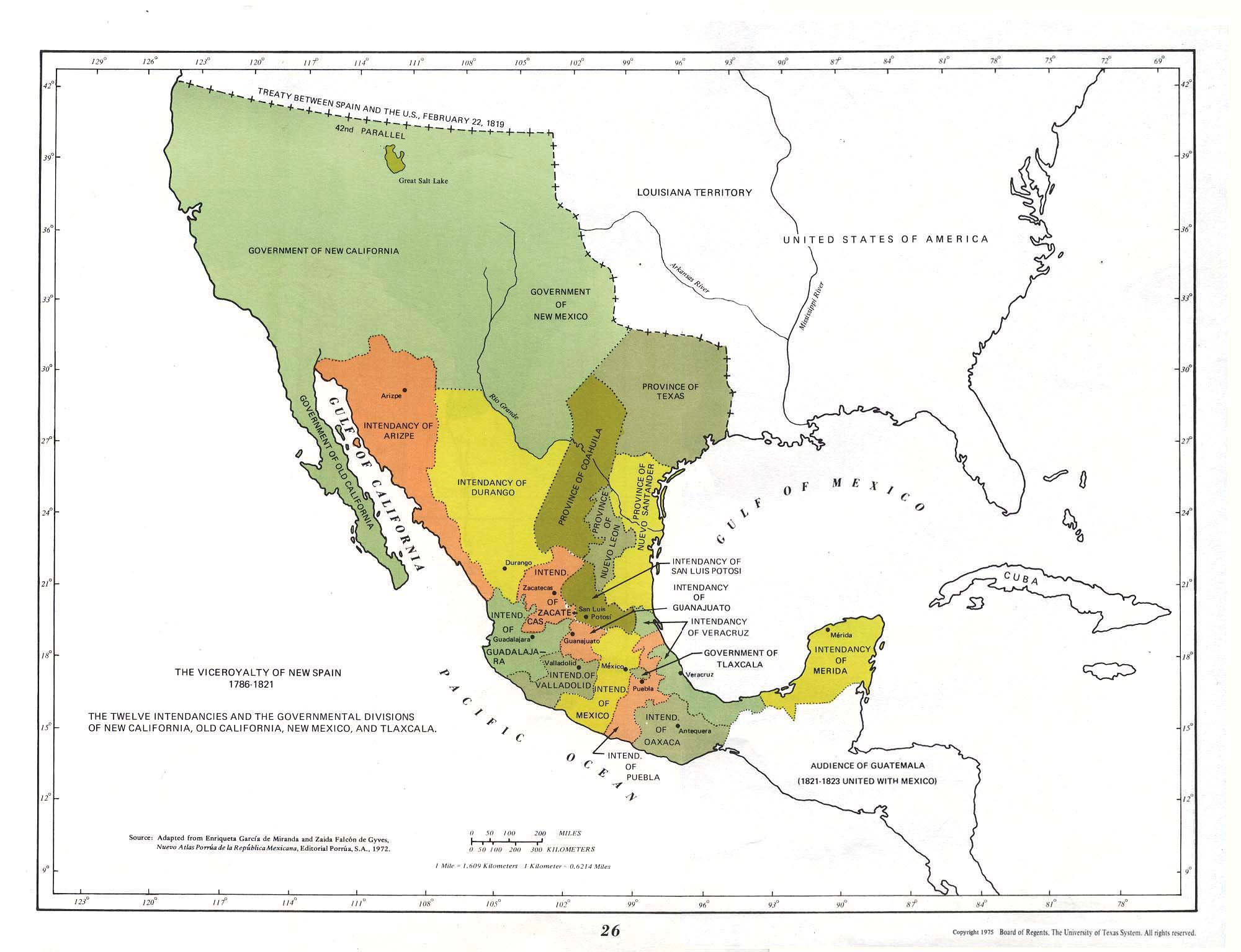
Asian Roles in New Spain

My favorite article in the latest issue of Journal of World History (on Project MUSE) is by Edward R. Slack Jr. on “The Chinos in New Spain: A Corrective Lens for a Distorted Image.” Here are a few excerpts (footnotes and references omitted).

Spanish galleons transported Asian goods and travelers from Manila to colonial Mexico primarily through the port of Acapulco. During the two and a half centuries of contact between the Philippines and the Viceroyalty of New Spain, a minimum of 40,000 to 60,000 Asian immigrants would set foot in the “City of Kings,” while a figure double that amount (100,000) would be within the bounds of probability. From Acapulco they would gradually disperse to the far corners of the viceroyalty, from Loreto in Baja California to Mérida in Yucatan…. The majority, however, would eventually settle in two distinct zones: on the west coast in the districts of Guerrero, Jalisco, and Michoacán, and in the large, ethnically diverse municipalities of Mexico City and Puebla in the central valleys and the eastern port of Veracruz. The two zones were transversed by the most heavily traveled arteries that connected Acapulco to Mexico City (known colloquially as el camino de China) in the west; Veracruz with Puebla and Mexico City in the east; and several arterials linking the capital with Puerto Vallarta in the west and Guanajuato in the northwest.

For the most part, the chinos disembarked at Acapulco as sailors, slaves, and servants. Over the longue durée of Mexican-Asian cultural exchange, the largest contingent of Asians arrived as sailors on the galleons and smaller vessels (capitanas, pataches, and almirantes) that annually plied the long and perilous return voyage from Manila. The seamen were primarily Filipinos, Chinese mestizos (known in Manila as mestizos de Sangley), or ethnic Chinese from the fortified port of Cavite near Manila that served as the primary shipyard for Spaniards in the archipelago. In 1565, the first chino sailors from the islands of Cebu and Bohol arrived in Acapulco aboard Friar Andrés de Urdaneta’s trailblazing galleon, the San Pedro. During the late sixteenth century Iberian sailors constituted the majority of crewmen, but by the early 1600s Asians had surpassed them, accounting for 60–80 percent of the mariners from that time forward. A historical snapshot of galleon seafarers in the mid eighteenth century comes from a crew manifest of La Santissima Trinidad. In 1760, this vessel was manned by 370 sailors, consisting of 30 officers (Europeans or Mexican criollos), 40 artillerymen (27 chinos), 120 sailors (109 chinos), 100 “Spanish” cabin boys (96 chinos), and 80 “plain” cabin boys (78 chinos). In sum, 84 percent (310) of the crew were born and raised in Spain’s Asian colony, with 68 percent (250) hailing from the port of Cavite alone….

Along the Pacific coast, chino sojourners tended to congregate in the cities and pueblos of Acapulco, Coyuca, San Miguel, Zacatula, Tex pan, Zihuatenejo, Atoya, Navidad, and Colima. With the arrival of more ships from Manila, the number of sailors who either had no desire to return to the Philippines or were brought over as slaves married local Indian and mixed-race women increased. Consequently, a sizable population of chinos and their descendants made these cities and pueblos a popular destination for fellow Asians. Both freemen and slaves farmed rice (brought from the Philippines), corn, and cotton; tended cacao and coconut palm trees; fished in the seas and rivers; and transported people and goods to various ports along the coastline. Those who followed the royal highways to towns farther inland worked as muleteers or in the silver mines, haciendas, obrajes (textile workshops), or sugar mills….

Slaves and servants constituted the second largest group of Asian immigrants during the colonial era. Manila quickly became an important entrepôt for the commerce in human flesh during the first century of Spanish rule. The greater part were transported by Portuguese vessels from colonies and trading ports in Africa, India, the Malay peninsula, Japan, and China, although Chinese junks and Malay prahus also shipped large quantities to Manila. Non-Filipino slaves that fetched the highest price were from Timor, Ternate, Makassar, Burma, Ceylon, and India, because “the men are industrious and obliging, and many are good musicians; the women excellent seamstresses, cooks, and preparers of conserves, and are neat and clean in service.”…

The incorporation of Asian immigrants into the armed forces of New Spain represents another fascinating fragment of the chino mosaic from the colonial era. Similar to restrictions placed on other castas in Mexico, there were numerous prohibitions against Asians carrying weapons or riding horses….

The legion of similar antiweapons ordnances from the 1550s onward notwithstanding, from at least the 1590s free chinos not only were granted permission to carry weapons, but gradually incorporated into both the salaried companies of Españoles as well as local militias, especially those cities and towns along the Pacific coast. In several documents from the years 1591 and 1597, an “Indio Chino” from the silver mining town of Zultepec named Juan Alonzo, who earned his livelihood from buying and selling mules, was granted a license to ride a horse with a saddle and bridle and to carry a sword. A key determinant in this matter was his racial classification as a chino, since indios (unless they were elites) were forbidden such privileges….

Among the scores of Asian peoples that were widely defined as chinos, in the early decades of the 1600s Japanese converts were held in high esteem by Spaniards in the Philippines and New Spain for their bravery and loyalty. In 1603 and 1639 when Chinese residents in the Parián of Manila revolted against their Iberian overlords, Japanese swordsmen distinguished themselves in combat. Without their assistance, Sangleyes would surely have made the Philippines a colony of the Middle Kingdom. Thousands of Japanese converts, traders, and ronin made the Philippines their home prior to the closing of Cipango to Iberians in the 1630s. They lived in a suburb of Manila called Dilao, with a population estimated at 3,000 by 1624.

Thus it is not surprising that samurai converts were considered a more privileged subgroup of chinos in New Spain….

It is unclear exactly when chino militias were established on the west coast of New Spain. It is evident, however, that prior to 1729 Asian paramilitary units were routinely patrolling the regions adjacent to Acapulco. Tiburcio Anzalde, “captain of one of the militias of chinos and mulatos in the district of Atoya,” discussed the duties and obligations of militiamen in a 1746 document: repeated trips to Acapulco to deliver mail and other correspondences; to clear the roads (of bandits) while on patrol; and, most importantly, their heroic role in resisting the English pirate George Anson‘s invasion at the port of Zihuatenejo in 1741.

Leave a comment

Filed under Asia, China, economics, England, Japan, labor, Mexico, migration, Netherlands, Philippines, Portugal, Spain