Category Archives: Russia

A Eurasian Crossroads Now in China

The latest issue (a year late!) of China Review International (Project MUSE subscription required) contains a review by Thomas Barfield of a book that sounds interesting: James A. Millward’s Eurasian Crossroads: A History of Xinjiang (New York: Columbia University Press, 2007). Here are a few excerpts from the review.

As befits a key link in the international Silk Route in premodern times, the region’s people proved historically open to new ideas and opportunities. Some of these opportunities were thrust upon them. The territory constituting today’s Xinjiang appears never to have been unified politically except under the rule of outsiders. These outsiders were strikingly diverse, coming as they did at different times from every surrounding territory. From the east, the Han and Tang dynasties vied with the northern Mongolian steppe-based Xiongnu, Turk, and Uighur nomad empires for influence and political control. The Tibetan Empire on its southern flank also extended its rule over the region at various times during the seventh through the ninth centuries. The west was not entirely absent in these struggles either. The Sogdian city-states of Central Asia had great influence over their eastern cousins in the Tang dynasty, and during the eleventh century the Turkish Qara Khanids, based in Bukhara, became the dominant regional power. They were displaced at the beginning of the twelfth century by royal Manchurian refugees of the Liao dynasty from North China who reestablished themselves there as the Qara Khitai. Although neither Turks nor Muslims, the Qara Khitai proved successful rulers until they were finally ousted by the Mongols in 1218. Chinese influence (even if by way of a Manchurian people) was then notably absent from the region for the next five hundred years. The oases and neighboring steppe zones fell under different post-Mongol successor states until the Qing dynasty captured the area in 1757….

Despite local complaints about unfair taxation, the court bureaucrats in Beijing were well aware that the Qing colonial administration and military garrisons in Xinjiang constituted a money pit that swallowed up revenue from other parts of China.

The structural fragility of China’s position in Central Asia became clear in 1864, when a series of successful local rebellions spread from one oasis to another so rapidly that Qing control vanished entirely in a matter of months. Yaqub Beg, an adventurer from Kokand (recently annexed by Czarist Russia) took advantage of the situation to establish an independent emirate and opened diplomatic ties with British India, Russia, and the Ottoman Empire. The Qing court was divided about whether Xinjiang merited the huge expense required to recover it. There was established precedent in China for writing off the remote western region a dead loss: both the Han and Tang dynasties had done so when their power waned and the Ming dynasty never went there in the first place. There were also other demands on the treasury made by officials who saw the modernization of China’s military as a higher priority than funding a risky colonial war. Millward’s analysis of how the Qing dynasty’s preoccupation with maintaining its inner Asian frontier intact demonstrates that Xinjiang loomed far larger in importance for them than for dynasties of Han Chinese origin. In the event, after deciding to fund a military campaign, the Qing struck it lucky. Yaqub Beg died unexpectedly in 1877, and his emirate collapsed. Qing forces quickly reoccupied Xinjiang without facing a serious battle.

It is at this point that the Qing incorporated Xinjiang directly into China as a province. Millward shows that the resulting reorganization of the local government along Chinese lines, plus the cost of garrison troops, made its continued occupation of the region even more costly, asserting it to be an underestimated factor in China’s failure to compete effectively with the Western powers and Japan at the turn of the century. The reorganization also placed ethnic Han Chinese influenced by anti-Manchu nationalism in provincial leadership positions. This had negative consequences for the Qing since they fomented rebellion against the dynasty, but a long-term positive consequences for China. Such officials, small minorities in a distant land, were keen to ensure that the province remained a part of China after the Qing was replaced by a republic in 1911. These Chinese governors (“warlords,” more pejoratively) gave lip service to the Republic of China in Nanking and did as they pleased in Xinjiang. Millward’s descriptions of their political machinations and murders show them as strikingly ruthless and practical, unhindered by any set of Confucian values. What the republic got in return was the continued right to claim Xinjiang as a Chinese province—no small prize since other inner-Asian territories eventually broke their ties with China: Mongolia under Russian protection, Manchuria by Japanese annexation, and Tibet through de facto self-rule.

Leave a comment

Filed under Central Asia, China, Mongolia, nationalism, religion, Russia, Tibet, Turkey

Russian Pacific Colony of Atuvai, Nigau, Ovagu, Mauvi?

Here’s a surprising passage from volume 7 (1973) of the Hawaiian Journal of History, whose back volumes are now online at the Oceania Digital Library Project hosted by the University of Hawai‘i Library’s digital repository.

On 21 May (2 June) 1816 G. A. Schäffer apparently achieved the improbable. In a solemn atmosphere Kaumualii—”King of the Sandwich Islands of the Pacific Ocean, Atuvai [Kauai] and Nigau [Niihau], and Hereditary Prince of the Islands of Ovagu [Oahu] and Mauvi [Maui]”—humbly requested “His Majesty the Sovereign Emperor Alexander Pavlovich … to accept the mentioned islands under his protection” and promised eternal allegiance to the “Russian scepter.”

This passage comes from a translation by Igor V. Vorobyoff commissioned by the Kauai Museum of an original publication in Russian: Bolkhovitinov, N. N., “Avantyura Doktora Sheffera na Gavayyakh v 1815-1819 Godakh,” Novaya i Noveyshaya Istoriya, Russian, No. 1, 1972, pp. 121-137. Here is a bit more historical context from the same article.

The history of Russian America is rich with striking events, courageous voyages, grandiose projects, and rather modest practical results. One of the oddest and most exotic episodes in the history of the Russian-American Company (RAC) was the Hawaiian adventure of Dr. Schäffer….

At the start of the 19th Century King Kamehameha (1753-1819), who was referred to as the Napoleon or Peter the Great of Polynesia, became the sovereign of the entire archipelago with the exception of the two northernmost islands, Kauai and Niihau, where his rival Kaumualii was entrenched. Kamehameha’s attempts at organizing an invasion of Kauai in 1796 and 1804 were foiled by natural calamities—first by a violent storm, and latter by a plague epidemic. The superiority of his forces was so obvious, however, that in 1810 Kaumualii decided to officially recognize his vassalage and agreed to pay a modest annual tax….

On 8 May 1819 Kamehameha—the most outstanding Hawaiian ruler, the founder of a united monarchy, and one of the great statesmen of his times—died at an age of about 70. In the summer of 1821 Kamehameha’s son, Liholiho moved Kaumualii from Kauai to Oahu where from that time on he lived as an honored prisoner, but this did not keep him from marrying Kamehameha’s widow, the famous Kaahumanu….

In 1820 an agent from the American Consulate and the first group of missionaries arrived in Hawaii. Sandalwood traders, and later American whalers witnessed increasing business. “The political relations of the people and king,” reported M. I. Murav’yev to St. Petersburg on 15 (27) January 1822, “remain as before; the king squanders, the people suffer, and the Americans get richer, but not for long: Sandalwood is becoming more difficult to get by the hour and, consequently, its price is going up.” … The general conclusion to which the governor of Russian possessions in America came was entirely unequivocal: “In truth I do not know how the Sandwich Islands could be useful to us, especially under the present circumstances. Schäffer performed a humorous comedy for which the company payed very dearly, and I do not think that it could be resumed. But there is no obstacle whatsoever, nor can there be any, simply to finding a berth there while enroute and replenishing the stocks with fresh provisions.”

Words in Kaua‘i dialect of HawaiianLANGUAGE NOTES: During the 1810s, Hawaiian dialects did not yet have a standard dialect or spelling system, so the Russian transcriptions (here transliterated into Latin equivalents) of Hawaiian names represent their own practices, including the representation of foreign /h/ as g (Cyrillic Г) and [w] as v (Cyrillic В), and ignorance of phonemic glottal stops.

Hawaiian /h/ is not guttural like Russian /x/, and there is an established tradition of transcribing foreign /h/ as g, as in gegemoniya ‘hegemony’, gumanizm ‘humanism’, or Gitler ‘Hitler’. Still, it’s a bit amusing to see Hanalei rendered as “Gannarey.”

The Hawaiian [w] sounds transcribed as v in the excerpts cited above do not correspond to the Hawaiian phoneme /w/, which is in fact slightly fricative in some contexts. The [w] sounds written as v in Atuvai, Ovagu, and Mauvi are just predictable transitions between a round vowel /o, u/ and its adjacent unrounded vowel /a, e, i/. But a real /w/ gets the same treatment in “Vegmeyskaya” [Waimea] Valley, which turns up elsewhere in the article.

The western dialects of Hawaiian retained earlier *t, which is reflected in Standard Hawaiian as /k/, the reflex in the eastern end of the archipelago, from which the western islands were subjugated. In many English sources from the early 1800s, the name of Kaua‘i is spelled Atooi or some variant thereof, while the name of Kaumuali‘i is spelled Temoree, Tamoree, and the like, from Teumuali‘i or Taumuali‘i (and the name of his rival Kamehameha is sometimes rendered as Tamehameha, Tamaamaah, etc.).

Leave a comment

Filed under Hawai'i, language, Pacific, Russia, U.S.

Kakania or Russia as “Versuchsstation des Weltuntergangs”

From The War of the World: Twentieth-Century Conflict and the Descent of the West, by Niall Ferguson (Penguin Press, 2006), pp. 13-15:

Czechs in particular chafed at their second-class status in Bohemia, and were able to give more forthright political expression to their grievances after the introduction of universal male suffrage in 1907. But schemes for some kind of Habsburg federalism never got off the ground. The alternative of Germanization was not an option for the fragile linguistic patchwork that was Austria; the most that could be achieved was to maintain German as the language of command for the army, though with results lampooned hilariously by the Czech writer Jaroslav Hašek in The Good Soldier Švejk. By contrast, the sustained Hungarian campaign to ‘Magyarize’ their kingdom’s non-Hungarians, who accounted for nearly half the population, merely inflamed nationalist sentiment. If the trend of the age had been towards multi-culturalism, then Vienna would have been the envy of the world; from psychoanalysis to the Secession, its cultural scene at the turn of the century was a wonderful advertisement for the benefits of ethnic cross-fertilization. But if the trend of the age was towards the homogeneous nation state, the future prospects of the Dual Monarchy were bleak indeed. When the satirist Karl Kraus called Austria-Hungary a ‘laboratory of world destruction’ (Versuchsstation des Weltuntergangs), he had in mind precisely the mounting tension between a multi-tiered polity – summed up by Kraus as an ‘aristodemoplutobarokratischen Mischmasch’ – and a multi-ethnic society. This I was what Musil was getting at when he described Austria-Hungary as ‘nothing but a particularly clear-cut case of the modern world’: for ‘in that country … every human being’s dislike of every other human being’s attempts to get on … [had] crystallized earlier’. Reverence for the aged Emperor Francis Joseph was not enough to hold this delicate edifice together. It might even end up blowing it apart.

If Austria-Hungary was stable but weak, Russia was strong but unstable. ‘There’s an invisible thread, like a spider’s web, and it comes right out of his Imperial Majesty Alexander the Third’s heart. And there’s another which goes through all the ministers, through His Exellency the Governor and down through the ranks until it reaches me and even the lowest soldier,’ the policeman Nikiforych explained to the young Maxim Gorky. ‘Everything is linked and bound together by this thread … with its invisible power.’ As centralized as Austria-Hungary was decentralized, Russia seemed equal to the task of maintaining military parity with the West European powers. Moreover, Russia exercised the option of ‘Russification’, aggressively imposing the Russian language on the other ethnic minorities in its vast imperium. This was an ambitious strategy given the numerical predominance of non-Russians, who accounted for around 56 per cent of the total population of the empire. It was Russia’s economy that nevertheless seemed to pose the biggest challenge to the Tsar and his ministers. Despite the abolition of serfdom in the 1860s, the country’s agricultural system remained communal in its organization – closer, it might be said, to India than to Prussia. But the bid to build up a new class of thrifty peasant proprietors – sometimes known as kulaks, after their supposedly tight fists – achieved only limited success. From a narrowly economic perspective, the strategy of financing industrialization by boosting agricultural production and exports was a success. Between 1870 and 1913 the Russian economy grew at an average annual rate of around 2.4 per cent, faster than the British, French and Italian and only a little behind the German (2.8 per cent). Between 1898 and 1913, pig iron production more than doubled, raw cotton consumption rose by 80 per cent and the railway network grew by more than 50 per cent. Militarily, too, state-led industrialization seemed to be working; Russia was more than matching the expenditures of the other European empires on their armies and navies. Small wonder the German Chancellor Theobald von Bethmann Hollweg worried that ‘Russia’s growing claims and enormous power to advance in a few years, will simply be impossible to fend off’. Nevertheless, the prioritization of grain exports (to service Russia’s rapidly growing external debt) and rapid population growth limited the material benefits felt by ordinary Russians, four-fifths of whom lived in the countryside. The hope that they would gain land as well as freedom aroused among peasants by the abolition of serfdom had been disappointed. Though living standards were almost certainly rising (if the revenues from excise duties are any guide), this was no cure for a pervasive sense of grievance, as any student of the French ancien regime could have explained. A disgruntled peasantry, a sclerotic aristocracy, a radicalized but impotent intelligentsia and a capital city with a large and volatile populace: these were precisely the combustible ingredients the historian Alexis de Tocqueville had identified in 1780s France. A Russian revolution of rising expectations was in the making – a revolution Nikiforych vainly warned Gorky to keep out of.

Leave a comment

Filed under Austria, Bohemia, Hungary, nationalism, Russia, war

Mosquitoes to Mars?

A few weeks ago, RIA Novosti reported on a type of mosquito that seems preadapted to the possibility of suspended animation during long space flights.

Cosmonauts who might fly to the Red Planet are learning how to survive in a forest outside Moscow. Scientists from the Russian Academy of Sciences’ Institute of Medical and Biological Problems are assessing the impact of cosmic radiation on living organisms, one of which even managed to survive in outer space.

Anatoly Grigoryev, vice president of the Russian Academy of Sciences, told RIA Novosti that a mosquito had managed to survive in outer space. First, it appeared that Grigoryev was talking about a spider running loose aboard the International Space Station. Incredibly, a mosquito slept for 18 months on the outer ISS surface. “We brought him back to Earth. He is alive, and his feet are moving,” Grigoryev said.

The mosquito did not get any food and was subjected to extreme temperatures ranging from minus 150 degrees Celsius in the shade to plus 60 degrees in the sunlight.

Grigoryev said the insect had been taken outside the ISS on orders from the Institute’s scientists working on the Biorisk experiment. “First, they studied bacteria and fungi till a Japanese scientist suggested studying mosquitoes,” Grigoryev told RIA Novosti….

“Professor Takashi Okuda from the National Institute of Agro-Biological Science drew our attention to the unique, although short-lived, African mosquito (bloodworm), whose larvae develop only in a humid environment,” Grigoryev said.

Rains are rare in Africa, where puddles dry up before one’s eyes. However, this mosquito is well-adapted to adverse local conditions, existing in a state of suspended animation when vital bodily functions stop almost completely.

When suspended animation sets in, water molecules are replaced by tricallosa sugar, which leads to natural crystallization. The larvae were then sprayed with acetone, boiled and cooled down to minus 210 degrees Celsius, the temperature of liquid nitrogen. Amazingly, they survived all these hardships.

The Japanese also studied bloodworm DNA and found that it could be switched on and deactivated in 30 to 40 minutes. “This is facilitated by the crystallization of biological matter,” Doctor of Biology Vladimir Sychev from the Institute of Medical and Biological Problems told RIA Novosti.

If Anopheles mosquitoes can do the same, it may not take long for the first humans settlers on Mars to melt some of its ice and turn barren landscapes into malarial swamps.

via Japundit

Leave a comment

Filed under Africa, Japan, malaria, Russia, science

Policing the Pirates of Puntland

The India-oriented blog, The Acorn, recently noted that the Indian navy is proposing to join the multinational effort to police the pirate-infested waters off the Horn of Africa, many of them operating out of Somalia’s “self-governing” region known as Puntland.

Among the tasks assigned to the Combined Task Force 150 (CTF-150)—an international naval task force comprising, among others, of US, British, French, Pakistani and Bahraini ships—are maritime security operations in the Gulf of Aden, Gulf of Oman, the Arabian Sea, Red Sea and the Indian Ocean. While its purpose is to deny the use of the seas to smugglers and terrorists the main problem in the area under its watch is piracy.

CTF-150 doesn’t have enough ships to secure one of the world’s busiest shipping lanes. So it advises large, slower vessels to travel in convoys so that it can better watch over them. But since this is not always possible, around one in 500 ships fall victim to pirates. Since the monthly traffic is around 1500, pirates succeed in raiding three or four ships each month.

Now the Russian navy is sending a warship to the area after one group of the pirates may have bitten off more than they can chew.

SOMALI PIRATES who seized a Ukrainian ship carrying 33 T72 battle tanks – apparently bound for the autonomous government of South Sudan – yesterday warned against any attempt by Western navies to rescue the vessel’s weapons cargo or its crew.

Januna Ali Jama, a spokesman for the pirates in the breakaway north statelet of Puntland said the pirates would soon begin the routine Somali pirate tactic of negotiating the return of the cargo ship Faina to its Ukraine state owners in exchange for a ransom.

Jama told the BBC Somali Service that the pirates demand is £18 million from the Kiev government because apart from the Russian made tanks the Faina is carrying “weapons of all kinds”, including rocket-propelled grenades, anti-aircraft guns and many hundreds of thousands of ammunition….

The pirate syndicates – of which there at least five, each about 1000-strong – operate out of Puntland, far to the north, wrapped around the Horn of Africa where the Gulf of Aden meets the Indian Ocean, which declared itself separate from the Republic of Somalia 10 years ago. Puntland is to Mogadishu what Kurdistan, semi-autonomous and far off in the northern mountains of Iraq, is to Baghdad.

Unrecognised internationally – although the British Embassy in neighbouring Ethiopia maintains close contact with the Puntland government, which is allowing oil exploration by three Western companies – little diplomatic pressure can be put on Puntland, which says piracy grew after international “sea robber” fishing fleets plundered and wrecked its rich fishing grounds. The United Nations estimates that fish worth at least £50 million a year are plundered illegally from Somali waters by Spanish and other foreign boats.

The pirates are unlikely to be unable to unload the tanks because of a lack of specialist heavy-lifting gear in the tiny ports and innumerable coves of Puntland, a barren land three times the area of Scotland which historically depended on fishing and camel and goat-herding.

But that will hardly discourage the pirates. What they want is booty, in the form of on-board cash, cargo and, most importantly, ransom money, which owners are increasingly willing to pay, given the huge values of ships and their cargoes and the daily costs of maintaining them at sea. On the same day as the Faina was captured, another Puntland pirate syndicate released a Japanese ship and its 21-member crew after a £1 million ransom was paid. The 53,000-tonne bulk carrier Stella Maris had a valuable cargo of zinc and lead ingots. And as the Stella Maris was being freed, Somali pirates were hijacking a Greek chemical tanker with 19 crew on board as it sailed through the Gulf of Aden from Europe to the Middle East.

The Faina is believed to be heading to the pirate port of Eyl, the main destination of hijacked ships where Puntland entrepreneurs run special restaurants for the hundreds of seized crewmen and where the pirates’ accountants make calculations on laptops and drive state-of-the-art land cruisers….

Worldwide, pirates attacked a known 263 large vessels in 2007, up from a reported 239 in 2006, according to Choong’s piracy reporting centre. Southeast Asia, especially the shipping lanes of the Malacca Straits between Malaysia and the huge Indonesian Island of Sumatra, used to be the world’s busiest place for pirate attacks. Better co-operation between southeast Asian nations and the consequences of the 2004 tsunami have greatly reduced the number of attacks. Many pirates operated out of Aceh, the northern province of Sumatra, but the tsunami destroyed their ports, wrecked their boats and killed many of the pirates.

Somali piracy easily tops the world table, both in terms of the number of attacks and the money made. It is the Somali financiers sitting mainly in Dubai, Britain, Canada, Denmark and Kenya who make the big money by keeping the bulk of the ransom payments. Pirates based in Nigeria and Peru are also climbing the league table.

France is now circulating a draft resolution in the UN Security Council urging nations to contribute more warships and aircraft to the fight against piracy off Somalia. While the Foreign office has ordered the Royal Navy, to the incredulity of the nation’s maritime industry, not to detain Somali pirates from fear of human rights complications, the French are being pro-active.

UPDATE: On The Atlantic magazine’s blog The Current, Robert Kaplan describes a bit of the lifestyle of these pirates.

I spoke recently with several U.S. Navy officers who had been involved in anti-piracy operations off Somalia, and who had interviewed captured pirates. The officers told me that Somali pirate confederations consist of cells of ten men, with each cell distributed among three skiffs. The skiffs are usually old, ratty, and roach-infested, and made of unpainted, decaying wood or fiberglass. A typical pirate cell goes into the open ocean for three weeks at a time, navigating by the stars. The pirates come equipped with drinking water, gasoline for their single-engine outboards, grappling hooks, short ladders, knives, AK-47 assault rifles, and rocket-propelled grenades. They bring millet and qat (the local narcotic of choice), and they use lines and nets to catch fish, which they eat raw. One captured pirate skiff held a hunk of shark meat so tough it had teeth marks all over it. With no shade and only a limited amount of water, their existence on the high seas is painfully rugged.

The classic tactic of Somali pirates is to take over a slightly larger dhow, often a fishing boat manned by Indians, Taiwanese, or South Koreans, and then live on it, with the skiff attached. Once in possession of a dhow, they can seize an even bigger ship. As they leapfrog to yet bigger ships, they let the smaller ships go free. Because the sea is vast, only when a large ship issues a distress call do foreign navies even know where to look for pirates. If Somali pirates hunted only small boats, no warship in the international coalition would know about the piracy.

Leave a comment

Filed under Africa, Asia, Australia, Europe, Middle East, piracy, Russia, Somalia, South Asia, Southeast Asia, U.S., Ukraine

Finland vs. Estonia vis-à-vis Russia

Finland’s President Tarja Halonen recently accused Estonia of being “hypersensitive” to Russia and thereby provoking it. David McDuff, a writer and translator who blogs at A Step At a Time, provides some interesting background on Finland’s history of severe compromise in its relations with Russia, relations that defined the neologism ‘Finlandization‘.

I began to visit Finland – exclusively on business connected with literary translation – during the early part of Koivisto’s presidency, and I can still remember the atmosphere that prevailed in the country at the time. While a relative freedom in social, economic and cultural life was noticeable everywhere, so that if one wanted to, one could imagine oneself to be much further West in Europe, in matters that had anything to do with the Soviet Union, a grim, sarcastic silence and unwillingness to discuss Soviet-related issues were the order of the day. While there was certainly more freedom than there was across the water, in Soviet-occupied Estonia, it was impossible to ignore the constraints that existed in Finnish society where Moscow was concerned. Perhaps because most of my activity in Finland was related to literature and translation, I avoided some of the more intense disagreements that could have arisen between my points of view and those of my hosts. My background in Russian studies, and the time I’d spent in Moscow as a post-graduate research student, tended to interfere now and then, however. I can still remember one or two incidents. For example, at that time, Koivisto’s Soviet Union policy included the long-established practice of returning Soviet defectors to the USSR. On a day when an anti-US and anti-Israel demonstration was being held in Helsinki, I happened to have conversation with a Finland-Swedish poet who much later on became a minister in the government of Paavo Lipponen. Incautiously, I mentioned the subject of Jewish refuseniks in the Soviet Union, and asked if Finland would also return them to Russia if they appeared in Finland. This provoked an outburst of violent anger from my interlocutor, and I decided not to raise any more such questions with him or with anyone else I met, as I was in Finland on an official invitation.

Many years later, I read about some of what had really transpired among Finland’s media and opinion-forming circles during the 1960s, 70s and early 80s in Esko Salminen’s Vaikeneva valtiomahti (The Silent Estate?) and felt that most of my suspicions were confirmed. Finlandization and “self-censorship” really were a important part of Finland’s cultural and political identity in those decades after the Second World War. Now the Finnish politician Erkki Aho has reviewed a recent book by the historian and political analyst Juha Seppinen, entitled Neuvostotiedostelu Suomessa 1917-1991 (Soviet Intelligence in Finland 1917-1991) which deals with the subject of Finland’s relations with Russia and the Soviet Union throughout most of the 20th century (I reached the link through Marko Mihkelson’s blog). The book also lists details of the meetings and contacts many Finnish politicians and public figures had with members of the Soviet security and intelligence services.

Perhaps at least part of the root of the problem in Finland can be traced back to the Finnish Civil War of 1918, when the forces of the Social Democrats (referred to as the “Reds”), who were supported by the Bolsheviks in Russia, fought with the troops of the Conservatives (known as the “Whites”), supported by Imperial Germany. The degree to which this conflict permeated virtually all areas of Finnish life cannot be exaggerated. It even affected the most recondite literary circles: the Dadaist poet Gunnar Björling became involved on the White side, and hid a White telegraphist in his basement room in Red-occupied Helsinki throughout the entire four months of the war.

A Step At a Time is a good place to keep up on regional sources on Russia’s relations with Chechnya, Georgia, and its Baltic Near Abroad.

Leave a comment

Filed under Baltics, Finland, Russia, USSR, war

Russians and Georgians in South Bend

The current issue of the NEH journal Humanities has an article about a chain of immigrants from Georgia and Russia, who have formed a vibrant and musically gifted community in South Bend, Indiana. The article is excerpted from a new book, From Artists in Exile: How Refugees from Twentieth Century War and Revolution Transformed the American Performing Arts (HarperCollins, 2008), by Joseph I. Horowitz, who received an NEH fellowship for the project. Here are a few paragraphs.

During the first half of the twentieth century—decades of war and revolution—an “intellectual migration” relocated thousands of artists and thinkers to the United States, including some of Europe’s supreme actors, dancers, composers, and filmmakers. For them, America proved to be both a strange and opportune destination. A “foreign homeland” (Thomas Mann), it would frustrate and confuse, yet afford a clarity of understanding unencumbered by native habit and bias. However inadvertently, the condition of cultural exile would promote acute inquiries into the American experience. What impact did these famous newcomers have on American culture, and how did America affect them?…

My close friends happen to include another Soviet defector: the pianist Alexander Toradze. Lexo is Georgian, born in Tblisi in 1952. His father was a leading Georgian composer. His mother was an actress. Groomed by the Soviet system, he entered Tblisi’s central music school at six and first played with orchestra at nine. He proceeded to the Moscow Conservatory at nineteen to study with Yakov Zak—then one of the great names of Russian pianism, after Sviatoslav Richter and Emil Gilels. When Zak proved unsupportive, Toradze left him—for a young Soviet artist, a bold and controversial move—for Boris Zemliansky, then Lev Naumov: intimate and intense relationships. In 1976 he was sent to compete in the Van Cliburn competition in Fort Worth and finished second. A flurry of Western dates ensued, but the Soviet invasion of Afghanistan soured cultural exchange with the United States. He festered. His fees were low. He felt suppressed as a Georgian. He was galled by the company of KGB “interpreters.” In 1977, he ran into Mstislav Rostropovich, a family friend, at a Paris airport. “When you go back, kiss the ground of our country,” Rostropovich told him. “But when are you going to do something?” On tour in Madrid with a Moscow orchestra in 1983, Toradze entered the American Embassy and requested refugee status. Within three months, he began a nine-city American tour with the Los Angeles Philharmonic….

In 1990, he married an American girl, a fledgling pianist from Florida. In 1991, he accepted a piano professorship at Indiana University at South Bend—a place best-known for Notre Dame’s football team. Transplanted to northern Indiana, he proceeded to recreate the intense mentoring environment he had known in Moscow, as well as the communal social life he had known in Tblisi. To date, he has recruited more than seventy gifted young pianists, mainly from Russia and Georgia. They bond as a family, with Lexo the stern or soft surrogate father. They make music and party with indistinguishable relish. Lexo’s big house, on a suburban street without sidewalks, is their headquarters.

via A&L Daily

The New York Times review of the book begins, “It is hard to imagine where American culture would be today without the contributions of Hitler and Stalin …”

Leave a comment

Filed under migration, music, Russia, U.S., USSR

End of the Americo-Liberian Aristocracy, 1980

From The Fate of Africa: A History of Fifty Years of Independence, by Martin Meredith (PublicAffairs, 2005), pp. 545-548:

In his book Journey Without Maps, an account of his travels in Liberia in the 1930s, the English writer Graham Greene recorded that ‘Liberian politics were like a crap game played with loaded dice’. It was a game that Liberia’s ruling elite – the descendants of some 300 black settler families from the United States who set up an independent republic in 1847 – played among themselves with considerable relish. For more than 100 years – from 1877 to 1980 – Liberia was governed under a one-party system in which the same party, the True Whig Party, controlled by the same elite group, held office continuously, dispensing patronage, deciding on public appointments and retaining a monopoly on power – a record equalled by no other political party anywhere in the world. Elections were nevertheless taken seriously, if only to determine which family – the Barclays, the Kings, the Tubmans – emerged on top. ‘The curious thing about a Liberian election campaign,’ wrote Greene, ‘is that, although the result is always a foregone conclusion, everyone behaves as if the votes and the speeches and the pamphlets matter.’ However, he added, the system was more complicated than it seemed. ‘It may be all a question of cash and printing presses and armed police, but things have to be done with an air. Crudity as far as possible is avoided.’

As members of a ruling aristocracy, the Americo-Liberians, as they called themselves, were immensely proud of their American heritage. They developed a lifestyle reminiscent of the antebellum South, complete with top hats and morning coats and masonic lodges. They built houses with pillared porches, gabled roofs and dormer windows resembling the nineteenth-century architectural styles of Georgia, Maryland and the Carolinas. They chose as a national flag a replica of the American Stars and Stripes, with a single star, and used the American dollar as legal tender.

Just like white settlers in Africa, the Americo-Liberians constructed a colonial system subjugating the indigenous population to rigid control and concentrating wealth and privilege in their own hands. Despite their origins as descendants of slaves from the Deep South, they regarded black Liberians as an inferior race, fit only for exploitation. The nadir of Americo-Liberian rule came in 1931 when an international commission found senior government officials guilty of involvement in organised slavery.

When other West African states shed colonial rule in the 1960s, the Liberian system stayed much the same. Liberian law stipulated that only property owners were entitled to the vote, so the vast majority of indigenous Africans were effectively left without one. Small numbers were assimilated into the ranks of the ruling elite: ‘country boys’ adopted by coastal families; girls selected as wives or concubines; ambitious ‘hinterlanders’ climbing the ladder. During the 1970s a few were co-opted into government. Local administration in the ‘hinterland’ was largely run by indigenous officials. But essentially Liberia remained an oligarchy where 1 per cent of the population controlled the rest – some 2 million people.

The last of the line of Americo-Liberian presidents was William Tolbert, the grandson of freed South Carolina slaves who had served as vice-president for twenty years. A Baptist minister, he attempted a series of cautious reforms, abandoning the top hat and tail-coat traditions favoured by his predecessor, William Tubman, selling the presidential yacht and abolishing a compulsory ‘tithe’ of 10 per cent of every government employee’s salary that went to the True Whig Party. But much of Tolbert’s efforts were also devoted to amassing a personal fortune and promoting the interests of family members in the traditional manner. One brother was appointed minister of finance; another was chosen as president of the senate; a son-in-law served as minister of defence; other relatives filled posts as ministers, ambassadors and presidential aides. The crap game of Liberian politics was as highly profitable in the 1970s as in the 1930s.

Economic development in the 1960s and 1970s helped underpin the system, as well as provide new opportunities for the elite’s self-enrichment. The mainstay of the economy had initially been rubber. In 1926 the Firestone Tyre and Rubber Company leased a million acres for ninety-nine years at six cents an acre to meet the American demand for car tyres. But iron ore exports from massive, high-grade deposits in the Bomi hills then overtook rubber as the major source of foreign investment and government income. By 1970 Firestone and the Liberian Iron Mining Company were providing the government with 50 per cent of greatly increased revenues. A third source of income came from registration fees from the world’s largest ghost fleet of ships: Liberia possessed only two ships of its own, but allowed more than 2,500 vessels plying the seas to fly Liberia’s flag of convenience without the bother of inspection, for a suitable fee.

Liberia ‘s economic advances, however, served only to highlight the growing disparity between the ostentatious lifestyle of the rich elite and the overwhelming majority of impoverished tribal Africans. In 1979 – the same year that Tolbert spent an amount equivalent to half the national budget while acting as host to an OAU heads of state conference – demonstrators took to the streets in protest against a 50 per cent increase in the price of rice, the staple food of most Liberians. The price increase had been authorised by Tolbert in the hope of encouraging local production. But since one of the chief beneficiaries was the president’s cousin, Daniel Tolbert, who owned the country’s largest rice-importing firm, it was seen as another move to enrich the elite. On Tolbert’s orders armed police and troops opened fire on the demonstrators, killing dozens of them.

In the following months Tolbert struggled to contain a rising tide of discontent, colliding not just with the poor but with a new generation of the educated elite. He allowed the formation of an opposition party, but when opposition politicians called for a general strike, he had them arrested on charges of treason and sedition and banned the party.

On the night of 12 April 1980 a group of seventeen dissident soldiers led by a 28-year-old master sergeant named Samuel Doe, scaled the iron gate of the president’s seven-storey Executive Mansion, overpowered the guards and found Tolbert in his pyjamas in an upstairs bedroom. They fired three bullets into his head, gouged out his right eye and disembowelled him. His body was dumped in a mass grave along with twenty-seven others who died defending the palace. Ministers and officials were rounded up, taken before a military tribunal and sentenced to death.

Amid much jubilation, watched by a crowd of thousands laughing and jeering and filmed by camera crews, thirteen high-ranking officials were tied to telephone poles on a beach in Monrovia and executed by a squad of drunken soldiers, firing volley after volley at them. A great shout arose from the mob. ‘Freedom! We got our freedom at last!’ The soldiers rushed forward to kick and pummel the corpses.

Thus the old order ended.

Thus begins the chapter entitled “Blood Diamonds,” in which the barbarism only gets worse and worse. Few societies have solved the problem of how to overthrow recalcitrant aristocrats without descending into a period of barbarism that only serves to unduly enhance nostalgia for prerevolutionary times, as Theodore Dalrymple observes in his retrospective on Alexander Solzhenitsyn.

The Russian satirical writer Vladimir Voinovich satirized Solzhenitsyn’s Russian nationalism by depicting someone resembling him having his employees flogged in Vermont. This satirical scene, in fact, made a profound criticism of Solzhenitsyn’s political thought. Voinovich was alluding to the fact that, were it not for the horrors of Bolshevism, the pre-revolutionary Russian political tradition would be regarded as so brutal that no sensitive person of good will could be a Russian nationalist. As it was, the Bolsheviks regularly killed in a few minutes more people than the Romanovs managed in a century, giving pre-revolutionary Russian history the retrospective luster of decency, wisdom, and compassion that it did not in the least deserve. For Voinovich—and the distinguished historian of Russia Richard Pipes—Leninism had its roots in the Russian tradition as well as the Marxist one. This meant that Solzhenitsyn, while absolutely right in his uncompromising attitude to Marxist-Leninism and all its works, belonged in the category of Dostoevsky: a brilliant seer who would nevertheless have made a very bad guide.

Leave a comment

Filed under democracy, Liberia, nationalism, Russia, slavery, U.S., war

Baciu’s Early Exile Network

From Mira, by Ştefan Baciu (Honolulu: Editura Mele, 1979 [also Bucuresti: Editura Albatros, 1998], p. iii (my translation):

I dedicate this “Double Autobiography” to our Brazilian friends, departed but always present:

and to those in Hispanic America, just as present:

and to the memory of our friends:

    Grigore Cugler/“Apunake” (d. in Lima)
    Mircea Popescu (d. in Rome)
    Horia Tănăsescu (d. in San Francisco)
    Ion Oană-Potecaşu (d. in São Paulo)
    N. I. Herescu (d. in Zurich)
    Alexandru Busuioceanu (d. in Madrid)
    Aron Cotruş (d. in California)

It is perhaps not too surprising that the Romanian exiles are not well represented in Wikipedia. Baciu himself has a longer biography in Spanish Wikipedia than in either Romanian or English. Exiles tend to fall between the cracks. Who feels responsible for documenting their lives, people in their countries of exile or the ones they left behind? In the case of literary exiles, it depends who reads their work. I believe that Baciu devoted half of his own separate volume of memoirs (Praful de pe toba) to sketches of his old mentors and colleagues precisely in order to ensure that they would not be entirely forgotten.

Aleksandr Solzhenitsyn, who just passed away, spent time in both domestic internal and foreign exile. The English translations of his early classics like One Day in the Life of Ivan Denisovich, The First Circle, Cancer Ward, and August 1914 had a major influence on my understanding of what the Soviet system was all about, an understanding that was reinforced and enriched by my year in Romania in 1983-84. (I did not read The Gulag Archipelago, but have blogged passages of several books about Gulags more recently.) Solzhenitsyn is not regarded quite the same way in his country of exile as in his country of origin, and his obsessions also evolved differently at home and abroad. He lived more than two lives, perhaps even as many as nine.

Leave a comment

Filed under biography, Brazil, Latin America, literature, migration, North America, Romania, Russia, USSR

The Gulag Economy’s Peace Dividend

From The Whisperers: Private Lives in Stalin’s Russia, by Orlando Figes (Metropolitan, 2007), pp. 467-468:

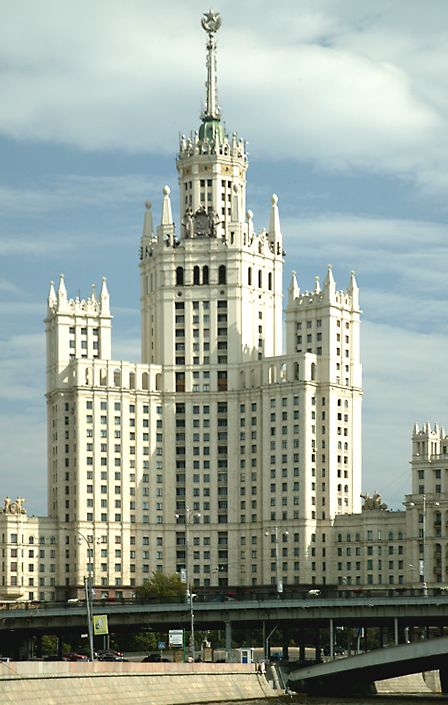
Forced labour played an increasingly important part in the post-war Soviet economy, according to a policy dictated by Stalin and his ‘kitchen cabinet’ of advisers. With the ending of the war the pool of unpaid labour available for exploitation by the state grew enormously. Apart from Gulag prisoners and labour army conscripts, there were 2 million German POWs, and about another million from other Axis nationalities, who were mostly used for timber-felling, mining and construction, although those with skills were employed occasionally in Soviet industry. In some factories German POWs were so integral to production that detention camps were built on the factory grounds and officials tried to block the prisoners’ repatriation to Germany. The Gulag population also grew, despite the release of many prisoners in the amnesty of 1945; the camps took in well over a million new prisoners between 1945 and 1950, largely as a result of the mass arrest of ‘nationalists’ (Ukrainians, Poles, Belorussians, Latvians, Lithuanians and Estonians) in territories captured or reoccupied by the Red Army but never really reconciled to Soviet power. The Gulag system expanded into a vast industrial empire, with 67 camp complexes, 10,000 individual camps and 1,700 colonies, employing a captive labour force of 2.4 million people by 1949 (compared with 1.7 million before the war). Overall, it is estimated that conscript labourers represented between 16 and 18 per cent of the Soviet industrial workforce between 1945 and 1948. They were especially important in the mining of precious metals in cold and remote regions where free labour was very expensive, if not impossible, to employ (hence their contribution to the Soviet economy was even more significant than the figures would suggest). Slave labour also made up the workforce in the big construction projects of the late 1940s which came to symbolize, officially at least, the post-war confidence and achievements of the Soviet system: the Volga–Don Canal; the Kuibyshev hydro-electric station; the Baikal-Amur and Arctic railways; the extensions to the Moscow Metro; and the Moscow University ensemble on the Lenin Hills, one of seven wedding-cake like structures (‘Stalin’s cathedrals’) in the ostentatious ‘Soviet Empire’ style which shot up around the capital in these years.

The post-war years saw a gradual merging between the Gulag and civilian economies. Every year about half a million Gulag labourers were contracted out to the civilian sector, mostly in construction, or wherever the civilian ministries complained of labour shortages; about the same number of free labourers, mostly specialists, were paid to work in Gulag industries. The Gulag system was increasingly compelled to resort to material incentives to motivate even its forced labourers. The population of the camps had become more unruly and difficult to control. With the amnesty of about a million prisoners in 1945, mainly criminals, who had their sentences either reduced or annulled, the camps were left with a high proportion of ‘politicals’ – not the intellectual types who filled the camps in the 1930s but strong young men who had fought as soldiers in the war, foreign POWs, Ukrainian and Baltic ‘nationalists’ – who were hostile to the Soviet regime and not afraid of violence. Without a system of rewards, these prisoners simply refused to meet the set targets. The cost of guarding the prisoners was also becoming astronomical. By 1953, the MVD was employing a quarter of a million guards within its camps, spending twice as much on the upkeep of the Gulag than it received in revenue from its output. Several senior MVD officials were seriously questioning the effectiveness of using forced labour at all. There were even mooted plans, supported by Beria and Malenkov, to dismantle sections of the Gulag and convert the prisoners into partially civilian workers, but since Stalin was a firm supporter of the Gulag system, none of these ideas was seriously proposed.

Leave a comment

Filed under economics, labor, nationalism, Russia, USSR, war