Category Archives: Philippines

Hawai‘i Chinese Baseball Team at the Far Eastern Games, 1915

From The Barnstorming Hawaiian Travelers: A Multiethnic Baseball Team Tours the Mainland, 1912-1916, by Joel S. Franks (McFarland, 2012), Kindle Loc. 2220-2242:

Luck Yee told readers that China needed a baseball team to represent it adequately at the Far Eastern games. Thus, sports-minded Chinese authorities went to Hawai’i for help because they knew that “a Chinese baseball team” had made several successful journeys to the American mainland. Furthermore, “Manila people” were anxious to see a Chinese Hawaiian team in action.

The son of a Chinese immigrant father and a native-born Hawaiian mother, Luck Yee described the trip westward as pleasant. He said that he and his teammates would climb on deck to do some warming up. However, “It was a queer experience to get out there the first time, throwing the ball while the ship was dipping and rolling. All the boys, except one or two, held conferences with the sharks and other fishes for a day or more, and then were well, ate heartily and slept nicely.”

Luck Yee had generally kind things to say about Japan. After 11 days at sea, the Chinese Hawaiian ballplayers reached Yokohama. Upon arrival, the team roamed by foot the city’s streets because they could not communicate with the “jinrikisha men.” Eventually, they ate at a Chinese restaurant and spent the night at the Hotel De France. The team seemed to like “Tokio” more. There, they took an “enjoyable” ricksha trek around the city. “Wherever we stopped the people would gather around us wonderingly. We had a hard time trying to obtain information from the policemen. All we could get out of them was a shake of the head.”

Luck Yee expressed less warmth for China. Upon arrival in Hong Kong, the Hawaiians noted the Sampras harboring “poor women, carrying children on their backs and rowing the boats too. Some of them had clothes that were tattered and worn out – poor miserable things. They were hungry creatures.” Before actually setting foot on Hong Kong the Hawaiians were accosted by a disagreeable Chinese customs official, according to Luck Yee. The pitcher claimed this bureaucrat “had the hauteur of an absolute ruler of the place.” He searched the players’ trunks for opium, firearms, and cartridges, and his arrogance, Luck Yee stressed, almost led “to blows.”

Still, Hong Kong merchants entertained the visitors. Luck Yee recalled that during one feast put on by local merchants, “beautifully dressed girls” sang for the players. However, the Hawaiians could not understand the lyrics of what the entertainers were singing until the young women sang Mendelssohn’s “Spring Song” and the “famous Tipperary.”

A motorcade greeted the Chinese Hawaiian ballplayers upon their arrival in Manila. They were then driven to the local YMCA where they stayed. Unable to practice for the 26 days they were ship-bound, Luck Yee and his teammates tried to work out in Manila their first day. The Chinese Hawaiians drew a large crowd to their practice – a crowd that included several opposing players. However, the weather was so hot they decided to do something else with their time after 15 minutes of exercise.

The Manila sporting press, Luck Yee complained, generally “knock[ed] us” before the Chinese Hawaiians took the field. Luck Yee conceded that there was one “contrarian” among the local sportswriters who praised the visitors. Luck Yee wrote, “It was fun to see them jeer at each other through the columns of their respective papers. The more they knocked the harder we played.”

Even though the team played effectively, the Manila sportswriters continued to scoff, maintaining that the Hawaiians were more lucky than good. Still, the visitors drew well – hefty crowds of as many as 10,000. Luck Yee reported proudly that the team tied the “much touted” Manila nine and then savaged another nine of hometown heroes, 10-0. The Manila press started to change its tune, while the city’s Chinese community invited the Hawaiians to a dinner.

Returning to China, the Hawaiians were feted by Chinese President Yuan Shi Kai. The ballplayers received “little mementoes.” However, political trouble was brewing for the President and the Hawaiians were feeling sorry for Yuan Shi Kai. Luck Yee asserted, “Wonderful indeed must be that man who will eventually lead 500,000,000 countrymen.”

Leave a comment

Filed under baseball, China, Hawai'i, Philippines, U.S.

Wordcatcher Tales: biombo, subaru

Biombo – The Spanish term biombo ‘folding screen’ comes from Japanese byōbu (屏風 ‘wallwind’ or ‘screenwind’) for the same item. I first learned the term in the caption to Fig. 9 in the book I’ve been reading, Seven Myths of the Spanish Conquest. The figure shows an oil-painted canvas biombo depicting “The Encounter of Cortés and Moctezuma” as imagined by the artist Juan Correa c. 1683. It goes on to describe biombo as “a popular Mexican artform introduced by the Japanese ambassador to Mexico City in 1614”! This left me skeptical because Tokugawa Japan (1600–1868) is far better known for its policy of national seclusion (sakoku) than for international outreach.

But in fact Tokugawa Japan did engage in a bit of outreach before the 1630s. In 1613, Date Masamune, first lord of Sendai, had Japan’s first galleon built in Ishinomaki (one of the cities hardest hit by the 2011 tsunami). Later christened the San Juan Bautista and laden with ceremonial gifts, it set sail for Acapulco in New Spain with Japan’s first ambassador to the Vatican, Hasekura Rokuemon Tsunenaga (支倉六右衛門常長, also spelled Faxecura Rocuyemon in Spanish sources), who spent time in Mexico City in 1614 and again on his return trip in 1618. About 60 of his Japanese compatriots who remained in Mexico until his return were baptized there as Christians. Hasekura himself waited until he got to Spain before being baptized as Francisco Felipe Faxicura.

Subaru – I was shocked a few months ago to realize that I had never bothered to wonder what the name Subaru means in Japanese. The logo on Subaru cars should perhaps have given me a hint, but I only found out about the Japanese meaning from a linguist friend who was researching whether the position of the Pleiades marks a seasonal cycle in any languages I was familiar with in Papua New Guinea.

In Numbami, the two words used to translate English ‘year’ are damana, which also means ‘Pleiades’, and yala, which comes from German Jahr. According to Streicher’s (1982) Jabêm–English Dictionary entry for dam(o): “The Pleiades are the main constellation seen in Jabêm during the dry season (October to March), and governing their activities in their gardens, i.e. the felling of trees to clear the ground for new gardens; the burning and planting of fields is done according to the position of the Pleiades.”

In Japanese, ‘Pleiades’ is usually rendered into プレアデス星団 Pureiadesu seidan (= ‘star group’), but the older native Japanese name for the cluster is Subaru, and the Chinese character for it is 昴, pronounced BOU in Sino-Japanese. I’m not aware that the Pleiades play any role at all in Japan’s highly conventionalized seasonal cycles, but the constellation may be a convenient symbol of the five divisions of Fuji Heavy Industries that merged to create the Subaru car company.

3 Comments

Filed under art, Japan, language, Mexico, migration, Philippines, scholarship, science, Spain

Wordcatcher Tales: Gyorai ‘fish thunder’

One of the most fun things about exploring far-outlying places in Japan is the conversations you fall into. We had several such conversations in Tsuruga, the Japan Sea port city closest to Osaka and Kyoto, which for that reason became the terminus of one of Japan’s first railway lines. (The other two connected the port of Yokohama with Tokyo and the port of Otaru with Sapporo.)

On a visit to the Kehi Matsubara pine grove and beach, we stopped at a shady refreshment stand to get some cool drinks. Near the vending machine sat two elderly men, one grizzled and talkative, the other silent and dignified. The grizzled man seemed to have saved up many things he wanted to share with English-speakers, starting with his futile attempts to learn our language. His teachers had concentrated too much on grammar, he said, and the only English phrase he could reliably remember for all his trouble was “I forgot.” He said Chinese speakers had much greater success learning English because of the similarities in word order between the two languages, and that Mongolian sumo wrestlers learned Japanese much more quickly than the European wrestlers for similar reasons.

He was originally from Kochi (formerly Tosa) in Shikoku, and when I asked about the famous Tosa fighting dogs, he launched into a long disquisition on their virtues (such as silently enduring pain like samurai) and superiority over Akita dogs, which might be larger but lacked the same degree of fighting temperament.

His dignified companion, who never got a word in edgewise, was a former officer in the Imperial Japanese Navy who was recruited by the Occupation authorities to clear mines from the harbor. The word (new to me) that Mr. Grizzly used for ‘naval mine’ was 魚雷 gyorai lit. ‘fish-thunder’, which more commonly refers to torpedoes, as in 魚雷艇 gyoraitei ‘torpedo boat’. (Torpedoes are also called “fish” in anglophone sailor slang.) Aerial torpedoes are 空雷 kuurai ‘air-thunder’ and a torpedo attack is 雷撃 raigeki ‘thunder-attack’.

The generic word for ‘mine’ is 機雷 kirai ‘device-thunder’. Naval mines are 水雷 suirai ‘water-thunder’ and land mines are 地雷 jirai ‘earth-thunder’, as in 地雷原 jiraigen ‘minefield’.

This encounter reminded me of a story my Uncle Murray told for the first time back in April, when I had the chance to attend a brief reunion of my father and his only two surviving brothers. Uncle Murray reached draft age right at the end of World War II and he was on his way to invade Japan in August 1945 when Japan surrendered and his ship put into Midway to await a change of orders. His unit was then rerouted to the Philippines, where they assembled Japanese POWs as they surrendered and then put them to work helping to dismantle and destroy military stockpiles near Manila. His POWs would load electrical equipment onto amphibious ducks, which he would then drive out to sea, where the POWs would drill holes in the batteries and dump them in the ocean, often getting very seasick in the process. Much of Manila had been destroyed during the war, and Uncle Murray said his unit’s battery disposals must have destroyed a lot of life in the surrounding seas as well.

Leave a comment

Filed under Japan, language, military, Philippines, U.S., war

Asian Roles in New Spain

My favorite article in the latest issue of Journal of World History (on Project MUSE) is by Edward R. Slack Jr. on “The Chinos in New Spain: A Corrective Lens for a Distorted Image.” Here are a few excerpts (footnotes and references omitted).

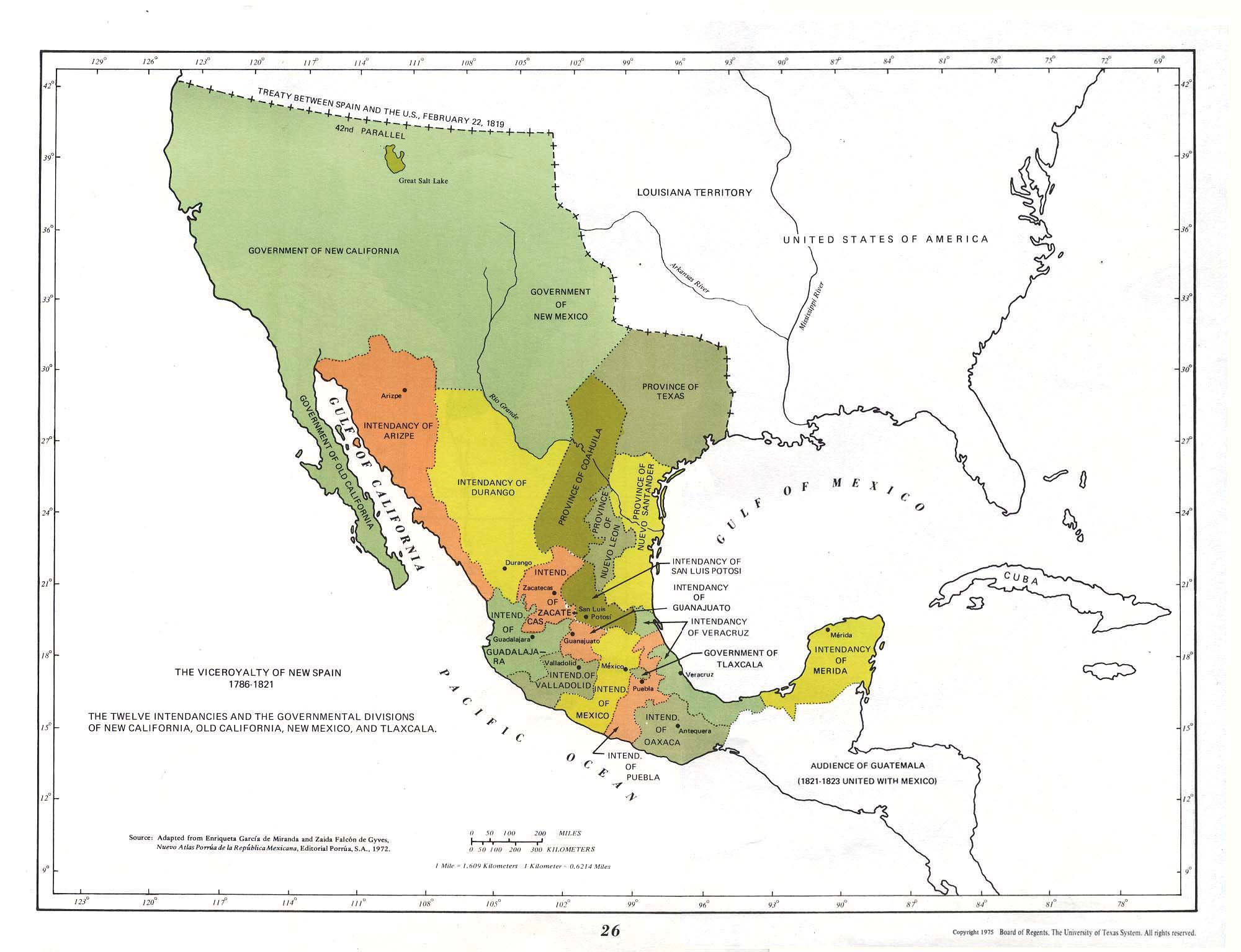
Spanish galleons transported Asian goods and travelers from Manila to colonial Mexico primarily through the port of Acapulco. During the two and a half centuries of contact between the Philippines and the Viceroyalty of New Spain, a minimum of 40,000 to 60,000 Asian immigrants would set foot in the “City of Kings,” while a figure double that amount (100,000) would be within the bounds of probability. From Acapulco they would gradually disperse to the far corners of the viceroyalty, from Loreto in Baja California to Mérida in Yucatan…. The majority, however, would eventually settle in two distinct zones: on the west coast in the districts of Guerrero, Jalisco, and Michoacán, and in the large, ethnically diverse municipalities of Mexico City and Puebla in the central valleys and the eastern port of Veracruz. The two zones were transversed by the most heavily traveled arteries that connected Acapulco to Mexico City (known colloquially as el camino de China) in the west; Veracruz with Puebla and Mexico City in the east; and several arterials linking the capital with Puerto Vallarta in the west and Guanajuato in the northwest.

For the most part, the chinos disembarked at Acapulco as sailors, slaves, and servants. Over the longue durée of Mexican-Asian cultural exchange, the largest contingent of Asians arrived as sailors on the galleons and smaller vessels (capitanas, pataches, and almirantes) that annually plied the long and perilous return voyage from Manila. The seamen were primarily Filipinos, Chinese mestizos (known in Manila as mestizos de Sangley), or ethnic Chinese from the fortified port of Cavite near Manila that served as the primary shipyard for Spaniards in the archipelago. In 1565, the first chino sailors from the islands of Cebu and Bohol arrived in Acapulco aboard Friar Andrés de Urdaneta’s trailblazing galleon, the San Pedro. During the late sixteenth century Iberian sailors constituted the majority of crewmen, but by the early 1600s Asians had surpassed them, accounting for 60–80 percent of the mariners from that time forward. A historical snapshot of galleon seafarers in the mid eighteenth century comes from a crew manifest of La Santissima Trinidad. In 1760, this vessel was manned by 370 sailors, consisting of 30 officers (Europeans or Mexican criollos), 40 artillerymen (27 chinos), 120 sailors (109 chinos), 100 “Spanish” cabin boys (96 chinos), and 80 “plain” cabin boys (78 chinos). In sum, 84 percent (310) of the crew were born and raised in Spain’s Asian colony, with 68 percent (250) hailing from the port of Cavite alone….

Along the Pacific coast, chino sojourners tended to congregate in the cities and pueblos of Acapulco, Coyuca, San Miguel, Zacatula, Tex pan, Zihuatenejo, Atoya, Navidad, and Colima. With the arrival of more ships from Manila, the number of sailors who either had no desire to return to the Philippines or were brought over as slaves married local Indian and mixed-race women increased. Consequently, a sizable population of chinos and their descendants made these cities and pueblos a popular destination for fellow Asians. Both freemen and slaves farmed rice (brought from the Philippines), corn, and cotton; tended cacao and coconut palm trees; fished in the seas and rivers; and transported people and goods to various ports along the coastline. Those who followed the royal highways to towns farther inland worked as muleteers or in the silver mines, haciendas, obrajes (textile workshops), or sugar mills….

Slaves and servants constituted the second largest group of Asian immigrants during the colonial era. Manila quickly became an important entrepôt for the commerce in human flesh during the first century of Spanish rule. The greater part were transported by Portuguese vessels from colonies and trading ports in Africa, India, the Malay peninsula, Japan, and China, although Chinese junks and Malay prahus also shipped large quantities to Manila. Non-Filipino slaves that fetched the highest price were from Timor, Ternate, Makassar, Burma, Ceylon, and India, because “the men are industrious and obliging, and many are good musicians; the women excellent seamstresses, cooks, and preparers of conserves, and are neat and clean in service.”…

The incorporation of Asian immigrants into the armed forces of New Spain represents another fascinating fragment of the chino mosaic from the colonial era. Similar to restrictions placed on other castas in Mexico, there were numerous prohibitions against Asians carrying weapons or riding horses….

The legion of similar antiweapons ordnances from the 1550s onward notwithstanding, from at least the 1590s free chinos not only were granted permission to carry weapons, but gradually incorporated into both the salaried companies of Españoles as well as local militias, especially those cities and towns along the Pacific coast. In several documents from the years 1591 and 1597, an “Indio Chino” from the silver mining town of Zultepec named Juan Alonzo, who earned his livelihood from buying and selling mules, was granted a license to ride a horse with a saddle and bridle and to carry a sword. A key determinant in this matter was his racial classification as a chino, since indios (unless they were elites) were forbidden such privileges….

Among the scores of Asian peoples that were widely defined as chinos, in the early decades of the 1600s Japanese converts were held in high esteem by Spaniards in the Philippines and New Spain for their bravery and loyalty. In 1603 and 1639 when Chinese residents in the Parián of Manila revolted against their Iberian overlords, Japanese swordsmen distinguished themselves in combat. Without their assistance, Sangleyes would surely have made the Philippines a colony of the Middle Kingdom. Thousands of Japanese converts, traders, and ronin made the Philippines their home prior to the closing of Cipango to Iberians in the 1630s. They lived in a suburb of Manila called Dilao, with a population estimated at 3,000 by 1624.

Thus it is not surprising that samurai converts were considered a more privileged subgroup of chinos in New Spain….

It is unclear exactly when chino militias were established on the west coast of New Spain. It is evident, however, that prior to 1729 Asian paramilitary units were routinely patrolling the regions adjacent to Acapulco. Tiburcio Anzalde, “captain of one of the militias of chinos and mulatos in the district of Atoya,” discussed the duties and obligations of militiamen in a 1746 document: repeated trips to Acapulco to deliver mail and other correspondences; to clear the roads (of bandits) while on patrol; and, most importantly, their heroic role in resisting the English pirate George Anson‘s invasion at the port of Zihuatenejo in 1741.

Leave a comment

Filed under Asia, China, economics, England, Japan, labor, Mexico, migration, Netherlands, Philippines, Portugal, Spain

Lankov on the Origins of Commercialized Prostitution in Korea

In my reduced blog-reading of late, I’ve been a little slow to note an interesting take, by Andrei Lankov in the Korea Times, on the origins of what is now a highly developed industry in Korea (and elsewhere, in both supply and demand): commercialized prostitution.

Traditionally, most East Asian countries have had few scruples with regard to extramarital sex as far as males were concerned, but before 1900, Japan was remarkable in the development of commercial prostitution on a grand scale.

In this regard it was different from Korea, where in old times only the rich and famous could afford to buy expensive sexual services from gisaeng girls, while the “low orders” usually had no access to commercial sex whatsoever.

The Korean nationalists love to stress this fact, explaining it as another indication of the alleged “spiritual purity” of Koreans. Well, less lofty explanations are more likely, but it is difficult to deny that the large-scale prostitution industry was created by the Japanese presence.

In the 1850s, Japan was “opened” to the world, but for decades afterward it remained a very poor place, so “export-oriented” prostitution became a major industry there.

The Japanese working girls, known as “karayuki-san” (“those going overseas”), plied their trade across Asia, from Sydney to Vladivostok, from Shanghai to Singapore, usually supervised by Japanese brothel owners.

A Japanese prostitute and brothel remained ubiquitous components of urban life in the Asia-Pacific for the decades between 1870 and 1920, and remittances from these girls, who duly sent their earnings back home, were said to be the third biggest foreign currency earner for Japan at the turn of the 20th century.

Of course, neighboring Korea became one of the areas where Japanese prostitution flourished. Contrary to the now common misperception, typical commercial sexual encounters in Korea before 1900 did not involve a poor Korean girl serving some lusty Japanese male.

If anything, the situation in which a Korean male purchased sex from a Japanese female was probably more common. Until the 1910s, the vast majority of prostitutes operating in the country were Japanese.

Koreans may want to blame Japan for commercializing prostitution in Korea, but Japan can hardly be blamed for the growth of prostitution everywhere else in East, Southeast, and South Asia, except insofar as it led the way in creating a model of economic growth that spread the wealth beyond a narrow elite.

via The Marmot

Leave a comment

Filed under China, economics, industry, Japan, Korea, Philippines, Southeast Asia

First Catholic Church in Qatar

The first Catholic church, Our Lady of the Rosary, has opened its doors in Qatar, but lacks any external signs of being a church.

“The cross should not be raised in the sky of Qatar, nor should bells toll in Doha,” wrote Lahdan bin Issa al-Muhanada, a leading columnist in Doha’s Al-Arab newspaper.

But Abdul Hamid al-Ansari, the former dean of the Islamic law school at Qatar University, disagrees. He wrote that having “places of worship for various religions is a fundamental human right guaranteed by Islam.”…

In Doha, the call to build a Catholic church has grown as waves of migrant workers from South Asia and the Philippines arrived in the Gulf, answering the call for cheap labor to fuel the region’s runaway economy.

But the Christian immigrants have sometimes collided with the native Qatari population, which practices Wahhabism, a strict interpretation of Islam.

Native Qataris account for only 200,000 of the country’s population of 900,000.

The Vatican estimates there are 100,000 practicing Catholics in Qatar. They attended underground services until seven years ago, when Sheikh Hamad bin Khalifa al-Thani, the country’s current ruler, granted permission to five denominations to open churches.

I’m old enough to remember when new Protestant churches in Franco’s Spain were prohibited from displaying the usual church architecture, opening schools, or evangelizing in public.

Nowadays there’s a big shortage of mosques in Spain.

via Belmont Club

Leave a comment

Filed under Middle East, migration, Philippines, religion, Spain

The 1st and 2nd Filipino Regiments in the Pacific War

I have heard endlessly about the exploits of the Japanese American units during World War 2, the 100th Battalion and 442d Regimental Combat Team, but I had never heard about the 1st and 2nd Filipino Regiments. Here are a few excerpts from a much longer account at the California State Military Museum website.

The Tydings-McDuffie Act of 1934 treated the Filipinos in the U.S. as aliens. Although the Philippine Commonwealth Constitution permitted the United States to draft Filipinos in the Philippines to defend American interests there, Filipinos in the United States, quite ironically, were exempt from military service.

Thousands of Filipinos had petitioned for the right to serve in the U.S. military immediately after December 7, 1941. On January 2, 1942, President Franklin Delano Roosevelt signed a law revising the Selective Service Act. Filipinos in the United States could now join the U.S. Armed Forces and they were urged to volunteer for service. President Roosevelt quickly authorized the founding of a Filipino battalion, which would be organized for service overseas. It estimated the number of available Filipino volunteers between 70,000 and 100,000.

The 1st Filipino Battalion was formed on March 4, 1942 and activated in April 1 at Camp San Luis Obispo, California. Lieutenant Colonel Robert H. Offley, who had served in the Philippines and spoke passable Tagalog, volunteered to be assigned to the unit as its first commander. He assumed command in April 8, 1942. The War Department also directed Philippine army officers and soldiers who were stranded in the United States at the start of the war to report to the unit. An unusual point is the designation of the unit. Previous Filipino units in the U.S. Army had been designated “Philippine” such as the Philippine Scouts. All units raised in the U.S. during the war were designated “Filipino.” Also, it would not be until the end of the war that the Filipino military units would carry the designation “Infantry” in their title although their regimental colors from the very beginning were displayed on a blue field, the traditional color of the infantry branch of the army.

A number of wounded Philippine Army and Philippine Scouts had escaped to Australia from the Philippines on board the USS Mactan in December 1941. Some remained in Australia to form the nucleus of what would eventually become the 1st Reconnaissance Battalion, but the rest were sent to the United States for further medical treatment. These men eventually reported to the 1st Filipino Battalion.

Contrary to popular belief, the 1st Filipino Battalion was not established as a result of the American policy of social segregation. Only Filipinos who volunteered for assignment to the unit were sent to it. Many others, such as Eutiquio V. “Vic” Bacho, served with distinction in “American” (white) units in the European theater of operations during the war. Doroteo Vite wrote in a national magazine that Filipinos should take the opportunity to serve in all-white units to educate them so that at the end of the war, white Americans would support the Filipino American agenda of equality….

In April 1942, Lieutenant General John L. Dewitt, Western Defense Commander, ordered the Japanese on the West Coast into concentration camps. Miguel Ignacio, secretary of the Filipino American community of San Francisco, called attention to several American-born Japanese women, citizens of the United States, who had Filipino husbands, and Filipino-Japanese children who were U.S. citizens by birth. Despite the efforts of the American Civil Liberties Union, Dewitt ordered the women and children to spend the duration of the war in the internment camps. Many of these Filipino husbands went on to serve in the 1st and 2nd Filipino Regiments, defending the nation whose racist policies held their families hostage.

In September 1942, the first group of qualified Filipino enlisted men was sent to the Officer Candidate School, Fort Benning, Georgia. Upon graduation, they were commissioned second lieutenants in the U.S. Army. The War Department planned to have Filipino officers eventually command the majority of the combat units in the 1st and 2nd Filipino Regiments. Events beyond the control of the military planners in Washington, D.C. intervened to prevent this from being fully implemented.

So many Filipino volunteers came from all over the United States that the 2nd Filipino Infantry Regiment was formed at Fort Ord, California on November 22, 1942. In January 1943, the 1st Regiment was reassigned to Camp Beale, near Sacramento and the 2nd Regiment to Camp Cooke, near Santa Maria. The two regiments were to be joined by a third regiment consisting of Filipinos from the Hawaiian National Guard. However, the Hawaiian Sugar Plantation Association argued successfully with the martial law commanders in Hawaii that not only was cheap labor on the plantations necessary to support the war effort, the Filipinos in Hawaii were forbidden by the Tydings-McDuffie Act from going to the continental U.S. The men could not leave the sugar plantations and were paid substandard wages for the duration of the war. This would have serious consequences in 1946 when the militant Filipino labor unions shut down the islands until their demands for wage increases and better working conditions were met.

As a result of a May 1942 Gallup Poll showing strong support for the naturalization of Filipinos, the Filipino Naturalization Bill was passed. Pinoy GI’s were urged to apply for U.S. citizenship. A mass swearing in of over 1,000 soldiers was held at Camp Beale on February 20, 1943. Many of the men, however, resisted becoming citizens. T-5 Julius B. Ruiz stated that although he had lived in the United States for many years and was now serving in the U.S. Army, his goal was to liberate his country, the Philippines. by the time the 1st Regiment left for the western Pacific in May 1944, over half of the men in the unit were U.S. citizens….

Before the 1st Regiment departed for the western Pacific in May 1944, Colonel Offley had a major dilemma on his hands. Even though his regimental chaplains were prepared to perform marriage ceremonies between the Filipino soldiers and their white girlfriends, the strict anti-miscegenation laws in California prevented the men from applying for marriage licenses. Colonel Offley solved this by sending his soldiers and their sweethearts to Gallup, New Mexico on chartered buses that soon came to be called the “honeymoon express.”

Meanwhile in New Guinea, the 1st Regiment quickly integrated its first batch of replacements consisting of Filipino Americans from Hawaii. Colonel Offley gave Lt. Col. Leon Punsalang, a West Point graduate, command of the 1st Battalion. This was the first time in the history of the U.S. Army that Asian Americans commanded white troops in combat.

130 Comments

Filed under Japan, Philippines, U.S., war

Wordcatcher Tales: Huarachudo, Ejido, Municipio, Piloncillo

From True Tales from Another Mexico: The Lynch Mob, the Popsicle Kings, Chalino, and the Bronx, by Sam Quinones (U. New Mexico Press, 2001), pp. 206-210:

The municipio of Turicato [in the State of Michoacán] has always divided along these town-rural lines. The hill folks resented the power, money, and education, relatively speaking, of the people in town. The city folk feared the hillbillies but saw no reason to extend power, or municipal services, to people they considered ignorant and barbaric. In these years the Barajas family—a family of local merchants—dominated Turicato politics….

In this atmosphere “Los Villa,” as the Villaseñor family was known, emerged first as rebels. They took up the cause of the “huarachudos,” the “sandal wearers”—whom they rallied to their cause against the city folk…. The Villaseñores were huarachudos themselves. They were sixteen children whose father, Tomás, had been born a peon on the hacienda San Rafael. In the 1930s President Lázaro Cárdenas ordered a section of the hacienda transformed into a communal farm—an ejido—owned by those who had worked it as peons….

The Villaseñor piloncillo operation also grew. Piloncillo is a small cone of brown sugar about an inch in diameter, processed by a simple mill. It is used to sweeten coffee, in household cooking, or by the soft-drink industry. In the 1990s, piloncillo has all but vanished as a product from the Turicato region. But in the 1970s and 1980s, many sugar cane growers were producing piloncillo. In the Turicato region in the 1970s and 1980s, owning a piloncillo mill was the difference between a life of comfort and one of hopeless poverty….

The emergence of a hillbilly family brought with it the kind of abuses that town residents had feared all along. “What happens is they form into groups,” says Trigo. “There’s one who’s a leader, and around him form people who like to fight and look for trouble. They like to walk into a cantina and throw everybody out. They figure that’s a real achievement. This grows; the group gets larger. Then it becomes, ‘Let’s take over this land.’”…

Yet the Villaseñor family never did fully dominate local politics. They proved in the end to be poor politicians. Their frequent warring—“their bellicose nature” as one man put it—earned them many enemies. By 1989 a significant part of the municipio nurtured in dark silence a pure and vital hatred of the Villaseñores, and among them were many of the same poor peasants—the huarachudos—that the family once rallied to its side….

In 1994 the military put a roadblock between Turicato and Puruarán and set about arresting or killing off the bandit gangs. Others saw that the military meant business and laid down their guns. So five years after the Nueva Jerusalén vote threw Turicato into a civil war, a version of peace came to the municipio.

The chapter from which these excerpts come is a well-told tale, but one sadly familiar in its broad outlines: ambitious évolués (sponsored by distant elites, in this case the PRI) lead others among the oppressed to overthrow and replace an oppressive elite, only to impose a new kind of thugocracy at least as violent and oppressive as the old one. Sort of a Zimbabwe in microcosm. (Zimbabwe, whose independence I long ago celebrated at a big gathering of African students in Honolulu.)

But I want to comment on just two of the four words italicized in the extract.

The Spanish term municipio may have survived in the form of an English calque more than a century after the Spanish ceded Micronesia to the Germans. Each of the Federated States (formerly Districts) of Micronesia is divided into what are now called municipalities, a term that no subsequent German, Japanese, or American administrator would likely have come up with, although the Americans are credited with introducing the term by the anthropologist Lingenfelter, who worked in Yap during the early postwar years. If so, U.S. Navy administrators probably calqued on the basis of usage in the Philippines. Micronesian municipalities have never been centered around a town and its hinterland. Instead, they seem to be more like alliances of contiguous villages.

I’m old enough to have purchased a pair of Mexican huarache sandals in the 1970s, when I was a grad student in Hawai‘i. The dye made my feet break out, so I stayed with rubber slippers (zori). (I hardly owned a pair of shoes all through grad school.) The relation between Spanish huarache ‘sandal’ and huarachudo ‘sandaled’ is parallel to that between English beard and bearded. Spanish and English are both related languages. But the same parallel can be observed between, for example, Chamorro sapatos ‘shoes’ (from Spanish) and sinapatos ‘shod, wearing shoes’, or Chamorro relós ‘wristwatch’ (also from Spanish) and rinelós ‘wearing a wristwatch’. Among its myriad functions, the -in- infix in Philippine languages can form adjectives out of nouns in a manner similar to that of participial affixes in Spanish and English.

UPDATE: The Micronesian Seminar‘s Francis X. Hezel, S.J., weighs in on the antecedents of the term municipality in Micronesia.

The term as used in Micronesia after the war has no direct relationship to the Spanish colonial period in these islands. The Spanish weren’t here long enough and they weren’t influential enough to have the term stick. There are very few Spanish loan words that have made their way into the island languages. Actually, islanders used the Japanese term kumi to describe a segment of the island, even well after the war. Muncipality came into the languages through the English term, via the Navy.

The usage of Japanese kumi ‘club, association, gang’ is very interesting, and seems a much more appropriate term for the traditional political alliances before they were recast by the U.S. Navy as local-government structures. The Yapese dictionary translates municipality into Yapese nuug ‘net’ (presumably meaning ‘network’ of political alliances). Other Micronesian dictionaries I’ve consulted don’t list municipality in the English finder list. So it seems U.S. Navy administrators were influenced by Spanish local-government terminology already long-established in the Philippines.

The U.S. Census Bureau glossary does not list the term municipality at all, but it does list and gloss municipio as: “Primary legal divisions of Puerto Rico. These are treated as county equivalents.” The Wikipedia entry for Municipalities of the Philippines begins thus: “A municipality (bayan, sometimes munisipyo, in Tagalog) is a local government unit in the Philippines. Municipalities are also called towns (which is actually a better translation of bayan).”

SHARP DETOUR: My wife and I taught University of Hawai‘i extension courses on Yap, Micronesia, in the summer of 1983, just before heading off to spend a year in Romania on a Fulbright research grant. In fact, she was still there when I got the word that my nearly forgotten application from a year earlier had been approved and that the orientation in Washington, D.C., would begin before she got back to Honolulu. Trying to place a telephone call through to Yap was not easy in those days.

Anyway, for my introductory linguistics course on Yap I used the first edition of Peter Trudgill’s little Penguin paperback Sociolinguistics: An Introduction to Language and Society. Even the main islands of Yap have a good deal of regional variation in pronunciation and word choice, and the outer islands speak dialects of the far-flung Trukic language continuum, only distantly related to Yapese. The variety of Yapese spoken in the major municipality (Rull) closest to Colonia—the capital and only urban center—provided the basis for the standard orthography, but the pilot school for testing Yapese language curriculum materials (with bilingual education funding from the U.S. DOE) was located in the major municipality (Tomil) with the most divergent pronunciation. The three major municipalities were those chiefly alliances (called kumi in Japanese) dominant at the time the Germans took control: Gagil, Tomil, and Rull.

My wife and I first met while we were both assigned to that school in the fall of 1974—she as a new Peace Corps teacher for two years, me as a visiting linguist for one semester—and we both learned our Yapese in that very rural municipality. (Mine faded much more quickly than hers.) So we were quite aware of regional variation and of the principal shibboleths of Tomil dialect, chief among them being the pronunciation of standard /ae/ as /ee/, as in the pronoun gaeg vs. geeg ‘me’ or the plural marker on verbs -gaed vs. -geed, both high-frequency items.

For my introduction to linguistics course in 1983, I decided that the most important things I should focus on were the respective relationships between writing and pronunciation, on the one hand, and between dialects and standard languages, on the other. One of my assignments was for my students to assemble a list of common words for which there were regional variants, then track down the boundaries between those variants (the isoglosses). The most interesting findings involved variants whose isoglosses failed to align with the existing boundaries between municipalities, perhaps revealing earlier linguistic and political fault lines.

1 Comment

Filed under language, Mexico, Micronesia, Philippines, U.S.

Missing Date in Philippines History: 31 December 1844

From A History of the International Date Line:

European explorers who approached the Pacific Ocean by sailing to the east such as the Portuguese, and in their wake the Dutch, the English and the French, naturally kept their ship’s journals and diaries according to the day count of their home land and this was of course also adopted by the colonists who settled along the Asian perimeter of the Pacific Ocean.

However, the colonisation of the Pacific Ocean by the Spanish occurred from the opposite direction and more specifically from the Spanish possessions in America. The Philippine archipelago was discovered in March 1521 by Ferdinand Magellan and Spanish dominion over the islands was first firmly established in 1565 by Miguel López de Legazpi (c. 1510 – 1572), the conquistador and first Spanish governor general of the Philippines….

Most of the shipping from the Philippines to Spain went over the Pacific Ocean to the Mexican port of Acapulco, was transported over land to the port of Veracruz, and then shipped to Spain. In order that the Spanish ships crossing the Pacific Ocean between the Philippines and the Spanish Americas would not have to adjust the dates in their journals whenever they sighted land, the Philippines observed the same day count as that of the Spanish Americas….

During the early 1840s the commercial interests of the Philippine Islands turned more and more away from the Spanish Americas (which for a large part had severed their relations with the motherland Spain) and trading with the Chinese mainland (engendered by the ignominious but lucrative ‘Opium Wars’), the Malay peninsula, the Dutch East Indies and Australia became increasingly important.

In order to facilitate communication and trading with its western and southern neighbours, the secular and religious authorities of the Philippines agreed that it would be advantageous to abolish the American day reckoning and adopt the Asian day reckoning.

This was achieved in 1844 when Narciso Claveria, the governor general of the Philippines, issued a proclamation announcing that Monday, 30 December 1844, was to be immediately followed by Wednesday, 1 January 1845.

The 1867 conversion from Russian to American time in Alaska was much more complicated.

5 Comments

Filed under Mexico, Pacific, Philippines, Spain

Suppression of Piracy in the Philippines After 1848

From Iranun and Balangingi: Globalization, Maritime Raiding and the Birth of Ethnicity, by James Francis Warren (Singapore U. Press, 2002), pp. 345-346, 363-364:

By the first quarter of the nineteenth century, the sea war in the Philippines between Spain and the Iranun and Balangingi had taken on a permanent and normal character of a stalemate in which each party recognized the other as an equal with authority generally limited to the territory each controlled. But in 1848 the combined forces of the Spanish navy and army laid waste to the Samal forts at Balangingi, dispersed the survivors, and forcefully relocated the prisoners of war. This was the decisive moment, the turning point in the history of the century-long conflict between Spain and the slave raiders. The Balangingi were on the brink of climbing out of their Samal identity after nearly half a century of constant upheaval, and, according to Frake, “establishing themselves as a different kind of people.” But, in the aftermath of the Spanish devastation of their island stronghold in 1848, they did not succeed. After that event the Balangingi, as ‘notorious pirates’ and a construed single ethnic group, disappeared from the pages of the historical literature and geographical reports. Balangingi fortunes changed in the 1840s and with them the pattern of maritime raiding in Southeast Asia. The destruction of Tempasuk and Marudu by the English in 1845 also forced Iranun groups to relocate on the east coast at Tunku. The loss of these confederate communities made it more difficult for the Balangingi to conduct slave raids in the western sector of the archipelago. This event, coupled with the founding of Labuan by James Brooke and the appearance of steam gunboats on the northwest coast of Borneo, forced them to gradually withdraw from that area and increasingly concentrate their activities on the Dutch possessions.

At the same time, the Spanish adopted a far more aggressive policy in the south. The new governor of the Philippines, Narciso Claveria, understood the strategic importance of the control of Balangingi which became the focal point of a new Spanish strategy. A daring naval attack aimed at the throat of the Sulu, namely Balangingi, was the key to cutting the sultanate in two and stopping slave raiding in the Philippines….

After the destruction of Balangingi in 1848, the Spanish first used the Samal women and children as hostages to force their husbands and kindred to surrender and make peace. The political ploy did not work. So after a short time, the Spanish assembled their steamers and regularly swept the Visayas and the Sulu archipelago from one end to the other. Repeated punitive campaigns ended with a series of major sea battles off the coasts of Samar and Mindanao and attacks on Taupan’s bases to the south. [Julano Taupan was war leader of the Balangingi at Tawi-Tawi.] Hundreds of Balangingi were killed during the six year long war, many of their ships captured, and others destroyed. Taupan sent his raiders to prey on shipping in less troubled waters in the Moluccas, the Banda Sea, the Java Sea, and along the Bornean coasts. But their activities were short-lived. The British and Dutch dealt with the Balangingi menace by joining forces across the region, stationing steamers in all the key straits of the archipelago at certain times of the year when the slave raiders traditionally appeared in those waters. The Dutch navy concentrated on Taupan’s Balangingi operations around Sulawesi and Bonerate, and the British, with James Brooke’s full support, stationed ships at Labuan to protect the Borneo coasting fleets in the South China Sea.

Leave a comment

Filed under Britain, Netherlands, Philippines, piracy, Southeast Asia, Spain, war