Category Archives: labor

Salonica’s Polyglot Boot-blacks

From Salonica, City of Ghosts: Christians, Muslims and Jews, 1430-1950, by Mark Mazower (Vintage, 2006), pp. 12-13:

IN THE 1930s, the spirit of the Sufi holy man Mousa Baba was occasionally seen wandering near his tomb in the upper town. Even today house-owners sometimes dream that beneath their cellars lie Turkish janissaries and Byzantine necropoles. One reads stories of hidden Roman catacombs, doomed love-affairs and the unquiet souls who haunt the decaying villas near the sea. One hears rumours of buried Jewish treasure guarded by spirits which have outwitted the exorcists and proved themselves too strong for Mossad agents, former Nazis and anyone else who has tried to locate the hidden jewels and gold they protect.

But Salonica’s ghosts emerge in other ways too, through documents and archives, the letters of Byzantine archbishops, the court records of Ottoman magistrates and the hagiographies of the lives and extraordinary deaths of Christian martyrs. The silencing of the city’s multifarious past has not been for lack of sources. Sixteenth-century rabbis adjudicate on long-forgotten marital rows, business wrangles and the tribulations of a noisy, malodorous crowded town. The diary of a Ukrainian political exile depicts unruly Jewish servants drunk in the mud, gluttonous clerics, a whirl of social engagements, riots and plague. Travellers—drawn in ever-increasing numbers by the city’s antiquities, by the partridge and rabbits in the plains outside, by business, art or sheer love of adventure—penned their impressions of a magical landscape of minarets, cypresses and whitewashed walls climbing high above the Aegean. From the late nineteenth century—though no earlier—there are newspapers, more and more of them, in half a dozen languages, and even that rarity in the Ottoman lands—maps. As for the archives, they are endless—Ottoman, Venetian, Greek, Austrian, French, English, American—compiled conscientiously by generations of long-departed foreign consuls. Drawing on such materials, I begin with the city’s conquest by Sultan Murad II in 1430, delineate its daily life under his successors, and trace its passage from the multiconfessional, extraordinarily polyglot Ottoman world—as late as the First World War, Salonican boot-blacks commanded a working knowledge of six or seven languages—to its role as an ethnically and linguistically homogenised bastion of the twentieth-century nation-state in which by 1950, more than ninety-five per cent of the inhabitants were, by any definition, Greek.

The old empires collapsed and nations fought their way into being, identities changed and people were labelled in new ways: Muslims turned into Turks, Christians into Greeks. Although in Salonica it was the Greeks who eventually got their state, and Bulgarians, Muslims and Jews who in different ways lost out, it is worth remembering that elsewhere Greeks too lost out—in Istanbul, for example, or Trabzon, Alexandria and Izmir, where thousands died during the expulsions of 1922. Cities, after all, are places of both eviction and sanctuary, and many of the Greek refugees who made a new home for themselves in Salonica had been forced from their old ones elsewhere.

Similar transformations occurred in cities across a wide swathe of the globe—in Lviv, for instance, Wroslaw, Vilna and Tiflis, Jerusalem, Jaffa and Lahore. Each of these endured its own moments of trauma caused by the intense violence that has accompanied the emergence of nation-states. Was the function of the Israeli Custodian of Absentee Property after 1948, for example, handing out Arab properties to new Jewish owners, very different from that of the Greek Service for the Disposal of Jewish Property founded in Salonica five years earlier? Both systematized the violence of dispossession and sought to give it a more lasting bureaucratic form. Thanks to their activities, the remnants of former cities may also be traced through the trajectories of the refugees who left them. A retiree clipping her roses in a Sussex country garden an elderly merchant in an Istanbul suburb and an Auschwitz survivor in Indianapolis are among those who helped me by reviving their memories of a city that is long gone.

By 1950, when this book concludes, Salonica’s Muslims had been resettled in Turkey, and the Jews had been deported by the Germans and most of them killed. The Greek civil war had just ended in the triumph of the anti-communist Right, and the city was set for the rapid and entirely unexpected pell-mell postwar expansion which saw its population double and treble within thirty or forty years. A forest of densely packed apartment blocks and giant advertising billboards sprouted where in living memory there had been cypresses and minarets, stables, owls and storks. Its transformation continues, and today Russian computer whiz-kids, Ghanaian doctors, Albanian stonemasons, Georgian labourers, Ukrainian nannies and Chinese street pedlars are entering Salonica’s bloodstream. Many of them quickly learn to speak fluent Greek, for the city’s position within the modem nation-state is unquestioned: the story of its passage from Ottoman to Greek hands has become ancient history.

Leave a comment

Filed under Balkans, economics, Greece, labor, language, migration, religion, Turkey

Changing Demographics in Pacific Seafaring

From Sailors and Traders: A Maritime History of the Pacific Peoples, by Alastair Couper (U. Hawai‘i Press, 2009), pp. 178-180, 188:

As well as improvements in maritime education and training under IMO regulations, there has also been a veritable social revolution in Fiji. The young generation of Pacific sailors no longer seriously ascribes to the old tradition that females bring “bad luck” to a ship. Pacific women have shown considerable strength of character, as well as new professionalism, in taking charge of crews and in coping with family….

The other change in human relations in Fiji has been an amelioration within the maritime sector of the sensitive issue of race relations. The exclusion of all but indigenous Fijians from the Waterside Workers and Seamen’s Union, which was registered in 1946 with a specific racial limitation clause, continued until a rival unsegregated seamen’s union emerged in 1992. The reasons for the initial segregation are deeply embedded in colonial history. However, with the increase of Fijians as wage earners in ports and shipping, trade union exclusiveness seemed as much a matter of class as race. Ports and shipping had Fijian laborers and ratings, while Europeans and part-Europeans were officials and officers. Capital in turn came from the United Kingdom and Australasia and locally from Indo-Fijian commercial sources. The more class-conscious union organizers saw the Fijians as “workers” and the others as “bosses” who were not eligible for union membership.

The mobility of a few Fijian ratings with sufficient education to junior officer levels and the increase of indigenous Fijians serving as cadets and officers on local vessels have reduced the basis for class resentment. There are still racial problems, but younger Fijian sailors recognize the merits of Indo-Fijians as mariners. For example, the Khan family on the island of Nairai have long been regarded as good sailors, running their own cutters with Fijian officers and crew….

The global hierarchical structure is broadly 40 percent officers from countries in the OECD (Organisation for Economic Co-operation and Development), plus Russia, Poland, and some of the eastern European states, and most of the ratings from eastern Europe and developing countries, including some Pacific islands.

Increasingly, young men and a few women from the Pacific are moving to officer ranks on foreign-flag ships, as there is a dire shortage of officers in the developed ship-owning states. The shortage is due to both declining interest in careers at sea and the losses of trained personnel arising from demands ashore in business, technology, and administration for well-qualified mariners. One of the several advantages to Germany, for example, of recruiting lower-cost sailors in Kiribati and training some of them to officer levels is the lack of well-paid employment in islands for their skills, which would attract officers ashore. Thus there is a minimizing of wastage from manpower training investments. There are twelve maritime training institutions in the Pacific Islands. Only Fiji and Papua New Guinea provide the full range of education and training from pre-sea, rating, and officer courses to Class 1 foreign-going masters and chief engineers. Several other places offer training of ratings and/or junior officers. There is mobility in training, with concentrations for special courses under the coordination of the SPC Regional Maritime Programme….

Kiribati in 1959 (as part of the Gilbert and Ellice Islands crown colony, GEIC) was already supplying seafarers to the China Navigation Company of Britain. There were also crews and a few I-Kiribati nationals serving as officers, usually with European captains, on colony ships sailing on long-distance interisland routes. In terms of distance, Kiribati shipping was virtually foreign-going…. Kiribati is now the principal country in the Pacific island region for supplying seafarers.

Leave a comment

Filed under economics, education, Fiji, labor, Micronesia, Pacific, Papua New Guinea

Tok Pisin with Isuzu Lu: Banana long Maket

Isuzu Lu: Banana long Maket

Isuzu Lu: Banana long Maket

Lu: Inap tenpela yia nau mama bilong mi yet i bin karim ol banana long maket … Nau tasol mi baim dispela strongpela Isuzu na mama i amamas tumas ….

Lou: For ten years now my own mother has carried bananas to market … Only now I bought this sturdy Isuzu and mama is very happy …

Bird: Mi amamas tumas tu / I’m very happy too

Mama (with pipe): Kam yu putim hia … / Come put it here …

Sitting lady: Nating bai mi tokim pikinini bilong mi long baim wanpela tu … / I think I’ll tell my kid to buy one too …

Standing lady: Mi, tu / Me, too

This is a scan from a faded old photocopy of a cartoon ad by Bob Browne for New Guinea Motors in the Papua New Guinea Post-Courier, 1976. According to the Foreword in Isuzu Lu Book 5, Browne’s Isuzu Lu ads paved the way for locally created cartoon strips in PNG newspapers. The Phantom was among the most popular strips in 1976.

Leave a comment

Filed under labor, language, Papua New Guinea

Preference for Pacific Island Seafarers

From Sailors and Traders: A Maritime History of the Pacific Peoples, by Alastair Couper (U. Hawai‘i Press, 2009), pp. 102-103, 106:

As a result of continued shortages of crew, British and American ships frequently sailed shorthanded for the Pacific. The trips involved passages that were four to five months long, via the Cape of Good Hope or Cape Horn. American ships sometimes picked up a few sailors in the Atlantic Islands but generally shipowners were not unhappy with depleted crews, which reduced labor costs during these unproductive legs of voyages. Not so for the disgruntled seafarers whose lives were endangered from shortages of experienced shipmates in bad weather and when beating around Cape Horn against strong headwinds.

Arrival in the trading and whaling areas of the Pacific entailed supplementing the crew, all the more necessary because ships would lose many of the original crew during the three to four years the men were employed in the Pacific. Most losses were due to desertion….

The cautionary note on the recruitment of Samoans as sailors reflected the persistent bad reputation of those islands, arising from the massacre of the boat’s crew of La Perouse in 1787. [I believe La Pérouse was the name of the commander, not the name of his vessel.—J.] Whalers by the 1820s were likewise returning with stories of treachery and savagery experienced in parts of Melanesia and Micronesia. Such tales led to more misgivings regarding taking crew from several of these islands. The situation was different in Tahiti and Hawai‘i, where local seamen were encouraged by chiefs to serve and showed reliability even in difficult Arctic voyaging. Several Hawaiians are recorded to have been on that coast in 1788 under Captain John Meares. The New Hazard increased her crew from twenty-four to thirty-three in 1811 for voyages to the northwest coast, additions that were simply designated as “kanakas” in logbooks and journals. The ill-fated Tonquin had a Hawaiian crew of twenty-four when it was destroyed possibly by the captain after Indians boarded on the coast, and the fur trading ship Beaver took on ten “kanakas” in 1812, together with an experienced island sailor, bosun Tom. American whalers subsequently obtained most of their crews in Hawai‘i and Tahiti and also periodically at the Marquesas, the Carolines, and New Zealand….

Captains clearly preferred Pacific seafarers, who were used to compliance toward chiefs and thus unlikely to give captains trouble by demanding seafaring customary rights on board. The islanders were useful too as interpreters and understood the Pacific ways of trade. As sailors they were skillful at handling loaded boats through heavy surf when ships had to stand off and on. On whalers they acquired reputations as good harpooners and for boldness in closing on a whale. The keen eyesight of island sailors earned them the tobacco bonuses for spotting whales, and this, along with reading the signs of the sea for sudden squalls and reefs, made them invaluable as masthead lookouts.

Swimming and diving proved other important assets. Turnbull was impressed when, on approaching Hawai‘i, he encountered people a mile offshore supported only by “a thin feather-edge slice of wood.” He refers also to Hawaiians diving from topgallant yards and swimming under the ship. This skill of deep diving was employed on pearling and bêche-de-mer ships, as well as for making underwater hull repairs and clearing fouled cables. The extent to which island men and women were at home in the sea is further alluded to in dramatic rescues. Copping describes how, when the Harriet of Sydney was totally lost near Te Puna in April 1840, “the crew would have been lost also if it had not been for the Maori women on board the ship swimming them ashore.” He relates also that when his own whaleboat broached to, and he was knocked overboard and trapped under the boat, a shark “lay hold” of his shoulder, but “my harpooner a Maori jumped overboard after me.” Similarly when James Bagley fell from the topgallant crosstrees, a Hawaiian seaman, John Mowhee, dived after him and told Bagley to hold on to his shoulder until they were rescued.

For the shipowners a more compelling reason for employing Pacific seafarers was their lower costs in wages and victualing. The whaleship owner F. Parbury, who gave evidence at the British House of Lords Select Committee on the Navigation Laws, readily attested to this and expressed preferences for New Zealand (Maori) crews.

Leave a comment

Filed under Britain, economics, Hawai'i, labor, Pacific, Polynesia, travel, U.S.

Wordcatcher Tales: Paying the Crimp

From Sailors and Traders: A Maritime History of the Pacific Peoples, by Alastair Couper (U. Hawai‘i Press, 2009), p. 105:

At these growing Pacific port towns, beachcombers established themselves as crimps and arranged girls and ships for sailors of all nationalities. Richard Copping walked off the whaler Endeavour in April 1840 at the Bay of Islands along with several other sailors and three harpooners, as “she was leaking badly.” They sought other berths through the agency of a notorious lodging house in the Bay:

Of all the orgies imaginable it was here. There were nearly 100 men, mainly deserters from different ships, drinking, singing and dancing, and fighting. The captains used to come ashore and get their men but dare not touch one. So when a ship wanted hands, two or three captains would come ashore and be hail fellow well met, call for a quantity of their detestable grog, get them nearly all drunk; and at night kidnapped as many as they wanted.

Sailors would waken outward bound and in debt to the captain, who had paid the crimp. They would need to purchase more clothing, tobacco, and drinks from the captain’s slop chest at inflated prices against future earnings:

The next I remember I woke in the morn,
On a three skys’l yarder bound south round Cape Horn,
With an ol’ suit of oilskins, an’ two pair o’ sox,
An’ a bloomin’ big head, an’ a dose of the pox.

Leave a comment

Filed under labor, language, migration, Pacific, slavery

Failed Hawaiian Colony on Erromango

From Sailors and Traders: A Maritime History of the Pacific Peoples, by Alastair Couper (U. Hawai‘i Press, 2009), pp. 88-89:

Kamehameha died in 1819 at the age of about sixty-six. His fleet of foreign-going ships probably never made adequate profits, even though most of the capital and operating costs had been derived from the extraction of natural resources, with free Hawaiian labor ashore. Most of the voyages to China by his ships were ruinous, at least partly due to the unscrupulous agents and merchants in Canton, lack of care, recurring repairs and delays, and related payments of high port dues. His son Liholiho (Kamehameha II) faced increasing debts, as resources from land and sea, used for financing these ventures, had appreciably decreased.

Despite mounting debts the new king went on to purchase more ships. His first acquisition, at enormous cost, was the luxury yacht Cleopatra’s Barge (191 tons), bought from the American millionaire shipowner George Crowninshield Jr. Renamed Haaheo O Hawaii (Pride of Hawai‘i), the ship cruised around the Hawaiian group with the royal family and leading chiefs until 1825, when it was wrecked. It was reported that the ship at this time was “manned by a drunken, dissipated, irresponsible crew from the captain down to the cabin boy.” About the same time, the ship Prince Regent, which Vancouver had promised as a gift, was also wrecked after less than one year in service. To add to the problems of the royal family, news was received in 1825 that the king and queen had died of measles on a visit to England during 1824. They were there to elicit British political support and in the process incurred considerable expenditure.

The family, now with a boy king (Kamehameha III), faced numerous creditors, and with sandalwood and pearls exhausted, a bold maritime venture was conceived to solve these financial problems. Governor Boki of Oahu and Chief Manui‘a of Hawai‘i were to sail for Erromango in Vanuatu and acquire the still plentiful sandalwood of that region for carrying to China on Hawaiian ships. Chief Boki was in effect to occupy Erromango as ruler in a Hawaiian attempt at colonization. They sailed on 2 December 1829. Boki was in charge of the royal warship Kamehameha with a complement of 300 people, including 10 foreigners, Hawaiian sailors, soldiers, servants, women, and some other Polynesians. His navigators were Blakesly (a watchmaker) and Cox (a silversmith), possibly neither being qualified in navigation or experienced in seamanship. Manui‘a was in charge of the Becket, with 179 people. His navigator was more sensibly a former mate of a whaler.

Other merchants were also seeking Erromango sandalwood in 1829–1830 with Pacific Island labor. The Sofia carried more that 100 Tongans to the island in 1829. On a second voyage in January 1830 the Sofia recruited 200 Rotumans for Erromango. The Snapper in turn delivered another 113 Tongans for sandalwood extraction. The Kamehameha never arrived in Erromango, and no trace was ever found of the ship The Becket stayed there for six weeks, but Erromangoans were alarmed at the arrival of four European-type ships with 600 or so Polynesians, and there was much hostility, malaria, and many deaths. The Becket returned to Honolulu on 30 August 1830 with only a few Hawaiians and foreigners left alive….

The last foreign-going vessel independently owned by the Hawaiian royal family was the schooner Kamehameha III (116 tons), which sailed to California in 1848. However, the French Navy commandeered the ship in response to a complaint by its consul in Honolulu regarding unfair treatment of French business interests by the Hawaiian authorities.

Leave a comment

Filed under economics, Hawai'i, labor, migration, Pacific, Polynesia

WW2: National Armies vs. Imperial Armies

From The War of the World: Twentieth-Century Conflict and the Descent of the West, by Niall Ferguson (Penguin Press, 2006), pp. 516-518:

The Axis powers were fighting not only against the British, Russians and Americans; they were fighting against the combined forces of the British, Russian and American empires as well. The total numbers of men fielded by the various parts of the British Empire were immense. All told, the United Kingdom itself mobilized just under six million men and women. But an additional 5.1 million came from India, Canada, Australia, New Zealand and South Africa. Victories like El Alamein and even more so Imphal were victories for imperial forces as much as for British forces; the colonial commitment to the Empire proved every bit as strong as in the First World War. Especially remarkable was the fact that more than two and a half million Indians volunteered to serve in the British Indian Army during the war – more than sixty times the number who fought for the Japanese. The rapid expansion of the Indian officer corps provided a crucial source of loyalty, albeit loyalty that was conditional on post-war independence. The Red Army was also much more than just a Russian army. In January 1944 Russians accounted for 58 per cent of the 200 infantry divisions for which records are available, but Ukrainians accounted for 22 per cent, an order of magnitude more than fought on the German side, and a larger proportion than their share of the pre-war Soviet population. Half the soldiers of the Soviet 62nd Army at Stalingrad were not Russians. The American army, too, was ethnically diverse. Although they were generally kept in segregated units, African-Americans accounted for around 11 per cent of total US forces mobilized and fought in all the major campaigns from Operation Torch onwards. Norman Mailer’s reconnaissance platoon in The Naked and the Dead includes two Jews, a Pole, an Irishman, a Mexican and an Italian. Two of the six servicemen who raised the Stars and Stripes on Iwo Jima were of foreign origin; one was a Pima Indian. More than 20,000 Japanese-Americans served in the US army during the war….

The Germans, as we have seen, had made some efforts to mobilize other peoples in occupied Europe, as had the Japanese in the Far East, but these were dwarfed by what the Allies achieved. Indeed, the abject failure of the Axis empires to win the loyalty of their new subjects ensured that Allied forces were reinforced by a plethora of exile forces, partisan bands and resistance organizations. Even excluding these auxiliaries, the combined armed forces of the principal Allies were already just under 30 per cent larger than those of the Axis in 1942. A year later the difference was more than 50 per cent. By the end of the war, including also Free French* and Polish forces, Yugoslav partisans and Romanians fighting on the Russian side, the Allies had more than twice as many men under arms. Fifty-two different nationalities were represented in the Jewish Brigade formed by the British in 1944. They followed an earlier wave of 9,000 or so refugees from Spain, Germany, Austria and Czechoslovakia who had joined the so-called Alien Companies, nicely nicknamed the ‘King’s Own Loyal Enemy Aliens’.

The best measure of the Allied advantage was in terms of military hardware, however, since it was with capital rather than labour – with machinery rather than manpower – that the Germans and the Japanese were ultimately to be defeated. In every major category of weapon, the Axis powers fell steadily further behind with each passing month. Between 1942 and 1944, the Allies out-produced the Axis in terms of machine pistols by a factor of 16 to 1, in naval vessels, tanks and mortars by roughly 5 to 1, and in rifles, machine-guns, artillery and combat aircraft by roughly 3 to 1.

*It is seldom acknowledged that for most of the period from 1940 until D-Day, black Africans constituted the main elements of the rank and file in the Free French Army. Even as late as September 1944, they still accounted for 1 in 5 of de Gaulle’s force in North-West Europe.

I did not quote the immediately preceding section that compares the mismatch in purely economic terms, but I cannot resist quoting the footnote appended to the end of it (on p. 516):

‘We must at all costs advance into the plains of Mesopotamia and take the Mosul oilfields from the British,’ declared Hitler on August 5, 1942. ‘If we succeed here, the whole war will come to an end.’ But three-quarters of total world oil production in 1944 came from the United States, compared with just 7 per cent from the whole of North Africa, the Middle East and the Gulf.

Leave a comment

Filed under Africa, anglosphere, Asia, Britain, economics, Europe, France, Germany, industry, Japan, labor, military, nationalism, U.S., USSR, war

Asian Roles in New Spain

My favorite article in the latest issue of Journal of World History (on Project MUSE) is by Edward R. Slack Jr. on “The Chinos in New Spain: A Corrective Lens for a Distorted Image.” Here are a few excerpts (footnotes and references omitted).

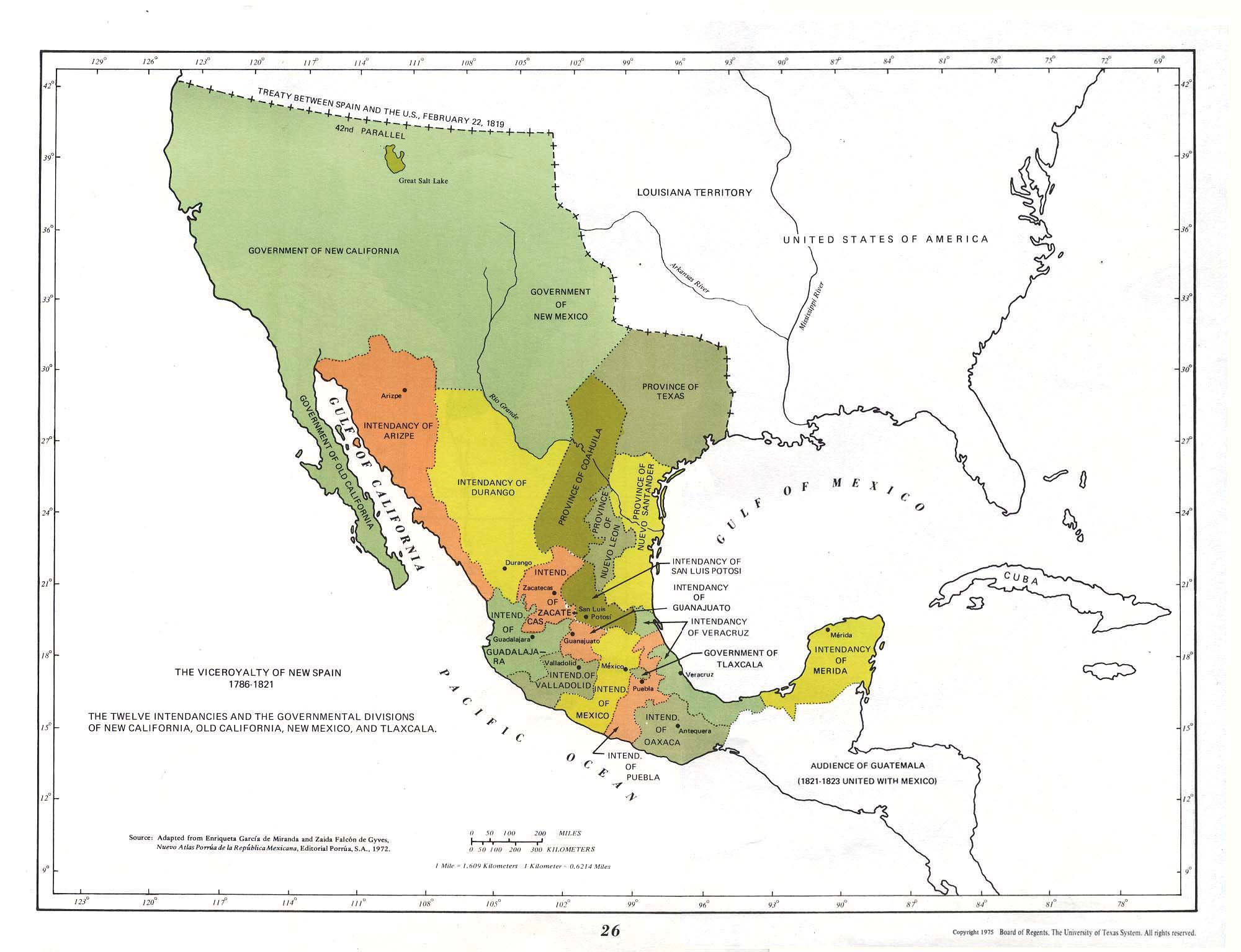
Spanish galleons transported Asian goods and travelers from Manila to colonial Mexico primarily through the port of Acapulco. During the two and a half centuries of contact between the Philippines and the Viceroyalty of New Spain, a minimum of 40,000 to 60,000 Asian immigrants would set foot in the “City of Kings,” while a figure double that amount (100,000) would be within the bounds of probability. From Acapulco they would gradually disperse to the far corners of the viceroyalty, from Loreto in Baja California to Mérida in Yucatan…. The majority, however, would eventually settle in two distinct zones: on the west coast in the districts of Guerrero, Jalisco, and Michoacán, and in the large, ethnically diverse municipalities of Mexico City and Puebla in the central valleys and the eastern port of Veracruz. The two zones were transversed by the most heavily traveled arteries that connected Acapulco to Mexico City (known colloquially as el camino de China) in the west; Veracruz with Puebla and Mexico City in the east; and several arterials linking the capital with Puerto Vallarta in the west and Guanajuato in the northwest.

For the most part, the chinos disembarked at Acapulco as sailors, slaves, and servants. Over the longue durée of Mexican-Asian cultural exchange, the largest contingent of Asians arrived as sailors on the galleons and smaller vessels (capitanas, pataches, and almirantes) that annually plied the long and perilous return voyage from Manila. The seamen were primarily Filipinos, Chinese mestizos (known in Manila as mestizos de Sangley), or ethnic Chinese from the fortified port of Cavite near Manila that served as the primary shipyard for Spaniards in the archipelago. In 1565, the first chino sailors from the islands of Cebu and Bohol arrived in Acapulco aboard Friar Andrés de Urdaneta’s trailblazing galleon, the San Pedro. During the late sixteenth century Iberian sailors constituted the majority of crewmen, but by the early 1600s Asians had surpassed them, accounting for 60–80 percent of the mariners from that time forward. A historical snapshot of galleon seafarers in the mid eighteenth century comes from a crew manifest of La Santissima Trinidad. In 1760, this vessel was manned by 370 sailors, consisting of 30 officers (Europeans or Mexican criollos), 40 artillerymen (27 chinos), 120 sailors (109 chinos), 100 “Spanish” cabin boys (96 chinos), and 80 “plain” cabin boys (78 chinos). In sum, 84 percent (310) of the crew were born and raised in Spain’s Asian colony, with 68 percent (250) hailing from the port of Cavite alone….

Along the Pacific coast, chino sojourners tended to congregate in the cities and pueblos of Acapulco, Coyuca, San Miguel, Zacatula, Tex pan, Zihuatenejo, Atoya, Navidad, and Colima. With the arrival of more ships from Manila, the number of sailors who either had no desire to return to the Philippines or were brought over as slaves married local Indian and mixed-race women increased. Consequently, a sizable population of chinos and their descendants made these cities and pueblos a popular destination for fellow Asians. Both freemen and slaves farmed rice (brought from the Philippines), corn, and cotton; tended cacao and coconut palm trees; fished in the seas and rivers; and transported people and goods to various ports along the coastline. Those who followed the royal highways to towns farther inland worked as muleteers or in the silver mines, haciendas, obrajes (textile workshops), or sugar mills….

Slaves and servants constituted the second largest group of Asian immigrants during the colonial era. Manila quickly became an important entrepôt for the commerce in human flesh during the first century of Spanish rule. The greater part were transported by Portuguese vessels from colonies and trading ports in Africa, India, the Malay peninsula, Japan, and China, although Chinese junks and Malay prahus also shipped large quantities to Manila. Non-Filipino slaves that fetched the highest price were from Timor, Ternate, Makassar, Burma, Ceylon, and India, because “the men are industrious and obliging, and many are good musicians; the women excellent seamstresses, cooks, and preparers of conserves, and are neat and clean in service.”…

The incorporation of Asian immigrants into the armed forces of New Spain represents another fascinating fragment of the chino mosaic from the colonial era. Similar to restrictions placed on other castas in Mexico, there were numerous prohibitions against Asians carrying weapons or riding horses….

The legion of similar antiweapons ordnances from the 1550s onward notwithstanding, from at least the 1590s free chinos not only were granted permission to carry weapons, but gradually incorporated into both the salaried companies of Españoles as well as local militias, especially those cities and towns along the Pacific coast. In several documents from the years 1591 and 1597, an “Indio Chino” from the silver mining town of Zultepec named Juan Alonzo, who earned his livelihood from buying and selling mules, was granted a license to ride a horse with a saddle and bridle and to carry a sword. A key determinant in this matter was his racial classification as a chino, since indios (unless they were elites) were forbidden such privileges….

Among the scores of Asian peoples that were widely defined as chinos, in the early decades of the 1600s Japanese converts were held in high esteem by Spaniards in the Philippines and New Spain for their bravery and loyalty. In 1603 and 1639 when Chinese residents in the Parián of Manila revolted against their Iberian overlords, Japanese swordsmen distinguished themselves in combat. Without their assistance, Sangleyes would surely have made the Philippines a colony of the Middle Kingdom. Thousands of Japanese converts, traders, and ronin made the Philippines their home prior to the closing of Cipango to Iberians in the 1630s. They lived in a suburb of Manila called Dilao, with a population estimated at 3,000 by 1624.

Thus it is not surprising that samurai converts were considered a more privileged subgroup of chinos in New Spain….

It is unclear exactly when chino militias were established on the west coast of New Spain. It is evident, however, that prior to 1729 Asian paramilitary units were routinely patrolling the regions adjacent to Acapulco. Tiburcio Anzalde, “captain of one of the militias of chinos and mulatos in the district of Atoya,” discussed the duties and obligations of militiamen in a 1746 document: repeated trips to Acapulco to deliver mail and other correspondences; to clear the roads (of bandits) while on patrol; and, most importantly, their heroic role in resisting the English pirate George Anson‘s invasion at the port of Zihuatenejo in 1741.

Leave a comment

Filed under Asia, China, economics, England, Japan, labor, Mexico, migration, Netherlands, Philippines, Portugal, Spain

Wordcatcher Tales: Begum, Jhampan

I never read much Kipling as a kid, and some of the vocabulary of British India that I have encountered in Indian Summer: The Secret History of the End of an Emperor, by Alex von Tunzelmann (Picador, 2008) is new to me. Here are two such novelties.

The royal tour ground on, zigzagging up through the belly of India and stopping in Bangalore, Mysore, Hyderabad and Indore. By 4 February [1922], it had reached Bhopal, where Dickie [Mountbatten] and David [Windsor] were the guests of the only woman ruler in Asia, the Nawab Sultan Jaban Begum. The Begum was an ardent Muslim and usually ruled from behind a purdah screen. The rare sight of her tiny figure, swathed in a blue burka, next to the white-uniformed Prince of Wales gave the tour’s photographers some of their best opportunities. But it was an image more connected to the past than to the future. [p. 70]

Bhopal seems to have had a number of enlightened female nawabs. Begum is the feminine of Turkic Beg (or Bey) which turns up in many names from former parts of the Ottoman and Mughal empires—Izetbegovic, for example.

The British continued to come to Simla, sometimes for eight months of each year, with the European ladies and gentlemen carried up in the local jhampan sedan chairs. They were followed by hundreds of coolies, who had been press-ganged from their surrounding farms into the service of Her Majesty’s government, lugging dispatch boxes, carefully packed crockery, musical instruments, trunks full of theatrical costumes for amateur dramatics at the Gaiety Theatre, crates of tea and dried provisions, faithful spaniels in traveling boxes, rolled-up rugs, aspidistras, card tables, favorite armchairs, baskets of linen and tons upon tons of files; all the paraphernalia of the raj literally borne on the shoulders of one long caravan of miserable, sweating Indian peasants. Eventually, in 1891, a narrow-gauge railway was opened, weaving in and out of 103 tunnels up from the plains at Kalka—a journey which still took at least six hours. The British never questioned whether all this was worth it. Gandhi may have criticized the administration’s annual repair to Simla for being “government working from the 500th floor,” but that was exactly the point. [pp. 193-194]

This word turns up under jompon in Hobson-Jobson (via Google books), which cites a 1716 source that defines a jampan as a “palankin”; an 1849 source that defines a jhappan as a “kind of arm chair with a canopy and curtains”; and an 1879 source that specifically mentions its use in Simla:

The gondola of Simla is the jampan or jampot аs it is sometimes called on the same linguistic principle … as that which converts asparagus into sparrow grass … Every lady on the hills keeps her jampan and jampanees just as in the plains she keeps her carriage and footmen — Letter in Time Aug. 17

That’s the wonderful Hobson-Jobson: A Glossary of Colloquial Anglo-Indian Words and Phrases, and of Kindred Terms, Etymological, Historical, Geographical and Discursive by Henry Yule, Arthur Coke Burnell, William Crooke (J. Murray, 1903), digitized from a printed original at the University of California.

Leave a comment

Filed under anglosphere, Britain, India, Islam, labor, language, Pakistan, South Asia, Turkey

India’s Huge Informal Labor Sector

From India: The Rise of an Asian Giant, by Dietmar Rothermund (Yale U. Press, 2008), pp. 211-213:

The poor in India are a vast reserve army of cheap labour. Organized labour in the ‘formal’ sector of the economy is a comparatively small part of the total labour force. In 2003 the public and private sectors together employed 27 million workers. The private sector is the smaller one with 8.4 million but a greater share of the ‘manufacturing’ category with 4.7 million as against only 1.5 million in the public sector. According to the theory of W. Arthur Lewis, in a ‘dual economy’ (traditional and modern) there is a reserve army of labour in the traditional sector which supplies the modem one with a steady flow of new recruits. But the Indian economy is not a dual one: it consists of two parallel economies. Since the reform of 1991, employment in the formal sector has practically stagnated; there has been only a slight shift from the public to the private sector, the first losing and the latter gaining 1 million employees. These figures would confirm the frequent comments on the phenomenon of jobless growth. But, of course, this refers only to the formal sector; the actual growth takes place in the informal sector. In fact, from 1978 to 2000, the share of the informal sector in the total labour force increased slightly from 91.3 to 92.4 million, although one would have expected a decrease of informal labour in a period of steadily increasing economic growth. The wage differential between the two sectors is enormous. For employees in the public sector, official statistics show an average daily per capita rate of Rs 681. According to the National Sample Survey mentioned earlier, the daily wages for male casual labourers in urban areas are Rs 75 and in rural areas Rs 56; the rates for female labourers are Rs 44 and 36 respectively. The figure for the public sector would, of course, include the high salaries of the Class I officials, but they are a small minority when compared to the legions of humble Class IV officials who do manual work or errands for the higher-ups. Nevertheless, even these humble people are head and shoulders above the casual labourers in the informal sector. Moreover, their jobs are secure and permanent, unlike the ‘informal’ jobs, which are subject to the rule of ‘hire and fire’.

Subjection to the rule of ‘hire and fire’ has increased with the growing casualization of informal labour. New forms of contracting labour have developed which permit the employer to shift the onus of hiring and firing casual labour to agents who are told how many workers are needed at any given time. Casualization has particularly affected women workers who were previously not very active in the labour market but have joined it in recent years in increasing numbers. Concerned social scientists have coined the term ‘feminization of poverty’ in order to characterize this phenomenon.

The ‘informal’ proletarians are not protected by any trade unions, which for good reasons concentrate on the organized sector of the economy. Very few of the recognized trade unions can depend on regular fees paid by their members. Accordingly, union leaders must look for other sources of income. They usually squeeze the employers by threatening to stir up trouble. There is no collective bargaining in India: wages are set by officially appointed tribunals and there are also tribunals which try the cases of individual workers who have been made redundant or have not been paid the wages due to them. Therefore most labour leaders are lawyers who spend their time pleading before those tribunals. The informal proletariat has no contact with such tribunals or lawyers.

The usual staff of a workshop in the informal sector consists of the boss and fewer than ten workers. In small firms which operate as subcontractors for manufacturers, the boss may even be an engineering graduate. Capital investment in such workshops is minimal so very often they band together and help each other out. One has a lathe, the other a drilling machine, etc.; if the piece of work requires both, it is carried from one shop to the other. The ignorant observer may think that this cluster of workshops is a slum, but on closer inspection he will be surprised to see the quality and variety of their products. Bigger firms rely on such subcontractors for two reasons: first of all, they can keep the number of workers and the investment in machines limited; and, secondly, if there is a slack in demand they can cut the orders farmed out to the subcontractors. This explains the phenomenon of jobless growth in the organized sector. The huge number of subcontractors who have the reserve army of labour on their doorstep shield the organized sector against risks but can also respond very quickly to increased demand. There is, however, a growing gap between labour productivity in the organized and in the informal sectors. In 1983 labour in the organized sector was about six times more productive than that in the informal one; by 1999 the differential had increased to nine times. This would also account for the wage differentials between the two sectors.

The wages paid by subcontractors, particularly if they work for manufacturers producing cars or machine tools, have to be higher than the wages of casual labourers mentioned above, but they would still be much lower than those in the organized sector. The qualifications of the informal proletariat working for subcontractors range from those of skilled workers to that of untrained people. The skilled workers in workshops would be the ‘creamy layer’ of the informal proletariat and they would be above the poverty line. But the great majority of the reserve army of informal labour are quite poor, something that would be particularly true of the many landless labourers who are at the beck and call of the landowning peasantry. Earlier systems of permanent attachment of such labour to the households of their employers have long since disintegrated because the employer can always find casual labour and does not need to retain labourers in the off-season. Even at times when the harvest or other seasonal operations suddenly require additional labour, there are nowadays migrant labourers who make themselves available for seasonal employment. Workers from Tamil Nadu will show up in the Punjab or elsewhere at a distance of 1,500 kilometres from their home. Here, too, the informal proletariat shows its usefulness as a reserve army of labour. About 43 per cent of India’s rural population are landless. If one deducts from this about 8 per cent for traders, carters, and so on there would still be 35 per cent of labourers who depend on their daily wages.

Of course, ‘casualization’ is hardly limited to India or to informal sectors of large economies. One report last year estimated that 70% of the faculty in American universities now depend on part-time or limited-term contracts. So, to twist the clause that begins this passage: An oversupply of postgraduate degrees provides a vast reserve army of cheap labour for universities.

Leave a comment

Filed under economics, India, industry, labor