Category Archives: Russia

End of the Americo-Liberian Aristocracy, 1980

From The Fate of Africa: A History of Fifty Years of Independence, by Martin Meredith (PublicAffairs, 2005), pp. 545-548:

In his book Journey Without Maps, an account of his travels in Liberia in the 1930s, the English writer Graham Greene recorded that ‘Liberian politics were like a crap game played with loaded dice’. It was a game that Liberia’s ruling elite – the descendants of some 300 black settler families from the United States who set up an independent republic in 1847 – played among themselves with considerable relish. For more than 100 years – from 1877 to 1980 – Liberia was governed under a one-party system in which the same party, the True Whig Party, controlled by the same elite group, held office continuously, dispensing patronage, deciding on public appointments and retaining a monopoly on power – a record equalled by no other political party anywhere in the world. Elections were nevertheless taken seriously, if only to determine which family – the Barclays, the Kings, the Tubmans – emerged on top. ‘The curious thing about a Liberian election campaign,’ wrote Greene, ‘is that, although the result is always a foregone conclusion, everyone behaves as if the votes and the speeches and the pamphlets matter.’ However, he added, the system was more complicated than it seemed. ‘It may be all a question of cash and printing presses and armed police, but things have to be done with an air. Crudity as far as possible is avoided.’

As members of a ruling aristocracy, the Americo-Liberians, as they called themselves, were immensely proud of their American heritage. They developed a lifestyle reminiscent of the antebellum South, complete with top hats and morning coats and masonic lodges. They built houses with pillared porches, gabled roofs and dormer windows resembling the nineteenth-century architectural styles of Georgia, Maryland and the Carolinas. They chose as a national flag a replica of the American Stars and Stripes, with a single star, and used the American dollar as legal tender.

Just like white settlers in Africa, the Americo-Liberians constructed a colonial system subjugating the indigenous population to rigid control and concentrating wealth and privilege in their own hands. Despite their origins as descendants of slaves from the Deep South, they regarded black Liberians as an inferior race, fit only for exploitation. The nadir of Americo-Liberian rule came in 1931 when an international commission found senior government officials guilty of involvement in organised slavery.

When other West African states shed colonial rule in the 1960s, the Liberian system stayed much the same. Liberian law stipulated that only property owners were entitled to the vote, so the vast majority of indigenous Africans were effectively left without one. Small numbers were assimilated into the ranks of the ruling elite: ‘country boys’ adopted by coastal families; girls selected as wives or concubines; ambitious ‘hinterlanders’ climbing the ladder. During the 1970s a few were co-opted into government. Local administration in the ‘hinterland’ was largely run by indigenous officials. But essentially Liberia remained an oligarchy where 1 per cent of the population controlled the rest – some 2 million people.

The last of the line of Americo-Liberian presidents was William Tolbert, the grandson of freed South Carolina slaves who had served as vice-president for twenty years. A Baptist minister, he attempted a series of cautious reforms, abandoning the top hat and tail-coat traditions favoured by his predecessor, William Tubman, selling the presidential yacht and abolishing a compulsory ‘tithe’ of 10 per cent of every government employee’s salary that went to the True Whig Party. But much of Tolbert’s efforts were also devoted to amassing a personal fortune and promoting the interests of family members in the traditional manner. One brother was appointed minister of finance; another was chosen as president of the senate; a son-in-law served as minister of defence; other relatives filled posts as ministers, ambassadors and presidential aides. The crap game of Liberian politics was as highly profitable in the 1970s as in the 1930s.

Economic development in the 1960s and 1970s helped underpin the system, as well as provide new opportunities for the elite’s self-enrichment. The mainstay of the economy had initially been rubber. In 1926 the Firestone Tyre and Rubber Company leased a million acres for ninety-nine years at six cents an acre to meet the American demand for car tyres. But iron ore exports from massive, high-grade deposits in the Bomi hills then overtook rubber as the major source of foreign investment and government income. By 1970 Firestone and the Liberian Iron Mining Company were providing the government with 50 per cent of greatly increased revenues. A third source of income came from registration fees from the world’s largest ghost fleet of ships: Liberia possessed only two ships of its own, but allowed more than 2,500 vessels plying the seas to fly Liberia’s flag of convenience without the bother of inspection, for a suitable fee.

Liberia ‘s economic advances, however, served only to highlight the growing disparity between the ostentatious lifestyle of the rich elite and the overwhelming majority of impoverished tribal Africans. In 1979 – the same year that Tolbert spent an amount equivalent to half the national budget while acting as host to an OAU heads of state conference – demonstrators took to the streets in protest against a 50 per cent increase in the price of rice, the staple food of most Liberians. The price increase had been authorised by Tolbert in the hope of encouraging local production. But since one of the chief beneficiaries was the president’s cousin, Daniel Tolbert, who owned the country’s largest rice-importing firm, it was seen as another move to enrich the elite. On Tolbert’s orders armed police and troops opened fire on the demonstrators, killing dozens of them.

In the following months Tolbert struggled to contain a rising tide of discontent, colliding not just with the poor but with a new generation of the educated elite. He allowed the formation of an opposition party, but when opposition politicians called for a general strike, he had them arrested on charges of treason and sedition and banned the party.

On the night of 12 April 1980 a group of seventeen dissident soldiers led by a 28-year-old master sergeant named Samuel Doe, scaled the iron gate of the president’s seven-storey Executive Mansion, overpowered the guards and found Tolbert in his pyjamas in an upstairs bedroom. They fired three bullets into his head, gouged out his right eye and disembowelled him. His body was dumped in a mass grave along with twenty-seven others who died defending the palace. Ministers and officials were rounded up, taken before a military tribunal and sentenced to death.

Amid much jubilation, watched by a crowd of thousands laughing and jeering and filmed by camera crews, thirteen high-ranking officials were tied to telephone poles on a beach in Monrovia and executed by a squad of drunken soldiers, firing volley after volley at them. A great shout arose from the mob. ‘Freedom! We got our freedom at last!’ The soldiers rushed forward to kick and pummel the corpses.

Thus the old order ended.

Thus begins the chapter entitled “Blood Diamonds,” in which the barbarism only gets worse and worse. Few societies have solved the problem of how to overthrow recalcitrant aristocrats without descending into a period of barbarism that only serves to unduly enhance nostalgia for prerevolutionary times, as Theodore Dalrymple observes in his retrospective on Alexander Solzhenitsyn.

The Russian satirical writer Vladimir Voinovich satirized Solzhenitsyn’s Russian nationalism by depicting someone resembling him having his employees flogged in Vermont. This satirical scene, in fact, made a profound criticism of Solzhenitsyn’s political thought. Voinovich was alluding to the fact that, were it not for the horrors of Bolshevism, the pre-revolutionary Russian political tradition would be regarded as so brutal that no sensitive person of good will could be a Russian nationalist. As it was, the Bolsheviks regularly killed in a few minutes more people than the Romanovs managed in a century, giving pre-revolutionary Russian history the retrospective luster of decency, wisdom, and compassion that it did not in the least deserve. For Voinovich—and the distinguished historian of Russia Richard Pipes—Leninism had its roots in the Russian tradition as well as the Marxist one. This meant that Solzhenitsyn, while absolutely right in his uncompromising attitude to Marxist-Leninism and all its works, belonged in the category of Dostoevsky: a brilliant seer who would nevertheless have made a very bad guide.

Leave a comment

Filed under democracy, Liberia, nationalism, Russia, slavery, U.S., war

Baciu’s Early Exile Network

From Mira, by Ştefan Baciu (Honolulu: Editura Mele, 1979 [also Bucuresti: Editura Albatros, 1998], p. iii (my translation):

I dedicate this “Double Autobiography” to our Brazilian friends, departed but always present:

and to those in Hispanic America, just as present:

and to the memory of our friends:

    Grigore Cugler/“Apunake” (d. in Lima)
    Mircea Popescu (d. in Rome)
    Horia Tănăsescu (d. in San Francisco)
    Ion Oană-Potecaşu (d. in São Paulo)
    N. I. Herescu (d. in Zurich)
    Alexandru Busuioceanu (d. in Madrid)
    Aron Cotruş (d. in California)

It is perhaps not too surprising that the Romanian exiles are not well represented in Wikipedia. Baciu himself has a longer biography in Spanish Wikipedia than in either Romanian or English. Exiles tend to fall between the cracks. Who feels responsible for documenting their lives, people in their countries of exile or the ones they left behind? In the case of literary exiles, it depends who reads their work. I believe that Baciu devoted half of his own separate volume of memoirs (Praful de pe toba) to sketches of his old mentors and colleagues precisely in order to ensure that they would not be entirely forgotten.

Aleksandr Solzhenitsyn, who just passed away, spent time in both domestic internal and foreign exile. The English translations of his early classics like One Day in the Life of Ivan Denisovich, The First Circle, Cancer Ward, and August 1914 had a major influence on my understanding of what the Soviet system was all about, an understanding that was reinforced and enriched by my year in Romania in 1983-84. (I did not read The Gulag Archipelago, but have blogged passages of several books about Gulags more recently.) Solzhenitsyn is not regarded quite the same way in his country of exile as in his country of origin, and his obsessions also evolved differently at home and abroad. He lived more than two lives, perhaps even as many as nine.

Leave a comment

Filed under biography, Brazil, Latin America, literature, migration, North America, Romania, Russia, USSR

The Gulag Economy’s Peace Dividend

From The Whisperers: Private Lives in Stalin’s Russia, by Orlando Figes (Metropolitan, 2007), pp. 467-468:

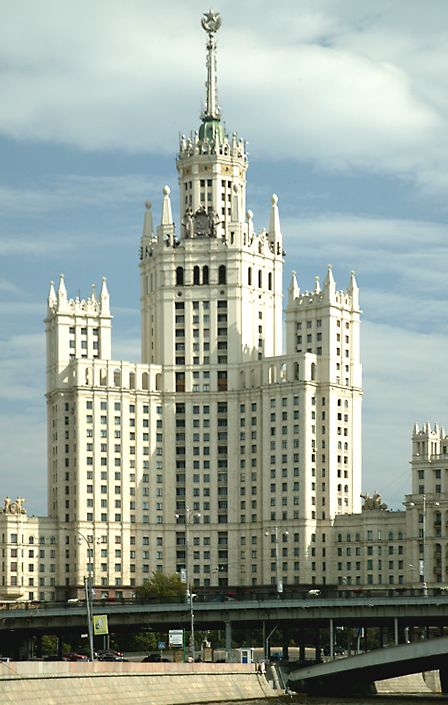
Forced labour played an increasingly important part in the post-war Soviet economy, according to a policy dictated by Stalin and his ‘kitchen cabinet’ of advisers. With the ending of the war the pool of unpaid labour available for exploitation by the state grew enormously. Apart from Gulag prisoners and labour army conscripts, there were 2 million German POWs, and about another million from other Axis nationalities, who were mostly used for timber-felling, mining and construction, although those with skills were employed occasionally in Soviet industry. In some factories German POWs were so integral to production that detention camps were built on the factory grounds and officials tried to block the prisoners’ repatriation to Germany. The Gulag population also grew, despite the release of many prisoners in the amnesty of 1945; the camps took in well over a million new prisoners between 1945 and 1950, largely as a result of the mass arrest of ‘nationalists’ (Ukrainians, Poles, Belorussians, Latvians, Lithuanians and Estonians) in territories captured or reoccupied by the Red Army but never really reconciled to Soviet power. The Gulag system expanded into a vast industrial empire, with 67 camp complexes, 10,000 individual camps and 1,700 colonies, employing a captive labour force of 2.4 million people by 1949 (compared with 1.7 million before the war). Overall, it is estimated that conscript labourers represented between 16 and 18 per cent of the Soviet industrial workforce between 1945 and 1948. They were especially important in the mining of precious metals in cold and remote regions where free labour was very expensive, if not impossible, to employ (hence their contribution to the Soviet economy was even more significant than the figures would suggest). Slave labour also made up the workforce in the big construction projects of the late 1940s which came to symbolize, officially at least, the post-war confidence and achievements of the Soviet system: the Volga–Don Canal; the Kuibyshev hydro-electric station; the Baikal-Amur and Arctic railways; the extensions to the Moscow Metro; and the Moscow University ensemble on the Lenin Hills, one of seven wedding-cake like structures (‘Stalin’s cathedrals’) in the ostentatious ‘Soviet Empire’ style which shot up around the capital in these years.

The post-war years saw a gradual merging between the Gulag and civilian economies. Every year about half a million Gulag labourers were contracted out to the civilian sector, mostly in construction, or wherever the civilian ministries complained of labour shortages; about the same number of free labourers, mostly specialists, were paid to work in Gulag industries. The Gulag system was increasingly compelled to resort to material incentives to motivate even its forced labourers. The population of the camps had become more unruly and difficult to control. With the amnesty of about a million prisoners in 1945, mainly criminals, who had their sentences either reduced or annulled, the camps were left with a high proportion of ‘politicals’ – not the intellectual types who filled the camps in the 1930s but strong young men who had fought as soldiers in the war, foreign POWs, Ukrainian and Baltic ‘nationalists’ – who were hostile to the Soviet regime and not afraid of violence. Without a system of rewards, these prisoners simply refused to meet the set targets. The cost of guarding the prisoners was also becoming astronomical. By 1953, the MVD was employing a quarter of a million guards within its camps, spending twice as much on the upkeep of the Gulag than it received in revenue from its output. Several senior MVD officials were seriously questioning the effectiveness of using forced labour at all. There were even mooted plans, supported by Beria and Malenkov, to dismantle sections of the Gulag and convert the prisoners into partially civilian workers, but since Stalin was a firm supporter of the Gulag system, none of these ideas was seriously proposed.

Leave a comment

Filed under economics, labor, nationalism, Russia, USSR, war

Gulag Returnees Meet Their Accusers

From The Whisperers: Private Lives in Stalin’s Russia, by Orlando Figes (Metropolitan, 2007), pp. 583-587:

‘Now those who were arrested will return, and two Russias will look each other in the eye: the one that sent these people to the camps and the one that came back.’ With those words the poet Akhmatova anticipated the drama which unfolded as prisoners returned from the camps to confront colleagues, neighbours, friends who had informed on them….

Ibragim Izmail-Zade was a senior professor of medicine and a departmental head at the Institute of Medicine in Baku at the time of his arrest, in 1938, on charges of belonging to an ‘anti-Soviet group of Azerbaijani nationalists’. After his release from the Kolyma camps, he returned to Baku, where he took up a junior position in the same institute. Instead of the cutting-edge research he had done in the 1930s, he was now employed in routine clinical work. During the trial of M. D. Bagirov, the former Party boss of Azerbaijan, in 1955, Ibragim appeared as a witness for the prosecution, in which capacity he was allowed to look at his own file from 1938, when Bagirov had led the terror campaign in Baku. Ibragim discovered that he had been denounced by his favourite student, who had since gone on to become the head of his department at the institute. While Ibragim was in Kolyma, the former student had often visited his wife and daughter, who treated him as a member of the family. The old student was noticeably cooler in his behaviour after Ibragim’s return, rarely coming to the house, and never in the evening, when he would have been obliged to eat or drink with him. After his discovery of the denunciation, Ibragim and his family were forced to see the former student several times, and while they never spoke to him about his actions, it was clear that the Izmail-Zades now knew of the betrayal. One day the political director of the institute appeared at the Izmail-Zade house. He wanted Ibragim to sign a document stating that his family had no grievance against the former student, and that they would remain on friendly terms. Ibragim refused to sign. He had to be restrained from throwing the official out on the street. According to his daughter, Ibragim was crushed by the betrayal. He felt humiliated at being forced to work beneath someone who, he felt, was hardly qualified. Being asked to sign the document had been the final straw….

Many former prisoners were surprisingly forgiving towards the people who had informed on them. This inclination to forgive was seldom rooted in religious attitudes, … but it was often based on the understanding, which was shared by everyone who had experienced the prisons and the camps of the Gulag system, that virtually any citizen, no matter how good they might be in normal circumstances, could be turned into an informer by pressure from the NKVD.

Leave a comment

Filed under Russia, USSR

Gorky: ‘We need more camps like Solovetsky’

From The Whisperers: Private Lives in Stalin’s Russia, by Orlando Figes (Metropolitan, 2007), pp. 192-194:

In August 1933, a ‘brigade’ of 120 leading Soviet writers went on a boat tour of the White Sea Canal organized by Semyon Firin, the OGPU commander of the labour camps at the canal. The idea of the trip had its origins in a meeting that took place in Maksim Gorky‘s Moscow house in October 1932, at which a number of the country’s leading writers discussed the tasks of literature with several Politburo members, including Stalin, and other Party functionaries. In one of the earliest statements of the Socialist Realist doctrine, Gorky called for a heroic literature to match the ‘grand achievements’ of the Five Year Plans, and Stalin, who compared the Soviet writers to ‘engineers of the human soul’, proposed a tour of the canal to inspire them. Everything was organized by OGPU. ‘From the minute we became the guests of the Chekists, complete Communism began for us,’ the writer Aleksandr Avdeyenko later commented ironically. ‘We were given food and drink on demand. We paid nothing. Smoked sausage, cheeses, caviar, fruit, chocolate, wines and cognac – all was in plentiful supply. And this was a year of famine.’…

The writers had different reasons for colluding in this legitimation of the Gulag. No doubt there were some who believed in the Stalinist ideal of perekovka, the remoulding of the human soul through penal labour….

Gorky was also a believer. He never visited the White Sea Canal. But this was no obstacle to his glowing praise of it in the book commissioned by OGPU (just as ignorance was no obstacle to foreign socialists, like Sidney and Beatrice Webb, who also praised the canal as ‘a great engineering feat … a triumph in human regeneration’ in 1935). Having spent the 1920s in the West, Gorky had returned to the Soviet Union on the first of several summer trips in 1928 and had settled there for good in 1931. The ‘great Soviet writer’ was showered with honours; he was given as his residence the famous Riabushinsky mansion in Moscow; two large dachas; private servants (who turned out to be OGPU spies); and supplies of special foods from the same police department that catered for Stalin. So perhaps it is not surprising that Gorky failed to see the immense human suffering that lay behind the ‘grand achievements’ of the Five Year Plan. In the summer of 1929, Gorky had visited the Solovetsky labour camp. The writer was so impressed by what he was shown by his OGPU guides that he wrote an article in which he claimed that many of the prisoners had been reformed by their labour in the camp and loved their work so much that they wanted to remain on the island after the completion of their sentences. ‘The conclusion is obvious to me,’ Gorky wrote: ‘we need more camps like Solovetsky.’

Leave a comment

Filed under literature, religion, Russia, USSR

St Vladimir of the October Revolution

From: Sacred Causes: The Clash of Religion and Politics, From the Great War to the War on Terror, by Michael Burleigh (HarperCollins, 2007), pp. 53-54:

Krupskaya’s wish that her husband [V. I. Lenin] be interred with other old comrades was ignored in favour of mummifying his corpse, a step apparently inspired by worldwide fascination with he contemporary excavation of Luxor and discover of the tomb of the pharoah Tutankhamen, although the intention was to preserve for eternity what Robert Service has dubbed ‘Saint Vladimir of the October Revolution’. Lenin’s mummified corpse was displayed in a temporary timber mausoleum in the Wall of the Kremlin before this was replaced in 1930 by a permanent stone structure. The design reminded one Russian commentator of the tomb of King Cyrus near Murgaba in Persia, although the model was actually the mausoleum of Tamerlane. The prime movers in the preservation of Lenin’s body were Bonch-Bruevich, Leonid Krasin and Lunacharsky, ironically all erstwhile God-builders who had clashed with Lenin on this very issue. They formed an ‘Immortalisation Commission’. The reasons for Lenin’s mummification were several. His early death, probably brought about by chronic bureaucratic overwork that he had been unaccustomed to in the earlier decades of his life, was a metaphor for the years of revolutionary elan and enthusiasm that were ineluctably passing away. Mummification meant that the moment would exist in this curious symbolic form throughout time. His spirit would also endure in the Party: ‘Lenin lives in the heart of every member of our Party. Every member of our Party is a small part of Lenin. Our whole communist family is a collective embodiment of Lenin.’ The aura of this dead St Vladimir would spread to his lesser successors, who henceforth were in control of what he had or had not said or written during his lifetime. Significantly, Stalin managed to gain influence over the fledgling Lenin Institute at the Party’s Sverdlov university, and through The Foundations of Leninism, in which he explained Lenin’s ideology to the new Party intake, thereby establishing himself as guardian of the canonical texts.

And what was the net result of this vicious campaign against religion? The Party-state could certainly deploy more force, and did so against the Orthodox clergy. But the ranks of the militant godless waned as quickly as they had waxed, and they were usually filled with the intellectually low grade in the first place. Peasants, whether on the land or newly transplanted to the cities, found ways of resisting this assault on their beliefs, perhaps by sending grannies to obstruct four-eyed student atheists or using loopholes in the law to retain use of a church. Committed religious believers became more entrenched in their faith, while the more casually secure fell away, probably without turning to the dominant secular creed.

Leave a comment

Filed under religion, Russia, USSR

Stakhanovites as the New (Leisure) Class

From: Sacred Causes: The Clash of Religion and Politics, From the Great War to the War on Terror, by Michael Burleigh (HarperCollins, 2007), pp. 89-91 (reviewed here and here):

The Soviet Union was not immune to what was emerging as a global cult of celebrity, or notoriety, focused on athletes, aviators, boxers, film-stars, gangsters, mountaineers and, as we have seen, dictators. Already, the commissar for heavy industry, Sergo Ordzhonikidze, had launched the search for ‘new people’, saying, ‘In capitalist countries, nothing can compare with the popularity of gangsters like Al Capone. In our country, under socialism, heroes of labour, our Izotovites, must become the most famous,’ a reference to Nikita Izotov, a miner whom colleagues described rather sourly as ‘the human cutting machine’. But Izotov was destined to be eclipsed, along with the new hybrid Marx, Aristotle and Goethe.

In 1931 Pravda ran features under the slogan ‘The Country Needs to Know its Heroes’, consisting of photographs of aviators, collective farmers, shock-workers and the like. The concept of the exemplary elite was primarily associated with Aleksei Stakhanov, a thirty-year-old Donbass coalminer, who in August 1935 managed to cut 102 tons of coal (or fourteen times his norm) in a single shift—moreover, with the aid of a trusty Soviet-produced pneumatic pick. Stakhanov had migrated from a village in Orel, working his way up from pony-brakeman to manual pick operative, before getting his hands on the air-powered pick that brought him fame and fortune. Of course the work was done at night, enabling Stakhanov to maximise his labours as compressed air went to his pick alone, and his six-hour continuous stint was facilitated by a lengthy logistical chain beginning with the men installing timber props behind him. Nonetheless, the anonymous battalions of shock-workers were thenceforth superseded by a Soviet Hercules with a human face. ‘Recordmania’ spread like a feverish sickness, with managers and foremen sweating too lest they be denounced as ‘bigwigs’, ‘windbags’, ‘routiners’, ‘wreckers’, or ‘saboteurs’ for failing to make these ‘Stakhanovite’ feats feasible, rendering them liable to what the Kremlin’s own Al Capone sinisterly called ‘straightening out’ or ‘a tap on the jaw’. It mattered not that these epic episodes tended to deplete machinery and leave ‘Stakhanovites’ spent, or that some workers resented the diversion of resources, the subsequent lifting of their own norms, or the rich rewards such Promethean heroics brought. Schadenfreude best describes those who said of a young female Stakhanovite, who had been rewarded (one hopes she was grateful) with the selected works of Lenin: ‘That’s what the whore deserves!’ Resentment towards Stakhanovites bestriding the factory floors ‘like gods’ was compounded when they became fixtures of the factory ‘production courts’.

Much of the time of stellar Stakhanovites was increasingly spent on tour, whether visiting the Kremlin, addressing other workers or venturing confidently into places—such as the opera or theatre—where workers already did not comfortably go. Even society pages in the newspapers included such gems as ‘The brigadier-welder Vl. Baranov (28), the best Stakhanovite at Elektrozavod, glided across the floor in a slow tango with Shura Ovchinnovka (20), the best Stakhanovite at TsAGI. He was dressed in a black Boston suit that fully accentuated his solidly built figure; she was in a crepe de chine dress and black shoes with white trimming.’

In other words, although they talked incessantly about work, Stakhanovites did less and less of it, recalling it, like millionaire footballers or pop stars from humble origins, as something that took on roseate hues in memory of things past. Of course, Stakhanovites had a role to play within a wider myth-in-the-making. As an explicitly hierarchical society replaced one allegedly based on fraternity, they had to acknowledge the crucial guiding role of the nation’s father-figure, whose speeches had allegedly originally inspired them to break through artificial barriers while using technology almost as an extension of their own brain. Stakhanovites, who were often not members of the Party, were also model citizens in respects other than dutiful sons and daughters of the ultimate patriarch. Their lifestyle was supposed to exemplify the theme that ‘life is joyous, comrades’, and since they were showered with official munificence while simultaneously enjoying very high wages, the joyous life seemed like an idyllic shopping spree, for clothes, clocks, furniture, motorbikes, perfume, phonographs and so forth. Thus adorned and kitted out, Stakhanovites appeared having their leisurely breakfasts, reading the papers, lunching with friends, playing a little volleyball, tea and a game of checkers, while their wives undertook charitable work as ‘housewife-activists’ and their children were exhorted to their own heroics at school.

Leave a comment

Filed under economics, industry, Russia, USSR

Wartime Revelations of Soviet Citizens

From The Whisperers: Private Lives in Stalin’s Russia, by Orlando Figes (Metropolitan, 2007), pp. 440-442:

Little wonder that the war appeared to many as a sort of spiritual purification, a violent purging of the ‘inhuman power of the lie’ that had stifled all political discussion in the years before. ‘The war forced us to rethink our values and priorities,’ remarks Lazarev, ‘it enabled us, the ordinary soldiers, to see a different kind of truth, even to imagine a new political reality’.

This rethinking became more widespread as the war neared its end and much of the vast Soviet army entered into Europe, where the soldiers were exposed to different ways of life. By the start of 1944, the Soviets had amassed an army of 6 million men, more than twice the size of the German army on the Eastern Front. In June 1944, just as the Allies launched the invasion of northern France, the Red Army burst through the bulk of the German forces on the Belorussian Front, retaking Minsk by 3 July and pushing on through Lithuania to reach the Prussian border by the end of August. Meanwhile the Soviet troops on the Ukrainian Front swept through eastern Poland towards Warsaw. In the southern sector, where the German forces soon collapsed, the Red Army swept across Romania and Bulgaria to reach Yugoslavia by September 1944. The Soviet advance was relentless. By the end of January 1945, the troops of the Ukrainian Front had penetrated deep into Silesia, while Zhukov’s Belorussian Front had reached the Oder River and had Berlin in its sights.

Hardly any of the Soviet soldiers had ever been to Europe. Most of them were peasant sons who had come into the army with the small-world views and customs of the Soviet countryside and an image of the wider world shaped by propaganda. They were not prepared for what they discovered. ‘The contrast between the standard of living in Europe and our own in the Soviet Union was an emotional and psychological shock, and it changed the views of millions of troops,’ observed [war correspondent] Simonov. Soldiers saw that ordinary people lived in better houses; they saw that the shops were better stocked, despite the war and looting by the Red Army; and that the private farms they passed on their way to Germany, even in their ruined state, were far superior to the Soviet collective farms. No amount of propaganda could persuade them to discount the evidence of their own eyes.

The encounter with the West shaped the soldiers’ expectations of the future in their own country. Peasant soldiers were convinced that with the end of the war the collective farms would be swept away. There were many rumours of this sort in the army, most of them involving promises by Zhukov to the troops. Retold in a million letters from the soldiers to their families, these expectations spread throughout the countryside, resulting in a series of peasant strikes on the collective farms. Other soldiers talked about the need to open the churches, about the need for more democracy, even about the dismantling of the Party system root and branch. The film director Aleksandr Dovzhenko remembered a discussion with a military driver, a ‘Siberian lad’, in January 1944. ‘Our life is bad,’ the driver had said. ‘And all of us, you know, just wait for changes and improvements in our lives. We all wait. All of us. It’s just that we don’t all say it.’ ‘I was astonished by what I heard,’ Dovzhenko noted in his diary afterwards. ‘The people have a tremendous need for some other kind of life. I hear it everywhere. The only place where I don’t hear it is among our leaders.’

Officers were in the forefront of this army movement for reform. They openly expressed their criticisms of the Soviet system and their hopes for change. One lieutenant wrote to the Soviet president Mikhail Kalinin in 1945 with a ‘series of considerations to put to the next meeting of the Presidium of the Supreme Soviet’. Having been to Maidanek, the Nazi death camp in Poland, and having seen the consequences of a dictatorship in Germany, the officer demanded an end to arbitrary arrests and imprisonment in the Soviet Union, which, he said, had its own Maidaneks; the abolition of the collective farms, which he knew were a disaster from what he had been told by his own troops; and a list of other, more minor grievances, which his soldiers had asked him to convey to the president.

Party leaders were understandably anxious about the return of all these men with their reformist ideas. For those who cared to look back at history, there was an obvious parallel with the war against Napoleon in 1812–15, when the returning officers brought back to tsarist Russia the liberal thought of Western Europe which then inspired the Decembrist uprising of 1825. Political activists attending a conference at the Second Belorussian Front in February 1945 called for efforts to counteract the pernicious influence of the West.

Leave a comment

Filed under Germany, Russia, USSR, war

Age, Class, and Credulity in the Great Terror

From The Whisperers: Private Lives in Stalin’s Russia, by Orlando Figes (Metropolitan, 2007), pp. 172-174:

How did people respond to the sudden disappearance of colleagues, friends and neighbours in the Great Terror? Did they believe that they were really ‘spies’ and ‘enemies’, as claimed by the Soviet presses? Surely they could not think that of people they had known for many years?…

Nadezhda Grankina encountered many Party members in the Kazan prison in 1938. They all continued to believe in the Party line. When she told them of the famine in 1932, they said ‘it was a lie, that I was exaggerating so that I could slander our Soviet way of life’. When she told them how she had been kicked out of her home for no reason, or how the passport system had destroyed families, they would say, ‘True, but that was the best way to deal with people like you.’

They thought I had got what I deserved because I was critical of the excesses. Yet when the same happened to them, they thought it was a mistake that would be fixed – because they had never had any doubts whatsoever, and whatever instructions had come down from the top, they had always cheered and carried them out … And when they were being expelled from the Party, none of them stood up for each other; they all kept quiet or raised their hands in support of the expulsion. It was some kind of universal psychosis.

For the mass of the population there were always two realities: Party Truth and truth based on experience. But in the years of the Great Terror, when the Soviet press was full of the show trials and the nefarious deeds of ‘spies’ and ‘enemies’, few were able to see through the propaganda version of the world. It took extraordinary will-power, usually connected to a different value-system, for a person to discount the press reports and question the basic assumptions of the Terror. For some people it was religion or their nationality that allowed them to take a critical view; for others a different Party creed or ideology; and for others still it was perhaps a function of their age (they had seen too much in Russia ever to believe that innocence protected anybody from arrest). But for anyone below the age of thirty, who had only ever known the Soviet world, or had inherited no other values from his family, it was almost impossible to step outside the propaganda system and question its political principles.

The young were particularly credulous – they had been indoctrinated in this propaganda through Soviet schools. Riab Bindel remembers:

At school they said: ‘Look how they won’t let us live under Communism – look how they blow up factories, derail trams, and kill people – all this is done by enemies of the people.’ They beat this into our heads so often that we stopped thinking for ourselves. We saw ‘enemies’ everywhere. We were told that if we saw a suspicious character on the street, we should follow and report him – he might be a spy. The authorities, the Party, our teachers -everybody said the same thing. What else could we think?

After leaving school, in 1937, Bindel found a job in a factory, where the workers regularly cursed the ‘enemies of the people’.

When the factory had a breakdown, they would say: ‘Comrades, there is sabotage and treachery!’ They would look for someone who had a blemish on his record and call him an enemy. They would put him in prison, beat him up until he confessed that he had done it. At his trial they would say: ‘Look at the bastard who was working secretly among us!’

Many workers believed in the existence of ‘enemies of the people’ and called for their arrest because they associated them with the ‘bosses’ (Party leaders, managers and specialists) whom they already blamed for their economic difficulties. Indeed, this mistrust of the elites helps to explain the broad appeal of the purges among certain sections of the population, which perceived the Great Terror as a ‘quarrel among the masters’ that did not affect them. This perception is neatly illustrated by a joke that circulated widely in the years of the Terror. The NKVD bangs on the door of an apartment in the middle of the night. ‘Who’s there?’ the man inside asks. ‘The NKVD, open up!’ The man is relieved: ‘No, no,’ he tells them, ‘you’ve got the wrong apartment – the Communists live upstairs!’

Leave a comment

Filed under education, Russia, USSR

Concealing Truth, Concealing Meaning

From The Whisperers: Private Lives in Stalin’s Russia, by Orlando Figes (Metropolitan, 2007), pp. 251, 255-256:

Talking could be dangerous at the best of Soviet times, but during the Great Terror a few careless words were all it took for somebody to vanish for ever. Informers were everywhere. ‘Today a man talks freely only with his wife – at night, with the blankets pulled over his head,’ the writer Isaak Babel once remarked. [Mikhail] Prishvin wrote in his diary that among his friends there were ‘only two or three old men’ to whom he could talk freely, without fear of giving rise to malicious rumours or denunciations.

The Great Terror effectively silenced the Soviet People….

In his diary of 1937 Prishvin wrote that people were becoming so adept at concealing meaning in their speech that they were in danger of losing the capacity to speak the truth altogether.

10 July:
Behaviour in Moscow: one cannot speak of anything or with anyone. The whole secret of behaviour is to sense what something means, and who means it, without saying anything. You have to eliminate completely in yourself any remnant of the need to ‘speak from the heart’.

Arkadii Mankov noted a similar phenomenon in his diary:

It is pointless to talk about the public mood. There is silence, as if nothing has happened. People talk only in secret, behind the scenes and privately. The only people who express their views in public are the drunks.

As people drew into themselves, the social realm inevitably diminished. ‘People have completely ceased to confide in each other,’ Prishvin wrote in his diary on 9 October. It was becoming a society of whisperers:

The huge mass of the lower class simply goes about its work and whispers quietly. Some have nothing to whisper about: for them ‘everything is as it ought to be’. Others whisper to themselves in solitude, retreating quietly into their work. Many have learned to keep completely silent … – as if lying in a grave.

With the end of genuine communication, mistrust spread throughout society. People concealed their true selves behind public masks. Outwardly they conformed to the public modes of correct Soviet behaviour; inwardly they lived in a realm of private thought, inscrutable to public view. In this atmosphere fear and terror grew. Since no one knew what was concealed behind the mask, it was assumed that people who seemed to be normal Soviet citizens could in fact be spies or enemies. On the basis of this assumption denunciations and reports of ‘hidden enemies’ became credible, not just to the general public but to colleagues, neighbours and friends.

People sought refuge in a private world of truth. Some people took to diary-writing during the Great Terror. In spite of all the risks, keeping a diary was a way to carve out a private realm free of dissembling, to voice one’s doubts and fears at a time when it was dangerous to speak. The writer Prishvin confessed his greatest fears to his diary. In 1936, he had been attacked by literary bureaucrats in the Writers’ Union for a bitter comment he had made at a New Year’s party, a comment he now feared would cost him his freedom. ‘I am very frightened,’ he wrote, ‘that these words will drop into the file of an informer reporting on the characteristics of Prishvin the writer.’ Prishvin withdrew from the public sphere and retreated to his diary. He filled its pages with a microscopic scrawl, barely legible with a magnifying glass, to conceal his thoughts from the police in the event of his arrest and the seizure of the diary. For Prishvin, his diary was an ‘affirmation of individuality’ – a place to exercise his inner freedom and speak in his own true voice. ‘One either writes a diary for oneself,’ Prishvin mused, ‘to dig down to one’s inner self and converse with oneself, or one writes to become involved in society and secretly express one’s views on it.’ For Prishvin, it was both. He filled his diaries with dissident reflections on Stalin, on the destructive influence of Soviet mass culture, and on the indestructibility of the individual human spirit.

It’s not that different if you’re running for office in the U.S. these days—as if trying to please a million Stalins.

Leave a comment

Filed under Russia, U.S., USSR