Category Archives: Portugal

Medieval antecedents of Imperial Spain

From Imperial Spain: 1469-1716, by J. H. Elliott (Penguin, 2002), 2nd ed., Kindle Loc. 955-980:

Medieval Castile had built up a military, crusading tradition which was to win for it in the sixteenth century an overseas empire. But it had also developed another tradition too easily overlooked – a tradition of maritime experience which was the essential prelude to its acquisition of overseas territories. The discovery and conquest of the New World was, in reality, very far from being a lucky accident for Spain. In many respects the Iberian peninsula was the region of Europe best equipped for overseas expansion at the end of the fifteenth century. Although the opening up and settlement of the New World was to be a predominantly Castilian undertaking, the enterprise had a common Iberian foundation. Different parts of the peninsula each contributed their own skills to a common store on which the Castilians drew with such spectacular results. The medieval Catalans and Aragonese had acquired a long experience of commercial and colonial adventure in North Africa and the Levant. The Majorcans had established an important school of cartography, which had devised techniques of map-making invaluable for the charting of hitherto unknown lands. The Basques, with the experience of Atlantic deep-sea fishing behind them, were skilled pilots and ship-builders. The Portuguese had played a predominant part in the perfecting of the caravel, the stout, square-rigged vessel which was to be the essential instrument of European overseas expansion in the late fifteenth and sixteenth centuries.

But the Castilians also had acquired their own commercial and maritime experience, especially during the past two centuries. The growth of the Mesta and the expansion of the wool trade with northern Europe stimulated the development of the ports of north Spain – San Sebastian, Laredo, Santander, Corunna – which as early as 1296 banded together in a brotherhood, the so-called Hermandad de las Marismas, aimed at protecting their domestic and foreign commerical interests in the manner of the Hanseatic League. Similarly, the advance of the Reconquista in the late thirteenth century to Tarifa, on the straits of Gibraltar, had given Castile a second Atlantic seaboard, with its capital at Seville – itself recaptured by Ferdinand III in 1248. A vigorous commercial community established itself in Seville, including within its ranks influential members of the Andalusian aristocracy who were attracted by the new prospects of mercantile wealth. By the fifteenth century the city had become an intensely active commercial centre with thriving dockyards – a place where merchants from Spain and the Mediterranean lands would congregate to discuss new projects, form new associations and organize new ventures. It was Europe’s observation post from which to survey North Africa and the broad expanses of the Atlantic Ocean.

These developments occurred at a time when western Europe as a whole was displaying a growing interest in the world overseas. Portugal in particular was active in voyages of discovery and exploration. With its long seaboard and its influential mercantile community it was well placed to embark on a quest for the gold, slaves, sugar, and spices, for all of which there was an expanding demand. Short of bread, it was also anxious for new cereal-growing lands, which it found in the Azores (rediscovered in 1427) and in Madeira. Like Castile it was inspired, too, by the crusading tradition, and the occupation of Ceuta in 1415 was itself conceived as part of a crusade which might one day encircle the earth and take Islam in the rear.

Leave a comment

Filed under economics, Mediterranean, Portugal, religion, Spain, war

The Financial Ascent of the Dutch VOC

From: The Ascent of Money: A Financial History of the World, by Niall Ferguson (Penguin, 2008), Kindle Loc. 1780-1831:

The campaign for a reform of what would now be called the VOC’s corporate governance duly bore fruit. In December 1622, when the Company’s charter was renewed, it was substantially modified. Directors would no longer be appointed for life but could serve for only three years at a time. The ‘chief participants’ (shareholders with as much equity as directors) were henceforth entitled to nominate ‘Nine Men’ from among themselves, whom the Seventeen Lords were obliged to consult on ‘great and important matters’, and who would be entitled to oversee the annual accounting of the six chambers and to nominate, jointly with the Seventeen Lords, future candidates for directorships. In addition, in March 1623, it was agreed that the Nine Men would be entitled to attend (but not to vote at) the meetings of the Seventeen Lords and to scrutinize the annual purchasing accounts. The chief participants were also empowered to appoint auditors (rekening-opnemers) to check the accounts submitted to the States-General. Shareholders were further mollified by the decision, in 1632, to set a standard 12.5 per cent dividend, twice the rate at which the Company was able to borrow money. The result of this policy was that virtually all of the Company’s net profits thereafter were distributed to the shareholders. Shareholders were also effectively guaranteed against dilution of their equity. Amazingly, the capital base remained essentially unchanged throughout the VOC’s existence. When capital expenditures were called for, the VOC raised money not by issuing new shares but by issuing debt in the form of bonds. Indeed, so good was the Company’s credit by the 1670s that it was able to act as an intermediary for a two-million-guilder loan by the States of Holland and Zeeland.

None of these arrangements would have been sustainable, of course, if the VOC had not become profitable in the mid seventeenth century. This was in substantial measure the achievement of Jan Pieterszoon Coen, a bellicose young man who had no illusions about the relationship between commerce and coercion. As Coen himself put it: ‘We cannot make war without trade, nor trade without war.’ He was ruthless in his treatment of competitors, executing British East India Company officials at Amboyna and effectively wiping out the indigenous Bandanese. A natural-born empire builder, Coen seized control of the small Javanese port of Jakarta in May 1619, renamed it Batavia and, aged just 30, duly became the first governor-general of the Dutch East Indies. He and his successor, Antonie van Diemen, systematically expanded Dutch power in the region, driving the British from the Banda Islands, the Spaniards from Ternate and Tidore, and the Portuguese from Malacca. By 1657 the Dutch controlled most of Ceylon (Sri Lanka); the following decade saw further expansion along the Malabar coast on the subcontinent and into the island of Celebes (Sulawesi). There were also thriving Dutch bases on the Coromandel coast. Fire-power and foreign trade sailed side by side on ships like the Batavia – a splendid replica of which can be seen today at Lelystad on the coast of Holland.

The commercial payoffs of this aggressive strategy were substantial. By the 1650s, the VOC had established an effective and highly lucrative monopoly on the export of cloves, mace and nutmeg (the production of pepper was too widely dispersed for it to be monopolized) and was becoming a major conduit for Indian textile exports from Coromandel. It was also acting as a hub for intra-Asian trade, exchanging Japanese silver and copper for Indian textiles and Chinese gold and silk. In turn, Indian textiles could be traded for pepper and spices from the Pacific islands, which could be used to purchase precious metals from the Middle East. Later, the Company provided financial services to other Europeans in Asia, not least Robert Clive, who transferred a large part of the fortune he had made from conquering Bengal back to London via Batavia and Amsterdam. As the world’s first big corporation, the VOC was able to combine economies of scale with reduced transaction costs and what economists call network externalities, the benefit of pooling information between multiple employees and agents. As was true of the English East India Company, the VOC’s biggest challenge was the principal-agent problem: the tendency of its men on the spot to trade on their own account, bungle transactions or simply defraud the company. This, however, was partially countered by an unusual compensation system, which linked remuneration to investments and sales, putting a priority on turnover rather than net profits. Business boomed. In the 1620s, fifty VOC ships had returned from Asia laden with goods; by the 1690s the number was 156. Between 1700 and 1750 the tonnage of Dutch shipping sailing back around the Cape doubled. As late as 1760 it was still roughly three times the amount of British shipping.

The economic and political ascent of the VOC can be traced in its share price. The Amsterdam stock market was certainly volatile, as investors reacted to rumours of war, peace and shipwrecks in a way vividly described by the Sephardic Jew Joseph Penso de la Vega in his aptly named book Confusión de Confusiones (1688). Yet the long-term trend was clearly upward for more than a century after the Company’s foundation. Between 1602 and 1733, VOC stock rose from par (100) to an all-time peak of 786, this despite the fact that from 1652 until the Glorious Revolution of 1688 the Company was being challenged by bellicose British competition. Such sustained capital appreciation, combined with the regular dividends and stable consumer prices, ensured that major shareholders like Dirck Bas became very wealthy indeed. As early as 1650, total dividend payments were already eight times the original investment, implying an annual rate of return of 27 per cent. The striking point, however, is that there was never such a thing as a Dutch East India Company bubble. Unlike the Dutch tulip futures bubble of 1636-7, the ascent of the VOC stock price was gradual, spread over more than a century, and, though its descent was more rapid, it still took more than sixty years to fall back down to 120 in December 1794. This rise and fall closely tracked the rise and fall of the Dutch Empire. The prices of shares in other monopoly trading companies, outwardly similar to the VOC, would behave very differently, soaring and slumping in the space of just a few months.

Leave a comment

Filed under Britain, economics, Indonesia, Netherlands, piracy, Portugal, Spain, Sri Lanka, war

Dutch Burghers Left Behind in Colombo, 1796

From: Being “Dutch” in the Indies: A History of Creolisation and Empire, 1500–1920, by Ulbe Bosma and Remco Raben, tr. by Wendie Shaffer (National U. Singapore Press, 2008), pp. 81-82:

The British and Dutch Burgher communities lived — quite literally — separate lives. The British settled inside the walled fortress of Colombo, while the Burghers lived in the city. An eyewitness describes an atmosphere of cool friendliness: “They meet seldom, unless on public occasions, when they are mutually friendly and agreeable to one another. Intercourse of this nature does not occur sufficiently often to breed intimate acquaintance, or lasting attachments.” Yet as early as 27 August 1796, a short six months after the British occupation of the city, the first marriage was celebrated between a young woman from a Burgher family and an Englishman. And more were to follow. In addition, little by little the British fluttered forth from their entrenched position and started to rent houses in the city and surrounding districts from the impoverished Burghers.

Although we have little information about the material circumstances of Burghers in the 18th century, it is evident that after the British occupation many fell upon hard times. Before February 1796, most of the Europeans had been working for the Dutch East India Company; now they had to make ends meet in some other way. Anyone who owned land would try to manage by selling coconuts, areca nuts and palm wine, and by renting out houses to the English. Burghers gradually gained modest positions in the government, since they were very useful to the British, providing a cheap source of labour and being well acquainted with the island. The Burghers, who lived mainly in the colonial centres and traditionally worked for the government, continued to be a community of civil servants. Several prominent clergymen and lawyers emerged from their midst, but on the whole they held posts in the lower ranks of the law courts and various administrative government departments.

With the arrival of the new authority in Ceylon, the social position of the Burghers changed. Just as, 150 years earlier, high-ranking officials in the Dutch East India Company had looked down upon the Portuguese, so after 1796 the “Dutch Burghers” were dismissed by the British as a “mixed-race breed” with extraordinary habits. Only very gradually did a mixed British-Ceylonese community develop; hence, for a long time the local Mestizo community remained synonymous with the term “Burgher”. Their sense of unity was strengthened by their loss of status and the arrogant attitude of their new masters. Already under the Dutch East India Company the Burghers had regularly approached the government as a group, demanding certain rights and privileges. They continued to do so under the British. They were concerned about the erosion of their social standing, as exemplified by their (privileged) custom of keeping slaves, their educational privileges, and their job opportunities, which were being threatened by the emerging class of well-educated Sinhalese and Tamils. However, they seem to have lacked a strong sense of Dutch identity. When in the mid-19th century the Burghers began to voice their own political and cultural agenda in the press, it was not to Dutch examples that they turned, but rather to British models, and they found inspiration in antiquity and the rise of nationalism in Europe. It was chiefly Burghers who supported the founding of the newspaper Young Ceylon in 1850. Inspired by Giuseppe Mazzini’s Young Italy movement for the unification of Italy, Young Ceylon voiced the thoughts of a rising elite of Burghers and cautiously promulgated the sentiments of Ceylonese patriotism. It was an expression of the intellectual ambitions of a young generation imbued with Western culture yet maintaining a markedly Ceylonese perspective. Like the newspaper’s founders, Charles Ambrose Lorenz and the brothers Frederick and Louis Nell, most of those working on the newspaper were descended from Dutch East India Company employees, although there were also a few Sinhalese involved.

Leave a comment

Filed under Britain, language, migration, nationalism, Netherlands, Portugal, Sri Lanka

Slavery in the Dutch East Indies, 1600-1800

From: Being “Dutch” in the Indies: A History of Creolisation and Empire, 1500–1920, by Ulbe Bosma and Remco Raben, tr. by Wendie Shaffer (National U. Singapore Press, 2008), pp. 46-47:

While Mestizo communities were growing rapidly in the colonies in South Asia, Java and the Moluccas, things were looking very different in Batavia. Here the social spectrum was, in a manner of speaking, weighed down under the burden of two opposing immigrant streams. On the one hand were the large numbers of newcomers from Europe. They continued to occupy the upper ranks in the Dutch East India Company, fashioning their world with their conventions and status norms. Among the newcomers were thousands of soldiers living in the garrisons who were not permitted to marry. On the other hand, the city swarmed with slaves who had been brought there from neighbouring regions and who, after manumission, filled the ranks of the urban proletariat. During the 17th and 18th centuries between 200,000 and 300,000 slaves were transported to Batavia. Indeed, the majority of those living in Batavia had a background of slavery. Inside the city walls, where about 20,000 people lived, at least half the population were slaves and 10 per cent were Mardijkers [interesting etymology!—J.]. Most of the extramural communities also consisted of former slaves and their children. The demographic effects of the slave trade were enormous: when slavery was abolished in 1813, population growth ceased for a long time.

The Europeans were the largest group of slave owners. There are no statistics recording how many slaves there were per household in Batavia, but figures from other comparable cities can offer some idea. In Colombo in 1694, 70 per cent of the slaves were owned by Europeans, with an average of almost 11 slaves per household; on Ambon these figures were respectively 59 per cent and almost five. In Batavia the Mardijker community fluctuated with the number of Europeans in the city, which suggests a close correlation between the number of Europeans and the emancipation of Christian slaves. There appears to have been an almost insatiable demand for slaves. The whole of Batavia — from the company’s dockyards to household personnel, from orchestras to agriculture — depended on slave labour. The ubiquitous slaves also provided easy sexual contacts for their owner. Presumably, sexual relations between masters and their slaves were so common, and so much a matter of course, that they were seldom given special mention.

Slavery left other traces on the pattern of urban life. It was customary for Europeans to baptise their slaves. This practice took off after 1648, when baptised slaves were admitted to the religious celebration of the Lord’s Supper in the Dutch Reformed Church. In Protestant churches it was not the sacrament of baptism but that of the Lord’s Supper (Eucharist or Holy Communion) that admitted a person into the community of Christian believers. Furthermore, many Batavian Europeans took pride in emancipating their baptised slaves. They would usually do this in their wills. Some of the emancipated slaves would, not surprisingly, be the natural children of slave women and European fathers. Once they had been baptised and emancipated, these former slaves merged into the Mardijker community. The Mardijkers were a flock of varied plumage. Initially, most of the slaves in Batavia came from India and Bali. This changed between 1660 and 1670, when the VOC halted its slave trade from India and Pegu (southern Burma) and, after the capture of the southern Sulawesi kingdom of Goa, channelled the extensive slave-trade network from Makassar to Batavia. The slaves of Indian origin living in Batavia quickly became a minority group. After some decades, this shift in slave supply areas resulted in the establishment of a Malay-speaking church in Batavia. The slaves from India tended to speak Portuguese, and the lingua franca in most households with slaves would probably also have been Portuguese. Thus, after their emancipation, slaves from India as well as the East Indies joined the Portuguese-speaking community. Between October 1688 and February 1708 there were 4,426 people accepted into the Portuguese-speaking church, while in the Malay-speaking church the number is no more than 306. With time, the Portuguese language began to fade out of use, and so during the 18th century the balance shifted. In the 1780s each year saw about 30 people joining the Portuguese congregation, while 31 were accepted into the Malay church.

Leave a comment

Filed under India, Indonesia, language, Malaysia, migration, Netherlands, Portugal, religion, slavery, Sri Lanka

Extraterritoriality for Everyone

From: Being “Dutch” in the Indies: A History of Creolisation and Empire, 1500–1920, by Ulbe Bosma and Remco Raben, tr. by Wendie Shaffer (National U. Singapore Press, 2008), pp. 4-5:

Segregation and extra-territoriality — the principle that foreign merchants were subject to their own laws — had many advantages. The local ruler had to negotiate with only a few representatives rather than each individual trader. Maintaining law and order — especially when it had to do with family and inheritance law — could be left to the internal authority of the immigrant community. And the advantages were all too clear for the foreign merchants: they were able to continue living under their own laws. “Legal pluralism” — that is, different groups falling under different legal systems and authorities — was characteristic of the fragmented power relations in the cities and states of South and Southeast Asia. The highest authority was the king, but he was not all-powerful. He had to deal with courtiers, regional governors, religious leaders and the representatives of foreign merchants. Each one of these had their own followers, their own servants and their own slaves who remained outsidethe reach of the central ruler.

The distribution of political power was reflected in urban space. In Ayutthaya large communities of foreign merchants lived in ban (villages or districts) situated just outside the city walls. At the close of the 17th century we find mention of communities from Gujarat (Hindustanis), Coromandel (Moors), Pegu, Malacca (Malays), Makassar, Cochin-China (Vietnamese), China, Japan, Portugal, France and the Netherlands. Each of these communities had its own headman; the large Chinese community even had two. However, although in theory the ethnic groups seemed juridically and spatially segregated, daily reality was somewhat more complicated than the above might suggest. Foreigners and their descendants were not prevented from gaining access to the Siamese community. The extensive “Portuguese” settlement — outside the city walls and facing the Dutch trading post — was peopled by “a Portuguese race descended from black women”; in other words, Mestizos, children with a Portuguese father and a Siamese mother. In other communities, too, there was considerable mixing between travellers from abroad and local women, again resulting in children of mixed parentage.

The mixing went beyond family relations; some foreigners even attained high-ranking posts at court. At the end of the 17th century, for instance, the royal guard of Ayutthaya was composed of a couple of hundred Persians, while for three successive generations the chief minister (chaopraya) came from a Persian family, only to be followed by a Greek. Other first ministers were of Indian, Chinese and Mon descent. The king of Siam also employed Englishmen — for instance, as harbour master. Evidently, the king preferred to employ foreigners in key positions, since they did not command a large band of followers who might pose a threat to the throne. But their difference stopped there. Nowhere do we find the suggestion that these families behaved as foreigners. On the contrary, it seems that they adapted themselves to the culture and customs of the Ayutthaya court. They married into Siamese families and ultimately became totally assimilated.

Along the coast of the Malay peninsula and in the Indonesian archipelago, the pattern of segregation and mediation was essentially no different from that in Siam. The city of Malacca, which during the 15th century thrived on the expanding international trade and attracted many foreigners, appointed four syahbandar (harbour masters) to maintain contacts between the local government and various trading communities, and also to administer justice and act as military commanders in times of war. The syahbandar appointed from the Gujaratis of northwest India was described by the Portuguese traveller Tome Pires as “the most important of them all”. Then there was a syahbandar for the merchants from Coromandel, Bengal, Pegu and Pasai (in north Sumatra); one for the foreigners from Java, the Moluccas, Banda, Palembang, Borneo and Luzon; and, finally, one for the Chinese and other traders from the East.

In the 16th and 17th centuries, Ayutthaya and Malacca were among the largest cities in Southeast Asia. Travellers from Europe estimated the population of these places to be as large as 200,000 — although in reality the number would have been closer to 10,000. But whatever the actual figure, there is no doubt that these were bustling emporiums, where a foreigner was not an uncommon sight. There was a prevailing pattern of segregation, but we cannot say with any accuracy how strictly this was applied.

Leave a comment

Filed under economics, Indonesia, Malaysia, Netherlands, Portugal, South Asia, Southeast Asia, Thailand

Borrowed Gender Distinctions in Malay

There was an interesting discussion a couple of weeks ago on the An-lang (Austronesian languages) listserv about how those languages distinguish gender. Here’s my heavily copyedited rendition of the posting by Waruno Mahdi, whose breadth and depth of knowledge about Malay is hard to match.

The situation in Malay is similar to that described by Paz Naylor for Tagalog/Cebuano/Hiligaynon in the Philippines. The language did not originally have gender-specific terms, other than for ‘man’, ‘woman’, ‘mother’, ‘father’, ‘aunt’, ‘uncle’, ‘elder brother’, perhaps also ‘elder sister’. There are also gender-specific honorific titles in Malay folklore, where hang appears before a man’s name and dang before a woman’s name.

Terms for animals can be made gender-specific by adding the attribute jantan ‘male’ or betina ‘female’ behind the gender-neutral noun. That usage is already widespread in the earliest (16th-century) manuscripts, and does not appear to reflect late external influence.

The corresponding pattern for distinguishing male and female human terms is to add lelaki ‘man’ or perempuan ‘woman’ after the head noun. This usage is likewise attested in early manuscripts, but not as frequently as the usage for animals. The most frequent headword with those attributes was anak ‘child’, and the resulting construction distinguished ‘boy/son’ and ‘girl/daughter’.

Another such headword in earliest sources was raja ‘king’, a loanword from Sanskrit. In the Sejarah Melayu (Malay Annals) one can find raja perempuan used to mean ‘female king, reigning queen’ (not simply ‘king’s wife’).

Malay borrowings from Sanskrit go back to the first millennium A.D., but the rise of word pairs marked specifically for gender in Malay did not occur until fairly recently. The term for ‘madam, milady’ in the earliest Malay manuscripts was tuan putri (‘master, sir, milord’ + Sanskrit loanword for ‘daughter’). The male equivalent of putri in Sanskrit is putra ‘son’, but the two words were used differently in Malay. Putra ‘son’ was fully incorporated into the language, giving rise to derived forms such as berputrakan ‘to have as son’, whereas the usage of putri was restricted almost exclusively to the expression tuan putri attached to the proper names of noble women. In a quick search of Ian Proudfoot’s MCP, I only came across a single deviant example in Hikayat Bayan Budiman, in which putri is used in both singular and plural to mean ‘princess’.

The rise of morphologically distinguished gender pairs dates to the 1930s in Indonesian Malay, where saudara ‘sibling’ had come to be used as term of address between indigenous Indonesians (somewhat like the word citoyen during the French Revolution). Political gender-correctness then demanded a term for female compatriots (equivalent to citoyenne), so the Sanskrit pattern of putra ‘son, prince’ vs. putri ‘daughter, princess’ (in their modern meanings) was extended to create saudari as the female counterpart to saudara. This pattern was later extended to create many more gender pairs, such as mahasiswa vs. mahasiswi for male vs. female students.

In response, David Gil notes Malay usage of mister (< English) to mean ‘white person’, whether male, female, singular, or plural. Whereupon Mahdi observes that similar antecedents, sinyor (< Portuguese senhor) and menir (from Dutch mijnheer), applied only to white males. A funny example he cites is a brand of Javanese herbal medicine (jamu) from the early 20th century known as jamu cap Nyonya-Meneer (lit. ‘missus-&-mister brand herbal-medicine’), with a picture of a Dutch couple on the package.

Leave a comment

Filed under India, Indonesia, language, Malaysia, Netherlands, Portugal

Disasters for Ottoman “Soft Power” in 1579

From the luridly titled “Global Politics in the 1580s: One Canal, Twenty Thousand Cannibals, and an Ottoman Plot to Rule the World” by Giancarlo Casale in Journal of World History 18(2007):277-281 (on Project MUSE):

During the lengthy grand vizierate of Sokollu Mehmed Pasha in the 1560s and 1570s—the Ottomans had pursued what we might define today as a policy of “soft empire” in the Indian Ocean. Under Sokollu Mehmed’s direction, this involved a strategy to expand Ottoman influence not through direct military intervention, but rather through the development of ideological, commercial, and diplomatic ties with the various Muslim communities of the region. Only in a few instances (most notably in the case of the Muslim principality of Aceh in western Indonesia) did Istanbul provide direct military assistance in exchange for a formal recognition of Ottoman suzerainty. Elsewhere, a much more informal relationship was the rule, even in places like Gujarat and Calicut where elites enjoyed extremely close commercial, professional, and sometimes familial relations with Istanbul. Despite this high level of contact, tributary relationships or other direct political ties between local states and the Ottoman empire were not normally encouraged.

In the absence of a formal imperial infrastructure, however, Sokollu Mehmed took steps to align the interests of these disparate Muslim communities with those of the Ottoman state in other ways. Evidence suggests, for example, that he established a network of imperial commercial factors throughout the region who bought and sold merchandise for the sultan’s treasury. And at the same time, the grand vizier also began financing pro-Ottoman religious organizations overseas, especially those in predominantly non-Muslim states with influential Muslim trading elites, such as Calicut and Ceylon. In exchange for annual shipments of gold currency from the Ottoman treasury, local preachers in such overseas mosques agreed to read the Friday call to prayer in the name of the Ottoman sultan, and in so doing acknowledged him, if not as their immediate overlord, as a kind of religiously sanctioned “meta-sovereign” over the entire Indian Ocean trading sphere. As “Caliph” and “Protector of the Holy Cities,” the Ottoman sultan thus acted as guarantor of the safety and security of the maritime trade and pilgrimage routes to and from Mecca and Medina, and in exchange could demand a certain measure of allegiance from Muslims throughout the region.

As long as it lasted, this strategy of “soft empire” seems to have worked remarkably well. During Sokollu Mehmed’s term in office (1565–1579), trade through the Red Sea and Persian Gulf flourished as never before, until by the 1570s the Portuguese gave up their efforts to maintain a naval blockade between the Indian Ocean and the markets of the Ottoman Empire. Additionally, the concept of the Ottoman sultan as “universal sovereign” became ever more widely recognized, such that the Sultan’s name was read in the Friday call to prayer of mosques from the Maldives to Ceylon, and from Calicut to Sumatra. Even in the powerful and rapidly expanding Mughal empire, whose Sunni Muslim dynasty was the only one that could legitimately compete with the Ottomans in terms of imperial grandeur, a certain amount of deference toward Istanbul appears to have been the rule.

But then, in 1579—perhaps the single most pivotal year in the political history of the early modern world—a series of cataclysmic and nearly simultaneous international events conspired to undermine this carefully constructed system from almost every conceivable direction. Most obviously, Sokollu Mehmed Pasha, the grand architect of the Ottomans’ “soft empire,” was unexpectedly struck down by an assassin’s blade while receiving petitions at his private court in Istanbul. At almost exactly the same time, in distant Sumatra, the Acehnese sultan ‘Ala ad-Din Ri’ayat Syah also died, ushering in an extended period of political and social turmoil that would deprive the Ottomans of their closest ally in Southeast Asia. Meanwhile, in Iberia, the Ottoman sultan’s archrival King Philip II of Spain was preparing to annex Portugal and all of her overseas possessions, following the sudden death of the heirless Dom Sebastião on the Moroccan battlefield of al-Kasr al-Kabir. And in the highlands of Abyssinia, again at almost exactly the same time, Christian forces handed the Ottomans a crushing and unexpected defeat at the battle of Addi Qarro, after which they captured the strategic port of Arkiko, re-established direct contact with the Portuguese, and threatened Ottoman control of the Red Sea for the first time in more than two decades.

All of these events, despite the vast physical distances that separated them, impinged directly on the Ottomans’ ability to maintain “soft power” in the Indian Ocean. Even more ominously, they all took place alongside yet another emerging menace from Mughal India, where the young and ambitious Emperor Akbar had begun to openly challenge the very basis of Ottoman “soft power” by advancing his own rival claim to universal sovereignty over the Islamic world.

Of all these newly emerging threats, the Mughal challenge was in many ways the most potentially disturbing. Unlike the others, it was also a challenge mounted incrementally, and as a result became gradually apparent only over the course of several years. In fact, it may have begun as early as 1573, the year Akbar seized the Gujarati port of Surat and thus gained control of a major outlet onto the Indian Ocean for the first time. Less than two years later, he sent several ladies of his court, including his wife and his paternal aunt, on an extended pilgrimage to Mecca, where they settled and began to distribute alms regularly in the emperor’s name. Concurrently, Akbar became involved in organizing and financing the hajj for Muslim travelers of more modest means as well: appointing an imperial official in charge of the pilgrimage, setting aside funds to pay the travel expenses of all pilgrims from India wishing to make the trip, and arranging for a special royal ship to sail to Jiddah every year for their passage. Moreover, by means of this ship Akbar began sending enormous quantities of gold to be distributed in alms for the poor of Mecca and Medina, along with sumptuous gifts and honorary vestments for the important dignitaries of the holy cities. In the first year alone, these gifts and donations amounted to more than 600,000 rupees and 12,000 robes of honor; in the next year, they included an additional 100,000 rupees as a personal gift for the Sharif of Mecca. Similar shipments continued annually until the early 1580s.

To be sure, none of this ostensibly pious activity was threatening to the Ottomans in and of itself. Under different circumstances, the Ottoman authorities may even have viewed largesse of this kind as a sign of loyalty, or as a normal and innocuous component of the public religious obligations of a ruler of Akbar’s stature. But in 1579, in the midst of the complex interplay of other world events already described above, it acquired a dangerous and overtly political significance—particularly because it coincided with Akbar’s promulgation of the so-called “infallibility decree” in September of that year. In the months that followed, Akbar’s courtiers began, at his urging, to experiment with an increasingly syncretic, messianic, and Akbar-centric interpretation of Islam known as the din-i ilahi. And Akbar himself, buttressed by this new theology of his own creation, soon began to openly mimic the Ottoman sultans’ posturing as universal sovereigns, by assuming titles such as Bādishāh-i Islām and Imām-i ‘Ādil that paralleled almost exactly the Ottomans’ own dynastic claims.

Against this incendiary backdrop, Akbar’s endowments in Mecca and his generous support for the hajj thus became potent ideological weapons rather than simple markers of piety—weapons that threatened to destabilize Ottoman leadership of the Islamic world by allowing Akbar to usurp the sultan’s prestigious role as “Protector of the Holy Cities.” Justifiably alarmed, the Porte responded by forbidding the distribution of alms in Akbar’s name in Mecca (it was nevertheless continued in secret for several more years), and by ordering the entourage of ladies from Akbar’s court to return to India with the next sailing season. These, however, were stopgap measures at best. In the longer term, it was clear that a more serious reorientation of Ottoman policy was in order if the empire was to effectively respond to Akbar’s gambit.

Thus, by the end of 1579, a perfect storm of political events in Istanbul, the Western Mediterranean, Ethiopia, Southeast Asia, and Mughal India had all conspired to bring an end to the existing Ottoman system of “soft empire” in the Indian Ocean. As a result, the Ottoman leadership was faced with a stark choice: to do nothing, and allow its prestige and influence in the region to fade into irrelevance; or instead, through aggressive military expansion, to attempt to convert this soft empire into a more concrete system of direct imperial rule. Because of an ongoing war with Iran, and because the 1580s were in general a period of political retrenchment and economic crisis in the Empire, many in Istanbul seem to have resigned themselves to the former option as the only feasible alternative.

Exactly 400 years later, Saudi “soft power” in the Islamic world would be similarly undermined by the Islamic Revolution in Iran and the Soviet invasion of Afghanistan, and it would respond similarly by sponsoring “hard” (violent) countermeasures.

1 Comment

Filed under Africa, Islam, Mediterranean, Middle East, Portugal, South Asia, Southeast Asia, Spain, Turkey

Sultanate of Ternate as a Colony

From The Spice Islands Voyage: The Quest for Alfred Wallace, the Man Who Shared Darwin’s Discovery of Evolution, by Tim Severin (Carroll & Graf, 1997), pp. 183-185:

The volcanic island of Ternate, where Wallace first stepped ashore in January 1858, was at that time nominally ruled by an eccentric one-eyed Sultan. An octogenarian, he liked to be addressed by his full title of Tadjoel Moelki Amiroedin Iskandar Kaulaini Sjah Peotra Mohamad Djin. He was the twenty-third Sultan, and traced his authority back to the ruler of Ternate who had been on the throne when the English adventurer Francis Drake came there in 1579 looking for the fabled Spice Islands. Drake had found what he was seeking, because Ternate and the small islands to the south were then the main source of cloves, a spice which cost more than its weight in gold when brought to Europe. The Sultan of Ternate – with his equally autocratic neighbour the Sultan of Tidore, who ruled another little volcano island a mile away – controlled virtually the entire world’s supply of the spice, and a good proportion of the nutmeg and mace as well, because these spices happened to grow in domains which paid them tribute. In fact the suzerainty of Ternate and Tidore extended, in theory at least, as far as Waigeo, where nearly three centuries later Wallace found the natives still obliged to send a tribute of feathers from Birds of Paradise to decorate the turbans of the Sultans and their clusters of courtiers.

In Drake’s day the Sultan of Ternate had been a splendidly barbaric figure, wearing a cloth-of-gold skirt, thick gold rings braided into his hair, a heavy gold chain around his neck, and his fingers adorned with a glittering array of diamonds, rubies and emeralds. By the time Wallace arrived, the effective power of the Sultan had been eroded by more than two centuries of bullying by larger nations who coveted the spice trade. In the mid-nineteenth century Sultan Mohamad Djin was frail and very forgetful, living on a Dutch pension as a doddering semi-recluse who spent his days in his shabby and dusty palace surrounded by his wives, a brood of 125 children and grandchildren, the princes of the blood and their families, courtiers, servants and slaves. Most of them were poverty-stricken. A memory of the glamour remained, however. The Sultan himself would emerge from his palace, the kedaton, for state occasions or to call on the Dutch authorities in the town. These appearances were like mannequins come to life from a museum, and greatly enjoyed by the Sultan’s citizens who continued to ascribe semi-divine powers to their overlord. The Sultan and his court would sally forth dressed in a magpie collection of costumes which had been acquired piecemeal from earlier colonial contacts, or had been copied and recopied over the intervening centuries by local tailors. They donned Portuguese doublets of velvet, Spanish silk jackets, embroidered waistcoats and blouses, parti-coloured leggings and Dutch broadcloth coats. Their exotic headgear and weapons ranged from Spanish morions and halberds to swashbuckling velvet hats with drooping plumes and antique rapiers set with jewels. The pièce de résistance was the state carriage, which had been given to an earlier Sultan by the Dutch and was a period piece. It was so badly in need of repair that, to climb aboard it, the elderly Sultan had to mount a portable ladder. Safely ensconced, he was then pulled forward in his rickety conveyance by 16 palace servants harnessed instead of horses, who towed him slowly along to the Dutch Residency a few hundred metres distant.

The real power in Ternate when Wallace arrived was not even the Dutch Resident but the chief merchant, Mr Duivenboden. He was of Dutch family but born in Ternate, and had been educated in England. Locally known as the ‘King of Ternate’, he was extremely rich, owned half the town as well as more than 100 slaves, and operated a large fleet of trading ships. His authority with the Sultan and the local rajahs was considerable, and he was very good to Wallace who, with his help, was able to rent a run-down house on the outskirts of the town and fix it up well enough to serve as his base of operations. He kept this house for three years, returning there regularly from his excursions to the outer islands. Back in his Ternate house, he would prepare and pack his specimens for shipment to Europe, write letters to his family and to friends like Bates, and begin preparations for the next sortie into the lesser-known fringes of the Moluccas.

Leave a comment

Filed under economics, England, Indonesia, Netherlands, Portugal, slavery, travel

Asian Roles in New Spain

My favorite article in the latest issue of Journal of World History (on Project MUSE) is by Edward R. Slack Jr. on “The Chinos in New Spain: A Corrective Lens for a Distorted Image.” Here are a few excerpts (footnotes and references omitted).

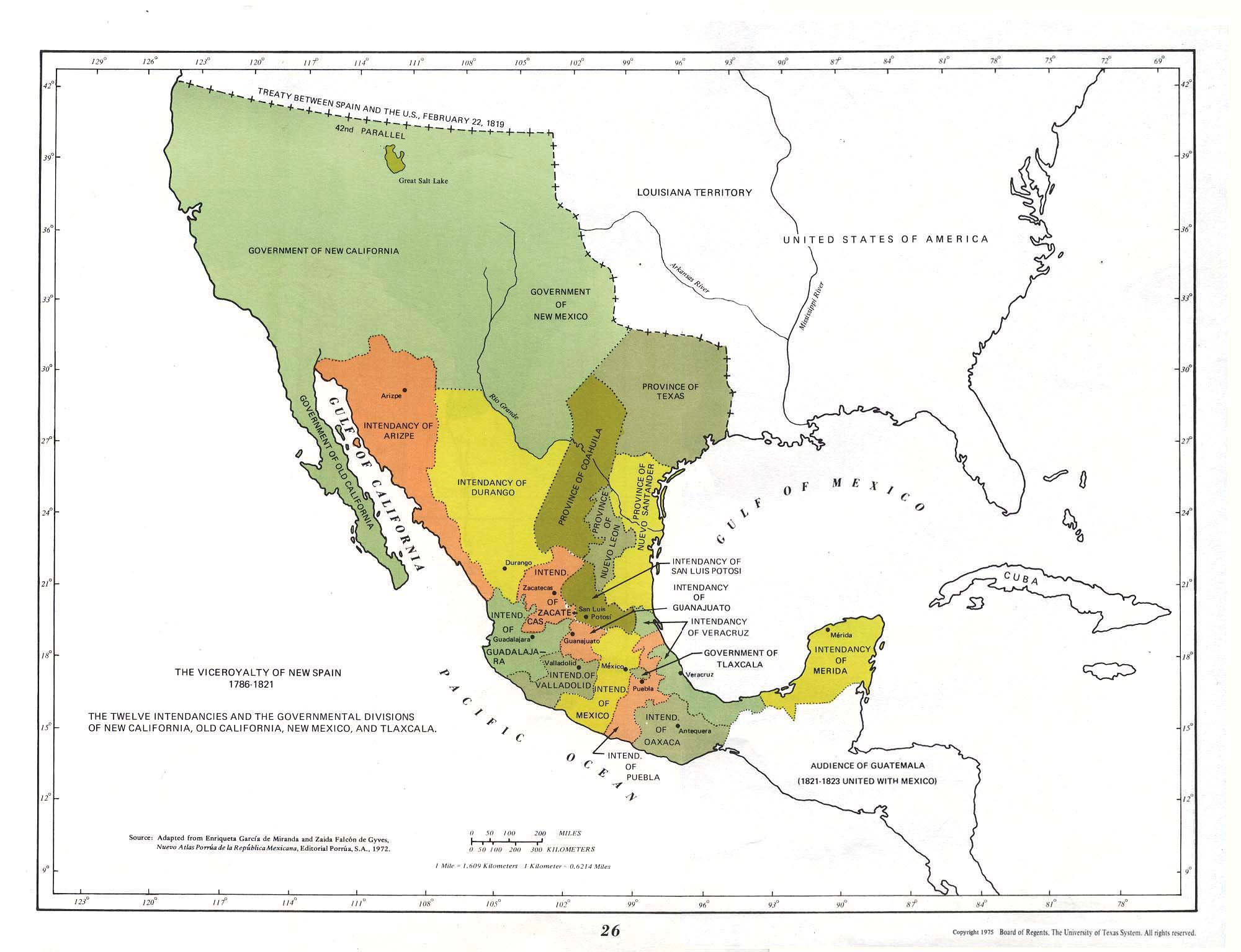
Spanish galleons transported Asian goods and travelers from Manila to colonial Mexico primarily through the port of Acapulco. During the two and a half centuries of contact between the Philippines and the Viceroyalty of New Spain, a minimum of 40,000 to 60,000 Asian immigrants would set foot in the “City of Kings,” while a figure double that amount (100,000) would be within the bounds of probability. From Acapulco they would gradually disperse to the far corners of the viceroyalty, from Loreto in Baja California to Mérida in Yucatan…. The majority, however, would eventually settle in two distinct zones: on the west coast in the districts of Guerrero, Jalisco, and Michoacán, and in the large, ethnically diverse municipalities of Mexico City and Puebla in the central valleys and the eastern port of Veracruz. The two zones were transversed by the most heavily traveled arteries that connected Acapulco to Mexico City (known colloquially as el camino de China) in the west; Veracruz with Puebla and Mexico City in the east; and several arterials linking the capital with Puerto Vallarta in the west and Guanajuato in the northwest.

For the most part, the chinos disembarked at Acapulco as sailors, slaves, and servants. Over the longue durée of Mexican-Asian cultural exchange, the largest contingent of Asians arrived as sailors on the galleons and smaller vessels (capitanas, pataches, and almirantes) that annually plied the long and perilous return voyage from Manila. The seamen were primarily Filipinos, Chinese mestizos (known in Manila as mestizos de Sangley), or ethnic Chinese from the fortified port of Cavite near Manila that served as the primary shipyard for Spaniards in the archipelago. In 1565, the first chino sailors from the islands of Cebu and Bohol arrived in Acapulco aboard Friar Andrés de Urdaneta’s trailblazing galleon, the San Pedro. During the late sixteenth century Iberian sailors constituted the majority of crewmen, but by the early 1600s Asians had surpassed them, accounting for 60–80 percent of the mariners from that time forward. A historical snapshot of galleon seafarers in the mid eighteenth century comes from a crew manifest of La Santissima Trinidad. In 1760, this vessel was manned by 370 sailors, consisting of 30 officers (Europeans or Mexican criollos), 40 artillerymen (27 chinos), 120 sailors (109 chinos), 100 “Spanish” cabin boys (96 chinos), and 80 “plain” cabin boys (78 chinos). In sum, 84 percent (310) of the crew were born and raised in Spain’s Asian colony, with 68 percent (250) hailing from the port of Cavite alone….

Along the Pacific coast, chino sojourners tended to congregate in the cities and pueblos of Acapulco, Coyuca, San Miguel, Zacatula, Tex pan, Zihuatenejo, Atoya, Navidad, and Colima. With the arrival of more ships from Manila, the number of sailors who either had no desire to return to the Philippines or were brought over as slaves married local Indian and mixed-race women increased. Consequently, a sizable population of chinos and their descendants made these cities and pueblos a popular destination for fellow Asians. Both freemen and slaves farmed rice (brought from the Philippines), corn, and cotton; tended cacao and coconut palm trees; fished in the seas and rivers; and transported people and goods to various ports along the coastline. Those who followed the royal highways to towns farther inland worked as muleteers or in the silver mines, haciendas, obrajes (textile workshops), or sugar mills….

Slaves and servants constituted the second largest group of Asian immigrants during the colonial era. Manila quickly became an important entrepôt for the commerce in human flesh during the first century of Spanish rule. The greater part were transported by Portuguese vessels from colonies and trading ports in Africa, India, the Malay peninsula, Japan, and China, although Chinese junks and Malay prahus also shipped large quantities to Manila. Non-Filipino slaves that fetched the highest price were from Timor, Ternate, Makassar, Burma, Ceylon, and India, because “the men are industrious and obliging, and many are good musicians; the women excellent seamstresses, cooks, and preparers of conserves, and are neat and clean in service.”…

The incorporation of Asian immigrants into the armed forces of New Spain represents another fascinating fragment of the chino mosaic from the colonial era. Similar to restrictions placed on other castas in Mexico, there were numerous prohibitions against Asians carrying weapons or riding horses….

The legion of similar antiweapons ordnances from the 1550s onward notwithstanding, from at least the 1590s free chinos not only were granted permission to carry weapons, but gradually incorporated into both the salaried companies of Españoles as well as local militias, especially those cities and towns along the Pacific coast. In several documents from the years 1591 and 1597, an “Indio Chino” from the silver mining town of Zultepec named Juan Alonzo, who earned his livelihood from buying and selling mules, was granted a license to ride a horse with a saddle and bridle and to carry a sword. A key determinant in this matter was his racial classification as a chino, since indios (unless they were elites) were forbidden such privileges….

Among the scores of Asian peoples that were widely defined as chinos, in the early decades of the 1600s Japanese converts were held in high esteem by Spaniards in the Philippines and New Spain for their bravery and loyalty. In 1603 and 1639 when Chinese residents in the Parián of Manila revolted against their Iberian overlords, Japanese swordsmen distinguished themselves in combat. Without their assistance, Sangleyes would surely have made the Philippines a colony of the Middle Kingdom. Thousands of Japanese converts, traders, and ronin made the Philippines their home prior to the closing of Cipango to Iberians in the 1630s. They lived in a suburb of Manila called Dilao, with a population estimated at 3,000 by 1624.

Thus it is not surprising that samurai converts were considered a more privileged subgroup of chinos in New Spain….

It is unclear exactly when chino militias were established on the west coast of New Spain. It is evident, however, that prior to 1729 Asian paramilitary units were routinely patrolling the regions adjacent to Acapulco. Tiburcio Anzalde, “captain of one of the militias of chinos and mulatos in the district of Atoya,” discussed the duties and obligations of militiamen in a 1746 document: repeated trips to Acapulco to deliver mail and other correspondences; to clear the roads (of bandits) while on patrol; and, most importantly, their heroic role in resisting the English pirate George Anson‘s invasion at the port of Zihuatenejo in 1741.

Leave a comment

Filed under Asia, China, economics, England, Japan, labor, Mexico, migration, Netherlands, Philippines, Portugal, Spain

Ferguson on the Appeal of Fascism vs. Nazism

From The War of the World: Twentieth-Century Conflict and the Descent of the West, by Niall Ferguson (Penguin Press, 2006), pp. 230-231, 239-240:

Considering the emphasis the new dictatorships laid on their supposedly distinctive nationalistic traditions, they all looked remarkably alike: the coloured shirts [German Brownshirts, Italian Blackshirts, Irish Blueshirts, Romanian Greenshirts], the shiny boots, the martial music, the strutting leaders, the gangster violence. At first sight, then, there was little to distinguish the German version of dictatorship from all the rest – except perhaps that Hitler was marginally more absurd than his counterparts. As late as 1939, Adolf Hitler could still be portrayed by Charlie Chaplin in his film The Great Dictator as an essentially comic figure, bawling incomprehensible speeches, striking preposterous poses and frolicking with a large inflatable globe. Yet there were in reality profound differences between National Socialism and fascism. Nearly all the dictatorships of the inter-war period were at root conservative, if not downright reactionary. The social foundations of their power were what remained of the pre-industrial ancien régime: the monarchy, the aristocracy, the officer corps and the Church, supported to varying degrees by industrialists fearful of socialism and by frivolous intellectuals who were bored of democracy’s messy compromises.* The main function the dictators performed was to crush the Left: to break their strikes, prohibit their parties, deny voice to their voters, arrest and, if it was deemed necessary, kill their leaders. One of the few measures they took that went beyond simple social restoration was to introduce new ‘corporate’ institutions supposed to regiment economic life and protect loyal supporters from the vagaries of the market. In 1924 the French historian Elie Halevy nicely characterized fascist Italy as ‘the land of tyranny … a regime extremely agreeable for travellers, where trains arrive and leave on time, where there is no strike in ports or public transport’. ‘The bourgeois’, he added, ‘are beaming.’ It was, as Renzo De Felice said in his vast and apologetic biography of the Duce, ‘the old regime in a black shirt’….

Contrary to the old claims that it was the party of the countryside, or of the north, or of the middle class, the NSDAP attracted votes right across Germany and right across the social spectrum…. It is true that places with relatively high Nazi votes were more likely to be in central northern and eastern parts, and those with relatively low Nazi votes were more likely to be in the south and west. But the more important point is that the Nazis were able to achieve some electoral success in nearly any kind of local political milieu, covering the German electoral spectrum in a way not seen before or since. The Nazi vote did not vary proportionately with the unemployment rate or the share of workers in the population. As many as two-fifths of the Nazi voters in some districts were working class, to the consternation of the Communist leadership. In response, some local Communists openly made common cause with the Nazis. ‘Oh yes, we admit that we’re in league with the National Socialists,’ said one Communist leader in Saxony. ‘Bolshevism and Fascism share a common goal: the destruction of capitalism and of the Social Democratic Party. To achieve this aim we are justified in using every means.’ It was a mark of Goebbels’ skill in making the party seem all things to all men that, simultaneously, dyed-in-the-wool Prussian Conservatives could regard the Nazis as potential partners in an anti-Marxist coalition. Thus were political rivals lured into what proved to be fatal forms of cooperation. The only significant constraint on the growth of the Nazi vote was the comparatively greater resilience of the Catholic Centre party compared with parties hitherto supported by German Protestants.

Other fascist movements, as we have seen, depended heavily on elite sponsorship to gain power. The Nazis did not need to. For all the attention that has been paid to them, the machinations of the coterie around Hindenburg were not the decisive factor, as those of the Italian elites had been in 1922. If anything, they delayed Hitler’s appointment as Chancellor, an office that was rightfully his after the July 1932 election. It was not the traditional elite of landed property that was drawn to Hitler; the real Junker types found him horribly coarse. (When Hitler shook hands with Hindenburg, one conservative was reminded ‘of a headwaiter closing his hand around the tip’.) Nor was it the business elite, who not unreasonably feared that National Socialism would prove a Trojan horse for socialism proper; nor the military elite, who had every reason to dread subordination to an opinionated Austrian corporal. The key to the strength and dynamism of the Third Reich was Hitler’s appeal to the much more numerous intellectual elite; the men with university degrees who are so vital to the smooth running of a modern state and civil society.

For reasons that may be traced back to the foundation of the Bismarckian Reich or perhaps even further into Prussian history, academically educated Germans were unusually ready to prostrate themselves before a charismatic leader.

(*A list of all the treasonous clerics who flirted or did more than flirt with fascism would be a book in its own right. If only to give an illustration of how widespread the phenomenon was, dishonourable mention may be made of the writer Gabriele D’Annunzio, who established his own tinpot tyranny in post-war Fiume; the poet T. S. Eliot, who wrote that ‘totalitarianism can retain the terms “freedom” and “democracy” and give them its own meaning’; the philosopher Martin Heidegger, who, as Rector of Freiburg University, lent his enthusiastic support to the Nazi regime; the political theorist Carl Schmitt, who devised pseudo-legal justifications for the illegalities of the Third Reich; the novelist Ignazio Silone, who shopped former Communist comrades to the fascists; and the poet W. B. Yeats, who wrote songs for the Irish Blueshirts. Thomas Mann, who had made his fair share of mistakes during the First World War and only with difficulty broke publicly with the Nazi regime, was not wrong when he spoke of ‘the thoroughly guilty stratum of intellectuals’.)

Leave a comment

Filed under Austria, democracy, economics, education, France, Germany, Ireland, Italy, nationalism, Portugal, Romania, Spain