Category Archives: England

Asian Roles in New Spain

My favorite article in the latest issue of Journal of World History (on Project MUSE) is by Edward R. Slack Jr. on “The Chinos in New Spain: A Corrective Lens for a Distorted Image.” Here are a few excerpts (footnotes and references omitted).

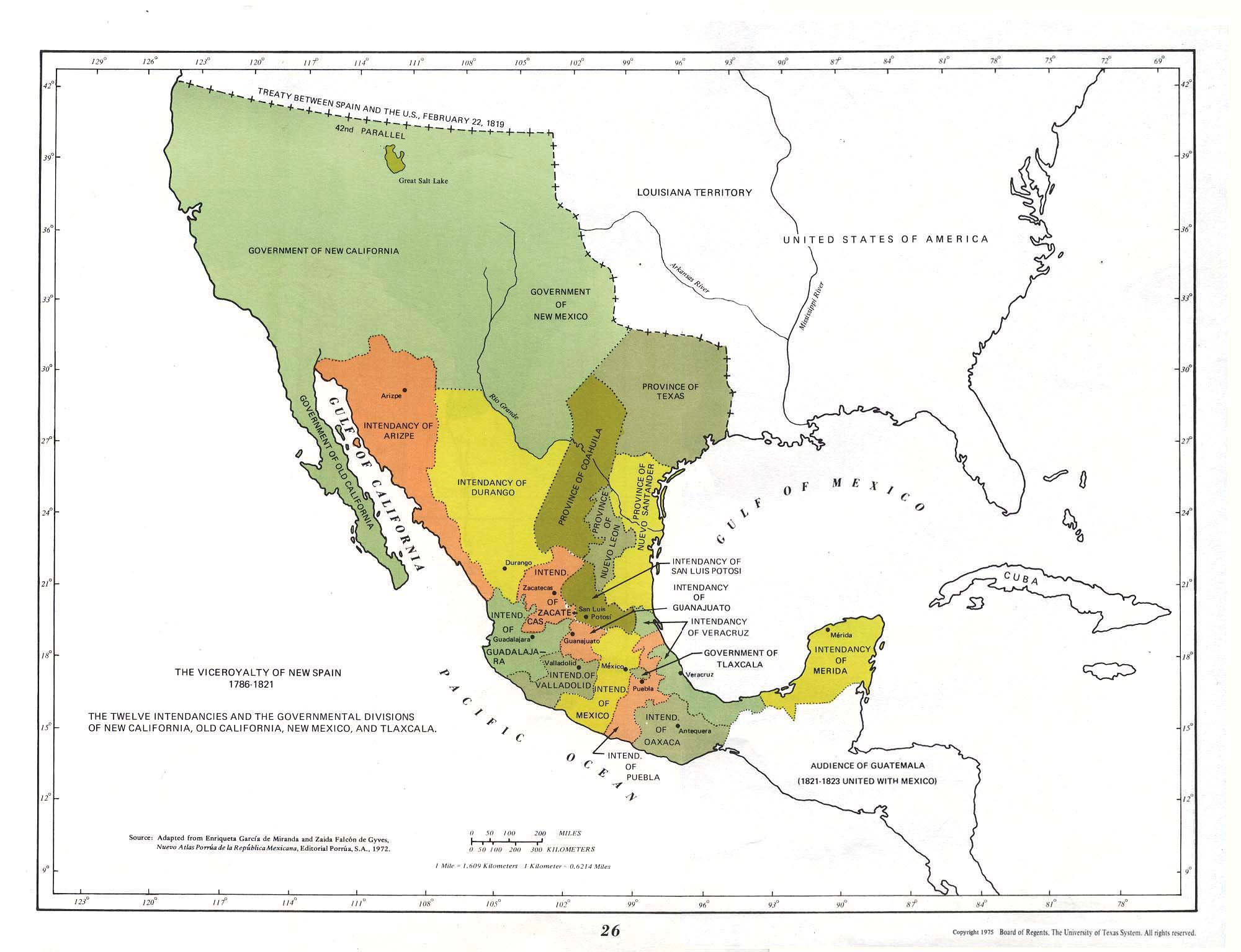
Spanish galleons transported Asian goods and travelers from Manila to colonial Mexico primarily through the port of Acapulco. During the two and a half centuries of contact between the Philippines and the Viceroyalty of New Spain, a minimum of 40,000 to 60,000 Asian immigrants would set foot in the “City of Kings,” while a figure double that amount (100,000) would be within the bounds of probability. From Acapulco they would gradually disperse to the far corners of the viceroyalty, from Loreto in Baja California to Mérida in Yucatan…. The majority, however, would eventually settle in two distinct zones: on the west coast in the districts of Guerrero, Jalisco, and Michoacán, and in the large, ethnically diverse municipalities of Mexico City and Puebla in the central valleys and the eastern port of Veracruz. The two zones were transversed by the most heavily traveled arteries that connected Acapulco to Mexico City (known colloquially as el camino de China) in the west; Veracruz with Puebla and Mexico City in the east; and several arterials linking the capital with Puerto Vallarta in the west and Guanajuato in the northwest.

For the most part, the chinos disembarked at Acapulco as sailors, slaves, and servants. Over the longue durée of Mexican-Asian cultural exchange, the largest contingent of Asians arrived as sailors on the galleons and smaller vessels (capitanas, pataches, and almirantes) that annually plied the long and perilous return voyage from Manila. The seamen were primarily Filipinos, Chinese mestizos (known in Manila as mestizos de Sangley), or ethnic Chinese from the fortified port of Cavite near Manila that served as the primary shipyard for Spaniards in the archipelago. In 1565, the first chino sailors from the islands of Cebu and Bohol arrived in Acapulco aboard Friar Andrés de Urdaneta’s trailblazing galleon, the San Pedro. During the late sixteenth century Iberian sailors constituted the majority of crewmen, but by the early 1600s Asians had surpassed them, accounting for 60–80 percent of the mariners from that time forward. A historical snapshot of galleon seafarers in the mid eighteenth century comes from a crew manifest of La Santissima Trinidad. In 1760, this vessel was manned by 370 sailors, consisting of 30 officers (Europeans or Mexican criollos), 40 artillerymen (27 chinos), 120 sailors (109 chinos), 100 “Spanish” cabin boys (96 chinos), and 80 “plain” cabin boys (78 chinos). In sum, 84 percent (310) of the crew were born and raised in Spain’s Asian colony, with 68 percent (250) hailing from the port of Cavite alone….

Along the Pacific coast, chino sojourners tended to congregate in the cities and pueblos of Acapulco, Coyuca, San Miguel, Zacatula, Tex pan, Zihuatenejo, Atoya, Navidad, and Colima. With the arrival of more ships from Manila, the number of sailors who either had no desire to return to the Philippines or were brought over as slaves married local Indian and mixed-race women increased. Consequently, a sizable population of chinos and their descendants made these cities and pueblos a popular destination for fellow Asians. Both freemen and slaves farmed rice (brought from the Philippines), corn, and cotton; tended cacao and coconut palm trees; fished in the seas and rivers; and transported people and goods to various ports along the coastline. Those who followed the royal highways to towns farther inland worked as muleteers or in the silver mines, haciendas, obrajes (textile workshops), or sugar mills….

Slaves and servants constituted the second largest group of Asian immigrants during the colonial era. Manila quickly became an important entrepôt for the commerce in human flesh during the first century of Spanish rule. The greater part were transported by Portuguese vessels from colonies and trading ports in Africa, India, the Malay peninsula, Japan, and China, although Chinese junks and Malay prahus also shipped large quantities to Manila. Non-Filipino slaves that fetched the highest price were from Timor, Ternate, Makassar, Burma, Ceylon, and India, because “the men are industrious and obliging, and many are good musicians; the women excellent seamstresses, cooks, and preparers of conserves, and are neat and clean in service.”…

The incorporation of Asian immigrants into the armed forces of New Spain represents another fascinating fragment of the chino mosaic from the colonial era. Similar to restrictions placed on other castas in Mexico, there were numerous prohibitions against Asians carrying weapons or riding horses….

The legion of similar antiweapons ordnances from the 1550s onward notwithstanding, from at least the 1590s free chinos not only were granted permission to carry weapons, but gradually incorporated into both the salaried companies of Españoles as well as local militias, especially those cities and towns along the Pacific coast. In several documents from the years 1591 and 1597, an “Indio Chino” from the silver mining town of Zultepec named Juan Alonzo, who earned his livelihood from buying and selling mules, was granted a license to ride a horse with a saddle and bridle and to carry a sword. A key determinant in this matter was his racial classification as a chino, since indios (unless they were elites) were forbidden such privileges….

Among the scores of Asian peoples that were widely defined as chinos, in the early decades of the 1600s Japanese converts were held in high esteem by Spaniards in the Philippines and New Spain for their bravery and loyalty. In 1603 and 1639 when Chinese residents in the Parián of Manila revolted against their Iberian overlords, Japanese swordsmen distinguished themselves in combat. Without their assistance, Sangleyes would surely have made the Philippines a colony of the Middle Kingdom. Thousands of Japanese converts, traders, and ronin made the Philippines their home prior to the closing of Cipango to Iberians in the 1630s. They lived in a suburb of Manila called Dilao, with a population estimated at 3,000 by 1624.

Thus it is not surprising that samurai converts were considered a more privileged subgroup of chinos in New Spain….

It is unclear exactly when chino militias were established on the west coast of New Spain. It is evident, however, that prior to 1729 Asian paramilitary units were routinely patrolling the regions adjacent to Acapulco. Tiburcio Anzalde, “captain of one of the militias of chinos and mulatos in the district of Atoya,” discussed the duties and obligations of militiamen in a 1746 document: repeated trips to Acapulco to deliver mail and other correspondences; to clear the roads (of bandits) while on patrol; and, most importantly, their heroic role in resisting the English pirate George Anson‘s invasion at the port of Zihuatenejo in 1741.

Leave a comment

Filed under Asia, China, economics, England, Japan, labor, Mexico, migration, Netherlands, Philippines, Portugal, Spain

Mountbatten’s Best Matchmaking

From Indian Summer: The Secret History of the End of an Emperor, by Alex von Tunzelmann (Picador, 2008), pp. 156-158, 162:

Since he had returned from Southeast Asia Mountbatten had engaged himself almost full time in a project worthy of the Order of the Red Rose. In one of the most daring bloodless coups ever attempted, he would install the House of Mountbatten on the British throne—the same throne which, only thirty years before, had ordered his father’s ruin. Mountbatten’s involvement in the marriage between his nephew, Philippos Schleswig-Holstein-Sonderburg-Glücksburg, and the king’s daughter, Princess Elizabeth, can hardly be overstated. He introduced the couple, engineered meetings between them and went to great lengths in grooming Philip to become a consort.

Philip’s credentials for marrying the world’s most eligible woman were tenuous. His father was a playboy who had disappeared into the champagne bars of the Cote d’Azur; his mother, abandoned, had gone mad and become a nun; his sisters had all married Nazis; he himself was only a naval lieutenant, and a penniless one at that. He had been a prince of Greece before a coup ousted his family, but the revolution had left him poor and nameless. He met Princess Elizabeth for the first time on 22 July 1939, when the royal family visited the Royal Naval College at Dartmouth under the proud supervision of Dickie Mountbatten. Philip was eighteen years old; Elizabeth was thirteen and playing with a clockwork train. Their eyes met over lemonade and ginger biscuits, and Philip was among the cadets invited to lunch on the royal yacht. There he impressed the princesses by being able to jump high and eat an abnormal quantity of shrimp, though not simultaneously. When the time came for the yacht to sail, the cadets followed in rowboats and motorboats for a while; Elizabeth watched the tall, blond, strikingly handsome Philip row his little boat farther than anyone else.

Less than eighteen months after the smitten Princess Elizabeth had watched her handsome quasi prince rowing after the royal yacht, the Conservative MP Chips Channon spent a few days in Athens. He met Philip at a cocktail party and, during the course of extensive gossiping, established that “he is to be our Prince Consort, and that is why he is serving in our Navy.” At this stage the prospect seemed improbable. The Greek royals were impoverished, shabby and foreign. It was Dickie who organized a campaign to fashion young Philip into an eligible naval hero. The most important factor in this transformation would be to secure for him British nationality. For some reason, no one—not even the genealogically preoccupied Mountbatten—remembered the 1705 Act of Naturalization of the Most Excellent Princess Sophia, Electress and Duchess Dowager of Hanover, and the Issue of Her Body. As a descendant of Sophia, Philip had been British since birth. Unaware of this, Mountbatten embarked upon a frenetic two-and-a-half-year campaign. On 23 August 1944, he flew from Southeast Asia Command to Cairo, near Philip’s station at Alexandria, to “sound out” Philip and the king of Greece about whether the former could assume British nationality. He told the British high commissioner, incredibly, that the British king had ordered his secret mission, on the grounds that Philip could “be an additional asset to the British Royal Family and a great help to them in carrying out their royal functions.” In fact, the king had already warned Mountbatten off: “I have been thinking the matter over since our talk and I have come to the conclusion that we are going too fast,” he had written to him two weeks before. Soundings were taken; they were, apparently, satisfactory; Mountbatten was on the plane back to Karachi that same afternoon.

In October 1945, the matter of Philip’s naturalization came before the cabinet. Attlee postponed any further discussion owing to the undesirability of aligning the British government with the Greek royalist cause. But by then the teenage Princess Elizabeth was playing “People Will Say We’re in Love” from the musical Oklahoma! nonstop on her gramophone; and Philip had been seen helping her with a fur wrap at the wedding of Mountbatten’s daughter Patricia. Mountbatten moved quickly, making personal appointments with the king, the prime minister and the foreign secretary, while expending considerable effort in enlightening his media contacts about Philip’s gallantry. “Please, I beg of you, not too much advice in an affair of the heart,” Philip wrote to his uncle, “or I shall be forced to do the wooing by proxy.”…

On the evening of 18 March 1947, Dickie and Edwina [Mountbatten] held a farewell reception at the Royal Automobile Club in Pall Mall. It was a double celebration for them. That very morning, Mountbatten had secured a great victory, signaled by an announcement of the superfluous naturalization of Lieutenant Philip Mountbatten, RN, in the London Gazette. He had planned to call his nephew “HRH Prince Philip.” Philip preferred to start again as a commoner, but it is hard to imagine that Dickie had nothing to do with his choice of surname. “Most people think that Dickie’s my father anyway,” Philip later acknowledged. With Philip’s engagement to the heiress presumptive soon to be announced, the House of Mountbatten was now right at the front of the line for the British throne.

Leave a comment

Filed under England, Greece, U.K.

Industrial Benefits of Downward Social Mobility?

Today’s New York Times carries a story about new research on the causes of the Industrial Revolution.

Gregory Clark, an economic historian at the University of California, Davis, believes that the Industrial Revolution — the surge in economic growth that occurred first in England around 1800 — occurred because of a change in the nature of the human population. The change was one in which people gradually developed the strange new behaviors required to make a modern economy work. The middle-class values of nonviolence, literacy, long working hours and a willingness to save emerged only recently in human history, Dr. Clark argues.

Because they grew more common in the centuries before 1800, whether by cultural transmission or evolutionary adaptation, the English population at last became productive enough to escape from poverty, followed quickly by other countries with the same long agrarian past….

Dr. Clark’s first thought was that the population might have evolved greater resistance to disease. The idea came from Jared Diamond’s book “Guns, Germs and Steel,” which argues that Europeans were able to conquer other nations in part because of their greater immunity to disease.

In support of the disease-resistance idea, cities like London were so filthy and disease ridden that a third of their populations died off every generation, and the losses were restored by immigrants from the countryside. That suggested to Dr. Clark that the surviving population of England might be the descendants of peasants.

A way to test the idea, he realized, was through analysis of ancient wills, which might reveal a connection between wealth and the number of progeny. The wills did that, , but in quite the opposite direction to what he had expected.

Generation after generation, the rich had more surviving children than the poor, his research showed. That meant there must have been constant downward social mobility as the poor failed to reproduce themselves and the progeny of the rich took over their occupations. “The modern population of the English is largely descended from the economic upper classes of the Middle Ages,” he concluded.

As the progeny of the rich pervaded all levels of society, Dr. Clark considered, the behaviors that made for wealth could have spread with them. He has documented that several aspects of what might now be called middle-class values changed significantly from the days of hunter gatherer societies to 1800. Work hours increased, literacy and numeracy rose, and the level of interpersonal violence dropped.

Another significant change in behavior, Dr. Clark argues, was an increase in people’s preference for saving over instant consumption, which he sees reflected in the steady decline in interest rates from 1200 to 1800.

“Thrift, prudence, negotiation and hard work were becoming values for communities that previously had been spendthrift, impulsive, violent and leisure loving,” Dr. Clark writes.

Around 1790, a steady upward trend in production efficiency first emerges in the English economy. It was this significant acceleration in the rate of productivity growth that at last made possible England’s escape from the Malthusian trap and the emergence of the Industrial Revolution.

Well, I don’t know. Sounds like the English became more Scottish and less Irish. But it does seem to me that temporary downward social mobility of many, many ambitious immigrants has made a huge contribution to the continuing health of the North American economy.

Leave a comment

Filed under Britain, economics, England, industry, U.S.

Indian Travel Tales from Vilayet, 1765

The [French] houses in the country are built of stone slabs, with roofs of terra cotta tiles. As the bamboo doesn’t grow here the scaffolding for the roofs is built of wood. The poorer classes live on a diet of broth and barley-bread and wear coarse wool or clothes woven from hemp, of which ropes are also spun. Most of them cannot afford leather shoes. Paris, the capital of France, is several hundred miles from either Calais or Nantes. Frenchman and foreigner alike sing high praises of the buildings and gardens of that city, its artistic innovativeness, scientific and technological advancement, the polished manners, cultivation, well-spokenness and wit of its inhabitants. In these respects it far surpasses all other cities in the Firinghee world.

The French claim that they have taught music and horsemanship to the English. Wealthy Englishmen send their children to French schools to polish up their manners and taste. The French say that the present excellence of the English in the arts and sciences, trade and industry, is the result of French education; in the past, when they lacked this education, they were ignorant like the mass of Indians. However, even the French admit that the English have always been outstanding soldiers.

The French say that the lower classes of Englishmen do not go to foreign countries to seek trade or employment because, being stupid and without any skills or business acumen, they would fail to earn a decent livelihood….

The [Scottish] Highlanders wear a jacket and a cap, but neither breeches nor boots. The lower part of the body is covered by a skirt called a kilt, but the knee is bare and cotton stockings are worn on the legs. Instead of shoes they wear wooden sandals fastened to the feet with leather straps. They carry a double-edged sword. I was told that their courage was beyond compare. But they are also simple-minded and doltish.

A Highlander who had gone to London was sightseeing about the bazaars, followed by a curious crowd of Englishmen and boys. One of the Englishmen in sport lifted the skirt of the Highlander’s kilt from behind. He was overcome with shame at this, but at the same time his wrath was inflamed and with a stroke of his sword he cut off the offender’s head. The Police and townspeople surrounded him but could not force him to surrender. He undauntedly stood his ground, prepared either to kill or die: He wounded many people, and on whichever side he charged they fled before him. No one had the courage to approach him, far less seize him. Word of this strange situation eventually reached the King, who sent a courtier to summon him. The Courtier went before him and said, ‘His Majesty has sent for you.’ On hearing the King’s name the Highlander immediately bowed his head and followed the royal envoy. When he appeared in the royal presence the King asked why he had heedlessly murdered a man. The Highlander knelt on one knee, according to the custom of Vilayet, bowed his head and after making obeisance, replied in a respectful tone, ‘When that man exposed a shameful part of my body I felt my honour had been ridiculed, and therefore in a state of rightful anger I struck him dead. But when I received your royal summons I hastened to surrender myself to you and I feel proud to have been permitted to kiss your threshold. Otherwise none would have been able to capture me alive.’ The King was impressed by this simple and courageous man’s defence and pardoned him.

There are amusing stories about the English too, particularly their country people, who are ignorant and stupid. One of them went to town where he was feted by a friend. He greatly relished a sheep’s liver kebab, which he had never tasted before, and took down its recipe. Before returning home he went to a butcher and bought a sheep’s liver, which he tied in a napkin and carried in his hand. A pie dog came up from behind, snatched the liver, napkin and all, and scampered off. The rustic shouted jeeringly after the dog, ‘You silly beast, you’ve got the raw liver, but the recipe is in my pocket!’.

Such stories only prove the truth that Allah did not create all five fingers equal. There is no country in the world where there are no stupid and ignorant people. In fact, everywhere they are the majority.

SOURCE: Other Routes: 1500 Years of African and Asian Travel Writing, edited by Tabish Khair, Martin Leer, Justin D. Edwards, and Hanna Ziadesh (Indiana U. Press, 2005), pp. 322, 325-326

See Wikipedia for the various meanings of Vilayet.

Leave a comment

Filed under England, France, India, Scotland

Black Death Zerstörungsroman on a Plaque, 1349

In Derbyshire …, the most eloquent set of mortality statistics are in a small parish church where a plaque commemorates the Wakebridge family’s brush with annihilation in the summer of 1349.

  • 18 May, Nicholas, brother of William
  • 16 July, Robert, brother of William
  • 5 August, Peter, father of William and Joan, sister of William
  • 10 August, Joan, wife of William and Margaret, sister of William

William himself survived the pestilence.

SOURCE: The Great Mortality: An Intimate History of the Black Death, the Most Devastating Plague of All Time, by John Kelly (Harper Perennial, 2006), p. 226

UPDATE: I concocted the pseudo-German term Zerstörungsroman ‘destruction-novel’ as the opposite of Bildungsroman, a German term applied to novels about personal growth, education, and development. I was trying to capture the opposition between ‘coming of age’ and ‘falling apart’ (or the ‘age of destruction’).

Leave a comment

Filed under disease, England

Seven Deadly English Shibboleths

There are, however, seven words that the English uppers and upper-middles regard as infallible shibboleths. Utter any one of these ‘seven deadly sins’ in the presence of these higher classes, and their on-board class radar devices will start bleeping and flashing …

  • Pardon
  • Toilet
  • Serviette A ‘serviette’ is what the inhabitants of Pardonia call a napkin. This is another example of a ‘genteelism’, in this case a misguided attempt to enhance one’s status by using a fancy French word rather than a plain old English one. It has been suggested that ‘serviette’ was taken up by squeamish lower-middles who found ‘napkin’ a bit too close to ‘nappy’, and wanted something that sounded a bit more refined. Whatever its origins, ‘serviette’ is now regarded as irredeemably lower class. Upper-middle and upper-class mothers get very upset when their children learn to say ‘serviette’ from well-meaning lower-class nannies, and have to be painstakingly retrained to say ‘napkin’.
  • Dinner
  • Settee
  • Lounge And what do they call the room in which the settee/sofa is to be found? Settees are found in ‘lounges’ or ‘living rooms’, sofas in ‘sitting rooms’ or ‘drawing rooms’. ‘Drawing room’ (short for ‘withdrawing room’) used to be the only ‘correct’ term, but many upper-middles and uppers I feel it is bit silly and pretentious to call, say, a small room in an ordinary terraced house the ‘drawing room’, so ‘sitting room’ has become acceptable. You may occasionally hear an upper-middle-class person say ‘living room’, although this is frowned upon, but only middle-middles and below say ‘lounge’. This is a particularly useful word for spotting middle-middle social climbers trying to pass as upper-middle: they may have learnt not to say ‘pardon’ and ‘toilet’, but they are often not aware that ‘lounge’ is also a deadly sin.
  • Sweet

SOURCE: Watching the English: The Hidden Rules of English Behavior, by Kate Fox (Hodder, 2004), pp. pp. 76-78

Leave a comment

Filed under England

The Importance of Not Being Earnest

At the most basic level, an underlying rule in all English conversation is the proscription of ‘earnestness’. Although we may not have a monopoly on humour, or even on irony, the English are probably more acutely sensitive than any other nation to the distinction between ‘serious’ and ‘solemn’, between ‘sincerity’ and ‘earnestness’.

This distinction is crucial to any kind of understanding of Englishness. I cannot emphasize this strongly enough: if you are not able to grasp these subtle but vital differences, you will never understand the English – and even if you speak the language fluently, you will never feel or appear entirely at home in conversation with the English. Your English may be impeccable, but your behavioural ‘grammar’ will be full of glaring errors.

Once you have become sufficiently sensitized to these distinctions, the Importance of Not Being Earnest rule is really quite simple. Seriousness is acceptable, solemnity is prohibited. Sincerity is allowed, earnestness is strictly forbidden. Pomposity and self-importance are outlawed. Serious matters can be spoken of seriously, but one must never take oneself too seriously. The ability to laugh at ourselves, although it may be rooted in a form of arrogance, is one of the more endearing characteristics of the English. (At least, I hope I am right about this: if I have overestimated our ability to laugh at ourselves, this book will be rather unpopular.)

To take a deliberately extreme example, the kind of hand-on-heart, gushing earnestness and pompous, Bible-thumping solemnity favoured by almost all American politicians would never win a single vote in this country – we watch these speeches on our news programmes with a kind of smugly detached amusement, wondering how the cheering crowds can possibly be so credulous as to fall for this sort of nonsense. When we are not feeling smugly amused, we are cringing with vicarious embarrassment: how can these politicians bring themselves to utter such shamefully earnest platitudes, in such ludicrously solemn tones? We expect politicians to speak largely in platitudes, of course – ours are no different in this respect – it is the earnestness that makes us wince. The same goes for the gushy, tearful acceptance speeches of American actors at the Oscars and other awards ceremonies, to which English television viewers across the country all respond with the same finger-down-throat ‘I’m going to be sick’ gesture. You will rarely see English Oscar-winners indulging in these heart-on-sleeve displays – their speeches tend to be either short and dignified or self-deprecatingly humorous, and even so they nearly always manage to look uncomfortable and embarrassed. Any English thespian who dares to break these unwritten rules is ridiculed and dismissed as a ‘luvvie’.

And Americans, although among the easiest to scoff at, are by no means the only targets of our cynical censure. The sentimental patriotism of leaders and the portentous earnestness of writers, artists, actors, musicians, pundits and other public figures of all nations are treated with equal derision and disdain by the English, who can spot the slightest hint of self-importance at twenty paces, even on a grainy television picture and in a language we don’t understand. [Unless, of course, it’s ideologically appealing self-important revolutionary sentimentalism from the lesser regions of the former empire, about which we remain sincerely, but just short of earnestly, laden with guilt.–J.]

SOURCE: Watching the English: The Hidden Rules of English Behavior, by Kate Fox (Hodder, 2004), pp. 62-63

When I was a teenage thespian, I played the part of Lane the manservant (and understudied for Merriman the butler) in a high school production of The Importance of Being Earnest. The last exchange before Lane makes his final exit is much quoted.

ALGERNON: I hope to-morrow will be a fine day, Lane.

LANE: It never is, sir.

ALGERNON: Lane, you’re a perfect pessimist.

LANE: I do my best to give satisfaction, sir.

Leave a comment

Filed under England, language

The English Shipping Forecast Ritual

Our peculiar affection for our weather finds its most eloquent expression in our attitude towards a quintessentially English national institution: the Shipping Forecast. Browsing in a seaside bookshop recently, I came across an attractive large-format picture-book, with a seascape on the cover, entitled Rain Later, Good. It struck me that almost all English people would immediately recognize this odd, apparently meaningless or even contradictory phrase as part of the arcane, evocative and somehow deeply soothing meteorological mantra, broadcast immediately after the news on BBC Radio 4.

The Shipping Forecast is an off-shore weather forecast, with additional information about wind-strength and visibility, for the fishing vessels, pleasure craft and cargo ships in the seas around the British isles. None of the information is of the slightest use or relevance to the millions of non-seafarers who listen to it, but listen we do, religiously, mesmerized by the calm, cadenced, familiar recitation of lists of names of sea areas, followed by wind information, then weather, then visibility – but with the qualifying words (wind, weather, visibility) left out, so it sounds like this: ‘Viking, North Utsire, South Utsire, Fisher, Dogger, German Bight. Westerly or southwesterly three or four, increasing five in north later. Rain later. Good becoming moderate, occasionally poor. Faroes, Fair Isle, Cromarty, Forties, Forth. Northerly backing westerly three or four, increasing six later. Showers. Good.’ And so on, and on, in measured, unemotional tones, until all of the thirty-one sea areas have been covered – and millions of English listeners,* most of whom have no idea where any of these places are, or what the words and numbers mean, finally switch off their radios, feeling strangely comforted and even uplifted by what the poet Sean Street has called the Shipping Forecast’s ‘cold poetry of information’.

* Not just the nostalgic older generations: the Shipping Forecast has many young devotees, and references to the Shipping Forecast have recently turned up in the lyrics of pop songs. I met a 19-year-old barman recently with a dog named Cromarty, after one of the sea areas.

SOURCE: Watching the English: The Hidden Rules of English Behavior, by Kate Fox (Hodder, 2004), pp. 34-35 (For what it’s worth, George Walden in New Statesman hated the book.)

What better way for this American to mark July 4th than to take a light look at my heritage, which is mostly English – with all the reticence and clumsy ritual that implies – although the soothing weather incantation I grew up with was hare, tokidoki kumori ‘clear, occasionally overcast’.

Leave a comment

Filed under England, language

Chaucer on Latvians

In the Canterbury Tales, Chaucer (1340-1400) mentions Latvia in the Knight’s Tale:

Ful ofte tyme he hadde the bord bigonne
Aboven alle nacions in pruce;
In lettow hadde he reysed and in ruce, …

Full oft the table’s roster he’d begun
Above all nations’ knights in Prussia.
In Latvia raided he, and Russia, …

Chaucer’s reputed model for the Knight, King Henry IV of England, made it to Latvia in July, 1390, while temporarily attached to the Knights of the Livonian Order. Even earlier, a Latvian who had come to England with a party of Norse invaders wound up battling against William the Conqueror around 1070.

via Latvians.com, a well-done site that offers a lot of things you won’t find in the CIA World Factbook, such as:

  • Latvia is about the size of West Virginia, or Belgium plus the Netherlands.
  • About 2,500,000 people live in Latvia, mostly Latvian; and about 1/3rd Russian, the result of intense Russification during the 50 year Soviet occupation; students of history will note this was not the first campaign to Russify Latvia, the prior one being conducted by Czar Alexander III in the late 1800’s — motivated more by fear of Germanic ambitions, but also a time during which speaking Latvian in public was grounds for imprisonment.

Leave a comment

Filed under Eastern Europe, England, literature

‘The English Are a Very Strange Tribe’

In 1936 another white man turned up in Phekhon, in the company of some Indians from Loikaw. He invited two of the grandmothers and some of their friends from the village who wore neck-rings, along with their husbands, to come to England. They had no idea what the purpose of the invitation was, and the Italian priest was vehemently against their going away. Nevertheless, they were all excited and eager for the journey. They were to be taken around Europe by a circus called Bertram Mills and exhibited as freaks. Since we did not have the concept of a ‘freak’, and since, anyway, we took our tradition of women wearing the rings for granted, they and their relatives were unlikely to be offended by the idea.

They were flown to Rangoon from Loikaw, and shipped to France to be shown to the French public as a test of their popularity before they eventually arrived in England. Not long before the Second World War broke out they returned to Phekhon, richer with English money. They showed us photographs of places they had visited, but could never remember the names….

The grandmothers told me that one of the photographs was taken in front of the English chief’s house, in a big village called London. They said that in this big village they didn’t have to climb the stairs, but the stairs carried them up and down. They liked the moving stairs, because they hated walking in the shoes that had been provided for them – since all their lives they had gone barefoot.

They suffered from the cold of England. Nor did they understand what spirits the English were appeasing in always having to drink tea at a certain time, although they loved the cakes that went with this ceremony. ‘The English are a very strange tribe,’ said Grandma Mu Tha. ‘They paid money just to look at us – they paid us for not working. They are very rich, but they cannot afford to drink rice-wine. Their trees are unable to grow leaves during the rainy season. They say, “Hello,” “How are you” and “Goodbye” all the time to one another. They never ask, “Have you eaten your meal?” or “When will you take your bath?” when they see you.’ Grandma Mu Tha gave up trying to account for these strange habits, which afforded her great amusement. If we had had the notion of ‘freaks’, I suppose she would have put the whole English race into that category.

SOURCE: From the Land of Green Ghosts: A Burmese Odyssey, by Pascal Khoo Thwe (HarperCollins, 2002), pp. 28-29

Leave a comment

Filed under Burma, England