Category Archives: economics

India’s Infrastructure: Bad News, Good News

From India: The Rise of an Asian Giant, by Dietmar Rothermund (Yale U. Press, 2008), pp. 157-160:

Next to airports, India’s seaports require thoroughgoing modernization. The biggest and most famous of them all, Mumbai, has a notorious reputation for terrible delays and incompetent handling of goods. A few years ago, turnaround time was about eight days, regardless of the size of the vessel; this has improved somewhat but even now about four days are required to load or unload a ship. This is due to deliberate negligence as the port earns more by collecting demurrage charges than by any other means. The trick of this trade is the stranglehold which Port Authority labour has on the loading and unloading of goods. In most other ports around the world, the port authority is merely a landlord, providing berths and cranes, etc. but no labour, with loading and unloading done by labour hired by the shipowner or his agent. The port authority with ‘dedicated’ labour is a British legacy. In British ports it may have made sense to retain a labour force specialized in loading and unloading ships, particularly in the past when most of this work was not mechanized. Nobody would have thought that delay rather than speed would be the result of retaining specialized labour. Making money on demurrage charges is, of course, a flagrant example of being penny-wise and pound-foolish. No shipowner in his right mind would enter a port such as Mumbai unless he absolutely has to because it is his destination. Bulk breaking is taking place elsewhere in efficient ports like Singapore or Colombo. Many a ship with only part of its load to be delivered to India would rather call at those ports than enter an Indian port. Jawaharlal Nehru Port across the bay from the old port of Mumbai is supposed to be somewhat more efficient than the old one, but it is first and foremost a container port under the management of the Indian railways and is thus not a direct competitor of the old port. Although Jawaharlal Nehru Port is India’s largest container port, it handles only about 10 per cent of the freight handled by Hong Kong, the world’s largest port of this kind. The inefficiency of Indian ports is not only delaying imports, it is also harming the export trade. In the old days of ‘export pessimism’ this was ignored, but now when producers in India wish to export some of their production to achieve economies of scale, they may give up such plans as their goods get stuck in the port….

The story of Sunil Bharti Mittal, who is now the biggest private operator in this field, is a good example of the rise of the new type of Indian telecom entrepreneur. He is not related to the famous steel tycoon Lakshmi Niwas Mittal, and his rather unusual family name Bharti is made up. His father, who belonged to a caste of traders, married a woman of a higher caste. This inter-caste marriage was frowned upon at that time and the couple adopted the name Bharti. Sunil started making cycle parts in Ludhiana. In 1983 when many imports were still banned, he hit upon the idea of manufacturing push-button telephones and then launched his Airtel brand of mobile phones in 1995. From making phones it was only one further step to acquiring two mobile phone licences and one fixed net licence. Subsequently Mittal expanded his operations and now provides his services in all 23 mobile telephone circles of India in which field he has overtaken the public sector firm BSNL. In order to raise the capital for this relentless expansion he linked up with foreign investors. In 2001 the American firm Warburg Pincus acquired about 6 per cent of Bharti Televentures; later the Singapore firm SingTel and the British firm Vodafone also acquired shares in Mittal’s company, but they are all minority shareholders. Meanwhile Sunil Mittal dominates the Indian telecom scene and continues to win prizes both in his personal capacity as an exemplary entrepreneur and for his company as the best in its field. He has also pioneered broadband connectivity in various fields and is always a step ahead in adopting new technologies. Mittal had started from scratch as an innovative entrepreneur. As he has stated, he was inspired by Mahatma Gandhi’s words: ‘First they ignore you, then they laugh at you, then they fight you, and then they lose.’

Leave a comment

Filed under economics, India, industry, labor

India’s Sweatshop Diamonds

From India: The Rise of an Asian Giant, by Dietmar Rothermund (Yale U. Press, 2008), pp. 96-97:

When India had shielded its economy behind tariff walls, its share in world trade had dwindled into insignificance. As mentioned earlier, ‘export pessimism’ was the prevailing mood at that time. It was not easy to change this mood so only new branches of export production could escape it. Nowadays three new types of commodity account for more than half of India’s total exports. Diamond processing was the first and the most unexpected success story of them all. Of course, India had been known as a source of beautiful diamonds in ancient times, but in modern times South Africa has been the leading producer of raw diamonds and the processing is done in Western Europe in places such as Antwerp. Only a few decades ago Jewish merchants controlled almost the entire diamond trade and Jewish artisans participated in the processing of these precious stones. Suddenly a community of Gujarati merchants from Palanpur cut into this trade and made use of cheap and skilled labour available to them in places such as Surat and other towns of Gujarat as well as on the outskirts of Mumbai.

India has to import the raw diamonds; the contribution of its export industry is the value added by expert processing. A breakthrough was provided to this new industry by the creative use of industrial diamonds. Only about a quarter of all diamonds mined are normally fit for jewellery; the rest are passed on to the makers of machine tools for cutting and grinding. Most industrial diamonds are small. Gujarati entrepreneurs knew how to get these tiny stones processed and adopted novel designs of jewellery which sparkled due to the collective effect of many small stones rather than the individual radiance of larger and very expensive diamonds. This created a new market of middle-class consumers who could not afford expensive jewellery. But the Gujarati entrepreneurs also ventured into the market for very precious stones. They even created new brands such as the Nakshatra diamonds endorsed by the Indian actress Aishwarya Rai, a former Miss World.

The buying of diamonds in places like Antwerp is done by the so-called ‘sightholders’, experts entitled to inspect raw diamonds and select them for their respective companies. Earlier these sightholders were a charmed circle of insiders, but the Gujarati merchants gained access to the circle and now almost dominate it. Eleven of twelve diamonds processed in the world are now processed in India. This, of course, means that the fast growth which this Indian industry registered in recent years is bound to level off. The value of Indian exports of precious stones – mostly processed diamonds – has expanded by leaps and bounds. In 1966 the value of these exports was a mere US$ 25 million; by 2004 it amounted to US$ 14 billion.

India’s greatest advantage is the low wage paid for the rather demanding job of diamond processing. The fixture in which the diamond is held during processing is called a dop. With a semi-automatic dop a worker can polish 800 to 1,000 diamonds per day. The wages of Indian workers in this line are about 10 per cent of those earned by their colleagues in Antwerp. This is why more than 800,000 workers are employed in the various workshops in Surat whereas in Antwerp there are only about 30,000 still active in this field. Surat is just one of the Indian centres of diamond processing, though perhaps the largest. The conditions of the workers are generally quite miserable and children are also recruited for this work. Large profits are reaped only by the entrepreneurs, who have now extended the scope of their work to other Asian countries and even to Russia.

Leave a comment

Filed under Belgium, economics, India, industry, labor

India’s ‘Fraternal Capital’ and Contractor Networks

From India: The Rise of an Asian Giant, by Dietmar Rothermund (Yale U. Press, 2008), pp. 100-101:

Tiruppur, a town near Coimbatore in Tamil Nadu, has emerged as a major centre of knitwear production and Sharad Chari has made a fascinating study of the mode of production in this town. He has described the emergence of ‘fraternal capital’ as a typical form of cooperation among small-scale entrepreneurs in this field. Most of the owners of the small workshops and even a large number of their employees belong to the Gounder caste of peasants who have made a successful transition to industrial production. The Gounder peasants are used to hard work in intensive agriculture where the landholder and his labourers are working together and this style of operations has been transferred to the shop floor where the owner is always present, usually controlling the stitching table where the cloth is converted into garments. Gounders who want to emphasise the special features of their work often make it appear as a kind of ‘work ethic’. Actually it helps them to justify the control of labour in their small-scale industry. They do not strive for economies of scale as these would be diseconomies under the official rules favouring small-scale enterprises. Accordingly, successful entrepreneurs do not invest their capital in expanding their production, but in setting up ‘fraternal’ enterprises run by other members of the Gounder caste, albeit these people are not necessarily related to them in terms of family ties. Total production has thus grown very quickly and whereas earlier only men worked in this industry, more and more women have been recruited in recent years. Most workers are paid by piece rate or they work under various types of contracts rather than receiving regular wages.

When production for export increased, a new elite of export merchants arose from the ranks of these small entrepreneurs. Smart young men in business suits, wearing sunglasses, can be seen chatting with their relatives on the shop floor who provide them with the material which they market in New York or elsewhere. Many of these exporters are assemblers rather than producers. The links of fraternal capital connect all these people and make it difficult for outsiders to penetrate this business. In this way fraternal capital provides horizontal and vertical linkages which are otherwise only found in big corporations. Decentralized supervision – and exploitation – of labour is an asset in this type of business organization. Contracting in and out enables the small entrepreneurs to respond to changing demand. Such an organization helps to defend the class of entrepreneurs against labour unions, which have a strong tradition in this area.

Another interesting example of the control of labour in this region is the putting-out system practised by a producer of rag carpets in the adjacent Erode District. He uses rags from the hosiery industry and gets carpets woven for the big Swedish firm IKEA. Initially it was traditional weavers who got involved in this business, but soon the putting-out system was extended to villages whose supply of labour was of a very different kind. In a Gounder village affected by water scarcity, the peasants took up carpet weaving in order to survive. In another village inhabited by migrant construction workers, the women who had also participated in this work shifted to carpet weaving, which they could do at home. Tapping labour resources of different kinds for export production is a characteristic feature of the informal sector of India’s economy.

Similar features of decentralized production and exploitation of labour can be observed in the garment industry of Ahmadabad, a city once famous for its large composite textile mills, most of which have long since closed down or are ‘sick‘. But in the 1990s hundreds of small workshops producing ready-made garments sprang up. Their production is supplemented by home-based women who stitch garments for entrepreneurs who operate a putting-out system. These women had been used to stitching petticoats and children’s wear; they own very simple sewing machines. When they were required to stitch more complicated garments for export their skills and their machines often proved insufficient for the new tasks. They usually earn piece rates which amount to about 2 to 5 per cent of the value of the articles they produce. With such low wages they can hardly afford to invest in add-ons to their sewing machine for new lines of production. Nevertheless, they somehow managed to get on with their work. This area of Gujarat is also famous for its embroidery, which has been successfully adapted to the requirements of export production, a line of production in which India is ahead of China.

Leave a comment

Filed under economics, India, industry, labor

India’s Rise: Sick Mills vs. Powermills

From India: The Rise of an Asian Giant, by Dietmar Rothermund (Yale U. Press, 2008), pp. 88-89:

In the years of the Great Depression, the Indian textile industry was partially protected under the regime of imperial preference, Production for the home market expanded, but there was hardly any investment in new machinery. Moreover, India had no textile machine industry of its own. During the Second World War, no machinery could be imported, but the mills worked around the clock under the regime of government procurement. By the end of the war, spindles and looms were worn out and mill-owners would have liked to have invested in new machinery. However, foreign exchange was scarce as India had no immediate access to its reserves accumulated in the Bank of England. At this stage something happened which had terrible consequences for the future of the Indian textile industry. Mahatma Gandhi had compelled the Indian government to abolish the food-grain controls introduced during the war. Prices fell after the controls had been abolished – as Gandhi had predicted. His followers then tried to apply the same rule to cotton texiles, which had also been subjected to controls. The mill-owners warned the government that they would not be able to cope with the rising demand with their decrepit looms. Nevertheless, the controls were abolished and prices rose. Controls were then re-imposed in August 1948. At the same time positive discrimination in favour of the products of handloom weavers was introduced. These weavers were dear to Gandhi as he regarded them as the paragon of the type of cottage industry which he preferred to the mills. The well-meaning protectors of the handloom weavers did not notice that these weavers had to a large extent been replaced by powerloom weavers, whose rise will be described below. The mills were now prevented from modernizing their equipment and expanding their production. They were turned into living fossils. The mill-owners continued production half-heartedly. There seemed no longer to be any future for this industry. Some mills were closed down as early as the 1950s and 1960s. To make matters worse, a prolonged strike of textile labour in Mumbai in the 1980s sounded the death knell for the industry in this metropolis.

It was quite natural that textile labour should be frustrated under these conditions, but resorting to a strike in an industry which was already doomed proved to be counterproductive. The workers turned to Dr Datta Samant, an independent labour leader who had organized a very succesful strike for the workers of the Premier automobile factory in Mumbai. This strike ended with a substantial increase in wages, which were tied to a productivity index. Samant was a medical doctor who knew nothing about economics and thought that his recipe would work in the textile industry just as it had done in the automobile industry. He was a charismatic leader and inspired the workers to continue their strike, which started in 1982, for eighteen months. (His life ended tragically when he was openly gunned down by gangsters in 1997.) The result of the strike which he had led was perverse: the workers shifted to the powerlooms in order to earn a living and the mill-owners procured cloth from these power looms and marketed it. By the time the strike ended the powerlooms had taken over most of the production and the mills were ‘sick’.

The phenomenon of a ‘sick mill’ can only be understood in the Indian context. Elsewhere a sick mill would go bankrupt and close down. In India, however, where there are no unemployment benefits, laid-off workers are politically dangerous and therefore the government will nurse sick mills to keep them alive even if they cease to produce anything. The mill-owners soon learned to make a profit out of being sick. The Reserve Bank of India sanctioned favourable loans for such sick mills. Clever manipulators could siphon off enough money from such loans and use it for other purposes. The production of mill-made cloth declined steeply under such conditions, from about 3.4 to 2 billion metres in the decade of the 1980s. In the same period the production of powerlooms increased from 5 to 11.4 billion metres.

1 Comment

Filed under anglosphere, economics, India, industry, labor

Tanzania’s Economic Breakdown, 1970s

From The Fate of Africa: A History of Fifty Years of Independence, by Martin Meredith (PublicAffairs, 2005), pp. 256-259:

The disruption caused by the ‘villagisation’ programme nearly led to catastrophe. Food production fell drastically, raising the spectre of widespread famine. Between 1974 and 1977 the deficit recorded in cereals was more than 1 million tons. Drought compounded the problem. The shortfall was made up with imports of food, but the country’s foreign exchange reserves were soon exhausted. In 1975 the government had to be rescued by grants, loans and special facilities arranged with the assistance of the International Monetary Fund and the World Bank and by more than 200,000 tons of food aid. Far from helping Tanzania to become more self-reliant and to reduce its dependence on the international market economy, Nyerere‘s ujamaa programme made it dependent for survival on foreign handouts. Nor did the idea of communal farming take root. Although by 1979 some 90 per cent of the peasantry had been moved into ujamaa villages, a mere 5 per cent of agricultural output came from communal plots.

Other aspects of Nyerere’s socialist strategy were no more successful. His programme of state control spawned a multitude of state corporations that were inefficient, incompetently managed, overstaffed and mired in debt. By 1979 some three hundred parastatal organisations had been set up – state industries, state banks, state farms, state marketing boards, state shops. They were controlled by managers who acted more like bureaucrats than businessmen and ran their domains as civil service bureaucracies, exercising considerable patronage. Workers came to regard their jobs as guaranteed by the socialist state. In a candid speech in 1977 entitled ‘The Arusha Declaration Ten Years After’, Nyerere complained bitterly of the inefficiency, indifference and laziness of managers and workers in state-run enterprises. ‘It is essential that we should tighten up on industrial discipline. Slackness at work, and failure to give a hard day’s effort in return for wages paid, is a form of exploitation; it is an exploitation of the other members of society. And slackness has undoubtedly increased since the Arusha Declaration was passed.’

But state enterprises continued to operate in the same manner, incurring huge losses. Among the most notorious were ten state-owned crop authorities. The pyrethrum board, for example, spent more on its administrative costs in 1980 than the total value of the crop it purchased; the sisal board’s overheads in 1980 were higher than the amount Tanzania earned from exporting sisal. Farmers meanwhile were offered inadequate prices and faced long delays in payment, sometimes lasting up to one year, and eventually they resorted to using the black market or growing subsistence food. The production of export crops like sisal, cashew nuts and pyrethrum fell drastically in the 1970s.

By the end of the 1970s Tanzania was in dire straits. Its trade deficit was widening all the time: in 1980 exports covered only 40 per cent of the value of imports; its foreign debt had soared. With sharp increases in world oil prices, its terms of trade were constantly deteriorating. Oil imports, which used only 10 per cent of the value of exports in 1972, took 60 per cent in 1980; a ton of exported tea in 1970 bought 60 barrels of oil, but in 1980 only 4.5 barrels. The shortage of foreign currency hampered the running of factories and farms. For want of spare parts and materials, machinery and trucks were idle. Inflation and drought added to the toll. A shortage of basic commodities like soap, sugar and cooking oil and other consumer goods produced black markets, petty corruption and smuggling – magendo, as it was called. Manufacturing output in 1980 was reduced to less than one-third of capacity. Agriculture declined by 10 per cent between 1979 and 1982. National output between 1977 and 1982 declined by about one-third. The average standard of living between 1975 and 1983 fell by nearly 50 per cent. In a broadcast in December 1981 to mark the twentieth anniversary of Tanzania’s independence, Nyerere admitted: ‘We are poorer now than we were in 1972.’

Whatever difficulties Tanzania encountered, however, Nyerere held fast to his socialist strategy, dismissing all suggestions that the strategy itself might be at fault. He acknowledged that the country was neither socialist nor self-reliant, but he argued that government policy had prevented the worst excesses of capitalism, in particular the emergence of a rich and powerful elite. Comparing socialism to a vaccine, he said in 1977: ‘We are like a man who does not get smallpox because he has got himself vaccinated. His arm is sore and he feels sick for a while; if he has never seen what smallpox does to people, he may feel very unhappy during that period, and wish that he had never agreed to the vaccination.’ At a ruling party conference in 1982, Nyerere admitted that Tanzania had many ‘very serious’ and ‘very real’ problems, but socialism, he said, was not one of them. ‘We have good policies. We have good plans. We have good leadership.’

Throughout Nyerere’s tenure as president, few in Tanzania questioned the course on which he had embarked. It was held to be a matter of ideological faith. Indeed, no serious political discussion of any kind occurred. Under Tanzania’s one-party system, parliament remained impotent; the press muzzled. Real power lay in State House in Dar es Salaam, in party committees and with a ruling class of bureaucrats, all of them intolerant of opposition. Nyerere himself was by no means averse to using Tanzania’s Preventive Detention Act to silence political critics, and Tanzania for many years remained high on the list of African countries with political prisoners.

Much was achieved as a result of Nyerere’s efforts, notably in the fields of education, health and social services. Primary school enrolment increased from one-quarter of the school-age population to 95 per cent; adult literacy from 10 to 75 per cent; four in ten villages were provided with clean tap water, three in ten had clinics; life expectancy increased from forty-one years to fifty-one years.

Yet what progress was made was financed largely by foreign aid. During the 1970s Tanzania received no less than $3 billion, mostly from the West. In 1982 the annual level reached $600 million. Without such funds, Tanzania would have plunged into penury. Nyerere’s achievement, therefore, was related not to the success of his strategy, but to his ability to persuade foreign sponsors that his objectives were sincere.

1 Comment

Filed under economics, Tanzania

Armenian Merchant Information Networks, 1600s-1800s

The latest issue of the Journal of World History (vol. 19, no. 2) leads off with an article that somehow caught my fancy. Whitman College professor Sebouh Aslanian writes on “The Salt in a Merchant’s Letter”: The Culture of Julfan Correspondence in the Indian Ocean and the Mediterranean (Project MUSE subscription required). Here’s a bit of the introduction (omitting footnotes and page numbers).

The crucial role of information flows was particularly important for Armenian merchants from New Julfa, a suburb of the Safavid capital of Isfahan founded in 1605 by Armenian silk merchants forcibly displaced by Shah Abbas I from the town of Old Julfa on the Ottoman-Persian frontier [in the Nakhchivan Autonomous Republic in Azerbaijan]. These merchants managed a remarkable achievement by coming to preside, within a short time of their forced displacement, over one of the greatest trade networks of the early modern era. By the eighteenth century, the Armenian merchants of New Julfa had branched out from their small mercantile suburb to form a global trading network stretching from Amsterdam in the west to Canton (China) and Manila (Philippines) on the rim of the Pacific Ocean in the east. Their mercantile settlements in the Indian Ocean, Mediterranean, and northwest Europe and Russia spanned several empires, including the three most significant Islamic empires of Eurasia—that is, the Ottomans, the Safavids, and the Mughals—as well as several European seaborne empires, including the British, Dutch, French, Portuguese, and Spanish.

In the case of Julfan society, information sharing was important not only for merchants for their daily commercial affairs, but also for maintaining the integrity of the Julfan network as a whole. Letter writing connected far away commenda agents to their masters in New Julfa and also unified the trade settlements in the periphery to the nodal center of the entire network in New Julfa….

The sources for this study derive from a remarkable archive of eighteenth-century documents I discovered while doing research at the Public Records Office (PRO) in London. This archive consists of approximately 1,700 Julfan mercantile letters seized in the Indian Ocean in 1748 on board an Armenian-freighted ship called the Santa Catharina. The majority of these letters were carried by Armenian overland couriers across the Mediterranean littoral and Asia Minor to the Persian Gulf port city of Basra, where they were relayed to other merchant-couriers traveling by ship to Bengal with the purpose of being delivered to recipients there and farther east in China. What makes these letters valuable for the present investigation is that their journey was unexpectedly cut short when the ship on which they were traveling was captured as a war time “prize” by a British naval squadron patrolling the waters off the southern coast of India. The letters were confiscated along with the Santa Catharina’s other cargo and shipped to England to be presented as “exhibits” in a high-stakes trial in London. Luckily for us, this event not only ensured their survival, but also transformed them into a kind of Julfan geniza. In addition to relying on this vast trove of documents, I shall also use two other collections of business and family correspondence stored in the Archivio di Stato di Venezia (henceforth ASV) and the All Savior’s Monastery Archive (ASMA) in Julfa/Isfahan. Both collections are valuable because they contain thousands of commercial letters sent from Europe and India, many of which are examined here for the first time….

This is the kind of bottom-up, data-rich spadework that I really respect in historians, and many of the observations give one a vivid sense of what life was like as a farflung member of the Armenian (silk) trade network, such as how long it took to get a letter from Isfahan to Venice (often 6 months or so, if it got there at all). Even some of the footnotes are interesting, although the sources cited in Armenian orthography are completely opaque to me. I’ll cite just one example that relates to the language used in the letters.

In general, most correspondents maintained high levels of penmanship, a skill most likely taught to them in a commercial school operating in Julfa in the 1680s. In addition to a solid reputation and competence in the arts of mathematics and commercial accounting, literacy and good penmanship were also attributes merchants sought in a factor. Nonetheless, there are occasional letters that exhibit rather poor levels of penmanship, but, fortunately for the historian, these are rare exceptions. The language of Julfan correspondence is the defunct peculiar dialect of Julfan Armenian that flourished between the seventeenth and nineteenth centuries throughout the commercial settlements where Julfans resided, especially in India and the Far East. This dialect is so distinct from other dialects of Armenian and from modern standard Armenian that it was and still is nearly incomprehensible to most Armenians. It was, therefore, an ideal medium for confidential communication in an age when information sharing was regarded as the lifeline of merchant communities and when a merchant could never be certain that his letters would not be intercepted and read by rivals in commerce or politics. Julfan letters, like most writing before the nineteenth century, do not have standard punctuation or spelling and no paragraph breaks except those indicated by the word dardzeal (again). Some letters also had important bills of exchange or notarized powers of attorney enclosed in them.

3 Comments

Filed under Central Asia, economics, Europe, Iran, language, migration, South Asia

Lankov on the Origins of Commercialized Prostitution in Korea

In my reduced blog-reading of late, I’ve been a little slow to note an interesting take, by Andrei Lankov in the Korea Times, on the origins of what is now a highly developed industry in Korea (and elsewhere, in both supply and demand): commercialized prostitution.

Traditionally, most East Asian countries have had few scruples with regard to extramarital sex as far as males were concerned, but before 1900, Japan was remarkable in the development of commercial prostitution on a grand scale.

In this regard it was different from Korea, where in old times only the rich and famous could afford to buy expensive sexual services from gisaeng girls, while the “low orders” usually had no access to commercial sex whatsoever.

The Korean nationalists love to stress this fact, explaining it as another indication of the alleged “spiritual purity” of Koreans. Well, less lofty explanations are more likely, but it is difficult to deny that the large-scale prostitution industry was created by the Japanese presence.

In the 1850s, Japan was “opened” to the world, but for decades afterward it remained a very poor place, so “export-oriented” prostitution became a major industry there.

The Japanese working girls, known as “karayuki-san” (“those going overseas”), plied their trade across Asia, from Sydney to Vladivostok, from Shanghai to Singapore, usually supervised by Japanese brothel owners.

A Japanese prostitute and brothel remained ubiquitous components of urban life in the Asia-Pacific for the decades between 1870 and 1920, and remittances from these girls, who duly sent their earnings back home, were said to be the third biggest foreign currency earner for Japan at the turn of the 20th century.

Of course, neighboring Korea became one of the areas where Japanese prostitution flourished. Contrary to the now common misperception, typical commercial sexual encounters in Korea before 1900 did not involve a poor Korean girl serving some lusty Japanese male.

If anything, the situation in which a Korean male purchased sex from a Japanese female was probably more common. Until the 1910s, the vast majority of prostitutes operating in the country were Japanese.

Koreans may want to blame Japan for commercializing prostitution in Korea, but Japan can hardly be blamed for the growth of prostitution everywhere else in East, Southeast, and South Asia, except insofar as it led the way in creating a model of economic growth that spread the wealth beyond a narrow elite.

via The Marmot

Leave a comment

Filed under China, economics, industry, Japan, Korea, Philippines, Southeast Asia

A Bad Omen: Nkrumah vs. Cocoa Farmers, 1954-57

From The Fate of Africa: A History of Fifty Years of Independence, by Martin Meredith (PublicAffairs, 2005), pp. 24-27:

After winning the 1954 election, Nkrumah seemed set to make rapid progress towards independence. But he encountered unexpected resistance centred on his conduct of government. In the final stages of colonial rule, the Gold Coast, once a model colony, was riven by such bitterness, division and violence that it appeared in danger of breaking up.

At the core of the crisis was cocoa money. To protect cocoa farmers from price fluctuations, the colonial authorities had established a Cocoa Marketing Board (CMB) which each year fixed a guaranteed price for farmers and acted as the sole buyer, grader, seller and exporter of cocoa. Once in office, Nkrumah instructed the CMB to keep the price as low as possible, aiming to raise funds for development projects. But the CMB soon became notorious for corruption and mismanagement; it was regularly exploited to distribute credit, contracts, commissions, licences and jobs to CPP [Convention People’s Party] supporters. An official investigation revealed that the CPP used a CMB subsidiary to enrich the party’s coffers, to coerce farmers into joining the party and to control petty commerce.

Soon after the 1954 election, Nkrumah announced that the price paid to farmers would be fixed for a period of four years at a level less than one-third of ruling world prices. This decision provoked a surge of anger across Asante, the central forest region where half of the country’s cocoa crop was grown. Not only farmers but cocoa traders, merchants and businessmen based in the Asante capital, Kumasi, resented the loss of income. A new opposition party, the National Liberation Movement (NLM), sprang up, proclaiming to defend Asante interests and culture against a central government it portrayed as corrupt, dictatorial and bent on undermining the beliefs and customs of the Asante people. With the blessing of the Asante paramount chiefs and backed by fervent support in the Asante heartland, the NLM demanded a federal constitution prior to independence, giving Asante and other areas that wanted it a substantial measure of local autonomy.

Nkrumah saw the issue as a struggle between a modern democratic government and the feudal power of traditional chiefs trying to protect the old order. But he misjudged the extent of popular support for Asante institutions. As the NLM and Nkrumah’s CPP struggled for ascendancy, violent disturbances broke out. A bomb attack was made on Nkrumah’s house in Accra. Alarmed by the disorders, the British government refused to set a date for independence and eventually insisted on resolving the issue by calling another general election. At the polls in July 1956, Nkrumah’s CPP won an outright majority, 72 of 104 seats, though only 57 per cent of the votes cast. While the CPP received 398,000 votes, the opposition tally was 299,000 votes. Satisfied with the result, Britain finally pronounced a date for independence: 6 March 1957….

No other African state was launched with so much promise for the future. Ghana embarked on independence as one of the richest tropical countries in the world, with an efficient civil service, an impartial judiciary and a prosperous middle class. Its parliament was well established, with able politicians in both government and opposition. The prime minister, himself, then only forty-seven years old, was regarded as a leader of outstanding ability, popularly elected, with six years of experience of running a government. The country’s economic prospects were equally propitious. Not only was Ghana the world’s leading producer of cocoa, with huge foreign currency reserves built up during the 1950s cocoa boom, but it possessed gold, timber and bauxite.

Leave a comment

Filed under Britain, democracy, economics, Ghana

The Gulag Economy’s Peace Dividend

From The Whisperers: Private Lives in Stalin’s Russia, by Orlando Figes (Metropolitan, 2007), pp. 467-468:

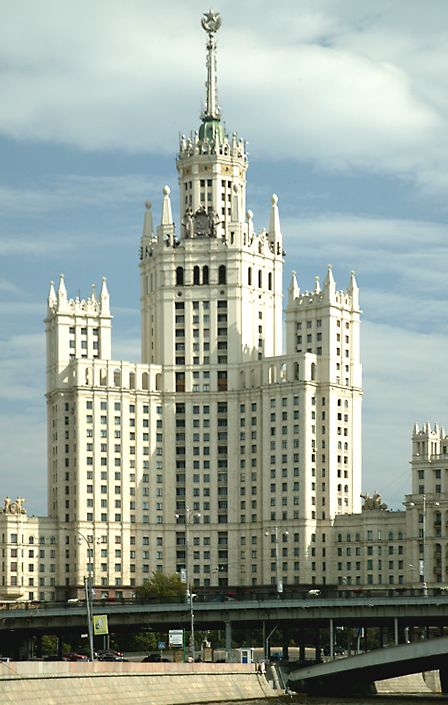
Forced labour played an increasingly important part in the post-war Soviet economy, according to a policy dictated by Stalin and his ‘kitchen cabinet’ of advisers. With the ending of the war the pool of unpaid labour available for exploitation by the state grew enormously. Apart from Gulag prisoners and labour army conscripts, there were 2 million German POWs, and about another million from other Axis nationalities, who were mostly used for timber-felling, mining and construction, although those with skills were employed occasionally in Soviet industry. In some factories German POWs were so integral to production that detention camps were built on the factory grounds and officials tried to block the prisoners’ repatriation to Germany. The Gulag population also grew, despite the release of many prisoners in the amnesty of 1945; the camps took in well over a million new prisoners between 1945 and 1950, largely as a result of the mass arrest of ‘nationalists’ (Ukrainians, Poles, Belorussians, Latvians, Lithuanians and Estonians) in territories captured or reoccupied by the Red Army but never really reconciled to Soviet power. The Gulag system expanded into a vast industrial empire, with 67 camp complexes, 10,000 individual camps and 1,700 colonies, employing a captive labour force of 2.4 million people by 1949 (compared with 1.7 million before the war). Overall, it is estimated that conscript labourers represented between 16 and 18 per cent of the Soviet industrial workforce between 1945 and 1948. They were especially important in the mining of precious metals in cold and remote regions where free labour was very expensive, if not impossible, to employ (hence their contribution to the Soviet economy was even more significant than the figures would suggest). Slave labour also made up the workforce in the big construction projects of the late 1940s which came to symbolize, officially at least, the post-war confidence and achievements of the Soviet system: the Volga–Don Canal; the Kuibyshev hydro-electric station; the Baikal-Amur and Arctic railways; the extensions to the Moscow Metro; and the Moscow University ensemble on the Lenin Hills, one of seven wedding-cake like structures (‘Stalin’s cathedrals’) in the ostentatious ‘Soviet Empire’ style which shot up around the capital in these years.

The post-war years saw a gradual merging between the Gulag and civilian economies. Every year about half a million Gulag labourers were contracted out to the civilian sector, mostly in construction, or wherever the civilian ministries complained of labour shortages; about the same number of free labourers, mostly specialists, were paid to work in Gulag industries. The Gulag system was increasingly compelled to resort to material incentives to motivate even its forced labourers. The population of the camps had become more unruly and difficult to control. With the amnesty of about a million prisoners in 1945, mainly criminals, who had their sentences either reduced or annulled, the camps were left with a high proportion of ‘politicals’ – not the intellectual types who filled the camps in the 1930s but strong young men who had fought as soldiers in the war, foreign POWs, Ukrainian and Baltic ‘nationalists’ – who were hostile to the Soviet regime and not afraid of violence. Without a system of rewards, these prisoners simply refused to meet the set targets. The cost of guarding the prisoners was also becoming astronomical. By 1953, the MVD was employing a quarter of a million guards within its camps, spending twice as much on the upkeep of the Gulag than it received in revenue from its output. Several senior MVD officials were seriously questioning the effectiveness of using forced labour at all. There were even mooted plans, supported by Beria and Malenkov, to dismantle sections of the Gulag and convert the prisoners into partially civilian workers, but since Stalin was a firm supporter of the Gulag system, none of these ideas was seriously proposed.

Leave a comment

Filed under economics, labor, nationalism, Russia, USSR, war

The Rise of Salazar in Portugal

From: Sacred Causes: The Clash of Religion and Politics, From the Great War to the War on Terror, by Michael Burleigh (HarperCollins, 2007), pp. 140-142:

In contrast to Spain, where the presence of Catholics on both sides of a vicious civil war dictated a cautious response by the Vatican, there were two countries where Pius XI’s vision of a ‘golden mean’ between invasive totalitarianism and weak democracy was apparently being realised by authoritarian governments. The first was Portugal, where in 1911 the new Republican regime had introduced some of the most anticlerical legislation in Europe. The Church was an easier target for urban radicals, many of whom were freemasons, than either the army or the large landowners of the south. Church property was nationalised, the university of Coimbra’s famous theology faculty was abolished, and feast days were restored to the world of work. Foreign priests and Jesuits were expelled, and both civil marriage and divorce were introduced. Religious teaching was prohibited in all schools. Both women and the 65 per cent of the population who were illiterates were disfranchised to destroy any potential Catholic voting base. Virtually the entire hierarchy were either exiled or expelled and in 1913 the Republic broke off diplomatic relations with Rome.

The fight-back against the efforts of a radicalised minority to impose French-style laicisation began among students in the devoutly Catholic north, and particularly among students at Coimbra. Two leaders emerged, Manuel Gonçalves Cerejeira and Antònio de Oliveira Salazar, of the Academic Centre for Christian Democracy, out of which developed a political party called the Portuguese Catholic Centre Party. Circumstances enabled this moderate party to make its influence felt. During the First World War, the Republic needed the Church to provide chaplains to its army of Catholic soldiers, while missionaries became crucial to the retention of a vast overseas empire at a time when the military was overstretched. By 1919 the Republic and the Vatican had restored diplomatic relations.

Initially, Salazar, an academic economist, subscribed to democracy as ‘an irreversible phenomenon’, but by the 1920s he and many others had become disenchanted with what was a highly corrupt local version of it. When he was elected to parliament in 1921, his revulsion for the opening session was so great that he walked out and returned to university teaching the same day. Between 1911 and 1926 Portugal had eight presidents, forty-four governments and twenty attempts at coups or revolution.

In 1926 the parliamentary republic was finally overthrown by general Manuel de Oliveira Gomes da Costa. Within two months, he was in turn deposed by general Carmona. Since Carmona had few ideas of his own, he depended upon conservative lay Catholics, including Salazar, who was twice brought in to right Portugal’s parlous finances. Salazar was careful to separate his political ambitions from his Catholicism, even if this meant tensions with his old student friend Cerejeira, who had become archbishop of Lisbon. When Salazar told the latter that he represented ‘Caesar, just Caesar, and that he was independent and sovereign’, Cerejeira shot back that he represented ‘God … who was independent and sovereign and, what’s more, above Caesar’. Salazar’s dictatorship retained the Republic’s separation of Church and state.

Restoring the Portuguese economy at a time when the world was sliding into depression lent Salazar a wizardly mystique, which he used to civilianise the military dictatorship from within. In 1930 he proclaimed a new National Union, an authoritarian nonparty whose primary purpose was to demobilise opinion. One of its first casualties was the Catholic Centre Party, which, Salazar argued, would impede the march to dictatorship. Thereafter Catholic Action became the main vehicle for the Church’s plans to reconquer Portuguese society for Catholicism.

President Carmona appointed Salazar premier in July 1932. He proclaimed the New State a year later. Catholic corporatist teachings, however misunderstood, were combined with a form of integral nationalism derived from Charles Maurras. The quiet professorial dictator, who avoided public speaking and staffed his regime with numbers of fellow academics, faced one remaining challenge. Portuguese disillusioned with the low-key tone of Salazar, and suffering under his austere economic policies, turned to the National Syndicalist Blue Shirts, who modelled themselves on the Fascists and Nazis. Salazar dealt with this radical Fascist threat deftly. He co-opted its more opportunist members into the regime, and then in July 1934 dissolved the remainder. This hostility to the National Syndicalists was similar to that of the Portuguese Catholic hierarchy. Referring to their desire for a ‘totalitarian state’ he asked: ‘Might it not bring about an absolutism worse than that which preceded the liberal regimes? … Such a state would be essentially pagan, incompatible by its nature with the character of our Christian civilization and leading sooner or later to revolution.’

Salazar saw little difference between the Communists, Fascists and Nazis, all of whom were wedded to a totalitarian ideal ‘to whose ends all the activities of the citizen are subject and men exist only for its greatness and glory. Portugal had no imperial ambitions – its empire was already the world’s fourth largest – and the regime dissociated itself from Nazi antisemitism, welcoming Jewish refugees fleeing their oppressors. The regime’s object was to entrench and intensify conservative Catholic values rather than to experiment with a ‘new man’ or woman. That lack of ambition, which extended to an aversion to modernising the nation’s economy, may partly explain why Salazar remained in power in this backwater until 1968.

1 Comment

Filed under economics, Portugal, religion