Category Archives: economics

Sudetenland, Ireland, and Rand Uitlanders

From The War of the World: Twentieth-Century Conflict and the Descent of the West, by Niall Ferguson (Penguin Press, 2006), pp. 346-347:

The term Sudetenland was not much used before the 1930s. At the end of the First World War an attempt had been made to associate the predominantly Germanophone periphery of Bohemia and Moravia with the new post-imperial Austria by constituting Sudetenland as a new Austrian province, but this had come to nothing. The Germans who found themselves under Czechoslovakian rule after the First World War – they accounted for over a fifth of the population, not counting the mainly German-speaking Jews – had at no time been citizens of the Reich of which Hitler was Chancellor. They were first and foremost Bohemians. The role of Bohemia in the evolution of National Socialism had nevertheless been seminal. It had been there that, before the First World War, German workers for the first time defined themselves as both nationalists and socialists in response to mounting competition from Czech migrants from the countryside. It had been in Bohemia that some of the most bitter political battles in the history of inter-war Czechoslovakia had been fought, over issues like language and education. The industrial regions where German settlement was concentrated were hard hit by the Depression; Germans were over-represented among the unemployed, just as they were under-represented in government employment. On the other hand, Czechoslovakia was unusual in Central and Eastern Europe. It was the only one of the ‘successor states’ that had arisen from the ruins of the Habsburg Empire that was still a democracy in 1938. It also occupied a strategically vital position as a kind of wedge jutting into Germany, dividing Saxony and Silesia from Austria. Its politics and its location made Czechoslovakia the pivot around which inter-war Europe turned.

The first and greatest weakness of Chamberlain’s foreign policy was that by accepting the legitimacy of ‘self-determination’ for the Sudeten Germans, it implicitly accepted the legitimacy of Hitler’s goal of a Greater Germany. Chamberlain’s aim was not to prevent the transfer of the Sudeten Germans and their lands to Germany, but merely to prevent Hitler’s achieving it by force.* ‘I don’t see why we shouldn’t say to Germany,’ so Chamberlain reasoned, ‘give us satisfactory assurances that you won’t use force to deal with the Austrians and Czecho-Slovakians and we will give you similar assurances that we won’t use force to prevent the changes you want if you can get them by peaceful means.’ His comparison with the English settlers in the Transvaal on the eve of the Boer War said it all; Chamberlain did not mean to imply that a war was likely, but that the German demands for the Sudetenlanders were as legitimate as his father’s had been for the Uitlanders. To use a different analogy, it had taken generations for British Conservatives to reconcile themselves to the idea of Home Rule for the Irish; they conceded the Sudeten Germans’ right to it in a trice. Since Versailles, Germany had been aggrieved. The transfer of the Sudetenland was intended to redress her grievances in what Chamberlain hoped would be a full and final settlement.

* The ‘Uitlanders’ (Afrikaans for ‘foreigners’) were the British settlers who had been drawn to the Transvaal by the discovery of gold. They were treated by the Boers as aliens, furnishing the British government with a pretext for intervention in the region. Joseph Chamberlain, the arch-enemy of Home Rule for Ireland, demanded ‘Home Rule for the Rand’, meaning that the Uitlanders should be granted the vote after five years’ residence.

POSTSCRIPT, pp. 367-368:

What was more, Hitler gained immediately from Munich. With Czechoslovakia emasculated, Germany’s eastern frontier was significantly less vulnerable. Moreover, in occupying the Sudetenland, the Germans acquired at a stroke 1.5 million rifles, 750 aircraft, 600 tanks and 2,000 field guns, all of which were to prove useful in the months to come. Indeed, more than one in ten of the tanks used by the Germans in their Western offensive of 1940 were Czech-built. The industrial resources of Western Bohemia further strengthened Germany’s war machine, just as the Anschluss had significantly added to Germany’s supplies of labour, hard currency and steel. As Churchill put it, the belief that ‘security can be obtained by throwing a small state to the wolves’ was ‘a fatal delusion’: ‘The war potential of Germany will increase in a short time more rapidly than it will be possible for France and Great Britain to complete the measures necessary for their defence.’ ‘Buying time’ at Munich in fact meant widening, not narrowing, the gap that Britain and France desperately needed to close. To put it another way: it would prove much harder to fight Germany in 1939 than it would have proved in 1938.

Leave a comment

Filed under Austria, Bohemia, Britain, democracy, economics, Germany, Ireland, nationalism, South Africa, war

Zhao Ziyang’s Secret Journal

Today’s Wall Street Journal offers a few glimpses of what Zhao Ziyang’s posthumously published secret journal reveals about the evolution of his thinking. Both the English and Chinese editions are due to appear just in time for the 20th anniversary of the violent crackdown in Tiananmen Square on 4 June 1989.

Zhao’s memoirs provide a rare insider’s view of debates among Chinese leaders, and they indict the Communist Party’s monopoly on power and the statist economic model. Zhao was initially a supporter of “soft authoritarianism.” But he understood the importance of economic reforms, which he implemented as a leader in Guangdong and then Sichuan province. His policies, which included giving land rights to farmers and lifting state production quotas, were so immediately successful that a popular description became, “If you want to eat, look for [Zhao] Ziyang.” Zhao also opened up the eastern coastal region to trade and development.

Only after his house arrest did Zhao conclude that a truly free economy also requires political liberalization, particularly a free press and independent judiciary. “If a country wishes to modernize, not only should it implement a market economy, it must also adopt a parliamentary democracy as its political system,” he wrote in his memoirs.

This represented a shift in his thinking. “I once believed that people were masters of their own affairs,” he wrote, “not in the parliamentary democracies of the developed nations in the West, but only in the Soviet and socialist nations’ systems with a people’s congress … This, in fact, is not the case. The democratic systems of our socialist nations are all just superficial; they are not systems in which the people are in charge, but rather are ruled by a few or even a single person.”

The WSJ’s Sky Canaves reports on how the book came about.

“Prisoner of the State: The Secret Journal of Premier Zhao Ziyang,” to be officially released this month in the U.S. by Simon & Schuster, is based on 30 hours of tapes recorded by Mr. Zhao before his death in 2005 and smuggled out of China. Mr. Zhao recorded over existing music cassettes while living under heavy surveillance and distributed them among various friends for safekeeping. The tapes were only recently collected, transcribed and translated for publication in book form. (Hear the audio excerpts and read the translations.)

The Malaysian Insider adds more perspective about the book’s authenticity from the Straits Times:

Analysts said that there is no doubt that the recordings are genuine — a major coup since previous “insider” accounts of the Tiananmen incident suffered from doubts on their authenticity.

“It was very prudent to record his memoirs on audio tapes. Even if you write it down, people can dispute if it was really his words. But when you hear his voice, it is definitely genuine,” said China elite politics watcher Bo Zhiyue of Singapore’s East Asian Institute, who had heard parts of the recordings uploaded online.

Hong Kong-based analyst Ong Yew Kim was struck by Zhao’s revelations that former paramount leader Deng Xiaoping was not truly interested in democratisation.

Zhao presses the case that he advocated the opening of China’s economy to the world and Deng did not always fully support such moves.

“Many people had termed Deng a reformist. But now we know that his talk about democracy was just empty slogans,” he added.

But Dr Bo cautioned that it is premature to dismiss Deng’s role in China’s reform policies.

“Zhao Ziyang said he started the agriculture reform in Sichuan province. That is fair. But Wan Li did likewise in Anhui province and Deng brought both of them to Beijing,” he said, referring to a former vice-premier.

“This is Zhao Ziyang’s story. It may not be the whole story.” — Straits Times

And one of the translators and editors of the English edition, Bao Pu, describes the lead-up to Tiananmen.

The tragic turning point toward violence came when Mr. Li [Peng] maneuvered to publish Deng’s harsh comments about the protestors in a People’s Daily editorial on April 26. At this point, Mr. Li may only have boosted the antiliberalization agenda, and not foreseen the scale of the tragedy to come. When Zhao first heard of Deng’s remarks while on a state visit to North Korea, he wrote, “my first thought was that another campaign against liberalism might begin.”

But much to the government’s surprise, the students were shocked and insulted by the defamation of their motives and responded with the April 27 demonstrations, the biggest spontaneous student protest ever in modern China’s history. Zhao observed at this time “even the symbol of the paramount leader had lost its effectiveness.”

Leave a comment

Filed under biography, China, democracy, economics, publishing

Asian Roles in New Spain

My favorite article in the latest issue of Journal of World History (on Project MUSE) is by Edward R. Slack Jr. on “The Chinos in New Spain: A Corrective Lens for a Distorted Image.” Here are a few excerpts (footnotes and references omitted).

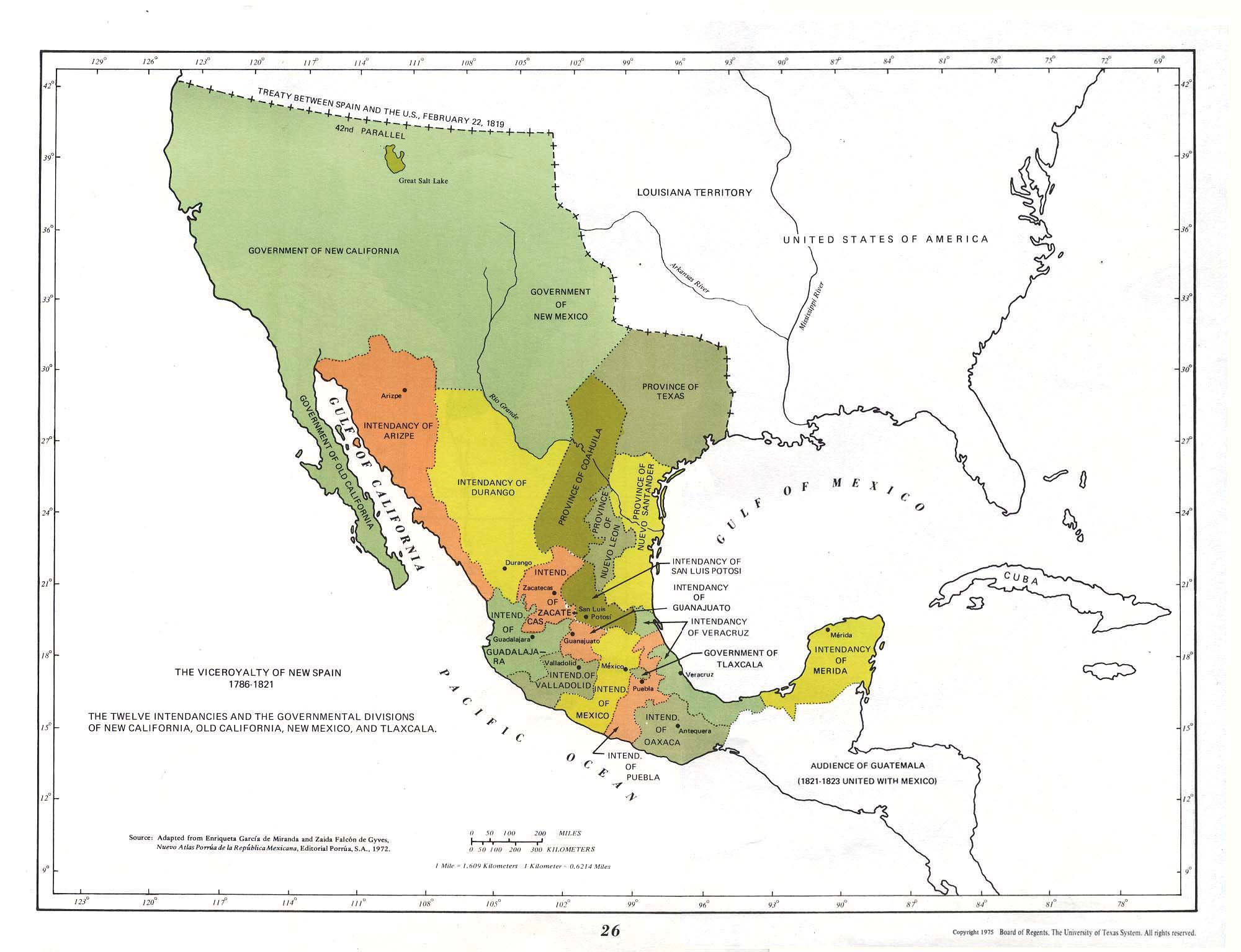
Spanish galleons transported Asian goods and travelers from Manila to colonial Mexico primarily through the port of Acapulco. During the two and a half centuries of contact between the Philippines and the Viceroyalty of New Spain, a minimum of 40,000 to 60,000 Asian immigrants would set foot in the “City of Kings,” while a figure double that amount (100,000) would be within the bounds of probability. From Acapulco they would gradually disperse to the far corners of the viceroyalty, from Loreto in Baja California to Mérida in Yucatan…. The majority, however, would eventually settle in two distinct zones: on the west coast in the districts of Guerrero, Jalisco, and Michoacán, and in the large, ethnically diverse municipalities of Mexico City and Puebla in the central valleys and the eastern port of Veracruz. The two zones were transversed by the most heavily traveled arteries that connected Acapulco to Mexico City (known colloquially as el camino de China) in the west; Veracruz with Puebla and Mexico City in the east; and several arterials linking the capital with Puerto Vallarta in the west and Guanajuato in the northwest.

For the most part, the chinos disembarked at Acapulco as sailors, slaves, and servants. Over the longue durée of Mexican-Asian cultural exchange, the largest contingent of Asians arrived as sailors on the galleons and smaller vessels (capitanas, pataches, and almirantes) that annually plied the long and perilous return voyage from Manila. The seamen were primarily Filipinos, Chinese mestizos (known in Manila as mestizos de Sangley), or ethnic Chinese from the fortified port of Cavite near Manila that served as the primary shipyard for Spaniards in the archipelago. In 1565, the first chino sailors from the islands of Cebu and Bohol arrived in Acapulco aboard Friar Andrés de Urdaneta’s trailblazing galleon, the San Pedro. During the late sixteenth century Iberian sailors constituted the majority of crewmen, but by the early 1600s Asians had surpassed them, accounting for 60–80 percent of the mariners from that time forward. A historical snapshot of galleon seafarers in the mid eighteenth century comes from a crew manifest of La Santissima Trinidad. In 1760, this vessel was manned by 370 sailors, consisting of 30 officers (Europeans or Mexican criollos), 40 artillerymen (27 chinos), 120 sailors (109 chinos), 100 “Spanish” cabin boys (96 chinos), and 80 “plain” cabin boys (78 chinos). In sum, 84 percent (310) of the crew were born and raised in Spain’s Asian colony, with 68 percent (250) hailing from the port of Cavite alone….

Along the Pacific coast, chino sojourners tended to congregate in the cities and pueblos of Acapulco, Coyuca, San Miguel, Zacatula, Tex pan, Zihuatenejo, Atoya, Navidad, and Colima. With the arrival of more ships from Manila, the number of sailors who either had no desire to return to the Philippines or were brought over as slaves married local Indian and mixed-race women increased. Consequently, a sizable population of chinos and their descendants made these cities and pueblos a popular destination for fellow Asians. Both freemen and slaves farmed rice (brought from the Philippines), corn, and cotton; tended cacao and coconut palm trees; fished in the seas and rivers; and transported people and goods to various ports along the coastline. Those who followed the royal highways to towns farther inland worked as muleteers or in the silver mines, haciendas, obrajes (textile workshops), or sugar mills….

Slaves and servants constituted the second largest group of Asian immigrants during the colonial era. Manila quickly became an important entrepôt for the commerce in human flesh during the first century of Spanish rule. The greater part were transported by Portuguese vessels from colonies and trading ports in Africa, India, the Malay peninsula, Japan, and China, although Chinese junks and Malay prahus also shipped large quantities to Manila. Non-Filipino slaves that fetched the highest price were from Timor, Ternate, Makassar, Burma, Ceylon, and India, because “the men are industrious and obliging, and many are good musicians; the women excellent seamstresses, cooks, and preparers of conserves, and are neat and clean in service.”…

The incorporation of Asian immigrants into the armed forces of New Spain represents another fascinating fragment of the chino mosaic from the colonial era. Similar to restrictions placed on other castas in Mexico, there were numerous prohibitions against Asians carrying weapons or riding horses….

The legion of similar antiweapons ordnances from the 1550s onward notwithstanding, from at least the 1590s free chinos not only were granted permission to carry weapons, but gradually incorporated into both the salaried companies of Españoles as well as local militias, especially those cities and towns along the Pacific coast. In several documents from the years 1591 and 1597, an “Indio Chino” from the silver mining town of Zultepec named Juan Alonzo, who earned his livelihood from buying and selling mules, was granted a license to ride a horse with a saddle and bridle and to carry a sword. A key determinant in this matter was his racial classification as a chino, since indios (unless they were elites) were forbidden such privileges….

Among the scores of Asian peoples that were widely defined as chinos, in the early decades of the 1600s Japanese converts were held in high esteem by Spaniards in the Philippines and New Spain for their bravery and loyalty. In 1603 and 1639 when Chinese residents in the Parián of Manila revolted against their Iberian overlords, Japanese swordsmen distinguished themselves in combat. Without their assistance, Sangleyes would surely have made the Philippines a colony of the Middle Kingdom. Thousands of Japanese converts, traders, and ronin made the Philippines their home prior to the closing of Cipango to Iberians in the 1630s. They lived in a suburb of Manila called Dilao, with a population estimated at 3,000 by 1624.

Thus it is not surprising that samurai converts were considered a more privileged subgroup of chinos in New Spain….

It is unclear exactly when chino militias were established on the west coast of New Spain. It is evident, however, that prior to 1729 Asian paramilitary units were routinely patrolling the regions adjacent to Acapulco. Tiburcio Anzalde, “captain of one of the militias of chinos and mulatos in the district of Atoya,” discussed the duties and obligations of militiamen in a 1746 document: repeated trips to Acapulco to deliver mail and other correspondences; to clear the roads (of bandits) while on patrol; and, most importantly, their heroic role in resisting the English pirate George Anson‘s invasion at the port of Zihuatenejo in 1741.

Leave a comment

Filed under Asia, China, economics, England, Japan, labor, Mexico, migration, Netherlands, Philippines, Portugal, Spain

Ferguson on the Appeal of Fascism vs. Nazism

From The War of the World: Twentieth-Century Conflict and the Descent of the West, by Niall Ferguson (Penguin Press, 2006), pp. 230-231, 239-240:

Considering the emphasis the new dictatorships laid on their supposedly distinctive nationalistic traditions, they all looked remarkably alike: the coloured shirts [German Brownshirts, Italian Blackshirts, Irish Blueshirts, Romanian Greenshirts], the shiny boots, the martial music, the strutting leaders, the gangster violence. At first sight, then, there was little to distinguish the German version of dictatorship from all the rest – except perhaps that Hitler was marginally more absurd than his counterparts. As late as 1939, Adolf Hitler could still be portrayed by Charlie Chaplin in his film The Great Dictator as an essentially comic figure, bawling incomprehensible speeches, striking preposterous poses and frolicking with a large inflatable globe. Yet there were in reality profound differences between National Socialism and fascism. Nearly all the dictatorships of the inter-war period were at root conservative, if not downright reactionary. The social foundations of their power were what remained of the pre-industrial ancien régime: the monarchy, the aristocracy, the officer corps and the Church, supported to varying degrees by industrialists fearful of socialism and by frivolous intellectuals who were bored of democracy’s messy compromises.* The main function the dictators performed was to crush the Left: to break their strikes, prohibit their parties, deny voice to their voters, arrest and, if it was deemed necessary, kill their leaders. One of the few measures they took that went beyond simple social restoration was to introduce new ‘corporate’ institutions supposed to regiment economic life and protect loyal supporters from the vagaries of the market. In 1924 the French historian Elie Halevy nicely characterized fascist Italy as ‘the land of tyranny … a regime extremely agreeable for travellers, where trains arrive and leave on time, where there is no strike in ports or public transport’. ‘The bourgeois’, he added, ‘are beaming.’ It was, as Renzo De Felice said in his vast and apologetic biography of the Duce, ‘the old regime in a black shirt’….

Contrary to the old claims that it was the party of the countryside, or of the north, or of the middle class, the NSDAP attracted votes right across Germany and right across the social spectrum…. It is true that places with relatively high Nazi votes were more likely to be in central northern and eastern parts, and those with relatively low Nazi votes were more likely to be in the south and west. But the more important point is that the Nazis were able to achieve some electoral success in nearly any kind of local political milieu, covering the German electoral spectrum in a way not seen before or since. The Nazi vote did not vary proportionately with the unemployment rate or the share of workers in the population. As many as two-fifths of the Nazi voters in some districts were working class, to the consternation of the Communist leadership. In response, some local Communists openly made common cause with the Nazis. ‘Oh yes, we admit that we’re in league with the National Socialists,’ said one Communist leader in Saxony. ‘Bolshevism and Fascism share a common goal: the destruction of capitalism and of the Social Democratic Party. To achieve this aim we are justified in using every means.’ It was a mark of Goebbels’ skill in making the party seem all things to all men that, simultaneously, dyed-in-the-wool Prussian Conservatives could regard the Nazis as potential partners in an anti-Marxist coalition. Thus were political rivals lured into what proved to be fatal forms of cooperation. The only significant constraint on the growth of the Nazi vote was the comparatively greater resilience of the Catholic Centre party compared with parties hitherto supported by German Protestants.

Other fascist movements, as we have seen, depended heavily on elite sponsorship to gain power. The Nazis did not need to. For all the attention that has been paid to them, the machinations of the coterie around Hindenburg were not the decisive factor, as those of the Italian elites had been in 1922. If anything, they delayed Hitler’s appointment as Chancellor, an office that was rightfully his after the July 1932 election. It was not the traditional elite of landed property that was drawn to Hitler; the real Junker types found him horribly coarse. (When Hitler shook hands with Hindenburg, one conservative was reminded ‘of a headwaiter closing his hand around the tip’.) Nor was it the business elite, who not unreasonably feared that National Socialism would prove a Trojan horse for socialism proper; nor the military elite, who had every reason to dread subordination to an opinionated Austrian corporal. The key to the strength and dynamism of the Third Reich was Hitler’s appeal to the much more numerous intellectual elite; the men with university degrees who are so vital to the smooth running of a modern state and civil society.

For reasons that may be traced back to the foundation of the Bismarckian Reich or perhaps even further into Prussian history, academically educated Germans were unusually ready to prostrate themselves before a charismatic leader.

(*A list of all the treasonous clerics who flirted or did more than flirt with fascism would be a book in its own right. If only to give an illustration of how widespread the phenomenon was, dishonourable mention may be made of the writer Gabriele D’Annunzio, who established his own tinpot tyranny in post-war Fiume; the poet T. S. Eliot, who wrote that ‘totalitarianism can retain the terms “freedom” and “democracy” and give them its own meaning’; the philosopher Martin Heidegger, who, as Rector of Freiburg University, lent his enthusiastic support to the Nazi regime; the political theorist Carl Schmitt, who devised pseudo-legal justifications for the illegalities of the Third Reich; the novelist Ignazio Silone, who shopped former Communist comrades to the fascists; and the poet W. B. Yeats, who wrote songs for the Irish Blueshirts. Thomas Mann, who had made his fair share of mistakes during the First World War and only with difficulty broke publicly with the Nazi regime, was not wrong when he spoke of ‘the thoroughly guilty stratum of intellectuals’.)

Leave a comment

Filed under Austria, democracy, economics, education, France, Germany, Ireland, Italy, nationalism, Portugal, Romania, Spain

March 1933: Similar Talk, Different Results

From The War of the World: Twentieth-Century Conflict and the Descent of the West, by Niall Ferguson (Penguin Press, 2006), pp. 221-225:

It was March 1933. The national mood was feverish and yet expectant. In the wake of his sweeping victory, the country’s charismatic new leader addressed people desperate for change. Millions crowded around their radios to hear him. What they heard was a damning indictment of what had gone before and a stirring call for national revival….

The action the new leader had in mind was bold, even revolutionary. Jobs would be created by ‘direct recruiting by the Government itself, treating the task as we would treat the emergency of war’; men would be put to work on ‘greatly needed projects to stimulate and reorganize the use of our natural resources’…. He would introduce a system of ‘national planning for and supervision of all forms of transportation and of communications and other utilities’ and ‘a strict supervision of all banking and credits and investments’ to bring ‘an end to speculation with other people’s money’ – measures that won enthusiastic cheers from his audience….

Not content with this vision of a militarized nation, he concluded with a stark warning to the nation’s newly elected legislature: ‘An unprecedented demand and need for undelayed action may call for temporary departure from … the normal balance of executive and legislative authority.’ If the legislature did not swiftly pass the measures he proposed to deal with the national emergency, he demanded ‘the one remaining instrument to meet the crisis – broad Executive power to wage a war against the emergency, as great as the power that would be given to me if we were in fact invaded by a foreign foe’. This line brought forth the loudest applause of all.

Who was this demagogue who so crudely blamed the Depression on corrupt financiers, who so boldly proposed state intervention as the cure for unemployment, who so brazenly threatened to rule by decree if the legislature did not back him, who so cynically used and re-used the words ‘people’ and ‘Nation’ to stoke up the patriotic sentiments of his audience? The answer is Franklin D. Roosevelt, and the speech from which all the above quotations are taken was his inaugural address as he assumed the American presidency on March 4, 1933.

Less than three weeks later, another election victor in another country that had been struck equally hard by the Depression gave a remarkably similar speech, beginning with a review of the country’s dire economic straits, promising radical reforms, urging legislators to transcend petty party-political thinking and concluding with a stirring call for national unity .The resemblances between Adolf Hitler’s speech to the newly elected Reichstag on March 21, 1933, and Roosevelt’s inaugural address are indeed a great deal more striking than the differences. Yet it almost goes without saying that the United States and Germany took wholly different political directions from 1933 until 1945, the year when, both still in office, Roosevelt and Hitler died. Despite Roosevelt’s threat to override Congress if it stood in his way, and despite his three subsequent re-elections, there were only two minor changes to the US Constitution during his presidency: the time between elections and changes of administration was reduced (Amendment 20) and the prohibition of alcohol was repealed (Amendment 21). The most important political consequence of the New Deal was significantly to strengthen the federal government relative to the individual states; democracy as such was not weakened. Indeed, congress rejected Roosevelt’s Judiciary Reorganization Bill. By contrast, the Weimar Constitution had already begun to decompose two or three years before the 1933 general election, with the increasing reliance of Hitler’s predecessors on emergency presidential decrees. By the end of 1934 it had been reduced to a more or less empty shell. While Roosevelt was always in some measure constrained by the legislature, the courts, the federal states and the electorate, Hitler’s will became absolute, untrammelled even by the need for consistency or written expression. What Hitler decided was done, even if the decision was communicated verbally; when he made no decision, officials were supposed to work towards whatever they thought his will might be. Roosevelt had to fight – and fight hard – three more presidential elections. Democracy in Germany, by contrast, became a sham, with orchestrated plebiscites in place of meaningful elections and a Reichstag stuffed with Nazi lackeys. The basic political freedoms of speech, of assembly, of the press and even of belief and thought were done away with. So, too, was the rule of law. Whole sections of German society , above all the Jews, lost their civil as well as political rights. Property rights were also selectively violated. To be sure, the United States was no utopia in the 1930s, particularly for African-Americans. It was the Southern states whose legal prohibitions on interracial sex and marriage provided the Nazis with templates when they sought to ban relationships between ‘Aryans’ and Jews. Yet, to take the most egregious indicator, the number of lynchings of blacks during the 1930s (119 in all) was just 42 per cent of the number in the 1920s and 21 per cent of the number in the 1910s. Whatever else the Depression did, it did not destroy American democracy, nor worsen American racism.*

(*Roosevelt nevertheless opposed the Costigan-Wagner Anti-Lynching Bill for fear that to support it might cost him the Southern states in the 1936 election.)

Leave a comment

Filed under democracy, economics, Germany, industry, military, nationalism, U.S.

Wordcatcher Tales: Dappokusha/Talbukja

How widespread is the economic downturn across the globe? Well, it’s now affecting many North Koreans, because funds from South Korea that might help them escape their workers’ paradise are not as plentiful as they once were, according to an article in Japan’s Mainichi Shimbun. I’ll quote just the first paragraph from White Peril‘s translation.

The number of dappokusha fleeing from North Korea … has decreased substantially [to] Yanbian Korean Autonomous Prefecture, Jilin Province, China, which abuts the PRC-DPRK border. It’s the biggest stronghold of the refugee business, but the activities of the brokers who maneuver behind the scenes guiding refugees through are at a standstill. This year is the sixtieth anniversary of the establishment of diplomatic relations between the two countries, and in addition to a heightened level of alert at the border, the effects of the financial crisis have stopped the money that gets to them from South Korea. However, the defections supported by the brokers are a “necessary evil.” Beyond the border, there’s a backlog of desperate people.

The term dappokusha 脫北者 (lit. ‘escape North person’) caught my attention. The same compound is read 탈북자 in Korean (talbukja in the official SK romanization), but its usage in SK is now discouraged in favor of the euphemistic 새터민 saeteomin, which I’ll translate here as ‘new localites’.

The agentive sense of 脱 datsu ‘escape, desert, quit’ also shows up in the following compounds.
脱船 dassen (‘quit ship’) ‘jump/desert ship’
脱線 dassen (‘quit line’) ‘jump the (train)track’
脱サラ dassara (‘quit salary’) ‘quit one’s job as a salaryman’

But a similar 脱 datsu, in the agentive or instrumental sense of ‘remove’, occurs in some more common words.
脱水機 dassuiki (‘remove water machine’ =) ‘dryer, dehydrator’
脱脂乳 dasshinyuu (‘remove fat milk’ =) ‘skim milk’
靴脱ぎ kutsunugi (‘shoe removal’ =) ‘place to remove shoes’

Without an agent or instrument, the same kanji translates as ‘missing’.
脱文 datsubun ‘missing passage (of text)’
脱字 datsuji ‘missing word/character (in text)’

HISTORICAL/COMPARATIVE NOTE: One of the more remarkable regular sound correspondences between Sino-Korean and Sino-Japanese is SK *-l and SJ *-t (the latter often -tsu in final position, or assimilated to the following voiceless consonant), as in 出発 : 출발 chulbal : しゅっぱつ shuppatsu (< shutu + hatu) ‘departure’. This sound correspondence is part of what gives Korean its characteristic abundance of rolling liquid sounds and Japanese its characteristic abundance of staccato geminate obstruents amid otherwise open syllables (like Italian).

4 Comments

Filed under China, economics, Japan, Korea, language, migration

From Tight Ethnotowns to Dispersed Ethnoburbs

The latest issue of Southeastern Geographer (on Project MUSE) has an article by Paul N. McDaniel and Anita I. Drever that examines Immigrant Businesses in a New South City (Birmingham, Alabama), asking: Do they form an Ethnic Enclave or International Corridor?

Here’s the abstract and a bit of the introduction that I found interesting. I have eliminated most of the in-text citations and cross-references in the extracts that follow.

Abstract: Immigration is changing the U.S. South in unprecedented ways. First and later generations of Latinos and Asians comprise increasing portions of the population in towns and cities across the region. Some of these newcomers have started entrepreneurial business ventures rather than going to work for someone else. This research examines the forces driving the spatial patterns of and civic leader response to immigrant-owned entrepreneurial establishments in Birmingham, Alabama, a middle-tier metropolitan area. The paper answers the following questions: (1) Why did immigrant businesses begin moving into Birmingham during the last decade and a half? (2) Where are ethnic entrepreneurs opening up retail shops and why? (3) What are the attitudes of city officials towards these multi-ethnic business enclaves? These questions are addressed using a mixed-method approach that includes census data analysis, archival research, personal observations and semi-structured open-ended interviews….

Historically, ethnic businesses have been spatially concentrated…. Ethnic neighborhoods in gateway cities developed at a time when city inhabitants traveled on foot or by streetcar. Ethnic businesses and residences therefore had to be located in close proximity. The ethnic businesses that have opened up in the U.S. South during the past ten to fifteen years largely cater to a clientele within driving rather than walking distance. Many of the recent arrivals to the South have also lived in other parts of the U.S. and are therefore less dependent on ethnic intermediaries to find employment or housing. Research on the residential settlement of new arrivals to the South reveals minimal spatial clustering…. Walcott (2002) did find that ethnic businesses were spatially concentrated along the Buford Highway international corridor between the northeast Atlanta suburbs of Chamblee and Doraville; however she saw minimal evidence of spatial clustering by nationality within this area.

Contrary to the findings in studies of several other southern cities (see Mohl 2003), Asians and Hispanics appear to be settling largely in white neighborhoods …. Dissimilarity index calculations by the authors based on data from the 2000 U.S. Census indicate that one-and-a-half times as many Asians and Hispanics would have to move to evenly distribute their population among blacks as among non-Hispanic whites.

What attracted these immigrants to Birmingham?

The shift in the locus of U.S. economic growth from the Rustbelt in the Northeast to the Sunbelt in the South brought biotechnology firms, large banks, and multinational corporation headquarters to the Birmingham metropolitan area. These global companies—along with Birmingham’s universities—recruited talent from around the United States and the rest of the world…. Like in other locales, Birmingham’s expanding well-paid, highly educated workforce has demanded better housing and more services. This has helped to fuel job growth in construction and basic services and the foreign-born have arrived to fill these jobs (Mohl 2003). And as a result, like in many parts of the country Birmingham has attracted a foreign-born population that is both more and less educated than the metropolitan area as a whole: 19 percent of immigrants have a graduate degree as compared to 9 percent of the total metro population and 27 percent of immigrants have less than a high school education compared to 16 percent of metro Birmingham’s population as a whole….

Where are they living and working?

First, although the residences of the foreign-born are fairly dispersed …, new immigrant businesses in Birmingham are clustered…. A second important characteristic of Birmingham’s ethnic business concentrations are that they are multiethnic in contrast to the Chinatowns, Little Tokyos, and Latino barrios that evolved before the automobile era in gateway cities…. Third, ethnic businesses in Birmingham are located along suburban corridors rather than in neighborhoods per se. In the walking cities of the past, ethnic businesses were located on contiguous neighborhood blocks to accommodate customers traveling on foot or by streetcar to do their shopping. In addition, immigrants often lived in the dwellings above the street level shops. By contrast, Birmingham’s ethnic businesses are moving into a suburban, automobile dominated landscape where zoning ordinances have purposely separated residential and commercial landscapes….

And what kinds of attitudes do they encounter?

The interviews with Hoover and Homewood city officials suggest immigrant business owners receive more verbal support from city officials in Homewood. The fact that the international corridor in Homewood is larger and more complex than in Hoover may in part be the result of the warmer welcome it received from the local government. It is also likely that city officials’ positive attitudes toward ethnic businesses make it easier for immigrant businesses to acquire permits and influence local ordinances.

The author of a key work cited in this article recently published a book titled Ethnoburb: The New Ethnic Community in Urban America, by Wei Li (U. Hawai‘i Press, 2008).

Leave a comment

Filed under Asia, economics, Latin America, migration, U.S.

Rushdie on Slumdog Tourism

In a dyspeptic disquisition on screen adaptations from books in last Saturday’s Guardian, Salman Rushdie coughs up some colorful bile in the general direction of the recent Oscar favorite.

It used to be the case that western movies about India were about blonde women arriving there to find, almost at once, a maharajah to fall in love with, the supply of such maharajahs being apparently endless and specially provided for English or American blondes; or they were about European women accusing non-maharajah Indians of rape, perhaps because they were so indignant at having being approached by a non-maharajah; or they were about dashing white men galloping about the colonies firing pistols and unsheathing sabres, to varying effect. Now that sort of exoticism has lost its appeal; people want, instead, enough grit and violence to convince themselves that what they are seeing is authentic; but it’s still tourism. If the earlier films were raj tourism, maharajah-tourism, then we, today, have slum tourism instead. In an interview conducted at the Telluride film festival last autumn, Boyle, when asked why he had chosen a project so different from his usual material, answered that he had never been to India and knew nothing about it, so he thought this project was a great opportunity. Listening to him, I imagined an Indian film director making a movie about New York low-life and saying that he had done so because he knew nothing about New York and had indeed never been there. He would have been torn limb from limb by critical opinion. But for a first world director to say that about the third world is considered praiseworthy, an indication of his artistic daring. The double standards of post-colonial attitudes have not yet wholly faded away.

via LaurenceJarvikOnline

Like most Oscar winners, Slumdog had not yet enticed the Outliers to make an effort to go see it in a movie theater. Nor is it likely now to find a place in our never-very-long Netflix queue. We’ve already seen, courtesy of Netflix, Thom Fitzgerald’s award-winning, disgusting, poverty-porn movie, The Wild Dogs (2002), which views Romanians as nothing but beggars, con-men, sex workers, or dog catchers—and compares them with heavy-handed symbolism to the wild dogs of Bucharest, which the government is determined to euthanize. All foreigners there (or at least all Canadians!), on the other hand, are either corrupt exploiters or naive do-gooders. And the path from exploiter to do-gooder requires finding your own personal beggar to support: the Canadian ambassador’s wife takes on a legless beggar boy, who follows her around like a puppy; the Canadian pornographer tries to redeem himself by repeatedly giving stuff to a reverse-kneed, hand-walking beggar, whose companions promptly steal it from him; and the Romanian dog-catcher tries to redeem himself by creating a refuge for dogs he was supposed to have euthanized, only to be arrested and have his dogs taken away. I fully agree with the reviewer on Rotten Tomatoes, whose review (no longer available online) includes the quote, “No one in this sterile film is redeemed, condemned or even particularly humanized…. Ultimately, Fitzgerald’s gutless film is a muddled, grotesque travelogue.”

Sorry. Next time I’ll tell you how I really feel.

Leave a comment

Filed under anglosphere, Canada, cinema, economics, India, Romania, travel, U.S.

Parallel Pejoration of Terms in Korean, Japanese, Chinese

The latest volume of the journal Korean Studies (available by subscription on Project MUSE) contains an article by Minju Kim, “On the Semantic Derogation of Terms for Women in Korean, with Parallel Developments in Chinese and Japanese” (vol. 32, pp. 148-176):

This study investigates two kinds of semantic change in terms for women in Korean, along with parallel developments in Chinese and Japanese, and examines the underlying mechanisms that cause these linguistic changes. In Korean and Chinese, polite terms for young women (akassi and xiăo jiĕ, respectively) have been taking on strong sexual connotations, due to the terms’ association with professions in the sex trade. In Korean and Japanese, terms for older sister (enni and oneesan/oneechan, respectively) have been adopted by more senior speakers to address young women, especially those in service interactions, including those in sex entertainment. This study demonstrates that besides sexist attitudes, other quite different motivations can be responsible for the semantic derogation of terms for women. In an effort to be polite, speakers have adopted positive female terms to address women of lower occupational status. Subsequently, the burden of the lower-status referents has caused the positive terms to undergo semantic derogation.

(Note that, like most linguists, Kim uses Yale romanization to represent Korean, since it most closely represents the phonemic system—and for that reason most closely transliterates hangul. The more common romanization for 아가씨 is agassi.)

Kim notes similar developments in European languages, as in the pejoration of hussy from ‘housewife’ to ‘loose woman’ in English. She also notes the pejoration of the terms for the female half in pairs of terms that used to be more equivalent, such as bachelor vs. spinster or master vs. mistress in English, or in the pairs of terms that used to distinguish ‘young man’ from ‘young woman’ in several Romance languages: Portuguese rapaz vs. rapariga, Spanish hombrezuelo vs. mujerzuela, French garçon vs. garce. (Kim spells rapariga as ramariga and mujerzuela as muerzuela.)

During China’s Cultural Revolution, according to Kim’s sources, the use of xiăo jiĕ was discouraged because of its long history of deferential use to address young ladies of the nobility. Now its use is being discouraged for its derogatory connotations by some sociologists who suggest addressing waitresses as ‘attendant, waiter’ (服务员 fúwùyuán) rather than ‘young lady’.

Leave a comment

Filed under China, democracy, economics, Japan, Korea, language

Navigating America by Area Code

The Fortune Cookie Chronicles blogger Jennifer 8. Lee notes the key role of telephone area codes in helping Chinese immigrants who can barely read English find their way to smaller cities served by the Chinatown bus services.

That is because many Fujianese restaurant workers are not educated and thus don’t really read and write English. Given that. How do you divide the United States? Not through towns and states. You do it through numbers — hence the area codes. As I wrote in a piece in 2005, job listings in Chinatown employment agencies are often done by area code.

Here’s a snippet from that earlier article, which is well worth reading.

For workers who cannot read the names of their destinations in English, area codes serve as the restaurants’ main geographical identifiers. The workers do not see America as a series of cities or even states, but as a collection of area codes, almost all with dozens upon dozens of Chinese restaurants looking for help. Maps in every Chinese agency break down the country by area code, with recently introduced area codes scribbled in by hand.

For many restaurant workers, the number of hours by bus is a critical measure of how far they are from the American center of their universe, East Broadway in Chinatown. Almost all travel by bus, because many do not speak English or have identification, so they cannot travel by plane. A network of Chinese bus companies has sprung up to shuttle the restaurant workers from Chinatown to the rest of the country. Some have started to draw non-Chinese riders, specifically the “Chinatown buses” that run between New York and Boston or Washington. One bus-company sign advertises the destination and the fare: “Minnesota (612, 551, 952, 763) $150; Wisconsin (920, 715, 608, 414) $120.”

via Culture-making

Leave a comment

Filed under China, economics, education, language, migration, U.S.