Category Archives: war

The Quagmire Continues — in Kosovo

In a story appropriately timed for Halloween, the International Herald Tribune updates us on the continuing quagmire in Kosovo.

PRISTINA, Kosovo: All expectations are that, in the next few months, Kosovo will claim an internationally sanctioned independence, concluding a titanic struggle by the United Nations and Western governments to close a chapter that began with its bloody ethnic war.

But it is unlikely to be the conclusion the United Nations hoped for, after having invested seven years supervising the enclave at a cost of about $1.3 billion a year. That is because it seems increasingly evident that the West will need to retain far greater responsibilities than it wanted.

The outlook has changed with the failure of both the Albanian and Serbian sides to reach an agreement in nine months of negotiations, in particular since the Serbs are refusing to recognize Albanian-dominated institutions in what has been a territory dear to their religious and cultural heritage.

The negotiations are dragging on, raising the likelihood that a solution will be imposed. That would end a process that began with the breakup of the former Yugoslavia 15 years ago, which led to wars in Croatia, Bosnia and, finally, Kosovo.

For Western Europe, the wish has always been that resolving Kosovo, the last of the three problem areas, would end the risk of violent disputes over borders and alleviate the need to have a heavy international presence – both in troops and in civil administration – on the ground. Planning is already under way for a European Union-led mission to take over from the UN.

“Everybody is anxious to solve this,” said Joachim Rücker, head of the United Nations mission in Kosovo. “It is the last bit of the Balkan puzzle.”

The political calendar in Serbia leaves unclear exactly when a resolution might come: possibly next year, after Serbian elections, although the Americans are eager to conclude things without delay. The Americans are not heavily invested in Kosovo but would be expected to pay some of costs of establishing a more independent state.

Whatever the timing, it seems that foreign officials will retain extensive powers for some time to come, UN and EU officials here say.

With high levels of poverty in Kosovo, the financial costs may continue to be substantial.

“I think the EU is going to be in for a bit of a shock,” said Anthony Welch, coordinator of a UN-commissioned review of Kosovo’s future security needs. “I think their role is going to have to be a little more hands-on. And it is going to cost a lot.”

Kosovo has remained under UN control since the province was prized away in June 1999 from Yugoslav security forces accused of committing atrocities against the majority Albanian population. Its sovereignty remains in limbo: While Kosovo is formally part of Serbia, the six nations overseeing the negotiations on its future say it cannot return to Belgrade’s rule.

I’m sure it won’t take any longer—or any more resources—to resolve Kosovo to everyone’s satisfaction than it will have taken to resolve the division of the Korean peninsula, whenever the latter is finally resolved to everyone’s satisfaction resignation. Perhaps in my daughter’s lifetime. Not mine.

Leave a comment

Filed under Eastern Europe, war

Remembering Iwo Jima, Both Victors and Vanquished

Joe Rosenthal has died. By a stroke of good luck, he was able to capture an image of victory after one of the most hard-fought battles of the Pacific War.

Joe Rosenthal, the Associated Press photographer who captured the enduring image of the American fighting man in World War II with his depiction of five Marines and a Navy corpsman raising a huge American flag over the Japanese island of Iwo Jima, died Sunday in Novato, Calif. He was 94….

His photograph of the flag-raising atop Mount Suribachi on Feb. 23, 1945, may be the most widely reproduced photo in American history. It was re-created on at least 3.5 million Treasury Department posters publicizing a massive war-bond campaign. It was engraved on three-cent Marine Corps commemorative stamps that broke Post Office records for first-day cancellations in 1945. It was reproduced as a 100-ton Marine Corps War Memorial bronze sculpture near Arlington National Cemetery. And it brought Mr. Rosenthal a Pulitzer Prize.

But almost from the day the photograph was emblazoned on the front pages of Sunday newspapers as a symbol of embattled patriotism, Mr. Rosenthal faced suspicions that he staged the shot, posing the Marines. He always insisted that he recorded a genuine event, and others on the scene corroborated his account.

“The picture was not posed,” Louis Burmeister, a former Marine combat photographer who was among four military photographers alongside Mr. Rosenthal as the flag went up, said in a 1993 interview for “Shadow of Suribachi,” by Parker Bishop Albee Jr. and Keller Cushing Freeman. [It’s amazing how persistent that rumor is in newsrooms that can’t spot photographs that are not just posed, but photoshopped, from current war zones.–J.] …

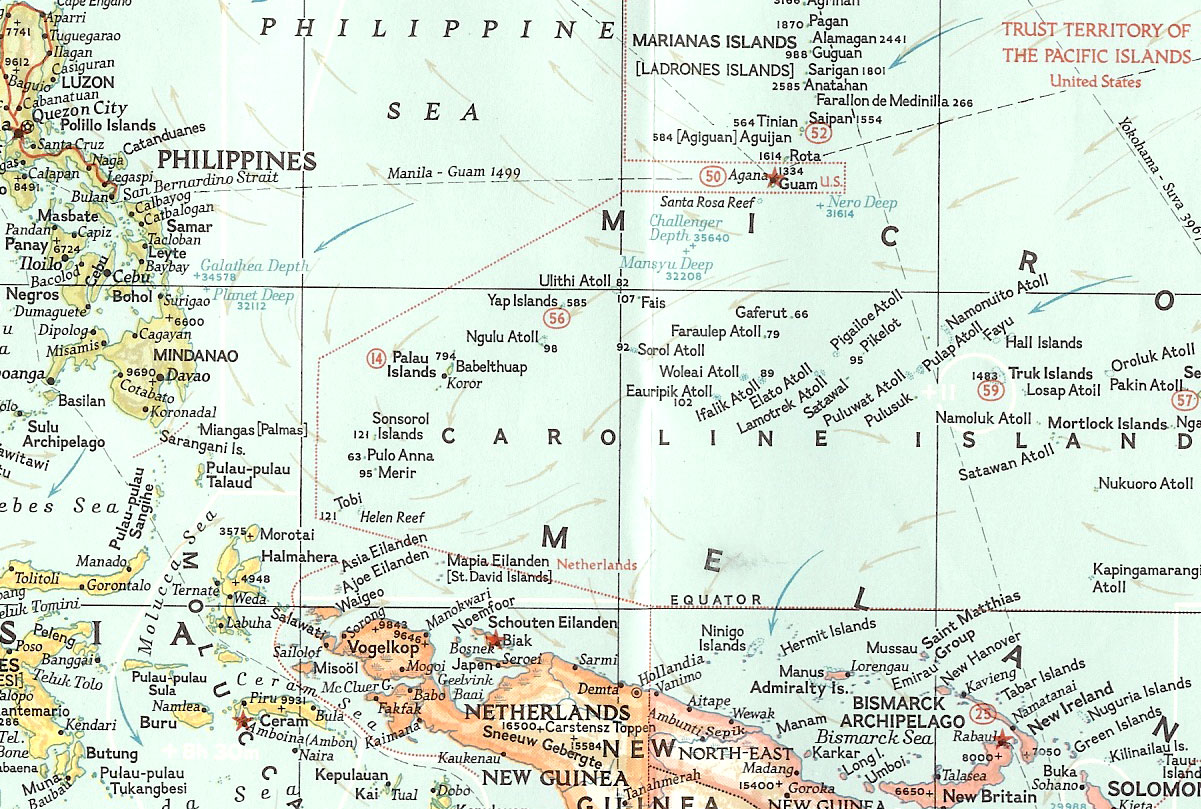
After being declared 4-F by the armed forces because he could see only one-twentieth as well as an average person, Mr. Rosenthal joined the United States Maritime Service, taking photos of Atlantic Ocean convoys. In March 1944, he went to the Pacific on assignment for the A.P. and later photographed the invasions of New Guinea, Hollandia, Guam, Peleliu and Angaur.

On Feb. 19, 1945, Mr. Rosenthal accompanied the early waves of a 70,000-man Marine force ordered to seize Iwo Jima, a 7.5 square miles of black volcanic sand about 660 miles south of Tokyo. The island, defended by 21,000 Japanese troops, held airstrips that were needed as bases for American fighter planes and as havens for crippled bombers returning to the Mariana Islands from missions over Japan.

By coincidence, the Japan Times [registration required] recently ran a fascinating profile of Gen. Kuribayashi, who commanded the Japanese forces on the island.

The warrior Japan chose to lead this fight to the last in the spring of 1945 was a mercurial, contradictory man: a samurai descendant and loyal servant of the Emperor who detested much of Japan’s authoritarian, military culture; a fanatical Imperial warrior devoted to his family; an elite graduate of Japan’s top military academy who read Shakespeare, spoke fluent English and narrowly opted for the army over a career in journalism.

“The United States is the last country in the world Japan should fight,” Kuribayashi wrote in a letter home days before his doomed forces inflicted massive casualties on U.S. forces landing on the 22.4-sq.-km (7-sq.-mile) island.

The tensions in Kuribayashi’s character, and his reluctance to go to war with the U.S., slowed his rise through the ranks of Japan’s military, says grandson, Yoshitaka Shindo. “My grandfather was sidelined because he didn’t fit in with military thinking. He had friends in America and respected the country.”

According to colleague Army Capt. Kikuzo Musashino, “The general spoke about his years in America, saying they had enormous industrial resources. He said: ‘When war comes, they can convert all that ability into military use. The people who planned this war in Japan know absolutely nothing about this. Whatever way you look at this war, we can’t win.’ “

Leave a comment

Filed under Japan, Pacific, U.S., war

Back to the Balkans: No Victory, No Justice?

This Sunday’s lesson in international humility comes via The Rhine River, who quotes a sobering excerpt from an article entitled “Milošević in Retrospect” by David Rieff in the Summer 2006 issue of Virginia Quarterly Review:

Milošević’s death accomplished what all his delaying tactics and coutroom antics could never do–cement perception of the International Criminal Tribunal of Yugolsavia’s failure….

But this is not to say that victors’ justice can never succeed; what it cannot do is succeed in a political vacuum or when the outcome on the battlefield has been indecisive….

And in Serbia, this is emphatically not the case. Even in Bosnia, nationalism burns almost as fiercely in the Serb areas as it ever did, and certainly few ordinary Serbs, let alone the former leadership, feel any remorse for Srebrenica or the siege of Sarajevo. In Serbia proper, the current government, while not extreme itself, depends on the support of Milošević’s Socialist Party in order to remain in power. Under those circumstances, it is almost impossible to imagine that had Milošević lived and been convicted, the Tribunal’s judgement would have seemed legitimate to many Serbs. With his death, one more name has been added to the martyrology of extreme Serb nationalism–a victim, in this accound, of a kangaroo court whose pretensions of delivering justice ring hollow.

On Thursday, the BBC also included some retrospection in its report on forensic experts exhuming bodies from the largest mass grave yet from the war in Bosnia.

The team unearthed 144 complete and 1,009 partial skeletons at the site in Kamenica, a village in eastern Bosnia near the border with Serbia.

The grave contained victims of the 1995 Srebrenica massacre, in which about 8,000 Muslim men and boys were killed by Bosnian Serb troops.

The bodies had been brought to Kamenica from elsewhere to conceal the evidence.

“Kamenica is the biggest mass grave” found since the 1992-1995 war, said Murat Hurtic, a member of the forensic team.

The massacre is the only event from the Bosnian war classified as genocide by the UN war crimes tribunal in The Hague.

The two men accused of masterminding the massacre, former Bosnian Serb leader Radovan Karadzic and his military commander Ratko Mladic, remain at large.

The forensic team found documents in the mass grave indicating that the victims died in the massacre, the Associated Press reports.

Bullets and bindings around the victims’ arms were also found there.

In July 1995 Bosnian Serb forces overran the UN-protected enclave of Srebrenica, where tens of thousands of Bosnian Muslim civilians had taken refuge from earlier Serb offensives.

The Serb forces later separated thousands of men and boys from the women and killed them, dumping the bodies in mass graves.

Is anyone intimidated by international war crimes tribunals? Two alleged “masterminds” of mass slaughter in Bosnia have been at large for over a decade, most probably in the mountains of Serbia. If they are indeed guilty, better they should die in battles decisively lost than to be hauled before an unconvincing international court. And the same goes for other alleged war-criminal “masterminds” who may still be at large in the mountains of Pakistan.

Leave a comment

Filed under Eastern Europe, nationalism, war

Oil Barons of Baku, 1901-1905

By 1901, Baku was supplying half the world’s oil. It became an international city overnight, and the local Azeris were soon outnumbered by Russians, Georgians, Ossetians, and others from the four corners of the earth. Between 1856 and 1910, Baku’s population grew at a faster rate than that of London, Paris, or New York. The Nobel brothers, who dominated the industry in the first decades, invented the concept of the tanker to handle the demand for Baku oil in the Far East, appropriately naming their first tanker Zoroaster. They made the bulk of the family’s fortune in Azeri oil, though brother Alfred’s invention of dynamite is more famous.

The oilmen came in all stripes—Swedes and Jews and Poles and Armenians—but the dominance of big foreign groups like the Nobels and Rothschilds didn’t last long. By the turn of the century, half of the tanker business and much of the production was in local hands. So-called oil barons arose from both the peasantry and the feudal aristocracy—anyone who dug a hole in the ground and got lucky. (The Nobels tried whenever possible to buy out these new oil barons, along with smaller producers. According to documents in the Baku archives, Abraham Nussimbaum sold the Nobels most of his wells in 1913, on the eve of the Great War, a highly opportune business decision.)

The new oil millionaires became great philanthropists, determined to turn their city from a provincial backwater into the finest Islamic city in the world—a showcase of the possibilities of the positive merger of East and West. As the representative local group, the Muslim oil barons felt the most obliged to make showy public statements with their new wealth. They took grand tours of Europe and hired architects to build copies of the mansions, museums, and opera houses they had seen, all in an attempt to anchor their city in the Occidental future rather than its Oriental past. While some Azeri Muslims were outraged by the education of women or their appearance onstage or in an office building, Baku benefited from having been so long at the crossroads of East and West that people were used to new fashions and change.

Equal parts Dodge City, medieval Baghdad, industrial Pittsburgh, and nineteenth-century Paris, fin de siècle Baku was the last great city built before the First World War spoiled the dream that the West could keep expanding forever in a grand civilizing pageant. It was a place of fantastic extremes of wealth and poverty, where gas lights and telephones made a stark contrast to camel caravans and emaciated Zoroastrian monks. The city’s wild and clashing history came to ahead at the turn of the century, when it was the “Wild East” frontier of Europe, the world’s greatest oil-boom town: A British visitor at the time wrote, “One might almost fancy oneself in an American city out west. There is the same air of newness about everything, the same sanguine atmosphere. Everyone is hopeful.”

Yet by 1905, the entire Russian frontier was bathed in blood, as the empire entered the first of its revolutions. The unrest reached from the coast of Korea to St. Petersburg’s Nevsky Prospekt, and Baku was not spared. The revolution came, as many do, on the heels of a disastrous war, one of the bloodiest in history. The czar’s advisers had dreamed up the 1904–5 Russo-Japanese War in part as a means of diffusing revolutionary tension, by acquiring, via quick victory, an injection of patriotism as well as some much-needed timber concessions on the Korean coast. Instead, the Russians experienced total defeat. The catastrophe in the Far East—against a people the czar called “little, short-tailed monkeys”—made the Russian Empire look fragile and moribund. As the war’s losses sank in—in addition to the hundreds of thousands of dead soldiers, practically the entire Russian Navy was sunk by the Japanese fleet—years of left-wing terrorism and czarist oppression collided in a year of uprisings, ethnic cleansing, and generalized breakdown.

The semi-destroyed Russian military was in no position to quash the unrest. The only part of the vast czarist navy that had not been sunk by the Japanese was the famous Black Sea Fleet, and on its main battleship, the state-of-the-art Potemkin, the sailors rioted in the spring of 1905 and shot their officers. All around the Black Sea and the Caspian, public order broke down. While the staggering numbers of Russian dead, machine-gunned on the icy hills of Manchuria and the Korean peninsula, showed the new lethality of war, the revolutionary terrorism and pogroms that arrived inside Russia that year showed the new brutality of politics—and both foreshadowed what horror might be born through the mediums of modern mass violence.

SOURCE: The Orientalist: Solving the Mystery of a Strange and Dangerous Life, by Tom Reiss (Random House, 2005), pp. 11-13

One of the most intriguing photographs reproduced in the book is labelled “Muslim-Jewish Christmas party, Baku, 1913.” Days long, long gone.

Leave a comment

Filed under Caucasus, Central Asia, energy, industry, Japan, military, nationalism, religion, Russia, Turkey, war

British Capture of Manila in 1762

I’ve heard the Seven Years War (aka the Pomeranian War or Third Silesian War in Europe, the French and Indian War in North America, and the Second Carnatic War in India) described as the first “world war”—in the sense that its battles took place all over the globe—but I hadn’t heard about the British assault on Manila until reading a review of Nicholas Tracy’s Manila Ransomed (U. Exeter Press, 1995) on dannyreviews.com.

The British had conceived a bold plan to attack Manila even before Spain’s entry into the Seven Years war in January 1762. Their execution of that demonstrated their naval ascendancy and military prowess, but the aftermath highlighted the problems inherent in government through the East India Company.

The inspiration for the attack was as much dreams of loot as plans for commercial advantage or geopolitical advantage, and the expedition received limited support from the East India Company. But General William Draper and Vice Admiral Samuel Cornish managed to assemble in Madras a force of around 1750 soldiers (the 79th regiment, sepoys, and French deserters and other assorted troops), eight ships of the line, three frigates, and four store ships. Despite problems with elderly ships and the dangers of largely uncharted waters, all but two store ships arrived in Manila Bay on 23rd September 1762.

An immediate attack was a success. A landing south of Manila was followed by a bombardment and an assault, leading to a capitulation by October 7th. Acting governor Archbishop Antonio Rojo provided uninspiring leadership and surrendered the citadel and the port of Cavite as soon as the city fell.

Leave a comment

Filed under Philippines, U.K., war

Darfur and Loss Compensation

Although territorial loss in war with its seemingly irreversible quality tends to be decisive, the expectation of such loss, if uncompensated, can also have horrific consequences. In the Darfur region of western Sudan we may have an illustration of just such a consequence as a form of loss compensation by means of self-help, in contrast to compensation that could be offered by the international community.

As a result of protocols signed on May 26, 2004, between southern Sudanese leaders of the black, predominantly Christian Sudanese People’s Liberation Army (SPLA) and the Arabized Muslim leaders of the north, a six-year interim period would be specified, after which a referendum would take place allowing for the possibility of independence for the oil-rich south. This outcome would lead to the loss of approximately one-third of Sudanese territory including its oil. The possible presence of oil in the Darfur region as well makes this territory potentially as valuable economically as the oil-rich south. If Darfur were to be Arabized through the massacre and ethnic cleansing of its black population, then it could serve as compensation for losses in the south, especially in the face of an incipient rebellion by the black Africans in Darfur.

Encouraged by the success of the black southern rebels both on the battlefield and at the conference table, two groups of black Muslims from Darfur rebelled, apparently representing black populations persecuted through raids and other violence by nomadic Arabized tribes. Confronted by another separatist rebellion like that of the SPLA, ethnic cleansing of another black population was unleashed, with a possible genocidal component of tens of thousands dead. One purpose of this effort has been to compensate for the potential losses in the south by ensuring that another potentially valuable territory, Darfur, remains within an Arab-dominated Sudan.

As in the Rwandan case, the international community was intensely concerned that a settlement between the Khartoum government and the SPLA be reached. Colin Powell, then the US secretary or state, visited the negotiations between the SPLA and Khartoum leaders in October 2003 and Darfur itself in June 2004. The United Nations has also taken an active role. And like Arusha in the Rwandan case, an international agreement implying heavy losses in the future, whether in political power (Rwanda, territory already having been lost to the RPF) or valuable territory (Sudan), may have spurred this effort at loss compensation. Also like the Interahamwe in Rwanda, much of the killing and ethnic cleansing has been carried out by a government-supported militia, the Janjaweed, an Arabized military group.

These considerations suggest that even more active intervention is required to stem these massacres and ethnic cleansing. A pairing of the two regions of Sudan, Darfur and the south, should be the focus of international diplomacy, without forsaking one region for the other. Unfortunately, just the opposite appears to have occurred. According to John Prendergast, a former African affairs director at the National Security Council under President Clinton, “When the secretary [Colin Powell] was in Naivasha [location of the negotiations between the Khartoum government and the SPLA], and a major problem was getting worse in Darfur, everyone agreed to deal with the southern problem first and with Darfur later. That was a monumental diplomatic error.”

SOURCE: The Killing Trap: Genocide in the Twentieth Century, by Manus I. Midlarsky (Cambridge U. Press, 2005), pp. 386-387

Leave a comment

Filed under Africa, war

Genocide as Compensation for Loss

The invasion of Rwanda by the Tutsi-led Rwandese Patriotic Front (RPF; initially based in Uganda) in October 1990 threatened to reverse these Hutu gains. Early RPF military successes led to the convening of the Arusha peace talks beginning in July 1992.

Four factors then led to an extraordinary evocation of the domain of losses. First, very early in the talks, it became clear that the presidential system that had favored Hutu power would be replaced by a parliamentary system combined with a council of ministers. Later in the talks, the strongest advocate of Hutu power, the Coalition pour la Défense de la République (CDR) was to be excluded from any transitional political institutions. At about the same time, it was decided that the number of seats in the new assembly and government ministries would favor the opposition to the Hutu-led government party, the Mouvement Révolutionnaire National pour la Démocratie et le Développement (MRNDD, formerly MRND).

Second, after the massacre of several hundred Tutsi, the RPF renewed its offensive in February 1993, and within two weeks had doubled the amount of territory under its control. Only French intervention prevented the RPF from taking Kigali, the Rwandan capital. A consequence of this success was the agreement to allow 50 percent of the armed command of the RPF to be composed of Tutsi, despite the 10 percent representation of Tutsi in the population at large. Refugees abroad, including of course many Tutsi in Uganda and elsewhere in Africa, were to be allowed back in the country as envisioned by the earlier Dar-es-Salaam declaration on the Rwandan refugee problem.

Third, the assassination on October 30, 1993, of Melchior Ndadaye, the first Hutu president of Burundi by the Tutsi-dominated army began a series of killings of thousands of Hutu in that country. According to Bruce Jones, “The assassination and killings were rich material for the extremists in Rwanda, who used the events to lend credence to their claims that the Tutsi of the RPF were returning to Rwanda to reestablish their historic dominance over the Hutu.”

Finally, as in our other two cases [the Holocaust and the Armenian genocide], the presence of refugees grievously accentuated the dimension of loss. The refugees were of two types, both Hutu, but from different locations. First were the Hutu from Burundi who fled the Tutsi-led massacres of 1972 and again in 1993. In 1988, poor harvests led to near starvation in Burundi, leading to an additional refugee influx. The latest of these, however, was to be the most consequential. After the assassination of President Ndadaye of Burundi in 1993, waves of violence spread that led to some 400,000 refugees from Burundi, mostly Hutu, crowding into Rwanda. Many of the génocidaires would be drawn from this group. According to Gérard Prunier, “The psychological impact of the Hutu President’s murder and the arrival in Rwanda of hundreds of thousands of Hutu refugees spreading tales of terror and massacre at the hands of the Tutsi army of Burundi had enormous negative consequences on the already overcast Rwandese political weather.”

The assassination and refugee arrivals solidified the position of the extremist “Hutu-power” advocates. Supporters of a hardline approach suggesting virtually a “final solution” of the Tutsi now secured additional public support. Many of these Burundi Hutu participated in the genocide, even to the point of committing extraordinary torture and atrocity.

SOURCE: The Killing Trap: Genocide in the Twentieth Century, by Manus I. Midlarsky (Cambridge U. Press, 2005), pp. 163-164

Selah. This concludes Genocide Week here at Far Outliers. On to cheerier thoughts but less frequent postings next week.

Leave a comment

Filed under nationalism, war

Holocaust a Contingent Event?

Thus the Holocaust was a contingent event, one not predestined by the intensity of Nazi anti-Semitism, virulent as it was, but facilitated by the exigencies of a world war that threatened to destroy the Nazi state, with the Jews perceived by Hitler as leading a vanguard of that destruction. Each step in the decision-making process concerning the Jewish Question was dependent on critical war-related events. After the defeat of France in 1940, Madagascar, a French colony, was chosen as the future “homeland” of the Jews. When the undefeated British navy made such mass shipping impossible, an area at the fringe of the German empire near Lublin was chosen, to be later changed to an unnamed destination in the soon-to-be-conquered Soviet Union. This harsher decision was made in March 1941 at the same time as the Lend-Lease Agreement between the United States and Great Britain. Difficulties in the invasion of the USSR led to the killing of Jewish women and children after August 15. As these difficulties became increasingly apparent to the Germans, harsher measures including deportations of Jews from Western to Eastern Europe were carried out, to be followed by the ultimate decision to commit genocide after the attack on Pearl Harbor and the first Russian land victory defending Moscow….

The dynamic approach adopted here helps explain an apparent anomaly. While there is clear evidence of virulent German anti-Semitism during the war even among “ordinary” Germans who behaved abominably toward Jews in the death marches from the concentration camps into Germany proper in 1944–45, the evidence of earlier German anti-Semitism is variable. German anti-Semitic political parties had declined precipitously in their share of the Reichstag vote prior to World War I, achieving only 0.86 percent in 1912 compared with 3.70 percent in 1898. Even after World War I and the rapid rise of anti-Semitism, reasons for joining the Nazi Party given by early members generally did not include anti-Semitism among the primary factors. The economic boycott of Jewish businesses called by the Nazi leadership for April 1, 1933, shortly after its accession to power, was generally regarded as a public relations failure, even by the Nazis themselves. Only after the events of World War II and the growing threat to the Nazi – by now identified as German – state did the German population behave in a deeply anti-Semitic manner. Thus one resolution of the apparent inconsistencies between Goldhagen‘s account and the many critics of his emphasis on “eliminationist anti-Semitism” can be found in the dynamics of the confrontation between Nazi Germany and its systemic environment.

SOURCE: The Killing Trap: Genocide in the Twentieth Century, by Manus I. Midlarsky (Cambridge U. Press, 2005), pp. 151-153

Leave a comment

Filed under Germany, war

External Threats to Serbian Security, 1990s

Serbia, despite its domination of the Yugoslav National Army (JNA), had legitimate security concerns as the dissolution of the former Yugoslavia loomed on the horizon. The July 1991 accord at Brioni stipulated the withdrawal of all JNA units from Slovenia, thereby implying international recognition of that new state. As a consequence, Prime Minister József Antall of Hungary warned Serbia that it could not assume that its province of Vojvodina with its large Hungarian minority would continue to be part of Serbia. “We gave Vojvodina to Yugoslavia. If there is no more Yugoslavia, then we should get it back,” declared Antall, referring to the 1920 Treaty of Trianon. This verbal threat was supported by the earlier sale of at least 36,000 Kalashnikov rifles to the Republic of Croatia in 1990. Serbia, therefore, could legimately feel threatened not only by the newly emerging states of the former Yugoslavia, but by neighboring existing states as well.

German domination of the EC political decision making at this time raised perhaps even deeper security concerns for Serbia. The taking on of Croatian fascist symbols by Franjo Tuđman, the Croatian leader, as the Croatian state emerged, of course, was hardly reassuring to the Serbs. Memories of the mass murder of at least 500,000 Serbs by the fascist Croatian state in alliance with Nazi Germany during World War II were rekindled by Tuđman’s behavior.

The recent German unification and German emergence as the clear economic, even political leader of the EC made matters worse. After considerable lobbying by the Croatian and Slovenian leadership as well as by the Vatican, Hans-Dietrich Genscher, the German foreign minister, emerged as an unequivocal supporter of Croatian and Slovenian independence. When the actual recognition, by Germany, of both new countries came on December 23, 1991 – with agreement of the remaining EC members, apparently bullied by the newly augmented Germany – the Western threat became palpable. With growing economic ties to Germany, the Slovenian and Croatian economies, already burgeoning relative to the remainder of Yugoslavia, and the presence of NATO nearby, the JNA and mainly its Serbian leadership would feel an imminent threat to the Yugoslav state….

Bosnia was also pivotal to the JNA. During the 1980s, 40–55 percent of the Bosnian economy was tied to military industries. “Sixty to 80 percent of the army’s physical assets (armaments factories, supply routes, airfields, mines and basic raw materials, stockpiles, training schools, oil depots) were located in Bosnia-Herzegovina. On the eve of the war, 68 percent of the federal army’s 140,000 troops were stationed in the republic. To the extent that the Yugoslav army was fighting a war for its own integrity and state, it could not easily be a neutral party in Bosnia-Herzegovina or abandon its own economic foundations.

A two-tiered threat to the Serbs emerged from Serbian numerical weakness within Bosnia coupled with the looming presence of the newly united Germany at the head of the EC. The end result of the military clashes and ethnic cleansing was a near-equal division of Bosnia between the Federation of Bosnia-Herzegovina (the Bosnian Muslim–Croat Federation) holding 51 percent of the territory and the Republika Srpska (the Bosnian Serb Republic) occupying 49 percent with corresponding ethnic majorities within each. The two halves together formed the Republic of Bosnia-Herzegovina, but with rights of each half to affiliate with other political entities, if they so wished.

SOURCE: The Killing Trap: Genocide in the Twentieth Century, by Manus I. Midlarsky (Cambridge U. Press, 2005), pp. 131-132

One of Midlarsky’s major themes is that genocides evolve in response to many contingencies: feelings of prior national or ethnoreligious loss or betrayal, threats to communal security, ongoing defeat in war, validation of past massacres, and so on.

Leave a comment

Filed under Eastern Europe, war

Threat of Numbers, Democracy, and Ethnic Cleansing

Threat of numbers also weighed heavily in the ethnic cleansing of Bosnia-Herzegovina between 1992 and 1995. Ethnic cleansing was committed by all major actors in Bosnia – Serbs, Croats, and Muslims – but the greater part of the ethnically cleansed population was victimized by the Serbs. As a consequence, the Bosnian Serbs will be emphasized in the following account. In contrast to the preceding cases [British encouragement of the Irish famine and emigration during the 1840s and 1850s, and newly independent Poland’s attempt to drive out Germans and Jews during the 1920s and 1930s], the Srebrenica massacre incorporates a clear genocidal element within the overall ethnic cleansing.

The demography of Bosnia-Herzegovina underwent a dramatic change in the decades preceding the Yugoslav wars. In 1961, Muslims constituted only 26 percent of the population of Bosnia-Herzegovina, with the Serbs comprising 43 percent. By 1991, virtually a complete reversal had occurred with the Muslims rising to 44 percent and the Serbs dropping to 31 percent. Many Serbs had migrated from Bosnia to Belgrade or other locations inside Serbia proper. A differential birth rate between Muslims and Serbs also favored the former. Thus, from a near majority in 1961 or at least a large plurality, the Serbs now were a distinct minority. One group’s former dominance was exchanged for a secondary status. And all of this was in addition to the genocidal elimination of a large portion of the Bosnian Serb population by the fascist Croatian Ustaše (with some Bosnian Muslim collaboration) in alliance with Nazi Germany.

In Tito’s Yugoslavia under single-party Communist rule, such a reversal of fortune, however dramatic, would not necessarily yield a commensurate diminution of influence. However, by the early 1990s, more than a decade after Tito’s death, democratic reforms ensured that ballots would count very heavily in the power distribution. The desire for electoral victories and the resulting power gain stoked the nationalist fires…. Indeed, ethnic cleansing, and its genocidal corollary, had its roots in a democratization process associated with the emergence of sovereignty in the new post-Cold War period. According to the Badinter Arbitration Commission and the European Community (EC) support of its ruling, international recognition of national sovereignty required a referendum of the residents of a given territory on their choice of a state.

Military control was not sufficient; a vote was required. Thus, the only guarantee of eventual incorporation of a stategically or economically desired territory within the borders of a state was the conformity of the (ethnoreligious) identity of most of the residents of that territory with that of the incorporating state. Ethnic cleansing, therefore, became a preferred modus operandi to maximize the security of the emerging state.

SOURCE: The Killing Trap: Genocide in the Twentieth Century, by Manus I. Midlarsky (Cambridge U. Press, 2005), pp. 129-130

Leave a comment

Filed under democracy, nationalism, war