Category Archives: war

Wordcatcher Tales: Rengou Kantai, Ketteisen

The other old mass-market paperback that I recently bought for $1.39 was The End of the Imperial Japanese Navy, by Masanori Ito (1956), translated by Andrew Y. Kuroda and Roger Pineau (1962). It offers an interesting critical retrospective on the Pacific War from the point of view of the Japanese Navy’s high command. It also offers a chance to combine book excerpts with Wordcatcher Tales.

聯合艦隊 rengou kantai – 聯合 rengou ‘combined, united’ has now been simplified to 連合. The first character also occurs in the abbreviated name of the old Soviet Union (ソ連 soren [so- is short for sobietto ‘Soviet’]) and in the translation of United Kingdom (連合王国 rengou oukoku). The second word, which can mean either ‘fleet’ (if large) or ‘squadron’ (if small) is composed of 艦 kan ‘warship’ and 隊 tai ‘squad, troop’. In Japanese, navy submarines are warships, not “boats”: 潜水艦 sensuikan ‘submerge-water-warship’. The 隊 tai can also translate ‘corps’, as in 挺身隊 teishintai ‘volunteer (lit. ‘offer-body’) corps’, which is the standard term for the military ‘comfort women‘ in Korean (chŏngshindae).

TO THE JAPANESE PEOPLE “Rengo Kantai” is a familiar and honored term meaning “Combined Fleet.” When World War II began, the Japanese Navy—the third most powerful in the world—included some of the mightiest ships in naval history and was a force worthy of the pride and trust of the Japanese people. Then, in less than four years, this great war machine fell from glory to oblivion. Of ten battleships riding in Hiroshima Bay in December, 1941, nine were sunk. The lone survivor, Nagato, died at Bikini Island as a target in an atomic bomb test.

As early as the spring of 1946, Bungei Shunju magazine urged me to write of the last days of the Combined Fleet. I refused because I did not wish to disturb the dead bodies of my friends. Even if I had forced myself to write, I would not then have been able to assemble all the material now available to me. In the years since Japan’s defeat, the war-troubled mind of the people has been calmed, but I find that there is still nostalgia for the Combined Fleet in many hearts. It was at the request of Japanese readers that my newspaper articles were assembled into this book.

Movements to romanize our language may some day succeed [!!], but the ideographs for Rengo Kantai [聯合艦隊] will always stir Japanese hearts, just as do some of Admiral Heihachiro Togo‘s famous words. His dispatch as battle was about to be joined at Tsushima Strait: “The enemy has been sighted; the Combined Fleet is moving to annihilate him. The waves are high but the day is clear.” [pp. 1-2]

決定戦 ketteisen ‘decisive battle, showdown’ – The components are 決める kimeru ‘to decide’, as in the Sino-Japanese compound 解決 kaiketsu ‘solution, settlement’; 定める sadameru ‘to decide, fix’, as in the compound 定食 teishoku ‘set meal’; and 戦う tatakau ‘to fight’, as in the compound 戦争 sensou ‘war’. The term can refer to any kind of decisive showdown, whether between sumo wrestlers, gameshow contestants, or dinosaurs.

Army leaders in Japan believed that the United States could be easily defeated. But Admirals Yamamoto and Nagano knew the temper, traits, and character of the American people, as well as the military history of the country, and they had no illusions of an easy victory for Japan.

Their hope was that Japan might quickly achieve such overwhelming successes that the United States would accept a compromise peace. There was risk involved, but Yamamoto decided in favor of decisive battle. The question then remained as to where the battle should be fought. The Naval General Staff hoped that it could be in the Solomons.

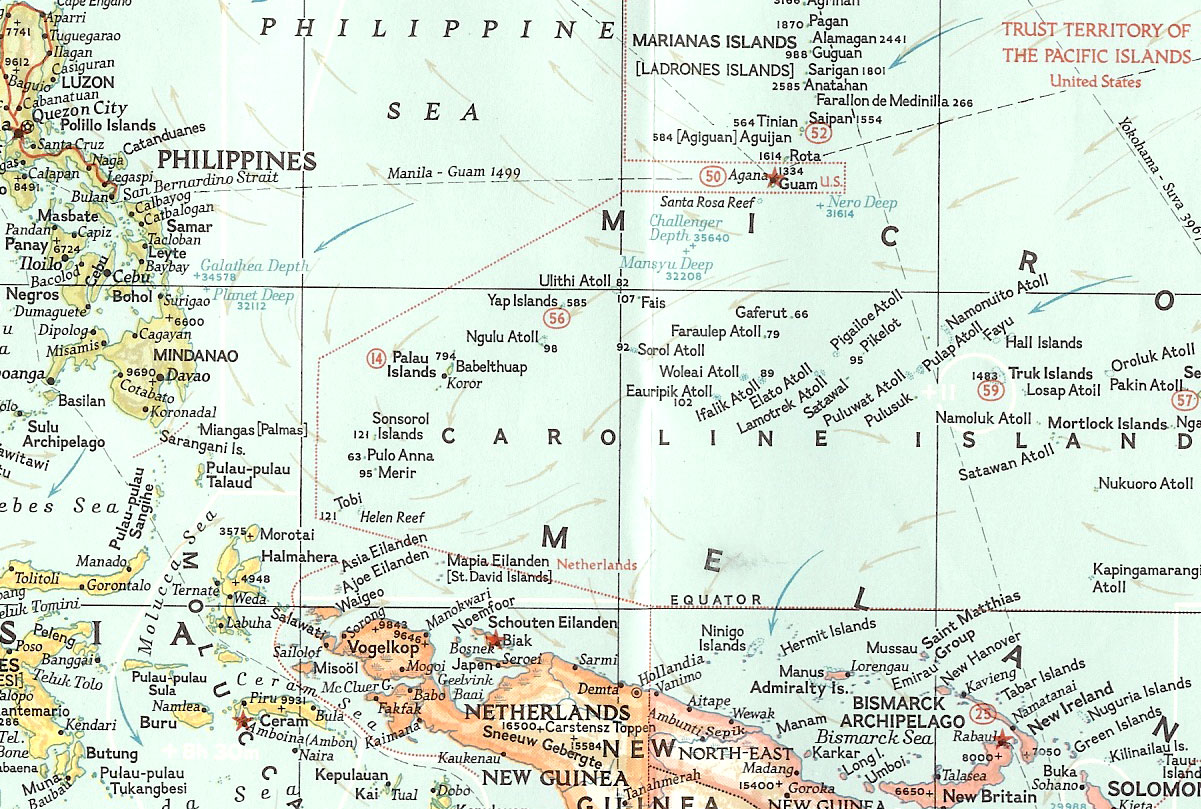
The Solomon Islands, stretching southeasterly from Rabaul to Guadalcanal, could provide valuable bases for the Japanese fleet. The General Staff figured that seizure of these islands would constitute such a threat to Allied lines of communications that the United States Navy would oppose their occupation, and could then be annihilated. This concept depended heavily on the enemy’s rising to the bait. If the enemy shied from decisive battle in the Solomons, Japan would be faced with a long war.

Admiral Yamamoto, on the other hand, advocated Midway as the battleground. He reasoned that Japanese occupation of Midway and the Aleutians (all part of the same operation plan), would guarantee a challenge from the United States Navy. He felt that Americans could accept the fall of Guam and Wake, but that they would not tolerate Japan’s advance beyond the 180th meridian. He also felt that his Midway plan had a better chance of success than the Solomons strategy.

The Midway strategy, however, involved a greater risk. The distance from Japan’s Inland Sea to Midway is more than twice the distance from Pearl Harbor to Midway. Midway’s comparative proximity to Pearl Harbor would make it extremely difficult, if not impossible, for Japan to support an island garrison. The chance was very great that the enemy could easily recapture the atoll.

But Admiral Yamamoto argued that the opportunity for a decisive battle must be expected to entail risk. Midway should be seized. If the enemy came out to regain the island, Japan’s long-sought opportunity would be provided. A fleet-opposed action of Japan’s choosing would lead the way to another “Pearl Harbor,” in which, this time, enemy aircraft carriers could be destroyed. With the U.S. Navy’s strength divided between the Atlantic and Pacific Oceans, Yamamoto felt that the Pacific half would fall easy victim to the concentrated Combined Fleet of Imperial Japan. [pp. 52-53]

Leave a comment

Filed under Japan, language, Pacific, U.S., war

Operation Bismarck Sea, 2–4 March 1943

One reason I’ve been posting a bit less is that I’ve been reading a book that is not very bloggable—Operation Bismarck Sea, by Lawrence Cortesi (Major Books, 1977)—which I picked up for $1.39 at a used book store. It interested me because it describes a major air–sea battle in the area of Papua New Guinea in which I did fieldwork in 1976, and where I heard many stories about the Pacific War in that neighborhood. I shan’t keep it. There are much better resources online these days.

The little mass-market paperback book has all the accuracy of a TV docudrama by Ollie North. In other words, it has lots of accurate and fascinating facts and figures, but it’s quite one-sided. Among the earliest tipoffs that the Japanese side was badly misrepresented was the improbable name Yukata Tishayuna, a fictional captain subordinate to the real admiral Masatomi Kimura (citing the names in English order). That, plus the fact that the captain addresses his superior as the ‘Honorable Kimura’, and the Japanese speak in orientalized clichés:

“Before the first buds of cherry blossoms seek the sunlight of spring,” the aide said, “we shall destroy the cancer at Wau.”

“Banzai,” Okabe answered softly with a grin.

Other names are also screwed up: a Japanese ship named Arishio (蟻潮 ‘ant tide’?) instead of Arashio (荒潮 ‘rough tide’); and an island called Undoi instead of Umboi (the former somehow distinguished from Rooke Island, the latter synonymous with Rooke Island, and also known as Siassi Island).

Nevertheless, there is one passage that seems worth quoting on pp. 182-183:

The Imperial Japanese Staff had always been too cautious, even when they possessed far superior numbers. They were never willing to commit more troops or planes or ships than necessary, especially in air and sea battles.

At Pearl Harbor, the Japanese had come up short of a true knockout blow because they were too cautious to move in for the kill and perhaps occupy the Hawaiian Islands. In the Battle of the Coral Sea, though their forces far outnumbered the understrength Allies, they retired after suffering the loss of a single carrier, even though they had sunk two American carriers. In the Battle of Midway, although Japan’s air and sea units had suffered losses, they still had a formidable, unscathed striking force in the area; but instead of pressing on against the depleted American carrier force, they again retired.

The same might be said of the Solomons campaign. Japanese caution was the major reason for American success at Guadalcanal. In most of the naval fights during the Solomon campaign, the Japanese task forces did more damage to the American navy than the Americans had meted out. Yet, after successful naval engagements, such as the Battles of Savo Island or Cape Esperance, the Japanese naval units retired after their victories instead of pressing forward. As a result, they had allowed the American navy to lick its wounds and regain its strength.

As to Japan’s aerial strategy, the worst kind of caution prevailed. While American pilots were generally superior to Japanese pilots, and while the American P-38 was superior to the Hamp and Zero fighter plane, the Japanese could muster many more planes. Further, they were superior to the earlier P-39 and P-40 used by the American air force prior to 1943. Yet they never sent more than a squadron or two of fighter planes into an aerial engagement. They thus allowed even terms to inferior numbers of Allied army and navy units, which could rarely muster more than a squadron or two of planes to meet a Japanese challenge. So, because of the superior training of Allied airmen, the Allied pilots usually defeated their opponents.

The Japanese also followed this caution in the use of their bombers. Hundreds of Sally and Betty bombers sat on the many Japanese air bases in the Bismarck Archipelago, especially at Rabaul. Yet they rarely committed more than 20 or 30 bombers to an air attack against an Allied base. Against navy ships, the Japanese only used their light naval fighter-bombers. They rarely sent their heavy and medium bombers that were only a stone’s throw from the Ironbottom Strait [or Sound] in the Solomons where most of the action took place during the Guadalcanal operation. The biggest raid ever conducted by the Japanese in the Southwest Pacific was the 5-plane raid on Port Moresby in February, 1942.

At the conference in Rabaul in February 1943, where the Japanese staff planned operation 157, Admiral Junichi Kasaka of the Imperial Eleventh Naval Air Fleet, boasted of his great airpower. He could count hundreds of planes scattered among the various Japanese airfields in the Bismarck Archipelago. Why then, didn’t Admiral Kasaka maintain a cover of a hundred or even two-hundred planes over the convoy all the way from Rabaul to the Huon Gulf? Kasaka’s land-based aircraft were never more than an hour or two from the route of Kimura’s convoy. And, ironically, Kasaka did maintain heavy air cover over the convoy during the early part of the voyage, when the convoy was far into the Bismarck Sea and out of range of Allied medium or light bombers. But he failed to maintain this cover as the convoy neared Huon Gulf, within range of any Allied plane in New Guinea.

Moreover, Admiral Gunichi Mikawa, commander of the Eighth Outer Sea Fleet, could proclaim that he had all but chased the American navy from the Bismarck Archipelago because of his superior numbers in naval ships. Why then, didn’t he allot one or even two aircraft carriers to escort the hugely important 22-ship convoy into Lae? Again, because the Japanese had an obsession with safeguarding their heavy strength. They kept planes and ships ever in reserve for future emergency.

Leave a comment

Filed under Australia, Japan, Papua New Guinea, U.S., war

Wordcatcher Tales: Iwo, Kakka, Kisamara

Yesterday I went to see the best Japanese movie I’ve seen in a long time: Clint Eastwood’s Letters from Iwo Jima (硫黄島からの手紙). Although Eastwood deserves the lion’s share of the credit, and the Japanese actors were excellent (especially the leads, veteran Watanabe Ken as the commanding general and boyband star Ninomiya Kazunari as the slacker private), I appreciated above all the superb screenwriting by Iris Yamashita, who did an amazing job of bridging linguistic and cultural gaps. The wording of the Japanese dialogue and the English subtitles often diverged radically in order to make each appropriate to the context. Here are a few of the divergences.

硫黄 iou (also ryuuou, yuou) ‘sulphur, brimstone’ – Note that there is no /w/ in the current Japanese pronunciation of this most appropriate name for an island in the Volcano Archipelago (火山列島 Kazan Rettou) that was hell on earth for the men who fought there.

UPDATE: The Mandarin Chinese reading for this compound is liúhuáng. The second character, optional in many contexts, means ‘yellow’, but in this compound it is sometimes written with a ‘stone’ radical (硫磺). The regular Sino-Japanese match should be ryuukou (once written riu-kuwau), but both syllables of the island placename have suffered erosion: ryuu- > yuu- > yu- > i- and -kou > -ou.

閣下 kakka ‘(Your/His[/Her]) Excellency’ – The commanding general is both addressed and referred to as kakka, a term of great deference but not a military rank. I learned my first two Japanese military ranks while watching the Japanese-dubbed Adventures of Rin Tin Tin as a kid: 軍曹 gunsou ‘sergeant’ and 中尉 chuui ‘1st lieutenant’. In English, several of the names for the officer ranks come in pairs: 1st and 2nd lieutenant, lieutenant and lieutenant junior grade, colonel and lieutenant colonel, commander and lieutenant commander, and (my favorite) rear admiral upper half and rear admiral lower half. In Japanese (and Chinese and Korean, I believe), they come in groups of three, each coming in small, middle, and large size:

  • 少尉 shoui, 中尉 chuui, 大尉 taii for the company-grade officer ranks (USA/USN) ‘2nd lieutenant/ensign’, ‘1st lieutenant/lieutenant junior grade’, ‘captain/lieutenant’;
  • 少佐 shousa, 中佐 chuusa, 大佐 taisa for the field-grade officer ranks ‘major/lieutenant commander’, ‘lieutenant colonel/commander’, ‘colonel/captain’;
  • 少将 shoushou, 中将 chuushou, 大将 taishou (as in 将軍 shougun ‘general of an army’) for the general officer/flag officer ranks ‘major general/rear admiral (2 stars)’, ‘lieutenant general/vice admiral (3 stars)’, ‘general/admiral (4 stars)’.

The much more problematical in-between ranks of ‘brigadier/commodore‘ (with 1 star) are rendered by 准将 junshou ‘(lit.) quasi-general/semi-admiral’. In the U.S. Navy, commodores are now rear admirals (lower half).

貴様ら kisamara ‘you collective (derog.)’ – Japanese has a host of ways to translate English ‘you’. (See the useful summary at the end of the Yale Anime Society glossary.) The most common ones used in the military context of the movie were the gruff, male-bonding omae (お前, etymologically ‘honorable facing [person]’) and the familiar, superior-to-subordinate kimi (君, etymologically ‘lord’). The latter etymon is also the source of -kun, a familiar (usually male) equivalent of neutral -san ‘Mr., Ms.’ and polite -sama (様). As the derogation of 君 ‘lord’ attests, the most derogatory terms often have the most noble origins. And few terms of address have dropped farther down the scale of politeness than 貴様 ‘(lit.) exalted/sacred-sama‘, which is now best rendered in English as ‘you son-of-a-bitch, you bastard’, in other words, the ‘you’ that precedes a fight.

I had heard kisama many times, but had never heard it with its collective suffix -ra—the impolite equivalent of -tachi—until I heard abusive officers use it in the movie script to address troops about to be punished, in fact, troops about to be summarily executed in one episode. That got me thinking about the contexts appropriate for using -ra vs. -tachi. At one end of the scale, you would not combine highly derogatory kisama with a neutral collective marker: *kisama-tachi sounds socially bizarre. At the other end of the scale, you would not (except ironically) combine polite anata with impolite -ra in *anata-ra (although the less respectful anta-ra sort of works, for me anyway). However, either collective suffix seems to work on the gruff, male-bonding terms: omae-ra and omae-tachi both work for ‘you guys’, just as ore-ra and ore-tachi do for ‘us guys’.

UPDATE: Another tricky term of address I heard in the film was onore (己), which my electronic dictionary defines as either (1) ‘oneself’ (syn. jibun), (2) ‘you’ (syn. omae, anata), or (3) “Hey!; Damn it!; You son of a bitch!” [syn. kisama—J.]. In the film script, it was used by a gallant but kind-hearted commanding officer addressing his men after their situation was hopeless, telling them to do what they think is right (like Polonius: “to thine own self [onore] be true”), thus implicitly allowing them to choose surrender. The officer himself chose solitary suicide after being blinded by shrapnel.

Leave a comment

Filed under cinema, Japan, language, war

An Evasive Brother of Martyrs in Afghanistan

Seyyed Kerbalahi joined me after dinner. His real name was Rasul. He was called Kerbalahi, he explained, because he had been to Kerbala in Iraq to visit the sacred Shia shrine of Imam Hussein twice in the late 1950s, once for three months and once for five. I asked him why he had not completed the Haj by going on to Mecca.

“It would have been too expensive.”

“But Mecca is quite close to Kerbala by the time you have gone from Afghanistan to Iraq.”

“It would have been a seven-day trip so I came home.”

He tuned the radio to a Pakistani channel broadcasting in Urdu. “Can you understand Urdu?” I asked.

“No,” he said. “I have put it on for your benefit.”

He then began praying. Every minute or so, he interrupted his prayer to throw out a comment such as, “Later I will arrange for someone to dry your socks.” Then he would start his prayers again from the beginning. I suggested gently that he finish his prayers before we spoke.

“But a guest is ordained by God,” he said reprovingly.

“Thank you,” I replied. “Well, there was something I wanted to ask you …”

“I am praying. We should talk later.”When he had finished, he picked up a large Koran and began to mumble over it and then glanced up and asked if I had any photographs.

I handed him the pictures of my family. He frowned at them briefly and handed them back.

“I have walked here from Herat,” I said.

“I’m reading the Koran and your Farsi is not good enough for a conversation,” he replied.

We sat in silence till I decided to lie down and sleep.

At dawn he began his lengthy prayers again. By the time he had finished, a crowd of villagers had gathered in the guest room. Seyyed Kerbalahi picked up my Dari-English dictionary and began looking at it a page at a time. Usually people who wanted to be seen reading my dictionary knew which way up to hold it. Seyyed Kerbalahi didn’t.

He then moved to another position in the room, carefully opened a sandalwood box, and unwrapped a different copy of the Koran. The morning continued with rambling prayers, a little browsing of the Koran, and occasional bad-tempered visits to his balcony to tell anyone who wanted to see him that he was too busy with his religious devotions to be disturbed. I imagined this was the pattern of most of Seyyed Kerbalahi’s days.

Finally I took my leave. On my way out I noticed two faded photographs on the guest room wall.

“They are my brothers,” he said, “martyrs … One was killed in Lal and one on the path to Yakawlang.” They were not dressed like most martyrs as Mujahidin but in neat Russian dress uniforms.

SOURCE: The Places in Between, by Rory Stewart (Harcourt, 2004), pp. 218-219

Leave a comment

Filed under Afghanistan, religion, Russia, war

An Irreligious Holy Warrior in Afghanistan

We saw a young boy drawing water and Abdul Haq threatened to kill him. The boy cried. Then Abdul Haq laughed and said, “I drove over the edge of this road three years ago, in a jeep. We crashed into the ditch where the boy is whining. The other six people in the car were killed. But I was thrown over a wall and survived because God loves me.”

An hour later we had to cross the Hari Rud. I took off my boots and overtrousers, tied them around my neck, and waded into the cold water. The river—which in a year of normal rainfall would be impassable without a ferry boat—was now barely two feet deep. Without speaking, Abdul Haq stopped on the bank and stooped, and Qasim climbed onto his back. Then Abdul Haq stepped into the stream, roaring like a bullfrog with delight at his strength and the shock of the cold. Having deposited Qasim on the farther shore, he returned and Aziz clambered on. Midway across, Aziz dropped the sleeping bags. Abdul Haq put him down in the water and charged after the bobbing sacks. When he caught them, he spun and danced on the shore like a paper puppet caught in the wind, shouting, “Man Ghaatar Hastam” (I am a mule). On the flats ahead, a camel loped easily across the sharp gravel.

I opened a packet of Iranian orange cream cookies and offered them to Qasim. He took one, sighed heavily, said, “Allah-u-Akbar” (God is Great), and put it in his mouth.

Abdul Haq looked at me and winked. Qasim, the oldest and least open of my three companions, was also it seemed the most religious. Abdul Haq described himself as a Mujahid, a holy warrior, and his leader, Ismail Khan, had fought an Islamic crusade to expel the atheist Russians before implementing Sharia law in Herat. But Abdul Haq was not very religious. In Iran young city types had talked to me about Nietzsche and said they were atheists. I never met an Afghan who called himself an atheist and Abdul Haq had never heard of Nietzsche. But during the time I was with Abdul Haq, he never prayed, never fasted, never paid a religious tithe, and had no intention of going on a pilgrimage to Mecca. Generally I only heard him refer to God when he fired his Kalashnikov. Then he would sing “Allah-u-Akbar” like a full-throated muezzin in the dawn call to prayer.

Abdul Haq took the packet of cookies from my hands, tipped it out onto a cloth to encourage us to eat more, and threw the wrapper over his shoulder. It was the only piece of trash on the desert plain and the silver foil glittered fiercely among the gentler colors of the soil.

SOURCE: The Places in Between, by Rory Stewart (Harcourt, 2004), pp. 76-77

Leave a comment

Filed under Afghanistan, religion, war

Defeated Japanese Exiles in Siam, 1600s

After the American Civil War of 1861–65, many defeated Confederates resettled in Mexico or Brazil. Many defeated Japanese also found refuge in exile as Japan’s long period of warfare (Sengoku) drew to a close around 1600. Among the most successful of the exiles was young Yamada Nagamasa (山田長政 1590–1630).

Yamada Nagamasa lived in the Japanese quarters of Ayutthaya, home to another 1,500 Japanese inhabitants (some estimates run as high as 7,000). The community was called “Ban Yipun” in Thai, and was headed by a Japanese chief nominated by Thai authorities. It seems to have been a combination of traders, Christian converts who had fled their home country following the persecutions of Toyotomi Hideyoshi and Tokugawa Ieyasu, and unemployed former samurai who had been on the losing side at the battle of Sekigahara:

“From the years of Gen’na (1615-1624) through the later years of Kan’ei (1624-1644), the Ronin or warriors who lost their lords after the defeats of the battle of Osaka (1614-15) or the earlier battle of Sekigahara (1600), as well as the defeated Christians of the Shimabara uprising, went to settle in Siam in great numbers” …

The Christian community seems to have been in the hundreds, as described by Padre Antonio Francisco Cardim, who recounted having administered sacrament to around 400 Japanese Christians in 1627 in the Thai capital of Ayuthaya (“a 400 japoes christaos”) …

The Japanese colony was highly valued for its military expertise, and was organized under a “Department of Japanese Volunteers” (Krom Asa Yipun) by the Thai king.

In the space of fifteen years, Yamada Nagamasa rose from the low Thai nobility rank of khun to the senior of Okya, his title becoming Okya Senaphimuk. He became the head of the Japanese colony, and in this position supported the military campaigns of the Thai king Songtham, at the head of a Japanese army flying the Japanese flag. He fought successfully, and was finally nominated Lord of Ligor (modern Nakhon Si Thammarat), in the southern peninsula in 1630, accompanied by 300 samurai …

Following Yamada’s death in 1630, the new ruler and usurper king of Siam Prasat Thong (1630-1655) sent an army of 4000 soldiers to destroy the Japanese settlement in Ayutthaya, but many Japanese managed to flee to Cambodia. A few years later in 1633, returnees from Indochina were able to re-establish the Japanese settlement in Ayutthaya (300-400 Japanese) …

Nagamasa now rests in his hometown in the area of Otani. The remnants of the Japanese quarters in Ayutthuya are still visible to visitors, as well as a statue of Yamada in Siamese military uniform.

Leave a comment

Filed under Japan, Thailand, war

Darfur Conflict Spreads into Central Africa

Lydia Polgreen of the NYT reports on the southward spread of yet another conflict not worth stopping, although France has intervened at the request of the current government of the CAR.

KALANDAO, Central African Republic — The Central African Republic — so important as a potential bulwark against the chaos and misery of its neighbors in Chad and the Darfur region of Sudan — is being dragged into the dangerous and ever-expanding conflict that has begun to engulf Central Africa.

So porous are its borders and ungoverned are parts of its territory that foreign rebels are using the Central African Republic as a staging ground to mount attacks over the border, spreading what the United Nations has already called the world’s “gravest humanitarian crisis.”

The situation is so bad in some places that 50,000 residents have fled the Central African Republic to find refuge in Chad, of all places, while starvation threatens hundreds of thousands who remain.

“This is the soft belly of Africa,” said Jerome Chevallier, a World Bank official who is trying to help stabilize the Central African Republic. “It has little protection from whatever might strike it.”

There’s much more on Darfur and the fighting in Chad at Passion of the Present.

Leave a comment

Filed under Africa, Central African Republic, Chad, Darfur, war

Head Heeb on the Somalian Regional Proxy War

The ever-vigilant Head Heeb has been closely following the growing likelihood of a regional proxy war in Somalia. Here is are the final paragraphs of his latest post.

Ethiopia and its local allies will push south from Puntland at the same time as they try to break the encirclement of Baidoa. This may, in turn, spiral into a proxy war; the same UN report that estimated the Ethiopian troop presence at 6000 to 8000 noted ominously that up to 2000 Eritrean soldiers may be in the country fighting on the Islamist side. In addition to Ethiopia’s jitters over the possibility that an Islamist state in Somalia might support domestic insurgencies, its fears of a second front against its long-time regional enemy now seem to be materializing.

And as if this isn’t enough, the possibility of Somalia being torn apart in a regional proxy war has a truly ironic postscript. A report on the fighting in the Independent notes sardonically that “the Palestinians are next in line to take over as head of the Arab League – raising the bizarre prospect of the Somali peace talks (if they are ever restarted) moving from Khartoum to Gaza.” Bizarre this may be, but not necessarily inappropriate. Given the number of contending factions in Somalia, the diversity of their interests, the unlikelihood that they can be persuaded to compromise and the number of foreign countries that want a hand in the outcome, Gaza might be the perfect place for them to negotiate.

Leave a comment

Filed under Africa, Eritrea, Ethiopia, Somalia, war

Human Rights Interventionism: A 1990s Flashback

The advocates of coercive interventionism have no qualms about questioning any reluctance to use force on the part of Western governments. Their response has been a consistent one of calling for more military intervention to protect human rights in Africa or the Balkans. Liberal broadsheets, like the Guardian, Independent and Observer, have been more than willing to editorialise on the need for a firmer approach. With editorials like ‘We Must Find the Stomach for Years of War over Kosovo’ and ‘There is No Alternative to This War’ the liberal press have outdone the tabloids in patriotic jingoism (Independent, 1999; Observer, 1999a). For these crusading ‘lap-top bombardiers’ even months of bombing in Kosovo was not enough. They consistently argued for ground troops and the resolve to spend more resources and effort in the struggle for human rights. Ardent interventionist Michael Ignatieff puts the case strongly:

Had we been more ruthlessly imperial, we might have been a trifle more effective. If General Schwarzkopf had allowed himself to become the General MacArthur of a conquered Iraq, the Iraqi opposition abroad might now be rebuilding the country; if the Marines were still patrolling the streets of Mogadishu, the prospects of moving Somalia forward … might be somewhat brighter; and if NATO had defended the Bosnian government with air strikes against the Serbian insurrection in April 1992 … [I]f after the Dayton peace accords of 1995, Western governments had simply taken over the administration of Bosnia … Bosnia might have been reconstructed on a more secure foundation. (1998:94)

SOURCE: From Kosovo to Kabul and Beyond: Human Rights and International Intervention, new ed., by David Chandler (Pluto Press, 2002/2006), p. 168

Leave a comment

Filed under NGOs, war

Nepal’s Maoists and Monarchists Give Peace a Chance

After exhausting themselves, their nation, and all other possibilities, Nepal’s murderous Maoists and monarchists have finally pledged to give peace and democracy a chance, reports Christian Science Monitor correspondent Bikash Sangraula:

The two sides have also agreed to sign a comprehensive peace accord by Nov. 16, which will include provisions to compensate the families of those killed or maimed during the conflict, rehabilitate displaced civilians, and form a Truth and Reconciliation Commission to deal with cases of serious human rights violations.

Ordinary Nepalese appeared upbeat on Wednesday morning as news of the agreement screamed from the front pages of Nepal’s daily newspapers. “Congratulations to all for the success of peace talks,” wrote Raju Chhettri, general manager of Kawasaki motorcycle outlet in Kathmandu, in a text message forwarded to friends….

“The agreements have cleared all obstacles till constituent-assembly elections,” he says, referring to the body that will write Nepal’s new constitution. “After the elections are held, the rest of the steps for peace will be taken automatically.”

In fact, the violent insurgency first changed course in November 2005, when rebel leaders admitted, after nearly a decade of fighting state forces, that they could not secure political legitimacy through violence alone. The Maoists entered into a loose alliance with seven political parties to end the king’s rule. It was only after this alliance that the popular perception of Nepal’s Maoists shifted from a rebel group with a single-minded focus on violent revolution to a serious democratic political party.

Despite the long-overdue success, Nepal’s civil society leaders remained skeptical of Wednesday’s agreement. While acknowledging that the accord is likely to steer the country toward peace, human rights officials and observers were disappointed at the lack of specific legal protections for ordinary Nepalese.

Leave a comment

Filed under Nepal, war