Author Archives: Joel

Joel's avatar

About Joel

Executive Editor, Journals Dept. University of Hawai‘i Press

New Scholarship on Wartime Kabuki, 1931–1945

The latest issue of Asian Theatre Journal (via Project MUSE) contains a review (by UCLA’s Carol Fisher Sorgenfrei) of James Brandon’s myth-shattering new book, Kabuki’s Forgotten War: 1931–1945 (U. Hawai‘i Press, 2009). Here are a few snippets to give a flavor of how stunningly revisionist the book is.

It was in 2002, at a conference honoring the work of Leonard C. Pronko, that I first heard James R. Brandon present the extraordinary research he was doing on kabuki during what the Japanese call the Fifteen-Year War, the last four years of which encompass the Pacific War of World War II. I will never forget the shock waves in the room as he showed slides and told us about a wartime kabuki play called Three Heroic Human Bombs. Here were kabuki actors performing in 1932, dressed in modern military uniforms, looking for all the world like realistic film actors, carrying bombs as they slogged through mud and barbed wire toward a glorious suicide during Japan’s war in China. And then he told us about other new plays from that period, starring famous kabuki actors performing alongside (gasp!) actresses—not onnagata, but females from shinpa and shingeki. The actors wore realistic, contemporary costumes without a trace of kabuki’s makeup or wigs, and there was nary a musician in sight. How could these contemporary propaganda plays about military exploits and home front patriotism be kabuki? We all thought we knew what kabuki was, but suddenly the hard-earned knowledge of about a hundred scholars was totally shattered….

As Brandon correctly notes, the war years have been studied extensively from many cultural and political perspectives, but this is the first book in any language (including Japanese) to focus on the wartime history of kabuki. Despite a few notable exceptions, in most Japanese histories of kabuki, “the war years are simply erased” (p. x)….

The book demonstrates kabuki’s often enthusiastic complicity with Japan’s militarist and imperialist exploits during the 1931–1945 war years, and also puts the situation of kabuki in clear historical perspective. During the early, successful years of the war, kabuki actors and playwrights were in great demand, and they performed many jingoistic, patriotic works. Nevertheless, most actors chose to remember things differently after the war. Brandon quotes from Ichikawa Ennosuke II’s postwar memoir: “The five years of the Pacific War was a dark period, a time of suffering for performers.” Brandon then comments:

Like most others, Ennosuke did not see himself as a participant in the war. Forgotten were his morale performances in Manchuria, flying to China to gather authentic war material, and the many heroic-soldier roles he enacted in war plays. In portraying himself as a victim of the war and dwelling only on the horrors of the war’s end, Ennosuke (and others) erased the victorious years, 1931–1943, when life was good for kabuki artists because of the war.

During the war, kabuki continued its centuries-long tradition of “overnight pickles” (ichiyazuke), plays based on contemporary events that were written and staged within weeks or even days of the actual occurrence. An early wartime “overnight pickle” (when things were still very good for kabuki) dealt with the 1942 capture of Singapore aided by the daring exploits of a young Japanese man whom the popular press dubbed “The Tiger of Malaya.” Brandon notes that more than one hundred kabuki overnight pickle plays were written and set during the Fifteen-Year War….

Brandon argues that official support for such morale-boosting kabuki performances, despite overwhelming evidence that Japan was nearing a disastrous defeat, offers a case study supporting the contention that without the atomic bombing, Japan would never have surrendered. He notes that the Japanese cabinet voted numerous times to continue fighting despite the destruction of nearly half of Japan’s urban areas and devastating losses in the Pacific. He offers the bizarre case of playwright Kikuta Kazuo, who wrote many anti-American, prowar plays for both Shōchiku and Tōhō, as further proof that the government was in total denial regarding Japan’s imminent defeat. Kikuta described what it was like to be one of the last members of the Japan Dramatists’ Association to remain in Tokyo after massive American firebombing began in March 1945. The Bureau of Information considered the Dramatists’ Association’s purpose to be “to gain victory in the war.”

1 Comment

Filed under art, Japan, nationalism, publishing, scholarship, war

Lankov on Pyongyang’s Recent Blunders

In the Korea Times (20 May 2010), veteran North Korea–watcher Andrei Lankov asks, What’s going on in Pyongyang.

In recent years the North Korean government has begun to do strange things. In the past, the actions of the regime frequently hurt the populace, but the rulers have been very careful in guarding their own interests. This is not the case anymore.

Let’s start with the Cheonan affair. Obviously the operation was revenge aimed at massaging the ego of aging admirals who were hurt by the recent defeats in previous naval clashes. However, revenge is a purely emotional category and as such it should have no place in a truly Machiavellian mind.

From a broader perspective, the affair will greatly diminish Pyongyang’s chances to receive more aid from both South Korea and the U.S. This will make them even more dependent on China, and this is not what Pyongyang rulers want.

Another potentially self-damaging action was their attempt to assassinate Hang Jang-yop, a former top ideologue of the regime who defected to the South in 1997. Upon his arrival in Seoul, Hwang was not very prominent.

The old man in his 80s has largely been a figurehead, presiding over some defectors’ groups, but, frankly, lacking both charisma and practical influence. It did not help that he frequently insisted that juche (self-reliance) ideology is basically a good idea, to be restored to its initial glory.

Hwang is very different from such opposition leaders as, say, Aung San Suu Ky of present-day Burma or Lech Walesa of communist-era Poland. However, had he been killed, he would have become a martyr, a symbol of the resistance movement.

The North Korean diplomacy of the last two years is full of mistakes and miscalculations. They began in late 2008 when North Korea decided to employ the two-stage tactics which it used for decades.

In the first stage, Pyongyang creates a crisis and drives tensions high, while in the next stage it extracts concessions for its willingness to restore the status quo. This time, however, the usual (and well-rehearsed) play was performed badly.

In spring 2009 North Korea launched a long-range missile and tested a nuclear device, while driving the rhetoric bellicosity to unprecedented heights.

However, those excessive efforts backfired. Prior to 2009, a considerable part of the U.S. diplomatic establishment still believed that there would be some ways to bribe and press North Korea into denuclearizing itself.

By now everybody in Washington, D.C., has come to understand that it is not going to happen (they should have realized this much earlier). For North Koreans, this is bad news….

The list of mistakes can easily get longer. But why did the quality decision-making in Pyongyang deteriorate so suddenly and to such an extent?

The most likely explanation seems to be related to the nature of the North Korean state, a personal dictatorship run by one individual who has to approve all major decisions. Dictators tend to micro-manage, and this tendency seems to be very pronounced in the case of Kim Jong-il.

One should notice that the first unusual signs emerged in late 2008 when Kim suffered from a serious illness, in all probability, a stroke. Strokes do not sharpen one’s mental capacity, so it is quite possible that his ability to analyze and judge has been damaged.

It is also possible that now Kim simply has to work much shorter hours, unable to sort out all the important details.

At any rate, Pyongyang is becoming less calculating, less rational and less Machiavellian than it used to be. And this is not good news.

via The Marmot’s Hole

Leave a comment

Filed under Korea, war

Lessons from Romanizing Turkish Orthography

From: “Script Charisma in Hebrew and Turkish: A Comparative Framework for Explaining Success and Failure of Romanization” by İlker Aytürk in Journal of World History 21(2010):97-130 (on Project MUSE):

Since the downfall of the Soviet regime in 1991, successive Turkish governments have been trying to impress upon the ex-Soviet Turkish republics the necessity of adopting the Roman alphabet. As late as June 2007, for example, a delegation from the Republic of Kazakhstan visited the Turkish Language Institute (Türk Dil Kurumu) for consultations and received briefings on a number of topics, including the history of script change in Turkey, the economic costs and benefits of romanization, and the implications of script change for electronic media and information technologies. Indeed, Turkish policy makers are correct when they underline Turkey’s role as a model in this regard. Adoption of a Roman-based alphabet in Turkey in 1928 is habitually cited as the textbook example of a successful and lasting case of romanization. The problem with the approach of the Turkish policy makers, on the other hand, is the somewhat naïve conviction that, with a good amount of fortitude, the Turkish success could be easily replicated elsewhere.

This approach is not new, nor is it particular to the Turkish officials. It had been voiced earlier, during attempts at romanizing the Chinese, Indian, and Japanese scripts in the interwar period and the immediate aftermath of World War II at the heyday of an international romanization movement. What is common in all of them is a tendency to strip the question of script from its historical, religious, and political context and to present it mainly as an issue of the expediency of a writing system. It is very telling that Western advocates of romanization were pointing at the Turkish example even then, as Turkish officials still do. The success of the Turkish experiment, though, obscured many other attempts at romanization that ended up as utter failures. If truth be told, the impact of the permanent adoption of the Roman alphabet by a handful of speech communities in the twentieth century is far outweighed by the resilience of non-Roman writing systems in spite of efforts to romanize them. It is impossible to overlook the fact that about half of the world’s population today employ non-Roman alphabets or scripts: the Devanagari script in India, the han’gŭl in Korea, the kanji and kana in Japan, the hànzì in China, the Arabic alphabet in most of the Muslim world, the Greek alphabet in Greece, the Cyrillic in Russia, and the square letters in Israel, just to name a few, show the limits of the expansion of the Roman alphabet in contrast to high expectations in its favor at the beginning of the twentieth century. The image of a victorious Roman alphabet is then probably caused by the paucity of counterfactual data, which could have been gleaned from failed cases, and it also results from the lack of comparative works, especially those that compare a successful case with a fiasco.

What I intend to do in this article is precisely this. By focusing on the Hebrew and Turkish cases, I aim at constructing a theoretical framework for explaining success and failure of romanization. The two cases in question are selected on purpose: adoption of the Roman alphabet in Atatürk’s Turkey is the emblematic example of romanization in the twentieth century. Quite the reverse, the feeble movement in the Yishuv—a term that describes the Jewish population and settlement in Ottoman and Mandatory Palestine before the establishment of the State of Israel—in the 1920s and 1930s for writing Hebrew in the Roman alphabet had so utterly failed to impress the Hebrew speakers at the time that there are very few today who even remember that such a bizarre attempt was ever made. Comparing these two cases will help us identify a number of independent variables that facilitate romanization or inhibit it….

The sixteenth and seventeenth centuries witnessed the implantation of the Roman alphabet in the Americas and pockets of European colonization in the Far East. The first real conquest of the Roman alphabet outside the boundaries of Western Christendom, however, was the romanization of the Romanian script in 1860, during an atmosphere of cultural revival and independence, which also signaled Romania’s growing estrangement from the Slavic and the Orthodox world. A second, less known, case was the gradual adoption in Vietnam of Quoc-ngu, a Roman-based alphabet, which was officially endorsed in 1910 but whose spread to the masses took considerably more time and lasted until the 1950s. A more crucial and rather famous decision of romanization was made at the Baku Congress of Turkology in 1926, when representatives from the Muslim-Turkic and Tatar communities in the Soviet Union and from the Republic of Turkey discussed matters of orthography among other cultural problems. The resolution of the congress stressed the need for the creation of a common script based on the Roman alphabet for all Turco-Tataric nations. This particular wave of romanization started with the Yakuts and the Azeris in 1926, while the Uzbeks and the Crimean Tatars followed suit in 1928 and 1929 respectively. The Republic of Turkey, on the other hand, whose initial attitude toward romanization at the congress could best be described as lukewarm, jumped on the bandwagon in 1928 with huge publicity given to the event in world press.

If it is permissible to use Max Weber’s notion of “charismatic authority” in a field that he did not intend it for, the Roman alphabet had in effect become a charismatic script by the 1920s and 1930s. It owed its charisma less to its Roman or Catholic background, and more to a rather secular association with the advent of modernity, Westernization, and, later, the ascendancy of English as the global lingua franca….

An argument in favor of romanization of the Hebrew script was first heard in 1898, but that preliminary shot by Isaak Rosenberg, a Hebrew teacher in Jerusalem, fell on deaf ears and did not make an impact at all. The person who actually catapulted the idea of romanization to short-lived fame and notoriety was Itamar Ben-Avi, the son of the “father of modern Hebrew,” Eliezer Ben-Yehuda.

Hardly remembered today, Itamar Ben-Avi (1882–1943) was a celebrity in the Yishuv as well as the diaspora world from the first decade of the twentieth century to the 1940s. His father, Eliezer Ben-Yehuda, the individual who probably contributed more than anybody else to the revival of Hebrew as a spoken language, raised him as the first Jew in nearly two millennia whose mother tongue was Hebrew. Thanks to the publicity given to him since his childhood for this reason, Ben-Avi was a living specimen of the “new Jew,” who could turn dreams into reality by strength of will. Upon completing his university studies in Berlin, Ben-Avi returned to Jerusalem, where he embarked on a journalistic career, first writing in his father’s newspapers, then acting as the Jerusalem correspondent for British and French dailies, and eventually topping his career with the editorship of such important Yishuv newspapers as the Do’ar ha-yom and the Palestine Weekly. He was to put his oratorical skills in many languages into use following a request from the Jewish National Fund to go abroad on lecture tours for the Zionist cause, a job that further boosted his image abroad, where he rubbed shoulders with the VIPs of the diaspora Jewry.

Of all people, it was this man who proposed to write Hebrew with Roman characters, and put his name at risk and gambled with his financial resources to carry out his plans for romanization. After many adventures along those lines in his youth, Ben-Avi’s first concrete action was to publish a biography of his father, titled Avi (My Father), in romanized Hebrew in 1927. That initial attempt drew the ire of the Jewish literati in the Yishuv, who nipped the project in the bud by their deadly silence. The following year, no doubt encouraged by the news coming from Turkey, he briefly experimented with offering a Hebrew supplement in Roman alphabet to the Palestine Weekly. The first issue of Ha-shavu‘a ha-palestini [variously spelled (per fn. 42) ha Şavu‘a ha Palestini, ha Şavuja ha Palestini, ha Shavuaj ha Palestini, ha Shavuaa ha Palestini, and ha Shavua ha Palestini], as the supplement was called, appeared on 14 December 1928 and continued until May 1929 in twenty issues altogether. Members of the Revisionist Zionist Organization in the Yishuv rallied round his cause, and the organization’s legendary leader Vladimir Jabotinsky emerged as the second best-known advocate for the romanization of Hebrew script. Yet, the supplement failed to create a momentum, with about three hundred copies sold in the Yishuv and abroad, even though a few first issues were distributed gratis. Ben-Avi made a final, and more serious, attempt in 1933, this time by publishing an independent weekly journal in romanized Hebrew. The weekly Deror appeared from 17 November 1933 to 25 March 1934 in sixteen issues, and, if we trust Ben-Avi’s somewhat inflated numbers, the journal’s sales stabilized around 1,400 copies from the third issue onward, several hundred of those being subscriptions from abroad. Not surprisingly, the Deror met the same fate as its predecessor and had to be closed down at enormous cost to its owner. The damage done, however, was not just financial. Ben-Avi was compelled to admit defeat, facing the Yishuv’s indifference, if not outright animosity, toward his romanization plan.

Leave a comment

Filed under education, Israel, language, nationalism, religion, Turkey

Disasters for Ottoman “Soft Power” in 1579

From the luridly titled “Global Politics in the 1580s: One Canal, Twenty Thousand Cannibals, and an Ottoman Plot to Rule the World” by Giancarlo Casale in Journal of World History 18(2007):277-281 (on Project MUSE):

During the lengthy grand vizierate of Sokollu Mehmed Pasha in the 1560s and 1570s—the Ottomans had pursued what we might define today as a policy of “soft empire” in the Indian Ocean. Under Sokollu Mehmed’s direction, this involved a strategy to expand Ottoman influence not through direct military intervention, but rather through the development of ideological, commercial, and diplomatic ties with the various Muslim communities of the region. Only in a few instances (most notably in the case of the Muslim principality of Aceh in western Indonesia) did Istanbul provide direct military assistance in exchange for a formal recognition of Ottoman suzerainty. Elsewhere, a much more informal relationship was the rule, even in places like Gujarat and Calicut where elites enjoyed extremely close commercial, professional, and sometimes familial relations with Istanbul. Despite this high level of contact, tributary relationships or other direct political ties between local states and the Ottoman empire were not normally encouraged.

In the absence of a formal imperial infrastructure, however, Sokollu Mehmed took steps to align the interests of these disparate Muslim communities with those of the Ottoman state in other ways. Evidence suggests, for example, that he established a network of imperial commercial factors throughout the region who bought and sold merchandise for the sultan’s treasury. And at the same time, the grand vizier also began financing pro-Ottoman religious organizations overseas, especially those in predominantly non-Muslim states with influential Muslim trading elites, such as Calicut and Ceylon. In exchange for annual shipments of gold currency from the Ottoman treasury, local preachers in such overseas mosques agreed to read the Friday call to prayer in the name of the Ottoman sultan, and in so doing acknowledged him, if not as their immediate overlord, as a kind of religiously sanctioned “meta-sovereign” over the entire Indian Ocean trading sphere. As “Caliph” and “Protector of the Holy Cities,” the Ottoman sultan thus acted as guarantor of the safety and security of the maritime trade and pilgrimage routes to and from Mecca and Medina, and in exchange could demand a certain measure of allegiance from Muslims throughout the region.

As long as it lasted, this strategy of “soft empire” seems to have worked remarkably well. During Sokollu Mehmed’s term in office (1565–1579), trade through the Red Sea and Persian Gulf flourished as never before, until by the 1570s the Portuguese gave up their efforts to maintain a naval blockade between the Indian Ocean and the markets of the Ottoman Empire. Additionally, the concept of the Ottoman sultan as “universal sovereign” became ever more widely recognized, such that the Sultan’s name was read in the Friday call to prayer of mosques from the Maldives to Ceylon, and from Calicut to Sumatra. Even in the powerful and rapidly expanding Mughal empire, whose Sunni Muslim dynasty was the only one that could legitimately compete with the Ottomans in terms of imperial grandeur, a certain amount of deference toward Istanbul appears to have been the rule.

But then, in 1579—perhaps the single most pivotal year in the political history of the early modern world—a series of cataclysmic and nearly simultaneous international events conspired to undermine this carefully constructed system from almost every conceivable direction. Most obviously, Sokollu Mehmed Pasha, the grand architect of the Ottomans’ “soft empire,” was unexpectedly struck down by an assassin’s blade while receiving petitions at his private court in Istanbul. At almost exactly the same time, in distant Sumatra, the Acehnese sultan ‘Ala ad-Din Ri’ayat Syah also died, ushering in an extended period of political and social turmoil that would deprive the Ottomans of their closest ally in Southeast Asia. Meanwhile, in Iberia, the Ottoman sultan’s archrival King Philip II of Spain was preparing to annex Portugal and all of her overseas possessions, following the sudden death of the heirless Dom Sebastião on the Moroccan battlefield of al-Kasr al-Kabir. And in the highlands of Abyssinia, again at almost exactly the same time, Christian forces handed the Ottomans a crushing and unexpected defeat at the battle of Addi Qarro, after which they captured the strategic port of Arkiko, re-established direct contact with the Portuguese, and threatened Ottoman control of the Red Sea for the first time in more than two decades.

All of these events, despite the vast physical distances that separated them, impinged directly on the Ottomans’ ability to maintain “soft power” in the Indian Ocean. Even more ominously, they all took place alongside yet another emerging menace from Mughal India, where the young and ambitious Emperor Akbar had begun to openly challenge the very basis of Ottoman “soft power” by advancing his own rival claim to universal sovereignty over the Islamic world.

Of all these newly emerging threats, the Mughal challenge was in many ways the most potentially disturbing. Unlike the others, it was also a challenge mounted incrementally, and as a result became gradually apparent only over the course of several years. In fact, it may have begun as early as 1573, the year Akbar seized the Gujarati port of Surat and thus gained control of a major outlet onto the Indian Ocean for the first time. Less than two years later, he sent several ladies of his court, including his wife and his paternal aunt, on an extended pilgrimage to Mecca, where they settled and began to distribute alms regularly in the emperor’s name. Concurrently, Akbar became involved in organizing and financing the hajj for Muslim travelers of more modest means as well: appointing an imperial official in charge of the pilgrimage, setting aside funds to pay the travel expenses of all pilgrims from India wishing to make the trip, and arranging for a special royal ship to sail to Jiddah every year for their passage. Moreover, by means of this ship Akbar began sending enormous quantities of gold to be distributed in alms for the poor of Mecca and Medina, along with sumptuous gifts and honorary vestments for the important dignitaries of the holy cities. In the first year alone, these gifts and donations amounted to more than 600,000 rupees and 12,000 robes of honor; in the next year, they included an additional 100,000 rupees as a personal gift for the Sharif of Mecca. Similar shipments continued annually until the early 1580s.

To be sure, none of this ostensibly pious activity was threatening to the Ottomans in and of itself. Under different circumstances, the Ottoman authorities may even have viewed largesse of this kind as a sign of loyalty, or as a normal and innocuous component of the public religious obligations of a ruler of Akbar’s stature. But in 1579, in the midst of the complex interplay of other world events already described above, it acquired a dangerous and overtly political significance—particularly because it coincided with Akbar’s promulgation of the so-called “infallibility decree” in September of that year. In the months that followed, Akbar’s courtiers began, at his urging, to experiment with an increasingly syncretic, messianic, and Akbar-centric interpretation of Islam known as the din-i ilahi. And Akbar himself, buttressed by this new theology of his own creation, soon began to openly mimic the Ottoman sultans’ posturing as universal sovereigns, by assuming titles such as Bādishāh-i Islām and Imām-i ‘Ādil that paralleled almost exactly the Ottomans’ own dynastic claims.

Against this incendiary backdrop, Akbar’s endowments in Mecca and his generous support for the hajj thus became potent ideological weapons rather than simple markers of piety—weapons that threatened to destabilize Ottoman leadership of the Islamic world by allowing Akbar to usurp the sultan’s prestigious role as “Protector of the Holy Cities.” Justifiably alarmed, the Porte responded by forbidding the distribution of alms in Akbar’s name in Mecca (it was nevertheless continued in secret for several more years), and by ordering the entourage of ladies from Akbar’s court to return to India with the next sailing season. These, however, were stopgap measures at best. In the longer term, it was clear that a more serious reorientation of Ottoman policy was in order if the empire was to effectively respond to Akbar’s gambit.

Thus, by the end of 1579, a perfect storm of political events in Istanbul, the Western Mediterranean, Ethiopia, Southeast Asia, and Mughal India had all conspired to bring an end to the existing Ottoman system of “soft empire” in the Indian Ocean. As a result, the Ottoman leadership was faced with a stark choice: to do nothing, and allow its prestige and influence in the region to fade into irrelevance; or instead, through aggressive military expansion, to attempt to convert this soft empire into a more concrete system of direct imperial rule. Because of an ongoing war with Iran, and because the 1580s were in general a period of political retrenchment and economic crisis in the Empire, many in Istanbul seem to have resigned themselves to the former option as the only feasible alternative.

Exactly 400 years later, Saudi “soft power” in the Islamic world would be similarly undermined by the Islamic Revolution in Iran and the Soviet invasion of Afghanistan, and it would respond similarly by sponsoring “hard” (violent) countermeasures.

1 Comment

Filed under Africa, Islam, Mediterranean, Middle East, Portugal, South Asia, Southeast Asia, Spain, Turkey

Salonica Jewish Language Baggage

From Salonica, City of Ghosts: Christians, Muslims and Jews, 1430-1950, by Mark Mazower (Vintage, 2006), p. 51:

[Salonica’s Jews] worshipped in synagogues named after the old long-established homelands—Ispanya, Çeçilyan (Sicilian), Magrebi, Lizbon, Talyan (Italian), Otranto, Aragon, Katalan, Pulya, Evora Portukal and many others—which survived until the synagogues themselves perished in the fire of 1917. Their family names—Navarro, Cuenca, Algava—their games, curses and blessings, even their clothes, linked them with their past. They ate Pan d’Espanya (almond sponge cake) on holidays, rodanchas (pumpkin pastries), pastel de kwezo (cheese pie with sesame seed), fijones kon karne (beef and bean stew) and keftikes de poyo (chicken croquettes), and gave visitors dulce de muez verde (green walnut preserve). People munched pasatempo (dried melon seeds), took the vaporiko across the bay, or enjoyed the evening air on the varandado of their home. When Spanish scholars visited the city at the end of the nineteenth century, they were astonished to find a miniature Iberia alive and flourishing under Abdul Hamid.

For this, the primary conduit was language…. In Salonica there was a religious variant—Ladino—and a vernacular which was so identified with the Jews that it became known locally as “Jewish” (judezmo), and quickly became the language of secular learning and literature, business, science and medicine. Sacred and scholarly texts were translated into it from Hebrew, Arabic and Latin, because “this language is the most used among us.” In the docks, among the fishermen, in the market and the workshops the accents of Aragon, Galicia, Navarre and Castile crowded out Portuguese, Greek, Yiddish, Italian and Provençal. Eventually Castilian triumphed over the rest. “The Jews of Salonica and Constantinople, Alexandria, and Cairo, Venice and other commercial centres, use Spanish in their business. I know Jewish children in Salonica who speak Spanish as well as me if not better,” noted Gonsalvo de Illescas. The sailor Diego Galan, a native of Toledo, found that the city’s Jews “speak Castilian as fine and well-accented as in the imperial capital.” They were proud of their tongue—its flexibility and sweetness, so quick to bring the grandiloquent or bombastic down to earth with a ready diminutive.

Leave a comment

Filed under Greece, language, Mediterranean, migration, religion, Spain, Turkey

Zhao Ziyang on Deficit Financing

From Prisoner of the State: The Secret Journal of Premier Zhao Ziyang, trans. by Bao Pu and Renee Chiang (Simon & Shuster, 2009), Kindle Loc. 2059-88:

After the Third Plenum of the 11th Central Committee, our country’s financial revenue gradually declined in proportion to the gross national product, while expenditures steadily increased, thus resulting in a deficit. This was the price we had to pay; it was normal and solvable. In 1984, I began proposing a gradual raising of the revenue-to-GNP ratio. To reduce the deficit, we temporarily scaled back infrastructure construction and reduced the pace of economic development. There was no other choice.

If we had ignored the situation and launched an “all-out fast-paced campaign,” we would have faced seriously high inflation and put greater strains on farmers and workers. The readjustments in 1979 and 1980 and again in 1981 had been necessary. As a result of the 1981 readjustments, the agricultural sector continued to enjoy big harvests, the market continued to prosper, and the nation’s economy showed no negative growth. On the contrary, the economy grew by an annual rate of 4 percent. And as the readjustment deepened in 1981, growth increased. The growth rate in the first quarter was relatively low, the second quarter was better, the third quarter was higher, and the fourth quarter was significantly higher. This proves the readjustment was good and the economy had recovered.

Here’s how we kept the economy growing: by scaling back infrastructure projects and reducing heavy industry, iron and steel production, and machinery production; by expanding light industries such as consumer products and textiles while allowing and encouraging private businesses; by developing service industries. The cities continued to prosper and living standards continued to rise. Employment rates rose. In the end we achieved a balanced budget and the people were generally more satisfied. That said, the policy had its shortcomings. We still hadn’t entirely corrected the traditional way in which the Planning Commission cut back on infrastructure projects, which was to “cut straight across the board.” With the old system still in place, it was hard not to do so, and so we set quotas for each region.

In order to save projects that really should not be cut, however, I asked the Planning Commission to be flexible with a part of the budget so that we could revive some of these projects. After the general spending reduction, we reviewed which cuts would incur too great a loss, or which projects were so beneficial they should continue. Of course, there could not be a large number of exceptions, but we were able to reduce the negative impact of “cutting straight across the board.”

Still, in retrospect, the readjustment was too severe. We should have made exceptions for all projects where equipment had already been received or was urgently needed and could be installed and put into production quickly. This would have been more cost effective, particularly if you consider the cost of storage. Even though some of these projects resumed a year later, time and money was wasted. Some of the projects took years to recover.

The reason we didn’t take more flexible measures was mainly because we lacked sufficient domestic funds to pay for these projects; the deficit needed to be reduced so that a financial balance could be achieved. It was all too mechanical.

For example, if the deficit had not been eliminated immediately and some of the budget had been spent on worthwhile projects, the investment could have been returned in a year or so. And under the open-door policy, we could have resolved the problem by taking out more foreign loans.

But Chen Yun was concerned and firmly insistent. He was afraid of excessive and overly large projects and insisted on the reductions. At the time, there were things we didn’t clearly understand, since we did not have enough experience.

Leave a comment

Filed under China, economics

Asian Roles in New Spain

My favorite article in the latest issue of Journal of World History (on Project MUSE) is by Edward R. Slack Jr. on “The Chinos in New Spain: A Corrective Lens for a Distorted Image.” Here are a few excerpts (footnotes and references omitted).

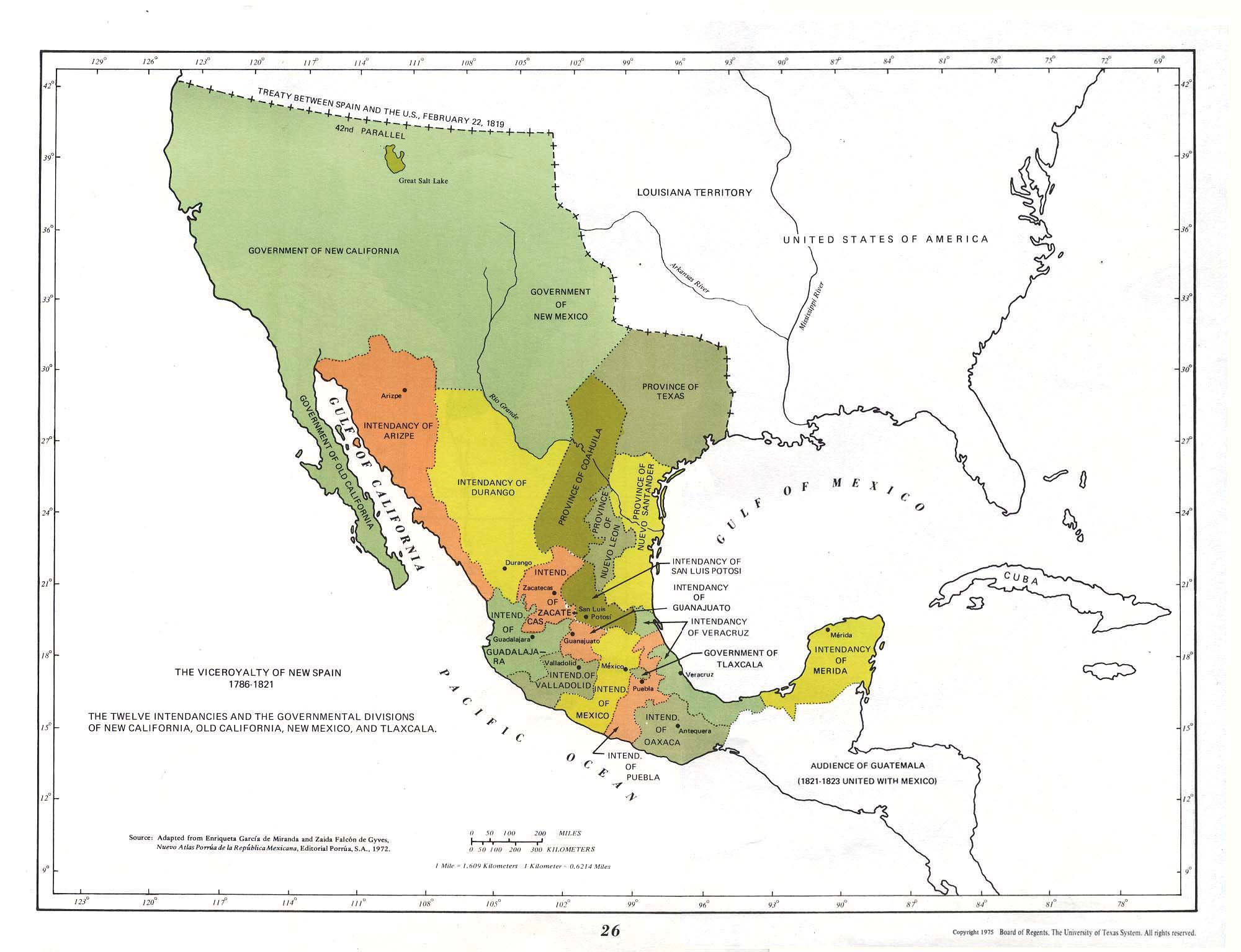
Spanish galleons transported Asian goods and travelers from Manila to colonial Mexico primarily through the port of Acapulco. During the two and a half centuries of contact between the Philippines and the Viceroyalty of New Spain, a minimum of 40,000 to 60,000 Asian immigrants would set foot in the “City of Kings,” while a figure double that amount (100,000) would be within the bounds of probability. From Acapulco they would gradually disperse to the far corners of the viceroyalty, from Loreto in Baja California to Mérida in Yucatan…. The majority, however, would eventually settle in two distinct zones: on the west coast in the districts of Guerrero, Jalisco, and Michoacán, and in the large, ethnically diverse municipalities of Mexico City and Puebla in the central valleys and the eastern port of Veracruz. The two zones were transversed by the most heavily traveled arteries that connected Acapulco to Mexico City (known colloquially as el camino de China) in the west; Veracruz with Puebla and Mexico City in the east; and several arterials linking the capital with Puerto Vallarta in the west and Guanajuato in the northwest.

For the most part, the chinos disembarked at Acapulco as sailors, slaves, and servants. Over the longue durée of Mexican-Asian cultural exchange, the largest contingent of Asians arrived as sailors on the galleons and smaller vessels (capitanas, pataches, and almirantes) that annually plied the long and perilous return voyage from Manila. The seamen were primarily Filipinos, Chinese mestizos (known in Manila as mestizos de Sangley), or ethnic Chinese from the fortified port of Cavite near Manila that served as the primary shipyard for Spaniards in the archipelago. In 1565, the first chino sailors from the islands of Cebu and Bohol arrived in Acapulco aboard Friar Andrés de Urdaneta’s trailblazing galleon, the San Pedro. During the late sixteenth century Iberian sailors constituted the majority of crewmen, but by the early 1600s Asians had surpassed them, accounting for 60–80 percent of the mariners from that time forward. A historical snapshot of galleon seafarers in the mid eighteenth century comes from a crew manifest of La Santissima Trinidad. In 1760, this vessel was manned by 370 sailors, consisting of 30 officers (Europeans or Mexican criollos), 40 artillerymen (27 chinos), 120 sailors (109 chinos), 100 “Spanish” cabin boys (96 chinos), and 80 “plain” cabin boys (78 chinos). In sum, 84 percent (310) of the crew were born and raised in Spain’s Asian colony, with 68 percent (250) hailing from the port of Cavite alone….

Along the Pacific coast, chino sojourners tended to congregate in the cities and pueblos of Acapulco, Coyuca, San Miguel, Zacatula, Tex pan, Zihuatenejo, Atoya, Navidad, and Colima. With the arrival of more ships from Manila, the number of sailors who either had no desire to return to the Philippines or were brought over as slaves married local Indian and mixed-race women increased. Consequently, a sizable population of chinos and their descendants made these cities and pueblos a popular destination for fellow Asians. Both freemen and slaves farmed rice (brought from the Philippines), corn, and cotton; tended cacao and coconut palm trees; fished in the seas and rivers; and transported people and goods to various ports along the coastline. Those who followed the royal highways to towns farther inland worked as muleteers or in the silver mines, haciendas, obrajes (textile workshops), or sugar mills….

Slaves and servants constituted the second largest group of Asian immigrants during the colonial era. Manila quickly became an important entrepôt for the commerce in human flesh during the first century of Spanish rule. The greater part were transported by Portuguese vessels from colonies and trading ports in Africa, India, the Malay peninsula, Japan, and China, although Chinese junks and Malay prahus also shipped large quantities to Manila. Non-Filipino slaves that fetched the highest price were from Timor, Ternate, Makassar, Burma, Ceylon, and India, because “the men are industrious and obliging, and many are good musicians; the women excellent seamstresses, cooks, and preparers of conserves, and are neat and clean in service.”…

The incorporation of Asian immigrants into the armed forces of New Spain represents another fascinating fragment of the chino mosaic from the colonial era. Similar to restrictions placed on other castas in Mexico, there were numerous prohibitions against Asians carrying weapons or riding horses….

The legion of similar antiweapons ordnances from the 1550s onward notwithstanding, from at least the 1590s free chinos not only were granted permission to carry weapons, but gradually incorporated into both the salaried companies of Españoles as well as local militias, especially those cities and towns along the Pacific coast. In several documents from the years 1591 and 1597, an “Indio Chino” from the silver mining town of Zultepec named Juan Alonzo, who earned his livelihood from buying and selling mules, was granted a license to ride a horse with a saddle and bridle and to carry a sword. A key determinant in this matter was his racial classification as a chino, since indios (unless they were elites) were forbidden such privileges….

Among the scores of Asian peoples that were widely defined as chinos, in the early decades of the 1600s Japanese converts were held in high esteem by Spaniards in the Philippines and New Spain for their bravery and loyalty. In 1603 and 1639 when Chinese residents in the Parián of Manila revolted against their Iberian overlords, Japanese swordsmen distinguished themselves in combat. Without their assistance, Sangleyes would surely have made the Philippines a colony of the Middle Kingdom. Thousands of Japanese converts, traders, and ronin made the Philippines their home prior to the closing of Cipango to Iberians in the 1630s. They lived in a suburb of Manila called Dilao, with a population estimated at 3,000 by 1624.

Thus it is not surprising that samurai converts were considered a more privileged subgroup of chinos in New Spain….

It is unclear exactly when chino militias were established on the west coast of New Spain. It is evident, however, that prior to 1729 Asian paramilitary units were routinely patrolling the regions adjacent to Acapulco. Tiburcio Anzalde, “captain of one of the militias of chinos and mulatos in the district of Atoya,” discussed the duties and obligations of militiamen in a 1746 document: repeated trips to Acapulco to deliver mail and other correspondences; to clear the roads (of bandits) while on patrol; and, most importantly, their heroic role in resisting the English pirate George Anson‘s invasion at the port of Zihuatenejo in 1741.

Leave a comment

Filed under Asia, China, economics, England, Japan, labor, Mexico, migration, Netherlands, Philippines, Portugal, Spain

Prussianizing Latin American Armies

The latest issue of Journal of World History (on Project MUSE) contains an enlightening (to me) review by Andrew Kirkendall of a book with too broad a title, Neorealism, States, and the Modern Mass Army by João Resende-Santos (Cambridge U. Press, 2007).

The book is narrowly focused on the attempts by the Argentines, Brazilians, and Chileans to imitate German military practices in the late nineteenth and early twentieth centuries…. The author is certainly correct to argue that it was success on the battlefield in 1870 and 1871 against the hitherto much admired French that generated the urge to emulate the Prussian army (these countries had already adopted British naval practices)….

The author’s main achievement is that he makes clear how much their actions were motivated by perceived security threats from the other two countries. He shrewdly notes that it was their own successes (Chile in its wars with Bolivia and Peru, and Brazil and Argentina in their war against Paraguay) that revealed to them how much their militaries needed reforming. Chile took the lead even before the War of the Pacific (1879–1884) was over amidst fears that war with Argentina was imminent. The author makes clear how territorial gains resulting from these wars made these countries less secure, in large part because they increased their neighbors’ hostility. Argentina’s unprecedented prosperity at the end of the nineteenth and the beginning of the twentieth centuries made it possible to follow Chile’s example, though many Argentines distrusted Germany by this point because of its strong ties to Chile. Argentina’s wealth helped make it the major military power on the continent by the outbreak of World War I. Brazil was the slowest to reform. This failure seems ironic considering the fact that the first two presidents following the establishment of the republic in 1889 were military men who were all too aware of how inadequate the armed forces were. Long-standing civilian distrust of the military and the weakness of the national government during the Old Republic made it possible for state governments, when given a chance, to make it impossible, for example, to institute obligatory military service. (Decades later, Brazil’s alliance with the United States in World War II, combined with pro-Axis sympathies in Argentina, transformed the balance of power on the continent.) It should be noted that one long-term result of changes introduced by civilian governments was the weakening of civilian authority over the military.

Leave a comment

Filed under Germany, Latin America, military, U.S., war

Aboard the Yasukuni Maru to London, March 1939

From Orwell’s Diaries (On Board SS. Yasukunimaru (NYK) Crossing Bay of Biscay, 28.3.39):

Yasukuni is 11,950 tons. Do not yet know, but from the vibrations judge that she is a motor-ship. Apart from the bridge, only 3 decks above water-level. Cabins and other appointments pretty good, but certain difficulties in that [the] entire crew and personnel are Japanese and apart from the officers the majority do not speak much English. Second-class fare Casablanca-London £6.10. As the boat normally goes straight to London from Gibraltar & on this occasion went out of her way to deliver a load of tea, fare from Gilbraltar would probably be the same. P. & O. tourist class is £6.10 London-Gibraltar. Food on this ship slightly better than on the P. & O. & service distinctly better, but the stewards here have the advantage that the ship is almost empty. Facilities for drinking not so good, or for deck games, owing to comparatively restricted space.

Do not know what the accomodation° for passengers would be, but presumably at least 500. At present there are only 15 in the second class, about 12 in the third, & evidently not many in the 1st, though I don’t know how many. One or two of the 2nd & 3rd classes are Danes or other Scandinavians, one or two Dutch, the rest English, including some private soldiers who got on at Gibraltar. It appears that for its whole voyage the ship has been as empty as this. Since the Chino-Japanese war English people from the far east will not travel on the Japanese boats. All the P. & O. boast said to be crowded out in consequence.

Leave a comment

Filed under China, Europe, Japan, war

Japan Through Ethiopian Eyes, early 1900s

From Mutual Interests? Japan and Ethiopia before the Italo-Ethiopian War, 1935-36, by J. Calvitt Clarke III, presented at the Florida Conference of Historians in 2000 (endnote references omitted):

Many Japanese wished to join the West in Africa’s exploitation, and some saw Ethiopia as a potential gateway. In 1899, Dr. Tomizu Hirondo, a professor of law at Tokyo Imperial University, published a short pamphlet, Afurika no Zento [The Future of Africa]. Admiring Cecil Rhodes and Harry Johnson, he concluded that Japan had to expand its influence and profit in Africa before Europeans completely controlled the continent. During the First World War, recalling Tomizu, some Japanese wanted to send troops to occupy Germany’s African territories [just as the Japanese Navy occupied Germany’s Micronesian colonies in 1914—J.].

The Japan Mail Steamship Company began regular service to Europe via the Suez Canal when the Tosa Maru left Japan in March 1896 and arrived in London in May. Stopping at Port Said, Japanese merchantmen set up direct commercial connections with Africa for the first time. Tokyo got first hand information on Africa by sending official economic missions, establishing consular offices, and by using the information networks established by shipping companies and trading houses. Japan designed its economic penetration to secure a cheap and stable supply of raw materials, especially cotton, as well as to capture markets. By 1899, silk thread from Japan was entering Ethiopia through Harar. And by 1918, Japanese cloth had superseded American unbleached muslin, which had dominated Ethiopia’s imports.

European colonialism in Africa, however, blocked Japan’s military and political penetration and confined Japan’s African relations to trade and commerce. Not necessarily by choice, Japan could and did claim “clean hands in Africa.”…

Young, educated Ethiopians responded. One of them, the future foreign minister Heruy Wolde Sellassie, published in 1932 Dai Nihon [Great Japan] in which he explained that, “Ethiopia was not knowledgeable of the situation in the East until the [Russo-Japanese] war. Because of the war, we learned tremendous amount about Japan from Russians living in Ethiopia, and our Ethiopian people started to admire courageous Japan.”

An Eritrean intellectual, Blatta Gabra Egziabher … was one of many young Ethiopians who saw Japan as a living example for Ethiopia in liquidating feudalism and developing capitalism through the agency of the modern state and revolution from above. Called “Progressive Intellectuals,” “Young Ethiopians,” or simply “Japanizers,” these foreign educated, young intellectuals stressed the similarities bonding the two non-Western nations. These included myths of eternal dynasties and similar histories in overcoming European powers. Japan’s dramatic and rapid transformation from a feudal society—like Ethiopia’s—into an industrial power by the end of the nineteenth century attracted Ethiopians. Further, Japan’s military victories convinced these Japanizers that they too could master western scientific and technological skills and turn them against Europeans. The appearance of the Japanizers created contradictions within the feudal ruling classes, enlightening some while hardening others. Hence arose the conflict between what one Marxist scholar has called the “liberal,” “enlightened feudalists” on the one hand and “ultra feudalists” on the other.

Gebre Heywet Baykedagn well-represents the ideas of the Japanizers. Born in 1886, he studied in Germany and Austria, and returned to Ethiopia in 1905. Exiled in 1909, he returned in 1911 to become palace treasurer and head of customs for Menelik’s grandson and heir, Lidj Iyasu. Convinced of the need for sweeping administrative and fiscal measures, by 1914, Gebre Heywet had become a confidant of Täfäri Makonnen—the future Emperor Hayle Sellase….

Japan’s victory over Russia impressed Prince Täfäri, an ardent student of military matters, and his trusted adviser, Heruy. Täfäri, whose original interest in Japan probably had been inspired by his father, Ras Makonnen, understood that Japan and the United States were the new centers of the world economy. By 1906 when Ras Makonnen died, the thirteen year-old Täfäri clearly had developed his goal, an essential part of which was to draw on the Japanese model. Japan had proved that a non-European nation could embrace modernization and stand as a cultural and technical equal to Europe….

As emperor, [RasHead’] Täfäri imitated the Japanese Emperor in his “attitude of exclusiveness,” because he thought it would help create “an imperial dignity lacking in Ethiopia.” Later as the Italo-Ethiopian war was brewing, the British Minister to Ethiopia, Sir Sidney Barton, explained: “the Emperor has always been interested in the achievements of Japan and his imagination sees similarities between the two countries which—however incredible it may seem to foreign observers—lead him to dream of Ethiopia as the Japan of Africa.”…

Ethiopia’s constitution of 1931 shows Japanese influence. Modeled on the Meiji Constitution of 1889, it concentrated and made more emphatic imperial power than did the Japanese. A Russian-educated intellectual and “Japanizer,” Takle-Hawaryat Takla-Maryam, wrote the draft of the Ethiopian Constitution, and the Emperor with his advisers Heruy and Ras Kasa modified it.

Even more dramatically, Foreign Minister Blaten Geta Heruy, special envoy of the Ethiopian emperor, left Addis Ababa on September 30, 1931, bound for Japan. Officially, his party was visiting to repay the Japanese Emperor for Japan’s representation at the recent coronation in Addis Ababa. In cultivating mutual relations, Heruy also wanted to see if the Ethiopians could carry out their plan for modernization along Japanese lines. Heruy and his mission were grandly treated. He later wrote: “Upon our arrival in Japan, I heard people’s joyful cries. Many Japanese citizens awaited us at the port waving Ethiopian and Japanese flags. The route to the hotel was flooded with people acclaiming us. Everywhere we went, it was the same phenomenon.”…

The Japanese welcome had impressed Heruy. After returning to Ethiopia, in 1932 he published a book to introduce Japan to his countrymen. Entitled Mahdara Berhan Hagara Japan [Japan: The Source of Light], it was probably the first book by an African to make a serious attempt to introduce Japan to Africans. It was translated into Japanese as Dai Nippon [Great Japan] and published with a preface by the former foreign minister Sidehara in Tokyo in 1934….

It would seem the true reason for Heruy’s journey to Japan in 1931, however, was to seek arms and munitions from the Japanese government. But then, Japan was dealing with the Manchurian Incident and had worries other than supplying arms and munitions to Ethiopia.

Heruy’s admiration for Japan as a model alarmed the Western powers that had no wish to see a second Japan—this one in Africa. One European wrote in 1935 that during the previous four years Ethiopia had “embarked, with the close cooperation of Japan, on a life-and-death struggle with the white race, the consequences of which are incalculable.” He added that Italy was fighting the battle for sake of all colonial powers in Africa….

Despite the fervent adulation by Japanese civilians, in the end Heruy got none of the tangible aid he had hoped to get. Japan’s government eventually adapted itself to Italy’s conquest of the Ethiopian Empire by exchanging recognitions with Italy—Ethiopia for Manchukuo. This led in turn to the Anti-Comintern Pact, a wartime alliance, and, ultimately, to mutual devastation and defeat for Italy and Japan. Ethiopia, on the other hand, in 1941 became the first Axis-occupied country to be liberated.

Leave a comment

Filed under Ethiopia, Japan, nationalism