Category Archives: travel

Curing Capt. Cook’s Costiveness with Clysters

From: Blue Latitudes: Boldly Going Where Captain Cook Has Gone Before, by Tony Horwitz (Picador, 2002), pp. 218-219:

Cook resumed his polar probe during the next southern summer [1773], after wintering in Polynesia. The second approach to Antarctica proved even more wretched than the first. Livestock perished, tropical provisions ran out, and the men—eating little except weevil-ridden biscuits and salt rations—began to show signs of scurvy and depression.

“Salt Beef & pork, without vegetables for 14 weeks running, would probably cure a Glutton, even in England,” wrote William Wales, the ship’s astronomer. According to George Forster, even the resilient Cook became “pale and lean, entirely lost his appetite, and laboured under a perpetual costiveness [constipation].”…

Three weeks later, Cook collapsed. He doesn’t reveal much about this in his journal, except to note that he was confined to his cot for a week because of a gastric affliction he called “Billious colick.” George Forster makes it clear that the captain’s condition was much graver than Cook suggests. The captain suffered from “violent pains” and “violent vomiting,” Forster wrote. “His life was entirely despaired of.”

The treatment given Cook—opiates, clysters (suppositories), plasters on his stomach, “purges” and emetics to induce vomiting—probably didn’t help. When Cook finally recovered, his first meal in a week was the only fresh meat on the ship: the Forsters’ dog. “Thus I received nourishment and strength from food which would have made most people in Europe sick,” Cook wrote.

Leave a comment

Filed under anglosphere, Britain, food, language, science, travel

Capt. Cook, Guugu Yimidhirr, and Kangaroos

From: Blue Latitudes: Boldly Going Where Captain Cook Has Gone Before, by Tony Horwitz (Picador, 2002), pp. 182-184:

Guns weren’t the settlers’ only weapons. Aborigines had little resistance to Western disease, or to alcohol. Chinese immigrants introduced opium, which Aborigines consumed by mixing the drug’s ash with water and drinking it. The Guugu Yimidhirr, like many Aboriginal clans, appeared headed for extinction—a fate little mourned by white Australians….

In the case of the Guugu Yimidhirr, it was Cook who proved their salvation, albeit indirectly. A German translation of Cook’s voyages inspired a young Bavarian, Johann Flierl, to set off in the 1880s “as a missionary to the most distant heathen land with its still quite untouched peoples.” He created a Lutheran mission near Cooktown that became a refuge for Aborigines. Flierl named the mission Elim, after an oasis the Israelites found during their exodus from Egypt. As oases went, Queensland’s Elim wasn’t much: a sandy, infertile patch north of Cooktown. But it grew into a stable community, and its school educated scores of Aborigines, some of whom became nationally prominent.

One such success story was Eric Deeral, who served in the 1970s as the first Aboriginal representative in Queensland’s parliament. I tracked him down late one afternoon at his daughter’s modest bungalow a few blocks from Cooktown’s main street. A small, very dark-skinned man, he met my knock at the door with a wary expression and a curt “May I help you?” When I burbled about my travels, his face widened into a welcoming smile. “Come in, come in, I love talking about Cook!” After several days of conversing about little except “ferals,” rooting crocodiles, and rugby league, it was a relief to find someone who shared my passion for the navigator.

Eric showed me into a small office he kept at the front of the bungalow. The bookshelf included several volumes about Cook. Like Johann Flierl, Eric had been fascinated since childhood by the image of first contact between Europeans and native peoples untouched by the West. He’d quizzed Aboriginal elders about stories they’d heard of Cook and his men. “At first, our people thought they were overgrown babies,” he said. Aboriginal newborns, Eric explained, are often much paler than adults. But once the Guugu Yimidhirr saw the newcomers’ power, particularly the noise and smoke of their guns, they came to believe the strangers were white spirits, or ghosts of deceased Aborigines. “Lucky for Cook, white spirits are viewed as benign,” Eric said. “If they’d been seen as dark spirits, my ancestors probably would have speared them.”…

Listening to Eric, I felt the giddy thrill of unlocking small mysteries that had been sealed inside the English journals for more than two centuries. Blind Freddy might know the answers, but no books I’d read had provided them. Eric ran his finger down the list of native words Parkinson had collected. “If you read closely, you can almost see these men, groping to understand each other,” he said. Yowall, for instance, meant beach, not sand, as Parkinson had written. “One of our men probably pointed across the river at the sandy shore on the other side,” Eric said. Similarly, wageegee meant scar, not head—perhaps the man who had told it to the English was pointing to a cut brow when he said the word.

As for kangooroo, this was a fair approximation of the Guugu Yimidhirr word, which Eric rendered gangurru. But Aborigines, unlike Maori and Tahitians, didn’t have a shared language; living in small, widely scattered groups, they spoke scores of different tongues. The English failed to recognize this. The result was a comically circular instance of linguistic transmission. Officers of the First Fleet, familiar with the Endeavour‘s journals, used the words Cook and his men had collected in Queensland to try and communicate with Botany Bay Aborigines eighteen years later.

“Whatever animal is shown them,” a frustrated officer on the Fleet reported, “they call kangaroo.” Even the sight of English sheep and cattle prompted the Gwyeagal to cheerfully cry out “Kangaroo, kangaroo!” In fact, the Gwyeagal had no such word in their vocabulary (they called the marsupial patagorang). Rather, they’d picked up “kangaroo” from the English and guessed that it referred to all large beasts. So a word that originated with an encounter between Cook and a small clan in north Queensland traveled to England with the Endeavour, then back to Botany Bay with the First Fleet, and eventually became the universal name for Australia’s symbol. There was an added twist. The Guugu Yimidhirr had ten different words for the marsupials, depending on their size and color. “Gangurru means a large gray or black kangaroo,” Eric said. “If Cook had asked about a small red one, the whole world would be saying nharrgali today.”

5 Comments

Filed under anglosphere, Australia, Britain, education, Germany, language, religion, science, travel

Cook’s Endeavour: Victualled, Flogged, & Pickled

From: Blue Latitudes: Boldly Going Where Captain Cook Has Gone Before, by Tony Horwitz (Picador, 2002), pp. 16-17, 28-29:

ON MY FIRST night aboard the replica Endeavour, I sat down with my watchmates to a dinner advertised on galley blackboard as “gruel.” This turned out to be a tasty stew, with pie and fruit to follow It was also a marked improvement on the fare aboard the original Endeavour. Before leaving port. Cook complained to the Navy Board that the cook assigned his ship was “a lame infirm man, and incapable of doing his Duty.” The board granted his request for a replacement sending John Thompson, who had lost his right hand. Cook’s request for still another man was denied. The Navy gave preference to cripples and maimed persons” in its appointment of cooks, a fair indicator of its regard for sailors’ palates.

“Victualled” for twelve months, the Endeavour toted thousands of pounds of ship’s biscuit (hardtack), salt beef, and salt pork: the sailors staples. On alternate days, the crew ate oatmeal and cheese instead of meat. Though hearty—a daily ration packed 4,500 calories—the sailors’ diet was as foul as it was monotonous. “Our bread indeed is but indifferent,” the Endeavour‘s botanist, Joseph Banks, observed, “occasioned by the quantity of Vermin that are in it. I have often seen hundreds nay thousands shaken out of a single bisket.” Banks catalogued five types of insect and noted their mustardy and “very disagreeable” flavor, which he likened to a medicinal tonic made from stags’ horns.

On the replica, we also enjoyed a considerable luxury denied Cook’s men: marine toilets and showers tucked discreetly in the forward hold. Up on the main deck, Todd showed us what the original sailors used: holed planks extending from the bow, utterly exposed in every sense. These were called heads, or seats of ease. On Cook’s second voyage, an unfortunate sailor was last seen using the heads, from which he fell and drowned….

On our first-day tour of the replica, Todd had showed us a canvas bag; inside it was a heavy knotted rope—the cat-o’-nine-tails, so named for the number of its cords and the catlike scratches it left on a man’s back. This was also the origin of the phrases “let the cat out of the bag” and “not enough room to swing a cat.” The cat came out of the bag with depressing regularity during the Endeavour‘s long passage to the Pacific. On one day alone, three men were lashed, the last for “not doing his duty in punishing the above two.” Before the trip was over. Cook would flog one in four of his crew, about average for eighteenth-century voyages.

If Cook didn’t spare the lash, he also didn’t stint sailors their most treasured salve: alcohol. The Endeavour sailed with a staggering quantity of booze: 1,200 gallons of beer, 1,600 gallons of spirits (brandy, arrack, rum), and 3,032 gallons of wine that Cook collected at Madeira. The customary ration for a sailor was a gallon of beer a day, or a pint of spirits, diluted with water to make a twice-daily dose of “grog.” Sailors also mixed beer with rum or brandy to create the debilitating drink known as flip. Cook’s notes on individual crewmen include frequent asides such as “more or less drunk every day.”

Leave a comment

Filed under Britain, food, military, Pacific, science, travel

Railroad Depot Architecture, 1830–1860

From A Most Magnificent Machine: America Adopts the Railroad, 1825-1862, by Craig Miner (U. Press of Kansas, 2010), p. 92:

Railroad depots came to dominate urban architecture, and their size brought much comment. The Boston & Maine depot in Boston, constructed in 1846, was 200 feet long and 80 feet wide. It had Corinthian columns, and on its upper story was the largest meeting hall in the city. Behind it was a freight depot 500 feet long and 50 feet wide. The Union depot at Troy, New York constructed in 1853, was 400 feet long and 150 feet wide. The distance from the top of the roof arch to the floor was 65 feet. The roof was made entirely of iron supported by twenty trusses.

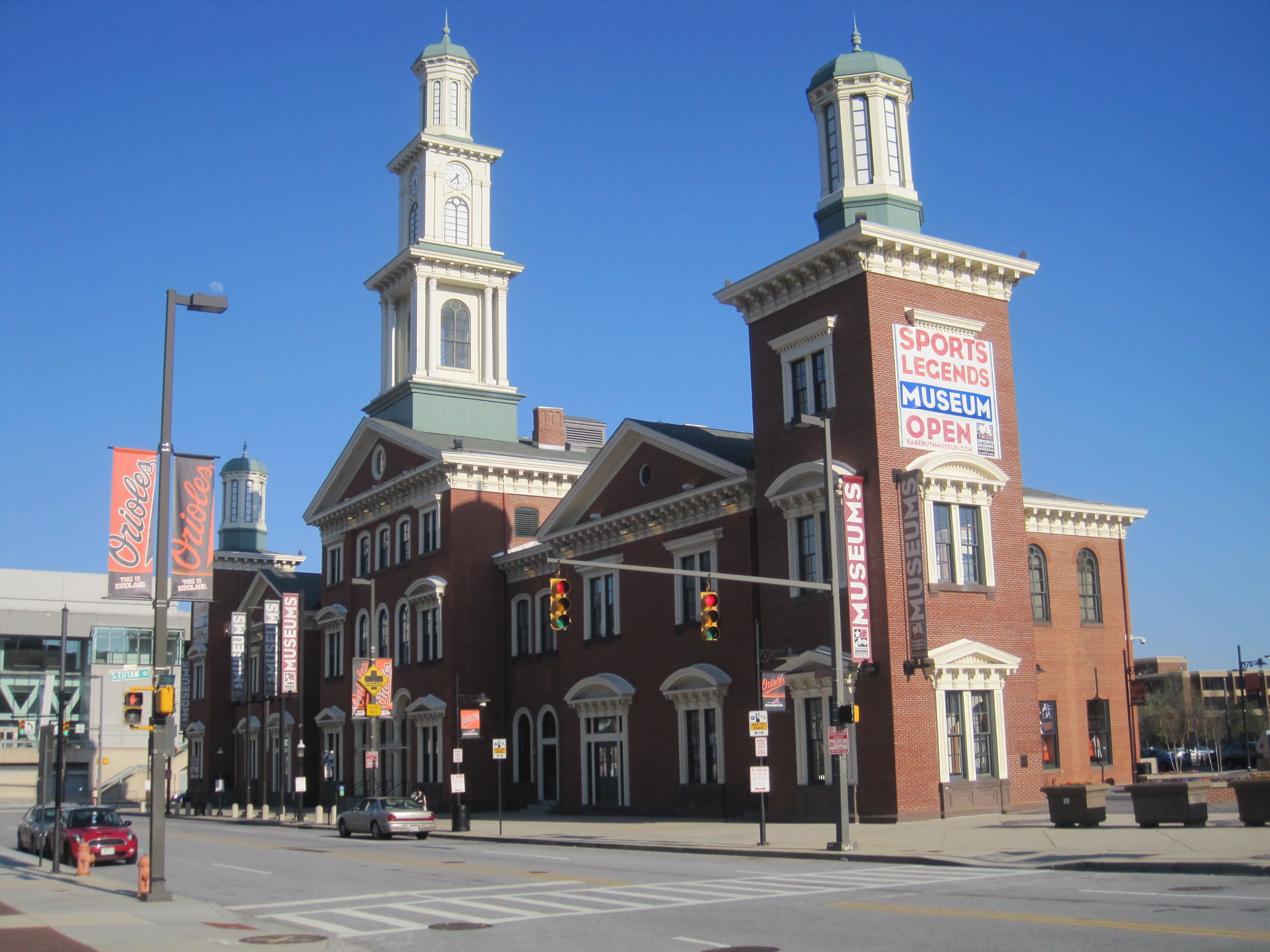
Former B&O Camden Station

Former Baltimore & Ohio Railroad's Camden Station, built in 1856, now the Babe Ruth/Sports Legends Museum next to Camden Yards

Time only increased the impressiveness of these structures. A reporter for the Chicago Daily Tribune visited the new buildings constructed by the Illinois Central Railroad along the lakeshore in 1854. The passenger depot at the foot of Water Street was all of stone. It was 500 feet long, 166 feet wide and 60 feet high to the top of its towers. Its windows were 16 feet high. The walls looked like they would “remain in all their strength when the final ‘wreck of matter and the crash of worlds’ shall come. The turntable there would hold eighteen locomotives.

The depots were the entry to a new world of travel, every aspect of which became a subject for travelogue comments. John Daggett riding the B&O in 1834, thought the beginning of his rail journey was its highlight:

One of the happiest effects of traveling on railroads is the freedom it gives you from the impertinence and impositions of porters, cartmen, et omne id genus, who infest common steamboat landings. A long and solitary row of carriages was standing on the shore awaiting our arrival; not a shout was heard, scarcely any thing was seen to move except the locomotive, and the arms of the man who caught the rope from our boat. The passengers were filed off along a planked walk to the carriages through one gangway, while their luggage, which had already been stowed safely away, was rolled on shore by another, in two light wagons; and almost without speaking a word, the seats were occupied, the wagons attached behind, the half-locomotive began to snort, and the whole retinue was on the way with as little ado and as little loss of time as I have been guilty of in telling the story.

Others, however, were not so impressed with the stressful experience of boarding a train. A Frenchman, Michel Chevalier, thought that the pandemonium at the railroad station reflected the nervousness and disorder of American society itself. The American, he wrote, was “devoured with a passion for locomotion” and could not stay still.

Leave a comment

Filed under industry, travel, U.S.

Kapuscinski on breezes and buses in Africa

From The Shadow of the Sun, by Ryszard Kapuscinski, trans. by Klara Glowczewska (Vintage, 2002), Kindle Loc. 200-213, 312-318:

A bus in Accra has a wooden body, its roof resting on four posts. Because there are open walls, a pleasant breeze cools the ride. In this climate, the value of a breeze is never to be taken for granted.

In the Sahara, the palaces of rulers have the most ingenious constructions—full of chinks, crannies, winding passageways, and corridors so conceived and constructed as to maximize cross-ventilation. In the afternoon heat, the ruler reclines on a mat optimally positioned to catch this refreshing current, which he breathes with delight. A breeze is a financially measurable commodity: the most expensive houses are built where the breeze is best. Still air has no value; it has only to move, however, and then immediately acquires a price.

The buses are brightly ornamented, colorfully painted. On the cabs and along the sides, crocodiles bare their sharp teeth, snakes stretch ready to attack, and flocks of peacocks frolic in trees, while antelope race through the savannah pursued by a lion. Birds are everywhere, as well as garlands, bouquets of flowers. It’s kitsch, but full of imagination and life.

The inscriptions are most important of all. The words, adorned with flowers, are large and legible from afar, meant to offer important encouragements or warnings. They have to do with God, mankind, guilt, taboos….

Bus at Boumnyebel

Grace Lines bus at Boumnyebel, Cameroon

Every now and then our bus stops along the side of the road. Someone wants to get off. If it’s a young woman with a child or two (a young woman without a child is a rare sight), there unfolds a scene of extraordinary agility and grace. First, the woman will secure the child to her body with a calico scarf (her small charge sleeping the entire time, not reacting). Next, she will squat down and place the bowl from which she is never separated, full of food and goods of all kinds, on her head. Then, straightening up, she will execute that maneuver of a tightrope walker taking his first step above the abyss: carefully, she finds her equilibrium. With her left hand she now clutches a woven sleeping mat, and with her right the hand of a second child. And this way—stepping at once with a very smooth, even gait—they enter a forest path leading to a world I do not know and perhaps will never understand.

1 Comment

Filed under Africa, Ghana, travel

Kapuscinski: “The mzungu will eat you!”

From The Shadow of the Sun, by Ryszard Kapuscinski, trans. by Klara Glowczewska (Vintage, 2002), Kindle Loc. 948-973:

Edu and several cousins from his clan … belong to the [Tanzanian] Sango-speaking people from the interior. They had been farmers, but their land grew barren, so several years ago they came to Dar es Salaam. Their first step: to find other Sango-speaking people. Or people from communities who are affiliated with the Sango through ties of friendship. The African is well versed in this geography of intertribal friendships and hatreds, no less critical than those existing today in the Balkans.

Following a ball of yarn, they will finally arrive at the house of a countryman. The neighborhood is called Kariakoo, and its layout is more or less planned—straight, perpendicularly aligned sandy streets. The construction is monotonous and schematic. The so-called swahili houses predominate, a type of Soviet-style housing—a single one-storied building with eight to twelve rooms, one family in each. The kitchen is communal, as are the toilet and the washing machine. Each dwelling is unbelievably cramped, because families here have many children, each home being in effect a kindergarten. The whole family sleeps together on the clay floor covered with thin raffia matting.

Arriving within earshot of such a house, Edu and his kinsmen stop and call out: “Hodi!” It means, in effect: “May I come in?” In these neighborhoods the doors are always open, if they exist at all, but one cannot just walk in without asking, so this “Hodi!” can be heard from quite a distance. If someone is inside, he answers, “Karibu!” This means: “Please come in. Greetings.” And Edu walks in.

Now begins the interminable litany of greetings. It is simultaneously a period of reconnaissance: both sides are trying to establish their precise degree of kinship. Concentrated and serious, they enter the primevally thick and tangled forest of genealogical trees that is each clan and tribal community. It is impossible for an outsider to make heads or tails of it, but for Edu and his companions, this is a critical moment of the meeting. A close cousin can be a great help, whereas a distant one—significantly less so. But even in this second instance, they will not go away empty-handed. Without a doubt, they will find a corner under the roof here. There will always be a little room for them on the floor—an important consideration, since despite the warm climate it is difficult to sleep outside, in the yard, where one is tormented by mosquitoes, by spiders, earwigs, and various other tropical insects.

The next day will be Edu’s first in the city. And despite the fact that this is a new environment for him, a new world, he doesn’t create a sensation walking down the streets of Kariakoo. It is different with me. If I venture far from downtown, deep into the remote back alleys of this neighborhood, small children run away at the sight of me as fast as their legs can carry them, and hide in the corners. And with reason: whenever they get into some mischief, their mothers tell them: “You had better be good, or else the mzungu will eat you!” (Mzungu is Swahili for the white man, the European.)

Once, I was telling some children in Warsaw about Africa. A small boy stood up and asked, “And did you see many cannibals?” He did not know that when an African returns to Kariakoo from Europe and describes London, Paris, and other cities inhabited by mzungu [the Swahili plural should be wazungu—J.] his African contemporary might also get up and ask: “And did you see many cannibals there?”

Most people who’ve done fieldwork in very different cultures have had the experience of being used by mothers and other caretakers to scare younger children.

Leave a comment

Filed under language, Poland, Tanzania, travel

Wordcatcher Tales: Binga, Befam

The dusty dirt road from Lolodorf to Ebolowa was only 107 km long, but it took us three hours to cover the distance in our hired Toyota sedan, over ten years old and without air-conditioning, so we often had to choose between keeping the dust out and the heat in, or letting some dust in to get some fresh air. By the time we reached the outskirts of Ebolowa, we were ready for a refreshing lunch stop in as nice a restaurant as we could find, so we began asking people on the street to direct us to the nearest hotel, which turned out to the brand-new, European-standard Florence Hôtel. (We found out too late that we would have had many more choices had we driven into the city center first.)

We felt out-of-place from the moment we entered the front gates and noticed the newer Mercedes and Land Cruiser parked inside. The feeling only increased as our parched and dusty party of four were ushered to a linen-covered table with fine silverware opposite a wooden bar counter with a premium selection of duty-free-shop liquors on the wall behind it. Despair mounted as we perused the menu. The cheapest main dish cost 4,000 francs CFA (< 10 USD), and the price of the table d’hôte buffet set out for a banquet meeting then underway of visiting dignitaries from the Société Nationale d’Investissement du Cameroun was 12,000 francs CFA.

We finally settled on vegetable soups for starters and fruit plates for dessert (each about 2,000 francs), with nothing in between, and bottled water to drink. Our waiter was pleasantly accommodating and even brought us extra water at no charge. He very likely assumed we were missionaries, especially after we quizzed him about the words that marked the women’s and men’s rooms, binga and befam, respectively. (It was like seeing wahine and kane on the restroom doors of a French brasserie in Honolulu.) The restrooms were otherwise to European standard, spotlessly clean, with hot and cold running water, airjet hand driers, and toilet paper. In fact, they were the nicest restrooms we used during our two weeks in Cameroon.

We stopped later in the afternoon at the Repere Bar on the outskirts of Yaoundé in order for our driver and my brother belatedly to eat their main courses, beef stew with manioc and rice, respectively, for 500 francs each, while my wife and I each had a large bottle of Guinness, for 900 francs each. (The facilities there were rather more basic.)

The language we had encountered on the doors was Bulu, a dialect of the Beti language group widely spoken across the rain forests of southern Cameroon and neighboring countries. The current president of Cameroon, Paul Biya, comes from the Beti-speaking region. According to our Florence Hôtel waiter, binga means ‘women’ and minga means ‘woman’, while befam means ‘men’ and fam means ‘man’ (a near homophone of French femme). Speakers of Castilian or Catalan can get a taste of the closely related Fang dialect online.

This kind of distinction is typical of Bantu languages, which mark different noun classes with prefixes that distinguish singular from plural in the case of count nouns. Or at least they do so in Narrow Bantu, if not so regularly in Wide Bantu (or Bantoid) languages. In fact, the word bantu means ‘people’, while muntu means ‘person’. And that’s why so many placenames in parts of Cameroon start with Ba-.

The most memorable introduction to this phenomenon that I’ve ever read was a passage in African Language Structures (U. California Press, 1974) by William Everett Welmers, who on p. 160 applies Bantu noun class and concord systems to words borrowed from English:

KiSwahili
kipilefti ~ vipilefti ’roundabout(s), traffic circle(s)’
digadi ~ madigadi ‘fender(s)’ (< mudguard)

KeRezi (a fictional Bantu language)
mudigadi ~ badigadi ‘bodyguard(s)’
mutenda ~ batenda ‘bartender(s)’
matini ‘martini’ (with ma- marking mass nouns for liquids)

UPDATE: We’re back from Cameroon and will have more tales to tell, but only after finishing taxes, posting more photos, and hitting the road for another week of travel.

Leave a comment

Filed under Cameroon, food, language, NGOs, travel

Far Outliers Off to Africa for Two Weeks

The Far Outliers leave tonight for a two-week trip to Cameroon to visit my historian brother who’s on sabbatical there helping to document some languages from neighboring Central African Republic, where he served in the Peace Corps many years ago. It’s a long way for a short trip, but it’s the chance of a lifetime. It’ll be our first trip to the continent. We’ll be in good hands, but we’ll have very limited access to email and the web, so I may not be able to respond to blog comments. I hope to take plenty of photos to share via Flickr and to get some firsthand exposure to the English-based pidgin, Kamtok, which I understand still thrives in the northwest region (former British Cameroons).

With all the economic woes facing highly developed economies, it’s heartening to read some good news about economic development in Sub-Saharan Africa.

The economic transformation that has taken place over the last decade has laid out a solid foundation from which to build on. According to the International Monetary Fund, real GDP in sub-Saharan Africa increased by 5.7% annually between 2000 and 2008, more than double the pace during 1980s and 90s.

The collective output of it’s 50-plus economies, meanwhile, reached US$1.6-trillion, far greater than, say, global industrial power Republic of Korea.

Not surprisingly, Africa’s impressive economic momentum over this period owes much to its natural resource wealth that includes a majority of the world’s platinum, chromium and diamonds and a large share of global oil and gas reserves and gold and uranium deposits. However, rising prices for these commodities is only part of the story. According to McKinsey, natural resources and related government spending accounted for 32% of Africa’s GDP growth, with the remaining two-thirds nicely distributed across other sectors, notably wholesale and retail, agriculture, transportation and telecommunications.

Underlying this economic breadth, says the report, is the African consumer. From 2005 to 2008, consumer spending increased at a compounded annual rate of 16% and rose in all but two countries. Millions of Africans have moved from the “destitute” level of income below US$1,000 a year to the “basic needs” level between US$1,000 and US$5,000. A smaller portion have moved into the middle income bracket of US$5,000 to US$25,000.

“There is a lot more going on than just natural resources,” Mr. Field-Marsham says. “The middle class is exploding. They are buying soap, they’re buying beer, they’re buying telephones, they’re building housing, and they’re buying cement. Now, everybody has a stake.”

We’re taking a few small electronic gifts for my brother’s friends and colleagues: flash drives, memory cards, rechargeable AA and AAA batteries, and such.

Leave a comment

Filed under Africa, Cameroon, economics, family, travel

Railroad vs. U.S. Army Jobs, 1854

From A Most Magnificent Machine: America Adopts the Railroad, 1825-1862, by Craig Miner (U. Press of Kansas, 2010), p. 188:

Similarly elaborate was a great excursion celebrating the completion of the Rock Island in 1854. Two trains of twelve cars each left Chicago loaded with 1,300 people to the cheers of a vast crowd. They proceeded through the prairie and stopped for people to gather wildflowers and grasses and to observe the substantial stone houses and gardens already established along the line. The prairie, a traveler on that train said, “was in its way as grand as the White Mountains, or Niagara Falls.” Arriving at Rock Island and the Mississippi to a cannonade, there was a banner at the depot reading- “The Mississippi and the Atlantic Shake Hands.” Drawn up to the wharf were six of the largest Mississippi River steamboats—War Eagle, Galena, Lady Franklin, Sparhawk, Golden Era, and Jenny Lind. Each had a band playing on the upper deck.

The “Conquests of Civilization” looked especially impressive that day comparing favorably with any military conquests of old. Wrote a man celebrating the excursion opening the Rock Island: “Our invasions, instead of desolating and laying waste the regions into which they are carried, spread fertility and abundance on their track, and they bring us back, instead of weeping captives to minister to our ostentation and pride, the fruits and riches of the earth, garnered from the most distant climes and kingdoms.” The Illinois Central Company was bigger than the U.S. Army. That army had 10,000 in 1854. The Illinois Central railroad employed 19,000 who earned a total in wages of nearly $4 million per year. In three years it would build 700 miles of railroad, whereas in thirty years the federal government had spent $200 million on the army “for which they have nothing to show but some old forts, guns, battered uniforms, and demoralized veterans.” Soon enough, in 1856, trains passed over the Mississippi on the great Rock Island Bridge, 1,581 feet long with a draw in the center. “Yes, the Mississippi is practically no more. It is spanned by the mighty artery of commerce and enterprise—the railroad.”

The uninhabited prairie might be sublime and a “solemn” sight, but seeing the plains of Illinois divided into farms was more exciting still The fields would “drop fatness” when in time “the old fogy sod, matted conservatism of centuries, is overturned by the revolutionists, the ploughshares, and penetrated by those radicals, the grain roots, and the wheat fields stretch out green and wavy as the seas.”

Leave a comment

Filed under industry, military, travel, U.S.

Railroads in the Antebellum South

From A Most Magnificent Machine: America Adopts the Railroad, 1825-1862, by Craig Miner (U. Press of Kansas, 2010), pp. 169-171:

In 1849, [Georgia] was ahead of all southern states in rail mileage and estimated to be ranked third or fourth among all states in the Union. When the Western & Atlantic was completed in 1850, the company was still seeking more state appropriations, and there were still those who thought it could be better managed by a private concern than by the state. But many thought its shortcomings were based on unrealistic public expectations. Compared to most, it was a successful railroad indeed. Wrote the Macon editor: “Great confidence seems to be felt in whatever Georgia lays her hand to. I have often heard it wondered how the citizens of Georgia had succeeded so in building railroads, keeping out of debt, and making their roads pay well.” The reason was that Georgia, as its governor noticed in his 1855 address, had a “definite system” and a “uniform principle” in granting railroad charters. It had supported railroads with state aid and management without going overboard in doing so.

Already the myth of southern backwardness was strong in the North. Amid the tensions of the 1850s, which would lead so soon to civil war, the South defended itself partly by pointing out how well it had done in railroad building. “It is fashionable,” wrote a man in Louisville, “for a certain class of people at the North to taunt the people of the South with a want of enterprise. It is regarded as necessary to establish the evils of slavery, that it shall be shown that it encourages indolence, and represses enterprise; and to illustrate the truth of the positions assumed, the superior progress of the free States in railroad building is cited as proof positive.” History proved that false. The South had built some of the first railroads and some of the best railroads in the United States.

It was also false that southern railroads ran well because northern men ran them or because they used northern supplies and equipment. There were southern ironworks and southern locomotive and car builders. The South argued that slave labor would be a great advantage in railroad building. Just as cities were buying slaves to do urban tasks, so railroads would in the future, and the institution of slavery would become less tied to plantations and the growing of cotton. Northerners were speculators, and eventually there would be proof that the more conservative way the South had proceeded in building railroads was best. It had largely avoided the “chaos of panic and bankruptcy” that characterized northern rail enterprises….

Southern railroads were slightly slower in schedule than northern railroads, but they were safer and more comfortable. The food “would be hard to boast of,” but it was tolerable. The pace at depots in the South was more relaxed, with none of the “running headlong, with coat tails flying,” typical of boarding a train in the North. The conductor boarded the passengers in a leisurely way. Then “the whistle gives a gentle toot, and gradually, as a duck swims against a current, the train moves, and nobody is in a perspiration; no one has lost his baggage, or torn his clothes; no one is left lamenting his hard fate in being a moment too late.” Once aboard a train in the South, the passenger found sociable fellows, and the black “servant” who carried water, apples, and oranges through the cars also distributed ice cream. It made travel by rail actually enjoyable.

Far from being a sideshow, railroad development in the South provided a viable alternative to the way things were practiced in the North. Its example gave a strong indication that there was more than one way of adapting to railroads. The technology did not itself dictate its appropriate uses by people and states.

1 Comment

Filed under economics, industry, slavery, travel, U.S.