Category Archives: scholarship

Islam Marginalized in Southeast Asian Studies

From Robert W. Hefner’s introduction to Islam in an Era of Nation-States: Politics and Religious Renewal in Muslim Southeast Asia, ed. by Robert W. Hefner and Patricia Horvatich (U. Hawai‘i Press, 1997), pp. pp. 11-12 (references omitted):

The other marginalization to which the study of Islam in Southeast Asia has long been subjected unwittingly reinforced this neglect. This marginalization occurred within the field of Southeast Asian studies, particularly the form that took shape in the United States in the aftermath of World War II. In this emerging academic field, it was not uncommon for Islam to be portrayed as an intrusive cultural force or, as another widely used metaphor would have it, a late-deposited cultural “layer.” The real Southeast Asia lay deeper and was somehow less Islamic.

This perspective on Islam in Southeast Asia had deep historical and, more specifically, colonial precedents. In colonial times, particularly in the Dutch East Indies, this notion of Islam as a “thin veneer” appealed to those who wished to justify the suppression of Islam on the grounds that it was a threat to colonial power. In Java, for example, nineteenth-century colonial administrators developed a “structure of not seeing,” overlooking Islamic influences in Javanese tradition, while exaggerating and essentializing the influence of non-Islamic ideals. In the aftermath of the brutal Java War (1825–1830), colonial scholars worked to create a canon of Javanese literature that romanticized pre-Islamic literature as a golden age and portrayed the coming of Islam as a civilizational disaster. These Dutch Orientalists conveniently overlooked the fact that the proportion of Islamic-oriented literature in modern court collections was vastly greater than the so-called renaissance literature (pre-Islamic classics rendered in modern Javanese verse) that colonial scholars portrayed as the essence of things Javanese.

Colonial law effected a similar essentialization. Under the direction of Cornelis van Vollenhoven, the “adat (customary) law school” worked under state directive to develop what amounted to a system of legal apartheid. A classic example of the colonial “invention of tradition,” European experts divided the native peoples of the Indies into nineteen distinct legal communities. Islamic law was acknowledged in each community’s legal traditions only to the extent that colonial scholars determined that local custom (adat) explicitly acknowledged Islamic law. In this manner, colonial authorities reified the distinction between customary adat and Islam. As James Siegel’s study of Aceh and Taufik Abdullah’s of Minangkabau both demonstrate, however, this distinction between endogenous “custom” and exogenous “Islam” imposed an artificial polarity on a relationship that had always been dynamic. In fact, in the decades preceding the European conquest, legal traditions in places like Malaya and Minangkabau (west Sumatra) had already begun to accord a greater role to textually based Islamic norms. It was precisely this growing Islamic influence that prompted anxious Dutch authorities to implement their adatrecht policy.

British legal policies in Malaya differed from those of the Dutch. Drawing on their experience with Muslims in India, the British at first regarded Malay Muslims as “unheretical members of some idealized and uniform civilization.” By treating adat as “custom that has no legal consequences” and allowing the Malay sultans a measure of jural authority, the British allowed the formation of institutional structures in which Islamic law had a substantial albeit circumscribed role. Nonetheless, lacking a framework for integrating the study of local traditions and Islam, British scholars of the colonial era fell into an “anecdotal empiricism” that failed to grasp the dynamics of religious change in Malay society as a whole.

Though there was a tradition of Islamic studies in colonial Southeast Asia, then, it suffered from the subordination of scholarship to the needs of the colonial political order.

Leave a comment

Filed under Islam, scholarship, Southeast Asia

What Motivates Scholarship?

The new scholarly blog, Tibeto-Logic, which I recently quoted on the topic of Cathedral Bell Diplomacy in Armenia and Tibet, articulated something else that has continued to resonate with me. The blogpost I cited begins with a quote from a well-known philosopher and mathematician given the ironical epithet, The Mysterious Whitehead, and ends with some reflexive rumination about the purpose of the blogger’s scholarship.

In considering the history of ideas, I maintain that the notion of ‘mere knowledge’ is a high abstraction which we should dismiss from our minds. Knowledge is always accompanied with accessories of emotion and purpose.

— Alfred North Whitehead, Adventures of Ideas, 1933.

My present task as a Tibeto-logical thinker is a Tibeto-centric one. I hope I have succeeded in drawing up a small sketch that puts cracks in the stereotype of Tibet as a place cut off from the world. It’s a country right here with us on the ground, living and breathing in our times. Just so or, well, nearly so, it was an integral and meaningful part of Eurasia during the rule of the Great Fifth Dalai Lama. Some degree and kind of globalisation was in process at that time. And that remains true even if, limiting ourselves to what has been said within the bounds of this essay, the international presence in Lhasa would seem to have been mostly mercantile and proselytizing in nature. If these interests were being played out on a less than even playing field, we cannot pretend that today that field is necessarily more even or equitable. We should not be quick to dismiss the past based on ill-considered assumptions that things have gotten better, or all that much better, meanwhile.

And finally, I hope Tibetans will find in these investigations a source of pride in the past and encouragement for the future. There is real reason to take pride in the pursuit of that admirable Buddhist virtue of tolerance (Tibetan zöpa, or kshanti in Sanskrit, one of those Paramitas that go far beyond the bounds of duty) that enabled Tibetan society in the 17th century to often welcome and sometimes embrace the strangers among them: the Armenians, the Muslims, and yes, the European Christian missionaries. Oh yes, you’re right, I neglected to mention the Chinese, Indians, Mongolians and Newars. Now that people from every culture are living in practically every country, it’s increasingly important that we look back to times like these and find out how, and just how well, they did it. It’s in our interests.

This resonates with me on one level because my academic work focuses on a small corner of Papua New Guinea, where my two primary concerns are (1) to document poorly described languages and (2) to demonstrate that the histories of tiny coastal villages there have never been either all that stagnant or all that isolated. My documentation efforts are far from complete, but have at least sufficed to qualify the village in which I did fieldwork to establish its own Tok Ples (village vernacular language) school, despite having no more than 300 native speakers. The initiative was all theirs; not mine. My host during my fieldwork (thirty years ago!) had been a schoolteacher and the village was using part of its timber royalties to further the education of its youth.

But the wrapper of self-examination on the “Mysterious Whitehead” blogpost resonates at an even more abstract level because it acknowledges that, while the means of scholarship are (ideally) rational, the initial motivations are (in general) not. The most coldly rational motivation for pursuing a particular line of academic research is the availability of funding sources whose allocations are very much dependent on the political goals of the granting agencies. Of course, many scholars take pride in biting the hands that feed them, while others pursue their own political agendas even without external material inducement.

In my experience, the prime motivator for the scholarly output of untenured academics is ambition/fear of failure. Since I’ve never had the carrot of academic tenure dangled in front of me, I’ve only experienced the level of paranoia typical of tenure-chasing academics vicariously, most notably in Nicolae Ceauşescu’s Romania, where similar levels of fear seemed to pervade not just academia, but the rest of society as well.

Meanwhile, the prime motivators for tenured academics seem to be (1) collegiality, (2) personal rivalry, and (3) guilt. At least that’s what motivates the fits and starts of my lackadaisical output as an academic hobbyist.

Leave a comment

Filed under philosophy, religion, scholarship

Tim Burke on Academic Groupthink

Tim Burke, a history professor at Swarthmore, weighs in on the groupthink controversy in what I regard as a judiciously balanced manner.

Academics are not motivated to groupthink out of a loyalty to liberal causes, left-wing politics or registration in the Democratic Party, though in many disciplines at the moment, they may end up predominantly having those affiliations in a smug, uninterrogated manner. They’re motivated to groupthink by the institutional organization of academic life. The same forces that help academics to produce knowledge and scholarship are the forces which produce unwholesome close-mindedness and inbred self-satisfied attitudes. These forces would act on conservatives as well were we to magically remove the current professoriate and replace them with registered Republicans. They do act already on academics who operate in disciplines where certain kinds of political conservatism are more orthodox, or in institutional contexts, like religious universities, where conservative values are expressly connected to institutional missions.

When I was briefly at Emory many years ago, I helped organize a one-day event about “interdisciplinarity”. After about six or seven helpings of young snot-nosed punks like myself rattle on about how cool and interdisciplinary we all were, a wise senior scholar named David Hesla finally intervened. “Virtually everybody’s interdisciplinary in some way”, he said. “You guys are unhappy with departments, not disciplines.”

What Hesla was pointing was that most of the constraints, both hidden and obvious, that produce forms of “groupthink” or suppression of innovation and debate within academia are the consequence of the administrative organization of academic institutions. Groupthink isn’t enforced by partisan plotters: it happens invisibly, cumulatively, pervasively, in the space in between scholars. It happens in department or faculty meetings, in peer reviews. It lives in what has been called “the invisible college”, the pattern of normative judgements that all academics make (including yours truly) about what is cogent, what is original, what is canonical, what is important. Those judgement are formed out all the things you know already, including those you scarcely consciously know that you know, and the heuristics you use to guide yourself to further knowledge.

That is the heart of the problem. It is one thing to talk about breaking down groupthink, to attack the insularity of academic life, and another thing to figure out how to do that without destroying the productivity and usefulness of scholarship and research altogether. The administrative constraints on my life as a scholar are not just noxious restrictions on what I can and cannot do, should or should not say. They’re also necessary in both practical and philosophical ways.

via Cliopatria

Leave a comment

Filed under education, scholarship

North Korean Archaeology of Convenience

One of the staples of international academic exchanges with North Korea is an archaeological report on the latest discoveries regarding the tomb of Tangun (also romanized as Dangun), the mythical founder of Korea, born in 2333 B.C. to a he-tiger and a she-bear. Tangun’s birth year is the starting point for the Tangun Era (Tanki = Danki) calendar year sequence and the first Korean kingdom, Old Chosôn (Ko Chosun = Go Joseon). The year 2004 C.E. thus equals 4337 T.E. (On the same scale, the mythical Emperor Jimmu didn’t found Japan until 1673 T.E. [= 660 B.C.E.])

Several archaeological discoveries were reported by the (North) Korean Central News Agency in 1998.

Chongam earthen wall surveyed

Pyongyang, January 30 (KCNA) — Survey of historical relics has been deepened in Korea. Authoritative scholars and experts of archaeology, history and folklore recently made a survey of the earthen wall in Chongam-Dong, Taesong District, Pyongyang. The survey team discovered relics and a wall built in the period of King Tangun’s Korea, the first ancient state of Korea which existed some 5,000 years ago. The wall has two storeys. The lower storey of the wall, built in the Tangun Korea period, is about 10 metres wide at the bottom and 2.5 metres high. The upper storey, built in the Koguryo period, was rebuilt three times. A scimetar, stone spear, broken top-shape vessels and other relics of the neolithic and bronze ages were discovered in the earth of the wall. Found in the western part inside the wall were the coundation of a building, roof tiles, etc. Dating back to the Koguryo period. A mural painting of the Koguryo period was discovered for the first time in Korea. The mural painting is characterized by use of much powdered gold. The survey of the wall helps systematize the history of Tangun Korea and Koguryo in a scientific way and clearly proves that the history and culture of the Korean nation has developed from long ago with Pyongyang as the centre. [emphasis added]

Newly-discovered wall of ancient Korea

Pyongyang, August 10 (KCNA) — The Archaeology Institute of the Academy of Social Sciences of the Democratic People’s Republic of Korea has recently discovered a wall of Tangun’s Korea (ancient Korea). The newly-discovered wall is the west wall in the middle of the walled city of Pyongyang= It was built on a ridge of Ansan in Pyongchon district with no buildings. The wall was a mixture of earth and stone piled up on rocky layer. It has two parts. In the lower part the wall is 11 metres in bedwidth and 1.5 metres high. In the upper part it is 8 metres in bedwidth and 2.5 metres high. The outside of the wall has a steep slope and the inside an easy one. The building of the lower part of the wall is based on a method of construction widely used in the beginning of ancient times. The method is similar to the methods of construction used in the building of the lower parts of the earthen walls in Jithap-ri and Songhyon-ri. The two earthen walls date back to Tangun’s Korea. The recently-discovered wall proves that from the initial stage of state building the people of ancient Korea concentrated on the defence of the capital of the country. It is of weighty importance in the study of the walled capital of Tangun’s Korea. Relics of ancient Korea were also discovered during the recent unearthing of the wall. [emphasis added]

Rather convenient, eh? And not just for North Korea. There are plenty of archchauvinists among South Korean academics to lend whatever respectability they might add. (Is it fair to assume that ‘academic’ does not necessarily imply ‘scholar’?) Here’s a report about a North-South conference in 2003.

Second Joint Scientific Symposium on Tangun and Kojoson

Pyongyang, October 3 (KCNA) — The second joint scientific symposium on Tangun and Kojoson (ancient Korea) took place at the People’s Palace of Culture on Oct. 2. Present there were Ryu Mi Yong, chairperson of the Council for the Reunification of Tangun’s Nation, Kim Jong Yong, vice-president of the Academy of Social Sciences, social scientists and university teachers in Pyongyang.

Also on hand were academic figures of the south side including Honorary Chairman Kim Jong Bae and Chairman Yun Nae Hyon of the Tangun Society who came to participate in the joint national function commemorating the Foundation Day of Korea.

Presented to the symposium were achievements made by many historians in the north and the south in the studies of documents and archaeological excavation by deepening researches into Tangun and Kojoson over the past one year. Academic issues were also discussed.

Historians of the north said that the excavation of the tomb of King Tangun was a historic event which confirmed the Korean nation being a homogeneous nation rare to be seen with the same blood, language, culture and history with Tangun as its ancestor. They proved that the area of Pyongyang is the cradle of the culture of Kojoson.

Historians from the south reviewed achievements made by historical circles in the north and the south in the studies of Tangun and Kojoson and said it has been proved through Koguryo mural tombs that the Korean nation is descendants of Tangun.

The speakers stressed the need for the historians of the two parts of the country to deepen joint academic studies of Tangun and Kojoson that had a great influence on the development of national history.

A joint press release of the symposium was adopted.

According to it, the historians of the north and the south shared the same view that the Korean nation is a homogeneous nation with Tangun as its founding ancestor, a resourceful nation that went over to a civilized society in the earliest period in the East to create an excellent national culture and that Kojoson was the first ancient state of the Korean nation and a powerful and independent sovereign state that displayed its grand sight as a civilized state in the East.

They also reached consensus on the need to conduct brisk academic exchange, solidarity and cooperation to glorify the national history spanning five thousand years, preserve the fine national character and keep the commonness of the nation and turn out actively for the solidarity and unity of the intellectuals of the north, the south and abroad and for the great unity of the whole nation and national reunification in accordance with the idea of “By our nation itself”. [emphasis added]

Leave a comment

Filed under Korea, scholarship

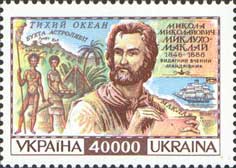
Early Russian Ethnographer in New Guinea

AnthroBase contains the following profile of an ethnographer who beat Malinowski to New Guinea by several decades.

Miklukho-Maklai, Nikolai Nikolaevich (1846-1888)

Russian anthropologist and explorer, acknowledged as the father of Russian ethnography. In 1871-72, Miklukho-Maklai did 15 months of continuous fieldwork on the Northern coast of New Guinea [in present-day Madang Province], where he pioneered methods that would only gain wide acceptance 40-50 years later, after Malinowski’s fieldwork. Throughout his life, Miklukho-Maklai identified strongly with the people he studied, and he several times spoke out in their defence against colonialist powers. He laid the groundwork of the rich tradition of 19th century Russian ethnography, which continued well into Soviet times–until it was destroyed in Stalin’s purges in the 1930s-50s.

Leave a comment

Filed under Papua New Guinea, Russia, scholarship

Syncretism vs. Hybridity vs. Creolization

The November 2003 issue of The Journal of Asian Studies (vol. 62, no. 4) contains a review by Tom Havens of the book, The Age of Creolization in the Pacific: In Search of Emerging Cultures and Shared Values in the Japan-America Borderlands, edited by Takeshi Matsuda (Hiroshima: Keisuisha, 2001). The book offers an interesting application of the notion of creolization. The following extract is from the review, which quotes from two chapters by David Blake Willis.

Long ago, the discourse on Japan’s relations with the West emphasized cultural assimilation or syncretism. In the 1950s, Katô Shûichi recast the interaction as hybridity–still a powerful concept in literary and cultural criticism, although Willis believes Katô’s formulation continues “to privilege a Japanese essence” (p. 6). As anthropologists and world historians use the term, “creolization” is a dynamic, interactive process based on “more even-handed horizontal relations” than in the somewhat static notion of hybridity. Creolization involves “a leveling and a borrowing that is two-way,” creating “a new shared culture” that is “open-ended, eclectic, flexible, and mobile” (p. 6). Creolization facilitates transnational and transcultural (rather than international or intercultural) synergies, thus de-emphasizing states and national communities as units of analysis. Simultaneous multiple processes of creolization in various world regions today show that, “the globalization of culture is not the same as its homogenization” (p. 23)….

Willis offers an empirical chapter on the transcultural experiences of creole “JAmericans” educated at CA [my alma mater!], a well-known international school in Kobe barely masked as “Columbia Academy.” He argues that cultural, not necessarily genetic, hybridity often leads to true creolization, concluding hopefully that “Pacific Creoles are the cross-fertilizing currents of new directions, the lubrication for the global cultural landscape” (p. 195).

EXEGESIS: Assimilation models imply you either remain who you are beneath the layers of outside influences (good, unless you were bad to begin with), or you lose your soul and become someone else (bad, unless you were bad to begin with). Hybridity models allow “in-betweeners” and “half-castes” but also imply the existence of purity at the cultural poles. For most people, I suspect (not me! not me!), purebreds are willy-nilly superior to mongrels, whether we’re talking dogs, or cultures, or cultures gone to the dogs. Creolization models acknowledge the creation of uniquely new structures, with their own internal consistencies, arising out of a mixture of cultural (or linguistic) components, but shaped both by universal patterns and by new functions that none of the old structures adequately served.

Leave a comment

Filed under Japan, Pacific, scholarship, U.S.