Category Archives: labor

India’s Infrastructure: Bad News, Good News

From India: The Rise of an Asian Giant, by Dietmar Rothermund (Yale U. Press, 2008), pp. 157-160:

Next to airports, India’s seaports require thoroughgoing modernization. The biggest and most famous of them all, Mumbai, has a notorious reputation for terrible delays and incompetent handling of goods. A few years ago, turnaround time was about eight days, regardless of the size of the vessel; this has improved somewhat but even now about four days are required to load or unload a ship. This is due to deliberate negligence as the port earns more by collecting demurrage charges than by any other means. The trick of this trade is the stranglehold which Port Authority labour has on the loading and unloading of goods. In most other ports around the world, the port authority is merely a landlord, providing berths and cranes, etc. but no labour, with loading and unloading done by labour hired by the shipowner or his agent. The port authority with ‘dedicated’ labour is a British legacy. In British ports it may have made sense to retain a labour force specialized in loading and unloading ships, particularly in the past when most of this work was not mechanized. Nobody would have thought that delay rather than speed would be the result of retaining specialized labour. Making money on demurrage charges is, of course, a flagrant example of being penny-wise and pound-foolish. No shipowner in his right mind would enter a port such as Mumbai unless he absolutely has to because it is his destination. Bulk breaking is taking place elsewhere in efficient ports like Singapore or Colombo. Many a ship with only part of its load to be delivered to India would rather call at those ports than enter an Indian port. Jawaharlal Nehru Port across the bay from the old port of Mumbai is supposed to be somewhat more efficient than the old one, but it is first and foremost a container port under the management of the Indian railways and is thus not a direct competitor of the old port. Although Jawaharlal Nehru Port is India’s largest container port, it handles only about 10 per cent of the freight handled by Hong Kong, the world’s largest port of this kind. The inefficiency of Indian ports is not only delaying imports, it is also harming the export trade. In the old days of ‘export pessimism’ this was ignored, but now when producers in India wish to export some of their production to achieve economies of scale, they may give up such plans as their goods get stuck in the port….

The story of Sunil Bharti Mittal, who is now the biggest private operator in this field, is a good example of the rise of the new type of Indian telecom entrepreneur. He is not related to the famous steel tycoon Lakshmi Niwas Mittal, and his rather unusual family name Bharti is made up. His father, who belonged to a caste of traders, married a woman of a higher caste. This inter-caste marriage was frowned upon at that time and the couple adopted the name Bharti. Sunil started making cycle parts in Ludhiana. In 1983 when many imports were still banned, he hit upon the idea of manufacturing push-button telephones and then launched his Airtel brand of mobile phones in 1995. From making phones it was only one further step to acquiring two mobile phone licences and one fixed net licence. Subsequently Mittal expanded his operations and now provides his services in all 23 mobile telephone circles of India in which field he has overtaken the public sector firm BSNL. In order to raise the capital for this relentless expansion he linked up with foreign investors. In 2001 the American firm Warburg Pincus acquired about 6 per cent of Bharti Televentures; later the Singapore firm SingTel and the British firm Vodafone also acquired shares in Mittal’s company, but they are all minority shareholders. Meanwhile Sunil Mittal dominates the Indian telecom scene and continues to win prizes both in his personal capacity as an exemplary entrepreneur and for his company as the best in its field. He has also pioneered broadband connectivity in various fields and is always a step ahead in adopting new technologies. Mittal had started from scratch as an innovative entrepreneur. As he has stated, he was inspired by Mahatma Gandhi’s words: ‘First they ignore you, then they laugh at you, then they fight you, and then they lose.’

Leave a comment

Filed under economics, India, industry, labor

India’s Sweatshop Diamonds

From India: The Rise of an Asian Giant, by Dietmar Rothermund (Yale U. Press, 2008), pp. 96-97:

When India had shielded its economy behind tariff walls, its share in world trade had dwindled into insignificance. As mentioned earlier, ‘export pessimism’ was the prevailing mood at that time. It was not easy to change this mood so only new branches of export production could escape it. Nowadays three new types of commodity account for more than half of India’s total exports. Diamond processing was the first and the most unexpected success story of them all. Of course, India had been known as a source of beautiful diamonds in ancient times, but in modern times South Africa has been the leading producer of raw diamonds and the processing is done in Western Europe in places such as Antwerp. Only a few decades ago Jewish merchants controlled almost the entire diamond trade and Jewish artisans participated in the processing of these precious stones. Suddenly a community of Gujarati merchants from Palanpur cut into this trade and made use of cheap and skilled labour available to them in places such as Surat and other towns of Gujarat as well as on the outskirts of Mumbai.

India has to import the raw diamonds; the contribution of its export industry is the value added by expert processing. A breakthrough was provided to this new industry by the creative use of industrial diamonds. Only about a quarter of all diamonds mined are normally fit for jewellery; the rest are passed on to the makers of machine tools for cutting and grinding. Most industrial diamonds are small. Gujarati entrepreneurs knew how to get these tiny stones processed and adopted novel designs of jewellery which sparkled due to the collective effect of many small stones rather than the individual radiance of larger and very expensive diamonds. This created a new market of middle-class consumers who could not afford expensive jewellery. But the Gujarati entrepreneurs also ventured into the market for very precious stones. They even created new brands such as the Nakshatra diamonds endorsed by the Indian actress Aishwarya Rai, a former Miss World.

The buying of diamonds in places like Antwerp is done by the so-called ‘sightholders’, experts entitled to inspect raw diamonds and select them for their respective companies. Earlier these sightholders were a charmed circle of insiders, but the Gujarati merchants gained access to the circle and now almost dominate it. Eleven of twelve diamonds processed in the world are now processed in India. This, of course, means that the fast growth which this Indian industry registered in recent years is bound to level off. The value of Indian exports of precious stones – mostly processed diamonds – has expanded by leaps and bounds. In 1966 the value of these exports was a mere US$ 25 million; by 2004 it amounted to US$ 14 billion.

India’s greatest advantage is the low wage paid for the rather demanding job of diamond processing. The fixture in which the diamond is held during processing is called a dop. With a semi-automatic dop a worker can polish 800 to 1,000 diamonds per day. The wages of Indian workers in this line are about 10 per cent of those earned by their colleagues in Antwerp. This is why more than 800,000 workers are employed in the various workshops in Surat whereas in Antwerp there are only about 30,000 still active in this field. Surat is just one of the Indian centres of diamond processing, though perhaps the largest. The conditions of the workers are generally quite miserable and children are also recruited for this work. Large profits are reaped only by the entrepreneurs, who have now extended the scope of their work to other Asian countries and even to Russia.

Leave a comment

Filed under Belgium, economics, India, industry, labor

India’s ‘Fraternal Capital’ and Contractor Networks

From India: The Rise of an Asian Giant, by Dietmar Rothermund (Yale U. Press, 2008), pp. 100-101:

Tiruppur, a town near Coimbatore in Tamil Nadu, has emerged as a major centre of knitwear production and Sharad Chari has made a fascinating study of the mode of production in this town. He has described the emergence of ‘fraternal capital’ as a typical form of cooperation among small-scale entrepreneurs in this field. Most of the owners of the small workshops and even a large number of their employees belong to the Gounder caste of peasants who have made a successful transition to industrial production. The Gounder peasants are used to hard work in intensive agriculture where the landholder and his labourers are working together and this style of operations has been transferred to the shop floor where the owner is always present, usually controlling the stitching table where the cloth is converted into garments. Gounders who want to emphasise the special features of their work often make it appear as a kind of ‘work ethic’. Actually it helps them to justify the control of labour in their small-scale industry. They do not strive for economies of scale as these would be diseconomies under the official rules favouring small-scale enterprises. Accordingly, successful entrepreneurs do not invest their capital in expanding their production, but in setting up ‘fraternal’ enterprises run by other members of the Gounder caste, albeit these people are not necessarily related to them in terms of family ties. Total production has thus grown very quickly and whereas earlier only men worked in this industry, more and more women have been recruited in recent years. Most workers are paid by piece rate or they work under various types of contracts rather than receiving regular wages.

When production for export increased, a new elite of export merchants arose from the ranks of these small entrepreneurs. Smart young men in business suits, wearing sunglasses, can be seen chatting with their relatives on the shop floor who provide them with the material which they market in New York or elsewhere. Many of these exporters are assemblers rather than producers. The links of fraternal capital connect all these people and make it difficult for outsiders to penetrate this business. In this way fraternal capital provides horizontal and vertical linkages which are otherwise only found in big corporations. Decentralized supervision – and exploitation – of labour is an asset in this type of business organization. Contracting in and out enables the small entrepreneurs to respond to changing demand. Such an organization helps to defend the class of entrepreneurs against labour unions, which have a strong tradition in this area.

Another interesting example of the control of labour in this region is the putting-out system practised by a producer of rag carpets in the adjacent Erode District. He uses rags from the hosiery industry and gets carpets woven for the big Swedish firm IKEA. Initially it was traditional weavers who got involved in this business, but soon the putting-out system was extended to villages whose supply of labour was of a very different kind. In a Gounder village affected by water scarcity, the peasants took up carpet weaving in order to survive. In another village inhabited by migrant construction workers, the women who had also participated in this work shifted to carpet weaving, which they could do at home. Tapping labour resources of different kinds for export production is a characteristic feature of the informal sector of India’s economy.

Similar features of decentralized production and exploitation of labour can be observed in the garment industry of Ahmadabad, a city once famous for its large composite textile mills, most of which have long since closed down or are ‘sick‘. But in the 1990s hundreds of small workshops producing ready-made garments sprang up. Their production is supplemented by home-based women who stitch garments for entrepreneurs who operate a putting-out system. These women had been used to stitching petticoats and children’s wear; they own very simple sewing machines. When they were required to stitch more complicated garments for export their skills and their machines often proved insufficient for the new tasks. They usually earn piece rates which amount to about 2 to 5 per cent of the value of the articles they produce. With such low wages they can hardly afford to invest in add-ons to their sewing machine for new lines of production. Nevertheless, they somehow managed to get on with their work. This area of Gujarat is also famous for its embroidery, which has been successfully adapted to the requirements of export production, a line of production in which India is ahead of China.

Leave a comment

Filed under economics, India, industry, labor

India’s Rise: Sick Mills vs. Powermills

From India: The Rise of an Asian Giant, by Dietmar Rothermund (Yale U. Press, 2008), pp. 88-89:

In the years of the Great Depression, the Indian textile industry was partially protected under the regime of imperial preference, Production for the home market expanded, but there was hardly any investment in new machinery. Moreover, India had no textile machine industry of its own. During the Second World War, no machinery could be imported, but the mills worked around the clock under the regime of government procurement. By the end of the war, spindles and looms were worn out and mill-owners would have liked to have invested in new machinery. However, foreign exchange was scarce as India had no immediate access to its reserves accumulated in the Bank of England. At this stage something happened which had terrible consequences for the future of the Indian textile industry. Mahatma Gandhi had compelled the Indian government to abolish the food-grain controls introduced during the war. Prices fell after the controls had been abolished – as Gandhi had predicted. His followers then tried to apply the same rule to cotton texiles, which had also been subjected to controls. The mill-owners warned the government that they would not be able to cope with the rising demand with their decrepit looms. Nevertheless, the controls were abolished and prices rose. Controls were then re-imposed in August 1948. At the same time positive discrimination in favour of the products of handloom weavers was introduced. These weavers were dear to Gandhi as he regarded them as the paragon of the type of cottage industry which he preferred to the mills. The well-meaning protectors of the handloom weavers did not notice that these weavers had to a large extent been replaced by powerloom weavers, whose rise will be described below. The mills were now prevented from modernizing their equipment and expanding their production. They were turned into living fossils. The mill-owners continued production half-heartedly. There seemed no longer to be any future for this industry. Some mills were closed down as early as the 1950s and 1960s. To make matters worse, a prolonged strike of textile labour in Mumbai in the 1980s sounded the death knell for the industry in this metropolis.

It was quite natural that textile labour should be frustrated under these conditions, but resorting to a strike in an industry which was already doomed proved to be counterproductive. The workers turned to Dr Datta Samant, an independent labour leader who had organized a very succesful strike for the workers of the Premier automobile factory in Mumbai. This strike ended with a substantial increase in wages, which were tied to a productivity index. Samant was a medical doctor who knew nothing about economics and thought that his recipe would work in the textile industry just as it had done in the automobile industry. He was a charismatic leader and inspired the workers to continue their strike, which started in 1982, for eighteen months. (His life ended tragically when he was openly gunned down by gangsters in 1997.) The result of the strike which he had led was perverse: the workers shifted to the powerlooms in order to earn a living and the mill-owners procured cloth from these power looms and marketed it. By the time the strike ended the powerlooms had taken over most of the production and the mills were ‘sick’.

The phenomenon of a ‘sick mill’ can only be understood in the Indian context. Elsewhere a sick mill would go bankrupt and close down. In India, however, where there are no unemployment benefits, laid-off workers are politically dangerous and therefore the government will nurse sick mills to keep them alive even if they cease to produce anything. The mill-owners soon learned to make a profit out of being sick. The Reserve Bank of India sanctioned favourable loans for such sick mills. Clever manipulators could siphon off enough money from such loans and use it for other purposes. The production of mill-made cloth declined steeply under such conditions, from about 3.4 to 2 billion metres in the decade of the 1980s. In the same period the production of powerlooms increased from 5 to 11.4 billion metres.

1 Comment

Filed under anglosphere, economics, India, industry, labor

Ethiopia, 1978: One More Equal Than Others

From The Fate of Africa: A History of Fifty Years of Independence, by Martin Meredith (PublicAffairs, 2005), pp. 245-248:

In September 1976 the Ethiopian People’s Revolutionary Party (EPRP), drawing support from the labour unions, teachers and students, all vehemently opposed to military rule, embarked on a campaign of urban terrorism against the Derg and its civilian ally, the All-Ethiopian Socialist Movement, usually known by its Amharic acronym, Meison. An assassination attempt was made on Mengistu in the centre of Addis Ababa in September, the first of nine such attempts. Scores of officials and supporters of the Derg were murdered. The Derg in turn sent out its own murder squads…. By mid-1977 the EPRP was effectively destroyed. In the final phase of the red terror, to establish his own supremacy, Mengistu turned on his Meison allies, destroying them too. The young generation of intellectual activists, who had so avidly supported the revolution were all but wiped out.

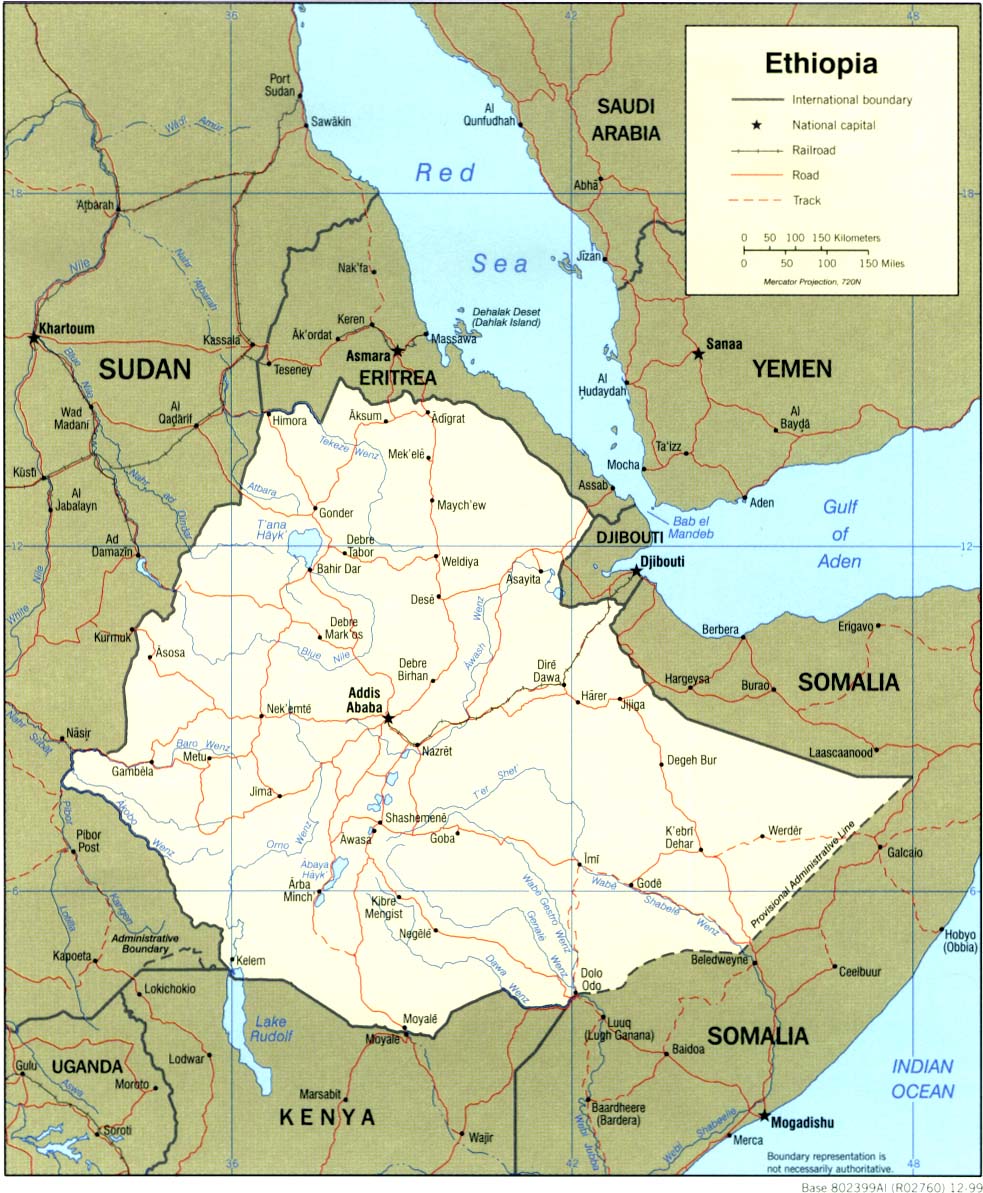
Mengistu’s hold over other parts of Ethiopia was nevertheless precarious. By mid-1977 the Ethiopian army in Eritrea had lost most major towns and controlled little more than Asmara and the ports of Massawa and Assab. In July 1977 Somalia, deciding the time was ripe to take advantage of the Derg’s preoccupation with Eritrea and other revolts, launched a full-scale invasion of the Ogaden. By August the Somalis controlled most of the Ogaden. In September they captured Jijiga, an Ethiopian tank base, and pressed on towards the town of Harar and the rail and industrial centre of Dire Dawa, the third largest city in Ethiopia.

What rescued Mengistu from military defeat was massive intervention by Soviet and Cuban forces, determined to prop up his Marxist regime. In November 1977 the Soviets mounted a huge airlift and sealift, ferrying tanks, fighter aircraft, artillery, armoured personnel carriers and hundreds of military advisers to Ethiopia. A Cuban combat force numbering 17,000 joined them. Led by Cuban armour, the Ethiopians launched their counter-offensive in the Ogaden in February 1978, inflicting a crushing defeat on the Somalis. The full force of the Ethiopian army, supported by the Soviet Union, was then turned on Eritrea.

At the fourth anniversary celebrations marking the overthrow of Haile Selassie in 1978, Mengistu sat alone in a gilded armchair covered with red velvet on a platform in Revolution Square in Addis Ababa watching a procession of army units and civilian groups pass before him. Then he returned to his headquarters at the Grand Palace. Having succeeded in holding the old empire together, he liked to portray himself as following a tradition of strong Ethiopian rulers. Indeed, Mengistu came to be compared with the Emperor Tewodros, a nineteenth-century ruler who started his career as a minor local chieftain, fought his way up to take the Crown and then strove to reunite the empire after a period of disintegration. At official functions at the Grand Palace, while members of the Derg stood respectfully to one side, Mengistu chose to preside from the same ornate chair that Haile Selassie had once favoured.

One of his ministers, Dawit Wolde Giorgis, once a fervent supporter of the revolution, recalled his growing sense of disillusionment.

At the beginning of the Revolution all of us had utterly rejected anything having to do with the past. We would no longer drive cars, or wear suits; neckties were considered criminal. Anything that made you look well-off or bourgeois, anything that smacked of affluence or sophistication, was scorned as part of the old order. Then, around 1978, all that began to change. Gradually materialism became accepted, then required. Designer clothes from the best European tailors were the uniform of all senior government officials and members of the Military Council. We had the best of everything: the best homes, the best cars, the best whisky, champagne, food. It was a compete reversal of the ideals of the Revolution.

He recalled, too, how Mengistu changed once he had gained complete control.

He grew more abrasive and arrogant. The real Mengistu emerged: vengeful, cruel and authoritarian. His conduct was not limited by any moral considerations. He began to openly mock God and religion. There was a frightening aura about him. Many of us who used to talk to him with our hands in our pockets, as if he were one of us, found ourselves standing stiffly at attention, cautiously respectful in his presence. In addressing him we had always used the familiar form of ‘you’, ante; now we found ourselves switching to the more formal ‘you’, ersiwo. He moved into a bigger, more lavish office in the Palace of Menelik. He got new, highly trained bodyguards – men who watched you nervously, ready to shoot at any time. We now were frisked whenever we entered his office. He began to use the Emperor’s cars and had new ones imported from abroad – bigger, fancier cars with special security provisions. Wherever he went he was escorted by these cars packed with guards, with more riding alongside on motorcycles.

He concluded: ‘We were supposed to have a revolution of equality; now he had become the new Emperor.’

You get the same result every single time a revolutionary thug promises equality—and begins to deliver it with the help of other revolutionary thugs. Every French Revolution yields a new Robespierre—and then a new Napoleon.

1 Comment

Filed under Cuba, Eritrea, Ethiopia, labor, language, military, USSR, war

The Gulag Economy’s Peace Dividend

From The Whisperers: Private Lives in Stalin’s Russia, by Orlando Figes (Metropolitan, 2007), pp. 467-468:

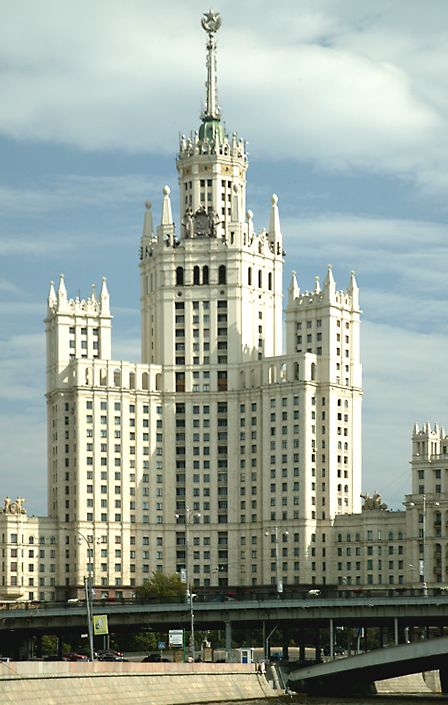
Forced labour played an increasingly important part in the post-war Soviet economy, according to a policy dictated by Stalin and his ‘kitchen cabinet’ of advisers. With the ending of the war the pool of unpaid labour available for exploitation by the state grew enormously. Apart from Gulag prisoners and labour army conscripts, there were 2 million German POWs, and about another million from other Axis nationalities, who were mostly used for timber-felling, mining and construction, although those with skills were employed occasionally in Soviet industry. In some factories German POWs were so integral to production that detention camps were built on the factory grounds and officials tried to block the prisoners’ repatriation to Germany. The Gulag population also grew, despite the release of many prisoners in the amnesty of 1945; the camps took in well over a million new prisoners between 1945 and 1950, largely as a result of the mass arrest of ‘nationalists’ (Ukrainians, Poles, Belorussians, Latvians, Lithuanians and Estonians) in territories captured or reoccupied by the Red Army but never really reconciled to Soviet power. The Gulag system expanded into a vast industrial empire, with 67 camp complexes, 10,000 individual camps and 1,700 colonies, employing a captive labour force of 2.4 million people by 1949 (compared with 1.7 million before the war). Overall, it is estimated that conscript labourers represented between 16 and 18 per cent of the Soviet industrial workforce between 1945 and 1948. They were especially important in the mining of precious metals in cold and remote regions where free labour was very expensive, if not impossible, to employ (hence their contribution to the Soviet economy was even more significant than the figures would suggest). Slave labour also made up the workforce in the big construction projects of the late 1940s which came to symbolize, officially at least, the post-war confidence and achievements of the Soviet system: the Volga–Don Canal; the Kuibyshev hydro-electric station; the Baikal-Amur and Arctic railways; the extensions to the Moscow Metro; and the Moscow University ensemble on the Lenin Hills, one of seven wedding-cake like structures (‘Stalin’s cathedrals’) in the ostentatious ‘Soviet Empire’ style which shot up around the capital in these years.

The post-war years saw a gradual merging between the Gulag and civilian economies. Every year about half a million Gulag labourers were contracted out to the civilian sector, mostly in construction, or wherever the civilian ministries complained of labour shortages; about the same number of free labourers, mostly specialists, were paid to work in Gulag industries. The Gulag system was increasingly compelled to resort to material incentives to motivate even its forced labourers. The population of the camps had become more unruly and difficult to control. With the amnesty of about a million prisoners in 1945, mainly criminals, who had their sentences either reduced or annulled, the camps were left with a high proportion of ‘politicals’ – not the intellectual types who filled the camps in the 1930s but strong young men who had fought as soldiers in the war, foreign POWs, Ukrainian and Baltic ‘nationalists’ – who were hostile to the Soviet regime and not afraid of violence. Without a system of rewards, these prisoners simply refused to meet the set targets. The cost of guarding the prisoners was also becoming astronomical. By 1953, the MVD was employing a quarter of a million guards within its camps, spending twice as much on the upkeep of the Gulag than it received in revenue from its output. Several senior MVD officials were seriously questioning the effectiveness of using forced labour at all. There were even mooted plans, supported by Beria and Malenkov, to dismantle sections of the Gulag and convert the prisoners into partially civilian workers, but since Stalin was a firm supporter of the Gulag system, none of these ideas was seriously proposed.

Leave a comment

Filed under economics, labor, nationalism, Russia, USSR, war

Resistance, Collaboration, Passivity, Pétainism

From The Unfree French: Life Under the Occupation, by Richard Vinen (Yale U. Press, 2006), pp. 277-279:

What does [Service du Travail Obligatoire (the wartime labor draft)] tell us about the broader nature of the Vichy regime? Most obviously, it shows how resistance, collaboration, passivity and Pétainism always overlapped. Not everyone who evaded STO, or who helped others to do so, was a resistant. Some réfractaires specifically refused to recall their experience in terms of the Resistance or, like Yves Laurent, they distinguished between Resistance and resistance. Some people avoided STO in ways that involved serving the German war economy or even in ways, such as joining the Milice, that involved outright collaborationism. The very confusion of labour policy in France in 1943 and 1944 makes it hard to classify actions in simple categories. Vichy was divided, as some officials sabotaged policies that were pursued by others. The Germans, too, were divided. Different leaders in Berlin had different views about how best to exploit French labour and, especially in 1944, German agencies in France were desperate to secure their own labour supplies even if they did so at the expense of other German employers. The result of this was that many people ‘resisted’ STO by ‘collaborating’ with some German agency.

Response to STO was not, however, simply a matter of institutions and political structures. Such responses were also rooted in French society. In important respects, the orders of Vichy and the Germans were mediated through French society. The direct use of physical force was rarely effective. Such force could frighten the whole community but it could not track down particular individuals, and violence by outsiders broke down the subtle networks of cohabitation on which the occupation rested. Vichy and the Germans could only make STO work by securing the cooperation of powerful individuals—not just, perhaps particularly not, people who held formal positions. This inevitably meant that the social hierarchies counted for much in the implementation of STO. Some of these hierarchies dated back before 1940. A young man who entered a grande école in 1940 stood a good chance of avoiding STO; a young man who entered Santé prison in 1940 stood almost no chance of avoiding it: it was highly likely that such a person would have ‘volunteered’ in order to escape the high mortality rates of Vichy prisons before 1943 and, if not, he would have been taken in handcuffs to the Gare du Nord.

Pre-war hierarchies were, however, modified by the special circumstances of the occupation. Members of the grande bourgeoisie were protected from being sent to Germany but often had to endure considerable discomfort in order to achieve this. Members of the urban lower middle class were probably less privileged in the context of STO than almost any other social group, including those who would have stood below them before 1940. Agriculture, sometimes a poor relation before 1940, did well and young peasants were probably the only social group who sometimes managed to avoid STO without enduring any other serious inconvenience.

Rooting STO in its social context means recognizing the degree of complicity in its execution. This complicity did not just involve institutions and elites. The very people that requis de travail [labor draftees] trusted—local notables and, most of all, their own fathers—often encouraged them to go to Germany. Men in authority (and it was mainly men who encouraged departures to Germany) felt that STO was a lesser evil. The departure of a particular cohort of young men, who had thus far avoided military service, was seen as a price worth paying to protect their communities and families from reprisals. As time went on, this calculation changed. The Germans and their French allies had more and more difficulty in tracing particular réfractaires or those who helped them and were increasingly prone to respond with random acts of violence. STO’s legitimacy diminished as it became clear how harsh would be the fate of those who had gone to Germany, and the chances of avoiding it increased as the liberation approached and the Maquis expanded. By the summer of 1944, the circumstances that had made many feel that young men should obey orders to go to Germany in the summer of 1943 seemed remote. By the time the surviving requis de travail returned home in the summer of 1945, the logic that had seemed to require their departure no longer fitted into France’s vision of herself. Some requis now found that they were blamed for going by the very men who had refused them help when they had tried to find escape routes, or that they were encouraged to keep quiet about their experiences by their own families.

Leave a comment

Filed under France, Germany, labor, war

Another Profile of Japan’s Brazilian Workers

Associated Press reporter Joseph Coleman recently talked to a few people in Oizumi, home of Japan’s largest Braziltown, in international Ota City in Gunma Prefecture just north of Tokyo, and just across the river from the recent Outlier haunt of Ashikaga City in Tochigi Prefecture. It’s no surprise that the children of the immigrant workers seem to be having trouble fitting into either culture.

A labor shortage during the economic boom of the late 1980s produced a change in visa laws to let in descendants of Japanese emigrants. But if officials figured the immigrants would blend easily back into Japanese society, they were disappointed.

Today, Japan’s 302,000 Brazilians are its third-largest foreign minority after Koreans and Chinese. Watanabe and the other foreigners of Oizumi are the human legacy of that policy.

Instead of a chain of schools to absorb the newcomers into Japan, the reverse seems to be happening.

In 1999 the Brazilian education company Pitagoras opened a school in Ota, a town neighboring Oizumi, to improve the foreign children’s Portuguese and prepare them for a possible return to Brazil. Japan now has six Pitagoras outlets.

Maria Lucia Graciano Franca, a teacher at the Ota school, said many of the workers’ children speak neither Portuguese nor Japanese well and have trouble fully adjusting to life in Brazil or Japan.

“They go back to Brazil, they stay for a while, and they come back here,” she said as children practiced dance moves for a school concert. “And the ones who stay in Japan follow the same route as their parents – they work in the factories.”

The grown-ups are torn too.

Leave a comment

Filed under Brazil, Japan, labor

Migrant Heroes from the Philippines

From Global Cinderellas: Migrant Domestics and Newly Rich Employers in Taiwan, by Pei-Chia Lan (Duke U. Press, 2006), pp. 44-47 (footnote and reference citations omitted; reviewed here):

Today the Philippines is the biggest labor-exporting country in Asia and is ranked second in the world after Mexico. As of December 2003, the number of Overseas Filipino Workers (OFWs) was estimated to be 7.7 million; the population of the Philippines is some eighty million. Forty-three percent of these emigrants were on temporary contracts, 68 percent of which were placed in Asia. The remittances sent by OFWs are the Philippines’ largest source of foreign exchange, contributing US$7 billion to the national economy in 2003….

The primary destinations of labor emigration in the Philippines have gradually switched from North America and Europe to West, East, and Southeast Asia. Among the land-based OFWs deployed from 2001 to 2004, 46 percent of them were located in the Middle East, 41 percent departed for East and Southeast Asia, and only a small number went to North America (1.7 percent) and Europe (6.7 percent). Taiwan has become a major host country for Filipino migrants since the mid-1990s. In 1998 it was the second-most-popular destination for newly hired migrants from the Philippines, next to Saudi Arabia, and in 2004 it was the fifth major destination, after Saudi Arabia, Hong Kong, Japan, and the United Arab Emirates.

Filipino workers have occupied a dominant position in the global labor market because of their proficiency in English and level of education. Both male and female OFWs are well-educated: over half have completed college or have at least taken some college subjects, and one-third complete secondary education. But the large outflow of experienced, skilled, and professional human resources constitutes a brain drain that poses a threat to development in the Philippines.

Annual changes in the numbers of overseas Filipino workers have pointed to a growing trend toward feminization. Women constituted only 18 percent in the 1980 outflow of OFWs, but that percentage rose to 36 in 1987 and 69 in 2002. Most women are employed in service occupations such as housemaid, caregiver, and entertainer. Domestic work accounted for one-third of overseas female deployment in 2002, despite the fact that most Filipina migrants were educated and skilled workers.

Some demographic characteristics of Filipina migrant workers deviate from the profiles of male migrants. The majority of migrant women are in their late twenties and early thirties, younger than their male counterparts, who are mostly in their thirties and forties. Official statistics provide no details about the marital status of OFWs. One survey showed that the majority of Filipina migrants were single (56 percent) while 37 percent were married. In contrast, a much larger proportion of male migrants were married (71 percent), and only 27 percent were single. The differences suggest that the decisions to migrate are embedded in the gender roles and ideologies in the Philippine family. Also, migrant women tend to face greater difficulties than their male counterparts in building or maintaining a family during their overseas journey.

Labor migration in the Philippines fluctuated in reaction to several crises in the 1990s. The Gulf War in 1991 resulted in the repatriation of 30,000 workers, mainly from Kuwait. Overseas deployment declined by 13 percent in 1995 after the hanging of Flor Contemplacion, a Filipina domestic worker found guilty of murdering a Filipina coworker in Singapore. To mitigate the public outcry over this case, the Ramos government banned deployment to Singapore for a short period. The Congress passed the Migrant Worker and Overseas Filipino Act (RA8042) in 1995 to announce its intention to ensure the welfare of migrants. But legal protection has proved to be nothing but a symbolic measure, and the halo of “national hero” only glows when politicking takes place.

1 Comment

Filed under labor, Philippines, Taiwan

Migrant Maids from Indonesia

From Global Cinderellas: Migrant Domestics and Newly Rich Employers in Taiwan, by Pei-Chia Lan (Duke U. Press, 2006), pp. 49-50 (footnote and reference citations omitted; reviewed here):

Religion has also played a significant part in migration links between Indonesia and Saudi Arabia. Muslim Javanese work abroad to make money as well as to make a pilgrimage to Mecca. Some work agreements even state that employers must fund their workers to go on the haj at the end of their work contracts. If Saudi Arabia can be seen as a destination for Muslim pilgrims, then newly rich Asian countries might be seen as a capitalist version of Mecca, hosting an increasing number of Indonesian migrants making a secular pilgrimage to modernity.

Taiwan has been a popular destination for Indonesian migrant workers except for the two-year period of government ban (from August 2002 to December 2004). The number of Indonesian migrant workers in Taiwan grew with amazing speed: in 1991 there were only 10,000 Indonesian workers, but the number reached over 90,000 in 2001. Most Indonesian migrants in Taiwan are women from East Java, and the majority of them are placed in private households. Parallel to the increase in Indonesian housemaids was a decline in Filipina migrant workers. A similar transition also occurred in Hong Kong and Singapore. The share of Filipinas among all foreign domestic workers in Hong Kong decreased from 85 percent in 1995 to 72 percent in 2000, while the number of Indonesian migrant domestic workers tripled. In Singapore, Indonesian migrants only amounted to 20 percent of foreign domestic workers in 1995, but one recruitment agency has estimated that about 70 percent of newly hired foreign domestic workers are now from Indonesia.

Indonesia has become a major source for housemaids across Asia. Women have dominated the official outflow of labor migrants in the last two decades. Domestic service accounted for 70 percent of overseas jobs between 1984 and 1989, and 60 percent between 1989 and 1994. Almost 95 percent of migrants engaged in domestic service were women. Surveys of Indonesian female migrants found that they tend to be in their twenties or early thirties and have relatively low levels of education. Migrant women tend to be single or divorced, with the exception that married women are predominant among housemaids in Saudi Arabia….

The fact that Indonesia is the only Islamic country in Asia that allows the recruitment of women as housemaids overseas has nevertheless made some Indonesians uncomfortable, particularly social elites. In 1997 the then Minister of Women’s Affairs urged the government to ban the export of housemaids because women, as the pillars of the nation, should be treated with respect. Twice, in 1980 and 1986, the government placed a ban on sending domestic servants to the Middle East in response to prevalent cases of rape and abuse, including one case in which an Indonesian household worker was sentenced to death for murdering her employer in Saudi Arabia. These bans were lifted only a few years or months after their imposition. Nana Oishi has pointed out that in Asia the emigration policies for female migrants are more value-laden—driven by social values and moral concerns—than policies for male migrants. Indonesia is no exception to this. Women must be at least twenty-two years old to work abroad, and they need to present letters of permission from their father or husband upon application. The state policy of emigration is torn between the moral discourse of “protecting” women and the economic interest of promoting them as better servants than migrant women from competing countries.

Leave a comment

Filed under Indonesia, labor, Taiwan