Morobe Field Diary, June 1976: Sago Work

I’m just back from a trip to the former Numbami village of Karsimbo for the purpose of getting a breath of fresh air (kisim nupela win) and getting sago starch (paitim saksak). I had a chance to observe the process of producing edible sago from start to finish so I’ll attempt a description.

First a suitable tree [Metoxylon sagu] is selected. One near a stream is best so the pulp won’t have to be carried far to wash. A man chops down the tree, which is a thorny son of bitch and the kaunsil borrowed my zori [rubber slippers] to do the job. Then the outer bark is removed with an axe or, less effectively, with a bushknife (busnaip). The men usually do such work but women may participate. It’s a matter of practicality, not custom. The inner bark is then stripped in slats with the aid of a siala, a large digging stick used also for making holes to plant taro in the garden–a smaller version is stuck in the ground and used to husk coconuts.

The strips of inner bark are then used to catch the pulp. This leaves the pinkish white inner fibery trunk of the tree ready and waiting submissively for you to hammer the crap out of it with a wanginda, a tool with an adze-like handle and a head of anything from a flat, sharp-edged stone to any old shell casing or length of pipe. The handles vary from child- to man-sized thicknesses. Pounding is not limited to one sex or the other and is the most tiring of the chores associated with kundu/saksak/sago palm. Being unskilled immigrant labor my job is mostly pounding which I do rather effectively after my first attempt in which I broke the head (a huge nut of iron) off one wanginda and blistered my hands badly. It requires some skill to combine chopping a piece off the log and smashing the stuff previously chipped off to a fine enough consistency to yield plenty of powder, kundu ano or ‘true sago’ [or ‘sago essence’], when washed. This time I was permitted to do a third of one medium-sized tree and half of a small one (12-14″ diam. 10-12′ long).

Meanwhile a man constructs a washing machine [or chute] of a section of the outermost covering [of a sago branch] something like a [huge] stick of celery. In the wide mouth of it, he arranges the coconut webbing to filter the fiber out of the powder as he pours water thru it and turns it and squeezes it. The orange colored water runs down the celerylike [stalk] to a hole thru which it drains into a mat of the leathery husk [sheath] of some tree–people in Yap used something similar to sit on when meeting out in the open and theirs was from the areca palm. The coconut tree webbing and the mat, called yáwanji > yáunji, are the only parts of the washing machine to be reused. The hole is plugged with green fiber that both blocks the water from escaping down the rest of the open tube and conducts it down into the mat. [See more images of sago pounding and washing (scroll down).]

The washed pulp (ulasa) is built up around the edges of the mat for support as it gets fuller. When a lot of sago is a-beating several washers are set up. Only men wash and only women (& children) carry the pulp from tree to washer. When all is washed (-lomosa) the powder, kundu ano, will have settled to the bottom in a heavy pasty mass and the water is then drained off (-lapa tina tomu) [‘beat water apart’] and the paste scraped off and shaped into large rectanguloid lumps. Green sago fronds are then laid on the ground and the lumps burnt on top of them with dry fronds (damu meaning both ‘torch’ and ‘dry frond’ the two being one). The burnt skin of the lumps (baloga) is sweet and considered a treat. The mat is carefully scraped of all the powder, odd bits being dumped in a pan for the dogs. After that the lumps are carried back with the coconut webbing (gogowa–sorry, this is the tube, nuta is the webbing, the laplap (lavalava) bilong kokonas). Bihain [= later] the kaunsil agrees to put the whole thing on tape for me in Binga Numbami; he practiced a bit just now and I could follow most of it fairly well, having seen it all and catching the right cues here and there.

Leave a comment

Filed under Papua New Guinea

Aging Asia

“The impending tempo of population aging in China is very nearly as rapid as anything history has yet seen,” says Nicholas Eberstadt in “Power and Population in Asia” in the Hoover Institution’s Policy Review, No. 123. “Although China’s population will hardly be as elderly as Japan’s by 2025, its impending aging process promises to generate problems of a sort that Japan does not have to face. The first relates to its national pension system: Japan’s may be financially vulnerable, but China’s is nonexistent.”

At this juncture … sub-replacement fertility is thought to characterize every country and locale in East Asia save tiny Mongolia. In Southeast Asia, Singapore and Thailand are already sub-replacement societies, and Indonesia appears to be rapidly closing in on the replacement fertility level. As for South and Central Asia, Sri Lanka and Kazakhstan are outposts of sub-replacement fertility within the region.

Russia’s decline is much farther along.

Modern Russia has given the lie to the ameliorative presumption that literate, industrialized societies cannot suffer long-term health declines during times of peace. According to Moscow’s official calculations, the country’s life expectancy was lower in 2001 than it had been in 1961-62, four decades earlier. For Russia’s men, life expectancy had dropped by almost five years over that interim–but female life expectancy was also slightly down over that period. This anomalous circumstance could not be entirely attributed to the deformities of communist rule, for both male and female life expectancy were lower in 2001 than in 1991, the last year of Soviet power….

In absolute arithmetic terms, this Russian mortality crisis qualifies as a catastrophe of historic proportions. Over the extended period between 1965 and 2001, age-standardized mortality for Russia’s men rose by over 40 percent. Perhaps even more surprising, it also increased for Russia’s women by over 15 percent.

Another looming problem for East Asia is the sex ratio, expressed in terms of the number of males for every 100 females.

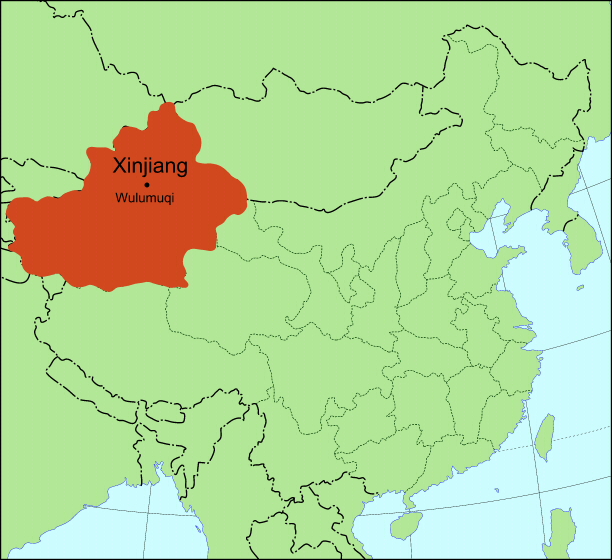
China’s tilt toward biologically impossible sex ratios at birth seems to have coincided with the inauguration of its coercive antenatal “one child policy,” which was unveiled in 1979. Is Beijing’s population control program responsible for these amazing distortions? A tentative answer would be yes–but not entirely. In other Chinese or Confucian-heritage populations where oppressive population control strictures were not in force–Hong Kong, Taiwan, Singapore, South Korea–unnatural sex ratios at birth also emerged in the 1980s and 1990s. In these other spots, the confluence of son preference, low fertility, and sex-selective abortion likewise have distorted the sex ratio at birth–although nowhere so much as in China today. In most of those other locales, moreover, recent data suggest that sex ratios at birth are lower than they were in the early 1990s (Taiwan, South Korea) or even the 1980s (Singapore), while China’s rise shows no signs of reversing…. Only two provinces in the entire country–the non-Han regions of Tibet and Xinjiang–reported sex ratios within the biologically normal human range. At the other end, three provinces (Hubei, Guangdong, and Anhui) tabulated child sex ratios of almost 130–while three others (Hainan, Hunan, and Jiangxi) returned with ratios of over 130.

So where can we look to balance these trends?

Interestingly enough, the Asian Pacific power with the most strategically favorable profile may be one that we have not yet discussed: the United States.

By the UNPD’s [United Nations Population Division’s] medium variant projections, the United States is envisioned to grow from 285 million in 2000 to 358 million in 2025. In absolute terms, this would be by far the greatest increase projected for any industrialized society; in relative terms, this projected 26 percent increment would almost exactly match the proportional growth of the Asia/Eurasia region as a whole. Under these trajectories, the United States would remain the world’s third most populous country in 2025, and by the early 2020s, the U.S. population growth rate–a projected 0.7 percent per year–would in this scenario actually be higher than that of Indonesia, Thailand, or virtually any country in East Asia, China included.

In these projections, U.S. population growth accrues from two by no means implausible assumptions: (1) continued receptivity to newcomers and immigrants and (2) continuing “exceptionalism” in U.S. fertility patterns. (The United States today reports about 2.0 births per woman, as against about 1.5 in Western Europe, roughly 1.4 in Eastern Europe, and about 1.3 in Japan.) Given its sources, such population growth would tend, quite literally, to have a rejuvenating effect on the U.S. population profile–that is to say, it would slow down the process of population aging. Between 2000 and 2025, in these UNPD projections, median age in the United States would rise by just two years (from 35.6 to 37.6). By 2025, the U.S. population would be more youthful, and aging more slowly, than that of China or any of today’s “tigers.” (Furthermore, to state the obvious, neither a resurgence of HIV/AIDS nor an eruption of imbalanced sex ratios at birth look to be part of the U.S. prospect over the decades immediately ahead.)

Of course, such population projections always assume that humans will just keep doing what they always do, regardless of changing conditions. Fortunately, most humans have minds capable of adapting their behaviors to new circumstances.

via Arts & Letters Daily

Leave a comment

Filed under China, Indonesia

Morobe Field Diary, June 1976: Naive Ethnomusicology

It’s Sunday and Friday nite I was expecting to get into town (or leave for town, which means getting in Saturday morning). A bunch of people from the Kui, Siboma and Paiawa church circuit [or parish?] have to go build a house for a big church meeting in September of the Lae or Morobe Parish [or circuit?] so they will use the [M.V.] Sago to carry all and drop them on the way to town, do their business (and me do mine) and pick them up on the way back. So I’m writing letters like mad to mail when I get into town.

The church service reminded me to write something about the music. All songs are in Yabêm and the words are in a hymnal without the notes, only marks indicating repetition [where to repeat]. Some of the songs are translations from German standards and are immediately recognizable from their steady beat, be it fast or slow (usually quite plodding), as it proceeds, Westernly from bar to bar. The others are local compositions with the author’s name and place at the bottom and these are recognizable by a rhythm that goes from crescendo to crescendo. They usually build up slowly on the men’s voices which carry the low tones [pitch] and gradually pick up the women who usually trail a bit behind the men and carry the crescendo to its peak in high tones [pitch] and at a much greater amplitude since all voices are contributing. The men then beat the women to the beginning of the next cycle, the song often carried by just one person at first then by more and more till the next crescendo peak. So one is a bar and staff rhythm, the other a crescendo to crescendo rhythm. Thus endeth my first attempt at ethnomusicology.

UPDATE: Recommended reading for specialists: Mission and Music: Jabêm Traditional Music and the Development of Lutheran Hymnody, by Heinrich Zahn [1880-1944]. Translated by Philip W. Holzknecht. Edited by Don Niles. Boroko: Institute of Papua New Guinea Studies, 1996.

“This entire work is a fitting tribute to one of the little-recognized–but hardly “unsung”–heroes in the development of Jabêm music and literature.” –Oceanic Linguistics 36 (December 1996) (Read full review)

“[Zahn’s] feeling for context almost makes him a contemporary of the sociologically oriented ethnomusicologists of today such as for example Thomas Turino.” –Oceania Newsletter 21 (September 1998) (Read full review)

Leave a comment

Filed under Papua New Guinea

Morobe Field Diary, May 1976: An Injured Child

The other day some women came back from their garden with a [c. 3-year-old] kid who had sliced off the top joint of his ring finger. It took some discussion before they asked me for medicine and bandage. I had only some of those sterile gauze pads and bandaids along with disinfectants but nothing to stop the bleeding and felt pretty useless but it turned out they decided to put kambang, the [slaked] lime chewed with betel nut, on as a disinfectant and I have an ample supply of that. I measured some out on my knife blade and put it on the cotton and one guy tied up the bandage. When they took the original bandage off blood shot out of the finger. They said later that the kambang would act as a poultice and when it went to work that nite the kid would not feel in the best of spirits. A doctor came or they took the kid to the doctor in the next village and he gave a penicillin shot and rebandaged the wound and yesterday the guy who did most of the original doctoring came to get my disinfectant powder and some bandaids so the wound seems to be healing all right. Since then I have been of slitely more use in dispensing aspirins, one cold tablet, and bandaids. Next time in town I plan to get more aspirins and some stomach marasin for me. My host’s wife gets migraines.

Leave a comment

Filed under Papua New Guinea

The "Cultural Glue" of Chinese Writing

In the introduction to a new reader in traditional Chinese culture, Victor H. Mair suggests that the culture embodied in the unique Chinese writing system has served as the “glue” that maintained continuity in the face of constant buffeting from every direction.

China’s society was not static and its culture was far from unvariegated. Coupled with the cyclical collapse of dynasties, this sociocultural volatility might well have led to the utter disintegration of Chinese civilization. What, then, held it together? What was the quintessential glue that prevented the dissolution of “this culture [of ours]”? We have no hesitation whatsoever in declaring that it was none other than dedication to the hallowed culture itself, bearing in mind that wen [Ko. mun, Jp. bun] means both “culture” and “writing.” That is to say, it was the traditional culture (wenhua) [Ko. munhwa, Jp. bunka] and all its attendant values, as embodied in the sacred script (wenzi) [Ko. munja, Jp. mo(n)ji] that bound Chinese civilization in a cohesive and enduring whole. By dint of diligence and through the good fortune of privilege, approximately 2 percent of the populace in premodern China attained full literacy and all the perquisites that pertained to it, which were not inconsiderable.

Given that full literacy normally brought with it both prestige and pecuniary benefit, it is small wonder that many men devoted their lives to the acquisition and exercise of the ability to write well. (With a few very rare exceptions, women were excluded from the enterprise of fine writing.) Those accustomed to universal literacy using an alphabetic script and a living, vernacular language, may find it hard to imagine the exceptional effort required to gain an advanced degree of competency in a highly allusive, dead (i.e., not used for speech) language written with an elaborate logographic script. For those who did put forward the required exertion, their command of the script, plus the satisfaction of knowing that they were contributing to the preservation of Chinese culture, made it all worthwhile.

In a footnote, Mair notes that “strictly speaking, the Chinese characters are not logographs, because not every character is equal to a word. Much less are the characters ideographs, a term that is often irresponsibly applied to them. Technically speaking, the Chinese script may be designated as morphosyllabic or semantosyllabic. The grounds for such a designation are outlined in John DeFrancis, The Chinese Language” (U. Hawai‘i Press, 1984).

With the twentieth century, however, the combination of culture and script began to unravel. With the overthrow of the Qing (Manchu) dynasty in 1911 by revolutionaries led by Sun Yat-sen (1866-1925), the institutional support for the examination system that upheld “this culture [of ours]” evaporated. By 1919, progressive intellectuals were promoting writing in the vernacular, and radical activists were proposing the adoption of an alphabetic script. A direct assault on the script itself came with the promulgation of thousands of simplified characters by the Communist government during the 1950s and 1950s. An outrageous affront to those who cherish the script and all that it embraces, the simplified characters were seen by reformers as essential for expanding literacy to workers and farmers and necessary for the sake of efficiency in diverse types of communication.

By the end of the twentieth century and the beginning of the twenty-first century, a new threat to the traditional script was emerging: the computer. IT (information technology) specialists are acutely aware of the tremendous stumbling blocks in the way of free and easy access to electronic data processing by users of Chinese characters. The input, storage, and management of a script consisting of tens of thousands of discrete elements poses mind-boggling problems in comparison with the couple hundred letters and typographic characters of the ASCII (American Standard Code for Information Interchange). The economic costs in terms of vastly larger memories, slower manipulations, more frequent crashes and bugs due to overly intricate programming, and so forth are staggering.

One of the most poignant ironies of the saga of characters in computers is that the alphabet has come to their (partial) rescue. Of the hundreds and hundreds of schemes that have been devised for inputting Chinese characters in computers, by far the most popular are those relying on the alphabet. And, of the alphabetic schemes, those that rely on whole words rather than single syllables are much more user-friendly and computer-friendly. For example, both computers and human beings find it easier to analyze the following eight syllables of a journal title as Zhongguo lishi dili luncong (Collected Papers on Chinese Historical Geography) than as zhong guo li shi di li lun cong (central kingdom successive scribe/history ground principle discussion cluster). Herein lurks a danger. Once computers and human beings get used to parsing strings of syllables into words rather than resolutely keeping them separate, alphabetic inputting is on its way to becoming an independent script.

The defenders of the characters, who also view themselves as defenders of the last bastion of Chinese culture, have not been slow to recognize this threat, and they have been adamantly opposed to any hint of a move toward legitimation of the formal establishment of what is called fenci lianxie (‘word division’). Throughout history, Chinese scholars have always resisted the insertion of spaces between words. In fact, until the twentieth century, there was no concept of ci (‘word’), only that of zi (‘[syllabic] graph/character’). Despite the vociferous opposition of the defenders of characters, the Chinese government has officially established a set of Basic Rules for Hanyu Pinyin Orthography and private software companies and individuals are producing their own refinements apace.

Willy-nilly, pinyin orthography is becoming a reality.

Does that mean the cultural glue is cracking apart?

Leave a comment

Filed under China

Tsaatan Reindeer Herders in Mongolia

Most Mongolian nomads herd either sheep, goats, horses, cattle, or camels, but in the far north (around Lake Hövsgöl near Mörön) a small number herd reindeer, among them a people called the Tsaatan, in whose language tsaat means ‘reindeer‘. The Mongolian linguist Zandan Enebish profiles them in an article in IIAS Online Newsletter 26. Like horse herders, the Tsaatan use reindeer as pack animals and consume their milk in a variety of forms, but they do not slaughter their herds for meat.

According to L. Bat-Ochir Bold (Academy of Science of Mongolia), there are approximately 500 Tsaatan people living in Mongolia. They do not introduce themselves as Tsaatan, especially not to Darkhad and Uriankhai, who, almost as a rule, consider [them] a very strange and uncultured people…. The Tsaatan are somewhat familiar with the Mongolian language, but they have managed to preserve their unique ‘Tsaatan’ language among themselves. According to Bold, the Tsaatan language shares strong linguistic ties with the ancient ‘Uigur’ language.

The worldwide charity and ecotourism industrial complex seems to have the Tsaatan firmly in its sights, but their linguistic affiliation remains obscure. Ethnologue does not list Tsaatan even as an alternate name of any of the languages in Mongolia. Among the languages in Hövsgöl Aimag, north Mongolia, it lists Darkhat, an eastern Mongolian language with about 4,500 speakers (1956 census); Uriankhai, an alternate name for Tuvin (Tuvan), a northern Turkic language with about 27,000 speakers (1993 source); and Uyghur, an eastern Turkic language with only 1,000 speakers (1982 est.) in Mongolia, but more than 7,200,000 in China (1990 census).

Color me cynical, but I wonder if the “Tsaatan language” isn’t being deliberately exoticized, along with everything else about the Tsaatan people and their unique lifestyle.

Leave a comment

Filed under China, Mongolia

Germans in Hawai‘i: Beer, Bible, Music, Commerce, Grammar

In 2000, the Lutheran Church in Hawai‘i celebrated its 100th anniversary. But Germans in Hawai‘i go back much farther than that.

  • Heinrich Zimmerman, who arrived with Captain James Cook in 1778, published his own journals in Germany three years before Captain Cook’s official English version was released.
  • Ship captain Henry Barber from Bremen, Germany, made his name by running an English ship aground at Kalaeloa (‘the long cape’) on O’ahu, later named Barber’s Point (and now renamed back to Kalaeloa).
  • The German scholar Adelbert von Chamisso, a naturalist who arrived in 1815 aboard Captain Otto von Kotzebue’s Russian brig Rurik, wrote one of the first Hawaiian grammar books.
  • Claus Spreckles, a California sugar refiner, found his business greatly threatened by the Kingdom of Hawai‘i’s 1876 reciprocity treaty with the United States. Rather than fight the treaty, he sailed to Hawai‘i and immediately bought half the sugar crop of 1877 just before its value skyrocketed. His innovations in sugar planting included steam plows, electric lights, railroads for hauling cane, and controllable irrigation.
  • Sprecklesville in Maui, and Spreckles Street, Widemann Street, Hausten Street, Isenberg Street, and Hamm Place in Honolulu, all signify the heritage of Germans in Hawai‘i.
  • The Deutsch-Evangelisch-Lutherische Gemeinde zu Honolulu was founded in 1900. The Hackfelds and Isenbergs each donated $25,000 to build it and import a pastor and pipe organ from Germany. Henri Berger, Royal Hawaiian Band bandmaster and composer of the state anthem “Hawaii Pono‘i,” was a charter member and the first organist.
  • Rev. Arthur Hörmann who came as pastor in 1916 at the instigation of his brother-in-law, who managed the old Primo Brewery, would later tell people he came to Hawaii “for beer and the Bible.”

World War I changed everything. According to “The Effect of World War I on the German Community in Hawaii” by Sandra E. Wagner-Seavey in The Hawaiian Journal of History 14 (1980): 109-140:

  • In October 1914, two Japanese warships, the Hizan and Asama, arrived off Honolulu to intercept the German warship Geier and its collier Locksun, which were then interned in Honolulu under very friendly conditions until February 1917, right after the U.S. severed relations with Germany, when Honolulu authorities discovered that the German crews had sabotaged much of the machinery aboard their ships.
  • In June 1917, U.S. Army Private Luisz Sterl was sentenced to hard labor and dishonorably discharged for treasonously refusing to fight in France and disparaging U.S. troops sent there to fight.
  • A devastating anthrax epidemic aroused suspicions (never proved) against Max Weber, a German timekeeper at Pioneer Mill.
  • Many Germans lost their jobs, including Minna Maria Heuer, an assistant professor of German and French at the College of Hawaii, who failed her loyalty test. She then taught at the German language school in Lihue until it was forced to shut down in 1918.
  • Under the Rev. Dr. Arthur Hörmann’s guidance, the Lutheran church changed from a German-speaking, foreign-based congregation to an American church. English services were introduced gradually and both languages were used in the ministry until 1941, when the U.S. entered World War II and the church legally became “The Lutheran Church of Honolulu.”
  • In 1918, H. Hackfeld & Co. was reorganized as American Factors, and the B. F. Ehlers & Co. department store was reorganized as Liberty House (which lasted until Macy’s bought it out in 2001).

“By the end of the war, there was no longer a German community in Hawaii, as there once had been. Germans had lost their jobs, church, leadership, and the respect of their neighbors. Many had migrated to the West Coast to escape persecution. Those who remained assimilated into the greater haole community, some by anglicizing their names. Young Germans after the war did not renew their cultural ties to Germany. They kept no German publications or customs, spoke no German, and did not even use German gestures. Their homes were 100% American and so were they. The German community simply disappeared.”

Leave a comment

Filed under Germany, Hawai'i

Traditional China: Multiethnic

The following excerpt from the introduction by Victor H. Mair to a new reader in traditional Chinese culture now in the works emphasizes the multiethnic nature of traditional China.

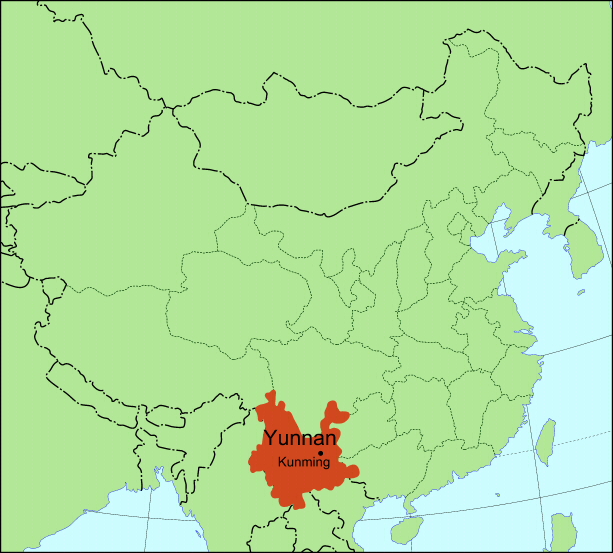
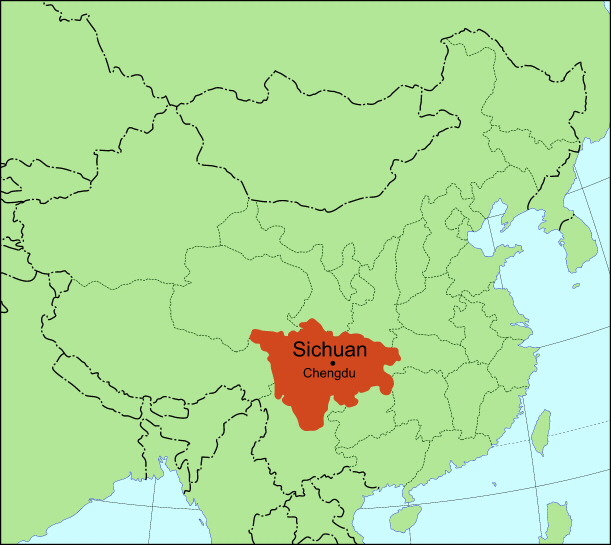
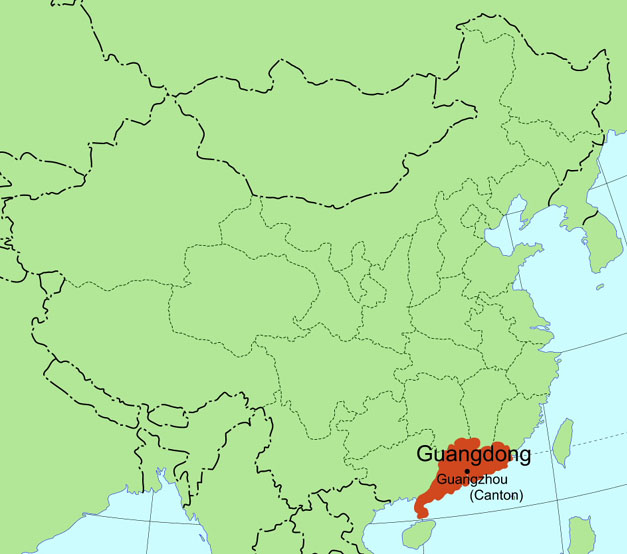
Linguistic multifariousness is only one of the more obvious features of “the Chinese mosaic.” The same may be said of almost any other aspect of Chinese culture and society. Perhaps the most obvious symbol of Chineseness in the larger world is cuisine. Yet it is impossible to point to any particular type of fare that stands for Chinese cooking in general. Hot pots have a Mongolic ancestry, pasta products are derived from Central and Southwest Asia, tea is ultimately from the hills of the Assam-Burma-Yunnan “Golden Triangle,” and so forth. Milk products are anathema to most lactose-intolerant denizens of the Central Kingdom, yet they are a staple of the people living along its northern reaches. The more sophisticated American aficionado of Chinese cooking knows very well the difference between Szechwanese and Cantonese cooking, staying clear of the former if he or she does not like spicy hot food and avoiding the latter if his or her palate is not attracted to gelatinous, gooey comestibles.

When we watch a Chinese film and see the heroine encased in a tight sheath slit to the thigh, she is basically sporting an item of Manchu dress. Some Chinese (those who wanted to ride horses) began to wear trousers in the latter part of the fourth century B.C.E., but only because they wanted to ward off the steppe peoples who introduced the domesticated horse (and the trousers) to their land, with devastating consequences. In premodern times, it would not have been difficult to recognize the ethnicity of a citizen of the Chinese empire by his or his costume.

As for Chinese empires, there was not one of them, but a long series of dynasties, more often than not erected on the ashes of their predecessors. Also more often than not, those who established new dynasties were–a supreme incongruity–groups from the north and northwest who either were themselves “barbarians” dreaded for their awesome military prowess or who had exceptionally close affinities with them. Numerous recent archeological discoveries have led to a salutary reconsideration of the nature of the millennial interactions between the inhabitants of the East Asian Heartland (EAH) and their septentrional neighbors. As a result, it is no longer possible to think of the latter only as “traders or raiders.” Instead, what we are finding is that–already at least from the late Neolithic period and continuing right through to the twentieth century–the northern peoples were involved not only in state formation, but also in the importation of vital cultural elements such as bronze metallurgy and the chariot. Consequently, in this Reader we place far greater emphasis than is usual upon the northern peoples, for we believe that, unless one takes them duly into account, one’s comprehension of Chinese history and appreciation of Chinese culture are bound to be flawed.

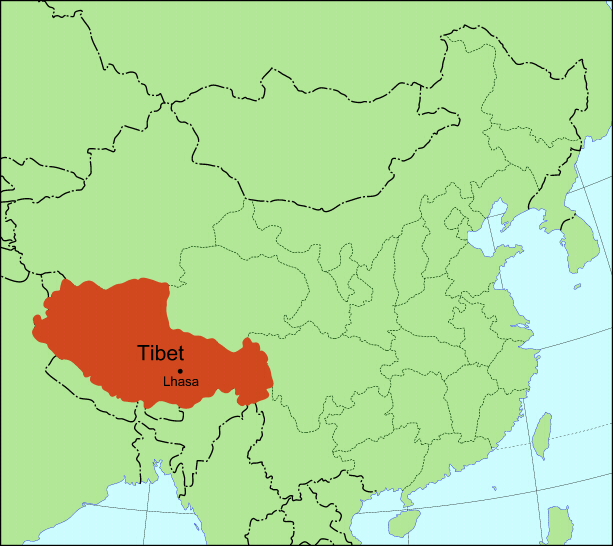
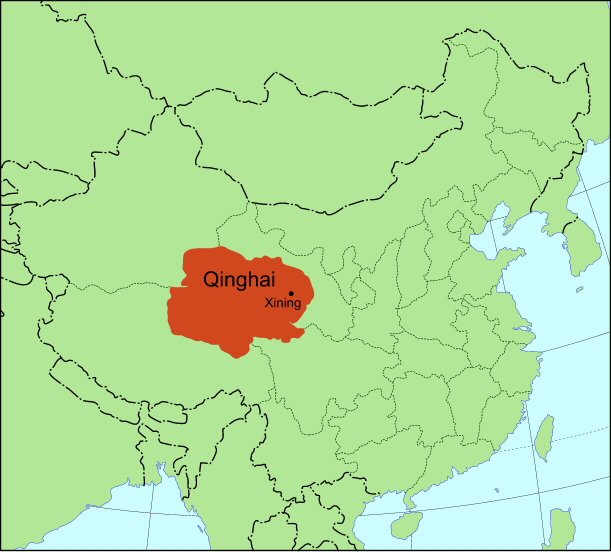
The intricacy of Chinese involvement with wide-ranging steppe peoples can be demonstrated by the derivation of Gesar … from Caesar. How, why, and when this originally Etruscan title of the Roman emperors came to be applied by the bards of a Central Asia nomadic confederation to their greatest hero is an intriguing story. What is not in doubt is that the Tibetans contested with the Chinese for hegemony during the Tang period (618-907). Indeed, the Tibetans not only occupied the strategically crucial Gansu Corridor for a century, but even invested the capital, Chang’an [= Xian, see map], for a while during the year 763 in western China and were dislodged only when the Tang authorities pleaded with the Uyghurs … to drive them off. Thus, a dynasty that was initially founded by individuals in whose veins ran nomadic blood and who maintained intimate ties with their northern ancestors found temporary salvation from destruction at the hands of northwestern nomads by a confederation of Turkic tribes (whom the Tang actually detested)–a typical series of events that recurred over and over again during the more than three thousand years of known Chinese history. We should remember, moreover, that the Tang dynasty represents the acme of cultural cosmopolitanism in East Asia. It should further be noted that the location of the Tibetans was by no means restricted solely to that of their current nation, which is occupied by Chinese troops. During the medieval period, they were also identified with the border areas to the northwest of the East Asian Heartland, and still today there are large concentrations of Tibetans in the provinces of Gansu and Qinghai.

Just as due consideration of the non-Sinitic peoples of the north and northwest is essential for any adequate study of the development of Chinese civilization, the same may be said for the non-Sinitic inhabitants of the south. Chinese culture (including Sinitic languages) marched southward slowly during the latter part of the first millennium B.C.E., gained momentum during the first millennium C.E., and was far from reaching its culmination even by the end of the twentieth century. The large and small pockets of non-Sinitic speakers that pepper all of the provinces south of the Yangtze River attest to the ongoing presence of peoples from radically different traditions within the territory of the modern Chinese state. The fusion of Chinese culture with the indigenous populations has led to a distinctive mix of regional cultures and ethniticities that is conspicuous in customs, languages, surnames, and physical types.

Leave a comment

Filed under China

Traditional China: Multilingual

A new reader in traditional Chinese culture is in the works that places long-overdue emphasis on just what a complex, multilingual, multiethnic, and multireligious place it always has been and will continue to be. Here’s an excerpt about China’s multilingualism from the introduction by the indefatigable Victor H. Mair:

For many students, this book will be part of their first systematic exposure to learning about China. As such, we wanted to make it as comprehensive as possible within the limits naturally imposed by the amount of material that can reasonably be absorbed within a single semester. One of our main goals has been to help the student realize that China is not a monolithic state with a monotonous culture and a static past. The myth of a thoroughly homogeneous, ultrastable empire, although widespread and persistent, is far from true. China never existed as a “nation of uniformity.” To the contrary, we are faced with a multifaceted country that possesses an extremely complicated history and a richly varied mix of regional and ethnic traditions.

Take language, for example. When one thinks of what defines “China,” perhaps the first thing that comes to mind is that it is a place where the people all speak “Chinese.” But what is this “Chinese” that everyone is supposedly speaking to each other? Unfortunately, China does not today possess, nor has it ever in the past possessed, such a universally understood tongue. For starters, we have to take into account the tens of millions of speakers of non-Sinitic languages who make up a significant proportion of the population of the Chinese nation as it is currently configured…. These languages belong to such disparate groups and families as Tibeto-Burman, Austroasiatic, Austronesian, Turkic, Tungusic, Iranian, and Slavic. These are the “minorities” of the Peoples Republic of China, all of whom have roots that lie deep in the past of East Asia, West Asia, Central Asia, Southeast Asia, and Northeast Asia.

And then there is the so-called majority group who, it is claimed, speak a language called “Hanyu” or “Chinese.”…

However we ultimately choose to define it, Hanyu is related in some fashion (not yet well understood by scholars) to Tibeto-Burman. Since the combined family is customarily styled Sino-Tibetan, we may–for the sake of linguistic precision–refer to Hanyu as “Sinitic” in English. Sinitic is often said to have eight (or more) major fangyan (‘topolects’ …). Among these fangyan are “Northern” (i.e., Mandarin in the broadest of terms; it actually stretches to the far southwest), Wu (typified by Suzhou and Shanghai), Xiang (Hunanese), Gan (spoken in Jiangxi), Hakka (the language of those displaced “guests” from the north who have played a particularly important role in modern Chinese history), Northern Min, Southern Min (including Amoy and Taiwanese), and Cantonese. If analyzed by the standards applied to languages in Europe or South Asia, these fangyan would be classified as branches of the Sinitic group.

Speakers from any one of the major fangyan are incapable of conversing with speakers from those of any of the other major fangyan. Even within the major fangyan or branches of Sinitic, there are numerous more or less unintelligible varieties of speech. What is more, it is essential to note that, throughout history, the fangyan have never been written down in their unalloyed form, except latterly by missionaries using alphabets. Traditionally, there have been only two acceptable forms of writing in China: Literary Sinitic (wenyan or Classical Chinese), strictly a book language …, and Vernacular Sinitic (baihua[wen]), a written manifestation of Mandarin that developed–largely under the influence of Buddhism–out of a presumed Tang-period koiné. Despite their lack of a written form, the fangyan are still vibrant. As clear indications of the continuing vitality of fangyan, Taiwanese is now the preferred mode of expression on Formosa, and the Chinese government on the mainland is constantly threatening to cashier officials and teachers who fail to learn Mandarin.

As an aside, let me note that during the graduation ceremony at Sun Wen [= Sun Yat-sen] College (now affiliated with Sun Yat-sen University [= Zhongshan University]) I witnessed in 1988, all of the administrators and teachers spoke in Mandarin, while the mayor and other local politicians spoke in Cantonese (Sun Wen = Sun Yat-sen = Sun Zhongshan).

Sinitic evolved through a complex process of interaction with the non-Sinitic languages mentioned above, borrowing (and lending) not only words, but also structures and phonemes. The internal development of Sinitic is equally intricate, such that historical linguists are still seriously puzzled over the relationships among the various fangyan, the phonology of their earlier stages, and the identification of the fundamental etyma for the group en masse.

UPDATE: Language hat adds, “Incidentally, anyone who wants a more detailed look at the linguistic situation should get hold of S. Robert Ramsey’s The Languages of China (reviewed here).” I second that endorsement. Ramsey’s book (Princeton U. Press, 1987) gives a lot of attention to the minority languages. Language hat‘s entry has also attracted a nice range of comments. See also the follow-up entry above, The “Cultural Glue” of Chinese Writing.

Leave a comment

Filed under China

Morobe Field Diary, May 1976: Sociolinguistic Notes, Kui Church Meeting

The meeting started out mostly in Tok Pisin and was conducted in parliamentary procedure of a most genuine and impressive kind. No holds barred discussions took place, which the two secretaries (called cuscus after a local animal [phalanger, opossum]) duly recorded in Tok Pisin. But as the meeting wore on, Yabem became more prominent perhaps because the older people are more comfortable in it and they did most of the talking. My presence did not seem to hinder the discussions in the least. Younger men would listen to Yabem and reply in Tok Pisin. The Sunday service was conducted similarly: Hymns & prayers in Yabem were followed by a sermon and scripture reading from the Nupela Testamen. There followed an ordination ceremony in Yabem. Ceremony tends to be Yabem because a prayer book or whatever it’s called has been translated into Yabem. Still, Tok Pisin seems to be slowly taking over from Yabem.

An Australian Lutheran missionary came on the afternoon of the Saturday meeting and I got to see the small singsing cooked up for him. The ship was met at the dock and after unloading the passengers headed off for the meeting ground. They were soon accosted by a guy with a padded out stomach and a construction helmet who looked as severe as possible and asked where they thot they were going. They gave some reply and he turned to the coconut frond fence they had erected for the occasion and called out his troops: about half a dozen men and an equal number of women adorned variously with grass skirts, body paint (ochre legs, black & white-face) and some towels the women carried as they danced. The men blew conch shells and beat a drum while they chanted and made threatening motions–one with a tomahawk–and threw coconut frond ribs at the visitors & crowd.

I tagged along with the spectators, who explained to me the setup beforehand and told of cases where some kids had been scared by the display into crying. They, however, were well aware it was all by way of giaman (roughly ‘deception’) and were as touristy as I was about it all.

The dancers were singing a Siboma singsing which the Sibomas asserted they had done rather poorly. People are familiar with singsings from a variety of places and like the local string band numbers as well as Western music and singsing music. Unlike Micronesia, which seems to lean toward Western stuff as far as I can tell. Well, maybe Yap just didn’t have a lot of intermediary music olsem stringband stuff here.

The boat carrying the missionary and 2 dozen others came into the dock head on and nearly knocked down the newly repaired thing altogether. It is an old leaky boat unlike the sound, sturdy little [M.V.] Sago which the Sibomas commissioned and had built recently.

It wasn’t till after the service Sunday that I talked with the missionary tho I saw him off and on from a distance. In Micronesia whites living in the village tend to be mistaken for Piskor; here they are taken to be SIL Bible translators. Both perform a similar function in fostering democratization and racial equality. [Several people mentioned that the missionaries, unlike the Australian administrators, would eat from the same food.] Melanesians are rather capitalist & democratic but racial equality needs considerable more work.

The ‘informant’ situation couldn’t be better. The kaunsil puts me to work. People never leave me alone when I’m working; they all come around eager to help and I’ve so far spent too much time getting & putting on paper & not enough assimilating and organizing. I’ve really got to work out a felicitous medium ground arrangement without alienating people. For only a week & a day here I feel like I’ve made phenomenal progress. The trip to Kui allowed me to stop assimilating onto paper and start communicating in it more.

Today I did my big book of seashells, with interesting results. Dictionary work is more fun than grammatical when your informants are not top grade. Together they make a good combination. And being put to work rounds things out nicely. Being able to relax by myself is all I need more of. And I think I’m slowly working that out.

The kaunsil & family are really top grade teachers (he was a schoolteacher for a while–a long while–and has ‘bossed’ (taken care of, taken responsibility for) a number of whites). [His lead dog was raised by whites and knew how to sekan (‘shake hands’)–and to eat ship biscuits.]

Leave a comment

Filed under Papua New Guinea