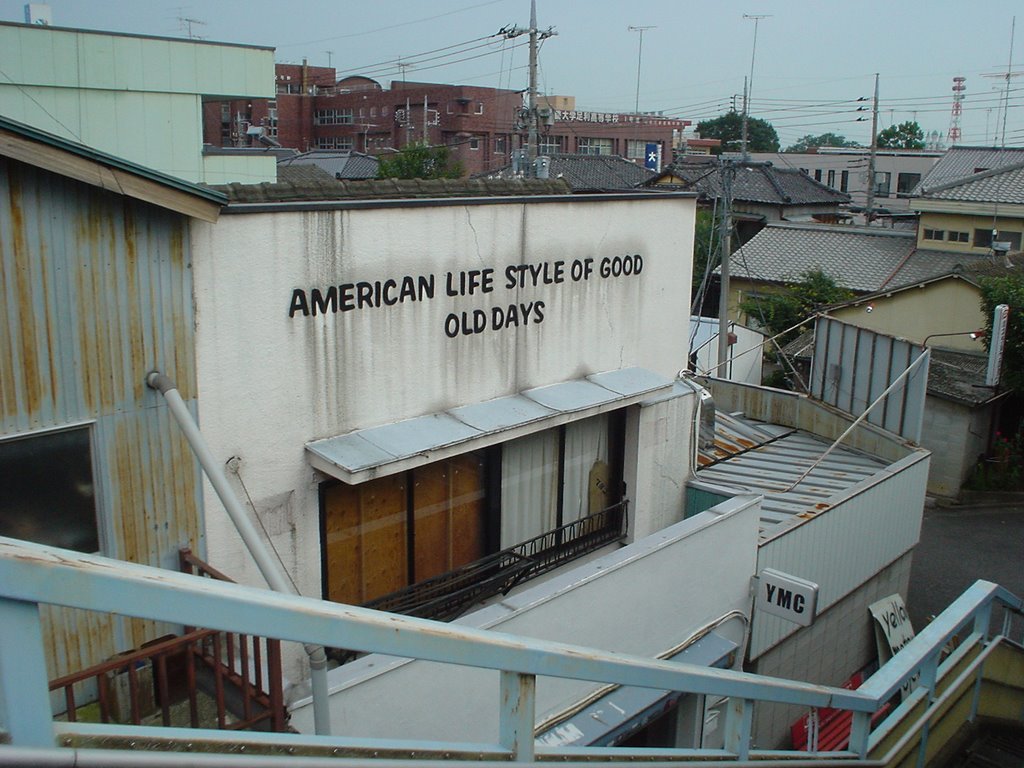
The Wrathful Dispersion Theory of Linguistic Evolution

I’ve been distracted by some old-fashioned print-publication-related onuses. (Yeah, that seems to be the English plural, although the Latin is onera. In banking, an on-us check is one drawn on the clearing bank’s own reserves and thus not passed on through to the Federal Reserve’s check-clearing system.) Anyway, that’s my excuse for neglecting to note an important new development in historical and comparative linguistics: Wrathful Dispersion Theory.

The opponents of Wrathful Dispersion maintain that it is really just Babelism, rechristened so that it might fly under the radar of those who insist that religion has no place in the state-funded classroom. Babelism was clearly rooted in the Judeo-Christian story of the Tower of Babel (Genesis 11: 1–9); it held that the whole array of modern languages was created by God at a single stroke, for the immediate purpose of disrupting humanity’s hubristic attempt to build a tower that would reach to heaven: “Let us go down,” God says to Himself, “and there confound their language, that they may not understand one another’s speech.” Wrathful Dispersion is couched in more cautiously neutral language; rather than tying linguistic diversity to a specific biblical event, it merely argues that the differences among modern languages are too perverse to have arisen spontaneously, and must therefore be the work of some wrathful (and powerful) disperser who deliberately set out to accomplish a confusion of tongues. When asked in court to speculate about the possible identity of the disperser, Michael Moringa, a prominent proponent of WD, demurred, saying that the theory makes no claims about the answer to that question, and that it certainly does not insist that the Disperser is the God of Genesis. Moringa has, however, elsewhere avowed a deep personal belief in the Christian God as the power responsible, as have other WD theorists. Indeed, there appear to be no atheists in the foxholes on the WD side of this war, and for that matter, no Jews or Muslims, either; the WD movement is composed almost exclusively of evangelical Protestants.

via Language Hat via Language Log

I’m sure the new Pope will clear this up for any doubting Thomists.

UPDATE: I hope it wasn’t necessary to include <clever parody> tags on the blockquote.

Leave a comment

Filed under language

Black Death Pogroms and Jews in Slavic Lands

The belief that the Jews were responsible for the Black Death first took root in southern France and neighboring Spain. In the fourteenth century there were only 2.5 million Jews in all of Europe, but a third of these lived in Spain and on the other side of the Pyrenees in southern France. The Jewish communities in this region were of long standing, in some parts going back to Roman times. There were relatively affluent, extremely literate, and in a relationship of growing tension with their Christian neighbors for both religious and economic reasons….

The Black Death pogroms against the German Jews had the inevitable effect of making them feel frightened and insecure. When Duke Casimir II of Poland not only tried to protect Jews in his domains from pogroms, but invited Jews to move eastward and settle in his vast, underpopulated domains, large numbers of Jews began to move en masse to Poland.

This immigration continued into the sixteenth century. Like many Western European rulers of the early Middle Ages (700-1000), the Polish duke and his successors saw the Jews as an economic asset, bringing credit facilities and long-distance trade to the country.

By 1500 the Jews had been assigned an additional role of importance in Polish society and the frontier Ukrainian lands also ruled by the Polish nobility. They were widely employed as estate agents for the Polish nobility, supervising thousands of peasants forced into serfdom and managing the exploitation of the rich Polish and Ukrainian soil. Jewish males became trilingual–Hebrew for liturgy and rabbinical learning, a Slavic language for business, and Yiddish, a late medieval German dialect written in Hebrew characters, for everyday life in their own communities (most Jewish women knew only Yiddish).

By the mid-sixteenth-century Jews were rewarded for their services. as estate agents with a lucrative monopoly in selling liquor to the peasants. This is the origin of the Yiddish folk song “a Gentile is a drunkard.” Jews also prospered as lumber and fur merchants. Great schools of rabbinical learning, many still in existence when night descended in September 1939, emerged in Poland and the Ukraine. By the early seventeenth century half of the Jewish world population of 3.5 million lived in Poland and the Ukraine.

The Jews came to love the Polish and Ukrainian physical environment and in the nineteenth century (if not much earlier) wrote poetry lavishly praising the farmland, forests, and climate of Eastern Europe. The rise of the great Jewish communities in Slavic Europe, remarkable for their enterprise and traditional learning, and also innovative in religious and literary expression, was a direct result of the Black Death.

SOURCE: In the Wake of the Plague: The Black Death & the World It Made, by Norman F. Cantor (Harper Perennial, 2002), pp. 150-151, 163-165

Leave a comment

Filed under Poland, Spain, Ukraine

From Aristotle via Arabic to Aquinas

The Thomist school grew from the consequences of the penetration into the Paris University around the middle of the twelfth century of the vast corpus of Aristotelian science and philosophy through the medium of Arabic and Jewish schools (also writing in Arabic) in Spain and Sicily.

The Aristotelian corpus was translated in the eastern Mediterranean by Byzantine monks and Arab Muslim scholars into Arabic between 800 and 1000 and found its way, accompanied by various mathematical and medical texts, into Cordoba, Spain, and Palermo, Sicily, by 1050. Previously only Aristotelian logic was available in the West, which was thoroughly dominated by the Platonic idealistic and mystical rather than the Aristotelian scientific and rational frame of thought. By the middle of the thirteenth century Aristotle’s writings were being translated directly from Greek into Latin rather than through Arabic mediation, and these improved translations were available to the corpulent and good-humored Dominican friar at Paris, Thomas Aquinas.

What drove the Thomist mission was a concern that Catholic doctrine was founded on the Bible, church authority, and the more mystical and irrational part of ancient culture, not on reason and Aristotelian science. It was to defend this established faith and high culture–something that the Cairo rabbi Maimonides had already attempted for Judaism, to deep resentment from the Orthodox rabbinate–that Thomas Aquinas, following his Parisian Dominican mentor Albert the Great, set out to show the large-scale compatibility of Catholic faith and Aristotelian reason and science.

SOURCE: In the Wake of the Plague: The Black Death & the World It Made, by Norman F. Cantor (Harper Perennial, 2002), pp. 116-117

Leave a comment

Filed under Spain

Iranian Maoists in Oklahoma in the 1970s

Softskull Press‘s website offers a downloadable sample chapter of Paul Berman’s new book, Power and the Idealists (2005). The chapter is entitled “The Muslim World and the American Left.” One of the people it discusses is Azar Nafisi, the author of Reading Lolita in Tehran.

Nafisi is an Iranian, and she grew up in the gilded districts of Tehran under the shah during the nineteen-fifties and sixties—the daughter of Tehran’s mayor (though he ended up in jail, a matter of pride for the family), with distinguished and cultured ancestors tracing back eight hundred years. Somebody might object that, with her glorious background, Nafisi can hardly be regarded as typical of her part of the world. But who is typical of anything? The medieval ancestry might suggest, at the least, that here is someone with a sharp eye for Iranian traditions. Nafisi went abroad to study—and this, surely, was a typical thing to do, for the educated elite in what used to be called the Third World. She studied in Switzerland and Britain until the serendipities of life and love brought her, in the nineteen-seventies, to the University of Oklahoma, at Norman. She explored American literature at Norman—the only foreign student in the department. The American New Left was at high tide, and Oklahoma did not escape its many currents. All over the American university system in the seventies, clever left-wing students were organizing study groups to pore over the texts of Marx, Lenin, Mao, Lukacs, Debray, and the Frankfurt School—the alternative syllabus of the world of Marxism. These groups formed at Norman, too, and Nafisi took her place among them….

Student leftism back home in Iran grew noisier and more militant over the course of the seventies, agitating against the shah. The shah’s secret police, the Savak, cracked down, and students were killed in terrible massacres. And, as these grisly events took place far away in Iran, the Iranian students in America likewise grew noisier and more militant, and marched in picket lines that, as I remember well (from observing a demonstration in New York, not Oklahoma), were weirdly vehement, radiant with violence, and slightly mysterious, too, with the marchers’ faces wrapped in scarves to conceal their identities from the agents of the Savak and the FBI. Iranian students were especially active at Norman. They were fervent for Maoism. They hung out in the Norman student union, sipping coffee and Coke, and declaiming in favor of Stalin and, as Nafisi remembers, “the need to destroy once and for all the Trotskyites, the White Guards, the termites and poisonous rats who were bent on destroying the revolution.” This, too, expressed the spirit of the age….

In 1979 the revolution broke out for real—not in Oklahoma but in Iran. Nafisi completed her dissertation … [and] set out for Tehran—she and a good many other Iranian radicals, full of enthusiasm for the revolution and for their own opportunity to play a role. The Tehran airport was bedecked with slogans written in black and red: DEATH TO AMERICA! DOWN WITH IMPERIALISM & ZIONISM. She took a position as a professor of literature at University of Tehran, where the Marxists were especially strong. And yet, in those early days after the shah’s overthrow, to be alive was not necessarily bliss, nor was it Heaven to be young. The revolution came to power because Ayatollah Khomeini and his radical Islamists put together a broad front with the Iranian Communist Party (the Tudeh) and the Marxist Fedayin Organization, together with a couple of popular organizations that favored liberal democracy, and the mixture of mosques, Marxists, and liberals turned out to be powerful. The shah fled for his life. But Khomeini and his mullahs stood at the head of this absurdly wide United Front, and, once the mullahs had succeeded in establishing the United Front’s revolutionary government, they and their Marxist allies turned against the liberals and crushed them. Then the Islamists turned against the Marxists. A battle for control of the university and of every institution of Iranian life got underway—mullahs against Marxists and everyone else. And the Islamist victory, as it crept across the landscape, turned out to be dreadful.

Berman writes in a very blunt, engaging, and often poignant style, but everything he writes has the flavor of an epitaph.

Leave a comment

Filed under Iran

Hari on Berman’s Power and the Idealists

In last Sunday’s New York Times Review of Books, Johann Hari reviews Paul Berman’s latest book, Power and the Idealists: Or, The Passion of Joschka Fischer, and its Aftermath (Soft Skull Press, 2005), about the ideological split in the generation of ’68 captured by Hari’s title, “The Red and the Green.”

In the years since 1968, the New Left had acquired a sepia glow, with nostalgia mopping up any blood and broken teeth. Now the old conservative criticism – that 1968 and its children staged a thuggish, apolitical tantrum, with no lasting legacy – resurfaced.

If anyone can put this dispute into its historical context, it’s Berman. He is not only an alumnus of the rebellion; he is the keeper of its yearbook and its funeral director. In this free-standing sequel to his superb “Tale of Two Utopias,” he revisits the European graduating class of Rebellion High.

Behind those horrible images [of Joschka Fischer beating a policeman], Berman explains, lies a complex history. These self-styled revolutionaries were the children of a Europe that had failed to resist fascism. Their parents had lowered their gaze and sleepwalked in a Europe littered with gas chambers. So, for this generation, “the way to judge anyone’s moral character … was to pose a hypothetical question…. To wit, what would you have done, in France under the German occupation?” …

Liberal democracy (and capitalism, and Zionism) became, to them, cunning veils for a new Hitler. So when, during the Munich Olympics of 1972, the Palestinian Black September cell murdered 11 Israeli athletes, Ulrike Meinhof (along with much of the radical left) declared herself thrilled. And the deformations of morality multiplied. In 1976, a group called the Revolutionary Cells hijacked a plane, flew it to Entebbe in Uganda, and separated the passengers: Jews and non-Jews. The Jews – “capitalists” and “Zionists” – were selected for death. The leader turned out to be a man named Wilfried Böse, who was much admired on the Frankfurt left. Fischer knew him well. This was the point of Fischer’s desillusionierung.

As Fischer was retreating from his police-beating days, a string of soixante-huitard European intellectuals began to use the vocabulary of the New Left to create nothing less than a political philosophy opposed to all dictatorship, everywhere. Waving his copy of Solzhenitsyn, the French philosopher André Glucksmann tossed a dynamite-packed question to his New Left comrades. If we want to resist every variant of Hitlerism and every streak of authoritarianism, he asked, might we not at least recognize it in the empire to our east, where 20 million people have died in gulags and free speech is a cruel joke?

The conservative pessimists jeered, claiming Glucksmann would be left alone and humiliated. But slowly, steadily, many of the most famous children of 1968 rallied to his side, from Daniel Cohn-Bendit (“Danny the Red”) to Bernard-Henri Lévy. Berman argues that – at this moment – the spirit of the rebellions solidified into its most enduring form: an antitotalitarianism of the liberal-left….

This antitotalitarian ’68 went on to shape the actions of European governments at a turning point for the continent. In the 1990’s, it was the soixante-huitards – now close to the chancelleries and palaces of much of Europe – who led the fight against the New Left’s old fascist enemy when it emerged in the form of Serbian ultranationalism. When a program of ethnic extermination began just two days’ drive from Auschwitz, it was the old barricadier Joschka Fischer who made Germany’s wrenching involvement – its first lurch into postpacificism – possible, explaining to a shocked audience of fellow Greens, “I learned not only ‘No more war’ but also ‘No more Auschwitz.'” In Europe at least, Kosovo was the New Left’s war – the street fight against fascism now directed against a target worthy of the name.

via Cliopatria

Leave a comment

Filed under Europe, philosophy

Gettin’ Shet o’ Mah Accint

Macon.com carries an AP report on Southerners shifting their accents.

COLUMBIA, S.C. – “Y’all” isn’t welcome in Erica Tobolski’s class in voice and diction at the University of South Carolina. And forget about “fixin’,” as in getting ready to do something, or “pin” when talking about the writing instrument.

Tobolski’s class is all about getting rid of accents, mostly Southern ones in the heart of the former Confederacy, and replacing them with Standard American Dialect, the uninflected tone of TV news anchors that oozes authority and refinement.

“We sort of avoid talking about class in this country, but clearly class is indicated by how we speak,” she said….

Across the fast-growing South, accents are under assault, and not just from the modern-day Henry Higginses of academia. There’s the flood of transplants from other regions, notions of Southern upward mobility that require dropping the drawl, and stereotypes that “y’alls” and “suhs” signal low status or lack of intelligence.

But is the Southern accent really disappearing?

That depends what accent you mean. The South, because of its rural, isolated past, boasts a diversity of dialects, from Appalachian twangs in several states to Elizabethan lilts in Virginia to Cajun accents in Louisiana to African-influenced Gullah accents on the coasts of Georgia and South Carolina.

One accent that has been all but wiped out is the slow juleps-in-the-moonlight drawl favored by Hollywood portrayals of the South. To find that so-called plantation accent in most parts of the region nowadays requires a trip to the video store….

Georgia-bred humorist Roy Blount Jr. understands that people with strong Southern accents are often perceived as “slow and dimwitted.” But he thinks it’s “sort of a shame” that people should feel the need to soften or even lose their accents.

“My father, who was a surely intelligent man, would say `cain’t’. He wouldn’t say `can’t.’ And, `There ain’t no way, just there ain’t no way.’ You don’t want to say, `There isn’t any way.’ That just spoils the whole thing,” Blount said.

It shore do! My Tidewater-Virginia-raised, college-and-seminary-educated father still says `cain’t’–and some of his kin keep the small class of `ahn’ words together, pronouncing aunt `aint’, aren’t `ain’t’, and maybe even haunted ‘hainted’. He also resorts to compounds to distinguish `inkpin’ from `stickpin’.

But I made a concerted effort to purge `cain’t’ and other Southernisms from my speech when I was a kid, especially when I was away at a Canadian boarding school in Japan, where I also teased other Southern missionary kids who came back from furlough with their accents in full bloom.

By the time I went off to college, I had acquired one of those ‘no-accent’ accents. Most people cain’t place my accent when I challenge them to–beyond general American, of course. My wife, who grew up in the Dakotas and Minnesota, also has one of those ‘no-accent’ accents, unlike her two sisters, who respectively exhibit those unmistakable Minnesota and Wisconsin shibboleth vowels. And my daughter is acutely aware of my distinctive upglide on the mid front vowels of measure, treasure, and leisure.

My maternal Shenandoah Valley-accented cousins, however, found my wife’s accent most charming. My mother remembered as a kid having to practice moderating her regional diphthongs by repeating “How now brown cow”–distinctive but not quite the same sound or phonetic environment (before voiceless consonants) as the near “Canadian raising” that Sen. Warner (R-VA) just demonstrated in his interview on the NewsHour tonight. (He talked about ‘sitting out‘, ‘waiting out‘ and ‘getting out‘ with respect to Iraq.)

I liked listening to the marked regional accent of Sen. Reed (D-RI), too. In fact, most of the time, I tend to tune out the content when politicians bloviate on TV and concentrate instead on pinpointing their accentual differences. One of my favorite accents on the NewsHour, though, is that of Alabama native Jan Crawford Greenburg. Unfortunately, her perceptive analyses of the Supreme Court often distract me from her accent.

via Atlanta-based Photodude

Leave a comment

Filed under language, U.S.

Gaseous Emissions about Kyoto

The UN’s climate change secretariat has compiled some very revealing statistics about greenhouse gas emissions in the wake of the implementation of the Kyoto Protocol. As reported by the Toronto Globe and Mail, Canada and New Zealand, which have not only signed the Protocol but chided their respective neighbors for not signing it, are doing no better at reining in their greenhouse gasses than Australia, which refused to sign the treaty. (Canada’s emissions were up 24.2%, Australia’s up 23.3%, New Zealand’s up 22.5%.) Furthermore, the U.S., which refused to sign, is neck and neck with Japan, where the final version of the Protocol was hashed out. (U.S. emissions have risen 13.3%, Japan’s 12.8%.)

The report shows that a huge, one-time greenhouse gas reduction occurred after the economic collapse of the former Communist countries. The former East Bloc’s emissions fell from 5.7 billion tonnes in 1990 to 3.4 billion tonnes in 2003, a stunning drop equivalent to eliminating three times Canada’s total annual contribution to warming the planet.

But since the early 1990s, most countries in the East and West have muddled along, making little headway in weaning themselves from their fossil-fuel dependency.

Excluding the former East Bloc, emissions among industrialized countries actually rose 9.2 per cent between 1990 and 2003.

How the hell did Spain, Monaco, and Portugal manage to increase their emissions by 36.7% to 41.7%? And Britain’s growing economy to reduce its emissions by 13%? Why did the UN include no statistics on China and India?

I guess the moral of this story is that actions speak louder than sanctimonious emissions.

Leave a comment

Filed under China

Effects of Medieval Climate Change

In south central England, … the century from 1180 to 1280 had been the medieval golden age because of favorable climatic conditions. The climate of the northern hemisphere, including England, experiences alternating cycles of warming and cooling. A warming trend had set in during the early twelfth century and it reached its height in the century after 1180. It was a time of long, warm summers and moderate winters. There always seemed to be enough rain to make the cereal crops sprout fervently. There were no crop failures or famines….

The downside of good weather and sharply rising population was an unprecedented boom in agricultural real estate. The thirteenth century in England was a time of land hunger…. Millions of acres were deforested and settled with peasant villages….

Climatic cycling continued to drive social and economic change. Around 1280 the warming trend began to run down. A new weather cycle unevenly but visibly intruded into rural England. Summers became cooler and shorter, the long autumns ideal for bringing in the lush crops truncated. Winters became longer and more harsh. The cooler period was to last until the late fifteenth century, when it would be followed by another warm century and then the “little ice age” of the seventeenth century, when people actually skated on the frozen Thames–not something you would want to try today.

In the summers of 1316 and 1317 rural disaster struck. The sun did not shine. There were widespread crop failures. There was famine and death from hunger. These terrible years had a special cause. Huge volcanic eruptions in Indonesia threw continent-sized clouds of ashes into the atmosphere and by 1316 this cloud of unbeing had reached England. Even when the sun shone again and the famine subsided, there were adverse weather conditions–too much rain–for good cereal harvests. The price of grain escalated. The stomachs of the peasants were no longer full….

It may be speculated that the Great Famine and global cooling of the early fourteenth century and the deterioration in the diet of the common people that resulted had some adverse impact on public health. Undernourished bodies were more easily prey to the Black Death.

SOURCE: In the Wake of the Plague: The Black Death & the World It Made, by Norman F. Cantor (Harper Perennial, 2002), pp. 67-68, 74-75

Leave a comment

Filed under Europe, Indonesia

My Malaria Tales

In 1976, I got a chance to do linguistic fieldwork in Papua New Guinea. PNG is a malaria zone, so I tried to get antimalarials before I left, but hardly any doctors in Honolulu knew about either malaria or PNG, and they wouldn’t prescribe anything unless it was for treatment, not prevention. So my first day in Sydney, en route, I went to a public hospital and waited a long time to see a doctor. (Australia, like Canada, gives free but limited medical coverage to everybody.) When the doctor finally saw me, he asked me all sorts of questions about PNG because he was to spend part of his residency there, but he said state policy was to give only one week’s worth of medicine at a time free. So I got just two Chloroquine pills, one week’s prophylactic dose. I was due to arrive in PNG within the week.

In PNG I had no trouble buying Chloroquine at a local chemist (pharmacy) and took them faithfully every Sunday. For months, I was fine. The only problem I had was early on, when my intestinal flora were changing to accommodate the local diet. I got the runs one night really bad. The village was maybe 100 yards from end to end, with the women’s outhouse out over the water (flushed twice a day by the tide) near my end of the village and the men’s outhouse clear at the other end of the village, across a coconut log bridge over the stream that served as the village’s only supply of fresh, cold mountain water. The men’s bathing hole was upstream from the women’s bathing, laundry, and dishwashing area, and people were really careful not to shit near the river. That night, I must have walked through the dark village 6 or 8 times, setting off the dogs each time, but not always having much to feed the fish with by the time I climbed up into the four-hole outhouse and squatted over the ocean. So, before long, I’d start the long trek back, setting off the dogs again.

I slept under a mosquito net in the village, although not always when I took trips to the neighboring village where several kids from my host family went to school. (They boarded there.) One day during August (I think), I felt really feverish, with flu symptoms, but the next day I felt better, so I let the village boat, with its loud, 2-stroke, Japanese Yanmar diesel engine, leave for town without me. It was an 8-hour trip up the coast to Lae, where the boat would sell its catch of fish, fill up with ice for the next catch, take on supplies and passengers, and be back in a week. That evening after I went for my customary bath in the stream, I couldn’t stop shivering. My hosts built up the fire and I hunkered down next to it until the shivers turned to sweat. By that time, I figured I’d better take a treatment dose of Chloroquine: 2 pills every 4-6 hours, rather than 2 pills every week. In a day or two the flu symptoms abated and I broke out instead with intense itching under the skin of my hands and feet. It hurt to walk over the rough path to the bathing hole. So the next time the boat came back to load up and take more fish and passengers, I was on board.

The doctor I saw in town thought maybe I had reacted to the Chloroquine, so he put me on milder Camoquine and, sure enough, the next time I came down with malaria symptoms and took a treatment dose, at least I didn’t have that horrible itch. (By now many strains of malaria in PNG are resistent to both.) But the timing was bad. I had come into town about Thanksgiving time, and my host, an American with an MA in ESL from Hawai‘i, had fixed up a real American meal with turkey, deviled eggs, and pumpkin pies. My throat was swollen, it hurt to swallow, and I was too sick to join the crowd for dinner, so I went off to bed. That night my fever broke and I soaked the sheets. The next day I felt much better–and ravenous. Fortunately, there were leftovers of everything except the deviled eggs. I ate a lot, but swallowed carefully.

Back in Honolulu, I got another severe bout of malaria. By this time, I knew the whole cycle real well–24 hours of fever and chills followed by 24 hours of dull headache. It was sure to be Plasmodium vivax, according to Merck’s Manual, so I managed to get referred to a Dr. Berman, the only civilian doctor in town who knew much of anything about malaria. (He had seen plenty of it as an Army doctor in Vietnam.) So I drove to the emergency room of the hospital where he was supposed to start a shift at 7 pm. He took a long time getting to me and I spent the whole time shivering under the air-conditioning vent in the examination room, trying to cover myself with little hand towels.

When Berman finally saw me, I made the mistake of telling him I was suffering from P. vivax and asking for a treatment dose of Camoquine or its equivalent. He sent me for a blood test, but couldn’t find anything, so he sent me away for another 48 hours until I would be in worse shape again. When he couldn’t see anything in that sample, either, he told me to come back when I was really in the throes of fever and chills. So at the peak of the next 48-hour cycle, I was driving shakily through traffic to his downtown office. This time, he managed to find the little buggers under the microscope. He returned with a sarcastic “Congratulations, Dr. Outlier. Your diagnosis is correct. It’s Plasmodium vivax.” Whereupon, I let him have it, telling him each of those 3 lab tests cost me $24 that my grad student health insurance didn’t cover, and that I had been through a week’s worth of the symptoms a 3rd time now, thanks to him. I think he ended up waiving any of his own fees above what my health insurance covered. He also prescribed some very powerful drug that was supposed to clear the creatures out of my liver as well. I’ve never had a relapse since then.

Leave a comment

Filed under Hawai'i, malaria, Papua New Guinea

What 14th-century Medicine Could Do

Fourteenth-century medicine was not without accomplishment. It could amputate limbs and normally cauterize the wounds in an effective manner. It had precious knowledge of herbal remedies for headache, minor stomachaches, menstrual cramps, and other marginal afflictions, possibly including psychological depression. But it was impotent in the face of an epidemic.

Medieval physicians still followed the theories of the second-century Greek doctor Galen, which attributed disease to imbalance in the bodily conditions, or “humours,” of an individual. The main instrument of diagnosis was eyeballing the color and consistency of urine.

The prime remedies for illnesses involved restoration of putative bodily balance through purgation (enemas) or bloodletting. Drawing blood from a sick patient was considered a credible remedy until the nineteenth century. Cleaning the bowels was thought to have a curative effect. Enemas are still a popular home remedy. Nineteenth-century medicine introduced antiseptic surgery and anesthesia and smallpox inoculation but in the face of a pandemic outbreak was not much better off than the physicians of fourteenth-century England.

Faced with a worldwide outbreak of what was arbitrarily called Spanish influenza in 1918, which killed fifty million people within a year, the early twentieth-century medical profession was not much more effective in terms of diagnosis and cure than its medieval counterpart facing the Black Death. Essentially the flu pandemic of 1918 came and went without anyone knowing why, in spite of the capacity to see under a microscope some viruses and bacteria that were totally invisible to the physicians of the fourteenth century.

SOURCE: In the Wake of the Plague: The Black Death & the World It Made, by Norman F. Cantor (Harper Perennial, 2002), pp. 9-10

Cantor is no Tuchman, but I’ll see if I can find a few passages to excerpt, even if I have to rearrange them to counteract the author’s tendency to ramble about.

Leave a comment

Filed under science