Category Archives: U.S.

Hogs, Ham, and (U.S.) History

Virginia hams hold a hallowed place in the culinary lore of my hard-eating heritage. During my childhood as a missionary kid in Japan, we would receive a smoked ham every Christmas from relatives back in Virginia and stretch out the eating of it as long as we could. The current issue of Common-Place now puts Virginia hams in fuller historical perspective in a fascinating article by David S. Shields entitled “The Search for the Cure: The quest for the superlative American ham“:

No food in colonial Anglo-America declared gustatory adequacy at the world table more forcefully than ham. Travelers to the English territories, such as Rev. Andrew Burnaby, declared American pork superior in flavor to any in the world. With the establishment of the republic, the ingenuity of a population of artisanal food producers fixed upon improving the most estimable of American products, ham. Eminence in the sociable world of the agricultural societies, distinction in the market place, and victory in the food contests at the burgeoning world of fairs stimulated innovation in the curing of hams. Here we will chronicle the articulation of two schools of ham production: the dry-cure sect, who would increasingly view themselves as purists and traditionalists, and the wet curists, who regarded themselves as experimentalists in taste, economy, and scientific agriculture, yet whose pork brined in a barrel was the staple of the common household.

Antiquity conveyed the ur-cure, the primordial method of preserving meat. Salting and drying meat prevented the decomposition of flesh because moisture is a requisite for most bacterial reproduction and salt (sodium chloride) draws moisture from flesh. Unfortunately, sweating meat in rock salt turned muscle tissue gray and tough. It was discovered, however, that certain types of rock salt—salt with impurities—kept meat red and somewhat moist. This impure form of salt—called saltpeter—was sought out and admixed with salt for meat preservation until the Middle Ages when smoking was added to salt and saltpeter to impart flavor and to counter insect depredations. The method practiced by Europeans at the time of the settlement of Jamestown—common to Westphalian ham and Jamon de Iberica—was the “three s method”: salt, saltpeter, smoke.

Ham modernity dates from the erection of what Wolfgang Shivelbusch has called the first global drug culture—the oceanic trading system that made the exchange of sugar, spice, tea, coffee, and chocolate the engine of the world system. Only after the explosion of the world sugar supply occasioned by the consolidation of the Brazilian cane plantations in the sixteenth century was the commodity cheap enough for trial and error in the kitchen and smokehouse. Indeed, there was decidedly a sugar moment in Western cuisine, when sucrose was added to everything as the pangustatory element. When added as the fourth s to the ancient cure, sugar mellowed the harshness of salted flesh. Sugar-cured hams became the bedrock of American porcine cuisine….

Ever since Hernando DeSoto brought his thirteen hogs into Florida, swine have flourished in North America. The earliest breeds did not resemble today’s industrial pink pig. Indeed, the first settled hogs, the Iberico Black hog, the Old English breed, do not resemble their breed descendents, the Spanish Black and the Hampshire. Of these early types there is only one extraordinarily rare example left in America: the Ossabaw Island pig, a mottled descendent of the pigs that Spaniards loosed on the islands of the Caribbean and along the southeastern coast. One population survived into the twenty-first century on Ossabaw Island off the coast of Georgia. Slow-growing, irritable, and the most efficient fat-producing mammal known to science, the breed has become the fascination of biologists working on obesity studies….

Testimonies about the quality of New World ham date from 1688 when Rev. John Clayton, reporting to the Royal Society his observations on the commodities of Virginia, declared the meat as good as any to be had in Westphalia. This is a far more informative claim than it might appear on the surface, for it reveals much about the mode of preparation. Traditional Westphalian ham is made from hogs fattened with acorns from the oak forests of western Germany and then dry cured and smoked over a cold fire of beechwood and juniper boughs. The original Virginia ham derived its flavor from an acorn mast and dry curing. It was smoked. This is worth noting because during the eighteenth century there would be disagreement about the proper feeding of pigs and a related alteration in the method of curing….

William Byrd (1674-1744), the Virginia gentleman who championed an ethic of agricultural improvement, criticized the habit among country farmers (typified, for him, by the lazy North Carolinians described in his Histories of the Dividing Line) of letting hogs roam free in the forests to graze on roots and acorns. The semi-wild hog developed stringy muscle from its robust wandering life, and the farmer lost the benefit of its manure. Byrd would keep his pigs penned and fed on dung heap scraps. But with this diet, the meat of his animals, while more tender, risked becoming less palatable. What mattered more, taste or economy?… Feeding hogs on corn was pioneered in Pennsylvania at the end of the eighteenth century. In Virginia, where the taste of the mast-fed pig haunted the gustatory imagination, traditionalists followed the old country practice of letting swine loose in the woods. The practice continued until the early twentieth century when peanut mast was found to instill in pork something like that piquant yet mellow flavor infused by acorns….

Saltpeter, while essential for the preservation of hams, proved equally if not more important as an ingredient of gunpowder. In June 1642 the General Court of Massachusetts ordered every town to erect a shed and “make saltpeter from urine of men, beastes, goates, hennes, hogs and horses dung.”…

Putting chilled, freshly butchered hams in salt was the only part of the process that did not suffer alteration in any of the schools of dry-cure preparation. European tradition usually had the slaughter of winter meat occur on St. Martinmass Day, November 11. But because of the importance of cool weather in the curing of hams, it took place substantially later in the American South: December in Virginia; January in the Carolinas. The fresh-butchered meat had to be cooled to about forty degrees Fahrenheit when salting was begun. Traditionalists would follow salting with the other two s‘s of the “dry cure”: saltpeter and smoke. The proportions varied, but J. Q. Hewlitt’s formula of one thousand pounds of meat, three pecks of Liverpool salt, and four pounds of saltpeter presented a norm. The hams were packed in tubs or casks. These were often perforated to allow liquid to drip out during the minimum of three weeks sitting. At the end of the salting period, during which fresh salt was often added to the tubs, the ham would be extracted and the salt coating washed off. Hewlitt then smoked the hams in a closed room using green hickory chips. It was important that the smoke be cool, so as not to cook the hams. Temperature in the smokehouse was not to exceed human body temperature. At the end of February the hams would be sewn up in bags for protection.

And that’s how they were shipped to us in Japan. We had to soak each ham about 24 hours before cooking and eating any of it.
via Arts & Letters Daily

Leave a comment

Filed under family, Germany, Spain, U.S., Virginia

Khanya on African Anglicans and Homosexuality

Through a pingback to my WordPress blog, which attracts a lot more readers interested in religion than my older mirror site on Blogspot thanks to WordPress’s tag aggregator, I discovered Khanya, a South African blogger who converted from Anglicanism to Orthodoxy, and who remains hard to pigeonhole politically. (That last characteristic I find most refreshing.) Khanya notes a very telling piece of historical perspective on African Anglican attitudes toward homosexuality, a perspective that seems little understood by many Anglicans outside Africa (or anybody else):

I’ve been watching from the sidelines as the Anglican Communion is tearing itself apart over homosexuality. The debate seems to generate more heat than light, and both sides seem to be talking past each other.

It seems to be a war of polemical slogans. The African “intransigence” has provoked a storm of racist bigotry in the Western homosexual lobby, with some bloggers being quite free with racist insults. The West [in turn] is accused of immorality and decadence, but very few have looked at the deeper issues.

An exception to this is a piece by Rod Dreher, St Charles Langa and African homosexuality, which looks at some of the missiological underpinnings of the African attitudes at least. Rod Dreher in turn quotes an article [in TNR] by [noted scholar of religious history] Philip Jenkins, in which he says

The Muslim context helps explain the sensitivity of gay issues in one other key respect. In the region later known as Uganda, Christianity first arrived in the 1870s, when the area was already under Muslim influence and a hunting ground for Arab slave-raiders. The king of Buganda had adopted Arab customs of pederasty, and he expected the young men of his court to submit to his demands. But a growing number of Christian courtiers and pages refused to participate, despite his threats, and an enraged king launched a persecution that resulted in hundreds of martyrdoms: On a single day, some 30 Bugandans were burned alive. Yet the area’s churches flourished, and, eventually, the British expelled the Arab slavers. That foundation story remains well-known in the region, and it intertwines Christianity with resistance to tyranny and Muslim imperialism–both symbolized by sexual deviance. Reinforcing such memories are more recent experiences with Muslim tyrants, such as Idi Amin, whose victims included the head of his country’s Anglican Church. For many Africans, then, sexual unorthodoxy has implications that are at once un-Christian, anti-national, and oppressive….

South African Anglicans seem to have been fairly neutral in the battles being waged elsewhere in the Anglican Communion, and the account above gives a lot less information than that of Philip Jenkins. The protagonists in the Anglican battle, on the African side, seem to be Uganda and Nigeria, both countries on the border of Muslim and Christian Africa. South Africa is far removed from the tensions in those countries.

Leave a comment

Filed under Nigeria, religion, U.K., U.S., Uganda

Death of a Dutch Adventurer: Erik Hazelhoff

Dutch expatriate Pieter Dorsman of Peaktalk notes the death in Hawai‘i of the Java-born Dutch adventurer Erik Hazelhoff Roelfzema, the author of Soldier of Orange. That prompted me to begin reading an autobiography I have had sitting on my shelf for quite a while. Here are some excerpts from the chapter “To Arms for Ambon!” from In Pursuit of Life, by Erik Hazelhoff (Sutton, 2003), pp. 242-245, 250-251:

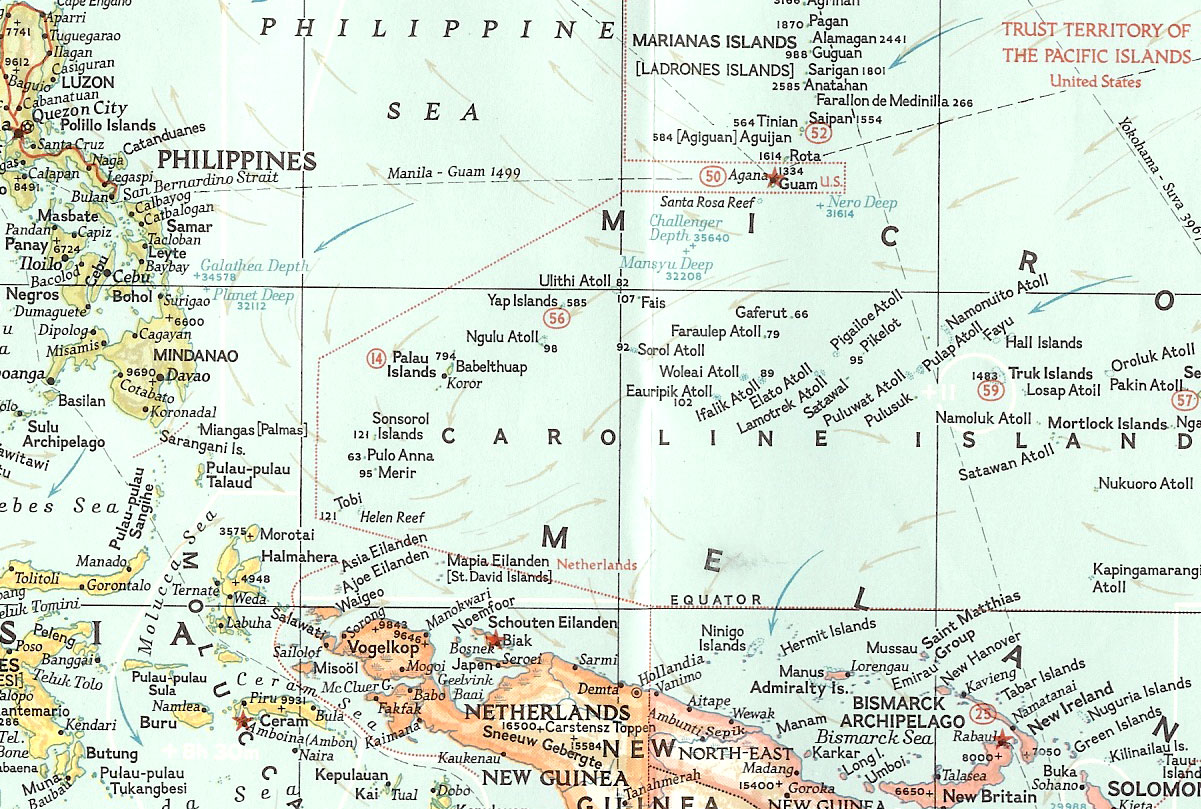
On 24 April 1950 the Ambonese and other inhabitants of a group of islands west of New Guinea proclaimed the Republic Maluku Selatan (RMS) – Republic of the South Moluccas – and declared its independence from Indonesia. They had every right to do so. The preliminary Constitution of the United States of Indonesia, Article 189, affirmed: ‘Each federal state shall be given the opportunity to accept the Constitution. In case a federal state does not accept it, they shall have the right to negotiate a special relationship with the United States of Indonesia and the Kingdom of the Netherlands.’ The same article appeared word for word in the Treaty of Independence between Holland and Indonesia, and as Article 2 of the Dutch Transfer of Sovereignty Law. Both countries’ highest representatives had signed these documents.

To remove any doubt about their status, the Ambonese brought the case before the International Court of Justice in The Hague, which pronounced the RMS legal. The Republic – formerly United States – of Indonesia ignored the verdict and opened hostilities by throwing a sea blockade around Ambon and other major islands, vowing to wipe the new country off the map by military means. Meanwhile the RMS provisional government sent Karel Vigeleyn Nikijuluw, who had resigned from the Dutch Navy, to New York in order to seek support and recognition for the little republic from the United Nations Organization. Before April was over, Nikki – as his friends called him – appeared on our doorstep at Milton Point….

Ideals are like your children, often a pain in the neck, but they are your very own, so you can’t just dump them. You are responsible for them. The cause of the Republic Maluku Selatan, morally right, legally uncontestable, threatened by the overwhelming might of giant Indonesia backed by the limitless power of pragmatic, ill-informed Uncle Sam, was pure as gold and almost hopeless from the beginning. The Ambonese stood for everything that I had fought for in the Second World War, freedom, the right of self-determination and national identity. All they had against them was the size and location of their country, and three centuries of loyalty to the Dutch. How could I not support them? Already in 1572 William of Orange, the George Washington of the Netherlands, remarked during our desperate 80-years’ War of Independence, ‘It is not necessary to hope in order to attempt, nor need one succeed in order to persevere.’ Well. what was good enough for William the Silent was good enough for me. I told Nikijuluw he could count on me, provided it left me time to write. In answer to more specific questions, he assured me that God would show the way….

Through my contact with Vigeleyn Nikijuluw and the cause of the Ambonese I seemed to be sliding back into the past. It felt as if I were partly relinquishing control over my destiny to powers that for the last five years – the era of chaos – had kept their distance from me. It was a familiar, reassuring sensation as good things began to happen for which I myself could not possibly take credit. Judge for yourself.

At the time of the Spanish Civil War (1935–9), the proving grounds and dress rehearsal for the Second World War, a handful of British seamen in small ships regularly risked their lives – and made money – by sneaking through General Francisco Franco’s naval blockade around Spain in order to feed and supply the Loyalists, including thousands of Americans who fought in the International Brigade. The two most renowned of these, Potato Pete and Dod Orsborne, were finally intercepted by the Fascist navy. The former reputedly paid with his life, but Orsborne, cut off from friendly territory and unable to return to England, alone and with no other provisions than some leftover raw potatoes and beans, kept sailing his little craft, the Girl Pat, due west, until one fme day he hit the USA. Instantly famous, he later wrote a book, Master of the Girl Pat, that made the author with his red beard and wicked smile the darling of the radio talk shows. Through this he met, somehow but inevitably, Margaret Sangster. She telephoned us with an invitation ‘to meet this crazy Brit’; Midge took the call because I was out on the Sound discussing ways to sneak through to Ambon. That same night, the most celebrated blockade runner of the times and the world‘s only contemporary naval blockade were fused together at Park Avenue and 77th Street.

The affinity between the Dutch and the Scots is as mysterious as it is documented. In most places on earth, no matter how distant, you’ll find one or two of each, side by side in a local bar, sharing their exile experiences. From my father’s friends in Surabaya to Mauricio Pieper’s buddies in Argentina to my own RAF pals in the war, Scotsmen – and their lassies – abounded. The feisty little redheaded sailor with the Vandyke beard and a Scottish burr that could cut timber proved no exception….

[Many charming misadventures ensue.]

Dirty tricks are pulled in the dark. In the eight months that it took the Republic of Indonesia to wipe the RMS off the map, not one word about it – as far as I know – reached the American newspaper reader. At the height of the conflict 1,800 Ambonese, armed with klewangs and captured rifles, battled against almost 12,000 Indonesians equipped with rifles, light and heavy machine-guns, field artillery, armoured cars and a few light tanks, supported by reconnaissance planes, two B25s and four corvettes with 10cm cannon.

Only the extreme isolation of the war zone made it possible to keep a conflict of such dimensions out of the world press. Day after day Radio Ambon broadcast pleas for assistance, but its primitive signals were received only by the local population, by the Indonesians who did everything in their power to keep the campaign secret, and by the Dutch in nearby New Guinea who, mistrusted and discredited by their police actions, were not believed by any foreign journalist. The Ambonese were not only right, but also strictly on their own.

Leave a comment

Filed under Britain, Indonesia, Netherlands, U.N., U.S.

Burma: Engagement Has Failed, Isolation Has Failed

I’ve posted a good bit about Burma since starting to blog almost four years ago, but I’ve been hesitant to post much now because I feel we are all little more than drive-by rubberneckers, turning our heads toward Burma just long enough to catch a glimpse of yet another passing segment in the endless video of disaster news that no one can really do much about—apart from finding a way to pin the blame on one’s favorite ideological demons, of course. Every disaster is good for blind partisans.

But a current article in Foreign Affairs seems to offer a useful retrospective on two opposing diplomatic dead-ends. Both engagement by its neighbors and isolation by more distant but powerful forces seem to have failed.

U.S. policy toward Burma is stuck. Since September 1988, the country has been run by a corrupt and repressive military junta (which renamed the country Myanmar). Soon after taking power, the State Law and Order Restoration Council (SLORC), as the junta was then called, placed Aung San Suu Kyi, the leader of the opposition party the National League for Democracy, under house arrest. In 1990, it allowed national elections but then ignored the National League for Democracy’s landslide victory and clung to power. Then, in the mid-1990s, amid a cresting wave of post-Cold War democratization and in response to international pressure, the SLORC released Suu Kyi. At the time, there was a sense within the country and abroad that change in Burma might be possible.

But this proved to be a false promise, and the international community could not agree on what to do next. Many Western governments, legislatures, and human rights organizations advocated applying pressure through diplomatic isolation and punitive economic sanctions. Burma’s neighbors, on the other hand, adopted a form of constructive engagement in the hope of enticing the SLORC to reform. The result was an uncoordinated array of often contradictory approaches. The United States limited its diplomatic contact with the SLORC and eventually imposed mandatory trade and investment restrictions on the regime. Europe became a vocal advocate for political reform. But most Asian states moved to expand trade, aid, and diplomatic engagement with the junta, most notably by granting Burma full membership in the Association of Southeast Asian Nations (ASEAN) in 1997.

A decade later, the verdict is in: neither sanctions nor constructive engagement has worked. If anything, Burma has evolved from being an antidemocratic embarrassment and humanitarian disaster to being a serious threat to the security of its neighbors. But despite the mounting danger, many in the United States and the international community are still mired in the old sanctions-versus-engagement battle….

If ASEAN and Japan are critical components of any international approach to Burma, China and India could be the greatest obstacles to efforts to induce reform in the country. China has many interests in Burma. Over the past 15 years, it has developed deep political and economic relations with Burma, largely through billions of dollars in trade and investment and more than a billion dollars’ worth of weapons sales. It enjoys important military benefits, including access to ports and listening posts, which allow its armed forces to monitor naval and other military activities around the Indian Ocean and the Andaman Sea. To feed its insatiable appetite for energy, it also seeks preferential deals for access to Burma’s oil and gas reserves….

It will also be a challenge getting India on board. Despite Prime Minister Manmohan Singh’s trumpeting of democratic values, India has actually become more reticent when it comes to Burma in recent years. This is particularly regrettable considering that Congress was one of the Burmese democratic opposition’s strongest supporters during much of the 1990s and that Suu Kyi continues to cite Mohandas Gandhi as a model for nonviolent resistance. The change occurred during the past decade, after New Delhi detected that China’s political and military influence in Burma was filling the void left by the international community’s deliberate isolation of the junta. Like China, India is hungry for natural gas and other resources and is eager to build a road network through Burma that would expand its trade with ASEAN. As a result, it has attempted to match China step for step as an economic and military partner of the SPDC, providing tanks, light artillery, reconnaissance and patrol aircraft, and small arms; India is now Burma’s fourth-largest trading partner. Singh’s government has also fallen for the junta’s blackmail over cross-border drug and arms trafficking and has preferred to give it military and economic assistance rather than let Burma become a safe haven for insurgents active in India’s troubled northeastern region….

Given the differing perspectives and interests of these nations, a new multilateral initiative on Burma cannot be based on a single, uniform approach. Sanctions policies will need to coexist with various forms of engagement, and it will be necessary to coordinate all of these measures toward the common end of encouraging reform, reconciliation, and ultimately the return of democracy. To succeed, the region’s major players will need to work together.

Fat chance of that happening, I’m afraid.

As a gesture of mourning for the lives being sacrificed to ‘keep the peace’, I’ll retain one header image for the rest of the week. It’s a stupa-style memorial dedicated to Japanese war dead in Burma, which I came across in the massive Okunoin cemetery at Kōya-san, one of Japanese Buddhism’s holiest sites.

via Arts & Letters Daily

1 Comment

Filed under blogging, Burma, China, India, Thailand, U.S.

The 1st and 2nd Filipino Regiments in the Pacific War

I have heard endlessly about the exploits of the Japanese American units during World War 2, the 100th Battalion and 442d Regimental Combat Team, but I had never heard about the 1st and 2nd Filipino Regiments. Here are a few excerpts from a much longer account at the California State Military Museum website.

The Tydings-McDuffie Act of 1934 treated the Filipinos in the U.S. as aliens. Although the Philippine Commonwealth Constitution permitted the United States to draft Filipinos in the Philippines to defend American interests there, Filipinos in the United States, quite ironically, were exempt from military service.

Thousands of Filipinos had petitioned for the right to serve in the U.S. military immediately after December 7, 1941. On January 2, 1942, President Franklin Delano Roosevelt signed a law revising the Selective Service Act. Filipinos in the United States could now join the U.S. Armed Forces and they were urged to volunteer for service. President Roosevelt quickly authorized the founding of a Filipino battalion, which would be organized for service overseas. It estimated the number of available Filipino volunteers between 70,000 and 100,000.

The 1st Filipino Battalion was formed on March 4, 1942 and activated in April 1 at Camp San Luis Obispo, California. Lieutenant Colonel Robert H. Offley, who had served in the Philippines and spoke passable Tagalog, volunteered to be assigned to the unit as its first commander. He assumed command in April 8, 1942. The War Department also directed Philippine army officers and soldiers who were stranded in the United States at the start of the war to report to the unit. An unusual point is the designation of the unit. Previous Filipino units in the U.S. Army had been designated “Philippine” such as the Philippine Scouts. All units raised in the U.S. during the war were designated “Filipino.” Also, it would not be until the end of the war that the Filipino military units would carry the designation “Infantry” in their title although their regimental colors from the very beginning were displayed on a blue field, the traditional color of the infantry branch of the army.

A number of wounded Philippine Army and Philippine Scouts had escaped to Australia from the Philippines on board the USS Mactan in December 1941. Some remained in Australia to form the nucleus of what would eventually become the 1st Reconnaissance Battalion, but the rest were sent to the United States for further medical treatment. These men eventually reported to the 1st Filipino Battalion.

Contrary to popular belief, the 1st Filipino Battalion was not established as a result of the American policy of social segregation. Only Filipinos who volunteered for assignment to the unit were sent to it. Many others, such as Eutiquio V. “Vic” Bacho, served with distinction in “American” (white) units in the European theater of operations during the war. Doroteo Vite wrote in a national magazine that Filipinos should take the opportunity to serve in all-white units to educate them so that at the end of the war, white Americans would support the Filipino American agenda of equality….

In April 1942, Lieutenant General John L. Dewitt, Western Defense Commander, ordered the Japanese on the West Coast into concentration camps. Miguel Ignacio, secretary of the Filipino American community of San Francisco, called attention to several American-born Japanese women, citizens of the United States, who had Filipino husbands, and Filipino-Japanese children who were U.S. citizens by birth. Despite the efforts of the American Civil Liberties Union, Dewitt ordered the women and children to spend the duration of the war in the internment camps. Many of these Filipino husbands went on to serve in the 1st and 2nd Filipino Regiments, defending the nation whose racist policies held their families hostage.

In September 1942, the first group of qualified Filipino enlisted men was sent to the Officer Candidate School, Fort Benning, Georgia. Upon graduation, they were commissioned second lieutenants in the U.S. Army. The War Department planned to have Filipino officers eventually command the majority of the combat units in the 1st and 2nd Filipino Regiments. Events beyond the control of the military planners in Washington, D.C. intervened to prevent this from being fully implemented.

So many Filipino volunteers came from all over the United States that the 2nd Filipino Infantry Regiment was formed at Fort Ord, California on November 22, 1942. In January 1943, the 1st Regiment was reassigned to Camp Beale, near Sacramento and the 2nd Regiment to Camp Cooke, near Santa Maria. The two regiments were to be joined by a third regiment consisting of Filipinos from the Hawaiian National Guard. However, the Hawaiian Sugar Plantation Association argued successfully with the martial law commanders in Hawaii that not only was cheap labor on the plantations necessary to support the war effort, the Filipinos in Hawaii were forbidden by the Tydings-McDuffie Act from going to the continental U.S. The men could not leave the sugar plantations and were paid substandard wages for the duration of the war. This would have serious consequences in 1946 when the militant Filipino labor unions shut down the islands until their demands for wage increases and better working conditions were met.

As a result of a May 1942 Gallup Poll showing strong support for the naturalization of Filipinos, the Filipino Naturalization Bill was passed. Pinoy GI’s were urged to apply for U.S. citizenship. A mass swearing in of over 1,000 soldiers was held at Camp Beale on February 20, 1943. Many of the men, however, resisted becoming citizens. T-5 Julius B. Ruiz stated that although he had lived in the United States for many years and was now serving in the U.S. Army, his goal was to liberate his country, the Philippines. by the time the 1st Regiment left for the western Pacific in May 1944, over half of the men in the unit were U.S. citizens….

Before the 1st Regiment departed for the western Pacific in May 1944, Colonel Offley had a major dilemma on his hands. Even though his regimental chaplains were prepared to perform marriage ceremonies between the Filipino soldiers and their white girlfriends, the strict anti-miscegenation laws in California prevented the men from applying for marriage licenses. Colonel Offley solved this by sending his soldiers and their sweethearts to Gallup, New Mexico on chartered buses that soon came to be called the “honeymoon express.”

Meanwhile in New Guinea, the 1st Regiment quickly integrated its first batch of replacements consisting of Filipino Americans from Hawaii. Colonel Offley gave Lt. Col. Leon Punsalang, a West Point graduate, command of the 1st Battalion. This was the first time in the history of the U.S. Army that Asian Americans commanded white troops in combat.

130 Comments

Filed under Japan, Philippines, U.S., war

Yap’s Role in the Saipan Campaign, June 1944

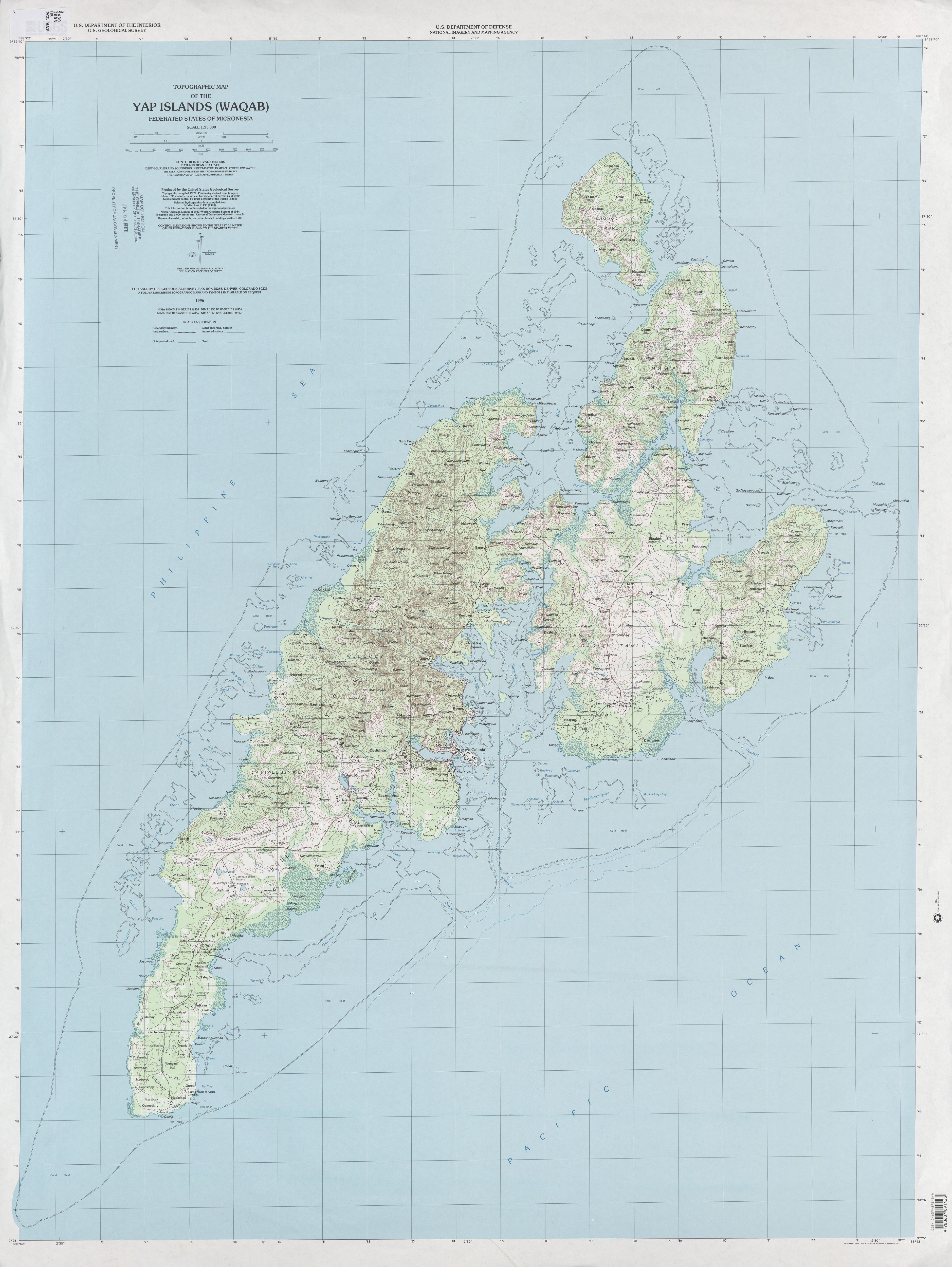
When I was looking up stuff about Yap, Micronesia, for a recent post, I came across a very informative website, with both photographs courtesy of the Micronesian Seminar and the National Archives—and even video—about the bombing of Yap during the Pacific War, about which I heard many stories during my time there in 1974. I have corrected obvious spelling errors in the following extract.

At dawn, on the 15th of June 1944, American amphibious forces swept into Saipan to begin the hard ground fighting that was to bring the Japanese homeland within range of our Superfortresses. For more than two weeks prior to the landings, Thirteenth Air Force Liberators, based on Los Negros, had been pounding Truk to neutralize the strategic Japanese base and to prevent the enemy from reinforcing Saipan by air.

A large Japanese task force, estimated at 40 ships or more, was sighted some distance north of Yap Island, on the 19th of June 1944. Carrier planes from this task force lashed out at the powerful units of the United States Pacific Fleet which were then supporting Allied ground forces on Saipan. The conflict that followed was the first major battle between elements of the Japanese and United States fleets in nearly two years. As at Midway, two years earlier, all of the offensive action was by carrier-based aircraft. By the time the Japanese fleet broke off the engagement, U.S. Task Force “58” had destroyed nearly 400 enemy aircraft and had sunk or damaged 14 Japanese ships.

Liberators of the Thirteenth Air Force were called upon to reach out more than 1,000 statute miles from their Los Negros base to hit Japanese warships that might seek refuge or fuel in Yap Harbor. On 22 June, 33 Liberators were over Yap in the longest mass mission the Thirteenth had yet flown. Trained eyes peered down on the harbor far below. There were no warships to be seen. The heavies wheeled and made their run on the secondary target, Yap Airdrome. Their 33-ton bomb load struck the runway and the dispersal areas with devastating effect.


View a large Yap Area Map

The Japanese were caught completely by surprise; not a single one of the more than 40 planes on the ground was able to take off and fly into the air. Nineteen enemy planes were definitely destroyed, and 15 were damaged; the runway was cratered and rendered unserviceable.

For six consecutive days after the raid of the 22nd of June, the Liberators blasted Yap, keeping the runway unserviceable and preventing its use in ferrying planes from the Philippines to the Marianas to aid the hard-pressed defenders of Saipan.

Leave a comment

Filed under Japan, Micronesia, U.S., war

English as an Indigenous Pacific Island Language

From English on the Bonin (Ogasawara) Islands, by Daniel Long (Duke U. Press, 2007; Publication of the American Dialect Society, no. 91; Supplement to American Speech, vol. 81), pp. 3, 9-10:

IT IS A LITTLE KNOWN LINGUISTIC FACT that among a group of Western Pacific islands English is maintained as a community language of the indigenous population. These are the Bonin Islands. Today, these islands (also called Ogasawara Islands) are part of Japan and their population, Japanese citizens, but the English language has survived there, as both a tool of communication and a marker of their unique identity. This book attempts to provide an outline of the English of the Bonin Islands in its various forms and incarnations from 1830 to the present….

The Bonin Islands appear to have lain completely uninhabited until Pacific Islander women and European and American men of widely varying linguistic backgrounds began to settle there in the early 1800s (see sections 2.1 and 2.2). Evidence from a variety of sources indicates that a Pidgin English (with a substratum formed from the other settlers’ native languages) developed as the community’s common tongue. Later the children born and raised in this language environment are thought to have acquired this as their native language (i.e., creoloidization occurred).

In the 1860s and 1870s, Japan laid claim to the islands and they experienced a huge influx of Japanese settlers. The Japanese established the first-ever schools on the islands, initiating bilingual (English and Japanese) education. Increasingly intense bilingualism initiated the processes of SYNTACTIC CONVERGENCE, leading to the development of a second contact language (a Mixed Language) comprised of a Japanese substratum and a lexicon supplied by the earlier English-based creoloid.

After World War II, the linguistic situation on the islands took another sharp turn when the U.S. Navy took control, allowing only those islanders of “Western” ancestry to live on the islands and subsequently establishing a school conducted in English. This period of American occupation and absolute isolation from Japanese ended abruptly in 1968 when the islands were returned to Japanese rule and the displaced Japanese islanders (living then in mainland Japan for a quarter century) were allowed to return home. The Ogasawara Mixed Language and Ogasawara Creoloid English have long coexisted with Japanese and English acrolects, but increasing mobility and improved communication technology seem to be accelerating decreoloidization and (dare I say) “de-mixed-language-ization.”

In the 170-year linguistic history of the Bonin Islands, the dominant language has shifted from English (from 1830) to Japanese (1876), back to English (1946), and back again to Japanese (1968).

1 Comment

Filed under Japan, language, Pacific, U.S.

Liberal vs. Conservative Interfaith Dialogue

Yesterday’s Wall Street Journal published an interesting op-ed on interfaith dialogue, something I’m in favor of if it also embraces those of us who are faithless—and we include them, too.

There is an assumption by commentators on the right and the left that as far as religion goes, it is liberals who work–and care to work–across faith lines. Interfaith activity is understood as a politically and theologically liberal enterprise. This stems in part from the fact that the most widely recognized examples of interfaith cooperation have occurred on the left. Martin Luther King Jr.’s partnership with Abraham Joshua Heschel (the prominent Jewish theologian and civil-rights leader) is probably the most famous. Other figures who have reached across religious lines include The Very Reverend James Parks Morton (former dean of the Cathedral of St. John the Divine) and international icons like Gandhi, the Dalai Lama and Bishop Desmond Tutu.

But during my years at the Interfaith Center of New York, a nonprofit organization devoted to fostering interreligious civic relationships, I found that the stereotypes about who is willing to form partnerships were wrong. When the center first opened, we received enthusiastic support from liberals and were ignored by conservatives. Our programs looked diverse, and they were, religiously speaking. But participants were homogeneously liberal.

The more conservative religious folks were not interested in talking about spirituality, peace-building and social justice. So we refocused our programs to include seminars and information sessions on issues such as domestic violence, health-care access and immigration rights. Suddenly, every kind of religious leader came, including conservatives. Their religious perspectives did not change, but our assumptions did.

Sheikh Musa Drammeh, an African lay leader who runs an Islamic school in the Bronx, first came to a retreat we held on immigration issues. Sheikh Drammeh believes that Islam is the one true path, that premarital sex is not moral and neither is homosexual behavior. He runs a school that teaches Muslim children these values. In preparation for opening the school in 2001 he introduced himself to local pastors and rabbis, inviting them to come observe his classrooms. He attended a week-long program on religious diversity to better understand the other religious groups in his community. He also works with a Latino Pentecostal minister on the Bronx District Attorney’s clergy task force. For him, interfaith partnership is critical for good citizenship and safe neighborhoods. “The more friends we make,” he says, “the less likely we are to shed blood.”

Rabbi Emmanuel Weizer is another one of our regular participants now. An ultra-Orthodox Hasidic Rabbi from Williamsburg, Brooklyn, he is the vice president of Congregation Beth Yitzthock. Rabbi Weizer strongly believes Orthodoxy is the right path (for Jews) and strongly disagrees with the theology of nonmonotheistic faiths. He will not participate in interfaith prayer services, nor will he enter another religion’s worship space. But he has worked across religious lines for years, for example, on our interfaith mediation team, a program of the New York State court system that includes Buddhists, Muslims, Hindus, Christians and Sikhs.

Interestingly, it was the liberal leaders who had problems with our new conservative participants. Some wondered aloud “who let them in.” Others wanted us to advocate for positions that would keep some conservatives out, like opposition to the war in Iraq and tolerance for homosexual behavior.

Instead of excluding conservatives, though, we adopted a different understanding of interfaith activity. It is not an understanding based on the idea that with a little conversation we can iron out all our theological differences. Rather, it is one based on the idea that religious beliefs are distinct, deep-set and deserve to be taken seriously. On that point, it turns out that Rabbi Weizer and Sheikh Drammeh understand each other well.

10 Comments

Filed under religion, U.S.

Wordcatcher Tales: Huarachudo, Ejido, Municipio, Piloncillo

From True Tales from Another Mexico: The Lynch Mob, the Popsicle Kings, Chalino, and the Bronx, by Sam Quinones (U. New Mexico Press, 2001), pp. 206-210:

The municipio of Turicato [in the State of Michoacán] has always divided along these town-rural lines. The hill folks resented the power, money, and education, relatively speaking, of the people in town. The city folk feared the hillbillies but saw no reason to extend power, or municipal services, to people they considered ignorant and barbaric. In these years the Barajas family—a family of local merchants—dominated Turicato politics….

In this atmosphere “Los Villa,” as the Villaseñor family was known, emerged first as rebels. They took up the cause of the “huarachudos,” the “sandal wearers”—whom they rallied to their cause against the city folk…. The Villaseñores were huarachudos themselves. They were sixteen children whose father, Tomás, had been born a peon on the hacienda San Rafael. In the 1930s President Lázaro Cárdenas ordered a section of the hacienda transformed into a communal farm—an ejido—owned by those who had worked it as peons….

The Villaseñor piloncillo operation also grew. Piloncillo is a small cone of brown sugar about an inch in diameter, processed by a simple mill. It is used to sweeten coffee, in household cooking, or by the soft-drink industry. In the 1990s, piloncillo has all but vanished as a product from the Turicato region. But in the 1970s and 1980s, many sugar cane growers were producing piloncillo. In the Turicato region in the 1970s and 1980s, owning a piloncillo mill was the difference between a life of comfort and one of hopeless poverty….

The emergence of a hillbilly family brought with it the kind of abuses that town residents had feared all along. “What happens is they form into groups,” says Trigo. “There’s one who’s a leader, and around him form people who like to fight and look for trouble. They like to walk into a cantina and throw everybody out. They figure that’s a real achievement. This grows; the group gets larger. Then it becomes, ‘Let’s take over this land.’”…

Yet the Villaseñor family never did fully dominate local politics. They proved in the end to be poor politicians. Their frequent warring—“their bellicose nature” as one man put it—earned them many enemies. By 1989 a significant part of the municipio nurtured in dark silence a pure and vital hatred of the Villaseñores, and among them were many of the same poor peasants—the huarachudos—that the family once rallied to its side….

In 1994 the military put a roadblock between Turicato and Puruarán and set about arresting or killing off the bandit gangs. Others saw that the military meant business and laid down their guns. So five years after the Nueva Jerusalén vote threw Turicato into a civil war, a version of peace came to the municipio.

The chapter from which these excerpts come is a well-told tale, but one sadly familiar in its broad outlines: ambitious évolués (sponsored by distant elites, in this case the PRI) lead others among the oppressed to overthrow and replace an oppressive elite, only to impose a new kind of thugocracy at least as violent and oppressive as the old one. Sort of a Zimbabwe in microcosm. (Zimbabwe, whose independence I long ago celebrated at a big gathering of African students in Honolulu.)

But I want to comment on just two of the four words italicized in the extract.

The Spanish term municipio may have survived in the form of an English calque more than a century after the Spanish ceded Micronesia to the Germans. Each of the Federated States (formerly Districts) of Micronesia is divided into what are now called municipalities, a term that no subsequent German, Japanese, or American administrator would likely have come up with, although the Americans are credited with introducing the term by the anthropologist Lingenfelter, who worked in Yap during the early postwar years. If so, U.S. Navy administrators probably calqued on the basis of usage in the Philippines. Micronesian municipalities have never been centered around a town and its hinterland. Instead, they seem to be more like alliances of contiguous villages.

I’m old enough to have purchased a pair of Mexican huarache sandals in the 1970s, when I was a grad student in Hawai‘i. The dye made my feet break out, so I stayed with rubber slippers (zori). (I hardly owned a pair of shoes all through grad school.) The relation between Spanish huarache ‘sandal’ and huarachudo ‘sandaled’ is parallel to that between English beard and bearded. Spanish and English are both related languages. But the same parallel can be observed between, for example, Chamorro sapatos ‘shoes’ (from Spanish) and sinapatos ‘shod, wearing shoes’, or Chamorro relós ‘wristwatch’ (also from Spanish) and rinelós ‘wearing a wristwatch’. Among its myriad functions, the -in- infix in Philippine languages can form adjectives out of nouns in a manner similar to that of participial affixes in Spanish and English.

UPDATE: The Micronesian Seminar‘s Francis X. Hezel, S.J., weighs in on the antecedents of the term municipality in Micronesia.

The term as used in Micronesia after the war has no direct relationship to the Spanish colonial period in these islands. The Spanish weren’t here long enough and they weren’t influential enough to have the term stick. There are very few Spanish loan words that have made their way into the island languages. Actually, islanders used the Japanese term kumi to describe a segment of the island, even well after the war. Muncipality came into the languages through the English term, via the Navy.

The usage of Japanese kumi ‘club, association, gang’ is very interesting, and seems a much more appropriate term for the traditional political alliances before they were recast by the U.S. Navy as local-government structures. The Yapese dictionary translates municipality into Yapese nuug ‘net’ (presumably meaning ‘network’ of political alliances). Other Micronesian dictionaries I’ve consulted don’t list municipality in the English finder list. So it seems U.S. Navy administrators were influenced by Spanish local-government terminology already long-established in the Philippines.

The U.S. Census Bureau glossary does not list the term municipality at all, but it does list and gloss municipio as: “Primary legal divisions of Puerto Rico. These are treated as county equivalents.” The Wikipedia entry for Municipalities of the Philippines begins thus: “A municipality (bayan, sometimes munisipyo, in Tagalog) is a local government unit in the Philippines. Municipalities are also called towns (which is actually a better translation of bayan).”

SHARP DETOUR: My wife and I taught University of Hawai‘i extension courses on Yap, Micronesia, in the summer of 1983, just before heading off to spend a year in Romania on a Fulbright research grant. In fact, she was still there when I got the word that my nearly forgotten application from a year earlier had been approved and that the orientation in Washington, D.C., would begin before she got back to Honolulu. Trying to place a telephone call through to Yap was not easy in those days.

Anyway, for my introductory linguistics course on Yap I used the first edition of Peter Trudgill’s little Penguin paperback Sociolinguistics: An Introduction to Language and Society. Even the main islands of Yap have a good deal of regional variation in pronunciation and word choice, and the outer islands speak dialects of the far-flung Trukic language continuum, only distantly related to Yapese. The variety of Yapese spoken in the major municipality (Rull) closest to Colonia—the capital and only urban center—provided the basis for the standard orthography, but the pilot school for testing Yapese language curriculum materials (with bilingual education funding from the U.S. DOE) was located in the major municipality (Tomil) with the most divergent pronunciation. The three major municipalities were those chiefly alliances (called kumi in Japanese) dominant at the time the Germans took control: Gagil, Tomil, and Rull.

My wife and I first met while we were both assigned to that school in the fall of 1974—she as a new Peace Corps teacher for two years, me as a visiting linguist for one semester—and we both learned our Yapese in that very rural municipality. (Mine faded much more quickly than hers.) So we were quite aware of regional variation and of the principal shibboleths of Tomil dialect, chief among them being the pronunciation of standard /ae/ as /ee/, as in the pronoun gaeg vs. geeg ‘me’ or the plural marker on verbs -gaed vs. -geed, both high-frequency items.

For my introduction to linguistics course in 1983, I decided that the most important things I should focus on were the respective relationships between writing and pronunciation, on the one hand, and between dialects and standard languages, on the other. One of my assignments was for my students to assemble a list of common words for which there were regional variants, then track down the boundaries between those variants (the isoglosses). The most interesting findings involved variants whose isoglosses failed to align with the existing boundaries between municipalities, perhaps revealing earlier linguistic and political fault lines.

1 Comment

Filed under language, Mexico, Micronesia, Philippines, U.S.

Mexico’s Fayuca Boom and Bust

From True Tales from Another Mexico: The Lynch Mob, the Popsicle Kings, Chalino, and the Bronx, by Sam Quinones (U. New Mexico Press, 2001), pp. 239-240, 242:

Fayuca. The word meant contraband, illegally imported merchandise: stereos, televisions, calculators, cameras, silk shirts, tennis shoes, blue jeans, blenders, and blouses. The government slapped this stuff with steep tariffs when imported legally as a way of protecting Mexican industry. Tepito brought it in illegally. To Tepito, fayuca meant easy money and lots of it. Despite the official prohibitions, Mexicans gorged themselves on the outside world’s baubles. Tepito was their dinner table. It was a time tailor-made for the Tepito mind-set. In the go-go era of fayuca, what mattered was not what you sold or how you brought it in but how fast it would move. The trickle of suitcases containing small items like perfume, watches, and jewelry in the mid-1970s became, by the 1980s, torrential truckloads of twenty-one-inch televisions and full home stereo systems.

To a government running a desiccated economy, it quickly became clear that the contraband did two things. First, it appeased the middle classes, who didn’t really care where they bought this stuff so long as they could buy it. Second, fayuca also helped dampen inflation. The prices in Tepito were usually well below what the same goods sold for in the stores that had legally imported them. “The authorities wanted to lower prices without really entering the global economy,” says Gustavo Esteva, a sociologist who lived in Tepito for several years during the fayuca boom. “So the government used Tepito and the fayuca to fight inflation.” Though fayuca was illegal, it was bought and sold openly in Tepito. The regime couldn’t appear to allow it in and yet didn’t dare keep it out. Eventually the industry was carved up among Tepito’s fayuqueros, commandants of customs, the judicial police, the highway police, and other government officials. After a while the highway police in San Luis Potosí, midway between Laredo and Mexico City, decided they wanted their cut too. The wife of President José López Portillo, Carmen Romano, was said to be one of the greatest fayuca importers.

The arrival of fayuca was a key moment in Mexico’s economic history. Fayuca was in its own way as important in rocking the regime’s credibility as the 1968 Tlatelolco [student] massacre, the periodic peso devaluations, and the fraud-riven elections of 1988. Its presence showed that the protected, state-run economy no longer had a prayer of providing what Mexicans now expected out of life. Though Mexicans talked economic nationalism, they voted with their feet and mobbed Tepito, looking for the smuggled imports.

And for the first time Tepito got rich. In Tepito the fayuquero took the place of the boxer as the model for economic advancement, though in this case the road to riches was accessible to thousands of people and few of them missed the turnoff Since the fayuca, Tepito has produced no great boxers. Instead Tepito’s fayuqueros took on the status of legendary renegades; at least two B movies were made about them….

Mexico’s entry into GATT, then NAFTA, brought the fayuca boom to an end. The Mexican government began to lower tariffs on consumer goods. Customers began finding what Tepiteros were selling in legitimate stores that offered service, guarantees, and receipts and didn’t have thugs around the corner waiting to rob the clientele. When the peso was devalued in 1994, sales plummeted further. People still go to Tepito, since merchandise is a little cheaper and carries no sales tax. But the fayuca gold rush is a memory.

1 Comment

Filed under economics, Mexico, nationalism, U.S.