
Category Archives: travel

Down the Danube: Bulgaria

For two weeks in September-October this year, the Far Outliers took a Viking cruise down the Danube River from Budapest to Bucharest. Here are some impressions from each of the countries we visited. A photo album from the trip (Danube 2024) is on Flickr.

Our first stop in Bulgaria was at Vidin, one of its oldest riverside towns. Our morning excursion was to the old mountain fortress of Belogradchik (‘Little Belgrade’) and its impressive rock formations, with steep hillsides to climb. In the afternoon we walked along the waterfront, to the old Ottoman post office, a mosque, an orthodox church, and a memorial to the victims of communism. We didn’t make it as far as the synagogue because we fell into a long conversation with a talkative schoolboy fluent in English. The captain of our Viking Ullur cruise ship was Bulgarian.

The next morning we stopped at Ruse, famous for its baroque architecture and the Friendship Bridge to Giurgiu, just across the Danube in Romania. But our daylong excursion took us south to Veliko Tarnovo, Bulgaria’s old capital, and the nearby Ottoman merchant city of Arbanasi, now a major tourist attraction, where we visited an Ottoman-era merchant’s house and an orthodox church hidden in a barn. We ate lunch at the Hotel Izvora (= Spring), built in traditional Bulgarian style, and with a waterwheel-driven rotisserie. On the way back to the bus, we passed two classic Russian cars, a Lada and a Moskvitch.

We passed many large farms on our bus excursions. The wheat and maize had been harvested before our October visit, but fields of young green rapeseed (canola) plants were also visible. After the fall of communism, large collective farms were broken up and given to the families who worked them, but many new owners who lacked the resources to farm their own land have leased it back to large agribusinesses. Bulgaria also has valuable specialty crops, the most famous of which are from the centuries-old Rose Valley. (We first heard of it, under the name Valea Trandafirilor, during our sojourn in Romania in 1983-84.)

After Russia attacked Ukraine’s Black Sea grain-storage ports, including Ismail in the Danube Delta, much of Ukraine’s huge wheat exports now come by thousands of trucks through Romania, across the Friendship Bridge, and back to the Bulgarian port of Varna on the Black Sea.
Leave a comment

Filed under Bulgaria, economics, language, nationalism, religion, Russia, travel, Turkey, Ukraine, war

Down the Danube: Serbia

For two weeks in September-October this year, the Far Outliers took a Viking cruise down the Danube River from Budapest to Bucharest. Here are some impressions from each of the countries we visited. A photo album from the trip (Danube 2024) is on Flickr.

Our first stop in Serbia was the capital city, Belgrade. It wasn’t Budapest, but it was a very pleasant surprise: lively, bustling, and well supplied. We opted for the Viking “included” (at no extra cost) excursion that focused on three attractions: the white limestone-walled Fortress that gave the city its name; the spectacular Church of St. Sava on the pattern of Istanbul’s Hagia Sophia (without the minarets); and the Bohemian quarter of the Old Town (with break dancers). The Fortress, now a city park, housed two unusual displays: a dinosaur park and a display of artillery. Our group’s guide was the best of our whole trip: a onetime professional singer who was now a professor of art history and a wonderfully wry storyteller. He demonstrated the acoustics in St. Sava by chanting liturgy at a central spot. On the church grounds was a statue of Nikola Tesla, born in what’s now Croatia and buried in what’s now Serbia.

Our fondest memories of Belgrade were not the architecture, the food, or the shopping, but the music. Later that Friday afternoon, when we climbed up the steep steps to the Old Town on our own, we chanced upon a crowd waiting outside a church for the wedding party to emerge. We stayed around long enough to enjoy the music and take video. In our ship’s lounge that evening, we enjoyed a Serbian troupe performing Balkan folkloric music and dance.

When we woke up the next morning, we were at Golubac, site of an old castle on a steep hillside protecting the Danube border. After touring it and slowly climbing to the top, we boarded a bus for a hillside overlooking the Iron Gates, the site of the sunken Turkish fortress island of Ada Kaleh, and Romania across the river. On the sun deck in late afternoon, we listened to the cruise director’s narration as we navigated through the narrow gorges and past the huge Decebal statue. We passed through the locks of the hydroelectric dams after dark.

Leave a comment

Filed under economics, language, military, music, nationalism, Romania, travel, Turkey, Yugoslavia

Down the Danube: Croatia

For two weeks in September-October this year, the Far Outliers took a Viking cruise down the Danube River from Budapest to Bucharest. Here are some impressions from each of the countries we visited. A photo album from the trip (Danube 2024) is on Flickr.

Our first stop in Croatia was at the Slavonian border city of Vukovar, site of the bitter Battle of Vukovar, attacked by Serbs in 1991 and held until 1998. Many buildings still bore the scars of the heavy shelling from that battle. Our guides expressed considerable bitterness about those times, but also acknowledged the many atrocities committed by Croatian Ustaše allies of the Nazis in World War II.

Several Croats expressed nostalgia for Tito’s Yugoslavia, when travel abroad was possible and economic benefits were more evenly distributed. Many Yugoslavs also emigrated during those days. I remember from my visit to Australia on the way to Papua New Guinea in 1976 that many Greeks and Slavs were immigrating there at that time. That’s where I first learned how to say ‘thank you’ in Greek, after I bought a gyro sandwich from a Greek shop. A few of my PNG friends had been to Australia, and were shocked to see white people doing janitorial work, as many immigrant Slavs did in those days. I asked our Croatian hosts which part of Croatia had the highest emigration in those days and they said the Dalmatian coast, where economic opportunities were limited before it became such a tourism hotspot.

The only excursion we signed up for was to Osijek, where we split into smaller groups for home visits, then visited the ornate Cathedral of Saints Peter and Paul, where a singer with an angelic voice sang for us.

Unlike Hungary, Serbia, Bulgaria, and Romania, Croatia adopted the Euro, so many of the overwhelmingly American passengers on our Viking cruise used the ATMs to stock up on Euros, which were more widely accepted than U.S. dollars by most vendors in those countries for small cash purchases. Credit cards are also widely accepted.

Leave a comment

Filed under economics, language, migration, nationalism, religion, travel, war, Yugoslavia

Down the Danube: Hungary

For two weeks in September-October this year, the Far Outliers took a Viking cruise down the Danube River from Budapest to Bucharest. Here are some impressions from each of the countries we visited. A photo album from the trip (Danube 2024) is on Flickr.

We flew from NY JFK to Paris CDG, then to Budapest, where Viking lodged us in the luxurious Corinthia Hotel on Erzsebet korut in Pest. We had warned longtime favorite blogger Dumneazu that we were coming. He lives in the old Jewish quarter just a few blocks away so we had a nice long visit with him at a little coffee and pastry shop. He recommended two restaurants on Pozsonyi ut near the Danube for the best authentic Hungarian food. (When we were last in Budapest 40 years ago on a holiday trip from grim Romania, we had eaten at the more famous Gundel and Cafe New York.) So, on our second evening in Pest, we walked to Kiskakukk (Little Cuckoo) and ate their specialty platter for two: crispy goose leg, fried duck leg, foie gras on roast, duck breast fillet, onion mashed potatoes, homemade potato doughnuts, fried apple, steamed cabbage, washed down with a nice Hungarian pinot noir.

We ate and drank very well on this cruise, but we also walked a lot at each stop, often 10,000 steps a day. Our group excursion in Budapest was a walking tour of Buda Castle Hill, which started with a ride to the starting point on the excellent city trams (which operate 24/7/365). Our tour guide was originally from Hong Kong and, like all the Viking excursion guides, was well-versed in local history and culture.

The hotel lounge one night featured a string quartet with cimbalom, which drew us in. When I asked the very energetic waitress there for a dry Tokaji wine, she brought me a nice dry one, and later offered a much richer variety as a nightcap. She was of Romanian Szekler origin, whose family immigrated to Hungary during her school years, so I was able to practice a bit of Romanian with her.

After an overnight cruise, we stopped at a tiny pier at Kalocsa, where we visited the spectacular Assumption Cathedral for an impressive pipe organ concert. The former monastery there had been turned into a Paprika Museum. Then we took busses to a horse farm for an amusing display of Hungarian horsemanship before returning to the ship.

The Viking ships have both European-style and American-style outlets, so we were able to keep our phones, laptops, and camera charged, but the Corinthia Hotel had only round, European-style outlets, so we had to use our small Europlug roundpin adapters. Our larger squarish multitype adapters would not fit in the round recesses of the outlets.

Leave a comment

Filed under blogging, economics, food, Hungary, language, travel

Capt. Cook’s Americans

From The Wide Wide Sea: Imperial Ambition, First Contact and the Fateful Final Voyage of Captain James Cook, by Hampton Sides (Knopf Doubleday, 2024), Kindle p. 345-347:

WHILE IN MACAU, Captain Gore learned the distressing news that not only was the American Revolution going badly for the English, but both France and Spain had declared war on Britain. Consequently, for the voyage home, facing the danger of seizure or attack, his two ships would remain on a war footing. The Resolution and the Discovery left Macau in January 1780, stopping briefly south of Vietnam and then in the Sunda Strait, between Sumatra and Java, not far from the seething volcano on Krakatoa. By April, the vessels were anchored in False Bay, near Cape Town. In early August, as the two ships approached England, contrary winds forced them far to the west. Gore had to make a long, awkward circuit around Ireland and over Scotland’s Orkney Islands. The vessels plied down the east coast of Britain, finally arriving in London on October 7, 1780. The Resolution had been gone from England for 1,548 days. At the time, it was believed to be the longest exploratory voyage—in terms of both miles and duration—ever undertaken on the high seas. And yet, despite the odyssey’s historic length, once again, not a single person on either ship had died of scurvy.

AFTER RETURNING TO London, the Americans on board the ships had to face the difficult decision whether to cast their loyalties with Britain or find their way back to their native-born colonies and take up the cause against the mother country under whose flag they had been sailing for the past four years. Because he was still a member of the Royal Marines, John Ledyard was promptly sent to Canada to fight for the British in the waning actions of the American Revolution. He deserted, returned to his native New England, and in 1783 published an unauthorized account of his travels with Cook that became the first written work protected by copyright in the United States. In 1786, not done with epic traveling, Ledyard embarked on a trek of more than six thousand miles, mostly on foot, across Europe and Russia in an attempt to reach Alaska, but he was arrested in Siberia under orders from Catherine the Great. Ledyard died in Cairo in 1788, aged thirty-seven, while preparing an expedition to search for the source of the Niger River.

Ledyard’s fellow countryman John Gore, on the other hand, had no interest in returning to the land of his birth. The Admiralty appointed him as one of the captains of the Greenwich Hospital, the same position Cook had vacated when he embarked on his final voyage. Gore served ten years at Greenwich. He was a popular figure among the old salts and died there in 1790.

Leave a comment

Filed under Britain, Canada, disease, migration, military, nationalism, publishing, Russia, travel, U.S., war

Early Danish Explorers

From The Rise and Fall of the Danish Empire, by Michael Bregnsbo and Kurt Villads Jensen (Palgrave Macmillan, 2022), Kindle pp. 183-184:

In Europe, the fifteenth century was the period of the great explorers. This led, among other things, to a collaboration between Portugal and the Danish Empire to find a route to India (Jensen 2007). The Portuguese Prince Henry the Navigator had written to Christopher of Bavaria about the project, and a Danish nobleman Vallarte arrived in Portugal in 1448 and participated with the Portuguese Order of Christ in a long expedition south of Africa to Cape Verde, where he lived the rest of his life in captivity of the local tribal chief, who turned out not to be Christian, as the expedition had expected. In 1461, King Afonso V of Portugal wrote to Christian I and warmly recommended Christian’s herald Lolland. Heralds could function almost as ambassadors and were often named after provinces or landscapes (i.e. Lolland). Lolland had participated in the Portuguese crusades and voyages of discovery to North Africa, and Afonso was so impressed by his bravery that the king knighted him when he returned to Portugal. These connections between Denmark and Portugal were later expanded. Around 1471, when Christian presented his grand crusade plan to the imperial diet in Regensburg, an expedition to the north embarked, led by well-known captains Didrik Pining of Denmark, Hans Pothorst of Iceland, and João Vaz Corte-Real and Alvaro Martins Homem from Portugal. They reached Greenland, where they erected a large memorial on one of the more recognizable mountains. From there, they proceeded to America and reached Newfoundland, which was known among Portuguese fishermen as “terra do bachalau,” the land of the stock fish. The goal was to find the northwest passage to India. This was reattempted later. In 1519, Christian II equipped a new expedition under the leadership of the notorious pirate and admiral Søren Norby: prior to this, he had wrought papal bulls that authorized the raid as a true crusade. The goal was to win Greenland back from the pagans, which would only be the beginning. At the time of Christian II it was believed that Greenland was the outermost peninsula of the great Asian continent, and if one could lead a crusade there, one would be able to confront the Muslims with a two-front war. At the same time, Christian’s army would land in the Far East near where the legendary Christian priest-king Prester John was supposed to live in a giant kingdom ready to support Christian Western Europe in the fight against Islam. During the fifteenth century, it was said that Prester John was descended from Holger the Dane, hero to Charlemagne, and thus King Christian’s distant ancestor. The Danish empire was so large that it included not only huge areas of the north with diverse peoples, but also a bridgehead to Asia. However, the Great Crusade to Greenland and Asia never commenced, because Christian II became preoccupied with problems in Sweden [trying to maintain the Kalmar Union].

Leave a comment

Filed under Africa, North America, Portugal, religion, Scandinavia, South Asia, travel

Photos of Historic Sites in Maui

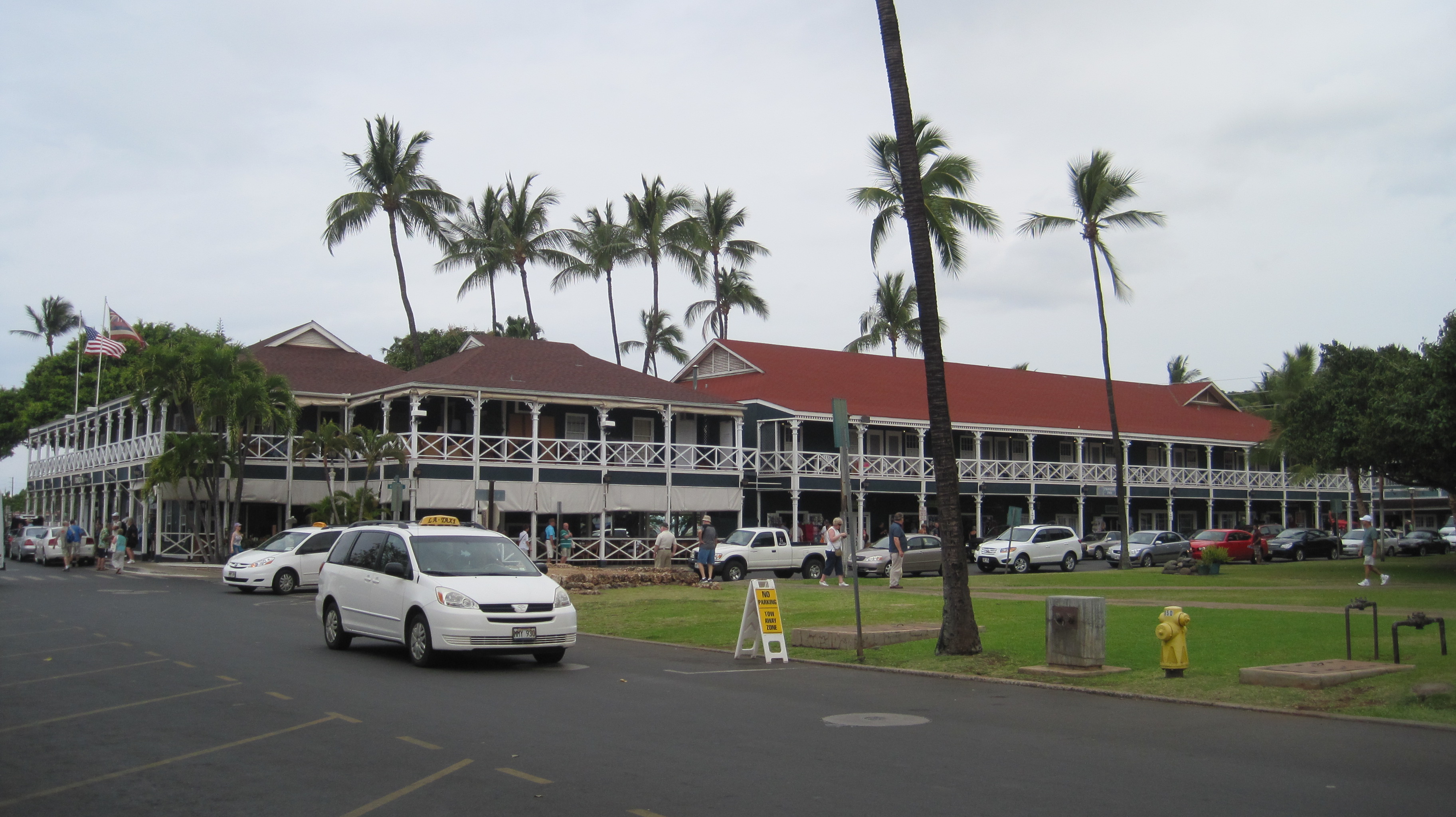
Pioneer Inn, Lahaina, Maui

Pioneer Inn, Lahaina Historic District, 2010, destroyed by wildfire in 2023

The Far Outliers paid a visit to Maui in March 2010 and, as is our custom, we made an effort to photograph sites on the National Register of Historic Places. I uploaded most of them to Wikimedia Commons, put them in the public domain, and then inserted them into the Wikipedia NRHP listings and articles for sites in Maui. The rest I uploaded to my Flickr site, where I created a separate album for Maui. In the wake of the destructive wildfires on Maui, I’m now adding my Wikimedia Commons photos to my Maui album on Flickr for extra backup.

Leave a comment

Filed under Hawai'i, publishing, travel

Tourism Extortion in Vietnam

From Catfish and Mandala: A Two-Wheeled Voyage Through the Landscape and Memory of Vietnam, by Andrew X. Pham (Farrar, Straus and Giroux, 2010), Kindle pp. 279-280:

I am having breakfast when a tour bus pulls over and parks in front of the café. Road-dazed foreigners totter off the bus and into the hotel across the street. The driver, a young guy, takes a cigarette break in front of the bus. Before his third drag, the police materialize from nowhere, swaggering in their drab olive uniforms and vinyl belts. The pair beelines to the bus, one whipping out a citation pad, the other swinging his nightstick in short, impatient arcs. The driver’s jaw drops. He nearly swallows his cigarette, knowing that he and his tour company are going to suffer huge fines.

“This is a no-parking zone!” barks the cop loud enough for everyone in the café to hear. There is no sign and the space is just an empty dirt lot.

“I’m sorry, Officers!” the driver squeaks, smiling apologetically, placating. “I’ll move it right away.”

“Too late,” snorts the other cop, barring the driver from the door with his nightstick. “It’ll have to be towed.”

The driver disintegrates into pure panic. They want to see his license and the papers for the vehicle, so reams of multihued permits and authorizations exchange hands. The owner of the café, from where I am sitting, sends her son to the hotel across the street to warn the hotel owner and the tour operator. In seconds, two older welldressed men emerge, wearing big friendly smiles. They approach with hands extended, each deftly steering one cop to a different end of the bus. Divide and subdue. Seeing now that they are in the presence of money and power, the cops adopt grave, almost serene countenances. A flock of spectators watch the proceedings from a wary distance—this here the only event where onlookers aren’t practically trampling on what they’re watching.

I turn to the café owners. “All this for a parking violation?”

She nods. “Big fines.”

“Lunch fines?”

She chuckles and looks at me with interest. “You know the way, eh?”

I shrug.

Within minutes everything is resolved. The big men never stop smiling and the cops never crack as much as a grin. The driver takes the bus across the street into the hotel’s courtyard. The big men stroll into the café, each draping an affectionate arm over his cop. The foursome take a table next to mine. The owner rushes to their elbows for the orders: espresso, Coke, beer, omelets, steaks, and four packs of Marlboros, two packs apiece for the cops. Small talk and a few American cigarettes, the ice is broken and they are chatting like old friends. Afterward, the big men show the cops into the hotel. Additional mollification required.

The café patrons, all white foreigners, observe the entire extortion with great amusement, marveling at the brazenness of the transaction.

Leave a comment

Filed under economics, nationalism, travel, Vietnam

Foreign Tourists in Hanoi

From Catfish and Mandala: A Two-Wheeled Voyage Through the Landscape and Memory of Vietnam, by Andrew X. Pham (Farrar, Straus and Giroux, 2010), Kindle pp. 225-226:

The one thing a solo traveler can count on finding in an area crawling with backpackers and expatriates is a bargain bed for the night. Usually, the food isn’t bad either. I have no idea where Hanoi’s tourist town is, so I buy a map and meander. It is an easy task since Hanoi is a more sedate city than Saigon. The traffic is much lighter, and in the cooler air under tree-shaded avenues, the smog is more tolerable. Hanoi lives on a scale more comprehensible than Saigon. The trees are smaller, more abundant, and not so tall and tropical like those of Saigon. I stroll along the fine mansions, taking in their faded, colonial French glories, their expressive arches, French windows, and wrought-iron balconies. Every structure holds itself up proudly in a state of elegant decay. At the north end of Hoan Kiem Lake, I find six young Caucasian travelers, lurking timidly on different street corners. Backpackers, baby-faced, flushed even in the tropic winter, treading about, wide eyes eating up all the sights, the details. Their pilgrim hands clench dog-eared copies of The Lonely Planet Guide to Vietnam. Alas, I have found my home for the next few weeks.

For tourists, everything that happens in Hanoi happens in the backpacker cafés. Anything that can be had, rented, chartered, borrowed, exchanged, and bought can be obtained or arranged in them. They sneak tourists illegally across the border into China for day jaunts, book hotel rooms, lodge people in-house, serve decent Western food, sell traveling supplies, fresh baguettes, and Laughing Cow cheese, which is the staple travel food for foreigners who fear stomach bugs. They book anything. Legal, illegal. You got the dollars, they can find your pleasure.

I bum around Hanoi with Australians, French, Danes, Brits, Germans, and Americans just soaking up the culture, exploring the urban sprawl one district at a time. The city is broken up into ridiculously distinct commercial sections, guild oriented, another French legacy. If you want to buy shoes, you go to the shoe district, where thirty or so adjacent stores sell only footwear, often the same style and brand. There is a part of town for every category of goods and services: clothing, poultry, silk, jewelry, and electronics. There is even an area with shops making headstones, where dust-covered men kneel on the sidewalk chipping names into slabs of granite. Our favorite is the street of nem nuong diners. Around dinnertime, straddling the sunset hour, the street is perfumed and grayed with the smoke of meat sizzling over coals. If you catch a whiff of this scent, you never forget it. It is a heady mixture of fishsauce marinade, burning scallions, caramelized sugar, pepper, chopped beef, and pork fat. Women sit on footstools grilling meats on hibachi-style barbecues. Aromatic, stomach-nipping smoke curls to the scrubby treetops and simply lingers, casting the avenue into an amber haze. When hungry folk flock from all over the city to this spot, they have only one thing on their mind. And the entire street, all its skills and resources, is geared to that singular satisfaction.

The days pass without difficulty. I am at last among friends of similar spirit, all non-Asian, not one of them Vietnamese. And I am happy, comfortable merely to be an interpreter. Every day, we troop off to some part of the city on sight-seeing missions. At night, we congregate for great bouts of drinking and barhopping. We splinter into smaller parties and sign up for organized boat tours in Ha Long Bay and ride rented motorcycles to the countryside. We joke, we romance each other with the wild abandon of strangers cohabiting in exotic moments. We ask about Hanoi and its people, we ask about each other. Bonding, trading addresses, and fervently believing that we will never lose touch.

Leave a comment

Filed under food, language, migration, travel, Vietnam

Vietnam’s Highway 1 in 1990s

From Catfish and Mandala: A Two-Wheeled Voyage Through the Landscape and Memory of Vietnam, by Andrew X. Pham (Farrar, Straus and Giroux, 2010), Kindle p. 125:

On Highway 1, a concrete divider keeps the chaos going in one direction from colliding head-on with the chaos going in the other direction. Though the road is wide enough for three lanes in each direction, there are no lane markings, no shoulders, not even oil tracks, just one big long river of asphalt boiling with Brownian motion. If there are laws concerning what types of vehicle or creature are allowed on the national highway, the traffic cops aren’t enforcing them, too busy extorting bribes—unofficial fines, they call them—from truck and bus drivers who prove more lucrative prey than single travelers. Besides the pedestrians who walk along the edge of the road and occasionally attempt mad sprints across the highway, the road teems with cattle-drawn carts, horse-drawn wagons, load ponies, wheelbarrows, herders with cattle, cyclos, bicyclists, and everything motorized. Dust cloaks everything. The air, a metallic blue fog, makes the road murky, twilight-like. With the tropical humidity, it doesn’t so much settle as it condenses on the skin like a poisonous mist. The engines roar, the animals bleat, the horns, the curses, and the screams boil into a fantastic cacophony. Set back from the road under the shade of a few scraggly trees, the spectator cafés dot the length of the highway on both sides, their sooty lawn chairs all facing the traffic.

Leave a comment

Filed under migration, travel, U.S., Vietnam