Category Archives: Mexico

Mexico’s Lumpendeputies, the Bronxistas

From True Tales from Another Mexico: The Lynch Mob, the Popsicle Kings, Chalino, and the Bronx, by Sam Quinones (U. New Mexico Press, 2001), pp. 184, 187-188:

No Bronx was needed during the decades of PRI hegemony, when virtually all congressmen were Priistas. An occasional opposition critic at the podium was even a welcome sight, adding a democratic veneer to an authoritarian exercise.

Congressmen then were known as levantadedos—finger raisers. Cartoonists portrayed them asleep in their chairs with their fingers in the air. They took orders from the president and approved whatever he proposed. Some deputies couldn’t read or write. It didn’t matter. They had been powerless since 1933. [Sounds like one-party Hawai‘i during the 1980s—and probably the 1930s as well.]

A fire in the chamber [in 1991] forced the 55th [Legislature of the Chamber of Deputies] to spend many months in an auditorium at Centro Médico—the medical center several miles away. The auditorium had no offices, no secretaries, no telephones. Simple things like writing a letter were major undertakings. Most PRI deputies were already shut out of the decision making, which was the exclusive domain of an elite crew of twenty or so Priistas. Now they didn’t even have secretaries. They felt like schoolchildren. Ghettoized, they commiserated, and soon a collective bond emerged among sixty or so deputies. As the months wore on, they hit on the idea of publishing a newspaper as an outlet for their festering frustration…. Their newspaper … was to be a clandestine organ of dissent and barbed humor, written anonymously. [Arturo] Nájera was put in charge of collecting articles.

The paper was first published in December 1991 and was known as La Daga—The Dagger. La Daga looked like a junior high school newspaper. Only eleven editions were ever published…. La Daga was by and for the rabble. It had no budget. It was written on a typewriter—full of spelling mistakes—then xeroxed and stapled together. La Daga was a collection of gossip, anecdotes, sexual innuendo, and cartoons making fun of important chamber members—and in that lay whatever transcendence it achieved. Soon dozens of deputies were contributing. “You know, there were 250 or so underemployed congressmen,” said Nájera. “If you’re sitting there with nothing to do, in two hours you can write a poem or an article.” There was often too much to publish.

Yet if this group of deputies showed signs of rebellion, its main function was to ridicule opposition deputies at the podium. “Lumpendeputies,” one opposition-party colleague called them. Wisecracking sustained them in their discredit. Relegated, disrespected, crude—the group developed an esprit de corps around its name. How it got that name is in dispute. Nájera says it was given them by Esteban Zamora, a PAN deputy. One day, the story goes, they were attacking Zamora as he spoke from the podium. “You over there in the Bronx, leave me alone,” Zamora supposedly boomed in response. Zamora denies coming up with the name, though he admits calling them “la broza del PRI” (“the PRI’s rubbish”). “They’d already named themselves the Bronx. I didn’t invent that,” Zamora told me. “Please don’t attribute it to me. It would be an insult to the district in New York.”

Whatever the case, Mexicans had long associated the term with aggressive behavior. The group donned the name—La Daga became its voice. La Daga eventually published a map of the chamber. The PAN section was labeled Queens; the PRD, Harlem. The PRI leadership section was commonly known as the Bubble by this time, but it was labeled the Holy Sanctuary, while the group of powerful Priistas directly behind it was christened Manhattan. Left field, made up of Priistas who didn’t yell or participate but more or less bided their time, was dubbed New Jersey. In right field was the Bronx. “I think among many of us who formed the Bronx, there was this spirit of independence, of not enslaving ourselves to an orthodox, closed regime,” Nájera said. “We formed a wing that superficially could be seen as ‘rudos’—with the yelling and all that. But that wasn’t the intention. Rather it was a way of permeating this impenetrable bubble of power.”

1 Comment

Filed under Mexico

Wordcatcher Tales: Huarachudo, Ejido, Municipio, Piloncillo

From True Tales from Another Mexico: The Lynch Mob, the Popsicle Kings, Chalino, and the Bronx, by Sam Quinones (U. New Mexico Press, 2001), pp. 206-210:

The municipio of Turicato [in the State of Michoacán] has always divided along these town-rural lines. The hill folks resented the power, money, and education, relatively speaking, of the people in town. The city folk feared the hillbillies but saw no reason to extend power, or municipal services, to people they considered ignorant and barbaric. In these years the Barajas family—a family of local merchants—dominated Turicato politics….

In this atmosphere “Los Villa,” as the Villaseñor family was known, emerged first as rebels. They took up the cause of the “huarachudos,” the “sandal wearers”—whom they rallied to their cause against the city folk…. The Villaseñores were huarachudos themselves. They were sixteen children whose father, Tomás, had been born a peon on the hacienda San Rafael. In the 1930s President Lázaro Cárdenas ordered a section of the hacienda transformed into a communal farm—an ejido—owned by those who had worked it as peons….

The Villaseñor piloncillo operation also grew. Piloncillo is a small cone of brown sugar about an inch in diameter, processed by a simple mill. It is used to sweeten coffee, in household cooking, or by the soft-drink industry. In the 1990s, piloncillo has all but vanished as a product from the Turicato region. But in the 1970s and 1980s, many sugar cane growers were producing piloncillo. In the Turicato region in the 1970s and 1980s, owning a piloncillo mill was the difference between a life of comfort and one of hopeless poverty….

The emergence of a hillbilly family brought with it the kind of abuses that town residents had feared all along. “What happens is they form into groups,” says Trigo. “There’s one who’s a leader, and around him form people who like to fight and look for trouble. They like to walk into a cantina and throw everybody out. They figure that’s a real achievement. This grows; the group gets larger. Then it becomes, ‘Let’s take over this land.’”…

Yet the Villaseñor family never did fully dominate local politics. They proved in the end to be poor politicians. Their frequent warring—“their bellicose nature” as one man put it—earned them many enemies. By 1989 a significant part of the municipio nurtured in dark silence a pure and vital hatred of the Villaseñores, and among them were many of the same poor peasants—the huarachudos—that the family once rallied to its side….

In 1994 the military put a roadblock between Turicato and Puruarán and set about arresting or killing off the bandit gangs. Others saw that the military meant business and laid down their guns. So five years after the Nueva Jerusalén vote threw Turicato into a civil war, a version of peace came to the municipio.

The chapter from which these excerpts come is a well-told tale, but one sadly familiar in its broad outlines: ambitious évolués (sponsored by distant elites, in this case the PRI) lead others among the oppressed to overthrow and replace an oppressive elite, only to impose a new kind of thugocracy at least as violent and oppressive as the old one. Sort of a Zimbabwe in microcosm. (Zimbabwe, whose independence I long ago celebrated at a big gathering of African students in Honolulu.)

But I want to comment on just two of the four words italicized in the extract.

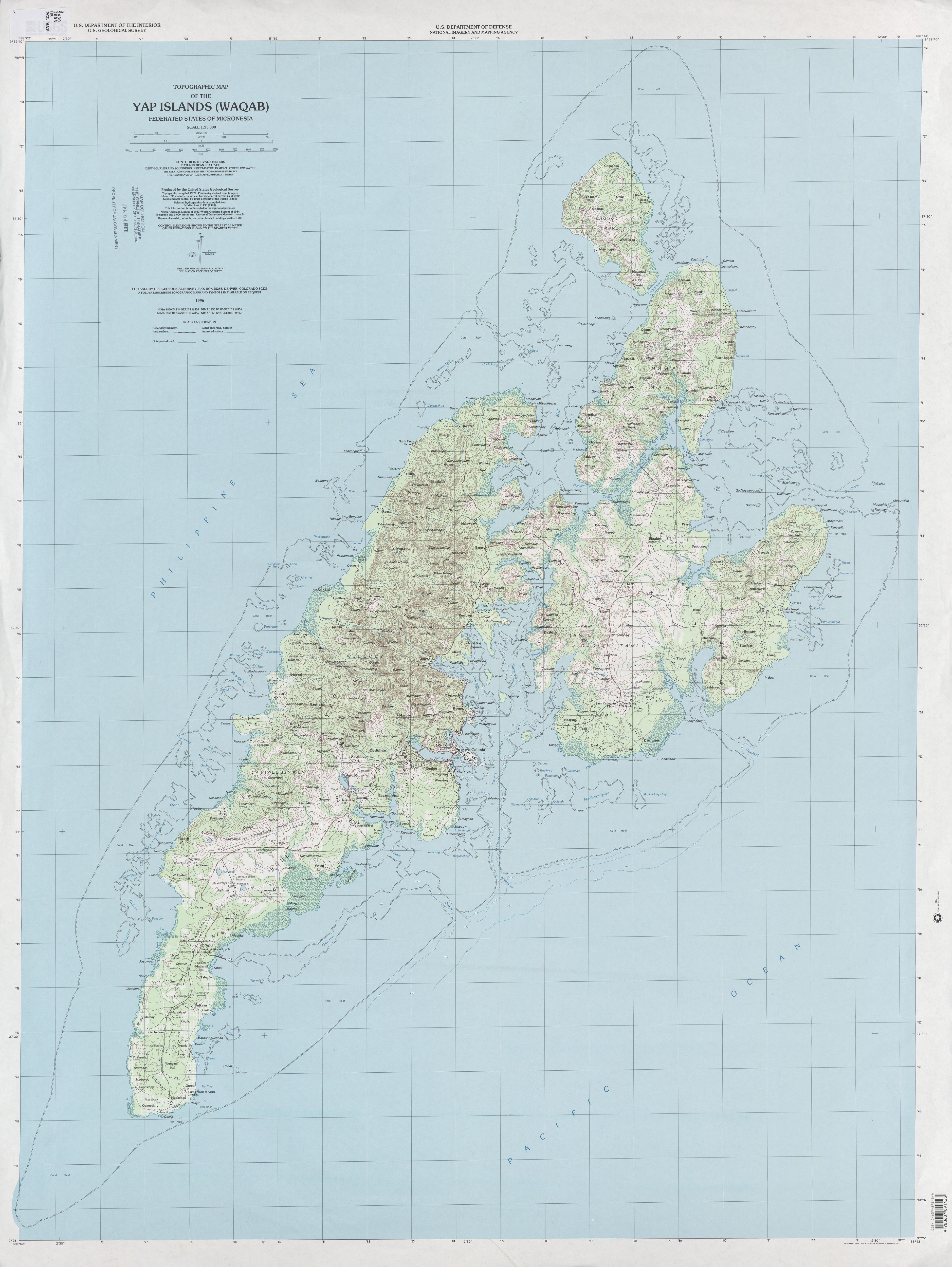
The Spanish term municipio may have survived in the form of an English calque more than a century after the Spanish ceded Micronesia to the Germans. Each of the Federated States (formerly Districts) of Micronesia is divided into what are now called municipalities, a term that no subsequent German, Japanese, or American administrator would likely have come up with, although the Americans are credited with introducing the term by the anthropologist Lingenfelter, who worked in Yap during the early postwar years. If so, U.S. Navy administrators probably calqued on the basis of usage in the Philippines. Micronesian municipalities have never been centered around a town and its hinterland. Instead, they seem to be more like alliances of contiguous villages.

I’m old enough to have purchased a pair of Mexican huarache sandals in the 1970s, when I was a grad student in Hawai‘i. The dye made my feet break out, so I stayed with rubber slippers (zori). (I hardly owned a pair of shoes all through grad school.) The relation between Spanish huarache ‘sandal’ and huarachudo ‘sandaled’ is parallel to that between English beard and bearded. Spanish and English are both related languages. But the same parallel can be observed between, for example, Chamorro sapatos ‘shoes’ (from Spanish) and sinapatos ‘shod, wearing shoes’, or Chamorro relós ‘wristwatch’ (also from Spanish) and rinelós ‘wearing a wristwatch’. Among its myriad functions, the -in- infix in Philippine languages can form adjectives out of nouns in a manner similar to that of participial affixes in Spanish and English.

UPDATE: The Micronesian Seminar‘s Francis X. Hezel, S.J., weighs in on the antecedents of the term municipality in Micronesia.

The term as used in Micronesia after the war has no direct relationship to the Spanish colonial period in these islands. The Spanish weren’t here long enough and they weren’t influential enough to have the term stick. There are very few Spanish loan words that have made their way into the island languages. Actually, islanders used the Japanese term kumi to describe a segment of the island, even well after the war. Muncipality came into the languages through the English term, via the Navy.

The usage of Japanese kumi ‘club, association, gang’ is very interesting, and seems a much more appropriate term for the traditional political alliances before they were recast by the U.S. Navy as local-government structures. The Yapese dictionary translates municipality into Yapese nuug ‘net’ (presumably meaning ‘network’ of political alliances). Other Micronesian dictionaries I’ve consulted don’t list municipality in the English finder list. So it seems U.S. Navy administrators were influenced by Spanish local-government terminology already long-established in the Philippines.

The U.S. Census Bureau glossary does not list the term municipality at all, but it does list and gloss municipio as: “Primary legal divisions of Puerto Rico. These are treated as county equivalents.” The Wikipedia entry for Municipalities of the Philippines begins thus: “A municipality (bayan, sometimes munisipyo, in Tagalog) is a local government unit in the Philippines. Municipalities are also called towns (which is actually a better translation of bayan).”

SHARP DETOUR: My wife and I taught University of Hawai‘i extension courses on Yap, Micronesia, in the summer of 1983, just before heading off to spend a year in Romania on a Fulbright research grant. In fact, she was still there when I got the word that my nearly forgotten application from a year earlier had been approved and that the orientation in Washington, D.C., would begin before she got back to Honolulu. Trying to place a telephone call through to Yap was not easy in those days.

Anyway, for my introductory linguistics course on Yap I used the first edition of Peter Trudgill’s little Penguin paperback Sociolinguistics: An Introduction to Language and Society. Even the main islands of Yap have a good deal of regional variation in pronunciation and word choice, and the outer islands speak dialects of the far-flung Trukic language continuum, only distantly related to Yapese. The variety of Yapese spoken in the major municipality (Rull) closest to Colonia—the capital and only urban center—provided the basis for the standard orthography, but the pilot school for testing Yapese language curriculum materials (with bilingual education funding from the U.S. DOE) was located in the major municipality (Tomil) with the most divergent pronunciation. The three major municipalities were those chiefly alliances (called kumi in Japanese) dominant at the time the Germans took control: Gagil, Tomil, and Rull.

My wife and I first met while we were both assigned to that school in the fall of 1974—she as a new Peace Corps teacher for two years, me as a visiting linguist for one semester—and we both learned our Yapese in that very rural municipality. (Mine faded much more quickly than hers.) So we were quite aware of regional variation and of the principal shibboleths of Tomil dialect, chief among them being the pronunciation of standard /ae/ as /ee/, as in the pronoun gaeg vs. geeg ‘me’ or the plural marker on verbs -gaed vs. -geed, both high-frequency items.

For my introduction to linguistics course in 1983, I decided that the most important things I should focus on were the respective relationships between writing and pronunciation, on the one hand, and between dialects and standard languages, on the other. One of my assignments was for my students to assemble a list of common words for which there were regional variants, then track down the boundaries between those variants (the isoglosses). The most interesting findings involved variants whose isoglosses failed to align with the existing boundaries between municipalities, perhaps revealing earlier linguistic and political fault lines.

1 Comment

Filed under language, Mexico, Micronesia, Philippines, U.S.

Mexico’s Fayuca Boom and Bust

From True Tales from Another Mexico: The Lynch Mob, the Popsicle Kings, Chalino, and the Bronx, by Sam Quinones (U. New Mexico Press, 2001), pp. 239-240, 242:

Fayuca. The word meant contraband, illegally imported merchandise: stereos, televisions, calculators, cameras, silk shirts, tennis shoes, blue jeans, blenders, and blouses. The government slapped this stuff with steep tariffs when imported legally as a way of protecting Mexican industry. Tepito brought it in illegally. To Tepito, fayuca meant easy money and lots of it. Despite the official prohibitions, Mexicans gorged themselves on the outside world’s baubles. Tepito was their dinner table. It was a time tailor-made for the Tepito mind-set. In the go-go era of fayuca, what mattered was not what you sold or how you brought it in but how fast it would move. The trickle of suitcases containing small items like perfume, watches, and jewelry in the mid-1970s became, by the 1980s, torrential truckloads of twenty-one-inch televisions and full home stereo systems.

To a government running a desiccated economy, it quickly became clear that the contraband did two things. First, it appeased the middle classes, who didn’t really care where they bought this stuff so long as they could buy it. Second, fayuca also helped dampen inflation. The prices in Tepito were usually well below what the same goods sold for in the stores that had legally imported them. “The authorities wanted to lower prices without really entering the global economy,” says Gustavo Esteva, a sociologist who lived in Tepito for several years during the fayuca boom. “So the government used Tepito and the fayuca to fight inflation.” Though fayuca was illegal, it was bought and sold openly in Tepito. The regime couldn’t appear to allow it in and yet didn’t dare keep it out. Eventually the industry was carved up among Tepito’s fayuqueros, commandants of customs, the judicial police, the highway police, and other government officials. After a while the highway police in San Luis Potosí, midway between Laredo and Mexico City, decided they wanted their cut too. The wife of President José López Portillo, Carmen Romano, was said to be one of the greatest fayuca importers.

The arrival of fayuca was a key moment in Mexico’s economic history. Fayuca was in its own way as important in rocking the regime’s credibility as the 1968 Tlatelolco [student] massacre, the periodic peso devaluations, and the fraud-riven elections of 1988. Its presence showed that the protected, state-run economy no longer had a prayer of providing what Mexicans now expected out of life. Though Mexicans talked economic nationalism, they voted with their feet and mobbed Tepito, looking for the smuggled imports.

And for the first time Tepito got rich. In Tepito the fayuquero took the place of the boxer as the model for economic advancement, though in this case the road to riches was accessible to thousands of people and few of them missed the turnoff Since the fayuca, Tepito has produced no great boxers. Instead Tepito’s fayuqueros took on the status of legendary renegades; at least two B movies were made about them….

Mexico’s entry into GATT, then NAFTA, brought the fayuca boom to an end. The Mexican government began to lower tariffs on consumer goods. Customers began finding what Tepiteros were selling in legitimate stores that offered service, guarantees, and receipts and didn’t have thugs around the corner waiting to rob the clientele. When the peso was devalued in 1994, sales plummeted further. People still go to Tepito, since merchandise is a little cheaper and carries no sales tax. But the fayuca gold rush is a memory.

1 Comment

Filed under economics, Mexico, nationalism, U.S.

The Oaxaca Diaspora’s Protestant Ethic

My rule of thumb is to try to blog no more than about a page per chapter (depending on the lengths of the chapters) from the books I buy and read, but the following excerpt is from my favorite chapter so far in a book where I can hardly resist “reading aloud” every few pages. I was undecided about which of three thematic passages to cite: on Mexico’s Okies (the victim angle), Oaxacan self-help (the agency angle), or religion (the spiritual angle). I ended up concatenating two of the three. So I’ll have to do hard penance by biting my tongue through several other chapters. From True Tales from Another Mexico: The Lynch Mob, the Popsicle Kings, Chalino, and the Bronx, by Sam Quinones (U. New Mexico Press, 2001), pp. 102-103, 110-111:

Mexicans generally view the border and those who live there as only semi-Mexican—too close to the gringo, where too many of his ways are imitated. In truth, that is what shaped the [San Quintín] valley. With drip irrigation farmers saw the potential of growing for both the United States and Mexico and dropped subsistence farming for a very American capitalist ethic. Acres under cultivation went from two thousand in 1980 to almost twenty thousand in 1990. Nighttime electricity came to San Quintín. Then a few stores, a couple of motels, a movie theater, satellite television.

“I have uncles in the state of Zacatecas who grow chile,” says Ruiz Esparza, “They harvest the crop, but only apart of the profits goes back into the fields. They’re afraid of risking it all. Here, it seems they’re a little crazy. They risk it all every year. People here aren’t interested in having money in their wallet. Everything they have goes back into the fields.

“I look at the farmers of Oceanside, Bakersfield, Oxnard battling against the city, high water prices, taxes, and I see them keep going. They’re very brave. I think having those people before us as examples inspires us to do the same. If they can do it, why can’t we?”

From the north, San Quintín had its market, and from there it imported machinery, capital, and an entrepreneurial spirit. What the valley of San Quintín had never had was abundant labor. And that came from the south.

The Dust Bowl in all this became the states of Guerrero and, above all, Oaxaca, both states with enormous Indian populations who retain the customs and languages of their ancestors. Like the northerners with whom they now live, they are considered somewhat less than Mexican, disdained as “dirty Indians.” It was a strange yet perhaps appropriate pairing: two outcasts coming together to create something in the dust of the northern Mexico desert.

Agriculture in Oaxaca, like that in Oklahoma during the Depression, is a limp and stagnant thing. Inefficient farming and the division of land into ever smaller slivers have bequeathed the state a withering poverty, bloody feuds over land ownership, and generations of uneducated children. Hundreds of thousands of Oaxacan Indians—Mixtecos primarily, but also Triquis and Zapotecos—have been leaving home for four decades now. They are Mexico’s migrants, the cheapest labor in a cheap-labor country. “They provided labor that was easily exploited,” said Victor Clark Alfaro, director of the Binational Human Rights Center in Tijuana. “They were docile, didn’t speak Spanish, would accept almost any treatment and work hard.”…

But in Tijuana, migrant Indians also discovered San Quintín’s almost unquenchable thirst for cheap labor. Through the late 1970s and 1980s the valley evolved into a major stop on the Indians’ migrant trail, part of what came to be known informally as “Oaxacalifornia”—the diaspora that starts in San Quintín and runs through North San Diego County and up the state. Entire families came to the valley to live in labor camps designed for transient men. The camps teemed, and the work was tough in the hot sun and choking dust. But it was work, which was something Indians had never had in Oaxaca….

Indians transformed their new home when they came here to live. But just as profoundly, their new home changed them. And the clearest distillation of all those changes is the Protestant Church. “If you take a poll, you’ll find that 80 or 85 percent of those who are established here now are Protestant,” says Meza. That number might be high. But Protestant churches—especially of the more fundamentalist bent—proliferate in the valley. Indians here have become Baptists, Jehovah’s Witnesses, Pentecostals, and scads of obscure denominations to which Luther’s Reformation gave rise. The new churches are symbols of economic success, of modernity, of the monumental power and attraction of the United States. The adoption of a Protestant faith is almost standard issue in leaving Oaxaca for a future.

And that process is best told by one man who, now in his late forties, stands clapping in unison with the rest of the Apostolic Assembly of the Faith in Christ Jesus. Twenty years ago Luis Guerrero took his family and left his Oaxacan Indian pueblo and its traditions, moved to the valley of San Quintín, and hasn’t yet looked back in fondness.

Guerrero, a Mixtec Indian who speaks halting Spanish in a thick Indian accent, faced a brutish dead-end life as a subsistence farmer, depending on unpredictable rains, in the village of Santa María Asuncion, where landholdings were no longer measured in acres but in meters.

In 1972 Guerrero was among fifteen people who had to pay for the village’s traditional party for its patron saint, the Virgin of Asuncion. It was the custom: every year a few people had to become deeply impoverished to throw the three-day party for everyone else. His job was daunting: he had to give 2,000 pesos—the equivalent of two and a half years’ local wages at the time—to buy food and alcohol for everyone, fireworks, candles, and more. The responsibility almost broke him. He borrowed the money at high interest rates, then left his young family and pueblo for that year to pick tomatoes in Sinaloa to pay it back.

In 1974 he began migrating to San Quintín with his family. Finally in 1978 they moved here to live, leaving Oaxaca forever.

Away from the cloistered atmosphere of his Oaxacan village, Luis Guerrero began a religious and secular awakening, one he likes to illustrate by talking about the books he bought.

In San Quintín he bought his first book ever—a Bible. In Oaxaca he had never read a Bible; though the whole village was Catholic, no one owned one. Like everyone else, he depended on a priest to know what it said. “I began reading it and I began to awaken my mind…. I like knowing myself: I went to the Catholic Church, the Apostolic Church, Prince of Peace, Los Olivares, Jehovah’s Witnesses, the Open Door—to see how each denomination preached.” He finally settled on the Apostolic Assembly.

Now thirsting for more, he bought his second book—a copy of the Mexican constitution. “In our pueblos in Oaxaca, we didn’t know the earthly law, or how to defend ourselves [legally]. Also we didn’t know spiritual law. So I searched on my own to discover what constitutional law said. I searched on my own to discover what the Bible said so that I myself could understand earthly law and spiritual law.

“Earthly law allows you to speak up for your rights with the police, the bosses. That’s why I put forth an effort to learn it. [In the villages] people don’t have education. The [local] authorities pressure them to fulfill tradition. They want them to put on traditional parties. [In Oaxaca] you can’t give your children education because the little money you earn you have to spend on parties for the saints. Our children have no shoes because of tradition. We came here to leave all that behind.”

3 Comments

Filed under economics, Mexico, migration, religion, U.S.

On the Role of Linchamientos in Mexico

From True Tales from Another Mexico: The Lynch Mob, the Popsicle Kings, Chalino, and the Bronx, by Sam Quinones (U. New Mexico Press, 2001), pp. 42-43:

Lynching has a long, rich history in Mexico. For centuries communities occasionally rose up in spasms of mob violence against priests, tax collectors, and other authority figures. In modern Mexico, lynching has not abated. If anything, it has grown more common.

The linchamiento is part of the Mexico that tourists never see, lying beyond the shimmering hotels of Cancún and the sunny hillsides of Cuernavaca, in benighted towns and pueblos where any justice that does exist is hardly blind. Dozens of linchamientos have taken place in the last few years across Mexico. The state of Morelos, just south of Mexico City, in recent years has become known for them. Residents of one village once took some state police officers hostage, doused them with gasoline, and threatened to burn them. Finally the attorney general came and they took him hostage until the governor relented and came down to talk. In another Morelos town, in 1994, four men accused of robbing a bus were shot, stabbed, kicked, hacked, beaten, stoned, and finally burned. In another town one man was hung from the town basketball rim. In a village in Veracruz in 1996, a crowd grabbed a man suspected of raping and killing a woman, gave him a quick trial, judged him guilty, tied him to a tree, drenched him in gasoline, and burned him to death while someone videotaped it all.

The Mexican lynching is different from its southern-U.S. counterpart, which was a weapon the majority used to oppress a minority. Nor is it similar to the lynchings in the Old West, where there was no law. Rather it is a bellow of rage by the powerless majority against corrupt cops and politicians, protected criminals—against a justice system that people know to be unfair. Lynchings rarely change the cause of community grievances. They are, however, Mexicans’ own clearest statement today on the quality of justice they expect—the horrifying, but not surprising, result of years of perverted justice.

Leave a comment

Filed under Mexico

The Mexican Telenovela Wave, 1990s

From True Tales from Another Mexico: The Lynch Mob, the Popsicle Kings, Chalino, and the Bronx, by Sam Quinones (U. New Mexico Press, 2001), pp. 53-54:

In 1992, as ex-Yugoslavia tore at itself in a frenzy of ethnic slaughter, a far sweeter note played on television. A Mexican telenovela—a soap opera—known as Los Ricos Tambien Lloran aired in the warring republics. The Rich Cry Too, starring Veronica Castro, was the story of poor Mariana, an orphan and maid to a rich family, who falls in love with the family’s son, has his child, goes crazy and gives up her child when her lover is unfaithful to her, then spends the rest of the show fighting to recover the baby. And every night while it played in Serbia and Croatia, where at the time happy endings were at a premium, life would stop for an hour….

And it was the highest-rated show on Croatian television that year. Since then, Mexican telenovelas have swept the world up in their teary melodramas of romance, passion, good and evil, betrayal, lies, and happy endings. Televisa, Mexico’s entertainment conglomerate and the world’s largest telenovela producer, has sold them to all of Latin America and to 125 other countries as well, among them Armenia and Azerbaijan, Belgium and Bophuthatswana, Iran and Iraq, Singapore and South Korea. China has aired twenty-two Mexican telenovelas. Cuna de Lobos (Den of Wolves) was a huge hit in Australia.

Telenovelas have taken over daytime television in the Balkans. Serbian television producers have even begun filming their own, with plot lines revolving around characters who inherit lots of money, then scheme to get more by cheating their relatives. Three Televisa novelas compete on prime time every night on Indonesia’s three main stations. The network’s newest sensation, Thalia, was mobbed when she visited the Philippines in 1995 and 1996. The press reported Philippine women naming their newborns Thalia or Marimar—one of the heroines the actress plays. In Romania a change in broadcasting law decreed less sex and violence on television. Mexican novelas perfectly filled the void left by more violent programming. One novela, Esmeralda, became so popular that women copied the hairstyle of star Leticia Calderon, and Bucharest ambulance crews were said to be getting to their calls late; finally televisions were removed from the station houses.

By 1996 Televisa could claim its novelas were Mexico’s largest export product, ahead of car parts and Corona beer.

Leave a comment

Filed under China, Eastern Europe, Latin America, Mexico

Authentic Mexican American Narcocorrido Polka

From True Tales from Another Mexico: The Lynch Mob, the Popsicle Kings, Chalino, and the Bronx, by Sam Quinones (U. New Mexico Press, 2001), pp. 11-12:

His name was Chalino Sánchez. His singing career lasted just four years and he was killed when he was only thirty-one, yet he’s one of the most influential musical figures to emerge from Los Angeles or from Mexican music in decades. “When we were small, we always wanted to fit in, so we’d listen to rap. The other kids were all listening to rap, so I guess we felt that if we listened to Spanish music, we’d be beaners or something,” says Rodriguez. “But after Chalino died, everybody started listening to corridos. People want to feel more Mexican.”Six years after his death, Chalino Sanchez is a legend, an authentic folk hero. L.A.’s Mexican music scene and Mexican youth style were one way before Chalino Sanchez. They were another after him. After Chalino, guys whose second language was an English-accented Spanish could pump tuba- and accordion-based polkas out their car stereos at maximum volume and pretty girls would think they were cool.

Chalino renewed the Mexican corrido. In the Mexican badlands, where the barrel of a gun makes the law, for generations dating back to the mid-1800s the corrido recounted the worst, best, and bloodiest exploits of men. Corridos were the newspaper for an illiterate people in the days before telephones and television. Corrido heroes were revolutionaries and bandits—people who had done something worth singing about.

In Chalino’s hands, the corrido came to reflect the modern world. The corrido became the narcocorrido, the Mexican equivalent of gangster rap, with themes of drugs, violence, and police perfidy and an abiding admiration for the exploits of drug smugglers. And because of Chalino, Los Angeles, an American city, is now a center of redefinition for the most Mexican of musical idioms. Chalino democratized the genre, made it modern and American, and opened it to the masses. In Los Angeles almost anyone can have a corrido about him written, recorded, and sold. “In L.A., without exaggeration, 50 percent of the [Mexican] music that’s recorded here is based on the legacy he left,” says Angel Parra, the engineer who recorded most of his albums.

It boiled down to this, in the words of Abel Orozco, owner of El Parral nightclub in South Gate: “Chalino changed everything.”

Ever since I saw his interview with Ray Suarez on the NewsHour, I thought Quinones might turn into my new favorite writer on Mexican–American relations. My wife is reading his latest book, and I’m reading his earlier one, both of us enthusiastically.

Leave a comment

Filed under drugs, Mexico, music, U.S.

Missing Date in Philippines History: 31 December 1844

From A History of the International Date Line:

European explorers who approached the Pacific Ocean by sailing to the east such as the Portuguese, and in their wake the Dutch, the English and the French, naturally kept their ship’s journals and diaries according to the day count of their home land and this was of course also adopted by the colonists who settled along the Asian perimeter of the Pacific Ocean.

However, the colonisation of the Pacific Ocean by the Spanish occurred from the opposite direction and more specifically from the Spanish possessions in America. The Philippine archipelago was discovered in March 1521 by Ferdinand Magellan and Spanish dominion over the islands was first firmly established in 1565 by Miguel López de Legazpi (c. 1510 – 1572), the conquistador and first Spanish governor general of the Philippines….

Most of the shipping from the Philippines to Spain went over the Pacific Ocean to the Mexican port of Acapulco, was transported over land to the port of Veracruz, and then shipped to Spain. In order that the Spanish ships crossing the Pacific Ocean between the Philippines and the Spanish Americas would not have to adjust the dates in their journals whenever they sighted land, the Philippines observed the same day count as that of the Spanish Americas….

During the early 1840s the commercial interests of the Philippine Islands turned more and more away from the Spanish Americas (which for a large part had severed their relations with the motherland Spain) and trading with the Chinese mainland (engendered by the ignominious but lucrative ‘Opium Wars’), the Malay peninsula, the Dutch East Indies and Australia became increasingly important.

In order to facilitate communication and trading with its western and southern neighbours, the secular and religious authorities of the Philippines agreed that it would be advantageous to abolish the American day reckoning and adopt the Asian day reckoning.

This was achieved in 1844 when Narciso Claveria, the governor general of the Philippines, issued a proclamation announcing that Monday, 30 December 1844, was to be immediately followed by Wednesday, 1 January 1845.

The 1867 conversion from Russian to American time in Alaska was much more complicated.

5 Comments

Filed under Mexico, Pacific, Philippines, Spain

Aztecs Ate Conquistador Carriers and Cooks?

Skulls and bones from the Tecuaque archeological site near Mexico City show about 550 victims had their hearts ripped out by Aztec priests in ritual offerings, and were dismembered or had their bones boiled or scraped clean, experts say.

The findings support accounts of Aztecs capturing and killing a caravan of Spanish conquistadors and local men, women and children traveling with them in revenge for the murder of Cacamatzin, king of the Aztec empire’s No. 2 city of Texcoco.

Experts say the discovery proves some Aztecs did resist the conquistadors led by explorer Hernan Cortes, even though history books say most welcomed the white-skinned horsemen in the belief they were returning Aztec gods.

“This is the first place that has so much evidence there was resistance to the conquest,” said archeologist Enrique Martinez, director of the dig at Calpulalpan in Tlaxcala state, near Texcoco.

“It shows it wasn’t all submission. There was a fight.”

The caravan was apparently captured because it was made up mostly of the mulatto, mestizo, Maya Indian and Caribbean men and women given to the Spanish as carriers and cooks when they landed in Mexico in 1519, and so was moving slowly.

The prisoners were kept in cages for months while Aztec priests from what is now Mexico City selected a few each day at dawn, held them down on a sacrificial slab, cut out their hearts and offered them up to various Aztec gods.

Of course, Reuters is reporting this, so there may have been some photoshopping of the evidence.

Leave a comment

Filed under Mexico