Category Archives: China

Asian Roles in New Spain

My favorite article in the latest issue of Journal of World History (on Project MUSE) is by Edward R. Slack Jr. on “The Chinos in New Spain: A Corrective Lens for a Distorted Image.” Here are a few excerpts (footnotes and references omitted).

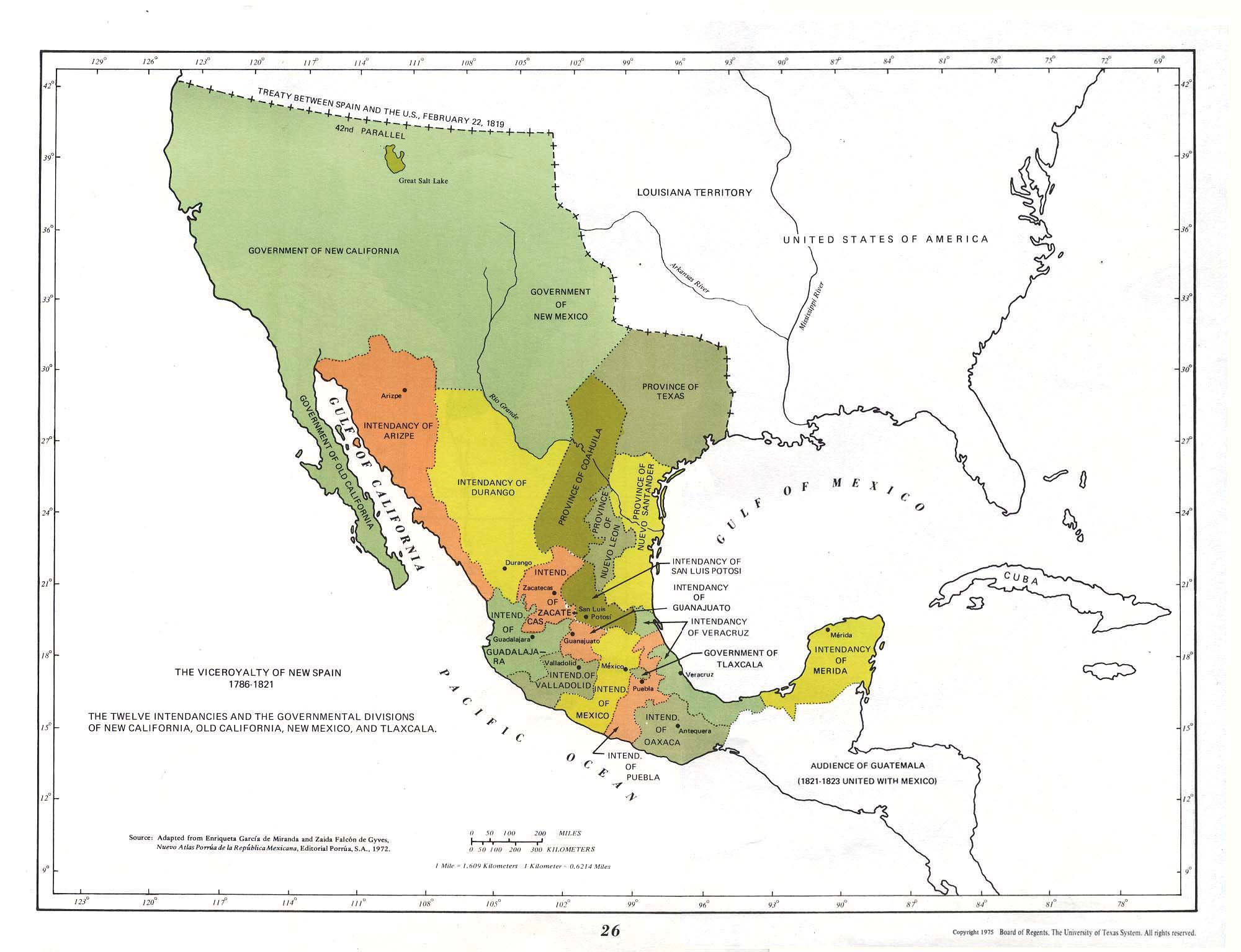
Spanish galleons transported Asian goods and travelers from Manila to colonial Mexico primarily through the port of Acapulco. During the two and a half centuries of contact between the Philippines and the Viceroyalty of New Spain, a minimum of 40,000 to 60,000 Asian immigrants would set foot in the “City of Kings,” while a figure double that amount (100,000) would be within the bounds of probability. From Acapulco they would gradually disperse to the far corners of the viceroyalty, from Loreto in Baja California to Mérida in Yucatan…. The majority, however, would eventually settle in two distinct zones: on the west coast in the districts of Guerrero, Jalisco, and Michoacán, and in the large, ethnically diverse municipalities of Mexico City and Puebla in the central valleys and the eastern port of Veracruz. The two zones were transversed by the most heavily traveled arteries that connected Acapulco to Mexico City (known colloquially as el camino de China) in the west; Veracruz with Puebla and Mexico City in the east; and several arterials linking the capital with Puerto Vallarta in the west and Guanajuato in the northwest.

For the most part, the chinos disembarked at Acapulco as sailors, slaves, and servants. Over the longue durée of Mexican-Asian cultural exchange, the largest contingent of Asians arrived as sailors on the galleons and smaller vessels (capitanas, pataches, and almirantes) that annually plied the long and perilous return voyage from Manila. The seamen were primarily Filipinos, Chinese mestizos (known in Manila as mestizos de Sangley), or ethnic Chinese from the fortified port of Cavite near Manila that served as the primary shipyard for Spaniards in the archipelago. In 1565, the first chino sailors from the islands of Cebu and Bohol arrived in Acapulco aboard Friar Andrés de Urdaneta’s trailblazing galleon, the San Pedro. During the late sixteenth century Iberian sailors constituted the majority of crewmen, but by the early 1600s Asians had surpassed them, accounting for 60–80 percent of the mariners from that time forward. A historical snapshot of galleon seafarers in the mid eighteenth century comes from a crew manifest of La Santissima Trinidad. In 1760, this vessel was manned by 370 sailors, consisting of 30 officers (Europeans or Mexican criollos), 40 artillerymen (27 chinos), 120 sailors (109 chinos), 100 “Spanish” cabin boys (96 chinos), and 80 “plain” cabin boys (78 chinos). In sum, 84 percent (310) of the crew were born and raised in Spain’s Asian colony, with 68 percent (250) hailing from the port of Cavite alone….

Along the Pacific coast, chino sojourners tended to congregate in the cities and pueblos of Acapulco, Coyuca, San Miguel, Zacatula, Tex pan, Zihuatenejo, Atoya, Navidad, and Colima. With the arrival of more ships from Manila, the number of sailors who either had no desire to return to the Philippines or were brought over as slaves married local Indian and mixed-race women increased. Consequently, a sizable population of chinos and their descendants made these cities and pueblos a popular destination for fellow Asians. Both freemen and slaves farmed rice (brought from the Philippines), corn, and cotton; tended cacao and coconut palm trees; fished in the seas and rivers; and transported people and goods to various ports along the coastline. Those who followed the royal highways to towns farther inland worked as muleteers or in the silver mines, haciendas, obrajes (textile workshops), or sugar mills….

Slaves and servants constituted the second largest group of Asian immigrants during the colonial era. Manila quickly became an important entrepôt for the commerce in human flesh during the first century of Spanish rule. The greater part were transported by Portuguese vessels from colonies and trading ports in Africa, India, the Malay peninsula, Japan, and China, although Chinese junks and Malay prahus also shipped large quantities to Manila. Non-Filipino slaves that fetched the highest price were from Timor, Ternate, Makassar, Burma, Ceylon, and India, because “the men are industrious and obliging, and many are good musicians; the women excellent seamstresses, cooks, and preparers of conserves, and are neat and clean in service.”…

The incorporation of Asian immigrants into the armed forces of New Spain represents another fascinating fragment of the chino mosaic from the colonial era. Similar to restrictions placed on other castas in Mexico, there were numerous prohibitions against Asians carrying weapons or riding horses….

The legion of similar antiweapons ordnances from the 1550s onward notwithstanding, from at least the 1590s free chinos not only were granted permission to carry weapons, but gradually incorporated into both the salaried companies of Españoles as well as local militias, especially those cities and towns along the Pacific coast. In several documents from the years 1591 and 1597, an “Indio Chino” from the silver mining town of Zultepec named Juan Alonzo, who earned his livelihood from buying and selling mules, was granted a license to ride a horse with a saddle and bridle and to carry a sword. A key determinant in this matter was his racial classification as a chino, since indios (unless they were elites) were forbidden such privileges….

Among the scores of Asian peoples that were widely defined as chinos, in the early decades of the 1600s Japanese converts were held in high esteem by Spaniards in the Philippines and New Spain for their bravery and loyalty. In 1603 and 1639 when Chinese residents in the Parián of Manila revolted against their Iberian overlords, Japanese swordsmen distinguished themselves in combat. Without their assistance, Sangleyes would surely have made the Philippines a colony of the Middle Kingdom. Thousands of Japanese converts, traders, and ronin made the Philippines their home prior to the closing of Cipango to Iberians in the 1630s. They lived in a suburb of Manila called Dilao, with a population estimated at 3,000 by 1624.

Thus it is not surprising that samurai converts were considered a more privileged subgroup of chinos in New Spain….

It is unclear exactly when chino militias were established on the west coast of New Spain. It is evident, however, that prior to 1729 Asian paramilitary units were routinely patrolling the regions adjacent to Acapulco. Tiburcio Anzalde, “captain of one of the militias of chinos and mulatos in the district of Atoya,” discussed the duties and obligations of militiamen in a 1746 document: repeated trips to Acapulco to deliver mail and other correspondences; to clear the roads (of bandits) while on patrol; and, most importantly, their heroic role in resisting the English pirate George Anson‘s invasion at the port of Zihuatenejo in 1741.

Leave a comment

Filed under Asia, China, economics, England, Japan, labor, Mexico, migration, Netherlands, Philippines, Portugal, Spain

The League of Nations vs. Japan

From The War of the World: Twentieth-Century Conflict and the Descent of the West, by Niall Ferguson (Penguin Press, 2006), pp. 301-303:

Despite its poor historical reputation, the League of Nations should not be dismissed as a complete failure. Of sixty-six international disputes it had to deal with (four of which had led to open hostilities), it successfully resolved thirty-five and quite legitimately passed back twenty to the channels of traditional diplomacy. It failed to resolve just eleven conflicts. Like its successor the United Nations, it was capable of being effective provided some combination of the great powers – including, it should be emphasized, those, like the United States and the Soviet Union, who were not among its members – had a common interest in its being effective. Remarkably, given Manchuria’s role as an imperial fault line earlier in the century, this was not the case in 1931. So uninterested was Stalin in the Far East at this point that in 1935 he offered to sell the Soviet-owned Chinese Eastern Railway to Japan and to withdraw all Soviet forces to the Amur River. If the Soviets were not interested in Manchuria, it was hard to see why Britain or the United States should be, especially at a time when both were reeling from severe financial crises.

On September 30, 1931, the Council of the League issued a resolution calling for ‘the withdrawal of Japanese troops to the railway zone’ where they had originally and legitimately been stationed. However, it set no deadline for this withdrawal and added the caveat that any reduction in troop numbers should only be ‘in proportion as the safety of the lives and property of Japanese nationals is effectively assured’. Eight days later Japanese planes bombed Jinzhou on Manchuria’s south-western frontier with China proper. On October 24 a new resolution was passed setting November 16 as the date by which the Japanese should withdraw. At the end of that month Japanese ground forces advanced towards Jinzhou. In early December, at the Japanese delegate’s suggestion, the League Council decided to send a commission of inquiry under the chairmanship of the Earl of Lytton, the former Governor of Bengal (and son of the Victorian Viceroy). Without waiting for its report, the us Secretary of State, Henry L. Stimson, warned Japan that the United States would refuse to recognize any separate agreement that Tokyo might reach with China; in his opinion, Japan was acting in breach not only of the Kellogg-Briand Pact signed in Paris in 1928 (under which the signatories had made ‘a frank renunciation of war as an instrument of national policy’) but also of the earlier Nine-Power Agreement to maintain the Open Door system in China.

The Japanese were unimpressed by American ‘non-recognition’. In March 1932 they proclaimed ‘Manchukuo’ as an independent state, with the former Chinese Emperor, Puyi, as its puppet ruler – another initiative by the men on the spot which was ratified by Tokyo only after a six-month delay. A week later Lytton submitted his voluminous report, which dismissed the Japanese claim that Manchukuo was a product of Manchurian self-determination and condemned Japan for ‘forcibly seiz[ing] and occupy[ing] … what was indisputably Chinese territory’. The Japanese pressed on with their policy of conquest. They bombed targets in the province of Rehe in the summer of 1932. In January 1933 there was yet another ‘incident’ at Shanhaiguan, the strategic pass where the Great Wall reaches the sea. After a few days it too was in Japanese hands. A week’s fighting added Rehe to Japan’s domain. In February 1933 the League of Nations Assembly accepted Lytton’s report and endorsed all but unanimously his proposal to give Manchuria a new autonomous status. Once again Japan was politely asked to withdraw her troops. In March the Japanese finally announced their intention to withdraw – from the League. Two months later they concluded a truce with Chinese military representatives that confirmed Japan’s control over Manchuria and Inner Mongolia. It also created a large demilitarized zone running through Hebei province, which the Japanese were soon running on an informal basis.

It is sometimes said that this was a fatal turning point in the history of the 1930s; the beginning of that policy of appeasement which was to culminate in 1939. But that is to misread the Manchurian crisis. It was unquestionably a turning point in Japan’s domestic politics. But internationally all that had happened was that the Japanese had achieved their long-standing objective of being treated as an equal by the other imperial powers.

Leave a comment

Filed under China, Japan, U.N., USSR, war

Aboard the Yasukuni Maru to London, March 1939

From Orwell’s Diaries (On Board SS. Yasukunimaru (NYK) Crossing Bay of Biscay, 28.3.39):

Yasukuni is 11,950 tons. Do not yet know, but from the vibrations judge that she is a motor-ship. Apart from the bridge, only 3 decks above water-level. Cabins and other appointments pretty good, but certain difficulties in that [the] entire crew and personnel are Japanese and apart from the officers the majority do not speak much English. Second-class fare Casablanca-London £6.10. As the boat normally goes straight to London from Gibraltar & on this occasion went out of her way to deliver a load of tea, fare from Gilbraltar would probably be the same. P. & O. tourist class is £6.10 London-Gibraltar. Food on this ship slightly better than on the P. & O. & service distinctly better, but the stewards here have the advantage that the ship is almost empty. Facilities for drinking not so good, or for deck games, owing to comparatively restricted space.

Do not know what the accomodation° for passengers would be, but presumably at least 500. At present there are only 15 in the second class, about 12 in the third, & evidently not many in the 1st, though I don’t know how many. One or two of the 2nd & 3rd classes are Danes or other Scandinavians, one or two Dutch, the rest English, including some private soldiers who got on at Gibraltar. It appears that for its whole voyage the ship has been as empty as this. Since the Chino-Japanese war English people from the far east will not travel on the Japanese boats. All the P. & O. boast said to be crowded out in consequence.

Leave a comment

Filed under China, Europe, Japan, war

Wordcatcher Tales: Dappokusha/Talbukja

How widespread is the economic downturn across the globe? Well, it’s now affecting many North Koreans, because funds from South Korea that might help them escape their workers’ paradise are not as plentiful as they once were, according to an article in Japan’s Mainichi Shimbun. I’ll quote just the first paragraph from White Peril‘s translation.

The number of dappokusha fleeing from North Korea … has decreased substantially [to] Yanbian Korean Autonomous Prefecture, Jilin Province, China, which abuts the PRC-DPRK border. It’s the biggest stronghold of the refugee business, but the activities of the brokers who maneuver behind the scenes guiding refugees through are at a standstill. This year is the sixtieth anniversary of the establishment of diplomatic relations between the two countries, and in addition to a heightened level of alert at the border, the effects of the financial crisis have stopped the money that gets to them from South Korea. However, the defections supported by the brokers are a “necessary evil.” Beyond the border, there’s a backlog of desperate people.

The term dappokusha 脫北者 (lit. ‘escape North person’) caught my attention. The same compound is read 탈북자 in Korean (talbukja in the official SK romanization), but its usage in SK is now discouraged in favor of the euphemistic 새터민 saeteomin, which I’ll translate here as ‘new localites’.

The agentive sense of 脱 datsu ‘escape, desert, quit’ also shows up in the following compounds.
脱船 dassen (‘quit ship’) ‘jump/desert ship’
脱線 dassen (‘quit line’) ‘jump the (train)track’
脱サラ dassara (‘quit salary’) ‘quit one’s job as a salaryman’

But a similar 脱 datsu, in the agentive or instrumental sense of ‘remove’, occurs in some more common words.
脱水機 dassuiki (‘remove water machine’ =) ‘dryer, dehydrator’
脱脂乳 dasshinyuu (‘remove fat milk’ =) ‘skim milk’
靴脱ぎ kutsunugi (‘shoe removal’ =) ‘place to remove shoes’

Without an agent or instrument, the same kanji translates as ‘missing’.
脱文 datsubun ‘missing passage (of text)’
脱字 datsuji ‘missing word/character (in text)’

HISTORICAL/COMPARATIVE NOTE: One of the more remarkable regular sound correspondences between Sino-Korean and Sino-Japanese is SK *-l and SJ *-t (the latter often -tsu in final position, or assimilated to the following voiceless consonant), as in 出発 : 출발 chulbal : しゅっぱつ shuppatsu (< shutu + hatu) ‘departure’. This sound correspondence is part of what gives Korean its characteristic abundance of rolling liquid sounds and Japanese its characteristic abundance of staccato geminate obstruents amid otherwise open syllables (like Italian).

4 Comments

Filed under China, economics, Japan, Korea, language, migration

Wordcatcher Tales: Kara-e/Kōmō-e Mekiki

I came across a few interesting terms, two of them new to me, while browsing through a beautiful and fascinating book: Japan Envisions the West: 16th–19th Century Japanese Art from Kobe City Museum edited by Yukiko Shirahara (Seattle Art Museum, 2007).

唐絵目利き kara-e mekiki ‘Chinese art inspectors’ – When Japan was keeping the outside world at arm’s length during the Tokugawa era, the Shogun employed inspectors to appraise, catalog, and often copy samples of all goods coming from China and the West, perhaps as much to make sure the Shogun got the best goods as to keep harmful influences out. The characters that make up mekiki are 目 me ‘eye’ and 利 ki(ki) ‘efficacy, expertise’. But the latter also occurs in other contexts: ri ‘advantage, profit’; ki(ku) ‘to take effect, operate’; ki(kasu) ‘to use (one’s head), exert (influence)’; ki(keru) ‘be influential’; and ki(kaseru) ‘to season’.

唐絵 kara-e ‘Chinese painting’ – Kara is written with the character for the Tang dynasty, otherwise read (< Tang), as in 唐画 tōga ‘Chinese painting’, a synonym of kara-e. However, 唐 means not just ‘Tang’ or even ‘Chinese’, but ‘foreign’, especially when pronounced kara- in native Japanese compounds, as in 唐行き karayuki ‘going abroad’ (lit. ‘Tang-going’), 唐草 karakusa ‘arabesque’ (lit. ‘Tang grass=flowing style’), and 唐黍 karakibi/tōmorokoshi ‘maize, Indian corn’ (lit. ‘Tang millet/sorghum’).

Compare the wal- (cognate with Welsh) on English walnut (once ‘foreign nut’); or the 胡 hu (once ‘barbarian’) on Chinese 胡桃 hutao ‘walnut’ (‘foreign peach’) or 胡椒 hujiao ‘black pepper’ (‘foreign pepper’ vs. 辣椒 lajiao ‘hot pepper’), or 胡麻 huma ‘sesame’ (‘foreign hemp’).

紅毛絵 kōmō-e ‘Dutch painting’ – By Tokugawa times, the Japanese had to deal with a new kind of foreigner very different from the Asians lumped together as kara. The character abbreviation for the Dutch is 蘭 ran (lit. ‘orchid’), short for Oranda ‘Holland’, as in 蘭学 Rangaku, ‘Dutch learning’, but by extension ‘Western learning’ more generally. So Western-style paintings can be called 蘭画 ranga, just as Chinese-style paintings can be called 唐画 tōga. But this book refers to the more specifically Dutch-style paintings from Nagasaki as 紅毛絵 kōmō-eRed Hair painting’—a term I found especially engaging, as a former redhead myself (now mostly white), married to another former redhead (now more brunette with strands of gray), and the parent of a red-haired daughter.

By the way, Katsumori Noriko, whose chapter on “The Influence of Ransho [‘Western books’] on Western-style Painting” compares Japanese paintings copied from originals in European books imported through Nagasaki, starts by correcting the conventional history that Dutch-language books were banned between 1630 (the beginning of sakoku) and 1720 (during the reign of Yoshimune). She says (p. 99):

In fact, these policies applied only to Chinese translations of Western books. Books in Dutch, presented as gifts from foreign visitors, had been preserved over the decades in the shogunal library but were largely disregarded. When the bibliophile shogun Yoshimune opened his library in 1720, Japanese scholars had the opportunity to reencounter and study ransho firsthand.

3 Comments

Filed under art, China, Japan, language, Netherlands, publishing

Parallel Pejoration of Terms in Korean, Japanese, Chinese

The latest volume of the journal Korean Studies (available by subscription on Project MUSE) contains an article by Minju Kim, “On the Semantic Derogation of Terms for Women in Korean, with Parallel Developments in Chinese and Japanese” (vol. 32, pp. 148-176):

This study investigates two kinds of semantic change in terms for women in Korean, along with parallel developments in Chinese and Japanese, and examines the underlying mechanisms that cause these linguistic changes. In Korean and Chinese, polite terms for young women (akassi and xiăo jiĕ, respectively) have been taking on strong sexual connotations, due to the terms’ association with professions in the sex trade. In Korean and Japanese, terms for older sister (enni and oneesan/oneechan, respectively) have been adopted by more senior speakers to address young women, especially those in service interactions, including those in sex entertainment. This study demonstrates that besides sexist attitudes, other quite different motivations can be responsible for the semantic derogation of terms for women. In an effort to be polite, speakers have adopted positive female terms to address women of lower occupational status. Subsequently, the burden of the lower-status referents has caused the positive terms to undergo semantic derogation.

(Note that, like most linguists, Kim uses Yale romanization to represent Korean, since it most closely represents the phonemic system—and for that reason most closely transliterates hangul. The more common romanization for 아가씨 is agassi.)

Kim notes similar developments in European languages, as in the pejoration of hussy from ‘housewife’ to ‘loose woman’ in English. She also notes the pejoration of the terms for the female half in pairs of terms that used to be more equivalent, such as bachelor vs. spinster or master vs. mistress in English, or in the pairs of terms that used to distinguish ‘young man’ from ‘young woman’ in several Romance languages: Portuguese rapaz vs. rapariga, Spanish hombrezuelo vs. mujerzuela, French garçon vs. garce. (Kim spells rapariga as ramariga and mujerzuela as muerzuela.)

During China’s Cultural Revolution, according to Kim’s sources, the use of xiăo jiĕ was discouraged because of its long history of deferential use to address young ladies of the nobility. Now its use is being discouraged for its derogatory connotations by some sociologists who suggest addressing waitresses as ‘attendant, waiter’ (服务员 fúwùyuán) rather than ‘young lady’.

Leave a comment

Filed under China, democracy, economics, Japan, Korea, language

Wordcatcher Tales: Fukko vs. Ishin

Careful readers of my last two blogposts from a book chapter, “Cultural Change in Nineteenth-Century Japan,” by the late Marius B. Jansen, will have noticed a theme that runs through both excerpts: that Japan’s ardent reformers were inspired as much by the need to return to an imagined past as by the need to adapt to the intrusions of the modern world. The section excerpted below focuses on two terms that highlight the nuances of these dual motivations. The book in which it appears is Challenging Past and Present: The Metamorphosis of Nineteenth-Century Japanese Art, ed. by Ellen P. Conant (U. Hawai‘i Press, 2006), pp. 32-35:

Some years ago Sakata Yoshio divided the Meiji Restoration epoch into periods characterized by themes of fukko [復古] or ishin [維新], “revival” or “renewal.” In modern parlance the terms are quite different in their connotations. Revival suggests nostalgia and conservatism. The 1974 Kenkyusha dictionary, for instance, gives the following examples: “ōsei fukko—the restoration of the monarchy; fukko ronsha—a reactionary.” By justifying sweeping change in the name of the past, Meiji statecraft might seem, to present-day commentators, to have injected a problematic retrogressiveness into values and culture.

In the Chinese Confucian context from which these terms derived, however, the idea of revival was entirely positive. F. W. Mote has asserted that in Chinese tradition, because neither individual nor state could claim any theoretical authority higher than men’s rational minds, there being no external creator or lawgiver, ultimate authority rested with historical experience….

In Meiji thinking, ishin and fukko could be linked. Tetsuo Najita points out that “I [維 ‘tie’] means to pull together the disparate strands in society, to regroup, as it were, and the second part of the compound, shin [新 ‘new’], means starting out in a totally new direction.” The appeal of return to an imagined moral past made it possible to utilize both “restoration” and “innovation” in government pronouncements. The official chronicle Fukkoki emphasized the theme of return, but contemporary assurances that everything would be changed (hyakuji goishin) had connotations of a “world renewal” (yonaoshi) of the sort that late Tokugawa insurrections had announced. In the event, however, the new government lost little time in suppressing advocates of such radical ideas.

Late Tokugawa nativism modified and added to the notion of the perfect past to which Japan might return. The kokugaku (National Studies) scholars argued the virtues of Japan before it had become tainted by imported values, words, and books. Their version of fukko gave rise to impressive efforts in historical philology…. Another respect in which the Japanese tradition provided helpful arguments for advocates of cultural and institutional change was to be found in tradition and historical memory that validated the practice of cultural borrowing without prescribing the category or the character of what was to be borrowed….

A final element conducive to cultural borrowing was the nature of Japanese cultural nationalism. Acutely aware of other civilizations, especially the Chinese colossus to the west, Japanese thought in comparative and competitive terms. The country and its deities were divine, and the question was how to serve them best….

In sum, revivalism differed in Japan from its counterpart in China, partly because of the shadowy nature of the Japanese past that the nativists exhumed, and partly because of the historical precedents for change and for borrowing. To paraphrase Maraini’s argument and apply it here, Europe might be constrained by absolutes of theology, and China by its commitment to a transmitted body of ancient learning that was relatively constant, but in Japan fukko permitted the greatest flexibility in appropriating or devising stratagems for protection of the cultural polity. It could blend with change and even slide into renewal.

Terms like “Meiji culture” and “Tokugawa tradition” suggest rapid change in a previously stable setting, but it is important to remember that late Tokugawa culture was profoundly eclectic and that the Meiji changes represented acceleration of many trends that were already in progress. What was new was the explicit acknowledgment and the clear assessment of problems and the unity of determination to remedy them.

Nowadays, 明治維新 (Meiji Ishin) is the usual Japanese term for what English speakers often call the “Meiji Restoration.” I was not familiar with the alternate term 復古 (fukko) (‘return-past’) but it seems to be a better translation for ‘restoration’. The core meaning of 復 fuku seems to be ‘return, revert’, as in the everyday term 往復 ōfuku (lit. ‘go-return’) ’round trip’ or in 復活 fukkatsu (lit. ‘return-life’) ‘rebirth, revival, resurrection’ (as in 復活祭 fukkatsusai [lit. ‘return-life-festival’] ‘Easter’).

Leave a comment

Filed under China, Japan, language, nationalism

Changing Court Costumes under Meiji

From “Cultural Change in Nineteenth-Century Japan,” by Marius B. Jansen, in Challenging Past and Present: The Metamorphosis of Nineteenth-Century Japanese Art, ed. by Ellen P. Conant (U. Hawai‘i Press, 2006), pp. 40-41:

The need for practicality and efficiency affected cultural policy in many ways. The early Meiji years saw the court trying to do business in the garments of antiquity. Albert Craig writes that “when the government structure was first promulgated, officials rushed out to secondhand bookstores to buy copies of the commentaries on the Taiho code (702) so they would know what the new office titles meant.” Many adopted Heian-period names, and “[e]ven the clothing worn by the councilors at certain court ceremonies was dictated by the new ethos. High-ranking samurai officials were required to dress as nobles; and all, including nobles, were required to wear swords. On one occasion the Saga samurai Eto Shinpei, late for a ceremony, dashed into the court uncapped by an eboshi—a small, black, silly-looking hat that perches forward on the head. A noble asked him, ‘Where is your hat?’ Eto retorted, ‘Where are your swords?’ Both hastened out for the proper accouterments.”

But the work of modernization could not be carried out at a costume party. In 1870 the Daigaku Nanko, ancestor of the Imperial University of Tokyo, still ruled out Western clothing, but that same year the imperial court appointed a Western-clothing specialist to its staff. By 1874 Kido Takayoshi, hero of the Restoration and powerfully influential government minister, was agonizing in his diary over the pain caused by “my shoes.” A year later Mori Arinori (1848-1888), natty in a Western suit, was bantering with the Qing statesman Li Hungzhang. Did he not find it unpleasant to wear such foreign clothes? Li asked solicitously. Had not Mori’s ancestors preferred Chinese costume? Yes, answered Mori, but he was doing as his ancestors had done by choosing the better garb. And, he went on, had Li’s ancestors worn Manchu robes like those his host had on? No, was the reluctant answer, they had not.

Before long the Meiji emperor’s Western military uniform was made court dress, and things moved so rapidly that at a birthday ball in 1885, itself remarkable, only two of the ladies did not appear in Western dress. Westerners usually thought this regrettable. In 1887 Herr von Mohl, a specialist in Western protocol hired for the court, suggested going back to Japanese dress for formal occasions but found that “Count Ito let me know that in Japan the costume question was a political issue in which the imperial household advisors had no voice; he requested that the matter should be viewed as settled and not to waste further time in discussing what is, in fact, a fait accompli.”

By the time the Meiji constitution was promulgated in 1889, Tokyo newspapers reported that Western-style tailors were being swamped with business by prefectural officials who had come crowding into the capital. Eboshi had given way to top hats, which alternated with bowlers in the uneasy combination of dress and footwear that is recorded in many Meiji photographs.

Leave a comment

Filed under China, Europe, Japan, nationalism

Rise and Fall of the Sino-Viet Alliance

From A History of the Modern Chinese Army, by Xiaobing Li (U. Press of Kentucky, 2007), pp. 205-206 (footnote references omitted):

SINCE THE FOUNDING OF THE PRC in 1949, China has involved itself in two wars in Vietnam. During the French Indochina War (the First Indochina War), from 1949 to 1954, it assisted the People’s Army of Vietnam (PAVN) against French forces. China sought to secure its southwestern border by eliminating the Western power’s presence in Vietnam. The PLA’s military assistance to Vietnam maintained Beijing’s brooding influence in Vietnam, Laos, and Cambodia throughout the Cold War. The PLA’s second involvement occurred from 1965 to 1970, when China sent 320,000 troops to aid North Vietnam against American forces in the Vietnam War (the Second Indochina War). Through its war efforts in North Vietnam, Beijing tried to break a perceived U.S. encirclement of China. But China was not interested in a “more powerful” Vietnam on its southern border. Some Vietnamese Communists complained about China’s limited assistance to the Viet Minh.

This chapter traces the rise and fall of the Sino-Vietnamese alliance through the two episodes of Chinese involvement in Vietnam. It examines the changing international strategic environment and external conflicts that influenced the Chinese military’s organization and strategy. It begins with Mao’s continuous revolution, his central theme in shaping Chinese foreign policy and security strategy. The CCP supported Ho Chi Minh, the leader of North Vietnam, in his war against the French forces in 1946-54. The stories of Senior General Chen Geng and General Wei Guoqing show that Chinese economic and military aid to Ho and the PAVN increased until the end of the French Indochina War. The PLA continued to support Ho’s regime against the U.S. Air Force and Navy in the Vietnam War in 1965-70. The PLA’s deployment successfully deterred any U.S. invasion of North Vietnam, as the United States feared provoking China…. In 1968, Chinese influence over North Vietnam decreased as Soviet influence grew. The PLA withdrew its antiaircraft artillery units in March 1969 and its support troops by July 1970.

The 1960s was the most controversial as well as the most crucial decade in Chinese military history. By 1969, the Soviet Union had replaced the United States as Beijing’s leading security concern, prompting changes in China’s strategic thought. Thereafter, the high command prepared to repel a Soviet invasion. In 1969-71, the PLA clashed with the Soviet forces along the Sino-Soviet border. As a result of its frequent engagements, the PLA increased to more than six million men, the highest point in its history. The Soviet threat and conflicts pushed the Chinese leaders to improve their relations with the United States. Their strategic needs eventually led to the normalization of the Sino-American relationship in the early 1970s.

Leave a comment

Filed under China, U.S., USSR, Vietnam, war

Who Instigated the Cambodian Genocide?

From After the Killing Fields: Lessons from the Cambodian Genocide, by Craig Etcheson (Texas Tech U. Press, 2006), p. 78 (footnote references omitted):

Were the Cambodian people somehow Pol Pot’s “willing executioners,” with the violence of the Khmer Rouge regime reflecting an underlying cultural trait of the Cambodian people, historically unique to the time and place it occurred? Or did the violence of the Khmer Rouge regime emanate from some more broadly distributed ideological origin, therefore rendering it amenable to comparison? Perhaps the Khmer Rouge mass killing arose from the same tenets of communism that brought about the mass killing of Stalin’s Russia and Mao’s China but that was, by absolute numbers, much less evil. Or perhaps the killing in Cambodia can be understood as a response to the perceived threat from Vietnam, as the Khmer Rouge themselves have argued at some length. These same themes and issues lay at the heart of the Historikerstreit, and they also are part and parcel of genocide studies.

In the scholarly literature on the Khmer Rouge regime of Democratic Kampuchea, there have been two principal schools of thought regarding the nature of the violence that took so many lives in such a short period of time. One school of thought holds that the primary locus of the violence was local and that it was largely the result of the spontaneous excesses of a vengeful, undisciplined peasant army. A prominent proponent of this school of thought is Michael Vickery. A second school of thought holds that the locus of the violence was centralized and that it was largely the result of a carefully planned and centrally controlled security apparatus. Several observers have proposed this explanation of the violence in the Democratic Kampuchea regime, including, for example, the recently retired U.S. ambassador to Cambodia, Kenneth Quinn. It can be argued, however, that until recently there was an inadequate amount of data to make an unambiguous determination on this question.

A wide range of new evidence uncovered by the Documentation Center of Cambodia over the course of the last ten years has done much to resolve this controversy. In particular, data on the frequency, distribution, and origin of mass graves, combined with data gleaned from newly discovered Khmer Rouge internal security documents, have given us new insight into the question of the economy of violence within Democratic Kampuchea. The data lead inexorably to the conclusion that most of the violence was carried out pursuant to orders from the highest political authorities of the Communist Party of Kampuchea. In this chapter I briefly review some of the new evidence that so strongly suggests this new and now well-documented conclusion.

Leave a comment

Filed under Cambodia, China, USSR