Category Archives: art

The Strength of Edo-period Culture

From Edo Culture: Daily Life and Diversions in Urban Japan, 1600–1868, by Nishiyama Matsunosuke, trans. and ed. by Gerald Groemer (U. Hawai‘i Press, 1997), pp. 8-9:

The strength of Edo-period culture is not to be found in extant artifacts of the era. Rather, its strength lies chiefly in its spectacular breadth and diversity. This was a period of unprecedented cultural prosperity. Even the general public took part in leisure pursuits and played an active role in the creation of new cultural forms. The average commoner read books or visited the theater; some even wrote haiku verses and senryū (seventeen-syllable comic verse) or performed musical genres such as gidayū, kato bushi, shinnai, or nagauta. Others went on pilgrimages sponsored by religious associations (kō) and toured distant places. The Edo period saw a rise in the quality of culinary fare that commoners consumed; clothing and housing too showed marked improvement. Even the poor managed occasionally to indulge in the luxury of purchasing a “custom-made” comb or an ornamental hairpin. The demand for such cultural items fostered the development of a highly refined handicraft industry. Never before had there been such an extraordinary variety of hand-made cultural artifacts in Japan.

Even in remote areas in the countryside or on distant, isolated islands, inhabitants cultivated rare varieties of flowers and trees and marketed unusual rocks or curiosities. As Suzuki Bokushi (1770-1842) noted in his Akiyama kikō (Autumn Mountain Travelogue, 1831), people in every corner of the land were busy manufacturing local specialties. Such articles were being produced, one by one, by thirty million people. By the late Edo period this activity had stimulated an unprecedented development of the transportation network. Mountain roads, waterways, and sea routes were extended in all directions to every nook and cranny of the country. Indeed, the construction of footpaths during the late Edo period can be seen as a kind of symbol of this golden age of handicraft culture.

No doubt, Japan today boasts a high level of culture. But the price has been high as well: severe environmental pollution and the wholesale destruction of nature. Until the end of the Edo period, red-crested cranes could still be seen soaring through the skies over the city; swans and geese flocked to Shinobazu Pond in Ueno Park. Foxes and badgers were found everywhere, and cuckoos (hototogisu) flourished in such numbers that their song was considered a nuisance. Even during the late Meiji period the water of the Sumida River was clean enough to be used for brewing tea while boating. Human activity imparted only minimal damage to nature. Viewed in this way, Edo-period culture seems almost ideal.

Certain elements of the Edo-period cultural heritage were vulgar, no doubt, but a more comprehensive view of the period reveals an almost infinite number of admirable qualities. Nevertheless, after the Meiji Restoration of 1868, governmental policies of modernization and westernization dictated a wholesale rejection of the preceding feudal era. Even the best elements of Edo-period culture were deemed outdated and vulgar and were thought to require prompt and thorough extirpation. That the true value of Edo-period culture could not yet be properly assessed had much to do with the lack of any inquiry into its origins and actual conditions. Recent research, however, has shown that Edo-period culture was outstanding in its own way and not at all inferior to the culture of earlier or later periods.

Leave a comment

Filed under art, Japan, language, literature, music, scholarship, travel

New Scholarship on Wartime Kabuki, 1931–1945

The latest issue of Asian Theatre Journal (via Project MUSE) contains a review (by UCLA’s Carol Fisher Sorgenfrei) of James Brandon’s myth-shattering new book, Kabuki’s Forgotten War: 1931–1945 (U. Hawai‘i Press, 2009). Here are a few snippets to give a flavor of how stunningly revisionist the book is.

It was in 2002, at a conference honoring the work of Leonard C. Pronko, that I first heard James R. Brandon present the extraordinary research he was doing on kabuki during what the Japanese call the Fifteen-Year War, the last four years of which encompass the Pacific War of World War II. I will never forget the shock waves in the room as he showed slides and told us about a wartime kabuki play called Three Heroic Human Bombs. Here were kabuki actors performing in 1932, dressed in modern military uniforms, looking for all the world like realistic film actors, carrying bombs as they slogged through mud and barbed wire toward a glorious suicide during Japan’s war in China. And then he told us about other new plays from that period, starring famous kabuki actors performing alongside (gasp!) actresses—not onnagata, but females from shinpa and shingeki. The actors wore realistic, contemporary costumes without a trace of kabuki’s makeup or wigs, and there was nary a musician in sight. How could these contemporary propaganda plays about military exploits and home front patriotism be kabuki? We all thought we knew what kabuki was, but suddenly the hard-earned knowledge of about a hundred scholars was totally shattered….

As Brandon correctly notes, the war years have been studied extensively from many cultural and political perspectives, but this is the first book in any language (including Japanese) to focus on the wartime history of kabuki. Despite a few notable exceptions, in most Japanese histories of kabuki, “the war years are simply erased” (p. x)….

The book demonstrates kabuki’s often enthusiastic complicity with Japan’s militarist and imperialist exploits during the 1931–1945 war years, and also puts the situation of kabuki in clear historical perspective. During the early, successful years of the war, kabuki actors and playwrights were in great demand, and they performed many jingoistic, patriotic works. Nevertheless, most actors chose to remember things differently after the war. Brandon quotes from Ichikawa Ennosuke II’s postwar memoir: “The five years of the Pacific War was a dark period, a time of suffering for performers.” Brandon then comments:

Like most others, Ennosuke did not see himself as a participant in the war. Forgotten were his morale performances in Manchuria, flying to China to gather authentic war material, and the many heroic-soldier roles he enacted in war plays. In portraying himself as a victim of the war and dwelling only on the horrors of the war’s end, Ennosuke (and others) erased the victorious years, 1931–1943, when life was good for kabuki artists because of the war.

During the war, kabuki continued its centuries-long tradition of “overnight pickles” (ichiyazuke), plays based on contemporary events that were written and staged within weeks or even days of the actual occurrence. An early wartime “overnight pickle” (when things were still very good for kabuki) dealt with the 1942 capture of Singapore aided by the daring exploits of a young Japanese man whom the popular press dubbed “The Tiger of Malaya.” Brandon notes that more than one hundred kabuki overnight pickle plays were written and set during the Fifteen-Year War….

Brandon argues that official support for such morale-boosting kabuki performances, despite overwhelming evidence that Japan was nearing a disastrous defeat, offers a case study supporting the contention that without the atomic bombing, Japan would never have surrendered. He notes that the Japanese cabinet voted numerous times to continue fighting despite the destruction of nearly half of Japan’s urban areas and devastating losses in the Pacific. He offers the bizarre case of playwright Kikuta Kazuo, who wrote many anti-American, prowar plays for both Shōchiku and Tōhō, as further proof that the government was in total denial regarding Japan’s imminent defeat. Kikuta described what it was like to be one of the last members of the Japan Dramatists’ Association to remain in Tokyo after massive American firebombing began in March 1945. The Bureau of Information considered the Dramatists’ Association’s purpose to be “to gain victory in the war.”

1 Comment

Filed under art, Japan, nationalism, publishing, scholarship, war

Ukraine’s Sure Got Talent in Sand Animation

Leave a comment

Filed under art, Ukraine

Wordcatcher Tales: Kara-e/Kōmō-e Mekiki

I came across a few interesting terms, two of them new to me, while browsing through a beautiful and fascinating book: Japan Envisions the West: 16th–19th Century Japanese Art from Kobe City Museum edited by Yukiko Shirahara (Seattle Art Museum, 2007).

唐絵目利き kara-e mekiki ‘Chinese art inspectors’ – When Japan was keeping the outside world at arm’s length during the Tokugawa era, the Shogun employed inspectors to appraise, catalog, and often copy samples of all goods coming from China and the West, perhaps as much to make sure the Shogun got the best goods as to keep harmful influences out. The characters that make up mekiki are 目 me ‘eye’ and 利 ki(ki) ‘efficacy, expertise’. But the latter also occurs in other contexts: ri ‘advantage, profit’; ki(ku) ‘to take effect, operate’; ki(kasu) ‘to use (one’s head), exert (influence)’; ki(keru) ‘be influential’; and ki(kaseru) ‘to season’.

唐絵 kara-e ‘Chinese painting’ – Kara is written with the character for the Tang dynasty, otherwise read (< Tang), as in 唐画 tōga ‘Chinese painting’, a synonym of kara-e. However, 唐 means not just ‘Tang’ or even ‘Chinese’, but ‘foreign’, especially when pronounced kara- in native Japanese compounds, as in 唐行き karayuki ‘going abroad’ (lit. ‘Tang-going’), 唐草 karakusa ‘arabesque’ (lit. ‘Tang grass=flowing style’), and 唐黍 karakibi/tōmorokoshi ‘maize, Indian corn’ (lit. ‘Tang millet/sorghum’).

Compare the wal- (cognate with Welsh) on English walnut (once ‘foreign nut’); or the 胡 hu (once ‘barbarian’) on Chinese 胡桃 hutao ‘walnut’ (‘foreign peach’) or 胡椒 hujiao ‘black pepper’ (‘foreign pepper’ vs. 辣椒 lajiao ‘hot pepper’), or 胡麻 huma ‘sesame’ (‘foreign hemp’).

紅毛絵 kōmō-e ‘Dutch painting’ – By Tokugawa times, the Japanese had to deal with a new kind of foreigner very different from the Asians lumped together as kara. The character abbreviation for the Dutch is 蘭 ran (lit. ‘orchid’), short for Oranda ‘Holland’, as in 蘭学 Rangaku, ‘Dutch learning’, but by extension ‘Western learning’ more generally. So Western-style paintings can be called 蘭画 ranga, just as Chinese-style paintings can be called 唐画 tōga. But this book refers to the more specifically Dutch-style paintings from Nagasaki as 紅毛絵 kōmō-eRed Hair painting’—a term I found especially engaging, as a former redhead myself (now mostly white), married to another former redhead (now more brunette with strands of gray), and the parent of a red-haired daughter.

By the way, Katsumori Noriko, whose chapter on “The Influence of Ransho [‘Western books’] on Western-style Painting” compares Japanese paintings copied from originals in European books imported through Nagasaki, starts by correcting the conventional history that Dutch-language books were banned between 1630 (the beginning of sakoku) and 1720 (during the reign of Yoshimune). She says (p. 99):

In fact, these policies applied only to Chinese translations of Western books. Books in Dutch, presented as gifts from foreign visitors, had been preserved over the decades in the shogunal library but were largely disregarded. When the bibliophile shogun Yoshimune opened his library in 1720, Japanese scholars had the opportunity to reencounter and study ransho firsthand.

3 Comments

Filed under art, China, Japan, language, Netherlands, publishing

Tijuana’s Cultural Evolution, 1920-2000

From Antonio’s Gun and Delfino’s Dream: True Tales of Mexican Migration, by Sam Quinones (U. New Mexico Press, 2007), pp. 171-172:

In 1920, Tijuana had been a village of eleven hundred. Eighty years later city officials could only guess the population neared two million people. There were entire neighborhoods populated by people from different Mexican states—Oaxaca, Sinaloa, Sonora, Mexico City. Yet the federal government in Mexico City kept Tijuana’s budget minuscule. So the city could neither control growth nor provide services for the newcomers. Shantytowns popped up on the ever-extending edge of town. “Cartonlandia”—Cardboardland, an awesome shantytown on the bed of the Tijuana River near the border—was almost a tourist attraction itself.

To the bureaucrats in Mexico City, and to most of Mexico, Tijuana was an ugly embarrassment, a virtually American city, and hardly Mexican at all. Government bureaucrats required extra salary to come staff federal agencies in Tijuana. In one sense, they were right. Tijuana resembled the global economy it depended on—an assault of random noises and images. “A modern-art painting” is how one Tijuanan described the city.

Yet Tijuana had a beauty that none of the country’s exquisite colonial towns possessed. Young and far from Mexico City, Tijuana was free of history and tradition. It was close to California, the wealthiest U.S. state. This created better jobs and educational opportunities in Tijuana than elsewhere in Mexico. As a crossroads, its people were open to new ideas. To Tijuana came the hardworking poor escaping the limits and decaying economies of their hometowns. Many of these folks intended to sneak into the United States; but they found lives in Tijuana and stayed.

“A more egalitarian society formed here. It’s part of what makes Baja California different,” said David Pinera, who is a professor of Tijuana history. “It was a society in the process of forming, a society in which the culture of hard work predominates and less the culture of privilege. There aren’t the closed social circles. The rich man here is someone who came from the bottom. His father didn’t give him any leg up. He was a waiter or street vendor and made it according to his own efforts.”

Thus a relatively large middle class could form. In the 1980s, banks, insurance companies, and auto dealers began to arrive to serve the middle classes. Tijuana then got its first supermarkets and shopping malls. Moreover, middle-class denizens naturally didn’t want their children exposed to strippers, shantytowns, drunk gringos, and naked-lady playing cards. They wanted music lessons, ballet, and art classes for their children. So a constituency for a more evolved city was born.

The quirky cast of characters in this chapter include:

  • Enrique Fuentes, who almost single-handedly nurtured a constituency for opera in Tijuana and who in 2001 opened an Internet cafe, El Café de la Ópera, with computers named Aida, Carmen, Madame Butterfly, and La Traviata, linked to a server named Turandot
  • Mercedes Quiñónes, who spent years in a cultural wilderness, volunteering as a choir director and supporting family as a hardware wholesaler, before finding a professional voice teacher and becoming, at age 51, Tijuana’s premier soprano when Pagliacci opened there in 2003
  • The Russian emigré musicians who during the 1990s formed Baja California’s first state orchestra, then its first state music conservatory, teaching a new generation of Mexican music students

Leave a comment

Filed under art, Mexico, music, U.S.

A Velvet Painting Maquiladora in Juárez

From Antonio’s Gun and Delfino’s Dream: True Tales of Mexican Migration, by Sam Quinones (U. New Mexico Press, 2007), pp. 128-130:

[Doyle] Harden and [Leon] Korol—a Georgia country boy and a blunt Chicago Jew—would become fast friends, business partners, and would transform the marketing of velvet painting in America.

“He changed my life in the velvets,” Harden said of Korol, who died in 2004 at the age of seventy-seven.

Harden had been sending a semi truck a week back to his Georgia warehouse. But Korol believed velvet had national potential. He was the first customer to buy an entire truckload of Harden velvets from Juarez. Within a month, he had ordered five trucks of paintings delivered to Chicago. He kept this up for years. Velvet paintings filled the cavernous warehouse at the Leon Korol Company in Chicago, exuding a smell of oil paint and fabric that years later Korol’s sons still remembered….

It was to meet this demand that, in 1972, Korol fronted the money with which Harden built a block-long velvet-painting factory on a Juárez vacant lot belonging to a Mexican customs commandant. The factory soon hummed with three shifts a day.

Harden’s velvet-painting factory is legendary among Juárez old-timers. It was really a cluster of about two dozen studios of different sizes—each with a master painter and team of assistants. Harden provided the materials and paid dollars for everything the master and his crew could churn out.

Harden tested the painters to see who could paint the best trees, or waterfalls, or clouds. Then he set up production lines. Each studio had a wooden shelf along which the artists would slide the paintings. One man would paint the clouds, slide the canvas to the next fellow, who’d paint the sun. The third guy would paint the mountains and slide it to the guy who’d paint the stream. And so it went until the painting was finished. A crew of framers cut the velvet, stapled it to frames, and fed blank canvases into the maw of it all.

An assembly line for handmade art, the factory was one of the first maquiladoras in a town now dominated by them. Each studio was designed so no painter used more than one color and thus avoided wasting time by switching or cleaning his brushes.

Each day, after reviewing sales orders, the master painters chose the subjects to be painted: a landscape, an eagle, a wolf, an Aztec warrior, a pachuco by his car. An assistant forged the master’s name on each painting. As soon as it was done, the artwork was in a truck and on its way to some far-off part of the United States, sometimes arriving still wet.

Two big rigs would leave Harden’s factory for the United States every day. Urged on by Leon Korol, who bought from no one else, Harden reached awesome heights in velvet production. A dozen or more competitors followed his lead into mass production. A man named Molina had a studio of twenty or more of Juárez’s best artists to whom he paid cash every day; it was accessible off a downtown back street with security guards vetting each person who wanted to enter. But no one equaled Harden’s volume.

In typical Quinones fashion, this chapter is a collection of interrelated stories about unusual people:

  • Edgar Leeteg (1904–1953), the weird kid from East St. Louis, Illinois, who moved with his mother to Tahiti, where he became the father of modern velvet painting
  • Aloha Barney Davis, who marketed Leeteg’s work in Hawai‘i, from which it spread to San Diego, then to Tijuana and other towns along the U.S.–Mexican border.
  • Chuy Morán, the hardscrabble artist who became the king of Juárez velvet painters and, for a time, a very wealthy man.
  • A.M. Shawar and other Palestinian emigrés in Edmonton, Alberta, who sold velvet paintings all over the Great White North, even flying them into isolated villages in the Canadian outback.
  • Hundreds of Scientology students in Florida who paid for their schooling by hawking velvet paintings during “velvet’s last hurrah” during the 1980s.

3 Comments

Filed under art, economics, Mexico, migration, U.S.

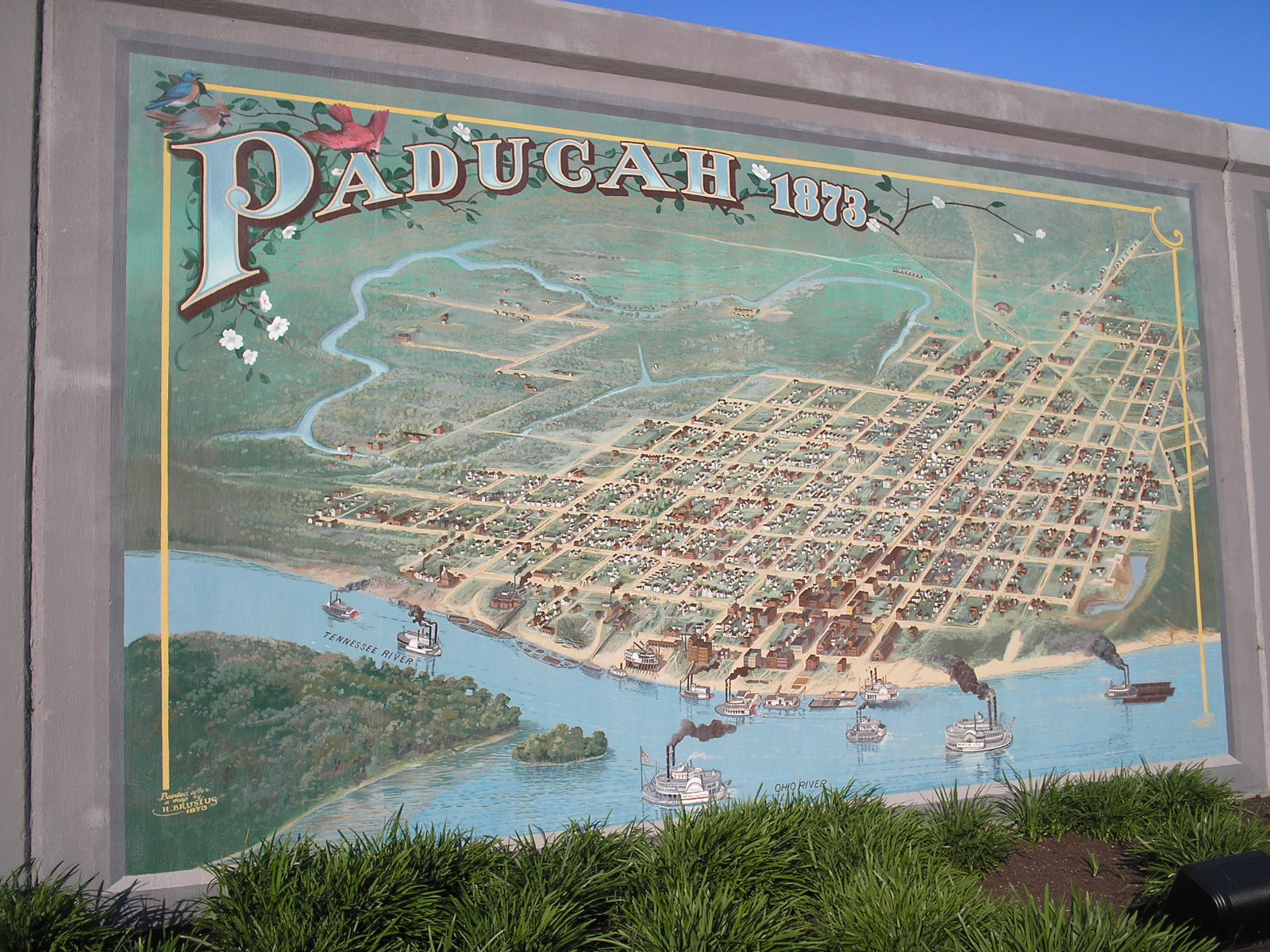
Paducah’s Men in Quilts

Paducah 1873One of the artistic highlights of our recent Great Square Route around the eastern U.S. (MN – MS – GA – CT – MN) was the stunning Museum of the American Quilting Society in Paducah, Kentucky, which had just opened a special exhibit, 4 Guys & Their Quilts:

On exhibit May 16-August 12, these quilts combine the talents of four male award-winning quilters: John Flynn, Gerald E. Roy, Arturo Alonzo Sandoval and Ricky Tims. MAQS Curator of Collection Judy Schwender is proud to bring lesser known viewpoints from the quilting world to the Museum’s visitors.

“Any quilt reveals the sensibilities of its maker, and men bring perspectives to quilting that are unique to the medium,” Schwender explains. “Within the world of quilting, men are a minority, and the museum is committed to presenting quilting viewpoints of underserved populations.”

My favorite among the 4 Guys was Ricky Tims, whose work ranges from exquisite variations on traditional quilting patterns, like his Bohemian Rhapsody or New World Symphony, to renditions in fabric of depictive art that would not look out of place on a framed canvas or in stained glass, like his South Cheyenne Canyon or Glen Eyrie Castle.

Among the new quilting terms and techniques I learned about at the museum was trapunto (also called “stuffed work”), a texture-enhancing technique that Tims puts to fine use in his Rhapsody in Green.

2 Comments

Filed under art, travel, U.S.

Doris Duke’s Islamic Art Shangri-La

Here‘s an interesting perspective on Doris Duke and her Shangri-La residential tribute to Islamic art, which I recently had the chance to visit. It’s by Sharon Littlefield, the Consulting Curator of Islamic Art for the Doris Duke Charitable Foundation/Honolulu Academy of Arts.

While the American heiress Doris Duke (1912-93) succumbed to an elite desire to collect, display, and donate, her chosen field of Islamic art and architecture was at odds with the legitimacy her social circle sought in their collecting. Moreover, relocating such art to her private home in Hawaii effectively estranged her from all established patterns of art collecting. Likely, her motivation to both acquire Islamic art and create an Islamicate estate for its display was driven, in part, by the very need to dissociate herself from her peers and her inherited lifestyle. But, profoundly drawn to Islamic aesthetics, she continued to collect right up to her death. She did not simply reject her own culture, but actively embraced Islamic ones. Despite being intensely private, Duke decreed that her estate, baptized Shangri-La, should be opened to the public following her death. Scheduled to open in October 2002, Shangri-La stands as a significant Islamicate monument, a fact which has, and will likely continue, to perplex those who cross its threshold.

I managed to check my cynicism and class resentment at the door and came away thoroughly fascinated. It’s well worth a visit. The virtual tour is also first-rate.

Leave a comment

Filed under art, Hawai'i, Mediterranean, Middle East

Cronaca on Forgeries

Cronaca, who has returned from a brief hiatus, has an interesting post on art forgeries.

Leave a comment

Filed under art

Ukiyoe Animé

This is just too cool: animated Ukiyoe (‘floating world pictures’) –> Ugokie (‘moving pictures’). The latter consists of a gallery with labels crediting the original artist whose work inspired the animation. The labels are only in Japanese, but you don’t have to know a lot to recognize Hiroshige, Hokusai, the 36 views of Mt. Fuji, the 53 stages of the Tokaido, or even Utamaro and Eizen.

Leave a comment

Filed under art, Japan