After 500 Years: Muslim-Christian Fratricide in Central Maluku

Two earlier posts about Muslim-Christian violence in Maluku, Indonesia, have summarized a three-year retrospective on 1999-2001 by reporters for the Jakarta Post and a ten-year retrospective based on my own travels in the area in 1991. This final post in a three-part series summarizes a 500-year retrospective by Dieter Bartels in an online draft of an article, “Your God Is No Longer Mine: Moslem-Christian Fratricide in the Central Moluccas (Indonesia) After a Half-Millennium of Tolerant Co-Existence and Ethnic Unity” (2000).

In the shadow of the recent carnage of the East Timor independence struggle and the equally vicious ongoing battle for Aceh, other parts of Indonesia are torn apart by pernicious strife and the huge and populous island nation is threatened with disintegration. One of the crisis hearths is the eastern island group of Maluku where there is an ongoing internecine struggle between Moslems and Christians. Some of the most heated clashes have been occurring between Ambonese Moslems and Protestant Christians in the Central Moluccas. Beginning on January 19, 1999 Moslems and Christians, seemingly without warning [but arising from a criminal incident perpetrated by outsiders], started to attack one another, burning down each others houses and killing one another in both the provincial capital of Kota Ambon (Ambon City) and villages on the islands of Ambon, Haruku, Saparua, Buru, and Seram. Similar incidents occurred also in the Northern and Southern parts of Maluku involving not only Protestants but also Roman-Catholics. Thus far, the seemingly senseless confrontation, which became known as kerusuhan (unrest), left thousands of people dead and precipitated the devastation of property worth millions of dollars, wiping out much of the economic progress made in the province since Indonesian independence.

It’s worth pointing out that January 1999 is when former President Suharto’s embattled successor, B. J. Habibie, agreed to an East Timorese referendum on whether to accept wide-ranging autonomy within Indonesia or to go for independence. The vote, in August 1999, was overwhelmingly (nearly 4:1) in favor of independence.

The conflict can be divided into two rather distinct phases: Phase I began in January of 1999 and closed at the end of April 2000. This phase was characterized by mutual attacks of native Christians and Moslems using largely primitive home-made weapons and bombs (rakitan). Generally, there was an equilibrium of strength. Phase II, having began in May 2000, is characterized by the massive arrival of non-Ambonese, mostly Javanese, Moslem vigilante group, called Laskar Jihad (“Holy War Forces”). They brought with them sophisticated modern weaponry and allied themselves with the Moslem personnel of the military which constitutes about eighty percent of the troops. These developments totally destroyed the previous balance, tipping the scale in favor of the Moslems.

From the very beginning, provocateurs, often said to be associated with the old Suharto regime, have been blamed for the unrest. The Army also has been accused playing a key role in triggering and fomenting the fratricidal violence in order to destabilize the Indonesian state as a means of restoring its political might and economic interests. Among the accusers is the Moluccan sociologist Tamrin Amrin Tomagola who believes that continuous riots will not only upgrade once again the status of the military, and tighten its territorial grip, but also derange President Abdurrahman Wahid and the National Commission on Human Rights which has implicated five generals, including former military chief and ex-cabinet minister, Wiranto, in the post-ballot atrocities in East Timor. Tomagola goes on to state that violence in Moslem areas triggers solidarity among Moslems and heightens their negative feelings toward the President and the commission (Jakarta Post 02/04/2000). Calls in January 2000 for a Jihad (Holy War) against Moluccan Christians at mass demonstrations in Jakarta and attacks of Moslem youths on Christian churches in Lombok seem to strengthen Tomagola’s arguments. The use of automatic weapons in the January 23, 2000 attack by Moslem villagers on their Christian neighbors in the villages of Haruku-Sameth on the island of Haruku further points to military involvement.

Bartels then outlines some of the key factors that led up to the recent violence.

  • The influx of Moslems from outside the area, especially Bugis and Makasar migrants from Sulawesi into Ambon City, and Javanese settlers (‘transmigrasi‘) into rural areas. Initial Christian attacks were against these outsiders, not fellow Moslem Ambonese.
  • The failed model of religious tolerance. “As recently as November 1998, during Moslem-Christian clashes in Jakarta, then President B. J. Habibie had singled out the Moluccas as the model of religious tolerance.” Moluccan exiles in the Netherlands and elsewhere “asked what happened to the traditional Moslem-Christian brotherhood and its safeguards like pela, the traditional inter-village alliance system.”
  • Creeping religious polarization. “Actually, the only thing that should be surprising about these clashes is their vehemence and unbridled violence.” Some of this was visible even during the 1970s.
  • The legacy of different colonizers. “The successive colonizers, Portuguese, Dutch, and Japanese, all tried to manipulate Moslems and Christians, as did the latest, and current, rulers of the Moluccas, the Javanese.” However, “throughout most of colonial history, it seems that, at least at the village level, Moslem and Christians have coexisted in a climate where cooperation seems to have been more common than polarity and discord. Under duress, they have frequently closed ranks and as far back as the Portuguese period and in the early Dutch era, Moslem and newly converted Christian villages allied themselves against the foreign intruders who tried to force a spice monopoly onto them. Again, during the so-called Pattimura uprising in 1817, both religious groups were united in a last, failing effort to rid themselves of the Dutch yoke.”
  • Christian rise to superiority in late colonial period. The Dutch favored “Christian Moluccans as soldiers and administrators, allowing them a certain amount of western schooling denied to the Moslems…. In some cases, Christian villagers had Moslem children live with them in order to give them access to schools denied to Moslem commoners by the Dutch while raising them according to Moslem customs.”
  • Moslem ascendency during Japanese occupation. “During the Japanese occupation, the Christians suddenly saw the roles reversed as the Japanese seemingly favored the Moslem population. Christians accused the Moslems of collaboration.”
  • The proclamation of an independent Republik Maluku Selatan (RMS) after Indonesia declared independence after WWII. “During the ensuing struggle with the Indonesian armed forces, Christian guerrilla forces attacked some Moslem villages which were suspected of being Indonesia sympathizers. There were also instances in which Christian soldiers prevented such attacks when their home village had an alliance with the Moslem village in question.”
  • The breakdown of the pela alliance system. This is elaborated further below.

Some of these inter-village alliances have their origins in the distant past, long before Europeans invaded the Spice Islands in search of cloves and nutmeg. It probably started as an alliance system in the context of head-hunting, but during the Portugese and Dutch conquests in the 16th and 17th centuries, the system was utilized to resist the foreign intruders, and to help each other in times of need. As a matter of fact, quite a few of the still existing pela pacts were founded during that period, often binding Moslem and (recently converted) Christian villages together. Many new pela arose during the last desperate struggle against Dutch colonialism, the Pattimura war at the beginning of the 19th century. After this struggle was lost and the region experienced an economic depression, pela was utilized as an instrument gaining access to foodstuffs when many poor villages of Ambon-Lease established ties with the sago-rich villages of West-Seram. In the first three decades of Indonesian rule, pela was still in full bloom, mainly as a vehicle of Moluccan identity in the pan-Indonesian state and also to further village development without governmental aid….

Most alliances are between Christian villages but a considerable number are between Christian and Moslem villages, thus spanning religious boundaries. Purely Moslem pela do not exist. In contrast to Christians who use adat [local custom] rather than their common religion to establish formal ties between villages, Moslems consider themselves all part of the Islamic community (ummat) and thus find no need to further strengthen the ties among one another. However, there are a few pela, all based on genealogical ties, involving several Christian and Moslem villages and in this case the participating Moslem villages also consider each other as pela partners….

The system as described above worked still very well in the Central Moluccas from the end of World War II until about the 1980s. Attempts of the Indonesian government of political centralization and cultural uniformity since Independence led to a general fear of loss of a distinct Ambonese ethnic identity. Both Moslems and Christians had also become quite conscious about the threat that the ongoing religious polarization posed for Moslem-Christian unity. While urban politicians were fighting for the spoils offered by the new system, people at the grassroots level reacted to the twin threat of loss of identity and social disunity through placing a renewed emphasis on pela, whose dense web spanning across the islands and religious boundaries was traditionally the major force of integration. The earlier listed economic incentives, based on reciprocal mutual aid, further helped to cement the interfaith relationship.

  • Elevation of global religion (agama) above tradition (adat). Increasing Christianization and Islamization after independence.
  • Indonesization of Ambonese social system: Replacement of traditional village leadership. Globalization in a manner that benefitted the urban (often outsider) elite. Large-scale relocation of (Moslem) ‘transmigrasi’ from Java. Overpopulation, land scarcity, feuding and fission. Urbanization, with outsiders dominating commerce.

Bartels tries to find some hope for the future in his final section.

Mending the Torn Fabric

Once the fighting stops, Moslem and Christians will indeed have to come together and redefine their relationship and strive for a new intra-ethnic symbiosis in a contemporary context. First and foremost, the intertwined problems of overpopulation, land shortages, and immigration have to be solved. As a next step, it seems likely that the Ambonese in the Central Moluccas will have to do what the Ambonese exiles in the Netherlands have been doing ever since they arrived in the Netherlands in 1951, namely engage in a continuous process of reinventing adat to reflect contemporary socio-political reality. Pela on the village level can still have its uses in restoring overall harmony. Before visiting the Central Moluccas in June and July 2000, I was very pessimistic about the survival of interreligious pela. Most people who don’t have pela with a Moslem village believe that these pela are forever destroyed. However, people who do have such pacts are not as ready to pronounce their alliances dead. This was certainly the case in Haria. Villagers from Samasuru (Seram) who have pela with Islamic Iha on Saparua do not dare stay there overnight as they did before when visiting Saparua but it seems they do it more out of consideration for Christian villages adjacent to Iha but are still in communication with Iha. They had given Iha land in the 1960s which was laid to waste during the unrest by outsiders. Iha insisted that Samasuru was innocent and that their alliance is still intact. The heavy attacks and counterattacks between Moslems and Christians in North Saparua occurring between September 22 and 24 were apparently instigated by the Laskar Jihad. As a result, many villagers from Iha fled to some of nearby Christian villages, seemingly to trying themselves to escape the Laskar Jihad. Their peaceful reception in these villages is perhaps one of the indicators that not all bridges have been burned.

The following story also shows some hope, though it may not immediately apparent: After the total destruction of Christian Kariuw on Haruku in the early phase of the conflict by neighboring Moslem villages of Pelauw and Ori, their Moslem pela partner Hualoi (Seram) sent a delegation with food to the village of another partner in the same alliance, Aboru (Haruku), where many Kariuwans had found refuge. The wounds were still too fresh and the food was rejected. Hope also can be found in the example of Wayame, a non-traditional, mixed Moslem-Christian settlement across the bay opposite Ambon City, which thus far which had been untouched by the conflict until late November 2000. Even then, it was not an internal conflict but an attack from the outside by Laskar Jihad forces. However, attempts by surrounding Moslem villages to officially declare Waai, a Christian village destroyed in July 2000, as a Moslem village and the intention to rebuild the mosque at exactly the same spot where it supposedly stood in 1670 when Waai was still Islamic, will inflame passions again. The suggestion was made by the chief commander (panglima) of the Laskar Jihad, Ja’far Umar Thalib, and thus it is quite likely that this declaration was made under duress….

Perhaps, and rather ironically, the simultaneous suffering of the Ambonese Moslem community under the reign of terror of the Laskar Jihad and certain army factions, may soften the existing bitterness and hatred between the two indigenous groups and facilitate ethnic reconciliation.

Leave a comment

Filed under Indonesia, religion

The NGO Catch 22

The November 2003 issue of The Journal of Asian Studies (vol. 62, no. 4) contains an interesting review by Salim Rashid of the book, Civil Society by Design: Donors, NGOs, and the Intermestic Development Circle in Bangladesh, by Kendall W. Stiles (Praeger, 2002).

This book is based on fieldwork done in Bangladesh between 1998 and 1999 on the role of nongovernmental organizations (NGOs) in the process of economic development. In polite, academic language, it mounts a substantial critique of the hope that NGOs will be the vanguard of change in the near future. The hopes for the NGOs were based on the thought that these organizations would bypass the moribund and corrupt state institutions and infuse fresh vigor into the development process. Such change has not come about, nor is it likely to. The negative themes also come out clearly in an article published almost simultaneously in World Development (30[5][2002]:835-46).

Kendall W. Stiles coins the word “intermestic” to describe the new incestuous relationship that develops between domestic and international organizations. The requirements imposed upon NGOs to maintain this relationship serve in the end to stifle effective action. Critics from the Left believe that such organizations can only effect cosmetic change in an exploitative system and hence serve only to dissipate radical energies in wasteful directions; those from the Right applaud volunteerism and benevolence, but they want all recipients to become self-sufficient rapidly. Well, if the NGOs really do espouse radicalism, neither the Government nor the foreign donors will tolerate them for very long; on the other hand, if the NGO projects really were sustainable–a cute euphemism for “financially viable”–then the market system should suffice to do the job.

These are systemic problems.

No kidding. One of the central questions facing the international community in this era of rapidly multiplying failed states is whether national sovereignty is (a) an inalienable right, (b) a revocable privilege, or (c) an impediment to economic growth. The EU seems to favor (c), but only for states that have already passed the entrance examinations. The IMF seems to favor (b), but only for states that have some chance of passing their remedial classes and rejoining the mainstream. The only thing that everyone appears to agree on is that national sovereignty conveniently trumps every other consideration when failed states are beyond hope, especially if they were once colonies, because the psychic pain of being colonized is worse than the physical pain of bleeding to death or starving to death. In such cases, the NGOs are little more than international hospice workers.

If only failed states could outsource their governments, as some wag in a comment thread on the libertarian blog Samizdata once suggested.

Leave a comment

Filed under NGOs

Morobe Field Diary, July 1976: Village Party

Last Friday, Daniel/Sigo paddled in at dusk, beached his canoe and calmly lifted a 6 ft, 50 lb or so sailfish out of the hull. He caught it on a handline and he siad it jumped and jumped and pulled the canoe a ways before giving out. It filled the whole front end of the hull. The whole village came down to admire; they cut it up after dark on the bed of the canoe by lamplite; and I had a piece the next morning for breakfast. It was a catch any Kona Coast cabin cruiser fisherman would be proud of. Makes me think Hemingway’s The Old Man and the Sea was a bit overdramatized.

Some of the fish was saved for a wedding party the whole village waited for from Fri to Sun nite when the overdue [M.V.] Sago came back from town with 10-12 cases of beer. The party got started about midmorning Monday. I drank a beer or two with the crowd at my end of the village, mosied off with the kaunsil to the far end where one guy had a bar going selling gin at 20 toea a capful along with enough Coke to barely color it. He made his 6K [= Kina] overhead and 4K profit. I was treated to a double shot and quickly retreated to beer only (about 4).

Well on my way to oblivion and having turned my skin black (or so many people assured me), treated others to gin and cigarettes, and tried my best to refute notions of how civilized the drinking habits of whites were, I careened back to my own end of the village with the intention of napping a few hours of the afternoon in preparation for the evening session.

But upon my return I was offered a COLD beer (thanks to some of the boat’s crew having snitched a bit of the block ice for keeping the fish catch fresh) and perhaps another. Some people got out handdrums and started a rather loose ‘singsing‘ which I was urged to join and which, after some hesitation, I did join.

I must have performed about 1.5 hours, beating on the end of any empty plastic jug along with the other men and one or two females who danced on the periphery from time to time. The kaunsil’s wife then called me for tea; her husband was already done for. I drank tea with biskits and went to my house, lay down without making the bed and was out for the rest of the evening, missing the nitetime guitar playing and dancing Western style and never really paying respects to the couple (a local woman and a Wain man–an area inland of Lae).

I awoke about the time everyone was going to sleep (probably about 2-3 am) and had a sleepless nite after taking two aspirins, two antacid tablets and making my bed. The next morning the whole village was pretty subdued and I sat at my desk the whole day finishing a paperback Adventures of Sherlock Holmes that had enthralled me for two days.

My mother sent pictures of the family which I showed around and cited kinship terms for. That is the magic trick for getting onto the mess of kinship terminology. Later in the evening I drew out the triangle and circle and line chart of all my relatives and now I feel I’ve pretty well got the meaning of each term down but finding out who’s whose what is quite another matter, especially since the names of the in-laws are tabu. But I’m working on it.

Indications are that the Numbami used to be matrilineal but due to European influence (possibly local non-Austronesian influence as well) have begun to reckon by fathers rather than by mother’s brothers. The kaunsil said the party was rubbish and that when we threw one there would be enough booze for the women to ‘spark’ as well.

Leave a comment

Filed under Papua New Guinea

Morobe Field Diary, July 1976: Village History

In the beginning the Numbami inhabited the ‘inside’ (leeward) of Awayagi Island (toward Morobe) and Ulingi Point (across the present cove from Awayagi toward Kuwi). All Sibomas will cite these as their asples [‘seat-place’ = homeland]. When they were living there is not clear. It is not within the living memory of any Siboma and preceded time of contact with records-keeping Europeans. I estimate 1850 or so.

At this time they were in the path of raiders from Morobe in the south and Lababia in the north. The Siboma court against Paiawa hinged on testimony from Morobe that Siboma were who they ran into when they came north. Paiawa at that time were ‘man bilong bus’ [inlanders] and did not live on the sea. Even now the [non-Austronesian] Paiawa are regarded as close relatives (thru intermarriage) but rather of the country-cousin variety. To the north the Kela were at Lababia though they apparently traded widely and that place was the site of a (yearly?) pig festival, called bada by Siboma & possibled related to their verb -bada ‘to distibute’, and called a sam by I don’t know who [Jabêm-speakers]. Sam is what the yearly church meeting to be held in Kela this September is called.

To escape the raids the Numbami moved up in the hills above Karsimbo River and apparently were as mixed up with the Bapi people, all mountain people, as they are with the Paiawa now. Probably moreso; the ‘two’ groups were described as being really one by S., and the old kaunsil, who must have been born about the turn of the century or about a little before contact, says he is really a Bapi man. Since they had to have some time to get this mixed up with the Bapi (non-Austronesians like the Paiawa) they must have left Ulingi and Awayagi around 1850. When some Europeans came to this village, called Yawale, the Bapi refused to carry for them and apparently were massacred in retaliation. They fled farther up into the mountains (they now live on the Waria River) and the Sibomas came down to Karsimbo where they were living at the time the mission contacted them and (presumably) named their harbor Braunschweig Harbor. Karsimbo is a good defensible, deep-bayed place.

Apparently due to mission influence or maybe just the cessation of fighting they moved to their present location at the Sayama River (or creek really) in the shallow harbor situated between their old Ulingi Point and Awayagi Island. Apparently these old villages were abandoned so long ago that the old tall coconut trees have fallen down or broken. Now only young trees show where the old villages used to be. Karsimbo is still marked by tall old trees and still has a habitable shoreline whereas Ulingi (and probably Awayagi as well) have lost theirs.

The story with the Buso [up the coast toward Lae] and Kuwi (which also probly matches the court record) is apparently that at some time in the past a dysentery epidemic hit Lababia and everyone fled to their kinsmen all over the Huon Gulf (which may speak for how widely they traded since trade was mostly between kin). A Siboma man asked the Sibomas if he could settle some of his kinsmen at Kuwi (Ya to the Sibomas). Another group apparently established themselves at Buso (two coves up toward Lababia) independently at around that time. Well, later the Kela and allies–mainly, I take it, Kuwi, Buso and Lababia (all Kela wantoks [speakers of the same language])–planned a great raid on the Sibomas living at either Karsimbo or Yawale. They snuck up, surrounded the village during the nite and, at dawn, attacked the unprepared Numbami, reducing their number considerably. A while later the Siboma undertook a similar counterattack against Buso (or Kuwi?) and only desisted from slaughtering them all because they had a relative in the bunch. So, according to S., they killed one Buso for every Siboma dead in the darlier attack and called it even. Whether good sense or colonial rule put an end to that feud I don’t know but it seems to have ended there.

The [Austronesian] Kaiwa were perhaps earlier pushed back by the Kelas and now considerable bitterness and fighting mars the relations between the two language groups. But S. thinks the Kaiwa, like the Paiawa, were earlier man bilong antap long bus [‘people from up in the bush’] and that it was only with Kela evangelizing that they came to the coast.

A final point: the money paid by South Pac. Timber to the Sibomas was split 3 ways among the Paiawa, Bapi and Siboma–I think on a 3:3:4 (or 2:2:6?) basis.

P.S. No one knows how and why the name Siboma came to be applied to the Numbami.

SOURCES: Sawangga Aliau, kaunsil, and ‘Abu Bamo’ [‘grandfather big’], former kaunsil, both of whom were involved in successful land claim court cases involving Siboma claims against Paiawa on the one hand and Kuwi (and Buso?) on the other.

7 Comments

Filed under Papua New Guinea

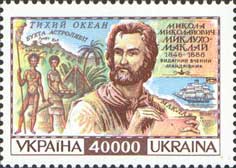
Early Russian Ethnographer in New Guinea

AnthroBase contains the following profile of an ethnographer who beat Malinowski to New Guinea by several decades.

Miklukho-Maklai, Nikolai Nikolaevich (1846-1888)

Russian anthropologist and explorer, acknowledged as the father of Russian ethnography. In 1871-72, Miklukho-Maklai did 15 months of continuous fieldwork on the Northern coast of New Guinea [in present-day Madang Province], where he pioneered methods that would only gain wide acceptance 40-50 years later, after Malinowski’s fieldwork. Throughout his life, Miklukho-Maklai identified strongly with the people he studied, and he several times spoke out in their defence against colonialist powers. He laid the groundwork of the rich tradition of 19th century Russian ethnography, which continued well into Soviet times–until it was destroyed in Stalin’s purges in the 1930s-50s.

Leave a comment

Filed under Papua New Guinea, Russia, scholarship

The Legal Status of the Japanese Wife, 1915

According to “The New Japanese Civil Code” by Professor N. Hozumi, the present Civil Code proceeds upon the equality of the sexes, and makes no distinction between men and women in their enjoyment of private life so long as a woman remains single. She may become the head of a house and exercise authority as such. She may exercise parental authority over her child if her husband is dead. She may adopt children either alone, when she is single or a widow, or in conjuction with her husband when married. She may make any contract or acquire or dispose of any property in her own name, provided she remains single.

When she marries, however, she enters the class technically called “incapacitated persons” treated of in Section 2 or Chapter I of the Civil Code. Under this section are four classes–minors, incompetent persons, quasi-incompetent persons and wives, or more explicitly, as it is explained under the “meaning of capacity,” “such persons as minors, wives, lunatics, and spendthrifts do not possess complete capacity.” A touch of nature makes the whole world kin! The next paragraph is still more illuminating.

Under the heading “Reasons for protecting incompetent persons,” we find, “minors are protected because of the insufficient development of their intelligence; incapacitated persons are protected because they are, like lunatics and idiots, intellectually deformed; and quasi-incompetent persons are protected because they are either physically deformed or intellectually imperfect, like the blind, the deaf, the dumb, and spendthrifts; while wives being bound to follow their husbands, the rights of the latter are protected in order to maintain the peace of the household.”

SOURCE: “The Legal Status of the Japanese Wife,” by A. Caroline Macdonald, in The Christian Movement in the Japanese Empire, including Korea and Formosa, a Year Book for 1915 (Conference of Federated Missions, Japan, 1915), pp. 324-325.

In sharp contrast are the presuffrage wives of the Southern Baptist Convention missionaries listed on p. 611 of the same work, all of whom appear either to be named Wanda, Wendy, Wilhemina, Wilma, Winifred, and the like–or else not to be worth naming:

Bouldin, Rev. G. W. & W., Tokyo

Clarke, Rev. W. H. & W., (A)

Dozier, Rev. C. K. & W., Fukuoka

Medling, Rev. P. P. & W., (A)

Mills, Mr. E. O. & W., Fukuoka

Ray, Rev. J. F. & W., Shimonoseki

Rowe, Rev. J. H. & W., Nagasaki

Walne, Rev. E. N., D.D. & W., Tokyo

Willingham, Rev. C. T. & W., Kokura

Leave a comment

Filed under Japan, religion, U.S.

The Omi Mission in Japan, 1915

February 1915, the tenth anniversary of the arrival in Hachiman of Mr. W. M. Vories, marked the beginning of the second decade of the Omi Mission.

The distinctive features of this Mission consist in its being financially self-supporting; undenominational–advocating and practising co-operation in all Christian efforts; administered entirely on the field; international–having voluntary supporters in America, Europe, and Japan, and both American and Japanese workers on equal terms, the general secretary this year being Japanese; rural from choice and conviction; aimed at the establishment of a model Kingdom of God, rather than at individual conversions alone; many-sided in its approach–preaching, Sunday Schools, railway and Student Y.M.C.A., with hostels, farm, motor cruiser (Galilee Maru) on Lake Biwa, physical work in the embryo antituberculosis camp, two monthly publications, newspaper evangelism, loan library of evangelistic books, many types of women’s work, and architectural office–for support and for training self-supporting mission workers; and finally, in its compromising a practical Laboratory of Mission Methods, where new lines of evangelistic and institutional effort are being tried out–and the results open to any mission in the Orient.

Beginning without resources and with only one green young worker in 1905, the Mission numbered in 1914 thirty workers, eight of whom were Americans.

The first ten years were marked by the complete alteration of the attitude of the community, from that of open and violent opposition and persecution to open and cordial favour; the building up of a staff of native workers–which is the hope of any mission enterprise; and the crystalization of aims and methods adapted to peculiar conditions, after experimentation.

The direct achievements, though sounding well in report, are, we trust, merely suggestions of real harvesting in the next decade.

SOURCE: “The Omi Mission,” by W. M. Vories, in The Christian Movement in the Japanese Empire, including Korea and Formosa, a Year Book for 1915 (Conference of Federated Missions, Japan, 1915), pp. 136-137.

Leave a comment

Filed under Japan, religion

Syncretism vs. Hybridity vs. Creolization

The November 2003 issue of The Journal of Asian Studies (vol. 62, no. 4) contains a review by Tom Havens of the book, The Age of Creolization in the Pacific: In Search of Emerging Cultures and Shared Values in the Japan-America Borderlands, edited by Takeshi Matsuda (Hiroshima: Keisuisha, 2001). The book offers an interesting application of the notion of creolization. The following extract is from the review, which quotes from two chapters by David Blake Willis.

Long ago, the discourse on Japan’s relations with the West emphasized cultural assimilation or syncretism. In the 1950s, Katô Shûichi recast the interaction as hybridity–still a powerful concept in literary and cultural criticism, although Willis believes Katô’s formulation continues “to privilege a Japanese essence” (p. 6). As anthropologists and world historians use the term, “creolization” is a dynamic, interactive process based on “more even-handed horizontal relations” than in the somewhat static notion of hybridity. Creolization involves “a leveling and a borrowing that is two-way,” creating “a new shared culture” that is “open-ended, eclectic, flexible, and mobile” (p. 6). Creolization facilitates transnational and transcultural (rather than international or intercultural) synergies, thus de-emphasizing states and national communities as units of analysis. Simultaneous multiple processes of creolization in various world regions today show that, “the globalization of culture is not the same as its homogenization” (p. 23)….

Willis offers an empirical chapter on the transcultural experiences of creole “JAmericans” educated at CA [my alma mater!], a well-known international school in Kobe barely masked as “Columbia Academy.” He argues that cultural, not necessarily genetic, hybridity often leads to true creolization, concluding hopefully that “Pacific Creoles are the cross-fertilizing currents of new directions, the lubrication for the global cultural landscape” (p. 195).

EXEGESIS: Assimilation models imply you either remain who you are beneath the layers of outside influences (good, unless you were bad to begin with), or you lose your soul and become someone else (bad, unless you were bad to begin with). Hybridity models allow “in-betweeners” and “half-castes” but also imply the existence of purity at the cultural poles. For most people, I suspect (not me! not me!), purebreds are willy-nilly superior to mongrels, whether we’re talking dogs, or cultures, or cultures gone to the dogs. Creolization models acknowledge the creation of uniquely new structures, with their own internal consistencies, arising out of a mixture of cultural (or linguistic) components, but shaped both by universal patterns and by new functions that none of the old structures adequately served.

Leave a comment

Filed under Japan, Pacific, scholarship, U.S.

The Blogmenbashi

His Excellency, the Almighty, the All-Knowing, the Glorious, the Peerless, the Sublime President Sapurmurat Niyazov of Turkmenistan appears to have started his own blog, The Blogmenbashi. Read, O Mortals, and Imbibe the Wisdom! Study the Ruhnama and All will be Revealed!

(We still need him, We still feed him, Now he’s sixty-four–as of February 19.)

Over the transom via The Ventilator

Leave a comment

Filed under Central Asia

Motherland Defender’s Day and Chechen Deportation Anniversary

The promising new blog SiberianLight notes a poignant pair of anniversaries on 23 February 2004:

Today is the 60th anniversary of Stalin’s deportation of the entire Chechen nation. Ingushetians were also deported, along with the populations of 10 other nations (approximately 1.4 million people) thought to be enemies of the state during World War II. Their exile lasted for more than ten years until Khruschev allowed them to return home after Stalin’s death….

Today is also Motherland Defender’s Day (previously known as Army Day), dedicated to the memories of those who have fought for the Soviet and Russian armies, and their heroic efforts defending the Motherland. Spare a thought for those Chechens who continued to fight in the Soviet Army even after the deportation of their families …

Read the whole blogpost and check out a bright outlier in the far north.

Leave a comment

Filed under USSR