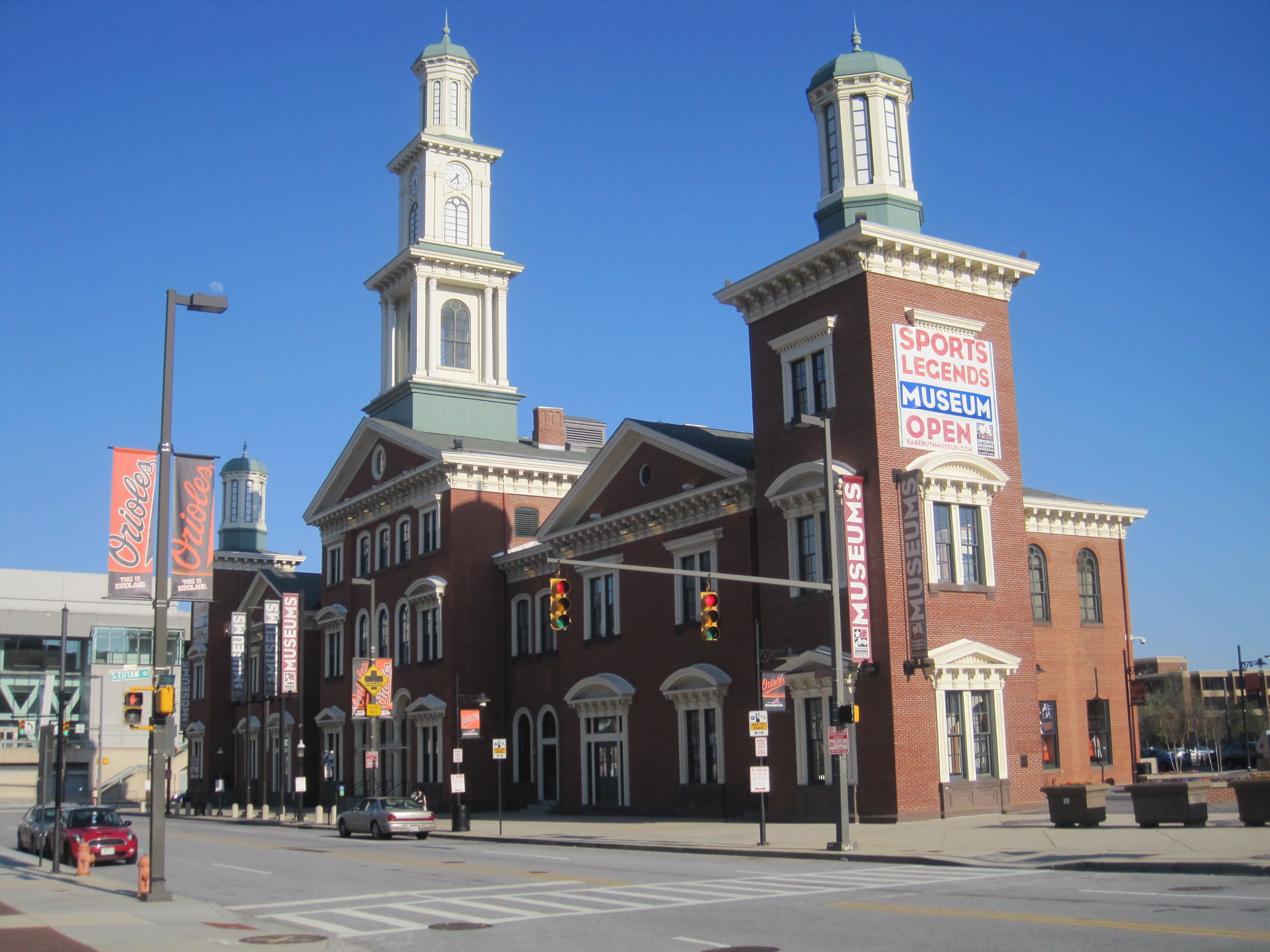
Secularizing Religious Education in Salonica

From Salonica, City of Ghosts: Christians, Muslims and Jews, 1430-1950, by Mark Mazower (Vintage, 2006), pp. 220-221:

The struggle for communal authority was fought out over many areas—care for the poor and sick, the upkeep of cemeteries, the administration of religious foundations themselves—but the key battleground was education. For religious learning alone was no longer enough. Ties with the West meant also that local merchants needed employees to be familiar with modern languages, mathematics and geography. The notable Jewish families pushed hard for the use of Italian and French books in the old Talmud Torah in the 1840s. When they got nowhere, they obtained a firman to found their own pilot school, run by a German rabbi whom the local rabbis regarded as an impious foreigner. But the real educational revolution among Salonican Jewry only came in 1873 when the same notables opened a branch of the Paris-based Alliance Israélite Universelle—the very embodiment of French Enlightenment liberalism—in the teeth of fierce opposition from the elderly chief rabbi. It was an extraordinary success: by 1912 the Alliance was responsible for educating more than four thousand pupils, over half the total number of children in Jewish schools. “I was once invited to an annual gathering of the Israelite Alliance,” wrote a British journalist during the First World War. “There were many hundreds of Jews there, male and female, and a great many of them were once removed only from the street porter class. But they rattled off French as if they had been born to it.” Not only were the majority of the city’s Jewish children receiving an education outside the control of the religious authorities, but they were receiving it on the basis of the principles of contemporary French republicanism. Such a trend had a corrosive effect on the authority of the chief rabbi, and helped turn him slowly into more and more of a purely religious and spiritual figurehead.

Within the Greek community similar shifts were taking place. In the old days, children learned reading and writing from the occasional literate priest or from the so-called didaskaloi who gave lessons as they passed through the city. But in 1828 the junior high school was reestablished, and a girls’ school was set up in 1845. The primary school population climbed from 1500 in 1874 to nearly 2000 in 1900 and 3900 by the time the Greek army arrived in 1912. An Educational Society was set up in 1872 with its own private library and a commitment to “useful knowledge,” and in 1876 a teacher-training college followed. Salonica’s Greek high school was recognized by the University of Athens, a development of huge significance for the rise of Greek nationalism, and the control of school standards and appointments was also handled by representatives of the Greek state. Through education in other words, the Greeks of Salonica gradually reoriented themselves towards the new national centre in Athens. The Patriarchate in Istanbul, which had once enjoyed unchallenged authority over the empire’s Orthodox believers, found itself losing ground.

Within the city’s Muslim community, pedagogical arguments were also raging. All Riza, a minor customs official, quarrelled with his wife Zübeyde, over how to educate their son, Mustafa. Zübeyde, a devout woman who was nicknamed the mollah, followed the older conception or education and wanted him to attend the neighbourhood Qur’anic school. His father, on the other hand, favoured the new style of schooling pioneered by a renowned local teacher, Shemsi Effendi, who ran the first private primary school in the empire. In the end, the young Mustafa started at the first and finished at the second, before moving to the military preparatory college. Helped by his education and by Salonica’s new beer-gardens and nightlife, he became a pronounced secularist, thereby foreshadowing in his own upbringing the trajectory through which—by then better known to the world as Mustafa Kemal Ataturk—he would later lead post-Ottoman Turkey.

Mustafa Kemal’s experiences were not unusual, for the spirit of Western education was transforming local Muslim cultures of learning. The Ma’min were setting up private schools like Shemsi’s, and state officials like Mustafa Kemal’s father shared their vision of a modernizing Islam. Investment in education had been a priority of the reformers in Istanbul, and m 1869 a new imperial Ordinance of General Education outlined a school system, based partly on the French lycée model that would promote knowledge of science, technology and commerce among both boys and girls. Reaction from the long-established medreses was fierce but under Sultan Abdul Hamid this was overcome, in part by emphasizing the Islamic character of the new schools. A state schooling sector emerged in Salonica and the city’s first vocational college the Ecole des Arts et Métiers, trained orphans in typography, lithography, tailoring and music. Later came a teacher-training college, a junior high school, a commercial school and a preparatory school for civil servants—the Idadié—housed in an imposing neo-classical building standing just beyond the eastern walls. (Today it contains the chief administrative offices of the University of Thessaloniki.)

Leave a comment

Filed under Balkans, education, France, Greece, language, Mediterranean, nationalism, Turkey

Mutiny & Tragedy Aboard the Hōkūle‘a, 1976-78

From “Playing with Canoes,” by Ben Finney, in Pacific Places, Pacific Histories, ed. by Brij Lal (U. Hawai‘i Press, 2004), pp. 294-296:

Hōkūle‘a was launched in 1975, and after a year of testing, training, and making modifications we sailed her to Tahiti and returned as promised. That demonstration blew a big hole in [Andrew] Sharp’s claim that Polynesians could not have intentionally made long, navigated voyages. Furthermore, Hōkūle‘a emerged as a cultural icon credited with helping to spark a general cultural renaissance among the Hawaiians, as well as with stiffening the resolve of the Tahitians to secure more autonomy from the French. These triumphal aspects of the story have often been told. Less well known are the politics of the voyaging revival.

During fund-raising and construction and those first heady days when we sailed Hōkūle‘a around the Hawaiian chain, all went well except for a few mishaps and disagreements. However, by early 1976, just a few months before the voyage, serious troubles began while the canoe was being refitted. A number of Hawaiians, many of whom had not played any role in the project, began to claim Hōkūle‘a as their own and to use her locally for various purposes other than the stated mission. These ranged from the political to the personal—from invading the island of Kaho‘olawe to protest its use as a naval bombing range to cruising around the Hawaiian chain for the romantic benefit of male crewmembers. More chilling were the demands of a spiritual leader who claimed that Hōkūle‘a was ritually “dirty” and would sink with all hands unless he was paid an enormous sum of money to purify her.

All this might have been shrugged off as so much craziness but for the very real incongruity of having a haole professor run a project that had been so hyped as a Polynesian venture. That made me consider resigning as president of the Polynesian Voyaging Society and handing the job over to our vice president, Herb Kane, in hopes that he might be more effective in dealing with these demands. But then Herb himself abruptly left the project, saying that he was thoroughly burned out and financially impoverished from supervising the construction of the canoe and making the first test sails around the islands. As Tommy Holmes preferred to stay in the background, that left me, the haole who wasn’t even from Hawai‘i, to fend off all those who in the name of Hawaiian nationalism were attempting to take over the canoe.

Had those clamoring for control of the canoe been skilled seamen dedicated to carrying out the voyage as planned, I could have gone ahead and resigned the presidency and then concentrated on the research side of the voyage. But they were not real sailors, nor did they have any intention of conducting the experimental voyage. In fact, they had come to believe that using a canoe for research would desecrate the spiritual nature of Hōkūle‘a.

Given this situation I realized that if I did resign I would betray the hundreds of contributors and supporters, many of them Hawaiians whom I had promised to sail the canoe to Tahiti and back. Furthermore I would also have let down those expert sailors whom I had personally recruited for the voyage: Kawika Kapahulehua, the veteran catamaran sailor from the remote island of Ni‘ihau who was our captain; Mau Piailug, the master navigator from the Micronesian atoll of Satawal who would guide the canoe to Tahiti and back; and my longtime Tahitian friend Rodo Williams, a professional fisherman and copra boat skipper whose job was to pilot us safely past the atolls that lay just to the north-northeast of Tahiti.

So I stuck it out, and thanks to the help of Kawika, Mau, Rodo and several other sailors who were also determined to make the voyage a reality, plus the moral support of Edward Kealanahele and many others on shore, we finally set sail for Tahiti. After a little over a month at sea we entered Pape‘ete Harbor to be greeted by the largest crowd ever assembled on the island. Nonetheless, although the actual sailing of the canoe had proceeded as planned, leftover resentments had festered at sea among a number of crewmembers who had been caught up in the troubles back in Hawai‘i. Halfway to Tahiti they staged a confrontation to accuse the leaders of mismanagement and to demand special treatment for themselves. After that, they quit standing watch and spent the rest of the voyage eating, sleeping, and smoking pakalōlō (crazy tobacco, i.e., marijuana) that they had smuggled on board. Bizarre as that situation was, it did allow the rest of us to sail the canoe on to Tahiti in relative peace—until the night before landing, when the mutineers staged another protest that left blood on the deck. That so incensed Mau Piailug that upon landing he quit the canoe in disgust and flew back to Micronesia vowing never to sail with Hawaiians again.

Even after Captain Kawika Kapahulehua and some fine young crewmembers who had not been directly involved in the troubles sailed Hōkūle‘a swiftly back to Hawai’i, the travail was not over. I had made so many enemies by my efforts to keep the voyage on track that I became the scapegoat blamed for causing all the troubles. Enough was enough, and I resigned and started work on a scientific report about the voyage and a book—Hōkūle‘a, the Way to Tahiti—that I owed a New York publisher whose sizable contribution had enabled us to start building the canoe.

After taking stock of the situation the new leaders of the Polynesian Voyaging Society resolved to remove the stain left from the troubles by repeating the voyage to Tahiti with a specially selected crew. Unfortunately, in their zeal to distance themselves from those who had led the 1976 voyage they totally ignored Captain Kapahulehua, the man who had just taken Hōkūle‘a so surely and safely to Tahiti and back and could have showed them how to do it again.

Overconfidence, a casual attitude toward safety, and basic errors in seamanship doomed this second attempt to reach Tahiti. Just before midnight, after less than six hours at sea, the canoe capsized while being foolishly driven hard under full sail in gale-force winds and immense seas. Not until dusk of the following day was the overturned canoe spotted by a passing aircraft just as she was drifting south of the interisland sea and air lanes. All crewmembers but one were rescued by a Coast Guard helicopter, and the following day Hōkūle‘a was towed in, severely damaged, though the hulls were still structurally sound. Missing was Eddie Aikau, a world-champion surfer who some hours before the canoe had been spotted had valiantly tried to paddle his surfboard through the breaking seas to the nearest island to get help. He was never seen again.

The waves are getting huge on O‘ahu’s North Shore and The Eddie is expected to begin any day now.

1 Comment

Filed under Hawai'i, migration, nationalism, Polynesia, science

One Child’s Language: at 47 months

Social notes: Her two favorite teachers (and actually best friends) at school are leaving for more gainful employment this month. She’ll miss them, but she is much more willing now to get to know new people. She is still very teacher-oriented, playing the role of teacher at home: directing games and circle time, asking for volunteers so she can do eeny-meeny-miny-moe (often fudging the last bit) to choose one of us.

Physical development: Fine motor skills have also improved. She can spend an hour at a time coloring within the lines, cutting paper with scissors, and writing smaller and neater uppercase and lowercase letters. She may have just finished a physical growth spurt and begun a mental one.

Intellectual notes: One day in the supermarket, Rachel pretended to read a story from the list she was holding. It was about a little boy who went for a walk, crossed the street by himself, got hit by a car, and died, leaving his parents all alone. They propagandize her well at school—she instinctively grabs a hand before crossing a street. But she also spends intervals trying to figure out the meaning of death. Time is another mystery. She knows the days of the week, some months of the year, and a bit about how years are numbered. But she often thinks that her afternoon nap starts a new day, that supper is breakfast and vice versa.

Size and measurements are still vague. We just came back from a weekend trip to the Big Island. She asked whether it was as big as the Soviet Union, asked several times how long a mile is, wanted to plot our course on the map, and monitored our elevation. Numbers are getting easier: she can read up to 99 (often mixing pairs like 25 and 52) and had little trouble singing from 21 bottles of beer on the wall down to zero.

Language notes: One evening as we sat down to dinner, Rachel clasped her hands and recited a complete table grace in Hawaiian. Another evening, she decided she wanted to study sign language and spent about half an hour practicing a few words with Daddy. She is a real language-learner right now. It’s a shame she doesn’t have another language to work on along with English.

She is rapidly expanding her vocabulary, stopping to ask us the meaning of any word she doesn’t know yet. She is on the lookout for familiar words everywhere and asks us to read and explain any public sign that contains a word or two she can recognize or sound out. At school, she has just been introduced to “mystery words” that can’t be sounded out. We encourage her to sound out regular words. She was able to read a note from Mama that said Can I get a hug from you? and she has come up with her own spellings, like jrink water and clowde, wnde, rane, sune day. (WordPerfect’s spellchecker offers the correct choice for some.) She copies whole sentences with all the devotion of a medieval monk reproducing a holy manuscript.

UPDATE: This child is now a 24-year-old teacher in Boston Public Schools.

2 Comments

Filed under education, family, Hawai'i, language, U.S.

One Child’s Language: at 42 months

Intellectual notes: Of all the Sesame Street characters, Rachel used to resemble sweet, innocent, and imaginative Elmo the most. But now she’s turning into the Count, whose greatest joy in life is to find something to count. She counts steps, parking meters, people on the bus, bites of food, and sips of water. She can now count past 100 without prompting, can count backwards from 10 to 0, and can add and subtract one number at a time so long as she’s dealing with numbers not much over ten. And, finally, she no longer misses 16 on her way to 20.

She is raptly attentive during Sesame Street, and we’ve just started watching the Sunday evening Disney hour with her. She asks a lot of questions. She likes cartoons but has not yet been exposed to Saturday morning TV. So her very active imagination has not turned to violence yet. Instead, she organizes a lot of weddings, birthday parties, travels, picnics, and classroom activities.

Language notes: Rachel is picking up more and more local English at school. One of the most noticeable lately is mines, as in Yours, Mines, and Ours. (That forces an exception to follow the same rule that adds s to the other forms.)

She has finally begun to use Please, Thank you, Excuse me, and Sorry fairly regularly. And she’ll wave good-bye to kids she knows. Her conversational habits are not always polite though. She wants to dominate every conversation around the house, and isn’t happy to yield the floor to either of us. She is very, very verbal, providing a running commentary on everything she does. When she’s tired, the running commentary turns into a babbling stream of consciousness.

UPDATE: This child is now a 24-year-old teacher in Boston’s Chinatown.

1 Comment

Filed under education, family, Hawai'i, language, U.S.

One Child’s Language: at 40 months

Physical development: Rachel’s handwriting is much smoother now. She doesn’t have to have little dots to mark the angle-points in A, M, Y and other letters. She has even got S and C down pretty well. She can also write quite small and has done a few exercises at school writing numbers. She jumps well with two feet and can stand on one foot. She likes to show how fast she can run. She is quite active during exercise at her school. We enrolled her in a “movement” class at the YWCA on Saturday mornings, but so far the only thing she has participated in is a balance-beam exercise that she enjoyed at preschool. She doesn’t like receiving a lot of attention from strangers. We doubt she’ll go into show business.

Intellectual notes: She still loves to count and do very simple addition and subtraction. In fact, she has discovered the Associative Principle: “Look, 2 and 2 and 1 make 5; and 3 and 2 make 5, too!” She was counting with her fingers in the stroller one day and announced “2 and 2 and 2 and 2 and 2 make 10!” She knows that 100 is a lot, and can count that high if you prompt her for the even multiples of ten. She no longer misses fifteen now that she knows fif is a funny way to say five, but she usually skips sixteen for some reason.

She also loves guessing and telling. “You don’t know how old Panda is?” [Just say “No!”] “I’ll tell you. He’s two.” “Do you know what we can use? … Think! Think!” She likes to involve us in long imaginary games in which everyone’s role is subject to redefinition whenever the fancy strikes her. She also does a lot of reasoning. This is the bicentennial of Chinese emigration to Hawaii. When Rachel asked why so many Chinese came here, Mama told her that many Chinese wanted to leave China. She said, “Yeah, they wanted to find a cleaner place, and Honolulu was clean enough.”

Language notes: Rachel returned from her Christmas visit having finally switched from referring to herself as Rachel to using I, me, my appropriately. She has also switched to an overcorrected pronunciation of the so that it always rhymes with thee. One of her teachers must have stigmatized the local pronunciation, da. (She has acquired the local auwe in place of ouch.) Her pronunciation of consonant clusters (st, str, sp, spr, etc.) seems to have slipped a bit while she concentrates on new grammatical constructions, especially comparatives (good, gooder, goodest, bad, badder, baddest), even complicated syntax like: “When I’m 100 years old, I’ll be tall enough that my head will touch the ceiling.” “Look, I can push the stroller as straight as you can.” Around us, she is extremely verbal, providing a running commentary on her every action.

UPDATE: This child is now a 24-year-old teacher in Boston’s Chinatown.

1 Comment

Filed under China, education, family, Hawai'i, language, U.S.

Lind on Patrician Do-gooder-ism vs. Populist Producerism

Old-style Democrat Michael Lind asks a timely question in a Salon essay entitled Can populism be liberal?

There remains the progressive wing of the Democratic Party, represented more in Congress than in Obama’s White House — and more in the House than in the Senate, a dully complacent millionaires’ club. Can congressional progressives compete with conservatives to channel popular outrage? Unfortunately, progressivism in the form in which it has evolved in the last generation does not resonate with populist producerism.

To begin with, most of the moral fervor of the contemporary center-left has been diverted from the issue of fair rewards for labor to the environmental movement. In theory, environmentalism ought to fit the populist narrative of defending shared goods against special interests. Indeed, clean air and water legislation and public parks and wilderness areas are broadly popular with working-class Americans, not least hunters and fishers. But many environmentalists insist that global warming must be combated not only by low-CO2 energy technology but also by radical lifestyle changes like switching from industrial farming to small-scale organic agriculture and moving from car-based suburbs and exurbs to deliberately “densified” cities with mass transit. Whether environmentalists propose to engineer this utopian social transformation by tax incentives or coercive laws, the campaign triggers the populist nightmare of arrogant social elites trying to dictate where and how ordinary people should live.

Even if it had not been eclipsed by moralistic lifestyle environmentalism, contemporary economic progressivism would be crippled by its own priorities. New Deal liberalism was primarily about jobs and wages, with benefits as an afterthought. Post-New Deal progressivism is primarily about benefits, with jobs and wages as an afterthought. This inversion of priorities is underlined by the agenda of the Democrats since the last election — universal healthcare coverage first, jobs later.

It is only in the post-New Deal era that universal healthcare has become the Holy Grail of the American center-left, rather than, say, full employment or a living wage. Sure, Democrats from Truman to Johnson sought universal healthcare, and Medicare for the elderly was a down payment for that goal. But the main concern of the New Dealers was providing economic growth with full employment, on the theory that if the economy is growing and workers have the bargaining power to obtain their fair share of the new wealth in the form of wages, you don’t need a vastly bigger welfare state. Having forgotten the New Deal’s emphasis on high-wage work, all too many of today’s progressives seem to have internalized the right’s caricature of FDR-to-LBJ liberalism as being primarily about redistribution from the rich to the poor.

This shift in emphasis is connected with the shift in the social base of the Democratic Party from the working class to an alliance of the wealthy, parts of the professional class and the poor. And progressive redistributionism also reflects the plutocratic social structure of the big cities that are now the Democratic base. Unlike the egalitarian farmer-labor liberalism that drew on the populist values of the small town and the immigrant neighborhood, metropolitan liberalism tends to define center-left politics not as self-help on the part of citizens but rather as charity for the disadvantaged carried out by affluent altruists. Tonight the fundraiser for endangered species; tomorrow the gala charity auction for poor children.

via RealClearPolitics

Leave a comment

Filed under democracy, economics, industry, labor, U.S.

One Child’s Language: at 39 months

Social notes: Ever since Rachel moved to the bigger kids’ room at school, she has assigned herself a new role in life. She always reminds us of what a big girl she is and almost never goes into the little baby routines she was so fond of before the move: “Look how fast Rachel can run.” “Look how high Rachel can jump now.” In fact, she has changed her role-play at home from Baby to Teacher. She spends a lot of time at home comforting her stuffed animals, showing them things, putting them down on mats for naptime, waking them up again, reading to them, feeding them. She gets the funniest little serious look on her face when she is comforting them for crying. She repeats instructions from school to them, playing the teacher role to the hilt, telling them “This is a table mat activity, not a floor mat activity.”

Another way she marks her change in status is by constantly inquiring how she did things or said things when she was a little baby. “How did Rachel swim when Rachel was a little baby?” “How did Rachel talk when Rachel was one year old?” “How did Rachel say blue when Rachel was in China?” Then she will laugh and imitate our imitations of how she used to say things.

Physical development: Rachel is fascinated by writing now, and likes to take a pen or crayon and write messages on paper. She controls her scribble pretty well, doing a good imitation of a doctor’s prescription scrawl.

Intellectual notes: The biggest concept Rachel has mastered with her new rite of passage is the progress of time. Yesterday now means the previous day, or at least the other day, not just any time in the past. Tomorrow is also more immediate than it used to be. She knows about relative age and birthdays, knows most of the days of the week and the last four months of the year. She contrasts her life as a baby and her life in China with her present life. In fact, she has a renewed interest in her China past now and asks a lot more questions about her pictures from Chinese preschool.

Her other major fascination right now is numbers and arithmetic. She counts everything and knows the concept of adding one number to another. She will hold up one, two, three, four, or five fingers on each hand and ask “How much is this?” She hasn’t memorized the answers yet, but she can figure it out by counting all her fingers. She can count to twenty, but she tends to miss fifteen and sometimes sixteen.

Language notes: Rachel constantly asks “What’s that spell?” She has memorized an ABC book from the library that goes “A is for angry anteater, B is for bashful bear, ….” Her favorite road sign is the yellow BUMP sign. In fact, on the buses she often reads the yellow sign on every window “C-A-U-T-I-O-N Bump!” She looks for Chevron, Shell, and Union 76 signs; spells out STOP, WALK, EXIT, and NO PARKING signs; recognizes Safeway, MacDonalds, and Burger King logos; asks about the cover, half-title, title, and contents pages in books. She likes to take a pen and write messages which she translates as “Please take a juice can to school tomorrow” or “Let’s meet for breakfast at eight.”

Although she still never uses I, me, my in real communication, she will use them perfectly well when she is play-acting with her stuffed animals. And she now asks “How do you do” such and such rather than “How does Rachel do” such and such. But in talking to us, she still has her own special pronouns Deo or Daytoe (for Rachel) and Deo’s (for Rachel’s).

UPDATE: This child is now a 24-year-old teacher in Boston’s Chinatown.

1 Comment

Filed under education, family, Hawai'i, language, U.S.

What Foreign Tourists Like in South Korea

The Chosun Ilbo has been doing a series on foreign tourism in South Korea, which has been growing. (Both Mr. & Mrs. Outlier have attended conferences there this year, and enjoyed a bit of tourism on the side.) Here are a few observations about the statistical preferences of tourists from different countries.

On favorite souvenirs:

The most popular souvenirs among Japanese visiting Korea are dried seaweed, kimchi, and ginseng or citron tea from the Namdaemun Market and superstores, according to the Seoul Station branch of Lotte Mart.

Nail clippers are the most popular item among Chinese visitors. “In China, Korean nail clippers are regarded as luxury goods,” claimed Chung Myung-jin, president of Cosmos Travel. “Chinese people like gold, so they buy dozens of gold-colored nail clippers when they come to Korea.” Gold-plated stainless chopsticks and spoons are also popular.

Southeast Asian tourists usually buy Korean beauty products, which are in vogue in their home countries. Meanwhile, Europeans prefer traditional gifts. “European tourists tend to buy souvenirs at historic sites like Gyeongju, or they buy custom-made Hanbok, or traditional Korean clothing,” said Park Eun-sun of KR Travel.

On Japanese vs. Chinese:

According to a survey of visitors in 2008 by the Korea Tourism Organization, more women visited from Japan than men, with 61.9 percent to 38.1 percent. The proportion of individual tourists (38.3 percent) was close to that of group tourists. As the two countries are close geographically and Japanese have a lot of information on Korea, many there feel it is easy to visit without tour guides or prearranged package tours….

A staffer at a beauty treatment shop in Myeong-dong, said, “Many Japanese tourists have cosmetic eyebrow tattoo procedures, manicure or laser body hair removal, which are much cheaper than in Japan.” They also like Korean food. Some 69.5 percent of Japanese tourists said Korean food is delicious. Food topped the list of souvenirs they buy with a whopping 67.1 percent. Japanese tourists stayed in Korea briefly but spent a lot of money. Each of them stayed 2.7 nights and spent $1,136 ($420 per day) on average….

Chinese tourist stayed on average 6.8 nights and spent $1,413 ($207 per day). Many visited Korea for the first time and were on package tours with group visas. Hanatour spokesman Chung Ki-yoon said, “Many Chinese tourists are on package tours of seven Southeast Asian countries.”…

Haban Tour spokesman Woo Hyun-ryang said, “The Chinese are used to huge cultural monuments like Taishan, the Great Wall of China and the Forbidden City, so they usually complain even Mt. Seorak is just like a hill at the back of their village.” This means they need other special programs.

Chinese tourists from different regions also had very different tastes. Those from inland urban areas like Beijing preferred Jeju Island, while those from the booming industrial centers such as Guangzhou, Chengdu, or Shenyang liked to visit Myeong-dong and Dongdaemun shopping districts in Seoul. Rich Chinese visitors enjoyed buying designer goods at Lotte or Shinsegae department stores in Myeong-dong, Seoul, or at Centum City in Busan. Food is the biggest problem for the Chinese tourists, who usually complain that Korean food is not fatty enough for them.

via The Marmot’s Hole

Leave a comment

Filed under China, Japan, Korea, travel

One Child’s Language: at 36 months

Social notes: Rachel was very generous about taking toys to donate to her school before we left China. But she displayed almost no emotion on her last day of school, when her principal (and favorite auntie) was teary and her mama was too choked up to say anything. It was only after we got to Hong Kong and started talking about what her life in Honolulu would be like that Rachel protested, “But Rachel likes China.” She also liked travelling, because she had one or the other of us to herself all the time. Unlike us, she loves to spend time in waiting rooms and hotel lobbies.

Especially while travelling, we tend to praise her for being a “big girl.” But she is afraid to leave babyhood completely behind, so she often reminds us, “When Rachel sucks Rachel’s thumb Rachel is a little baby,” and then promptly demonstrates. She has also invented some baby talk expressions, like titidada. At other times, her conversational style is very adult, like when she says, “Mama, mama! Rachel has two questions. The first question is …. The second question is ….” She also likes to give long-winded explanations why she should or shouldn’t do something in a particular way, often word-for-word renditions of what one or the other of us has told her.

We had far better luck finding a preschool for Rachel in Honolulu than in China. Bamboo Shoots was one we just walked into one day. It was just about to convert to Montessori methods. We walked in during naptime, when the administrator was feeling relaxed and talkative, and had a good look around. We were later told that Rachel shows some of the same problems Chinese immigrant kids have when they enter American preschools: they require a lot of adult attention, and they have trouble going off and doing things on their own. She is adjusting well though. Having a year of Chinese school has helped. And she hasn’t had any trouble getting used to sandwiches for lunch, as some of the Asian immigrant kids have. Rachel seems to be only full haole (Caucasian) kid in the school (as in China).

Intellectual notes: Rachel is very, very fond of puzzles now. She is pretty quick to spot where each shape goes. After the first time or two, she has just about memorized how to put the simpler puzzles together. She is also a reading maniac. We usually make a trip to the State library’s children’s book section every week. She can spend hours listening to us read all the way through each week’s stack of books again and again. She is especially interested in transportation, which might have something to do with all the travelling we’ve done recently. She likes looking for contrasts between the “new kind of airplane” (jet) and the “old kind of airplane” (propeller craft), between city buses (with more than one door) and tour buses (with only one door), between fast ferry boats (hovercraft and hydrofoils) and slow ferry boats (like the Star Ferry in Hong Kong). In fact, she always tries to compare and contrast new things she learns about, to establish new categories or better define old ones. Her other most absorbing hobby right now is testing every water fountain she sees. She had an interest in water fountains before we went to China but had to do without them for a year. Her old fascination immediately revived as soon as we got into the Taipei airport.

Language notes: Her pronunciation keeps improving. Right now she’s working on getting her word-initial consonant clusters under control (/fr, sp, st, str, tr/ etc.) She hasn’t got /f/ separate from /s/ yet, so straight sounds like freight. She has just started to work on eliminating the /w/ she used to put on over and out, and the /n/ she used to put on the front of on and in. In other words, she has started to master the glottal stop (the abrupt onset before words starting with vowels in English; the sound in uh-uh ‘no’ that helps distinguish it from uh-huh ‘yes’). She also noticed a good while ago that Daddy pronounces why—her favorite word—with a /hw/ sound while Mama pronounces it with a plain /w/. She claims to use both pronunciations.

Rachel was just beginning to speak a good bit of Chinese by the time we left Zhongshan, but now she has just about quit speaking it. As soon as we hit Honolulu, she ceased hearing it around her so much and apparently decided there was no more use for it. In Hong Kong, we took her out to a nice playground near our hotel where she played with a couple of English-speaking kids her age. She wouldn’t say a word to them. Instead, she remarked to us, “They’re speaking English. Why?” At Bamboo Shoots, she has been slow to speak with the other kids, but it’s probably just her natural shyness. One of the teaching assistants there speaks Chinese but couldn’t extract Chinese responses from Rachel. When we would ask her if she spoke any Chinese at school, she would answer, “But it’s an English-speaking school!”

She hardly ever sings much at home now. She hasn’t learned the new school’s repertoire yet. But she is an avid and highly interactive story-telling audience. She nods as you go, asks for meanings of words she hasn’t learned yet, and asks so many questions sometimes that it’s hard to keep the story moving. She never drifts off during a story, but keeps asking for one more. She likes to participate by filling in salient words in the stories she has read many times. She also likes us to spell (“psell”) words, and always assigns us one to spell while brushing her teeth.

Her most remarkable achievement in our eyes is her discovery of what syllables are. On the way home from school one day in China, she asked why “e-le-phant” has three words but “bear” has only one. She was probably carrying over into English what her teachers had told her about Chinese characters, since each character is one syllable. We taught her the word syllable (which comes out Seminole when she says it) and now she can count off the syllables of any word you give her—fairly accurately too. Although she does tend to like to repeat the last syllable enough times to get through all the fingers on one hand.

UPDATE: This child is now a 24-year-old teacher in Boston’s Chinatown.

1 Comment

Filed under China, education, family, Hawai'i, language, travel, U.S.

One Child’s Language: at 32 months (and abroad)

Social notes: Rachel is experimenting with social graces now. She plays with using please and thank you sometimes, and is working up to saying xiexie (‘thank you’) and zaijian (‘goodbye’) aloud in Chinese. Her strategy seems to be to listen and repeat to herself for a long time while she is mastering something new, then finally perform out loud.

She often gets very upset if we let a guest into the house without her help, or see someone off before she gets to wave goodbye. One day, Daddy came home from school in the afternoon, let himself in, and went in to find Rachel and Mama in the kitchen. Rachel immediately cried that she wanted to meet Daddy at the door. So Daddy went back outside in the stairwell, Rachel sent him down to the landing, then she walked down the steps to greet him on the landing with “Hello, how are you?” She nodded her head in response to “Fine, thank you. And you?” and then turned around and said “Well, let’s go up.” She repeated this ritual about ten times before our downstairs neighbors, Uncle Xu and Auntie Ni, came out to invite Rachel to play with them.

For quite a long time now, she has not gotten tearful when we drop her off at school, and she has a “best friend” there now. When she hears classmates’ names she can point them out, but she won’t say their names out loud to us.

Intellectual notes: In Freudian jargon, she still shows a lot of typically “anal retentive” behavior. She is compulsive about arranging and matching things. If you slip out of your shoes, she is liable to run off with them to arrange them carefully among other shoes. When she gets dressed, she is always concerned that everything should match. After eating, she will often get down and rearrange the magnetic letters and numbers on the refrigerator door. She is more concerned about matching shapes than about sequential order, so she groups 694, 25, 17, 38, VY, KX, MN, IL, CG, FR, BD, OU, and so forth.

Language notes: Rachel is speaking more and more Chinese. Her teachers say she is becoming more verbal at school. She must be saying a lot more Chinese to herself than to anyone else. She is quite aware of the tones in Chinese and experiments with them sometimes. Everyone at school tries to get her to say simple greetings to them, but they are content for now if she simply shows she heard and understood them.

Her pronunciation keeps improving. She has /s/ and /z/, /ch/ and /j/ pretty much under control. When she demonstrated that she could produce a clear /s/ one day on the way home from school, Daddy praised her and asked her when she would be able to say /k/ as well. She said “Soon.”

She still sings school songs at home and also sings a lot of English songs. She sings This Old Man up through number five or six. (On one of our excursions she got to see a beehive up close, so she no longer needs prompting for “hive”.) Her going-to-sleep ritual every night includes the same series of songs: Sleep Baby Sleep, Teddy Bear (“Dayto” Bear), Mockingbird (Hush Little Baby), and then Angels Watching Over Me (“That Guy Is Watching Over Me”). She sings along on all of them and recently recorded them on tape, singing by herself.

She knows the lowercase as well as uppercase printed letters now. (After trying to think of easy terms other than “big/little” to distinguish the two styles, we just settled on “uppercase/lowercase”—and so has Rachel.) She often utterly loses her chain of thought when her eye catches any letter or Chinese character she can read. She reads off numbers on license plates or hotel-room doors as she walks by. Sometimes she spells words from right to left.

UPDATE: This child is now a 24-year-old teacher in Boston’s Chinatown.

1 Comment

Filed under China, education, family, language, travel, U.S.