Category Archives: USSR

Mao’s Humiliation in Moscow, 1949

From: The Coldest Winter: America and the Korean War, by David Halberstam (Hyperion, 2007), pp. 352-354:

IN DECEMBER 1949, Mao finally made his trip to Moscow. Harrison Salisbury, of the New York Times, who won a Pulitzer Prize for his reporting from Moscow in those days, remembered the shroud of silence that Stalin had already placed in the preceding months over the news of Mao’s coming victory. There was virtually no mention of it in the controlled press; “a snippet on the back page of Pravda, or a few paragraphs inside Izvestia. The word ‘China’ hardly appeared.” Now, with Mao on his way to Moscow, there was more open evidence of the cold Soviet shoulder. Stalin’s seventieth birthday was self-evidently a great moment of celebration in the Communist world and an occasion not to be shared with any other event or person. On December 6, Mao set out by train for the Soviet capital. The war was barely over and he was fearful of attacks by Nationalist dissidents. He traveled in an armored car, with sentries posted every hundred meters along the tracks. In Shenyang, the largest city in the northeast, Mao disembarked and checked to see if there were posters of him. There were very few, it turned out, and a great many of Stalin—the work of Gao Gang, whom Mao saw as a pro-Soviet dissident. Mao was furious and ordered that the car carrying gifts for Stalin from Gao be uncoupled from the train and the gifts returned to him.

Mao’s arrival in Moscow on December 16 was an edgy one. He was treated not as the leader of a great revolution bringing into the Communist orbit one of the world’s great nations but rather, as the historian Adam Ulam has written, ”as if he were, say, the head of the Bulgarian party.” V. M. Molotov and Nikolai Bulganin, both senior politburo members, came to the station to meet him. Mao had laid out a handsome luncheon buffet. He asked the two Soviet leaders to have a drink with him. They refused—based on protocol, Molotov said. They also refused to sit and share the food. Then Mao asked them to accompany him to the residence where he was scheduled to stay. Again they refused. There was no major celebration or festive party for him. It was as if Mao was now to learn his place in Stalin’s constellation, the real Communist universe; if he was a fraternal brother, then he should know that there would always be one Communist brother who was so much bigger than all the others. One of Khrushchev’s aides told his boss that someone named “Matsadoon” was in town. “Who?” the perplexed Khrushchev asked. “You know that Chinaman,” the aide answered. That was how they saw him: that Chinaman. And that was how they treated him. The main reception for the Chinese delegation was held not in the Main Hall of the Kremlin but in the old Metropole Hotel, “the usual place for entertaining visiting minor capitalist dignitaries,” in Ulam’s words.

Things did not get better after the first reception. For days on end Mao was isolated, waiting for Stalin to arrange meetings. No one else could meet with him until Stalin had, and Stalin was taking his time. When Mao first arrived in Moscow, he announced that China looked forward to a partnership with Russia, but he emphasized as well that he wanted to be treated as an equal. Instead he was being taught a lesson each day. He had become, in Ulam’s words, ”as much captive as guest.” As such, he shouted at the walls, convinced that Stalin had bugged the house: “I am here to do more than eat and shit.” He hated Russian food. At one point Kovalev, his contact man, dropped by to visit him. Mao pointed outside at Moscow and said, “Bad, bad!” What did he mean by that? Kovalev asked. Mao said he was angry at the Kremlin. Kovalev insisted he had no right to criticize “the Boss,” and that he, Kovalev, would now have to make a report.

When Stalin finally met Mao, they proved to have a remarkable mutual instinct for misunderstanding. “Why didn’t you seize Shanghai?” Stalin asked, for the Chinese had taken their time before entering the city. “Why should we have?” Mao answered. “If we’d captured the city, we would have had to take on the responsibility for feeding the six million inhabitants.” Stalin, already fearing that Mao favored peasants over workers, was appalled. Here was proof of it, workers in a city left to suffer.

The trip to Moscow was in all ways a disaster, and Mao would have along memory for the way he had been treated. In economic and military aid, he got very little from his negotiations on that first trip—a paltry $300 million in Soviet arms over five years, or $60 million a year. To make matters worse, there were also some Chinese territorial concessions that had to be thrown in. The lack of Russian generosity staggered the Chinese. “Like taking meat from the mouth of a tiger,” Mao would say years later. For Mao, very much aware of the scale of his great triumph at home and what it meant in terms of history, the treatment by the Soviets had essentially been a humiliation, but one he had been forced to accept without complaint. “It is no wonder that Mao conceived, if he had not nurtured it before, an abiding hatred of the Soviet Union,” Adam Ulam wrote.

Leave a comment

Filed under China, USSR, war

Cho “Gandhi” Man Sik vs. Kim “Stalin” Il Sung, 1945-?

From: The Coldest Winter: America and the Korean War, by David Halberstam (Hyperion, 2007), pp. 78-79:

KIM MIGHT BE their man, but he was quite an unfinished politician, and he cut a disappointing figure to those Koreans who hungered for someone with more obvious credentials to lead them, and did not want any foreign power, no matter how welcome initially for replacing the Japanese, to bestow a leader on them. The Russians apparently chose to unveil Kim Il Sung first at a small dinner party held at a Pyongyang restaurant in early October 1945. Kim was, one Russian general told the assemblage, a great Korean patriot who had fought valiantly against the Japanese. Among others attending was the far better known Cho Man Sik, a nonviolent nationalist, known as the Gandhi of Korea. Aware of just how vulnerable he was, Cho was moving as deftly as he could in a political situation that, once again, the Koreans themselves did not control. He appeared at the dinner as a show of accommodation to the Russians. Part of his job was to welcome Kim. Though he was a figure with a far larger constituency, Cho arrived—in Russian eyes—with too much baggage from the past and was not ideologically trustworthy to the newest occupiers of Korea. Bourgeois nationalist was the category the Russians put him into, and it was not an enviable pigeonhole. A bourgeois nationalist was someone who did not understand that all the important decisions were going to be made in Moscow. Perhaps if he had played it right and been genuinely subservient, Cho might have had some brief value to them as a figurehead at the top, carefully isolated from the real levers of power. But as an independent politician, Cho had no chance. General Terenti Shtykov, Stalin’s man on location, the Tsar of Korea as he was then known in Pyongyang, thought Cho too anti-Soviet and anti-Stalin, and reported as much to Moscow.

The dinner in early October was hardly a success. The other Korean politicians present were underwhelmed by Kim’s youth and lack of grace. The more crucial introduction—the public one—came in mid-October, at a mass rally in the Northern capital, and the day proved something of a disappointment to a large crowd eager for the introduction of an important Korean nationalist. The people had apparently expected to see and hear a venerable leader, who had served their cause for many years, and who would reflect their own passion for a country now officially free from foreign domination. But it was a Russian show. Kim spoke flatly, in a monotone, in words written by the Russians, and what the crowd heard was a young, rather inarticulate politician with a “plain, duck-like voice.” One witness thought his suit too small and his haircut too much like that of “a Chinese waiter.” But what really bothered many in the crowd was his adulation of Stalin and the Soviet Union. All praise went to the mighty and wondrous Red Army. Here they were, hoping for distinctly Korean words of freedom, and his words were reflecting a new kind of political obedience, Korean words bent to Russian needs, too much of “the monotonous repetitions which had [already] worn the people out.” There are two very different photos, each of which tells its own truth about that occasion. In the first, Kim, looking young and anxious, is flanked by at least three senior Soviet generals; in the second, doctored version, produced later as Kim was re-creating his own mythic story, one of greater personal independence, he is on the same podium, the angle is slightly different, and the three Russian generals have magically disappeared. Cho Man Sik’s days were already numbered. By early 1946 he had disagreed with the Russians on a number of things important to a Korean nationalist, and had thus become in their eyes even more of a reactionary. General Shtykov had sought and gotten Stalin’s permission to purge him. Soon after, he was put under what was ever so gently called protective custody, in a hotel in Pyongyang. No one was allowed to see him. In fact, no one ever saw him again.

India’s Gandhi would certainly have had a rather different career trajectory if he had been up against Stalin.

Leave a comment

Filed under Korea, nationalism, USSR, war

Finland vs. Estonia vis-à-vis Russia

Finland’s President Tarja Halonen recently accused Estonia of being “hypersensitive” to Russia and thereby provoking it. David McDuff, a writer and translator who blogs at A Step At a Time, provides some interesting background on Finland’s history of severe compromise in its relations with Russia, relations that defined the neologism ‘Finlandization‘.

I began to visit Finland – exclusively on business connected with literary translation – during the early part of Koivisto’s presidency, and I can still remember the atmosphere that prevailed in the country at the time. While a relative freedom in social, economic and cultural life was noticeable everywhere, so that if one wanted to, one could imagine oneself to be much further West in Europe, in matters that had anything to do with the Soviet Union, a grim, sarcastic silence and unwillingness to discuss Soviet-related issues were the order of the day. While there was certainly more freedom than there was across the water, in Soviet-occupied Estonia, it was impossible to ignore the constraints that existed in Finnish society where Moscow was concerned. Perhaps because most of my activity in Finland was related to literature and translation, I avoided some of the more intense disagreements that could have arisen between my points of view and those of my hosts. My background in Russian studies, and the time I’d spent in Moscow as a post-graduate research student, tended to interfere now and then, however. I can still remember one or two incidents. For example, at that time, Koivisto’s Soviet Union policy included the long-established practice of returning Soviet defectors to the USSR. On a day when an anti-US and anti-Israel demonstration was being held in Helsinki, I happened to have conversation with a Finland-Swedish poet who much later on became a minister in the government of Paavo Lipponen. Incautiously, I mentioned the subject of Jewish refuseniks in the Soviet Union, and asked if Finland would also return them to Russia if they appeared in Finland. This provoked an outburst of violent anger from my interlocutor, and I decided not to raise any more such questions with him or with anyone else I met, as I was in Finland on an official invitation.

Many years later, I read about some of what had really transpired among Finland’s media and opinion-forming circles during the 1960s, 70s and early 80s in Esko Salminen’s Vaikeneva valtiomahti (The Silent Estate?) and felt that most of my suspicions were confirmed. Finlandization and “self-censorship” really were a important part of Finland’s cultural and political identity in those decades after the Second World War. Now the Finnish politician Erkki Aho has reviewed a recent book by the historian and political analyst Juha Seppinen, entitled Neuvostotiedostelu Suomessa 1917-1991 (Soviet Intelligence in Finland 1917-1991) which deals with the subject of Finland’s relations with Russia and the Soviet Union throughout most of the 20th century (I reached the link through Marko Mihkelson’s blog). The book also lists details of the meetings and contacts many Finnish politicians and public figures had with members of the Soviet security and intelligence services.

Perhaps at least part of the root of the problem in Finland can be traced back to the Finnish Civil War of 1918, when the forces of the Social Democrats (referred to as the “Reds”), who were supported by the Bolsheviks in Russia, fought with the troops of the Conservatives (known as the “Whites”), supported by Imperial Germany. The degree to which this conflict permeated virtually all areas of Finnish life cannot be exaggerated. It even affected the most recondite literary circles: the Dadaist poet Gunnar Björling became involved on the White side, and hid a White telegraphist in his basement room in Red-occupied Helsinki throughout the entire four months of the war.

A Step At a Time is a good place to keep up on regional sources on Russia’s relations with Chechnya, Georgia, and its Baltic Near Abroad.

Leave a comment

Filed under Baltics, Finland, Russia, USSR, war

Russians and Georgians in South Bend

The current issue of the NEH journal Humanities has an article about a chain of immigrants from Georgia and Russia, who have formed a vibrant and musically gifted community in South Bend, Indiana. The article is excerpted from a new book, From Artists in Exile: How Refugees from Twentieth Century War and Revolution Transformed the American Performing Arts (HarperCollins, 2008), by Joseph I. Horowitz, who received an NEH fellowship for the project. Here are a few paragraphs.

During the first half of the twentieth century—decades of war and revolution—an “intellectual migration” relocated thousands of artists and thinkers to the United States, including some of Europe’s supreme actors, dancers, composers, and filmmakers. For them, America proved to be both a strange and opportune destination. A “foreign homeland” (Thomas Mann), it would frustrate and confuse, yet afford a clarity of understanding unencumbered by native habit and bias. However inadvertently, the condition of cultural exile would promote acute inquiries into the American experience. What impact did these famous newcomers have on American culture, and how did America affect them?…

My close friends happen to include another Soviet defector: the pianist Alexander Toradze. Lexo is Georgian, born in Tblisi in 1952. His father was a leading Georgian composer. His mother was an actress. Groomed by the Soviet system, he entered Tblisi’s central music school at six and first played with orchestra at nine. He proceeded to the Moscow Conservatory at nineteen to study with Yakov Zak—then one of the great names of Russian pianism, after Sviatoslav Richter and Emil Gilels. When Zak proved unsupportive, Toradze left him—for a young Soviet artist, a bold and controversial move—for Boris Zemliansky, then Lev Naumov: intimate and intense relationships. In 1976 he was sent to compete in the Van Cliburn competition in Fort Worth and finished second. A flurry of Western dates ensued, but the Soviet invasion of Afghanistan soured cultural exchange with the United States. He festered. His fees were low. He felt suppressed as a Georgian. He was galled by the company of KGB “interpreters.” In 1977, he ran into Mstislav Rostropovich, a family friend, at a Paris airport. “When you go back, kiss the ground of our country,” Rostropovich told him. “But when are you going to do something?” On tour in Madrid with a Moscow orchestra in 1983, Toradze entered the American Embassy and requested refugee status. Within three months, he began a nine-city American tour with the Los Angeles Philharmonic….

In 1990, he married an American girl, a fledgling pianist from Florida. In 1991, he accepted a piano professorship at Indiana University at South Bend—a place best-known for Notre Dame’s football team. Transplanted to northern Indiana, he proceeded to recreate the intense mentoring environment he had known in Moscow, as well as the communal social life he had known in Tblisi. To date, he has recruited more than seventy gifted young pianists, mainly from Russia and Georgia. They bond as a family, with Lexo the stern or soft surrogate father. They make music and party with indistinguishable relish. Lexo’s big house, on a suburban street without sidewalks, is their headquarters.

via A&L Daily

The New York Times review of the book begins, “It is hard to imagine where American culture would be today without the contributions of Hitler and Stalin …”

Leave a comment

Filed under migration, music, Russia, U.S., USSR

Religion and Romania’s Iron Guard

From Sacred Causes: The Clash of Religion and Politics, From the Great War to the War on Terror, by Michael Burleigh (HarperCollins, 2007), pp. 270-271:

Few European Fascist movements went so far as to proclaim that ‘God is a Fascist!’ or that ‘the ultimate goal of the Nation must be resurrection in Christ!’ Romania was the exception. Romanian Fascists wanted ‘a Romania in delirium’ and they largely got one. The Legion of the Archangel Michael was founded in 1927 in honour of the archangel, who had allegedly visited Corneliu Codreanu, its chief ideologist, while he was in prison. It was the only European Fascist movement with religion (in this case Romanian Orthodoxy) at its core. In 1930 the Legion was renamed the Iron Guard. While rivalling only the Nazis in the ferocity of their hatred of Jews, these Romanian Fascists were sui generis in their fusion of political militancy with Orthodox mysticism into a truly lethal whole. One of the Legion’s intellectual luminaries, the world-renowned anthropologist Mircea Eliade, described the legionary ideal as ‘a harsh Christian spirituality’. Its four commandments were ‘belief in God; faith in our mission; love for one another; son’. The goal of a ‘new moral man’ may have been a totalitarian commonplace, but the ‘resurrection of the [Romanian] people in front of God’s throne’ was not routine in such circles. But then few European Fascists were inducted into an elite called the Brotherhood of Christ by sipping from a communal cup of blood filled from slashes in their own arms, or went around with little bags of soil tied around their necks. Nor did they do frenzied dances after chopping opponents into hundreds of pieces. Not for nothing was the prison massacre of Iron Guard leaders – including the captain Codreanu himself – by supporters of King Carol II known to local wits as ‘the Night of the Vampires’. Although the Romanian elites emasculated the Guard’s leadership, much of their furious potential was at that elite’s disposal.

Hitler’s conquests in western Europe in 1940 led Carol II to abandon his country’s alignment with Britain and to seek a role for Romania within the all-conquering German ‘new order’. That June, the Soviet Union took Bessarabia and Bukovina under the terms of the deal it had struck with Hitler. Three million Romanian Orthodox Christians languished under an alien and atheist regime, a state of affairs that outraged opinion in the Old Kingdom. In September 1940 Carol invited the military strongman, General Ion Antonescu, to form a government, which within a month deposed the king in favour of his son prince Michael, who is still the claimant to the throne of Romania. Because, like Franco, Antonescu lacked a political base, he revived the Legion so as to provide a basis for what became the ‘National Legionnaire State’. The Iron Guard leader, Horia Sima, became vice-premier, and the Guard gained five ministerial portfolios. For the ensuing five months the Guard attempted a stealthy coup from within, even as their corruption and violence created chaos. Since sections of the Nazi leadership favoured the Guard, the wily Antonescu knew where to turn.

In January 1941, Antonescu flew to Germany for a meeting with Hitler , whose troops were massing in Romania for the projected invasion of the Soviet Union. The strong personal rapport between these two implacable haters of the Jews enabled Antonescu to provoke and crush a revolt by the Guard after he returned home; nine thousand were detained and eighteen hundred sentenced to imprisonment. The Guard was proscribed and the Legionnaire State abandoned. Antonescu assumed the title of ‘conducator’ used by the murdered Codreanu, while his son Mihai became vice-premier of a government largely consisting of antisemites of the National Christian Party, for in this respect the old elites were no different from the Fascists. Acting reflexively in its search for someone to blame, the Guard carried out a pogrom in Bucharest, killing 630 Jews, some of whose corpses hung in the capital’s slaughterhouse as ‘kosher meat’.

In 1983-84, we lived in an apartment at the north end of Parcul Tineretului within easy walking distance of both the main slaughterhouse and the main crematorium, the latter surrounded by huge cemeteries, including Cimitirul Israelit. (The crematorium features in Saul Bellow’s novel The Dean’s December, which we read that year.) Here’s my translation of the paragraph on the history of the crematorium at the link above:

The crematorium “Cenusa” [‘Ash’] is one of the few monuments in Bucharest that is closely tied to the recent history of Romania. The first person incinerated here after its inauguration in 1928 was Profira Fieraru, a woman who died at the age of 40. The opening of the crematorium was the subject of controversy between church and state, leading to discussion of the legitimacy of the burning of cadavers from the point of view of religious doctrine. Among those said to have been cremated in “Cenusa” are General Antonescu, several legionnaires from the interwar period, and Ana Pauker from the communist period. At the Revolution of 1989, those 43 people killed at Timisoara were brought to the crematorium and incinerated, but their ashes were thrown away.

Leave a comment

Filed under Germany, nationalism, religion, Romania, USSR, war

African-Soviet Parallels before and after 1989

From The Fate of Africa: A History of Fifty Years of Independence, by Martin Meredith (PublicAffairs, 2005), pp. 378-379, 385-387:

By the end of the 1980s, not a single African head of state in three decades had allowed himself to be voted out of office. Of some 150 heads of state who had trodden the African stage, only six had voluntarily relinquished power. They included Senegal’s Léopold Senghor, after twenty years in office; Cameroon’s Ahmadu Ahidjo, after twenty-two years in office; and Tanzania’s Julius Nyerere, after twenty-three years in office….

Out of a list of fifty African countries in 1989, almost all were one-party states or military dictatorships. Opposition parties were illegal in thirty-two states. Elections, when held, served mainly to confirm the incumbent president and his party in power. In twenty-nine countries, over the course of 150 elections held between 1960 and 1989, opposition parties were never allowed to win a single seat. Only three countries – Senegal, the tiny state of Gambia and Botswana – sustained multi-party politics, holding elections on a regular basis that were considered reasonably free and fair. Botswana, in particular, stood out as an example of a liberal democracy, tolerant of opposition activity, where the rule of law was held in respect and where economic development proceeded apace.

Yet a new wind of change was stirring across Africa. It was driven in part by widespread discontent with the corruption, incompetence and stifling oppression of Big Man rule, in part by resentment over rising unemployment, falling living standards and austerity measures that African governments were forced to implement in return for international assistance. Students were at the forefront of a wave of protests that erupted in one country after another, but other urban groups – businessmen, professionals, churchmen, labour unions and civil servants – soon joined in, demanding not just redress of economic grievances but political reform.

Events abroad, in the Soviet Union and Eastern Europe, affected the clamour for change. From the mid-1980s, as a result of Mikhail Gorbachev’s ‘new thinking’, the Soviet Union began to retreat from Africa, no longer willing or able to sustain client states that had relied upon Soviet largesse for survival. With the demise of Marxism-Leninism in Europe came its demise in Africa. When Ethiopia’s Mengistu went to Moscow in 1988 to ask for more military hardware, Gorbachev turned him down, telling him he needed to reach a negotiated settlement to the wars in Eritrea and Tigray. Having lost Soviet sponsorship and confronted by rebel advances, Mengistu renounced Marxism-Leninism and embraced the idea of a multi-party system in the hope of avoiding defeat at the hands of the rebels. The outbreak of mass street demonstrations in Eastern Europe starting in the spring of 1989 and culminating in the fall of the Berlin Wall and the departure of European dictators like Ceausescu in Romania and Honecker in East Germany provided potent examples of what ‘people’s power’ could achieve. One-party regimes now looked outmoded, in Africa as much as in Europe. Even Julius Nyerere, the most articulate spokesman for one-party systems in Africa, felt obliged to modify his support. ‘To view a one-party system in almost religious terms is wrong; he said in February 1990 after visiting Leipzig in East Germany. ‘We Tanzanians have one party as a historical necessity. But this is not a kind of divine decree. It is not proper to treat a person who floats the idea of a multi-party system as someone who has committed treason.’

The end of the Cold War, moreover, changed the West’s attitudes towards Africa. Western governments no longer had strategic interests in propping up repressive regimes merely because they were friendly to the West. Along with the World Bank, they concluded that one-party regimes lacking popular participation constituted a serious hindrance to economic development and placed new emphasis on the need for democratic reform.

In June 1990 Britain declared that the distribution of its aid programme would henceforth favour countries ‘tending towards pluralism, public accountability, respect for the rule of law, human rights and market principles’. At a Franco-African summit at La Baule in June 1990, attended by thirty-three African delegations, twenty-two of which were led by heads of state, President Mitterrand stated that French aid would be dependent on efforts towards liberalisation. He warned: ‘French eagerness to offer development aid is bound to cool off in the case of authoritarian regimes which fail to heed the need for democratisation while regimes prepared to embark on the courageous path of democracy will continue to have our enthusiastic support.’

Previously, Franco-African summits had been known as lavish, back-slapping family gatherings, full of empty talk.

It seems clear in retrospect that Soviet models of governance and Soviet models of “development” were just as effective in strangling civil society and hollowing out the private sector in postcolonial Africa as they were in the ostensibly postimperial Soviet Union, leaving failed states awash in Kalashnikovs and ruled by gangsters to deal with the new expectations, dilapidated infrastructure, and diminished foreign subsidies of the 1990s, during which Africa experienced more than its share of Bosnias and Chechnyas (though with less artillery and more machetes than in their northern counterparts).

Leave a comment

Filed under Africa, Britain, democracy, Eastern Europe, France, USSR

Stalin Reinstates the Church, 1942-43

From Sacred Causes: The Clash of Religion and Politics, From the Great War to the War on Terror, by Michael Burleigh (HarperCollins, 2007), pp. 233-236:

Unlike Stalin, who suffered a mental collapse when the reality of Hitler’s invasion of the Soviet Union penetrated his state of denial, on the very day of the attack metropolitan Sergei sent a message to every Orthodox parish. It reminded the Russian faithful of the heroic deeds of their ancestors, and of the saints Alexander Nevsky and Dimitri Donskoi, who had rescued Holy Russia in past crises: ‘Our Orthodox Church has always shared the fate of the people. It has always borne their trials and cherished their successes. It will not desert the people now … The Church of Christ blesses all the Orthodox defending the sacred frontiers of our Motherland. The Lord will grant us victory.’ … When Stalin did finally address the nation on 3 July, he spoke in the uncharacteristic tones of ‘Brothers and sisters! My dear friends!’ whose religious accents were unmistakable. He may have mentioned Lenin, but the radio address was much more like a simple priest sounding the village tocsin. In October, patriarch Sergei wrote a further address, as the Germans came within sixty miles of the capital. He condemned clergy who had defected to the enemy, notably metropolitan Voskresensky who had been despatched to the Baltic States before the war as part of a wider attempt to exploit Orthodoxy to integrate the newly acquired states into the Red Empire. On 11 November, Stalin harangued troops on Red Square as German troops battled their way towards suburban Moscow, invoking Nevsky, Donskoi, Suvarov and Kutusov, realising that common or garden patriotism and religion had greater mobilising potential than Marxist-Leninism. Typically, patriarch Sergei had been dragged from his sickbed a few days before and deported to Ulyanovsk.

Of the other two remaining Orthodox hierarchs, metropolitan Nikolai was brought back from the Ukraine to Moscow, where he became the regime’s main clerical foreign policy propagandist, while metropolitan Alexei rallied the faithful during the terrible siege of Leningrad. The regime made a few cautious and parsimonious concessions to a Church that played a major role in maintaining wartime morale. It tolerated rather than encouraged religion. Overt anti-religious propaganda may have ceased for the duration, perhaps in rueful recognition of Pius XII’s leading role in persuading sceptical US Catholic bishops of the legitimacy of their government’s Lend-Lease aid to the Russian people despite his predecessor’s comprehensive damnation of Communism, a stance that militates against the notion that anti-Communism was the overriding obsession of his pontificate. Sunday was restored as a day of rest, and artists were allowed to repair damaged icons. In 1942 the presses of the almost defunct League of the Militant Godless were used to produce a tome called The Truth about Religion in Russia, in which the weary remnants of a Church the Soviets had tried to destroy were displayed for foreign consumption. Beyond this there were no concessions. At Easter 1942 churches in Moscow were allowed to hold candlelit processions as the curfew was raised for a night. This was a meagre gesture given the enormous role that the Churches had played in the war effort. Starting with Alexei in Leningrad, sermons became appeals to donate money to the war effort. By January 1943, over three million rubles had been raised in Leningrad alone. Another five hundred thousand rubles funded a tank column named after Dimitri Donskoi. By the end of the war, the Church had contributed 150 million rubles.

In November 1942 metropolitan Nikolai became the first cleric since 1917 to have an official function, when he joined a government commission to investigate Nazi war crimes on Soviet territory. That included putting his name to accusations that the Germans had carried out massacres at Katyn for which the NKVD had been responsible. In January 1943, patriarch Sergei sent a telegram to Stalin requesting permission to open a central bank account where the Church could deposit such monies. When Stalin assented, relaying the gratitude of the Red Army, the Church effectively received corporate legal recognition for the first time. It was a sign of the times that in the same month a senior party official in distant Krasnoyarsk formally received a bishop, who was also a brilliant surgeon, the man still being a prisoner at the time. In September, the exiled Sergei was surprised to find himself brought back to Moscow and installed in the former residence of the German ambassador. At 9 p.m. the following night, he and metropolitans Alexei and Nikolai, were driven to the Kremlin for a session with Molotov and Stalin. The former improbably asked what the Church might need. Recovering from the shock of this request, Sergei said the reopening of churches and seminaries, a Church council and the election of a patriarch. As if it had nothing to do with him, Stalin gently inquired: ‘And why don’t you have cadres? Where have they disappeared to?’ Rather than pointing out that most of these ‘cadres’ had died in camps, Sergei quickly joked: ‘One of the reasons is that we train a person for the priesthood, and he becomes the Marshal of the Soviet Union.’ This set Stalin off on a monologue about his days as a seminarian which went on until 3 a.m. Stalin helped the elderly Sergei down the stairs, saying, ‘Your Grace, this is all I can do for you at the present time,’ although he also appointed Georgi Karpov as the regime’s liaison with the Orthodox Church. Karpov was the NKVD official who had arrested and shot most of the clergy, though Stalin added, ‘I know Karpov, he is an obliging subordinate.’ At some point in the course of that night there was oral agreement regarding the future status of the Orthodox Church. Within four days nineteen bishops were found who elected Sergei patriarch, successor to patriarch Tikhon who had died in 1925. They issued a joint exhortation to Christians around the world to unite against Hitler.

1 Comment

Filed under religion, USSR, war

Baciu’s Early Exile Network

From Mira, by Ştefan Baciu (Honolulu: Editura Mele, 1979 [also Bucuresti: Editura Albatros, 1998], p. iii (my translation):

I dedicate this “Double Autobiography” to our Brazilian friends, departed but always present:

and to those in Hispanic America, just as present:

and to the memory of our friends:

    Grigore Cugler/“Apunake” (d. in Lima)
    Mircea Popescu (d. in Rome)
    Horia Tănăsescu (d. in San Francisco)
    Ion Oană-Potecaşu (d. in São Paulo)
    N. I. Herescu (d. in Zurich)
    Alexandru Busuioceanu (d. in Madrid)
    Aron Cotruş (d. in California)

It is perhaps not too surprising that the Romanian exiles are not well represented in Wikipedia. Baciu himself has a longer biography in Spanish Wikipedia than in either Romanian or English. Exiles tend to fall between the cracks. Who feels responsible for documenting their lives, people in their countries of exile or the ones they left behind? In the case of literary exiles, it depends who reads their work. I believe that Baciu devoted half of his own separate volume of memoirs (Praful de pe toba) to sketches of his old mentors and colleagues precisely in order to ensure that they would not be entirely forgotten.

Aleksandr Solzhenitsyn, who just passed away, spent time in both domestic internal and foreign exile. The English translations of his early classics like One Day in the Life of Ivan Denisovich, The First Circle, Cancer Ward, and August 1914 had a major influence on my understanding of what the Soviet system was all about, an understanding that was reinforced and enriched by my year in Romania in 1983-84. (I did not read The Gulag Archipelago, but have blogged passages of several books about Gulags more recently.) Solzhenitsyn is not regarded quite the same way in his country of exile as in his country of origin, and his obsessions also evolved differently at home and abroad. He lived more than two lives, perhaps even as many as nine.

Leave a comment

Filed under biography, Brazil, Latin America, literature, migration, North America, Romania, Russia, USSR

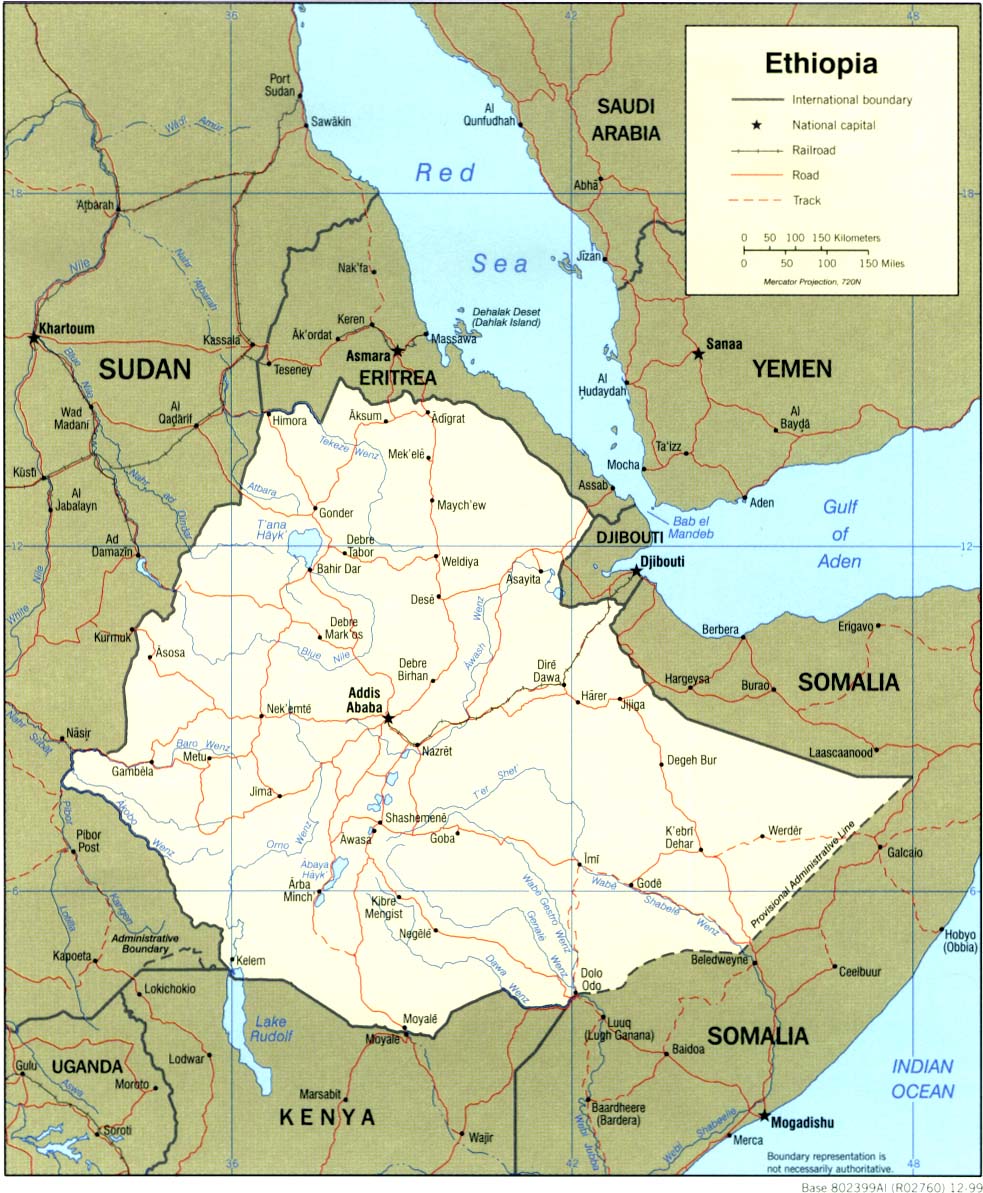
Ethiopia, 1978: One More Equal Than Others

From The Fate of Africa: A History of Fifty Years of Independence, by Martin Meredith (PublicAffairs, 2005), pp. 245-248:

In September 1976 the Ethiopian People’s Revolutionary Party (EPRP), drawing support from the labour unions, teachers and students, all vehemently opposed to military rule, embarked on a campaign of urban terrorism against the Derg and its civilian ally, the All-Ethiopian Socialist Movement, usually known by its Amharic acronym, Meison. An assassination attempt was made on Mengistu in the centre of Addis Ababa in September, the first of nine such attempts. Scores of officials and supporters of the Derg were murdered. The Derg in turn sent out its own murder squads…. By mid-1977 the EPRP was effectively destroyed. In the final phase of the red terror, to establish his own supremacy, Mengistu turned on his Meison allies, destroying them too. The young generation of intellectual activists, who had so avidly supported the revolution were all but wiped out.

Mengistu’s hold over other parts of Ethiopia was nevertheless precarious. By mid-1977 the Ethiopian army in Eritrea had lost most major towns and controlled little more than Asmara and the ports of Massawa and Assab. In July 1977 Somalia, deciding the time was ripe to take advantage of the Derg’s preoccupation with Eritrea and other revolts, launched a full-scale invasion of the Ogaden. By August the Somalis controlled most of the Ogaden. In September they captured Jijiga, an Ethiopian tank base, and pressed on towards the town of Harar and the rail and industrial centre of Dire Dawa, the third largest city in Ethiopia.

What rescued Mengistu from military defeat was massive intervention by Soviet and Cuban forces, determined to prop up his Marxist regime. In November 1977 the Soviets mounted a huge airlift and sealift, ferrying tanks, fighter aircraft, artillery, armoured personnel carriers and hundreds of military advisers to Ethiopia. A Cuban combat force numbering 17,000 joined them. Led by Cuban armour, the Ethiopians launched their counter-offensive in the Ogaden in February 1978, inflicting a crushing defeat on the Somalis. The full force of the Ethiopian army, supported by the Soviet Union, was then turned on Eritrea.

At the fourth anniversary celebrations marking the overthrow of Haile Selassie in 1978, Mengistu sat alone in a gilded armchair covered with red velvet on a platform in Revolution Square in Addis Ababa watching a procession of army units and civilian groups pass before him. Then he returned to his headquarters at the Grand Palace. Having succeeded in holding the old empire together, he liked to portray himself as following a tradition of strong Ethiopian rulers. Indeed, Mengistu came to be compared with the Emperor Tewodros, a nineteenth-century ruler who started his career as a minor local chieftain, fought his way up to take the Crown and then strove to reunite the empire after a period of disintegration. At official functions at the Grand Palace, while members of the Derg stood respectfully to one side, Mengistu chose to preside from the same ornate chair that Haile Selassie had once favoured.

One of his ministers, Dawit Wolde Giorgis, once a fervent supporter of the revolution, recalled his growing sense of disillusionment.

At the beginning of the Revolution all of us had utterly rejected anything having to do with the past. We would no longer drive cars, or wear suits; neckties were considered criminal. Anything that made you look well-off or bourgeois, anything that smacked of affluence or sophistication, was scorned as part of the old order. Then, around 1978, all that began to change. Gradually materialism became accepted, then required. Designer clothes from the best European tailors were the uniform of all senior government officials and members of the Military Council. We had the best of everything: the best homes, the best cars, the best whisky, champagne, food. It was a compete reversal of the ideals of the Revolution.

He recalled, too, how Mengistu changed once he had gained complete control.

He grew more abrasive and arrogant. The real Mengistu emerged: vengeful, cruel and authoritarian. His conduct was not limited by any moral considerations. He began to openly mock God and religion. There was a frightening aura about him. Many of us who used to talk to him with our hands in our pockets, as if he were one of us, found ourselves standing stiffly at attention, cautiously respectful in his presence. In addressing him we had always used the familiar form of ‘you’, ante; now we found ourselves switching to the more formal ‘you’, ersiwo. He moved into a bigger, more lavish office in the Palace of Menelik. He got new, highly trained bodyguards – men who watched you nervously, ready to shoot at any time. We now were frisked whenever we entered his office. He began to use the Emperor’s cars and had new ones imported from abroad – bigger, fancier cars with special security provisions. Wherever he went he was escorted by these cars packed with guards, with more riding alongside on motorcycles.

He concluded: ‘We were supposed to have a revolution of equality; now he had become the new Emperor.’

You get the same result every single time a revolutionary thug promises equality—and begins to deliver it with the help of other revolutionary thugs. Every French Revolution yields a new Robespierre—and then a new Napoleon.

1 Comment

Filed under Cuba, Eritrea, Ethiopia, labor, language, military, USSR, war

The Gulag Economy’s Peace Dividend

From The Whisperers: Private Lives in Stalin’s Russia, by Orlando Figes (Metropolitan, 2007), pp. 467-468:

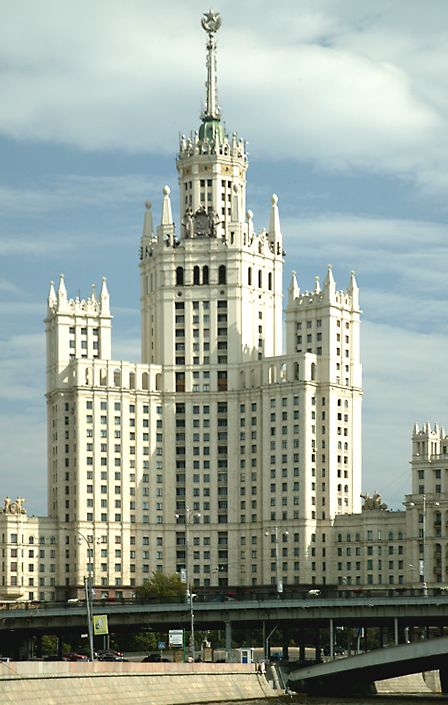
Forced labour played an increasingly important part in the post-war Soviet economy, according to a policy dictated by Stalin and his ‘kitchen cabinet’ of advisers. With the ending of the war the pool of unpaid labour available for exploitation by the state grew enormously. Apart from Gulag prisoners and labour army conscripts, there were 2 million German POWs, and about another million from other Axis nationalities, who were mostly used for timber-felling, mining and construction, although those with skills were employed occasionally in Soviet industry. In some factories German POWs were so integral to production that detention camps were built on the factory grounds and officials tried to block the prisoners’ repatriation to Germany. The Gulag population also grew, despite the release of many prisoners in the amnesty of 1945; the camps took in well over a million new prisoners between 1945 and 1950, largely as a result of the mass arrest of ‘nationalists’ (Ukrainians, Poles, Belorussians, Latvians, Lithuanians and Estonians) in territories captured or reoccupied by the Red Army but never really reconciled to Soviet power. The Gulag system expanded into a vast industrial empire, with 67 camp complexes, 10,000 individual camps and 1,700 colonies, employing a captive labour force of 2.4 million people by 1949 (compared with 1.7 million before the war). Overall, it is estimated that conscript labourers represented between 16 and 18 per cent of the Soviet industrial workforce between 1945 and 1948. They were especially important in the mining of precious metals in cold and remote regions where free labour was very expensive, if not impossible, to employ (hence their contribution to the Soviet economy was even more significant than the figures would suggest). Slave labour also made up the workforce in the big construction projects of the late 1940s which came to symbolize, officially at least, the post-war confidence and achievements of the Soviet system: the Volga–Don Canal; the Kuibyshev hydro-electric station; the Baikal-Amur and Arctic railways; the extensions to the Moscow Metro; and the Moscow University ensemble on the Lenin Hills, one of seven wedding-cake like structures (‘Stalin’s cathedrals’) in the ostentatious ‘Soviet Empire’ style which shot up around the capital in these years.

The post-war years saw a gradual merging between the Gulag and civilian economies. Every year about half a million Gulag labourers were contracted out to the civilian sector, mostly in construction, or wherever the civilian ministries complained of labour shortages; about the same number of free labourers, mostly specialists, were paid to work in Gulag industries. The Gulag system was increasingly compelled to resort to material incentives to motivate even its forced labourers. The population of the camps had become more unruly and difficult to control. With the amnesty of about a million prisoners in 1945, mainly criminals, who had their sentences either reduced or annulled, the camps were left with a high proportion of ‘politicals’ – not the intellectual types who filled the camps in the 1930s but strong young men who had fought as soldiers in the war, foreign POWs, Ukrainian and Baltic ‘nationalists’ – who were hostile to the Soviet regime and not afraid of violence. Without a system of rewards, these prisoners simply refused to meet the set targets. The cost of guarding the prisoners was also becoming astronomical. By 1953, the MVD was employing a quarter of a million guards within its camps, spending twice as much on the upkeep of the Gulag than it received in revenue from its output. Several senior MVD officials were seriously questioning the effectiveness of using forced labour at all. There were even mooted plans, supported by Beria and Malenkov, to dismantle sections of the Gulag and convert the prisoners into partially civilian workers, but since Stalin was a firm supporter of the Gulag system, none of these ideas was seriously proposed.

Leave a comment

Filed under economics, labor, nationalism, Russia, USSR, war