Category Archives: Russia

Some Backgrounders on Ukraine

Ukraine-based Le Sabot Post-Moderne explains how the system works there:

You have to understand the situation in Ukraine. The country is run by a series of oligarchic clans that actually found their beginnings in the Soviet Union, and then grew fabulously rich during the early days of “privatization”.

Compare the situation to Russia, where an authoritarian Putin faced off against corrupt oligarchs. In Ukraine, authoritarianism and oligarchy are fused. Yanukovych isn’t just another unscrupulous candidate, he’s the main man of Akhmetov — the duke of Donetsk and the richest man in Ukraine. The current president, Kuchma, is the head of a different clan, Dnepropetrovsk. The presidential administrator is Medvedchuk, who happens to run the Kiev-based Medvedchuk-Surkis clan. He also owns the two biggest Ukrainian TV stations, which is awfully convenient.

While there is jockeying for control among these clans, the overall effect is for them to sustain one another in power. They all depend on the same system for survival, and actively collaborate to keep it in place.

A good example of the clan system in action was the recent privatization of the Kryvorizhstal factory. Western firms offered 2.1 billion dollars. It was sold to the presidents son-in-law for 800 million. His son-in-law is Pinchuk, the head of the Pinchuk-Derkach clan.

Do you start to see how life works here? This isn’t about a few stolen votes. It’s about an entire system of fine control over the political, social and economic life of the people. Economics and politics are incestuously fused here in a way that is difficult to imagine for those in the West.

Ukraine-based TulipGirl quotes an essay by Ukrainian novelist Oksana Zabuzhko in Monday’s print edition of the Wall Street Journal.

Never before — even 13 years ago, on the eve of the collapse of the Soviet Union — has Ukraine witnessed such a massive upsurge of national solidarity. People who’ve always remained politically indifferent and had missed voting in all previous elections, were disseminating self-printed leaflets from the Internet (samizdat is back — any piece of information was voraciously devoured on the spot!) in public places, and volunteering to monitor the elections on behalf of opposition candidate Viktor Yushchenko. At a peasant food market a merchant first asked who you’re voting for — the right answer (with which you could count on a generous discount) was “Yushchenko,” while incumbent Prime Minister’s Viktor Yanukovych’s supporters were more than likely simply refused service. In the playgrounds children were playing a game called “Yushchenko beats Yanukovych.” To quote my seven-year-old neighbor, “in our class Irka alone stands for Yanukovych, and no one wants to play with her.” The slogan chanted by protesting students at demonstrations reads in English as “We’re together! We’re many! We won’t fall!” And just how may of “us” there are, one can easily see in the streets. These days Kiev, as well as other major Ukrainian cities, is defiantly demonstrating its political sympathies by wearing orange, the campaign color of opposition candidate Yushchenko.

A special term has come into use — “The Orange Revolution.” It looks like people have dragged all shades of orange, from yellow to vermilion, out of their wardrobes and adorned themselves with them simultaneously — vests and sweaters, scarves and purses, coats and umbrellas. Orange ribbons flutter everywhere — on trees, fences, lanterns, and cabs. Drivers joyfully beep to each other, and pedestrians (traffic police included!) salute them with smiles and raised fists. It feels like the capital of three million has been transformed into a sea of brotherly love! The windows of shops are lavishly decorated with things orange. Among my favorites is the stunt of my neighborhood coffee shop — its windows glow with pyramids of oranges! …

Here I have to clarify one important point. A widespread cliche used by many Western journalists to describe the major collision of our dramatic elections is that the establishment candidate, Viktor Yanukovych, is “pro-Russian,” and that opposition candidate, Viktor Yushchenko, is “pro-Western.” This version has as little to do with the feelings of an average Ukrainian voter as with those of the belligerents of the Trojan war. Mr. Yanukovych is perceived not so much as being “pro-Russian,” but as, first and foremost, being “pro-criminal” — a Ukrainian Al Capone, who has under his belt two prison sentences for robbery and assault, and publicly uses criminal argot compared to which even the boorish tongue of retiring President Leonid Kuchma sounds as innocuous as a school textbook. A former governor of Donetsk, Mr. Yanukovych in power represents the so-called “Donetsk fellas” — a business clan with a notorious criminal background. That the latter have close ties with similar mafia clans in Russia seems to be the most immediate explanation for the pre-election outburst of a passionate love between Russian and Ukrainian leaders, an affair of which Yanukovych-as-president had been designed as a mutually satisfying offspring.

Chicago-based international relations professor Dan Drezner is more pessimistic:

A few years ago there were sizeable protests in Kiev because of “Kuchmagate,” in which tapes came to light suggesting that President Leonid Kuchma played a role in the disappearance of Ukrainian journalist Georgy Gongadze in September 2000. There was tangible evidence that Kuchma personally ordered Gongadze — who was investigating corruption in Kuchma’s administration — to disappear. Despite months of protests, however, Kuchma stayed in office (click here for an exhaustive World Bank study [PDF] on this case).

Not to put a damper on what’s going on right now in Ukraine, but that example should be kept in mind when speculating whether the protests at the rigged election results in Ukraine will actually cause a change in government a la the Rose Revolution in Georgia [Quickly: opposition leader/reformer/nationalist Viktor Yushchenko led by double digits in Western-run exit polls over Kuchma stalwart/Russophile Viktor Yanukovich. However, the preliminary election results had Yanukovich winning by three percentage points. Outside observers are pretty much unanimous in their belief that there was massive vote fraud].

The two most salient facts in assessing what will happen are that:

a) Leonid Kuchma wants Yanukovich to win;

b) Vladimir Putin really wants Yanukovich to win.

I would love to be wrong about this, but it doesn’t look good for Yushchenko.

Canada-based Randy McDonald weighs in on Ukraine’s Underestimated Strength.

I’m skeptical, in short, that Ukraine is at real risk of splitting apart along ethnolinguistic-cum-political lines. And yet, I can’t help but remember Andrew Wilson’s The Ukrainians: Unexpected Nation, which suggested that the most likely and the most stable course for Ukraine would be a broadly centrist position, relying on slow Ukrainianization and a Ukrainian balancing act between the European Union and Russia. Going to one extreme (a strongly Ukrainianizing regime intent on immediate European integration) or another (a strongly Russophile regime intent on Eurasian integration) could, Wilson suggested, disturb the equilibrium. Mass secessions wouldn’t be the result so much as growing alienation, the formation of more coherent ethnic groups with stricter frontiers. This would be a problem for Ukraine, needless to say.

Leave a comment

Filed under economics, Russia, Ukraine

Appreciating Solzhenitsyn

I grew up reading more works by Aleksandr Solzhenitzyn than by any other Russian author: One Day in the Life of Ivan Denisovich, Cancer Ward, The First Circle, The Gulag Archipelago, August 1914. In fact, I’ve probably read as many pages of Solzhenitsyn (in English translation) as I have any of my other high page-count favorites: Barbara W. Tuchman, V. S. Naipaul, Robert D. Kaplan, and Tom Wolfe.

So I was pleased to come across a recent retrospective in First Things: The Journal of Religion, Culture, and Public Life entitled “Traducing Solzhenitsyn” by Daniel J. Mahoney, from which I’d like to quote a few excerpts.

Aleksandr Solzhenitsyn is one of the great souls of the age. He is also among its most maligned and misunderstood figures. It is hard to think of another prominent writer whose thought and character have been subjected to as many willful distortions and vilifications over the past thirty years….

Some of his critics soon reasoned that if Solzhenitsyn was not a conventional liberal, then he must be an enemy of liberty. The legend grew that he was, at best, a “Slavophile” and a romantic critic of decadent Western political institutions, and that he was, at worst, an authoritarian and even, perhaps, an anti-Semite and a theocrat….

Serious, informed, and measured engagement with Solzhenitsyn’s writing is all too rare in America. Some of Solzhenitsyn’s critics are content to sneer at him without bothering to produce quotations that would support their characterizations of his thought….

Solzhenitsyn has meditated on this problem of conjugating Russia and the West, liberty and the moral contents of life, with great penetration and finesse in the various volumes of The Red Wheel. These books include profound reflections on the character of political moderation and the requirements of a statesmanship that would unite Christian attentiveness to the spiritual dignity of man with an appreciation of the need to respect the unceasing evolution of society. Solzhenitsyn takes aim at reactionaries who ignore the inexorability of human “progress,” at revolutionaries who take nihilistic delight in destroying the existing order, and at “false liberals” who refuse to explore prudently the necessarily difficult relations between order and liberty, progress and tradition.

In nearly all of his major writings, Solzhenitsyn appeals to the indispensability of the spiritual qualities of “repentance” and “self-limitation” for a truly balanced individual and collective life. But he never turns the classical or Christian virtues into an antimodern ideology that would escape the reality of living with the tensions inherent in a dynamic, modern society. He is not, however, unduly sanguine about the prospects for these virtues in the contemporary scene. As he writes in November 1916, “In the life of nations, even more than in private life, the rule is that concessions and self-limitation are ridiculed as naïve and stupid.” Solzhenitsyn thus has no illusions about repentance and self-limitation becoming the explicit and unchallenged foundation of free political life. His more modest hope is to claim a hearing for the Good amidst the cacophony of claims that vie for public notice. Neither genuflecting before progress nor irresponsibly rejecting it, Solzhenitsyn insists that we must “seek and expand ways of directing its might towards the perpetration of good.” Solzhenitsyn’s moral vision has too often been politicized in ways that mistake his rejection of progressivist illusions for a reactionary refusal to admit the possibility of progress.

Solzhenitsyn is, in truth, a conservative liberal who wants to temper the one-sided modern preoccupation with individual freedom with a salutary reminder of the moral ends that ought to inform responsible human choice. Like the best classical and Christian thinkers of the past, he believes that human beings should not “neglect their spiritual essence” or “show an exaggerated concern for man’s material needs.” Thus, while he displays a rich appreciation of the limits of politics, he also recognizes that “a Christian must … actively endeavor to improve the holders of power and the state system.” And when Solzhenitsyn addresses specifically political questions he does so as a principled advocate of political moderation. His portrait in August 1914 of Prime Minister Pyotr Stolypin’s efforts to establish a constitutional order that would be consistent with Russia’s spiritual traditions and that would keep Russia from falling into the revolutionary abyss contains some of the wisest pages ever written about statesmanship.

The shamefully one-sided journalistic and critical reception too often accorded to Solzhenitsyn’s work thus serves as an unintended confirmation of the difficulty of pursuing what he has called the “middle line” in the service of human liberty and human dignity. Solzhenitsyn has used his literary gifts and moral witness to teach us, as he says in The Gulag Archipelago, “that the line separating good and evil passes not through states, nor between classes, nor between political parties either—but through all human hearts.” Today, though he is eighty-five years old and has had some physical setbacks, he remains committed to his writing. Moreover, his stature and moral authority remain high where it most counts: in his native Russia. In response to the recent awarding of the Solzhenitsyn Prize to the actor and the director of the television series that brought Dostoevski’s The Idiot to the screen, the popular writer Darya Dontsova commented that “the great Solzhenitsyn is in reality a very modern man, and young of heart.” Most importantly, amidst the corruption and moral drift of the post-Communist transition, he has never ceased to remind his compatriots that they “must build a moral Russia or none at all.” He remains an intrepid defender of a freedom that is worthy of man and has thus maintained faith with the best in both Russian and Western traditions. He merits our continuing gratitude, respect, and admiration.

via Arts & Letters Daily

Leave a comment

Filed under Russia, USSR

Swimmer Ikarashi Goes for the Cold!

While all those fair-weather swimmers were going for their medals in Greece, a tough Japanese school teacher swam across Lake Baikal, where the water temperature is 9-11° C (48-52° F). Interfax reports:

IRKUTSK. Aug 13 (Interfax-Siberia) – Ikarashi Ken, 52, a Japanese school teacher, successfully swam across Lake Baikal from Cape Sredny to a bay near the community of Buguldeika on the lake’s western coast in 15 hours on Thursday….

Ikarashi Ken has set several records by swimming across Pas de Calais, the 28-kilometer wide Tatar Strait, the 40-kilometer strait between Hokkaido and Sakhalin, Lake Biwa-ko in Japan, and also the straight between Korea and Japan.

via SiberianLight, who’s back to blogging again after a hiatus.

Leave a comment

Filed under Japan, Russia

Orthodox Old Believer Occidentalism

Ian Buruma and Avishai Margalit’s new book on Occidentalism stretches the label to cover an awfully wide range of phenomena. (One could no doubt make a similar claim about the range of phenomena to which the label “Orientalism” has been applied since the appearance of Edward Said’s book by that name in 1978.)

In the words of reviewer Daniel Moran in Strategic Insights (May 2004):

The real subject of the authors’ reflections is not the West as a historical reality but modernity as a complex of ideas, attitudes, and practices. For them the “West” is any place where modernity–here broadly synonymous with limited, responsible government and a respect for individual rights and scientific rationality–has prevailed. Occidentalists are those, wherever situated, who have found the modern to be intolerably corrosive of traditional values: decadent, rootless, alienated, materialist, morally soft, and spiritually bereft. Such people arose first in the West, because it was there that the challenges of modernity were first experienced.

The following passage from Occidentalism illustrates how Buruma and Margalit seek to lump Russian Orthodox “Old Believers” into the Occidentalist camp.

The standard theological bone of contention in the Greek Orthodox Church was the nature of the Godhead. Theology was taken very seriously in Roman Catholicism as well. Its various schisms came from theological debates about the nature of man. To be sure, there is always something else involved in a split besides the declared religious issues, but it is a serious mistake to deny that there are true believers, and moreover believers who are willing to fight and die for their beliefs.

The Russian church, however, was not just relatively indifferent to theology; it actively resisted the idea of turning religion into a form of geometry. Religion, it maintained, was a spiritual enterprise, not an intellectual one. Devotion to icons should count more than a clever gloss of chapter and verse. There was, in fact, a major schism in the Russian church, but this did not come from any intellectual rift. In 1652, Nikon, the patriarch of Moscow, tried to reform the Russian church to bring it more in line with the Eastern Greek church. The reforms affected old customs: three hallelujahs instead of two, five consecrated loaves instead of seven, the procession against the sun rather than in the direction of the sun, and even a change of spelling of Jesus’ name. These examples show that the schism was not about creed, even though those who opposed the reforms are described as the Old Believers. It was about ritual customs. The Old Believers threw stones at an official church procession in the Kremlin for walking in the wrong direction, but not because the church was going astray in matters of dogma. Creed is associated with the Western church, but custom belongs to the East.

At least two elements of Russian religious culture anticipated Occidentalism. The stress on intellectual matters in the Catholic church was a sure sign, to Russian believers, that it was lacking in simple and pure-hearted faith. The other element, which was at the root of the schism in the Russian Orthodox Church, was a deep suspicion of any innovation. Novelty, to these believers, was always something that came from the outside. It was deemed to be inauthentic and humiliating, suggesting that there was something essentially lacking in the old ways. This religious sensibility cuts very deep. It views the church not as a source of new knowledge, but as the depository of collective memory, the memory of Rus as a holy community. Memory and simple faith are the main virtues of the human mind, not reason and the newfangled sophistry it produces. Mysticism, expressing a higher mode of existence, was valued much more than the exertions of a methodical mind.

The Old Believers sensed that behind Nikon’s reforms lay a host of Greek priests who had arrived from Kiev with the old strategy of domination by complication–that is, complicating beyond recognition the religious life of the true believers and thus taking charge of telling them what to do. Simple religious life was, to the Old Believers, something quintessentially Russian, whereas Nikon’s new manual of worship was foreign, artificial, and inauthentic.

SOURCE: Occidentalism: The West in the Eyes of Its Enemies, by Ian Buruma and Avishai Margalit (Penguin Press, 2004), pp. 84-85

I wonder where Buruma and Margalit’s approach in Occidentalism intersects with that of Virginia Postrel’s The Future and Its Enemies: The Growing Conflict Over Creativity, Enterprise, and Progress, which I haven’t yet read. The title is certainly catchy.

Leave a comment

Filed under religion, Russia

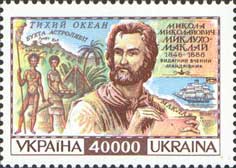
Early Russian Ethnographer in New Guinea

AnthroBase contains the following profile of an ethnographer who beat Malinowski to New Guinea by several decades.

Miklukho-Maklai, Nikolai Nikolaevich (1846-1888)

Russian anthropologist and explorer, acknowledged as the father of Russian ethnography. In 1871-72, Miklukho-Maklai did 15 months of continuous fieldwork on the Northern coast of New Guinea [in present-day Madang Province], where he pioneered methods that would only gain wide acceptance 40-50 years later, after Malinowski’s fieldwork. Throughout his life, Miklukho-Maklai identified strongly with the people he studied, and he several times spoke out in their defence against colonialist powers. He laid the groundwork of the rich tradition of 19th century Russian ethnography, which continued well into Soviet times–until it was destroyed in Stalin’s purges in the 1930s-50s.

Leave a comment

Filed under Papua New Guinea, Russia, scholarship

The Empire That Was Russia: The Prokudin-Gorskii Photographs

Nathan Hamm‘s recent “-Stans Summary” on Winds of Change included a link to an exquisite Library of Congress Exhibition entitled The Empire That Was Russia: The Prokudin-Gorskii Photographic Record Recreated. It includes a biography of Gorskii and a record of the diversity of architecture, ethnicities, transportation, and occupations found throughout the Empire, as well as a section on the techniques of digichromatography that enriched the exhibit.

Leave a comment

Filed under Russia

A Language Freak Wandering in Siberia

If you feel the need to follow an ever farther outlier, check out this blog by pf, a language freak wandering through Siberia on his own.

Oddly, Russia is the only country I’ve been in where you can’t find manaiacal Australian tourists scurrying out wherever you step. In Europe, you can’t find a town so small but it’s got an Australian (or, if you’ll pardon the expression, a New Zealander) in it, or having just left it, or on the way to it. Here, though, I haven’t met a single antipodean, curiously. Though a couple Indian billionaires in April stayed in the hotel I stayed at in Suntar. I was called upon to verify their English, which I pronounced to be competent, but clearly not that of a native speaker. All marvelled at my deductive powers, for indeed, the Indians had been born in India, and not, as appearances might lead to believe, in any other country.

Americans do occur up here, though. There’s one, I don’t know if I mentioned him, who lived on Kamchatka for a year in high school, and now is studying Japanese (Japanese!) at Yakut State U. (Yakut State!) for a year. There was another who came to a village near Suntar, I wasn’t clear on which, and stayed for two years, or maybe three, hung around the local museum a lot, and then went home, where she turned into a doctor of anthropology. Everybody still remembers her, and, shaking their heads, say, “We’ve lived with this museum all our lives, and she comes here, looks at it for a couple years, writes some stuff down, and gets a doctorate!” She married a local, and took him home with her, where he now makes Sakha (Yakut) jewelry in North Carolina. I’m sure you can track him down, there’s probably not many Sakha (Yakut) jewellers in North Carolina. He’s got his own wall, with pictures of him, and a special cabinet for pictures of his brothers, local jewellers, and a picture of his father, touchingly hung next to a photocopy of his death certificate.

Hat tip: languagehat

Leave a comment

Filed under language, Russia, travel

Germans from Russia

Mrs. Far Outlier is descended from a long line of Germans who first emigrated from the Black Forest in Wuerttemberg near the Rhine River to the wide steppes of Bessarabia just east of the Dniester River in South Russia (now Ukraine) during the early 1800s. They were encouraged to do so by Czar Alexander I, who exempted them from military conscription and other duties. When Czar Alexander II revoked their special status in 1876, they began emigrating to the prairies of Dakota Territory.

Update: The Argus has more.

Leave a comment

Filed under Germany, Russia