Category Archives: Papua New Guinea

Morobe Field Diary, May 1976: Sociolinguistic Notes, Kui Church Meeting

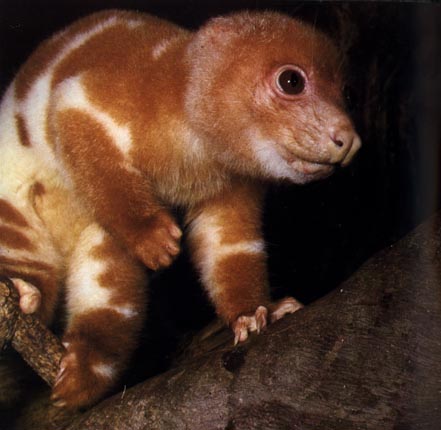
The meeting started out mostly in Tok Pisin and was conducted in parliamentary procedure of a most genuine and impressive kind. No holds barred discussions took place, which the two secretaries (called cuscus after a local animal [phalanger, opossum]) duly recorded in Tok Pisin. But as the meeting wore on, Yabem became more prominent perhaps because the older people are more comfortable in it and they did most of the talking. My presence did not seem to hinder the discussions in the least. Younger men would listen to Yabem and reply in Tok Pisin. The Sunday service was conducted similarly: Hymns & prayers in Yabem were followed by a sermon and scripture reading from the Nupela Testamen. There followed an ordination ceremony in Yabem. Ceremony tends to be Yabem because a prayer book or whatever it’s called has been translated into Yabem. Still, Tok Pisin seems to be slowly taking over from Yabem.

An Australian Lutheran missionary came on the afternoon of the Saturday meeting and I got to see the small singsing cooked up for him. The ship was met at the dock and after unloading the passengers headed off for the meeting ground. They were soon accosted by a guy with a padded out stomach and a construction helmet who looked as severe as possible and asked where they thot they were going. They gave some reply and he turned to the coconut frond fence they had erected for the occasion and called out his troops: about half a dozen men and an equal number of women adorned variously with grass skirts, body paint (ochre legs, black & white-face) and some towels the women carried as they danced. The men blew conch shells and beat a drum while they chanted and made threatening motions–one with a tomahawk–and threw coconut frond ribs at the visitors & crowd.

I tagged along with the spectators, who explained to me the setup beforehand and told of cases where some kids had been scared by the display into crying. They, however, were well aware it was all by way of giaman (roughly ‘deception’) and were as touristy as I was about it all.

The dancers were singing a Siboma singsing which the Sibomas asserted they had done rather poorly. People are familiar with singsings from a variety of places and like the local string band numbers as well as Western music and singsing music. Unlike Micronesia, which seems to lean toward Western stuff as far as I can tell. Well, maybe Yap just didn’t have a lot of intermediary music olsem stringband stuff here.

The boat carrying the missionary and 2 dozen others came into the dock head on and nearly knocked down the newly repaired thing altogether. It is an old leaky boat unlike the sound, sturdy little [M.V.] Sago which the Sibomas commissioned and had built recently.

It wasn’t till after the service Sunday that I talked with the missionary tho I saw him off and on from a distance. In Micronesia whites living in the village tend to be mistaken for Piskor; here they are taken to be SIL Bible translators. Both perform a similar function in fostering democratization and racial equality. [Several people mentioned that the missionaries, unlike the Australian administrators, would eat from the same food.] Melanesians are rather capitalist & democratic but racial equality needs considerable more work.

The ‘informant’ situation couldn’t be better. The kaunsil puts me to work. People never leave me alone when I’m working; they all come around eager to help and I’ve so far spent too much time getting & putting on paper & not enough assimilating and organizing. I’ve really got to work out a felicitous medium ground arrangement without alienating people. For only a week & a day here I feel like I’ve made phenomenal progress. The trip to Kui allowed me to stop assimilating onto paper and start communicating in it more.

Today I did my big book of seashells, with interesting results. Dictionary work is more fun than grammatical when your informants are not top grade. Together they make a good combination. And being put to work rounds things out nicely. Being able to relax by myself is all I need more of. And I think I’m slowly working that out.

The kaunsil & family are really top grade teachers (he was a schoolteacher for a while–a long while–and has ‘bossed’ (taken care of, taken responsibility for) a number of whites). [His lead dog was raised by whites and knew how to sekan (‘shake hands’)–and to eat ship biscuits.]

Leave a comment

Filed under Papua New Guinea

Morobe Field Diary, May 1976 Trip to Kui

The [M.V.] Sago pulled 4 canoes to Kui, 2-1/2 coves away toward Lae just inland from Lasanga Island. The ride took about an hour and cost the kaunsil, his wife & canoe & me 70 toea [100 toea = 1 kina]. The occasion was a meeting of the Malalo Paris of the Lutheran church here.

The first time I saw Kui was in the middle of the nite and I could only see a few houses, a broken down wharf and a lamp or two. This time it looked quite splendid indeed. It stretches along a cove twice as wide as Siboma’s and deep-watery and waitsan-dy [Tok Pisin waitsan ‘sand’] with a large school ground in the middle. There are really three subvillages: the main one Kela who came to Kui to go to church from Buso. Apparently Siboma had the only church but it was a bit of a long way so they split the difference and started a settlement and later a school at Kui. The school is Standard 1-6 and serves Paiawa, Siboma & Buso and of course Kui. The kaunsil has 2 sons and 2 daughters there.

The trip back was exactly what I hoped for and dreaded. We paddled, the kaunsil, his wife & me. When we set out at 8:00 (so the school kids could help us pull the canoe down to the water) I envisioned an all day affair with possibly a siesta midway and a hot sun (aye, that it was). And I only had my lotion, not my sunscreen. But my hat protected my face, a towel covered my knees and my feet were in the canoe so only my arms got really cooked. Oh, it felt good tho to paddle like a machine. I conked out when I got back but am none the worse for wear and am on my way toward getting some useful callouses on my hands. They had to force me to rest sometimes but we did the trip in 2 hours with two rest periods when I wasn’t pulling so my arms are cooked but not blistered.

The water was clear down deep and the coral formations beat the Honolulu Glass Bottom Boat ride. Very small bright blue fish abound here, lots of others come and go. We wrestled with a [large] clam a bit on the way but let it go. The kaunsil had his shotgun ready but the birds seemed to be on to him, so no bird meat.

Leave a comment

Filed under Papua New Guinea

Morobe Field Diary, April 1976

The boat ride to Siboma [in Morobe Province, Papua New Guinea] took 10 hours [from Lae]. Darkness came about Salamaua. Shortly after leaving we could see Lasanga Island that lies off Siboma a ways. There was a half moon and all nite the coast was visible. During the day villages were marked by smoke, at nite by lites. The lite of a single lamp can be seen a long way off. And on the boat you could barely hear the person next to you for the sound of the [Yanmar two-cylinder diesel] engine. When the engine stopped everything sounded a bit faraway well into the next morning.

We got in in the middle of the nite and not a lite was shining. I left most of my stuff aboard and went straight off to the kaunsil’s house to sleep. He has a couple of rooms facing the sea. He took off to go hunting for pig soon after we got in so I stayed around the next day so I would be here when he got back.

About the time I got up the boat was leaving for the fishing grounds pulling about a dozen outrigger canoes all lined up behind. It puttputted out and got back about dark pulling the canoes back in. Mostly women and children were left behind along with some old men who kindly taught me stuff.

Siboma lies in a cove with mountains surrounding it. There is a narrow stretch of sand with about 3 dozen houses strung out along [it]. The timber company that bought their timber cleared land for a new village on the other side of the cove but only one incomplete house is there now.

There is a pleasant little stream, nice and chilly, to wash in a little ways out of the village. The women’s W.C. stands near my end of the village and the men’s all the way (100 yds?) at the other end.

Plenty of dogs and chickens abound but no cats and, strangest of all, no pigs. The past kaunsil said to get rid of the ones in the village for sanitary reasons. Though they may keep some down the coast a bit they mostly have to get them in town or hunt for wailpik like the kaunsil does with his shotgun the size of Dan’l Boone’s long rifle.

There really are no mosquitoes, it’s amazing; and the compensating sandflies don’t bother me as much as they seemed to bother [the fieldworker who arranged my stay].

Yesterday, my second full day in the village I had a mild case of diarrhea that affected my appetite and worried my hosts a bit. But this morning I made up for it some by polishing off a whole fish and a huge plate of rice.

There is one crazy (‘longlong’) man here who wanders around covered by a blanket and one mute I share a room with. Neither does anything all day but each is apparently provided for. Some of the women are from other places but they have learned [the village language].

Today the kaunsil called everyone together and apportioned the work: who’s to fish, who’s to cut sago, who’s to split it, who’s to wash it, etc. The sun has withered many of the gardens so people are turning to sago, which is hard work, for their starch. It’s good I came equipped with 25 kilos of rice. There are no gardens near the village [not entirely true, as I later found], only some stands of sago and coconut. The women all have to take outriggers to work in their gardens [on the hillsides above the cove].

None of the smaller outriggers are equipped with sails but they are a joy to paddle. There are about three big canoes with masts and a couple more in the making. [In July, I counted 28 canoes in Siboma’s cove.]

Leave a comment

Filed under Papua New Guinea

The German Pacific "Gutpela Taim Bipo"

Germany acquired its colonial empire in the Pacific beginning in the 1880s and lost it abruptly in 1914. Conventional wisdom usually assumes that one colonial administration was as bad as another and that colonial transitions usually made little difference to the indigenous population. However, the new military administrators who took over from the Germans in Micronesia, Samoa, and New Guinea ran so roughshod over their new territories that the inhabitants of all three regions soon began to look back on German times as the good old days–at least according to a meticulously researched revisionist history of that transition entitled The Neglected War: The German South Pacific and the Influence of World War I, by Hermann Joseph Hiery (U. Hawai‘i Press, 1995).

While Germany’s African colonies were governed by aristocrats, often with the aid of sizable contingents of Schutztruppe (colonial troops), the farflung Pacific colonies were governed by administrators drawn from the middle class, with the aid of tiny police forces.

In New Guinea they replaced the “Perpetuum Bellum Melanesicum” with a Pax Germanica, which attracted more and more unpacified Melanesians. But they also generally let Melanesian villagers settle their own disputes in traditional ways, often by compensation for damages rather than by the trial and conviction of offenders before German courts. This was in marked contrast to the later Australian administration, under whom flogging, the pillory (“Field Punishment No. 1”), and public executions became not only far more common, but far more arbitrarily applied. The Australians also began to dispossess indigenous plantation owners and to impose new restrictions on native dress and education. (For instance, New Guineans were prohibited from speaking proper English and from wearing nonnative garments on the upper half of their bodies.)

In Micronesia, the laissez-faire attitude of the German administration gave way to the much more hands-on approach of the Japanese, who modernized the island economies with unprecedented force and speed. By 1921, the value of exports from Micronesia had already exceeded the value of imports. (And by 1940, the population of Micronesia was over 50% of foreign origin.) The islanders were forced to assimilate to Japanese norms in every respect.

Perhaps the most incompetent new administrator, however, was Col. Robert Logan, New Zealand’s military governor of German Samoa. Whereas Wilhelmine Germany and oligarchical Samoa had shared basic values about social hierarchies and ritual forms of behavior, “the Samoans perceived the ‘democratically’ undifferentiated behavior of New Zealanders as an insult and expression of open disregard for Samoan mores” (p. 250). During the war years, New Zealand bled dry the Samoan treasury, and the fiercely anti-Chinese and anti-American Logan also issued discriminatory edicts against their representatives in Samoa. Worst of all, Logan allowed an influenza-infected ship from New Zealand, the Talune, to dock in 1918, then stubbornly refused either to implement strict quarantines, as the American administrator had done in eastern Samoa, or to accept American medical aid. “Rarely would anti-American prejudice have more disastrous consequences than in Samoa under New Zealand occupation” (p. 174). As a result, about 20% of the population of western Samoa died, while eastern (American) Samoa escaped virtually unscathed. (New Zealand Prime Minister Helen Clark issued an apology to Samoa in 2002.)

Among the many other gems Hiery’s archival research unearths is a dispirited quote from Woodrow Wilson recorded in the minutes of a meeting at Versailles on 28 January 1919: “the question of deciding the disposal of the German colonies was not vital to the world in any respect.” He seems to have anticipated by exactly half a century Henry Kissinger’s alleged comment about Micronesia in 1969: “There are only 90,000 people out there. Who gives a damn?”

1 Comment

Filed under Germany, Japan, Micronesia, New Zealand, Papua New Guinea, Polynesia

John Howard Named Pacific Man of the Year

Pacific Islands Monthly has named Australian PM John Howard its Pacific Man of the Year for 2003. Why? Primarily for taking the lead in trying to solve the crisis in the Solomon Islands.

In the Pacific Islands, Australia and New Zealand are entrenched in the region by a dint of history, geography, trade and considerations of political and military strategies, capped by full membership of the Pacific Islands Forum of independent states. Save for the last, all those factors apply to Australia’s relationship with Asia. Whereas Asia could dispense with Australia, how many of the Pacific Islands Forum member states, although they do not like such dependence, could enjoy the reasonable degree of sovereignty they have without Australian and New Zealand support?

Australia, to our minds, is part of the South Pacific (except perhaps the bits fronting the Indian Ocean) and that is why Howard is presented appropriately as the Pacific’s Man of the Year.

There will be some who will be taken aback and irritated by this year’s nomination. Even Howard may be taken aback.

Some Pacific Islands leaders view Australia’s dominant role in the region with suspicion and resentment, just as in other regions the United States presence is so viewed.

Whatever the motives, who can seriously rebut the notion that Australia’s intervention in the Solomon Islands in July, requested by that sad but now happily reviving country, was a pivotal event in the region’s history? We hope that it is not an event that will ever need to be replicated in any Forum country, but that possibility cannot be ruled out.

In Honiara [the capital on Guadalcanal], Howard was received with relief by people on the streets as a liberator from the shameful misrule of their own leaders and their hooligan accomplices. That, tellingly, is food for thought for critics of Australia’s policy. The Bali bombing in which so many Australians died would have partly motivated the capture of Howard’s attention by the Solomon Islands failure. Of course, Australia has its own national interests to pursue in the region, not all of them benevolent, but now having captured Howard’s attention, the islands would be foolish to let it slip. They have too much to lose.

On the eve of the intervention, The Rt. Rev’d Terry Brown, Bishop of Malaita, Church of Melanesia (Anglican) outlined ten ways that Australia and New Zealand could help rebuild shattered institutions in the troubled Solomon Islands. The BBC has more on Australia’s “new taste for intervention.” The intervention “coalition of the willing” (which also includes Papua New Guinea, Tonga and Fiji) has already begun talking about scaling back its military force. The Sydney Morning Herald covered the initial launch of Operation Helpem Fren and the first disarmament efforts.

Leave a comment

Filed under Papua New Guinea

Farflung Christmas Memories

1971 – I was only weeks away from my Army ETS date at Ft. Gordon, GA. My brother had just finished his first semester at Berea College, KY. The rest of the family was across the Pacific, so I took the Greyhound bus up to Berea so we could have our own minireunion. The transfer terminal at Corbin, KY, still sold the old small bottles of Coke for 5 cents. The few Berea students who hadn’t been able to go home for the holidays were consolidated into one dorm to save on heating. Most seemed to be Asian students living on ramen noodles, but I was determined to take my brother to the nicest (well, the only nice) place in town, Boone Tavern Hotel, where he worked as a bellhop, using up far more Brasso in one day on the old elevator cage doors than I used up in my entire 996 days in the Army. Berea College, which U.S. News ranked #1 in the South for 2004, charges no tuition but requires 100% of its students to work for the college and its assorted enterprises (for rather meager wages, it’s true). Unfortunately for us that Christmas Day, Boone Tavern required not only a coat-and-tie, but advance reservations. Nowhere else within walking distance was open, so our elegant Christmas dinner turned out to be individual-sized frozen pizzas from 7-Eleven.

1976 – I was nearing the end of my language fieldwork in a tiny village on the north coast of New Guinea between Salamaua and Morobe Patrol Post. There was a special Christmas service. Most of the village kids were home from their boarding schools. (The village was too small to have its own school.) A young pastor from the village had returned. Most of the church services–and all of the hymns–were in Jabêm, the church language of the German Lutheran mission from Neuendettelsau in Bavaria, but this pastor was determined to reach the younger audience by translating the sermon into Tok Pisin, the English-based pidgin that is the de facto national language of Papua New Guinea. Like so many Christmas services, this one had a children’s pageant. But, unlike most, this one featured swineherds guarding their swine by night rather than shepherds guarding their sheep. When the kids who played the swine began snorting and squealing like real pigs, the village hunting dogs went berserk.

1983 – After a rather grim autumn in Bucharest, Romania, Mrs. Far Outlier and I bought roundtrip train tickets to Budapest and Vienna for Christmas. Unfortunately, the CFR (Cai Ferate Romaniei [= Chemin de fer de la Roumanie]) foreign exchange cashier had sold us only one ticket for the two berths in our sleeping compartment. When the car attendant discovered this, he was very distressed until I paid him in Romanian lei for the second berth and threw in a complimentary pack of Kent cigarettes, the universal foreign exchange medium bribe in Romania (the universal cue being Avets Kents ‘Do you have Kents?’). At the first stop, in Ploiesti, a passenger got on, schlepped his luggage down the hallway, looked into our compartment, saw two people occupying it, and uttered, in English, “Oh, shit.” The car attendant no doubt earned a second pack of Kents that night. Compared to Bucharest, Budapest seemed like heaven–clean and orderly, with real coffee, well-stocked store shelves, and even pedestrian-crossing buttons at intersections. But, compared to Budapest, Vienna was even more heavenly, but also more expensive. We sampled mulled wine at the Kristkindelmarkt, saw Die Fledermaus at the Staatsoper on Christmas Eve, and heard (but couldn’t really see) the Wiener Singer Knaves on Christmas Day.

Leave a comment

Filed under Papua New Guinea, Romania