Category Archives: Mexico

Asian Roles in New Spain

My favorite article in the latest issue of Journal of World History (on Project MUSE) is by Edward R. Slack Jr. on “The Chinos in New Spain: A Corrective Lens for a Distorted Image.” Here are a few excerpts (footnotes and references omitted).

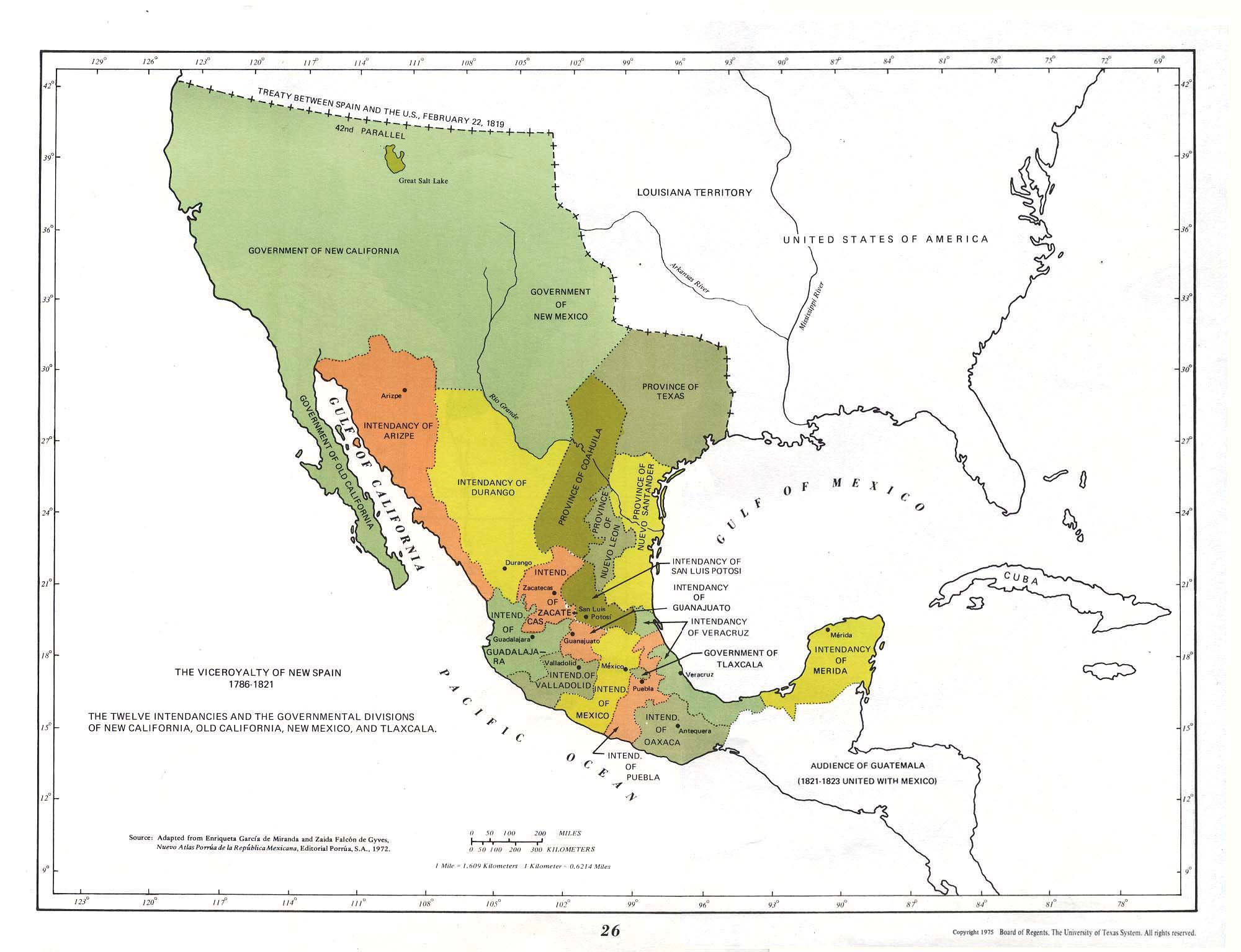
Spanish galleons transported Asian goods and travelers from Manila to colonial Mexico primarily through the port of Acapulco. During the two and a half centuries of contact between the Philippines and the Viceroyalty of New Spain, a minimum of 40,000 to 60,000 Asian immigrants would set foot in the “City of Kings,” while a figure double that amount (100,000) would be within the bounds of probability. From Acapulco they would gradually disperse to the far corners of the viceroyalty, from Loreto in Baja California to Mérida in Yucatan…. The majority, however, would eventually settle in two distinct zones: on the west coast in the districts of Guerrero, Jalisco, and Michoacán, and in the large, ethnically diverse municipalities of Mexico City and Puebla in the central valleys and the eastern port of Veracruz. The two zones were transversed by the most heavily traveled arteries that connected Acapulco to Mexico City (known colloquially as el camino de China) in the west; Veracruz with Puebla and Mexico City in the east; and several arterials linking the capital with Puerto Vallarta in the west and Guanajuato in the northwest.

For the most part, the chinos disembarked at Acapulco as sailors, slaves, and servants. Over the longue durée of Mexican-Asian cultural exchange, the largest contingent of Asians arrived as sailors on the galleons and smaller vessels (capitanas, pataches, and almirantes) that annually plied the long and perilous return voyage from Manila. The seamen were primarily Filipinos, Chinese mestizos (known in Manila as mestizos de Sangley), or ethnic Chinese from the fortified port of Cavite near Manila that served as the primary shipyard for Spaniards in the archipelago. In 1565, the first chino sailors from the islands of Cebu and Bohol arrived in Acapulco aboard Friar Andrés de Urdaneta’s trailblazing galleon, the San Pedro. During the late sixteenth century Iberian sailors constituted the majority of crewmen, but by the early 1600s Asians had surpassed them, accounting for 60–80 percent of the mariners from that time forward. A historical snapshot of galleon seafarers in the mid eighteenth century comes from a crew manifest of La Santissima Trinidad. In 1760, this vessel was manned by 370 sailors, consisting of 30 officers (Europeans or Mexican criollos), 40 artillerymen (27 chinos), 120 sailors (109 chinos), 100 “Spanish” cabin boys (96 chinos), and 80 “plain” cabin boys (78 chinos). In sum, 84 percent (310) of the crew were born and raised in Spain’s Asian colony, with 68 percent (250) hailing from the port of Cavite alone….

Along the Pacific coast, chino sojourners tended to congregate in the cities and pueblos of Acapulco, Coyuca, San Miguel, Zacatula, Tex pan, Zihuatenejo, Atoya, Navidad, and Colima. With the arrival of more ships from Manila, the number of sailors who either had no desire to return to the Philippines or were brought over as slaves married local Indian and mixed-race women increased. Consequently, a sizable population of chinos and their descendants made these cities and pueblos a popular destination for fellow Asians. Both freemen and slaves farmed rice (brought from the Philippines), corn, and cotton; tended cacao and coconut palm trees; fished in the seas and rivers; and transported people and goods to various ports along the coastline. Those who followed the royal highways to towns farther inland worked as muleteers or in the silver mines, haciendas, obrajes (textile workshops), or sugar mills….

Slaves and servants constituted the second largest group of Asian immigrants during the colonial era. Manila quickly became an important entrepôt for the commerce in human flesh during the first century of Spanish rule. The greater part were transported by Portuguese vessels from colonies and trading ports in Africa, India, the Malay peninsula, Japan, and China, although Chinese junks and Malay prahus also shipped large quantities to Manila. Non-Filipino slaves that fetched the highest price were from Timor, Ternate, Makassar, Burma, Ceylon, and India, because “the men are industrious and obliging, and many are good musicians; the women excellent seamstresses, cooks, and preparers of conserves, and are neat and clean in service.”…

The incorporation of Asian immigrants into the armed forces of New Spain represents another fascinating fragment of the chino mosaic from the colonial era. Similar to restrictions placed on other castas in Mexico, there were numerous prohibitions against Asians carrying weapons or riding horses….

The legion of similar antiweapons ordnances from the 1550s onward notwithstanding, from at least the 1590s free chinos not only were granted permission to carry weapons, but gradually incorporated into both the salaried companies of Españoles as well as local militias, especially those cities and towns along the Pacific coast. In several documents from the years 1591 and 1597, an “Indio Chino” from the silver mining town of Zultepec named Juan Alonzo, who earned his livelihood from buying and selling mules, was granted a license to ride a horse with a saddle and bridle and to carry a sword. A key determinant in this matter was his racial classification as a chino, since indios (unless they were elites) were forbidden such privileges….

Among the scores of Asian peoples that were widely defined as chinos, in the early decades of the 1600s Japanese converts were held in high esteem by Spaniards in the Philippines and New Spain for their bravery and loyalty. In 1603 and 1639 when Chinese residents in the Parián of Manila revolted against their Iberian overlords, Japanese swordsmen distinguished themselves in combat. Without their assistance, Sangleyes would surely have made the Philippines a colony of the Middle Kingdom. Thousands of Japanese converts, traders, and ronin made the Philippines their home prior to the closing of Cipango to Iberians in the 1630s. They lived in a suburb of Manila called Dilao, with a population estimated at 3,000 by 1624.

Thus it is not surprising that samurai converts were considered a more privileged subgroup of chinos in New Spain….

It is unclear exactly when chino militias were established on the west coast of New Spain. It is evident, however, that prior to 1729 Asian paramilitary units were routinely patrolling the regions adjacent to Acapulco. Tiburcio Anzalde, “captain of one of the militias of chinos and mulatos in the district of Atoya,” discussed the duties and obligations of militiamen in a 1746 document: repeated trips to Acapulco to deliver mail and other correspondences; to clear the roads (of bandits) while on patrol; and, most importantly, their heroic role in resisting the English pirate George Anson‘s invasion at the port of Zihuatenejo in 1741.

Leave a comment

Filed under Asia, China, economics, England, Japan, labor, Mexico, migration, Netherlands, Philippines, Portugal, Spain

Rise and Fall of the Comanche Empire

From Frank McLynn’s review of The Comanche Empire, by Pekka Hämäläinen (Yale University Press, 2008) in Literary Review:

At the beginning of the eighteenth century the Comanches were a small tribe of hunter-gatherers in New Mexico. Once they acquired the use of horses, in three generations they evolved into the ‘Spartans of the plains’ and provided the fiercest of all Native American resistance to the Anglo-Hispanic conquest of the American West. For a hundred years from 1750, the Comanches dominated New Mexico, Texas and even parts of Louisiana and northern Mexico. As Amerindians, the Comanches were even more impressive than the Aztecs or the Iroquois, for until the American Civil War they largely forced Europeans to bend the knee, and did so moreover when the European imperialist impulse was at its height. Although the word ’empire’ may be author’s hyperbole, the Comanches ruled an extensive domain that worked on a melange of kinship ties, trade, diplomacy, extortion and violence….

So why were the Comanches so exceptional among American Indians? Pekka Hämäläinen, a Finnish scholar of the American West, currently at the University of California, Santa Barbara, argues that, like the Iroquois, the Comanches were fortunate geographically, since their heartland was at once central and peripheral, and at the intersection of Spanish and Anglo spheres of influence. They were inventive and flexible, using a nuanced division of labour in everyday life and operating a dual economy of hunting and pastoralism; they had a unique ability to make use of the horse; and their culture enabled them to incorporate change better than other Indians. They depended on two animals, the horse and the bison, which in the early days were present on the Great Plains in vast numbers. They had 120,000 horses in their herds and access to another two million wild ones.

Hämäläinen’s most detailed scholarly labours concern the eighteenth century: he claims that by 1730 the Comanches had all their people on horses and had reached what he calls ‘the critical threshold of mounted nomadism’. The narrative, firmly based on admirable scholarship, shifts from warfare to diplomacy and back in the Comanche’s dealings both with the colonial Spanish (for in those days the white-occupied American West was wholly Hispanic) and with the other Indian tribes of the Great Plains – principally the Utes, Navajos, Apaches, Osages, Pawnees and Wichitas. With the exception of the Lakota (Sioux) and the Blackfeet, every western Indian tribe was linked to the Comanches’ informal ’empire’. Far from being bit players in the drama of the Spanish colonial empire, the Comanches, especially after obtaining guns from French traders in the 1740s, had the edge in the continuing conflict with ‘New Spain’. One single statistic is eloquent on the Comanches’ rise to dominance in the American Southwest. Their population, 15,000 in 1750, had ascended to 45,000 by 1780 because of their superior diet and plentiful food supply. Their heartland was the so-called Comancheria – an area covering the valleys of the Arkansas, Cimarron, Canadian and Red Rivers, plus all the plains of northern Texas, especially the Llano Estacado in the Panhandle….

Hämäläinen’s great achievement is to force a rethink about Mexican history from its independence from Spain in 1821 to its defeat by the United States in 1846-8. Every September the Comanches sent a major raiding force into northern Mexico, and some of these bands of plains Indians ended up exploring tropical jungles and snow-covered mountains. Their penetration of northern Mexico was astonishing, since they raided as far south as Guadalajara and Queretaro, just 135 miles north of Mexico City and one thousand miles away from the centre of Comancheria….

By some indices the Comanches reached the apex of their power at just the moment, in the 1840s, when they began to collide with the US expansion westwards. Actually, smallpox and other diseases had already brought the Comanche population down to 20,000. And a whole host of factors seriously weakened them even before they inevitably came to blows with white settlers and the US government. Essentially the Comanches were overstretching their resources and habitat. They were killing more than 280,000 bison a year – the maximum loss the herds could sustain without imploding – and at the very time the great drought of 1845-50 was exacerbating the situation. Even worse, bison and horses were in competition for the same pasture and water, and if the bison moved farther west to new grasslands, they found these occupied by the sheep and shepherds of New Mexico. On the other hand, if the Comanches cut their horse numbers, they also cut down their military capacity. As everyone except a handful of Native American fundamentalists now accepts, the bison herds were in terminal decline even before the arrival of white hunters. There had originally been seven million ‘buffalo’ on the southern plains but by the 1860s, before the frenzy of the white bison hunters, half of these had already been killed by the Indians. Put simply, by the end of the 1840s there were too many Comanches raising too many horses and hunting too many bison on too small a land base. The writing was on the wall in other ways, too. While Comanche numbers had declined to 10,000 by 1850, the population of white Texas rose from 140,000 in 1847 to 600,000 by 1860s. Meanwhile, Arapahos and Cheyennes, pushed west by the expanding power of the Lakota, began encroaching on the Comanche heartland.

The end came suddenly. Faced with a shortage of bison, having lost access to firearms, maize and garden produce, and been forced to relinquish control of the long-distance trade routes into Mexico and across the Great Plains, the Comanches began literally to starve to death and in their weakened state to become prey to cholera, smallpox and other deadly diseases. In this terminal crisis, at the end of the 1850s they were engaged in warfare on three fronts, against the Fox Indians, the Texas Rangers and the Spanish buffalo hunters of new Mexico. Driven out of Texas by 1859, the Comanches were abruptly handed a lifeline when the American Civil War erupted. By 1865, with Texas on the losing side, the end of the drought on the Great Plains and a short-lived increase in bison numbers, the Comanches were able to enjoy a (literal) Indian summer. A new era of raiding in Texas partially restored the Comanche position there; in two years of devastation Texas lost 4,000 horses, 30,000 cattle and hundreds of human lives. But in 1871 the United States finally unleashed its military might on the Comanches. The US Cavalry wore down the enemy by dogging them so that they had no time to pasture and tend horses, hunt buffalo, dry meats or prepare hides. The coup de grace came when white buffalo hunters poured onto the plains. In just two years they slaughtered 3.3 million bison. The once proud Comanches ended up on tacky Indian reservations.

Sounds a bit more impressive than the Yapese Empire, though probably shorter-lived.

via Arts & Letters Daily

Leave a comment

Filed under Mexico, U.S.

How Civil Society Returned to South Gate

From Antonio’s Gun and Delfino’s Dream: True Tales of Mexican Migration, by Sam Quinones (U. New Mexico Press, 2007), pp. 107-110:

Like the PRI in Mexico, Albert and his allies had seemed invincible. But in the end, like the PRI, they folded because there wasn’t much left to hold them up. South Gate voted by an eight to one margin to recall Albert Robles and his allies. Some eight thousand voters turned out—small compared to the twenty-six thousand registered voters in town, but four times more than usual. People formed lines twenty deep to vote.

Albert Robles was recalled, along with Moriel, Ruvalcaba and silent Maria Benavides. Elected in their places were Steve Gutierrez, Greg Martinez, and Maria Davila. Rudy Navarro was elected treasurer.

Remarkably, though, the battle still wasn’t over. Albert and his allies had succeeded in postponing the recall so that it was held only a few weeks before the regularly scheduled election in March 2003. Six weeks after the January recall, everyone had to run again. It was the fifth South Gate election in five years.

By now, though, Albert Robles’s name stained anyone near it. The coffee klatches, Community In Action, the press coverage, and the D.A. investigations combined to arouse the people of South Gate. Neither Albert nor his allies campaigned.

Instead, in their last week in office, Robles and his managers wrote city checks for $2.1 million, mostly to lawyers. South Gate’s assistant finance director told the Los Angeles Times that he was forced to take much of the money from the city’s rainy-day reserve fund, while Albert, City Manager Jesse Marez, and several attorneys stood over him….

In the weeks that followed the March 2003 election, South Gate showed signs of returning to normalcy. At the first council meeting, Fr. John Provenza declared the first council meeting after the recall to be “a great day for the city of South Gate, a day when we can rejoice in the hope for democracy.” Community In Action started up again. The new city council addressed issues like street-sweeping fees and declared one week to be “Always Buckle Children in the Back Seat Week.” People who got up to speak at council meetings were not ejected. The council chambers were packed. The high attendance probably wouldn’t last long, but I thought it was nice to see nonetheless.

After the election, I dropped by the office of Rudy Navarro, who’d just been elected city treasurer. Rudy was twenty-three. He said he’d just graduated from San Diego State University with degrees in finance and political science. He wanted to go to law school, but for the moment he was the treasurer of a nearly bankrupt city. State auditors were coming to inspect South Gate’s books.

“We gave away a house!” he began, still incredulous. “The day after they left office, we stopped a half a million dollars from going out.”

The city’s payroll had risen from 340 employees to 570 in two years, he said. Contractual landmines were everywhere, and the city would be paying for them for years. The new police uniforms. The attorneys. The police badges. The loans to George Garrido. The $3.2-million Community Services Department that did nothing. South Gate looked like a dictatorship after the dictator had fled.

Still, Navarro had a healthy attitude toward it all. “To me, it’s a golden opportunity,” he said. “It’s tough on six hundred dollars a month, but … I have this opportunity to do something great, and you can’t beat that.”

Leave a comment

Filed under Mexico, U.S.

How Caudillismo Came to South Gate

From Antonio’s Gun and Delfino’s Dream: True Tales of Mexican Migration, by Sam Quinones (U. New Mexico Press, 2007), pp. 77-79:

Albert [Robles] had arrived in 1991 as a young Latino eager to get involved, someone people wanted to help. But by 2000, folks active in city politics saw him as a Latino Joe McCarthy, a bully unacquainted with scruples….

Albert showed himself willing to fully use the perks of elected office. As treasurer, he hired a staff of four for what had always been a one-person job. He ran for the water-district job promising to abolish the district that “sucked money out of the pockets of people.” Yet as board member, he charged the district more than sixteen thousand dollars for classes in acting, finance, flight simulation, and seminars by inspirational speaker Tony Robbins. Robbins held particular fascination for Albert, and he often attended the speaker’s seminars, rising to hold a platinum membership in Robbins’s business.

People routinely began to describe Albert as “evil,” with no hyperbole intended. Later, Mexican immigrants would call him the cucuy—the boogeyman. People watched him with the same awe and horror as they might a passing hurricane. They spent hours thinking about him, analyzing his tactics and motives, sputtering at his audacity.

“He’s the best villain ever,” said Frank Rivera, a leader in South Gate‘s police union. “He’s a short, fat little guy who gets all the money, all the women, all the cars, and he doesn’t go away until the end of the movie. And even at the end of the movie there’s still a chance for him to come back and grab you. That’s Albert Robles. He is the cucuy. You can’t even mention his name without fearing that he might have somebody listening. If he were a pinata, I could honestly get people to line up for some stick time on him.”

Albert’s life attracted bizarre rumors. It was hard to know what was true. Still I took the rumors as at least a sign of how people thought of him and, after a while, of what they were willing to believe. He was said to be a great follower of Sen. Huey Long, the populist from Louisiana. He was said to have photos of John F. Kennedy and Adolf Hider on his wall. He was obsessed with guns and owned many. People said he ate bread and sweets to excess and that this was one reason his moods swung so wildly and why he never quite won the battle with his paunch. His mother was supposed to have cared for comedian Richard Pryor after Pryor lighted himself on fire smoking cocaine. Robles’s father was supposed to have once been a Roman Catholic priest, leaving the priesthood to marry Robles’s mother. His father had an affinity for great philosophers. Robles’s brother was an ex-convict named Mahatma Gandhi Robles.

What was undeniable was that by 2000, Albert had assembled an impressive array of enemies: city unions and business owners, white seniors, and a good many Latino politicians; and soon, the editorial board of every newspaper in the area. Pastors at South Gate churches usually avoided politics. But Fr. John Provenza, the local Roman Catholic priest, eventually blessed a campaign kickoff of a Robles opponent. He noted in a bulletin to his congregation that three Robles opponents regularly attended mass. Provenza and Lutheran minister Chuck Brady spoke at a rally of Robles’s opponents.

“We pray for Albert,” said Brady. Robles, in turn, called himself David confronting the establishment’s Goliath. He was a friend of the little guy whom the political elite had ignored. “Competition in these small cities was nonexistent. Now there’s competition,” he told me. “That’s why you see people trying to knock down the Albert Robleses of the world. Albert came to fill a need for leadership within the Latino community.”

As I spent time in South Gate, it seemed to me that Albert was an essay in the contravention of small-town political customs. In most small towns, councilmen have lives and full-time jobs outside city hall. In California, they receive only $600 a month in salary to ensure that politics remain community service. Indeed, everyone in South Gate politics had outside jobs and families. Only Albert did not. He lived from income derived from his jobs as city treasurer ($75,000 a year, until a referendum reduced it to $600 a month) and water-district board member ($40,000 a year). Later, when he was running the entire city government, his council created the job of deputy city manager, at $111,000 a year, and hired Albert. Thus he had the time, desire, and eventually the money to devote to politics.

Leave a comment

Filed under Mexico, U.S.

Tijuana’s Cultural Evolution, 1920-2000

From Antonio’s Gun and Delfino’s Dream: True Tales of Mexican Migration, by Sam Quinones (U. New Mexico Press, 2007), pp. 171-172:

In 1920, Tijuana had been a village of eleven hundred. Eighty years later city officials could only guess the population neared two million people. There were entire neighborhoods populated by people from different Mexican states—Oaxaca, Sinaloa, Sonora, Mexico City. Yet the federal government in Mexico City kept Tijuana’s budget minuscule. So the city could neither control growth nor provide services for the newcomers. Shantytowns popped up on the ever-extending edge of town. “Cartonlandia”—Cardboardland, an awesome shantytown on the bed of the Tijuana River near the border—was almost a tourist attraction itself.

To the bureaucrats in Mexico City, and to most of Mexico, Tijuana was an ugly embarrassment, a virtually American city, and hardly Mexican at all. Government bureaucrats required extra salary to come staff federal agencies in Tijuana. In one sense, they were right. Tijuana resembled the global economy it depended on—an assault of random noises and images. “A modern-art painting” is how one Tijuanan described the city.

Yet Tijuana had a beauty that none of the country’s exquisite colonial towns possessed. Young and far from Mexico City, Tijuana was free of history and tradition. It was close to California, the wealthiest U.S. state. This created better jobs and educational opportunities in Tijuana than elsewhere in Mexico. As a crossroads, its people were open to new ideas. To Tijuana came the hardworking poor escaping the limits and decaying economies of their hometowns. Many of these folks intended to sneak into the United States; but they found lives in Tijuana and stayed.

“A more egalitarian society formed here. It’s part of what makes Baja California different,” said David Pinera, who is a professor of Tijuana history. “It was a society in the process of forming, a society in which the culture of hard work predominates and less the culture of privilege. There aren’t the closed social circles. The rich man here is someone who came from the bottom. His father didn’t give him any leg up. He was a waiter or street vendor and made it according to his own efforts.”

Thus a relatively large middle class could form. In the 1980s, banks, insurance companies, and auto dealers began to arrive to serve the middle classes. Tijuana then got its first supermarkets and shopping malls. Moreover, middle-class denizens naturally didn’t want their children exposed to strippers, shantytowns, drunk gringos, and naked-lady playing cards. They wanted music lessons, ballet, and art classes for their children. So a constituency for a more evolved city was born.

The quirky cast of characters in this chapter include:

  • Enrique Fuentes, who almost single-handedly nurtured a constituency for opera in Tijuana and who in 2001 opened an Internet cafe, El Café de la Ópera, with computers named Aida, Carmen, Madame Butterfly, and La Traviata, linked to a server named Turandot
  • Mercedes Quiñónes, who spent years in a cultural wilderness, volunteering as a choir director and supporting family as a hardware wholesaler, before finding a professional voice teacher and becoming, at age 51, Tijuana’s premier soprano when Pagliacci opened there in 2003
  • The Russian emigré musicians who during the 1990s formed Baja California’s first state orchestra, then its first state music conservatory, teaching a new generation of Mexican music students

Leave a comment

Filed under art, Mexico, music, U.S.

Learning to Trade Envidia for Unity in Chicago

From Antonio’s Gun and Delfino’s Dream: True Tales of Mexican Migration, by Sam Quinones (U. New Mexico Press, 2007), pp. 210-212:

They [immigrants from Atolinga in Zacatecas, Mexico] became part of a Chicago ecosystem of immigrant nonfranchised fast-food restaurants that included Chinese food, Greek gyros, Italian hot-dog stands, and sandwich and donut shops owned by Indians. Several Atolingan taquerías replaced Polish and Italian hot-dog stands that went out of business.

Atolingans pooled knowledge, shared experiences, aided those in need. For a while, they formed an informal cooperative to buy vegetables and supplies. When one of Salinas’s taquerías burned down in 1998, he reopened two weeks later using equipment from other Atolingan restaurateurs.

This kind of cooperation was a radical concept for men from an isolated Mexican village. Back home, anyone who wedged his way into a small business wasn’t about to help or cooperate with the competition. Envidia was rife and pernicious. Envidia means “envy,” but it also implies backbiting and in commerce, even sabotage. Envidia is behind the common Mexican proverb “Pueblo chico, infierno grande” (Small town, big hell). When discussing envidia, particularly as it relates to business, many Mexicans tell the story of crabs in a pot of boiling water. When one crab tries to get out of the pot, the others pull him back down; if they can’t get out, why should he?

Chon Salinas came to view envidia as a devastating force. He felt it was behind the drug-smuggling rumors with which he’d had to contend.

A significant cause of Mexican poverty in small villages, he believed, was the way people not only wouldn’t cooperate in business, but at times actively tore each other apart. He told the story of Urbano Garcia, a great carpenter in Atolinga years ago, who so feared competition that he refused to teach the trade to his own sons. As Salinas went out on his own and then helped others do the same, he railed often against envidia.

“The loans we eventually gave each other weren’t that important,” he said. “What was important was to recognize the strength of unity, this support, backing each other up, this confidence that we all need. It’s what I learned at John Barleycorn‘s and what other people taught me there. I’d tell those who were starting restaurants that we have to break the pattern of those famous crabs.”

Chicago was a huge market that offered opportunity for everyone. The new immigrants found themselves together in the same strange land, facing the same challenges: the English language, U.S.-born children, business permits, leases, taxes, snow. The envidia impulse withered, and unity came easier.

Leave a comment

Filed under economics, Mexico, migration, U.S.

How Meat Factories, Mexicans, and Futbol Came to W. Kansas

From Antonio’s Gun and Delfino’s Dream: True Tales of Mexican Migration, by Sam Quinones (U. New Mexico Press, 2007), pp. 230-232:

In the 1950s, the invention of the turbine water pump allowed [people in western Kansas] finally to suck water from the massive Oglalla Acquifer, a sea of underground freshwater that stretches under the High Plains from South Dakota to Texas and New Mexico. New irrigation systems let them spread that water across wide swaths of land and decreased the threat of drought. Farmers could grow huge amounts of grain-corn, milo, and alfalfa—which could be fed to cattle. With that came the cattle feed yard.

In 1951, a Garden City farmer named Earl Brookover built the first cattle feed yard in Kansas, with large pens in which cattle ate locally grown grain from a trough. Cattle fattened faster and more efficiently—on high-protein milo, corn, and alfalfa—than when they grazed aimlessly on the range. Dozens of ranchers opened feedlots across the High Plains. The Irsik family, another feedlot operator near Garden City, built the first processor that turned corn into cattle feed. Today, there is feed yard space for a million head of cattle within a sixty-mile radius of Garden City.

Poets would find potent symbols of America’s vanished frontier in these yards, with their acres of penned and tagged cattle that once roamed the range. The cowboy was now as penned in as the cattle. He rode from yard to yard, culling the sick head.

Still, the feed yard changed the American diet. The price of beef dropped. On rangeland, cattle exercised as they grazed, making their meat lean and tough, so not much of the animal was usable for anything other than hamburger or pot roasts. America’s hamburger tradition was due to the fact much of the range-fed cattle was appetizing only when it was ground up with some of the animal’s fat. But in feed yards, cattle didn’t move much, so their meat was fattier and thus more tender and better tasting. Demand for beef rose. This added protein to the U.S. diet. Cattle producers could now harvest more profitable specialty cuts—brisket, chuck, inside skirt, flatiron, and flank steaks—from all over the animal.

Brookover’s idea was to keep in Kansas what was raised in Kansas. Up to that point, Kansas and a lot of rural America resembled the Third World: its commodities—cattle and corn, in this case—were shipped away to be transformed into more profitable products elsewhere. The feed yard transformed Kansas corn into a more profitable product—cattle. Thus a bit more of the wealth that these rural communities produced remained in the area.

By the 1970s, southwest Kansas was a cattle center unlike anything early settlers could have dreamed. Yet it was only a hint of what was coming.

The man who completed the transformation of southwest Kansas— and changed America in the process—was a tall, jowly fellow with a slow Iowa drawl named Andy Anderson.

Anderson cofounded a company known as Iowa Beef Packers—later IBP. Anderson had intense energy and creativity where building things was concerned. He’d been a butcher, then a meat wholesaler in Los Angeles. Anderson had no schooling in engineering but would become an expert, and endless tinkerer, in the science of meat-packing and refrigeration. He built the meat-packing plant of the future.

Meat-packing began in the big cities, near large populations of workers, many of whom were Eastern European immigrants. Legions of well-paid union butchers in Chicago, Omaha, and Kansas City slaughtered the cattle that came in on trains from the High Plains. Anderson and IBP moved the meat industry to the small town in the American heartland where the cattle were raised. Anderson retired from IBP in 1970 and died in 1990 at the age of seventy-one. But by then, he and IBP had reinvented the way meat was slaughtered and sold. They’d also ended butcher unions and brought millions of Mexican immigrants to the heartland.

In 1960, Anderson and his partner, Currier Holman, used a U.S. Small Business Administration loan to form IBP in the town of Denison, Iowa. Anderson applied assembly-line principles to the disassembly of cattle. In this factory, the jobs of slaughtering, cutting, vacuum wrapping, and boxing the meat for shipping were mechanized and consolidated under one roof. His factories broke down these tasks until anyone could do them. A production line would send a cow carcass on a hook through the plant. A worker would make one cut, then the carcass moved to the next worker, who made another cut, and so on, until the skeleton remained. The cuts were then sealed in plastic and boxed for shipment.

This passage merely serves as background to a long and fascinating story about how Latino-dominated soccer displaced Anglo-dominated football as the top sport in Garden City High School, Kansas, in 2003.

2 Comments

Filed under economics, Mexico, migration, U.S.

A Velvet Painting Maquiladora in Juárez

From Antonio’s Gun and Delfino’s Dream: True Tales of Mexican Migration, by Sam Quinones (U. New Mexico Press, 2007), pp. 128-130:

[Doyle] Harden and [Leon] Korol—a Georgia country boy and a blunt Chicago Jew—would become fast friends, business partners, and would transform the marketing of velvet painting in America.

“He changed my life in the velvets,” Harden said of Korol, who died in 2004 at the age of seventy-seven.

Harden had been sending a semi truck a week back to his Georgia warehouse. But Korol believed velvet had national potential. He was the first customer to buy an entire truckload of Harden velvets from Juarez. Within a month, he had ordered five trucks of paintings delivered to Chicago. He kept this up for years. Velvet paintings filled the cavernous warehouse at the Leon Korol Company in Chicago, exuding a smell of oil paint and fabric that years later Korol’s sons still remembered….

It was to meet this demand that, in 1972, Korol fronted the money with which Harden built a block-long velvet-painting factory on a Juárez vacant lot belonging to a Mexican customs commandant. The factory soon hummed with three shifts a day.

Harden’s velvet-painting factory is legendary among Juárez old-timers. It was really a cluster of about two dozen studios of different sizes—each with a master painter and team of assistants. Harden provided the materials and paid dollars for everything the master and his crew could churn out.

Harden tested the painters to see who could paint the best trees, or waterfalls, or clouds. Then he set up production lines. Each studio had a wooden shelf along which the artists would slide the paintings. One man would paint the clouds, slide the canvas to the next fellow, who’d paint the sun. The third guy would paint the mountains and slide it to the guy who’d paint the stream. And so it went until the painting was finished. A crew of framers cut the velvet, stapled it to frames, and fed blank canvases into the maw of it all.

An assembly line for handmade art, the factory was one of the first maquiladoras in a town now dominated by them. Each studio was designed so no painter used more than one color and thus avoided wasting time by switching or cleaning his brushes.

Each day, after reviewing sales orders, the master painters chose the subjects to be painted: a landscape, an eagle, a wolf, an Aztec warrior, a pachuco by his car. An assistant forged the master’s name on each painting. As soon as it was done, the artwork was in a truck and on its way to some far-off part of the United States, sometimes arriving still wet.

Two big rigs would leave Harden’s factory for the United States every day. Urged on by Leon Korol, who bought from no one else, Harden reached awesome heights in velvet production. A dozen or more competitors followed his lead into mass production. A man named Molina had a studio of twenty or more of Juárez’s best artists to whom he paid cash every day; it was accessible off a downtown back street with security guards vetting each person who wanted to enter. But no one equaled Harden’s volume.

In typical Quinones fashion, this chapter is a collection of interrelated stories about unusual people:

  • Edgar Leeteg (1904–1953), the weird kid from East St. Louis, Illinois, who moved with his mother to Tahiti, where he became the father of modern velvet painting
  • Aloha Barney Davis, who marketed Leeteg’s work in Hawai‘i, from which it spread to San Diego, then to Tijuana and other towns along the U.S.–Mexican border.
  • Chuy Morán, the hardscrabble artist who became the king of Juárez velvet painters and, for a time, a very wealthy man.
  • A.M. Shawar and other Palestinian emigrés in Edmonton, Alberta, who sold velvet paintings all over the Great White North, even flying them into isolated villages in the Canadian outback.
  • Hundreds of Scientology students in Florida who paid for their schooling by hawking velvet paintings during “velvet’s last hurrah” during the 1980s.

3 Comments

Filed under art, economics, Mexico, migration, U.S.

How Zacatecans Became Risk-takers

From Antonio’s Gun and Delfino’s Dream: True Tales of Mexican Migration, by Sam Quinones (U. New Mexico Press, 2007), pp. 42-45:

On a map, Zacatecas looks like an amoeba in the middle of Mexico. Its lines curve in and out of territories with the logic of a modern art painting. On the ground, the state is vast and beautifully rugged. In parts, mesquite trees pock forbidding deserts of beige dust. Elsewhere, the-desolation gives way to dirt the color of cayenne pepper. But whatever its color, the land of Zacatecas never could hold people to it.

The Zacatecan upper classes owned large tracts of land, much of which they’d inherited, but were averse to investing in anything more than their houses.

“There are very few classic entrepreneurs in Zacatecas, in the strict sense of people who, with their own resources, create jobs,” said Rodolfo Garcia, a professor of immigration and development studies at the University of Zacatecas. “In Mexico, the capitalist class has mostly grown due to the support and money of the government. The capitalist class in Zacatecas, more than in any other state, has grown up on public money.”

The extraction and export of raw materials began in the late 1800s, when mining ruled Zacatecas. The minerals from Zacatecas went elsewhere to be processed into something of greater value. When the mines gave out, they were replaced by ranching and agriculture but not by a new attitude toward risk. Zacatecas, the Mexican state that produces more beans and chiles than any other, still has few companies that process those products into, say, canned beans and canned chiles. Almost everything produced in Zacatecas leaves for places where it is transformed into something of greater profit.

This includes its people. Nothing has left Zacatecas like its people. Emigration to the United States began in the late 1800s, declined in the 1930s, then picked up a momentum in the 1940s that it hasn’t lost. No Mexican state has a greater percentage of its people in the United States than craggy, red Zacatecas.

The folks who left were the state’s real risk-takers. They risked their own capital—their lives—on the promise of a better return than Zacatecas offered. For most of them, the bet paid off. In time in the United States, they opened businesses, bought houses, and sent their kids to school….

Strangely, immigrants’ daring and risk-taking indirectly stymied what the state needed most—which was a daring, risk-taking state of mind. Instead of using immigrant dollars to jump-start an industrial economy, Zacatecas simply limped along, addicted to the dollar injections. Immigrants became the state’s primary foreign investors and job creators. They hired local folks to build lavish homes in the villages they’d left as paupers.

Then came the Mexican presidential election of 1988. The ruling PRI faced real competition for the first time in its history. Cuauhtémoc Cárdenas—a PRI apostate who had left the party—formed a movement that would become the left-wing Party of the Democratic Revolution (PRD). Sinaloan businessman Manuel Clouthier rejuvenated the National Action Party (PAN) by swiveling it away from right-wing social morality and toward the issues of corruption and efficient government services.

Cárdenas and Clouthier were the first Mexican presidential candidates to visit the United States and avidly court immigrants. The PRI and its candidate, Carlos Salinas de Gortari, beat back their challenge through massive vote fraud. But the 1988 election showed the PRI that immigrants up north were a dangerously uncoopted source of dissent. Salinas set up an office of Attention to Mexicans Abroad.

Zacatecas Gov. Genaro Borrego tried another idea. Every dollar immigrants put up for public works projects in their villages, he announced, the government would match. It started as “1 for 1” and quickly expanded to “2 for 1″—with money from the state and federal governments. Immigrants could stretch their dollars, and Zacatecan villages could get the schools, wells, and clinics they needed.

For decades, the PRI had used budgets to buy off union leaders, businessmen, academics, and neighborhood groups. Zacatecas’s “2 for 1” was the party’s first try at buying off immigrants in the United States, and it grew largely from the PRI’s 1988 election scare. Zacatecan immigrants were urged to form village clubs and raise money for projects back home.

But the PRI miscalculated. These immigrants were no longer the humble campesinos who went hat-in-hand to mayors across Mexico. They’d done well in the United States, and felt confident in their abilities. They blamed the PRI for having to leave their villages. They weren’t about to let the party push them around up in the United States, too.

The clubs they formed were not docile. On the contrary, as the party pushed, immigrants pushed back. They insisted on a say in how their money was spent. The PRI was adamantly secular, but when some clubs insisted that the money they put up be used to renovate village churches, the government relented.

Because of “2 for 1,” Zacatecans became the best-organized Mexican immigrants in the United States. By the time Andres Bermudez ran for mayor of Jerez, there were some 240 of these clubs in the United States. No other Mexican state had even half that number. They invested millions of dollars in public works. Their money built the necessities for their people back home that the government hadn’t provided. In time, immigrants nurtured a righteous sense of their economic importance to Zacatecas.

Yet they religiously avoided politics. Mexican politics had been the exclusive domain of lawyers, teachers, merchants. Every ranchero seemed to know some fool who’d gone into politics and lost everything, been jailed or killed, or gotten rich and turned on his friends. So while Zacatecan immigrant prosperity created a vast ranchero constituency in the United States with money, organization, and talent, it was oblivious to its own political potential. That’s how things remained until the late 1990s, when a lot began to change back home.

Leave a comment

Filed under economics, Mexico, migration, U.S.

Sam Quinones on Two Mexicos

This post from its introduction concludes my series of excerpts from the fascinating book, True Tales from Another Mexico: The Lynch Mob, the Popsicle Kings, Chalino, and the Bronx, by Sam Quinones (U. New Mexico Press, 2001). I look forward to reading his newest book, which I ordered at the same time.

The Priista/licenciado is the modern version of the hacienda owner and the Spanish noble. He doesn’t return phone calls to anyone less important than he is. He is accountable only to those above him. He keeps those seeking employment waiting in his lobby for hours because he can. His shoes are too well shined to belong to anyone who really works. His sinecure insulates him from the higher standards the world demands, and from this he derives his inertia.

The Priista/licenciado culture remains an anchor around the neck of Mexico’s development. It assumes the superiority of those with power and thus is fundamentally unfair. Though clad in double-breasted suits, this part of Mexico remains emotionally stuck in the sixteenth century. It is the modern expression of the ossified top-down, hierarchical tradition left the country by the Aztecs, the Spanish, the Catholic Church, and the dictator Porfirio Diaz. This side of Mexico is hardly ready for the demands of democracy and the global economy. The very term licenciado is supposed to conjure up some kind of innate wisdom. The licenciado doesn’t need to prove his worth; he is entitled to more than his labor produces. The Priista is a Priista precisely because adhering to the state endows him with special rights. Mexico’s world-famous corruption has its roots here, and so therefore does Mexicans’ belief that their society is unjust.

I mention all this because this part of Mexico is what the world seems to know best. Certainly the press, other governments, and tourists are most aware of the official, elite, corrupt Mexico; the Mexico that won’t allow a poor man a chance; the Mexico behind the sunglasses. I’ve even been told by people, including Mexicans, that this is Mexican culture. But I know that’s not true. There is another Mexico.

This other side is vital and dynamic and is often found on Mexico’s margins. The other side of Mexico is not always pretty, but it is self-reliant and adventurous.

And this Mexico is what this book is about….

The emigrant stands for the country’s vital side. He uses his wits and imagination. He strikes out on his own, looking for a future. One emigrant does not require two people attending to his needs. Some twelve million Mexicans reside year-round in the United States. Many millions more have lived and worked there or spend part of the year up north. The United States is now part of the Mexican reality and is where this other Mexico is often found, reinventing itself.

Official Mexico holds their absence against them. Emigrants are resented for their daring. In official Mexico’s twisted point of view, emigrants must explain why they aren’t traitors to their country….

The country’s greatest modern catastrophe is that it has treated the emigrant poorly and thus been deprived of his dynamism. His absence is of greater consequence to Mexico than the nineteenth-century territorial losses of California, Arizona, New Mexico, and Texas. Mexico survives today largely because the emigrant cannot bring himself to fail his country the way the licenciado so miserably fails him.

Much the same could be said for the Philippines and so many other major exporters of migrant labor.

1 Comment

Filed under Mexico, migration