Category Archives: language

How Modernism Feeds Tribalism

From The Fate of Africa: A History of Fifty Years of Independence, by Martin Meredith (PublicAffairs, 2005), pp. 154-157:

African societies of the pre-colonial era – a mosaic of lineage groups, clans, villages, chiefdoms, kingdoms and empires – were formed often with shifting and indeterminate frontiers and loose allegiances. Identities and languages shaded into one another. At the outset of colonial rule, administrators and ethnographers endeavoured to classify the peoples of Africa, sorting them out into what they called tribes, producing a whole new ethnic map to show the frontiers of each one. Colonial administrators wanted recognisable units they could control. ‘Each tribe must be considered as a distinct unit,’ a provincial commissioner in Tanganyika told his staff in 1926. ‘Each tribe must be under a chief.’ In many cases, tribal labels were imposed on hitherto undifferentiated groups. The chief of a little-known group in Zambia once ventured to remark: ‘My people were not Soli until 1937 when the Bwana D.C. [District Commissioner] told us we were.’ When local government was established under colonial rule, it was frequently aligned with existing ‘tribal areas’. Entirely new ethnic groups emerged, like the Abaluyia or Kalenjin of western Kenya, formed from two congeries of adjacent peoples. Some colonial rulers used tribal identities to divide their subjects, notably the British in southern Sudan and the French in Morocco. Chiefs, appointed by colonial authorities as their agents, became the symbol of ethnicity.

Missionary endeavour added to the trend. In the process of transcribing hitherto unwritten languages into written forms, missionaries reduced Africa’s innumerable dialects to fewer written languages, each helping to define a tribe. The effect was to establish new frontiers of linguistic groups and to strengthen the sense of solidarity within them. Yoruba, Igbo, Ewe, Shona and many others were formed in this way.

Missionaries were also active in documenting local customs and traditions and in compiling ‘tribal’ histories, all of which were incorporated into the curricula of their mission schools, spreading the notion of ethnic identity. African teachers followed suit. In southern Nigeria, young men from Ilesha and Ijebu who attended school in Ibadan or Oyo were taught to write a standard form of the Yoruba language and to identify themselves as Yoruba – a term previously reserved for subjects of the Oyo empire. As mission stations were largely responsible for providing education, educational achievement tended to depend on their locality and thus to follow ethnic lines.

Migration from rural areas to towns reinforced the process. Migrants gravitated to districts where fellow tribesmen lived, hoping through tribal connections to find housing, employment or a niche in trading markets. A host of welfare associations sprang up – ‘home-boy’ groups, burial and lending societies, cultural associations, all tending to enhance tribal identity. Certain occupations – railwaymen, soldiers, petty traders – became identified with specific groups which tried to monopolise them.

It was in towns that ethnic consciousness and tribal rivalry grew apace. The notion of a single Igbo people was formed in Lagos among the local ‘Descendants’ Union’. The Yoruba, for their part, founded the Egbe Omo Oduduwa – a ‘Society of Descendants of Oduduwa’, the mythical ancestor of the Yoruba people; its aim was ‘to unite the various clans and tribes in Yorubaland and generally create and actively foster the idea of a single nationalism throughout Yorubaland’. Ethnic groups became the basis of protest movements against colonial rule.

In the first elections in the postwar era in Africa, nationalist politicians started out proclaiming nationalist objectives, selecting party candidates regardless of ethnic origin. But as the number of elections grew, as the number of voters expanded, as the stakes grew higher with the approach of independence, the basis for campaigning changed. Ambitious politicians found they could win votes by appealing for ethnic support and by promising to improve government services and to organise development projects in their home area. The political arena became a contest for scarce resources. In a continent where class formation had hardly begun to alter loyalties, ethnicity provided the strongest political base. Politicians and voters alike came to rely on ethnic solidarity. For politicians it was the route to power. They became, in effect, ethnic entrepreneurs. For voters it was their main hope of getting a slice of government bounty. What they wanted was a local representative at the centre of power – an ethnic patron who could capture a share of the spoils and bring it back to their community. Primary loyalty remained rooted in tribal identity. Kinship, clan and ethnic considerations largely determined the way people voted. The main component of African politics became, in essence, kinship corporations.

The formation of one ethnic political party tended to cause the formation of others. In Nigeria the National Council of Nigeria and the Cameroons, the first modern political organisation in West Africa launched in 1944, started out with the aim of establishing a broad-based national movement, but after tribal dissension it became an Eastern regional party, dominated by Igbo politicians. Yoruba politicians left to form the Action Group, building it around the nucleus of Egbe Omo Oduduwa. In Northern Nigeria, the Hausa-Fulani, while disdaining the nationalist cause which Southerners espoused, nevertheless formed in 1949 the Northern People’s Congress as a political offshoot of a predominantly Hausa cultural organisation, Jam’yyar Mutanen Arewa – Association of the Peoples of the North. In a more extreme example, in the Belgian Congo rival tribal parties were launched by the score. In most countries, political leaders spent much time on ‘ethnic arithmetic’, working out alliances that would win them power and keep them there.

Few states escaped such divisions. In Tanganyika, Julius Nyerere was helped, as he himself acknowledged, by the fact that the population was divided among 120 tribal groupings, none of which was large enough or central enough to acquire a dominant position. He benefited too from the common use of the Swahili language, spread initially by Arab traders, then taken up by the Germans and the British as part of their education system. Other states had to contend with a variety of languages, sometimes numbering more than a hundred. In all, more than 2,000 languages were in use in Africa.

There was a widespread view at the time of independence that once the new states focused on nation-building and economic development, ethnic loyalties would wither away under the pressure of modernisation. ‘I am confident’, declared Nigeria’s first prime minister, Abubakar Tafawa Balewa, during a 1959 debate over the motion to ask for independence, ‘that when we have our own citizenship, our own national flag, our own national anthem, we shall find the flame of national unity will burn bright and strong.’ Ahmed Sékou Touré of Guinea spoke in similar terms in 1959. ‘In three or four years, no one will remember the tribal, ethnic or religious rivalries which, in the recent past, caused so much damage to our country and its population.’ Yet African governments were dealing not with an anachronism from the past, but a new contemporary phenomenon capable of erupting with destructive force.

It doesn’t seem all that different in kind, only in degree, from what happened in Europe with the spread of vernacular literacy, Protestantism, historical and comparative linguistics, and the scientific subclassification of everything and everyone on earth—and what continues apace in modern universities, prisons, and other political/protective patronage networks that privilege race/ethnicity over social class, religion, or other more mutable cross-cutting categories.

Leave a comment

Filed under Africa, democracy, education, Europe, language, nationalism

Wordcatcher Tales: Hack, Buckboard, … Democrat

From Plain Buggies: Amish, Mennonite, and Brethren Horse-Drawn Transportation (Intercourse, Penn.: Good Books, 1998), by Stephen Scott, pp. 46-47:

The open spring wagon, the utility vehicle with one seat and a hauling space in back, has a wide variety of local names. In Holmes County, Ohio, it is a “Hack”; in Arthur, Illinois, a “Buckboard”; in Dover, Delaware, a “Durban”; in Adams County, Indiana, a “Johnny wagon”; in Daviess County, Indiana, a “Long John”; and in Aylmer, Ontario, a “Democrat.”

A recent style of spring wagon, featuring an open bed or long storage compartment in back and an enclosed driver’s seat will be referred to as a “cab wagon” in this book. In Pennsylvania a carriage-like vehicle with heavier suspension on the rear axle is called a “market wagon” or “peddle wagon.”

A number of vehicles used by the plain people are somewhat out of the scope of this book. These include heavy farm wagons and other agricultural vehicles. The special wagons designed to transport benches from one Amish meeting place to the next are found in each Amish church district. In Lancaster County the Old Order Amish and Mennonites make use of specially designed hearses. In Holmes County vehicles resembling a cab wagon transport the coffins.

Sleighs, cutters, and bobsleds are rarely used in most communities and are not of any special style. Few new snow vehicles are produced. Enough antique vehicles are around to serve the limited demand.

Leave a comment

Filed under language, religion, U.S.

Wordcatcher Tales: Lē‘ahi ‘Tuna Point’

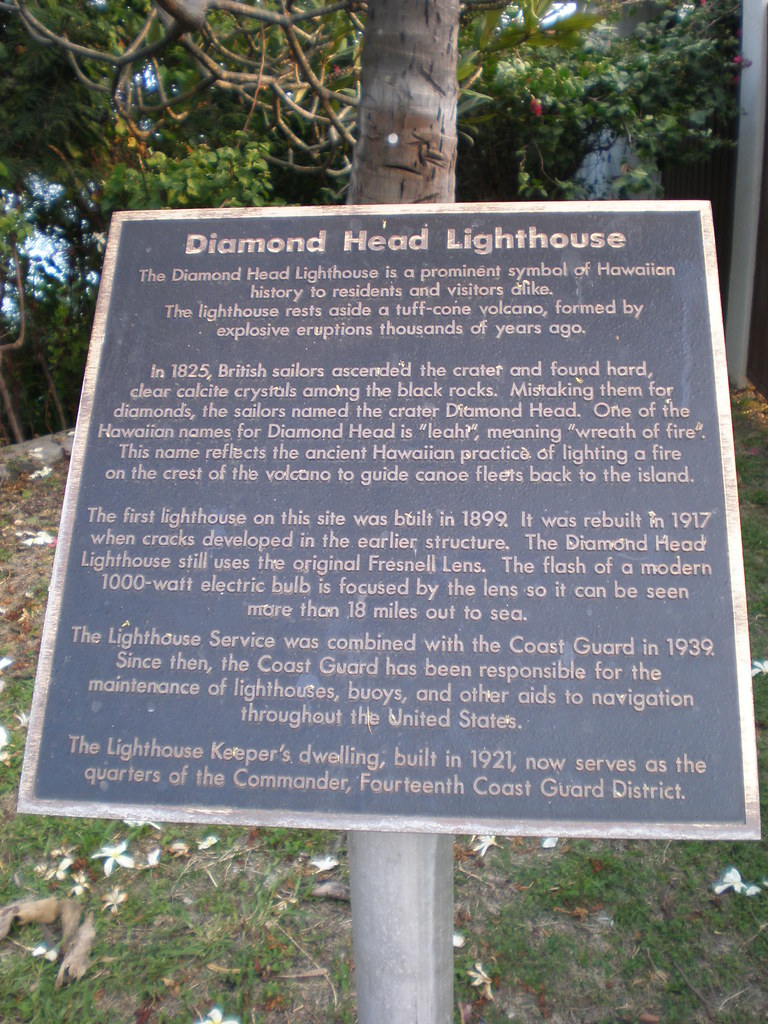
Most people who have lived in Hawai‘i for a while know that Diamond Head crater got its English name from the sparkle of worthless crystals in its rocky exterior, and not from real diamonds. And many know that it got its Hawaiian name, Lē‘ahi, from the resemblance of the crater’s ridgeline to the dorsal fin of a tuna. But the name doesn’t exactly mean ‘dorsal-fin of tuna’.

I gave the etymology a closer look after finding a bogus etymology on the historical plaque that marks Diamond Head Lighthouse. Lē‘ahi does not come from lei ‘wreath’ plus ahi ‘fire’, and thus has nothing to do with Hawaiian practices of navigational bonfires imagined by the builders of the modern lighthouse. Haw. ahi ‘fire’ comes from Proto-Polynesian (PPN) *afi ‘fire’, a good and widely reflected Austronesian root. In Numbami, a language I studied in Papua New Guinea, the word for ‘fire’ is yawi (with the /w/ slightly fricative before front vowels). Even highly aberrant Yapese seems to have a cognate, nifiy ‘fire’. But Haw. ‘ahi ‘tuna’ comes from Proto-Nuclear Polynesian (PNP) *kasi (with *k > /‘/, *s > /h/), which seems not to be so widely attested beyond Polynesia.

The first part of the compound is trickier. According to Place Names of Hawaii, comes not from lei ‘wreath, garland’, but rather from lae, which in place names usually translates ‘cape’ or ‘point’. However, the Hawaiian Dictionary lists a wider range of meanings: ‘forehead, brow; cape, headland, point, promontory; wisdom’ (< *la‘e). So some of the tourist literature now translates Lē‘ahi inappropriately as ‘tuna brow’ or ‘brow of the tuna’. Tuna Head(land) would be just as accurate, but Cape Tuna or Tuna Point would be more in keeping with the glosses in Place Names of Hawaii. (I think we can also rule out Tuna Wisdom!)

UPDATE: But what about Aku Head?

There used to be a well-known radio personality in Hawai‘i who called himself “J. Akuhead Pupule” (= ‘J. Tunahead Crazy’), reputedly after being called as much by irate listeners. I’m not sure why aku-head would be a sharper insult than ‘ahi-head, but it might be because aku is the Hawaiian name for the bonito or skipjack tuna genus Katsuwonus, whose name derives from Japanese katsuo, which in Japan is usually dried into a woodlike block, katsuobushi, from which flakes are shaved off for use as a flavoring. So maybe akuhead = blockhead.

From my fieldwork experience long ago in Papua New Guinea, where I elicited far more fishnames than I had ever heard of before, I would guess that Haw. ‘ahi matches pretty well with the genus Thunnus while Haw. aku names tuna of the genus Katsuwonus (and perhaps a few other similar genera).

In checking Wikipedia entries for other members of the family Scombridae (tunas, bonitos, and mackerals), I see that the one for wahoo, Haw. ono (< PPN *‘ono), offers entirely unsupported speculative etymologies for both names. Wikipedia should not confirm one person’s speculation with that of another. Leave that to the news media.

UPDATE 2: The cape at the southwestern tip of O‘ahu—a long, flat counterpart to Lē‘ahi at the southeastern tip—was for a time called Barber’s Point, but has now reverted to its Hawaiian name, Kalaeloa ‘The Long Point’.

A reader asks why I don’t simply consult a fluent native speaker of Hawaiian. One reason is that native speakers with encyclopedic knowledge are extremely rare in any language, but especially for Hawaiian these days, where most fluent speakers learned the language in a classroom, not from their parents and grandparents long resident on a plot of land. (In fact most have lost the lands of their ancestors.) Another reason is that local residents are usually content to offer folk etymologies and wild guesses when asked about anything not utterly transparent linguistically and historically. At least that is my experience from incessantly asking just such questions of local drivers, store clerks, wait help, baristas, sushi chefs, and random passers-by in my travels to odd parts of the globe over many years.

Leave a comment

Filed under Hawai'i, language

A Linguistic Rediscovery Close to Home

During my dissertation fieldwork in Papua New Guinea over thirty years ago, I discovered that a bunch of Austronesian languages in Morobe Province mark their relative clauses in a manner that is pretty rare from a typological point of view: they mark both the beginning and the end of the clauses. An English equivalent would go something like, “The language [that they were speaking that] sounded vaguely familiar,” or “The language [which they were speaking such] sounded vaguely familiar.”

The only other place where I could find languages that did the same was in Central Africa, and my dissertation cited a 1976 article by the great French linguist Claude Hagège which mentioned by name two Nilo-Saharan languages, Moru and Mangbetu, and two Niger-Congo languages, Mbum and M’baka. Over the years, I lost track of anything pertaining to those languages except their names.

But I got curious again recently as I worked on updating for publication an old paper on clause-bracketing in PNG Austronesian languages. So, yesterday, after googling those names and finding out that Mbum and M’baka (= Ngbaka) are spoken in the Central African Republic, I emailed my historian brother in Strasbourg, whom I recently visited, to ask whether he knew of any CAR languages that bracketed their relative clauses. He had spent years working in the (at that time) Central African Empire for the US Peace Corps and USAID while I was writing my dissertation in linguistics, and he later wrote a dissertation himself on Japan-Africa relations before World War II.

My query didn’t ring any bells with him at first, but after some reflection he came up with some examples in Sango, CAR’s national lingua franca. And then he emailed to ask his linguist friend Raymond Boyd at CNRS whether he could think of Adamawa-Ubangi languages that used such markers for relative clauses. Boyd replied:

Right off, I can’t think of one that DOESN’T. In languages like Sango and Chamba, opener and closer can be the same. In Zande, the opener is etymologically an indefinite and the closer is a locative. I’ve been reading a dissertation on Mambay (an Adamawa language closely related to Mbum and Mundang) where there is only an opener, but I take this to be perhaps a Chadic influence (I’d have to check this on a much larger range of data).

It was a Eureka moment for both of us.

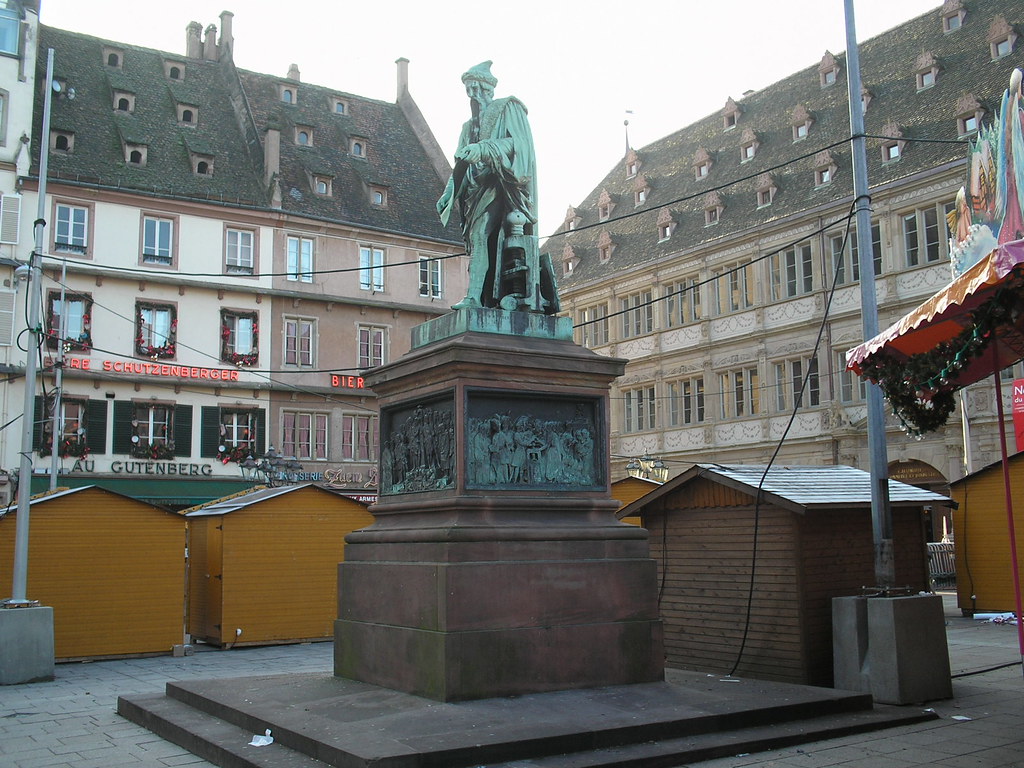
I can’t believe I never thought to ask my own brother before! Back in January, when he took us to the used book vendors in place Gutenberg in Strasbourg, I discovered a book I couldn’t resist buying—despite the 30€ price—for no other reason than that I had mentioned the language it described in my dissertation. It was La Langue des Makere, des Medje et des Mangbetu, par A. Vekens, Dominicain (Editions Dominicaines Veritas, 1928), and the pages were still uncut. But even then, it didn’t cross my mind to quiz my brother about the CAR languages he had worked on.

Here are some examples of bracketed relative clauses.

Mangbetu (Vekens 1928) in Congo

A belu [si kesia né môlô ta kira ne] kambuba e faranga môkôtu.
Les hommes [ceux font le travail avec intelligence ceux-là] gagneront des francs beaucoup.
‘Those who work smart get plenty money.’

Sango (my brother, pers. comm.) in CAR

Tene [so mo tene so] ake nzoni ape.
word [thus you say thus] is good not
‘What you say is no good.’

Jabêm (Dempwolff 1939) in PNG

Lip [tec aê gawa nec] gêjac mocseŋ teŋ.
trap [Dem I I-set Dem] it-catch bushfowl one
‘The trap I set caught a bushfowl.’

South Watut (Holzknecht 1989) in PNG

Jek i-ra jiyaʔ ri naip a [ti ra-gin afu ŋga]
Jack he-cut tree with knife [Dem I-give to Dem]
‘Jack cut the tree with the knife which I gave him.’

Patep (Lauck 1980) in PNG

Ông ob tyoo yii yuu nuhu [wê ob lam ge]
you will dodge spear two arrow [Rel will come Rel]
‘You will dodge the spears and arrows that will come.’

Leave a comment

Filed under Africa, Central African Republic, language, Papua New Guinea

Wordcatcher Tales: gatvol, makwerekwere, utari

I’m still bogged down with obscure linguistic research projects that are not yet bloggable, and already half-blogged books on depressing 20th-century European history that I haven’t finished reading. But I see that two other bloggers, Khanya and No-sword, have explored the social context of some interesting vocabulary from two far-outlying parts of the globe, the northernmost island of Japan and the southernmost country in Africa. So, without further ado, here are snippets of Wordcatcher Tales by proxy.

Steve at Khanya appends the following glossary to a post on Xenophobia – the gatvol factor in South Africa:

1. Gatvol – which being interpreted for the benefit of makwerekwere [2], is Afrikaans, meaning literally “hole full”, or more idiomatically, “Fed up”, or “had enough”, or “had it up to here”.

2. Makwerekwere – which, being interpreted for the benefit of foreigners, means foreigners.

Another South African blogger who in his home country was mistaken for a Nigerian explains the second term more specifically at The Zeleza Post:

Makwerekwere is the derogatory term used by Black South Africans to describe non-South African blacks. It reminds one of how the ancient Greeks referred to foreigners whose language they did not understand as the Barbaroi. To the Black South African, makwerekwere refers to Black immigrants from the rest of Africa, especially Nigerians. I was confounded by the fact that Black South Africa had begun to manufacture its own kaffirs so soon after apartheid.

Meanwhile, Matt at No-sword investigates why the Hokkaido Ainu Association, founded in 1930, changed its name to the Hokkaido Utari Association in 1961, and has now announced it will revert once again to its original name.

Ainu is obviously the name used to refer to the Ainu as a people distinct from other peoples; this is directly from the Ainu word aynu which means, predictably, “man” or “person” (as opposed to “supernatural being”).

Utari is a more interesting word. As a loan word in Japanese, it is usually glossed as “compatriot” (“同胞”, dōhō), which usually implies “fellow Ainu”. Its etymology in Ainu is more interesting.

Leave a comment

Filed under Africa, Japan, language, nationalism

Linguists Bearing Orthographies, 3: Dempwolff vs. Labialized Labials

One of the things I’ve discovered in puttering about lately in my Sprachbundesgarten of little-known languages in Papua New Guinea is that Otto Dempwolff, the granddaddy of historical and comparative Austronesian linguistics, did not recognize the possibility of labialized labial phonemes (/pʷ/, /bʷ/, /mʷ/), despite how common they are among Oceanic languages. Since Dempwolff was the chief linguistic adviser of most of the German Lutheran missionaries in New Guinea, his theoretical insights as well as limitations influenced many of the new writing systems devised by those missionaries for evangelical and teaching purposes.

I had long been aware of his influence on Jabêm, a Lutheran mission and school lingua franca in Morobe Province, PNG, where I did fieldwork in 1976. (My host father had been a teacher in Jabêm schools.) Dempwolff spent the last months of his life completing a grammatical description of Jabêm, working with a missionary, Heinrich Zahn, who was no mean linguist himself. Dempwolff died in 1938 and the grammar appeared in 1939, a rather inauspicious year that helped condemn that work to undeserved obscurity.

In Jabêm orthography, labialized velars, that is, velar consonants with secondary rounding, are written as kw, gw, ŋgw, but labialized labials are written with an intermediate round vowel before the vowel that forms the nucleus of the syllable. So [mʷa] is written moa, [pʷa] is written poa, [bʷa] is written boa, and [mbʷa] is written mboa. This seems inconsistent to me, but presents no major hurdle for people writing Jabêm. (A much greater nuisance stems from the decision to distinguish the two sets of mid vowels by marking the much more frequent member of each pair with a circumflex: upper-mid ô, ê are far more ubiquitous than lower-mid e, o.)

Jabêm’s closest relative is Bukawa, which has been so long overshadowed by Jabêm’s prestige that its literate speakers wrote in Jabêm rather than in their own far more varied and numerous village dialects. Now, however, a linguist from SIL International has published a grammar of Bukawa, based on a dozen years residing among its speakers. In Bukawa orthography, labialization is uniformly indicated by -w-, whether it follows a labial, velar, or even alveolar consonant (/dʷ/). (Bukawa also has a voiceless lateral, written lh, and voiceless semivowels, written yh and wh. Fascinating, and rather exotic within its Sprachbund.) In other respects, the new Bukawa orthography follows its Jabêm predecessor.

I’ve only recently discovered that the Sio language on the north coast of the Huon Peninsula suffered a far worse orthographic fate. The Sio community should have been assigned to the Jabêm church circuit, which included mostly Austronesian-speaking communities along the southern half of the Huon Peninsula and along the south side of the Huon Gulf. Instead, Sio was assigned to the Kâte circuit, which used a Papuan lingua franca. Worse yet, the orthography of Siâ (as it is written) was based on that of Kâte, which was also greatly influenced by Dempwolff. The dedication page of the Lutheran missionary Pilhofer’s 1933 grammar of Kâte reads Herrn Professor Dr. Otto Dempwolff / in Dankbarheit und Verehrung / Ehrerbietigst Gewidmet.

Both Kâte and Sio have a set of “labiovelar” stops that are written as (voiceless) q and (voiced) q. (My boldfaced q stands for a curly q with hooked serifs that I cannot properly render here.) Each language also has a prenasalized “labiovelar” that is written ŋq in Kâte and mq in Sio. Sio also has a “labiovelar” nasal, written ɱ. Most of the German-era orthographies represent the velar nasal with ŋ and people still seem quite comfortable with it, calling it the ‘long en’.

Michael Stolz, the missionary who first reduced Sio to writing, translated and compiled a book of Bible stories, catechisms, and hymns in the language, which was edited and published posthumously by his successor, Hans Wagner. After Stolz died in 1931 (after 20 years in the field), Dempwolff used his materials to write up a very rough sketch of Sio grammar, which was never published, but was transcribed by “L. Wagner” (perhaps the wife of Hans) in 1936. Dempwolff retained the “labiovelar” class of consonants.

In 1985, an SIL couple, Stephen and Dawn Clark, arrived to work among the Sio people, who soon asked about reforming their orthography to better match the conventions of Tok Pisin and English, with which most villagers were now more familiar. The Clarks discovered that the “labiovelars” were all pronounced as labialized labials ([pʷ], [bʷ], [mbʷ], [mʷ]), even by the oldest villagers they could find. (Judging from his fieldnotes, a colleague of mine discovered the same thing when he collected survey data on Sio in 1976.) The word for ‘snake’, for instance, was spelled ɱâta and pronounced [mʷɔta]. Its cognates are pretty widespread in Oceanic languages.

So the Sio people readily abandoned their old symbols for the labiovelars (the two varieties of q and the long ɱ) in favor of the usual labial consonants with a superscript ʷ. Feeling strongly that the labialized labials were unit phonemes, they at first insisted on writing the labialization with a superscript, but after several years they got used to writing pw, bw, mbw, and mw instead of troubling with superscripts.

So now I’m wondering, could the “labiovelars” in Kâte also be reanalyzed as labialized bilabials? Pilhofer (1933) says quite clearly that his q and curly q are both labiovelar stops, in which kp and gb are coarticulated and simultaneously released. But now I’m suspicious. I wouldn’t question Pilhofer if Kâte were an African language, but I haven’t encountered such coarticulated stops in New Guinea. Then again, I haven’t looked at the phonologies of many Papuan languages.

References and further details on the above are now available in Wikipedia. Earlier disgruntled musings on linguists and Oceanic orthographies can be found here and here.

UPDATE: According to the World Atlas of Linguistic Structures, Eastern New Guinea is one of only two areas of the world with labiovelar stops. The other is Central and West Africa. Kâte is included in their very small sample of such languages, based on a Kâte dictionary published in 1977 (which I have never seen). So Pilhofer appears to have been correct, and Sio appears to have been doubly ill served, first by adopting a mismatched Papuan language for its orthographic model, and second by Dempwolff’s failure to recognize labialized labials.

Leave a comment

Filed under language, Papua New Guinea

Jenkins by Other Names

The Reluctant Communist: My Desertion, Court-Martial, and Forty-Year Imprisonment in North Korea, by Charles Robert Jenkins with Jim Frederick (U. California Press, 2008), p. 173:

[My defense attorney] introduced himself, and we made a little small talk. He asked me what he should call me. I told him something we used to say ages ago in the army: “You can call me anything you want, as long as you call me three times a day for chow and once a month to get paid.” So with that, he started calling me Charlie. I had never been called Charlie before in my life. Growing up, I was always Robert. When I was a teenager, I was Super. In the army, I was Jenkins. In North Korea, the three other Americans took to calling me C. R., while the Koreans sometimes called me Min Hyung-chan. (They gave me this name when I started acting—they needed something to put on the credits—but in person, I refused to answer to it.) So, although I have gone by many names in my life, Charlie was a new one. But now, thanks to Capt. Culp, a lot of people, especially everyone I now know in the U.S. Army stationed in Japan, refer to me as “Charlie.”

Leave a comment

Filed under Korea, language, military, U.S.

Romanian Idioms: Doamne, Paşti, paşte

Here are some entries featuring Doamne ‘Lord’ (vocative) and Paşti ‘Easter’ from the Dicţionar Frazeologic: Englez-Român, Român-Englez (Teora, 2007). I’ve added literal translations (in square brackets) and edited the idiomatic ones (except those in quotes) when the English seems too archaic, unfamiliar, or awkward (as many do).

The first such expression I learned was from way back in Army language school: la paştele cailor [at the-Easter of-horses] meaning ‘when pigs fly’, ‘when hell freezes over’, or “when two Sundays come in one week” (according to the Dicţionar Frazeologic, which also provides a synonymous la calendele greceşti [at the-calends Greek] ad calendas Graecas).

din an în Paşti [from year to Easter] once in a blue moon, once in a while

din Paşti în Craciun [from Easter to Christmas] once in a blue moon

Doamne ajută! [Lord help] God help me!

Doamne apără! [Lord defend] God forbid, “not for the life of me!”

Doamne/Dumnezeule [O Lord/O Lord-God] Good God! Great God Almighty! Goodness gracious!

Doamne fereşte [Lord forbid/protect] God forbid! Lord have mercy!

Doamne iartă-mă [Lord forgive me] God forgive me!

Doamne păzeşte [Lord guard] Lord have mercy!

Doamne sfinte [Lord holy] (archaic) see Doamne/Dumnezeule

BONUS: Here are a few idioms beginning with the verb a paşte ‘to graze on’ (compare pasture):

a paşte bobocii [to graze-on the-buds/ducklings/goslings] to be gullible or feeble-minded

a paşte vântul [to graze-on the-wind] “to gape at the moon; to catch flies”

paşte, murgule, iarbă verde (lit. ‘graze, o bay roan, on green grass’) “you may wait till the cows come home”

Leave a comment

Filed under language, religion, Romania

Romanian Idioms: a face din …, a face pe …

Here are some entries in the Dicţionar Frazeologic: Englez-Român, Român-Englez (Teora, 2007). I’ve added literal translations (in square brackets) and edited the idiomatic ones, except those in quotes.

The two patterns here are: a face din X Y lit. ‘to make from X Y’, corresponding to English to turn X into Y; and a face pe (Xul/Xa) ‘to do/make the X’, corresponding to English to play the X, where X is a definite noun indicating a type of person. Personal direct objects in Romanian require the untranslated preposition pe, which in other contexts most commonly translates into ‘on’, as in pe jos ‘on foot’.

a face din alb negru şi din negru alb [to make white into black and black into white] to blow hot and cold, to play fast and loose

a face pe cineva din cal măgar [to turn someone from a horse into an ass] to discredit (a discredita), or to humiliate (a umili) someone

a face din lână laie lână albă [to turn grey wool into white wool] “to turn geese into swans”

a face din noapte zi [to turn night into day] to turn night into day

a face din om neom [to turn a person into a nonperson] “to undo smb.”

a face din ţânţar armăsar [to turn a mosquito into a stallion] to make a mountain out of a molehill

a face din zi noapte [to turn day into night] to turn day into night

a face pe boierul [to play the lord] to play the lord, lord it (over others)

a face pe bolnavul [to play the sick] to fake illness

a face pe bufonul [to play the fool] to play the fool

a face pe clovnul [to play the clown] to play the clown, “to bear the cap and balls”

a face pe deşteptul [to play the clever] to play expert, give oneself airs

a face pe gazda [to play the host] to play host

a face pe mărinimosul [to play the benefactor] to pretend to be generous

a face pe mironosiţa [to play the prude] to pretend to be innocent

a face pe modestul [to play the modest] to fake modesty

a face pe moralistul [to play the moralist] to play the moralist

a face pe mortul [to play the dead] to play possum

a face pe naivul [to play the naif] to act naive

a face pe nebunul [to play the fool] to play the fool

a face pe neştiutorul [to play the ignorant] to feign ignorance

a face pe politicosul [to play the polite] to act polite

a face pe prostul [to play the idiot] to play the fool

a face pe savantul [to play the savant] to play the scholar

a face pe sfântul [to play the saint] to play the saint

a face pe tiranul [to play the tyrant] to play the tyrant

a face pe victimul [to play the victim] to play the victim

UPDATE: Here’s a nice idiom that begins with a more typical use of pe ‘on’.

pe dinafară trandafir, pe dinăuntru borş cu ştir [on outside rose, on inside borscht with pigweed] “fair without, foul within”

Leave a comment

Filed under language, Romania

Braille Family Resemblances and Mutations

Matt’s recent post on No-sword about Japanese Braille prompted me to look at other varieties, all of which derive in one way or another from the system first invented in France between 1821 and 1824 by Louis Braille (1809-1852), who was himself inspired by a more complex system of night-writing designed to allow military units to communicate in the dark without betraying their positions.

All varieties of Braille render the characters of their respective languages in a six-dot matrix (or did until until recently); all are read from left to right, even in Hebrew; all use word-spacing, even in Chinese and Japanese; and all tend to place diacritic characters before the characters they modify.

14   0_   0_   00
25   __   0_   __
36   __   __   __
EN:  a    b    c 

14   __ 0_   __ 0_   __ 00   _0 0_   _0 0_   _0 00
25   __ __   __ 0_   __ __   _0 __   _0 0_   _0 __
36   _0 __   _0 __   _0 __   00 __   00 __   00 __
EN:     A       B       C        1       2      3
   = cap-a   cap-b   cap-c   num-a   num-b   num-c

In English, the same formation of dots can represent either a letter or a number, depending on the preceding context. Each formation can also serve as a contraction, so that b = be, c = can, d = do, e = every, f = from, j = just, l = like, v = very, and so on.

The designers of Japanese Braille (点字) retained the letter = number equivalency, marking numbers with the same prefix, but introduced some genetic mutations to adapt to the kana syllabary. They redefined a b c d e as the vowels a i u e o, which is how everyone nowadays begins to recite the kana syllabary. The dots for these five letters are confined to positions 1-2-4 (a = 1, i = 1+2, u = 1+4, e = 1+2+4, o = 2+4), leaving positions 3-5-6 to render the consonant on each syllable, so that k = 6, s = 5+6, t = 3+5, n = 3, h = 3+6, m = 3+5+6, r = 5. The syllable n is written as m without any vowel in positions 1-2-4.

There are no capital letters in Japanese kana, but the same method is used to add the dakuten and handakuten marks to following consonants: a prefix with a dot in position 6 is used to transform h- into p-, while a prefix with a dot in position 5 is used as a to transform voiceless initials into their voiced equivalents.

14   0_   0_   00
25   __   0_   __
36   00   00   00
JP:  ha   hi   hu

14   __ 0_   __ 0_   __ 00   __ 0_   __ 0_   __ 00
25   __ __   __ 0_   __ __   _0 __   _0 0_   _0 __
36   _0 00   _0 00   _0 00   __ 00   __ __   __ __
JP:    pa      pi      pu      ba      bi      bu
   =  '-ha    '-hi    '-hu   ''-ha   ''-hi   ''-hu

Braille takes up a lot of space, so its regular users rely a lot on contractions. (There’s also a kind of Braille shorthand.) The word Braille itself is usually written with just the letters B-r-l. These contractions can have different meanings even in closely related members of the Braille family, like French and English. For instance, the French circumflex vowels are rendered by adding an extra dot in position six (which I will show as ^) to the first five letters of the alphabet, so â = a+^ (1+6), ê = b+^ (1+2+6), î = c+^ (1+4+6), ô = d+^ (1+4+5+6), and û = e+^ (1+5+6). (The filled dot 6 also adds a circumflex to Esperanto versions of Braille.) In English, these same contractions respectively indicate ch/child, gh, sh, th/this, and wh/which.

English double letters are contracted and rendered within a single cell by a different method: shifting the position of the dots but retaining their shape. Thus, the dots for b/but occupy positions 1+2, while bb drops to positions 2+3; c/can sits at 1+4, while cc drops to 2+5; d/do sits at 1+4+5, while dd drops to 2+5+6; and g/go sits at 1+2+4+5, while gg drops to 2+3+5+6.

A similar principle plays a key role in Korean Braille, invented in 1894 by a Canadian missionary who introduced some radical (and brilliant) mutations to adapt it to the (equally brilliant) Korean alphabet. Korean vowels occupy their own cells, while some diphthongs take up two cells. The letterㅏ(a) occupies dots 1+2+6, whileㅑ(ya) occupies its mirror image, dots 3+4+5. Similarly,ㅓ(eo) at 2+3+4 is a mirror image ofㅕ(yeo) at 1+5+6; ㅗ (o) at 1+3+6 is a mirror image ofㅛ (yo) at 4+3+6; ㅜ (u) at 1+4+3 is a mirror image ofㅠ (yu) at 1+4+6; and ㅡ (eu) at 2+4+6 is a mirror image ofㅣ(i) at 1+3+5.

The possible syllable structures of Korean are too numerous to fit into a six-dot matrix, so Korean syllables are written sequentially, typically (C)V(C), just as in French or English. In order to avoid putting spaces around each syllable, so that readers can distinguish initial from final consonants, Korean braille has two versions of every consonant, one for initial position, the other for final. Each consonant has the same shape in each position, but the one in final position is either lower than its initial counterpart or a mirror image.

Thus,ㄴ(n) occupies dots 1+4 if initial, but drops to 2+5 if final; ㄷ(d) occupies dots 2+4 if initial, but drops to 3+5 if final; andㅁ(m) occupies dots 1+5 if initial, but drops to 2+6 if final. Meanwhile, mirror-image consonants don’t drop, they flip:ㄱ(g) flips from dot 4 in initial position to dot 1 in final position; whileㄹ(r) flips from dot 5 to dot 3; andㅂ(b) flips from dots 4+5 to dots 1+2. As a result, Korean 점자 ‘dot characters’ display the same kinds of symmetry and inversion that the Korean alphabet itself displays.

Chinese Braille comes in at least two flavors, Cantonese and Mandarin. Both represent Chinese characters in three cells, one for the onset, the second for the rime, and the third for the tone, just as in Zhuyin/Bopomofo. In practice, however, tone is frequently left unmarked, generating a good deal of ambiguity. Perhaps the new system designed in the 1970s, which represents all three components in just two cells, will eventually solve that problem.

UPDATE: Matt has added a new post about attempts to render Japanese kanji in Braille. The more complicated method is geared to the shape of the kanji and requires two extra dots in each cell. The other method uses three six-dot cells per kanji. The first cell broadly classifies the type of character to follow, the second gives one mora of the Sino-Japanese reading of the character, and the third gives one mora of the native Japanese reading of the character. The second method strikes me as akin to the structural division of many written kanji into one part that broadly classifies the semantic domain, and another that indicates the (Sino-Japanese) sound value. The combination of native and Sinitic reading is also how Koreans routinely distinguish similar-sounding Chinese characters. It’s as if English speakers routinely distinguished similar-sounding Latin roots by saying ‘foot-ped-‘ vs. ‘child-ped-‘. The typical Japanese strategy, by contrast, is to cite a well-known compound in which the kanji occurs, just as English-speakers might distinguish ‘ped- as in pedestrian’ from ‘ped- as in pediatrics’.

2 Comments

Filed under China, Japan, Korea, language