The book I took along to read on my trip is so absorbing that I fear I shan’t be able to resist quoting numerous passages from it. In the introduction, Ian Buruma describes the role of walls erected to fortify China against the outside world. He describes first the role of the Great Wall in keeping barbarians at bay. Then he sketches a very different kind of wall, the “democracy wall” that sprang up during the thaw after Mao Zedong’s death in 1976, upon which Wei Jingsheng posted under his own name the famous essay on the Fifth Modernization. Mao’s eventual successor Deng Xiaoping “had announced four modernizations: in agriculture, science, technology, and national defense. Wei added democracy, without which, he wrote, ‘the four others are nothing more than a newfangled lie.'”
There is also a third wall, fictional, the wall of a prison cell. It was described by a brilliant novelist, Han Shaogong. Like many Chinese intellectuals, Han was forced to “go down” to a remote rural area after the Cultural Revolution. He spent the 1970s tilling the fields in a small Hunanese village. Out of this experience came an extraordinary novel, Maqiao Dictionary, which is a kind of spoof anthropological dissection of village life through the language of its people. Each chapter is inspired by a slang expression. One of these is “democracy cell.”
The story is told by a local gambler, whom Han springs from jail by paying his fine. Dressed in rags, his hair matted with lice, the gambler stinks so badly that Han makes him take a bath before hearing his story. Refreshed, the man starts to whine. He had been really unlucky this time.
Unlucky?
Yes, this time he had experienced the worst: a democracy cell.
A democracy cell?
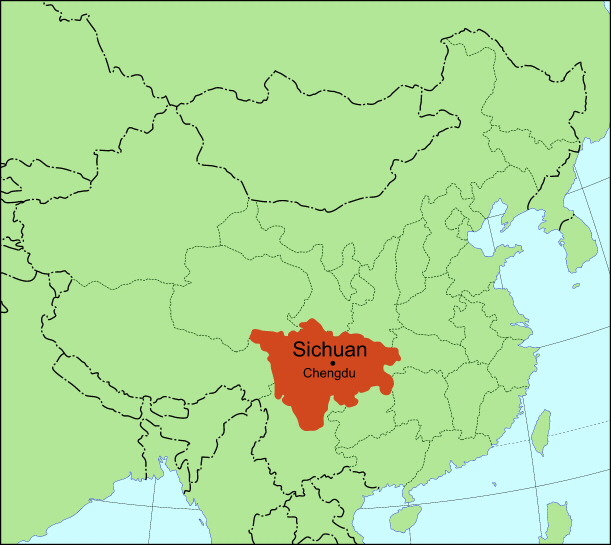
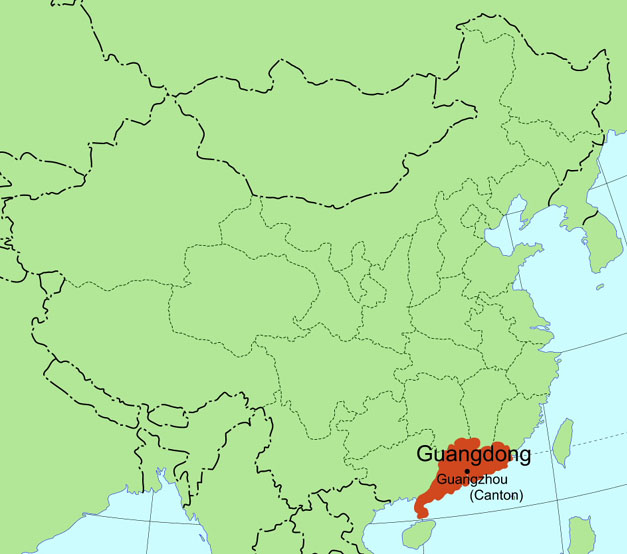
Well, says the man, it’s like this: In most prisons, every cell has a boss and a hierarchy of henchmen. The boss gets to eat the best food and the best spot to sleep, and when he wishes to peep at the female prisoners through a tiny window in the wall, his cellmates must prop him up, sometimes for hours, until they buckle under the strain. But, hard though it may be, at least there is order. Every man gets his food. You have time to wash your face and to piss. You might even get some rest. Such an arrangement is better than a democracy cell. Democracy is what you get when there is no cell boss. The men fight one another like savages. They all want to be boss. Unity breaks down. Gangs go to war: Cantonese against Sichuanese, northeasterners against Shanghainese. There is no chance of getting sleep. You can’t wash. You get lousy in no time, people are injured, and sometimes even killed.
This vignette of rural prison life is a perfect illustration of a common Chinese attitude toward democracy, or indeed political freedom. Many Chinese–and not just the rulers–associate democracy with violence and disorder. Only a big boss can make sure the common people get their food and rest. Only the equivalent of an emperor can keep the walled kingdom together. Without him, the Chinese empire will fall apart: region will fight region, and warlord will fight warlord. These assumptions rest on thousands of years of authoritarian rule, beginning with the first Qin emperor and his cursed Great Wall. And they are faithfully repeated by many in the West who presume to understand China….
“That Western-style stuff.” It is a recurring theme in China, and other autocracies outside the Western world, the assumption that only Europeans and Americans should have the benefit of democratic institutions. It is of course a theme running through European colonial history, too. But if China has a history of despots ruling over the great Chinese empire, it also has a history of schisms and disorder and disunity, of rebellions, and of brave, mad, and foolhardy men and women who defied the orthodoxy of their given rulers. Of course rebels are not necessarily democrats. But dismissing democracy as “Western-style stuff” would consign 1 billion Chinese to political subservience forever. That is why I approach the Chinese-speaking world in this book through the rebels, the dissidents, the awkward squad that resists authoritarianism. What is their idea of freedom? Or of China? What does dissidence mean in a Chinese society? What makes people try, against all odds, to defy their rulers? What chance do they have of succeeding? Will those virtual walls that make China the largest remaining dictatorship on earth every come down?
SOURCE: Bad Elements: Chinese Rebels from Los Angeles to Beijing, by Ian Buruma (Vintage, 2001), pp. xvii-xix