Category Archives: China

"It often takes a lack of education to be able to express things clearly"

Ian Buruma was visiting the island of Hainan in China in May 1998 when news arrived that General Suharto had been forced to step down as leader of Indonesia, partly as a result of massive student demonstrations.

“This is very important news for all Asian people,” said the keen young reporter for a local paper in Hainan. He was greatly excited, unusual in China when it comes to foreign news. We were sitting at the editorial office of a literary magazine. Most of the editors were there, as were some of the main writers. A young secretary passed around paper plates containing bananas and grapes. I was asked for my “foreign” view.

I could only repeat what I had read in the papers in Hong Kong. I said the Indonesian students had been inspired by the example of Tiananmen. This was received with nervous looks and polite laughter. One or two people scraped the floor with their feet. What did I think of the possibility of democratic change in China? It was not a question I relished, for I did not like to hold forth, in my imperfect Chinese, to people who knew the problems of their country better than I ever would. Still, I had to say something. So I said I saw no reason why Chinese could not handle a democracy if the Koreans, the Filipinos, the Taiwanese, the Japanese, and now, one hoped, the Indonesians could.

The usual discussion–usual among Chinese intellectuals, that is–about the peculiarities of Chinese culture ensued. It would take a long time for democracy to develop in China. China was too big. China was too poor. China was too complicated. Chinese history was too long. Chinese people needed to be more educated. They had little idea of democratic rights. If democracy came too suddenly, there might be chaos. And so on. The keen young reporter then asked me whether I could comment on a particularly “sensitive topic.” What about June 4, 1989, the Beijing Massacre? But one of the editors, the most senior person in the room, swiftly intervened, pointing out that I was a “distinguished foreign guest,” who had traveled far, so perhaps I could offer them some insights into the wider world outside China.

Later that same day, I went out on my own for a snack. Opposite my hotel was a half-finished concrete shell of a building. Much of Haikou, the main city of Hainan, was like that. The building boom of the early 1990s had come to a sudden halt, victim of the Asian financial crisis. Parts of Haikou looked as though they had been bombed. A kitchen had been improvised in one of the rooms of the half-finished building. Next door a jerry-built “beauty parlor” was a front for a brothel. A young man, his shirtless back shiny with sweat, was tossing noodles about in a large pot. After some diffidence, he wiped his hands on his trousers and came over for a chat. We were joined by two of his friends and a girl in a filmy evening gown, who worked at another “beauty parlor.” They stared at me and said nothing.

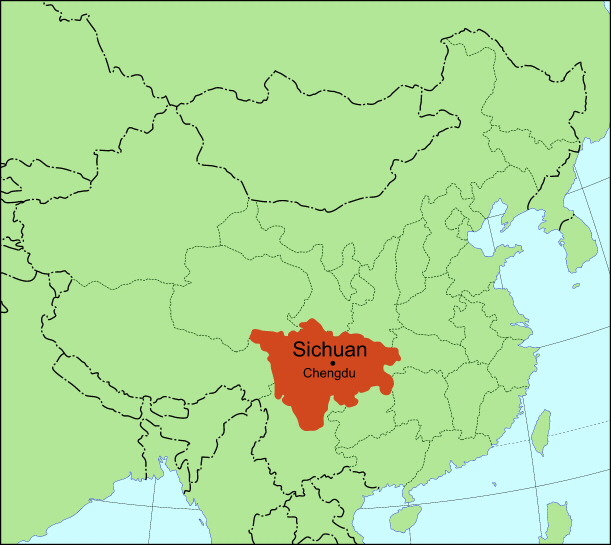
The cook had come down from a village in Sichuan with his sister, who was helping him run the food stall. But he was in debt to the businessman who paid his wages. That was the trouble with the economic reforms, he said. The rich bosses now controlled everything. I nodded, and slowly ate my noodles with garlic and squid. The chef then shifted in his seat and emptied his nose, by first blocking one nostril and snorting in a short, sharp burst, then repeating the procedure with the other nostril. His manners were far from elegant. But he was no fool. “You know,” he suddenly said, “in your country the individual has the right to control his own life. Not here in China. Everything is controlled from above. The Communist Party has complete power. That is why we have no rights here.”

The intellectuals at the literary magazine might well have shared the cook’s view. In fact, some almost certainly did. But one of the oddities in contemporary China is that it often takes a lack of education to be able to express things clearly. Or, to put it differently, it is those who live near the bottom of society who feel the lack of individual rights most keenly. That is why they generally get to the point more quickly.

SOURCE: Bad Elements: Chinese Rebels from Los Angeles to Beijing, by Ian Buruma (Vintage, 2001), pp. 232-233

Leave a comment

Filed under China, Indonesia

Imprisoned in a "Democracy Cell"

The book I took along to read on my trip is so absorbing that I fear I shan’t be able to resist quoting numerous passages from it. In the introduction, Ian Buruma describes the role of walls erected to fortify China against the outside world. He describes first the role of the Great Wall in keeping barbarians at bay. Then he sketches a very different kind of wall, the “democracy wall” that sprang up during the thaw after Mao Zedong’s death in 1976, upon which Wei Jingsheng posted under his own name the famous essay on the Fifth Modernization. Mao’s eventual successor Deng Xiaoping “had announced four modernizations: in agriculture, science, technology, and national defense. Wei added democracy, without which, he wrote, ‘the four others are nothing more than a newfangled lie.'”

There is also a third wall, fictional, the wall of a prison cell. It was described by a brilliant novelist, Han Shaogong. Like many Chinese intellectuals, Han was forced to “go down” to a remote rural area after the Cultural Revolution. He spent the 1970s tilling the fields in a small Hunanese village. Out of this experience came an extraordinary novel, Maqiao Dictionary, which is a kind of spoof anthropological dissection of village life through the language of its people. Each chapter is inspired by a slang expression. One of these is “democracy cell.”

The story is told by a local gambler, whom Han springs from jail by paying his fine. Dressed in rags, his hair matted with lice, the gambler stinks so badly that Han makes him take a bath before hearing his story. Refreshed, the man starts to whine. He had been really unlucky this time.

Unlucky?

Yes, this time he had experienced the worst: a democracy cell.

A democracy cell?

Well, says the man, it’s like this: In most prisons, every cell has a boss and a hierarchy of henchmen. The boss gets to eat the best food and the best spot to sleep, and when he wishes to peep at the female prisoners through a tiny window in the wall, his cellmates must prop him up, sometimes for hours, until they buckle under the strain. But, hard though it may be, at least there is order. Every man gets his food. You have time to wash your face and to piss. You might even get some rest. Such an arrangement is better than a democracy cell. Democracy is what you get when there is no cell boss. The men fight one another like savages. They all want to be boss. Unity breaks down. Gangs go to war: Cantonese against Sichuanese, northeasterners against Shanghainese. There is no chance of getting sleep. You can’t wash. You get lousy in no time, people are injured, and sometimes even killed.

This vignette of rural prison life is a perfect illustration of a common Chinese attitude toward democracy, or indeed political freedom. Many Chinese–and not just the rulers–associate democracy with violence and disorder. Only a big boss can make sure the common people get their food and rest. Only the equivalent of an emperor can keep the walled kingdom together. Without him, the Chinese empire will fall apart: region will fight region, and warlord will fight warlord. These assumptions rest on thousands of years of authoritarian rule, beginning with the first Qin emperor and his cursed Great Wall. And they are faithfully repeated by many in the West who presume to understand China….

“That Western-style stuff.” It is a recurring theme in China, and other autocracies outside the Western world, the assumption that only Europeans and Americans should have the benefit of democratic institutions. It is of course a theme running through European colonial history, too. But if China has a history of despots ruling over the great Chinese empire, it also has a history of schisms and disorder and disunity, of rebellions, and of brave, mad, and foolhardy men and women who defied the orthodoxy of their given rulers. Of course rebels are not necessarily democrats. But dismissing democracy as “Western-style stuff” would consign 1 billion Chinese to political subservience forever. That is why I approach the Chinese-speaking world in this book through the rebels, the dissidents, the awkward squad that resists authoritarianism. What is their idea of freedom? Or of China? What does dissidence mean in a Chinese society? What makes people try, against all odds, to defy their rulers? What chance do they have of succeeding? Will those virtual walls that make China the largest remaining dictatorship on earth every come down?

SOURCE: Bad Elements: Chinese Rebels from Los Angeles to Beijing, by Ian Buruma (Vintage, 2001), pp. xvii-xix

Leave a comment

Filed under China

Chinese now no. 3 language in Canada

China’s People’s Daily recently reported that Chinese is now the no. 3 language in Canada:

In Canada if you don’t speak English or French it is most likely that you speak Chinese. This is indicated by the latest census conducted by the Canadian government. According to the statistics Chinese has become a No. 3 language used in Canada and the number of people who speak Chinese keeps on increasing.

According to Nouvelles d’Europe from 1996 to 2001, the population whose mother tongue is Chinese grew 18 percent and reached 870,000 – about 2.9 percent out of 31.4 million of the population in Canada, a rise 0.3 percent over the original Chinese proportion of 2.6 percent. Most of the Chinese-speaking population live in BC and Ontario, Vancouver and Toronto being the two most populous cities.

Is this really news to anyone? I wonder what the no. 3 language in Japan is: Chinese or Korean?

Leave a comment

Filed under Canada, China, language

Ads Aimed at Foreigners in Japan, 1915

J. Curnow & Co., Ltd., (Established 1867.) 82, Yamashitacho, Yokohama

FOOD SPECIALISTS

Depot for the Largest Variety of Imported

GROCERIES AND PROVISIONS

Missionaries and Foreign Residents in Japan, when ordering from Curnow’s, have the advantage of being supplied with only the freshest goods at lowest possible prices, as well as the satisfaction of knowing that all orders receive prompt and personal attention.

Immediate Dispatch after receipt of every mail.

General Orders (assortment of groceries) are forwarded Carriage Paid to any Railway Station in Japan. Deliveries Free in Tokyo by Special Messenger.

Order Forms, Addressed Envelopes and Post Office Remittance Forms Supplied Free.

Write for Catalogue.

Curnow’s (J. Curnow & Co., Ltd.), 82, Yamashitacho, Yokohama, Tel. 82

Postal Address: P.O. Box No. 82

Telephone (Long Distance) No. 82

Furikae Chokin (Tokyo) No. 82

Business Address: No. 82 Yamashita-cho, Yokohama

Branches: Kobe, Nagasaki & London.


Established 1899.

T H E  Y A M A T O

34-35, Benten-dori, Yokohama, Japan.

The first high grade hosiery house.

Retail, Wholesale, Manufacturers.

Cotton, Cashmere, Linen, Silk and Mixtures, and Silks of every kind.

Stockings! Socks!!

Embroidered Dress Patterns of all kinds.

Embroidered Blouse Patterns of all kinds.

Embroidered Kimonos and Wrappers,

  All kinds of Linen Goods,

  All kinds of Quilted Goods,

  All kinds of Babies’ Goods,

Silk and Lawn Underwear of every kind,

  etc., etc., etc.,

The Largest Mail Order House for Foreign Countries in Japan.


PACIFIC MAIL STEAMSHIP Co.

The Sunshine Belt To and From the Orient.

Largest Steamers – Finest Service – Best Cuisine

[image] S. S. Korea

FLEET.

Mongolia, 27,000 Tons.

Manchuria, 27,000 [ditto]

Korea, 18,000 [ditto]

Siberia, 18,000 [ditto]

China, 10,200 [ditto]

Nile, 11,000 [ditto]

Persia, 9,000 [ditto]

[image] S. S. Mongolia

The American Line.

Operating Between Manila, Hongkong, Shanghai, Nagasaki, Kobe, Yokohama, Honolulu, and San Francisco.

Cuisine under personal supervision of Mr. V. MORONI, one of the world’s most famous caterers.

General Office: San Francisco. Agencies: Everywhere


RONEO APPLIANCES

Up-to-date & Economical

The Roneo Duplicator is indispensable to all persons engaged in MISSION WORK. It is of interest ot all readers of this book, because as educationists you are keen to educate in the most thorough manner. Whatever the subject be, copies can be reproduced at the rate of 100 per minute, and these copies help all concerned to follow a subject with greater ease.

We have Rotary Machines from 60 Yen Upwards or Flat Machines from 33 Yen Upwards.

[image] This is the No. 10 Machine with Automatic Feeding and Inking Device.

Remember our Guarantee is 10 years.

Catalogues sent on Mentioning this Book.

77 Main Street, Yokohama 77

Roneo Office Appliances

Everything for the Up-to-date Office.

The Roneo Copier will copy your Mail WITHOUT WATER.

The Roneo Duplicator for reproducing 5000 Copies from one original.

The Roneo Litho is invaluable for reproducing Bills of Lading, Manifests, Specifications, etc.


A well equipped office is generally the secret of business success.

Roneo-ize your office and be successful.

Consult us for advice on new systems.

Show Rooms and Chief Office:

77 Main Street, Yokohama 77

Branches at Tokyo, Kobe and Osaka.

SOURCE: The Christian Movement in the Japanese Empire, including Korea and Formosa, a Year Book for 1915 (Conference of Federated Missions, Japan, 1915), end pages

J. Curnow was replaced by the Inter-Mission mail-order service in Japan during the 1950s and 1960s. In the diplomatic world, Peter Justesen plays a similar role today.

Leave a comment

Filed under China

Evangelistic Work among Koreans Abroad, 1915

Korean Work in Tokyo and Honolulu – There are at present more than 500 Korean students studying in Tokyo. They are largely picked men whose influence will be disproportionately great when they return to their native homes. The Korean Young Men’s Christian Association has since September 7th, 1907, been working directly, and in co-operation with the Chinese and Japanese Young Men’s Christian Associations to bring these students to a vital faith in Jesus Christ. Besides the voluntary help given by the students themselves, three Korean Secretaries give their entire time to supervising this work….

Dr. Sigman Rhee [sic, emphasis added], the first Korean student secretary, has this year organized a Korean Young Men’s Christian Association in Honolulu, and Mr. Choi Sang Ho, one of the secretaries of the work in Tokyo, has been sent there to aid in the completion of the organization.

SOURCE: “Korea, Part IV, Chapter II: Young Men’s Christian Association,” by Frank M. Brockman, in The Christian Movement in the Japanese Empire, including Korea and Formosa, a Year Book for 1915 (Conference of Federated Missions, Japan, 1915), pp. 438.

Location – Yong Jung is a station of the Canadian Presbyterian Mission. It is not in Korea, but across the border in the heart of the country known to the Koreans as North Kando, to the Japanese as Kanto[u] [Kwangtung, as in Kwangtung Army], and to the Chinese as Chientao [Jiandao]. The Japanese name for Yong Jung is Ryosai, and the Chinese Lung Chingtsun, or Lutaokou.

This station was opened in July 1913, for the purpose of getting in touch with, and carrying on work among the large numbers of Koreans who have of late years moved into Manchuria. Many of them are Christians, who have been connected with the Church in the thirteen provinces of Korea.

The territory connected with this station is all north of the Tuman River, which throughout its course is a boundery [sic] between China and Korea. It extends north from this river about 250 miles, and from east to west about 130 miles. It is bounded on the east and north-east by Russia. In this territory there are about 200,000 or 250,000 Koreans, and about an equal number of Chinese. There about eighty groups of Christians connected with the Canadian Presbyterian Mission, besides quite a number of Churches connected with the Church of Christ in Korea. In 1912, before the station was opened, twenty-eight Presbyterian groups were reported.

Organization of Work – Among the women there are three missionary societies which direct the work in certain Churches, and contribute the support of two Bible women who carry the Gospel to non-Christian villages.

The men have an evangelistic society covering the whole field. This society raises money for the support of a native pastor and an evangelist, the latter of whom is working among Churches and non-Christians in an eastern district near the Russian border. In addition to these, another evangelist is supported by contributions from the Bible women, colporteurs of the Bible Society, and other workers in the field.

SOURCE: “Korea, Part V, Chapter III: North Kando, Canadian Presbyterian Mission,” by W. R. Foote, in The Christian Movement in the Japanese Empire, including Korea and Formosa, a Year Book for 1915 (Conference of Federated Missions, Japan, 1915), pp. 444-445.

Leave a comment

Filed under China

Japan and the War, 1915

Japan and the War – From the time Japan entered the World-war last summer, down to to-day, she appears to have acted scrupulously and considerately in all her dealings with friend and foe alike.

Sympathy with Germany – The true attitude of Japan to the war has been little known and perhaps less understood, and we must wait for the close of the war before all that can be said to her credit shall be made public. There were many considerations which would naturally have strongly influenced Japan to maintain either a neutral position in the war, or to become an ally of Germany. Japan’s large trade with Germany, the fact that many of her doctors and other professional men have been educated in Germany and hence are strongly German in their sympathies, and the very important fact that Japan’s military organization is copied after Germany and many of the military leaders have been trained in Germany–all combined to produce a very strong sympathy with that nation.

Japan’s Share in War – It was no easy task which Count Okuma faced in leading the nation unitedly to support its ally, England, and to engage early in the attack upon Kiaochau and the successful conquest of that port. It is not difficult to imagine how different would have been the condition of the great port cities of the Far East, Hongkong, Shanghai, Tientsin, and others, had Japan pursued a different policy and failed to render useless for German military purposes the port of Kiaochau, with its splendid base for the German navy. Her effective patrol of the Pacific guaranteed safety and security to ports and shipping of all nations, which the British navy was entirely unable to provide. The career of the Emden furnishes a suggestion of what might have occurred very generally throughout the Eastern waters, had Japan been less efficient in protecting the world’s shipping.

Kiaochou and Belgium – Her treatment of Kiaochou stands out in strong contrast with Germany’s treatment of Belgium, and her treatment of the German prisoners interned in Japan is greatly to her credit, when we bear in mind the indignities reported as borne by Japanese at the same time in Germany, and its natural effect upon the public mind.

Troops to Europe – The Government did not approve of the project favoured in some parts of Europe, and desired by some in Japan, of sending troops to the European war. It was ready however and willing to send Red Cross nurses and to give such other practical assistance as it could.

Support of Russia – Perhaps in no way could Japan have offered a more practical support to her ally, or have given stronger evidence of her actual sympathy, than in her voluntary assurance to her recent enemy, Russia, that she was free to withdraw all her troops from Eastern Siberia, if needed for the war, without any fear of advantage being taken of it by Japan.

Japan in South Seas – The energy which Japan showed in wresting from the Germans their Island possessions in the South Pacific is further evidence of the valuable support which she is giving to her allies. Japan well knows that in doing all this she is making of Germany an implacable enemy, and is sacrificing a relationship of great possibility, both commercially and politically.

Had the designs of Japan upon China been as selfish and inconsiderate as many are inclined to suppose, it is difficult to understand why she did not, at the outset of the war, throw her lot with Germany, whose chances of success, at least at that time, gave promise of being far greater than they appeared later on, and whose support would have been most valuable if Japan had designs regarding Chinese territory and wished to appropriate a part of that country to herself.

Relations with America – As a result of the restless activity of Jingoists on both sides of the Pacific, it is not too much to say that at times during the past year conditions have been exceedingly sensitive and gave rise to no little anxiety as to what might follow. The attitude of the two governments toward each other has at no time been such as to occasion deep concern, but the continuous and unabating sensational reports and cablegrams which have been sent back and forth have occasioned much unrest, and there has been at times fear what thoughtless persons might be led to do under the circumstances. One must carefully consider what might follow if some reckless and hotheaded youth should lead in an assault upon the American Embassy in Tokyo, plunging his country into serious international difficulties….

Relations with China – The developments of the past year have revealed an attitude of China towards Japan, and of Japan towards China, which is the ground of great discussion and difference of opinion. It is plain to see that there is apparently a fear of Japan on the part of China, and a misunderstanding of Japan on the part of foreigners dwelling in China, which must cause Japan in any case great uneasiness.

Distrust of Japan – It is difficult to understand why China should prefer to have her territory under German influence rather than under Japanese influence, but so it would seem. Why Englishmen in China should distrust a country which has already done them such good service, as Japan has done to the foreigners in China since the war began, it is hard to explain; but if the foreign press is to be believed, and if reports which come to Japan are to be given any credit, there is certainly at present a most antagonistic feeling toward Japan on the part of very many.

SOURCE: “General Survey,” by John Lincoln Dearing, in The Christian Movement in the Japanese Empire, including Korea and Formosa, a Year Book for 1915 (Conference of Federated Missions, Japan, 1915), pp. 7-11.

Leave a comment

Filed under China

Aging Asia

“The impending tempo of population aging in China is very nearly as rapid as anything history has yet seen,” says Nicholas Eberstadt in “Power and Population in Asia” in the Hoover Institution’s Policy Review, No. 123. “Although China’s population will hardly be as elderly as Japan’s by 2025, its impending aging process promises to generate problems of a sort that Japan does not have to face. The first relates to its national pension system: Japan’s may be financially vulnerable, but China’s is nonexistent.”

At this juncture … sub-replacement fertility is thought to characterize every country and locale in East Asia save tiny Mongolia. In Southeast Asia, Singapore and Thailand are already sub-replacement societies, and Indonesia appears to be rapidly closing in on the replacement fertility level. As for South and Central Asia, Sri Lanka and Kazakhstan are outposts of sub-replacement fertility within the region.

Russia’s decline is much farther along.

Modern Russia has given the lie to the ameliorative presumption that literate, industrialized societies cannot suffer long-term health declines during times of peace. According to Moscow’s official calculations, the country’s life expectancy was lower in 2001 than it had been in 1961-62, four decades earlier. For Russia’s men, life expectancy had dropped by almost five years over that interim–but female life expectancy was also slightly down over that period. This anomalous circumstance could not be entirely attributed to the deformities of communist rule, for both male and female life expectancy were lower in 2001 than in 1991, the last year of Soviet power….

In absolute arithmetic terms, this Russian mortality crisis qualifies as a catastrophe of historic proportions. Over the extended period between 1965 and 2001, age-standardized mortality for Russia’s men rose by over 40 percent. Perhaps even more surprising, it also increased for Russia’s women by over 15 percent.

Another looming problem for East Asia is the sex ratio, expressed in terms of the number of males for every 100 females.

China’s tilt toward biologically impossible sex ratios at birth seems to have coincided with the inauguration of its coercive antenatal “one child policy,” which was unveiled in 1979. Is Beijing’s population control program responsible for these amazing distortions? A tentative answer would be yes–but not entirely. In other Chinese or Confucian-heritage populations where oppressive population control strictures were not in force–Hong Kong, Taiwan, Singapore, South Korea–unnatural sex ratios at birth also emerged in the 1980s and 1990s. In these other spots, the confluence of son preference, low fertility, and sex-selective abortion likewise have distorted the sex ratio at birth–although nowhere so much as in China today. In most of those other locales, moreover, recent data suggest that sex ratios at birth are lower than they were in the early 1990s (Taiwan, South Korea) or even the 1980s (Singapore), while China’s rise shows no signs of reversing…. Only two provinces in the entire country–the non-Han regions of Tibet and Xinjiang–reported sex ratios within the biologically normal human range. At the other end, three provinces (Hubei, Guangdong, and Anhui) tabulated child sex ratios of almost 130–while three others (Hainan, Hunan, and Jiangxi) returned with ratios of over 130.

So where can we look to balance these trends?

Interestingly enough, the Asian Pacific power with the most strategically favorable profile may be one that we have not yet discussed: the United States.

By the UNPD’s [United Nations Population Division’s] medium variant projections, the United States is envisioned to grow from 285 million in 2000 to 358 million in 2025. In absolute terms, this would be by far the greatest increase projected for any industrialized society; in relative terms, this projected 26 percent increment would almost exactly match the proportional growth of the Asia/Eurasia region as a whole. Under these trajectories, the United States would remain the world’s third most populous country in 2025, and by the early 2020s, the U.S. population growth rate–a projected 0.7 percent per year–would in this scenario actually be higher than that of Indonesia, Thailand, or virtually any country in East Asia, China included.

In these projections, U.S. population growth accrues from two by no means implausible assumptions: (1) continued receptivity to newcomers and immigrants and (2) continuing “exceptionalism” in U.S. fertility patterns. (The United States today reports about 2.0 births per woman, as against about 1.5 in Western Europe, roughly 1.4 in Eastern Europe, and about 1.3 in Japan.) Given its sources, such population growth would tend, quite literally, to have a rejuvenating effect on the U.S. population profile–that is to say, it would slow down the process of population aging. Between 2000 and 2025, in these UNPD projections, median age in the United States would rise by just two years (from 35.6 to 37.6). By 2025, the U.S. population would be more youthful, and aging more slowly, than that of China or any of today’s “tigers.” (Furthermore, to state the obvious, neither a resurgence of HIV/AIDS nor an eruption of imbalanced sex ratios at birth look to be part of the U.S. prospect over the decades immediately ahead.)

Of course, such population projections always assume that humans will just keep doing what they always do, regardless of changing conditions. Fortunately, most humans have minds capable of adapting their behaviors to new circumstances.

via Arts & Letters Daily

Leave a comment

Filed under China, Indonesia

The "Cultural Glue" of Chinese Writing

In the introduction to a new reader in traditional Chinese culture, Victor H. Mair suggests that the culture embodied in the unique Chinese writing system has served as the “glue” that maintained continuity in the face of constant buffeting from every direction.

China’s society was not static and its culture was far from unvariegated. Coupled with the cyclical collapse of dynasties, this sociocultural volatility might well have led to the utter disintegration of Chinese civilization. What, then, held it together? What was the quintessential glue that prevented the dissolution of “this culture [of ours]”? We have no hesitation whatsoever in declaring that it was none other than dedication to the hallowed culture itself, bearing in mind that wen [Ko. mun, Jp. bun] means both “culture” and “writing.” That is to say, it was the traditional culture (wenhua) [Ko. munhwa, Jp. bunka] and all its attendant values, as embodied in the sacred script (wenzi) [Ko. munja, Jp. mo(n)ji] that bound Chinese civilization in a cohesive and enduring whole. By dint of diligence and through the good fortune of privilege, approximately 2 percent of the populace in premodern China attained full literacy and all the perquisites that pertained to it, which were not inconsiderable.

Given that full literacy normally brought with it both prestige and pecuniary benefit, it is small wonder that many men devoted their lives to the acquisition and exercise of the ability to write well. (With a few very rare exceptions, women were excluded from the enterprise of fine writing.) Those accustomed to universal literacy using an alphabetic script and a living, vernacular language, may find it hard to imagine the exceptional effort required to gain an advanced degree of competency in a highly allusive, dead (i.e., not used for speech) language written with an elaborate logographic script. For those who did put forward the required exertion, their command of the script, plus the satisfaction of knowing that they were contributing to the preservation of Chinese culture, made it all worthwhile.

In a footnote, Mair notes that “strictly speaking, the Chinese characters are not logographs, because not every character is equal to a word. Much less are the characters ideographs, a term that is often irresponsibly applied to them. Technically speaking, the Chinese script may be designated as morphosyllabic or semantosyllabic. The grounds for such a designation are outlined in John DeFrancis, The Chinese Language” (U. Hawai‘i Press, 1984).

With the twentieth century, however, the combination of culture and script began to unravel. With the overthrow of the Qing (Manchu) dynasty in 1911 by revolutionaries led by Sun Yat-sen (1866-1925), the institutional support for the examination system that upheld “this culture [of ours]” evaporated. By 1919, progressive intellectuals were promoting writing in the vernacular, and radical activists were proposing the adoption of an alphabetic script. A direct assault on the script itself came with the promulgation of thousands of simplified characters by the Communist government during the 1950s and 1950s. An outrageous affront to those who cherish the script and all that it embraces, the simplified characters were seen by reformers as essential for expanding literacy to workers and farmers and necessary for the sake of efficiency in diverse types of communication.

By the end of the twentieth century and the beginning of the twenty-first century, a new threat to the traditional script was emerging: the computer. IT (information technology) specialists are acutely aware of the tremendous stumbling blocks in the way of free and easy access to electronic data processing by users of Chinese characters. The input, storage, and management of a script consisting of tens of thousands of discrete elements poses mind-boggling problems in comparison with the couple hundred letters and typographic characters of the ASCII (American Standard Code for Information Interchange). The economic costs in terms of vastly larger memories, slower manipulations, more frequent crashes and bugs due to overly intricate programming, and so forth are staggering.

One of the most poignant ironies of the saga of characters in computers is that the alphabet has come to their (partial) rescue. Of the hundreds and hundreds of schemes that have been devised for inputting Chinese characters in computers, by far the most popular are those relying on the alphabet. And, of the alphabetic schemes, those that rely on whole words rather than single syllables are much more user-friendly and computer-friendly. For example, both computers and human beings find it easier to analyze the following eight syllables of a journal title as Zhongguo lishi dili luncong (Collected Papers on Chinese Historical Geography) than as zhong guo li shi di li lun cong (central kingdom successive scribe/history ground principle discussion cluster). Herein lurks a danger. Once computers and human beings get used to parsing strings of syllables into words rather than resolutely keeping them separate, alphabetic inputting is on its way to becoming an independent script.

The defenders of the characters, who also view themselves as defenders of the last bastion of Chinese culture, have not been slow to recognize this threat, and they have been adamantly opposed to any hint of a move toward legitimation of the formal establishment of what is called fenci lianxie (‘word division’). Throughout history, Chinese scholars have always resisted the insertion of spaces between words. In fact, until the twentieth century, there was no concept of ci (‘word’), only that of zi (‘[syllabic] graph/character’). Despite the vociferous opposition of the defenders of characters, the Chinese government has officially established a set of Basic Rules for Hanyu Pinyin Orthography and private software companies and individuals are producing their own refinements apace.

Willy-nilly, pinyin orthography is becoming a reality.

Does that mean the cultural glue is cracking apart?

Leave a comment

Filed under China

Tsaatan Reindeer Herders in Mongolia

Most Mongolian nomads herd either sheep, goats, horses, cattle, or camels, but in the far north (around Lake Hövsgöl near Mörön) a small number herd reindeer, among them a people called the Tsaatan, in whose language tsaat means ‘reindeer‘. The Mongolian linguist Zandan Enebish profiles them in an article in IIAS Online Newsletter 26. Like horse herders, the Tsaatan use reindeer as pack animals and consume their milk in a variety of forms, but they do not slaughter their herds for meat.

According to L. Bat-Ochir Bold (Academy of Science of Mongolia), there are approximately 500 Tsaatan people living in Mongolia. They do not introduce themselves as Tsaatan, especially not to Darkhad and Uriankhai, who, almost as a rule, consider [them] a very strange and uncultured people…. The Tsaatan are somewhat familiar with the Mongolian language, but they have managed to preserve their unique ‘Tsaatan’ language among themselves. According to Bold, the Tsaatan language shares strong linguistic ties with the ancient ‘Uigur’ language.

The worldwide charity and ecotourism industrial complex seems to have the Tsaatan firmly in its sights, but their linguistic affiliation remains obscure. Ethnologue does not list Tsaatan even as an alternate name of any of the languages in Mongolia. Among the languages in Hövsgöl Aimag, north Mongolia, it lists Darkhat, an eastern Mongolian language with about 4,500 speakers (1956 census); Uriankhai, an alternate name for Tuvin (Tuvan), a northern Turkic language with about 27,000 speakers (1993 source); and Uyghur, an eastern Turkic language with only 1,000 speakers (1982 est.) in Mongolia, but more than 7,200,000 in China (1990 census).

Color me cynical, but I wonder if the “Tsaatan language” isn’t being deliberately exoticized, along with everything else about the Tsaatan people and their unique lifestyle.

Leave a comment

Filed under China, Mongolia

Traditional China: Multiethnic

The following excerpt from the introduction by Victor H. Mair to a new reader in traditional Chinese culture now in the works emphasizes the multiethnic nature of traditional China.

Linguistic multifariousness is only one of the more obvious features of “the Chinese mosaic.” The same may be said of almost any other aspect of Chinese culture and society. Perhaps the most obvious symbol of Chineseness in the larger world is cuisine. Yet it is impossible to point to any particular type of fare that stands for Chinese cooking in general. Hot pots have a Mongolic ancestry, pasta products are derived from Central and Southwest Asia, tea is ultimately from the hills of the Assam-Burma-Yunnan “Golden Triangle,” and so forth. Milk products are anathema to most lactose-intolerant denizens of the Central Kingdom, yet they are a staple of the people living along its northern reaches. The more sophisticated American aficionado of Chinese cooking knows very well the difference between Szechwanese and Cantonese cooking, staying clear of the former if he or she does not like spicy hot food and avoiding the latter if his or her palate is not attracted to gelatinous, gooey comestibles.

When we watch a Chinese film and see the heroine encased in a tight sheath slit to the thigh, she is basically sporting an item of Manchu dress. Some Chinese (those who wanted to ride horses) began to wear trousers in the latter part of the fourth century B.C.E., but only because they wanted to ward off the steppe peoples who introduced the domesticated horse (and the trousers) to their land, with devastating consequences. In premodern times, it would not have been difficult to recognize the ethnicity of a citizen of the Chinese empire by his or his costume.

As for Chinese empires, there was not one of them, but a long series of dynasties, more often than not erected on the ashes of their predecessors. Also more often than not, those who established new dynasties were–a supreme incongruity–groups from the north and northwest who either were themselves “barbarians” dreaded for their awesome military prowess or who had exceptionally close affinities with them. Numerous recent archeological discoveries have led to a salutary reconsideration of the nature of the millennial interactions between the inhabitants of the East Asian Heartland (EAH) and their septentrional neighbors. As a result, it is no longer possible to think of the latter only as “traders or raiders.” Instead, what we are finding is that–already at least from the late Neolithic period and continuing right through to the twentieth century–the northern peoples were involved not only in state formation, but also in the importation of vital cultural elements such as bronze metallurgy and the chariot. Consequently, in this Reader we place far greater emphasis than is usual upon the northern peoples, for we believe that, unless one takes them duly into account, one’s comprehension of Chinese history and appreciation of Chinese culture are bound to be flawed.

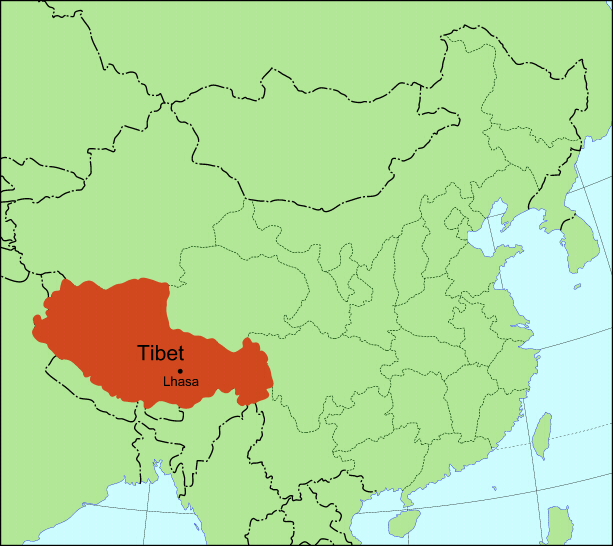
The intricacy of Chinese involvement with wide-ranging steppe peoples can be demonstrated by the derivation of Gesar … from Caesar. How, why, and when this originally Etruscan title of the Roman emperors came to be applied by the bards of a Central Asia nomadic confederation to their greatest hero is an intriguing story. What is not in doubt is that the Tibetans contested with the Chinese for hegemony during the Tang period (618-907). Indeed, the Tibetans not only occupied the strategically crucial Gansu Corridor for a century, but even invested the capital, Chang’an [= Xian, see map], for a while during the year 763 in western China and were dislodged only when the Tang authorities pleaded with the Uyghurs … to drive them off. Thus, a dynasty that was initially founded by individuals in whose veins ran nomadic blood and who maintained intimate ties with their northern ancestors found temporary salvation from destruction at the hands of northwestern nomads by a confederation of Turkic tribes (whom the Tang actually detested)–a typical series of events that recurred over and over again during the more than three thousand years of known Chinese history. We should remember, moreover, that the Tang dynasty represents the acme of cultural cosmopolitanism in East Asia. It should further be noted that the location of the Tibetans was by no means restricted solely to that of their current nation, which is occupied by Chinese troops. During the medieval period, they were also identified with the border areas to the northwest of the East Asian Heartland, and still today there are large concentrations of Tibetans in the provinces of Gansu and Qinghai.

Just as due consideration of the non-Sinitic peoples of the north and northwest is essential for any adequate study of the development of Chinese civilization, the same may be said for the non-Sinitic inhabitants of the south. Chinese culture (including Sinitic languages) marched southward slowly during the latter part of the first millennium B.C.E., gained momentum during the first millennium C.E., and was far from reaching its culmination even by the end of the twentieth century. The large and small pockets of non-Sinitic speakers that pepper all of the provinces south of the Yangtze River attest to the ongoing presence of peoples from radically different traditions within the territory of the modern Chinese state. The fusion of Chinese culture with the indigenous populations has led to a distinctive mix of regional cultures and ethniticities that is conspicuous in customs, languages, surnames, and physical types.

Leave a comment

Filed under China