Author Archives: Joel

Joel's avatar

About Joel

Executive Editor, Journals Dept. University of Hawai‘i Press

Impressions of Eastern Indonesia, 1991 and 2001

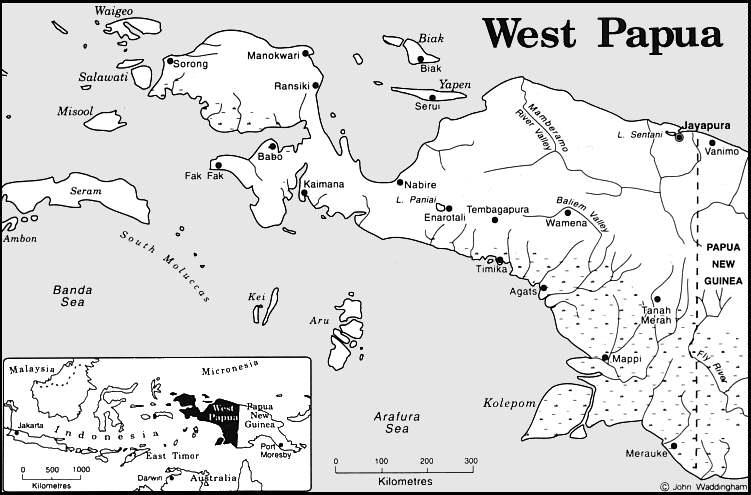
In 1991, I accompanied a Fulbright group research tour to Eastern Indonesia. Our Garuda flight from Honolulu landed first in Biak, West Papua (formerly Irian Jaya), our port of entry into Indonesia. It seemed like many other places in Melanesia, except that Indonesian, not an English- or French-based pidgin, was the national language.

By the time we landed in Ujung Pandang (Makassar) on Sulawesi (Celebes), we were clearly out of Oceania, with its sea breezes, root and tree crops, and easygoing lifestyle, and into Southeast Asia, with its monsoons, endless rice paddies, and hustle-bustle. Ujung Pandang was as far west as we got. We avoided the well-trodden tourist routes of Bali and Java, concentrating instead on booming, Southeast Asian, largely Muslim Sulawesi, and the faded glory of Oceanic, largely Christian Maluku (the Moluccas), the Spice Islands.

We were parceled out to host families at IKIP Ujung Pandang, the local teacher’s college. My host was a professor who had been trained at Manado, perhaps the top teacher-training college on Sulawesi, located in a mixed Christian-Muslim city on the tip of the far northern peninsula near the Philippines. The family was Muslim, very genteel, prosperous, and cosmopolitan. Voices were never raised in that household, at least not during my stay. They had relatives from the countryside living with them and helping with the housework. Neither my host mother nor her very demure and attractive college-age daughter wore head scarves, although the mother affected considerable shock one evening at an immodestly dressed female performer we saw on TV. (Nothing approaching current MTV standards, of course.) I jokingly offered to send her some black lipstick so she could keep up with the latest styles. My generous hosts were also kind enough to take me for an overnight trip to their rustic bungalow in Rappang, where they owned rice fields. The only intrusion of international tensions occurred when the son and daughter were showing me around their campus, Universitas Hasanuddin, where a few students at some distance away started chanting “Saddam, Saddam” when they saw foreign visitors. My hosts quickly moved us on.

Our group next took a scenic bus ride over sometimes dangerous mountain roads up to Rantepao, in Tana Toraja, where the heavily anthropologized highlanders were mostly Christian. The local governor had an American anthropology degree and showed us pictures of the Toraja float that had appeared in a recent Rose Bowl parade. The Toraja are famous for their huge, boat-shaped rice barns and their famously elaborate and gory funeral celebrations, featuring animal sacrifices and often a sizable contingent of foreign funeral tourists. I was one of those who preferred instead to spend a quiet day walking the cool mountain paths between rice fields, through hamlets where the sound of dogs and the smell of pigs served as reminders that we were in Christian territory.

Our next destination was the old Dutch colonial outpost of Ambon (Amboina), Maluku (Moluccas). Again we were parceled out to host families, this time near Universitas Pattimura, where the faculty was mostly Christian. My hostess was a dietician who lived in the Rumah Tiga neighborhood off campus and who cooked meals rather more Dutch than Indonesian. She was Christian and was not amused when I once greeted her with a “Salaam Aleykum.” From Ambon we visited a Christian village far up in the mountains, where we sampled coconut toddy; visited a very rustic resort near a Muslim village on the far side of the island, where baskets of drying sardines and cloves lay outside nearly every house; and made a side trip to an old Portuguese fort on the north side of the island, from where we could gaze across the straits at the huge island of Seram in the distance.

Our last major excursion was to the old sultanates of Ternate and Tidore and their formerly heathen, and now Christian hinterland on Halmahera. Our bus misaligned its rear axle early on, and spent a long time in the middle of nowhere driving over large rocks trying to knock it back into alignment, while we passengers waited beside the road. Finally, the drivers gave up and drove carefully to the next town large enough to have a repair shop, all the while steering against the sideways drift of the back wheels. After repairs, we finally reached Galela at the northern tip of Halmahera. There we spent a day at a small village of only recently converted (Christian) highlanders who had just moved down from the mountains. We enjoyed their betelnut and their outdoor cooking, with rice steamed in green bamboo roasted over open fires. Much to our collective relief, we took an airplane back to Ambon.

Indonesia is the most populous Muslim country in the world, and each year sends more pilgrims to Mecca than any other country but Iran, or so they said at the time. But the country is really many nations in one, and the government at that time saw religious intolerance as a threat to unity. I came away impressed with the modernizing influence of Islam in Indonesia, its tradition of learning, egalitarianism, enterprise, and openness to the outside world. But foremost in my mind are memories of warm hospitality, hot weather, wonderful food, boring lectures, vehement discussions, time to think, grueling bus trips, the joy of language-learning, and the sunrise and sunset calls to prayer.

By 2001, Ambon had turned into another Beirut, and the whole area had become another Lebanon.

Pattimura University and the neighborhoods that hosted us in Ambon, Maluku, were all burnt to the ground. My hostess may well have been killed. The whole island has now been carved up into armed enclaves.

The root causes in Ambon may include local Muslim resentment of local Christian dominance, coupled with local Christian fear of being overwhelmed by the huge Muslim majority of Indonesia as a whole. The factors that ignited and fueled that unrestrained outbreak of violence include the Asian economic crisis that hit in 1997; the subsequent collapse of the discredited Suharto regime and its authoritarian commitment to a unified secular state; the brutal, corrupt, and demoralized Indonesian military, which has done little to control the violence and much to worsen it, especially by allowing the influx of thousands of well-armed mujahidin (including foreigners) from the training camps of the Laskar Jihad paramilitary in Java. It is hard to imagine how to address any root causes until these thugs and local militias are disarmed and either detained or deported by some credible peacekeeping force. The Javanese-dominated Indonesian military has unfortunately not been such a force. The sectarian and ethnic violence is beginning to subside in Ambon, as it finally did in East Timor (only after foreign intervention), but it continues to escalate in West Papua, where many of the thuggish militias have reconstituted themselves after leaving Maluku.

In future blogposts, I plan to examine in more detail some of these events and their historical contexts.

1 Comment

Filed under Indonesia, religion, travel

Cultural vs. Situational Factors in East Asian Industrialization

In 1991, Ezra Vogel published a slim volume that attempted to analyze for lay audiences some of the reasons why certain East Asian nations achieved notable success in industrializing. He compared Taiwan, South Korea, Hong Kong, and Singapore, which he labelled the “Four Little Dragons.” Here are some highlights, from a book review published in 1994.

British and American advocates of minimal government interference in the marketplace will be countered not just by how different the role of Hong Kong’s government has been from the other little dragons, but by the historical perspective offered in the introductory chapter, where Vogel notes that only the earliest wave of industrialization, in England and later the United States, had the luxury of a rather leisurely pace of industrialization with relatively little government direction. The later waves in continental Europe and then East Asia had to rely much more heavily on government to secure the ever larger amounts of capital, complex technology, and skilled labor needed to leap the ever-widening gap between preindustrial and industrial society. Each new entrant in the race to industrialize had a clearer view of the finish line and ran down a better-trodden path to get there.

East Asian nationalists who, like European and American imperialists before them, tend to credit their success primarily to their own harder work and superior cultural heritage, will be forced to consider Vogel’s lists of the many situational factors that aided their efforts. And anti-American nationalists will object to the prominent position of U.S. aid on those lists. Vogel enumerates new global opportunities offered by the postwar world: (1) The United States, supremely self-confident and fervently anticommunist, was willing to open its markets and universities and share industrial technology with its allies to an unprecedented degree. (2) Thanks to the demise of colonialism and to bitter lessons learned during the prewar depression, international trade was far less restricted than before. (3) The growth of mass consumption enabled smaller countries to achieve manufacturing economies of scale that their domestic markets could not have supported. (4) Large Western corporations acquired a multinational outlook that placed loyalty to profits above loyalty to country of origin, making them willing, for profit, “to buy, sell, and lend anywhere in the world” (p. 11).

Vogel also lists more particular situational advantages East Asia enjoyed during the postwar period: (1) The U.S. poured in massive amounts of aid to build a bulwark against communism. Just as the Japanese economy benefited from U.S. procurement during the Korean War, the other regional economies benefited during the Vietnam War. (2) Confucian conservatives were discredited and large landowners were dispossessed. The postwar governments were not beholden to the traditional elite, so they were free to concentrate on production of new goods, not control of existing assets. (3) A keen awareness of external military threats and of inadequate land and natural resources lent an urgency that made leaders more willing to cooperate and citizens more willing to sacrifice for the common good. (4) Each country had large numbers of refugees and displaced people who comprised an “eager and plentiful labor force” (p. 88) dependent on their labor, not their land, for income. (5) Japan’s pioneering effort provided the little dragons with a goal, a way to get there, and the confidence that they could succeed in their drive to industrialize. As wages rose in Japan, corporations there were willing to transfer limited technology and manufacturing capacity to the other East Asian countries. However, some of those countries, most notably South Korea, succeeded in transferring more technology than Japan intended.

Did particular cultural traditions shared by East Asian societies confer any advantages? Vogel begins his chapter on explanations by downplaying the role of Confucianism in the spread of industrialization. He asks whether the ongoing industrial transformations of Islamic Malaysia and Turkey, Buddhist Thailand, and Roman Catholic Brazil and Mexico will not utterly invalidate cultural tradition as an explanatory factor. He further notes that Confucianism was blamed just as frequently during the 1940s and 1950s for retarding modernization, and asks why China, the heartland of Confucianism, has been slower to industrialize than the periphery, even before the socialist era. In answer, Vogel offers a tantalizing suggestion:

“If anything, just as Max Weber found that the greatest drive to industrialize in his time came in areas located far from Catholic orthodoxy, so in East Asia industrialization prospered in areas far from the centers of traditional Confucian orthodoxy, where trade and commerce were most highly developed. And successes occurred not under the old Confucian-style governments but in societies that had cast them aside for new governments, with very different political systems.” (p. 84) …

It is long past time to lay aside such vague, chauvinist notions as the Protestant ethic, the Confucian ethic, or the samurai spirit, and examine instead the more specific cultural traditions that aided industrialization. Vogel identifies four such traditions shared by Japan and the little dragons: (1) a “meritocratically selected bureaucracy” (p. 93) that not only implemented policy decisions, but formulated them; (2) an entrance examination system that afforded the means to overcome feudal favoritism and channel the most talented people into key leadership positions; (3) an emphasis on group loyalty and subordination of individual to group demands that well suited the level of centralized coordination needed to effect a modern industrial transformation; and (4) a tradition of lifelong self-cultivation.

Of course, the challenge today is not just to find a way for all nations to climb onto an industrial plateau, but to find ways to keep scaling new heights of innovation and growth in a postindustrial world. Orthodoxies of all kinds still seem to be among the primary obstacles.

SOURCE: Review of The Four Little Dragons: The Spread of Industrialization in East Asia, by Ezra F. Vogel (Harvard U. Press, 1991).

Leave a comment

Filed under China, economics, industry, Japan, Korea, labor, Vietnam

Samoan Slavery Sentencing Stalls

The end of the biggest human trafficking case in U.S. history seemed imminent, with Attorney General John Ashcroft calling a news conference to proclaim victory over “an assault on the nation’s core beliefs.”

Ashcroft announced Thursday that the South Korean owner of an American Samoa factory engaged in modern-day slavery would learn his fate in hours — and the sentence of seven Texas men who repeatedly raped women smuggled into the country had already been decided.

“Today, Kil Soo Lee faces the laws — and the justice — of the United States,” Ashcroft said of the former owner of the Daewoosa Samoa Ltd. Factory in American Samoa.

Yet in federal court in Honolulu, some 4,800 miles away from Washington, Lee’s sentencing, already delayed seven months, was put off for nearly four more months.

The U.S. Dept. of Justice press release from February 2003 reports the convictions, and The Guardian spells out more of the appalling details.

Leave a comment

Filed under Polynesia, slavery

A Female Empress in Japan? Why Not?

The Japanese Diet appears to be moving ahead at its normal, glacial pace to provide for the possibility of a female empress. The Guardian reported the story soon after Princess Aiko’s second birthday in December.

Japan is preparing to revise its succession law to allow women to ascend the 2,600-year-old Chrysanthemum Throne for the first time in more than two centuries.

The change could see Princess Aiko, the two-year-old daughter of the heir to the throne, Crown Prince Naruhito, become only the ninth female to head the world’s oldest monarchy.

“We are planning to accept a reigning empress in our final report,” Taro Nakayama, who chairs a parliamentary committee on constitutional issues, said in an interview published yesterday in the Sankei Shimbun newspaper.

Mr Nakayama said the revision could be made as early as next year. “Since Japan had eight reigning empresses in history, succession by a new empress would not be strange,” he said.

Now the Associated Press has gotten around to reporting the same story. Perhaps we’re just seeing a slow release of trial balloons.

Leave a comment

Filed under Japan

Torajan Carvers in Exotic England

Anthropologist Nigel Barley invited a team of Indonesian woodcarvers from Torajaland to build an exhibit at the British Museum. They found the British to be an exotic people.

The first shock for them was that all British were not white. West Indians look to them like Irian Jayans, the Indonesian half of New Guinea, so they tended to expect them to talk Indonesian. Chinatown did not surprise them. ‘Chinese are good at business. They get everywhere.’ Indians they would assume to be Arabs. The most mortifying experience was to discover that there was no slot ‘Indonesian’ in English folk categories and that they themselves would be regarded as Chinese.

A second shock was that all Europeans were not rich. Admittedly, they had seen young puttypersons [i.e., orang putih ‘white person’, like orang utan ‘inland person’] in Torajaland playing at being poor, but everyone knew they would be carrying larger sums of money than a Torajan farmer would see in a lifetime. Why did I have no servants, no car, and no chauffeur? They were distressed by the drunks who roam the streets of London, being unused to situations where you pretend that people shouting at you are not there. That people should have no work and receive money from the government staggered them like right-wing Tories. Surely they had misunderstood. Were these people not pensioners? Had they not at some time been in the army and were receiving money for their wounds?

They arrived at a moment of high political activity, just days before a General Election, and were amazed at the lack of respect we show politicians. ‘We would go to jail for that!’ was their constant cry. Yet it should not be assumed that they envied us our freedom. To them, it appeared more as lack of order, as messy and reprehensible ill-management. Johannis summed it up swiftly, ‘I see that England is a place where no one respects anyone.’

The position of the Queen puzzled them too. Like many foreigners they found it hard to imagine the relationship between a female prime minister and a female sovereign and drew the inevitable conclusion that only women are eligible for positions of power in this strange land. ‘It is like the Minang people of Sumatera,’ they opined with appropriate ethnographic example. ‘There it is the women who own everything and the poor men are sent abroad to work for them. You are just like them. We feel sorry for you.’

SOURCE: Nigel Barley, Not a Hazardous Sport (Henry Holt, 1988), pp. 182-183.

1 Comment

Filed under England, Indonesia

The German Pacific "Gutpela Taim Bipo"

Germany acquired its colonial empire in the Pacific beginning in the 1880s and lost it abruptly in 1914. Conventional wisdom usually assumes that one colonial administration was as bad as another and that colonial transitions usually made little difference to the indigenous population. However, the new military administrators who took over from the Germans in Micronesia, Samoa, and New Guinea ran so roughshod over their new territories that the inhabitants of all three regions soon began to look back on German times as the good old days–at least according to a meticulously researched revisionist history of that transition entitled The Neglected War: The German South Pacific and the Influence of World War I, by Hermann Joseph Hiery (U. Hawai‘i Press, 1995).

While Germany’s African colonies were governed by aristocrats, often with the aid of sizable contingents of Schutztruppe (colonial troops), the farflung Pacific colonies were governed by administrators drawn from the middle class, with the aid of tiny police forces.

In New Guinea they replaced the “Perpetuum Bellum Melanesicum” with a Pax Germanica, which attracted more and more unpacified Melanesians. But they also generally let Melanesian villagers settle their own disputes in traditional ways, often by compensation for damages rather than by the trial and conviction of offenders before German courts. This was in marked contrast to the later Australian administration, under whom flogging, the pillory (“Field Punishment No. 1”), and public executions became not only far more common, but far more arbitrarily applied. The Australians also began to dispossess indigenous plantation owners and to impose new restrictions on native dress and education. (For instance, New Guineans were prohibited from speaking proper English and from wearing nonnative garments on the upper half of their bodies.)

In Micronesia, the laissez-faire attitude of the German administration gave way to the much more hands-on approach of the Japanese, who modernized the island economies with unprecedented force and speed. By 1921, the value of exports from Micronesia had already exceeded the value of imports. (And by 1940, the population of Micronesia was over 50% of foreign origin.) The islanders were forced to assimilate to Japanese norms in every respect.

Perhaps the most incompetent new administrator, however, was Col. Robert Logan, New Zealand’s military governor of German Samoa. Whereas Wilhelmine Germany and oligarchical Samoa had shared basic values about social hierarchies and ritual forms of behavior, “the Samoans perceived the ‘democratically’ undifferentiated behavior of New Zealanders as an insult and expression of open disregard for Samoan mores” (p. 250). During the war years, New Zealand bled dry the Samoan treasury, and the fiercely anti-Chinese and anti-American Logan also issued discriminatory edicts against their representatives in Samoa. Worst of all, Logan allowed an influenza-infected ship from New Zealand, the Talune, to dock in 1918, then stubbornly refused either to implement strict quarantines, as the American administrator had done in eastern Samoa, or to accept American medical aid. “Rarely would anti-American prejudice have more disastrous consequences than in Samoa under New Zealand occupation” (p. 174). As a result, about 20% of the population of western Samoa died, while eastern (American) Samoa escaped virtually unscathed. (New Zealand Prime Minister Helen Clark issued an apology to Samoa in 2002.)

Among the many other gems Hiery’s archival research unearths is a dispirited quote from Woodrow Wilson recorded in the minutes of a meeting at Versailles on 28 January 1919: “the question of deciding the disposal of the German colonies was not vital to the world in any respect.” He seems to have anticipated by exactly half a century Henry Kissinger’s alleged comment about Micronesia in 1969: “There are only 90,000 people out there. Who gives a damn?”

1 Comment

Filed under Germany, Japan, Micronesia, New Zealand, Papua New Guinea, Polynesia

Inner Eurasia in World History

In 1994 historian David Christian published an article in the Journal of World History entitled “Inner Eurasia as a Unit in World History.” The article seems to have generated more attention than the book he later published on the subject.

Inner Eurasia includes the lands dominated by the former Soviet Union, as well as Mongolia and parts of Xinjiang. These make up the heartland of the Eurasian continent. Inner Eurasia is a coherent unit of world history, for its societies faced ecological and military problems different from those of the rest of Eurasia and responded by evolving distinctive lifeways. Five dominant lifeways are described here, which have shaped the history of the entire region from prehistory to the present. Inner Eurasia is losing its distinctive features in the contemporary era.

What makes Inner Eurasia so distinctive? For one, the absence of major barriers to military expansion make it a natural unit of military and political history. Two of the three largest empires ever created, the Mongol empire and the Russian empire, both emerged in Inner Eurasia. Furthermore, the region’s low ecological and demographic productivity sharply distinguishes it from Outer Eurasia: Western and Southeast Europe, and Southwest, South, Southeast, and East Asia.

Christian outlines five dominant adaptations that have shaped the region’s history: (1) hunting during the Paleolithic, (2) the rise of relatively sedentary but increasingly militarized pastoralism during the Neolithic, followed by (3) the emergence of pastoral nomadism and pastoral nomadic states like that of the Mongols, (4) the growth of agrarian autocracies like those of Kievan Rus and Muscovy, and (5) the Soviet command economy.

By the end of the twentieth century, however, Inner Eurasia may have lost its distinctiveness. Changes in industrial techology have begun to erase its ecological disadvantages, as abundant mineral and energy supplies compensate for low agricultural productivity. And changes in military technology have rendered much of the world into the equivalent of the single, vast plain that used to distinguish Inner Asia.

SOURCE: David Christian, “Inner Eurasia as a Unit in World History,” Journal of World History 5:173-211.

UPDATE: In the comments, Randy McDonald notes his review of The Siberian Curse on his LiveJournal blog. It suggests that environmental conditions in Inner Eurasia–at least in the more inhospitable areas–might marginalize the area in a global economy where capital is attracted to more easily exploitable areas. There certainly seems to have been a net population outflow from the less hospitable reaches of Inner Eurasia now that the gulag and deportations aren’t supporting an artificial economy there.

Leave a comment

Filed under Mongolia

First Southernization, Then Westernization

The West began to have an impact on the rest of the globe from about the fifteenth century. According to the historian Lynda Shaffer in a seminal article in the Journal of World History in 1994, the South began to have a similar impact a millennium earlier. “The term southernization is meant to be analogous to westernization.”

A process called southernization first began in Southern Asia. By the fifth century C.E. [= A.D.], developments associated with southernization were present in India, whence they spread to China and then to the Middle East and the Mediterranean basin. After 1200 they began to have an impact on southern Europe. These developments included the discovery of bullion sources, the emergence of a new mathematics, the pioneering of trade routes, the trade in tropical spices, the cultivation of southern crops such as sugar and cotton, and the invention of various technologies.

Cotton was first domesticated in the Indus River valley and Indian cotton virtually clothed the world until Britain’s Industrial Revolution.

During the Mauryan Empire (321-185 B.C.E), Siberia had been India’s main source for gold bullion, but when that route was disrupted, Indians began to look for gold in the Malay and Indonesian archipelagos, and then in East Africa. By the fifth century C.E., Indian traders and Malay sailors had established sea routes all the way from the Red Sea to China, and even into the Pacific.

Until 1621 C.E., the Moluccas (Maluku) was the only place on earth able to produce commercial quantities of cloves, nutmeg, and mace. Sugar may have been first domesticated in New Guinea, but the Indians were the first to discover how to turn it into granulated crystals that could be easily stored and transported.

Indians also invented the concept of zero, which the Arabs eventually conveyed to the Europeans. What the West called Arabic numerals, the Arabs called Hindi numerals.

During the period of Southernization in Sui, Tang, and Song China (6th to 13th centuries C.E.), Buddhism and rice agriculture spread from south to north, and the north became less dominant intellectually, socially, and politically.

During the early Muslim Caliphates, sugar, cotton, and citrus fruits spread north. The Arabs were the first to import large numbers of East African (Zanj) slaves to work sugar plantations near Basra at the north end of the Persian Gulf. By 1000, sugar and cotton had become important crops from Iran to Spain. Arabs also pioneered new trade routes and discovered new sources of silver in Tashkent and in Afghanistan that rivaled the later discoveries near Potosi in the New World. After silver became relatively abundant, Arabs sought new sources of gold in East and West Africa.

“By 1200 the process of southernization had created a prosperous south from China to the Muslim Mediterranean.” The Mongol conquests then helped to southernize northern regions across Eurasia. “Southernization was not overtaken by westernization until the Industrial Revolution in the eighteenth century…. Only after the northwestern Europeans had added to their own repertoire every one of the elements of southernization did the world become divided into a powerful, prestigious, and rich north and an impoverished south perceived to be in need of development.”

SOURCE: Linda Shaffer, “Southernization,” Journal of World History 5:1-21.

Leave a comment

Filed under Afghanistan, China, Iran

The Empire That Was Russia: The Prokudin-Gorskii Photographs

Nathan Hamm‘s recent “-Stans Summary” on Winds of Change included a link to an exquisite Library of Congress Exhibition entitled The Empire That Was Russia: The Prokudin-Gorskii Photographic Record Recreated. It includes a biography of Gorskii and a record of the diversity of architecture, ethnicities, transportation, and occupations found throughout the Empire, as well as a section on the techniques of digichromatography that enriched the exhibit.

Leave a comment

Filed under Russia

Romania’s Unsettled Szeklers

In its compilation of news for the week of 20-26 January 2004, Transitions Online reports that the Szeklers, a minority within the Hungarian minority in Romania (see map), are making another push for autonomy. (Access to TOL archives is by subscription only.)

It may have no chance of success, but the call for a Hungarian autonomous region reveals how deep the rifts now are between Romania’s Hungarians as well as with Romanians….

The document appears not to have the slightest chance of becoming a bill, let alone law, as the majority of even Democratic Alliance of Hungarians from Romania (UDMR) parliamentarians have clearly stated that they do not back the idea. The proposal will be sent to the Romanian parliament in early February….

Territorial autonomy for the Hungarian minority has, in the past year, become one of the most disputed issues in Romanian society. And the demands seem to be becoming more and more radical with each passing day….

Szekler is another name for the East Transylvanian Hungarians. Originally, the Szeklers were a Turkish group, brought in by Hungary’s kings around 1200 to guard Transylvania’s eastern borders.

Over the centuries, they lost their language and almost all their traditions. Even their names are now pure Hungarian. But, to this day, they carry their separate origin as a badge of pride….

According to the 2002 census, there are 1,434,377 ethnic Hungarians in Romania (6.6 percent of the population). This makes them the country’s largest ethnic minority according to official figures. Almost 99% of them live in the western reaches and center of the country, in Transylvania, and the regions of Crisana, Maramures, and Banat.

Other sizeable minorities are the Roma (officially 535,250, although most estimates are at least twice that figure), Ukrainians (61,091), and Germans (60,080).

Hungarians are the majority population in two of Romania’s 41 counties, more than a third of the population in another two, and in another two account for over 20 percent.

2 Comments

Filed under Romania