Author Archives: Joel

Denmark Dumps the Nicobars, 1868

From The Rise and Fall of the Danish Empire, by Michael Bregnsbo and Kurt Villads Jensen (Palgrave Macmillan, 2022), Kindle p. 337:

Although Tranquebar and Serampore were sold in 1845, the colonial experience in Asia was not quite over. The Nicobar archipelago was not included in the sale. However, due to malaria, these islands were uninhabitable, and a last Danish colonization attempt was abandoned in 1848. Thereafter, there was no Danish connection with these islands. The islands were subsequently used as bases for pirates: therefore the British envoy approached the Danish government in 1868 with a request that it, as the holder of sovereignty, would intervene against the pirates and restore law and order, or alternatively hand over the sovereignty to Great Britain. The Danish government astonished the British envoy by not demanding any payment at all for such a transfer. After 1864, Denmark was not willing to risk anything.

Leave a comment

Filed under Britain, economics, migration, piracy, Scandinavia, South Asia

Denmark Becomes a Nation-State

From The Rise and Fall of the Danish Empire, by Michael Bregnsbo and Kurt Villads Jensen (Palgrave Macmillan, 2022), Kindle pp. 330-332:

The cession of the duchies [Schleswig, Holstein, Lauenburg] in 1864 meant that Denmark now became a nation-state. A nation-state is defined as a state where there is one common culture, one common language, one common history, etc. There were certainly still other nationalities within the Danish empire, namely Icelanders, Faroese, and Greenlanders along with the nationally and ethnically diverse population of the West Indies. However, the relationship cannot be compared at all with the Danish-German united monarchy. When tallied both separately and together the above-mentioned groups represented such a small proportion of the inhabitants of the empire, whereas those that were German-affiliated had made up a third of the inhabitants in the united monarchy. On the other hand, this did not mean that all Danes lived in Denmark. There were around 200,000 Danish-minded southern Jutlanders in Schleswig, who after 1864, became German citizens against their will.

For Prussia, 1864 had been a stepping-stone in a longer process towards a united Germany under Prussian rule. This goal was met in 1870 when Germany became a unified, centralized empire. This put the Danish state in a completely new historical situation. Previously it had been a medium-sized European state, and while Germany had been an empire or later a confederacy, it was relatively decentralized and consisted of many different and both large, medium, and small states. The Danish empire had been larger than many of these German states. Now the balance of power was markedly different: Denmark had in 1814 and even more so in 1864 become a smaller state, while Germany had become the continent’s largest power. Denmark’s position was thereby extremely vulnerable and threatened. For Denmark, there was nothing to do but pursue a policy of neutrality, but in practice take extensive account of its overpowering neighbor. During World War I in 1914–1918, Denmark managed to remain neutral by adapting to its great neighbor to the south.

Internally in Denmark, 1864 represented a trauma that had an effect on Danish politics and the general way of thinking for a very long time. Together with Germany’s unification in 1870, widespread concern was raised about the extent to which it would ultimately be possible to preserve Denmark as an independent state.

The nation-state of Denmark was the successor to a much larger empire. Copenhagen remained the capital. It was a legacy of the far greater empire that this smaller state should be organized as a highly centralized state with all of its important institutions gathered in the capital rather than following a federal state structure with considerable independent, regional decision-making power. When virtually all nationwide institutions and organizations of importance were also located in Copenhagen after 1849, and that Copenhagen is by far the largest city in Denmark, was a result of Copenhagen’s status in the empire transferring to the smaller state of Denmark’s capital. It can thus be compared to an overcoat that is several sizes large. The historian Steen Bo Frandsen has written on these conditions: “The construction of a national economy placed Northern Jutland in the role of supplier of raw materials and of people for Copenhagen’s expansion. Denmark was designed entirely on the capital’s premises and Copenhagen became, if possible, even more than ever the Danish state … Everything of importance was located in Copenhagen. Industrialization strengthened the city’s dominance” (Frandsen 1996, 566).

A new constitution was adopted in 1866.

Leave a comment

Filed under Germany, language, migration, nationalism, Scandinavia, war

Rise of Nationalism in the Danish Empire

From The Rise and Fall of the Danish Empire, by Michael Bregnsbo and Kurt Villads Jensen (Palgrave Macmillan, 2022), Kindle pp. 272-274:

It appears that distinctive Norwegian and German (Holstein) identities can be traced during this period. Furthermore, an unmistakable Danish identity arose in the second half of the eighteenth century. The government in Copenhagen at the time of Frederik V was, as before, dominated by many foreign-born who had entered the service of the Danish king. The majority of the members of the King’s Council as well as the heads of the administration and at the court were born outside the Danish king’s kingdoms and countries, especially in Germany. Often they did not speak Danish at all. This internationally oriented aristocratic elite, which formed the leadership of the state, pursued an ambitious and cosmopolitan cultural policy. This included convening foreign-born cultural personalities to hold illustrious positions in Denmark (i.e. the educator Basedow and the poet Klopstock). Furthermore, it awarded civilian and military posts as well as business privileges to foreign-born protégés. This international orientation had been the case for a long time, but it was increasingly perceived by the growing middle class, especially in Copenhagen, as an omission and oversight of local talent. The middle class was growing, and as it became more involved in foreign trade, it gained increased weight in society during the flourishing trade period, particularly in opposition to the great aristocratic landowners. After the middle of the eighteenth century, the middle class began to cultivate the Danish language, culture, and history as a protest against the internationally oriented aristocratic state leadership. The German-born Struensee, who in his short reign from 1770 to 1772 introduced radical reforms, which, however, had been ill-prepared and revealed his lack of knowledge of Danish conditions and traditions, just as his relationship with Queen Caroline Mathilde had aroused public indignation. His actions further fueled the development of nationalism. Unlike Struensee, his successors, Frederik V’s Dowager Queen Juliana Maria, her son, the king’s half-brother, Prince Frederick and her closely connected statesman, Ove Høegh-Guldberg, understood that they had to appeal to public opinion and to win the favor of the frustrated urban middle class.

Immediately after coming to power, they made Danish the administrative language for Denmark and Norway rather than German, and the following year Danish was made the command language in the army and in 1775 Danish was made a formal subject in the grammar schools. The crown jewel of their efforts was the Naturalization Act of 1776, which stated that only those who were born within the Danish king’s kingdoms and countries, i.e. the empire, could in the future hold public offices. This law seems to have been met with spontaneous enthusiasm in Copenhagen and other cities across the country. How should this Danish identity be interpreted? The question is whether the Danish-German national antagonisms that tore apart the entire Danish state in the nineteenth century can be traced as far back as the eighteenth century. Perhaps in the eighteenth century it was first and foremost a matter of contradictions between an aristocratic and internationally oriented upper class and a more domestically oriented bourgeoisie (middle class), whose importance in social and economic was growing. Germans made up approximately a fifth of the capital’s population, a representation of the fact that Copenhagen was the center of the entire empire and not just the kingdom of Denmark. Yet, the Naturalization Act was not aimed against these people since it was applying to everyone in the empire and was aimed at foreign-born, in practice Germans, but—significantly—not at German-speaking Danish citizens from the duchies or Copenhagen. In 1790, however, a heated debate unfolded: the so-called “German feud.” The German-speaking fellow citizens and their alleged dominant position were conceptualized as a threat. The feud, however, ceased again, presumably because other problems on the political agenda took precedence, such as agricultural reforms. These national identities ultimately led to the dissolution of the empire, but the question is whether secession from the empire was an idea that originated in the eighteenth century or, whether the dispute at that point solely concerned the distribution of rights, duties, burdens, and privileges between the various nationalities within a perennial empire. There was not necessarily anyone at the time who thought nor desired that these schisms would eventually lead to dissolution, although in hindsight it may certainly seem the case. The development towards an identification with those whose nationality, language, culture, and country one shares, rather than identification by status and as a subject in a particular territory under a particular prince, and where the language was secondary, was an expression of the unitary state. Here, as in the conglomerate state, the empire was not held together by the subjects’ duty of obedience to their prince, but by the loyalty of the citizens to their fatherland, state, and nationality (Feldbæk 1992).

Leave a comment

Filed under democracy, economics, education, Germany, language, migration, military, nationalism, Scandinavia

Iceland’s Dark 18th Century

From The Rise and Fall of the Danish Empire, by Michael Bregnsbo and Kurt Villads Jensen (Palgrave Macmillan, 2022), Kindle pp. 260-262:

While the eighteenth century in Denmark and Norway was considered a period of peace, progress and prosperity as reflected in expressions such as “the flourishing trade period” in Danish history and “the golden age” in Norwegian history, Iceland’s eighteenth century became a dark time. All land in Iceland was owned either by the crown, the church, or an elite mainly consisting of civil servants leasing it to the peasants: in other words, an agricultural system that did not differ much from that known in the Kingdom of Denmark. The country was characterized by social and occupational stagnation, which the trade monopoly that Iceland was subject to greatly contributed. When Bishop Ludvig Harboe 1741–1745 resided on the island, attributes of the unitary state were increasingly introduced. His work led i.e. efforts to increase the population’s literacy, but also with increased social control, i.e. restrictions on people’s right to move. But by the middle of the eighteenth century, factories were set up by Icelandic initiative, but with financial and other support from the royal power in Copenhagen, to promote Iceland’s economic and social development. These were mainly wool processing factories. However, there were many initial difficulties: deliveries did not occur, deficits necessitated large subsidies from Copenhagen, until the factories were for a time transferred to a private trading company headquartered in Copenhagen, before taken over by the state. Nevertheless, this initiative was of great importance for the modernization of Icelandic society. A factory was built near Reykjavik, and around this a settlement grew, which in 1786, when it had approx. 300 inhabitants, received a municipal charter. Iceland had thus gained its first city. The central government in Copenhagen intervened again in the early 1770s and sought to secure the social and legal rights of the peasant population vis-à-vis Iceland’s elite landowners. It was also a result of these efforts that in 1774 the state took over the monopoly of trade from a private company. 12 years later in 1786, the monopoly was abolished, trade was now free, but admittedly only to the king’s subjects. But between 1774 and 1786 something terrible also happened in Iceland. In 1783, the island was hit by a volcanic eruption that has been characterized as “one of the largest volcanic eruptions in recent millennia of Earth’s history.” (Thorsteinsson 1985, 190). Large areas were flooded by lava, toxic ash rained down over most of the island and the sky was covered with volcanic mists. All this, together with violent earthquakes, destroyed the vegetation and thus Iceland’s agriculture in the following years. It is estimated that approx. 20% of the population died as a result of these natural disasters, and a smallpox epidemic in 1785 deepened the crisis. All the previous decades’ attempts to commercially develop Iceland were now in ruins. It was in that context that the trade monopoly was abolished. The following decades saw the sale of land to tenant farmers, an action that was also done in the Kingdom of Denmark. This, too, can be seen as an attempt to bring the social and occupational structures within the Danish empire closer together, although there were undeniably large differences and the basic conditions were highly disparate. The old Althing (unicameral legislature in Iceland) was moved from the historic Tingvellir to Reykjavik in 1798, and in the year 1800 the Althing was abolished in favor of a national court and judicially trained judges. Thereby, a century-old institution had been erased. Both the move and the abolition two years later were justified with practicalities. Reykjavik was considered easier to reach than Tingvellir, and the replacement with a national court can be seen as an expression of bureaucratization and another attempt to streamline the systems throughout the different parts of the empire. Iceland in the eighteenth century came to witness first-hand the intrusive unitary state, but compared to other parts of the empire there were hardly other places where the opportunity for growth of the unitary state was greater.

Leave a comment

Filed under democracy, economics, education, language, nationalism, Scandinavia

Danish Empire Shrinks, 1536-1720

From The Rise and Fall of the Danish Empire, by Michael Bregnsbo and Kurt Villads Jensen (Palgrave Macmillan, 2022), Kindle p. 240:

During the short 200 years from 1536 to 1720, the Danish empire experienced a considerable weakening and serious land divisions. From being a medium-sized European power, enjoying supremacy over Sweden, the dominant power in the Baltic Sea and Northern Germany as well as in the North Sea, Denmark’s positions in the Baltic Sea region and in Northern Germany were overtaken by Sweden. Moreover, the more vital interests of Britain and the Netherlands in the trade and shipping in the Baltic Sea meant that the conditions became internationalized, and both the Danish Empire and Sweden had to submit to the dictates of super powers. This is also seen in the Danish empire’s failure to recapture the Scanian territories or its numerous futile attempts to solve the Gottorp problem, although this was otherwise Denmark’s primary security priority. The prolonged conflict that the empire engaged with Sweden led to extensive efforts to strengthen the Danish empire inward and outward through the introduction of the tax and military state, of an active and multifaceted business policy and of royal absolutism in 1660. But all in all, both the empire and Sweden (despite conquests from Denmark and Norway) were in the long term weakened by their continuous rivalry. Perhaps the efforts to maintain the position of power that the Danish Empire still had in 1536 were simply too great a burden: the empire was thinly spread geographically, had relatively small resources, and a small population. Perhaps this was an inevitable situation, because the trade and shipping on the Baltic Sea were so vital to the larger naval forces. At the very least, by 1720 both the Danish Empire and Sweden had been transformed into actors (albeit not puppets) in an international system in which Britain and Russia set the bar.

Leave a comment

Filed under Baltics, Britain, economics, Germany, military, nationalism, Russia, Scandinavia, war

Denmark’s Top-Down Reformation

From The Rise and Fall of the Danish Empire, by Michael Bregnsbo and Kurt Villads Jensen (Palgrave Macmillan, 2022), Kindle pp. 201-203:

Thus, in the conglomerate state, there were large differences between the various state entities, as well as within each territory. But the regime seems not to have found an issue with this, let alone display any desire to unify and harmonize conditions. Only at one point did the government actively intervene and seek to create uniform conditions: in the political and religious spheres of the Lutheran Reformation. In the duchies [Schleswig and Holstein], especially in Schleswig, the Reformation movement had grown in strength as early as the 1520s, through the support and promotion by Frederick I, and especially his son, the later Christian III. The Reformation Movement was supported by several local priests as well as members of the nobility and the town’s citizens. The movement spread to the kingdom in the 1520s. In some parts it was met with great enthusiasm among the priests and other sections of the population (Viborg, Copenhagen, Malmø), but other parts were untouched (Ribe) by the movement. After Christian’s victory in the Count’s Feud in 1536, the Reformation was officially completed. The organization of the old church was purged, the bishops imprisoned, monasteries and church property were expropriated by the Crown, but the clergy in the ministry remained, now as Lutheran clergymen. In 1537, the church ordinance was issued, which was the legal basis for the new Evangelical-Lutheran State Church.

Thus, both in the duchies and in the Kingdom of Denmark, the Reformation was carried out with a top-down approach, but it was done with considerable assistance from large sections of the clergy and the lay population. The introduction of the Reformation in other parts of the empire was a different case. The Danish church ordinance of 1537 was extended to Norway that year, which had come under Danish control. The Catholic priests remained in their positions, while new bishops and eventually also new Lutheran clergymen—virtually all Danish-born—joined.

In the Faroe Islands, the Lagting—the parliament—recognized Christian III in 1535, and when the bishop objected to the new church ordinance, he was dismissed and replaced by a Lutheran. In 1557 the Faroe Islands ceased to be a separate diocese and were placed under the Diocese of Bjørgvin in Norway. It was far more elaborate and dramatic when the Lutheran Reformation was introduced in Iceland. In an attempt to bring ecclesiastical lands to the crown, one of the king’s prominent officials was assassinated in 1538. In 1541, an armed expedition was sent to Iceland, which imprisoned one of the two Icelandic Catholic bishops and enabled the Reformation to gradually actualize. But in 1549, the second Catholic bishop succeeded in reintroducing Catholicism by a coup, imprisoning his Lutheran colleague and banishing a prominent representative of the king. In 1551, therefore, a significant military expedition was sent from Denmark to Iceland, but when it arrived, everything was in chaos. The Catholic bishop had clashed with the local Icelandic grandee, who had seized and executed him. Order was now restored and the reformation introduced—even in Iceland.

Leave a comment

Filed under nationalism, religion, Scandinavia

Early Danish Explorers

From The Rise and Fall of the Danish Empire, by Michael Bregnsbo and Kurt Villads Jensen (Palgrave Macmillan, 2022), Kindle pp. 183-184:

In Europe, the fifteenth century was the period of the great explorers. This led, among other things, to a collaboration between Portugal and the Danish Empire to find a route to India (Jensen 2007). The Portuguese Prince Henry the Navigator had written to Christopher of Bavaria about the project, and a Danish nobleman Vallarte arrived in Portugal in 1448 and participated with the Portuguese Order of Christ in a long expedition south of Africa to Cape Verde, where he lived the rest of his life in captivity of the local tribal chief, who turned out not to be Christian, as the expedition had expected. In 1461, King Afonso V of Portugal wrote to Christian I and warmly recommended Christian’s herald Lolland. Heralds could function almost as ambassadors and were often named after provinces or landscapes (i.e. Lolland). Lolland had participated in the Portuguese crusades and voyages of discovery to North Africa, and Afonso was so impressed by his bravery that the king knighted him when he returned to Portugal. These connections between Denmark and Portugal were later expanded. Around 1471, when Christian presented his grand crusade plan to the imperial diet in Regensburg, an expedition to the north embarked, led by well-known captains Didrik Pining of Denmark, Hans Pothorst of Iceland, and João Vaz Corte-Real and Alvaro Martins Homem from Portugal. They reached Greenland, where they erected a large memorial on one of the more recognizable mountains. From there, they proceeded to America and reached Newfoundland, which was known among Portuguese fishermen as “terra do bachalau,” the land of the stock fish. The goal was to find the northwest passage to India. This was reattempted later. In 1519, Christian II equipped a new expedition under the leadership of the notorious pirate and admiral Søren Norby: prior to this, he had wrought papal bulls that authorized the raid as a true crusade. The goal was to win Greenland back from the pagans, which would only be the beginning. At the time of Christian II it was believed that Greenland was the outermost peninsula of the great Asian continent, and if one could lead a crusade there, one would be able to confront the Muslims with a two-front war. At the same time, Christian’s army would land in the Far East near where the legendary Christian priest-king Prester John was supposed to live in a giant kingdom ready to support Christian Western Europe in the fight against Islam. During the fifteenth century, it was said that Prester John was descended from Holger the Dane, hero to Charlemagne, and thus King Christian’s distant ancestor. The Danish empire was so large that it included not only huge areas of the north with diverse peoples, but also a bridgehead to Asia. However, the Great Crusade to Greenland and Asia never commenced, because Christian II became preoccupied with problems in Sweden [trying to maintain the Kalmar Union].

Leave a comment

Filed under Africa, North America, Portugal, religion, Scandinavia, South Asia, travel

Medieval Germanic Nationalism

From The Rise and Fall of the Danish Empire, by Michael Bregnsbo and Kurt Villads Jensen (Palgrave Macmillan, 2022), Kindle pp. 146-148:

A song of lamentation of the time began with the words: “Sigh and twist your hands in anger, sorrowful, my fatherland.” It continues to lament the lax morality of Danish noblemen and the urge to imitate everything German. It has been widely cited ever since and an important starting point to consider whether some form of Danish nationalism or patriotic sentiment existed in the Middle Ages (discussed in Jensen and Fantysová-Matejková 2020). There is no doubt that in the Middle Ages one could think of nations as attached to various stereotypical notions. For example, “from the Germans has never come anything but fraud and cunning,” Rydårbogen wrote, or “from the German has never come anything but softness and sausages,” written by Saxo. The Danes on the other hand were internationally known for being drunkards, perhaps even more than the English. Some, however, also emphasized Danish eloquence, and a single Paris professor at this time described that the Scandinavians were particularly good at necromancy. This kind of generalization existed at all levels: people from Scania were considered lazy and cowards, those from Falster untrustworthy, while Jutlanders always came to late. Of course, it is a form of nationalism, a sense of community between those who are of the same nation or people or lineage. It differs from modern forms of nationalism in several ways. It was less related to territory or land than nineteenth-century nationalism, and ones “fatherland” was a flexible concept. Usually, it described an area ruled by a king, and it could very well include newly conquered areas with a population that did not speak Danish. Medieval nationalism was also far less attached to language than the nineteenth century. The language was sometimes highlighted as a marker for distinguishing between Danish and German, but only in the Late Middle Ages, and perhaps surprisingly only a few times. This was likely due to the fact that there were very large dialectal differences, so it was difficult to speak about a particular form of common Danish language, and that German was becoming prevalent everywhere, geographically and socially. It left its mark. A very large percentage of modern Danish words and sentence structures are simply taken from German, especially during the 1400s. Linguists may debate whether it is a third or a half, but there is no doubt that there has been a massive linguistic influence from German in Danish. Not only did the German language have an influence, but many in the territories of Denmark were also able to express themselves in both Danish and German, and this apparently applies to all strata of the population. Thus, the various anti-German statements in several sources during the Middle Ages do not acknowledge the existence of a contradiction in practice. On the contrary, movement has been great across language boundaries, and large groups from German territories have slipped into the Danish-speaking community as noblemen and traders and craftsmen. Around 1400, every third fiefholder in Denmark had a German background.

Leave a comment

Filed under Germany, language, migration, nationalism, Scandinavia

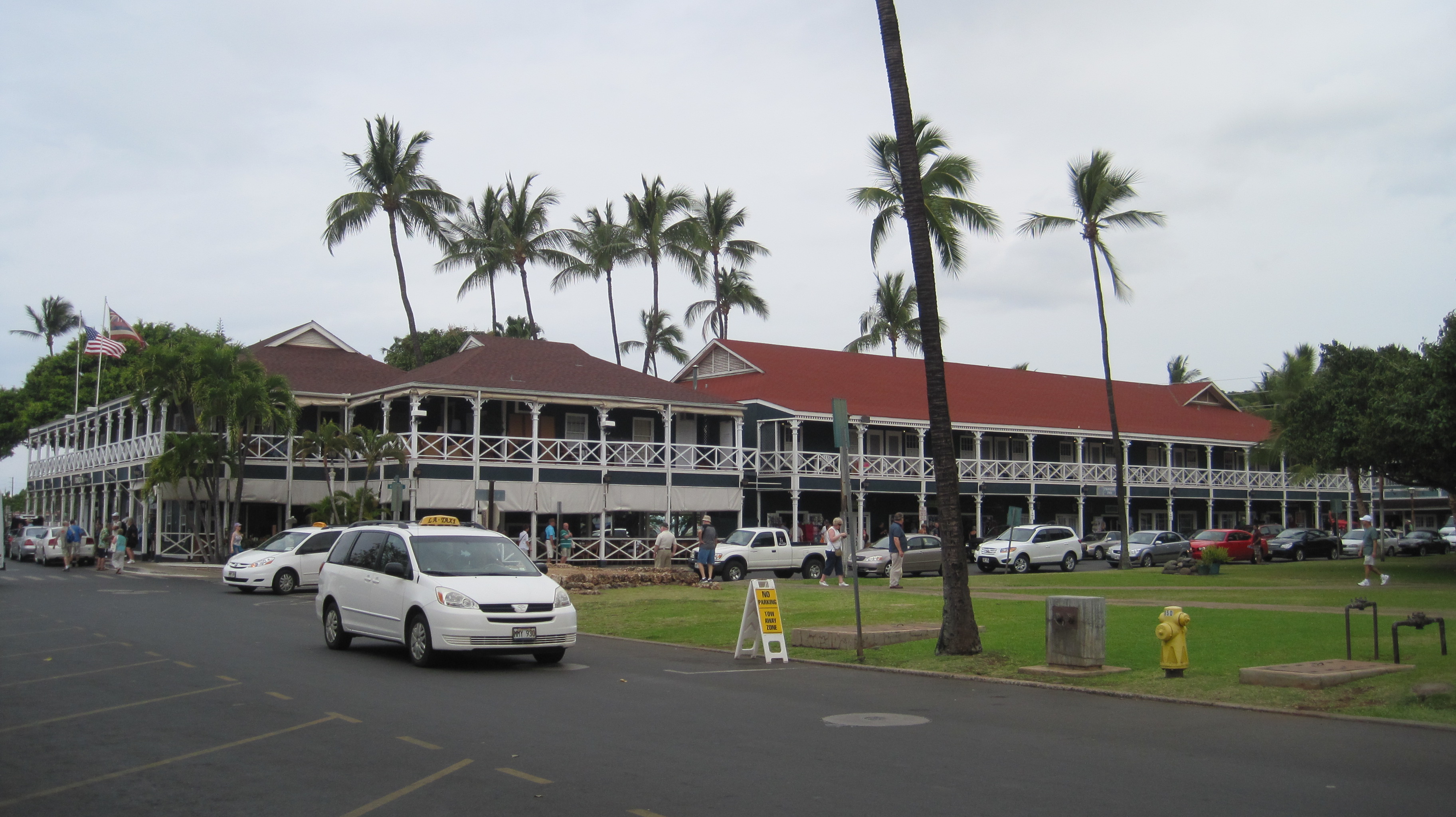
Photos of Historic Sites in Maui

Pioneer Inn, Lahaina, Maui

Pioneer Inn, Lahaina Historic District, 2010, destroyed by wildfire in 2023

The Far Outliers paid a visit to Maui in March 2010 and, as is our custom, we made an effort to photograph sites on the National Register of Historic Places. I uploaded most of them to Wikimedia Commons, put them in the public domain, and then inserted them into the Wikipedia NRHP listings and articles for sites in Maui. The rest I uploaded to my Flickr site, where I created a separate album for Maui. In the wake of the destructive wildfires on Maui, I’m now adding my Wikimedia Commons photos to my Maui album on Flickr for extra backup.

Leave a comment

Filed under Hawai'i, publishing, travel

Tourism Extortion in Vietnam

From Catfish and Mandala: A Two-Wheeled Voyage Through the Landscape and Memory of Vietnam, by Andrew X. Pham (Farrar, Straus and Giroux, 2010), Kindle pp. 279-280:

I am having breakfast when a tour bus pulls over and parks in front of the café. Road-dazed foreigners totter off the bus and into the hotel across the street. The driver, a young guy, takes a cigarette break in front of the bus. Before his third drag, the police materialize from nowhere, swaggering in their drab olive uniforms and vinyl belts. The pair beelines to the bus, one whipping out a citation pad, the other swinging his nightstick in short, impatient arcs. The driver’s jaw drops. He nearly swallows his cigarette, knowing that he and his tour company are going to suffer huge fines.

“This is a no-parking zone!” barks the cop loud enough for everyone in the café to hear. There is no sign and the space is just an empty dirt lot.

“I’m sorry, Officers!” the driver squeaks, smiling apologetically, placating. “I’ll move it right away.”

“Too late,” snorts the other cop, barring the driver from the door with his nightstick. “It’ll have to be towed.”

The driver disintegrates into pure panic. They want to see his license and the papers for the vehicle, so reams of multihued permits and authorizations exchange hands. The owner of the café, from where I am sitting, sends her son to the hotel across the street to warn the hotel owner and the tour operator. In seconds, two older welldressed men emerge, wearing big friendly smiles. They approach with hands extended, each deftly steering one cop to a different end of the bus. Divide and subdue. Seeing now that they are in the presence of money and power, the cops adopt grave, almost serene countenances. A flock of spectators watch the proceedings from a wary distance—this here the only event where onlookers aren’t practically trampling on what they’re watching.

I turn to the café owners. “All this for a parking violation?”

She nods. “Big fines.”

“Lunch fines?”

She chuckles and looks at me with interest. “You know the way, eh?”

I shrug.

Within minutes everything is resolved. The big men never stop smiling and the cops never crack as much as a grin. The driver takes the bus across the street into the hotel’s courtyard. The big men stroll into the café, each draping an affectionate arm over his cop. The foursome take a table next to mine. The owner rushes to their elbows for the orders: espresso, Coke, beer, omelets, steaks, and four packs of Marlboros, two packs apiece for the cops. Small talk and a few American cigarettes, the ice is broken and they are chatting like old friends. Afterward, the big men show the cops into the hotel. Additional mollification required.

The café patrons, all white foreigners, observe the entire extortion with great amusement, marveling at the brazenness of the transaction.

Leave a comment

Filed under economics, nationalism, travel, Vietnam