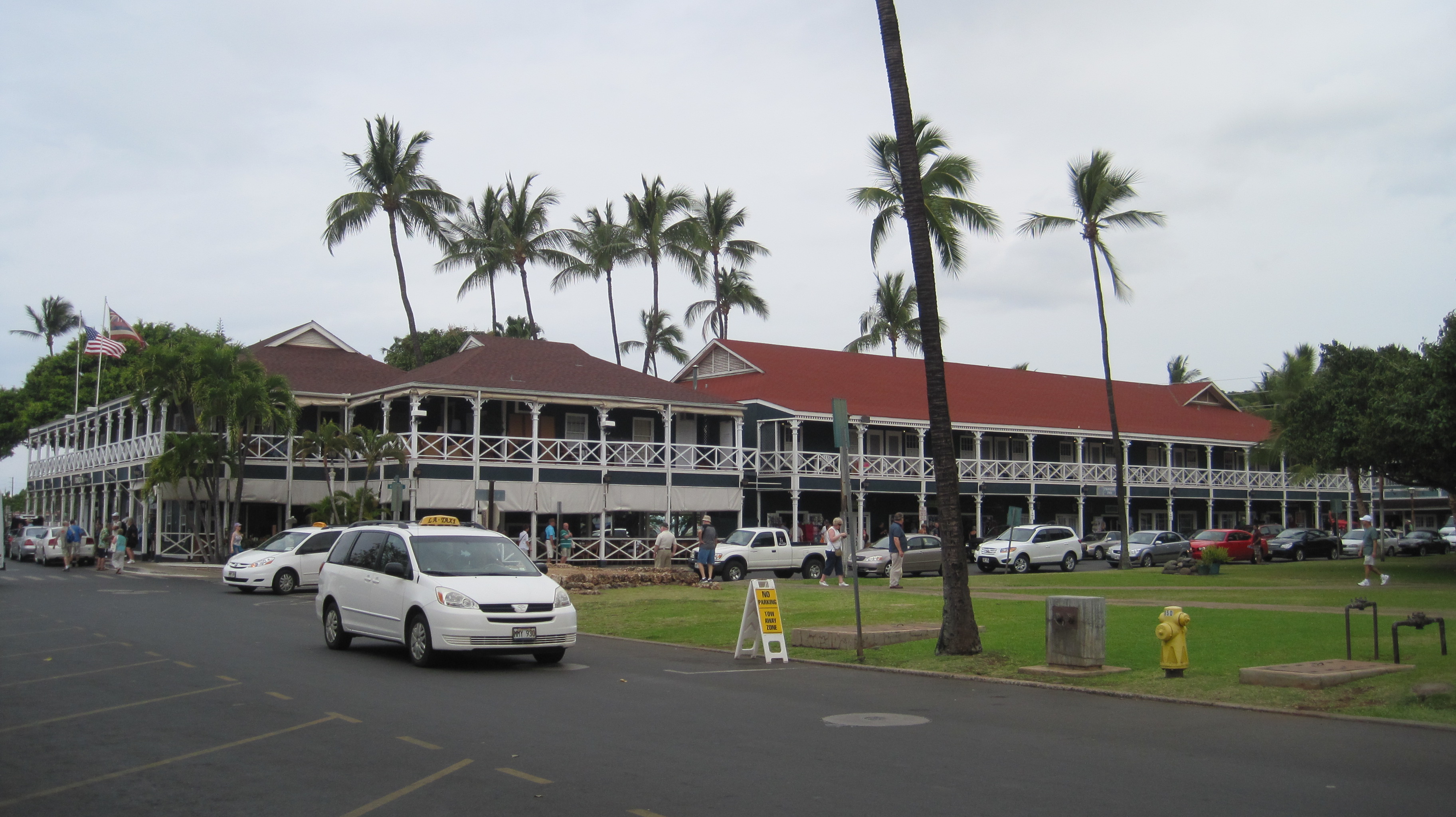
Fate of Crimean Karaites

From Troubled Water: A Journey Around the Black Sea, by Jens Mühling (Armchair Traveller series; Haus, 2022), Kindle pp. 274-276:

History had taught the Karaites that it was better if the world didn’t find out too much about them. Tiriyaki took my pen and drew a tree in my notebook, its trunk forking into three branches.

‘Those,’ he said, pointing to the roots, ‘are the commandments.’

‘These’ – the three branches – ‘are the New Testament, the Talmud, and the Qur’an.’

‘This’ – the trunk – ‘is the Torah. Our only scripture. Karaites believe in the Jewish faith as it was when Jesus Christ was born and before other things were subsequently added.’

The Karaites had never accepted the Talmud. This had isolated them from all other Jews, who had never really known what to make of the Karaites. This had worked to their advantage in the Russian Empire – unlike other Jews, the Karaites had not been subject to restrictions on the professions they could pursue. A few of them had made large fortunes, especially in the tobacco trade. This wealth was visible in the old kenesa – the Karaite synagogue in whose hall I was sitting with Tiriyaki, a sumptuous religious complex with vine-draped colonnades, marble tombs, carved wooden interiors, and warm stained-glass windows.

When the Nazis invaded Crimea in the war, they didn’t know what to think of the Karaites either. Were they Jews? The Nazis commissioned an assessment by a Polish Jewish historian who, against his better judgement, declared the Karaites to be non-Jews, clearly to spare them the fate he would later suffer himself: he perished in the Warsaw Ghetto. His scheming paid off, however. The Nazis murdered the Crimean Jews but they spared the Karaites, whom they classified as a Turkic people.

Not long afterwards, the Karaites had a second stroke of luck. Their lenient treatment by the Germans could well have been a good reason for Stalin to have them deported alongside the Tatars, especially as the two minorities spoke very similar languages. Yet this cup too passed over them. For Stalin, the Karaites appeared to be Jews.

The kenesa in Yevpatoria had been closed down after the war, just like Crimea’s churches, mosques, and Jewish synagogues. The historic religious complex had been converted into a ‘museum of atheism’, and the outbuildings were used as grain silos. The community hall had become a nursery, which Tiriyaki had gone to as a boy, knowing full well that his grandmother had still been praying in the kenesa only a few years earlier.

There were now only a few hundred Karaites living in Crimea. Many had emigrated to Israel in the 1990s. The devout core of his community, Tiriyaki said, consisted of forty people.

We had been talking for less than half an hour when the old community leader began to give me signals that he’d said everything he was prepared to say. ‘If you have no further questions …’

But I do, I longed to cry, hundreds of them. Yet Tiriyaki’s expression was so forbidding that I confined myself to the central question whose insolubility had saved the Karaites’ lives twice. Where were they from? Were they a Turkic people that had converted to Judaism in the distant past? Or were they Semitic immigrants who had only become Turkicspeaking in Crimea? I knew that this matter was controversial among the Karaites too.

Tiriyaki stared at me impassively. His face was hard to read – not so much as the twitch of a muscle.

‘Origins are a card that politicians love to play. They are of no consequence to the faithful.’

He stood up and offered me his hand. I was already halfway to the door when he uttered a few final words as a send-off.

‘The Karaites lived here under the Tatar khans, under the tsars, the Soviets, the German occupiers, the Ukrainians, and now the Russians again. No one could drive us out. We are still here. That is all that counts.’

Leave a comment

Filed under Germany, language, migration, nationalism, religion, Russia, Ukraine, USSR

Fate of Bulgarian Turks

From Troubled Water: A Journey Around the Black Sea, by Jens Mühling (Armchair Traveller series; Haus, 2022), Kindle pp. 182-185:

Gürcan had spent the second half of his life in Turkey and the first half in Bulgaria, where he was born in 1969 as one of just under 800,000 Turks whose forefathers had escaped the expulsions of the early twentieth century. Later, in the socialist era, Bulgaria had been suspicious of its Muslim minorities but, for cynical reasons, expulsions were no longer the political weapon of choice. During the Cold War, the Turkish–Bulgarian border had hardened into the Iron Curtain, the stated objective of which was to keep the proletariat in the country. This meant that the Bulgarian Turks were trapped in the Eastern Bloc alongside the Bulgarians themselves.

Nevertheless, they remained a thorn in the side of the regime in Sofia. Centuries of Ottoman dominance in the Balkans had not been forgotten, and the mere presence of a Turkish minority stoked old fears. Nearly one in ten inhabitants of socialist Bulgaria was a Turk, and the ratio was rising slightly because the Muslims had more children than the rest of the population. This led the authorities to hatch a dastardly plan in the mid-1980s: they might not be able to get rid of the Turks, but they could make them disappear, make them invisible, by destroying their identity.

Gürcan was sixteen when soldiers appeared one day in his hometown of Kurkariya. They made their way through the factories, the collective farms, and the schools, taking the Turks aside in each one. The soldiers had a simple request: the Turks were to choose new names. Bulgarian ones.

Gürcan’s father, who had been called Enver Süleymanov all his life, was known as Encho Stanishev after the renaming campaign. Gürcan’s own new identity card was marked Gensho Stanishev.

He was still at school at the time. It was clear, he said, that his Bulgarian teachers were embarrassed by the campaign. ‘From one day to the next, they had to get used to calling us by different names. They were obviously ashamed, but not one of them dared not to go along with it.’

What made matters worse was that it was customary in Bulgaria to use patronyms in addition to first names and surnames. Gürcan’s full name, when his father was still called Enver, was Gürcan Enverov Süleymanov. Now he was called Gensho Enchev Stanishev. The situation was more complicated for Gürcan’s father, whose own father was long dead when renaming began. He and hundreds of thousands of other Turks were nonetheless compelled to adopt Bulgarian patronyms, which meant that they had to give their dead fathers posthumous new first names.

‘They forced us to change dead people’s names. Can you believe it? People long buried in the cemetery! What kind of a person thinks up such things?’

Gürcan’s expression was so indignant that it was as if the matter had occurred mere days back, not three and a half decades ago.

The official designation of this campaign harked back to the name chosen by the nineteenth-century Bulgarian resistance movement against Turkish domination: the regime spoke of a ‘process of renaissance’. In macabre fashion, this was quite apt for a scheme to rename the dead. Above all, however, it brought home to Turkish Bulgarians what the state really thought of them. Concurrently with the renaming campaign, they were banned from using their language. There was also a more severe crackdown on their religion, which had never been welcome in socialist Bulgaria.

Individual Turks who were not willing to be reborn as Bulgarians resisted the directives in the late 1980s. Riots broke out and people died. Ultimately, when communism’s imminent collapse seemed nigh, the regime decided to sort out the problem in the traditional fashion after all. For a three-month period in the summer of 1989, the Iron Curtain was raised exclusively for Muslims, and party secretary Todor Zhivkov proclaimed that the path abroad was open to anyone who wished to take it. The Turks understood that this was not an invitation but an ultimatum. That summer, around 350,000 of them packed up whatever they could lash to the roofs of their Soviet cars, and the roads south were black with people. It was Europe’s largest ethnic cleansing campaign since the end of the Second World War.

Leave a comment

Filed under Bulgaria, language, migration, nationalism, religion, Turkey

Fate of the Circassians

From Troubled Water: A Journey Around the Black Sea, by Jens Mühling (Armchair Traveller series; Haus, 2022), Kindle pp. 118-120:

Paintings of the Caucasus by the Russian Romantics feature a recurring figure on horseback: a warrior in a black felt coat, with cartridge belts crossed over his chest, a rifle slung at an angle across his back, a dagger and sabre in his belt, his mouth a cruel slit, and his eyes under a felt hat proud, hard, glowing like coals.

Of the many mountain tribes against which tsarist Russia waged its bloody nineteenth-century war of conquest, it was the Circassians who epitomised the Caucasus in the Russian imagination. Over half a million of them lived in the mountain villages to the north and west of the mountain range’s spine at the time, making them the most populous group in the regional ethnic mosaic. When Russia, still drunk on victory from Catherine the Great’s conquest of the Black Sea coast, pressed southwards into the Caucasus from the late eighteenth century onwards, the Circassians put up the most stubborn resistance to its advance. In alliance with the other mountain peoples – including their close relatives, the Abkhazians – they ensnared the tsar’s troops in a gruelling guerrilla war that went on for several generations.

Nowadays, there are three autonomous republics in the Caucasus named after the Circassians and their ethnic subgroups: Karachay-Cherkessia, Kabardino-Balkaria and Adygea. In the most recent censuses, around 700,000 people there described themselves as Circassians. There are, however, a far higher number of Circassians who no longer live in the Caucasus.

When Russia temporarily broke the mountain peoples’ stubborn defiance in the mid-nineteenth century, it was clear to the army high command that war could flare up again at a moment’s notice as long as the Circassians were able to entrench themselves in their inaccessible mountain villages. A plan took shape, bluntly referred to by officers as ochishchenie (‘cleansing’).

The Circassians were given an ultimatum: they could either be resettled in the more easily controlled foothills on the northern flanks of the Caucasus or leave the Russian Empire, which now extended beyond the mountain range. Emissaries of the tsar travelled to Istanbul and put the Ottomans, who had recently been defeated in yet another Russo–Turkish war, under pressure to open their empire to Circassian ‘emigrants’.

There is debate about how many people were forced to leave the Caucasus around the fateful year of 1864. The Russian high command talked about a good 400,000; some people say it was two or three times that number. There is also debate about how many people did not survive the deportation. At least 50,000 people, or maybe even more than twice as many, perished as the Circassian villages emptied and the homes of displaced families were razed. Some died of hunger; others didn’t survive the forced marches into the Ottoman Empire; others again were driven onto overloaded refugee ships, some of which never reached the Turkish coast. Virtually no other people has drowned in the Black Sea in such large numbers as the Circassians. There are individuals living along the coast who will not touch seafood to this day on principle; they refuse to eat fish whose ancestors have gnawed at the bones of their own forefathers.

The Circassians who did make it to the Ottoman Empire were mainly resettled within the borders of modern Turkey, and various sources have estimated that between 1.5 and 2.5 million of their descendants currently live in the country. Others moved farther afield. There are about 100,000 Circassians in Syria and approximately half that number in Jordan, where they still form the king’s bodyguard in their traditional battle garb. A few thousand live in Israel, Europe, and the United States, and a few hundred in Egypt.

‘My grandfather still spoke Circassian to me,’ Bassel said, changing up a gear as he drove me southwards out of Sukhum, ‘back home in Damascus.’

Leave a comment

Filed under Caucasus, language, migration, military, nationalism, Russia, Turkey

Georgian Immigrants in Italy

From Troubled Water: A Journey Around the Black Sea, by Jens Mühling (Armchair Traveller series; Haus, 2022), Kindle p. 92:

We ate smoked anchovies. Alik showed me how to gut them. You snap off the head and use the fish’s sharp jaws like a knife, slitting open its belly with its own mouth to remove its innards. You eat the rest, complete with tail and fins. It tasted divine.

A quiet thirteen-year-old girl had dinner with us, a neighbour’s daughter. She was being brought up by her grandmother because her mother was working as a nanny for an Italian family in Bologna. Many Georgians had gone to Italy in recent years to look after children, care for old people, and work as housekeepers. Alik had an interesting theory about the bonds between the Italians and the Georgians. ‘They like us because we cook well, talk a lot, like to sing, and because we are warm-hearted. The Italians say the Georgians are how they used to be when they were still poor.’

Leave a comment

Filed under Caucasus, economics, food, Italy, migration

Fate of the Cossacks

From Troubled Water: A Journey Around the Black Sea, by Jens Mühling (Armchair Traveller series; Haus, 2022), Kindle pp. 55-57:

As I listened to the customary monologue about the ‘Ukrainian fascists’ from whom they had saved their Russian brothers and sisters in Crimea, I wondered how Vassiliy could be so blind to the historical irony of his words. His ancestors, the Cossacks of the Russian Black Sea coast, had been driven out of Ukraine. Catherine the Great had resettled them here in the eighteenth century after crushing the centre of the Ukrainian Cossack state – the island of Khortytsia in the river Dnieper.

This expulsion was the decisive turning point in Cossack history. From the fifteenth century, they had lived as bandits on the steppes, in the disputed frontier region between the settled civilisations to the north and the nomadic peoples to the south. They gathered in the Wild Fields, a felt-bearded bunch of escaped serfs, runaway prisoners, army deserters, destitute farmers, and other outlaws who chose to lead a life as free barbarians rather than bow to the laws of their native civilisations. They picked up their riding skills from their nomad neighbours, but they were no less proficient as sailors. On land and water, they plundered what they needed to get by. Their most spectacular rampages took them east across the Urals to the Pacific coast of Siberia and south across the Black Sea into the Ottoman Empire, where their pirate ships even raided Istanbul on occasion.

In the Ukrainian borderlands between Russia, Poland, and the Crimean Tatar empire, they established their most powerful host, the Hetmanate of the Zaporozhian Cossacks, whose members dug in on a water-bound fortress downstream from the Dnieper Rapids. At the height of their power, the Cossacks ruled over an anarchic steppe state from here and were a constant thorn in the side of their enemies, who included not only the tsars in Moscow but also the kings in Warsaw and the khans on the Crimean peninsula. Catherine the Great’s predecessors had tried to defeat the Ukrainian Cossacks or forge alliances with them, with no lasting success. It was only when the tsarina advanced on the Black Sea coast that the Zaporozhian Hetmanate was finally vanquished, along with the other peoples of the steppe.

The Cossacks never recovered their former glory. Once Catherine had destroyed their fortress on the Dnieper and driven the Zaporozhians out of Ukraine, she increasingly harnessed their battle skills to her imperial ambitions. The Cossacks were employed as frontier guards protecting the southern borders of the tsarist empire against the remaining nomadic tribes and the mountain peoples of the Caucasus. They soon became a common sight in Russia’s cities too, patrolling the streets on horseback in their flamboyant uniforms. They were especially feared by Jews, Armenians, and other non-Russian city-dwellers for whom the Cossacks traditionally had no time. One of their most notorious roles was to crush popular uprisings by whipping protestors and riding roughshod over them – something they did more and more frequently in the latter days of the empire. Many workers dragged themselves home from an early-twentieth-century protest with horseshoe-shaped bruises on their bodies.

During the revolution, the Cossacks were divided into two parties: White and Red, monarchists and communists – the former loyal to the tsar’s murdered family beyond death itself, the others willing to defend the new regime in the Kremlin henceforth. After the civil war, the White Cossacks disappeared into Stalin’s camps, with the exception of those who had escaped abroad with the remnants of the counter-revolutionary troops. That was the end of their Cossack careers; from that day on, they no longer rode horses but drove omnibuses in Berlin or taxis in Paris instead.

Leave a comment

Filed under migration, military, nationalism, Russia, Ukraine, war

Fate of Meskhetian Turks

From Troubled Water: A Journey Around the Black Sea, by Jens Mühling (Armchair Traveller series; Haus, 2022), Kindle pp. 34-36:

When he revealed to me on our first taxi journey that he was a Turok – that is to say, a Turk – I studied his face somewhat quizzically from the side. The skullcap; the pointy, hawklike face; the salt-and-pepper moustache; the gold teeth.

‘A Turk?’ I asked. ‘You mean, a Tatar?’

‘A Turk.’

‘Really? Türkçe konuşuyor musunuz?’

His answer in Turkish was fluent, unlike my stammered question about his language skills. Having taken a Turkish course in Berlin a few years earlier, I’d been capable of ordering a kebab quite fluently ever since. Pasha, on the other hand, had grown up in the language.

It took me a few taxi journeys to understand that he and his parents were Meskhetian Turks. That is, Georgian Turks – or Turkish Georgians, depending on your point of view. The Meskhetian Turks had lived on the southern margins of Georgia, close to Turkey, since the sixteenth century. Where they originally hailed from remained an unresolved matter that only attracted their neighbours’ interest when the Turks and Georgians along the border discovered nationalism. In Turkey, they were henceforth regarded as Turks who had emigrated and assimilated to Georgia, whereas to the Georgians they were Georgians who had adopted Islam and the Turkish language under Ottoman influence. And so, both the Georgians and the Turks claimed the Meskhetians as their own while also viewing them as a bastardised, second-class people of mixed heritage. In this sense, Pasha’s ancestors shared a fate with countless ethnic minorities in the regions bordering the Black Sea. They fell through the cracks in the mosaic of emerging nation-states, and it was not they themselves but rulers in distant capitals, irked by this melee of peoples on the margins of their supposedly pure nations, who decided to which state they should belong.

One aggravating factor for the Meskhetian Turks was that Ioseb Jughashvili – aka Joseph Stalin – though no fan of nation-states, was a partisan of good old Russian-style imperialism. Scenting an opportunity to annex border areas of Turkey during the Second World War, the Soviet dictator pre-emptively expelled the Meskhetian Turks from their homeland. In light of his plans, they suddenly struck him more like Turks who might just, who knows, feel more loyal to the enemy than to the Soviet motherland. Stalin was an advocate of simple solutions. Justifiably or not, the Meskhetian Turks were a headache. No more Meskhetians, no more headaches. They had to go.

Pasha’s parents were newlywed at the time. His father was twenty and his mother eighteen when, out of the blue, one winter’s day in 1944, soldiers came pounding on their door in the southern Georgian village of Zarzma. Along with over 100,000 other Meskhetian Turks, they were herded into cattle wagons that rolled eastwards from Georgia and only came to a halt several thousand miles later. Roughly a third of them died during their deportation or shortly afterwards from hunger, thirst, hypothermia, disease, or a broken heart. Ultimately, Stalin’s planned expansion into Turkey came to nothing, but the ‘leader of peoples’ had managed to purge his mind entirely of one.

Leave a comment

Filed under Caucasus, migration, nationalism, religion, Turkey, USSR

Second Annexation of Crimea

From Troubled Water: A Journey Around the Black Sea, by Jens Mühling (Armchair Traveller series; Haus, 2022), Kindle pp. 12-14:

I have a very clear memory of the moment the Black Sea suddenly moved from the margins to the forefront of European perception.

I was on a pleasure cruise around Sevastopol’s harbour in March 2014. Less than a fortnight earlier, Russian soldiers had appeared in Crimea and surrounded Ukrainian barracks. Although their uniforms bore no insignia or rank, no one had any doubts about where they came from. Parliament had been dissolved and replaced with puppets under the Kremlin’s orders, a hastily arranged referendum on Crimea’s integration into the Russian Federation had been announced for the next day, and Ukrainian and Russian warships were facing off in the harbour – and yet tour boats continued to ply their trade between the destroyers as if everything were completely normal.

I had travelled to Sevastopol as a journalist to report on the act of political piracy that was taking place. I had no idea at the time that in 1773, not far from that same harbour, on the south-western coast of Crimea, Jan Hendrik van Kinsbergen had laid the groundwork for Catherine the Great’s annexation of the peninsula. All I knew was that I was witnessing Russia’s second annexation of Crimea.

The tour boat passed close to the warships’ towering grey hulls. The Ukrainian and Russian Black Sea fleets still shared the port in that tense time before the Crimean referendum, and I had hoped that out on the water I might gain a better understanding of their muddled positions. The boat was full of Russians from Sevastopol, high on alcohol and patriotism, who made no secret of the fact that they wished a plague on the Ukrainians.

‘Fascists!’ they roared at the ships flying blue-and-yellow flags. For weeks now, Russian propaganda had constantly dubbed all Ukrainians fascists. The same old story, I thought. A country on the warpath in search of some barbarians to fight. One man stood slightly apart from the others by the railing, staring silently out to sea. He was the only person apart from me who didn’t join in with the shouting. As we disembarked at the end of our tour, I approached him to enquire why he was there.

‘To say goodbye to the sea,’ he said tersely.

He was a Tatar. He had been born in Uzbekistan after his parents were deported under Stalin, and only when the Soviet Union collapsed, and Crimea and the rest of Ukraine gained its independence, had he been at liberty to return to the land of his ancestors.

‘Now the Russians are taking over again,’ he said gloomily. ‘I’m not going to wait for them to expel us a second time. My wife has family in Ankara. The day after tomorrow, we’re going to put the kids in the car and leave.’ His lips twisted into a bitter smile. ‘It won’t be the first time we’ve had to start from scratch.’

Leave a comment

Filed under Central Asia, migration, military, Russia, Turkey, Ukraine

Black Sea Neighbors

From Troubled Water: A Journey Around the Black Sea, by Jens Mühling (Armchair Traveller series; Haus, 2022), Kindle pp. 14-15:

The Black Sea is bounded by six states. Clockwise, in the order I visited them, they are Russia, Georgia, Turkey, Bulgaria, Romania, and Ukraine.

Six and a half, if you count Abkhazia, a renegade part of Georgia that is kept on life support by Russia to prevent Georgia from joining any Western alliances.

Seven, if you count Moldova, formerly known as Bessarabia, which lost its coastline in the Second World War when Stalin moved the border inland.

Seven and a half, if you count Transnistria, a renegade part of Moldova, which is kept on life support by Russia to prevent Moldova from joining any Western alliances.

Eight, if you count Poland – the old Poland at its point of maximum expansion when szlachta noblemen persuaded themselves that their country’s ruling class was descended from the Sarmatians, an ancient barbarian tribe.

Eight and a half, if you count the Donetsk People’s Republic, a renegade part of Ukraine, which… you can fill in the rest.

Eight and a half, if Crimea belongs to Ukraine. Eight and a half, if Crimea belongs to Russia. Nine, if you’d prefer to let Crimea stand alone.

Nine and a half, if you count the ruined empire of ancient Greece, whose vestiges I encountered on every shore in the form of weathered stones; in place names mangled by foreign tongues; in family stories of scattered Black Sea Greeks; on the menus of countless Aphrodite Restaurants, Poseidon Cafés, Olympus Hotels and Amazon Bars, written in Cyrillic, Latin, and Georgian letters; and in the deep-seated Black Sea tradition of always expecting the worst from your neighbours.

Leave a comment

Filed under Bulgaria, Caucasus, Greece, nationalism, Romania, Russia, Turkey, Ukraine

Whither Europe Now?

From Adriatic: A Concert of Civilizations at the End of the Modern Age, by Robert D. Kaplan (Random House, 2022), Kindle pp. 283-284:

Once again, the ground is moving silently under our feet, as city- and region-states grow in importance and a neo-medievalism sets in. In the sixteenth and seventeenth centuries, as the British historian Mark Greengrass (echoing Denys Hay) explains, the concept of Christendom was gradually replaced by that of Europe. Though Christendom had in the course of Late Antiquity and the Middle Ages come to represent a geographical concept, it remained at root a religious identity, whereas Europe was at root all about geography. Europe’s subjugation of Christendom was complete when Christianity stopped being a political identity and became merely a private religion having to do exclusively with the soul. Given that Europe replaced Christendom, are we now in a transition period in which some concept will replace Europe? And if it does, where does identity finally settle—at the national level, at the regional level, the level of the city or town? Or will Europe revert to a religious identity, a neo-Christendom of some sort, to psychologically wall off Muslims from the Middle East? Or might Europe itself simply fade as a concept, as it dissolves into Afro-Eurasia and identities within the continent become, as I’ve speculated, increasingly local? Greengrass traces the destruction of the concept of Christendom over an arc of 131 years. So it is quite likely that the real substantive changes that are occurring now will not be apparent inside the strictures of any news cycle.

The late British-American historian Tony Judt provides a somewhat alternative view; or rather, a view focused on the immediate future rather than on the middle-term and distant one. As he explains, the integration process that culminated eventually in the European Union was in part an accident born of the realpolitik of politicians who each needed a predictable economic framework for their own national aims. To wit, France needed German coal, but at the same time needed to contain German political power; and Germany needed to hide its own national interests within a larger community in order to regain legitimacy in a post-Hitler era. The context for this realpolitik was a just-ended Second World War that was “peculiar,” in that countries were often divided among themselves and “almost every European participant lost.” Thus, everybody wanted to forget about what had just happened, so that defeatism, pacifism, and ahistoricism reigned. At the same time, the Cold War had enforced unity in the western half of the continent. It was defeatism and unity that gave birth to this new Europe. Yet, because the combination of these and other factors (e.g., the Marshall Plan) was specific to a certain moment in history, they could never be repeated in the same way, and so the European Union could not simply go on as it had indefinitely—for other factors must eventually intrude.

What is particularly impressive is that Judt published this analysis in 1996, when few troubles loomed on the horizon and Europe was dull and happy. He then goes on to expose Europe’s “foundation myth”: that it must keep expanding to the east in order to improve not only Europe but the world, or else the current success would merely indicate an amoral utilitarian arrangement. Of course, as we know, Europe’s eastward expansion following the end of the Cold War occurred under different historical circumstances and so the result has been complex and not altogether a triumph. Judt concludes his 1996 essay noting again, presciently, that with postmodern life hollowing out the communal functions of family, church, school, the military, and even political parties and trade unions, all that is left now is the nation. For it is the nation that embodies a common memory and a community within an “appropriately scaled frame”: larger than that of the city, but smaller than that of a nebulous pan-European or global identity.

Leave a comment

Filed under Africa, Asia, Europe, migration, nationalism, religion

Greek Travails, 1949-2009

From Adriatic: A Concert of Civilizations at the End of the Modern Age, by Robert D. Kaplan (Random House, 2022), Kindle pp. 272-274:

The end of World War II brought not peace but a civil war lasting until 1949, between the Communists and the ultimately victorious right-wing loyalists, which resulted in 80,000 dead and 700,000 internal refugees. Because of the brutality on both sides, particularly against civilians, Greek politics would remain polarized for decades, divided between parties of the hard Left and the hard Right, so that a modern liberalism and a modern conservatism would find little room to emerge. Thus did Greece, abetted by its geography—as close to Moscow as to Brussels—become an ideological battleground of the Cold War.

Greece’s Cold War years were marked by weak governments as well as deep, internecine political divisions, which were further aggravated by the independence struggle on Cyprus, with its consequent calls for Enosis (or union) of the island with Greece. (Of course, this itself was an echo of the Great Idea.) In 1967, junior officers staged a coup, toppling the Greek government in Athens. This led to a particularly brutal seven-year military dictatorship in which the Athens “Regime of the Colonels” bore greater similarities to those of the Third World than to any government in Western Europe. The Colonels’ regime dissolved in 1974 after their failed political intervention in Cyprus led to a Turkish invasion and occupation of the northern part of the island.

It was only with the reestablishment of democracy in July 1974 under the conservative politician Constantine Karamanlis (who had returned to Greece from exile in France) that Greek politics began slowly—for the first time in history—to stabilize and achieve a modern, Western character. Greece, the birthplace of the West, finally reentered the West. This process was helped by the country’s admission to the European Economic Community (later the EU) in 1981.

Like membership in NATO, membership in the EU and Greece’s subsequent admission to the Eurozone represented purely political decisions on the part of the Western alliance. In fact, neither Greece’s bureaucratic institutions nor its economy was ever up to the standards of core-Europe and the West. Yet, it was felt (if never publicly admitted) that leaving Greece outside European institutions, given the country’s vulnerable geographical position and its long history of instability, would pose a greater threat to the West than bringing Greece inside them. As it turned out, the Greek variant of the Great Depression, in which the country was brought to its knees beginning in 2009 by widespread poverty, a dramatically declining GDP, and mass unemployment—leading to a far-left-wing government initially close to Moscow—was directly related to the country’s abject lack of preparedness for the rigors of the Eurozone. The Byzantine and Ottoman legacies of underdevelopment, while not determinative and always able to be overcome, still counted for something in Greece in the second decade of the twenty-first century.

Leave a comment

Filed under Balkans, democracy, economics, Europe, Greece, migration, military, nationalism, Turkey, USSR