Political Clans in Central Asia (and the U.S.)

The Argus, which anyone interested in Central Asia should read regularly, has a post on the Clan system in Central Asia: threat or opportunity?

I think it is impossible to build civil and democratic societies in Central Asia without taking into account this informal, but decisive paradigm of central Asian politics. My idea is that the existing clans are the only forces capable to create opposition, which is the basis for any further democratic change.

However, this political confrontation between clans should remain peaceful and constructive, or else, it can lead to catastrophic results, like the civil war in Tajikistan, which was, basically, the result of competition between Leninabad-Kulyab alliance against Pamiri-Garm group.

In any case, what I am absolutely sure of is that any political change in central Asia in the foreseeable future will be fashioned and led by the dynamics between and within the clans.

Noting that many Americans in Central Asia tend to regard the role of clans as detrimental, a commenter reminds us of the role of political clans in the U.S.: the Kennedy clan from Massachusetts, the Bush clan from Connecticut and Texas, and the Daley clan in Chicago. And what about the Roosevelts of New York and the Rockefellers of Pennsylvania, New York, West Virginia, and Arkansas?

Brookings Institution Senior Fellow Emeritus Stephen Hess wrote on this topic before the 1978 election, and things haven’t got any better since then.

In Minnesota, the son of Hubert H. Humphrey is opposing the son of Orville Freeman for a Democratic congressional nomination. In Virginia, the son-in-law of Lyndon B. Johnson has just been sworn in as lieutenant governor. Last fall in New York City a third-generation Robert F. Wagner was on the ballot….

We seem to be surrounded by the scions of great political families. A second Edmund G. Brown is governor of California. There is a third Rockefeller governor, this time in West Virginia. The acting governor of Maryland, Blair Lee, is the 21st member of his family to have held elective office in America since a Lee entered the Virginia House of Burgesses in 1647.

The U.S. Senate has a Stevenson of Illinois, a Long of Louisiana, a Kennedy of Massachusetts, a Byrd of Virginia, a Talmadge of Georgia.

The membership of the U.S. House of Representatives includes another Hamilton Fish of New York, another Albert Gore of Tennessee, another Clarence Brown of Ohio, another John Dingell of Michigan, another Paul Rogers of Florida. There is also a Kentucky Breckinridge, a Virginia Satterfield, a Dodd from Connecticut, and, of course, a Long of Louisiana.

Leave a comment

Filed under Central Asia, U.S.

Legacy and Legality in Central Asia

IIAS Newsletter 34 in July 2004 contains three short articles presenting historical overviews of Central Asian law. Longer versions will appear in a Journal of Asian Legal History monograph entitled Central Asian Law: An Historical Overview (October 2004). Here are substantial excerpts from the article by Irina Morozova on “Legal systems and political regimes in post-socialist Central Asia” (in PDF format). It is all I can do to resist quoting the whole thing. It does a good job of sketching fundamental contradictions facing newly independent Central Asian nations today.

Traditional systems of law informing current practice include customary law (adat) and religious law (Sharia except in Christian Georgia and Armenia and Buddhist Mongolia). Adat has proven remarkably stable while Sharia has survived the centuries; they are closely linked and often identified as one. Customary law, functioning in the form of strong communal relationships and the awarding of social status according to age and kinship hierarchies, is strong in rural areas and exists in modified form in the cities. Religious systems of law in post-Soviet societies are weaker; seventy years of secular education have left their mark. While the new independent states all proclaim themselves to be secular republics, ideas of Muslim law are still alive. Sharia, however, is no longer in serious use. [A little optimistic, perhaps?]

Of the social institutions informing customary law, the social class of agsakals has been especially durable. At the top of the social pyramid resides the agsakal, an old man seen as experienced and wise; his decisions are to be followed by family and community. The institution of the agsakal is legally recognized in Turkmenistan where it is called The Council of Agsakals. In Mongolia, often called the most open and democratic country in Asia, respect for agsakals still persists, albeit in weaker form. The social group also survives in the Eastern and Southern regions of the Russian Federation – Buryatia, Tuva, Kalmykiya, Tatarstan, and especially in the Northern Caucasus.

Customary law is also reflected in the system of clans, very much alive in the contemporary politics of Central Asia and the Southern Caucasus. In the beginning of the 1990s the struggle between clans in Tajikistan became so acute that it led to civil war. One of the threats to the rule of the President of Turkmenistan S. Niyazov is consolidation of an oppositional clan. The Uzbek President I. Karimov regularly purges members of the Samarkand, Tashkent and Bukhara clans from his administration. In Kazakhstan, strategic industries and the most profitable sectors of the economy belong to, or are controlled by, members of the presidential family and their relatives. The principle of social-economic redistribution among members of the clan is one of the main obstacles to the development of Western-style legal institutions. Clan identity ill fits individually based democratic conceptions of law; the effective application of the latter is routinely sacrificed to the pursuit of clan interests.

The Soviet legal system imposed on the Central Asian and Caucasian peoples had a certain modernizing effect on traditional societies. While Soviet legal institutions appeared Western, they did not work in practice the way they were supposed to on paper. While social systems based on clan patronage and kinship were criticized during the Soviet period, they did not disappear – they adjusted themselves to Communist state-party hierarchies. By the 1960s, the reform of administrative systems was complete; clan relationships and the social cult of the agsakal had mutated into the structures of national nomenclatura….

The Soviet legacy

To date, debate on the state of law has focused on overturning the Soviet legacy. Concepts of legitimacy and law are now expressed in terms of democracy, civil society, human rights and the market economy. These concepts serve as antonyms to another range of terms: Soviet one-party system, totalitarian state, communist ideology and planned economy. Post-Soviet politicians, journalists and populists, perhaps believing that the new terms reflect acquired sovereignty, juggle them for career purposes. The active use of the democratic lexicon, however, has yet to further the understanding, much less the application, of democratically based law….

The past legitimizes

Central Asian intellectual elites play a significant role in developing legal concepts. During the late Soviet and post-Soviet periods, university professors and scholars in academies of science aspired to political influence; sociologists, historians and philologists now advise politicians. Academics are charged with developing discourses of nationhood and national development, and to emphasize their democratic and legal nature. [A formula for self-delusion?]

Concurrently governments appeal to the legacy of ancient and medieval Central Eurasian empires and khanates. There are simply too few regional analysts able and allowed to write on the essential contradictions between the political culture of the medieval khanates, the successors to which the present states pretend to be, and the democratic civil societies that they claim to be building…. Here we may be witnessing a modification of customary law: the more ancient the history of the nation, the longer the genealogy of the ruler, the more lawful the regime.

Leave a comment

Filed under Mongolia

Hiroshima, Streetcars, and Edward Teller

On this day every year, those who remember will think of the Hiroshima Peace Memorial Museum.

But Hiroshima also has a lesser-known museum that celebrates construction rather than destruction, the Hiroshima City Transportation Museum, with its famous streetcar collection, thanks to Hiroshima Dentetsu (Hiroshima Electric Railway Company). Hiroshima, the home of Hiroden, is one of the few Japanese cities that still have streetcars running–and Hiroden still operates them, including the new Green Mover car from Germany. Like San Francisco, Hiroshima has salvaged rolling stock from all over the country, so that citizens can ride museum exhibits around the city.

The popular cars have a mixed parentage–some were inherited from the Kansai district and some came from Hannover and Dortmund in Germany. The company … operates what has become one of Japan’s busiest tramways. The light rail line takes passengers to the ferry to Miyajima Island where Itsukushima Shrine is located, and provides through connections on the urban tram network, offering convenient transit for some suburban residents.

By curious coincidence, H-bomb pioneer Dr. Edward Teller lost his right foot to a German streetcar in the 1920s.

In 1926, he left Budapest to study chemical engineering in Germany…. It took Dr. Teller only two years to become captivated by quantum mechanics, a field then revolutionizing nuclear physics. It commanded his attention at the University of Munich. While in Munich, Dr. Teller lost his right foot in a streetcar accident, but that barely affected his studies. Moving on to the University of Leipzig, Dr. Teller worked with Werner Heisenberg, a giant of 20th-century physics, and received his doctorate in 1930.

Leave a comment

Filed under Japan

Overseas Koreans Now Exceed 6 Million

The Korea Times reports that:

6.08 million Koreans were living overseas as of July 2003, recording a 7.56 percent increase from 2001, according to statistics released by the Foreign Affairs-Trade Ministry recently.

The largest population of overseas Koreans, about 3 million, is in the Asia-Pacific region, with over 2 million in China alone, and nearly 200,000 in Australia and New Zealand. The largest growth in the Americas was in North America, where nearly 2.5 millions Koreans now live. Europe and the CIS (Commonwealth of Independent States) account for another 600,000 or so. Korean populations actually declined in Japan, South America, the Middle East, and Africa.

South Korea’s population is now approaching 50 million, while North Korea’s is about 22 million–and probably falling.

I remember attending a talk once by a pair of Korean government-sponsored speakers whose purpose seemed to be to flatter Koreans abroad and enlist their support in Korea’s drive to achieve its rightful place in the universe. A Korean raised in the Soviet Union talked about the disproportionate success of the Korean minority there–second only to the Jews in educational attainment. He even suggested that Koreans were a “chosen people” although he became somewhat defensive about the comment later. The other speaker framed his message in terms of competition with Japan. Korea might lack Japan’s population, its wealth, its resources, and its head start, but it had a secret weapon: its huge population of well-placed Koreans abroad. During the question period, my favorite fearlessly contrarian antinationalist among the Korean graduate students asked the speaker what made him think that Koreans abroad might be willing to be shills for either the Korean government or Korean businesses.

1 Comment

Filed under China

Lankov on a Human-Rights Monitoring Paradox

Andrei Lankov’s latest column in the poorly edited Korea Times discusses a fundamental paradox of human-rights monitoring: The most repressive societies yield the least reliable evidence, while the most open societies yield the best evidence. This favors apologists for the most repressive regimes, and undermines apologists for more open regimes.

Attempts to study repressive systems in non-democratic societies unavoidably hit a paradox: the more effective and stringent the controls over the population, the less the outside world knows about ongoing horrors. In the late 1960s, when the terror of Mao’s regime reached its apex, information about the horrors perpetrated was seldom reported by the Western press. Under Mao’s successors, when the regime softened, the Western press took up reporting the “abuse of human rights in China.” A few decades earlier, something similar had been happening in the USSR after Khruchshev’s [sic] reforms.

In both cases, the current ideological fashions among Western intellectuals played a major role: the self-appointed “progressive thinkers” of the 1960s loved Mao almost as much as their predecessors loved Stalin in the 1930s. Solzhenitsyn was not the first to tell the world about Stalin’s terror — there had been earlier reports. However, leftist thinkers who reigned supreme in academic and intellectual circles ignored those reports. Solzhenitsyn’s exposures in the 1960s were taken seriously only because by his time the Soviets had gone out of fashion. However, former fans of Stalin switched their adoration to Mao.

The same has often been the case in Korea where the left is increasingly powerful in academia and the media. The leftist intellectuals tend to dismiss reports of North Korean terror. However, in recent decades it has become quite difficult to ignore the growing number of testimonies coming from the North.

via The Marmot

Leave a comment

Filed under China

The Last Japanese Holdouts in the Philippines

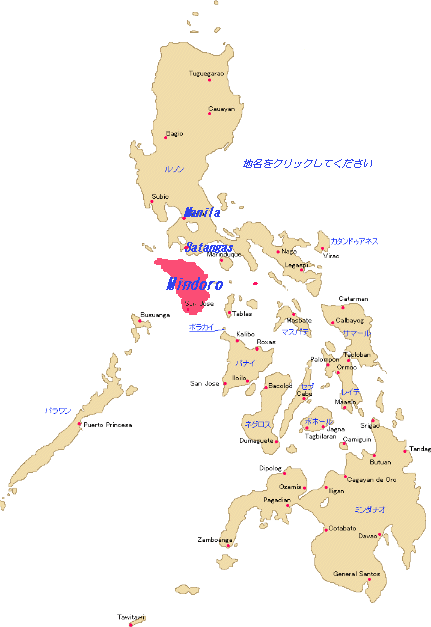
A little over 30 years ago, in 1974, Lt. Onoda of the Imperial Japanese Army surrendered on Lubang Island in the Philippines.

February 1946 – Post WWII island campaign

In February 1946 on 74 square mile Lubang Island, 70 miles southwest of Manila Bay a seven week campaign to clear the island was begun by the Filipino 341st and American 86th Division.

February 22, 1946 – Lubang island Allied casualties in a post WWII battle

Intense fighting developed on February 22, 1946 when troops encountered 30 Japanese. Eight Allied troops were killed, including 2 Filipinos. The Filipino and Americans sent for an additional 20,000 rounds of small arm ammunition, but not future battles occurred of this magnitude. In early April, 41 members of the Japanese garrison on Lubang island came out of the jungle, unaware that the war had ended….

March 5, 1974 – Lubang Island – 2nd Lt. Hiroo Onoda Born in the town of Kainan, Japan in 1922 and when he turned seventeen, he went to work for a trading company in China. In May of 1942, Onoda was drafted into the Japanese Army. Unlike most soldiers, he attended a school that trained men for guerilla warfare. On December 26, 1944 (age 23), Hiroo Onoda was sent to the small tropical island of Lubang Island, which is approximately seventy-five miles southwest of Manila in the Philippines. Shortly after Americans landed, all but four of the Japanese soldiers had either died or surrendered. Hiroo Onda was also with three other holdouts, who had different fates:

Private First Class Yuichi Akatsu – (age 22 in 1944) Left the group in September 1949. He managed to live six months on his own before surrendering to the Philippine Army. In 1950, the remaining three found a note left by Akatsu stating that he had been greeted by friendly troops. He even led a group of soldiers into the mountains in search of the remaining men. Onoda and his men quickly concluded that Akatsu was now working for the enemy.

Corporal Shoichi Shimada – (age 30 in 1944) In June of 1953 was shot in the leg during a shootout with some fishermen. Onoda nursed him back to health, but on May 7, 1954, Shimada was killed instantly from a shot fired by another search party sent in to find the men.

Private Kinshichi Kozuka – (age 24 in 1944) Killed by two shots fired by local police on October 19, 1972 when Kozuka and Onoda burned rice that had been collected by farmers, as part of their guerilla activities.

Circumstances of His Surrender

Despite the efforts of the Philippine Army, letters and newspapers left for them, radio broadcasts, and even a plea from Onoda’s brother they did not believe the war was over. On February 20, 1974, Onoda encountered a young Japanese university dropout named Norio Suzuki who was traveling the world and told his friends that he was “going to look for Lieutenant Onoda, a panda, and the Abominable Snowman, in that order.” The two became friends, but Onoda said that he was waiting for orders from one of his commanders. On March 9, 1974, Onoda went to an agreed upon place and found a note that had been left by Suzuki. Suzuki had brought along Onoda’s one-time superior commander, Major Taniguchi, who delivered the oral orders for Onoda to surrender. Intelligence Officer 2nd Lt. Hiroo Onoda emerged from the jungle of Lubang Island with his .25 caliber rifle, 500 rounds of ammunition and several hand grenades. He surrendered 29 years after Japan’s formal surrender, and 15 years after being declared legally dead in Japan. When he accepted that the war was over, he wept openly.

Afterwards

He returned to Japan to receive a hero’s welcome. He was a media sensation and was hounded by the curious public everywhere he went. He was unable to adapt to modern life but wrote his memories of survival in a book, No Surrender: My Thirty-Year War. After publication, he moved to Brazil to raise cattle. He revisited Lubang island in 1996, and still alive today. He then married a Japanese woman and moved back to Japan to run a nature camp for kids.

Actually, the last confirmed surrender was by Captain Fumio Nakahira, who held out until April 1980 near Mt. Halcon in Mindoro Island.

Leave a comment

Filed under Japan, Philippines, war

Philippine Doctors Retraining as Nurses

Cronaca (“Past Imperfect, Present Subjunctive, Future Conditional”), a wonderful history blog that Regions of Mind reminded me of, notes a report about new medical developments:

The Philippines is increasingly witnessing a trend that carries alarming implications for the future — its medical doctors are training to be nurses so they can leave the country and make more money.

Leave a comment

Filed under Philippines

New Offensives in Mindanao?

Belmont Club reports on ominous new developments in the Philippines.

The scene is now set for a possible resurgence of fighting. A glance at the map dramatically illustrates the bind that Gloria Macapagal Arroyo and the Philippine Government have worked themselves into. For the first time in a century, Muslim rebels have established themselves in force on the Mindanao mainland, away from their traditional strongholds of Sulu, Basilan and Tawi-tawi, island groups in the southwest corner of the archipelago. They are positioned on the west side of Mindanao’s breadbasket, the Cotabato valley. The MILF [Mindanao Islamic Liberation Front] camps guard the approaches to mountain massifs to the west which then give on the sea, their line of supply. They isolate the predominantly Christian Zamboanga peninsula from Northern Mindanao and essentially cut the huge island in two. The Armed Forces of the Philippines, despite a nominal strength of ten divisions, has very little combat power. A lack of logistical support and ammunition stockpiles means that (Belmont Club estimate) it can sustain offensive operations with only two battalions for a period of 12 weeks after which it simply runs out of everything. Thus, Manila has long lacked an offensive option against the MILF and has tried to compensate by “peace talks”, which are another name for appeasement.

Leave a comment

Filed under Islam, Philippines, war

The Dutch VOC in Burma in the 17th Century

The July 2004 IIAS Newsletter includes an article by Wil O. Dijk on the Dutch VOC in Burma during the 17th century, the same period in which they were conquering one sultanate after another in the Spice Islands and the rest of the Indonesian archipelago.

This article highlights a little known aspect of the Dutch East India Company (VOC)’s inter-Asian trade: the trade with Burma. The vast archives of the VOC at the National Archives in The Hague have yielded a treasure trove of detailed information on seventeenth century Dutch-Burmese relations. The archives throws light on the composition of the VOC’s Burma trade, and how it fit into the grand design of the Company’s inter-Asian commerce, where it was not as marginal as some historians would have it. Vital statistics on shipping, imports and exports, wages and prices, and inventories of Indian textiles the Dutch shipped across the Bay of Bengal, together with purchasing and selling prices, allow us a unique glimpse into life in seventeenth century Burma….

The VOC’s years in Burma can be divided into three distinct periods: the early years of indecision (1634-1648), the golden middle years (1649-1669) and the final years of decline and departure (1670-1680). During the first period suggestions were made, in turn by Pulicat and Batavia (the company’s head office in Asia), to close down the Burmese factories. Pulicat and Batavia, however, seemed unable to agree, with the result that trade continued halfheartedly. The second period witnessed a great improvement in conditions for trade. In the final years, a new king with little interest in trade or foreigners ascended the Burmese throne. By this time the objectives of the Dutch East India Company had altered, while forces beyond its control were working to undermine the company. In the end the Burma trade became a casualty of the company’s new priorities….

Empire of trade

Burma offered a large assortment of export goods. Statistics indicate that the Dutch generally took what they could get. Tin was a constant as were lac, elephant tusks, chillies (long peppers) and beeswax. In the 1650s, Chinese copper coins and Burmese ganza (a metal akin to bell metal) became major exports. The Company turned large quantities of Chinese copper coins, flowing into Burma from Yunnan, into money to be used as legal tender in Batavia and Ceylon. In the final years, the Dutch also exported a great deal of gold, much of it originating in China. The VOC, through its elaborate inter-Asian network, was in a position to trade Burmese goods in the most profitable markets throughout Asia.

[Ming China was at this time selling off copper and gold to convert to silver coinage, thereby fueling global trade, especially with Tokugawa Japan and the Spanish Empire in the New World.]

Their Bengal factory, always in need of additional funds, was sent valuable Burmese cargoes (including Chinese coins, ganza, and zinc). The copper extracted from Chinese coins and ganza was in great demand in Coromandel, as were gold, tin, timber and chillies. In Japan a profitable market existed for Burmese catechu, namrack, deerskins, buffalo hides and horns. Lac generated excellent profits in Mocha, as well as in Persia, where there was a good market for Burmese tin, elephant tusks, cardamom, and the costliest of Burma’s fabled rubies. Considerable quantities of Burmese elephant tusks were shipped to Surat, while in Holland there was demand for the excellent Burmese lac. As for Burma’s famous Martaban jars, there was constant demand throughout Asia for these huge, glazed pots used to store and transport a myriad of things, from potable water and rice to gunpowder and, on occasion, stowaways….

Military commitments

The main points of contention – the ban on direct trade with China at Bhamo, royal monopolies, high tolls, and the disarming of ships – were exasperating but not new. Rather, the circumstances and priorities of the Company had changed. Trade was no longer its main concern; the VOC had changed into a territorial enterprise with military and political commitments and began to operate increasingly from its two power bases, Batavia and Ceylon.

More importantly, a radical shift occurred in its commercial priorities. Whereas in the early days the company’s inter-Asian sea-borne traffic was a key element in its drive to create a vast empire of trade – with the outcome of this traffic largely determining the flow of trade between Asia and Europe – by 1680 the situation was different. The VOC’s inter-Asian trade had peaked by the 1670s, and was replaced by direct trade between Asia and Europe. This is perhaps the main reason behind the Dutch decision to abandon Burma. Whereas Burma had been an integral part of the VOC’s inter-Asian trade for nearly half a century, the company’s new priorities now made it irrelevant.

Leave a comment

Filed under China

The Appeal of Stalinism to Intellectuals

Crooked Timber has a long and interesting comment thread in response to John Quiggin’s response to Tyler Cowen’s challenge on Marginal Revolution: “If I could have the answers to five questions in political science/sociology, the appeal of Stalinism to intellectuals would be one of them.” Here are a few of the less esoteric responses.

Chris Bertram:

I can’t agree with you entirely John. The [Beatrice and Sydney] Webbs, in particular don’t seem to me to be a good example of people who backed the Soviet Union because they thought it was more just and democratic. Rather, they seem (along with others like [George Bernard Shaw]) to have been captivated by the idea of a rationally managed society. Tidiness and orderliness were the reasons for a certain type of intellectual being attracted to Stalinism.

An entirely different type of person was attracted to communism (in its various forms rather than Stalinism) by their perception of the injustice of capitalism, the experience of mass slaughter in WW1 and by the feeble response of the Western democracies to the rise of fascism. Unlike what motivate the Webbs of this world, those are laudable aspirations.

The twist comes when you add a dose of “realism” to the mixture. Once you’ve identified some agency as the best means of fighting injustice, war and fascism, it is all too easy to convince yourself of something like Sherman’s “war is hell” doctrine and to shield yourself from a proper appreciation of what your side is really becoming. If you want a recent parallel for this psychological process, look at the way that people who believe the values of the West need to be defended by any means necessary and take solace in the writings of Victor Davis Hanson and the like.

And the fact is that there is something (but exactly how much?) to the idea that one shouldn’t be too squeamish in fighting for a just cause when the other side will use any means at its disposal. Differing views on that question and on whether the Soviet Union remained an effective means for prosecuting justice etc or had turned into part of the problem, explain many of the fractures in the communist movement from 1917 on….

Burritoboy:

It’s simply not true that few intellectuals supported ultra-right politics.

In continental Europe, there were always a very large percentage of prominent intellectuals who were on the right, at least before 1939 or so. Heidegger, probably the greatest of all twentieth-century philosophers, is but the best-known of cases …. Before 1918, ultra-right intellectuals were arguably more important: Baudelaire, the most influential poet of the nineteenth century; Flaubert, the most influential post-Romantic novelist; Celine, Yeats / Eliot/ Pound and many others.

It’s that intellectuals have been attracted to radical politics on both sides. It’s interesting that Cowen wants to ignore half of the equation….

Lindsay Beyerstein:

Anyone who thinks they have True Knowledge is at high risk for self-deception. In retrospect, it seems amazing that these smart people would continue to support Stalin.

Self-deception isn’t pure wishful thinking. Simply wanting X to be true isn’t usually sufficient to sustain massive self-deception. The self-deceiver must also engage in an active process of rationalization in which she explains away inconvenient observations in terms of her background theory. We call people self-deceived when they are unwilling to reexamine their background theories in light of the evidence, especially if wishful thinking fuels that reluctance.

When Stalinist intellectuals were confronted with evidence of Stalinist crimes against humanity they persuaded themselves that these were i) Lies and distortions perpetrated by an unreliable capitalist media, or, ii) Historical inevitabilities on the way to an equally inevitable utopia, and/or, iii) Snags that were only to be expected in the greatest experiment in human history.

Simon Kinahan:

While some intellectuals no doubt deceived themselves (and some still do) into believing that the Soviet Union really lived up to its proclaimed ideals, there were others for whom the totalitarianism that was implied by Marxism was part of the appeal.

The claim to knowledge of how history was going to progress. The ordering of society along “rational” lines. The important role of intellectuals in the revolution itself. Surely it’s not too hard to see how that might appeal? And still does, for that matter….

Brett Bellmore:

Why does it matter? Well, there’s that dictator just off the coast of Florida academics are still making excuses for, for one. The intellectual embrace of monsters in the name of ideology isn’t history, it’s still with us today.

Leave a comment

Filed under education, philosophy