Category Archives: religion

"Crucifixation" in the Philippines

Dean Bocobo of Philippine Commentary has a different take from most Anglosphere bloggers on Mel Gibson’s “crucifixation” movie.

The shedding of real blood by real people is a real part of our celebration of Christianity and its seminal event in the Crucifixion of Jesus Christ. That event, we don’t only voyeuristically make the subject of gory movies, public prayers and pious displays, but some Filipinos exhibitionistically crucify themselves in a literal imitation of Christ on Good Friday. Others participate in organized self-flagellations that occur all over the Philippines during Holy Week.

via Belmont Club, who adds his own unique take.

There are three points to be made in this respect. The first is that most American and European Christians will find the Filipino Lenten practices about as incomprehensible as non-Christians may find the cinematic rendition of Jesus’ sufferings. The second is that the Filipino penitents are entirely sincere in their devotion. The inability of Westerners to understand this Filipino tradition in no way reduces its value to the people of that Archipelago. The third is that anti-Semitism is wholly unknown, indeed, incomprehensible to Filipinos for the simple reason that they have never encountered Jews in any quantity. The average Filipino has never nor will probably ever meet a Jew. Anyone who takes the trouble to view a Filipino Lenten commemoration will see Romans depicted as the villains and the Jews — in one glorious lump including “the Apostles, Mama Mary and the other Mary the Magdalene, Pilate, Caiphas, Barabas (he was loudly cheered), Judas, and of course Jesus Christ himself” — played by the townspeople themselves.

Most Christians now live in Asia, Africa and Latin America. They far outnumber the dwindling congregations of Western Europe. The vast majority of Third World Christians know nothing about the historical conceptions of anti-Semitism — the Ghetto, the Pogrom, the Holocaust. To a very large extent, the debate over the anti-Semitic content, or lack thereof, in The Passion of the Christ is not between modern day Christians and Jews, but across a fault line in Western and Middle Eastern history.

Leave a comment

Filed under Philippines, religion

After 500 Years: Muslim-Christian Fratricide in Central Maluku

Two earlier posts about Muslim-Christian violence in Maluku, Indonesia, have summarized a three-year retrospective on 1999-2001 by reporters for the Jakarta Post and a ten-year retrospective based on my own travels in the area in 1991. This final post in a three-part series summarizes a 500-year retrospective by Dieter Bartels in an online draft of an article, “Your God Is No Longer Mine: Moslem-Christian Fratricide in the Central Moluccas (Indonesia) After a Half-Millennium of Tolerant Co-Existence and Ethnic Unity” (2000).

In the shadow of the recent carnage of the East Timor independence struggle and the equally vicious ongoing battle for Aceh, other parts of Indonesia are torn apart by pernicious strife and the huge and populous island nation is threatened with disintegration. One of the crisis hearths is the eastern island group of Maluku where there is an ongoing internecine struggle between Moslems and Christians. Some of the most heated clashes have been occurring between Ambonese Moslems and Protestant Christians in the Central Moluccas. Beginning on January 19, 1999 Moslems and Christians, seemingly without warning [but arising from a criminal incident perpetrated by outsiders], started to attack one another, burning down each others houses and killing one another in both the provincial capital of Kota Ambon (Ambon City) and villages on the islands of Ambon, Haruku, Saparua, Buru, and Seram. Similar incidents occurred also in the Northern and Southern parts of Maluku involving not only Protestants but also Roman-Catholics. Thus far, the seemingly senseless confrontation, which became known as kerusuhan (unrest), left thousands of people dead and precipitated the devastation of property worth millions of dollars, wiping out much of the economic progress made in the province since Indonesian independence.

It’s worth pointing out that January 1999 is when former President Suharto’s embattled successor, B. J. Habibie, agreed to an East Timorese referendum on whether to accept wide-ranging autonomy within Indonesia or to go for independence. The vote, in August 1999, was overwhelmingly (nearly 4:1) in favor of independence.

The conflict can be divided into two rather distinct phases: Phase I began in January of 1999 and closed at the end of April 2000. This phase was characterized by mutual attacks of native Christians and Moslems using largely primitive home-made weapons and bombs (rakitan). Generally, there was an equilibrium of strength. Phase II, having began in May 2000, is characterized by the massive arrival of non-Ambonese, mostly Javanese, Moslem vigilante group, called Laskar Jihad (“Holy War Forces”). They brought with them sophisticated modern weaponry and allied themselves with the Moslem personnel of the military which constitutes about eighty percent of the troops. These developments totally destroyed the previous balance, tipping the scale in favor of the Moslems.

From the very beginning, provocateurs, often said to be associated with the old Suharto regime, have been blamed for the unrest. The Army also has been accused playing a key role in triggering and fomenting the fratricidal violence in order to destabilize the Indonesian state as a means of restoring its political might and economic interests. Among the accusers is the Moluccan sociologist Tamrin Amrin Tomagola who believes that continuous riots will not only upgrade once again the status of the military, and tighten its territorial grip, but also derange President Abdurrahman Wahid and the National Commission on Human Rights which has implicated five generals, including former military chief and ex-cabinet minister, Wiranto, in the post-ballot atrocities in East Timor. Tomagola goes on to state that violence in Moslem areas triggers solidarity among Moslems and heightens their negative feelings toward the President and the commission (Jakarta Post 02/04/2000). Calls in January 2000 for a Jihad (Holy War) against Moluccan Christians at mass demonstrations in Jakarta and attacks of Moslem youths on Christian churches in Lombok seem to strengthen Tomagola’s arguments. The use of automatic weapons in the January 23, 2000 attack by Moslem villagers on their Christian neighbors in the villages of Haruku-Sameth on the island of Haruku further points to military involvement.

Bartels then outlines some of the key factors that led up to the recent violence.

  • The influx of Moslems from outside the area, especially Bugis and Makasar migrants from Sulawesi into Ambon City, and Javanese settlers (‘transmigrasi‘) into rural areas. Initial Christian attacks were against these outsiders, not fellow Moslem Ambonese.
  • The failed model of religious tolerance. “As recently as November 1998, during Moslem-Christian clashes in Jakarta, then President B. J. Habibie had singled out the Moluccas as the model of religious tolerance.” Moluccan exiles in the Netherlands and elsewhere “asked what happened to the traditional Moslem-Christian brotherhood and its safeguards like pela, the traditional inter-village alliance system.”
  • Creeping religious polarization. “Actually, the only thing that should be surprising about these clashes is their vehemence and unbridled violence.” Some of this was visible even during the 1970s.
  • The legacy of different colonizers. “The successive colonizers, Portuguese, Dutch, and Japanese, all tried to manipulate Moslems and Christians, as did the latest, and current, rulers of the Moluccas, the Javanese.” However, “throughout most of colonial history, it seems that, at least at the village level, Moslem and Christians have coexisted in a climate where cooperation seems to have been more common than polarity and discord. Under duress, they have frequently closed ranks and as far back as the Portuguese period and in the early Dutch era, Moslem and newly converted Christian villages allied themselves against the foreign intruders who tried to force a spice monopoly onto them. Again, during the so-called Pattimura uprising in 1817, both religious groups were united in a last, failing effort to rid themselves of the Dutch yoke.”
  • Christian rise to superiority in late colonial period. The Dutch favored “Christian Moluccans as soldiers and administrators, allowing them a certain amount of western schooling denied to the Moslems…. In some cases, Christian villagers had Moslem children live with them in order to give them access to schools denied to Moslem commoners by the Dutch while raising them according to Moslem customs.”
  • Moslem ascendency during Japanese occupation. “During the Japanese occupation, the Christians suddenly saw the roles reversed as the Japanese seemingly favored the Moslem population. Christians accused the Moslems of collaboration.”
  • The proclamation of an independent Republik Maluku Selatan (RMS) after Indonesia declared independence after WWII. “During the ensuing struggle with the Indonesian armed forces, Christian guerrilla forces attacked some Moslem villages which were suspected of being Indonesia sympathizers. There were also instances in which Christian soldiers prevented such attacks when their home village had an alliance with the Moslem village in question.”
  • The breakdown of the pela alliance system. This is elaborated further below.

Some of these inter-village alliances have their origins in the distant past, long before Europeans invaded the Spice Islands in search of cloves and nutmeg. It probably started as an alliance system in the context of head-hunting, but during the Portugese and Dutch conquests in the 16th and 17th centuries, the system was utilized to resist the foreign intruders, and to help each other in times of need. As a matter of fact, quite a few of the still existing pela pacts were founded during that period, often binding Moslem and (recently converted) Christian villages together. Many new pela arose during the last desperate struggle against Dutch colonialism, the Pattimura war at the beginning of the 19th century. After this struggle was lost and the region experienced an economic depression, pela was utilized as an instrument gaining access to foodstuffs when many poor villages of Ambon-Lease established ties with the sago-rich villages of West-Seram. In the first three decades of Indonesian rule, pela was still in full bloom, mainly as a vehicle of Moluccan identity in the pan-Indonesian state and also to further village development without governmental aid….

Most alliances are between Christian villages but a considerable number are between Christian and Moslem villages, thus spanning religious boundaries. Purely Moslem pela do not exist. In contrast to Christians who use adat [local custom] rather than their common religion to establish formal ties between villages, Moslems consider themselves all part of the Islamic community (ummat) and thus find no need to further strengthen the ties among one another. However, there are a few pela, all based on genealogical ties, involving several Christian and Moslem villages and in this case the participating Moslem villages also consider each other as pela partners….

The system as described above worked still very well in the Central Moluccas from the end of World War II until about the 1980s. Attempts of the Indonesian government of political centralization and cultural uniformity since Independence led to a general fear of loss of a distinct Ambonese ethnic identity. Both Moslems and Christians had also become quite conscious about the threat that the ongoing religious polarization posed for Moslem-Christian unity. While urban politicians were fighting for the spoils offered by the new system, people at the grassroots level reacted to the twin threat of loss of identity and social disunity through placing a renewed emphasis on pela, whose dense web spanning across the islands and religious boundaries was traditionally the major force of integration. The earlier listed economic incentives, based on reciprocal mutual aid, further helped to cement the interfaith relationship.

  • Elevation of global religion (agama) above tradition (adat). Increasing Christianization and Islamization after independence.
  • Indonesization of Ambonese social system: Replacement of traditional village leadership. Globalization in a manner that benefitted the urban (often outsider) elite. Large-scale relocation of (Moslem) ‘transmigrasi’ from Java. Overpopulation, land scarcity, feuding and fission. Urbanization, with outsiders dominating commerce.

Bartels tries to find some hope for the future in his final section.

Mending the Torn Fabric

Once the fighting stops, Moslem and Christians will indeed have to come together and redefine their relationship and strive for a new intra-ethnic symbiosis in a contemporary context. First and foremost, the intertwined problems of overpopulation, land shortages, and immigration have to be solved. As a next step, it seems likely that the Ambonese in the Central Moluccas will have to do what the Ambonese exiles in the Netherlands have been doing ever since they arrived in the Netherlands in 1951, namely engage in a continuous process of reinventing adat to reflect contemporary socio-political reality. Pela on the village level can still have its uses in restoring overall harmony. Before visiting the Central Moluccas in June and July 2000, I was very pessimistic about the survival of interreligious pela. Most people who don’t have pela with a Moslem village believe that these pela are forever destroyed. However, people who do have such pacts are not as ready to pronounce their alliances dead. This was certainly the case in Haria. Villagers from Samasuru (Seram) who have pela with Islamic Iha on Saparua do not dare stay there overnight as they did before when visiting Saparua but it seems they do it more out of consideration for Christian villages adjacent to Iha but are still in communication with Iha. They had given Iha land in the 1960s which was laid to waste during the unrest by outsiders. Iha insisted that Samasuru was innocent and that their alliance is still intact. The heavy attacks and counterattacks between Moslems and Christians in North Saparua occurring between September 22 and 24 were apparently instigated by the Laskar Jihad. As a result, many villagers from Iha fled to some of nearby Christian villages, seemingly to trying themselves to escape the Laskar Jihad. Their peaceful reception in these villages is perhaps one of the indicators that not all bridges have been burned.

The following story also shows some hope, though it may not immediately apparent: After the total destruction of Christian Kariuw on Haruku in the early phase of the conflict by neighboring Moslem villages of Pelauw and Ori, their Moslem pela partner Hualoi (Seram) sent a delegation with food to the village of another partner in the same alliance, Aboru (Haruku), where many Kariuwans had found refuge. The wounds were still too fresh and the food was rejected. Hope also can be found in the example of Wayame, a non-traditional, mixed Moslem-Christian settlement across the bay opposite Ambon City, which thus far which had been untouched by the conflict until late November 2000. Even then, it was not an internal conflict but an attack from the outside by Laskar Jihad forces. However, attempts by surrounding Moslem villages to officially declare Waai, a Christian village destroyed in July 2000, as a Moslem village and the intention to rebuild the mosque at exactly the same spot where it supposedly stood in 1670 when Waai was still Islamic, will inflame passions again. The suggestion was made by the chief commander (panglima) of the Laskar Jihad, Ja’far Umar Thalib, and thus it is quite likely that this declaration was made under duress….

Perhaps, and rather ironically, the simultaneous suffering of the Ambonese Moslem community under the reign of terror of the Laskar Jihad and certain army factions, may soften the existing bitterness and hatred between the two indigenous groups and facilitate ethnic reconciliation.

Leave a comment

Filed under Indonesia, religion

The Legal Status of the Japanese Wife, 1915

According to “The New Japanese Civil Code” by Professor N. Hozumi, the present Civil Code proceeds upon the equality of the sexes, and makes no distinction between men and women in their enjoyment of private life so long as a woman remains single. She may become the head of a house and exercise authority as such. She may exercise parental authority over her child if her husband is dead. She may adopt children either alone, when she is single or a widow, or in conjuction with her husband when married. She may make any contract or acquire or dispose of any property in her own name, provided she remains single.

When she marries, however, she enters the class technically called “incapacitated persons” treated of in Section 2 or Chapter I of the Civil Code. Under this section are four classes–minors, incompetent persons, quasi-incompetent persons and wives, or more explicitly, as it is explained under the “meaning of capacity,” “such persons as minors, wives, lunatics, and spendthrifts do not possess complete capacity.” A touch of nature makes the whole world kin! The next paragraph is still more illuminating.

Under the heading “Reasons for protecting incompetent persons,” we find, “minors are protected because of the insufficient development of their intelligence; incapacitated persons are protected because they are, like lunatics and idiots, intellectually deformed; and quasi-incompetent persons are protected because they are either physically deformed or intellectually imperfect, like the blind, the deaf, the dumb, and spendthrifts; while wives being bound to follow their husbands, the rights of the latter are protected in order to maintain the peace of the household.”

SOURCE: “The Legal Status of the Japanese Wife,” by A. Caroline Macdonald, in The Christian Movement in the Japanese Empire, including Korea and Formosa, a Year Book for 1915 (Conference of Federated Missions, Japan, 1915), pp. 324-325.

In sharp contrast are the presuffrage wives of the Southern Baptist Convention missionaries listed on p. 611 of the same work, all of whom appear either to be named Wanda, Wendy, Wilhemina, Wilma, Winifred, and the like–or else not to be worth naming:

Bouldin, Rev. G. W. & W., Tokyo

Clarke, Rev. W. H. & W., (A)

Dozier, Rev. C. K. & W., Fukuoka

Medling, Rev. P. P. & W., (A)

Mills, Mr. E. O. & W., Fukuoka

Ray, Rev. J. F. & W., Shimonoseki

Rowe, Rev. J. H. & W., Nagasaki

Walne, Rev. E. N., D.D. & W., Tokyo

Willingham, Rev. C. T. & W., Kokura

Leave a comment

Filed under Japan, religion, U.S.

The Omi Mission in Japan, 1915

February 1915, the tenth anniversary of the arrival in Hachiman of Mr. W. M. Vories, marked the beginning of the second decade of the Omi Mission.

The distinctive features of this Mission consist in its being financially self-supporting; undenominational–advocating and practising co-operation in all Christian efforts; administered entirely on the field; international–having voluntary supporters in America, Europe, and Japan, and both American and Japanese workers on equal terms, the general secretary this year being Japanese; rural from choice and conviction; aimed at the establishment of a model Kingdom of God, rather than at individual conversions alone; many-sided in its approach–preaching, Sunday Schools, railway and Student Y.M.C.A., with hostels, farm, motor cruiser (Galilee Maru) on Lake Biwa, physical work in the embryo antituberculosis camp, two monthly publications, newspaper evangelism, loan library of evangelistic books, many types of women’s work, and architectural office–for support and for training self-supporting mission workers; and finally, in its compromising a practical Laboratory of Mission Methods, where new lines of evangelistic and institutional effort are being tried out–and the results open to any mission in the Orient.

Beginning without resources and with only one green young worker in 1905, the Mission numbered in 1914 thirty workers, eight of whom were Americans.

The first ten years were marked by the complete alteration of the attitude of the community, from that of open and violent opposition and persecution to open and cordial favour; the building up of a staff of native workers–which is the hope of any mission enterprise; and the crystalization of aims and methods adapted to peculiar conditions, after experimentation.

The direct achievements, though sounding well in report, are, we trust, merely suggestions of real harvesting in the next decade.

SOURCE: “The Omi Mission,” by W. M. Vories, in The Christian Movement in the Japanese Empire, including Korea and Formosa, a Year Book for 1915 (Conference of Federated Missions, Japan, 1915), pp. 136-137.

Leave a comment

Filed under Japan, religion

Times & Seasons: A Mormon Blog

I grew up among both missionaries and heathens, and still retain what I hope is a healthy respect for both camps, so long as the methods of the missionaries are not coercive and (not or) the reaction of the heathens is not violent. I’m interested in different religious (and irreligious) perspectives, so long as they are reasonable and (not or) tolerant of alternative views. (I don’t regard “antireligious” as a synonym for either “tolerant” or “enlightened.”) In that spirit, I’d like to recommend for those with religious interests a fairly new Mormon group blog Times and Seasons. I have no interest in adhering to Mormonism or (substitute your religion here) ________, but I find that Mormon perspectives (mea culpa: I first wrote “a Mormon perspective”) sometimes challenge my facile assumptions about such issues as legislating morality, or about how much religion shapes political views, or about who qualifies to be counted as a minority or as part of a diaspora, and so forth. Here’s a sample of some of the issues discussed on Times and Seasons, “quite possibly the most post-liberal, yet acclaimed, onymous Mormon group blog in history.” The comment sections are generally lively and civil.

Don’t Drink, Don’t Smoke

Perhaps nothing outwardly sets Mormons apart from the rest of society more than our adherence to the Word of Wisdom. And for insiders, as someone once said on this site, the Word of Wisdom just *feels* important. I’m far more likely to offend the Sabbath day, forget a fast, skip hometeaching, use inappropriate language, break the speed limit, or commit dozens of other sins of omission and commission than I am to join my friends sipping tea at a Chinese restaurant….

–The WoW replaced polygamy as something that sets us apart and makes us a peculiar people. Feeling like an outsider is, in some ways, integral to Mormon culture, and WoW adherence fosters this feeling.

Contentment

As I drove home from work today, I heard an announcement for an upcoming program on Wisconsin Public Radio dealing with the topic of contentment. Implicit in the announcement was an assumption that contentment is a worthy life goal. This caught me off guard. Honestly, it has never occurred to me to pursue contentment. I’m not sure I even know what it means.

Legislative Judgments of Morality

Randy Barnett has an interesting post up at the Volokh Conspiracy, giving a persuasive argument about why legislative judgments of morality are not a particularly good basis for legal punishments or restrictions. Barnett makes the very interesting initial assertion that: “A legislative judgment of ‘immorality’ means nothing more than that a majority of the legislature disapproves of this conduct.”

(Blog) Marital Demographics

It suddenly occured to me last night that our group’s marital homogeneity is rather striking. Consider: We have eight bloggers; we live in different locations; we come from different professions; we have different political beliefs; we find a lot to differ on.

We are all married and all have children…. This makes us unusual in the world. At work, school, or social groups, there is often a sizable single contingent. Many people are happy to avoid marriage altogether, and even married colleagues are unlikely to begin having children very soon.

Polygamists in the Pen

This is a photograph of George Q. Cannon, then First Counselor in the First Presidency to John Taylor, and other polygamists taken while Cannon was incarcerated for unlawful cohabitation (polygamy) during the 1880s….

Comment: “Group photos of men incarcerated for polygamy were extremely common, and were displayed as a symbol of loyalty to the Gospel. Interestingly, although there were women incarcerated as part of the anti-polygamy raids, I have never seen any photos of them. The few who were imprisoned were jailed for either contempt of court (refusal to testify against fellow Saints) or fornication. The charge of fornication, in the 19th century, was most often used to punish prostitutes. The few inditements against polygamist women were self-conscious attempts by federal officials to brand Mormon women as whores. This (along with the relative rarity of such cases) may account for the lack of photographs.”

Resenting Our Baptism of Your Dead

Comment: “I had exactly this discussion …. Everyone seemed satisfied that their people (everyone there was Jewish or married to a Jew, or me) would be able to reject the baptisms for themselves. Plus, one woman noted, it was a great way to boost your membership numbers. I said yeah, but it doesn’t help your attendance percentages.”

Leave a comment

Filed under blogging, religion

Impressions of Eastern Indonesia, 1991 and 2001

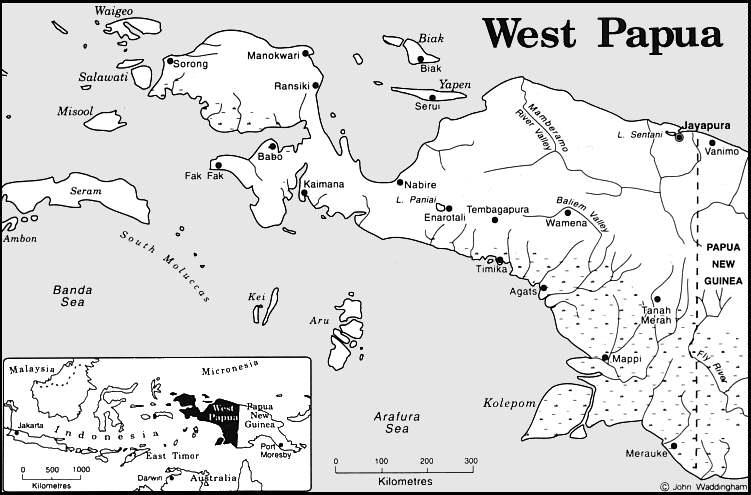
In 1991, I accompanied a Fulbright group research tour to Eastern Indonesia. Our Garuda flight from Honolulu landed first in Biak, West Papua (formerly Irian Jaya), our port of entry into Indonesia. It seemed like many other places in Melanesia, except that Indonesian, not an English- or French-based pidgin, was the national language.

By the time we landed in Ujung Pandang (Makassar) on Sulawesi (Celebes), we were clearly out of Oceania, with its sea breezes, root and tree crops, and easygoing lifestyle, and into Southeast Asia, with its monsoons, endless rice paddies, and hustle-bustle. Ujung Pandang was as far west as we got. We avoided the well-trodden tourist routes of Bali and Java, concentrating instead on booming, Southeast Asian, largely Muslim Sulawesi, and the faded glory of Oceanic, largely Christian Maluku (the Moluccas), the Spice Islands.

We were parceled out to host families at IKIP Ujung Pandang, the local teacher’s college. My host was a professor who had been trained at Manado, perhaps the top teacher-training college on Sulawesi, located in a mixed Christian-Muslim city on the tip of the far northern peninsula near the Philippines. The family was Muslim, very genteel, prosperous, and cosmopolitan. Voices were never raised in that household, at least not during my stay. They had relatives from the countryside living with them and helping with the housework. Neither my host mother nor her very demure and attractive college-age daughter wore head scarves, although the mother affected considerable shock one evening at an immodestly dressed female performer we saw on TV. (Nothing approaching current MTV standards, of course.) I jokingly offered to send her some black lipstick so she could keep up with the latest styles. My generous hosts were also kind enough to take me for an overnight trip to their rustic bungalow in Rappang, where they owned rice fields. The only intrusion of international tensions occurred when the son and daughter were showing me around their campus, Universitas Hasanuddin, where a few students at some distance away started chanting “Saddam, Saddam” when they saw foreign visitors. My hosts quickly moved us on.

Our group next took a scenic bus ride over sometimes dangerous mountain roads up to Rantepao, in Tana Toraja, where the heavily anthropologized highlanders were mostly Christian. The local governor had an American anthropology degree and showed us pictures of the Toraja float that had appeared in a recent Rose Bowl parade. The Toraja are famous for their huge, boat-shaped rice barns and their famously elaborate and gory funeral celebrations, featuring animal sacrifices and often a sizable contingent of foreign funeral tourists. I was one of those who preferred instead to spend a quiet day walking the cool mountain paths between rice fields, through hamlets where the sound of dogs and the smell of pigs served as reminders that we were in Christian territory.

Our next destination was the old Dutch colonial outpost of Ambon (Amboina), Maluku (Moluccas). Again we were parceled out to host families, this time near Universitas Pattimura, where the faculty was mostly Christian. My hostess was a dietician who lived in the Rumah Tiga neighborhood off campus and who cooked meals rather more Dutch than Indonesian. She was Christian and was not amused when I once greeted her with a “Salaam Aleykum.” From Ambon we visited a Christian village far up in the mountains, where we sampled coconut toddy; visited a very rustic resort near a Muslim village on the far side of the island, where baskets of drying sardines and cloves lay outside nearly every house; and made a side trip to an old Portuguese fort on the north side of the island, from where we could gaze across the straits at the huge island of Seram in the distance.

Our last major excursion was to the old sultanates of Ternate and Tidore and their formerly heathen, and now Christian hinterland on Halmahera. Our bus misaligned its rear axle early on, and spent a long time in the middle of nowhere driving over large rocks trying to knock it back into alignment, while we passengers waited beside the road. Finally, the drivers gave up and drove carefully to the next town large enough to have a repair shop, all the while steering against the sideways drift of the back wheels. After repairs, we finally reached Galela at the northern tip of Halmahera. There we spent a day at a small village of only recently converted (Christian) highlanders who had just moved down from the mountains. We enjoyed their betelnut and their outdoor cooking, with rice steamed in green bamboo roasted over open fires. Much to our collective relief, we took an airplane back to Ambon.

Indonesia is the most populous Muslim country in the world, and each year sends more pilgrims to Mecca than any other country but Iran, or so they said at the time. But the country is really many nations in one, and the government at that time saw religious intolerance as a threat to unity. I came away impressed with the modernizing influence of Islam in Indonesia, its tradition of learning, egalitarianism, enterprise, and openness to the outside world. But foremost in my mind are memories of warm hospitality, hot weather, wonderful food, boring lectures, vehement discussions, time to think, grueling bus trips, the joy of language-learning, and the sunrise and sunset calls to prayer.

By 2001, Ambon had turned into another Beirut, and the whole area had become another Lebanon.

Pattimura University and the neighborhoods that hosted us in Ambon, Maluku, were all burnt to the ground. My hostess may well have been killed. The whole island has now been carved up into armed enclaves.

The root causes in Ambon may include local Muslim resentment of local Christian dominance, coupled with local Christian fear of being overwhelmed by the huge Muslim majority of Indonesia as a whole. The factors that ignited and fueled that unrestrained outbreak of violence include the Asian economic crisis that hit in 1997; the subsequent collapse of the discredited Suharto regime and its authoritarian commitment to a unified secular state; the brutal, corrupt, and demoralized Indonesian military, which has done little to control the violence and much to worsen it, especially by allowing the influx of thousands of well-armed mujahidin (including foreigners) from the training camps of the Laskar Jihad paramilitary in Java. It is hard to imagine how to address any root causes until these thugs and local militias are disarmed and either detained or deported by some credible peacekeeping force. The Javanese-dominated Indonesian military has unfortunately not been such a force. The sectarian and ethnic violence is beginning to subside in Ambon, as it finally did in East Timor (only after foreign intervention), but it continues to escalate in West Papua, where many of the thuggish militias have reconstituted themselves after leaving Maluku.

In future blogposts, I plan to examine in more detail some of these events and their historical contexts.

1 Comment

Filed under Indonesia, religion, travel