Category Archives: Papua New Guinea

Morobe Field Diary, July 1976: A Grueling Boat Trip

Travelling aboard the [M.V.] Sago is always an adventure. The last trip back from Lae on July 28 took me 24 hours almost. After 3 trips down to check on the ship I found it was to leave the next morning. So in order to not be left behind as I was before I put some cargo aboard and got up at six (without an alarm) the morning of departure to insure they wouldn’t get impatient & take off. J. was prevailed upon to drive me down by 7 am. I got there and rain was falling steadily and no one was about. I waded out to where the Sago was tied up and found the Captain just getting up. Orait, by 9:30 I had decided to eat breakfast at a small haus kaikai [‘house eat’ = ‘restaurant’]. When I came back we were ready to go.

The boat put in at Buansing and we passed its neighboring enemy Laukanu (Bazela). The Sago had just been chartered to carry a Kaiwa corpse back to his village Buansing and we had to send talk to the village. Buansing is Yuwala-(Kaiwa-)speaking and its neighbor Bazela (Laukanu) is Kela-speaking. The kiap (local gov’t official) insists upon a single kaunsil [village head] for both villages and since Bazela is more prominent & the Kelas’ claim to the area is officially recognized over that of the Kaiwas’ [who used to live inland, but most likely moved there from the coast much earlier], the former get the kaunsil. Bazela also has tin roofs while Buansing has none. I think a lumber company operates nearby and employs people from both villages so both have some board houses. I believe those were the two villages embroiled in a big fracas a while back, brought on by a combination of simmering animosities and alcohol.

As we pulled out of Buansing bay we could see a storm brewing out in the (Huon) Gulf. We were halfway out when the engine sputtered & died–out of gas. The fuel line has been leaking buckets or they forgot to fill up in town; I’m not sure which. It took a while to bandage the fuel line and refill. By the time we got underway again the rain & wind was upon us. We should have put in at Buansing until it passed but instead had a real rodeo ride till we reached the lee of Lababia Island off the next (Kela) village [Salus] down the coast, the one from which the original Kela apparently spread in both directions [up and down the coast].

Since I had a poncho and the ‘cabin’ was crowded I sat up on deck with my back to the wind which was coming from slitely off the port bow. Another guy was sitting next to me and in spite of my poncho I wasn’t much drier than he was. I held on for dear life until my hands were aching. Since the wind & waves were coming from the sea and we were running parallel to the coast we got broadsided or nearly so a number of times and lost several pieces of cargo overboard. The little Sago rolled, pitched & yawed to beat all. I was just as happy not to be trapped inside in case it capsized.

When we finally made it to the island we didn’t have a boat to go ashore in so we untied the liferaft and several people finally put together a bamboo raft after failing to find a canoe on the [uninhabited] island. Those few that made the slow trip to shore 2 at a time played Swiss Family Robinson while the rest of us stayed aboard debating whether to put in for the nite and risk the boat drifting onto the coral that was all about or to head out and risk another squall. We must have stayed about from dusk to midnite, no one aboard having room to sleep except some of the kids.

Finally we left and went to Kuwi and put off the parish pastor & his family. He had sat on top of the liferaft clutching his kid, a nearly useless umbrella and the raft all during the squall, shivering all the while.

We got back to Siboma a few hours before dawn. The Paiawa passengers were delivered to Paiawa that morning.

Leave a comment

Filed under Papua New Guinea

Morobe Field Diary, July 1976: Village Party

Last Friday, Daniel/Sigo paddled in at dusk, beached his canoe and calmly lifted a 6 ft, 50 lb or so sailfish out of the hull. He caught it on a handline and he siad it jumped and jumped and pulled the canoe a ways before giving out. It filled the whole front end of the hull. The whole village came down to admire; they cut it up after dark on the bed of the canoe by lamplite; and I had a piece the next morning for breakfast. It was a catch any Kona Coast cabin cruiser fisherman would be proud of. Makes me think Hemingway’s The Old Man and the Sea was a bit overdramatized.

Some of the fish was saved for a wedding party the whole village waited for from Fri to Sun nite when the overdue [M.V.] Sago came back from town with 10-12 cases of beer. The party got started about midmorning Monday. I drank a beer or two with the crowd at my end of the village, mosied off with the kaunsil to the far end where one guy had a bar going selling gin at 20 toea a capful along with enough Coke to barely color it. He made his 6K [= Kina] overhead and 4K profit. I was treated to a double shot and quickly retreated to beer only (about 4).

Well on my way to oblivion and having turned my skin black (or so many people assured me), treated others to gin and cigarettes, and tried my best to refute notions of how civilized the drinking habits of whites were, I careened back to my own end of the village with the intention of napping a few hours of the afternoon in preparation for the evening session.

But upon my return I was offered a COLD beer (thanks to some of the boat’s crew having snitched a bit of the block ice for keeping the fish catch fresh) and perhaps another. Some people got out handdrums and started a rather loose ‘singsing‘ which I was urged to join and which, after some hesitation, I did join.

I must have performed about 1.5 hours, beating on the end of any empty plastic jug along with the other men and one or two females who danced on the periphery from time to time. The kaunsil’s wife then called me for tea; her husband was already done for. I drank tea with biskits and went to my house, lay down without making the bed and was out for the rest of the evening, missing the nitetime guitar playing and dancing Western style and never really paying respects to the couple (a local woman and a Wain man–an area inland of Lae).

I awoke about the time everyone was going to sleep (probably about 2-3 am) and had a sleepless nite after taking two aspirins, two antacid tablets and making my bed. The next morning the whole village was pretty subdued and I sat at my desk the whole day finishing a paperback Adventures of Sherlock Holmes that had enthralled me for two days.

My mother sent pictures of the family which I showed around and cited kinship terms for. That is the magic trick for getting onto the mess of kinship terminology. Later in the evening I drew out the triangle and circle and line chart of all my relatives and now I feel I’ve pretty well got the meaning of each term down but finding out who’s whose what is quite another matter, especially since the names of the in-laws are tabu. But I’m working on it.

Indications are that the Numbami used to be matrilineal but due to European influence (possibly local non-Austronesian influence as well) have begun to reckon by fathers rather than by mother’s brothers. The kaunsil said the party was rubbish and that when we threw one there would be enough booze for the women to ‘spark’ as well.

Leave a comment

Filed under Papua New Guinea

Morobe Field Diary, July 1976: Village History

In the beginning the Numbami inhabited the ‘inside’ (leeward) of Awayagi Island (toward Morobe) and Ulingi Point (across the present cove from Awayagi toward Kuwi). All Sibomas will cite these as their asples [‘seat-place’ = homeland]. When they were living there is not clear. It is not within the living memory of any Siboma and preceded time of contact with records-keeping Europeans. I estimate 1850 or so.

At this time they were in the path of raiders from Morobe in the south and Lababia in the north. The Siboma court against Paiawa hinged on testimony from Morobe that Siboma were who they ran into when they came north. Paiawa at that time were ‘man bilong bus’ [inlanders] and did not live on the sea. Even now the [non-Austronesian] Paiawa are regarded as close relatives (thru intermarriage) but rather of the country-cousin variety. To the north the Kela were at Lababia though they apparently traded widely and that place was the site of a (yearly?) pig festival, called bada by Siboma & possibled related to their verb -bada ‘to distibute’, and called a sam by I don’t know who [Jabêm-speakers]. Sam is what the yearly church meeting to be held in Kela this September is called.

To escape the raids the Numbami moved up in the hills above Karsimbo River and apparently were as mixed up with the Bapi people, all mountain people, as they are with the Paiawa now. Probably moreso; the ‘two’ groups were described as being really one by S., and the old kaunsil, who must have been born about the turn of the century or about a little before contact, says he is really a Bapi man. Since they had to have some time to get this mixed up with the Bapi (non-Austronesians like the Paiawa) they must have left Ulingi and Awayagi around 1850. When some Europeans came to this village, called Yawale, the Bapi refused to carry for them and apparently were massacred in retaliation. They fled farther up into the mountains (they now live on the Waria River) and the Sibomas came down to Karsimbo where they were living at the time the mission contacted them and (presumably) named their harbor Braunschweig Harbor. Karsimbo is a good defensible, deep-bayed place.

Apparently due to mission influence or maybe just the cessation of fighting they moved to their present location at the Sayama River (or creek really) in the shallow harbor situated between their old Ulingi Point and Awayagi Island. Apparently these old villages were abandoned so long ago that the old tall coconut trees have fallen down or broken. Now only young trees show where the old villages used to be. Karsimbo is still marked by tall old trees and still has a habitable shoreline whereas Ulingi (and probably Awayagi as well) have lost theirs.

The story with the Buso [up the coast toward Lae] and Kuwi (which also probly matches the court record) is apparently that at some time in the past a dysentery epidemic hit Lababia and everyone fled to their kinsmen all over the Huon Gulf (which may speak for how widely they traded since trade was mostly between kin). A Siboma man asked the Sibomas if he could settle some of his kinsmen at Kuwi (Ya to the Sibomas). Another group apparently established themselves at Buso (two coves up toward Lababia) independently at around that time. Well, later the Kela and allies–mainly, I take it, Kuwi, Buso and Lababia (all Kela wantoks [speakers of the same language])–planned a great raid on the Sibomas living at either Karsimbo or Yawale. They snuck up, surrounded the village during the nite and, at dawn, attacked the unprepared Numbami, reducing their number considerably. A while later the Siboma undertook a similar counterattack against Buso (or Kuwi?) and only desisted from slaughtering them all because they had a relative in the bunch. So, according to S., they killed one Buso for every Siboma dead in the darlier attack and called it even. Whether good sense or colonial rule put an end to that feud I don’t know but it seems to have ended there.

The [Austronesian] Kaiwa were perhaps earlier pushed back by the Kelas and now considerable bitterness and fighting mars the relations between the two language groups. But S. thinks the Kaiwa, like the Paiawa, were earlier man bilong antap long bus [‘people from up in the bush’] and that it was only with Kela evangelizing that they came to the coast.

A final point: the money paid by South Pac. Timber to the Sibomas was split 3 ways among the Paiawa, Bapi and Siboma–I think on a 3:3:4 (or 2:2:6?) basis.

P.S. No one knows how and why the name Siboma came to be applied to the Numbami.

SOURCES: Sawangga Aliau, kaunsil, and ‘Abu Bamo’ [‘grandfather big’], former kaunsil, both of whom were involved in successful land claim court cases involving Siboma claims against Paiawa on the one hand and Kuwi (and Buso?) on the other.

7 Comments

Filed under Papua New Guinea

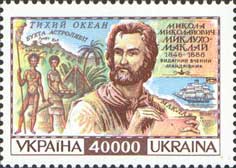
Early Russian Ethnographer in New Guinea

AnthroBase contains the following profile of an ethnographer who beat Malinowski to New Guinea by several decades.

Miklukho-Maklai, Nikolai Nikolaevich (1846-1888)

Russian anthropologist and explorer, acknowledged as the father of Russian ethnography. In 1871-72, Miklukho-Maklai did 15 months of continuous fieldwork on the Northern coast of New Guinea [in present-day Madang Province], where he pioneered methods that would only gain wide acceptance 40-50 years later, after Malinowski’s fieldwork. Throughout his life, Miklukho-Maklai identified strongly with the people he studied, and he several times spoke out in their defence against colonialist powers. He laid the groundwork of the rich tradition of 19th century Russian ethnography, which continued well into Soviet times–until it was destroyed in Stalin’s purges in the 1930s-50s.

Leave a comment

Filed under Papua New Guinea, Russia, scholarship

Morobe Field Diary, July 1976: ELCONG Sunday

The kids at school in Kuwi were hungry and ELCONG Sunday was coming up so Friday Mr. & Mrs. S. & last daughter & I paddled over to pay a visit. ELCONG Sande commemorates the coming of the Gutnius to New Guinea, i.e., the founding of the Evangelical Lutheran Church of [Papua] New Guinea. The Gutnius was first brought to the area by Johann Flierl [who could hardly have had a more unpronounceable name in an area where few of the local languages distinguish either /f/ from /p/ or /r/ from /l/], a great huge bearded German from Neuendettelsau [in Bavaria] who established himself at Finschhafen [“Fints” at the eastern end of the Huon Peninsula] in 1886 and gradually, as his numbers increased, established mission stations at Salamaua (Kela), Lababia and Kuwi (later relocated to Siboma) among other places. Fortunately they had already begun work in Yabem or they would have had to work in Kela, whose speakers inhabit Kela, Lababia and Kuwi. [Though fairly closely related to Jabêm and Bukawa, Kela has much more severely eroded morphology and is one of the few local languages to phonemically distinguish nasal from oral vowels.]

Three men told the stories of how the Gutnius came to Kuwi, Siboma & Paiawa [whose language is non-Austronesian, thus not related to the other local languages in the Jabêm Circuit]. But they told it in reverse chronological order that briefly threatened to be set aright. The Paiawa guy, who is a relative of the kaunsil’s, acted out part of the story about a guy who planted taro according to the Gutnius (not accompanied by traditional magic) and, not impressed with the lack of immediate results (à la Jack and the Beanstalk I guess), angrily threw the ‘black mission[ary]’s’ church bell into the sea. The Paiawa man had apparently been around to hear the story from people who witnessed the first encounter themselves. The Kuwi & Siboma storytellers were less histrionic and were repeating stories that had been told to them. The Kuwi man told how the Kuwi [people] were slow to accept the mission; they mostly ignored it so it didn’t take root for some time. Also their local convert and lay missionary had a shakey grasp on Yabem which the storyteller illustrated by giving his pronunciation of Apômtau as [abomdou]. The Siboma guy got a chance to mention the mission school that used to be at Siboma. Evidently it was after mission contact that they moved from the old village in the next cove to the present site, which is a good place but not so easily defensible [from the sea].

The school kids enacted the arrival of Flierl in a decorated canoe. The guy playing Fl. dressed in white shirt & trousers, white plastic helmet and wore a long beard (actually a Standard 6 Siboma boy). All sang a singsing taught them by the ‘meri tisa’ [‘woman teacher’] we usually stay with when we visit Kuwi. She accompanied them on a hand drum with lizard skin top tuned by rocks or something [actually beeswax] fastened strategically on the playing surface. [The kaunsil was especially supportive and soliticitous toward the meri tisa, who was also an outsider, as he had been during his own long years as a schoolteacher.]

Some young folks from Kuwi acted out the story of the Good Samaritan dressed in modern conception of Biblical garb.

The service, stories and plays (called ‘piksa’ by older pidgin speakers and so written in the program) were all in Tok Pisin except for the Yabem songs. The commemoration service had locally composed Yabem songs, the regular service had translations of German. [For the difference, see Morobe Field Diary, June 1976: Naive Ethnomusicology.]

A special collection was taken up for ELCONG Sande by each village beforehand. The aim was one Kina from each Kristen memba. Siboma came up with K59, Paiawa with K41, Buso with K44, and Kuwi I think had K49 with the schoolteachers contributing K7. I suspect those numbers tell more about the cash income of the various villages [i.e., how many relatives they have working elsewhere] than about the number of Kristen members or their fervor.

An afterchurch circuit meeting took up the afternoon. It was conducted in Tok Pisin and Yabem in about equal portions. I’ve gotten so I can hear a number of things in Yabem now. It’s nearly as easy as Siboma, especially since I got a little mimeo on some grammar basics of Yabem [the last time I was in Lae].

1 Comment

Filed under Papua New Guinea

Morobe Field Diary, July 1976: Going Fishing

Yesterday was rainy so I decided to accompany the fishermen. My biking poncho kept me warm and dry for the most part and the clouds kept the sun off. But the wind and rain made it a lousy day for fishing. In the afternoon it cleared up some and, while I stayed aboard the [M.V.] Sago, some people came up with respectable catches. One fellow had a big fish (probably 5 lbs) bitten off at the gills by a shark as he was pulling it up. Another fellow caught a small shark and I saw another small one in the water (small = 2-3′). I had no desire to swim in those waters.

We fished around the islands offshore where the water is deep and most of the catch was (I think) red snapper (or red emperor] or various snappers [or sea perch, Lutjanus spp.] with sea bass [or rock cod, Epinephelus spp.] (called ‘big mouth’ in Tok Pisin) making up most of the remainder. The fishermen are paid 10 toea [= 0.10 K(ina)] a pound; the Sago sells them in town for 30 toea a pound and the retailer sells the fish (fresh or frozen depending on how long after the boat gets in you buy it) for 75 toea/lb. Makes American dairy marketing look pretty decent. The boat’s crew cleans and weighs the fish and must be paid and then there’s the gasoline and boat upkeep. Some men worked all day yesterday for 40 toea. The maximum earned was about K1.40 and the minimum 0 toea. Evidently a good day’s fishing would yield about K1.00 in cash per person. So a good steady fisherman (which few are) could earn about K4-5/wk at most.

Today I stayed here because it looked to be too sunny early this morning when all went out to the island where many left their canoes yesterday. And sure enough it’s a scorcher. Good for airing out the things left in my room when I was stuck in Lae.

Since the kaunsil had a lousy day fishing I suspected he might break open the case of beer I brought him last nite and he did and he & I and his son drank about a 6 pack, each getting pleasantly tipsy and storytelling. A wilder party was going on kitty-cornered from us: singing, laughing, music inside and a lot of beer bottles lying on the beach later. We put our beer on the ice in the Sago first so it was quite good.

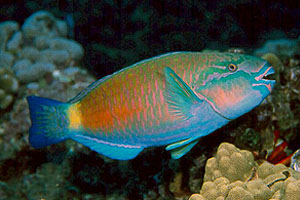
I’ve gotten fascinated by the little Fishes of Hawaii book that I brought with me (by Gar Goodson). Apparently a large number of fish [especially wrasse and parrotfish] go thru color & sex changes that at first had scientists fooled into giving them 360 species names (in parrotfishes for instance) when there were no more than 80 or so going through their changes.

Leave a comment

Filed under Papua New Guinea

Morobe Field Diary, June 1976: Fieldworker’s Frustration

Before setting out for Karsimbo I felt the first severe case of fieldworker’s frustration. I was tired of being unignored, or scaring kids, of being hailed for doing the least bit of work. And though my reports and dictionaries were proceeding well I realized my speaking/hearing ability was a disappointment to both me and the rest of the village. Partly it was the necessary swing back from total communication and little work to lots of work and little communication. I didn’t take my work to Karsimbo and spent more time communicating and doing things I could describe to people in the village that they didn’t already know about beforehand. I talked about my solo walk up the mountain to see if I could see Kui. I ended up seeing Salamaua Peninsula and the mountain ranges behind Lae (or at least their clouds) but not Kui because the angle wasn’t right. And I didn’t get lost (as I had been warned I might). I followed the huge caterpillar swaths [logging roads] and only turned back when the road I was following was overgrown too much and I heard a not unsizeable creature ‘break bresh’. I came down the mountain feeling quite invigorated and rehearsing my description of my excursion, finding, a little to my surprise, that I could say about all I wanted to say.

Back at camp my hosts had gone en masse to bring back a pig a guy with us had killed and so I went over to another group who had just finished fighting saksak [pounding sago] and told [them] I had climbed the mountain, not seen Kui but seen Salamaua, heard plenty of hornbills and not got lost, all in Binga N. and in return was offered betelnut, talked about a bit and informed that now I had heard Binga N. finish. It was just the sort of success I needed to bolster my spirits and encourage my teachers.

I came back to Siboma telling stories of the two pigs that guy killed–one with a spear made from a speargun–and of beating kundu [sago], which is not waitman’s work.

The last day there they forced me not to help with a third sago palm they were helping someone else do but on the way back I got the big paddle [not the kid’s paddle they gave me on the way there] and paddled like a maniac to dispel my lethargy. I sat in the front where I would affect the steering less and just did most of the power stroking while my mama (‘father’) and awa (‘mother’) took turns keeping the canoe on course and paddling. Part of the fun of this kind of fieldwork is getting to readolesce all over again as well as play with kids on their level–all for science of course. So my brief dumps down in which I found myself last weekend are dispelled and I’ve set aside my dictionary work for a while to start talking more. This weekend I’m in good spirits–partly because I’m heading into Lae for a day or two. And when I get back with my new supplies I will be able to go visiting with more grace (i.e. goods) and confidence. And people are beginning to talk to me in B.N. off the bat now after I began to start every communication in B.N. leaving Tok Pisin for the reserves.

I torture the kaunsil with thoughts of the cold beer waiting for me at the other end of my boat ride. I plan to bring back a case, along with a thousand other items.

Leave a comment

Filed under Papua New Guinea

Morobe Field Diary, June 1976: Sago Work

I’m just back from a trip to the former Numbami village of Karsimbo for the purpose of getting a breath of fresh air (kisim nupela win) and getting sago starch (paitim saksak). I had a chance to observe the process of producing edible sago from start to finish so I’ll attempt a description.

First a suitable tree [Metoxylon sagu] is selected. One near a stream is best so the pulp won’t have to be carried far to wash. A man chops down the tree, which is a thorny son of bitch and the kaunsil borrowed my zori [rubber slippers] to do the job. Then the outer bark is removed with an axe or, less effectively, with a bushknife (busnaip). The men usually do such work but women may participate. It’s a matter of practicality, not custom. The inner bark is then stripped in slats with the aid of a siala, a large digging stick used also for making holes to plant taro in the garden–a smaller version is stuck in the ground and used to husk coconuts.

The strips of inner bark are then used to catch the pulp. This leaves the pinkish white inner fibery trunk of the tree ready and waiting submissively for you to hammer the crap out of it with a wanginda, a tool with an adze-like handle and a head of anything from a flat, sharp-edged stone to any old shell casing or length of pipe. The handles vary from child- to man-sized thicknesses. Pounding is not limited to one sex or the other and is the most tiring of the chores associated with kundu/saksak/sago palm. Being unskilled immigrant labor my job is mostly pounding which I do rather effectively after my first attempt in which I broke the head (a huge nut of iron) off one wanginda and blistered my hands badly. It requires some skill to combine chopping a piece off the log and smashing the stuff previously chipped off to a fine enough consistency to yield plenty of powder, kundu ano or ‘true sago’ [or ‘sago essence’], when washed. This time I was permitted to do a third of one medium-sized tree and half of a small one (12-14″ diam. 10-12′ long).

Meanwhile a man constructs a washing machine [or chute] of a section of the outermost covering [of a sago branch] something like a [huge] stick of celery. In the wide mouth of it, he arranges the coconut webbing to filter the fiber out of the powder as he pours water thru it and turns it and squeezes it. The orange colored water runs down the celerylike [stalk] to a hole thru which it drains into a mat of the leathery husk [sheath] of some tree–people in Yap used something similar to sit on when meeting out in the open and theirs was from the areca palm. The coconut tree webbing and the mat, called yáwanji > yáunji, are the only parts of the washing machine to be reused. The hole is plugged with green fiber that both blocks the water from escaping down the rest of the open tube and conducts it down into the mat. [See more images of sago pounding and washing (scroll down).]

The washed pulp (ulasa) is built up around the edges of the mat for support as it gets fuller. When a lot of sago is a-beating several washers are set up. Only men wash and only women (& children) carry the pulp from tree to washer. When all is washed (-lomosa) the powder, kundu ano, will have settled to the bottom in a heavy pasty mass and the water is then drained off (-lapa tina tomu) [‘beat water apart’] and the paste scraped off and shaped into large rectanguloid lumps. Green sago fronds are then laid on the ground and the lumps burnt on top of them with dry fronds (damu meaning both ‘torch’ and ‘dry frond’ the two being one). The burnt skin of the lumps (baloga) is sweet and considered a treat. The mat is carefully scraped of all the powder, odd bits being dumped in a pan for the dogs. After that the lumps are carried back with the coconut webbing (gogowa–sorry, this is the tube, nuta is the webbing, the laplap (lavalava) bilong kokonas). Bihain [= later] the kaunsil agrees to put the whole thing on tape for me in Binga Numbami; he practiced a bit just now and I could follow most of it fairly well, having seen it all and catching the right cues here and there.

Leave a comment

Filed under Papua New Guinea

Morobe Field Diary, June 1976: Naive Ethnomusicology

It’s Sunday and Friday nite I was expecting to get into town (or leave for town, which means getting in Saturday morning). A bunch of people from the Kui, Siboma and Paiawa church circuit [or parish?] have to go build a house for a big church meeting in September of the Lae or Morobe Parish [or circuit?] so they will use the [M.V.] Sago to carry all and drop them on the way to town, do their business (and me do mine) and pick them up on the way back. So I’m writing letters like mad to mail when I get into town.

The church service reminded me to write something about the music. All songs are in Yabêm and the words are in a hymnal without the notes, only marks indicating repetition [where to repeat]. Some of the songs are translations from German standards and are immediately recognizable from their steady beat, be it fast or slow (usually quite plodding), as it proceeds, Westernly from bar to bar. The others are local compositions with the author’s name and place at the bottom and these are recognizable by a rhythm that goes from crescendo to crescendo. They usually build up slowly on the men’s voices which carry the low tones [pitch] and gradually pick up the women who usually trail a bit behind the men and carry the crescendo to its peak in high tones [pitch] and at a much greater amplitude since all voices are contributing. The men then beat the women to the beginning of the next cycle, the song often carried by just one person at first then by more and more till the next crescendo peak. So one is a bar and staff rhythm, the other a crescendo to crescendo rhythm. Thus endeth my first attempt at ethnomusicology.

UPDATE: Recommended reading for specialists: Mission and Music: Jabêm Traditional Music and the Development of Lutheran Hymnody, by Heinrich Zahn [1880-1944]. Translated by Philip W. Holzknecht. Edited by Don Niles. Boroko: Institute of Papua New Guinea Studies, 1996.

“This entire work is a fitting tribute to one of the little-recognized–but hardly “unsung”–heroes in the development of Jabêm music and literature.” –Oceanic Linguistics 36 (December 1996) (Read full review)

“[Zahn’s] feeling for context almost makes him a contemporary of the sociologically oriented ethnomusicologists of today such as for example Thomas Turino.” –Oceania Newsletter 21 (September 1998) (Read full review)

Leave a comment

Filed under Papua New Guinea

Morobe Field Diary, May 1976: An Injured Child

The other day some women came back from their garden with a [c. 3-year-old] kid who had sliced off the top joint of his ring finger. It took some discussion before they asked me for medicine and bandage. I had only some of those sterile gauze pads and bandaids along with disinfectants but nothing to stop the bleeding and felt pretty useless but it turned out they decided to put kambang, the [slaked] lime chewed with betel nut, on as a disinfectant and I have an ample supply of that. I measured some out on my knife blade and put it on the cotton and one guy tied up the bandage. When they took the original bandage off blood shot out of the finger. They said later that the kambang would act as a poultice and when it went to work that nite the kid would not feel in the best of spirits. A doctor came or they took the kid to the doctor in the next village and he gave a penicillin shot and rebandaged the wound and yesterday the guy who did most of the original doctoring came to get my disinfectant powder and some bandaids so the wound seems to be healing all right. Since then I have been of slitely more use in dispensing aspirins, one cold tablet, and bandaids. Next time in town I plan to get more aspirins and some stomach marasin for me. My host’s wife gets migraines.

Leave a comment

Filed under Papua New Guinea