Category Archives: economics

Calculating the Cigarette Value of Books

From The Unfree French: Life Under the Occupation, by Richard Vinen (Yale U. Press, 2006), pp. 224-225:

The black market epitomized everything that Vichy disapproved of. It went with selfishness, materialism and indifference to the authority of the state. Denunciations under Vichy often concerned black-market matters, and were couched in interesting terms. Someone describing himself as ‘an average Frenchman who suffers from restrictions’ blamed the black market on Jews. In the south-east, black markets were often blamed on the Italians.

In practice, most Petainists used the black market. Sometimes Petainist officials were blatant practitioners: the Graeve family in Chinon trafficked wine at a time when both the son and daughter of the family held positions in the Vichy administration. Vichy bodies and local authorities often used unofficial channels in order to get food for their own employees. The Vichy government itself came to recognize that suppressing the black market entirely was not possible or desirable. A law of March 1942 regulating the black market specifically excluded transactions to cover personal needs, and a circular to prefects in the summer of 1942 talked of ‘struggle against all traffickers of the black market but complete freedom left for family supply’. Policemen turned a blind eye to small quantities of illicit goods. Even the Church, normally marked by intense moralism and asceticism, did not wholly condemn the black market. In December 1941 Cardinal Suhard stressed the need to obey the law but then distinguished disobedience from ‘the modest extra-legal transactions by which the extras judged necessary are procured and which are justified both by their small scale and the necessities of life’.

Black markets were not, in any case, wholly black. Transactions did not always involve strangers selling goods in a completely free market for cash, and they did not always involve people who thought of themselves as criminals. Money did not necessarily mean much during the occupation. At a time of rapid inflation, everyone preferred goods with a more tangible value. The coupons that gave particular companies the right to buy certain raw materials were traded, illegally. The barter that might normally have operated at village level became institutionalized. One firm advertised a swap of typewriters for bicycles. Cigarettes acquired particular importance, both because nicotine-starved smokers wanted them and because they provided a convenient unit of exchange. Both Micheline Bood, the Parisian schoolgirl, and Charles Rist took a touching interest in the cigarette value of books. A peasant boy in the Corrèze bought an hour of violin lessons for a pound of butter.

Sounds a bit like Romania during the 1980s, where the black market Cigarette Standard was Kents, for some reason I have never discovered. An unopened package of Kents was a serious offer, although some medical procedures might require a whole carton—or a bottle of imported Scotch.

UPDATE: During our year in Romania in 1983-84, I always kept a carton or two on hand in case the need arose. I only dispensed a full package on four occasions: two to the embassy driver who dealt with the customs officials when we first arrived (with lots of luggage); one to help friends book a room in a big, empty hotel in Brasov, where we attended a wedding; and one to a band of gypsies who serenaded my wife and me with naughty lyrics that I made an effort to translate in an otherwise empty venison restaurant in snowbound Poiana Brasov.

My wife also gave a carton of Kents to a neighbor lady who needed a medical procedure. (It may have been an illegal tubal ligation, or even an abortion, but we didn’t dare to ask. In a totalitarian society, it’s best not to.) Her obsessive homeopathic health-nut of a husband later brought the carton back and scolded us for encouraging the evil habit of smoking. So my wife later gave his wife a bottle of Scotch instead. I assume it went to a doctor without the husband finding out about it.

I kept one carton in reserve in case we had any trouble crossing the Bulgarian border by train on our final departure. After we had crossed without incident, I shocked a team of Romanian boys and their coaches who were on their way to a football match in Sofia by donating my carton of Kents to them. After they recovered, the coaches came back to our compartment to tell me they had never been so surprised in their lives. I told them that Romania had given me a surprise or two as well, and wished them luck in their match. They just nodded knowingly, thanked us again, and returned to their team.

Leave a comment

Filed under economics, France, Germany, Romania, war

Learning to Trade Envidia for Unity in Chicago

From Antonio’s Gun and Delfino’s Dream: True Tales of Mexican Migration, by Sam Quinones (U. New Mexico Press, 2007), pp. 210-212:

They [immigrants from Atolinga in Zacatecas, Mexico] became part of a Chicago ecosystem of immigrant nonfranchised fast-food restaurants that included Chinese food, Greek gyros, Italian hot-dog stands, and sandwich and donut shops owned by Indians. Several Atolingan taquerías replaced Polish and Italian hot-dog stands that went out of business.

Atolingans pooled knowledge, shared experiences, aided those in need. For a while, they formed an informal cooperative to buy vegetables and supplies. When one of Salinas’s taquerías burned down in 1998, he reopened two weeks later using equipment from other Atolingan restaurateurs.

This kind of cooperation was a radical concept for men from an isolated Mexican village. Back home, anyone who wedged his way into a small business wasn’t about to help or cooperate with the competition. Envidia was rife and pernicious. Envidia means “envy,” but it also implies backbiting and in commerce, even sabotage. Envidia is behind the common Mexican proverb “Pueblo chico, infierno grande” (Small town, big hell). When discussing envidia, particularly as it relates to business, many Mexicans tell the story of crabs in a pot of boiling water. When one crab tries to get out of the pot, the others pull him back down; if they can’t get out, why should he?

Chon Salinas came to view envidia as a devastating force. He felt it was behind the drug-smuggling rumors with which he’d had to contend.

A significant cause of Mexican poverty in small villages, he believed, was the way people not only wouldn’t cooperate in business, but at times actively tore each other apart. He told the story of Urbano Garcia, a great carpenter in Atolinga years ago, who so feared competition that he refused to teach the trade to his own sons. As Salinas went out on his own and then helped others do the same, he railed often against envidia.

“The loans we eventually gave each other weren’t that important,” he said. “What was important was to recognize the strength of unity, this support, backing each other up, this confidence that we all need. It’s what I learned at John Barleycorn‘s and what other people taught me there. I’d tell those who were starting restaurants that we have to break the pattern of those famous crabs.”

Chicago was a huge market that offered opportunity for everyone. The new immigrants found themselves together in the same strange land, facing the same challenges: the English language, U.S.-born children, business permits, leases, taxes, snow. The envidia impulse withered, and unity came easier.

Leave a comment

Filed under economics, Mexico, migration, U.S.

How Meat Factories, Mexicans, and Futbol Came to W. Kansas

From Antonio’s Gun and Delfino’s Dream: True Tales of Mexican Migration, by Sam Quinones (U. New Mexico Press, 2007), pp. 230-232:

In the 1950s, the invention of the turbine water pump allowed [people in western Kansas] finally to suck water from the massive Oglalla Acquifer, a sea of underground freshwater that stretches under the High Plains from South Dakota to Texas and New Mexico. New irrigation systems let them spread that water across wide swaths of land and decreased the threat of drought. Farmers could grow huge amounts of grain-corn, milo, and alfalfa—which could be fed to cattle. With that came the cattle feed yard.

In 1951, a Garden City farmer named Earl Brookover built the first cattle feed yard in Kansas, with large pens in which cattle ate locally grown grain from a trough. Cattle fattened faster and more efficiently—on high-protein milo, corn, and alfalfa—than when they grazed aimlessly on the range. Dozens of ranchers opened feedlots across the High Plains. The Irsik family, another feedlot operator near Garden City, built the first processor that turned corn into cattle feed. Today, there is feed yard space for a million head of cattle within a sixty-mile radius of Garden City.

Poets would find potent symbols of America’s vanished frontier in these yards, with their acres of penned and tagged cattle that once roamed the range. The cowboy was now as penned in as the cattle. He rode from yard to yard, culling the sick head.

Still, the feed yard changed the American diet. The price of beef dropped. On rangeland, cattle exercised as they grazed, making their meat lean and tough, so not much of the animal was usable for anything other than hamburger or pot roasts. America’s hamburger tradition was due to the fact much of the range-fed cattle was appetizing only when it was ground up with some of the animal’s fat. But in feed yards, cattle didn’t move much, so their meat was fattier and thus more tender and better tasting. Demand for beef rose. This added protein to the U.S. diet. Cattle producers could now harvest more profitable specialty cuts—brisket, chuck, inside skirt, flatiron, and flank steaks—from all over the animal.

Brookover’s idea was to keep in Kansas what was raised in Kansas. Up to that point, Kansas and a lot of rural America resembled the Third World: its commodities—cattle and corn, in this case—were shipped away to be transformed into more profitable products elsewhere. The feed yard transformed Kansas corn into a more profitable product—cattle. Thus a bit more of the wealth that these rural communities produced remained in the area.

By the 1970s, southwest Kansas was a cattle center unlike anything early settlers could have dreamed. Yet it was only a hint of what was coming.

The man who completed the transformation of southwest Kansas— and changed America in the process—was a tall, jowly fellow with a slow Iowa drawl named Andy Anderson.

Anderson cofounded a company known as Iowa Beef Packers—later IBP. Anderson had intense energy and creativity where building things was concerned. He’d been a butcher, then a meat wholesaler in Los Angeles. Anderson had no schooling in engineering but would become an expert, and endless tinkerer, in the science of meat-packing and refrigeration. He built the meat-packing plant of the future.

Meat-packing began in the big cities, near large populations of workers, many of whom were Eastern European immigrants. Legions of well-paid union butchers in Chicago, Omaha, and Kansas City slaughtered the cattle that came in on trains from the High Plains. Anderson and IBP moved the meat industry to the small town in the American heartland where the cattle were raised. Anderson retired from IBP in 1970 and died in 1990 at the age of seventy-one. But by then, he and IBP had reinvented the way meat was slaughtered and sold. They’d also ended butcher unions and brought millions of Mexican immigrants to the heartland.

In 1960, Anderson and his partner, Currier Holman, used a U.S. Small Business Administration loan to form IBP in the town of Denison, Iowa. Anderson applied assembly-line principles to the disassembly of cattle. In this factory, the jobs of slaughtering, cutting, vacuum wrapping, and boxing the meat for shipping were mechanized and consolidated under one roof. His factories broke down these tasks until anyone could do them. A production line would send a cow carcass on a hook through the plant. A worker would make one cut, then the carcass moved to the next worker, who made another cut, and so on, until the skeleton remained. The cuts were then sealed in plastic and boxed for shipment.

This passage merely serves as background to a long and fascinating story about how Latino-dominated soccer displaced Anglo-dominated football as the top sport in Garden City High School, Kansas, in 2003.

2 Comments

Filed under economics, Mexico, migration, U.S.

A Velvet Painting Maquiladora in Juárez

From Antonio’s Gun and Delfino’s Dream: True Tales of Mexican Migration, by Sam Quinones (U. New Mexico Press, 2007), pp. 128-130:

[Doyle] Harden and [Leon] Korol—a Georgia country boy and a blunt Chicago Jew—would become fast friends, business partners, and would transform the marketing of velvet painting in America.

“He changed my life in the velvets,” Harden said of Korol, who died in 2004 at the age of seventy-seven.

Harden had been sending a semi truck a week back to his Georgia warehouse. But Korol believed velvet had national potential. He was the first customer to buy an entire truckload of Harden velvets from Juarez. Within a month, he had ordered five trucks of paintings delivered to Chicago. He kept this up for years. Velvet paintings filled the cavernous warehouse at the Leon Korol Company in Chicago, exuding a smell of oil paint and fabric that years later Korol’s sons still remembered….

It was to meet this demand that, in 1972, Korol fronted the money with which Harden built a block-long velvet-painting factory on a Juárez vacant lot belonging to a Mexican customs commandant. The factory soon hummed with three shifts a day.

Harden’s velvet-painting factory is legendary among Juárez old-timers. It was really a cluster of about two dozen studios of different sizes—each with a master painter and team of assistants. Harden provided the materials and paid dollars for everything the master and his crew could churn out.

Harden tested the painters to see who could paint the best trees, or waterfalls, or clouds. Then he set up production lines. Each studio had a wooden shelf along which the artists would slide the paintings. One man would paint the clouds, slide the canvas to the next fellow, who’d paint the sun. The third guy would paint the mountains and slide it to the guy who’d paint the stream. And so it went until the painting was finished. A crew of framers cut the velvet, stapled it to frames, and fed blank canvases into the maw of it all.

An assembly line for handmade art, the factory was one of the first maquiladoras in a town now dominated by them. Each studio was designed so no painter used more than one color and thus avoided wasting time by switching or cleaning his brushes.

Each day, after reviewing sales orders, the master painters chose the subjects to be painted: a landscape, an eagle, a wolf, an Aztec warrior, a pachuco by his car. An assistant forged the master’s name on each painting. As soon as it was done, the artwork was in a truck and on its way to some far-off part of the United States, sometimes arriving still wet.

Two big rigs would leave Harden’s factory for the United States every day. Urged on by Leon Korol, who bought from no one else, Harden reached awesome heights in velvet production. A dozen or more competitors followed his lead into mass production. A man named Molina had a studio of twenty or more of Juárez’s best artists to whom he paid cash every day; it was accessible off a downtown back street with security guards vetting each person who wanted to enter. But no one equaled Harden’s volume.

In typical Quinones fashion, this chapter is a collection of interrelated stories about unusual people:

  • Edgar Leeteg (1904–1953), the weird kid from East St. Louis, Illinois, who moved with his mother to Tahiti, where he became the father of modern velvet painting
  • Aloha Barney Davis, who marketed Leeteg’s work in Hawai‘i, from which it spread to San Diego, then to Tijuana and other towns along the U.S.–Mexican border.
  • Chuy Morán, the hardscrabble artist who became the king of Juárez velvet painters and, for a time, a very wealthy man.
  • A.M. Shawar and other Palestinian emigrés in Edmonton, Alberta, who sold velvet paintings all over the Great White North, even flying them into isolated villages in the Canadian outback.
  • Hundreds of Scientology students in Florida who paid for their schooling by hawking velvet paintings during “velvet’s last hurrah” during the 1980s.

3 Comments

Filed under art, economics, Mexico, migration, U.S.

How Zacatecans Became Risk-takers

From Antonio’s Gun and Delfino’s Dream: True Tales of Mexican Migration, by Sam Quinones (U. New Mexico Press, 2007), pp. 42-45:

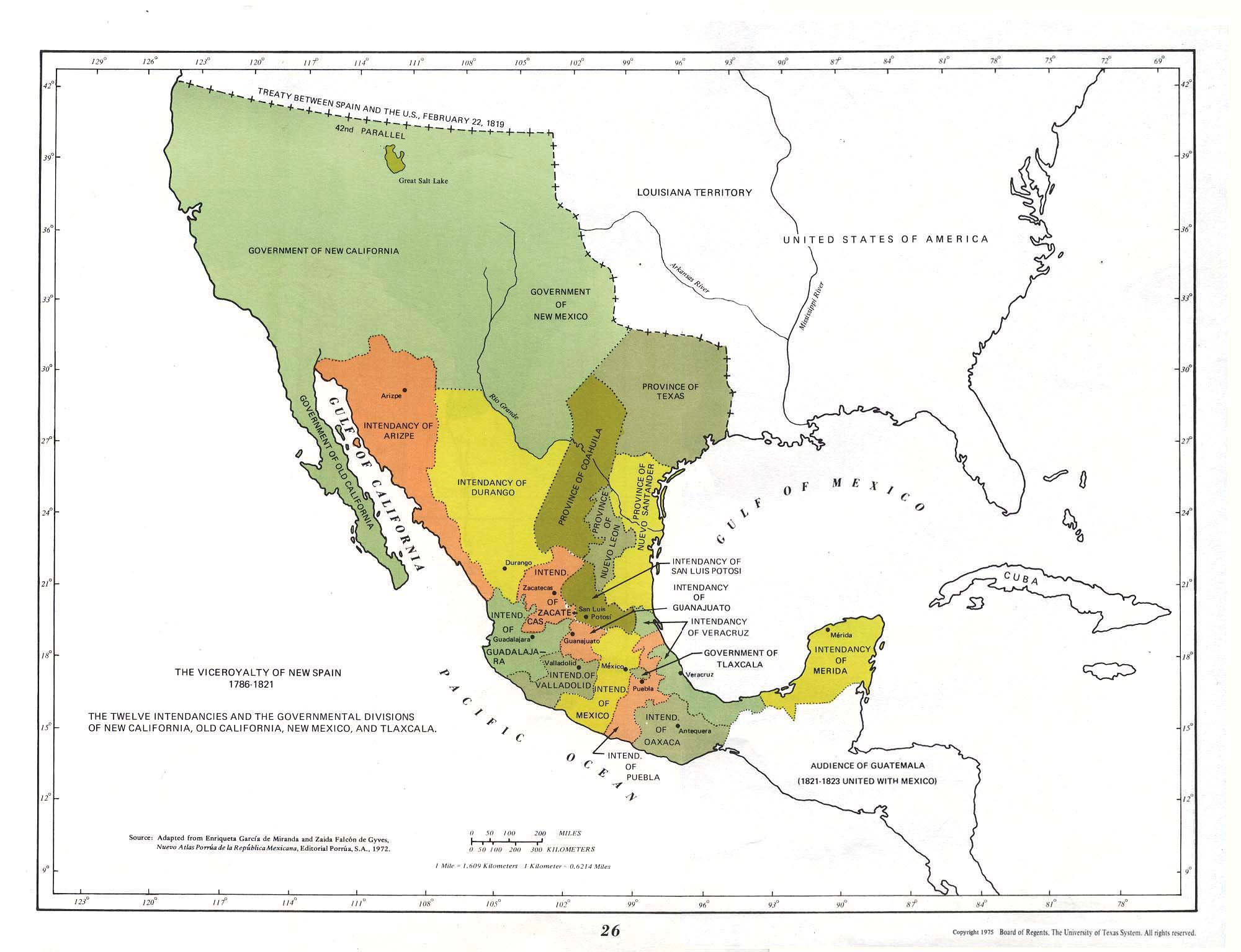
On a map, Zacatecas looks like an amoeba in the middle of Mexico. Its lines curve in and out of territories with the logic of a modern art painting. On the ground, the state is vast and beautifully rugged. In parts, mesquite trees pock forbidding deserts of beige dust. Elsewhere, the-desolation gives way to dirt the color of cayenne pepper. But whatever its color, the land of Zacatecas never could hold people to it.

The Zacatecan upper classes owned large tracts of land, much of which they’d inherited, but were averse to investing in anything more than their houses.

“There are very few classic entrepreneurs in Zacatecas, in the strict sense of people who, with their own resources, create jobs,” said Rodolfo Garcia, a professor of immigration and development studies at the University of Zacatecas. “In Mexico, the capitalist class has mostly grown due to the support and money of the government. The capitalist class in Zacatecas, more than in any other state, has grown up on public money.”

The extraction and export of raw materials began in the late 1800s, when mining ruled Zacatecas. The minerals from Zacatecas went elsewhere to be processed into something of greater value. When the mines gave out, they were replaced by ranching and agriculture but not by a new attitude toward risk. Zacatecas, the Mexican state that produces more beans and chiles than any other, still has few companies that process those products into, say, canned beans and canned chiles. Almost everything produced in Zacatecas leaves for places where it is transformed into something of greater profit.

This includes its people. Nothing has left Zacatecas like its people. Emigration to the United States began in the late 1800s, declined in the 1930s, then picked up a momentum in the 1940s that it hasn’t lost. No Mexican state has a greater percentage of its people in the United States than craggy, red Zacatecas.

The folks who left were the state’s real risk-takers. They risked their own capital—their lives—on the promise of a better return than Zacatecas offered. For most of them, the bet paid off. In time in the United States, they opened businesses, bought houses, and sent their kids to school….

Strangely, immigrants’ daring and risk-taking indirectly stymied what the state needed most—which was a daring, risk-taking state of mind. Instead of using immigrant dollars to jump-start an industrial economy, Zacatecas simply limped along, addicted to the dollar injections. Immigrants became the state’s primary foreign investors and job creators. They hired local folks to build lavish homes in the villages they’d left as paupers.

Then came the Mexican presidential election of 1988. The ruling PRI faced real competition for the first time in its history. Cuauhtémoc Cárdenas—a PRI apostate who had left the party—formed a movement that would become the left-wing Party of the Democratic Revolution (PRD). Sinaloan businessman Manuel Clouthier rejuvenated the National Action Party (PAN) by swiveling it away from right-wing social morality and toward the issues of corruption and efficient government services.

Cárdenas and Clouthier were the first Mexican presidential candidates to visit the United States and avidly court immigrants. The PRI and its candidate, Carlos Salinas de Gortari, beat back their challenge through massive vote fraud. But the 1988 election showed the PRI that immigrants up north were a dangerously uncoopted source of dissent. Salinas set up an office of Attention to Mexicans Abroad.

Zacatecas Gov. Genaro Borrego tried another idea. Every dollar immigrants put up for public works projects in their villages, he announced, the government would match. It started as “1 for 1” and quickly expanded to “2 for 1″—with money from the state and federal governments. Immigrants could stretch their dollars, and Zacatecan villages could get the schools, wells, and clinics they needed.

For decades, the PRI had used budgets to buy off union leaders, businessmen, academics, and neighborhood groups. Zacatecas’s “2 for 1” was the party’s first try at buying off immigrants in the United States, and it grew largely from the PRI’s 1988 election scare. Zacatecan immigrants were urged to form village clubs and raise money for projects back home.

But the PRI miscalculated. These immigrants were no longer the humble campesinos who went hat-in-hand to mayors across Mexico. They’d done well in the United States, and felt confident in their abilities. They blamed the PRI for having to leave their villages. They weren’t about to let the party push them around up in the United States, too.

The clubs they formed were not docile. On the contrary, as the party pushed, immigrants pushed back. They insisted on a say in how their money was spent. The PRI was adamantly secular, but when some clubs insisted that the money they put up be used to renovate village churches, the government relented.

Because of “2 for 1,” Zacatecans became the best-organized Mexican immigrants in the United States. By the time Andres Bermudez ran for mayor of Jerez, there were some 240 of these clubs in the United States. No other Mexican state had even half that number. They invested millions of dollars in public works. Their money built the necessities for their people back home that the government hadn’t provided. In time, immigrants nurtured a righteous sense of their economic importance to Zacatecas.

Yet they religiously avoided politics. Mexican politics had been the exclusive domain of lawyers, teachers, merchants. Every ranchero seemed to know some fool who’d gone into politics and lost everything, been jailed or killed, or gotten rich and turned on his friends. So while Zacatecan immigrant prosperity created a vast ranchero constituency in the United States with money, organization, and talent, it was oblivious to its own political potential. That’s how things remained until the late 1990s, when a lot began to change back home.

Leave a comment

Filed under economics, Mexico, migration, U.S.

China Diary, 1988: 5 Yuan for Parts, 5 Jiao for Labor

In 1987–88, the Far Outliers, with their two-year-old daughter in tow, spent a year teaching English at a new community college in Zhongshan City, Guangdong Province, China. The following is one of a series of articles I wrote in 1988. I sent them to a Honolulu newspaper, but they were not interested. So now I offer them as a retrospective on coastal China twenty years before hosting its first Olympics. At the same time, I am scanning in a lot of our old China photos and uploading them to my Flickr account or to my WordPress blog to illustrate this series.

China undoubtedly has the world’s largest reserves of rubble. Unfortunately, natural and man-made disasters have helped create a glut of rubble on the world market, so these reserves have little export value.

Of course, China also has the world’s largest supply of cheap labor, with considerably greater export value. Chinese who emigrated as cheap labor in the past remain an important source of much-needed hard currency to China today. And many Hong Kong companies invest highly desired capital in China just to take advantage of the readily available labor.

The overabundance of labor and the relative shortage of capital and resources in China help explain the ubiquitous piles of rubble. Much of it consists of brick, mortar, plaster, gravel, sand, cement, bamboo scaffolding, pipes, and metal frames intended for eventual use or reuse.

Worker hut atop the city wall, Xian, ChinaIn China, labor is “cheaper than bricks.” Bricks are hardly scarce, but the demand for them is very high during the present construction boom. They are the major component of most buildings and most rubble. It isn’t just the bureaucracy that throws up brick walls; virtually every factory, school, office complex, and construction site is surrounded by brick walls. Even temporary buildings and walls are made of brick.

Demolition proceeds brick by brick, each one cleaned of dried mortar and carefully stacked. If you had a dollar for every brick in China you could pay off the U.S. national debt and still have a bit of pocket money.

While China’s conservation of valuable resources at the expense of cheaper labor helps create mountains of recycled rubble, the West’s conservation of expensive labor at the cost of cheaper resources helps generate mountains of unrecycled garbage.

In everyday terms, cheap labor means:

  • The butcher charges nothing extra to trim or slice the meat you bought.
  • The sales clerk spends 15 minutes, at no charge, replacing a broken electrical plug with an 80-cent new one.
  • Labor accounts for only 25 percent of the monthly daycare bill. The rest is for food, supplies, and medicine.
  • A streetside vendor makes a living just refilling and repairing cigarette lighters.
  • The profit from selling 25 pounds of oranges is enough to make it worth the vendor’s while to carry them to town and sit beside them most of the day.
  • It is cheaper to get someone to retype a page of text to mimeograph handouts for class than it is just to make 30 photocopies of the original.

New homes under construction, Shiqi, Zhongshan City, GuangdongThe abundance of labor means that many more things in China are made, assembled, or installed by hand: brooms and mops, doors and windows, cabinets, wardrobes, tables, chairs, and beds. Westerners who pine for the days of pre-assembly-line craftsmanship could learn a valuable lesson there. Our two-year-old learned the ritual explanation “that’s not made very well” or “this doesn’t close very well.”

  • Cabinets come with leftover shavings inside, and doors that refuse to shut properly.
  • Mirrors have to be individually cut to fit the frame on the wardrobe.
  • House doors have handles and latches at different angles and heights and usually need planing to fit the frame.
  • Every large piece of furniture requires wedging to level it.
  • Wiring and piping is installed after walls are finished, leaving a residue of drilled-out plaster, brick, and mortar on the floors.
  • Arc-welders work on-site, often without masks, drawing current from the residential master circuit and flickering the lights–even blowing out major appliances–as voltage drops and surges with each arc.
  • The one-by-two-inch ceramic fuses at every household outlet are often not interchangeable, but anybody with a screwdriver can easily replace the fuse wire.

Reroofing, Xian, ChinaSo while standardized, prefabricated components reduce construction costs in the West, much Chinese labor and material is expended retrofitting and repairing. With so little standardization, designers also find it hard to estimate exactly how much material a particular job will require. As a result, construction sites contain many more primary ingredients and often many more leftovers than comparable sites in the West, lending even newly finished buildings a just-renovated and rubble-strewn look.

Leave a comment

Filed under China, economics

China Diary, 1988: Cheap Rent, Expensive Food

In 1987–88, the Far Outliers, with their two-year-old daughter in tow, spent a year teaching English at a new community college in Zhongshan City, Guangdong Province, China. The following is one of a series of articles I wrote in 1988. I sent them to a Honolulu newspaper, but they were not interested. So now I offer them as a retrospective on coastal China twenty years before hosting its first Olympics. At the same time, I am scanning in a lot of our old China photos and uploading them to my Flickr account or to my WordPress blog to illustrate this series.

How would you like to spend only ten dollars a month for rent? The only catch is that you have to move to Zhongshan City, Guangdong Province, China, and work at a local company for local wages.

Rent in Zhongshan looks good no matter how you figure it, but comparing the cost of living there with the same in Honolulu is still a bit tricky.

If you convert a Honolulu income of $2,000 per month to Chinese currency at the official rate of 3.7 yuan to the dollar, you would have more money to spend in a month than most people there make in a year. At the blackmarket rate of exchange, you would have twice that much. A couple who wanted to retire in Honolulu and live on their Zhongshan pension of 500 yuan per month would find first that they could not legally convert their yuan to “hard” currency at the official rate. If they then exchanged it on the blackmarket, they would end up with little more than $60 a month to live on.

But of course most people in Zhongshan earn Zhongshan wages and most people in Honolulu earn Honolulu wages. We need to match prices and wages in each place. So let’s compare fairly average working couples with one preschool-age child. Both couples are full-time teachers. Each month, Mr. and Mrs. Zhang in Zhongshan receive 500 yuan between them, if you average in the periodic bonuses they receive. Mr. and Mrs. Hara in Honolulu bring home $2,000 after taxes, union dues, and so forth.

A typical monthly wage in other parts of China would be about 100 yuan. Prices are also lower, as are the choices of goods available.

Public housing, Xian, ChinaEach month the Haras turn over $600, nearly one-third of their take-home pay, to their landlord, Mr. Chong, Zhang’s uncle. The Zhangs’ work unit—their college—provides them housing, but charges them 10 yuan each month for rent, 2 percent of their income. Gas, water, and electricity cost the Zhangs about 30 yuan (6 percent of their income). The Haras pay $40 a month (2 percent) for utilities.

The Zhangs are very lucky to have a telephone. It costs them about 25 yuan per month (5 percent of their income). They pay by the minute even for local calls. One time Zhang called his uncle in Hawaii and talked 10 minutes, at 12 yuan per minute. He’ll wait for his uncle to call him next time. The Haras pay $25 a month for their phone (1.25 percent). They rarely call the mainland but do call the neighbor islands occasionally.

New home, Shiqi, Zhongshan City, GuangdongThe Zhangs pay about 40 yuan per month (8 percent of their income) for full-time daycare for their 3-year-old. That includes breakfast and lunch six days a week and occasional doses of medicine. The Haras pay $300 a month (15 percent), to a private daycare center. That includes lunch and snacks.

Since their work unit furnishes their house, the Zhangs live close to work and pay little for transportation. They own two bicycles. Mrs. Zhang bought hers for 170 yuan (34 percent of their monthly paycheck). The Haras owe one more year of car payments at $170 a month (8.5 percent of their combined net), on the car they bought three years ago. They alternate chauffeuring.

Both the Zhangs and the Haras keep in touch with their relatives by mail. It costs the Zhangs one yuan (0.20 percent of their monthly income) to send ten airmail letters within China. But it costs them 20 yuan (4.0 percent) to send ten airmail letters abroad.

The Haras, by contrast, pay $4.50 (0.225 percent of their monthly net) to send ten airmail letters to Japan. It costs them $2.50 (0.12 percent) to send ten letters to the mainland.

The Zhangs recently made photocopies of family documents to help a relative emigrate. They paid 2.50 yuan for ten pages (0.50 percent of their income that month).

The last time the Haras photocopied ten pages, they paid 50 cents (0.025 percent).
The Zhangs spend about 40 percent of their income on food, 200 yuan per month. The Haras spend about 20 percent of their net on food, $400 per month.

Both couples eat a lot of rice, the Zhangs 50 lbs. a month, the Haras 25 lbs. Each 25-lb. purchase costs the Zhangs 12.50 yuan (2.50 percent), and the Haras $5.00 (0.25 percent). The Zhangs could buy government-ration rice through the state store but the quality is much worse. So they cash in their ration and use the money to offset the cost of the better rice they buy on the private market.

Official fruiterer, Shiqi, Zhongshan City, GuangdongThe Zhangs eat much less meat than the Haras. They pay about 4.50 yuan per pound for pork (0.90 percent of their monthly income), 3.50 per pound for chicken (0.70 percent), and 3.00 yuan for a 12-ounce can of luncheon meat (0.60 percent). The Haras pay about $2.70 per pound for chop suey pork (0.14 percent), 99 cents per pound for chicken (0.05 percent), and $1.30 for a 12-ounce can of luncheon meat (0.07 percent).

Produce such as bananas, bean sprouts, cauliflower, celery and tomatoes cost between .40 and 60 yuan per pound in Zhongshan, 0.07 to 0.12 percent of the Zhangs’ monthly income. Similar produce in Honolulu ranges from 39 to 99 cents per pound, 0.02 to 0.05 percent of the Haras’ monthly net.

Sundries store, Shiqi, Zhongshan City, GuangdongIn proportion to typical local incomes, then, rice and meat cost ten times more in Zhongshan than in Honolulu. But fruits and vegetables only cost two to three times more. Of course, the Zhangs are able to spend much more of their money on food because they spend less than one-tenth as much on rent.

Imported food is outlandishly expensive in Zhongshan. A six-ounce jar of instant coffee costs the Zhangs 20 yuan, two months’ rent (4 percent of their earnings). It costs the Haras about $4.00 (0.20 percent).

1 Comment

Filed under China, economics, Hawai'i

China Diary, 1988: The Allure of Hong Kong

In 1987–88, the Far Outliers, with their two-year-old daughter in tow, spent a year teaching English at a new community college in Zhongshan City, Guangdong Province, China. The following is one of a series of articles I wrote in 1988. I sent them to a Honolulu newspaper, but they were not interested. So now I offer them as a retrospective on coastal China twenty years before hosting its first Olympics. At the same time, I am scanning in a lot of our old China photos and uploading them to my Flickr account or to my WordPress blog to illustrate this series.

When all of China converts to daylight savings time during the summer, Zhongshan stays on Hong Kong time. To people in Zhongshan, Hong Kong and Macau seem at least as important as Guangzhou and Beijing.

It takes about two hours by hovercraft from Zhongshan Port to Hong Kong. There are two boats per day to Kowloon and two to Hong Kong. They are always full. There are also larger, slower, and cheaper ferries between Zhongshan and Shenzhen, the Special Economic Zone directly across the border from Hong Kong.

So when you buy vegetables at markets in Zhongshan, you shouldn’t be too surprised if you find “Golden Boat Gift Shop, New Territories, Hong Kong” written on the plastic bag the vendor puts the potatoes in. (The fact that the vendor supplies the plastic bags is unusual enough in China.)

Private Savings Bank, Shiqi, Zhongshan City, GuangdongBut there is even more traffic across the airwaves. Fewer than ten percent of households throughout China own TV sets, but it seems as if ninety percent do in Zhongshan. Many are tuned to Hong Kong. The special antennas and signal boosters needed to pick up Hong Kong cost extra money but are not hard to get. Televisions imported from Hong Kong have a special switch that toggles between the different audio channels used by Hong Kong and China.

Hong Kong stations present their weekly broadcast schedules on the air. So viewers who don’t read Hong Kong newspapers are still able to keep well abreast of upcoming specials. Rambo, First Blood was a big hit in Zhongshan.

Beauty shop, Shiqi, Zhongshan City, GuangdongThe commercials shown during English-language broadcasts give a strange picture of the desires of English-speaking consumers, many of whom pass through Hong Kong, few of whom live there. A great many ads are for luxury products: cigarettes, watches, furs, cars, fashions, perfumes, electronics, the sorts of things advertised in airline magazines. And the ads themselves are glitzy and expensive-looking.

But if you watch the Chinese-language programming directed at residents rather than travelers, you can witness the Hong Kong equivalents of American low-budget ads for car dealers and furniture stores.

In October 1987, the government launched a campaign to discourage viewers, especially party members, from watching Hong Kong TV. The authorities didn’t want people tuned to Hong Kong while government stations were broadcasting the 13th Party Congress from Beijing in October or the 6th National Games from Guangzhou the following month. The campaign had some success. Everybody watched the National Games. The athletes from Guangdong Province won the most prizes.

In the months before we left, the provincial government was interfering with the Hong Kong TV signals and trying to bring in more clearly the provincial and national broadcast channels from Guangzhou. Some people told us that the officials in charge of public security thought Hong Kong TV helped keep people glued to their TVs and out of trouble, while those in charge of political education thought Hong Kong TV politically unacceptable.

Dragon Tiger Phoenix Restaurant, Shiqi, Zhongshan City, GuangdongAlthough Macau TV is less attractive, the city of Macau is even easier to get to. It takes less than an hour by bus from the center of Zhongshan City to Gongbei, the border town in Zhuhai Special Economic Zone. Every day thousands of people cross the border, carrying fresh food and Chinese medicine to Macau, and returning with as many goods and cigarettes as they can hide in their bags and clothing. Empty cigarette cartons litter the floor inside and outside of the restrooms that stand between the duty-free shops and Chinese Customs.

Public health poster, Shiqi, Zhongshan City, GuangdongOfficials responsible for political education are hard put to counter the allure of these two enclaves of rampant capitalism. A recent film, Escape to Hong Kong, deals directly with the issue. It tells of four people who escaped from Shenzhen during the Cultural Revolution. The only woman among them is forced into prostitution when no one will ransom her from the gangsters who hide the four in Hong Kong. Her husband finds work as a day laborer, they sleep in shifts, and he eventually kills himself. Another escapee finds respectable work as a chauffeur, and the fourth achieves some worldly success, but at the cost of marrying his boss’s idiot daughter.

Many Zhongshan schools bought tickets to this movie for their entire student body. The accompanying short subject had a complementary political message. It was a documentary—with plenty of bare skin and bulging muscles—about New China’s first-ever body-building contest, held in Shenzhen.

Leave a comment

Filed under China, cinema, economics, education

China Diary, 1988: Mao Wore a Zhongshan Suit

In 1987–88, the Far Outliers, with their two-year-old daughter in tow, spent a year teaching English at a new community college in Zhongshan City, Guangdong Province, China. The following is one of a series of articles I wrote in 1988. I sent them to a Honolulu newspaper, but they were not interested. So now I offer them as a retrospective on coastal China twenty years before hosting its first Olympics. At the same time, I am scanning in a lot of our old China photos and uploading them to my Flickr account or to my WordPress blog to illustrate this series.

Zhongshan City is named after Sun Yatsen, better known as Sun Zhongshan in China. His birthplace, Cuiheng Village, is the major local tourist attraction. Tour companies in Macao do a brisk business in one-day tours of Zhongshan. The tourists walk through Dr. Sun’s house, a museum about his life, the Sun Yat-Sen Memorial Middle School, and a model factory or two. Their lunch in the revolving restaurant of either of the international tourist-class hotels may include pigeon, a local specialty, but not dog, another local favorite.

Chairman Mao’s portrait overlooking TiananmenSun Yatsen is the most durable and universally admired national hero in China. He led the struggle to overthrow the Manchu Dynasty in 1911. He also created the style of clothing known in the west as the “Mao jacket” and in China as the “Zhongshan suit.” Almost every major city in China has a Zhongshan Road or a Zhongshan Park. Many also have streets named after Dr. Sun’s Three Principles: minzu, minsheng, minquan, “(people’s) nationhood, livelihood, and civil rights.”

Zhongshan has over one million current residents, and is also the ancestral home of half a million overseas Chinese. So the local stamp collectors already had plenty of the standard U.S. overseas airmail stamps that we received regularly.

Old wharves and new hotels, Shiqi, Zhongshan City, Guangdong, China, 1988Formerly known as Xiangshan, “fragrant mountain” (a good match for nearby Xianggang “fragrant harbor”), Zhongshan was once an agricultural backwater in the vast and fertile Pearl River Delta. It is still mostly countryside, with an urbanized administrative center at Shiqi.

However, in 1984 the region embarked on an ambitious program of industrial development and foreign trade. It is now officially a prefecture-level city directly under the province administration, no longer a rural county.

Getting local goods to major cities used to take a long time. But now, over the improved roads and new toll bridges, you can get to Macao in about one hour and to Guangzhou in under four hours. From Zhongshan Port you can reach Hong Kong by hovercraft in two hours.

The port can also handle container shipping, and you can occasionally see a huge container truck slowly threading its way among the bicycles down the old narrow streets of Shiqi.

The booming local economy is fueled by:

  1. Government investments in infrastructure, such as 1440 new bridges, over one million square meters of housing, direct-dial telephone lines to Guangzhou, Hong Kong, and Macao, and a brand new college affiliated with Guangzhou’s Zhongshan University.
  2. Overseas infusions of capital and expertise, such as the over $100 million invested in 98 joint Chinese-foreign enterprises.
  3. Earnings from exports of local food and industrial products, the latter earning $185 million in 1986, a fourfold increase over 1978.

Zhongshan City sundries shop, 1988Not all export earnings are reinvested in industrial development. Many private shops offer such imported consumer goods as Coke or Sprite, Marlboro or Kent cigarettes, Mateus wine or Remy Martin cognac, Nestles instant coffee or powdered milk, San Miguel or Pabst Blue Ribbon beer, Kjeldsens Danish butter cookies, Camay and Palmolive soap, Johnson’s baby shampoo, Pears lotion, Kingsford corn starch, even Sunkist navel oranges and California apples and grapes. Japanese tape recorders, stereos, televisions, refrigerators, washing machines, copiers, and motorcycles are also much in evidence. You can buy all of these items in local currency, but the prices are very high.

Construction is everywhere. Every roadside village seems to have a newly painted gate and several big, colorful new houses going up. The flat fields surrounding the town of Shiqi are disappearing under factories and apartment blocs. The noise of the pile drivers is more constant than the periodic bursts of firecrackers. Our two-year-old daughter studied closely all the details of concrete-making. She knows all the ingredients.

Gravel quarry, Shiqi, Zhongshan City, Guangdong, China, 1988On our college campus, we would wake up and go to sleep to the hum of bulldozers rearranging the landscape. Yesterday’s path to school might be covered with dirt or rubble today. Noon and evening meal times were marked by sharp dynamite blasts from the nearby quarry that is turning a rocky, grave-covered hillside into gravel. Dynamite, bulldozers, and a thousand picks and shovels have taken large bites out of most of the hillsides on the edge of town.

Similar changes are taking place in other parts of China, especially in Guangdong Province, which is a pacesetter for the reform policies and has spawned several special economic zones: Shenzhen, opposite Hong Kong, Zhuhai opposite Macao, and now the entire island of Hainan, which is becoming a separate province with much more flexible economic policies.

Most China-bound tourists come to marvel at the magnificent achievements of the country’s long history. Visitors to Zhongshan will be impressed much more by the direction and speed of change taking place in coastal South China, the bellwether of the country’s future.

UPDATE: The economic growth that was getting a head start in South China in the 1980s seems to be spiraling out of control as it spreads to more isolated parts of the country (via Arts & Letters Daily).

Leave a comment

Filed under China, economics

Judt on Belgian Identity Politics

From Postwar: A History of Europe Since 1945, by Tony Judt (Penguin, 2005), pp. 708-712:

Belgium, in short, combined all the ingredients of nationalist and separatist movements across Europe: an ancient territorial division reinforced by an equally venerable and seemingly insuperable linguistic gulf (whereas many residents of the Dutch-speaking regions have at least a passive acquaintance with French, most Walloons speak no Dutch) and underpinned by stark economic contrasts. And there was a further complication: for most of Belgium’s short history the impoverished communities of rural Flanders had been dominated by their urban, industrialized, French-speaking Walloon compatriots. Flemish nationalism had been shaped by resentment at the obligation to use French, at the French-speakers’ apparent monopoly of power and influence, at the francophone elite’s arrogation to itself of all the levers of cultural and political authority.

Flemish nationalists, then, had traditionally taken for themselves a role comparable to that of Slovaks in pre-divorce Czechoslovakia—even to the extent of actively collaborating with the occupiers during World War Two in the forlorn hope of some crumbs of separatist autonomy from the Nazi table. But by the 1960s the economic roles had been reversed: Flanders was now presented by its nationalist politicians not in the image of backward, under-privileged Slovakia but rather as Slovenia (or—as they might prefer—Lombardy): a dynamic modern nation trapped in an anachronistic and dysfunctional state.

These two self-ascribed identities—repressed linguistic minority and frustrated economic dynamo—were now both woven into the fabric of Flemish separatist politics, such that even after the old injustices had been swept away and the Dutch-speaking provinces of the north had long since won the right to the use of their own language in public affairs, the remembered resentments and slights simply attached themselves to new concerns instead, bequeathing to Belgian public policy debates an intensity—and a venom—which the issues alone could never explain.

One of the crucial symbolic moments in the ‘language war’ came in the Sixties—fully half a century after Dutch had been officially approved for use in Flemish schools, courts and local government, and four decades after its use there was made mandatory—when Dutch-speaking students at the University of Leuven (Louvain) objected to the presence of French-speaking professors at a university situated within the Dutch-speaking province of Flanders-Brabant. Marching to the slogan of ‘Walen buiten!’ (‘Walloons Out!’) they succeeded in breaking apart the university, whose francophone members headed south into French-speaking Brabant-Wallon and established there the University of Louvain-la-Neuve (in due course the university library, too, was divided and its holdings redistributed, to mutual disadvantage).

The dramatic events at Leuven—a curiously parochial and chauvinist echo of contemporary student protests elsewhere—brought down a government and led directly to a series of constitutional revisions (seven in all) over the course of the ensuing thirty years. Although devised by moderate politicians as concessions to satisfy the demands of the separatists,the institutional re-arrangements of Belgium were always understood by the latter as mere stepping stones on the road to ultimate divorce. In the end neither side quite achieved its aims, but they did come close to dismantling the Belgian unitary state.

The outcome was byzantine in its complexity. Belgium was sub-divided into three ‘Regions’: Flanders, Wallonia, and ‘Brussels-Capital’, each with its own elected parliament (in addition to the national parliament). Then there were the three formally instituted ‘Communities’: the Dutch-speaking, the French-speaking, and the German-speaking (the latter representing the approximately 65,000 German speakers who live in eastern Wallonia near the German border). The communities, too, were assigned their own parliaments.

The regions and the linguistic communities don’t exactly correspond—there are German speakers in Wallonia and a number of French-speaking towns (or parts of towns) within Flanders. Special privileges, concessions, and protections were established for all of these, a continuing source of resentment on all sides. Two of the regions, Flanders and Wallonia, are effectively unilingual, with the exceptions noted. Brussels was pronounced officially bilingual, even though at least 85 percent of the population speaks French.

In addition to the regional and linguistic communities, Belgium was also divided into ten provinces (five each in Flanders and Wallonia). These, too, were assigned administrative and governing functions. But in the course of the various constitutional revisions real authority came increasingly to lie either with the region (in matters of urbanism, environment, the economy, public works, transport and external commerce) or the linguistic community (education, language) culture and some social services).

The outcome of all these changes was comically cumbersome. Linguistic correctness (and the constitution) now required, for example, that all national governments, whatever their political color, be ‘balanced’ between Dutch- and French-speaking ministers, with the prime minister the only one who has to be bilingual (and who is therefore typically from Flanders). Linguistic equality on the Cour d’Arbitrage (Constitutional Court) was similarly mandated, with the presidency alternating annually across the language barrier. In Brussels, the four members of the executive of the capital region would henceforth sit together (and speak in the language of their choice) to decide matters of common concern; but for Flemish or Francophone ‘community’ affairs they would sit separately, two by two.

As a consequence Belgium was no longer one, or even two, states but an uneven quilt of overlapping and duplicating authorities. To form a government was difficult: it required multi-party deals within and across regions, ‘symmetry’ between national, regional, community, provincial, and local party coalitions, a working majority in both major language groups, and linguistic parity at every political and administrative level. And when a government was formed it had little initiative: even foreign policy—in theory one of the last remaining responsibilities of the national government—was effectively in the hands of the regions, since for contemporary Belgium it mostly means foreign trade agreements and these are a regional prerogative.

The politics of this constitutional upheaval were just as convoluted as the institutional reforms themselves. On the Flemish side, extreme nationalist and separatist parties emerged to press for the changes and benefit from the new opportunities to which they gave rise. When the Vlaams Blok, spiritual heir to the wartime ultranationalists, rose to become the leading party in Antwerp and some Dutch-speaking suburbs north of Brussels, the more traditional Dutch-speaking parties felt obliged to adopt more sectarian positions in order to compete.

Similarly, in Wallonia and Brussels, politicians from the French-speaking mainstream parties adopted a harder ‘communitarian’ line, the better to accommodate Walloon voters who resented Flemish domination of the political agenda. As a result, all the mainstream parties were eventually forced to split along linguistic and community lines: in Belgium the Christian Democrats (since 1968), the Liberals (since 1972), and the Socialists (since 1978) all exist in duplicate, with one party of each type for each linguistic community. The inevitable result was a further deepening of the rift between the communities, as politicians now addressed only their own ‘kind’.*

*The main newspapers, Le Soir and De Standaard, have almost no readers outside the French- and Dutch-speaking communities, respectively. As a result, neither takes much trouble to report news from the other half of the country. When someone speaks Dutch on Walloon television (and vice versa) subtitles are provided. Even the automatic information boards on interregional trains switch back and forth between Dutch and French (or to both, in the case of Brussels) as they cross regional frontiers. It is only partly a jest to say that English is now the common language of Belgium.

Wow. It’s almost as if Belgium has been governed by a bunch of enlightened North American university administrators with ever-expanding budgets.

UPDATE: Judt provides useful background to the report last month by Elaine Sciolino in the New York Times entitled Calls for Breakup Grow Ever Louder, filed in the wake of a celebration of “100 dagen belgische Chaos” by the Flemish Bloc.

1 Comment

Filed under Belgium, economics, language, nationalism