Category Archives: baseball

Rakes Muck Best From the Top

Chicago Tribune columnist John Kass manages to tie together three prominent scandals and special investigations.

I love baseball, and I loathe Bonds. But baseball isn’t the Oval Office and Democratic excuses for being sexually satisfied by an intern while you’re on the phone with a congressman talking about sending American troops to the Balkans. Baseball isn’t a list of names of foreign operatives that can be linked to a CIA officer outed only because the Republican Bush administration didn’t like her husband’s politics. Baseball isn’t sacred. It’s a professional sport. Bookies make a living on it.

This is what happens when we abandon the principle that no one is above the law, and exchange it for the warm comforts of partisanship. It’s something many Democrats did years ago for the Clintons. They prattled on that lying under oath was OK as long as it involved sex. It wasn’t. It was lying under oath.

It’s something many Republicans did recently for the Bush administration, saying it was OK for “Scooter” Libby to lie under oath because he wasn’t the original leaker in the Valerie Plame affair. It wasn’t OK. It was lying under oath.

So, by rights, and by their own words, or by their slick avoidance of the issue, every Democratic and Republican candidate for president should join a Save Barry Bonds news conference, a bipartisan gathering, on the steps of the U.S. Supreme Court, flanked by their eager media jesters….

Democratic and Republican candidates should stand at the Barry Bonds rally in front of a banner with a simple slogan:

“Barry Bonds was only lying about baseball.”

Okay, I see the parallels, but I would add another set: Why single out the President, among all the philanderers in public office? Why single out the Vice President’s office, among all the leakers in public office? Why single out Barry Bonds, among all the steroid users in major league baseball? Pentru că peştele se împute de la cap and rakes muck best from the top, perhaps?

Leave a comment

Filed under baseball, U.S.

China Diary, 1988: The Inscrutable West

In 1987–88, the Far Outliers, with their two-year-old daughter in tow, spent a year teaching English at a new community college in Zhongshan City, Guangdong Province, China. The following is one of a series of articles I wrote in 1988. I sent them to a Honolulu newspaper, but they were not interested. So now I offer them as a retrospective on coastal China twenty years before hosting its first Olympics. At the same time, I am scanning in a lot of our old China photos and uploading them to my Flickr account or to my WordPress blog to illustrate this series.

One of my Chinese students wrote:

“Play baseball must have two group and each one have nine person. They stand in the place and play the ball. One group is throw the ball to the other group. The other group must approach the ball and fielding the ball. Before the ball coming you must watch the ball because you must keep it.”

I corrected the grammar but didn’t worry about the ideas. It’s hard to explain baseball in ten minutes, even when you have a blackboard to work with.

You don’t have to understand baseball—or cricket or rugby or Aussie rules or American football—to master basic English. But when you teach English abroad, someone is bound to ask you what it means to strike out, throw someone a curve, or be out in left field.

I don’t feel too confident myself explaining cricket phrases like “sticky wicket,” and I’m even foggier about what the Hong Kong newscaster means when he says “Pakistan are 396 for seven in the third day of play” in a Commonwealth cricket tournament.

To our students in Zhongshan, the eating habits of English-speaking peoples are at least as peculiar as their sports—and more essential to understand, especially when many will go to work in the local visitor industry.

A few examples from our role-play in class illustrate:

Teacher: “I’ll take your chicken and pineapple salad.”
Student: “What kind of dressing would you like on it? We have oil, vinegar, French, Italian, Russian, and British.”

Eating raw vegetables tossed with dressing is a foreign notion in China. Lettuce, called “raw vegetable” (sheng cai), is abundant in the markets. But our students asked, “Have you ever eaten it raw?” We never did there.

Teacher: “I’ll take the French onion soup, the roast beef medium rare, and apple pie for dessert.”
Student: “And what kind of sandwich would you like?”

Our students figure a complete meal should include at least one item under each major section of the menu, just as a complete Cantonese meal might include a soup, a poultry dish, a seafood dish, a meat dish, and a vegetable dish. And they don’t usually measure the size of a meal by the number of helpings eaten. They count the number of dishes served.

Teacher: “I’d like a beverage with my meal. What do you have?”
Student: “Tea, Coke, Sprite, cognac, and brandy.”

A common sight in restaurants in Zhongshan, even at breakfast, is a bottle of liquor in the middle of the table. Having “wine” (usually translated jiu, meaning any kind of alcohol) with a meal is not a foreign idea, but the fine distinctions among the types of alcohol usually drunk before, during, or after a meal in the West require some explanation.

Typical American classroom culture is also hard for students in China to understand.

After hearing in a listening comprehension talk that young Alfred Hitchcock went to strict schools, one student asked, “What other kind is there?”

Chinese students are usually highly motivated and don’t expect the kind of song-and-dance routines that American teachers employ to try to keep their barely interested students from being disruptive or falling asleep. But Chinese students do doze off during long lectures, and most of their classes are long lectures.

In addition to passively listening, the students memorize and recite, read and translate. It takes a lot of work to get most of them to absorb and present information without memorizing it, to answer questions in their own words, or to participate in a seminar-type class.

As one Chinese essayist in China Daily observed, “stuffing students’ heads full of knowledge is by no means the best way” to educate them. The writer, obviously a radical revisionist, advocated less reliance on lectures and more reliance on seminars and directed research.

Still, the examination system in China has for centuries tested memorized knowledge, and classroom initiative has for centuries come from one source—the teacher—even if heads do nod from time to time.

UPDATE: Basketball has certainly become more scrutable in China in over the past two decades (via Language Hat).

1 Comment

Filed under anglosphere, baseball, China, U.S.

Quirky Minor League Team Names

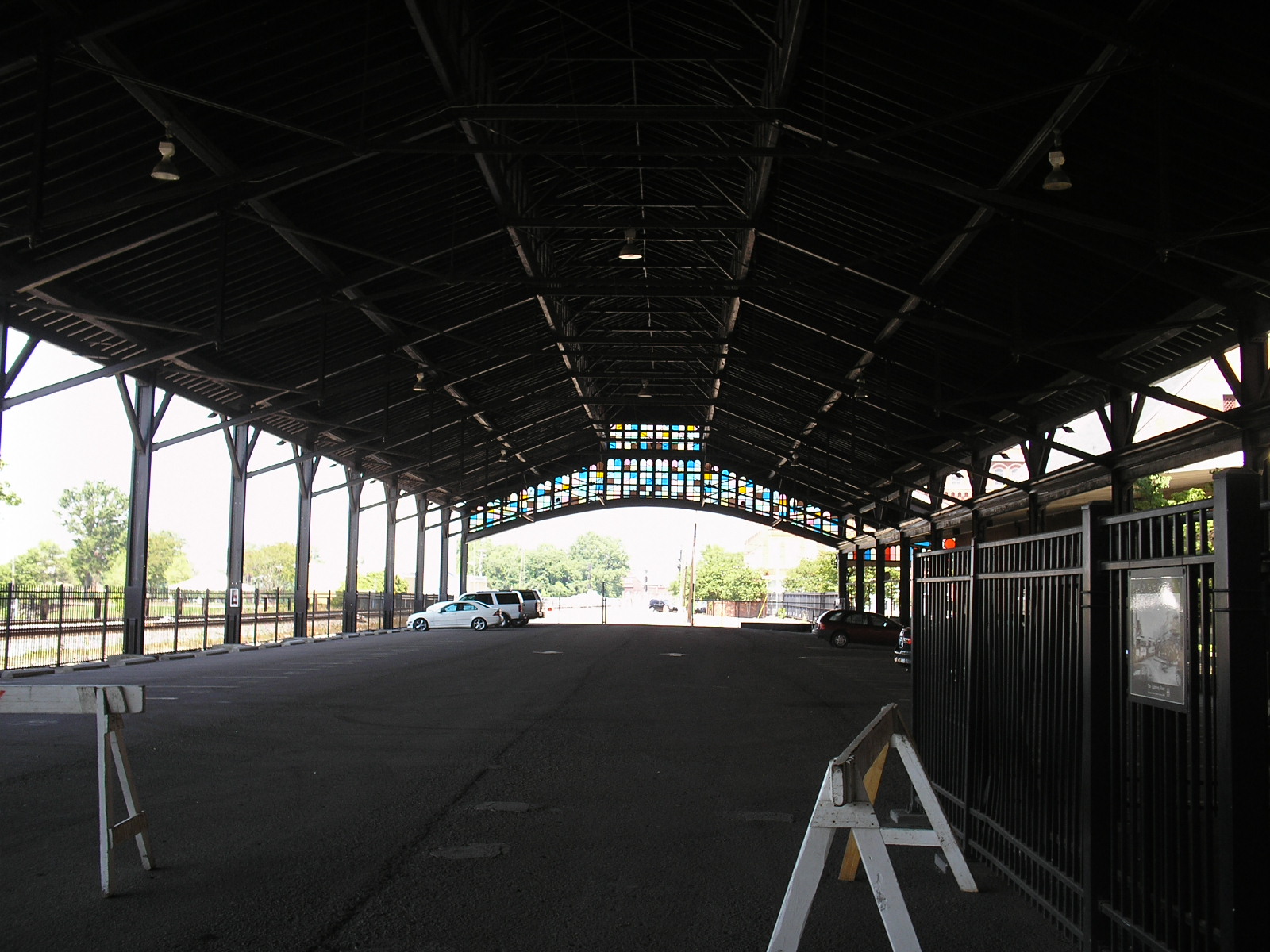
Montgomery, Alabama, Visitor Center/Union StationIn the Montgomery, Alabama, visitor center that used to serve as the city’s Union Station, there’s a cleverly named restaurant called Lek’s Railroad Thai. It was there that I discovered that the city’s minor league (AA) baseball team is called the Biscuits (2006 Southern League Champions). What a nice bit of self-mocking regional pride! Of course, we were headed that night for the home of the Columbus, Georgia, Catfish, a name that inspires such headlines as RiverDogs fry Catfish and Braves filet Catfish. And the next day, we were headed toward the hometown of the Savannah, Georgia, Sand Gnats.

A lot of minor league team names are not only boring, but predictable. Guess whose farm teams the following are: the Richmond Braves, Iowa Cubs, Sarasota Reds, Binghamton Mets, Reading Phillies, San Jose Giants, Springfield Cardinals, Potomac Nationals, Dunedin Blue Jays, Scranton/Wilkes-Barre Yankees, Omaha Royals, Kinston Indians, and Pawtucket Red Sox.

Other team affiliations are not dead giveaways, but pretty easy derivatives of the parent team name: the Tucson Sidewinders, Delmarva Shorebirds, Aberdeen Ironbirds, Rochester Red Wings, San Antonio Missions, Memphis Redbirds, Tacoma Rainiers, and Harrisburg Senators.

But my favorite team names are those with strong local flavor, and little reflection of their parent organizations: the Augusta GreenJackets (Giants), Cedar Rapids Kernels (Angels), Chattanooga Lookouts (Reds), Lansing Lugnuts (Blue Jays), Louisville Bats (Reds), Hickory Crawdads (Pirates), Great Lakes Loons (Dodgers), Rancho Cucamonga Quakes (Angels), Albuquerque Isotopes (Marlins), Lowell Spinners (Red Sox), Tennessee Smokies (Cubs), Mahoning Valley Scrappers (Indians), Durham Bulls (Devil Rays), Norfolk Tides (Orioles), Brevard County Manatees (Brewers), and–my favorite–Modesto Nuts (Rockies).

Future team names I’d like to see are the Orange County Fruits, Gilroy Garlics, Salinas Lechuga, Monterey Squid, Madison Brats, Waukegan Wieners, Ozark Nightcrawlers, Bismarck Sugar Beets, Rapid City Rutabagas, and Smithfield (Virginia) Hams.

UPDATE: Isotopes Park in Albuquerque hosted the Triple-A All-Star Game on 11 July 2007.

1 Comment

Filed under baseball, travel, U.S.

Two Essays on Baseball in Japan and the U.S.

Frog in a Well contributor Charles W. Hayford has posted a long and interesting essay on differing perceptions of Japanese baseball entitled Samurai Baseball: Off Base or Safe at Home? An earlier version appeared in Japan Focus under the title Samurai Baseball vs. Baseball in Japan. Here are few inducements to read the whole thing.

Is the difference between the original Yankee baseball and the game in other counties the difference between the real thing and a knock off or between the narrowly conceived original and new versions creatively adapted? Is baseball franchised around the world like MacDonald’s? After all, “a Big Mac is a Big Mac is a Big Mac,” so isn’t baseball just baseball? The dispute over baseball in Japan vs. Japanese baseball involves more than whether the bats are heavier, balls smaller, and training more strenuous. Do these differences represent differences within a system or between systems? Depends on who you ask.

On one side is Robert Whiting. His books are classics of sports writing and hugely influential.

His first book, The Chrysanthemum and the Bat (1977) begins by stating that Japanese baseball “appears to be the same game played in the U.S. – but it isn’t”…

In his Yale class lecture “Professional Baseball,” [Willam] Kelly agrees that some professional baseball in Japan does fit the “samurai” stereotype: “not entirely, not convincingly, not uniquely, but enough to feed the press mills and the front offices and the television analysts.” In fact, he says, this “spin” is part of the game. Our job is “not to dismiss this commentary as misguided (though much of it clearly is)” but to ask who is putting these ideas about, who is believing them, and why they are appealing: “The myths are essential to the reality….” Japanese baseball is “not a window onto a homogenous and unchanging national character, but is a fascinating site for seeing how these national debates and concerns play out – just as in the United States.”

Why did baseball in Japan develop this “samurai” self-image? Baseball in Japan was shaped by the important elements of the nation in the early twentieth century – education, industry, middle class life, the government, and above all the national project. Since baseball was an American sport but Japan was not a colony, baseball in Japan was a way of declaring independence, defiance, and creativity. From early in the century, the middle schools and colleges adopted a “fighting spirit” in athletics (recall that Teddy Roosevelt called for the abolition of college football in the United States when violence had become the hallmark of the game). In the 1930s the newly formed professional leagues adopted that spirit, which styled itself “samurai.” The government, which stepped in to shape local social institutions, used sport to train and manage its citizenry both spiritually and physically; major business corporations turned to college teams to recruit loyal executives; large commercial newspapers competed for readers by telling more and more nationalistic sports stories; transport companies bought professional teams. The Japanese public and media demanded “Japanese style” in sports to distinguish themselves from the foreigners and set models for self-sacrificing workers and citizens….

Karl Friday debunks idea of explaining modern conduct by reference to historical samurai in “Bushido or Bull? A Medieval Historian’s Perspective on the Japanese Warrior Tradition. “Hanging the label of ‘bushidō’ on either the ideology of the Imperial Army or the warrior ethic of medieval Japan,” he says, “involves some fairly overt historian’s sleight-of-hand.” Much of the modern version of bushido was “at odds with the apparent behavioral norms of the actual warrior tradition.” Even the term “bushidō” is the invention of a twentieth century Japanese, Nitobe Inazo (1862-1933), who wrote in English. Ironically, Whiting, without mentioning his role in the invention of the bushido tradition, includes in his history of the game Nitobe 1905 charge that baseball was a “pickpocket’s sport” in which players tried to swindle their opponents and steal bases. In fact, these samurai traditions are contradictory and could be equally well used to explain either “samurai” group ethic or “samurai” individualism, submission to authority or rebellion against it, innovation or traditionalism.

At the same time Kyushu-resident blogger Ampontan posted a lengthy essay on Japanese major leaguers: Now as American as apple pie, with his usual caustic take on American media reporting.

Major League Baseball’s 2007 season got underway last week, and while the media focused on Boston’s 50 million dollar man, Daisuke Matsuzaka, the real story is that there are now 14 Japanese players on major league rosters in such places as Pittsburgh and Tampa Bay instead of the geographically convenient Seattle or LA, or deep pocket teams like the Yankees or Mets.

While Ichiro Suzuki is headed for the Hall of Fame after batting titles, hitting records, and gold gloves, Hideki Matsui is the toast of New York, and modern Japanese pioneer Hideo Nomo is the part-owner of an American minor league team, relatively anonymous players such as So Taguchi of St. Louis and Tadahito Iguchi of the White Sox are the guys with the World Series rings, relief pitcher Shigetoshi Hasegawa has retired after a respectable but unheralded nine-year career in the States, and burnt out former Yomiuri Giants’ star Masumi Kuwata wants to hear one last hurrah, this time for the Pirates….

And here’s an article that originally appeared in the New York Times about Japanese players and their perpetual shadows—their personal interpreters. The focus here is on the Yankees and their two Japanese players: Hideki Matsui, with his interpreter Roger Kahlon, and their new import, Kei Igawa (roundly booed in his Bronx debut Saturday after a bashing by the Baltimore Orioles) with Yumi Watanabe, his interpreter.

Of particular interest is Watanabe’s bloodline. His father was another pioneer in reverse: Takamiyama, the Hawaiian who became the first American to win a Japanese sumo tournament. Before being hired as an interpreter at an annual salary of $300,000 (roughly the minimum salary for a major league rookie) Watanabe had been a Yankee security guard. Now that’s upward mobility. The idea that a person can jump from ID checker to interpreter is probably making all the professional conference interpreters feel faint.

I got the distinct impression reading this article, however, that Japanese players are being treated as if they were a new kind of royalty. The Americans seem to think everyone needs an interpreter, and that part of an interpreter’s job is being a personal assistant and valet….

Every Japanese player in the US has had six years of English by the time they graduate from high school. I’ve made that trip in reverse and acquired a driver’s license, rented an apartment, and opened a bank account in Japan. Even if those players weren’t serious students, there’s no question every one of them knows enough English to handle the daily chores of living.

I remember watching one of Ichiro Suzuki’s first games in the States on TV. He was on second base and the other team decided to change pitchers. During that break in the action, Ichiro struck up a conversation with the other team’s shortstop, a native of Venezuela. They had a high old time laughing and talking with one other, and it’s a good bet they weren’t speaking Spanish or Japanese.

Leave a comment

Filed under baseball, Japan, U.S.

Bobkabata kabatabobbus et cetera

Scientists who name newly discovered species often name them after their mentors or colleagues, but some have more than a little bit of fun in the process. Take, for example, these two species of parasitic copepods:

Bobkabata kabatabobbus Hogans & Benz, 1990 (parasitic copepod) Named after parasitologist Bob Kabata [whose real given name is Zbigniew!].

Hoia hoi Avdeev & Kazatchenko, 1986 (parasitic copepod) Named after Ju-Shey Ho.

But sometimes they name new species after well-known figures of popular culture.

Funkotriplogynium iagobadius Seeman & Walter, 1997 (mite) from Iago, “James” and badius, “brown,” named after James Brown, the King of Funk.

Mastophora dizzydeani Eberhard, 1984 (spider) Named after a baseball player. The spider uses a sticky ball on the end of a thread to catch its prey.

Strigiphilus garylarsoni Clayton, ~1989 (owl louse) “I considered this an extreme honor. Besides, I knew no one was going to write and ask to name a new species of swan after me. You have to grab these opportunities when they come along.” – Gary Larson

Newly discovered species of dinosaurs seem to arouse extra large doses of taxonomic whimsy:

Dracorex hogwartsia Bakker et al. 2006 (pachycephalosaur dinosaur) Named for Hogwarts School of Harry Potter fame. The genus means “dragon king.” J. K. Rowling wrote, “I am absolutely thrilled to think that Hogwarts has made a small (claw?) mark upon the fascinating world of dinosaurs.” The skull is on display at the Children’s Museum of Indianapolis.

Drinker nisti Bakker et al., 1990 (ornithopod dinosaur) after the National Institute of Standards and Technology (of the U.S. Dept. of Commerce). “It’s the only dinosaur named after an arm of the federal government. Someday I’m going to name one after the I.R.S.” – Robert Bakker.

Qantassaurus Rich & Vickers-Rich, 1999 (Ornithopod dinosaur) Named after Qantas Airlines.

Quetzalcoatlus northropi Lawson, 1975 (Texas pterosaur) Named after an Aztec god and an aircraft designer. The pterosaur was as large as an ultra-light plane.

New strains of bacteria often seem to be discovered in labs, rather than in the field, and quite a few end up named after institutional acronyms.

Afipia (bacterium) after AFIP: Armed Force[s] Institute of Pathology.

Cedecea (bacterium) after CDC: Centers for Disease Control.

Desemzia (bacterium) after DSMZ: Deutsche Sammlung von Mikroorganismen und Zellkulturen.

These examples come to you courtesy of Mark Isaak, whose Curiosities of Biological Nomenclature is worth perusing at greater length—and multiple times.

And with that, I leave you to the fish genus Sayonara Jordan & Steele, 1906

Leave a comment

Filed under baseball, language, science

Daniel Drezner on the Globalization of Baseball

International relations professor (and Red Sox fan) Daniel Drezner has compiled a range of responses to the signing of Japan’s top pitcher, Daisuke Matsuzaka, by the Boston Red Sox. One of the excerpts he cites comes from Bryan Walsh at Time.com.

Most Japanese fans … are celebrating Matsuzaka’s signing as further proof that Japan’s best players can compete on baseball’s premier stage. Japanese players who move to the majors are no longer seen as leaving Japan behind; they are seen as representing their country in the international game. It’s a sign that the globalization of sport is finally penetrating this often isolationist country, that many fans here would rather watch an international game with the top players in the world than settle for a lessened domestic product. As one Japanese baseball blog put it: “Finally, all the dream matches will come true in 2007. Matsuzaka vs. Godzilla Matsui, Matsuzaka vs. Genius Ichiro, Matsuzaka vs. Igawa! I wish the MLB 2007 season would start soon.” He’s not the only one.

I suspect Mongolians feel the same way about the success of their countrymen in Japanese sumo, as people in Hawai‘i once did. Japanese professional sumo is, I think, more internationalized than Japanese professional baseball, but the latter is rapidly catching up. However, if Japan’s Central and Pacific Leagues are at the AAA level relative to the North American major leagues, sumo outside Japan is barely at the A level, in my opinion.

Last Saturday, I caught the last half of “Sumo World Challenge from Madison Square Garden in New York” on ESPN2. The final four were from Japan, Poland, Bulgaria, and the Netherlands. The Japanese wrestler won, and they were all rather skillful, but I found the dumbing down of sumo ritual for the benefit of those provincials in NYC pretty jarring. I got the distinct impression that the low-key—even taciturn—color commentator, retired pro sumo grand champion Musashimaru, was slightly embarrassed.

Leave a comment

Filed under baseball, Hawai'i, Japan, North America, sumo

Will the Red Sox–Yankee Rivalry Spread to Japan?

Japundit‘s baseball columnist, Mike Plugh, offers some interesting speculation on some possible implications of Boston’s $50 million bid to talk with Japan’s top pitching ace, Daisuke Matsuzaka.

Should those plans fall through, what’s to stop the Red Sox from splashing on Ichiro. It would do two things. One, it would add an All-Star outfielder with a great bat, legs, and throwing arm. Two, it would permanently steal the Japanese spotlight from the Yankees, who are wildly famous and popular, and reposition it on the Red Sox. The Yankees would be famous, but the Red Sox would be Japan’s team. Theo Epstein knows this and I guarantee they are working on a plan to acquire Ichiro already. With Ichiro and Matsuzaka, the Sox would not only be good, they’ll be the most famous franchise in Japan. What kind of dollar figures can you put on that?

The flip side to that situation is that the Yankees know this too. The Yankees could use a centerfielder who hits, runs, and plays defense. Johnny Damon is good, and Melky Cabrera is up and coming, but let’s face it … Damon’s defense is in decline, and Melky is probably better suited to left. If the Yankees choose to counter the Matsuzaka move by spending huge on Ichiro, they will solidify their strong hold on Japan, and perhaps do so irreversibly. That goes double if the Yankees are able to land the Yomiuri Giants’ Koji Uehara in the same 2007 offseason. What is that worth to the Yankees?

In either case, the Red Sox and Yankees rivalry is now global. The frontlines are drawn and they extend all the way around the world. For fans who are already sick of the two teams, it’s more nausea. For Yankees and Red Sox fans, it’s more fuel to the belief that the world revolves around the ebb and flow of Boston against New York. For Mariners fans, it’s something to mourn. Unless Ichiro is so intensely loyal to Mr. Yamauchi, or intent on returning to Japan to end his career, the money that will be out there for him in a year’s time will make A-Rod’s deal look like pocket change.

Coverage of baseball on Japanese TV almost always starts off with footage of individual Japanese players in the U.S. majors—referred to in Japanese as the “Big” (大, Dai) Leagues—before turning to the state of play in Japan. This will only increase the number of Japanese ads in American ball parks.

Leave a comment

Filed under baseball, Japan

Sumo’s Appeal for the Waka/Taka Brothers and Others

THE NAMES “WAKAHANADA” and “Takahanada” meant little of poetic significance. The “waka” and “taka” parts merely evoked their father and uncle, while “hanada” was their real last name. But among those watching in February 1988, it was understood that the boys would one day earn the right to take on the great names “Wakanohana” and “Takanohana.”

Why a young Japanese would want to take up the severe life associated with the national sport, while far less bizarre than when applied to an American, is a question that deserves attention. The total number of the [Sumo] Kyokai’s competitors usually hovers around only 800 in a country of some 120 million people, while baseball and soccer attract a far greater number of Japan’s promising athletes. Some join sumo, believe it or not, because the sumo world is a place where big guys can exist honorably without being teased. Teasing and bullying go on far past adolescence in Japan. Much is made in cultural definitions of Japan as a place of social conformity, and pressure to conform is indeed very real there. But rather than through some kind of Orwellian fear tactics, in practice the social pressure comes in the form of people being relentlessly annoying any time they see something even slightly out of the ordinary. A bigger-than-aver-age Japanese man looks different from most people, and thus becomes the object of constant ridicule, both from those he knows (in the form of obligatory fat jokes at absolutely every social encounter) and those he doesn’t (“Ah, Mr. Tanaka! It’s nice to meet you. Wow, you sure are big. How much do you weigh, anyway?”). For many overweight Japanese teenage boys who may never have had an interest in sport and who find themselves at the age when teasing is at its fiercest, sumo is a way out of mainstream Japan. The saddest part may be that the middle of the banzuke [‘rankings’] is clogged with nonathletic types with no hope of ever reaching the salaried ranks who’ve committed themselves to sumo as an alternative way of life: their topknots turn their size from points of obligatory ridicule to points of honor.

Other Japanese rikishi are recruited from rural areas with little economic opportunity. A former sekitori [‘professional wrestler’] explained, “Some kids, they come to the stable, but the ones the oyakata [‘stablemaster’] scout, they go to their house, they go to their parents, they give ’em a million yen. ‘Give me your boy for sumo.’ These boys are fifteen years old, and their parents are like, ‘A million yen!’ These guys are from the mountains; they don’t see that much money. ‘Oh, okay, okay! You go do sumo!'” They join sumo as a means of support and often toil for years in the lower ranks with no hope of making it, fortunate to be fed and housed. Other Japanese join in a rare show of national pride: “Because it is kokugi,” the national sport, one boy in the jonokuchi [lowest] division told me. Still others join as Jesse Kuhaulua [raised on Maui] had, as a natural progression of their junior high, high school, and/or college sumo careers.

Masaru and Koji Hanada joined because they were born into the sport. Sons of the great Ozeki Takanohana (the first) and nephews of the great Yokozuna Wakanohana (the first), they had sumo in their blood. While Chad Rowan had not known the meaning of the term “sumo-beya” [‘sumo stable’] until he was eighteen, the Hanadas had been raised in one. Young Koji Hanada entered his first sumo tournament when he was in third grade—and won. Six years after setting up his own Fujishima-Beya upon retiring in 1982, Fujishima Oyakata gave in to the relentless pleas from his boys by letting them formally become his deshi. Masaru Hanada’s 2000 autobiography offers a poignant account of the boys declaring themselves no longer Fujishima Oyakata’s sons, upon moving out of Fujishima-Beya’s top-floor apartment and down into a big shared room below, but rikishi under his charge.

By official registration day, Takahanada weighed a healthy 258 pounds, bigger than most of the other boys and a full 40 pounds heavier and nearly an inch taller than his older brother. And unlike the rest of the shin-deshi [‘new apprentices’] registering that day, Waka and Taka had already proved themselves on the dohyo [= ‘in the ring’]. Competing in high school, Masaru (Waka) had taken the All-Japan Senior High School yusho [tournament championship], while his younger brother had easily taken the Kanto District Junior High School yusho. Where Chad Rowan had come from nowhere into a sport as foreign to him as the language, these boys were sumo’s Ken Griffey Jr. and Barry Bonds.

SOURCE: Gaijin Yokozuna: A Biography of Chad Rowan, by Mark Panek (U. Hawai‘i Press, 2006), pp. 122-123

Well, the money must hold considerable appeal for the foreign wrestlers. At the end of Day 5 in the September Basho: two Mongolians, yokozuna Asashoryu and maegashira-6 Ama, are 5-0. Just one loss behind, at 4-1, are Bulgarian ozeki Kotooshu, Japanese ozeki Chiyotaikai, Mongolian ozeki Hakuho, Japanese sekiwake Kotomitsuki, Russian maegashira-1 Roho, Japanese maegashira-11 Homasho, and Korean maegashira-15 Kasugao. I would dearly love to see tiny Ama win the tournament.

UPDATE, Day 6: Asashoryu lost, leaving Ama (now 6-0) in sole possession of the lead!

UPDATE, Day 7: Ama lost, so now two Mongolians (Asa and Ama), one Russian (Roho), and one Japanese (Kotomitsuki) are tied for the lead at 6-1.

UPDATE, Day 8: Kotomitsuki loses, leaving the other three at 7-1.

UPDATE, Day 9: Tiny Ama (185 cm, 115 kg) went up against the giant Estonian Baruto (197 cm, 174 kg) and won! Well, technically, Baruto defeated himself by fumidashi, stepping backwards out of the ring while facing Ama. Asa beat Roho in the hard-fought final bout, so the two Mongolians still share the lead at 8-1.

UPDATE, Day 10: Asa and Ama now share the lead at 9-1, with Roho and Ama’s Ajigawa stablemate Aminishiki one loss behind, at 8-2.

UPDATE, Day 11: Asa and Ama now share the lead at 10-1, while Roho and Aminishiki have both dropped back to 8-3, alongside Chiyotaikai, Futeno, and Hokutoriki. Unbelievable. Ama will certainly regain komusubi rank after this basho.

UPDATE, Day 12: Fellow Mongolian Hakuho lifted Ama up and out of the ring, leaving him at 10-2, one loss behind Asashoryu (11-1), who won his bout against Tochiazuma.

UPDATE, Day 13: Ama had the chance to get back into a tie for the lead if he managed to defeat Asashoryu, but he had no such luck, so Ama stands at 10-3, while Asashoryu lengthens his lead to 12-1.

Topix.net has two sumo photos of interest from a Sadogatake-beya tour of Israel in June: Bulgarian ozeki Kotooshu in yukata and yarmulke at the Western Wall and stablemates Kotomitsuki and Kotoshogiku floating in the Dead Sea.

Leave a comment

Filed under baseball, Hawai'i, Japan, sumo

Takasago-beya as Both the Yankees and the Dodgers

While Azumazeki-Beya had been open for only two years, Takasago-Beya was steeped in sumo history. Of the fifty-odd sumo-beya [sumo stables] currently housing rikishi [professional sumo wrestlers] in various parts of the surrounding neighborhood, Takasago ranked fifth in years of operation, dating back to 1878—by no means the beginning of sumo, but an age when the sport began to take on its present structure. In addition to Azumazeki-Beya, Takasago spawned Takadagawa-Beya, Nakamura-Beya, Wakamatsu-Beya, and Kokonoe-Beya. Takasago Oyakata had risen to yokozuna [grand champion] back in 1959, competing as Asashio [one of my childhood favorites—J.]. The fifth Takasago Oyakata, he had taken over in 1971 when the previous Takasago Oyakata, who had also risen to yokozuna competing as Maedayama, died. The line of oyakata stretched back to Takasago Uragoro, who oversaw two yokozuna and three ozeki [champions] of his own. Over the years, nearly one-tenth of the yokozuna promoted since the inception of the rank in the mid-nineteenth century (six of sixty-two, by this time) stomped their first shiko [raise one leg, stomp it, squat] into the Takasago-Beya keikoba [practice room]. If American Major League Baseball were a hundred years older (and if baseball players shared this unforgiving, monastic lifestyle), Takasago-Beya might be comparable to Yankee Stadium.

Takasago-Beya was perhaps more notable in a Brooklyn Dodger way than in a way befitting Yankee pinstripes. In addition to Taylor [Wylie], John [Feleunga], Konishiki [Saleva’a Atisano’e], and Nankairyu, Chad [Rowan] saw two other foreigners in the room, members of Takasago-Beya. While other sumo-beya had recruited rikishi from Brazil and Argentina, and would later look to Mongolia, the only foreigners yet to have really impacted the national sport were limited to this room. Twenty-four years earlier on a demonstration tour to Hawai‘i, the fourth Takasago Oyakata had taken a chance on Jesse Kuhaulua, the beginning of Hawai‘i’s connection with Japan’s national sport. Kuhaulua had trained and competed for more than twenty years at Takasago-Beya as Takamiyama. He now presided over asa-geiko [morning practice] next to the present Takasago Oyakata, on nearly equal terms, as Azumazeki Oyakata.

SOURCE: Gaijin Yokozuna: A Biography of Chad Rowan, by Mark Panek (U. Hawai‘i Press, 2006), pp. 38-39

In looking for links for this post, I came across an interview with Hawai‘i-raised amateur sumotori Kena Heffernan, Yale ’96, Sumo cum laude.

Leave a comment

Filed under baseball, Hawai'i, Japan, Mongolia, sumo

Mike Plugh’s Darvish Watch

Japundit contributor and kuwashii Japan baseball fan Mike Plugh has created a Darvish Watch blog devoted to the young Iranian Japanese pitching phenom, Yu Darvish. Here’s an excerpt.

The million dollar question is, “Who in the World is Yu Darvish?” This phenom has burst on the scene in Japan and is a marvel to behold on the mound. He lacks the polish and seasoning that a true star pitcher possesses, but it’s important to keep in mind that we are talking about a 19 year old player that was rushed to the pros by a team [Hokkaido Nippon Ham Fighters] looking to stake its identity among a field of more famous teams.

The story begins with a Japanese woman and an Iranian man, who married and settled down in Osaka, Japan to raise a family. The elder Darvish was a player for the Iranian national soccer team, and met his wife in the United States while the two attended university. His athletic roots were apparently passed on to his son, as the young Darvish began to show his uncanny baseball skills as a second grader. Progressing quickly, Yu Darvish joined a boys baseball league in junior high school and became the ace of the rotation in no time. As a 16 year old high school student in Sendai, Miyagi Prefecture, this stellar young pitcher struck out 11 consecutive batters and 13 overall to lead his team to the finals of the prefectural championships. He also threw a 4-hit, 80 pitch, complete game shutout in one hour and nineteen minutes that season topping out at 87 MPH against neighboring Iwate Prefecture’s top club. That was just the beginning of the story.

Leave a comment

Filed under baseball, Japan