Author Archives: Joel

Joel's avatar

About Joel

Executive Editor, Journals Dept. University of Hawai‘i Press

The Wider "War on Opium" in Early 19th-century China

David Bello, the author of several works on opium in Qing-dynasty China, has an interesting revisionist take on the Opium Wars (1839-42, 1856-60) that results from looking at the whole expanding Chinese empire and not just at where that empire intersected with the expanding British empire.

The opium-smuggling trade that Britain pursued on the eastern seacoast of China has become the symbol of China’s century-long descent into political and social chaos. In the standard historical narratives of both China and Euro-America, opium is the primary medium through which the Qing dynasty (1644-1911) encountered the modern economic, social, and political institutions of the West. Consequently, opium and the Western powers’ advent on the Chinese coast have become almost inextricably linked. Opium, however, was not strictly a Sino-British problem geographically confined to southeastern China. It was, rather, a transimperial crisis that spread among an ethnically diverse populace and created regionally distinct problems of control for the Qing state.

Bello notes that opium was a problem for the whole Qing (Manchu) realm, at least as much on its expanding interior borders as in its coastal cities. (He has a book coming out in 2005 in the Harvard East Asian Monographs series under the title Opium and the Limits of Empire: The Opium Problem in the Chinese Interior, 1729-1850.)

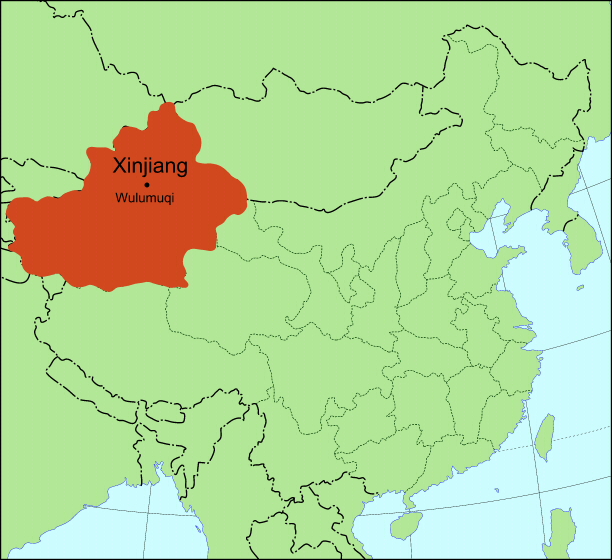
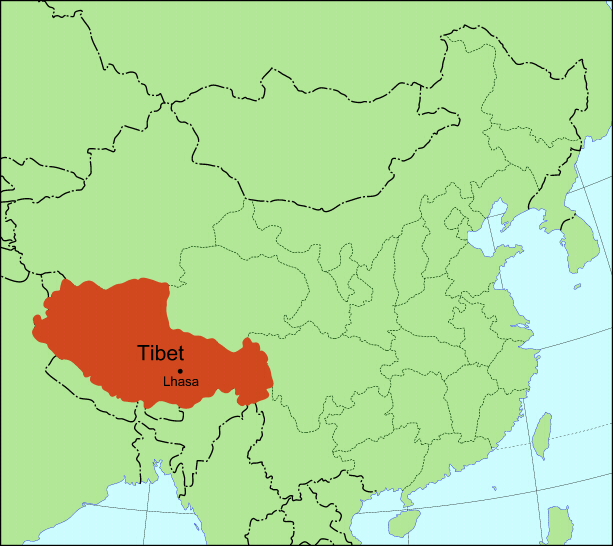
The Manchu empire had been rapidly growing, especially under the reign of the Qianlong emperor (1736-95), during which China extended its control into Turkestan (part of which remains in Xinjiang), Burma, and Tibet. This imperial expansion was financed by transferring more money from farflung localities into central coffers, forcing cash-starved local and regional officials to seek alternative sources of income.

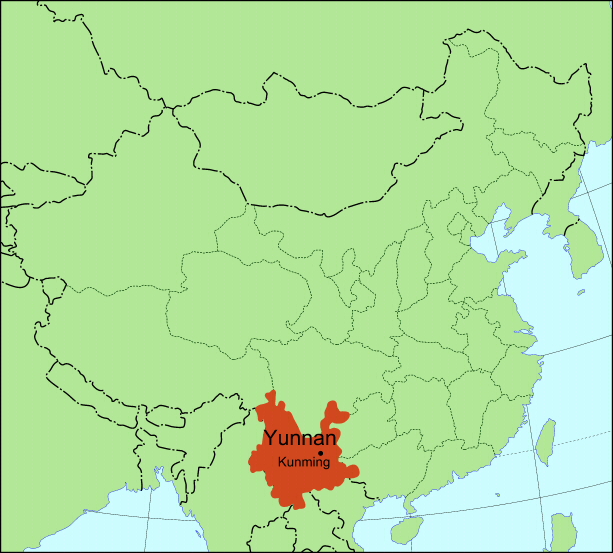
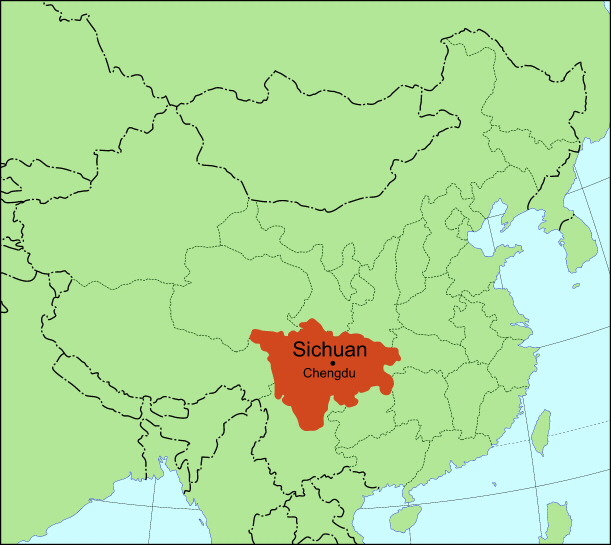
By the end of the 1830s at the latest, southwestern opium cultivation had become a part of the network of informal funding that had arisen since the 1720s to compensate for the diversion of revenue from locality to center.

In this manner, the state itself became addicted to opium, and this dependency was a primary reason for the failure of central government prohibition in many interior localities. From the state’s perspective, the opium problem ultimately concerned revenue, both in Qing China, which was spurred to action only by its conviction that drug consumption was responsible for a hemorrhage of silver abroad, and in British India, which also made a futile attempt to prohibit “illicit” production and trafficking in order to protect its own state monopoly. Opium, in the form of economic and political power, was as psychologically compelling to merchant-capitalists, bureaucrats, and politicians as it was physiologically compelling to drug consumers.

SOURCE: David Bello, “The Venomous Course of Southwestern Opium: Qing Prohibition in Yunnan, Sichuan, and Guizhou in the Early Nineteenth Century,” The Journal of Asian Studies 62:1109-1142.

NOTES:

  1. “In 1881 the inspector general of customs in Shanghai, Sir Robert Hart, reported that imperial consumption of native opium equaled that of foreign imports. Most of the reports on which he based this conclusion identified the southwest, particularly Sichuan, as the main source of native opium” (Bello, p. 1134, n. 24)
  2. Pierre-Arnaud Chouvy, a geographer at CNRS argues in an article in Crime and International Justice 15 (1999), that opium production in today’s Golden Triangle in modern Burma, Laos, and Thailand dates no further back than to the end of the 18th century and that it only began to supply the worldwide market after elements of the Kuomintang took refuge in 1949-50. Since that time the opium industry in the Burma Triangle has only grown as various governments in the region, including Myanmar, have made efforts to reduce or eradicate opium production.

Leave a comment

Filed under China

East Timor: The World’s Newest Country

The Center for Southeast Asian Studies at the University of Hawai‘i has made freely available online (in PDF format) a brief, 33-page high-school level workbook, East Timor: The World’s Newest Country, by Flo Lamoureux.

The purpose of this book is to provide students with an overview the world’s newest nation–East Timor. The narrative begins with a section on pre-colonial Timor and continues through the Portuguese era. It covers the 25-year period when Indonesia governed the entire island of Timor. After a varied and violent past, on September 27, 2002 this little known state became the United Nation’s 191st member. In addition to an accounting of important historical events, the book covers language, education, religion, women’s issues and government. The Center for Southeast Asian Studies wishes to acknowledge Dr. Douglas Kammen who carefully read and edited an early draft of the book. His experiences in East Timor significantly enriched its contents.

The workbook is loaded with provocative discussion questions. Here are the questions for the history section.

  • Sandalwood was the major source of income and bartered goods in Timor prior to 1500. How would sandalwood trade in the 16th and 17th centuries have differed if current international regulations related to conservation have been in effect? Compare the economic results of over-cutting sandalwood to the present day economic questions raised in the matter of drift net fishing. (For material on driftnet fishing, see http://www.nwr.noaa.gov/1salmon/salmesa/pubs/fsdrift.htm; and http://www.unescap.org/mced2000/pacific/background/drift.htm)
  • The explorer, Ferdinand Magellan, sailed under the Spanish flag. When his crewmembers landed on Timor they did not claim the island for Spain. They had previously landed in the Philippines and claimed those islands for Spain, why do you think they did not plant the Spanish flag on Timor? If Timor had been a Spanish colony and more closely connected to the Philippines how do you think that would have impacted on the island’s future?
  • The Portuguese were never able to maintain full control of Timor. The local Christianized Timorese resisted Portuguese rule and dealt with the Europeans only when required by commercial matters. Explain why the Topasses were more successful in their dealings with both the indigenous Timorese and the Portuguese.
  • It took well over a hundred years for the Dutch and Portuguese to sign a formal treaty that divided Timor between the two European nations. Since they essentially agreed to an informal division in 1777, why do you think they did not get around to a formal treaty until 1916?
  • In 1910 the Portuguese monarchy was overthrown. This was a cause for alarm among the elite class in East Timor who had developed a comfortable working relationship with the Portuguese government there. As a result of this change in the government in Portugal, a plantation economy emerged in East Timor. Compare the plantation economy with its salaried income and taxes to the economy that existed under the Portuguese monarchy where the East Timorese elite collected goods from the peasant farmers and turned them over to the Portuguese government representative.
  • Explain why the Japanese Army of occupation treated West Timor differently from East Timor. Compare this to the situation in Vietnam where the French government was an ally of Germany and hence not an enemy of Japan.
  • Give three reasons why post-World War II East Timor was such a poor region. Why do you think Portugal neglected it?
  • Explain why the Viqueque rebellion in 1959 led to Portugal exiling rebel leaders. What role did Communism play in the Portuguese government’s decision to do this?
  • In 1974 the conservative Portuguese government was overthrown and a new liberal government emerged. What policy did the new government implement that had a dramatic affect on East Timor?
  • Name the three major parties that vied for power in the newly independent East Timor? Compare their goals.
  • In August 1975 Fretilin controlled most of East Timor and the new nation’s independence seemed secure. Explain how the alliance of UTD, Apodeti and Indonesia reacted to this situation.
  • Once Indonesian troops forced Fretilin forces into the mountains, guerrilla warfare became the norm. One matter that encouraged East Timorese to join the guerrillas in the mountains was the Indonesian policy of encirclement. Explain how this policy worked.
  • Neither Australia, the United States nor Portugal supported East Timor’s struggle for democracy. Compare the reasons why the three countries did not support East Timorese independence.
  • If Indonesia built more hospitals and schools in ten years than Portugal did in 400 years, why were the East Timorese so adamant about being a separate nation?
  • Many brutal incidents took place in East Timor under Indonesian rule. What made the November 1991 incident outside a church a turning point in world opinion of East Timor’s quest for independence?
  • What role did the 1997 economic crisis in Asia play in East Timor’s independence?
  • How did the Indonesian military forces (the militia) react when Indonesia declared East Timor an independent nation? Why were the military in East Timor especially angry about it?

Leave a comment

Filed under Indonesia, Spain

Jungle "Hut Cuisine": Smoked Pigeons with Marijuana Sauce

In the evening we would go shooting wood pigeon among wild marijuana fields. The birds were high on the marijuana seeds and barely able to fly but fluttered helplessly in the bushes. Their spasmodic, interrupted flights, together with their strange little cries made me think of drunken people trying to waltz. We stuffed the barrels of our home-made guns with pebbles and shot the pigeons down. Just the sound of gunshots seemed to stun them and they dropped from the trees at our feet. We killed them by seizing them by the legs and bashing their heads against trees. They made an excellent dish. We cooked them with marijuana sauce according to the local recipe. Here it is — Smoked Pigeons with Marijuana Sauce: ‘Smoke the birds with the twigs of marijuana for a day. Stuff them with lemon grass, kaffir lime leaves, garlic, ginger with a pinch of salt and wrap them in banana leaves. Boil or bake according to taste.’

Although we used marijuana for cooking, smoking it was strictly forbidden by the rebels. You could end up condemned to the stocks, plagued by mosquitoes, for three nights if you did that.

When the rainy season began we caught frogs. There was some danger in this, for we were not the only party who preyed on them. We usually made sure of first killing the frog-eating snakes, and then caught the frogs afterwards. Pythons, like frogs, are quite delicious to eat. They taste like smoked salmon. We also hunted moles, guinea-pigs and rats. We hung and smoked the rodents for three days before cooking them. Rat soup, minced moles and roast guinea pigs were our common recipes. The local people liked to hang the meat of porcupines until it stank like that of a corpse before they cooked it with herbs. It tasted delicious, but we had to eat it holding our noses.

At the end of 1988 we were invited by the Karen villagers to share a Christmas meal with them. The main dish had a strange flavour — the meat in it tasted like dog meat with a strong whiff of garlic and lemon grass. After the meal, our hosts didn’t wash their fingers, but sniffed at them for some time. Before we went home they told us that we had been eating monkey. Suddenly, I wanted to throw up. For the Karen, the meat of monkey was a typical Christmas dish, like turkey or goose in the West. They believed it was a gift from God, and that even the smell should not be wasted.

Tender wild banana trunks were available throughout the year, and we used them in soups along with lentils and vegetables. Truffles and wild mushrooms were in season at the beginning of the monsoon. During the cold season, when the bamboo shoots had matured, bamboo mushrooms became available.

We had more than one way of cooking rice without pots and pans, depending on the situation we were in. It could be cooked in bamboo stems: you soak the rice in green bamboo stalks for half an hour, and stuff the open end of the bamboo with grass. Roast the bamboo slowly over the fire until the rice is cooked, then peel off the bamboo skin. In this method, the rice comes in cartridges. Another method we called ‘rebel style’. The rice is soaked in a towel, linen or sarong for more than an hour. Dig a hole in the ground, one foot deep, bury the rice bag, then make a fire on top. Steamed rice will be ready within fifteen minutes. We used this method often when the rebels were on the run.

SOURCE: From the Land of Green Ghosts: A Burmese Odyssey, by Pascal Khoo Thwe (HarperCollins, 2002), pp. 215-217

Leave a comment

Filed under Burma

Morobe Field Diary, December 1976: Texts on Tape

Texts on tape have been eluding me and getting me worried as hell. I felt something would turn up but I wasn’t sure how and how good it would be. Well, last nite I hit a gold mine. During the day the kansol put out a story of war [WW II] coming to the area that was 1st class — well organized, clear and slow with good constructions I’ve wanted and a sprinkling of new vocabulary. And I forgot to press the record button. I was ready to bash in my head but the kansol said, “well, good, now you’ve heard it so you’ll understand it better next time: I’ve practiced telling it and you’ve practiced hearing it. Let’s go chop some poles for a smoking platform and come back and try again this evening.”

Physical labor was, along with less worry about tapes, exactly what I needed to dispel a case of hemorrhoids that was plaguing me. That done, we came back, rested up and that evening after dark I hauled out the tape recorder and the kansol told his story again — not as good as during the day but covering very much the same material and almost exactly the same length. Before his wife put her account of the preparation of food by women, another fellow came by who is chock full of stories and has a clear slow way of speaking besides. He lives in Paiewa but is visiting thank God. He told a good personal experience war story with Japanese pidgin [“A, banana sabis, ye?” = (‘banana free, okay?’) uttered by a starving Japanese straggler], conversation and dangerous experiences. He also told a somewhat shorter story about a woman who didn’t want to get married, supposedly true from before contact times. His war story is about 35-40 min. (This guy’s brother is a truck driver on the Mt. Hagen to Lae [Highlands Highway] run and is such a talker that his cab mates don’t get any sleep on the 12 or so hour ride.) Finally the kansol’s wife put her piece on tape clearly & concisely. I’ve got about 70-80 minutes of unbroken talking on the several cassettes I went thru last nite. I want to transcribe as much as I can here so I can get unstuck as I go along.

The day before, in my desperation I recorded some old men who got together to put something on tape after putting me off several times. They got together, bullshat about what they were going to say and decided they would do it better later. I got some revenge by surreptitiously recording them but it’s going to be hard to transcribe. That nite I was carrying my recorder to ask a man to tell me about canoe-building (another promise). I started talking with some kids around a fire and secretly pressed the record button. It too will be hard to transcribe but has good mixed language conversation (30 min.). [The two surreptitious tapes remain untranscribed.] So, I’m breathing much easier and my asshole itching less.

Leave a comment

Filed under Papua New Guinea

Morobe Field Diary, December 1976: Swimming in Fish Names

Things are getting pretty busy for me now. Finishing up the lexicon and trying to get some of the half-dozen or more texts people haven’t gotten around to giving me. Only two weeks to work’s end and I’m paranoid that I’ve left out something important grammatically that the texts won’t solve for me. Grammatical elicitation the way we did in Field Methods class is nearly impossible with informants as unschooled as most of mine. I don’t like it or trust it anyway. I prefer texts but people are very reluctant to give me stuff off the top of their heads, especially if it’s cultural info — they want someone authoritative to accompany them in the telling or else they practice first and wear out their interest in that so they are not keen on repeating it again for the tape.

Lately I’ve worn out my patience with eliciting fish names from two huge tomes — one quite authoritative ([Munro’s 1967] Fishes of New Guinea) but with inadequate (i.e. only B&W) pictures; the other (Guide to Fishes, an Aussie book) has good pictures (in color and [of] live [fish]) but is not well-arranged and not exhaustive and shows little of the relative size so a snapper can be called an anchovy. Combine that with some hard to distinguish subgroupings of fish (esp. among goatfish, trevallies and sea bass) and imperfect but confident knowledge of most everyone and the result is an incredibly frustrating job trying to match Nu. to genera & species. I am interested in folk classification and its relation to academic classification and was prepared for some difference but mostly the correlation between the two is pretty good (after I’ve filtered out misnamings which I can often tell are wrong because they cross genus or family lines). In some families there are names for the majority of individual species — some grouped together, usually on the basis of markings when shape is the same: mottled, banded, striped; and often on the basis of habitat.

The big men [usually elders] are supposed to be the authorities (on everything: even ladies underwear if it was anything elaborate probably) but they often can’t see the page clearly. Everyone is convinced that others don’t know what they’re talking about and that a consensus (20 people going thru 20 fishnames for 3 hours is impossible) will solve everything. I’m well past the point of diminishing returns but some still come volunteer to straighten it all out for me (and give yet another name to some picture beside which I’ve scribbled 3 names already). For most now I have statistics like 4 for, 2 against (or 2 for 1 name, 1 each for the others) so I’ve told them I don’t want anything more about fish to upset me. One the whole the world of Nu. fish naming is as unsettled as the world of zoological taxonomy when it comes to species. Genera & families work out OK. I figure (or hope) my effort is worthwhile: it not only boosts my dictionary considerably but is an are that is worth comparing carefully with other Austronesian names & classificatory systems since they are most all sea people.

Leave a comment

Filed under Papua New Guinea

A Burmese Padaung View of the ‘Wild’ Kayah

Our first contact with the ‘wild’ Kayah came when we were received into a house on a hilltop owned by a shaman. He squatted by the fireplace smoking a pipe as if he were a guardian ghost of the place. He made me think of an unwrapped mummy, and he neither smiled nor spoke to us. We felt like intruders who had wandered into an ancient tomb, and soon set off to the village spring for a shower.

At the spring we waited for the villagers to finish their own shower. They included some stark-naked young women, who were unembarrassed and unashamed. As we watched them they talked to us with the familiarity of old friends. We felt ashamed at our curiousity about this (for us) novelty. When dressed, these women wore a black tunic which revealed one of their breasts. We were told later that they would not cover the naked breast until they were betrothed.

A traditional ‘wild’ Kayah woman is like an uninhibitedly colourful work of art. Her clothes are made of home-woven material in which red and black predominate. She wears black-lacquered cotton-thread rings beneath her knees in large lumps that look like twin beehives. Bunches of silver coins dangle from her neck along with a few strings of semi-precious stones. The younger women wear cone-shaped silver earrings that look like bunches of miniature carrots, while the married ones stuff their big earholes with silver cylinders. A married woman also wears a red turban on her head and a white sash around her waist. She walks like an elephant, slow and with jingling sounds at every step, reminiscent of the tinkling bells on a Burmese pagoda top. These gorgeously caparisoned females scratched their bodies liberally and spat copiously. And all the Kayah, children included, continually smoked pipes.

SOURCE: From the Land of Green Ghosts: A Burmese Odyssey, by Pascal Khoo Thwe (HarperCollins, 2002), pp. 203-204

Leave a comment

Filed under Burma

Burmese Views of the Mysterious West

To me [now starting college], Mandalay (a place which, as I later learned, foreign visitors enjoyed as a sleepy backwater that time forgot) was an amazing metropolis, a town of astounding variety and sophistication, a city that never slept. In Mandalay I learned how to use the telephone and the electric kettle….

My first introduction to foreign gadgetry went with the first stories I began to hear about the wonders of the West. I was told that people in the West could cook their meals without pots and pans and stoves. I was puzzled how this could be possible. The few Burmese magazines that were not government-controlled regaled their readers with these strange stories which they gleaned — in embellished form — from the British tabloid the Sun, from Newsweek, and from the novels of Jeffrey Archer, one of the few living English writers allowed to be published in Burma.

The beliefs we absorbed about the West strangely resembled the fantastic stories early Western travellers sent back about the Mysterious East. One teacher at school had told us that in the West things were so advanced that pigs could be grown on trees, and that a type of furniture had been developed that could be eaten if ever food supplies ran low. He also explained to us that the West got so cold in winter that if you peed outdoors the urine would instantly freeze so that you had to snap it like a stick. We had a pretty good sense that these were tall tales — but they made better listening than the equally tall tales of the regime. When we learned that the Americans got to the moon, for instance, we had solemnly been informed by a fanatical socialist-nationalist teacher: ‘Our ancestors got there centuries ago on the astounding flying machines that the genius of the Burmese had perfected — secrets alas now lost.’ We learned something important from all this: that the Burmese, after nearly thirty years of isolation from the rest of the world, constantly subject to official propaganda urging them to detest and despise the West, were in fact fascinated by the Western way of life and ignorantly credulous about it.

SOURCE: From the Land of Green Ghosts: A Burmese Odyssey, by Pascal Khoo Thwe (HarperCollins, 2002), pp. 120-121

This reminds me of a conversation I had with an older man in Papua New Guinea in 1976 who had heard something about a conflict in Berlin a decade and a half earlier, and wanted to know how things had finally turned out and who our current Kennedy was. I can’t remember if the conversation took place before or after Carter was elected to be our next Kennedy.

Leave a comment

Filed under Burma

Zhao Ziyang Ill

China-based blogger Andrés Gentry calls attention to a recent New York Times report that Zhao Ziyang is ill.

This should be getting more play in the China-blog community…. Why is that important?

… lower-level party officials, or students or intellectuals outside the party, may make Mr. Zhao’s death an occasion to press for political liberalization. China’s long tradition of paying homage to the dead makes it unseemly for the police to repress mourners, potentially opening a window for people to express grievances along with condolences.

In fact, the 1989 demonstrations first gathered steam after the death of the reform-minded leader who preceded Mr. Zhao as Communist Party chief, Hu Yaobang, who died 15 years ago this month.

“It is clear that leaders will have taken every measure to prevent any protests from happening,” said one Chinese political analyst who asked not to be quoted by name. “But the impact of such an event would be very unpredictable and risky for the leadership.”

Andrés then adds further insights.

There are other more recent instances of the government getting caught flatfooted in their response to demonstrations. The Belgrade Embassy bombing springs immediately to mind. While there was certainly a lot of anti-foreign/anti-American anger, I know for some people that was simply a vehicle to express their dislike of the CCP. It was a dangerous time for everyone really since if the demonstrations continued it’s likely that they would have begun focusing their energy on China at least as much as on NATO/America. However, if they were cut off too soon then the government could be accused of being unpatriotic and anger would definitely have moved on from foreigners to the CCP.

See also his earlier post on the likelihood of massive demonstrations after Zhao’s death and the CCP’s need to come to terms with the events at Tiananmen in 1989.

Earlier demonstrations in Tiananmen to honor another popular leader, Zhou Enlai (d. 1976), culminated in the Democracy Wall movement.

For some, the Cultural Revolution marked the beginning of an independent political consciousness and the means to express it, as seen, for example, in the controversial wall poster signed by Liyizhe, a pseudonym of its three authors, that appeared on November 7, 1974 in Guangzhou. It denounced the lawlessness, despotism, recklessness, and killings of the Cultural Revolution and called for democratic and individual rights. A larger-scale expression of increasing political independence occurred on April 5, 1976 with a demonstration in Tiananmen Square supposedly to honor Zhou Enlai, who had died in January 1976 without much official note. In actuality, the demonstration was an organized attack on the Cultural Revolution and the tyranny of the Gang of Four and implicitly of Mao. The April 5th demonstration was the first time since 1949 that ordinary Chinese had taken the initiative to launch their own movement and establish a public space where people could freely express their opinions. But it was suppressed after just a few days.Whereas purged party officials and skilled workers had planned the parades and the placards to be carried into the Square months before April 5, 1976, the Democracy Wall movement appears to have begun somewhat spontaneously. Against the background of the party’s official repudiation of the designation of the April 5th demonstration as a “counter-revolutionary” movement in the fall of 1978 and the official media’s calls for “socialist democracy and rule of law,” individuals and groups suddenly began to put up large-character posters and gathered together to discuss political issues at the Xidan wall on a busy street in the middle of Beijing in November 1978.

For more on one of the principal Democracy Wall activists, see this post on Wei Jingsheng.

Leave a comment

Filed under China

Out of the Ashes: Deconstruction and Reconstruction of East Timor

The Australian National University’s new E Press has placed online a new (2003) electronic edition of Out of the Ashes: Deconstruction and Reconstruction of East Timor, edited by James J Fox and Dionisio Babo Soares, described thus:

Out of the Ashes is a collection of essays that examine the historical background to developments in East Timor and provide political analysis on the initial reconstruction stage in the country’s transition to independence. The volume is divided into three thematic sections – background, assessment and reconstruction – bringing together the experiences and knowledge of academic researchers and key participants in the extraordinary events of 1999 and 2000.

After years of Indonesian rule, the people of East Timor voted to reject an offer of autonomy[,] choosing instead independence from Indonesia. This decision enraged pro-integrationist militia who, backed by the Indonesian military, launched a program of violence and destruction against the inhabitants of East Timor. President Habibie eventually agreed to the presence of a United Nations peace-keeping force, but by this stage East Timor had been ravaged by destruction.

The new East Timorese government faced the challenges of the future with an understanding that the successful struggle for independence was both a culmination and a starting point for the new nation. As the events of 1999 recede, many of the issues and challenges highlighted in Out of the Ashes remain of central significance to the future of East Timor. These essays provide essential reading for students and interested observers of the first new nation of the 21st century.

Here are some excerpts from the chapter on historical background.

All the languages of Timor belong to one of two major language groupings: the Austronesian language family or the Trans-New Guinea phylum of languages (see Map 1)….

One striking feature of the socio-linguistics of Timor is the remarkable contrast between the eastern and the western halves of the island. Almeida (1982) lists over 30 different languages and dialects in the East compared with only three languages in the West…. This sociological difference between East and West is, to a large extent, the result of initial Portuguese historical involvement in the western half of Timor, which gave rise to the expansion of the Atoni population. As with much else on Timor, to understand this difference between East and West requires an historical perspective. It is essential therefore to consider the history of Timor over the past 450 years….

The Portuguese were the first Europeans attracted to Timor by th[e] sandalwood trade. It took over 50 years after the Portuguese conquest of Malacca in 1511 to establish a presence in the area….

In 1561-62, the Dominicans built a palisade of lontar palms to protect local Christians but this was burnt down the year after by Muslim raiders, prompting the Dominicans, in 1566, to erect a more permanent stone fortress on Solor. For its first 20 years, the captain of this fort at Solor was nominated by the Dominican Prior in Malacca. Around this fort there developed a mixed, part-Portuguese population of local Christians, many of whom were themselves involved in the sandalwood trade with Timor….

The Dominican fort on Solor had a chequered history. Plundered in a local uprising in 1598, the fort fell, after a long siege, to the Dutch in 1613. According to Dutch sources, their forces were able to take the fort because over 500 of its occupants were, at the time, on a sandalwood-trading expedition to Timor.

Instead of sailing for Malacca, the thousand strong population of the fort, later joined by those from Timor, transferred to Larantuka, a harbour on the eastern end of Flores and from there, established themselves at Lifao on the north-west coast of Timor. With their strongholds on both Flores and Timor, this mixed, part-Portuguese population of local islanders resisted all attempts to dislodge them. This population became known as the Larantuqueiros or as the Tupassi (‘Topasses’, purportedly from the word for hat, topi, because the Topasses regarded themselves ‘Gente de Chapeo’: ‘People of the Hat’) – or, as was common in all Dutch documents, the ‘Black Portuguese’ (Swarte Portugueezen). In the language of the Atoni Pa Meto population, who had the longest established contact with them on Timor, these Topasses were known as the Sobe Kase: ‘The Foreign Hats’. (Yet another variant of this designation, among the Rotinese, on the small island at the western tip of Timor, was Sapeo Nggeo: ‘The Black Hats’.)

These Topasses became the dominant, independent, seafaring, sandalwood-trading power of the region for the next 200 years. They were a multilingual group. Portuguese was their status language which was also used for worship; Malay was their language of trade, and most Topasses spoke, as their mother-tongue, a local language of Flores or Timor.

The British buccaneer, William Dampier, visited Lifao in 1699 and has provided a perceptive description of this mixed, multilingual Topass community:

These [the Topasses] have no Forts, but depend on their Alliance with the Natives: And indeed they are already so mixt, that it is hard to distinguish whether they are Portugueze or Indians. Their Language is Portugueze; and the religion they have, is Romish. They seem in Words to acknowledge the King of Portugal for their Sovereign; yet they will not accept any Officers sent by him. They speak indifferently the Malayan and their own native Languages, as well as Portugueze….

Neither the Dutch nor the Portuguese who were loyal to the Viceroy of Goa were able to exert any substantial control over them. On Timor, there were times when the interests of the Portuguese Viceroy and those of the leaders of the Black Portuguese coincided. Just as often, however, the Black Portuguese opposed both the Portuguese Viceroy and the Dutch East India Company with whom they also carried on trade. However often the Viceroy’s delegates were rejected, Portuguese friars were always welcomed on Timor and moved freely throughout the island….

In 1777, the Portuguese in Dili regarded Timor as divided into two provinces: a western province called Servião, inhabited by the Vaiquenos (Dawan or Atoni) and consisting of 16 local kingdoms (reinos) and an eastern province called Bellum (or Bellos), inhabited and dominated by the Belu (or Tetun) and comprising no less than 46 small kingdoms. Servião covered much of the area controlled by Topasses….

The Dutch drew a different picture of this same political situation. In 1756, the Dutch East India Company sent a distinguished envoy by the name of Paravicini to order its relations on Timor. This renowned Commissaris returned to Batavia with a contract treaty purporting to have been signed by all of the rulers of Timor in addition to those of the islands of Roti, Savu, Sumba and Solor: 48 signatories on a lengthy document with 30 clauses. Whether, in fact, he obtained the signed agreement of all of these rulers, the contract of Paravicini represented the political geography of native rule more accurately than did Portuguese documents for the same period….

During the Napoleonic wars, the British occupied the Dutch fort at Kupang and laid claim, for a brief period, to Dutch colonial possessions on Timor. When, in 1816, the British returned colonial authority to the Dutch, the Dutch set out to determine their areas of supposed control in relation to the Portuguese. Almost immediately thereafter there occurred the first of a series of disputes over the borders between the two colonial powers….

[T]he Portuguese mounted no less than 60 armed expeditions between 1847 and 1913 to subdue the Timorese. In 1860, even as he was negotiating with the Dutch over ‘Portuguese territory on Timor’, the Governor of Dili, Affonso de Castro, described the situation with remarkable candour: ‘Our empire on this island is nothing but a fiction’….

From the earliest Chinese sources to the final reports of the colonial powers, all commentators agree that Timor was comprised of kingdoms and rulers. Traditional kingdoms dating back to at least the fourteenth century imply well-established, indeed fundamental, ideas about order and political relations. Curiously, however, in the long history of European contact with Timor, virtually no commentator has credited the Timorese with a political philosophy or has sought to explore and to treat seriously indigenous ideas of authority….

Relations among the local polities of Timor were continually changing. Alliances among these polities shifted, especially as internal relations changed; there was regular, seasonal raiding into each other’s territories – some in the form of ritual headhunting; and migration of clan groups in search of land and water was common. The Portuguese and Dutch both contributed to this situation.

In return for diverting the sandalwood trade to Lifao and other ports on the north coast of the island, the Topasses formed close alliances with the local Atoni Pa Meto polities and in several instances became the rulers of these polities. They were the first to introduce muskets to the Timorese and they increased the supply of simple iron tools. The Dutch (rather than the Portuguese) introduced maize to the island and promoted its planting, initially in the area around Kupang… This combination of muskets, iron tools and maize, provided principally to Atoni groups, changed the face of West Timor. With a new highly productive crop, the tools to plant it and the firearms to expand aggressively and open new land in others’ territory, the Atoni population, previously subordinate to Tetun rulers who controlled the sandalwood trade, rapidly spread through much of West Timor, assimilating other groups to Atoni modes of livelihood and culture.

The language map of Timor today attests to this Atoni expansion over the last 400 years. Only the remnant Helong speakers, now confined to the western tip of Timor and the island of Semau, give some indication of what West Timor may have been like before the Atoni expansion….

It was never just the Topasses, Dutch and Portuguese who influenced developments on Timor. The Chinese, who initiated the earliest trade with Timor for sandalwood, were a major influence as well. Dampier who visited the Topass settlement at Lifao in 1699 noted the presence of ‘China-Men, Merchants of Maccao’ living among the Topasses. This Chinese connection has long been crucial on Timor and at times has been paramount. As Topass control of trade in the interior of Timor declined, Chinese control increased….

Prior to the Atoni expansion, there was an earlier expansion of the Tetun people, probably from what the Tetun regard as their traditional centre of origin on the central south coast. This expansion was both northward and along the south coast. As a consequence of this expansion, there are several distinct forms of Tetun. These are generally described as different dialects, though there are considerable differences among them….

Writing about the formation of Tetun Dili which is also known as ‘market Tetun’ (Tetun Prasa or Tetum Praça), the historian and language scholar, Luis Thomaz, admits that ‘the origin of the use of Tetun as a lingua franca in East Timor is very obscure’…. Dili is in an area where one might have expected the Mambai language to have been chosen as a vehicle for communication since the town itself is located within an area originally inhabited by Mambai-speakers.

Promotion of Tetun by the Catholic church toward the end of the nineteenth century was an important factor in the eventual establishment of Tetun as a lingua franca….

The everyday Tetun of Dili has a simplified syntax and shows strong Portuguese (and, more recently, Indonesian) influences. It could almost be considered a creole derived from vernacular Tetun….

Dampier’s 1699 account of the Topass community portrays a multilingual community: Portuguese, Malay and at least one local Timorese language. Translated into the present, this would suggest a combination of Tetun, Indonesian and Portuguese. This simple translation, however, misrepresents the present situation: Tetun and Indonesian are languages understood by a large proportion of East Timorese whereas the use of Portuguese is still limited. Moreover, for most East Timorese, Tetun is their ‘second’ Timorese language. Indonesian, whether or not it continues to be taught in schools, will – as in the past – remain the language of inter-island communication. The teaching of Portuguese will inevitably conflict with the need of the East Timorese to learn English to communicate internationally. Whatever solution is worked out over time, the people of East Timor are likely to remain a multilingual population.

Leave a comment

Filed under Indonesia

Rainforest Gifts: Sago and Sago Grubs

This mouthwatering webpage describes some delicacies that the rice-loving Javanese who’ve resettled all over eastern Indonesia don’t seem fully to appreciate:

Easy meal: Sago Palm (Metroxylon) is far more productive than rice, producing four times more starch, 100-200 kg per palm, enough to feed a family of 4-5 for a month. And it is the least labour-intensive starch to harvest. It takes one person 10 days to process a palm, faster if a group works on it. Sago is the staple carbohydrate for many people in Southeast Asia, Oceania and Pacific Islands where Sago Palms are found.

Asmat sago rituals: For the Asmat, the Sago Palm is the only sure source of calories in their mudflat homelands. They treat the Sago Palm not merely as a human being, but as a life-giving mother, the sago being her child….

Sago grubs are the larvae of the Capricorn Beetle (Rhynchophorus ferrungineus/bilineatus). The Asmat celebrate special occasions, such as the consecration of a new ritual house with an elaborate party featuring the grub. A huge bark container is prepared in the centre of the house and each guest is required to deposit his share of the grub. Each person, however, tries to cheat by giving as little as possible without being caught. Once all have made their contribution, the container is opened, spilling out the grubs, signifying new life emerging from a mother. The grubs are then enjoyed raw or roasted.

The Korowai also have sago festivals. Preparations for such a party lasts for 3 months. The head of the extended family initiates the celebration by sending out invitations to all family members and others with close links to the family. They build a large party house with all the special features needed to enjoy the sago grub: a traditional fire which is always kept burning, special racks to store the grubs. They cut down Sago Palms, sometimes up to 200, and make holes in the trunks for the beetles to enter, then leave the trunks on the ground. The beetles are only attracted to damaged palms, and quickly lay their eggs in the starchy palms. In the meantime, the family also harvest sago in the regular way, in preparation for the party. In about 6 weeks, the beetle larvae are nice and plump and just about to pupate. Each palm may contain up to 100 sago grubs. The family then sends out invitations far and wide to join the party. The grubs are harvested by cutting through the palm. The grubs are eaten raw, or mixed with sago flour and steamed. Often with lots of dancing and merrymaking.

Sweeter than roasted marshmallows. Or so I hear. The related Arthropods: Bugs for Breakfast page is also highly recommended, though perhaps not at mealtime. Here’s a sample:

You probably regularly eat bugs, without even knowing it! Insects are a part of all processed food from wheat meal for bread to tomato ketchup. It’s impossible to keep mass-produced food 100% insect-free. There are regulations stating the maximum amount of bug bits that food can contain and still be fit for human consumption.

Red about it: the food colouring cochineal is extracted from the crushed bodies of scale insects that feed on the prickly pear. Cochineal is widely used in many popular food items–read the labels!

Leave a comment

Filed under Indonesia