
Monthly Archives: August 2023

Early Danish Explorers

From The Rise and Fall of the Danish Empire, by Michael Bregnsbo and Kurt Villads Jensen (Palgrave Macmillan, 2022), Kindle pp. 183-184:

In Europe, the fifteenth century was the period of the great explorers. This led, among other things, to a collaboration between Portugal and the Danish Empire to find a route to India (Jensen 2007). The Portuguese Prince Henry the Navigator had written to Christopher of Bavaria about the project, and a Danish nobleman Vallarte arrived in Portugal in 1448 and participated with the Portuguese Order of Christ in a long expedition south of Africa to Cape Verde, where he lived the rest of his life in captivity of the local tribal chief, who turned out not to be Christian, as the expedition had expected. In 1461, King Afonso V of Portugal wrote to Christian I and warmly recommended Christian’s herald Lolland. Heralds could function almost as ambassadors and were often named after provinces or landscapes (i.e. Lolland). Lolland had participated in the Portuguese crusades and voyages of discovery to North Africa, and Afonso was so impressed by his bravery that the king knighted him when he returned to Portugal. These connections between Denmark and Portugal were later expanded. Around 1471, when Christian presented his grand crusade plan to the imperial diet in Regensburg, an expedition to the north embarked, led by well-known captains Didrik Pining of Denmark, Hans Pothorst of Iceland, and João Vaz Corte-Real and Alvaro Martins Homem from Portugal. They reached Greenland, where they erected a large memorial on one of the more recognizable mountains. From there, they proceeded to America and reached Newfoundland, which was known among Portuguese fishermen as “terra do bachalau,” the land of the stock fish. The goal was to find the northwest passage to India. This was reattempted later. In 1519, Christian II equipped a new expedition under the leadership of the notorious pirate and admiral Søren Norby: prior to this, he had wrought papal bulls that authorized the raid as a true crusade. The goal was to win Greenland back from the pagans, which would only be the beginning. At the time of Christian II it was believed that Greenland was the outermost peninsula of the great Asian continent, and if one could lead a crusade there, one would be able to confront the Muslims with a two-front war. At the same time, Christian’s army would land in the Far East near where the legendary Christian priest-king Prester John was supposed to live in a giant kingdom ready to support Christian Western Europe in the fight against Islam. During the fifteenth century, it was said that Prester John was descended from Holger the Dane, hero to Charlemagne, and thus King Christian’s distant ancestor. The Danish empire was so large that it included not only huge areas of the north with diverse peoples, but also a bridgehead to Asia. However, the Great Crusade to Greenland and Asia never commenced, because Christian II became preoccupied with problems in Sweden [trying to maintain the Kalmar Union].
Leave a comment

Filed under Africa, North America, Portugal, religion, Scandinavia, South Asia, travel

Medieval Germanic Nationalism

From The Rise and Fall of the Danish Empire, by Michael Bregnsbo and Kurt Villads Jensen (Palgrave Macmillan, 2022), Kindle pp. 146-148:

A song of lamentation of the time began with the words: “Sigh and twist your hands in anger, sorrowful, my fatherland.” It continues to lament the lax morality of Danish noblemen and the urge to imitate everything German. It has been widely cited ever since and an important starting point to consider whether some form of Danish nationalism or patriotic sentiment existed in the Middle Ages (discussed in Jensen and Fantysová-Matejková 2020). There is no doubt that in the Middle Ages one could think of nations as attached to various stereotypical notions. For example, “from the Germans has never come anything but fraud and cunning,” Rydårbogen wrote, or “from the German has never come anything but softness and sausages,” written by Saxo. The Danes on the other hand were internationally known for being drunkards, perhaps even more than the English. Some, however, also emphasized Danish eloquence, and a single Paris professor at this time described that the Scandinavians were particularly good at necromancy. This kind of generalization existed at all levels: people from Scania were considered lazy and cowards, those from Falster untrustworthy, while Jutlanders always came to late. Of course, it is a form of nationalism, a sense of community between those who are of the same nation or people or lineage. It differs from modern forms of nationalism in several ways. It was less related to territory or land than nineteenth-century nationalism, and ones “fatherland” was a flexible concept. Usually, it described an area ruled by a king, and it could very well include newly conquered areas with a population that did not speak Danish. Medieval nationalism was also far less attached to language than the nineteenth century. The language was sometimes highlighted as a marker for distinguishing between Danish and German, but only in the Late Middle Ages, and perhaps surprisingly only a few times. This was likely due to the fact that there were very large dialectal differences, so it was difficult to speak about a particular form of common Danish language, and that German was becoming prevalent everywhere, geographically and socially. It left its mark. A very large percentage of modern Danish words and sentence structures are simply taken from German, especially during the 1400s. Linguists may debate whether it is a third or a half, but there is no doubt that there has been a massive linguistic influence from German in Danish. Not only did the German language have an influence, but many in the territories of Denmark were also able to express themselves in both Danish and German, and this apparently applies to all strata of the population. Thus, the various anti-German statements in several sources during the Middle Ages do not acknowledge the existence of a contradiction in practice. On the contrary, movement has been great across language boundaries, and large groups from German territories have slipped into the Danish-speaking community as noblemen and traders and craftsmen. Around 1400, every third fiefholder in Denmark had a German background.

Leave a comment

Filed under Germany, language, migration, nationalism, Scandinavia

Photos of Historic Sites in Maui

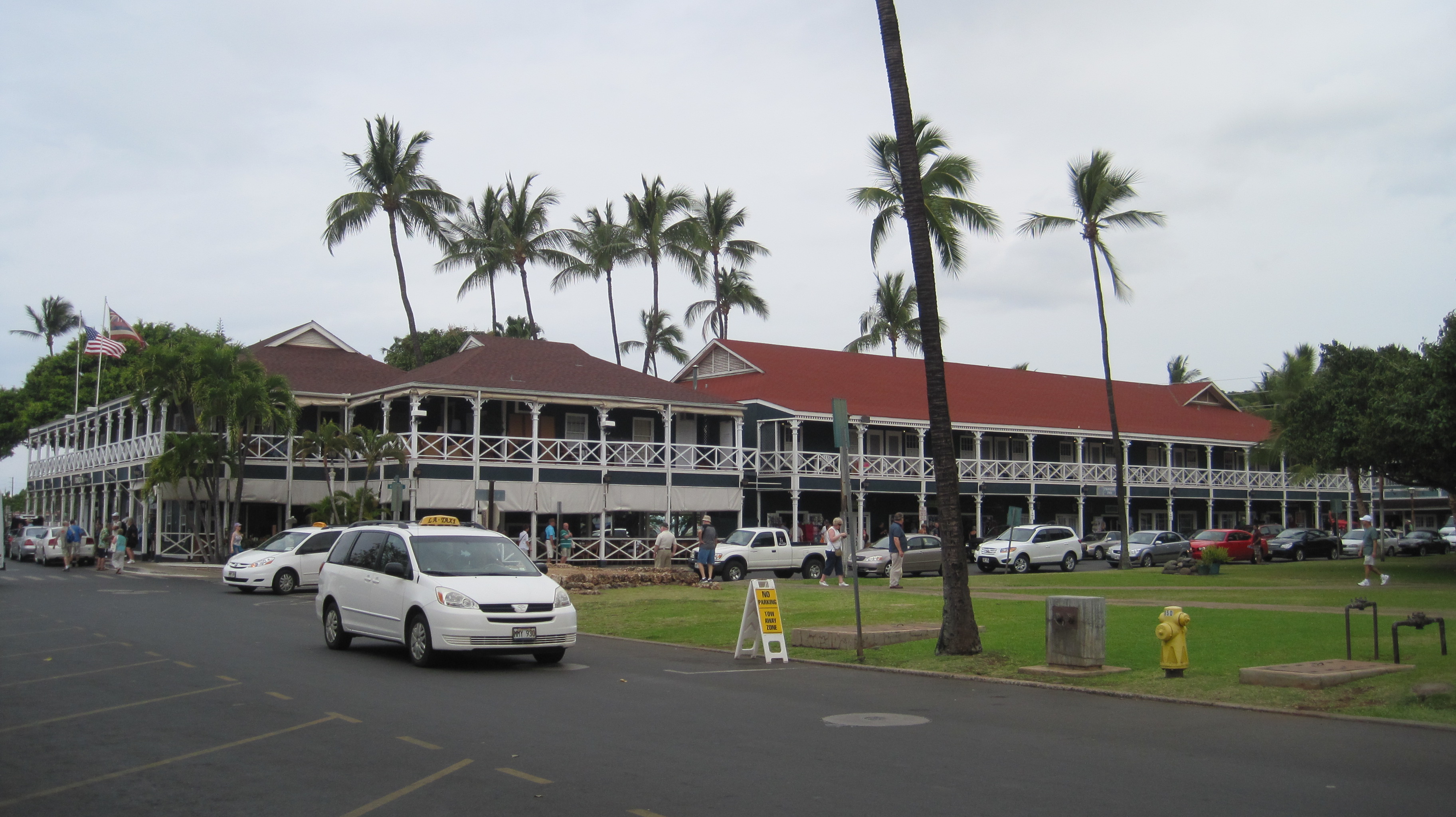
Pioneer Inn, Lahaina, Maui

Pioneer Inn, Lahaina Historic District, 2010, destroyed by wildfire in 2023

The Far Outliers paid a visit to Maui in March 2010 and, as is our custom, we made an effort to photograph sites on the National Register of Historic Places. I uploaded most of them to Wikimedia Commons, put them in the public domain, and then inserted them into the Wikipedia NRHP listings and articles for sites in Maui. The rest I uploaded to my Flickr site, where I created a separate album for Maui. In the wake of the destructive wildfires on Maui, I’m now adding my Wikimedia Commons photos to my Maui album on Flickr for extra backup.

Leave a comment

Filed under Hawai'i, publishing, travel

Tourism Extortion in Vietnam

From Catfish and Mandala: A Two-Wheeled Voyage Through the Landscape and Memory of Vietnam, by Andrew X. Pham (Farrar, Straus and Giroux, 2010), Kindle pp. 279-280:

I am having breakfast when a tour bus pulls over and parks in front of the café. Road-dazed foreigners totter off the bus and into the hotel across the street. The driver, a young guy, takes a cigarette break in front of the bus. Before his third drag, the police materialize from nowhere, swaggering in their drab olive uniforms and vinyl belts. The pair beelines to the bus, one whipping out a citation pad, the other swinging his nightstick in short, impatient arcs. The driver’s jaw drops. He nearly swallows his cigarette, knowing that he and his tour company are going to suffer huge fines.

“This is a no-parking zone!” barks the cop loud enough for everyone in the café to hear. There is no sign and the space is just an empty dirt lot.

“I’m sorry, Officers!” the driver squeaks, smiling apologetically, placating. “I’ll move it right away.”

“Too late,” snorts the other cop, barring the driver from the door with his nightstick. “It’ll have to be towed.”

The driver disintegrates into pure panic. They want to see his license and the papers for the vehicle, so reams of multihued permits and authorizations exchange hands. The owner of the café, from where I am sitting, sends her son to the hotel across the street to warn the hotel owner and the tour operator. In seconds, two older welldressed men emerge, wearing big friendly smiles. They approach with hands extended, each deftly steering one cop to a different end of the bus. Divide and subdue. Seeing now that they are in the presence of money and power, the cops adopt grave, almost serene countenances. A flock of spectators watch the proceedings from a wary distance—this here the only event where onlookers aren’t practically trampling on what they’re watching.

I turn to the café owners. “All this for a parking violation?”

She nods. “Big fines.”

“Lunch fines?”

She chuckles and looks at me with interest. “You know the way, eh?”

I shrug.

Within minutes everything is resolved. The big men never stop smiling and the cops never crack as much as a grin. The driver takes the bus across the street into the hotel’s courtyard. The big men stroll into the café, each draping an affectionate arm over his cop. The foursome take a table next to mine. The owner rushes to their elbows for the orders: espresso, Coke, beer, omelets, steaks, and four packs of Marlboros, two packs apiece for the cops. Small talk and a few American cigarettes, the ice is broken and they are chatting like old friends. Afterward, the big men show the cops into the hotel. Additional mollification required.

The café patrons, all white foreigners, observe the entire extortion with great amusement, marveling at the brazenness of the transaction.

Leave a comment

Filed under economics, nationalism, travel, Vietnam

Foreign Tourists in Hanoi

From Catfish and Mandala: A Two-Wheeled Voyage Through the Landscape and Memory of Vietnam, by Andrew X. Pham (Farrar, Straus and Giroux, 2010), Kindle pp. 225-226:

The one thing a solo traveler can count on finding in an area crawling with backpackers and expatriates is a bargain bed for the night. Usually, the food isn’t bad either. I have no idea where Hanoi’s tourist town is, so I buy a map and meander. It is an easy task since Hanoi is a more sedate city than Saigon. The traffic is much lighter, and in the cooler air under tree-shaded avenues, the smog is more tolerable. Hanoi lives on a scale more comprehensible than Saigon. The trees are smaller, more abundant, and not so tall and tropical like those of Saigon. I stroll along the fine mansions, taking in their faded, colonial French glories, their expressive arches, French windows, and wrought-iron balconies. Every structure holds itself up proudly in a state of elegant decay. At the north end of Hoan Kiem Lake, I find six young Caucasian travelers, lurking timidly on different street corners. Backpackers, baby-faced, flushed even in the tropic winter, treading about, wide eyes eating up all the sights, the details. Their pilgrim hands clench dog-eared copies of The Lonely Planet Guide to Vietnam. Alas, I have found my home for the next few weeks.

For tourists, everything that happens in Hanoi happens in the backpacker cafés. Anything that can be had, rented, chartered, borrowed, exchanged, and bought can be obtained or arranged in them. They sneak tourists illegally across the border into China for day jaunts, book hotel rooms, lodge people in-house, serve decent Western food, sell traveling supplies, fresh baguettes, and Laughing Cow cheese, which is the staple travel food for foreigners who fear stomach bugs. They book anything. Legal, illegal. You got the dollars, they can find your pleasure.

I bum around Hanoi with Australians, French, Danes, Brits, Germans, and Americans just soaking up the culture, exploring the urban sprawl one district at a time. The city is broken up into ridiculously distinct commercial sections, guild oriented, another French legacy. If you want to buy shoes, you go to the shoe district, where thirty or so adjacent stores sell only footwear, often the same style and brand. There is a part of town for every category of goods and services: clothing, poultry, silk, jewelry, and electronics. There is even an area with shops making headstones, where dust-covered men kneel on the sidewalk chipping names into slabs of granite. Our favorite is the street of nem nuong diners. Around dinnertime, straddling the sunset hour, the street is perfumed and grayed with the smoke of meat sizzling over coals. If you catch a whiff of this scent, you never forget it. It is a heady mixture of fishsauce marinade, burning scallions, caramelized sugar, pepper, chopped beef, and pork fat. Women sit on footstools grilling meats on hibachi-style barbecues. Aromatic, stomach-nipping smoke curls to the scrubby treetops and simply lingers, casting the avenue into an amber haze. When hungry folk flock from all over the city to this spot, they have only one thing on their mind. And the entire street, all its skills and resources, is geared to that singular satisfaction.

The days pass without difficulty. I am at last among friends of similar spirit, all non-Asian, not one of them Vietnamese. And I am happy, comfortable merely to be an interpreter. Every day, we troop off to some part of the city on sight-seeing missions. At night, we congregate for great bouts of drinking and barhopping. We splinter into smaller parties and sign up for organized boat tours in Ha Long Bay and ride rented motorcycles to the countryside. We joke, we romance each other with the wild abandon of strangers cohabiting in exotic moments. We ask about Hanoi and its people, we ask about each other. Bonding, trading addresses, and fervently believing that we will never lose touch.

Leave a comment

Filed under food, language, migration, travel, Vietnam

Vietnam’s Highway 1 in 1990s

From Catfish and Mandala: A Two-Wheeled Voyage Through the Landscape and Memory of Vietnam, by Andrew X. Pham (Farrar, Straus and Giroux, 2010), Kindle p. 125:

On Highway 1, a concrete divider keeps the chaos going in one direction from colliding head-on with the chaos going in the other direction. Though the road is wide enough for three lanes in each direction, there are no lane markings, no shoulders, not even oil tracks, just one big long river of asphalt boiling with Brownian motion. If there are laws concerning what types of vehicle or creature are allowed on the national highway, the traffic cops aren’t enforcing them, too busy extorting bribes—unofficial fines, they call them—from truck and bus drivers who prove more lucrative prey than single travelers. Besides the pedestrians who walk along the edge of the road and occasionally attempt mad sprints across the highway, the road teems with cattle-drawn carts, horse-drawn wagons, load ponies, wheelbarrows, herders with cattle, cyclos, bicyclists, and everything motorized. Dust cloaks everything. The air, a metallic blue fog, makes the road murky, twilight-like. With the tropical humidity, it doesn’t so much settle as it condenses on the skin like a poisonous mist. The engines roar, the animals bleat, the horns, the curses, and the screams boil into a fantastic cacophony. Set back from the road under the shade of a few scraggly trees, the spectator cafés dot the length of the highway on both sides, their sooty lawn chairs all facing the traffic.

Leave a comment

Filed under migration, travel, U.S., Vietnam

New Vietnamese Family in Shreveport

From Catfish and Mandala: A Two-Wheeled Voyage Through the Landscape and Memory of Vietnam, by Andrew X. Pham (Farrar, Straus and Giroux, 2010), Kindle pp. 164-166:

The First Baptist Church of Shreveport, Louisiana, was our bridge to America. They loaned us the airfares. They rented us one of the church properties, found Dad work, and generally took care of the family, making sure our transition to America was comfortable. We went to church three times a week: all morning Sunday, Wednesday night for Bible study and bowling, and Saturday night for church youth-group activities. Except for two trips to the movies, we never went anywhere in our nine Shreveport months except to church. It was the most magnificent place we had ever seen. It had huge white Roman columns, lofty marbled halls, great diamond chandeliers, walls of stained glass, miles upon miles of cardinal carpets, and velvet drapes that went almost to heaven.

When we boys weren’t in church, we were in school. It was dull, particularly because we didn’t speak English. The teachers couldn’t talk to us and, not knowing what to do, they left us alone. A college student was sent down to work with us. He did flash cards and taught us how to tackle a guy carrying a football. I got into scrapes regularly with kids calling me Viet Cong. I fought with every boy who wanted to try kung fu with Bruce Lee. The teachers called home. Dad just shrugged and said I’d better keep up my grades. He had too much on his mind.

A few months into our immigrant lives, Uncle Hong in California called about a telegram from Vietnam: Grandpa Pham had passed away.

During the night, it snowed a thin layer. Dad rose at his usual 5 a.m., made his lunch of ham and cheese on white—he preferred rice but wanted to fit in at work—and went to his janitorial job. I found his small, black footsteps mincing over fresh snow in the wintry stillness. I felt very sorry for him. He was so utterly alone in a foreign land, poor with the weight of the entire family to bear. There was no wake here for him to make his peace with Grandpa. No brother, sister, or friend to partake of his grief.

For Dad, life in America wasn’t easy. In Vietnam, he was a teacher and an officer with two thousand men under his command. In Shreveport, he was a janitor in an industrial plant. It was physically demanding. His back was killing him. He’d injured it in the labor camp. And for Mom, America was a lonely, scary place. After she delivered Kay, Mom rarely left the house. She didn’t know anyone and she didn’t speak a word of English. The supermarket used to be her favorite destination. Dad got mad at her because she could never make up her mind. The choices were stupefying. After they stripsearched her for sampling a grape at the supermarket, she did her shopping only once a week, making Dad drive her to a different grocery store across town every Saturday.

Her fears of America abated significantly when Christmas came around. During that season of giving, the kindness and hospitality that the Southern folks showed our family—the only Asian family in town—warmed us to America. People started showing up at our door with presents, wishing us a merry Christmas. There were so many visitors Mom had us wear our good clothes all day. Mom fretted that she might run out of tea and sweets before she ran out of guests. Dad busied himself with taking names and addresses for thank-you cards. The doorbell kept ringing. Strangers, neighbors, and friends brought us presents, food, clothes, little things, big things to help us make a life in their town. The glittering piles of gifts grew steadily until it dwarfed the Christmas tree. Mom, wanting to make the Christmas spirit last as long as possible, suggested that each person open only one present a day, every day until the entire hoard of goodies was gone. This would have seen us through February. Fortunately, our sponsors, the Harrises and the Johnsons, stopped by and convinced her that all presents should be opened on Christmas Day.

Leave a comment

Filed under economics, education, language, migration, religion, U.S., Vietnam

Vietnamese Forms of Address

From Catfish and Mandala: A Two-Wheeled Voyage Through the Landscape and Memory of Vietnam, by Andrew X. Pham (Farrar, Straus and Giroux, 2010), Kindle pp. 129-130:

Tam, a musician my age, introduces himself. Solely on his salutation, I know we will be friends. This is easy because the Vietnamese form of address allows two people to assess each other and extend overtures of friendship. It has several tiers, each indicating the nature of acquaintance (informal, formal, business, friends, intimate) as well as the hierarchy. Just by pronouns used, one can discern the type of relationship between two people. For instance, if Tam refers to himself as toi (I) and calls me anh (big brother, or, in this context, you), then the relationship is formal and equal, with neither having the upper hand despite age; however, if Tam is in fact younger than me, then unless there is something else—social, economic status—to normalize the age difference, Tam is being disrespectful by not referring to himself as em (little brother). And if I were, say, fifteen years older than he, Tam should use chu (uncle) and chau (nephew). There are many forms, including regional variations.

Tam calls me ban: friend.

I like him instantly. He reminds me of an old childhood friend from my days at the French Catholic school in Saigon, who used his own name, in the third person, instead of “I” and called me “friend” rather than “you.” Tam invites me to one of his regular gigs at a hotel disco.

Leave a comment

Filed under language, migration, U.S., Vietnam

Breakfast Options in Vietnam

From Catfish and Mandala: A Two-Wheeled Voyage Through the Landscape and Memory of Vietnam, by Andrew X. Pham (Farrar, Straus and Giroux, 2010), Kindle pp. 122-123:

I wait for the rice-cake woman on the stoop. Normally, I mimic her cry from any part of the house, and no matter how noisy the neighborhood is, she hears and waits for me in the alley. I buy a mug of tea and two rice cakes—Vietnamese Twinkies wrapped in banana leaves. The gooey grains of glutinous rice, green and fragrant with the banana leaves, taste fat and fruit-sweet, like candied caviar. Embedded at the center, the ladyfinger banana has changed to a lavender hue haloing an ivory core. Hot tea in hand, I savor them, standing in the alley, back against the wall, watching the strip of sky navying over.

One by one the breakfast women weave through the alleys. The parade of food baskets ribbons the morning air with the varied aromas from every region of Vietnam: banh canh (udon in chicken broth), bun bo hue (spicy beef and anchovy-paste noodle soup), hu tieu (Chinesestyle noodle soup), banh beo (rice dumpling with shrimp powder and fishsauce), tau hu (soft tofu with ginger syrup), banh cuon (rice crepes with Vietnamese sausage and fishsauce), soi (sweet rice with mung beans and coconut shavings), banh mi thit (ham-and-pickled-daikon sandwiches), and a host of other morning food. Vietnam is a country of food, a country of skinny people obsessed with eating.

Leave a comment

Filed under food, language, migration, U.S., Vietnam

Memories of Saigon’s Last Night

From Catfish and Mandala: A Two-Wheeled Voyage Through the Landscape and Memory of Vietnam, by Andrew X. Pham (Farrar, Straus and Giroux, 2010), Kindle pp. 69-70:

It was a night of madness and spectacular fires. I was eight and wild with greed for all the loot people had tossed in the street. You could find almost anything that night. The defeated army discarded guns, ammo, helmets, knives, uniforms, boots, water tins, and heaps of things covered with the flat green paint of army-issued equipment. Fugitives, peasants, and city dwellers left belongings where they dropped them: baskets, food, clothes, chairs, sleeping mats, pottery, wads of no-longer-valid currency. The night was choked with those who fled, those who hid, those who scavenged, and those who went mad with fear, or greed, or anger.

The bullies chased me down the alley. I heard them pounding the pavement hard on my heels. They were yelling. BANG! A shot went off. I couldn’t tell if they were shooting at me. Maybe they were shooting in another part of the neighborhood. Guns had been going off around the city all day, but I was pretty sure they were shooting at me.

Earlier, I had been down by the empty lot showing off some of my loot to the other kids. Mom and Dad were busy packing suitcases and burning documents, so I was able to sneak out of the house and scavenge the streets. All the kids had something, mostly guns, ammo, and broken telephones. Some had pliers and were using them to take the tips off the bullets to get at the gunpowder. We drew dragons in the dirt with the powder and ignited them. I was firing my name when the older bullies came around. They had pistols and demanded we hand over our loot. The biggest bully wanted my pistol, which wasn’t the black metal army kind. It was a shiny, pug-nosed six-shooter.

They started waving their guns at us, just fooling, when a shot went off and hit a boy in the leg. He screamed and blood squirted out of the wound. We scattered. I bolted with my gun and bag of goodies. The bullies yelled for us to stop. I glanced back and a couple of them were after me and my six-shooter.

I fled down a dark alley, running by instinct, feeling my way with the tips of my fingers on the moist walls. Turn right. Run down another alley. Keep the gun. Drop the bag. Too heavy. Turn again. Run through a larger alley. They were closing in on me. I stumbled over trash. Kept going, heading for the clear up ahead.

Then I burst onto the street. Crashed into the flood of refugees swarming in one direction. Refuse covered the ground, stampeded over and over again. The air reeked of smoke, loud with people. Down the road, the fish market was burning unchecked. Gunfire snapped in staccato across the city. Somewhere far away a siren howled. Above, red zipping bullets crossed the night. The sky ruptured with false thunder. Dull flashes of light bruised the city skyline. Growling helicopters skimmed low, their humping air vibrating my ribs, their rope ladders trailing behind like kite tails.

I dove into the tide and was swept along with it. The air swelled with panic, lanced with torchlight. I ran with everyone else, coursing down the avenue. The crowd parted, then closed again around abandoned vehicles like a wild river. In the narrows, people crushed and hammered each other against the brick walls, stampeding, barreling to salvation—the American ships waiting in the harbor.

I had lost the bullies. I ran back to the house and pounded on the metal screen door, suddenly infected with the city’s terror. Let me in! Let me in! I want to come home!

Leave a comment

Filed under migration, military, nationalism, U.S., Vietnam, war