
Daily Archives: 14 August 2014

Hakodate’s Consular Heyday, 1863-1934

From Hokkaido, A History of Ethnic Transition and Development on Japan’s Northern Island, by Ann B. Irish (McFarland, 2009), pp. 89-90:

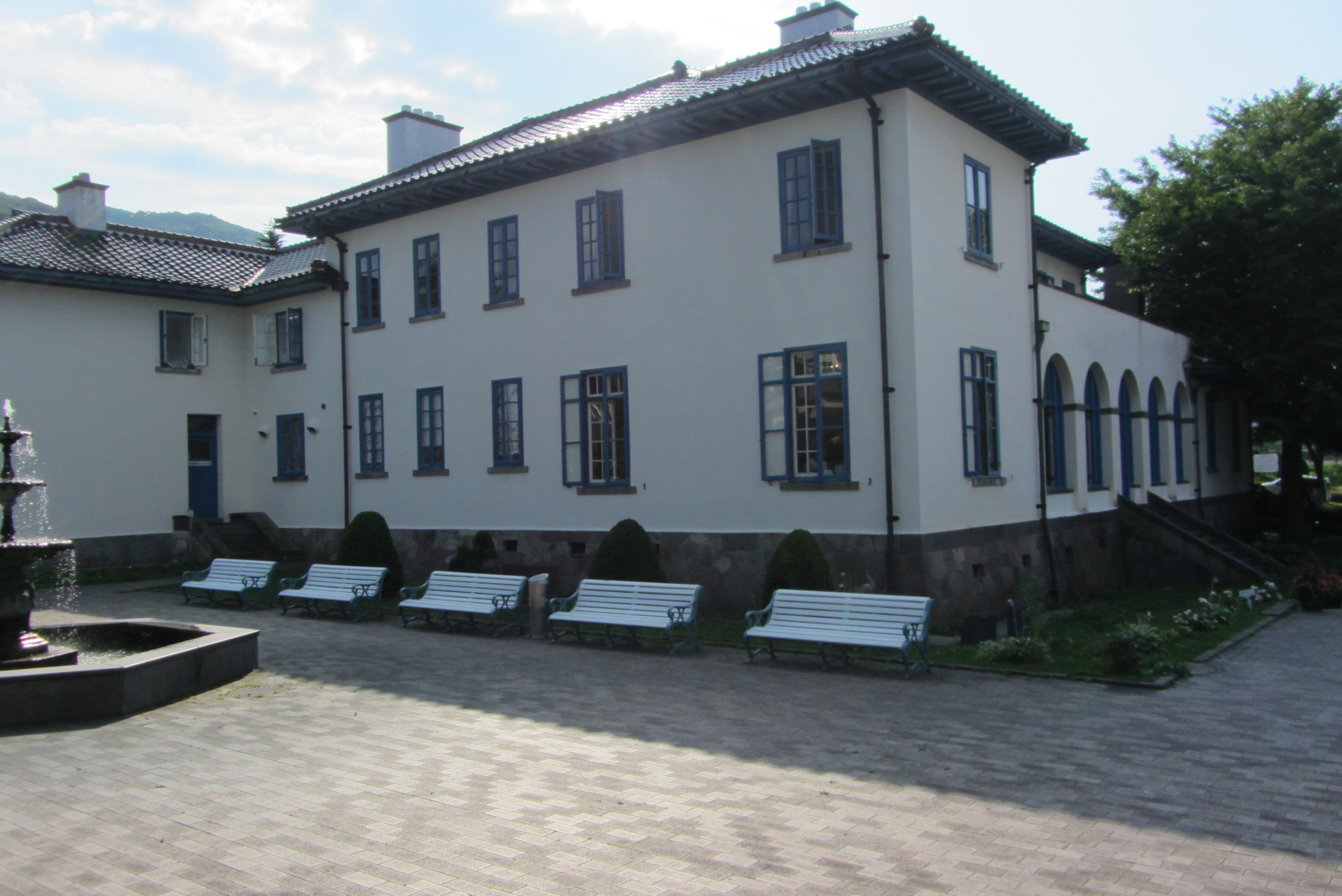
A new British Consulate opened for business in 1863, and Richard Eusden assumed consular duties in 1867, serving here until 1880. He was by far the most effective British consul in Hakodate. Both he and his wife became involved in the community; she helped create the city’s public garden. Over the years several fires damaged the consulate and it burned down in 1907. brit-faroblA few years later, the British government’s Shanghai Construction Bureau built a new consulate, a two-story-high tile-roofed structure on a site a few blocks away. This building still exists, looking rather like a large bungalow transplanted to Asia. Nowadays it is open to tourists, featuring interesting historical exhibits about early western experiences in Hakodate, an English tea room and a souvenir shop carrying articles from Britain. The British ceased consular operations in Hakodate in 1934.

The foreign consuls in Hakodate acted as judicial officials. When an American, Charles H. Smith, was charged in the death of a Japanese, the American, English and Russian consuls, the Hakodate bugyo and other Japanese and western men sat at the court and agreed that the defendant was not guilty, for he had shot in the darkness at a burglar.

Hakodate at different times had consulates representing not only Russia, the United States and Great Britain, but also France, the Netherlands, Portugal, Germany, Switzerland, Denmark, Italy, Austria, Hungary and Spain, though these other nations were mostly represented by men who were consuls of other countries. Even Hawaii, when it was an independent nation, briefly had consular representation in Hokkaido. The foreigners perceived Hakodate as a safe, if sleepy place; they did not feel the need for weapons in Hakodate. “We do not go armed as all foreigners do in Yedo, wrote E. E. Rice and, while Yokohama had a specific area set aside for foreign settlement, Hakodate featured no special area for foreigners, though the various consulates were not far from each other.
Leave a comment

Filed under Britain, Europe, Japan, Russia, U.S.

Wordcatcher Tales: Fuki, Shishiudo

During our Japan Rail Pass travels in Hokkaido last month, we encountered not just hordes of Chinese tourists (mostly from Taiwan) inside the trains, but also hordes of two kinds of large, green, weedy plants in the scenery that passed by our train windows. Wooded areas were often full of plants we recognized from our past travels as fuki ‘butterbur’, while more open areas were often infested with what seemed to be a giant, atomic mutant variety of carrot or Queen Anne’s lace. We didn’t find out what the latter was until we saw a sign identifying it at Cape Nosappu, at Hokkaido’s (and Japan’s) easternmost point.

Fuki (フキ, also written 蕗、苳、款冬、菜蕗) ‘giant butterbur, bog rhubarb’– Petasites japonicus is quite edible after removing some of its astringency. It makes a variety of side dishes to go with rice in both Japan and Korea. (However, too much of it eaten over long periods might damage the liver.) We had encountered it in 2012 at Hikone Castle, where a smaller variety was labeled tsuwabuki, and also at Akita Castle grounds, where we also found butterbur designs on a manhole cover.

noroi-signShishiudo (シシウド, also called アンゼリカ anzerika) ‘angelica’ – Angelica is indeed a genus within the family Apiaceae (or Umbelliferae), which includes carrots, Queen Anne’s lace, and many other plants, so my impressions of its taxonomic status were at least in the ballpark.

However, the Japanese generic name suggests that Angelica is a type of udo ‘Japanese spikenard, mountain asparagas’ (Aralia cordata), in the closely related Araliaceae family, which includes ivy. Indeed, before I found out its name, I thought of it as udo no taiboku ‘great tree of udo’ (implying something useless, of large size but no strength, like ‘all hat, no cattle’ in American, or at least Texan, English).

Two local species were identified on the sign at Cape Nosappu. Both common names are prefixed with ezo ‘Yezo (the old name for Hokkaido)’:

エゾニュウ ezonyuu (Angelica ursina)

エゾノロイグサ ezo no yoroigusa (A. sachalinensis var. sachalinensis)

As the Japanese name of the latter suggests, both species seem closely related to the yoroigusa (Angelica dahurica) that grows elsewhere.

According to Wikipedia, Angelica dahurica is a wildly grown species of angelica native to Siberia, Russia Far East, Mongolia, Northeastern China, Japan, Korea, and Taiwan. It tends to grow near river banks, along streams and among rocky shrubs. The root of the plant is widely used for its medicinal properties and is known to contain furanocoumarins and angelicotoxin. It is also commonly known as Chinese Angelica, Garden Angelica, Root of the Holy Ghost, and Wild Angelica, as well as its Chinese name, Bai Zhi (白芷).

Leave a comment

Filed under food, Japan, language, science