Monthly Archives: January 2006

The Fun Side of Being Korean in Japan

On 14 January, Asahi Shimbun profiled a wildly successful, independent-minded, Japan-resident Korean, Kwak Choong Yang.

When entrepreneur Kwak Choong Yang was growing up in Japan, it is unlikely he could ever have imagined what would be happening here today. Though just a dozen or so years ago, many Japanese had negative perceptions of Korea, now they can’t seem to get enough of all things Korean, and interest in the country’s culture has never been stronger.

“True, some zainichi (Korean residents in Japan) are offended by all this. But we should welcome the fact that there is so much interest in our cultural roots,” says Kwak, a second-generation Korean resident in Japan. The 49-year-old set up a publishing business eight years ago and has been introducing Korean culture to Japan….

It was before World War II that Kwak’s father, aged 7 and all alone, arrived in Japan, where a relative lived. He worked his way up from the mines to management consultancy, the field in which he built a fortune.

Although the young Kwak grew up in comfort in Osaka, discrimination weighed heavily upon him. He was shocked when he secretly read about the “nationality clause” at the junior high school library. He realized there were restrictions on the jobs zainichi could hold in public service. He is still haunted by the memory of running out of a high school classroom after he announced his real name instead of his common name in Japanese. Kwak is therefore respectful of fellow zainichi who are grappling with discrimination.

“Even so, I want to tell people it’s fun being a zainichi,” he says. “Denial won’t achieve anything. We shouldn’t fear the changes surrounding the zainichi community.”…

Kwak takes a liberal approach not only to the gender of his staff, but also to his employees’ academic backgrounds.

He has hired high school graduates, and his company has no age-based retirement policy.

“I see myself as a dropout,” he says. “I feel afraid of clean-cut companies where 5,000 people wearing the same suits work. So it was really no use creating a similar, stifling organization. My employees don’t call me ‘president’ anyway.”

via Japundit

Leave a comment

Filed under Korea

Big Upsets in Sumo’s Starting Basho

This year’s first grand sumo tournament started off with the Georgian rank-and-filer Kokkai (‘Black Sea’) playing giantkiller, downing first grand champion Asashoryu, then newly promoted champion Kotooshu. Kokkai doesn’t have much to show for it by now, but he did help clear the way for others to rise to the top.

Here’s the Japan Times report after Day 13.

Tochiazuma dismantled Bulgarian fellow ozeki Kotooshu to take sole possession of the lead at 12-1 on Friday while Mongolian yokozuna Asashoryu was slammed to a third defeat by countryman Ama with two days remaining at the New Year Grand Sumo Tournament.

With Emperor Akihito and Empress Michiko looking on from the upper-level box seats, Tochiazuma never gave the ozeki debutant a chance to launch an attack as he steamrolled ahead and shoved his opponent over the edge with a salvo of slaps to the chest in the day’s penultimate bout at Tokyo’s Ryogoku Kokugikan.

Tochiazuma, who came out this basho facing demotion, moved a step closer to capturing his third career title with sekiwake Hakuho and rank-and-filers Tokutsuumi and Hokutoriki trailing one off the pace at 11-2.

Asashoryu, who lost to Hakuho a day earlier, was tossed down like a rag doll immediately after the faceoff with an overarm throw, leaving him with a 10-3 mark along with Kotooshu and slim hopes of winning his eighth straight title with after claiming all six Emperor’s Cups in 2005.

The yokozuna lost just six bouts in 2005 but has already suffered three defeats to start of the New Year.

Eleventh-ranked maegashira Hokutoriki (11-2) faced off in a rumble with Mongolian Hakuho but immediately backpedaled over the edge, slipping out of a share the lead.

UPDATE, Day 14: Tokyo native Tochiazuma remains in sole possession of the lead at 13-1, with Mongolian sekiwake Hakuho close behind at 12-2.

UPDATE, Day 15: Tochiazuma not only finished with the best record, 14-1, he also defeated mighty Asashoryu on the final day, handing the grand champion his 4th loss of this tournament. (Asashoryu lost only 6 bouts during the six tournaments of 2005.)

Leave a comment

Filed under sumo

Protests in Zhongshan City, Guangdong

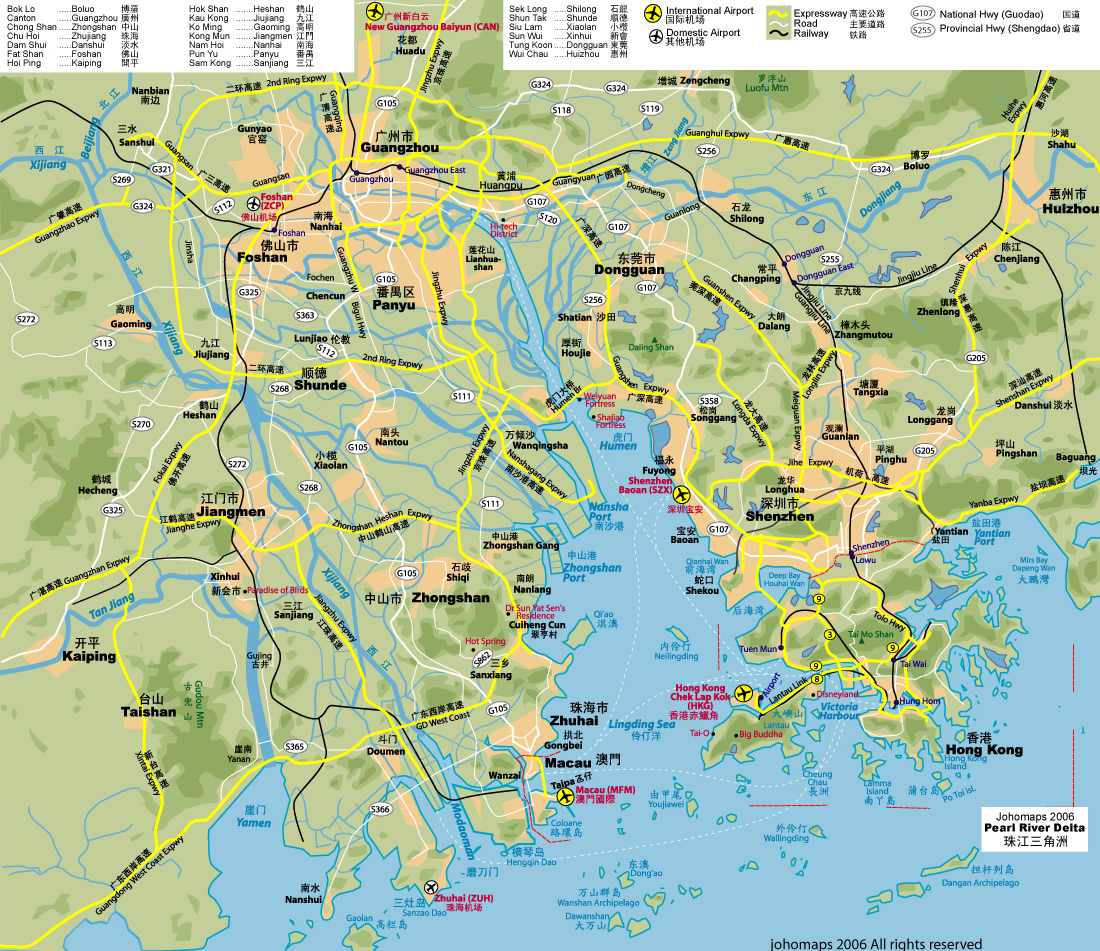
EastSouthWestNorth has pulled together over a dozen different accounts from both English and Chinese sources for a long blogpost headlined The Zhongshan Incident. This hits close to home for the Outliers, who spent a year teaching English at a locally sponsored startup Sun Wen College in the town of Shiqi in 1987-88. (Sun Wen is yet another name for Sun Zhongshan, better known abroad as Sun Yat-sen.)

At that time, it was a pleasant enough little town where nearly everything was under construction. The new road south to Zhuhai put the Macao border within about an hour’s drive, but the road north to Guangzhou took around three hours in a muddy, slow-moving, perpetual traffic jam.

Here’s a chunk of reporter Howard French’s account in the New York Times on 16 January.

SHANGHAI, Jan. 16 – A week of protests by villagers in China’s southern industrial heartland exploded into violence over the weekend with thousands of police officers brandishing automatic weapons and using electric batons to put down the rally, residents of the village said today.

As many as 60 people were injured, residents of Panlong village said, and at least one person, a 13-year-old girl, had been killed by security forces, they said. The police denied any responsibility, saying that the girl had died of a heart attack.

Residents of Panlong, about an hour’s drive from the capital of Guangdong Province, said the police had chased and beaten protesters and bystanders alike, and that locals had retaliated by smashing police cars and mounting hit-and-run attacks, throwing rocks at security forces.

The clash with villagers in Panlong marked the second time in a month that large numbers of Chinese security forces, including paramilitary troops, were deployed to put down a local demonstration.

The protests coincided with a visit to the area by the North Korean president, Kim Il Jong. The secretive Korean leader’s visit, though never publicly confirmed by Beijing, is a poorly kept secret, and some residents said his presence in the region over the weekend may have contributed to the nervousness of the security forces. Like thousands of other demonstrations roiling rural China, it involved land use and environmental issues….

Indeed, demonstrating residents of Panlong village said their anger had been sparked by a government land acquisition program they had been led to believe in 2003 was part of a construction project to build a superhighway connecting the nearby city of Zhuhai with Beijing. Later, the villagers learned the land was being re-sold to developers to set up special chemical and garment industrial zones in the area.

The region that immediately surrounds Panlong village is among the most heavily industrialized land anywhere, and was the laboratory and launching pad for the economic changes put in place by Deng Xiaoping. These revolutionary changes revived the country and turned it, in the space of a generation, into a global economic powerhouse.

Panlong village is a short drive from Shenzhen, Dongguan and Zhuhai – all large and booming cities virtually created from scratch. It is also close to Guangzhou, the provincial capital, and to Hong Kong, whose investments helped fuel the area’s takeoff. The region is not only the scene of some of China’s fastest growing industries, including high-tech manufacturing, textiles and furniture – much of which is exported to the United States – it is also the scene of some of the country’s worst pollution.

For most of the year visibility over the scrubland plains is so poor that beyond a few hundred yards all detail is lost behind a thick gray curtain of eye-stinging haze. Water supplies in the area are equally imperiled by the pollution. The situation has become so bad that even residents of Hong Kong, whose economy is dependent upon the adjacent region’s growth, rue the environmental monster they have helped create.

Increasingly, their ambivalence is shared by rural dwellers in the area, some of the first people to benefit from the opening up of the country to foreign and private investment, which began in special economic zones in nearby areas in Guangdong as part of China’s sweeping economic reforms.

“We have many special zones in this area, and each of them attracts investment,” said a villager who was interviewed by telephone and gave his name as Hou. “The economic deals set in the past were not favorable, and many zones here have had smaller protests before, but the people were not united.”

“Now,” he added, “there are uprisings everywhere.”

Leave a comment

Filed under China

Lee-Jackson-King Day?

Wow. Here‘s a bit of awkward Virginia trivia I wasn’t aware of: “Lee-Jackson-King Day was a holiday celebrated in the Commonwealth of Virginia from 1984 to 2000.” Ah, the things you miss by being a long-gone expat!

via Tyler Cowen on Marginal Revolution

Leave a comment

Filed under U.S., Virginia

Oranckay on the Hwang Woo Suk Fiasco

Korea-based blogger Oranckay puts the Hwang Woo Suk cloning fiasco in larger societal context. Here’s a small sampling.

IMHO, just how it was that Hwang was able to have his way with the country is far more important than that of what possibly could have been going on inside his head. History is full of con artists and psychopaths, but few ever enjoy the status bestowed on Hwang and figuring out how he was able to deify himself is of more critical importance. If someone robs a bank, you don’t ask why he did it. There have always been bank robbers and there always will be. The important question is how he did it and how he got away with it, and in this case the bank shares a lot of the blame.

Naturally, however, one does wonder what Hwang’s problem is. The best quote I’ve seen (was in the international media but I can’t find it) is that he might have been trying to “fake it ’till you make it.” He needed lots of money and lots of eggs, and maybe he figured that he could really pull it off before the lies caught up with him once he had what he needed to work with….

How was he able to get away with it for so long?

Put simply, I think Korean society as a whole has itself to blame for the international embarrassment. It got really hard to question him once he published the 2005 article then went to speak at a conference in the U.S., saying upon his return to Korea that he’d gone to “the heart of America” and “planted a Korean flag on the top of the hill of bioscience.”…

As I mentioned briefly in a piece I wrote for the Kyunghyang Shinmun, I actually find reason for hope in all of this. Others have noted reasons such as the fact that in the end, the media, or some of it, did get the truth out for all to see; that the Korean scientific community got to the bottom of the matter on its own; and, ironically, I think Korea has reason to be encouraged by the fact that the rest of the world fell for Hwang’s fabrications. Most countries only get to do international mail order fraud. 10 or 15 years ago if a group of Korean scientists had said they’d cloned stem cells they’d have been laughed at. Korea might be given more scrutiny next time around, but the world believed that Korea has the potential to make landmark scientific breakthroughs and was willing to be fooled. That would not have been the case not too long ago, and I think the world expects more of Korea than most of the Korean public realizes. The international scientific community will not be tricked so easily the next time, but then neither will Korea.

via Hunjangûi karûchi’m, who notes that Hwang has now received a job offer from Clonaid, the Raelian outfit.

Leave a comment

Filed under Korea

What Motivates Suicide Bombers in China?

The upcoming issue of The New Republic has a long review by David Bromwich of two books about suicide terrorism: Terry Eagleton’s Holy Terror (Oxford U. Press, 2005) and Robert Pape’s Dying to Win: The Strategic Logic of Suicide Terrorism (Random House, 2005).

The motives for suicide terror may be roughly divided into (1) religious fulfillment; (2) revenge; (3) founding a state; and (4) resistance to occupation. Holy Terror, when one looks at the details, is concerned rather narrowly with (1) and (2). Dying to Win suggests that the terrorism of the past two decades, and especially the suicide bombings, has emerged saliently as instances of (4), with (3) often a discernible secondary motive. (1) and (2) in Pape’s view are possible and always exacerbating causes, but as he reads the evidence, they have not excited vengeful or ecstatic persons to the length of killing others by killing themselves.

Meanwhile, the January 2006 issue of Scientific American has a column by Michael Shermer (“Mr. Skeptic“) about how to counter what he calls “murdercide” (ugh!).

The belief that suicide bombers are poor, uneducated, disaffected or disturbed is contradicted by science. Marc Sageman, a forensic psychiatrist at the Foreign Policy Research Institute, found in a study of 400 Al Qaeda members that three quarters of his sample came from the upper or middle class. Moreover, he noted, “the vast majority–90 percent–came from caring, intact families. Sixty-three percent had gone to college, as compared with the 5-6 percent that’s usual for the third world. These are the best and brightest of their societies in many ways.” Nor were they sans employment and familial duties. “Far from having no family or job responsibilities, 73 percent were married and the vast majority had children…. Three quarters were professionals or semiprofessionals. They are engineers, architects and civil engineers, mostly scientists. Very few humanities are represented, and quite surprisingly very few had any background in religion.” …

One method to attenuate murdercide, then, is to target dangerous groups that influence individuals, such as Al Qaeda. Another method, says Princeton University economist Alan B. Krueger, is to increase the civil liberties of the countries that breed terrorist groups. In an analysis of State Department data on terrorism, Krueger discovered that “countries like Saudi Arabia and Bahrain, which have spawned relatively many terrorists, are economically well off yet lacking in civil liberties. Poor countries with a tradition of protecting civil liberties are unlikely to spawn suicide terrorists. Evidently, the freedom to assemble and protest peacefully without interference from the government goes a long way to providing an alternative to terrorism.”

The recent spate of suicide bombings in China seems to underline Mr. Skeptic’s point about despair in the face of oppressive and unresponsive governments.

Discontented or disturbed attackers in China have used mining explosives or fertilizer devices in previous bombings.

In August, a farmer with lung cancer set off a bomb on a bus in Fuzhou in southeastern Fujian province, wounding 31 people, and in July a murder suspect set off a bomb in a shopping mall in northeastern China, injuring 47 people.

A man set off a bomb on a bus in the western Xinjiang region in January 2005, killing 11 people.

On Saturday, Xinhua reported an explosion in a coal mine in Xinjiang in November was set off deliberately in the Beitaishan Coal Mine, killing 11 people.

Perhaps there are other bombings we haven’t heard about, and religious nationalism cannot be ruled out in the case of Xinjiang (or East Turkestan), but it seems that suicide bombing in China is driven as much by individuals bent on revenge as by religion, nationalism, or occupation. Some of these Chinese suicide bombers seem to be aiming their Propaganda of the Deed at international news media in order to exact personal revenge on their otherwise unresponsive government–and, of course, on many of its innocent citizens.

UPDATE: It’s not even clear how many of these bombings are suicidal. Here’s a crime report from 4 January.

BEIJING (Reuters) – Chinese police have detained the suspected architect of a bus bombing designed to kill his wife and in which 11 people died, Xinhua news agency said on Wednesday.

The suspect was believed to have given a man from his hometown explosives to plant on the long-distance bus in Yanling county, central Henan province, and to have killed the man after the attack to cover his tracks, Xinhua said.

The December 23 blast triggered a fire that swept through the bus, killing 11 passengers and seriously injuring three, the report said. It did not say if the man’s wife was on the bus or whether or not she survived.

Investigators believed the suspect wanted to get rid of his wife so he could marry his mistress, the report said.

This perp sounds like a nasty piece of work, no matter who else he might want to blame for his criminality.

Leave a comment

Filed under China

Coxinga’s African Bodyguards

Swordsmanship was a vital component in the young Coxinga’s education, not purely as a skill that a gentleman warranted, but also as a means of self-defence. [His father Nicholas] Iquan had many enemies, among the Dutch, Chinese and Japanese, and China was still reeling from the after-effects of drought and famine. As the son and heir of China’s richest man, Coxinga was a valuable prize for kidnappers, and he was assigned minders hand-picked from Iquan’s own personal battalion, the Black Guard. When the boy asked his father where he had found such fearsome warriors, Iquan simply replied that they had come from ‘beyond the sea’.

Experience had taught Iquan that he could trust nobody; though he may never have known, his own mother had even conspired against him with [Dutch commander] Pieter Nuijts, so his paranoia was wholly justified. His Chinese associates were former pirates whose allegiance was unsure, his family were often out to get whatever they could, and he had long since learned never to trust the barbarians of Europe. Consequently, Iquan recruited the Black Guard from a place that had no relationship to any other country or associate: Africa.

The Black Guard, approximately 500-strong, had once been Negro slaves in the service of the Portuguese, but were now all freed men. Iquan had somehow acquired them in Macao, and had turned them into his own imposing private army. Perhaps some of them were among the slaves who fought so bravely to defend Macao from the Dutch in 1622, freed in the aftermath only to find themselves thousands of miles from home, with no hope of getting back. Others may have defected from the service of the Dutch, though Chinese sources imply that Iquan bought them in Macao and freed them himself. With many of its members unable to speak any language but Portuguese, the Black Guard was Iquan’s most trusted unit, and he ‘confided more in them than in the Chinese, and always kept them near his person’. Their mere appearance struck fear into his enemies, and rumours spread that even devils had joined Iquan’s forces at Anhai: black-skinned giants with strangely curly hair, whose imposing forms were bulked out still further by hefty armour under gaudy silks. Fortunately, the Black Guard did not get to hear of such tales, as they were all devout Catholics, whose war-cry was a blood-curdling scream of Santiago, in praise of their patron St James.

SOURCE: Coxinga and the Fall of the Ming Dynasty, by Jonathan Clements (Sutton, 2005), pp. 79-80

3 Comments

Filed under China

Australia-Japan Baseball Diplomacy

1930s:

The Claxton Shield [national baseball competition] was inaugurated without fanfare at the 1934 carnival in Adelaide. Held between 4 and 11 August 1934, the first series was won by South Australia.

Shortly before the second Claxton Shield, a Japanese team visited Sydney as part of the Japanese Training Squadron. New South Wales played their representative Claxton Shield side against this team and won 9-2. As the other leading baseball nation of the world besides the United States, Japan was highly regarded by Australian baseballers. The Australians made numerous efforts to play visiting Japanese sides and recruit Japanese residents into Australian teams. Japan reciprocated this support, with the Japanese consul general sponsoring the Sydney first-grade competition, to be known as the Nippon Cup, the most significant trophy in New South Wales baseball to date.

1950s:

In 1954, nine years after the end of hostilities against Japan, the ABC [Australian Baseball Council] arranged for a Japanese baseball team called the Tokyo Giants to tour Australia. Prime Minister Robert Menzies gave assurances that the tour would proceed without hindrance or incident, but he did not count on the powerful Returned Serviceman’s League (RSL), who had objected to the tour from the outset. Nor did the Japanese team improve their standing with the RSL by arriving in Australia on Remembrance Day, 11 November. The visitors defeated the Queensland team 10-1 before only five hundred spectators. Three easy victories over Sydney teams were followed by the first “test” against Australia on 17 November. This test proved the most exciting game of the tour, with the score tied 8-8 after ten innings. The Giants would score 6 runs in the eleventh inning to win the game.

Traveling to Canberra for games on 19 and 21 November, the Japanese met Prime Minister Menzies, along with his minister for the interior, Kent Hughes, a former prisoner of the Japanese. Both warmly welcomed the visitors. Tokyo’s schedule had included games in Melbourne and Perth, but relentless pressure from the RSL forced the cancellation of the rest of the Australian tour.

SOURCE: A History of Australian Baseball: Time and Game, by Joe Clark (U. Nebraska Press, 2003), pp. 53, 64

Leave a comment

Filed under baseball

Australian Baseball Lingo

It’s not surprising that Australia has its own particular Strain of baseball jargon. Here’s a sampling.

  • “BALLS OUT!” – called by umpire to tell fielding side to throw practice balls back into the dugout as the inning is about to start.
  • BLUE – Umpire, because of blue umpire’s uniform, even used when the umpire is not wearing blue. Victorian Baseball Association umpire, Greg Howard, has the car number plates “HEYBLU”!
  • DEAD – Out, as in “How many dead, Blue?” “Two dead”.
  • FOUR – colloquial reference to home plate. Only used in context of game situation though, as in “Look at Four! Look at Four!” from the third base coach to a runner running full speed into third, or “Four! Four!! Four!!!” from a catcher calling for a throw with a runner going home.
  • HOOKIE – Left handed batter, announced as “Hookie!” or by swallowing the first consonant ” ‘ookeeeee!”. Called by fielding side so outfielders can shift to the right side.
  • LOADED BASES – Bases Loaded. (Australian baseballers always place the adjective first here).
  • SIDE (Batting or fielding) – possibly a cricket term, referring to “the fielding side” (defence) or “the batting side” (offence).
  • SIDE – Called by the umpire to indicate three outs have been made in a half inning and it is time to swap from offence to defence and vice versa.
  • “TIME AND GAME!” – Most Australian club games are timed, usually two hours or less. When a timed game is over, the umpire yells “Time and game!”. Mixed reactions are predictable when this is yelled, from jubilation by the winners to painful shrieks of ‘C’mon, Blue!?!” and other prevarications by the losers who may feel unjustly denied their right to try and win.

The Australian Baseball History website contains a fuller list.

Leave a comment

Filed under baseball

If a Tree Farts in the Forest …

A surprising new study published in Nature, reported by the Guardian on 12 January 2006, may help explain why Kyoto Protocol signatories Canada and New Zealand haven’t managed to reduce their greenhouse gas emissions any more effectively than nonsignatory Australia. Too many plants, not enough desert?

According to a study published today, living plants may emit almost a third of the methane entering the Earth’s atmosphere.

The result has come as a shock to climate scientists. “This is a genuinely remarkable result,” said Richard Betts of the climate change monitoring organisation the Hadley Centre. “It adds an important new piece of understanding of how plants interact with the climate.”

Methane is second only to carbon dioxide in contributing to the greenhouse effect. “For a given mass of methane, it is a stronger greenhouse gas, but the reason it is of less concern is that there’s less of it in the atmosphere,” said Dr Betts.

But the concentration of methane in the atmosphere has almost tripled in the last 150 years, mainly through human-influenced so-called biogenic sources such as the rise in rice cultivation or numbers of flatulent ruminating animals. According to previous estimates, these sources make up two-thirds of the 600m tonnes worldwide annual methane production.

Frank Keppler, of the Max Planck Institute for Nuclear Physics, who led the team behind the new research, estimated that living plants release between 60m and 240m tonnes of methane per year, based on experiments he carried out, with the largest part coming from tropical areas.

Other perplexing results:

Tree planting

Researchers in North Carolina found that planting trees to soak up carbon dioxide can suck water and nutrients from the ground, dry up streams and change the soil’s mineral balance

Aerosols

A recent study in Nature found cutting air pollution could trigger a surge in global warming. Aerosols cool the Earth by reflecting radiation back into space. Scrapping them would have adverse consequences

Global dimming

In 2003 scientists noticed levels of sunlight reaching the Earth’s surface had dropped by 20% in recent years because of air pollution and bigger, longer-lasting clouds

Leave a comment

Filed under science