Monthly Archives: April 2004

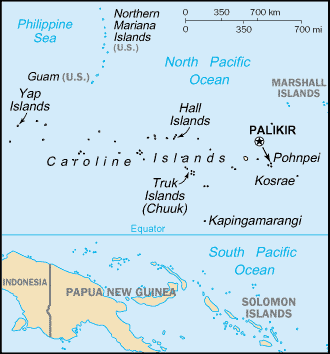
Aftermath of Typhoon Sudal in Yap, Micronesia

[This email letter was relayed out from Yap, Micronesia, in the wake of Typhoon Sudal, with the author’s permission to reproduce it freely. I’ve done so verbatim, omitting only one paragraph. My own experience of a hurricane on Yap in 1974 is utterly inconsequential by comparison.]

Dear Friends,

Seok Ha and myself are both shaken, but whole and healthy (minus a nasty head cold that doesn’t want to give up) doing much better than OK given the circumstances, but it is with immense sadness I convey these tidings from our tiny little tropical islands to y’all.

Typhoon Sudal may have broken Yap’s back, but not its people’s spirits.

Nobody ever expected the eye of a super typhoon to hit Yap head on. This was not supposed to happen, traditionally, the Yap sorcerers and magicians have had the powers to divert typhoons. And following the old “badness comes in waves” adage (no pun intended), the peak of typhoon intensity naturally happened to coincide with high tide. Add to that an extreme ocean water surge pushed by Sudal, and these here islands found themselves, as the saying goes, in deeper than usual waters.

We were told, and some of us could learn on the Internet typhoon warning pages, that the “outskirts of Sudal” was, maybe, going to affect Yap. Nobody was mentally, or physically, prepared for the assault that hit us shortly after midnight. Typhoon Mitag, that two years ago I thought was mighty scary, was nothing in comparison. Sudal was not classified as a super typhoon (and I don’t know if it was ever officially “upgraded”), but the opinion of everyone here–even people with first hand experience of serious US hurricane damage–is clear: this was, by far, the worst anyone has ever even heard of. Some of the old Yapese people I talked with remembers a strong typhoon that hit in the late forties, but with nowhere near the destructive energy that Sudal packed. But the spirit of the Yapese turns out to be incredibly strong, and resilient. Come to think of it, that may be a mental requirement, in order to live permanently out here.

I know of no actual measurements taken during this intense ordeal, but Sudal was announced as being of typhoon strength, with 120 knots (60+ meter per second) sustained winds, and up to 180 knots (90+ meter per second) gusts. There may be a tendency to overestimate these things when you’re in the middle of it all, but judging from the extreme damage that was delivered to Yap on these Easter holidays, and by how it was absolutely impossible to venture outside during the peak hours (the “eye” stayed over Yap, incessantly delivering one blow after the other, for a good six hours), my guess is that by the time Sudal hit Yap proper full force (about 02:00), it had grown well into super typhoon territory. As if the matter of classification really matters.

Power and water went early, leaving all the islands in virtual darkness, and with no drinking water. Thanks to no less than heroic efforts by Tim and Tim (water and power, respectively) and their crews, we got power back already early this morning, and we’re promised to have our water back by tomorrow. That is only here in Colonia, though (priority one due to the needs of the Yap State Hospital), the complete grid will probably take some time to get back online.

My personal assessment is that 60 percent of all local businesses, 70 percent of all homes, and 80 percent of all schools, are utterly devastated, completely written off. Gone. Can’t even use the rubble left behind as building material, as the pieces are too small. As kindling, yes. Rumung island is reported to be especially hard hit, with zero man-made structures remaining.

The COM [College of Micronesia] campus, as its neighboring Yap High School campus, looks as if a bomb exploded above the area (especially with that old Japanese concrete tower, with all its US battleship and artillery shelling scars from WWII, residing in the middle of it all). Only the admin and the computer lab buildings are still standing. But my guess is that it will be a considerable while before any Yapese students will have any interest in taking night-time computer courses. Rumor has it that the school board has decided to terminate the 2004 school year early.

The airport terminal buildings has sustained some cosmetic damage, but it looks as if there are no structural problems, except for the fire truck shelter (gone) and the PMA hanger (the hanger doors are bulging outwards, from excessive pressure from within). And unfortunately, all the trees and koyengs [shelters] lining the AP parking lot, together with the “Welcome to Yap” sign, succumbed to the awesome powers of Sudal. It looks like a war zone, the aftermath of another bomb attack.

The Save Way store, along with most of Madrich, and all shoreline Baleabaat houses, gone. Videographer Mark Thorpe, who now rents a concrete house across the road from where Save Way used to be, is fine, but his house got a thorough enema administered by seven meter (20+ feet) waves that kept pummeling the shoreline. He considers himself lucky to have lost only a few belongings, while his next door neighbors were being completely wiped out, and with zero means to rebuild. The outer island Madrich residents, already in abysmal conditions in their shantytown, were emergency evacuated to a few schools, and as if to kick them while they were already downed flat, Sudal then proceeded to blow away the roofs of the schoolhouses. When it rains, it pours, indeed.

Seven-to-ten meter waves pounded the Chamorro Bay Bridge for hours (miraculously, it is still standing, with its concrete pillars all knocked to one side or another, and the steel guardrails severely twisted!), and the ocean surges continued past the bridge to seriously damage all houses and businesses lining the Chamorro Bay.

Ace’s Mart, demolished, as was the little yellow church up on the hill, and the kindergarten (pre-school?). Professor Caldwell’s house (where Carl used to rent) next door was left untouched, as was the Baha’i house–it seems to me as if that particular area received some protection from the Nimar hill.

Pathway’s Hotel got lucky, with only thatch damage (on first assessment, anyway), but in need of lots and lots of minor repair work on all eight units, this with their economy already severely strained by recent events.

Many boats were thrown way up on dry land, most smashed useless.

And trees down, everywhere. In many places in massive piles.

Most Yap coconut trees are now asymmetrical, with all fronds facing the head-on direction of Sudal being brutally ripped off. On Guam, not even super typhoon Paka was able to break healthy coconut trunks: here on Yap, there are now many many coconut trees snapped off like so many matches, silent evidence of how much communal power these tiny air molecules are capable of carrying. Many of the steel reinforced concrete power poles are leaning, but only very few got snapped. Incredibly strong wind gusts!

The Angel’s Mart (Chinese store) and the bakery next to the ESA hotel got flushed clean from the bay-side, with *all* merchandise and product spread all over the road and neighboring landscape. I do not know the status of ESA hotel itself, but I hope it is in as good shape as it looks (minus its bayside koyengs [shelters], of course).

Trader’s Ridge Resort looks comparatively good, but I have no details, as I have not yet ventured past the accumulated debris up the Nimar hills.

The courthouse corner was ripped wide open, and law texts from their library are now littering most of downtown Colonia.

The YCA hardware store/warehouse was demolished beyond repair, battered by both waves and high winds. In contrast, the new WAAB Hardware building, obviously well built, stands relatively undamaged.

The Manta Ray Bay hotel got its newly completed seaside (re-)constructions completely washed away (just as was done by typhoon Mitag, two years ago), and here too, enormous waves were crashing through the hotel and exiting on the parking lot. The proud sailing ship S/V Mnuw is now resting at a 45 degree list, half-way up on dry land, with no conceivable way to get it back into the water. So now the Manta Ray Bay hotel has no bar, and no restaurant, and no glass in most room windows. Bill, traveling, was stuck on Guam until yesterday, when he came back on one of the extraordinary Continental flights. Some of their dive boats were taken to the mangroves before Sudal hit, but since nobody was really prepared for what was coming, some of the fleet was left at the dock, as usual. Together with every trace of the dock, and the beautiful new terrace that replaced the old bar washed away by Mitag, they are now gone. Actually, parts of one of the boats (I think it is the remains of “Betelnut”) can be seen sitting on top of the now totally wrecked (sunk in shallow waters) M/V Cecilia–another ugly wreck now permanently lining the Colonia harbor. Sigh.

The Family Chain Bakery is completely leveled. So now Yap has no local commercial source of bread. It is my hope that some Palau bakery will offer increased shipments.

PBC is damaged, but under control. Also, Hiroshi-san (who was also stranded on Guam until yesterday) is one of the very very few that had any form of insurance.

A forty foot container (!) came tumbling through the air (literally, no less!) and came to rest across the road in front of O’Keefe’s, blocking through traffic. And speaking of O’Keefe’s: all Don Evans’ ventures has escaped with only minor damage, as did his house. Don is counting his blessings.

Just past Dugoor village, heading towards Rumuu village, large chunks of the road pavement has been ripped loose and blown clear off the road, and much of the topsoil on the exposed northern shores has been blown off. Yap is bleeding from multiple open and ugly wounds.

Down south, most villages has been flattened, in the true sense of the word. Because I was known to own a digital camera, I was commissioned by the Police Chief to be on the southern damage assessment team, to take early pictures of the mayhem, to try to convince FEMA that this is indeed a disaster area, in great and imminent need of lots of help from the outside. It was a mentally very difficult task, to go from village to village in Chief Cham’s (Gregory) truck, to stare all this heartbreak and helplessness straight in its face, all those crushed dreams. Unfortunately, my camera got some typhoon damage, so the result did not come out the best. But better than nothing, I guess/hope.

The Nimgil (“Nathan’s”) store is demolished, with fifty percent of their betel nut plantation down on the ground, and their pig farm now without a roof (the concrete walls are still standing, and the porkers are scared shitless, but fine). Jim and Debi’s place looks OK, somewhat sheltered by the dense surrounding vegetation, but we never took a close look–it looked too good for a check-out stop. Down in Anoth, the beach has yet again doubled in size, their beautiful newly built peebai [meeting house] is still standing, but now with a distinct slant. The loop road is impassable, and it will take a major effort to hack through the massive multiple walls of intertwined broken coco, betel, and nipa palm trunks, mixed with assorted crushed building debris. Regina Thun’s house lost parts of its roof, but the (long since closed) store escaped with almost no damage.

At the Destiny Resort, even the ruins from typhoon Mitag’s visit two years ago have now been washed away, and Carol and Colin’s “new” house on Maap has taken major wind gust hits. As destinies for visiting lawyers go: Peter (Public Defender) and Theresa Steltzer’s house at the Queen Bee will be out of the rental circuit until massive roof repairs has been done, plus associated water damage dittos has been undertaken. And trying to find a decent place to stay here on Yap will not be easy, for the foreseeable future.

On the west side, our “home village” (Kadai) has been badly damaged. We were unable to take the road down to Sunset Park, too much debris. Berna and Thomas Gorong, just finishing off a renovation of their hilltop house, had to abandon house for the relative safety of brother Theo’s concrete house, but as it turned out their house had sustained very little damage. Wayaan’s “vacation house” (the fruit bat hunting lodge Fillmed built for Guam governor Guiterrez) next door, however, is now spread across a sizeable area. Dave Vasalla’s house, a stone’s throw away, was undamaged, protected by the recess in which it was constructed. Tony Ganngiyang’s blue concrete house also gave evidence to the wisdom of building solidly–not a scratch! Otherwise, all houses visible from the loop road (Colonia – Delipebinaw – Fanif – Colonia) were either completely or partly demolished. Churches, schools, Kingtex, Public Transportation, the whole lot got hammered, but badly.

No big tree has been left standing. All mango and breadfruit trees of any size, that I know of, are gone, many taro patches have been ruined by salt water, practically all banana and papaya trees are gone, it is just so incredibly sad. It will be quite some time before local food supplies are back to normal. This may become another big problem, because so many people here are still depending only on local food, having no money to purchase imported “manufactured” food.

Remember how we always used to say, with some pride, “There are no homeless here on Yap, and nobody is starving.” Over night, a majority of the Yapese has become homeless, and we can only hope that the food situation will be solved, somehow.

In Gachpar, no house along the shores has survived, in most cases with no trace left behind. Of “our” little beach house, until Good Friday occupied by Michelle and Luke, only the concrete pillars upon which it rested remains. They too (Mich and Luke, that is), way too late realizing the urgency of the situation, got completely wiped out, materially.

James Lukan has just completed a flimsy-looking structure (two-by-fours and corrugated tin sheets) to house my pool table, across the road from the Gagil Elementary School (as most other schools were severely hit, this one got away almost scot free, “only” some roofs gone). For some weird reason, the “pool koyeng” was still intact! The small store, ten feet away, plus the supposedly typhoon-proof “waiting for the bus” shelter the same distance away in the other direction, was completely demolished.

Except for the house where the Munn’s used to live (still standing, good solid house: at one point it was standing in water up to the second floor) and the newly-constructed-but-not-yet-moved-into Kensuf main residence (still stands, but with serious roof damage, and with a truckload of cement sacks, for protection brought into the house, now being fused into a single clump of useless concrete, and most of the unlaid tiles crushed and scattered around the surrounding terrain), Kensuf’s whole property was leveled. There is no trace of the house “Little Richard” Overy (our ex-archivist) used to live in. It is all way beyond heartbreaking.

Saint Joseph’s church is demolished. Again miraculously, the Padre’s house, on its dinky stilts, was unscathed (strong message, or fluke?).

Wanyan, same. All houses along the shoreline are gone. Stone money banks, standing for centuries, were broken into by huge waves, breaking and spreading the rai coins and shattered pieces thereof all over the place. The road to Sea Breeze Beach is as yet, and without a major clean-up effort, impassable. I don’t know about Bechyal Culture Center, but judging from its location and what happened to all other structures on the northern shores of Maap, I fear the worst.

The Sports Complex was badly hit, and I’ve already heard rumors about Black Micro being sued for sub-standard construction. Here, too, the “roller” doors were pushed out by pressure from within (just like the hanger doors at the AP). Together with some of the now knocked out schools, the YSC was designated to function as an official “emergency shelter” in case the typhoon happened to hit. People who had taken refuge there were scrambling for their lives as parts of the roof eventually caved in. You know you have a crisis on your hands, when the disaster shelters are getting knocked out by the elements.

Al Ganang, proprietor of the sadly no longer existing Village View Hotel, is happy to be alive. The surge took him completely by surprise. Again, all the buildings along his beautiful beach are gone: the store, the bar, the dive shop, all of the two-unit hotel bungalows. All gone. Insurance? You’re kidding, right?

Wanead village, a little further north, was almost completely obliterated. Johnny Chugan told us that the entire village population is now shacked up in a single relatively undamaged building. The Wanead village path is now their new shoreline, facing a huge new beach. Chugan had just completed renovations and spiff-ups of their beach-side home, financed by an BofFSM loan. The house is no more (and the beautiful house he built for Cathy and PJ was blown away with it), but the bank loan remains. It is so very difficult to not burst out crying.

The Kula Place (just before Wanead village) is ravaged badly, all its koyengs blown to tiny little pieces, and substantial parts of the lovely old shady three has been blown down. Not entirely gone, thank heavens, and I do so hope that what remains of this grand ole tree will be able to survive its almost complete defoliation.

That is another thing, and it looks so weird and unreal: almost all leaves has been ripped of all trees. And I’m sad to say that, if anything, I am understating the damage done: the beautiful rolling green hills of Yap were, within a few hours, transformed to ugly brown hills, reminding me of late autumn in Sweden: no green leaves, no green anything, just bare branches, and the brown forest floor clearly visible–all across all the Yap islands. Very depressing. I don’t know much about resilience of trees and stuff, and I can only hope that this kind of damage is reversible, that somehow the plants can find the strength and resources needed to survive until a new generation of photosynthesizing green leaves has been produced.

Closer to home, here in Gaanelay village in Colonia: The Yap Agriculture facilities are demolished. Black Micro is a mess. As is some of Gilmar’s enterprises (his new pool room, gone), but it looks as if his store and video rental/Laundromat may be salvageable. Do you remember “Yap Wellness Center” just before Gilmar’s store? Well, forget it. The Talguw area was lucky, we could only see some roof damaged there. Behind our YCA townhouses, Libyen’s brand new two-storey house has been blown off its foundation, coming to rest at 40 degrees off the normal, beyond repair. All that can be done is to try to wreck it gently, in order to get to re-use all the expensive building material. Libyen, stoic, said “I’m too old to get upset by this, but the situation for Yap is really bad.” Gurwan was completely wiped out, the concrete sides of her house are still standing, but there is no roof, and nothing is left inside the house (Gurwan said, “It hasn’t been this clean since it was built”–making fun of the unbearable situation). The schoolhouse (temporary home for some 120 Madrich “refugees”) has lost most of its roof, and is generally beyond repair.

A few seconds of my life I believe has gotten permanently etched onto my retinas: at about 0600, as I was looking out our bedroom window, the huge breadfruit tree growing between our house and Libyen’s was finally brought down, and it fell directly towards our house (this tree has been worrying me ever since we moved in, with its potential for wreaking havoc on our house in case it ever fell down in an uncontrolled way). However, and as I watched it, a gust grabbed the huge trunk, raised it back up and then swung it clear in another direction, and nothing came down on our roof. Guardian angel? Maybe, but more likely our luck that the wind direction was away from our house. But it was a remarkable display of typhoon power, I remember it flashing through my head that “this is some kind of special effects trick,” to see a falling huge tree like that change direction in mid-fall. Amazing. And yes, we too are counting our blessings.

Countless cars, representing years of working hours for the average Yapese, has been rendered useless by flying debris and falling/flying tree trunks. “Flying guillotines” (corrugated tin sheets, the omnipresent roofing island material) also have done their share of slicing damage–that big water tank that got sliced clear through could, but for the grace of God, have been my belly, as I was forced out in the middle of the night to reinforce the window boarding material that was coming loose. Those wavy sheets of sharp steel were flying everywhere! It was scary as hell, lemmetellya!…

The Yap FM radio and TV station was knocked out early, as its aerial tower lost its supports early on.

The good news is that, unbelievably, nobody got hurt! And there has been no looting reported (I sincerely hope it stays that way). James Lukan said that one person is missing from Gachpar, but he also said that person may be just wandering around somewhere (the individual is of somewhat diminished mental capacities, and Lukan said, “If it turns out he’s been hiding in order to get attention, I’m gonna beat him up!”). I hope he will be found, and that he will be spared the beating.

The situation is bad. I’ll try again: It is very, very bad. Maybe as many as 5,000 Yapese have lost their homes. A Guam PDN article … mentions that 1,500 people on Yap are in “homeless shelters” (roofless schoolhouses), but says nothing about the fact that the majority of typhoon-struck Yapese much prefer to stay in whatever way they can in their demolished ex-homes, in their villages, with their clansmen.

And all the Yapese I meet say, “we’ll rebuild. Life goes on” and they laugh, and they prepare another betel nut chew.

In all, quite an unforgettable experience. And I sincerely hope that none of you will ever have to go through something even remotely resembling being a mote in the eye of a super typhoon–It is scary.

May your Gods protect, care for, and bless y’all!

Henry and Kim Seok Ha

MicroTech Consulting

Leave a comment

Filed under Micronesia

Morobe Field Diary, December 1976: Going-away Party

Yesterday, the Sunday before Christmas, we finally had my village party. We had it early to make way for another one next Sunday. By my reckoning it was a good one. The [M.V.] Sago took off for Kuwi early in the morning to get the pig [people tend not to slaughter and eat pigs they’ve raised themselves] while we got the church service out of the way. About the time the service ended the Sago pulled in. The pig was alive, tied to a pole and large by NG [= New Guinea] standards and well fatted. People gathered under the men’s house at this end of the village while the women went to work on the starch and a few men on the pig who died a rather torturous death due to inefficient killers. One girl cried and I would have shed a tear if I weren’t at the moment being very detached & scientific (wonderful how science allows you to get beyond your scruples).

[The young, unmarried men’s cohort — my cohort — took charge of the slaughter and whacked the pig between the eyes several times to stun it before trying to put a pig spear thru its heart, but they had enough trouble finding the heart that an older, more experienced pig hunter stepped in to put the pig out of its misery more efficiently. Its squeals had set the village dogs wild, and the initial butchering had to be done on the platform of a canoe floating far enough offshore to keep the dogs away.]

The plan was to serve the beer with the food to avoid excessive drunkenness but when we had set a preliminary two cartons before the hot, thirsty and impatient crowd of men — already starting drum-beating — somehow the momentum started and they got two more, and then two more, before the food came. They were pretty gone for the most part and up singsinging, which they resumed after eating during the mid- to late-afternoon. Within the context of Nu. society we showed rather excessive appreciation (any at all) for the women who prepared the food by distributing a carton of beer among them as well. And a couple of packs of cigarettes. And many shouts of “yowe!” (‘well done, bravo, etc.’).

After dinner I joined the singsing which went on until dark. Around 7 pm or so we broke for some more food & a wash (my third well-needed one of the day) and to let the guitar-players get their gear together. Then the “play-guitar singsing” began. Again it was my duty to dance and, after a slow start, I danced and danced. At first it was all males though I called for the young women to join in. They were too shy till one town girl started, rather bravely shy at first. Then she came up and danced with me (knowing our strange custom), then her friend asked me. They were both high school girls (grades 7-10) who I didn’t know but when I had asked their names I turned the tables & asked them and several other young women to dance — danced American style the rest of the evening.

I don’t know what time it was when we broke up. Most of the village was asleep by then (or trying to get to sleep). Today I have the pleasant melancholy feeling of having met a nice girl at a party and am getting some paperwork done while waiting to count back 11 hours from high tide to figure out when I went to sleep last nite.

Leave a comment

Filed under Papua New Guinea

Morobe Field Diary, December 1976: Intervillage Conflict

I’ve had good cause to be ashamed of my village mates lately. While I was in Lae, three who attended a school party in Kuwi chased a bunch of Paiawas looking for a fight with them. They didn’t catch any unfortunately. There was little provocation except for the general bad feeling be/ Paiawa & Siboma.

Then the pastor (of Paiewa, Kuwi and Siboma) brought word back from his trip there that the Paiawa were angry and were considering coming over for a brawl at Christmas time (when reinforcements from town will be in both villages). He advised the Sibomas not to go off into the bush separately but to stick together in doing things. For several days following that there has been constant talk of war. It really pissed me off and disappointed me. I’m not particularly worried that anyone would strike me, nor even that the Nus. wouldn’t be able to withstand an attack (they outnumber the Paiewas, esp. in young men). But I do have some vulnerable papers and stuff that I’m pretty concerned about preserving anyway.

So today, Dec. 14, the kiap [‘patrol officer’] came and told the Nus. (and presumably the Paiewas as well) that if any further trouble came up he would bring 10 police, a large boat, hold summary court and cart the guilty ones off to 6 mos in jail (which people are not fond of being in). Peace may result if Numbamis and Paiewas hold a peace meeting before the kiap in Morobe and straighten themselves out.

Leave a comment

Filed under Papua New Guinea

DDT Good! Chloroquine Bad!

On one occasion in 1976 when I left my New Guinea village to make a trip into town, my host family asked me to get medicine to kill the head lice their son had picked up while away at school. I did so, and he rubbed it into his hair and then tried to refrain from scratching his scalp as the lice ran around in their death throes. I think he may have had to “lather, rinse, repeat” to get the remaining nits after they hatched, too. It seemed to be effective, but I was horrified at the time to read on the label that the active ingredient was DDT. Nowadays, though, the reputation of DDT seems to have entered rehab.

On 11 April, the New York Times carried a story by Tina Rosenberg headlined, What the World Needs Now Is DDT:

[The book] ”Silent Spring” changed the relationship many Americans had with their government and introduced the concept of ecology and the interconnectedness of systems into the national debate. Rachel Carson started the environmental movement. Few books have done more to change the world.

But this time around, I was also struck by something that did not occur to me when I first read the book in the early 1980’s. In her 297 pages, Rachel Carson never mentioned the fact that by the time she was writing, DDT was responsible for saving tens of millions of lives, perhaps hundreds of millions.

DDT killed bald eagles because of its persistence in the environment. ”Silent Spring” is now killing African children because of its persistence in the public mind. Public opinion is so firm on DDT that even officials who know it can be employed safely dare not recommend its use. ”The significant issue is whether or not it can be used even in ways that are probably not causing environmental, animal or human damage when there is a general feeling by the public and environmental community that this is a nasty product,” said David Brandling-Bennett, the former deputy director of P.A.H.O. Anne Peterson, the Usaid official, explained that part of the reason her agency doesn’t finance DDT is that doing so would require a battle for public opinion. ”You’d have to explain to everybody why this is really O.K. and safe every time you do it,” she said — so you go with the alternative that everyone is comfortable with.

”Why it can’t be dealt with rationally, as you’d deal with any other insecticide, I don’t know,” said Janet Hemingway, director of the Liverpool School of Tropical Medicine. ”People get upset about DDT and merrily go and recommend an insecticide that is much more toxic.”

So DDT is now making a comeback, but Chloroquine, the antimalarial I took in New Guinea, is now anathema. (And it wasn’t all that effective for me. I got a bad case of Plasmodium vivax while there, and another within a year of returning from fieldwork.)

On 8 April, the Independent carried an alarming story by its health editor, Jeremy Laurance, headlined WHO failures led to hundreds of thousands dying from malaria, say medical experts.

Two of the world’s most powerful medical organisations have been accused of medical malpractice for knowingly promoting useless drugs that have led to the deaths of hundreds of thousands of children.

The World Health Organisation and the UN Global Fund, which was set up to buy drugs for poor countries, have allocated millions of dollars to malaria medicines that are no longer effective against the disease, a group of specialists said. They claim negligence by the two organisations contributed to a rising death rate from malaria, which has doubled in a decade in some parts of Africa because of growing resistance to older drugs.

The WHO launched its Roll Back Malaria programme in 1998 with a target to halve the number of deaths by 2010, but six years into the 12-year programme deaths have risen from between 600,000 and 800,000 to over one million annually, of which 90 per cent are in children under five.

Amir Attaran, of the Royal Institute of International Affairs in London, who made the accusation of malpractice in The Lancet with 12 malaria specialists from Britain, the US, Africa and the Far East, said yesterday: “I am angry because I know hundreds of thousands of kids have died for nothing; possibly millions. It is really negligent for these organisations to have made no progress towards the target in six years. Why should anyone connected with the programme still have their job?”

In 2003 the Global Fund, acting on advice from the WHO, spent $41.4m (£22.5m) on the outdated anti-malarials, chloroquine and sulfadoxine-pyrimethamine, which have been rendered useless by growing drug resistance, but only $18.3m on artemesinin-based therapies, which are effective.

Countries worst affected by malaria in sub-Saharan Africa have proved reluctant to buy the new artemesinin drugs because they are more expensive at $1 to $2 a dose, 10 times more than chloroquine. Although they get help from the Global Fund, they fear they may be left to foot the bill themselves. As a result, patients treated with the outdated drugs in Africa outnumber those given the effective artemesinin drugs by more than 10 to one.

Leave a comment

Filed under malaria

Inside the Information Bubble during the Ethiopian Famine

In 2003, Vintage Books issued a new edition of Robert D. Kaplan’s Surrender or Starve: Travels in Ethiopia, Sudan, Somalia, and Eritrea (a collection of his magazine articles published in 1988 by Random House under the title, Surrender or Starve: The Wars Behind the Famine). The only thing added to the new edition appears to be a December 2002 postscript on newly independent Eritrea. But that hardly matters. While reading the book last year, I was struck by how little has changed, either in Western news reporting or in international relief efforts, over the past two decades.

The truth was that many in the Western community in the Ethiopian capital, who served as the West’s eyes and ears during the famine and provided the media with much of their information, did not want to admit the truth. Whatever nightmares the word “Ethiopia” may have conjured up in the United States, “Addis” was a nice place to be. (The same could not be said about capitals elsewhere in Africa, where the suffering in the countryside was far less.) The mountain climate was only partly responsible for the pleasant ambiance. As the headquarters of the Organization of African Unity, the Ethiopian capital was relatively clean, with good roads, a plethora of new public buildings, and well-manicured parks. The Hilton Hotel was one of the best managed, centrally located Hiltons in the world; the Hilton’s heated, outdoor swimming pool served as a magnet for the foreign community on weekend afternoons.

As for the food, millions may have been starving in the adjacent countryside, but for foreigners, “Addis” was one of the better places on the continent to eat: a well-prepared charcoal-broiled steak, Nile perch, and Italian and Chinese cuisine were always available. Not only was the Hilton equipped with several fine restaurants, but around the city there were several more. No nearby, heartrending scenes spoiled the repasts; just as walls of stone blocked off the sinister reality of the Dergue [the ruling party “Committee”], walls of corrugated iron blocked off the equally unpleasant reality of the slums. Nor were there many beggars in Addis Ababa; far less than in Egypt, for example, where nobody was starving. Christopher J. Matthews, in his article in The New Republic (January 21, 1985), made one of the most insightful comments ever about Ethiopia’s capital: “In a country where millions were starving, there was no sign of anyone begging or hustling to survive. I began to wonder. The price of coming into town must be higher than the price of staying away. If the price of staying away in the barren, dying parts of the country is near-certain death, the price of coming into the city must be even more terrible, even more certain.”

Matthews, perhaps without being aware of it, had stumbled close to the central fact of 1980s Ethiopia, a fact that many foreigners who actually lived there and many of the journalists who interpreted the famine for the public failed utterly to grasp–Ethiopia, in the manner of Syria and Iraq, was a modernizing and controlled praetorian police state, with a single tribe or ethnic group on top, supported by the most brutal and sophisticated means of repression. For the officers in charge, preserving the integrity of the empire against rebels was a far more uplifting and important goal than fighting famine was. The Soviets, the only great imperialists of the nineteenth century to have survived the twentieth, understood this. They helped, through massive arms shipments, the Dergue achieve its more important goal; the United States helped in the less important one.

As Matthews perceived, like the walls around the palace and around the slums, there was a wall around the famine, too. Destitute peasants were rounded up and arrested even before reaching the city limits. While Eritreans, Tigreans, and others in the northern provinces died by the hundreds of thousands, the markets of the Amhara fortess of Addis Ababa were brimming with grain. The price of it may have risen dramatically, but at least it was there. In Asmara, too, the government-held, fortified provincial capital of Eritrea, food was abundant because it was strategically necessary for the regime to keep the local population pacified. According to a confidential report by a Western relief agency, the “dedicated and efficient” RRC [the Dergue’s Relief and Rehabilitation Commission] was virtually starving the worst famine regions in Wollo, while at the same time pouring food into the embattled, militarily vital areas of Tigre and Eritrea and stockpiling it outside Addis Ababa….

The sanitized reality of the Ethiopian capital, a condition that only the most chillingly brutal of regimes could create, helped make the place especially attractive for its foreign residents. “Addis” was a plum posting for a relief official. The situation in the country was “absolutely horrifying” and thus “in the news,” which translated into prestige and career advancement for those on the scene. Few seemed to want to rock the boat when rocking the boat could get you thrown out. In the Hilton lobby, it was easier to criticize the Reagan administration than it was to criticize the Dergue.


In 1921 the nascent Bolshevik regime in the Soviet Union was shaken by a great famine that its own ruthless policy of crop requisition had caused. Foreign aid was essential and the U.S. proved to be the most generous. Herbert Hoover, who seven years later would be elected president of the United States, spearheaded an effort that put food in the mouths of more than 12 million peasants. The regime survived to inflict even greater famine in the following decade.

But in Ethiopia and in the United States, nobody paid attention to this legacy. In the February 7, 1985, report on the famine, issued by the Senate Subcommittee on Immigration and Refuge Policy and arising out of Senator Kennedy’s 1984 visit to the emergency feeding camps, six previous famines were listed in the table entitled, “Famine in Modern History.” The famines in the Ukraine, which were the largest of all, were not included in the list.

SOURCE: Robert Kaplan, Surrender or Starve: Travels in Ethiopia, Sudan, Somalia, and Eritrea (Vintage, 2003), pp. 37-39

This is one reason my regular list of news links includes only regional news aggregators, and not any of the major international news media.

Leave a comment

Filed under Africa, Ethiopia, war

The Wider "War on Opium" in Early 19th-century China

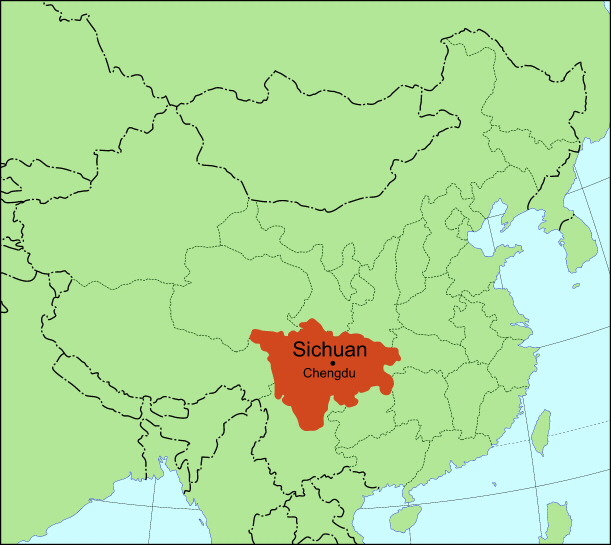
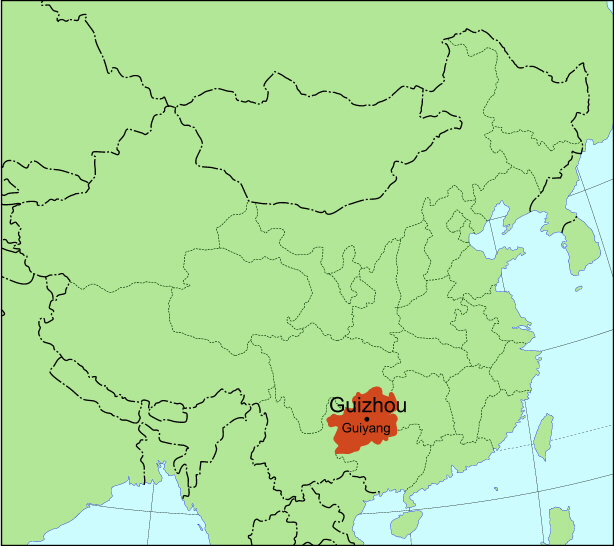
David Bello, the author of several works on opium in Qing-dynasty China, has an interesting revisionist take on the Opium Wars (1839-42, 1856-60) that results from looking at the whole expanding Chinese empire and not just at where that empire intersected with the expanding British empire.

The opium-smuggling trade that Britain pursued on the eastern seacoast of China has become the symbol of China’s century-long descent into political and social chaos. In the standard historical narratives of both China and Euro-America, opium is the primary medium through which the Qing dynasty (1644-1911) encountered the modern economic, social, and political institutions of the West. Consequently, opium and the Western powers’ advent on the Chinese coast have become almost inextricably linked. Opium, however, was not strictly a Sino-British problem geographically confined to southeastern China. It was, rather, a transimperial crisis that spread among an ethnically diverse populace and created regionally distinct problems of control for the Qing state.

Bello notes that opium was a problem for the whole Qing (Manchu) realm, at least as much on its expanding interior borders as in its coastal cities. (He has a book coming out in 2005 in the Harvard East Asian Monographs series under the title Opium and the Limits of Empire: The Opium Problem in the Chinese Interior, 1729-1850.)

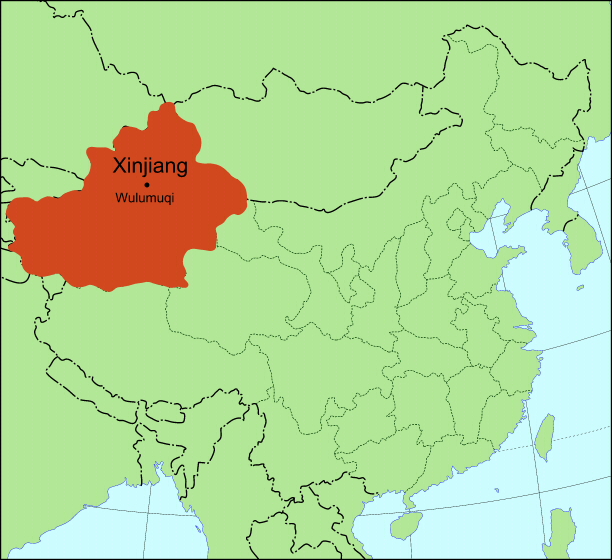
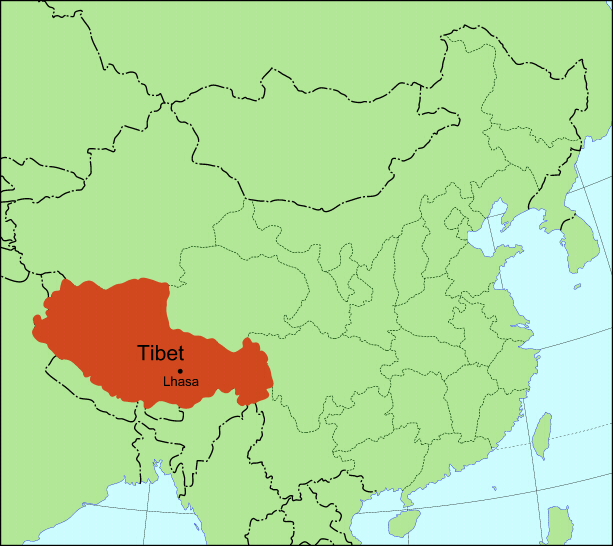
The Manchu empire had been rapidly growing, especially under the reign of the Qianlong emperor (1736-95), during which China extended its control into Turkestan (part of which remains in Xinjiang), Burma, and Tibet. This imperial expansion was financed by transferring more money from farflung localities into central coffers, forcing cash-starved local and regional officials to seek alternative sources of income.

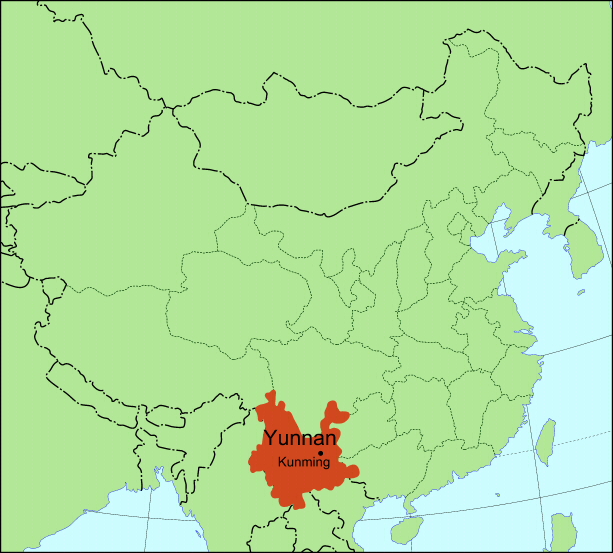
By the end of the 1830s at the latest, southwestern opium cultivation had become a part of the network of informal funding that had arisen since the 1720s to compensate for the diversion of revenue from locality to center.

In this manner, the state itself became addicted to opium, and this dependency was a primary reason for the failure of central government prohibition in many interior localities. From the state’s perspective, the opium problem ultimately concerned revenue, both in Qing China, which was spurred to action only by its conviction that drug consumption was responsible for a hemorrhage of silver abroad, and in British India, which also made a futile attempt to prohibit “illicit” production and trafficking in order to protect its own state monopoly. Opium, in the form of economic and political power, was as psychologically compelling to merchant-capitalists, bureaucrats, and politicians as it was physiologically compelling to drug consumers.

SOURCE: David Bello, “The Venomous Course of Southwestern Opium: Qing Prohibition in Yunnan, Sichuan, and Guizhou in the Early Nineteenth Century,” The Journal of Asian Studies 62:1109-1142.

NOTES:

  1. “In 1881 the inspector general of customs in Shanghai, Sir Robert Hart, reported that imperial consumption of native opium equaled that of foreign imports. Most of the reports on which he based this conclusion identified the southwest, particularly Sichuan, as the main source of native opium” (Bello, p. 1134, n. 24)
  2. Pierre-Arnaud Chouvy, a geographer at CNRS argues in an article in Crime and International Justice 15 (1999), that opium production in today’s Golden Triangle in modern Burma, Laos, and Thailand dates no further back than to the end of the 18th century and that it only began to supply the worldwide market after elements of the Kuomintang took refuge in 1949-50. Since that time the opium industry in the Burma Triangle has only grown as various governments in the region, including Myanmar, have made efforts to reduce or eradicate opium production.

Leave a comment

Filed under China

East Timor: The World’s Newest Country

The Center for Southeast Asian Studies at the University of Hawai‘i has made freely available online (in PDF format) a brief, 33-page high-school level workbook, East Timor: The World’s Newest Country, by Flo Lamoureux.

The purpose of this book is to provide students with an overview the world’s newest nation–East Timor. The narrative begins with a section on pre-colonial Timor and continues through the Portuguese era. It covers the 25-year period when Indonesia governed the entire island of Timor. After a varied and violent past, on September 27, 2002 this little known state became the United Nation’s 191st member. In addition to an accounting of important historical events, the book covers language, education, religion, women’s issues and government. The Center for Southeast Asian Studies wishes to acknowledge Dr. Douglas Kammen who carefully read and edited an early draft of the book. His experiences in East Timor significantly enriched its contents.

The workbook is loaded with provocative discussion questions. Here are the questions for the history section.

  • Sandalwood was the major source of income and bartered goods in Timor prior to 1500. How would sandalwood trade in the 16th and 17th centuries have differed if current international regulations related to conservation have been in effect? Compare the economic results of over-cutting sandalwood to the present day economic questions raised in the matter of drift net fishing. (For material on driftnet fishing, see http://www.nwr.noaa.gov/1salmon/salmesa/pubs/fsdrift.htm; and http://www.unescap.org/mced2000/pacific/background/drift.htm)
  • The explorer, Ferdinand Magellan, sailed under the Spanish flag. When his crewmembers landed on Timor they did not claim the island for Spain. They had previously landed in the Philippines and claimed those islands for Spain, why do you think they did not plant the Spanish flag on Timor? If Timor had been a Spanish colony and more closely connected to the Philippines how do you think that would have impacted on the island’s future?
  • The Portuguese were never able to maintain full control of Timor. The local Christianized Timorese resisted Portuguese rule and dealt with the Europeans only when required by commercial matters. Explain why the Topasses were more successful in their dealings with both the indigenous Timorese and the Portuguese.
  • It took well over a hundred years for the Dutch and Portuguese to sign a formal treaty that divided Timor between the two European nations. Since they essentially agreed to an informal division in 1777, why do you think they did not get around to a formal treaty until 1916?
  • In 1910 the Portuguese monarchy was overthrown. This was a cause for alarm among the elite class in East Timor who had developed a comfortable working relationship with the Portuguese government there. As a result of this change in the government in Portugal, a plantation economy emerged in East Timor. Compare the plantation economy with its salaried income and taxes to the economy that existed under the Portuguese monarchy where the East Timorese elite collected goods from the peasant farmers and turned them over to the Portuguese government representative.
  • Explain why the Japanese Army of occupation treated West Timor differently from East Timor. Compare this to the situation in Vietnam where the French government was an ally of Germany and hence not an enemy of Japan.
  • Give three reasons why post-World War II East Timor was such a poor region. Why do you think Portugal neglected it?
  • Explain why the Viqueque rebellion in 1959 led to Portugal exiling rebel leaders. What role did Communism play in the Portuguese government’s decision to do this?
  • In 1974 the conservative Portuguese government was overthrown and a new liberal government emerged. What policy did the new government implement that had a dramatic affect on East Timor?
  • Name the three major parties that vied for power in the newly independent East Timor? Compare their goals.
  • In August 1975 Fretilin controlled most of East Timor and the new nation’s independence seemed secure. Explain how the alliance of UTD, Apodeti and Indonesia reacted to this situation.
  • Once Indonesian troops forced Fretilin forces into the mountains, guerrilla warfare became the norm. One matter that encouraged East Timorese to join the guerrillas in the mountains was the Indonesian policy of encirclement. Explain how this policy worked.
  • Neither Australia, the United States nor Portugal supported East Timor’s struggle for democracy. Compare the reasons why the three countries did not support East Timorese independence.
  • If Indonesia built more hospitals and schools in ten years than Portugal did in 400 years, why were the East Timorese so adamant about being a separate nation?
  • Many brutal incidents took place in East Timor under Indonesian rule. What made the November 1991 incident outside a church a turning point in world opinion of East Timor’s quest for independence?
  • What role did the 1997 economic crisis in Asia play in East Timor’s independence?
  • How did the Indonesian military forces (the militia) react when Indonesia declared East Timor an independent nation? Why were the military in East Timor especially angry about it?

Leave a comment

Filed under Indonesia, Spain

Jungle "Hut Cuisine": Smoked Pigeons with Marijuana Sauce

In the evening we would go shooting wood pigeon among wild marijuana fields. The birds were high on the marijuana seeds and barely able to fly but fluttered helplessly in the bushes. Their spasmodic, interrupted flights, together with their strange little cries made me think of drunken people trying to waltz. We stuffed the barrels of our home-made guns with pebbles and shot the pigeons down. Just the sound of gunshots seemed to stun them and they dropped from the trees at our feet. We killed them by seizing them by the legs and bashing their heads against trees. They made an excellent dish. We cooked them with marijuana sauce according to the local recipe. Here it is — Smoked Pigeons with Marijuana Sauce: ‘Smoke the birds with the twigs of marijuana for a day. Stuff them with lemon grass, kaffir lime leaves, garlic, ginger with a pinch of salt and wrap them in banana leaves. Boil or bake according to taste.’

Although we used marijuana for cooking, smoking it was strictly forbidden by the rebels. You could end up condemned to the stocks, plagued by mosquitoes, for three nights if you did that.

When the rainy season began we caught frogs. There was some danger in this, for we were not the only party who preyed on them. We usually made sure of first killing the frog-eating snakes, and then caught the frogs afterwards. Pythons, like frogs, are quite delicious to eat. They taste like smoked salmon. We also hunted moles, guinea-pigs and rats. We hung and smoked the rodents for three days before cooking them. Rat soup, minced moles and roast guinea pigs were our common recipes. The local people liked to hang the meat of porcupines until it stank like that of a corpse before they cooked it with herbs. It tasted delicious, but we had to eat it holding our noses.

At the end of 1988 we were invited by the Karen villagers to share a Christmas meal with them. The main dish had a strange flavour — the meat in it tasted like dog meat with a strong whiff of garlic and lemon grass. After the meal, our hosts didn’t wash their fingers, but sniffed at them for some time. Before we went home they told us that we had been eating monkey. Suddenly, I wanted to throw up. For the Karen, the meat of monkey was a typical Christmas dish, like turkey or goose in the West. They believed it was a gift from God, and that even the smell should not be wasted.

Tender wild banana trunks were available throughout the year, and we used them in soups along with lentils and vegetables. Truffles and wild mushrooms were in season at the beginning of the monsoon. During the cold season, when the bamboo shoots had matured, bamboo mushrooms became available.

We had more than one way of cooking rice without pots and pans, depending on the situation we were in. It could be cooked in bamboo stems: you soak the rice in green bamboo stalks for half an hour, and stuff the open end of the bamboo with grass. Roast the bamboo slowly over the fire until the rice is cooked, then peel off the bamboo skin. In this method, the rice comes in cartridges. Another method we called ‘rebel style’. The rice is soaked in a towel, linen or sarong for more than an hour. Dig a hole in the ground, one foot deep, bury the rice bag, then make a fire on top. Steamed rice will be ready within fifteen minutes. We used this method often when the rebels were on the run.

SOURCE: From the Land of Green Ghosts: A Burmese Odyssey, by Pascal Khoo Thwe (HarperCollins, 2002), pp. 215-217

Leave a comment

Filed under Burma

Morobe Field Diary, December 1976: Texts on Tape

Texts on tape have been eluding me and getting me worried as hell. I felt something would turn up but I wasn’t sure how and how good it would be. Well, last nite I hit a gold mine. During the day the kansol put out a story of war [WW II] coming to the area that was 1st class — well organized, clear and slow with good constructions I’ve wanted and a sprinkling of new vocabulary. And I forgot to press the record button. I was ready to bash in my head but the kansol said, “well, good, now you’ve heard it so you’ll understand it better next time: I’ve practiced telling it and you’ve practiced hearing it. Let’s go chop some poles for a smoking platform and come back and try again this evening.”

Physical labor was, along with less worry about tapes, exactly what I needed to dispel a case of hemorrhoids that was plaguing me. That done, we came back, rested up and that evening after dark I hauled out the tape recorder and the kansol told his story again — not as good as during the day but covering very much the same material and almost exactly the same length. Before his wife put her account of the preparation of food by women, another fellow came by who is chock full of stories and has a clear slow way of speaking besides. He lives in Paiewa but is visiting thank God. He told a good personal experience war story with Japanese pidgin [“A, banana sabis, ye?” = (‘banana free, okay?’) uttered by a starving Japanese straggler], conversation and dangerous experiences. He also told a somewhat shorter story about a woman who didn’t want to get married, supposedly true from before contact times. His war story is about 35-40 min. (This guy’s brother is a truck driver on the Mt. Hagen to Lae [Highlands Highway] run and is such a talker that his cab mates don’t get any sleep on the 12 or so hour ride.) Finally the kansol’s wife put her piece on tape clearly & concisely. I’ve got about 70-80 minutes of unbroken talking on the several cassettes I went thru last nite. I want to transcribe as much as I can here so I can get unstuck as I go along.

The day before, in my desperation I recorded some old men who got together to put something on tape after putting me off several times. They got together, bullshat about what they were going to say and decided they would do it better later. I got some revenge by surreptitiously recording them but it’s going to be hard to transcribe. That nite I was carrying my recorder to ask a man to tell me about canoe-building (another promise). I started talking with some kids around a fire and secretly pressed the record button. It too will be hard to transcribe but has good mixed language conversation (30 min.). [The two surreptitious tapes remain untranscribed.] So, I’m breathing much easier and my asshole itching less.

Leave a comment

Filed under Papua New Guinea

Morobe Field Diary, December 1976: Swimming in Fish Names

Things are getting pretty busy for me now. Finishing up the lexicon and trying to get some of the half-dozen or more texts people haven’t gotten around to giving me. Only two weeks to work’s end and I’m paranoid that I’ve left out something important grammatically that the texts won’t solve for me. Grammatical elicitation the way we did in Field Methods class is nearly impossible with informants as unschooled as most of mine. I don’t like it or trust it anyway. I prefer texts but people are very reluctant to give me stuff off the top of their heads, especially if it’s cultural info — they want someone authoritative to accompany them in the telling or else they practice first and wear out their interest in that so they are not keen on repeating it again for the tape.

Lately I’ve worn out my patience with eliciting fish names from two huge tomes — one quite authoritative ([Munro’s 1967] Fishes of New Guinea) but with inadequate (i.e. only B&W) pictures; the other (Guide to Fishes, an Aussie book) has good pictures (in color and [of] live [fish]) but is not well-arranged and not exhaustive and shows little of the relative size so a snapper can be called an anchovy. Combine that with some hard to distinguish subgroupings of fish (esp. among goatfish, trevallies and sea bass) and imperfect but confident knowledge of most everyone and the result is an incredibly frustrating job trying to match Nu. to genera & species. I am interested in folk classification and its relation to academic classification and was prepared for some difference but mostly the correlation between the two is pretty good (after I’ve filtered out misnamings which I can often tell are wrong because they cross genus or family lines). In some families there are names for the majority of individual species — some grouped together, usually on the basis of markings when shape is the same: mottled, banded, striped; and often on the basis of habitat.

The big men [usually elders] are supposed to be the authorities (on everything: even ladies underwear if it was anything elaborate probably) but they often can’t see the page clearly. Everyone is convinced that others don’t know what they’re talking about and that a consensus (20 people going thru 20 fishnames for 3 hours is impossible) will solve everything. I’m well past the point of diminishing returns but some still come volunteer to straighten it all out for me (and give yet another name to some picture beside which I’ve scribbled 3 names already). For most now I have statistics like 4 for, 2 against (or 2 for 1 name, 1 each for the others) so I’ve told them I don’t want anything more about fish to upset me. One the whole the world of Nu. fish naming is as unsettled as the world of zoological taxonomy when it comes to species. Genera & families work out OK. I figure (or hope) my effort is worthwhile: it not only boosts my dictionary considerably but is an are that is worth comparing carefully with other Austronesian names & classificatory systems since they are most all sea people.

Leave a comment

Filed under Papua New Guinea