Monthly Archives: February 2004

Tsaatan Reindeer Herders in Mongolia

Most Mongolian nomads herd either sheep, goats, horses, cattle, or camels, but in the far north (around Lake Hövsgöl near Mörön) a small number herd reindeer, among them a people called the Tsaatan, in whose language tsaat means ‘reindeer‘. The Mongolian linguist Zandan Enebish profiles them in an article in IIAS Online Newsletter 26. Like horse herders, the Tsaatan use reindeer as pack animals and consume their milk in a variety of forms, but they do not slaughter their herds for meat.

According to L. Bat-Ochir Bold (Academy of Science of Mongolia), there are approximately 500 Tsaatan people living in Mongolia. They do not introduce themselves as Tsaatan, especially not to Darkhad and Uriankhai, who, almost as a rule, consider [them] a very strange and uncultured people…. The Tsaatan are somewhat familiar with the Mongolian language, but they have managed to preserve their unique ‘Tsaatan’ language among themselves. According to Bold, the Tsaatan language shares strong linguistic ties with the ancient ‘Uigur’ language.

The worldwide charity and ecotourism industrial complex seems to have the Tsaatan firmly in its sights, but their linguistic affiliation remains obscure. Ethnologue does not list Tsaatan even as an alternate name of any of the languages in Mongolia. Among the languages in Hövsgöl Aimag, north Mongolia, it lists Darkhat, an eastern Mongolian language with about 4,500 speakers (1956 census); Uriankhai, an alternate name for Tuvin (Tuvan), a northern Turkic language with about 27,000 speakers (1993 source); and Uyghur, an eastern Turkic language with only 1,000 speakers (1982 est.) in Mongolia, but more than 7,200,000 in China (1990 census).

Color me cynical, but I wonder if the “Tsaatan language” isn’t being deliberately exoticized, along with everything else about the Tsaatan people and their unique lifestyle.

Leave a comment

Filed under China, Mongolia

Germans in Hawai‘i: Beer, Bible, Music, Commerce, Grammar

In 2000, the Lutheran Church in Hawai‘i celebrated its 100th anniversary. But Germans in Hawai‘i go back much farther than that.

  • Heinrich Zimmerman, who arrived with Captain James Cook in 1778, published his own journals in Germany three years before Captain Cook’s official English version was released.
  • Ship captain Henry Barber from Bremen, Germany, made his name by running an English ship aground at Kalaeloa (‘the long cape’) on O’ahu, later named Barber’s Point (and now renamed back to Kalaeloa).
  • The German scholar Adelbert von Chamisso, a naturalist who arrived in 1815 aboard Captain Otto von Kotzebue’s Russian brig Rurik, wrote one of the first Hawaiian grammar books.
  • Claus Spreckles, a California sugar refiner, found his business greatly threatened by the Kingdom of Hawai‘i’s 1876 reciprocity treaty with the United States. Rather than fight the treaty, he sailed to Hawai‘i and immediately bought half the sugar crop of 1877 just before its value skyrocketed. His innovations in sugar planting included steam plows, electric lights, railroads for hauling cane, and controllable irrigation.
  • Sprecklesville in Maui, and Spreckles Street, Widemann Street, Hausten Street, Isenberg Street, and Hamm Place in Honolulu, all signify the heritage of Germans in Hawai‘i.
  • The Deutsch-Evangelisch-Lutherische Gemeinde zu Honolulu was founded in 1900. The Hackfelds and Isenbergs each donated $25,000 to build it and import a pastor and pipe organ from Germany. Henri Berger, Royal Hawaiian Band bandmaster and composer of the state anthem “Hawaii Pono‘i,” was a charter member and the first organist.
  • Rev. Arthur Hörmann who came as pastor in 1916 at the instigation of his brother-in-law, who managed the old Primo Brewery, would later tell people he came to Hawaii “for beer and the Bible.”

World War I changed everything. According to “The Effect of World War I on the German Community in Hawaii” by Sandra E. Wagner-Seavey in The Hawaiian Journal of History 14 (1980): 109-140:

  • In October 1914, two Japanese warships, the Hizan and Asama, arrived off Honolulu to intercept the German warship Geier and its collier Locksun, which were then interned in Honolulu under very friendly conditions until February 1917, right after the U.S. severed relations with Germany, when Honolulu authorities discovered that the German crews had sabotaged much of the machinery aboard their ships.
  • In June 1917, U.S. Army Private Luisz Sterl was sentenced to hard labor and dishonorably discharged for treasonously refusing to fight in France and disparaging U.S. troops sent there to fight.
  • A devastating anthrax epidemic aroused suspicions (never proved) against Max Weber, a German timekeeper at Pioneer Mill.
  • Many Germans lost their jobs, including Minna Maria Heuer, an assistant professor of German and French at the College of Hawaii, who failed her loyalty test. She then taught at the German language school in Lihue until it was forced to shut down in 1918.
  • Under the Rev. Dr. Arthur Hörmann’s guidance, the Lutheran church changed from a German-speaking, foreign-based congregation to an American church. English services were introduced gradually and both languages were used in the ministry until 1941, when the U.S. entered World War II and the church legally became “The Lutheran Church of Honolulu.”
  • In 1918, H. Hackfeld & Co. was reorganized as American Factors, and the B. F. Ehlers & Co. department store was reorganized as Liberty House (which lasted until Macy’s bought it out in 2001).

“By the end of the war, there was no longer a German community in Hawaii, as there once had been. Germans had lost their jobs, church, leadership, and the respect of their neighbors. Many had migrated to the West Coast to escape persecution. Those who remained assimilated into the greater haole community, some by anglicizing their names. Young Germans after the war did not renew their cultural ties to Germany. They kept no German publications or customs, spoke no German, and did not even use German gestures. Their homes were 100% American and so were they. The German community simply disappeared.”

Leave a comment

Filed under Germany, Hawai'i

Traditional China: Multiethnic

The following excerpt from the introduction by Victor H. Mair to a new reader in traditional Chinese culture now in the works emphasizes the multiethnic nature of traditional China.

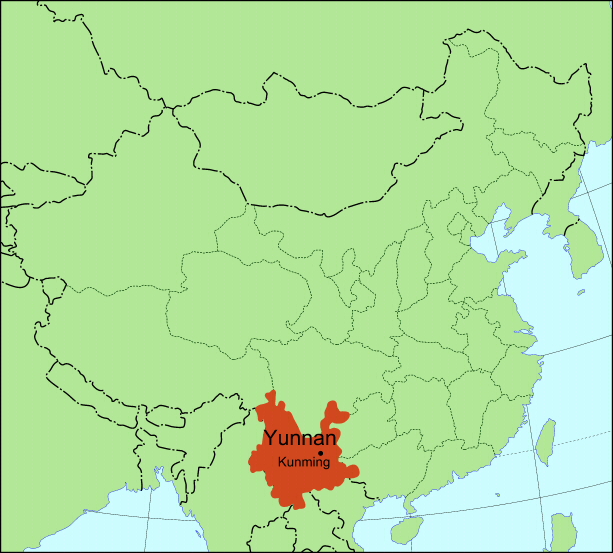
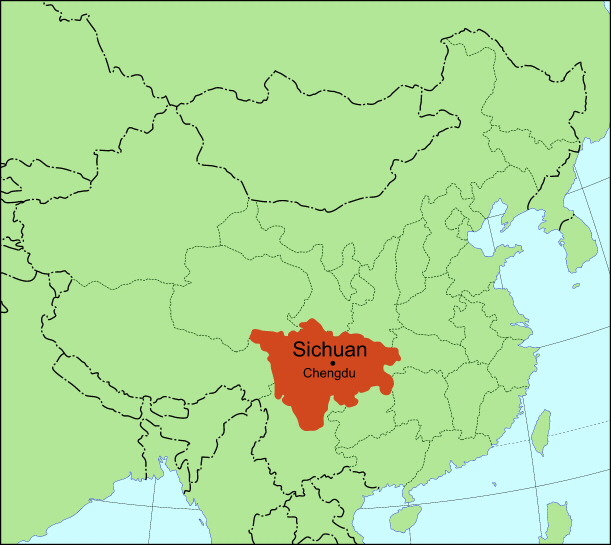
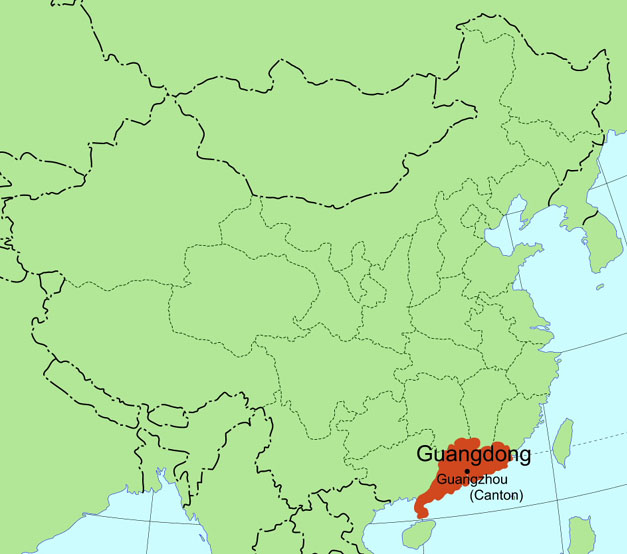
Linguistic multifariousness is only one of the more obvious features of “the Chinese mosaic.” The same may be said of almost any other aspect of Chinese culture and society. Perhaps the most obvious symbol of Chineseness in the larger world is cuisine. Yet it is impossible to point to any particular type of fare that stands for Chinese cooking in general. Hot pots have a Mongolic ancestry, pasta products are derived from Central and Southwest Asia, tea is ultimately from the hills of the Assam-Burma-Yunnan “Golden Triangle,” and so forth. Milk products are anathema to most lactose-intolerant denizens of the Central Kingdom, yet they are a staple of the people living along its northern reaches. The more sophisticated American aficionado of Chinese cooking knows very well the difference between Szechwanese and Cantonese cooking, staying clear of the former if he or she does not like spicy hot food and avoiding the latter if his or her palate is not attracted to gelatinous, gooey comestibles.

When we watch a Chinese film and see the heroine encased in a tight sheath slit to the thigh, she is basically sporting an item of Manchu dress. Some Chinese (those who wanted to ride horses) began to wear trousers in the latter part of the fourth century B.C.E., but only because they wanted to ward off the steppe peoples who introduced the domesticated horse (and the trousers) to their land, with devastating consequences. In premodern times, it would not have been difficult to recognize the ethnicity of a citizen of the Chinese empire by his or his costume.

As for Chinese empires, there was not one of them, but a long series of dynasties, more often than not erected on the ashes of their predecessors. Also more often than not, those who established new dynasties were–a supreme incongruity–groups from the north and northwest who either were themselves “barbarians” dreaded for their awesome military prowess or who had exceptionally close affinities with them. Numerous recent archeological discoveries have led to a salutary reconsideration of the nature of the millennial interactions between the inhabitants of the East Asian Heartland (EAH) and their septentrional neighbors. As a result, it is no longer possible to think of the latter only as “traders or raiders.” Instead, what we are finding is that–already at least from the late Neolithic period and continuing right through to the twentieth century–the northern peoples were involved not only in state formation, but also in the importation of vital cultural elements such as bronze metallurgy and the chariot. Consequently, in this Reader we place far greater emphasis than is usual upon the northern peoples, for we believe that, unless one takes them duly into account, one’s comprehension of Chinese history and appreciation of Chinese culture are bound to be flawed.

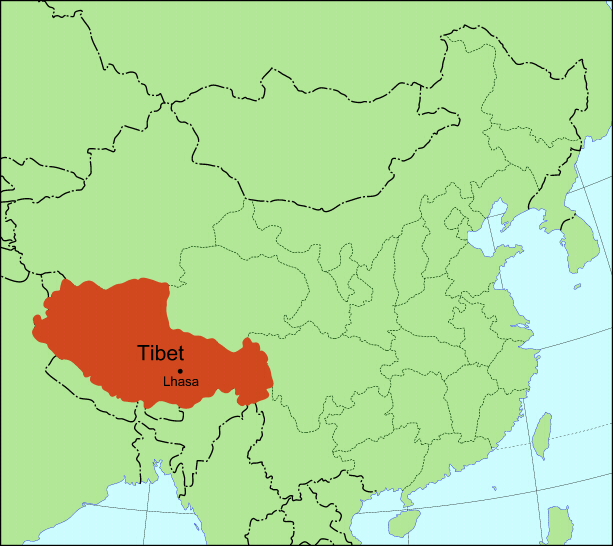
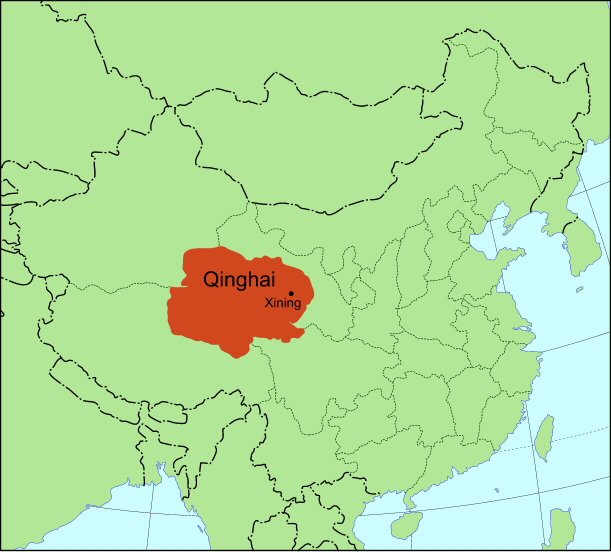
The intricacy of Chinese involvement with wide-ranging steppe peoples can be demonstrated by the derivation of Gesar … from Caesar. How, why, and when this originally Etruscan title of the Roman emperors came to be applied by the bards of a Central Asia nomadic confederation to their greatest hero is an intriguing story. What is not in doubt is that the Tibetans contested with the Chinese for hegemony during the Tang period (618-907). Indeed, the Tibetans not only occupied the strategically crucial Gansu Corridor for a century, but even invested the capital, Chang’an [= Xian, see map], for a while during the year 763 in western China and were dislodged only when the Tang authorities pleaded with the Uyghurs … to drive them off. Thus, a dynasty that was initially founded by individuals in whose veins ran nomadic blood and who maintained intimate ties with their northern ancestors found temporary salvation from destruction at the hands of northwestern nomads by a confederation of Turkic tribes (whom the Tang actually detested)–a typical series of events that recurred over and over again during the more than three thousand years of known Chinese history. We should remember, moreover, that the Tang dynasty represents the acme of cultural cosmopolitanism in East Asia. It should further be noted that the location of the Tibetans was by no means restricted solely to that of their current nation, which is occupied by Chinese troops. During the medieval period, they were also identified with the border areas to the northwest of the East Asian Heartland, and still today there are large concentrations of Tibetans in the provinces of Gansu and Qinghai.

Just as due consideration of the non-Sinitic peoples of the north and northwest is essential for any adequate study of the development of Chinese civilization, the same may be said for the non-Sinitic inhabitants of the south. Chinese culture (including Sinitic languages) marched southward slowly during the latter part of the first millennium B.C.E., gained momentum during the first millennium C.E., and was far from reaching its culmination even by the end of the twentieth century. The large and small pockets of non-Sinitic speakers that pepper all of the provinces south of the Yangtze River attest to the ongoing presence of peoples from radically different traditions within the territory of the modern Chinese state. The fusion of Chinese culture with the indigenous populations has led to a distinctive mix of regional cultures and ethniticities that is conspicuous in customs, languages, surnames, and physical types.

Leave a comment

Filed under China

Traditional China: Multilingual

A new reader in traditional Chinese culture is in the works that places long-overdue emphasis on just what a complex, multilingual, multiethnic, and multireligious place it always has been and will continue to be. Here’s an excerpt about China’s multilingualism from the introduction by the indefatigable Victor H. Mair:

For many students, this book will be part of their first systematic exposure to learning about China. As such, we wanted to make it as comprehensive as possible within the limits naturally imposed by the amount of material that can reasonably be absorbed within a single semester. One of our main goals has been to help the student realize that China is not a monolithic state with a monotonous culture and a static past. The myth of a thoroughly homogeneous, ultrastable empire, although widespread and persistent, is far from true. China never existed as a “nation of uniformity.” To the contrary, we are faced with a multifaceted country that possesses an extremely complicated history and a richly varied mix of regional and ethnic traditions.

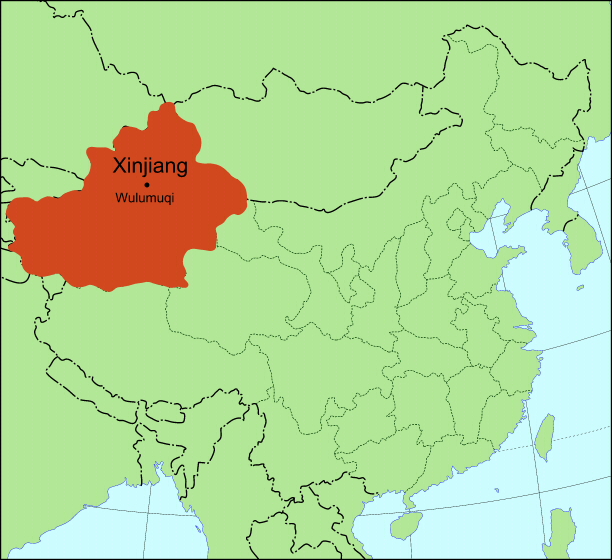
Take language, for example. When one thinks of what defines “China,” perhaps the first thing that comes to mind is that it is a place where the people all speak “Chinese.” But what is this “Chinese” that everyone is supposedly speaking to each other? Unfortunately, China does not today possess, nor has it ever in the past possessed, such a universally understood tongue. For starters, we have to take into account the tens of millions of speakers of non-Sinitic languages who make up a significant proportion of the population of the Chinese nation as it is currently configured…. These languages belong to such disparate groups and families as Tibeto-Burman, Austroasiatic, Austronesian, Turkic, Tungusic, Iranian, and Slavic. These are the “minorities” of the Peoples Republic of China, all of whom have roots that lie deep in the past of East Asia, West Asia, Central Asia, Southeast Asia, and Northeast Asia.

And then there is the so-called majority group who, it is claimed, speak a language called “Hanyu” or “Chinese.”…

However we ultimately choose to define it, Hanyu is related in some fashion (not yet well understood by scholars) to Tibeto-Burman. Since the combined family is customarily styled Sino-Tibetan, we may–for the sake of linguistic precision–refer to Hanyu as “Sinitic” in English. Sinitic is often said to have eight (or more) major fangyan (‘topolects’ …). Among these fangyan are “Northern” (i.e., Mandarin in the broadest of terms; it actually stretches to the far southwest), Wu (typified by Suzhou and Shanghai), Xiang (Hunanese), Gan (spoken in Jiangxi), Hakka (the language of those displaced “guests” from the north who have played a particularly important role in modern Chinese history), Northern Min, Southern Min (including Amoy and Taiwanese), and Cantonese. If analyzed by the standards applied to languages in Europe or South Asia, these fangyan would be classified as branches of the Sinitic group.

Speakers from any one of the major fangyan are incapable of conversing with speakers from those of any of the other major fangyan. Even within the major fangyan or branches of Sinitic, there are numerous more or less unintelligible varieties of speech. What is more, it is essential to note that, throughout history, the fangyan have never been written down in their unalloyed form, except latterly by missionaries using alphabets. Traditionally, there have been only two acceptable forms of writing in China: Literary Sinitic (wenyan or Classical Chinese), strictly a book language …, and Vernacular Sinitic (baihua[wen]), a written manifestation of Mandarin that developed–largely under the influence of Buddhism–out of a presumed Tang-period koiné. Despite their lack of a written form, the fangyan are still vibrant. As clear indications of the continuing vitality of fangyan, Taiwanese is now the preferred mode of expression on Formosa, and the Chinese government on the mainland is constantly threatening to cashier officials and teachers who fail to learn Mandarin.

As an aside, let me note that during the graduation ceremony at Sun Wen [= Sun Yat-sen] College (now affiliated with Sun Yat-sen University [= Zhongshan University]) I witnessed in 1988, all of the administrators and teachers spoke in Mandarin, while the mayor and other local politicians spoke in Cantonese (Sun Wen = Sun Yat-sen = Sun Zhongshan).

Sinitic evolved through a complex process of interaction with the non-Sinitic languages mentioned above, borrowing (and lending) not only words, but also structures and phonemes. The internal development of Sinitic is equally intricate, such that historical linguists are still seriously puzzled over the relationships among the various fangyan, the phonology of their earlier stages, and the identification of the fundamental etyma for the group en masse.

UPDATE: Language hat adds, “Incidentally, anyone who wants a more detailed look at the linguistic situation should get hold of S. Robert Ramsey’s The Languages of China (reviewed here).” I second that endorsement. Ramsey’s book (Princeton U. Press, 1987) gives a lot of attention to the minority languages. Language hat‘s entry has also attracted a nice range of comments. See also the follow-up entry above, The “Cultural Glue” of Chinese Writing.

Leave a comment

Filed under China

Morobe Field Diary, May 1976: Sociolinguistic Notes, Kui Church Meeting

The meeting started out mostly in Tok Pisin and was conducted in parliamentary procedure of a most genuine and impressive kind. No holds barred discussions took place, which the two secretaries (called cuscus after a local animal [phalanger, opossum]) duly recorded in Tok Pisin. But as the meeting wore on, Yabem became more prominent perhaps because the older people are more comfortable in it and they did most of the talking. My presence did not seem to hinder the discussions in the least. Younger men would listen to Yabem and reply in Tok Pisin. The Sunday service was conducted similarly: Hymns & prayers in Yabem were followed by a sermon and scripture reading from the Nupela Testamen. There followed an ordination ceremony in Yabem. Ceremony tends to be Yabem because a prayer book or whatever it’s called has been translated into Yabem. Still, Tok Pisin seems to be slowly taking over from Yabem.

An Australian Lutheran missionary came on the afternoon of the Saturday meeting and I got to see the small singsing cooked up for him. The ship was met at the dock and after unloading the passengers headed off for the meeting ground. They were soon accosted by a guy with a padded out stomach and a construction helmet who looked as severe as possible and asked where they thot they were going. They gave some reply and he turned to the coconut frond fence they had erected for the occasion and called out his troops: about half a dozen men and an equal number of women adorned variously with grass skirts, body paint (ochre legs, black & white-face) and some towels the women carried as they danced. The men blew conch shells and beat a drum while they chanted and made threatening motions–one with a tomahawk–and threw coconut frond ribs at the visitors & crowd.

I tagged along with the spectators, who explained to me the setup beforehand and told of cases where some kids had been scared by the display into crying. They, however, were well aware it was all by way of giaman (roughly ‘deception’) and were as touristy as I was about it all.

The dancers were singing a Siboma singsing which the Sibomas asserted they had done rather poorly. People are familiar with singsings from a variety of places and like the local string band numbers as well as Western music and singsing music. Unlike Micronesia, which seems to lean toward Western stuff as far as I can tell. Well, maybe Yap just didn’t have a lot of intermediary music olsem stringband stuff here.

The boat carrying the missionary and 2 dozen others came into the dock head on and nearly knocked down the newly repaired thing altogether. It is an old leaky boat unlike the sound, sturdy little [M.V.] Sago which the Sibomas commissioned and had built recently.

It wasn’t till after the service Sunday that I talked with the missionary tho I saw him off and on from a distance. In Micronesia whites living in the village tend to be mistaken for Piskor; here they are taken to be SIL Bible translators. Both perform a similar function in fostering democratization and racial equality. [Several people mentioned that the missionaries, unlike the Australian administrators, would eat from the same food.] Melanesians are rather capitalist & democratic but racial equality needs considerable more work.

The ‘informant’ situation couldn’t be better. The kaunsil puts me to work. People never leave me alone when I’m working; they all come around eager to help and I’ve so far spent too much time getting & putting on paper & not enough assimilating and organizing. I’ve really got to work out a felicitous medium ground arrangement without alienating people. For only a week & a day here I feel like I’ve made phenomenal progress. The trip to Kui allowed me to stop assimilating onto paper and start communicating in it more.

Today I did my big book of seashells, with interesting results. Dictionary work is more fun than grammatical when your informants are not top grade. Together they make a good combination. And being put to work rounds things out nicely. Being able to relax by myself is all I need more of. And I think I’m slowly working that out.

The kaunsil & family are really top grade teachers (he was a schoolteacher for a while–a long while–and has ‘bossed’ (taken care of, taken responsibility for) a number of whites). [His lead dog was raised by whites and knew how to sekan (‘shake hands’)–and to eat ship biscuits.]

Leave a comment

Filed under Papua New Guinea

The Arabophile Holy Roman Emperor Enters Jerusalem, 1229

Frederick II was one of the most energetic medieval monarchs, and he remains one of the best remembered. His ambitions operated powerfully in the intellectual and cultural spheres as well as in the political, where he spent a lifetime carving out and defending his combined German, Norman, and Sicilian claims, most often against the papacy….

The man who had been crowned Holy Roman Emperor …, in 1220, spoke and read Arabic, and he was so familiar with both the philosophical and the religious traditions of the Muslims that he had astonished and perplexed witnesses of his 1229 entry into Jerusalem. In that year the excommunicated Frederick, who was militantly at odds with the pope, had entered the Holy City. Sovereignty over Jerusalem had been contested, violently, ever since Christians arrived with the First Crusade, more than a century before, and Frederick was there to establish his own complex claims and to be crowned king, which he managed to do, even while excommunicated, in the Church of the Holy Sepulcher. He seemed to the local Muslims a rather different species of Christian from the Franks who preceded him, and dozens of anecdotes were later recounted about this leader of a Crusader army whose first deed in the city was to restore the public call to prayer that had been suppressed by previous Christian sovereigns: “When the time came for the midday prayer and the muezzin’s cry rang out, all his [Frederick’s] pages and valets rose, as well as his tutor, a Sicilian with whom he was reading Aristotle’s Logic in all its chapters, and they offered the canonic prayer, for they were all Muslims…. It was clear from what he said that he was a materialist and that his Christianity was simply a game to him.”

SOURCE: The Ornament of the World: How Muslims, Jews, and Christians Created a Culture of Tolerance in Medieval Spain (Back Bay Books, 2002), by María Rosa Menocal, who dedicates her book “for un hombre sincero de donde crece la palma, my father, the intrepid Enrique Menocal, who has lived in lifelong exile from his own land of the palm trees”

Leave a comment

Filed under Spain

Hazel Smith: A view from inside North Korea

Let me recommend a new blog, NKzone, which aims to get a better sense for what is going on inside North Korea, largely from unofficial channels. For example, one of the earliest is an interview with Hazel Smith, who has spent a lot of time in North Korea since 1990 with the World Food Program and other agencies. Here’s a sample of what she has to say:

Up to a million people died of hunger in the 1990s – but probably up to 21 million survived – one question is how did they do that and how do they continue to do that when the government cannot deliver on basic needs (enough food all the year round, decent water and sanitation supplies, medicine and medical equipment).

At first what happed is that individuals and local communities – including local workplaces, farms, counties even – were left with the problem of how to feed starving people when the government centrally could not. The local officials were forced to respond to the people they represent – certainly not in a democratic manner but because they live in the same places and may often be part of close knit kinship networks – in an accountable manner. Those living near the China border had some options – selling lumber across the border for a start. Those with access to foreigners tried to obtain hard currency. But most were forced into petty trade domestically. And because the party officials (remember this is a mass party not a vanguard small party) were often as badly in need of food and basic goods and anyone else, they actively connived with local entrepreneurs to get around the rules so as to obtain food by any means possible.

The government tried to stop this, vacillated, then realized it couldn’t stop this. Then in the end – about the beginning of the 2000s – accepted this transformation in the way people lived their economic lives as a fact of life. From then they decided to try to direct the process of socio-economic change (while not permitting much political; change) – rather than be directed by it.

By this time also local party – and security officials – had become transformed into the new core class of petty traders (not all of them but significant numbers). They were the ones best placed – contacts, access to transport, knowing how to get round the rules – and with the most motivation. As desk workers they mostly didn’t grow much of their own food and their income in the local won was virtually literally worthless.

The visible change is the enormous increase in personal mobility throughout the country. In Pyongyang in the early 1990s there were just government vehicles on the streets and no bicycles. Not many people walking about either as the underground and buses more or less functioned. In the countryside virtually no vehicles and not much in the way of mass pedestrian movement.

Now if you can afford transport or if you can make it (lots of home made vehicles – it’s a miracle they can move never mind transport anything) and lots of bicycles.

In addition people walk everywhere – there is hardly any working public transport outside Pyongyang – so people walk between counties – to go and get food from relatives, to take children to stay with relatives so they can get fed, to take food to relatives, etc.

The difference is because now they are allowed to move – it is also a sign of the crumbling effectiveness of the security apparatus (in some parts of the country) and the different priorities these days. Nowadays it is seen as a duty to engage in private trading – and sensible – because people need to survive and the state no longer provides enough to survive on.

Leave a comment

Filed under China, Korea

Morobe Field Diary, May 1976 Trip to Kui

The [M.V.] Sago pulled 4 canoes to Kui, 2-1/2 coves away toward Lae just inland from Lasanga Island. The ride took about an hour and cost the kaunsil, his wife & canoe & me 70 toea [100 toea = 1 kina]. The occasion was a meeting of the Malalo Paris of the Lutheran church here.

The first time I saw Kui was in the middle of the nite and I could only see a few houses, a broken down wharf and a lamp or two. This time it looked quite splendid indeed. It stretches along a cove twice as wide as Siboma’s and deep-watery and waitsan-dy [Tok Pisin waitsan ‘sand’] with a large school ground in the middle. There are really three subvillages: the main one Kela who came to Kui to go to church from Buso. Apparently Siboma had the only church but it was a bit of a long way so they split the difference and started a settlement and later a school at Kui. The school is Standard 1-6 and serves Paiawa, Siboma & Buso and of course Kui. The kaunsil has 2 sons and 2 daughters there.

The trip back was exactly what I hoped for and dreaded. We paddled, the kaunsil, his wife & me. When we set out at 8:00 (so the school kids could help us pull the canoe down to the water) I envisioned an all day affair with possibly a siesta midway and a hot sun (aye, that it was). And I only had my lotion, not my sunscreen. But my hat protected my face, a towel covered my knees and my feet were in the canoe so only my arms got really cooked. Oh, it felt good tho to paddle like a machine. I conked out when I got back but am none the worse for wear and am on my way toward getting some useful callouses on my hands. They had to force me to rest sometimes but we did the trip in 2 hours with two rest periods when I wasn’t pulling so my arms are cooked but not blistered.

The water was clear down deep and the coral formations beat the Honolulu Glass Bottom Boat ride. Very small bright blue fish abound here, lots of others come and go. We wrestled with a [large] clam a bit on the way but let it go. The kaunsil had his shotgun ready but the birds seemed to be on to him, so no bird meat.

Leave a comment

Filed under Papua New Guinea

Morobe Field Diary, April 1976

The boat ride to Siboma [in Morobe Province, Papua New Guinea] took 10 hours [from Lae]. Darkness came about Salamaua. Shortly after leaving we could see Lasanga Island that lies off Siboma a ways. There was a half moon and all nite the coast was visible. During the day villages were marked by smoke, at nite by lites. The lite of a single lamp can be seen a long way off. And on the boat you could barely hear the person next to you for the sound of the [Yanmar two-cylinder diesel] engine. When the engine stopped everything sounded a bit faraway well into the next morning.

We got in in the middle of the nite and not a lite was shining. I left most of my stuff aboard and went straight off to the kaunsil’s house to sleep. He has a couple of rooms facing the sea. He took off to go hunting for pig soon after we got in so I stayed around the next day so I would be here when he got back.

About the time I got up the boat was leaving for the fishing grounds pulling about a dozen outrigger canoes all lined up behind. It puttputted out and got back about dark pulling the canoes back in. Mostly women and children were left behind along with some old men who kindly taught me stuff.

Siboma lies in a cove with mountains surrounding it. There is a narrow stretch of sand with about 3 dozen houses strung out along [it]. The timber company that bought their timber cleared land for a new village on the other side of the cove but only one incomplete house is there now.

There is a pleasant little stream, nice and chilly, to wash in a little ways out of the village. The women’s W.C. stands near my end of the village and the men’s all the way (100 yds?) at the other end.

Plenty of dogs and chickens abound but no cats and, strangest of all, no pigs. The past kaunsil said to get rid of the ones in the village for sanitary reasons. Though they may keep some down the coast a bit they mostly have to get them in town or hunt for wailpik like the kaunsil does with his shotgun the size of Dan’l Boone’s long rifle.

There really are no mosquitoes, it’s amazing; and the compensating sandflies don’t bother me as much as they seemed to bother [the fieldworker who arranged my stay].

Yesterday, my second full day in the village I had a mild case of diarrhea that affected my appetite and worried my hosts a bit. But this morning I made up for it some by polishing off a whole fish and a huge plate of rice.

There is one crazy (‘longlong’) man here who wanders around covered by a blanket and one mute I share a room with. Neither does anything all day but each is apparently provided for. Some of the women are from other places but they have learned [the village language].

Today the kaunsil called everyone together and apportioned the work: who’s to fish, who’s to cut sago, who’s to split it, who’s to wash it, etc. The sun has withered many of the gardens so people are turning to sago, which is hard work, for their starch. It’s good I came equipped with 25 kilos of rice. There are no gardens near the village [not entirely true, as I later found], only some stands of sago and coconut. The women all have to take outriggers to work in their gardens [on the hillsides above the cove].

None of the smaller outriggers are equipped with sails but they are a joy to paddle. There are about three big canoes with masts and a couple more in the making. [In July, I counted 28 canoes in Siboma’s cove.]

Leave a comment

Filed under Papua New Guinea

The Founding of Manila and the Origin of Global Trade, 1571

In 1995, historians Dennis O. Flynn and Arturo Giráldez published a seminal article in the Journal of World History entitled “Born with a ‘Silver Spoon’: The Origin of World Trade in 1571.”

Global trade emerged with the founding of Manila in 1571, at which time all important populated continents began to exchange products continuously. The silver market was key to this process. China became the dominant buyer because both its fiscal and monetary systems had converted to a silver standard; the value of silver in China surged to double its worth in the rest of the world. Microeconomic analysis leads to startling conclusions. Both Tokugawa Japan and the Spanish empire were financed by mining profits–profits that would not have existed in the absence of end-customer China. Europeans were physically present in early modern Asia, but the economic impact of China on Western lands was far greater than any European influence on Asia.

SOURCE: Journal of World History 6 (1995): 201-221

2 Comments

Filed under China