Category Archives: travel

Impressions of Eastern Indonesia, 1991 and 2001

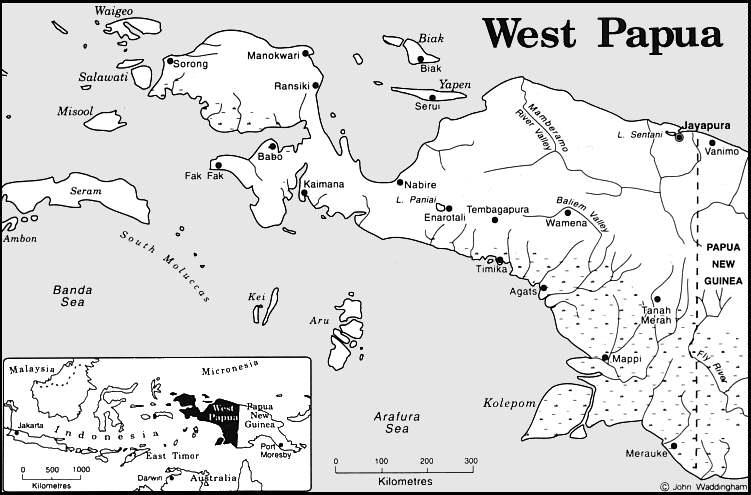
In 1991, I accompanied a Fulbright group research tour to Eastern Indonesia. Our Garuda flight from Honolulu landed first in Biak, West Papua (formerly Irian Jaya), our port of entry into Indonesia. It seemed like many other places in Melanesia, except that Indonesian, not an English- or French-based pidgin, was the national language.

By the time we landed in Ujung Pandang (Makassar) on Sulawesi (Celebes), we were clearly out of Oceania, with its sea breezes, root and tree crops, and easygoing lifestyle, and into Southeast Asia, with its monsoons, endless rice paddies, and hustle-bustle. Ujung Pandang was as far west as we got. We avoided the well-trodden tourist routes of Bali and Java, concentrating instead on booming, Southeast Asian, largely Muslim Sulawesi, and the faded glory of Oceanic, largely Christian Maluku (the Moluccas), the Spice Islands.

We were parceled out to host families at IKIP Ujung Pandang, the local teacher’s college. My host was a professor who had been trained at Manado, perhaps the top teacher-training college on Sulawesi, located in a mixed Christian-Muslim city on the tip of the far northern peninsula near the Philippines. The family was Muslim, very genteel, prosperous, and cosmopolitan. Voices were never raised in that household, at least not during my stay. They had relatives from the countryside living with them and helping with the housework. Neither my host mother nor her very demure and attractive college-age daughter wore head scarves, although the mother affected considerable shock one evening at an immodestly dressed female performer we saw on TV. (Nothing approaching current MTV standards, of course.) I jokingly offered to send her some black lipstick so she could keep up with the latest styles. My generous hosts were also kind enough to take me for an overnight trip to their rustic bungalow in Rappang, where they owned rice fields. The only intrusion of international tensions occurred when the son and daughter were showing me around their campus, Universitas Hasanuddin, where a few students at some distance away started chanting “Saddam, Saddam” when they saw foreign visitors. My hosts quickly moved us on.

Our group next took a scenic bus ride over sometimes dangerous mountain roads up to Rantepao, in Tana Toraja, where the heavily anthropologized highlanders were mostly Christian. The local governor had an American anthropology degree and showed us pictures of the Toraja float that had appeared in a recent Rose Bowl parade. The Toraja are famous for their huge, boat-shaped rice barns and their famously elaborate and gory funeral celebrations, featuring animal sacrifices and often a sizable contingent of foreign funeral tourists. I was one of those who preferred instead to spend a quiet day walking the cool mountain paths between rice fields, through hamlets where the sound of dogs and the smell of pigs served as reminders that we were in Christian territory.

Our next destination was the old Dutch colonial outpost of Ambon (Amboina), Maluku (Moluccas). Again we were parceled out to host families, this time near Universitas Pattimura, where the faculty was mostly Christian. My hostess was a dietician who lived in the Rumah Tiga neighborhood off campus and who cooked meals rather more Dutch than Indonesian. She was Christian and was not amused when I once greeted her with a “Salaam Aleykum.” From Ambon we visited a Christian village far up in the mountains, where we sampled coconut toddy; visited a very rustic resort near a Muslim village on the far side of the island, where baskets of drying sardines and cloves lay outside nearly every house; and made a side trip to an old Portuguese fort on the north side of the island, from where we could gaze across the straits at the huge island of Seram in the distance.

Our last major excursion was to the old sultanates of Ternate and Tidore and their formerly heathen, and now Christian hinterland on Halmahera. Our bus misaligned its rear axle early on, and spent a long time in the middle of nowhere driving over large rocks trying to knock it back into alignment, while we passengers waited beside the road. Finally, the drivers gave up and drove carefully to the next town large enough to have a repair shop, all the while steering against the sideways drift of the back wheels. After repairs, we finally reached Galela at the northern tip of Halmahera. There we spent a day at a small village of only recently converted (Christian) highlanders who had just moved down from the mountains. We enjoyed their betelnut and their outdoor cooking, with rice steamed in green bamboo roasted over open fires. Much to our collective relief, we took an airplane back to Ambon.

Indonesia is the most populous Muslim country in the world, and each year sends more pilgrims to Mecca than any other country but Iran, or so they said at the time. But the country is really many nations in one, and the government at that time saw religious intolerance as a threat to unity. I came away impressed with the modernizing influence of Islam in Indonesia, its tradition of learning, egalitarianism, enterprise, and openness to the outside world. But foremost in my mind are memories of warm hospitality, hot weather, wonderful food, boring lectures, vehement discussions, time to think, grueling bus trips, the joy of language-learning, and the sunrise and sunset calls to prayer.

By 2001, Ambon had turned into another Beirut, and the whole area had become another Lebanon.

Pattimura University and the neighborhoods that hosted us in Ambon, Maluku, were all burnt to the ground. My hostess may well have been killed. The whole island has now been carved up into armed enclaves.

The root causes in Ambon may include local Muslim resentment of local Christian dominance, coupled with local Christian fear of being overwhelmed by the huge Muslim majority of Indonesia as a whole. The factors that ignited and fueled that unrestrained outbreak of violence include the Asian economic crisis that hit in 1997; the subsequent collapse of the discredited Suharto regime and its authoritarian commitment to a unified secular state; the brutal, corrupt, and demoralized Indonesian military, which has done little to control the violence and much to worsen it, especially by allowing the influx of thousands of well-armed mujahidin (including foreigners) from the training camps of the Laskar Jihad paramilitary in Java. It is hard to imagine how to address any root causes until these thugs and local militias are disarmed and either detained or deported by some credible peacekeeping force. The Javanese-dominated Indonesian military has unfortunately not been such a force. The sectarian and ethnic violence is beginning to subside in Ambon, as it finally did in East Timor (only after foreign intervention), but it continues to escalate in West Papua, where many of the thuggish militias have reconstituted themselves after leaving Maluku.

In future blogposts, I plan to examine in more detail some of these events and their historical contexts.

1 Comment

Filed under Indonesia, religion, travel

A Language Freak Wandering in Siberia

If you feel the need to follow an ever farther outlier, check out this blog by pf, a language freak wandering through Siberia on his own.

Oddly, Russia is the only country I’ve been in where you can’t find manaiacal Australian tourists scurrying out wherever you step. In Europe, you can’t find a town so small but it’s got an Australian (or, if you’ll pardon the expression, a New Zealander) in it, or having just left it, or on the way to it. Here, though, I haven’t met a single antipodean, curiously. Though a couple Indian billionaires in April stayed in the hotel I stayed at in Suntar. I was called upon to verify their English, which I pronounced to be competent, but clearly not that of a native speaker. All marvelled at my deductive powers, for indeed, the Indians had been born in India, and not, as appearances might lead to believe, in any other country.

Americans do occur up here, though. There’s one, I don’t know if I mentioned him, who lived on Kamchatka for a year in high school, and now is studying Japanese (Japanese!) at Yakut State U. (Yakut State!) for a year. There was another who came to a village near Suntar, I wasn’t clear on which, and stayed for two years, or maybe three, hung around the local museum a lot, and then went home, where she turned into a doctor of anthropology. Everybody still remembers her, and, shaking their heads, say, “We’ve lived with this museum all our lives, and she comes here, looks at it for a couple years, writes some stuff down, and gets a doctorate!” She married a local, and took him home with her, where he now makes Sakha (Yakut) jewelry in North Carolina. I’m sure you can track him down, there’s probably not many Sakha (Yakut) jewellers in North Carolina. He’s got his own wall, with pictures of him, and a special cabinet for pictures of his brothers, local jewellers, and a picture of his father, touchingly hung next to a photocopy of his death certificate.

Hat tip: languagehat

Leave a comment

Filed under language, Russia, travel

Iceland Travelogue

Perhaps since first reading Jules Verne’s Journey to the Center of the Earth as a kid, I’ve always wanted to pay an extended visit to Iceland. (I have no desire to journey to the center of the earth. I’m too claustrophobic.) Here‘s a chance to enjoy a vicarious trip to Iceland, courtesy of Danny Yee, whose “ramblings of a pathologically eclectic generalist” are guaranteed to hold something of interest for anyone who still has a grain of curiosity about the wider world.

Leave a comment

Filed under travel