Category Archives: sumo

Zabutons Fly as Asashoryu Streak Ends at 35

Zabutons sailed toward the dohyo after the #1 maegashira Hokutoriki earned a gold star and ended the 35-bout winning streak of Mongolian yokozuna Asashoryu. The other Mongolians are not doing so well this tournament, but the up-and-coming Georgian Kokkai now stands at 5-1, no worse than the yokozuna at this point in the Natsu Basho. As always, more and better detail can be found at That’s News To Me.

(Hey, purists: It took me a while to get used to attaching the English plural to words like zabuton, zori, and musubi, but those nouns–and many more–have long since been borrowed into the English spoken in Hawai‘i.)

Leave a comment

Filed under Hawai'i, sumo

Asashoryu Wins 33 in a Row

The sumo Natsu Basho is underway, and Mongolian yokozuna

Asashoryu (3-0) marked 33 straight wins Tuesday, extending the record he set earlier this week when he surpassed the 10-year mark of 30 consecutive victories by yokozuna Takanohana. Asashoryu is the overwhelming favorite to win the summer tournament.

If he wins all 15 bouts in the current tournament, he’ll break a record set in 1949.

Only three wrestlers have had better streaks, with the best, 69, by Futabayama in 1939.

Leave a comment

Filed under sumo

Women’s World Chess Championship Moves to Tibetan Buddhist Outpost in Europe

The Argus has a whole series of interesting posts about the conflicts between the newly renovated democratic Republic of Georgia and its separatist movement in Ajaria. Living With Caucasians is on the case, too. Among the drastic bits of fallout is this:

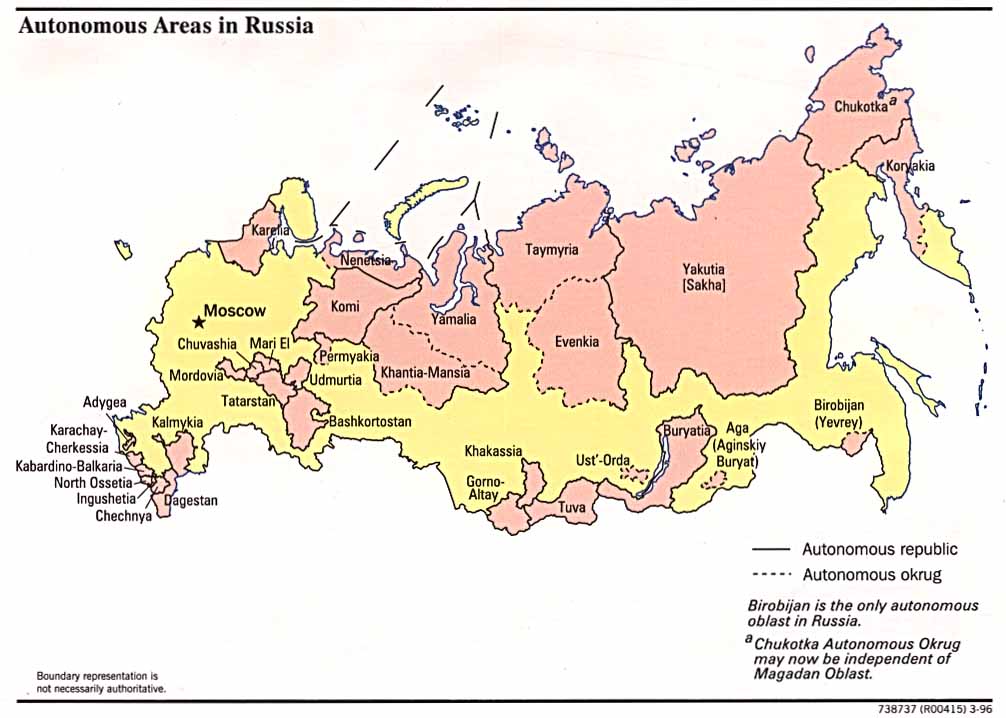
The Women’s World Championship has moved from Batumi [in Ajaria] to Elista. ‘Where the hell is Elista?’ you ask. Kalmykia, Tibetan Buddhism’s outpost in Europe (when it was independent, it was the only Buddhist kingdom in Europe). On this map, it’s south of Moscow and just above Dagestan.

To see where the Kalmyk-Oirat fit into the Greater Turanian States and Territories, visit the Ottawa Hungarian Folkdance Chamber Group, which seeks to restore Hungarians to their rightful place as masters of Eurasia.

See also Kalmykia and Buddhism in Russia.

UPDATE: On a more serious (but joyful) note, the U.S. and Russia seemed to have cooperated to help the citizens of Georgia and Ajaria liberate themselves from the now-exiled thug, Aslan Abashidze. The Argus offers a detailed chronology. I hope the Georgian sumo wrestler Kokkai (‘Black Sea’) is pumped up enough to make a spectacularly successful showing in this month’s sumo tourney.

UPDATE: In the comments, PF cites some evidence that the millionaire chess-enthusiast Kirsan Ilyumzhinov, President of Kalmykia, might deserve a good dose of thug-repellant as well. At the very least, he seems to suffer from a serious cult-of-personality disorder.

Leave a comment

Filed under sumo

Sumo Results: Haru Basho, 2004

Mongolian Yokozuna Asashoryu [‘morning green dragon’] clinched his second perfect 15-0 record in a row, while his countryman and Takasago stablemate Asasekiryu [‘morning red dragon’] ended up in a 3-way tie for 2nd place with the two Ozeki, Kaio and Chiyotaikai. For further commentary, see Tom’s post at That’s News to Me. Here’s a sample:

Finally, the yusho match. At the tachiai (start of the bout, or, perhaps better, “face-off”), Chiyotaikai started out with a furious tsuppari (slapping/arm thrusts to the upper body & face), driving Asashoryu back. Chiyo apparently thought he was on the verge of driving Asa back out of the dohyo (ring), or perhaps he merely thought tsuppari was his best/only chance of beating Asa, as he seemed to overcommit himself to that. Asa got in control of himself, side-stepped Chiyo’s thrusts, and pushed him down to the dirt to claim his second consecutive zensho yusho [all-win tournament-win], the first time that’s been down since Takanohana in 1994 (I think I already mentioned that, but it was in the preview, I think). Prior to Takanohana was Chiyonofuji (Chiyotaikai’s stable head, FYI) in 1985. I believe the record for most consecutive bouts won is up in the 69 by Futabayama in 1936 and in the post-war era, 53 by Chiyonofuji (assuming this is accurate). Standing at 30 right now, Asa has a long way to go, but we shall see….

UPDATE: The champions list for all divisions is here. In addition to Asa the Mongolian winning the top division, Mongolian Hakuho wins juryo, the second-highest dvision, Bulgarian Kotooshu wins makushita, the third-highest division, and Minaminoshima (lit. “southern island) from Tonga wins sandanme, the fourth-highest division. Unsurprisingly, Asasekiryu took the Shukun-sho (Outstanding Performace Award) and the not-always-awarded Gino-sho (Technique Prize). All in all, not a bad basho for the gaikokujin [foreigners].

Hungarian szumo fans can check for detailed results at this page. And Japanese sports trivia fans can amuse themselves with this quiz, where we learn that the rank “yokozuna” did not appear on the banzuke until 1890, even though certain wrestlers were licensed to wear the yokozuna (‘cross-rope’) belt and perform the solo ring-entering ceremony now performed by those of yokozuna (‘grand champion’) rank for a hundred years before that. The “yokozuna” ceremony was invented by referee and promoter Yoshida Zenzaemon in order to make sumo worthy of performance before the Shogun Tokugawa Ienari in 1791, and the “yokozuna” rank was not recognized by the Sumo Association until 1909.

SOURCE: “The Invention of the Yokozuna and the Championship System, or, Futahaguro’s Revenge,” by Lee A. Thompson, in Mirror of Modernity: Invented Traditions of Modern Japan, ed. by Stephen Vlastos (U. of California Press, 1998), pp. 174-187

Leave a comment

Filed under sumo

Four share lead at Spring Basho

OSAKA (AP) Grand champion Asashoryu defeated Kakizoe on Wednesday to remain unbeaten and tied for the lead with familiar company at the Spring Grand Sumo Tournament….

Asashoryu, who won the New Year tourney with a perfect 15-0 record, is tied for the lead with Chiyotaikai, Kaio and compatriot Asasekiryu.

UPDATE: After Day 12, “Asashoryu, who won the New Year tourney with a perfect 15-0 record, is tied for the lead with Chiyotaikai and Asasekiryu. On Wednesday, Asasekiryu, Kaio, Chiyotaikai and Asashoryu all won marking the first time in sumo history that four wrestlers were chasing the title with perfect records on the 11th day.” The blog That’s News to Me has more.

Leave a comment

Filed under sumo

Asashoryu Improves to 5-0

OSAKA (AP) Grand champion Asashoryu posted a hard-fought win over Kyokutenho on Thursday to improve to 5-0, while the ozeki duo of Kaio and Chiyotaikai kept pace with solid wins at the Spring Grand Sumo Tournament.

In his toughest bout so far, Asashoryu took on fellow Mongolian Kyokutenho in the final bout at Osaka Prefectural Gymnasium. After a prolonged standoff, Asashoryu eventually prevailed when he twisted his opponent down at the center of the ring.

The burly Mongolian remains tied for the lead with Kaio, Chiyotaikai and lower-ranked wrestlers [Georgian] Kokkai [‘Black Sea’] and [Mongolian] Asasekiryu.

Leave a comment

Filed under sumo

Tiny Sumotori Mainoumi Declines Public Office

The Japan Times Online of 7 February 2004 reports:

AOMORI (Kyodo) Former sumo wrestler Mainoumi on Friday declined an offer by the Liberal Democratic Party to run as its candidate in the summer House of Councilors election in his native Aomori Prefecture.

In a press statement, the sports commentator said he refused the offer from the LDP’s Aomori prefectural chapter because he does not believe the work he does on behalf of his hometown would be furthered if he became a lawmaker.

His management office said the 35-year-old Mainoumi, whose real name is Shuhei Nagao, has repeatedly turned down LDP requests since late last year.

Thank goodness. He was one of my favorite sumo wrestlers. (The perfect match was him against giant Konishiki.) I can’t name a favorite LDP politician.

Here’s a comment on the diminutive Mainoumi’s style, with an aside about Kyokushuzan–the Mongolian “Supermarket of Tricks”–from sumo commentator Mike Wesemann:

And as much as I harp on Kyokushuzan and Asanowaka, it’s true. If you’re dumb enough to charge straight ahead against these guys, I guess you deserve to lose. Whatever happened to the good ‘ol Mainoumi-Tomonohana tachiai days where both guys stood straight up and egged each other on with their hands just daring the other to make the first move. You’d be five seconds into a bout before anyone made contact.

“Despite being short and having a pint-size build, [Mainoumi] rose to become one of Japan’s top five wrestlers. He earned him[self] the nickname, the ‘department store of technique’.” I can hardly wait for the day when Arkansas sends its own “Wal-Mart of Cheap Tricks” to the sumo world.

Leave a comment

Filed under sumo

Mongolian Wins Sumo Tourney (and Georgian Does Well, Too)

Asashoryu Reaches Perfection,” says today’s headline on the Japan Times sumo results page.

Grand champion Asashoryu defeated Tochiazuma on Sunday to close out the New Year Grand Sumo Tournament with a perfect 15-0 record a day after capturing his fifth Emperor’s Cup….

The 23-year-old Mongolian became the sole grand champion after Musashimaru retired during November’s Kyushu tournament. With Sunday’s win, he became the first wrestler to win all 15 bouts since Takanohana accomplished the feat in 1996.

He rarely took longer than 10 seconds to dispatch each of his opponents.

Tokyo’s hometown favorite, Tochiazuma, finished with a disappointing 9-6 record, not enough to get him promoted from champion (ozeki) to grand champion (yokozuna) this time around.

Kokkai [‘Black Sea’], who is from the former Soviet republic of Georgia and is the first European to compete in the sport’s elite makuuchi division, finished with a respectable 8-7 record.

The other two Mongolian wrestlers in the makuuchi division did no better. Kyokushuzan, nicknamed “supermarket of tricks,” finished at 8-7, while Asasekiryu finished at 7-8.

UPDATE: In the comments, reader Tom points out that yet another Mongolian Makuuchi division wrestler, Kyokutenho, also finished at a respectable 8-7.

Leave a comment

Filed under sumo

Speaking of Mongol Invasions …

Dolgorsuren Dagvadorj has succeeded where Kublai Khan failed. Fighting under the name Asashoryu, he has conquered the (less and less) insular world of Japanese sumo. He was promoted to the highest rank of yokozuna (grand champion) upon the retirement of Musashimaru, the last of the two Hawai‘i yokozuna. This marks the end of one era and the beginning of another. (By strange coincidence, Musashimaru bears an uncanny resemblance to Saigo Takamori!)

Judging from the results of the Kyushu basho in November 2003, however, Tokyo-born Japanese wrestler Tochiazuma may soon be promoted to yokozuna, especially if he wins the January basho in his hometown.

Almost 50 foreign-born wrestlers are in the various ranks of sumo, with Mongolians the largest contingent, numbering nearly 30.

The November [2002] Kyushu basho was dominated by foreign-born wrestlers. While Asashoryu took the trophy in the makuuchi division (upper division), South Korean-born Kasugao defeated Mongolian-born Asasekiryu for the title in the juryo division (second division). This was the first time that foreign-born wrestlers had ever won both the makuuchi and juryo divisions in the same basho. And in the lower jonidan class, Mongolian-born Tokitenku finished first as well.

One up-and-coming foreigner to watch is Kokkai (‘Black Sea’), Tsaguria Levan from the Republic of Georgia, who makes his major league (makuuchi division) debut in the January 2004 basho. Perhaps the most fun to watch of the Mongolians is Kyokushuzan, nicknamed “supermarket of tricks“–just like his near namesake and former Oshima stablemate, Kyokudozan, who retired in 1996.

Leave a comment

Filed under Japan, sumo