Category Archives: language

New Journal: Language Documentation & Conservation

I’m at least a month overdue in calling notice to a new open-access, online journal from my old alma mater. The debut issue of Language Documentation & Conservation is sort of like a cross between a traditional linguistics journal and Popular Mechanics. Just look at the list of articles:

Endangered Sound Patterns: Three Perspectives on Theory and Description
Juliette Blevins

Solar Power for the Digital Fieldworker
Tom Honeyman and Laura C. Robinson

Copyright Essentials for Linguists
Paul Newman [no, not the salad dressing and pasta sauce magnate–J.]

Managing Fieldwork Data with Toolbox and the Natural Language Toolkit
Stuart Robinson, Greg Aumann, and Steven Bird

Ethics and Revitalization of Dormant Languages: The Mutsun Language
Natasha Warner, Quirina Luna, and Lynnika Butler

Writer’s Workshops: A Strategy for Developing Indigenous Writers
Diana Dahlin Weber, Diane Wroge, and Joan Bomberger Yoder

via the UHP Journals Log

Leave a comment

Filed under Hawai'i, language

Japanese and Other Loanwords in Palauan

I got a little carried away this weekend extracting Japanese, English, German, and Spanish loanwords from the New Palauan–English Dictionary, ed. by Lewis S. Josephs (U. Hawaii Press, 1990). The nature of the words borrowed from each language tells a lot about the nature of the interactions between Palauans and their successive colonizers: Spain until 1899, Germany until 1914, Japan until 1945, and the U.S. after that. By 1940, there were 3 Japanese colonists (including Okinawans, Koreans, and Taiwanese) in the islands for each indigenous Palauan.

The current Palauan orthography originated under the Germans, but has continued to evolve since then. There are only five vowel symbols, i u e o a, but e represents the eh sound when stressed and the uh sound (schwa) when unstressed. Vowel length is indicated by doubling the vowel. Palatal and velar glides are written with the vowel symbols i and u.

Consonants show much greater variation. The obstruents /b/ and /d/ are basically voiced, but are devoiced next to other consonants or in word-final position. The obstruents /t/ and /k/ and are basically voiceless, and are strongly aspirated in word-final position. Glottal stop is written with a ch. The fricative /s/ is slightly palatalized (in the direction of sh). There are only two orthographic nasals, bilabial m and velar ng, but ng is pronounced [n] before the dental consonants t, d, s, and r. The flap /r/ and lateral /l/ can each be doubled, and the /l/ corresponds to /n/ in other related and unrelated languages. The consonants h and z are only found in loanwords.

The underlying morphology of Palauan is very complex, but looks a lot like that of Philippine and other western Austronesian languages once you correct for a lot of strange behavior on the part of the nasals (like infixed -l- and the me- prefixes that end up as o- on certain stems). Perhaps I’ll provide a few glimpses in a future blogpost.

babier ‘paper, letter, book’ (G)
badre ‘priest’ (S)
baeb ‘pipe’ (E)
baias ‘bias or slant (in sewing)’ (E)
baiking ‘disease, germs’ (J)
baket ‘bucket, pail’ (E)
bakudang ‘dynamite; bomb; explosion; air raid; bombardment’ (J)
bakuhats ‘explode’ (J)
bakutsi ‘gambling; card game’ (J)
balas ‘ballast’ (E)
bambuu ‘bamboo’ (E)
bando ‘belt’ (J)
bangd ‘bounce; rebound; suspension (of car)’ (E)
bangd ‘musical band; orchestra’ (E)
bangderang ‘flag, banner’ (S)
bangk ‘bank; safe; strongbox’ (E)
bangk ‘get punctured, blow out’ (J)
bangkeik ‘pancake’ (E)
bar ‘crowbar; coconut husking spike’ (E)
bar ‘bar, tavern’ (E)
bara ‘rose’ (J)
barb ‘valve’ (E)
barikang ‘hair clipper’ (J)
baror ‘table lamp’ (S)
barrill ‘wooden barrel’ (S)
bas ‘bus’ (E)
bas ‘bass (in singing)’ (E)
basio ‘place’ (J)
basket ‘basket’ (E)
Baskua ‘Easter’ (S)
bastaor ‘bath towel’ (J)
bastor ‘pastor’ (E)
bat ‘bat’ (E)
bata ‘butter’ (J)
baterflai ‘fickle’ (E)
batrol ‘patrol; guardian; supervisor’ (S)
batteri ‘battery’ (E, J)
beek ‘bake’ (E)
bek ‘sack, bag’ (E)
bengngos ‘lawyer’ (J)
benia ‘plywood’ (J)
benster ‘window’ (G)
bento ‘food eaten away from home’ (J)
bentobako ‘lunchbox’ (J)
benzio ‘toilet’ (J)
berangdang ‘veranda’ (E)
beragu ‘spark plug’ (J fr E)
berib ‘letter’ (G)
bet ‘bed’ (E)
biang ‘beer’ (E?)
bib ‘bib’ (E)
Biblia ‘Bible’ (S)
bid ‘auction, bidding’ (E)
bilt ‘holy picture’ (G)
bings ‘beans’ (E)
bioing ‘hospital’ (J)
bioingseng ‘hospital ship’ (J)
birhen ‘virgin’ (S)
Biskor ‘Peace Corps’ (E)
bisob ‘bishop’ (E)
bistong ‘piston’ (E)
blaks ‘cement blocks’ (E)
blangtalos ‘plaintain (bark used for cord)’
blasbabier ‘sandpaper’ (G)
blauang ‘flour’ (E)
blok ‘pulley’ (G)
bloridang ‘pomade’ (S brandname?)
boi ‘servant’ (J)
boi ‘buoy; property marker’ (E)
bokket ‘pocket’ (E)
boks ‘large wooden tray with legs’ (J?)
bokso ‘elephant grass (used as animal feed)’ (J)
bokungo ‘storage pit, air-raid shelter’ (J)
bomado ‘pomade’ (J)
bomb/bomk ‘pump; small boat engine’ (E)
bongd ‘pound’ (E)
bongkura ‘dull or slow-witted’ (J)
bor ‘ball (in baseball)’ (J fr E)
borhua ‘walk (in baseball)’ (J fr E)
boruu ‘(head) completely shaved’ (J)
bos ‘(motorless) boat’ (E)
bos ‘boss’ (E)
bost ‘post-office’ (E, G)
Bostol ‘apostle’
botang ‘button; flower similar to peony’ (J)
boteto ‘potato’ (E)
bozu ‘(head) completely shaved’ (J)
bresengt ‘present’ (E)
bud ‘booth’ (E)
budo ‘Panama cherry; capulin’ (J)
buk ‘book’ (E)
bul ‘(swimming) pool; pool (game), billiards’ (E)
bulis ‘police’ (E)
bumpo ‘grammar’ (J)
bung ‘minute’ (J)
bungsu ‘fraction’ (J)
buraia ‘pliers’ (E)
burek ‘brake’ (E)
burgatorio ‘purgatory’ (S)
bus ‘puss, cat’ (E)
bussonge ‘red hibiscus’ (J)
butabutabuta ‘way of calling pigs’ (J)
butiliang ‘bottle; glass’ (S)
buts ‘boots’ (E)

chabarer ‘get angry, get violent’ (J)
chabunai ‘dangerous’ (J)
chaburabang ‘fried bean paste bun’ (J)
chaburasasi ‘oil-can (with long spout)’ (J)
chaiamar ‘apologize to’ (J)
chaikodetsiu ‘tie [breaker] in game of ziangkempo’ (J)
chainoko ‘half-caste child’ (J)
chais ‘ice’ (E, J)
chaiskeeki ‘popsicle’ (J)
chaiskurim ‘ice cream’ (E, J)
chakimer ‘surrender; give up’ (J)
chaltar ‘altar’ (E)
chamatter ‘plenty; more than enough’ (J)
chambang ‘baked bean paste bun’ (J)
chambelangs ‘ambulance’ (E)
chameiu ‘wheat gluten?, coconut syrup?’ (J)
chami ‘screen’ (J)
chamonia ‘ammonia’ (E)
chanakangari ‘button hole’ (J)
changar ‘(salary) increase; (person) get excited or nervous; promote’ (J)
changari ‘rise; increase’ (J)
changhel ‘angel’ (S)
changko ‘bean paste’ (J)
changtena ‘antenna’ (E)
chansing ‘feel relaxed, at ease’ (J)
chanzang ‘add; do sums’ (J)
chanzeng ‘[safety] razor blade’ (J)
charai ‘strict or harsh sounding’ (J)
charuminium ‘aluminum’ (J)
chas ‘ace (in cards)’ (E)
chasagao ‘morning glory’ (J)
chasbering ‘aspirin’ (E, J)
chasiba ‘scaffolding’ (J)
chasuart ‘asphalt’ (J)
chatter ‘appropriate, suitable’ (J)
chauanai ‘inappropriate, unsuitable’ (J)
chausbengdik ‘know thoroughly; memorize’ (G)
chautomatik ‘automatic’ (E)
chauts ‘out (in baseball)’ (E)
chazi ‘flavor, taste’ (J)
chazinomoto ‘flavor enhancer; MSG’ (J)
chea ‘air (for tire)’ (J fr E)
cheisei ‘sanitation (inspection); hygiene’ (J)
chi ‘stomach’ (J)
chihukuro ‘(pouch of) stomach’ (J)
chikes ‘place for storing live bait or fish in boat’ (J)
chimi ‘meaning; implication (of one’s words)’ (J)
chiro ‘color’ (J)
chirochiro ‘many-colored; fathered by different men’ (J)
chomotenangio ‘territory outside of Japanese Pacific mandate’ (vs. utsinangio) (J)
chos ‘holding tight (when dancing); making a play for; getting too close’ (J)
chosarai ‘girls’ game juggling cloth balls filled with seeds’
chotemba ‘flirtatious; loose or fast (woman)’ (J)
choto ‘noise or sound (usu. mechanical)’ (J)
chotobai ‘motorcycle’ (J)
chuki ‘life-preserver’ (J)
chundo ‘physical exercise’ (J)
chundongutsu ‘athletic shoes’ (J)
chuntens ‘driver’ (J)
churi ‘muskmelon’ (J)
chusangi ‘rabbit’ (J)
chuts(i)us ‘take (photo)’ (J)

dai ‘platform; support’ (J)
daia ‘diamond suit (in cards)’ (J)
daikong ‘radish; turnip’ (J)
daiksang ‘carpenter’ (J)
dainamait ‘dynamite’ (E)
dainamo ‘generator’ (J)
daigak ‘university’ (J)
daitai ‘general; fine; all right; okay’ (J)
daiziob ‘fine; all right; okay’ (J)
dangs ‘dance’ (E)
datsio ‘disease of testicles aggravated by the cold’ (J)
dempo ‘telegram’ (J)
dengki ‘electricity’ (J)
dengkibasira ‘telephone pole’ (J)
dengkibu ‘power plant’ (J)
dengkiskongi ‘electric phonograph’ (J)
dengu ‘dengue fever; rheumatism’ (J)
dengua ‘telephone’ (J)
deser ‘diesel’ (G)
diab(e)long ‘devil; Satan’ (S)
diakon ‘deacon’ (S)
Dios ‘God’ (S)
Dois ‘Germany’ (J)
dokurits ‘independent; capable of taking care of oneself’ (J)
donats ‘doughnut’ (E)
dongu ‘tool’ (J)
doraib ‘drive around (in car)’ (E)
dorobo ‘robber; thief’ (J)
dosei ‘anyway; at any rate; after all’ (J)
dotei ‘rampart; terrace’ (J)

haburasi ‘tootbrush’ (J)
hadaka ‘bare-breasted; nude; naked’ (J)
hadasi ‘bare-footed’ (J)
haibio ‘tuberculosis; tubercular’ (J)
haisara/haizara ‘ashtray’ (J)
haisia ‘dentist’ (J)
haitsio ‘cabinet’ (J)
hake ‘paintbrush’ (J)
hall ‘Halt! Stop!’ (G)
hambung ‘half; half-witted’ (J)
hanabi ‘fireworks; firecracker’ (J)
hanahuda ‘Japanese card game’ (J)
hang ‘hamlet; part of town’ (J)
hangkats ‘handkerchief’ (J)
hansubong ‘(walking) shorts’ (J)
hantai ‘opposite; opposed or disagreeing’ (J)
harau ‘pay’ (J)
hasi ‘chopsticks’ (J)
hatoba ‘pier; dock’ (J)
hats ‘bee; wasp’ (J)
heya ‘room’ (J)
hanzi ‘answer’ (J)
hermet ‘helmet’ (E)
Hesus ‘Jesus’ (S)
himbiokai ‘fair; exhibition’ (J)
himits ‘secret’ (J)
hokori ‘dust’ (J)
homrang ‘home run (in baseball)’ (J fr E)
hong ‘book’ (J)
honto ‘Babeldaob (main island of Palau)’ (J)
hos ‘hose (of automobile)’ (E)
hosengka ‘garden balsam’ (J)
hotai ‘bandage’ (J)
hoter ‘hotel’ (J fr E?)
huda ‘identification or name tag’ (J)
Hu(i)ribing ‘Philippines’ (J)
Hurans ‘France’ (J)
huseng ‘balloon; condom’ (J)
huto ‘envelope’ (J)
hutsu ‘common; usual; ordinary’ (J)

iakiu ‘baseball’ (J)
iaksok ‘promise’ (J)
iama ‘raise hairdo at front of hair’ (J)
ianagi ‘Formosa koa tree; willow’ (J)
iasai ‘vegetable’ (J)
iasaibune ‘vegetable boat’ (J)
iasui ‘cheap’ (J)
iasumba ‘resting place’ (J)
iings ‘inch’ (E)
iings ‘hinge’ (E)
ikelesia ‘church’ (S)
Ingklis ‘England’ (E, J?)
iorosku ‘regards; greetings’ (J)
iosiharu ‘spring (season)’ (J)
iosiuki ‘winter’ (J)
iotei ‘schedule; plan’ (J)
iotsieng ‘kindergarten’ (J)
iudoraib ‘rent-a-car; U-drive car; loose woman’ (E)

kab ‘curve; curve-ball’ (J fr E)
kaba ‘armor; protective covering’ (J)
kabaiaki ‘broiled canned fish’ (J)
kabitel ‘captain’ (G)
kabur ‘flip someone over one’s shoulder (when wrestling)’ (J)
kadenia ‘gardenia; carnation’ (E)
kaer ‘return’ (J)
kahol ‘wooden box; coffin’ (S)
kai ‘shell’ (J)
kaisia ‘company; business’ (J)
kamang ‘sickle; twisted, crippled’ (J)
kambalang ‘bell’ (S)
kanadarai ‘large basin’ (J)
kanaria ‘gonorrhea’ (E)
kangdalang ‘candle’ (S)
kangkei ‘relationship; connection’ (J)
kangkeister ‘related to; connected with’ (J)
kangkodang ‘tourist’ (J)
kangngob ‘nurse’ (J)
kanibisket ‘Crab biscuit’ (J brandname)
kansok ‘meteorological survey’ (J)
kansume/kanzume ‘canned goods’ (J)
kantang ‘simple; plain’ (J)
karas ‘glass’ (J fr E)
kardina ‘cardinal’ (E)
kare ‘curry’ (J fr E)
kas ‘gas; gasoline’ (E)
kasinoma ‘cancer’ (E)
kasorin ‘gasoline’ (J)
kastera ‘yellow pound cake’ (J)
kat ‘playing cards’ (E)
kata ‘shape; form; body form; frame for weaving’ (J)
katangami ‘sewing pattern’ (J)
katai ‘stubborn, inflexible or unyielding’ (J)
kataki ‘revenge’ (J)
katate ‘dextrous; needing only one hand to do things’ (J)
katatsumuri ‘African (land) snail’ (J)
kateng ‘curtain’ (E)
katolik ‘Catholic’ (S)
kats ‘winner; win’ (J)
katsudo ‘movie’ (J)
katsudokang ‘movie theater’ (J)
katsuo ‘bonito’ (J)
katsuobusi ‘dried bonito meat’ (J)
katsuoseng ‘bonito-fishing boat’ (J)
kaua ‘leather’ (J)
kauar ‘change’ (J)
keik ‘cake’ (E)
keikak ‘(economic or political) plan’ (J)
keis ‘court or legal case’ (E)
keisang ‘calculate’ (J)
keizai ‘economics’ (J)
kelebus ‘jail, prison’ (S)
kembei ‘police’ (J)
kengri ‘right; privilege’ (J)
kensa ‘inspection; medical examination’ (J)
kerebou ‘cow; carabao; water-buffalo; beef; corned beef’ (S fr Philippines)
kerisil ‘kerosene’ (G)
keristiano ‘Christian’ (S)
kerus ‘cross; crucifix’ (S)
kes ‘erase; obliterate’ (J)
keskomu ‘pencil eraser’ (J)
kets ‘stingy’ (J)
kia ‘gear’ (E)
kiab ‘carburetor’ (J fr E)
kiabets ‘head cabbage’ (J fr E)
kiande ‘candy’ (J fr E?)
kil/kir ‘keel’ (E)
kilo ‘kilogram’ (G?)
kimots ‘feeling’ (J)
king ‘king (also in cards)’ (E)
kigatsakani ‘be unaware of; miss import or implication’ (J)
kigatsku ‘notice; be aware of; understand import or implication’ (J)
kingko ‘safe; strongbox’ (J)
kintama ‘testicles; exclamation uttered when batter strikes out’ (J)
kirioke ‘projecting eave of roof’ (J)
kiro ‘kilogram’ (J)
kisets ‘faint; lose consciousness’ (J)
kisu ‘scar’ (J)
kita ‘guitar’ (E)
kiter ‘effective or strong (words, medicine); convincing (argument); in working order’ (J)
kitsingai ‘crazy; obsessed with’
kitte ‘postage stamp’ (J)
kiubio ‘heart attack’ (J)
klab ‘club; association’ (E)
klas ‘class; classroom’ (E)
klas ‘drinking glass; eyeglass; diving glass’ (E)
klok ‘clock, watch’ (E)
kobito ‘midget; dwarf’ (J)
kohi ‘coffee’ (J)
koi ‘thick or strong (liquid); dark in color’ (J)
koibito ‘sweetheart’ (J)
kokubang ‘blackboard’ (J)
kolt ‘gold’ (E)
komakai ‘stingy; detailed; thorough; accurate’ (J)
komatter ‘inconvenienced or in trouble or hard-pressed financially’ (J)
kombalii ‘company; helpers in preparing food; food so prepared’ (E)
kombas ‘compass’ (E)
komeng ‘sorry; excuse me’ (J)
komi ‘trash, garbage’ (J)
komibako ‘trash can’ (J)
komisteba ‘trash dump’ (J)
komu ‘rubber’ (J)
komunion ‘Holy Communion’ (S)
komunoki ‘India rubber tree; banyan tree’ (J)
komuteib ‘elastic band for clothing’ (J)
kona ‘powdered soap; detergent’ (J)
Kongkong ‘Hong Kong’ (J)
kongro ‘kerosene stove’ (J)
korira ‘gorilla’ (J)
korona ‘crown’ (S)
kort ‘court of law’ (E)
kosi ‘buttocks; hips’ (J)
kosio ‘out of order; broken; get stuck; stop working; have a fit’ (J)
kosui ‘perfume’ (J)
kotai ‘answer (to math problem); (written) solution’ (J)
kotsiosensei ‘high school teacher’ (J)
koziak ‘bald-headed person’ (E name)
kozukai ‘spending money; pocket money’ (J)
Kristo ‘Christ’ (S)
Kristus ‘Christ’ (G)
ksai ‘bad-smelling’ (J)
ksari ‘neck chain (for holding keys, medal, etc.)’ (J)
kuabang ‘guava’ (S)
kudamono ‘passion flower; grandilla’ (J)
kukobokang ‘aircraft carrier’ (J)
kuma ‘bear’ (J)
kumade ‘rake’ (J)
kumi ‘rubber; elastic’ (G)
kumi ‘group; association’ (J)
kungreng ‘military training’ (J)
kurangd ‘playground’ (E)
kureiong ‘crayon’ (E)
Kurismas ‘Christmas’ (J, E)
kurob ‘baseball glove’ (J fr E)
kusarang ‘spoon’ (S)
kutsibeni ‘lipstick’ (J)
kuzira ‘whale’ (J)

mado ‘window’ (J)
mael ‘mile’ (E)
mahobing ‘thermos’ (J)
mahongani ‘mahogany’ (J, E?)
mahura ‘muffler; scarf’ (J)
maikake ‘apron’ (J)
Maikronesia ‘Micronesia’ (E)
maingami ‘bangs’ (J)
mais ‘corn [maize]’ (S)
mak ‘fifty cents’ (G)
make ‘loser; loss’ (J)
makit ‘(produce) market’ (E)
mame ‘beans’ (J)
manaita ‘cutting board; chopping block’ (J)
mang ‘ten thousand’ (J)
mangnga ‘cartoon’ (J)
mangtang ‘black cloth’ (S)
mangtekang ‘lard’ (S)
manguro ‘yellowfin tuna’ (J)
manneng ‘fountain pen’ (J)
Marialas ‘Marianas’ (S)
Marsial ‘Marshall Islands’ (E)
mases ‘matches’ (E)
masku ‘mask; sanitary mask’ (J fr E)
mastang ‘master; leader’ (E)
matsi ‘capital; main town’ (J)
mauar ‘turn’ (J)
mauas ‘turn (something)’ (J)
mazegohang ‘rice mixed with vegetables, meat, etc.’ (J)
mazui ‘bad-tasting; unskilled or unsuccessful (in persuasion)’ (J)
mihong ‘sample; example’ (J)
milk ‘milk’ (E)
minatobasi ‘harbor bridge between Koror and Ngemelachel’ (J)
misang ‘Mass’ (S)
mitsumata ‘three-pronged farming implement’ (J)
miuzium ‘museum’ (E)
mokar ‘gain profit from’ (J)
mongk ‘complaint; criticism’ (J)
motsio ‘appendicitis’ (J)
musiba ‘cavity; rotted tooth’ (J)
musing ‘cooperative enterprise’ (J)

nakas ‘sink’ (J)
namari ‘lead weight; molded lead’ (J)
namer ‘challenge; hold in contempt; make a fool of’ (J)
nangiosakura ‘flame tree’ (J)
nappa ‘long cabbage’ (J)
nas ‘eggplant’ (J)
neibi ‘navy’ (E)
nengi ‘green onion’ (J)
nenneng ‘sleep’ (J baby talk)
nezi ‘screw’ (J)
nezimauas ‘screwdriver’ (J)
nikibi ‘pimple; acne’ (J)
niku ‘meat (esp. beef)’ (J)
nimots ‘baggage; luggage’ (J)
ningio ‘doll’ (J)
ninzin ‘sweet potato with orange flesh’ (J)
nitske ‘fish simmered with sugar and vegetables’ (J)
niziu ‘twenty’
nori ‘glue; paste; starch’
nurs ‘nurse’ (E)

oiakodomburi ‘chicken and eggs with rice’ (J)
okane ‘money’ (J)
okasi ‘candy; sweets’ (J)
oni ‘demon; “it” in games of tag’ (J)
osbitar ‘hospital’ (E)
osime ‘diaper’ (J)
osimekaba ‘diaper cover’ (J)
otsir ‘fail (a test)’ (J)
otsuri ‘change (from purchase); benefit; recompense; advantage’ (J)
otsuringanai ‘having no benefit’ (J)
ouasi ‘walk or go on foot’ (J)

raiskare ‘rice curry’ (J)
rakket ‘racquet’ (E)
rami ‘rummy’ (E)
ranningngu ‘tank-top’ (J fr E)
razieta ‘radiator’ (E, J)
razio ‘radio’ (J, E)
rekodo ‘phonograph record’ (J)
rimbio ‘venereal disease’ (J)
ringngo ‘apple’ (J)
roba ‘donkey; ass’ (J)
rosario ‘rosary’ (S)
Rosia ‘Russia’ (J)
rot ‘piston rod’ (E)
rrat ‘bicycle’ (G)
rrom ‘liquor; alcoholic drink’ (E)
rum ‘room’ (E)

sabis ‘bonus; special service; tip’ (J)
sabisi ‘lonely’ (J)
sablei ‘long knife; machete’ (S)
sabtbol/sobtbol ‘softball’ (E)
saidang ‘cider; soft-drink’ (J)
saing ‘sign’ (E)
saingo ‘last time; end (of relationship)’ (J)
saireng ‘siren’ (J)
sak ‘unit of measure; foot’ (J)
salad ‘salad’ (E)
saladaoil ‘salad oil’ (J, E)
sambas ‘dock with piers’ (J)
samui ‘cold’ (J)
sandei ‘week; Sunday’ (E)
sandits ‘arithmetic’ (J)
sangdiang ‘type of watermelon’ (S)
sangkak ‘triangle’ (J)
sangklas ‘sunglasses’ (E)
sangta ‘female saint’ (S)
sangto ‘male saint’ (S)
sao ‘pole for fishing or support’ (J)
sar ‘salt’ (S)
sarmetsir ‘liniment’ (J brandname)
sarumata ‘panties, underpants’ (J)
sasimi ‘sashimi; raw fish’ (J)
Satan ‘Satan’ (S)
sausab ‘soursop (tree or fruit)’ (E)
sbiido ‘speed (up)’ (J)
sbots ‘sports’ (J)
seb ‘safe (in baseball)’ (J fr E)
sebadong ‘Saturday’ (S)
Sebangiol ‘Spain’ (S)
sebel ‘shovel’ (E)
sebulias ‘green onion’ (S)
seikats ‘life’ (J)
seiko ‘succeed; prosper’ (J)
seinendang ‘youth group’ (J)
seizi ‘politics’ (J)
sembuki ‘electric fan’ (J)
semmong ‘expert; specialist’ (J)
seng ‘insulated wire; electrical wire; cable’ (J)
sengk ‘money gift’ (G)
sengkio ‘election’ (J)
sengko/katorisengko ‘mosquito coil’ (J)
sensei ‘teacher’ (J)
serangk ‘bookcase; cupboard; shelf’ (G)
seraub ‘screw’ (G)
Siabal ‘Japan’ (E)
siasing ‘photo’ (J)
siasingki ‘camera’ (J)
siats ‘shirt’ (J)
sib ‘sheep’ (E)
sidosia ‘car; automobile’ (J)
sikang ‘hour’ (J)
sikar ‘cigar’ (E)
simang ‘vain; boastful’ (J)
simpai ‘worry’ (J)
simbung ‘newspaper’ (J)
simer ‘strangle; choke; close; turn off’ (J)
Sina ‘China’ (J)
singyo ‘trust’ reputation’ (J)
sintsiu ‘brass, copper’ (J)
sinzo ‘heart (= internal organ)’ (J)
siobai ‘business’ (J)
siobang ‘loaf of bread’ (J)
siokumins ‘farm colony’ (J)
sionga ‘ginger’ (J)
sioning ‘witness’ (J)
sioningdai ‘witness stand’ (J)
siorai ‘future’ (J)
siraber ‘investigate or interrogate (someone)’ (J)
sirangkao ‘face feigning ignorance; innocent face’ (J)
sisiu ‘embroidery’ (J)
sister ‘nun; sister’ (E)
sits ‘(linen) sheet’ (J)
siukang ‘custom; (bad) habit; idiosyncrasy’ (J)
skak ‘square’ (J)
skamaer ‘confront; face; corner; catch; get hold of’ (J)
skareter ‘tired’ (J)
skarister ‘serious, conservative or self-controlled or strait-laced or not easily swayed’ (J)
skato ‘skirt’ (J)
skemono ‘pickles; condiments’ (J)
skeng ‘test; examination’ (J)
skidas ‘drawer (of desk, table, etc.)’ (J)
skoki ‘airplane’ (J)
skongki ‘(manual) phonograph’ (J)
skozio ‘airport’ (J)
skuul ‘school’ (E)
slibs ‘necktie’ (G)
sobdringk ‘soft drink’ (E)
sodang ‘discussion’ (J)
soko ‘storage area; shed’ (J)
soldau ‘soldier’ (S)
song ‘take a loss; waste time’ (J)
songngai ‘(financial) loss’ (J)
sorobang ‘abacus’ (J)
sos ‘sauce; soy sauce’ (E)
sotets ‘cycad [palm]’ (J)
sotsungiosei ‘graduate’ (J)
sotsungioski ‘graduation ceremony’ (J)
stamb ‘rubber stamp; seal’ (E)
stangi ‘underwear’ (J)
statmota ‘(engine) starter’ (E)
stengles ‘stainless’ (E)
stereo ‘stereo’ (E)
stoang ‘store’ (E)
stob ‘stove’ (E)
stob ‘stop’ (E)
sub ‘soup’ (E)
sudare ‘rolling bamboo curtain’ (J)
suester ‘nun; sister’ (G)
sukal ‘sugar’ (S)
suklatei ‘chocolate’ (S)
sumi ‘charcoal’ (J)
sumitsubo ‘carpenter’s tool for marking lumber’ (J)
sung ‘unit of measure (close to inch)’ (J)

tabasko ‘tabasco’ (E)
taber ‘blackboard’ (G)
tabi ‘canvas shoe’ (J)
tada ‘free of charge’ (J)
taem ‘time; occasion’ (E)
taia ‘tire’ (J fr E)
taib ‘typewriter’ (E)
Taiheio ‘Pacific Ocean’ (J)
taiko ‘drum’ (J)
Taiuang ‘Taiwan’ (J)
takai ‘expensive; high status’ (J)
taki ‘waterfall’ (J)
tama ‘marble; fried dough ball; ball bearing’ (J)
tamanengi ‘onion; shaved head’ (J)
tamango ‘egg’ (J)
tamangodomburi ‘rice topped with egg’ (J)
tamangongata ‘egg-shaped’ (J)
tamangoudong ‘noodles topped with egg’ (J)
tana ‘shelf’ (J)
tane ‘seed’ (J)
tangk ‘water tank or drum’ (E)
tansiobi/tanziobi ‘birthday’ (J)
taor ‘towel’ (J)
taorer ‘faint; collapse’ (J)
tarai ‘large basin’ (J)
tatami ‘tatami’ (J)
tatemai ‘action of building frame of house’ (J)
tauas(i) ‘scrubbing brush’ (J)
te ‘ability; skill; style’ (J)
tebel ‘table; desk; chair’ (E)
teb(u)kuro ‘glove; mitten’ (J)
teng ‘grade; point; score’ (J)
tengki ‘weather’ (J)
tengus ‘cat-gut; plastic fishing line’ (J)
tenis ‘tennis’ (E, J?)
tenor ‘tenor’ (E)
tento ‘tent’ (J fr E)
tenzio ‘ceiling’ (J)
teppo ‘hand of cards in hanahuda’ (J)
tibi ‘television’ (E)
todai ‘lighthouse’ (J)
tokas ‘make (something) melt’ (J)
toker ‘melt; die of embarrassment’ (J)
tokoia ‘barber’ (J)
toktang ‘doctor’ (E)
tokuni ‘especially; particularly’ (J)
tomato ‘tomato’ (J fr E?)
tongang ‘squash’ (J)
torak ‘truck’ (J fr E)
torangk ‘trunk; suitcase’ (E)
toseng ‘ferry-boat’ (J)
Trinidad ‘Holy Trinity’ (S)
trombetang ‘trumpet; bugle’ (S)
tsesa ‘chaser; snack to accompany beer’ (E)
tsiok ‘chalk’ (E)
tsiokkolet ‘chocolate’ (E)
tsios ‘condition’ (J)
tsitsibando ‘brassiere’ (J)
tsiub(u) ‘inner tube’ (J fr E)
tsiui ‘be careful; warn (someone)’ (J)
tsizim ‘shrink’ (J)
tsubame ‘barn swallow’ (J)
tsuingam ‘chewing gum’ (E)
tsunami ‘tidal wave’ (J)
tsurubasi ‘pick-axe’ (J)
turm ‘church tower; steeple’ (G)

uaia ‘wire’ (E)
uaks ‘wax’ (E)
uata ‘cotton’ (J)
uatasibune ‘ferry-boat’ (J)

zeitak/seitak ‘luxurious; high-class; select’ (J)
ziabong ‘pomelo; shaddock’ (J)
ziakki ‘jack (for car)’ (J fr E)
ziangkempo ‘game [paper-scissors-rock]’ (J)
zibiki ‘dictionary’ (J)
ziteng ‘dictionary’ (J)
ziu ‘gun; rifle’ (J)
ziu ‘freedom (to do as one wishes)’ (J)
zori ‘rubber slippers’ (J)
zubong/subong ‘trousers’ (J)
zunga/sunga ‘picture; drawing’ (J)
zurui/surui ‘sly; sneaky; shrewd’ (J)

17 Comments

Filed under Germany, Japan, language, Micronesia, Spain, U.S.

Wordcatcher Tales: Bunch butter beans

At a mini family reunion at Paulette’s Place in Halifax, Virginia, my elder cousin’s husband, who’s quite an accomplished farmer, looked at the small green butter beans several of us had ordered as our vegetable side dishes and said they looked like “bunch butter beans,” not “running butter beans.” I asked him how the hell he could tell that.

Well, if I understood him right, bunch beans grow in tighter clusters and are smaller and rounder, while running beans climb along poles and get larger and flatter. They’re not different species, just different cultivars. According to GardenLad at the Heirloom Plants & Garden Forum, there are similar distinctions among green beans.

In some places, though, if you ask if it’s a pole bean they’ll look at you strange, because—particularly in the mountains of the South, and in the Ozarks, they differentiate them as stick and bunch beans, rather than as pole and bush—which, btw, are called “dwarf” in England and some parts of North America.

From this I conclude that the more space you give a bean to grow, the bigger it’ll get.

According to Japan’s NIAS Genebank, the same is true of pole and bunch cultivars of Phaseolus lunatus L., a bean of many disguises and aliases.

Pole type cultivar and wild form of P. lunatus are twining, perennial herbs, 2-4m tall, with enlarged rootstock (Purseglove, 1974). Annual and small bush forms, 30-90cm high, have been developed in cultivation.

In my experience of Southern usage, butter beans are the smaller, sweeter, greener varieties that are eaten as vegetables, while lima beans are the larger, starchier, whiter varieties that are more often found in soup. (Ochef seems to have it precisely backwards.)

The University of Melbourne has a very useful, multilingual compilation of names for different varieties of the bean genus Phaseolus. Phaseolus lunatus L. is divided into three broad groups: Lunatus, the large limas of Andean origin; Sieva, the small-seeded limas of Mesoamerican origin; and Potato, the round-seeded, Caribbean limas. The principal Japanese term for limas is ライマメ raimame, which seems to have been formed by haplology from ライママメ raima mame ‘lima bean’.

Leave a comment

Filed under language, U.S.

Writing Niihau Dialect of Hawaiian

Atooi VocabularyWhen I was searching the web for information on the Hawaiian term hakalama for my post on the Hawaiian Kanji Syllabary Design, I came across an interesting sample of writing in the Ni‘ihau dialect of Hawaiian, which is both (at least in one respect) more conservative and (by definition) less standardized than Standard Hawaiian, having been continually spoken by the isolated community of native speakers on that privately owned island. Standard Hawaiian grew out of the Hawai‘i (Big Island) dialect at the other end of the archipelago, the dialect of King Kamehameha the Great, who conquered the other islands and established the Kingdom of Hawai‘i. Kaua‘i and Ni‘ihau were the last islands to join the Kingdom.

The writing sample comes from an online newsletter by Kumu Leimokihana Kanahele, who was teaching Hawaiian at Kekaha Elementary in the Waimea district of Kaua‘i in the spring of 2001. The page title is Nu hou no ta matou papa, which in Standard Hawaiian would (I think) be spelled Nūhou no kā mākou papa ‘News of/for our class’.

I don’t know enough Hawaiian to translate it fully or accurately. It describes two students practicing their writing lessons (na haawina hakalama). But I would like to note a few ways in which the local dialect and standard language diverge and intermix.

Na haawina hakalama

Aloha teia tau mau haumana o Kuulei ame Kamakauliuli te hana nei laua i ta laua hakalama. No ta hoomaamaa ana i ta katau ana i na hua palapala ma ta uhai ana i na hua palapala maluna o ta laua pute. Hana laua elua pelu o ta la. Hoomaamaa mau laua i teia haawina i mea e maitai ai ta laua katau ana. Mahalo Nui!

Missing symbols – This sample contains no marks for either the glottal stop (‘okina) or vowel length (kahakō). All of the double vowels in the sample above are pronounced with intervening glottal stops. They do not represent long vowels. I suspect the absence of the ‘okina and kahakō is as much due to technical limitations on the part of the school staff trying to publish on the web in early 2001 as it might be due to any linguistic limitations of the writer, who almost certainly learned Ni‘ihau dialect first at home, and not in a classroom, before becoming familiar with Standard Hawaiian.

UPDATE: On the other hand, the traditional Hawaiian Bible uses the same sort of underspecified orthography, which is quite sufficient for people who already know the language well. Standard Hawaiian writing with full diacritics is much more important for those who are learning how to speak the language, not just how to write it. And, at this point in time, second-language learners of Hawaiian far outnumber native speakers. For their benefit, a project is now underway to respell the old Baibala Hemolele, as well as to produce an audio version.

Preserving *t – Perhaps the main reason for branding Ni‘ihau dialect as conservative is that it preserves Proto-Polynesian *t as /t/. Throughout the eastern end of the archipelago, *t had changed to /k/ by the time Hawaiian was first reduced to writing. If perchance Captain Cook had landed first on Kaua‘i (spelled Atooi on some early charts), and then some great chief from that island had managed to unite the archipelago under his rule, perhaps we would now call the 50th state Taua‘i and the Tauaian spelling system the halamana. The consonants of the hakalama occur in English alphabetical order (ha ka la ma na pa wa [‘a]), so a spelling system based on the western dialects would omit ka and add ta (ha la ma na pa ta wa [‘a]). And the indigenous peoples of New Caledonia might call themselves Tanat instead of Kanak. (At least a maitai would still be a maitai!) Anyway, that’s not how things turned out, but I think it’s kind of refreshing to see Hawaiian spelt with t in place of k.

Mixing t and k – Of course, the writing sample contains both t and k. In general, k is an unequivocal marker of Standard Hawaiian, as in the names of the two students and in the focus of their exercise, hakalama. At the same time, t is a marker of Ni‘ihau Hawaiian. But pute here seems to be a localized back-formation from Standard Hawaiian puke ‘book’, and I’m not sure what to make of the word katau, which seems to straddle the fence. It looks like the earlier Polynesian source for Standard Hawaiian ‘ākau ‘right (vs. left)’, but I don’t see a corresponding hema ‘left (vs. right)’. The Standard Hawaiian equivalent is kākau ‘to write’ (mahalo to ‘Iona Ua‘iwa in the comments), from Proto-Polynesian *tātau, the same root from which English tattoo derives.

According to ‘Aha Pūnana Leo (the Hawaiian Language Nest Movement, whose bureaucratic acronym is ‘APL, not ‘PL, because there is no capital ‘okina), Kekaha is now the site of one of three special state charter schools that encourage use of Hawaiian throughout the school, not just in the classroom.

Ke Kula Ni‘ihau O Kekaha [whose name is in Standard Hawaiian], in Kekaha on the island of Kaua‘i is open to all native speakers of the Ni‘ihau dialect of Hawaiian. It strives to develop a total Ni‘ihau dialect speaking teaching and support staff.

I hope they can keep the dialect alive, even while reviving the standard language.

UPDATE: When the Far Outliers took our road trip in May (about which I promise a few more blogposts), one of the books I took along to read was set in Ni‘ihau shortly after the bombing of Pearl Harbor: East Wind, Rain: A Novel, by Caroline Paul (HarperCollins, 2006). (“Based on a little-known true event, East Wind, Rain is a provocative and compelling debut novel of people thrust unwittingly into a war — not only of nations, but of American identity — with devastating and irrevocable consequences for them all.”) I don’t have much to say about the book, other than that it does a good job of trying to imagine the context and motivations of people on Ni‘ihau and Kaua‘i at the time. Nor did I find any appropriate passages to excerpt—not for lack of good writing. But I did want to comment on one use of language in the book. The author throws in quite a few words of Japanese and Hawaiian. She clearly did her homework, but she seems not to be aware of how divergent the Ni‘ihau dialect is. One of the key phrases she cites is a bit of Standard Hawaiian that fits the description of the phrase itself: mea mai ka ‘aina ‘e ‘something from the land beyond/other/strange’.

29 Comments

Filed under Hawai'i, language

Hawaiian Kanji Syllabary Design

Language Hat recently noted a kanji syllabary devised at a very unusual state charter school in Hilo, Hawa‘i, where Hawaiian is not just the medium of instruction, but also

the language of administration, support staff, grounds keepers, and school events for parents. This creates an environment where Hawaiian is growing much stronger than in standard immersion programs and also leading to a major increase in the number of families using Hawaiian as a first language of the home.

That’s exactly what the language needs to survive.

The kanji syllabary was not designed to replace the existing, steadily evolving orthography of Hawaiian. Instead, it was designed to give the students a better understanding of East Asia, where many of their ancestors came from. It also strikes me as a brilliantly concrete and practical way to instill some key linguistic concepts into young minds: the arbitrariness of signs, the phonetic basis of all full writing systems, evolution of writing systems, orthography design, syllable structure, and so on.

Unfortunately, the PDF version of the article posted online contains only graphic images of the entire kanji syllabary, the Hawaiian word chart on which the syllables are based, and actual samples of writing. So this blogpost unpacks the images and presents the characters as text in order to examine the design of this syllabary and compare it with similar systems. See the chart below.

Citation Order

The list-ordering sequence commonly referred to as “alphabetical” order differs according to the writing system of each language. In Korean, all the consonants of the alphabet precede all the vowels: ga na da la ma ba sa … a ya eo yeo o yo u yu …. Japanese kana are commonly cited starting with the five vowels, then adding a consonant before the same vowels: a i u e o, ka ki ku ke ko, sa si su se so, etc. Bilingual dictionaries in both languages arrange the native-language entries in those orders.

The citation order for the Hawaiian syllabary, known as hakalama, goes back to the earliest days of teaching Hawaiians to read and write. It owes little to foreign antecedents. Like Korean, however, consonant-initial syllables are cited before vowel-initial syllables. Unlike Japanese, all the consonants are pronounced with each vowel, then all the consonants with the next vowel, and so on: ha ka la ma na pa wa ‘a, he ke le me ne pe we ‘e, etc. If applied to Japanese kana the same principle would yield the order a ka sa ta na ha ma ya ra wa, e ke se te ne he me [y]e re [w]e, etc.

Choice of Symbols

The hakalama syllables of Hawaiian could easily have been written in Japanese kana, but Chinese characters (kanji) were chosen because they were common to all the East Asian ancestral homelands of the students: China, Japan, Korea, Okinawa. The first step in choosing logographic symbols was to turn the hakalama syllable chart into a chart of basic words starting with the same syllables—on the same principle as A is for Apple, B is for Boy, C is for Cat, and not Alpha, Bravo, Charlie, Delta (or Able, Baker, Charlie, Dog), which are designed to enhance auditory discrimination. Thus, Ha is for Hana ‘work’, Ka is for Kanaka ‘person’, La is for Lani ‘sky’, and so on.

Basic kanji were then chosen to match the meanings of each of those words. Thus, Ha and Hana are written with the kanji for ‘work’ (作), Ka and Kanaka with the kanji for ‘person’ (人), La and Lani with the kanji for ‘sky’ (天). (Although I knew most of the Hawaiian words, I learned a few of them from the kanji.)

UPDATE: It should be stressed that these kanji were borrowed only for their semantics, not for their sound values in any other language. Thus, 人 is free of any possible Sino-Hawaiian readings (kini?) or Japano-Hawaiian readings (hiko?). Despite the origins in other languages, these symbols are used in strictly monolingual fashion.

Diacritics and Variant Readings

The kanji syllabary was not really designed to become a comprehensive orthography. It was primarily designed to expose students to East Asian Sinographic traditions, especially the concept of logography, where a symbol can stand for a whole word. The primacy of logography in its design is apparent from the clumsy way that diacritics are used.

When the symbols are used as logographs, no diacritics are required; but every time they’re used as syllables, diacritics are required to show whether the vowel is long or short. Thus, 石 without diacritics is to be read pōhaku, while the syllable must be written 石¯ to mark the long vowel and the syllable po must be written 石° to mark the short vowel. This seems completely backwards. In a true syllabary, symbols that represent syllables should be the unmarked case, while logographic usages should be the marked case. Matt at No-sword discusses the diacritic issues in more detail, with plenty of examples.

Hawaiian Kanji Syllabary Chart

Syllable

Word

Meaning

Symbol

ha

hana

‘work’

ka

kanaka

‘person’

la

lani

‘sky’

ma

maka

‘eye’

na

nahele

‘forest’

pa

pahi

‘knife’

wa

waha

‘mouth’

‘a

‘ai

‘eat’

he

hele

‘go’

ke

keiki

‘child’

le

lepo

‘dirt’

me

mea

‘thing’

ne

nele

‘lack’

pe

pepeiao

‘ear’

we

wela

‘hot’

‘e

‘ele‘ele

‘black’

hi

hiki

‘able’

ki

kino

‘body’

li

lima

‘hand’

mi

mile

‘mile’

ni

niho

‘tooth’

pi

pipi

‘cattle’

wi

wili

‘mix’

‘i

‘ike

‘see’

ho

holo

‘run’

ko

komo

‘enter’

lo

lo‘i

‘paddy’

mo

moku

‘ship’

no

noho

‘stay’

po

pōhaku

‘stone’

wo

wō (= hola)

‘hour’

‘o

‘oki

‘cut’

hu

hulu

‘feather’

ku

‘stand’

lu

luna

‘high(er)’

mu

‘insect’

nu

nui

‘great’

pu

pua

‘flower’

wu

wū (= makuahine)

‘mother’

‘u

‘umi

‘ten’

a

ali‘i

‘chief, king’

e

ea

‘life, breath’

i

i‘a

‘fish’

o

ola

‘life, live’

u

ua

‘rain’

UPDATE: Lameen of Jabal al-Lughat offers a very interesting analysis of writing systems that are not syllabaries, but do mark in an interesting variety of ways the vowel codas or lack thereof after each consonant.

In Canadian Syllabics, for example Cree, the shape of a symbol represents the consonant, while its orientation represents the vowel that follows it, and length or labialisation may be represented by dots.

3 Comments

Filed under China, Hawai'i, Japan, Korea, language

Fingerspelling: From Alphabet to Syllabary

National standards for sign languages of the Deaf have evolved in different ways, but almost always with foreign influence. Much of the vocabulary of American Sign Language (ASL) was adapted from earlier standardized French Sign Language (FSL), and both remain very different from British Sign Language (BSL).

The standardizers of ASL also adapted the one-handed manual alphabet (fingerspelling) of FSL. Most letters in the BSL alphabet, by contrast, require the use of both hands. As relative latecomers, the standardizers of Japanese Sign Language (JSL) also adapted its fingerspelling standards from the FSL/ASL tradition, but with a twist: they turned the manual alphabet into a kana-based syllabary. According to Karen Nakamura’s Deaf Resource Library:

JSL appears to be a much “younger” language form than many other national sign languages. The first school for the deaf was established in Kyoto in 1878 and we have very little evidence for sign language communities before that time (although they no doubt existed in small pockets). The current form of fingerspelling was introduced in the early 20th century and is based on the fingerspellling used in Spain, France, and the United States. However, many older Deaf do not know the fingerspelling forms or numerals and most Deaf born before the end of World War II (1948) did not attend school since it was only after the war that compulsory education for the Deaf was instituted.

Fingerspelling is much less common in JSL than it is in ASL. Japanese signers appear to rely much more on “airwriting” kanji rather than spelling out pronunciations by means of signed kana. Nevertheless, let’s examine a few of the ways a 26-sign alphabet was adapted and expanded into a syllabary of almost twice that many signs. For more discussion, see Wikipedia; images of JSL finger spellings can be found on the Tokyo Green Systems website.

  • Borrowing directly – The five vowels of ASL serve as the five vowels of JSL: A, I, U, E, O. Eight ASL consonants (K, S, N, H, M, Y, R, W) serve as the top row of the syllabary: KA, SA, (TA), NA, HA, MA, YA, RA, WA. ASL T is an obscene gesture in Japan, so a thumb raised above a fist (rather than inserted between the first two fingers) was substituted for it. The same sign means otoko ‘man’ in JSL.
  • Using numbers for sounds – The signs for numbers are used to represent syllables that occur in those same numbers: 1 = HI(totu), 2 = NI, 3 = MI(tu), 4 = YO(tu), 6 = MU(tu), 7 = SI(ti), 9 = KU. (The number ‘1000’ can be signed either by katakana TI [チ] or by airwriting the kanji [千] from which the former derives.)
  • Signing katakana shapes – The following signs evoke the shapes of the katakana representation of the same syllables: KO, SU, TI, TU, NO, HU, HE, RI, RU, RE, RO, N.
  • Signing pictographs – Several signs are pictorial: KI ~ kitune ‘fox’ (with outside fingers raised like ears and middle two touching the thumb like a snout); SE ~ se ‘spine’ (a raised middle finger, but with the palm facing the viewer); SO ~ sore ‘that’ (pointing); TE ~ te ‘hand’ (an open hand); TO ~ to ‘and’ (first two fingers side-by-side); NE ~ ne ‘root’ (all fingers pointing down); HO = ho ‘sail’ (back of hand like billowing sail); ME ~ me ‘eye’ (between thumb and forefinger); MO ~ mo ‘too, also’ (JSL sign for onaji ‘same’); YU ~ yu ‘hot water’ (three fingers like symbol for public bath house).
  • Adding diacritics – As in the kana syllabaries, voicing is indicated by diacritics. For instance, GA, DA, and BA are derived from the shape of KA, TA, and HA, respectively, by adding a short sideways motion, and PA is derived from the shape of HA by adding a short upward motion. Vowel length is shown by adding a short downward motion after a syllable, like the length mark in katakana.

See also Wayne H. Smith’s (2005) article in Language and Linguistics 6:187–215 about Taiwan Sign Language (TSL), which appears to share nearly half its vocabulary with JSL. Taiwan signers don’t fingerspell Bopomofo syllables. Instead, they rely exclusively on “airwriting” hanzi.

UPDATE: Unlike the JSL kana syllabary, which was clearly adapted from earlier manual alphabets in ASL and FSL, the Japanese Morse Code syllabary is utterly distinct from alphabetic Morse Code. Compare:

  • K –·– vs. KA ·–··
  • S ··· vs. SA –·–·–
  • T – vs. TA –·
  • N –· vs. NA ·–·
  • H ···· vs. HA –···
  • M –– vs. MA –··–
  • Y –·–– vs. YA ·––
  • R ·–· vs. RA ···
  • W ·–– vs. WA –·–

Leave a comment

Filed under Japan, language

Changing Roles of Katakana (and Italics)

A recent post on Language Hat about the official name of Iwojima changing back to its prewar form, Iōtō, sparked a bit of discussion about the reason for the change to Iwojima in the first place. That prompted me to take another look at Japanese military communications, the changing role of katakana in Japanese writing, and then the changing role of italics in western writing. In each case, current usage misleads us about usage in other times and places. Here is a small collection of corrective lenses on the past.

Origins of italic type and its shrunken role

Italic type originally served very different roles. It wasn’t invented just to set off words that were emphasized or foreign.

The humanist spirit driving the Renaissance produced its own unique style of formal writing, known as “cursiva humanistica”. This slanted and rapidly written letter, evolved from humanistic minuscule and the remaining Gothic current cursive hands in Italy, served as the model for cursive or italic typefaces….

Surviving examples of 16th century Italian books indicate the bulk of them were printed with italic types. By mid-century the popularity of italic types for sustained text setting began to decline until they were used only for in-line citations, block quotes, preliminary text, emphasis, and abbreviations.

Origins of the kana syllabaries

In A History of Writing in Japan (U. Hawai‘i Press, 2000), Christopher Seeley describes the origins of the kana syllabaries (p. 59).

The two Japanese syllabaries known to us today as hiragana and katakana came into being as the result of a process of simplification to Chinese characters used as phonograms [purely for sound, not meaning]. The phonogram principle was known in early China, where it was sometimes utilised to represent foreign words in writing, as for example Sanskrit names and terms in Chinese translations of the Buddhist sutras. In Japan, too, Chinese characters were employed in this way from an early date, at first only to represent proper nouns, but subsequently in an increasingly extensive manner. This gradual trend towards the wider use of phonograms provided a strong incentive to the development of simplified forms.

Hiragana developed through a process of cursivization—linking, blurring, and eliding separate strokes in order to write whole characters more rapidly (a bit like cursive script and its derivative italic type in Europe). Katakana developed through a process of writing just one key part of a whole character.

Early roles of the two syllabaries

Nowadays, hiragana is the more basic of the two syllabaries, in that respect more akin to roman type; while katakana is used to represent foreign words and names, onomatopoeic sounds, or emphasized words, in those respects more akin to italic type. However, the earliest common usage of katakana was to gloss Chinese characters with their native Japanese translation in kuntenbon, Chinese texts marked for reading as Japanese, dating from around the tenth century. In those glosses, katakana indicated the native Japanese reading (kunyomi), not the foreign reading (onyomi for Sino-Japanese). This style of reading Chinese texts, called kundoku, required the reader to translate each Chinese sentence not just into native Japanese word order, but into native Japanese words, even adding Japanese honorifics. Readers in the ondoku style, by contrast, would render the Chinese text in Chinese order and Sino-Japanese (onyomi) pronunciations.

While monks and learned gentlemen decoded Chinese texts with the aid of katakana glosses, noble court ladies employed the more elegant and flowing hiragana to compose Japanese-style letters, poems, and prose fiction. In fact, cursive hiragana was referred to in those days as onna-de ‘women’s hand’ (the term hiragana is not attested until 1603); while otoko-de ‘men’s hand’ denoted a blockier script heavily dependent on Chinese characters (Seeley, pp. 76-80). This doesn’t mean that men never wrote in hiragana, or that women never employed kanji or katakana, only that cursive hiragana was considered more feminine, and blockier kanji and katakana was considered more masculine.

Kata the mechanical kana

As Japan opened up and began industrializing in the mid 1800s, the relative simplicity and efficiency of katakana gained it many new applications, most notably in semaphore, where the flag positions represent the shapes of katakana strokes (requiring 1, 2, or 3 positions per character); and in telegraphy, where Japan’s Wabun kana-based Morse code was far more efficient than China’s character-based code, even though it requires twice as many dot-dash combinations as Oubun ‘European’ Morse code. The two superscript dots in Japanese kana that indicate voicing (dakuten) are efficiently coded by an extra dot-dot, but the superscript circle that turned h into p (handakuten) is coded far less efficiently by an extra dot-dot-dash-dash-dot! In both semaphore and telegraphy, the receiver transcribed the message in katakana and telegrams were delivered in katakana.

As a result, military communications were overwhelmingly rendered in katakana. Bill Gordon’s very impressive website, Kamikaze Images, even includes a replica of a kamikaze pilot’s final letter to his children written almost entirely in katakana. And former RAAF wireless operator A. Jack Brown, who spent World War II transcribing Japanese military broadcasts, even titled his recently published memoir Katakana Man.

Instead of a flying career, Jack found himself in top secret RAAF wireless units. There he worked to intercept radio transmissions sent in the Japanese katakana code, which were then analysed to produce the highly reliable intelligence that helped General MacArthur in devising his strategy for the allied campaign in the South-West Pacific.

(Also see the U.S. Naval War College Review article about American code-breakers in the Pacific.)

In some ways, katakana also played a role similar to that of the Courier typeface that was the official standard for U.S. government and diplomatic documents for decades until 1 February 2004. Government reports were often published in kanji and katakana, rather than kanji and hiragana as would be customary today. So was Japanese imperial propaganda (translated here). Ease of carving also made katakana much more common in official seals and on woodblock prints than it is today.

I suspect the wholesale abandonment after Japan’s defeat of so much katakana usage was partly motivated by Japan’s attempt to wash away the stains of its military and imperial legacy.

1 Comment

Filed under Europe, Japan, language, publishing, war

Independence Club: Decenter China, Elevate Korea

Formed in the spring of 1896, the Independence Club (Tongnip hyŏphoe) … began a campaign to petition the king to rename the kingdom the Empire of the Great Han (TaeHan Cheguk) in order to make more explicit Korea’s independence from China; in addition, the club urged Kojong to adopt the title of emperor (hwangje) in place of king (wang) in order to assume equal nominal status with the Chinese and Japanese emperors. Kojong, who had left Russian protection in July 1897, granted their wish; he took the title emperor and declared the first year of his new reign era Kwangmu (Illustrious Strength) in a coronation ceremony in October of 1897. The club also raised funds to erect a monumental arch, Independence Gate (Tongnipmun), on the site of the Gate of Welcoming Imperial Grace (Yŏng’unmun), where the Chosŏn kings had officially welcomed envoys from China. This project expanded to remake the former Chinese diplomatic residence, the Hall of Cherishing China (Mohwagwan), into a public meeting place renamed Independence Hall (Tongnipgwan), which they then surrounded with a public park. These were popular projects both at court and with the Seoul public, and they ended formally the usage of the now, in nationalist terms, humiliating tributary language of past Korea–China relations.

The club charted a course for a movement that encompassed public education, the creation of a national newspaper, and the beginning of language reform, all projects that anticipated the gradual emergence of a new public sphere in Korea. The club’s newspaper was the vehicle for realizing, at least in part, all of these goals. The Independent used the vernacular script han’gŭl, which had been invented in the fifteenth century during the reign of one of Chosŏn’s most revered monarchs, Sejong the Great. From that time Classical Chinese had continued to be the official written language of the court and elite communication, but han’gŭl was used for didactic tracts published for the peasantry and for popular translations of Confucian and Buddhist texts. The proliferation of novels written in han’gŭl in the seventeenth and eighteenth centuries had solidified its nonofficial use in society.

The Independent‘s use of han’gŭl was a deliberate statement about national cultural unity and linguistic identity. Editorials in the paper decried the use of Classical Chinese as the official language of government and literary language of the yangban. In a scathing editorial on the national language, Chu Sigyŏng (1876–1914), a young member who later became the founder of the modern vernacular movement, asserted that perfecting and spreading the use of han’gŭl was the principle means for “ending the habit of aristocratic cultural slavery to Chinese culture.” This widened the attack begun against symbolic arches and imperial nomenclature on what the club perceived to be a slavish subordination of Korean elites to Chinese culture in general. This nationalist attack against elite identification with China began the process of transforming the very language used to describe Korean–Chinese relations. The term sadae (to serve the great) had heretofore simply described the old ritual relationship between Korea and China. But Chu turned it into an epithet that denounced subservience or toadyism to foreign culture in general. Subsequently, sadae and its various forms, sadaejuŭi (the doctrine or “ism” of subservience) or sadae ŭisik (a consciousness or mentality of subservience) became a trope for antinational sentiments or subservience to things foreign. In postcolonial and divided Korea this terminology still lingers in political and cultural discourse.

The gradual decentering of China in the Korean worldview had begun the redefinition of Korea as a nation-state, but moving Korean cultural identity away from any reference to China was neither an easy nor happy task. While Korea’s participation within the cosmopolitan East Asian world order had made sense in a Sino-centric world order, within the particularistic logic of nationalism it was an anathema. This logic assumed that nations were the building blocks of the global order, with each claiming a distinct culture, history, and identity as a society. In East Asia the neologism used to represent the concept of nation—minjok in Korean—had been in use for at least thirty years before Koreans actually began to think and write about their society in such particularistic terms. The Chinese characters for minjok—min (people) and jok (family)—lend a unique quality to the term itself; so combined, these characters carry strong racial/ethnic and genealogical connotations. To this day, because of American stress on legal citizenship, an identity potentially open to all races and ethnicities because the United States is a nation of immigrants, Americans are surprised by the racial/familial emphasis carried within Korean national identity. In the period between 1905 and 1910, the first explorations of the evolution and character of the Korean minjok began to appear in calls for the rethinking of Korea’s history.

A young editorial writer for the Korea Daily News, a man now celebrated as Korea’s pioneering nationalist historian, Sin Ch’aeho, became one of the first to advocate writing a new, minjok-centered history for the nation. In “A New Reading of Korean History,”‘ a serialized essay published in 1908 by the Korea Daily News, Sin reread Korean history as a story of the Korean people (minjok), not its state (kukka) or its ruling family (wangjok). He attacked the tradition of Confucian historiography with its moral judgments of good and bad kings and its emphasis on the fortunes of the state. What was needed, according to Sin, was an account of the minjok from its earliest moments and of its contact and competition with its neighbors. In this view history became a story to bind together the people who comprised the national subject; the purpose of history was to celebrate the triumphs of the minjok and mourn its defeats, and to account for the evolution of its unique culture and identity into the present. Sin’s “New Reading” emphasized the ethnic/racial difference of the Koreans from their neighbors by locating the origins of the Korean race in 2333 B.C. in the person of a mythological progenitor Tan’gun. Thus Sin reoriented Korean history as a story of a single people that was distinct from China or any other neighboring group. By locating the beginning of Korean history with Tan’gun, Sin sought to invalidate the Sino-centric myth of Korea’s civilization being founded by a migrating Chinese official, Kija, a tale that had been in favor during the Confucianized Chosŏn period.

SOURCE: Korea’s Twentieth-Century Odyssey: A Short History, by Michael E. Robinson (U. Hawai‘i Press, 2007), pp. 23-24, 27-28

Leave a comment

Filed under China, Korea, language

Wordcatcher Tales: Haint Blue

In Savannah, Georgia, last month the Far Outliers toured the Telfair Museum of Art‘s Owens-Thomas House, where we saw haint blue paint on the walls and rafters of the former slave quarters that now serves as a gift shop, waiting room, and exhibit (upstairs). Such blue paint is common in areas influenced by slaves from Africa.

The blue paint is said to ward off evil spirits and, by some accounts, insects. I lean toward the more practical explanation, for reasons elaborated below, but first I want to note an odd set of sound correspondences, where one member of each pair is not just nonstandard, but highly stigmatized.

  • haint ~ haunt
  • aint ~ aunt
  • ain’t ~ aren’t (in r-less dialects)
  • cain’t ~ can’t

I don’t know anyone who pronounces every member of the set with the ai vowel. Nor do I know anyone who has the same vowel in each member of the set. Nowadays, I pronounce each with a different vowel: (roughly) hawnt, ahnt, arnt, kænt. As a kid, I used to say cain’t (as my father still does), but I made a conscious effort to expel such (self-)stigmatized regionalisms from my speech during my youth. Worse yet, I used to tease my Southern Baptist missionary kid cohorts who returned from their furlough years with their regional accents in full flower. Some of my southern Virginia relatives also pronounce aunt the way Andy Griffith did in the name of Aunt Bee on Mayberry RFD (said to be based on Mt. Airy, NC), but I don’t know anyone who pronounces haunt the same way, except in jest.

Has anyone else noticed this odd correspondence set? Are there other possible members of the set?

Enough linguistics; now back to insects. Last year in Japan, I heard that indigo dye had mosquito-repellent properties, among other magical qualities. Historian and librarian Jennifer Payne has compiled some interesting evidence for the beneficial effects of indigo plantations, not just its blue dye. Here are a few excerpts (omitting footnotes).

Agriculture, disease, and slavery were three basic and interconnected aspects of life in Colonial South Carolina. Where one existed, the other two were sure to follow within a very short time. By the mid eighteenth century, rice culture, slavery, malaria and yellow fever were well established as a self-perpetuating cycle which had an adverse effect upon the life spans of the colonists. This study examines the establishment of the “rice-slavery-disease” cycle, speculates on how this cycle was broken by the introduction of indigo, and postulates how indigo effected the yellow fever/malaria mortality rates of Colonial South Carolina….

During the very same fifty years in which indigo took hold in South Carolina, an interesting phenomenon occurred. Persons in Berkeley County near Charleston began to live longer; the number of persons dying during the malarial months [August through November] began to drop. Furthermore, the frequent outbreaks of yellow fever in Charleston began to slow down and eventually, for a time, discontinue entirely….

The most dramatic change occurred between 1760 and 1800 during the years in which indigo gained its height. Only 20% of the males died before forty and some 45% lived to be sixty or more. Moreover, only 18% of adult women died before fifty and some 70% survived beyond seventy. Those statistics involving women are especially revealing for women tended to become victims to malaria during their childbearing years. The fact that a greater percentage of the female population survived past fifty is significant. Thus, according to this evidence, something was enabling the people of Christchurch and St. Johns parishes in Berkeley county to survive malaria and malarial complications during the last forty years of the eighteenth century….

Why was there a decline in malarial mortality and a cessation of yellow fever epidemics? One medical historian jokingly suggested that perhaps the Mosquitoes simply went away for forty years. This might be true. Interestingly, the yellow fever epidemics ended just as indigo gained ground as a staple cash crop. Even more fascinating is the fact that the yellow fever epidemics resumed as indigo culture was rapidly phased out after the Revolution. Although in 1788, 833,500 pounds of indigo were being exported, in 1790, only 1694 casks of the stuff were exported. By 1796, indigo had been virtually eliminated from the agricultural economy. Conversely, the epidemics raged within three years of this decline. Thus, it is quite possible that the introduction, rise, and subsequent fall of indigo production had an effect upon mortality rates in colonial South Carolina….

Was it simply coincidence that yellow fever and malaria experienced a decline during indigo’s rise, or are the two related in some manner[?] Whatever the connection between indigo and the mosquito is, the is little doubt that during the years of indigo’s sudden and swift rise in cultivation, the number of people dying from malaria related complications and those dying from yellow fever dropped markedly. Eliza Lucas Pinckney introduced a new cash crop which helped to make South Carolina one of England’s wealthiest colonies. However, her actions might have also helped the population of South Carolina reduce the fever mortality rates. The introduction of indigo broke the vicious cycle of rice cultivation, slavery, and fever by introducing a method of agriculture which did not rely on large amounts of standing water. Furthermore, the return of yellow fever epidemics in the mid 1790’s coincided with the rapid decline of indigo production due to the loss of the incentive of the bounty. Although the exact nature of indigo’s influence on the mosquito can only be speculated, research conducted to date indicates the probability of a connection between the two.

Leave a comment

Filed under Africa, language, slavery, travel, U.S.

Wordcatcher Tales: Gum naval, Jump-butt, Stumpage value

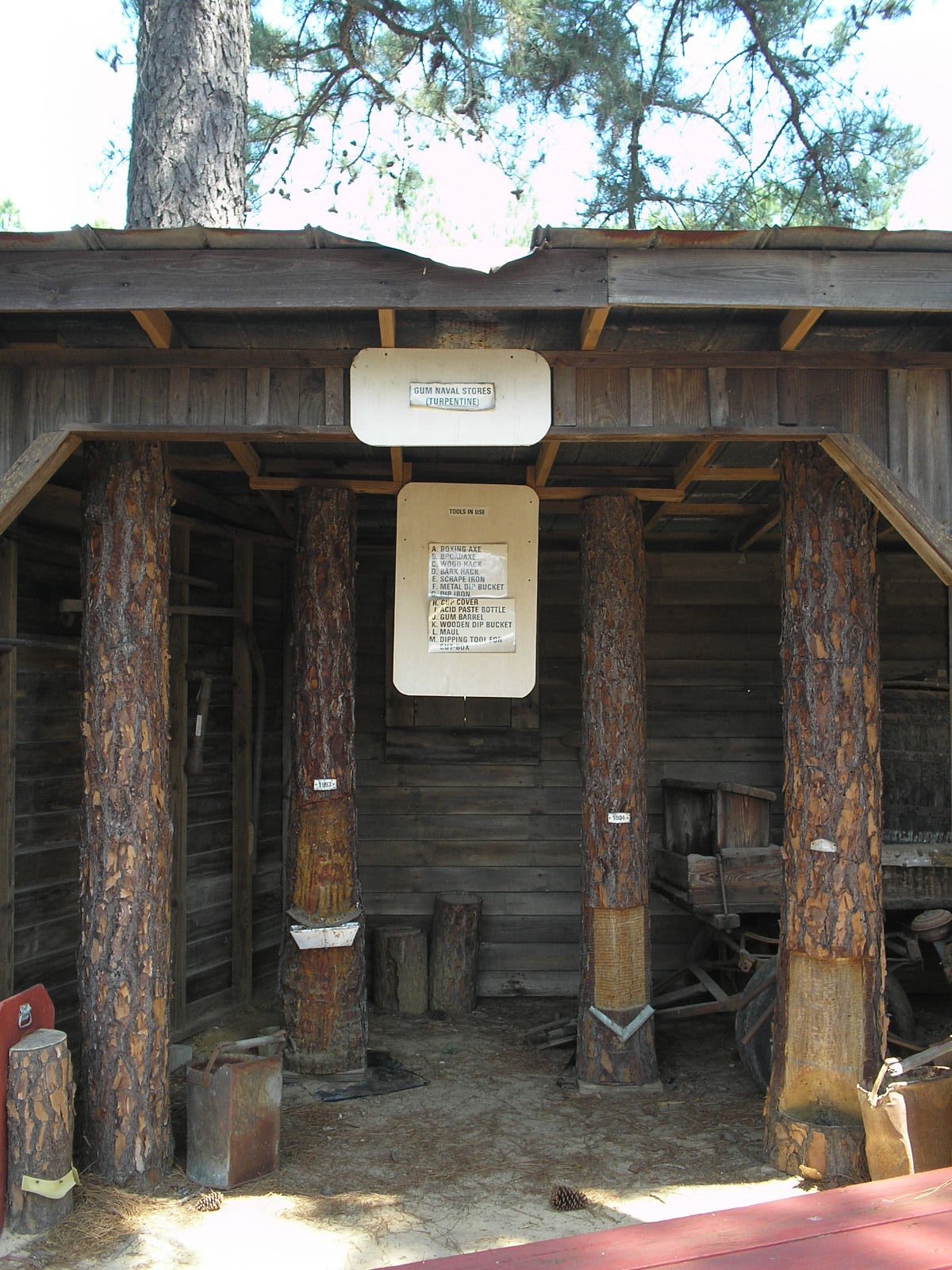
Gum naval stores and toolsOn the road from Columbus to Savannah, Georgia, during our recent Great Square Route around the eastern U.S. (MN – MS – GA – CT – MN), we stopped at the Million Pines Visitor Center off I-16 in Soperton, Georgia. The visitor center includes the Curt Barwick House, built of wood about 1845, which houses the front desk, gift shop, restrooms, and various display items; a one-room wooden house with a tin roof that served as the post office for Blackville, Georgia, from 1888 to 1904; and a wooden shed containing tools used to produce gum naval stores.

The latter term was new to me. It bears no relation to naval jelly (phosphoric acid), which is used on iron ships. Gum naval dates back to the days of wooden ships, when Georgia played an important role in the naval stores industry, as the New Georgia Encyclopedia relates:

In the late nineteenth and early twentieth centuries, Georgia was the world’s leading producer of naval stores, which are materials extracted from southern pine forests and then used in the construction and repair of sailing vessels. Typical naval stores include lumber, railroad ties, rosin, and turpentine.

The naval stores industry in North America originated in the mid-eighteenth century in North Carolina. Before 1800 the major products of the trade were raw gum, pitch, and tar. After the American Revolution (1775-83), processes were developed for distilling spirits of turpentine from gum. By 1850, 96 percent of U.S. naval stores came from North Carolina.

In the early 1870s North Carolina naval stores producers began migrating to southeast Georgia’s sandy coastal plain to take advantage of the untapped virgin pine forests in that region. They brought their equipment and black laborers and established residential villages on large turpentine farms. By the mid-1880s about seven in ten turpentine workers in southeast Georgia had been born in North Carolina.

The industry grew so rapidly that by 1890 Georgia was the national leader in naval stores production, a ranking that lasted until 1905. Florida was the leader from 1905 to 1923, after which Georgia regained its predominance and maintained it until the 1960s.

The USDA Forest Service Southern Research Station Headquarters in Asheville, North Carolina, describes some of the nitty gritty of production. Here are two photo captions from their website:

Photo caption: Improved gum naval stores extraction methods require new tools and techniques. Bark streaks 9 feet from the ground require a special long handled tool for pulling the streak and safely applying the acid. A combination bark-pulling and acid-treating tool was designed to meet this need. The laborer is shown applying 50-percent sulfuric acid to a streak 8 feet from the ground. This tool enables a laborer to stand a safe distance from the tree and reduce the hazard of acid drifting down on his head and clothes.

Photo caption: No more jump-butts and wasted timber as a result of turpentining. A turpentined tree containing both front and back faces and worked for 8 years is shown entering a German gang-saw to produce quality lumber. Developing conservative gu[m] extraction methods for the gum producer represents only half the problem, research must also prove to wood using industries that modern turpentining does not impair the stumpage value of the worked out tree.

The punctuation in the second caption sucks rather badly, but the wonderful collocations make up for it. Jump-butts in this context seems to refer to the discarded lower portion of turpentined trees. Stumpage value is the calculated value of standing timber. The butt log is the often slightly irregular log taken from the base of a tree.

Leave a comment

Filed under industry, language, travel, U.S.