
Category Archives: industry

Congo’s War for Mining or Peace for Mining?

From Dancing in the Glory of Monsters: The Collapse of the Congo and the Great War of Africa, by Jason Stearns (Public Affairs, 2011), Kindle Loc. 5014-5042 (pp. 288-289):

The Congo is often referred to as a geological scandal. This is not an exaggeration. In the late 1980s, it was the world’s largest producer of cobalt, third largest producer of industrial diamonds, and fifth largest producer of copper. It has significant uranium reserves—infamous for having contributed to the Hiroshima bombs—as well as large gold, zinc, tungsten, and tin deposits.

Like so many of the country’s problems, the mismanagement of these assets dates back to colonial times. In 1906 already, the Belgian government gave the Société générale de Belgique, a powerful trust affiliated to the state, a mining tract of 13,000 square miles in Katanga, the size of Belgium. Under the exceedingly favorable terms of the deal, the company would get a ninety-nine-year monopoly over any mineral deposits it could identify in the next six years. It was also granted the management of the state railroad line that would help export the copper and cobalt ore, for which the colonial state would provide local labor. Société générale set about creating the three most powerful companies in the Belgian Congo: the Upper Katanga Mining Union, the Bas-Congo to Katanga Railroad Company, and the International Forest and Mining Company. Mineral and agricultural exports from the Congo fueled the creation of some of the biggest Belgian conglomerates and personal fortunes, developing the Antwerp port and creating a copper smelting industry.

Mobutu nationalized the Upper Katanga Mining Union in 1967 and rebranded it Gécamines, while other mining companies in the Kivus and Katanga were also converted into state-owned enterprises. The government proceeded to use the mining company as a cash cow, systematically milking it for money to fund Mobutu’s patronage network instead of reinvesting earnings in infrastructure and development. In order to carry out this scheme, the autocrat forced all mineral exports to be sold through a state mineral board, which would then hand over its revenues to the state treasury. Nonetheless, thanks to rising world copper prices, Gécamines remained the country’s largest source of employment and income, providing over 37,000 jobs at its peak, running thirteen hospitals and clinics, and contributing to between 20 and 30 percent of state revenues.

A confluence of factors brought about Gécamines’ demise in the 1990s. Copper prices plunged as low-cost producers such as Chile stepped up production and world demand dipped. The army pillages of 1991 and 1993, along with the ethnic purging of Kasaians from Katanga in 1993, drove much of the experienced expatriate staff out of Gécamines and contributed to the cutting of foreign development aid that had helped prop up the ailing mining sector. Finally, the years of mismanagement took their toll. In 1990, the huge underground Kamoto mine collapsed, leading to an abrupt drop in production of 23 percent. Exports declined from a high of 465,000 tons in 1988 to 38,000 tons just before the war, while cobalt production slipped from 10,000 to 4,000 tons in the same period. Similar trends affected all other mineral exports, leading to a vertiginous contraction of the country’s GDP by 40 percent between 1990 and 1994.

Pressured by donors to relinquish the state’s grip on the economy and desperate for revenues, Mobutu allowed his prime minister, Kengo wa Dondo, to begin gradually privatizing the mining sector in 1995. Most of the contracts that were later negotiated with the AFDL, including the American Mineral Fields and Lundin agreements, were amendments to and confirmations of deals that had already been struck with Mobutu’s government in 1996. The notion that the war was fueled by international mining capital eager to get its hands on the Congo’s wealth does not hold water; the war slowed down privatization of the sector by a decade, as insecurity and administrative chaos prevented large corporations from investing. It was not until 2005 that major new contracts in Katanga were approved and investors began to invest significant funds.

I hadn’t realized the extent to which Canadian companies have dominated mining in the Congo.
Leave a comment

Filed under Belgium, Canada, Congo, economics, industry, nationalism, war

Railroads and Other Baffling Innovations

From A Most Magnificent Machine: America Adopts the Railroad, 1825-1862, by Craig Miner (U. Press of Kansas, 2010), pp. 253-254:

Why do our clothes not fit so well? It results from a chain of circumstances the origins of which are obscure to most and the direction of which was partially accidental. Early in the nineteenth century, inventors came up with an automated loom, and businesspeople put these to work in England and in such American industrial cities as Lowell, Massachusetts, turning out cheap cotton cloth. This, along with the application of the cotton gin to cotton production, revitalized slavery as well as creating an incentive for inexpensive ready-made and therefore not specifically tailored clothing.

Such long-range deep impacts of technological and business developments have long been studied. Lynn White, in Medieval Technology and Social Change, documented the enormous impact of clocks, heavy harness and stirrups on population growth, shock warfare, and the age of exploration. Siegfried Giedion wrote in his Mechanization Takes Command of what he called “anonymous history.” Who can estimate the impact of the invention of the toilet, or the assembly line in food production, or household machinery on the status of women? Langdon Winner observed “Developments in the technical sphere continually outpace the capacity of individuals and social systems to adapt. As the rate of technological innovation quickens, it becomes increasingly important and increasingly difficult to predict the range of effects that a given innovation will have.”

A recent touring art exhibit called “The Railway: Art in the Age of Steam” reaffirmed the impact of that technology on perceptions of life and landscape. “The application of steam power to motion,” the catalog noted, “came as a startling turn of events.” Some found it wondrous, but “for others it heralded a frightening, almost demonic energy.” There was something supernatural about it, even extraterrestrial. It made middle-class people “physically and psychologically susceptible to impersonal and potentially lethal industrial machines.”…

Think of the social and psychological changes wrought by the telegraph, electricity, the phonograph, the automobile, the airplane, radio, television, the computer, the Internet, the long-playing record, video games, the cell phone, fast food, the shopping mall, and the iPod. And think of how “baffled,” in many ways, we are by them and how they should fit in with the rest of our existence. These devices have become ubiquitous parts of modern life. An age when they did not exist is nearly unimaginable to many, while an age where they do exist is unendurable to others.

Leave a comment

Filed under democracy, industry, science, slavery

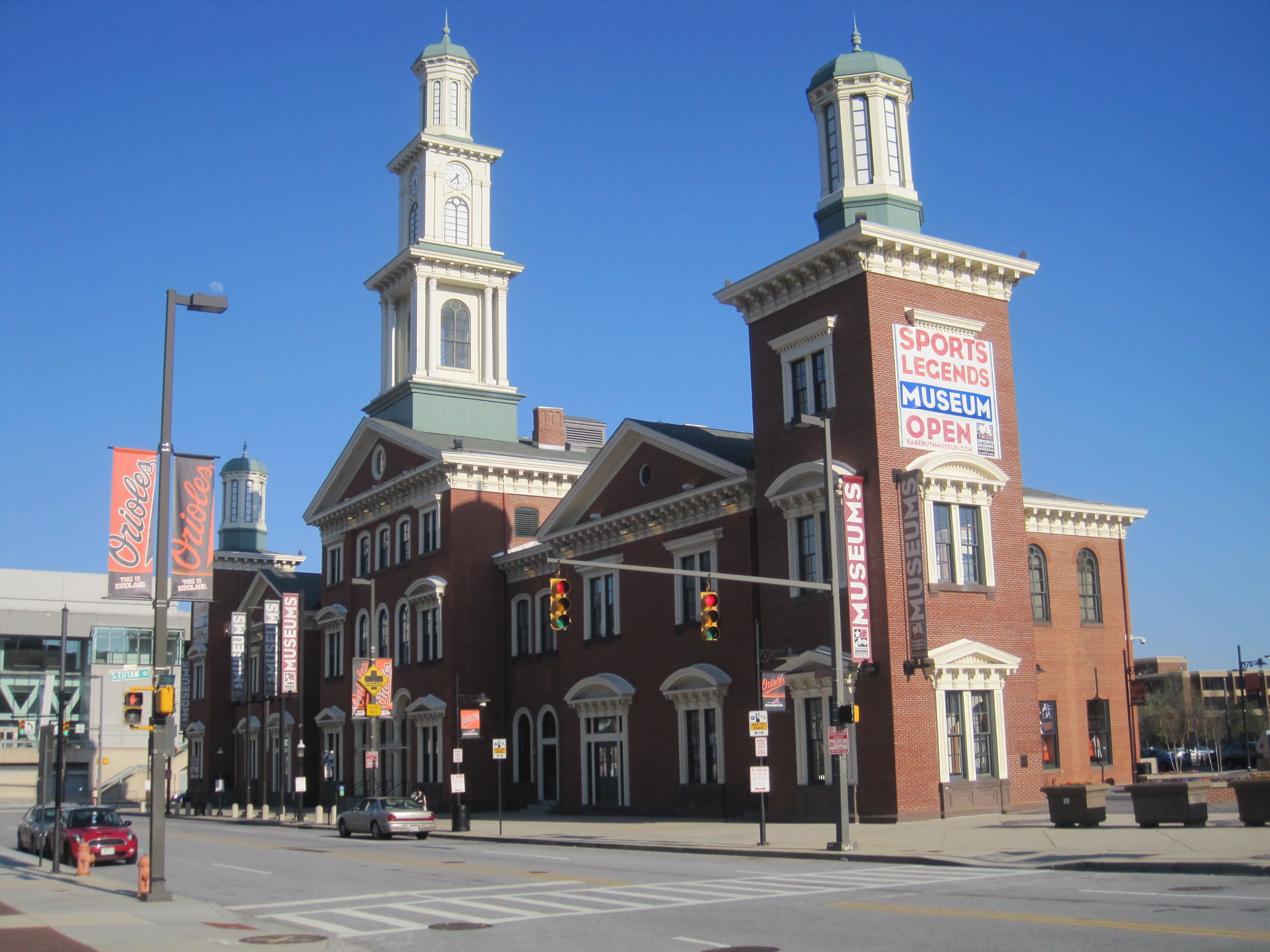
Railroad Depot Architecture, 1830–1860

From A Most Magnificent Machine: America Adopts the Railroad, 1825-1862, by Craig Miner (U. Press of Kansas, 2010), p. 92:

Railroad depots came to dominate urban architecture, and their size brought much comment. The Boston & Maine depot in Boston, constructed in 1846, was 200 feet long and 80 feet wide. It had Corinthian columns, and on its upper story was the largest meeting hall in the city. Behind it was a freight depot 500 feet long and 50 feet wide. The Union depot at Troy, New York constructed in 1853, was 400 feet long and 150 feet wide. The distance from the top of the roof arch to the floor was 65 feet. The roof was made entirely of iron supported by twenty trusses.

Former B&O Camden Station

Former Baltimore & Ohio Railroad's Camden Station, built in 1856, now the Babe Ruth/Sports Legends Museum next to Camden Yards

Time only increased the impressiveness of these structures. A reporter for the Chicago Daily Tribune visited the new buildings constructed by the Illinois Central Railroad along the lakeshore in 1854. The passenger depot at the foot of Water Street was all of stone. It was 500 feet long, 166 feet wide and 60 feet high to the top of its towers. Its windows were 16 feet high. The walls looked like they would “remain in all their strength when the final ‘wreck of matter and the crash of worlds’ shall come. The turntable there would hold eighteen locomotives.

The depots were the entry to a new world of travel, every aspect of which became a subject for travelogue comments. John Daggett riding the B&O in 1834, thought the beginning of his rail journey was its highlight:

One of the happiest effects of traveling on railroads is the freedom it gives you from the impertinence and impositions of porters, cartmen, et omne id genus, who infest common steamboat landings. A long and solitary row of carriages was standing on the shore awaiting our arrival; not a shout was heard, scarcely any thing was seen to move except the locomotive, and the arms of the man who caught the rope from our boat. The passengers were filed off along a planked walk to the carriages through one gangway, while their luggage, which had already been stowed safely away, was rolled on shore by another, in two light wagons; and almost without speaking a word, the seats were occupied, the wagons attached behind, the half-locomotive began to snort, and the whole retinue was on the way with as little ado and as little loss of time as I have been guilty of in telling the story.

Others, however, were not so impressed with the stressful experience of boarding a train. A Frenchman, Michel Chevalier, thought that the pandemonium at the railroad station reflected the nervousness and disorder of American society itself. The American, he wrote, was “devoured with a passion for locomotion” and could not stay still.

Leave a comment

Filed under industry, travel, U.S.

Railroad vs. U.S. Army Jobs, 1854

From A Most Magnificent Machine: America Adopts the Railroad, 1825-1862, by Craig Miner (U. Press of Kansas, 2010), p. 188:

Similarly elaborate was a great excursion celebrating the completion of the Rock Island in 1854. Two trains of twelve cars each left Chicago loaded with 1,300 people to the cheers of a vast crowd. They proceeded through the prairie and stopped for people to gather wildflowers and grasses and to observe the substantial stone houses and gardens already established along the line. The prairie, a traveler on that train said, “was in its way as grand as the White Mountains, or Niagara Falls.” Arriving at Rock Island and the Mississippi to a cannonade, there was a banner at the depot reading- “The Mississippi and the Atlantic Shake Hands.” Drawn up to the wharf were six of the largest Mississippi River steamboats—War Eagle, Galena, Lady Franklin, Sparhawk, Golden Era, and Jenny Lind. Each had a band playing on the upper deck.

The “Conquests of Civilization” looked especially impressive that day comparing favorably with any military conquests of old. Wrote a man celebrating the excursion opening the Rock Island: “Our invasions, instead of desolating and laying waste the regions into which they are carried, spread fertility and abundance on their track, and they bring us back, instead of weeping captives to minister to our ostentation and pride, the fruits and riches of the earth, garnered from the most distant climes and kingdoms.” The Illinois Central Company was bigger than the U.S. Army. That army had 10,000 in 1854. The Illinois Central railroad employed 19,000 who earned a total in wages of nearly $4 million per year. In three years it would build 700 miles of railroad, whereas in thirty years the federal government had spent $200 million on the army “for which they have nothing to show but some old forts, guns, battered uniforms, and demoralized veterans.” Soon enough, in 1856, trains passed over the Mississippi on the great Rock Island Bridge, 1,581 feet long with a draw in the center. “Yes, the Mississippi is practically no more. It is spanned by the mighty artery of commerce and enterprise—the railroad.”

The uninhabited prairie might be sublime and a “solemn” sight, but seeing the plains of Illinois divided into farms was more exciting still The fields would “drop fatness” when in time “the old fogy sod, matted conservatism of centuries, is overturned by the revolutionists, the ploughshares, and penetrated by those radicals, the grain roots, and the wheat fields stretch out green and wavy as the seas.”

Leave a comment

Filed under industry, military, travel, U.S.

Railroads in the Antebellum South

From A Most Magnificent Machine: America Adopts the Railroad, 1825-1862, by Craig Miner (U. Press of Kansas, 2010), pp. 169-171:

In 1849, [Georgia] was ahead of all southern states in rail mileage and estimated to be ranked third or fourth among all states in the Union. When the Western & Atlantic was completed in 1850, the company was still seeking more state appropriations, and there were still those who thought it could be better managed by a private concern than by the state. But many thought its shortcomings were based on unrealistic public expectations. Compared to most, it was a successful railroad indeed. Wrote the Macon editor: “Great confidence seems to be felt in whatever Georgia lays her hand to. I have often heard it wondered how the citizens of Georgia had succeeded so in building railroads, keeping out of debt, and making their roads pay well.” The reason was that Georgia, as its governor noticed in his 1855 address, had a “definite system” and a “uniform principle” in granting railroad charters. It had supported railroads with state aid and management without going overboard in doing so.

Already the myth of southern backwardness was strong in the North. Amid the tensions of the 1850s, which would lead so soon to civil war, the South defended itself partly by pointing out how well it had done in railroad building. “It is fashionable,” wrote a man in Louisville, “for a certain class of people at the North to taunt the people of the South with a want of enterprise. It is regarded as necessary to establish the evils of slavery, that it shall be shown that it encourages indolence, and represses enterprise; and to illustrate the truth of the positions assumed, the superior progress of the free States in railroad building is cited as proof positive.” History proved that false. The South had built some of the first railroads and some of the best railroads in the United States.

It was also false that southern railroads ran well because northern men ran them or because they used northern supplies and equipment. There were southern ironworks and southern locomotive and car builders. The South argued that slave labor would be a great advantage in railroad building. Just as cities were buying slaves to do urban tasks, so railroads would in the future, and the institution of slavery would become less tied to plantations and the growing of cotton. Northerners were speculators, and eventually there would be proof that the more conservative way the South had proceeded in building railroads was best. It had largely avoided the “chaos of panic and bankruptcy” that characterized northern rail enterprises….

Southern railroads were slightly slower in schedule than northern railroads, but they were safer and more comfortable. The food “would be hard to boast of,” but it was tolerable. The pace at depots in the South was more relaxed, with none of the “running headlong, with coat tails flying,” typical of boarding a train in the North. The conductor boarded the passengers in a leisurely way. Then “the whistle gives a gentle toot, and gradually, as a duck swims against a current, the train moves, and nobody is in a perspiration; no one has lost his baggage, or torn his clothes; no one is left lamenting his hard fate in being a moment too late.” Once aboard a train in the South, the passenger found sociable fellows, and the black “servant” who carried water, apples, and oranges through the cars also distributed ice cream. It made travel by rail actually enjoyable.

Far from being a sideshow, railroad development in the South provided a viable alternative to the way things were practiced in the North. Its example gave a strong indication that there was more than one way of adapting to railroads. The technology did not itself dictate its appropriate uses by people and states.

1 Comment

Filed under economics, industry, slavery, travel, U.S.

Railroads and State Debt, 1839

From A Most Magnificent Machine: America Adopts the Railroad, 1825-1862, by Craig Miner (U. Press of Kansas, 2010), pp. 79-81:

The progress of the years preceding the 1837 Panic surely would resume, many wrote. Apparently insurmountable obstacles had been overcome. The “howling wilderness” was disappearing. “McAdamized highways, railroads and canals, have pervaded the country in every direction, giving free circulation to the products of mechanical skill, of art, and of labor, and animating the whole, immense, diversified country, with every sort of active business and intelligent enterprise.” That was no mean feat. No wonder, however, that types arose who tended to abuse the opportunity—people all too “shrewdly alive to their own interest.” There came a “universal mania” for wealth. “The old beaten track of plodding for our gains, was forsaken and contemned by the restless anxiety for change, and all seemed to engage in the alluring game of running hazards.” A long period of peace and prosperity emboldened them, as though the boom would never end. Yet there was wide consensus that the achievement was impressive. “We take the ground,” wrote a Baltimore man, “that the laborer who turns up a spadeful of earth in excavating a canal, or strikes a blow in constructing a railroad, becomes, by so doing, one of the builders up of a system, the benefits of which will endure so long as the continent on which we live shall endure.”

In the wake of the panic came a long and related crisis over state debts, a large proportion of which had been contracted in order to build railroads. The national debt was nonexistent; in fact there was often a surplus, but it was different with the states, which had borne the brunt of subsidizing rail finance. An Ohio editor estimated in 1839 that eighteen states had authorized public stock for canals and railroads amounting to $170 million, “which is as much a mortgage on our farms as was the national debt.” Interest ran about $12 million per year. It was ridiculous, the regional press thought, that Ohio had an agent in Europe to try to arrange more debt. The Ohio state legislature at its last session had, according to one critic, done more to “degrade the State abroad, and beggar its people at home, than the accumulated energy and labor of years can undo.”

Maybe it was not all bad, a New Yorker commented. Speculation had created 3,000 miles of railroad. “The parent may die, but the offspring will live to enlighten and bless.” A Massachusetts man argued that the Western Railroad there would be completed eventually and would be a good thing. Delays required credit, and credit required the payment of interest and the raising of taxes, but this was not “inconsistent with the business-like character of a business people.” The states received many indirect benefits from the railroads that did not show on their balance sheets proper.

To some that seemed cold comfort. People had been too extravagant in generally prosperous times, importing, for example, $41 million per year in foreign wines—half as much as was spent for railroad iron. Depressions came from overtrading. People seemed to have commenced business on too large a scale. There was a penchant for outright gambling. “Confidence has been destroyed; public and private faith and credit have been grossly abused, and foul deeds of iniquity have been committed.” Public business seemed to be influenced primarily by private business lobbies, and no producers appeared in proportion to the growth in borrowing. The credit of the states had been all too good. New York owed $23 million in 1839, Louisiana $23 million, Pennsylvania $27 million, Maryland $11 million, Massachusetts $4 million, Alabama $10 million, and Tennessee $7 million. And states were adding debt all the time. “Our credit is so good that it will ruin us, if we do not stop and think of the consequences of so severely testing it…. Are we not getting in jeopardy the dearest interests, the honor and independence of our country, and selling our glorious national birthright for a mess of pottage?”

Leave a comment

Filed under economics, industry, travel, U.S.

New Hampshire Skeptical of Railroads, 1840s

From A Most Magnificent Machine: America Adopts the Railroad, 1825-1862, by Craig Miner (U. Press of Kansas, 2010), pp. 119-120:

Why were railroads so great? Who had benefited? When the Eastern [Railroad from Massachusetts to Maine] was proposed, stated one letter to the editor, people along the projected route in Massachusetts and New Hampshire were “lunatic” on the subject. “One would suppose that there was no other road in existence, that indeed to them belonged the discovery of the power of steam, engines, Railroads, &c, and that their fame exceeded the fame of any and all ancient and modern cities. It was said that the old men of the city assembled at the depot in the morning, and really forgot to go to their meals.” Yet by 1841 most of the towns that had been courted had become minor way stations, hearing only the buzz of the engine on the way to Boston. It seemed a bad bargain altogether.

New Hampshire debated the right-of-way issue into the mid-1840s. Enterprise should have full scope, wrote the paper in Concord, but the point in dispute was the right of the legislature to empower a private corporation for private gain to take from a man his land against his will. In that regard the New Hampshire debate was much like the modern controversy over the proper uses of the eminent domain power, and here the state did not regard railroads as a true public use. The chief purpose of a railroad, the legislators thought, was to make money, not to serve the public. “If the constitution must be violated and the rights of individuals molested, it seems no good citizen can favor any project, which shall encroach upon the rights of freemen.” This led one commentator to write in dismay that he was certain that in the state’s “lamentable” stance toward railroads, it had “shut itself out from one of the most beneficial improvements of modern times.”

Inevitably, the state eventually had more or less its share of railroads, and it learned to do what was necessary to accommodate them politically and socially. But New Hampshire remained proud that it had not swallowed the whole package. An editor in Portsmouth noted that credit could not be separated from character: “Integrity, industry, virtue, and character it is that commands the capital which changes the sailor boy in his tarpaulin to the captain of the beautiful packet ship.” So at least it should be. New Hampshire retained its strict laws about individual liability and its narrow interpretation of eminent domain for some years.

The Albany Argus wrote in 1841, in the wake of the Panic of 1837, that “New Hampshire may well congratulate herself, that she has never embarked in any of the wild and visionary schemes of internal improvements, which have plunged other states into such an embarrassing and wretched state of want and indebtedness. She has escaped the bitterness of learning by experience the folly of a large community attempting to carry on public works with prudence, economy or even honesty.” Would that Pennsylvania and Indiana, burdened with state works not paying even their current expenses and repairs on state railroad systems, not to mention the debt service, had done the same. The manic policy of the rest of the country was, according to some in New Hampshire, the “high road to beggary.”

Boston thought such a policy was a “dreaded obstruction” to its enterprise. It was suspicious of presidential candidate Franklin Pierce just because he was from New Hampshire.

Leave a comment

Filed under economics, industry, travel, U.S.

High-speed Rail in 1826

From A Most Magnificent Machine: America Adopts the Railroad, 1825-1862, by Craig Miner (U. Press of Kansas, 2010), pp. 1-2:

A young lady wrote to a Pennsylvania newspaper in the summer of 1827 about her journey along the state-operated system of internal improvements. Having left Reading at three in the afternoon, she arrived at Mount Carbon the next evening after a passage of 49 miles by canal, “a great journey for me to make in one day.” The mountain scenery impressed her, as did the band on board the canal boat, but greater wonders awaited. From Mauch Chunk (population 1,300), she elected to ride to the nearby coal mines, 9 miles up a considerable slope, on the Mauch Chunk Railway. This line, built in September 1826, comprised, along with a shorter (3-mile) one from the Boston tidewater to a granite quarry at Quincy, Massachusetts, the first elements of the railway system in the United States.

There were three carriages that day each loaded with six passengers. A horse drew the train up the 3-foot, 7-inch gauge track to the mine, 900 feet above the Lehigh River, in 1 hour and 25 minutes. Coming down, there was no horse, only a rope wound at the top around a wheel with a friction brake to control the descent. That ride reached speeds of 30 miles per hour—faster than the passengers had ever experienced. The cars seemed at times on the verge of shooting off a cliff before a curve came into view and took the gasping tourists around. Wrote the young lady, clinging to her seat: “It really appeared like flying.”

The Mauch Chunk and Quincy Railroads were in those years (the mid-1820s) a national phenomenon, a tourist attraction of a magnitude far beyond their limited economic function. Newspapers competed for details. Also, they collected news from British journals of the architecturally impressive railroad lines completed in 1826 between Stockton and Darlington and Liverpool and Manchester.

At Quincy the attraction was the tremendous weights that could be moved with relatively little effort by means of rails. A load of 21 tons of stone made its way down a slight grade along the Quincy road in October 1826, pulled by a single horse. The horse easily pulled the empty cars back. “It is a matter of astonishment,” went a Massachusetts governmental report, “to consider how great an advantage is gained, by merely providing smooth iron tracks for the wheels of carriages to run on; and though, in every kind of machinery, simplicity tends to increase its value and beauty, yet in no instance, can we find, from so simple an arrangement, effects so striking, or which promise to be so extensively beneficial.” An extension of a railroad system, the report concluded, would impart energy to all kinds of business and produce circumstances that would improve the reputation of the state and of society in general. By the spring of 1827, people from around the nation were visiting the Quincy railroad, giving business to an inn and interfering substantially with the main business of the road in order to satisfy the demands of tourists. The little Quincy Railroad became an object of study for civil engineers and legislative committees thinking of more ambitious rail projects. The economic advantages were obvious. The railroad had made granite so inexpensive that in Boston a house could be built of that durable material more cheaply than with bricks, even when the bricks sold for as low as $4 per thousand.

The Mauch Chunk line drew more attention still, so much that one editor commented it had become a “place of notoriety” Pleasure cars made the round-trip once every day and were always booked in advance.” One passenger reported riding “in pleasure carriages, which have seats like sleighs, and precisely like the sleigh, but longer and without back and front, and have small iron wheels.” It seemed a pleasant way to travel, “not a jolt, jar, or movement, to the right or left.” Birds, cats, and cows flew for their lives before the train: “They must have thought the end of the world was at hand.”

Leave a comment

Filed under industry, travel, U.S.

A Japan-trained Dutch Banker’s Impressions of Chicago, 1968

From The Magatama Doodle: One Man’s Affair with Japan, 1950–2004, by Hans Brinckmann (Global Oriental, 2005), pp. 184-185:

Seven years earlier, our first US visit was no confrontation. We were wide-eyed tourists then, basking in America’s sun and easy smiles without care or consequence. Even our brief stay in Illinois in 1965, a year after my bank’s takeover by the Chicago bank, was little more than a courtesy call made out of our safe and trusted Japanese home base.

But this time it was different. This protracted stay was intended to be confrontational. There were wise men in the head office suspecting their ‘man in Tokyo’ of alien sympathies. They were right, twice over.

First, there was my typical European prejudice against the might and swagger of America, its superficial, money-based way of life, its waste and hyperbole, even that questionable concept – the ‘pursuit of happiness’. This spoon-fed mindset was overlain by a less expressible, more internalized reserve about the United States, Japan-grown and stubborn. It was directed at the American mentality, the casual arrogance that is the birthright of the strong. It was a silent protest against the overweening, patronizing manners of so many Americans towards anyone and anything foreign, and especially Asian. Above all, it was a deep-seated resistance against the immodest American approach to life itself, its aggressive ‘conflict model’, its blatant emotionalism and lack of restraint, its materialism and physicality and holier-than-thou Christian orthodoxy.

Thus I arrived in Chicago heavily burdened with opinion but also willing to change my views ‘in the light of new experience’. Well, experience is what we got. From the first day I had to place my mental constructs on the back-burner. Actual, visceral life, took precedence. The accommodation the bank had arranged for us, a small, furnished apartment in Old Town, turned out to be an address of ill repute, teeming with prostitutes. Within our stingy rent allowance we found a better place, near the Ambassador East Hotel, with mostly decent tenants. But we had to decide how to deal with the neighbours across the hall, a friendly well-groomed woman with an attractive grown-up daughter for whom – Toyoko had to conclude to her astonishment – she was acting as a ‘discreet’ pimp.

The confrontation with American reality brought home to me the vast cultural gap that separated that society from the Japanese – and the Dutch. But the comparison was not necessarily negative. The office, for instance, far from being a nasty environment steeped in power-crazy adrenaline, was more like a large living-room filled with people exchanging easy banter while glancing at a document or two, or discussing golf scores with a customer on the phone. The informality was deceptive. While telling jokes or kidding around these well-educated bankers kept a beady eye on the boss’s door, to see who would go in next or to wait for an opportunity to slip in with a ‘hot deal’. I was amazed to see that in spite of their relaxed style of communication they did get their job done.

The looser structure was an immense relief from the tensions and social rules of Japan. What is more I soon discovered that the much-maligned ‘shallowness’ of American social relations was actually more like an open, unprejudiced kind of hospitality which we tight-arsed Europeans and fastidious Japanese would do well to try and emulate, to our benefit. Americans, I found, opened their doors first and then sorted out what they had let in. Europeans and Japanese, distrusting spontaneity, were forever trying to determine the suitability of others before deciding whether they wanted to get acquainted.

My lifelong latent resistance against America’s ways had collapsed inside a week. Not on fundamentals, but – let us say – on the attractions of their lifestyle. These Americans lived their lives instead of fretting about them. They had no time for wrenching soul searching or weighing up the relative merits of their civilization. They were victors, and victors are free of doubt.

Vietnam was supposed to have changed all this. But not here, not yet, in this heartland of assured capitalism, where seating a single black graduate from Northwestern University on my bank’s carpeted ‘platform’ for all to see, was deemed to constitute an adequate gesture to the irksome demands of the Civil Rights movement. The headlines of the Chicago Tribune copies scattered about the desks might be screaming indignantly about the seizure of the US Navy ship Pueblo by the North Koreans or about the Communist Tet offensive just launched by the Viet Cong, but loan requests had to be processed and the 17.37 back home to the comforts of Winnetka had to be caught.

The self-assuredness was astounding. Laced as it was with magnanimity and the decency of family concerns it was a far cry from the imperial hauteur of the British and French or the self-conscious pride of the Japanese. But it was daunting nonetheless. Paraded around Chicago as ‘our man in Japan’ I had to make frequent appearances at meetings, both inside the bank and on calls to important corporate customers, to shed light on the mystery that was Japan. I was expected to explain the peculiarities of the market and dispense hot tips on how to breach its protectionist shell.

My audience was eloquent, courteous and sceptical.

Leave a comment

Filed under economics, industry, Japan, Netherlands, U.S.

Wordcatcher Tales: Birds for Trains

“So what is a shirasagi, anyway?” I asked the JR clerk in Nagoya Station who had initiated our rail passes and booked reservations on the Shirasagi Limited Express to Hida Takayama. “Could it be a white rabbit (shira- ‘white’ + usagi ‘rabbit’)?” She had no idea. But I should have known it would be a bird.

Before the advent of the Shinkansen bullet trains in 1964, the most famous limited express train along the Tokaido Main Line was the Tsubame ‘swallow’. In fact, the Japan National Railways (JNR, 国鉄) used a swallow logo on its bus system and called its professional baseball team the (Kokutetsu) Swallows. Two other notable limited express trains we rode in those days were the Hato ‘dove’ and the Kamome ‘seagull’.

Most express trains were named for destinations, like the Miyajima Express that I used to ride home to Hiroshima from boarding school in Kobe, but the fastest limited express trains tended to be named for birds. The first bullet trains went for even speedier names: Kodama ‘echo’ (speed of sound), Hikari ‘flash’ (speed of light), and the latest, postmodern-sounding Nozomi ‘desire’. But regional bullet trains have revived a lot of the old limited-express bird names: Hayabusa ‘peregrine falcon’, Kamome ‘seagull’, Toki ‘crested ibis’, Tsubame ‘swallow’.

On our latest trip, we were in the Hokuriku region, off the Shinkansen grid, where the fastest trains are traditional limited expresses, so we encountered several bird-named trains that were new to me. Shirasagi can be translated ‘snowy egret’ (Egretta thula), although sagi labels the whole family of herons (Ardeidae), as in aosagi (lit. ‘blue heron’) ‘gray heron’ (Ardeia cinerea).

Coming back to Kanazawa from Nanao on the Noto Peninsula, we rode the Sandābādo/Thunderbird, whose name left me a bit nonplussed until we paired it with Raichō ‘rock ptarmigan’ (Lagopus muta), a limited express that runs from Osaka through Kanazawa to Toyama. Thunderbird began operations as Super Raichō (Thunderbird), and Raichō (雷鳥) literally translates as ‘thunder bird’. The rock ptarmigan is a symbol of Toyama Prefecture’s Tateyama, one of Japan’s 三霊山 Sanreizan ‘Three Holy Mountains’, along with Fujisan and Hakusan. (Doesn’t the Rock Ptarmigan sound like a good name for a smaller version of Ford’s SVT Raptor?)

Another limited express we rode between Kanazawa and Toyama was the Hakutaka, whose name is always written in kana, not kanji, and whose train cars carry an emblem with the English words “White Wing.” The name evokes an old Tateyama legend about a white hawk (白鷹, which would normally be pronounced shirataka), but also evokes the name of a long-distance train, Hakuchō (‘white bird’ =) ‘swan’ that used to run all the way from Aomori (where the swan is the prefectural bird) via Ueno and Kanazawa to Osaka. The name Hakutaka was independently used for trains running on the leg between Ueno and Kanazawa until that leg was disrupted by the extension of the Shinkansen toward Nagano and Niigata in 1982. In 1997 it was revived for limited express trains running along the Japan Sea coast between Fukui and Niigata prefectures.

The first Japanese long-distance trains to receive names seem to have been the Fuji and Sakura, which began running between Tokyo and Shimonoseki in 1912, but were not named until 1929.

The first train named Hato ‘dove’ was an express on the South Manchuria Railway (満鉄 Mantetsu) running between Dalian and the new (in 1932) Manchukuo capital, 新京 Shinkyō (now Changchun). The limited express on that route was named あじあ Ajia ‘Asia’.

POSTSCRIPT: The first trains named Hikari and Nozomi were Mantetsu expresses running between Busan (釜山) and Shinkyō (新京). (Japanese Wikipedia offers very detailed coverage of Japanese train systems, past and present.)

And, speaking of Imperial Japan, many of the same bird names were used for Hayabusa-class torpedo boats built between 1900 and 1904 that served so well in the Battle of Tsushima in the Russo-Japanese War.

Leave a comment

Filed under industry, Japan, language, military, travel