Category Archives: food

Wordcatcher Tales: Moroheiya tempura, Henohenomoheji sake

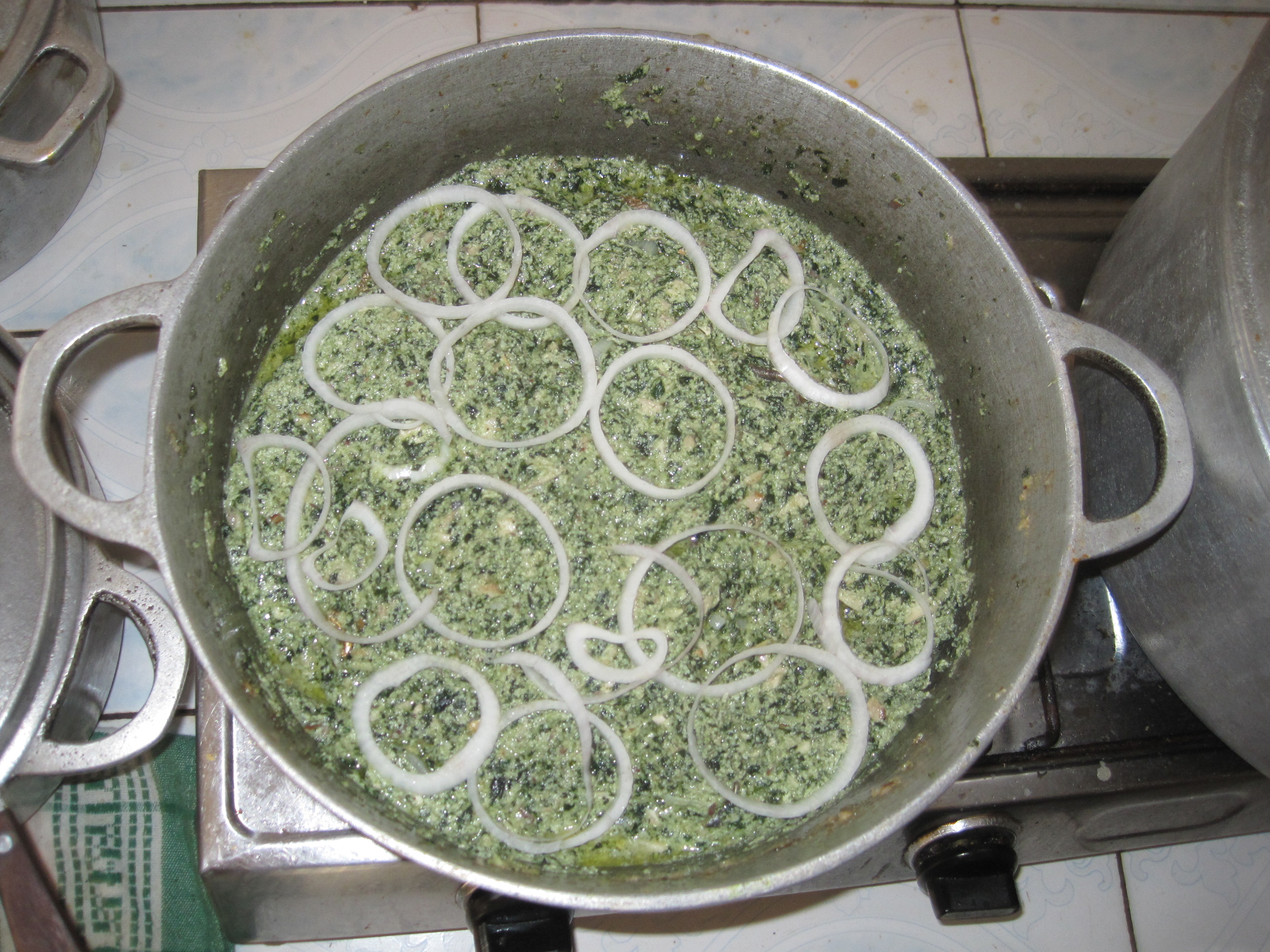
A few weeks ago, I came across a food item in my local Japanese grocery store that was new to me. The package of deep-fried, dark green leaves was labeled “moroheya tenpura.” Of course, I couldn’t resist trying some. The leaves were crispy and oily, stuck together by their own slime, rather than by tempura batter. They tasted oily, slightly bitter—and very healthy!

Moroheya (mallow leaves) tempura packaged for sale at Nijiya Market

The Japanese name for the leaves is usually written in katakana as モロヘイヤ moroheiya, ultimately from Arabic muluxīya but probably via some non-Arabic intermediary language with /o/ in place of /u/. The leaves of jute plants (Corchorus spp.), also known as mallow leaves, are widely eaten wherever jute is grown between West Africa and South Asia, and there are many different transliterations of its name in local varieties of Arabic: mulukhiyah, molokhia, mulukhiyya, malukhiyah, mloukhiya. It now shows up in Japanese cuisine, where it’s valued for its healthy slimy quality as well as high vitamin content.

The Japanese name for the plant (Corchorus olitorius) is shima-tsuna-so (縞綱麻 ‘stripe-rope-hemp’), also called タイワンツナソ Taiwan tsunaso ‘Taiwan rope plant/hemp’, ナガミツナソ nagami tsunaso (possibly) ‘long-body rope plant/hemp’, or simply ジュート juuto ‘jute’.

Henohenomoheji junmai sake from Akishika Brewery in Osaka-fu served at Kyoukamo Restaurant, Nagoya

In Nagoya this past summer, we made a return visit to the exquisite Kyoukamo Restaurant (京加茂), famous thereabouts for its Kyoto-style kaiseki cuisine. You can see photos of what we ate and drank starting here.

Our affable hosts served two award-winning sakes this year, both in the West (Kansai and western Japan) division, where they were ranked like sumo rikishi. The first won the Ōzeki (‘champion’) prize and the second won the Yokozuna (‘grand champion’) prize. The latter had such a floral/herbal nose that it resembled an Alsatian Gewürtztraminer. When I asked our hostess for the name of the sake, she said, Henohenomoheji. I asked, “What is that supposed to mean?!” So she showed me the magazine page reproduced here, where the hiragana characters of the name sketch a human face beneath a triangular hat. Each への pair forms an eyebrow and eye, the も forms a nose, へforms downturned lips, and じ delineates the cheeks and chin.

The brewery is Akishika (秋鹿 ‘Autumn Deer’) of Nose Township, Toyono County, where Osaka Prefecture intrudes between Kyoto and Hyogo prefectures. The restaurant owner gave me their address and I decided on a whim to pay the brewer a visit on the last day of our trip, when I had a day to kill on my own and a still-valid JR railpass.

Well, it turned out to be well off the JR lines. I hopped a bullet train to Shin-Osaka, took an express to JR Amagasaki, took the JR Fukuchiyama Line uphill to Kawanishi-Ikeda, then walked over to Kawanishi-Noseguchi, the downhill terminus of the little Nose Dentetsu (owned by Hankyu Railway), where a lady at the ticket window said I would have to take a bus from the rail terminus at Myōkenguchi.

Myōkenguchi, the entrance to Mount Myōken (妙見山), consisted of little more than a parking lot, a post office, and a combination restaurant and souvenir shop. A bus was due to arrive soon, but it would take 30 minutes to get to the brewery and only ran once an hour. So, as a trophy for my misbegotten adventure, I bought a big bottle of Akishika-brand sake from the very friendly shop owners, who threw in a couple of empty バンビカップ ‘Bambi cup’ glasses as souvenirs, saying they were their bestsellers and not widely available. (I later discovered you can buy them online.) then I hopped the return train and transferred my way back toward Nagoya, where I left the sake bottle and cups at our hotel’s front desk, for them to pass on to the friend who treated us to that wonderful kaiseki dinner at Kyoukamo.

1 Comment

Filed under food, Japan, language

China’s Chopstick Threat

Today’s LA Times contains an op-ed calling attention to the forests being consumed by China’s enormous output of disposable chopsticks, which I suspect have nevertheless played a significant role in reducing the spread of communicable diseases (as have disposable hypodermic needles, which constitute another sometimes nasty environmental threat). China’s government is now trying to discourage their use.

The disposable chopstick, made largely from birch and poplar (and, less so, from bamboo, because of its higher cost) begins to look deeply menacing — an environmental disaster not to be taken lightly. Begin with China’s 1.3 billion people. In one year, they go through roughly 45 billion pairs of the throwaway utensils; that averages out to nearly 130 million pairs of chopsticks a day. (The export market accounts for 18 billion pairs annually.)…

Calls to abandon the use-and-toss type began more than 10 years ago and have since persisted unabated. By 2006, the activism had become more strenuous: Citizens launched a BYOC (Bring Your Own Chopsticks) movement, which continues to gather momentum….

Yet, more than 10 years later, the targeted disposable remains with us. Why?

First, while we in the West don’t give much thought to a chopstick “industry,” in China, where 100,000 people in more than 300 plants are employed in the manufacture of the wooden utensils, it’s most definitely a flourishing enterprise. And just as jobs trump environmental issues in the West (think the coal, oil and logging industries), the argument that 100,000 jobs are at stake is a refrain that carries considerable weight. As Lian Guang, president of the Wooden Chopsticks Trade Assn., told the China Daily in 2009, “The chopstick industry is making a great contribution by creating jobs for poor people in the forestry regions,” adding that melamine-resin chopsticks are hardly a sanitary substitute with their “high formaldehyde content.” His mention of melamine resin is an effective touch, I admit.

Then there are the restaurants. The alternative to wooden disposables is sterilizing the tableware (plastic, metal or durable wood chopsticks) after each use. But the cost differential is significant: Disposables run about a penny apiece, while sterilization ranges from 15 to 70 cents. Restaurants, especially the low-end ones, worry about passing the costs on to customers. And the worry would seem to be warranted: Consumer advocacy groups from 21 Chinese cities published an open letter in March arguing that the costs of sterilization should not be passed on to consumers as the food safety law obligates restaurants to provide free, clean and safe tableware.

Are paper shopping bags a threat to North American forests?

1 Comment

Filed under China, economics, food, industry, labor

Rise and Fall of the Nutmeg Monopoly

From The Spice Islands Voyage: The Quest for Alfred Wallace, the Man Who Shared Darwin’s Discovery of Evolution, by Tim Severin (Carroll & Graf, 1997), pp. 117-119:

The conditions of soil and climate on Banda were so perfect for nutmeg trees that most of the trees were planted naturally by the same species of Tine and very handsome fruit pigeons’ which Wallace observed. These birds had such a wide-opening beak that they could swallow an entire nutmeg fruit and pass the round seed undamaged through the gut, so that it grew where it fell. The labourers had to keep the saplings free of weeds, tend the tall kenari trees which provided essential shade for the nutmeg trees, and pick the fruit. Obligingly, in that warm equatorial climate, the nutmegs gave their crop all year long. It is calculated that, in nearly two centuries of colonial rule, Holland produced a billion guilders’ worth of these spices from their tiny Banda holdings. The income from the Banda spice monopoly so dominated Dutch foreign policy that Holland offered the island of Manhattan to the British if they would drop their claim to the minuscule islet of Run in the Bandas barely three kilometres long and one and a half kilometres wide. Even more remarkably, Run itself grew no nutmeg trees. The Dutch ripped them up in order to concentrate virtually the entire world production of nutmeg and mace on the other Bandas.

Slavery in the Dutch Indies was not abolished until 1862, so there must have been slaves on Banda when Wallace visited there in the late 1800s. Yet he says nothing about them and – astonishingly for an Owenite socialist – he voiced his strong approval of the Dutch system of monopoly plantation though he knew this opinion would raise hackles in Victorian England. State monopolies, he argued, were the only way for a colony to be viable. The mother country had to find some way of paying the huge cost of its colonial efforts, bringing education, peace and a ‘civilising influence’ to unruly native peoples, and if the state controlled a lucrative monopoly, that cost could be met. It was far better, Wallace argued, for the state to reap the profits than to allow the local economy to pass into the hands of private businesses, who would exploit the natives and give nothing in return. The only condition which Wallace put forward was that the monopoly should be of a product not essential to the natives, who must be able to live without it. In this respect, of course, nutmeg was ideal; it was a luxury, not a subsistence food.

In truth, by Wallace’s time the state’s monopoly in nutmeg was in tatters. Nutmegs were being grown illegally elsewhere in the Moluccas, and the French had established nutmeg plantations in Mauritius, using seeds smuggled in from the Spice Islands. Corruption had been so widespread among the superintending officials in Banda and Amsterdam that tight control of the nutmeg trade was a sham. The Dutch authorities abandoned the system within a decade of Wallace’s visit, and handed over ownership of Banda’s nutmeg gardens to the perkiniers, the planters who had previously held them on licence. They in their turn would go under, unable to survive in world competition. The nutmeg plantations fell into neglect and Banda began a long, slow slide into obscurity while, ironically, the impoverished planters came to be replaced by a new generation of Bandanese orang kaya who re-established the age-old trade links. Twenty years after Wallace’s visit, the wealthiest man on the islands was a Javanese Arab trader, Bin Saleh Baadilla, who traded in pearls and bird products. His warehouse contained skins of Birds of Paradise prepared by the natives of Kai, Aru and New Guinea, as well as the feathers of other exotic and coloured species from the rainforest. Where his predecessors had sent the bird-skins to decorate the fans and turbans of a few Indian and Malay potentates, Bin Saleh now had a larger and more voracious market. He shipped his bird-skins to the milliners of Europe, who at the peak of the fashion craze were said to be importing 50,000 bird-skins a year to provide decorations for ladies’ hats.

Leave a comment

Filed under Britain, economics, food, France, Indonesia, Netherlands

At the Fruit Bat Market in Manado

From The Spice Islands Voyage: The Quest for Alfred Wallace, the Man Who Shared Darwin’s Discovery of Evolution, by Tim Severin (Carroll & Graf, 1997), p. 230:

Wallace had also eaten fricassee of bat in Minahasa. Today bat is still a popular local dish, and the President of Indonesia himself is said to enjoy a meal of bat. At our request Saskar took us to the street market in Manado city where, on most mornings, a bat-seller arrived with his box of bats for sale. He brought them in a closely slatted wooden box, with a little trap-door in the top. Inside the box the bright pinpoints of bat eyes stared out of the gloom, and it was just possible to distinguish the sharp, foxy faces of the creatures themselves. From time to time a black claw worked its way through a gap in the box slats to grasp and scrabble in the daylight. The shoppers strolled up and down checking the street market’s vegetables and other foodstuffs, and a housewife stopped to ask the bat-seller if she could see his wares. He flung open the trap-door on his box, reached inside and pulled out a furiously scrabbling bat. The creature tried to grab the sides of the box with the desperation of kitten being pulled from a bag. The bat-seller then displayed the animal and spread it out, a wing in each hand, to show off the chubby body. The shopper, after poking and prodding the bat, liked the purchase, and the seller swung the bat through the air and brought the animal’s head down on the pavement with a sharp smack. Then he tossed the still fluttering corpse to his assistant for the fur to be frizzled off with a blowtorch.

Leave a comment

Filed under food, Indonesia, travel

Among the Spice Island Sago-eaters

From The Spice Islands Voyage: The Quest for Alfred Wallace, the Man Who Shared Darwin’s Discovery of Evolution, by Tim Severin (Carroll & Graf, 1997), pp. 142-144:

More than a century before Wallace‘s visit, the people of Gorong were still habitual sago-eaters. Toman upon toman of sago flour was stacked up in the little shops of Kataloko. The tomans were the shape of small solid drums wrapped in green palm leaves, or you could buy the sago flour already baked into biscuits and neatly tied with string into bundles of ten. Then they looked exactly like small, hard, light brown floor-tiles. When we asked where all this sago came from, we were told it came from the island opposite, from Pasang where the sago palms [Metroxlon sagu] still grew.

Pasang had a deceptive approach. From the direction we arrived with [our boat] Alfred Wallace, it looked as if the usual fringing coral reef protected a broad lagoon with deeper water; if we could cross the reef and enter the lagoon we would be safe. At least, that is how it appeared, because the water was much darker on the landward side of the reef. In fact, when we crossed the reef we found that we were wrong. The lagoon was dark not because it was deep, but because it was carpeted with brown sea grass. In fact it was barely 50 centimetres deep and studded with rocks. A normal vessel would have been stuck fast, but again Alfred Wallace needed so little water to float that we could pole our way through the shallows for a kilometre or more until we were able to anchor off the main village of the island. From there a guide took us into the sago swamps.

The sago palms appeared to be wild, but were in fact planted as seedlings in the muck and stagnant pools of the swamp. For 12–15 years the palm tree grew until its trunk was approximately one metre thick. Then, quite suddenly, the tree flowered and was ready to harvest. The owner felled the tree, peeled off the skin and chopped his way into the thick white soft trunk. We found a sago harvester at work, sitting inside the tree-trunk as if in a large dugout canoe. In front of him was the unworked face of white sago pith, and he was steadily hacking at it with a long handle which had a tiny sharp metal blade set at right-angles in the end. As he struck, the blade sliced away a sliver of sago pith which fell inside the hollow trunk and on to his feet. The blade also came alarmingly close to his feet with each blow, and it seemed he risked chopping off his toes. Occasionally he wriggled his feet and toes, pushing the growing pile of the sago shavings back down the hollow tree-trunk. When he was tired of chopping, he climbed out of the tree-trunk, filled a sack with sago shavings and carried them off through the squelching mud to a trough which he had set up beside a pool of stagnant swamp water. He dumped the shavings into the upper end of the trough, poured water over them from a bucket, and squeezed the wet pith against a cloth strainer. The water ran out of the sago pith as white as milk, carrying sago flour with it, and drained away into another trough where it was allowed to settle. Within an hour, a thick deposit of pure white edible sago flour had settled in the trough and could be scooped out with the hands. It was ready to bake and eat.

The sago gatherer claimed that in just two days’ work he could produce enough food to feed his family for a month. As for the sago palm, he said, once you had planted the seedling there was no more work involved. You merely had to let it grow. Apart from Joe, who rather liked the taste of sago biscuit, the rest of us wondered if it was even worth that much effort. We compared eating sago with buying a packet of breakfast cereal, throwing away the contents and eating the cardboard packet.

I got to help process a sago palm into starch during my fieldwork in Papua New Guinea in 1976. As unskilled labor, my job was to pound the pith of the felled sago palm trunk into smithereens, using an adze handle with an artillery shell casing on the end. Others carried the pith to the washing chutes near the river where the starch was strained out of the pulp, then drained and formed into large blocks, which were allotted among the households whose members helped with the work. I had never heard the term toman used to name such blocks until I read this book.

1 Comment

Filed under food, Indonesia, Papua New Guinea, travel

Japanese Soldier Ethnographer in Indonesia, 1944-45

From: Peter T. Suzuki and Reiko Watanabe Reiger (2003), A Japanese Soldier’s Ethnography of Molu Island (Tanimbar): Ken Sasaki’s Account (1944-1945), Archipel 66: 161-199 (doi: 10.3406/arch.2003.3789).

Moru Shima Ki: An Account of Molu Island by Ken Sasaki

Following is a description of my time on Molu Island from June 19, 1944 to May 20, 1945. Seven Japanese soldiers, myself included, were stationed there with a cannon. I never thought it would become the subject of my research because we were constantly engaged in the battlefront. My notes and sketches were of necessity brief, taken during times when I had the opportunity. The only things I carried away from Molu were my notes, 200 sketches, and 30 pieces of folk craft from the island. Only now am I attempting to assemble these and my disjointed memories (although I can remember clearly the beauty of the sea, which had the color of emerald green coral reefs) into a coherent account….

Kapala [Mal. kepala] means head or boss, soa means a blood relative. There are class distinctions and associated titles, such as orankaya [Mal. orang kaya] (upper class); kapalasoa [Mal. kepala soa] (head of a kin group); jurutolis [Mal. juru tulis] (his associate); togama (?); kapalakanpon [Mal. kepala kampung] (village chief). Those holding the titles of kapalakanpon or jurutolis are public officers in a village, appointed by family lineage or natural ability. In contrast, orankaya and jurutolis hold feudalistic power among villagers in a family clan and have general authority….

Religion

Seven villages of the eight villages in this island are Protestant. It seems that only Kilon is shunned by others since it is the only Muslim village. Their association with other villages does not seem to be congenial. In the past they followed a primitive religion in which they worshiped the sun and the moon as gods (Ubila) like any other village. They said they made commitments to Ubila. But later new religions such as Islam and Christianity were introduced into the island. It seemed that the power of religions influenced and also renewed everything such as food, clothing, housing, ceremonial occasions, and language.

It is hard to imagine a new religion having this kind of widespread effect in Japan. I could not help realizing how strong religious powers can be….

It is clear Christianity came to this island 35 years ago.

Even though the power of Islam could not change the lifestyle of the villagers much, Christianity rapidly changed people’s lifestyles on Molu, which had not progressed much from a primitive way of living.

People started being very enthusiastic about learning to read and write, wearing shoes, having lamps, wearing pants instead of grass skirts and singing hymns. And they started hiding necklaces and swords. Jacob told me that the younger generation would not believe the ways the older generation used to live, saying, “it is quite different today.”…

Language

The daily language of Molu is called Larat, the island just northeast of Tanimbar, but Larat is also the language of Tanimbar, Sera, and Fordata.

The languages of Tanimbar are divided into three groups : Sera, Yamdena, and Larat. Of course they speak to us in Malay, but since Malay is a second language which was taught at school, it is hard to understand much of high Malay.

High Malay is only used seriously by guru, who are priests and teachers in a village during the celebration of subayan.

They use the alphabet for writing, and since it became widespread, most adults under 50 years old have no trouble spelling….

Food

Rice, corn, bread, potatoes, and sago are served as main dishes. Side dishes are bananas, fish, and coconuts. Vegetables and fruits are melons, eggplant, tomatoes, squash, sweet potatoes, papaya, and pineapples. A large quantity of mangos is also grown….

Sago grows wild, and belongs to the palm tree group; it grows in flocks in damp ground. Mature trees about 20 years old are cut and smashed at the trunk with axes (111. 6), then washed with water, and soaked till the starch is precipitated. This fruit is also prepared in various ways, such as gruel (babeda), like rice (nasi), deep fried goren [Mal. goreng], toasted rice cake, and renpen which is baked (or cooked) in a stone mold. Sago can be substituted for flour. Renpen looks like a Japanese snack ; foxtail millet toasted until crispy. When it is still hot, it is plump and tasty. They steam the stored renpen, until it becomes soft and like konyaku, a Japanese food made of yam which is gelatenous.

Little food is stored in the village. Because they have different crops, harvest time spans the whole year. As long as they gather the food, they do not have to face starvation. Since they do not have to transfer food (sago) from one place to another, they do not trade and they do not store food. But since sago has a short life, its starch must be gathered right away and the juice (toman) from sago is eaten soon, otherwise it is prepared as renpen for a portable meal.

Fresh fish must be eaten the same day it is caught. They do not catch more than they need each day. And yet sometimes small fish are put between chopped branches and smoked on a fire. This is called ian-bata-batan, and used for soup stock. People eat cooked fish, but not raw fish. They do not have knowledge of preserving fish with salt. Making dried fish is not common, but they make dried octopus, which is prepared by cutting and then spreading it open….

Fire

Matches are known by the Moluans, but they are rare and considered valuable. Tobacco is lit by flint, rock, and metal much in the same way as in ancient Japan.

For starting general-purpose fires the Moluans use a method which involves rubbing bamboo :

Split dry bamboo into two and put on the ground or straw surface side up. Make a small crack on the center of the bamboo then shave some surface off from around the crack.

Rub with a bamboo spatula at right angles with the bamboo for about 15 minutes till the bamboo starts to smoke and starts on fire.

It seems this is an excellent way to start a fire since this island has plenty of bamboo. But this method requires two persons and great strength. People usually have a raised floor, which allows them to keep a pilot light burning constantly….

Hunting

Probably the only wild animal on Molu is the wild pig (babi). The garden plots on Molu are surrounded by a four foot-high fence made of logs and is designed to prevent wild pig incursions. Since most villagers are Christian, they hunt and are fond of eating the meat of the wild pig.

Usually a javelin is used for hunting wild pig. It has an iron tip, which is connected to the handle with a strong rope….

Luxury items

Among the islanders one of the most popular goods is tobacco (roko) [Mal. rokok], then chewing sirih comes next. Sirih is a tree leaf, which is similar to a pepper tree. Next in popularity is alcohol (sobi).

All men over the age of 10 years smoke tobacco. But it is common to see old women chewing tobacco also. Tobacco is produced in a mountain field. It is planted in places in the burnt field among the weeds. A weedkiller is used only on the roots of the plant. Of course no fertilizers are used….

Chewing betel nut: kimna is called sirih, sweet corn (betel—J.); only bigger lime is coral reef that is burnt and crushed; sirih-daun [Mal. daun sirih (leaf betel—J.)] is a creeper which is similar to yam (yamaimo in Japanese) leaf. As soon as it is put in one’s mouth and chewed for a while, it will bring a keen cooling sensation to the inside of the head, and will give you a sharp taste on the lips, and when one spits, it appears bloody red. Lips and teeth also take on the red color, and with prolonged use, turn a creepy-looking black. On Molu, it is very popular among both men and women, but only women over 15 years old are seen practicing this habit….

There is a tree, which is called karupatebu, which is similar to a hemp palm tree and a palm tree. This sugar palm tree is grown mainly for gathering sugar, but a wine can be brewed from it, too … By the way, comparing coconut milk to sugar palm tree milk, the latter has a rich white color and thickness like milk, and a greater sweet-sour taste. Nothing can beat its taste, not even the best versions of kalpis, and it has a pleasant intoxicating effect. However, the great taste of this version of kalpis enticed me to drink ten glasses of the tempting drink, and helped me to end up sleeping the night in the jungle.

During the ridiculous war, I secretly kept this wine in a water bottle for the contingency of a suicide attack, and I often gave myself encouragement by sipping it.

1 Comment

Filed under food, Indonesia, Japan, language, Papua New Guinea, scholarship, war

Zhao Ziyang on China’s Agricultural Revolution

From Prisoner of the State: The Secret Journal of Premier Zhao Ziyang, trans. by Bao Pu and Renee Chiang (Simon & Shuster, 2009), Kindle Loc. 2040-59:

After the Third Plenum of the 11th Central Committee, there were good harvests several years in a row: 1979, 1980, 1981, 1982, 1983, and 1984. The rural areas experienced a new prosperity, in large part because we resolved the issue of “those who farm will have land” by implementing a “rural land contract” policy. The old situation, where farmers were employees of a production team, had changed; farmers began to plant for themselves.

The rural energy that was unleashed in those years was magical, beyond what anyone could have imagined. A problem thought to be unsolvable had worked itself out in just a few years’ time. The food situation that was once so grave had turned into a situation where, by 1984, farmers actually had more grain than they could sell. The state grain storehouses were stacked full from the annual procurement program.

Two other factors contributed to the change. One was the elevated price of agricultural products. Farmers could make a profit from farming. The other was the reduction in the quotas for mandatory state procurement, which meant taking less food out of the mouths of farmers.

For more than two decades, farmers had not had enough to eat after handing over the grains they had produced to the state after every harvest. Of course, the reason that we were able to introduce this new policy was because the Third Plenum of the 11th Central Committee had decided that China could import grains. Comrade Chen Yun said the imports were allowed so that industrial crops could be preserved, but in fact, the imports fulfilled urban consumption demands, thereby reducing the rural mandatory procurement quota [purchased in part for urban markets]. The quantity of grain imports was huge in those years, between 10 million and 20 million tons. Major grain-producing regions could sell their surplus at a higher price and make a profit. Together, all of this gave rural areas instant prosperity.

These policy implementations came at a cost. While the prices of agricultural products had gone up, urban food prices could not be immediately raised, since urban workers had limited purchasing power. Therefore we had to finance additional subsidies for agricultural and other rural products. At the same time, foreign currency was needed to import grains, which affected the import of machinery. Plus, urban housing needed to be expanded. And since factories now had more autonomy, the wages and bonuses of the workers were raised. All of this involved additional expenditure. But these things all were part of the recovery process, which paved the way for the good situation of later years.

Leave a comment

Filed under China, economics, food

R.I.P. Norman Borlaug: Forgotten Benefactor

The man who sparked the Green Revolution has just died. Gregg Easterbrook profiled him in the January 1997 issue of The Atlantic Monthly. Here’s an excerpt.

AMERICA has three living winners of the Nobel Peace Prize, two universally renowned and the other so little celebrated that not one person in a hundred would be likely to pick his face out of a police lineup, or even recognize his name. The universally known recipients are Elie Wiesel, who for leading an exemplary life has been justly rewarded with honor and acclaim, and Henry Kissinger, who in the aftermath of his Nobel has realized wealth and prestige. America’s third peace-prize winner, in contrast, has been the subject of little public notice, and has passed up every opportunity to parley his award into riches or personal distinction. And the third winner’s accomplishments, unlike Kissinger’s, are morally unambiguous. Though barely known in the country of his birth, elsewhere in the world Norman Borlaug is widely considered to be among the leading Americans of our age.

Borlaug is an eighty-two-year-old plant breeder who for most of the past five decades has lived in developing nations, teaching the techniques of high-yield agriculture. He received the Nobel in 1970, primarily for his work in reversing the food shortages that haunted India and Pakistan in the 1960s. Perhaps more than anyone else, Borlaug is responsible for the fact that throughout the postwar era, except in sub-Saharan Africa, global food production has expanded faster than the human population, averting the mass starvations that were widely predicted — for example, in the 1967 best seller Famine — 1975! The form of agriculture that Borlaug preaches may have prevented a billion deaths.

Yet although he has led one of the century’s most accomplished lives, and done so in a meritorious cause, Borlaug has never received much public recognition in the United States, where it is often said that the young lack heroes to look up to. One reason is that Borlaug’s deeds are done in nations remote from the media spotlight: the Western press covers tragedy and strife in poor countries, but has little to say about progress there. Another reason is that Borlaug’s mission — to cause the environment to produce significantly more food — has come to be seen, at least by some securely affluent commentators, as perhaps better left undone. More food sustains human population growth, which they see as antithetical to the natural world.

The Ford and Rockefeller Foundations and the World Bank, once sponsors of his work, have recently given Borlaug the cold shoulder. Funding institutions have also cut support for the International Maize and Wheat Center — located in Mexico and known by its Spanish acronym, CIMMYT — where Borlaug helped to develop the high-yield, low-pesticide dwarf wheat upon which a substantial portion of the world’s population now depends for sustenance. And though Borlaug’s achievements are arguably the greatest that Ford or Rockefeller has ever funded, both foundations have retreated from the last effort of Borlaug’s long life: the attempt to bring high-yield agriculture to Africa.

The African continent is the main place where food production has not kept pace with population growth: its potential for a Malthusian catastrophe is great. Borlaug’s initial efforts in a few African nations have yielded the same rapid increases in food production as did his initial efforts on the Indian subcontinent in the 1960s. Nevertheless, Western environmental groups have campaigned against introducing high-yield farming techniques to Africa, and have persuaded image-sensitive organizations such as the Ford Foundation and the World Bank to steer clear of Borlaug. So far the only prominent support for Borlaug’s Africa project has come from former President Jimmy Carter, a humanist and himself a farmer, and from the late mediagenic multimillionaire Japanese industrialist Ryoichi Sasakawa.

Reflecting Western priorities, the debate about whether high-yield agriculture would be good for Africa is currently phrased mostly in environmental terms, not in terms of saving lives. By producing more food from less land, Borlaug argues, high-yield farming will preserve Africa’s wild habitats, which are now being depleted by slash-and-burn subsistence agriculture. Opponents argue that inorganic fertilizers and controlled irrigation will bring a new environmental stress to the one continent where the chemical-based approach to food production has yet to catch on. In this debate the moral imperative of food for the world’s malnourished — whether they “should” have been born or not, they must eat — stands in danger of being forgotten.

THE LESSON OF THE DUST BOWL

NORMAN BORLAUG was born in Cresco, Iowa, in 1914. Ideas being tested in Iowa around the time of his boyhood would soon transform the American Midwest into “the world’s breadbasket,” not only annually increasing total production — so methodically that the increases were soon taken for granted — but annually improving yield, growing more bushels of grain from the same amount of land or less. From about 1950 until the 1980s midwestern farmers improved yields by around three percent a year, more than doubling the overall yield through the period. This feat of expansion was so spectacular that some pessimists declared it was a special case that could never be repeated. But it has been done again, since around 1970, in China.

Entering college as the Depression began, Borlaug worked for a time in the Northeastern Forestry Service, often with men from the Civilian Conservation Corps, occasionally dropping out of school to earn money to finish his degree in forest management. He passed the civil-service exam and was accepted into the Forest Service, but the job fell through. He then began to pursue a graduate degree in plant pathology. During his studies he did a research project on the movement of spores of rust, a class of fungus that plagues many crops. The project, undertaken when the existence of the jet stream was not yet known, established that rust-spore clouds move internationally in sync with harvest cycles — a surprising finding at the time. The process opened Borlaug’s eyes to the magnitude of the world beyond Iowa’s borders.

At the same time, the Midwest was becoming the Dust Bowl. Though some mythology now attributes the Dust Bowl to a conversion to technological farming methods, in Borlaug’s mind the problem was the lack of such methods. Since then American farming has become far more technological, and no Dust Bowl conditions have recurred. In the summer of 1988 the Dakotas had a drought as bad as that in the Dust Bowl, but clouds of soil were rare because few crops failed. Borlaug was horrified by the Dust Bowl and simultaneously impressed that its effects seemed least where high-yield approaches to farming were being tried. He decided that his life’s work would be to spread the benefits of high-yield farming to the many nations where crop failures as awful as those in the Dust Bowl were regular facts of life.

UPDATE: Easterbrook’s follow-up in the Wall Street Journal on 16 September is entitled The Man Who Defused the Population Bomb.

Leave a comment

Filed under Africa, China, economics, food, science, U.S.

Wordcatcher Tales: Biwa masu, suppin

Our most elegant dining experience during our recent visit to Japan (in fact, one of our best ever) was at a kaiseki (“tasting menu”) restaurant in Nagoya that specializes in Kyoto-style haute cuisine. 京加茂 Kyoukamo is tucked away in a residential neighborhood near Hatta station near the western end of the Nagoya Subway Higashiyama line. Unfortunately I didn’t take my camera, but the restaurant has its own blog, which is well illustrated and frequently updated (all in Japanese). So here I’ll just introduce some of the vocabulary I learned there.

琵琶鱒 biwa masu ‘Biwa trout’ (Oncorhynchus masou rhodurus) – Our kaiseki meal was ‘meatless’ in the traditional manner—not vegetarian. There were several courses featuring fish associated with Kyoto summertime cuisine. One consisted of two small slabs of delicate flesh from pike eel (hamo, Muraenesox cinereus) and wintermelon (tougan) in a viscous sauce. The next fish was Biwa trout (biwa masu), native to Lake Biwa in Shiga prefecture next to Kyoto. This ‘trout’ is actually a subspecies of the cherry salmon (sakura masu, Oncorhynchus masou). The final fish dish was grilled ayu (‘sweetfish’, Plecoglossus altivelis), served with the customary bluish dipping sauce of tade ‘dyer’s knotweed’ (a secondary source for indigo dye).

The rest of the wintermelon appeared later, forming a tureen for a refreshing cold soup with shrimps, whole tomatoes, and small okras in a drinkable aspic of fish stock and wintermelon flesh, well-flavored with dashi.

すっぴん suppin ‘(going out) without make-up’ – I prefer my sake dry, but Kyoukamo serves only pure, seasonal shiboritate (搾立て ‘freshly pressed’) sake, without carbon filtration, pasteurization, or the addition of alcohol, and made from rice grown without any artificial fertilizers (肥料 hiryou). Our first serving of sake was bottled by a female craft-brewer named Rumiko in Mie prefecture under the label Suppin ‘Without make-up’. The next serving was even sweeter, being made from even more highly polished rice. That’s when we asked about drier sake and got a pleasant and interesting—but unyielding—lesson about sake purity, followed by a sampling of the same sake served warm, which made it taste a good bit drier but also less flavorful. In any case, none of us wanted warm sake, least of all during a Nagoya (or Kyoto) summer. The final serving of sake was sweeter yet, leaving a lingering tingle in the mouth like a dessert wine.

1 Comment

Filed under food, Japan, language

Wordcatcher Tales: Two Teas, A Bug, OMG

Anybody who’s paid attention to my latest batch of Flickr photos will know that I took a short trip to Korea in June. Unfortunately, the rudimentary Korean I had learned before my last visit there on a wonderful junket in 1995 had faded to the point that I felt rather frustrated by my inability to say very much, despite my ability to read and sound out far more words in hangul than I can understand. However, I did manage to pick up a few new Korean words for things I ingested, plus one new Chinese expression that showed up repeatedly in the subtitles of an in-flight movie too silly to listen to.

This time I learned the names for two new Korean teas, one of which I’m sure I sampled during my last visit back in 1995.

오미자차 omija cha (五味子茶) ‘five flavor berry tea’ is made from Schisandra chinensis (Ch. wǔ wèi zi, Jp. gomishi), whose flavor, as its common name implies, is supposed to be sweet, tart, salty, bitter, and aromatic all at once. I found it to very refreshing.

솔잎차 ‘pine leaf (= needle) tea’ (松葉茶) is written sol ip cha but is often romanized solnip cha and it sounded to me like sollip cha (and not sorip, as it would normally be with an /l/ between two vowels). This tea was was also refreshing, mildly aromatic, not sweet, and only slightly bitter. The native Korean root for ‘pine’ is sol- in ‘pine needle’ (솔잎 sol-ip) but is truncated to so- in ‘pine tree’ (소나무 sonamu). The Sino-Korean root is song-, as in ‘pine flower/pollen’ 송화 song-hwa and ‘pine dumplings’ song-pyeon (served at Chuseok). It is cognate with (Mandarin) Chinese sōng and Sino-Japanese shō (as in shōchikubai ‘pine-bamboo-plum’). (I revised this paragraph in response to Doc Rock in the comments.)

번데기 beondegi ‘chrysalis, pupa’ (borrowed into Jp. as ポンテギ pontegi) – In 1995, I got the chance to sample fried grasshoppers, thanks to a little old lady selling them by the parking lot at Sokkuram Grotto in Gyeongju. This year, I came across cooked silkworm pupae on sale by the footpath to Jeondeungsa temple complex on Ganghwa Island. I was surprised that several others in the group I was with sampled them. They’re more chewy than crunchy, high in fat, fiber, and calcium, and not too salty. They used to be a very popular snack in Korea—for kids as well as adults. They were also eaten in China. Nowadays, they’re much more commonly used to feed koi (carp), turtles, lizards, and chickens.

Roasted silkworms to eat, Jeondeungsa, Ganghwa Island

我的天 wǒ de tiān ‘OMG’ (lit. ‘my heaven’) seemed to be a signature opening dialogue tic in the Chinese subtitles of Bride Wars, an in-flight movie I tried hard to sleep through on the long flight back via Narita. (I won’t blog about my trip to Narita-san Temple during my long layover, since I’ve already put so much effort into enhancing its Wikipedia article. Wikipedia and Flickr have been soaking up most of my blogging energy these days.)

3 Comments

Filed under China, food, Korea, language, travel